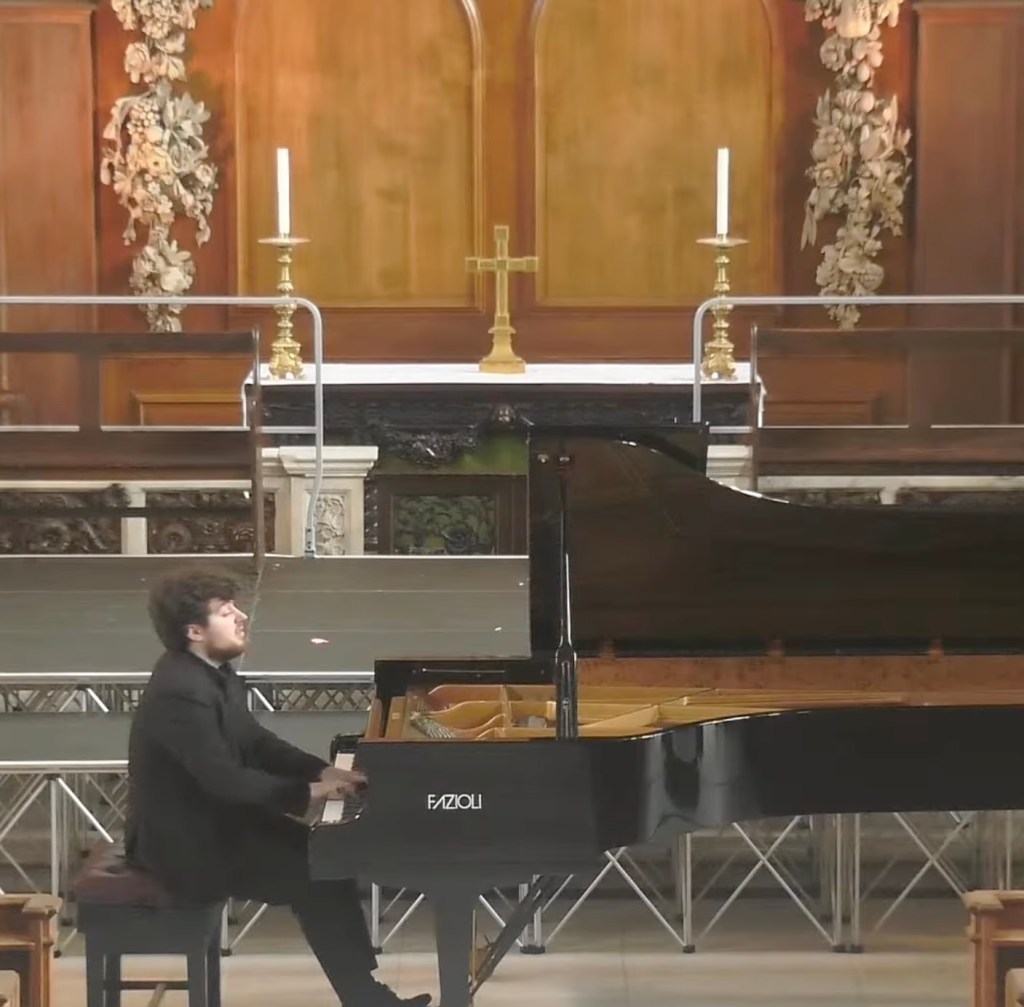
Herman Med Cerisha, a 20-year-old pianist from Putignano, Italy, began studying piano at age 6.
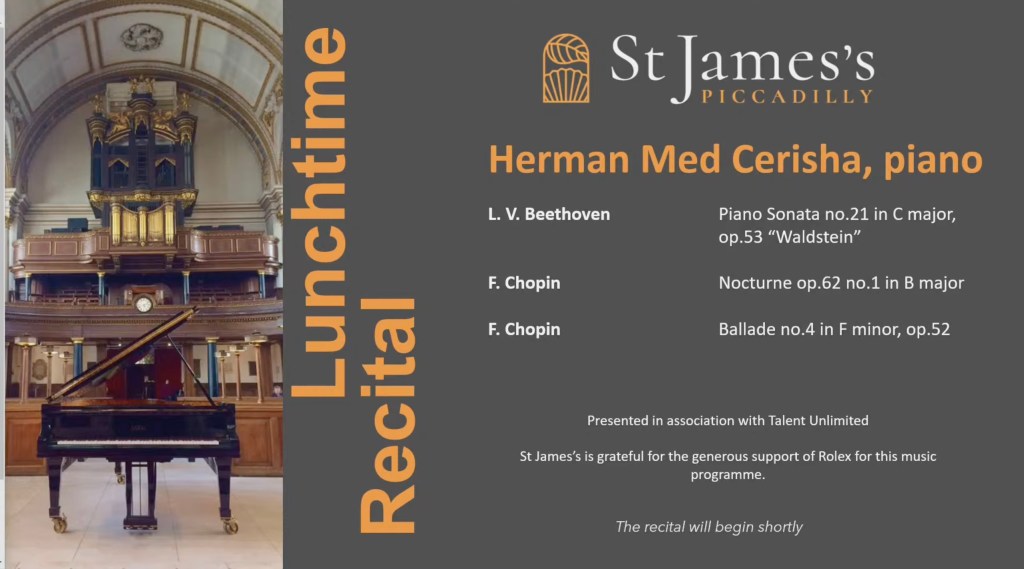
I was told by Deniz Gelenbe about a remarkable young pianist she had heard recently in the Beethoven competition that she was judging at the Royal Academy. A name new to us and I was glad to hear him for myself just a month ago thanks to Canan Maxton and her Talent unlimited . I had spoken to Herman on that occasion with great enthusiasm and I was struck by his disarming humility and genuine surprise at my comments. We have been in touch since that first encounter and on Thursday he sent me a message saying he had been asked, by the indomitable Canan Maxton, if he could substitute an indisposed pianist the next day. I was in Italy at that time but have since had a chance to listen to the concert that was streamed from St James’s Piccadilly. A chance to hear him play Beethoven at last and to confirm all that I had heard about him from Prof.Deniz Gelenbe.
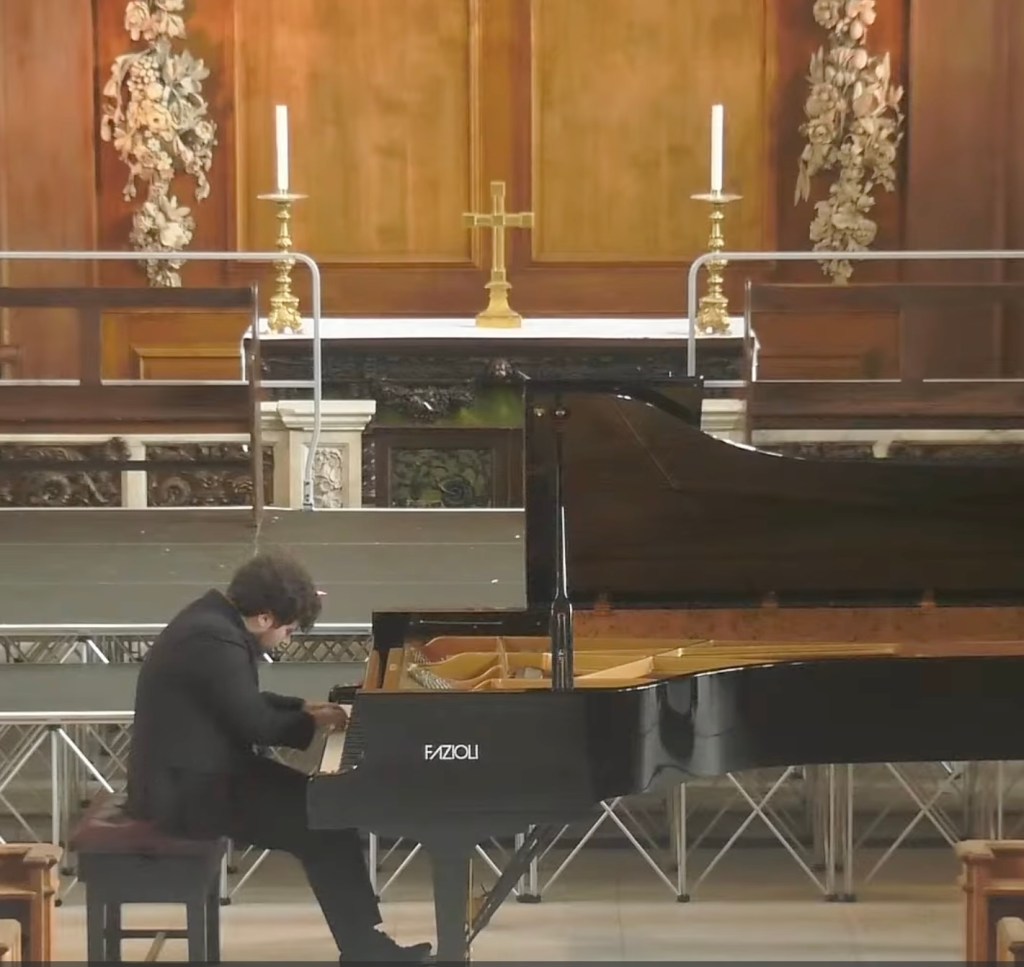
There is a young master on the horizon in London and it is just a question of time before the light that he exudes will shine even brighter not only in London but wherever his rays may be allowed to fall.
The ‘Waldstein’ Sonata together with the ‘Appassionata’ and the ‘Emperor’ Concerto are all from Beethoven’s ‘middle ‘ period when the composer, who was a master pianist, could create works of a technical difficulty that could contain the genius of his irascible temperament. Delius described Beethoven disparagingly as all scales and arpeggios, describing Bach, in the same breath, as knotty twine!
Herman chose the ‘Waldstein’ to open his programme and apart from the remarkable technical perfection at only twenty four hours notice, there was playing of intelligence with a driving rhythmic energy to which Herman added his youthful passion and feeling for poetic beauty. A scrupulous attention to Beethoven’s indications where even the pedal markings were incorporated with mastery on this modern day instrument. Beethoven looking back to his mentor, Haydn, who could also create special effects with long sustained pedals as in his Sonata Hob XVI 50. An effect that Herman maintained with a masterly use of the pedals and touch in the Rondo last movement, creating the pure magic of genial invention that is often over simplified with the excuse that the pianos of today are completely different from those of Beethoven’s time. Herman had understood the intention of the composer and searched for the effect with poetic mastery. In fact all through this recital Herman’s scrupulous attention to the composers wishes whether Beethoven or Chopin were interpreted with technical perfection and poetic understanding. ‘Je sens, je joue, je transmet’, has never been more clearly expressed . Herman brought a masterly control to the opening ‘Allegro con brio’ where he was careful to choose a tempo that could accommodate the second subject without changing tempo. In fact Herman maintained an undercurrent of rhythmic tension which gave him great freedom within the limits that the composer imposes, with a sensitivity to sound of extraordinary maturity and poignancy. A kaleidoscope of colours that can shape each phrase so beautifully even adding some very delicate colours to Beethoven’s counterpoints without ever interrupting the overall architectural shape or flow. Never has Beethoven’s decision to abandon his original slow movement ( later publishing it as a separate piece with the title ‘Andante favori’) seemed so right as today. An introduction to the Rondo that was played with whispered searing intensity with an extraordinary palette of sounds of refined beauty. The voicing of the counterpoints I have never heard played so clearly, as one dovetailed into the other after a deep intonation of the tenor melody ‘rinforzando’. Written indications that in a poet’s hands become precious messages from the composer to the interpreter. A glowing top ‘G’ suddenly becomes the first note of the Rondo as it is reborn on a magic pedal effect with whispered simplicity and wonderment. A mirage of sounds out of which emerges a crystalline clarity as the contrasting episodes become ever more exhilarating and full of virtuosistic excitement. No splitting of the hands for Herman as Beethoven asks for whispered octave glissandi in the coda that on the modern day piano with it’s heavier touch are often played as scales. Serkin used to surreptitiously lick his fingers before attempting them. Kissin slows down the tempo and plays them with two hands. Herman has such a natural mastery dedicated to the composers wishes that the glissandi just flowed from his hands as did everything he played.
A remarkable performance and Hats off to Herman’s genial mentor Florian Mitrea for pointing him in the direction of a true interpreter of the composer wishes.
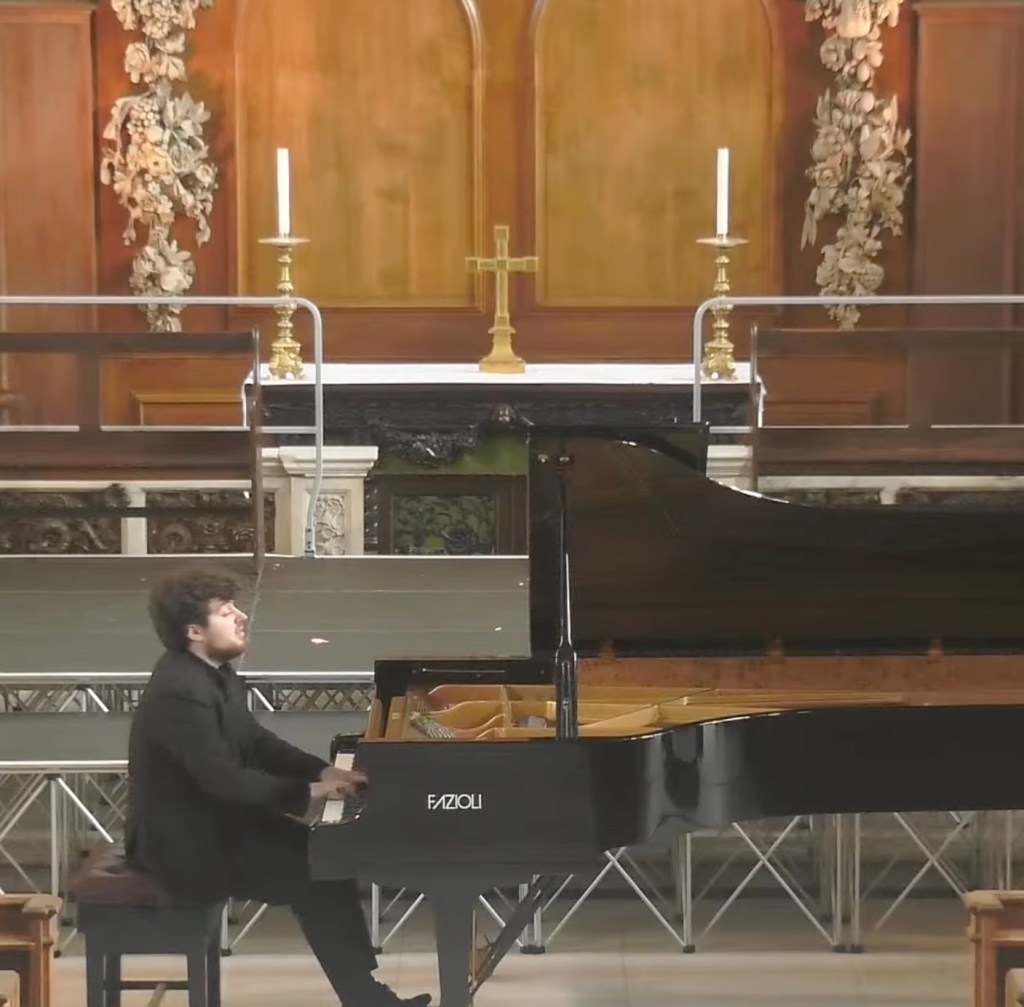
The Chopin Nocturnes op 62 are works written towards the end of the composers thirty-nine years, and are poignant tone poems of ravishing beauty and noble sentiment. Herman chose the first in B major bringing to it a wondrous sense of balance where the melodic line was allowed to emerge out of a complex harmonic accompaniment. It was played with a disarming simplicity and glowing beauty where the bass became the anchor on which such noble sentiments could be celebrated. Etherial embellishments were thrown off with jeux perlé ease but also unclouded and as clear as the bel canto of Monserrat Caballé.The central episode in E flat was played with even more simplicity where the deep chiming bass again gave great strength to the noble melodic line unfolding above.The whispered ‘pianissimo’ meanderings were allowed the free reign of a true poet of the piano. Herman had taken us on a journey of heartrending aristocratic beauty where Chopin’s poetic genius was allowed to glisten and glow with simplicity and deep understanding.
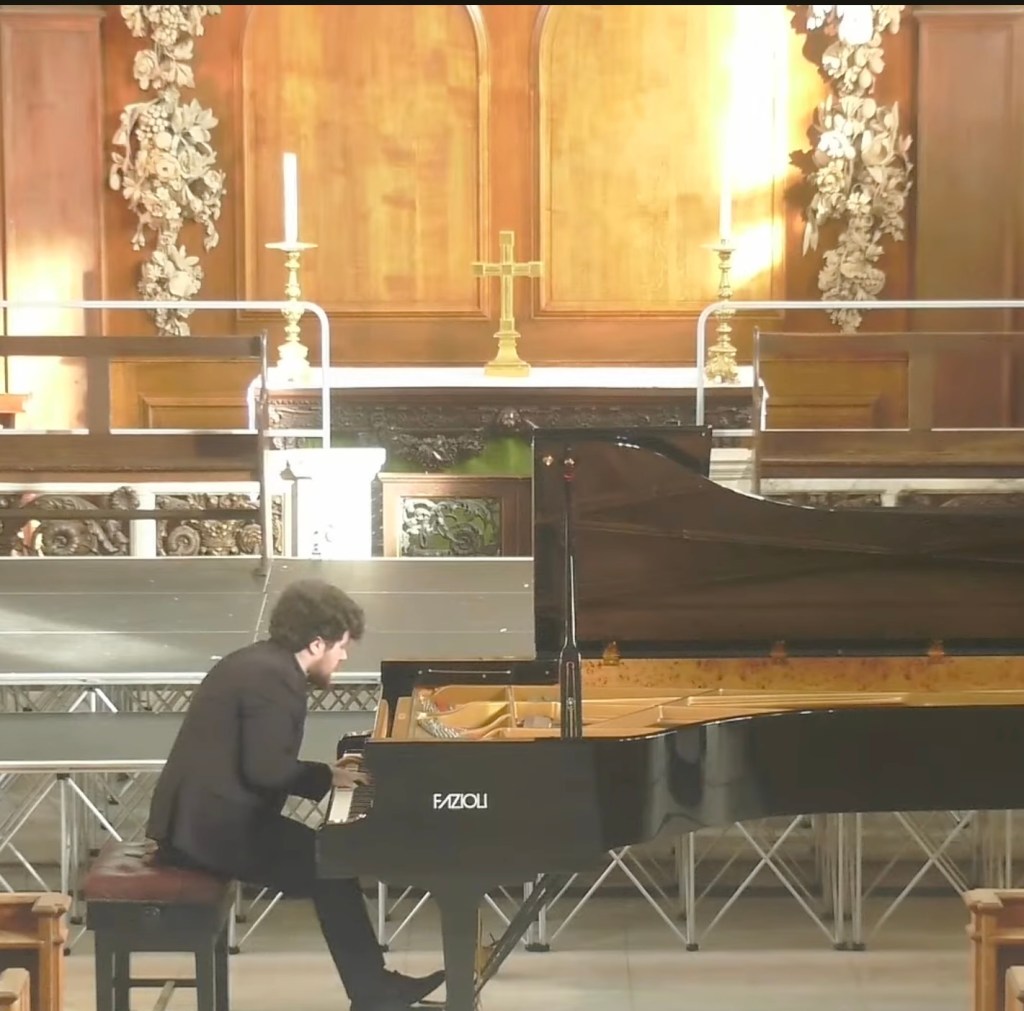
The Fourth Ballade is one of the pinnacles of the romantic pianistic repertoire and Herman played it without the rhetoric of traditional distortions, but with a disarming simplicity where the music was allowed to unfold so naturally. Deep bass notes were the anchor on which the theme could float and they became in turn whispered octaves of etherial beauty as the music moved towards the first variation. Played with an unusually rich harmonic background that built in richness with the addition of octaves that were but streams of luxuriant sounds. A flowing stream of golden notes took us to the second subject. Again not just melody and accompaniment but a rich quartet texture that was the very life blood of the beautiful melodic line that emerged. The return of the opening introduction was where Perlemuter had written Cortot’s poetic indication in my score: ‘avec un sentiment de regret’. Followed by a cadenza of gossamer lightness, strangely distorted(?!) and which lead to the build up of the sumptuous climax of this work of pure genius by a composer who was the genial poet of the piano. Usually thundered out Herman allowed the music to unfold with simplicity and mastery where every indication of the composer was incorporated into a communal poetic understanding.
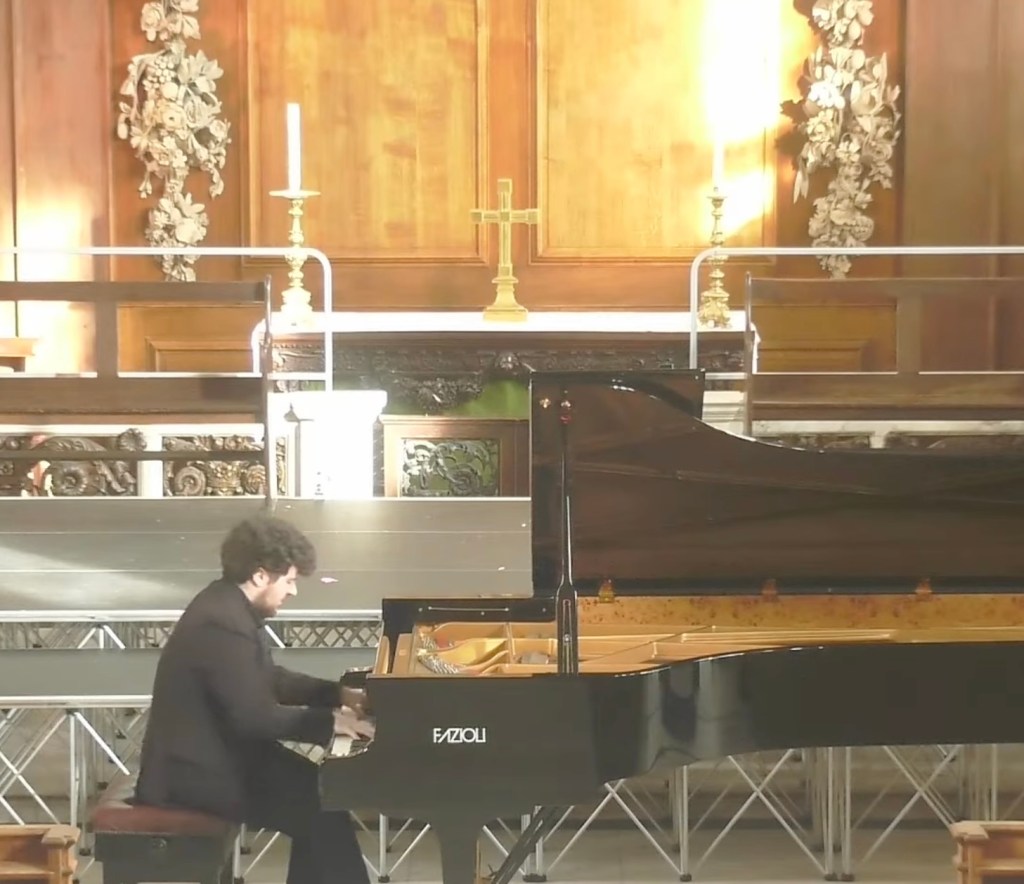
The sun magically shone onto the keyboard at this very moment of enlightenment. Even the sforzando at the beginning of the coda was played only by the bass and not the usual thumb of the right hand and lead to an outpouring a phenomenal playing where poetry and technical mastery were combined to the glory of the genius of Chopin.
This is pianist to watch as he matures and becomes one of the great interpreters of the future.
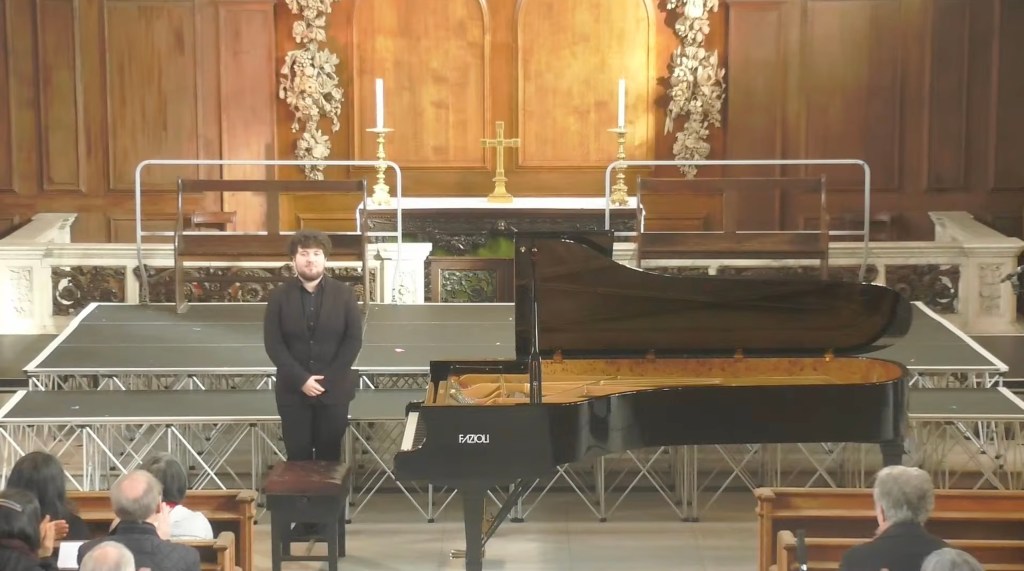
Herman Med Cerisha, a 20-year-old pianist from Putignano, Italy, began studying piano at age 6. At 8, he was accepted into the top piano class at the George Enescu National College of Music in Bucharest after achieving full marks in the entrance exam. There, he trained under Elisa Barzescu, receiving a strong foundation rooted in the Eastern European musical tradition. In 2020, Herman won a scholarship to study at The Purcell School and, in 2021, was named Bechstein Scholar Student of the Year. In 2024 he received multiple offers from leading UK conservatories and accepted a full scholarship to study at the Royal Academy of Music under Professor Florian Mitrea. Herman has claimed over 40 international competition titles, including distinctions in the Chopin Junior Competition, Berman Competition, and Orbetello Competition. His 2019 win at the Pianisti i Ri competition in Kosovo led to a solo performance with the Philharmonic of Priština, where he performed Grieg’s piano concerto. He has participated in masterclasses with renowned pianists such as Boris Petrushansky, Dmitri Alexeev, and Noriko Ogawa. He has also worked with Leonid Margarius and Franco Scala at the Imola Piano Academy. He has performed in prestigious venues such as Wigmore Hall, Cadogan Hall playing Beethoven’s 3rd piano concerto, the Romanian Athenaeum, and Moscow’s Svetlanov Concert Hall. Between 2018 and 2022, he collaborated annually with the Arad Philharmonic Orchestra in Romania as a soloist. In 2025, Herman became a Talent Unlimited Artist, where they kindly support his musical journey.
 ChristopherAxworthy-MusicCommentary