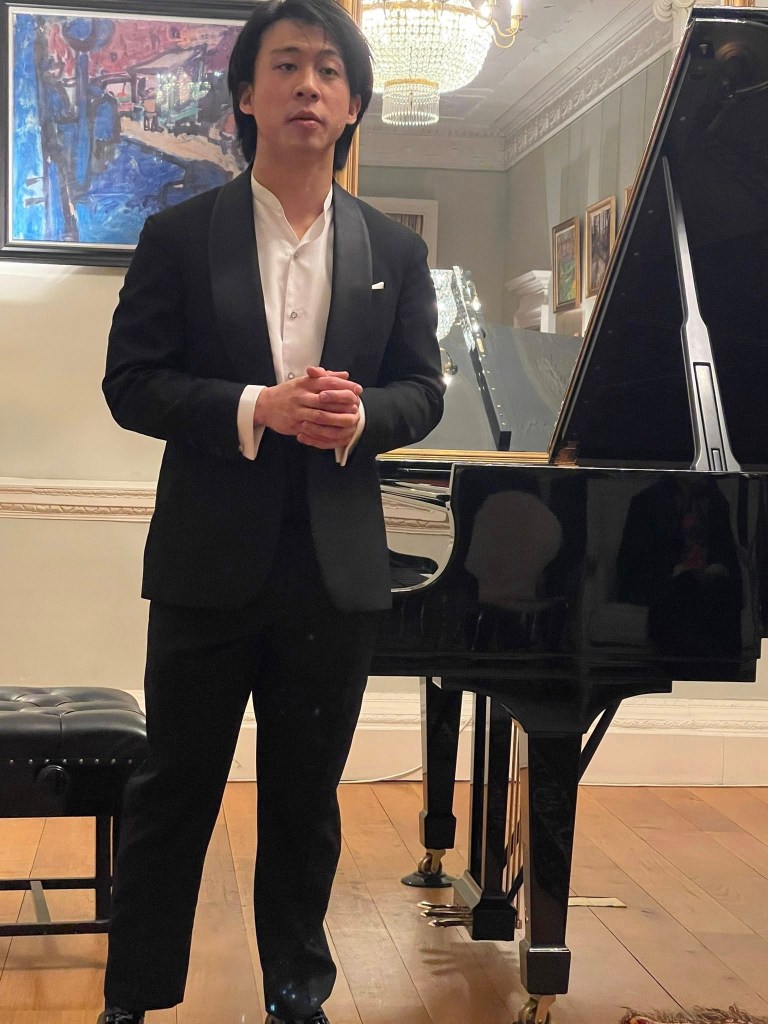
Derek Wang in London today and tomorrow ( St John’s at one ) with a moving recital in words and music about Liszt’s travels around Switzerland with the Countess Marie d’Agoult (The future mother of Liszt’s three children ).
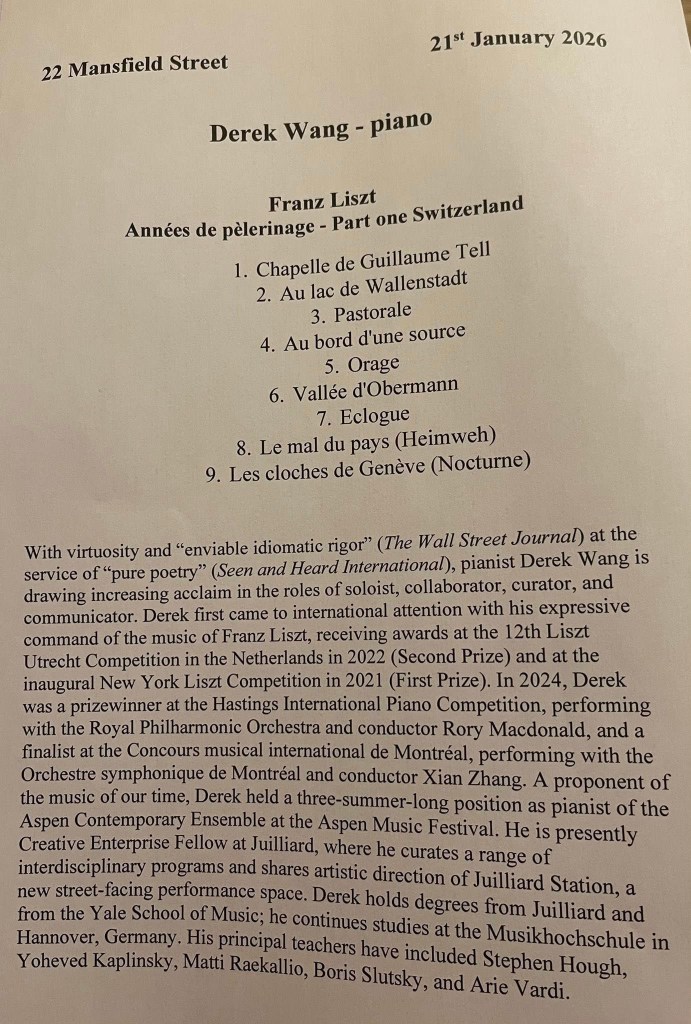
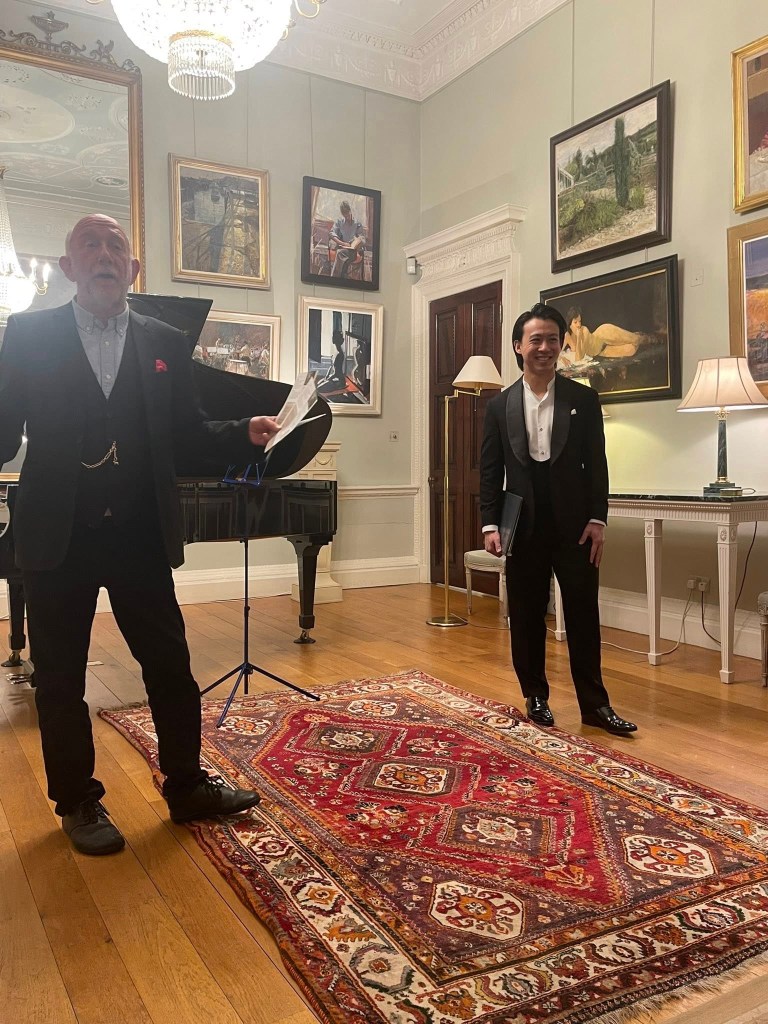
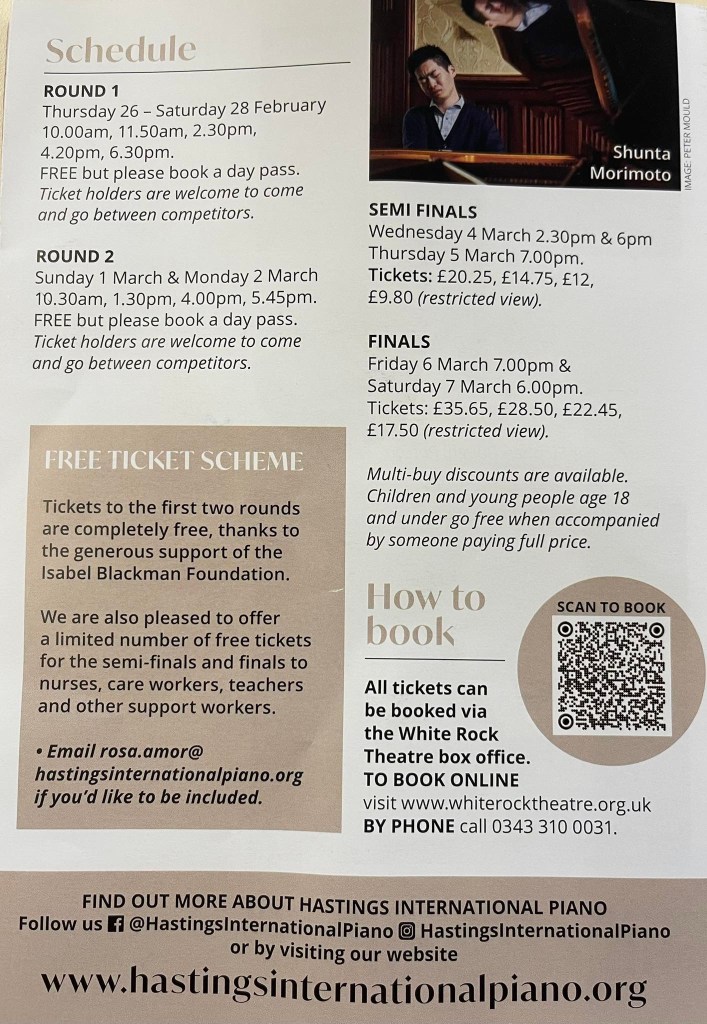
Derek a superb pianist and a prize winner of the Hastings, who had invited Derek to London into the beautiful salon of Bob and Elisabeth Boas is also an extraordinary actor creating the atmosphere of their discovery of beauty and nature and also about themselves and their innermost feelings.
But it was the music that was played with renewed poetic sensibility together with astonishing mastery that held us mesmerised as we re lived the magic of discovery together. Opening with ‘William Tell’ played with aristocratic control and searing tension. Liszt was to say he had never been able to think of Lake Wallenstadt without weeping. Derek played it bathed in pedal as the melodic line flowed on the lapping waves with refreshing freedom. This was the last piece to be played by Alfred Brendel as an encore in Vienna after his farewell performance with Mozart Concerto K291 ( Jeunehomme !!) .
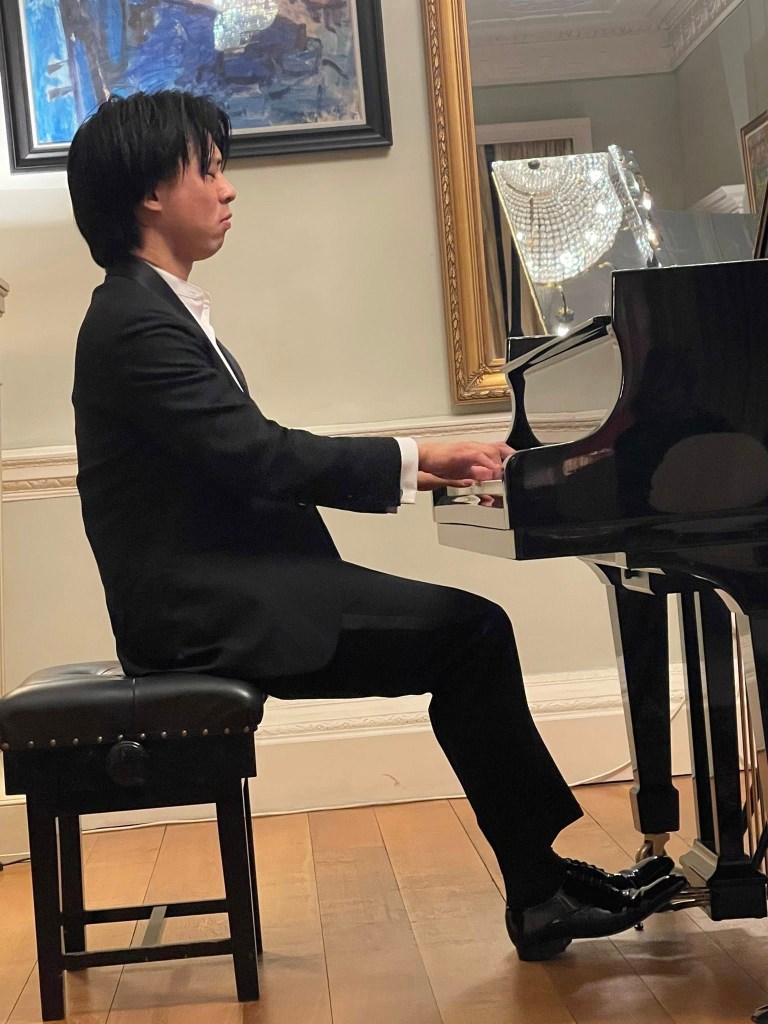
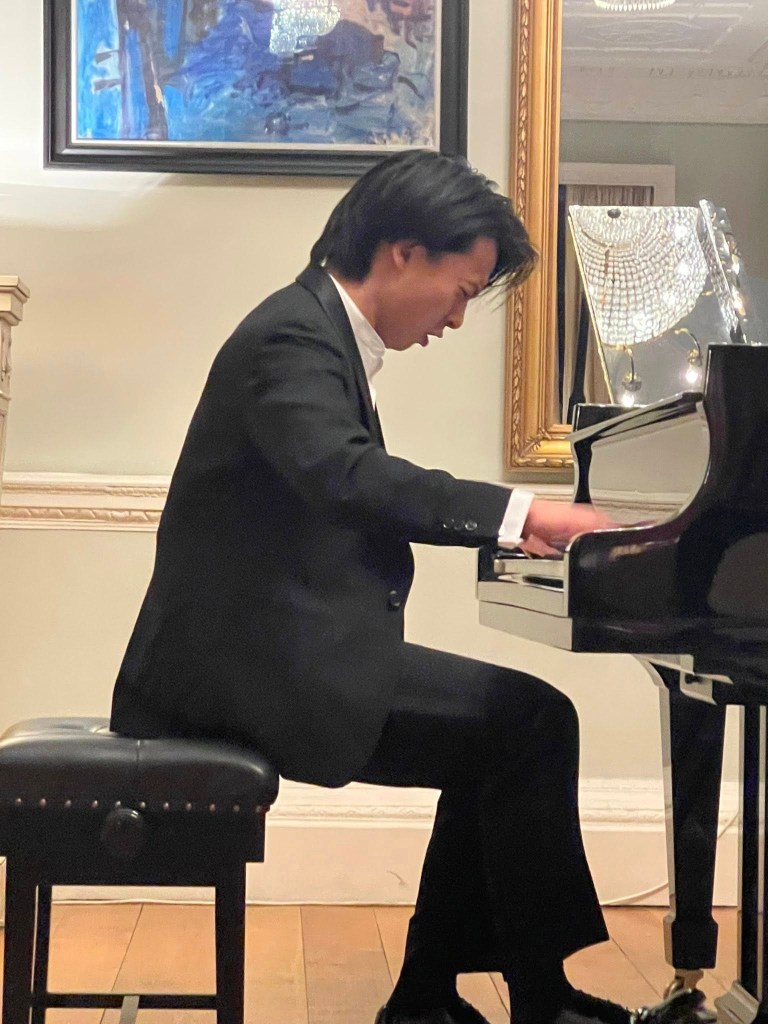
Derek followed this with the joyous outpouring of ‘Pastorale’ with its questioning ending. ‘Au bord d’une source’ is one of those jewels that was to pour from Liszt’s fingers with refined delicacy and poetic meaning. Derek played it with a wondrous sense of balance playing with beautiful grace and delicacy.
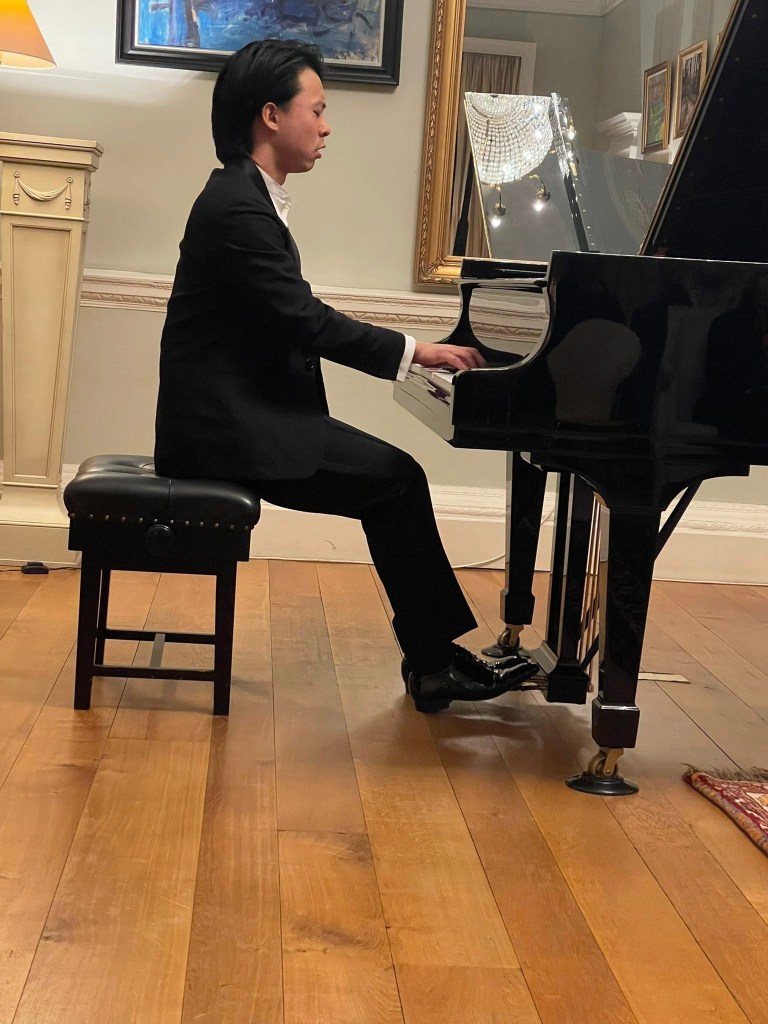
Now Derek was ready to unleash his mighty technical arsenal with ‘Orage’, that he played with passion and startling virtuosity, with extraordinary clarity and burning excitement. At this point Derek abandoned the script that he had on the stand and looked us in the eye as he delved ever deeper into the profound world of poetic beauty with the ‘Vallée d’Obermann’. It was on this wave of emotion that the beautiful tenor melody was floated into the room with innermost intensity. Derek opened up this world of self questioning, turbulent emotions and searing passion, in a performance of masterly architectural control and conviction.Veiled octaves this time, as opposed to ‘Orage’, were merely vibrations of sound to describe the agitation and turbulence of a disturbed soul. ‘Eclogue’ was a refreshing interlude full of radiance and sunshine. ‘Le Mal du pays’ on the other hand was where Derek found sombre sounds of great suggestion and nostalgia – rumblings from within or without ? As Liszt was to say, quoted by Derek : ‘The life of an artist is a long dissonance with no resolution’. However Derek finished with the glorious radiance of hope and beauty that is in ‘Les cloches de Genève’, creating with mastery another masterpiece from this suite of nine scenes of travel.
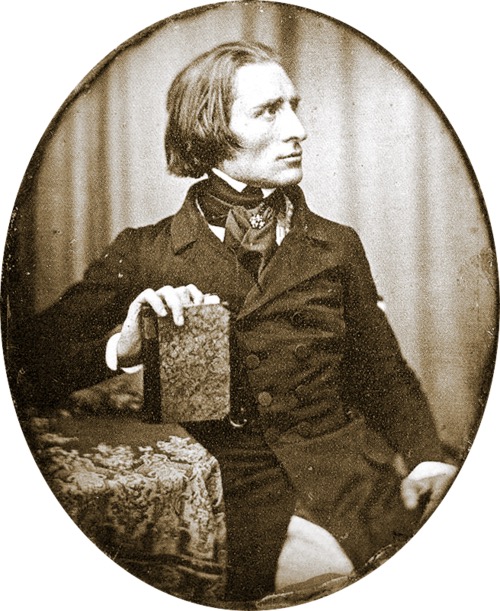
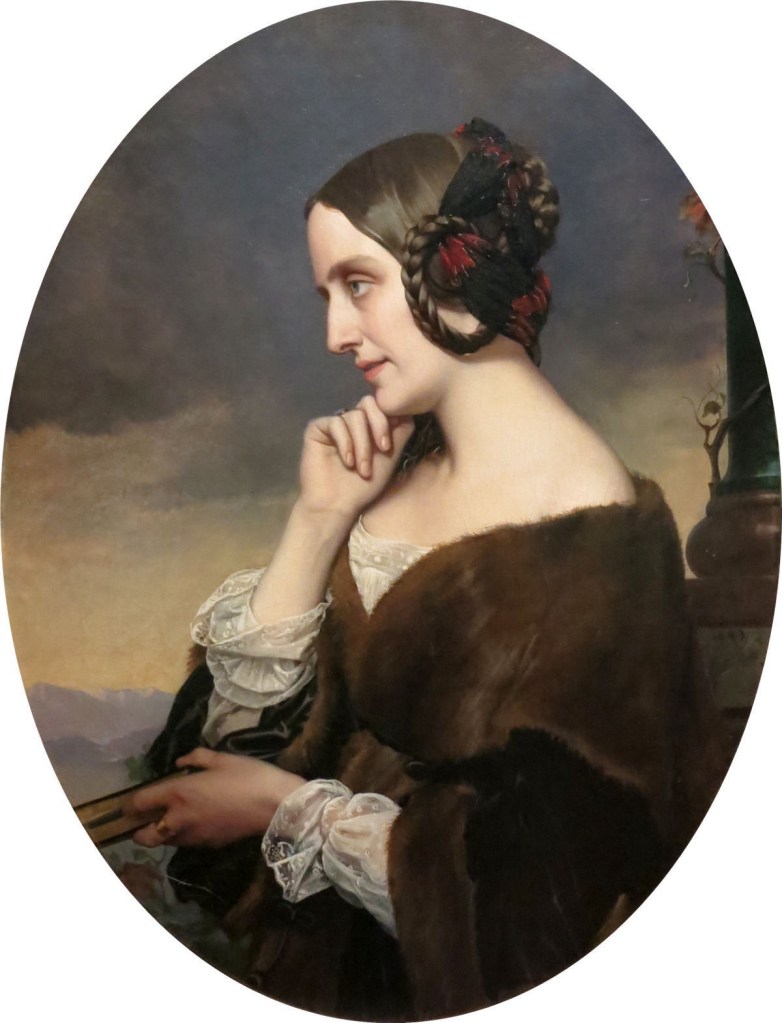
Années de pèlerinage S.160/161/162/163 is a set of three suites for solo piano by Franz Liszt. Much of it (the first suite in particular) derives from an earlier work, Album d’un voyageur, his first major published piano cycle, which was composed between 1835 and 1838 and published in 1842 Années de pèlerinage is widely considered as the masterwork and summation of Liszt’s musical style. While the first two offerings are often considered music of a young man, the third volume is notable as an example of his later style. Composed well after the first two volumes, it displays less virtuosity and more harmonic experimentation.
Première année: Suisse” (“First Year: Switzerland”), S.160, was published in 1855. Composed between 1848 and 1854, most of the pieces (Nos. 1, 2, 3, 4, 6, 8 and 9) are revisions of Album d’un voyageur: Part 1: Impressions et Poesies and Part 2: Fleurs mélodiques des Alpes. “Au lac de Wallenstadt” (No. 2) and “Au bord d’une source” (No. 4) received only minor revisions, while “La Chapelle de Guillaume Tell” (No. 1), “Vallée d’Obermann” (No. 6), and especially “Les cloches de Genève” (No. 9) were more extensively rewritten. “Églogue” (No. 7) was published separately, and “Orage” (No. 5) was included as part of the definitive version of the cycle.
- Chapelle de Guillaume Tell in C major – For this depiction of the Swiss struggle for liberation Liszt chooses a motto from Schiller as caption, “All for one – one for all.” A noble passage marked lento opens the piece, followed by the main melody of the freedom fighters. A horn call rouses the troops, echoes down the valleys, and mixes with the sound of the heroic struggle
- Au lac de Wallenstadt in A♭ major – Liszt’s caption is from Lord Byron’s Childe Harold’s Pilgrimage (Canto III, stanza 85): “Thy contrasted lake / With the wild world I dwell in is a thing / Which warns me, with its stillness, to forsake / Earth’s troubled waters for a purer spring.” In her Mémoires, Liszt’s mistress and traveling companion of the time, Marie d’Agoult, recalls their time by Lake Wallenstadt, writing, “Franz wrote for me there a melancholy harmony, imitative of the sigh of the waves and the cadence of oars, which I have never been able to hear without weeping.”[6]
- Pastorale in E major – This piece is a revision of the third from the second book of the earlier Album, with its central section removed in the process.
- Au born dune source in A♭ major – Liszt’s caption is from Schiller: “In the whispering coolness begins young nature’s play.”
- Orage in C minor – Liszt’s caption is again from Byron’s Childe Harold’s Pilgrimage (Canto III, canto 96): “But where of ye, O tempests! is the goal? / Are ye like those within the human breast? / Or do ye find, at length, like eagles, some high nest?”
- Vallée d’Obermann (Obermann’s Valley) in E minor – Inspired by Étienne Pivert de Senancour’s novel of the same title, set in Switzerland, with a hero overwhelmed and confused by nature, suffering from ennui and longing, finally concluding that only our feelings are true The captions include one from Byron’s succeeding canto 97, (“Could I embody and unbosom now / That which is most within me,–could I wreak / My thoughts upon expression, and thus throw / Soul–heart–mind–passions–feelings–strong or weak– / All that I would have sought, and all I seek, / Bear, know, feel–and yet breathe–into one word, / And that one word were Lightning, I would speak; / But as it is, I live and die unheard, / With a most voiceless thought, sheathing it as a sword”) and two from Senancour’s Obermann, which include the crucial questions, “What do I want? Who am I? What do I ask of nature?”
- Eglogue in A♭ major – Liszt’s caption is from the next canto of the Pilgrimage: “The morn is up again, the dewy morn, / With breath all incense, and with cheek all bloom, / Laughing the clouds away with playful scorn, / And living as if earth contained no tomb!”
- Le mal du pays (Homesickness) in E minor –The work is prefaced by a quotation from the ‘Troisième fragment’ of Senancour’s Obermann: ‘De l’expression romantique, et du ranz des vaches’ (‘on Romantic expression, and the Swiss pastoral melody employed in the calling of the cows’)—‘Le romanesque séduit les imaginations vives et fleuries; le romantique suffit seul aux âmes profondes, la véritable sensibilité …’ (‘The Romanesque attracts those of lively and florid imagination; the Romantic satisfies only profound souls, real sensitivity …’).
- Les cloches de Genève: Nocturne in B major – Liszt’s caption is from stanza 72, earlier in the Byron’s Pilgrimage: “I live not in myself, but I become / Portion of that around me”.
 ChristopherAxworthy-MusicCommentary