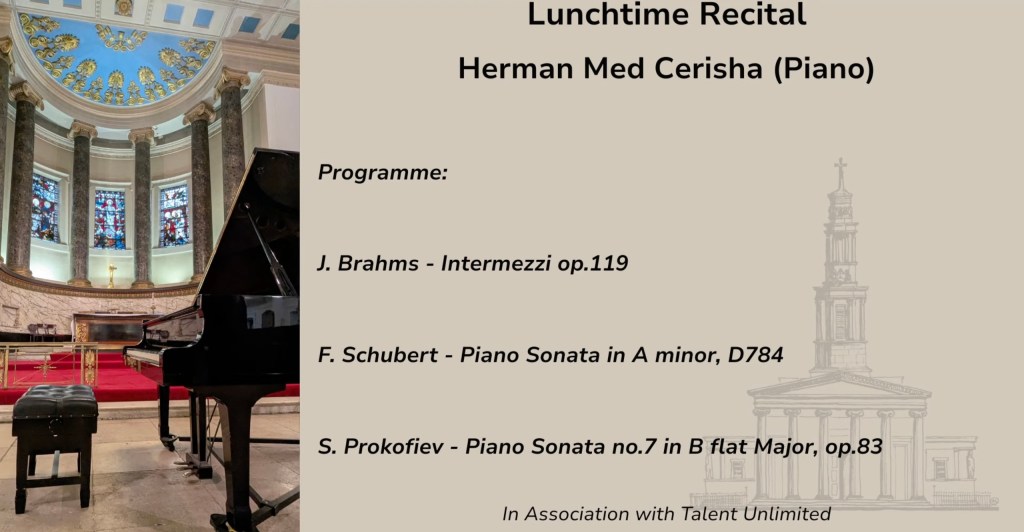
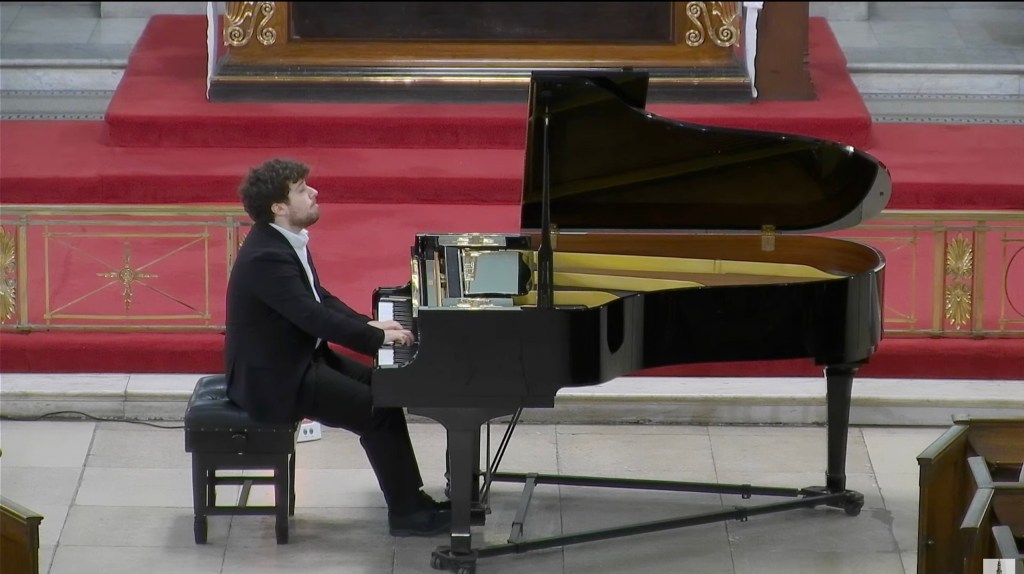
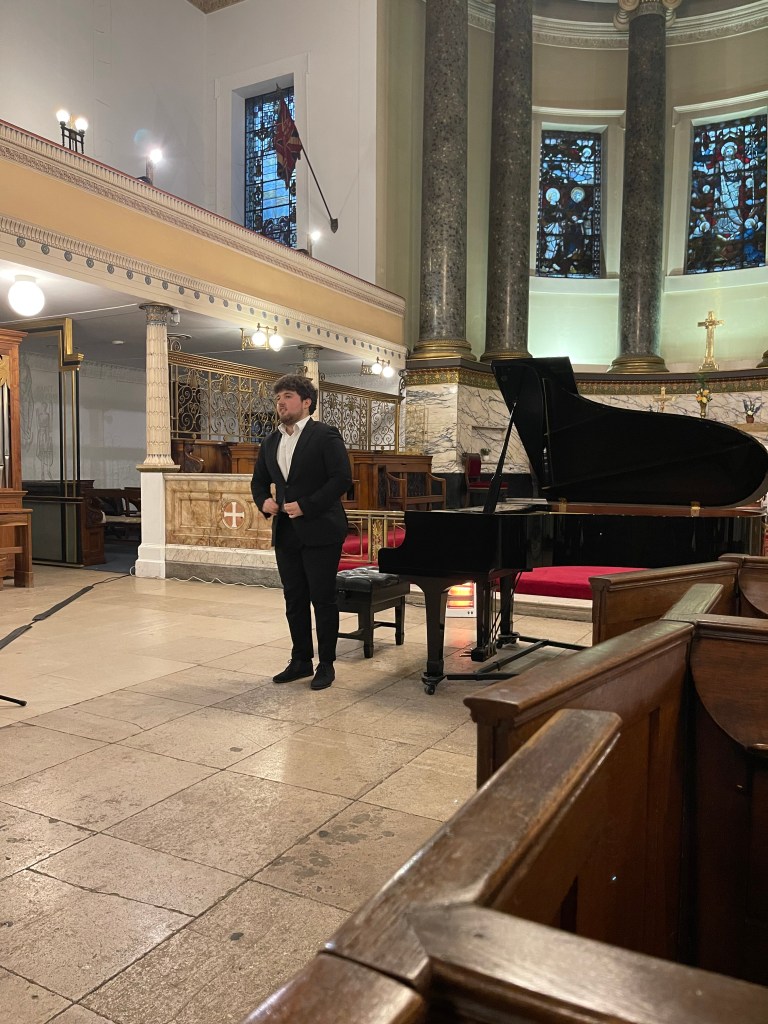
Some extraordinary playing of great authority from this young Italo Romanian pianist Herman Med Cerisha studying at the Royal Academy with Florian Mitrea. https://christopheraxworthymusiccommentary.com/2021/03/02/florian-mitrea-born-free-at-st-marys/
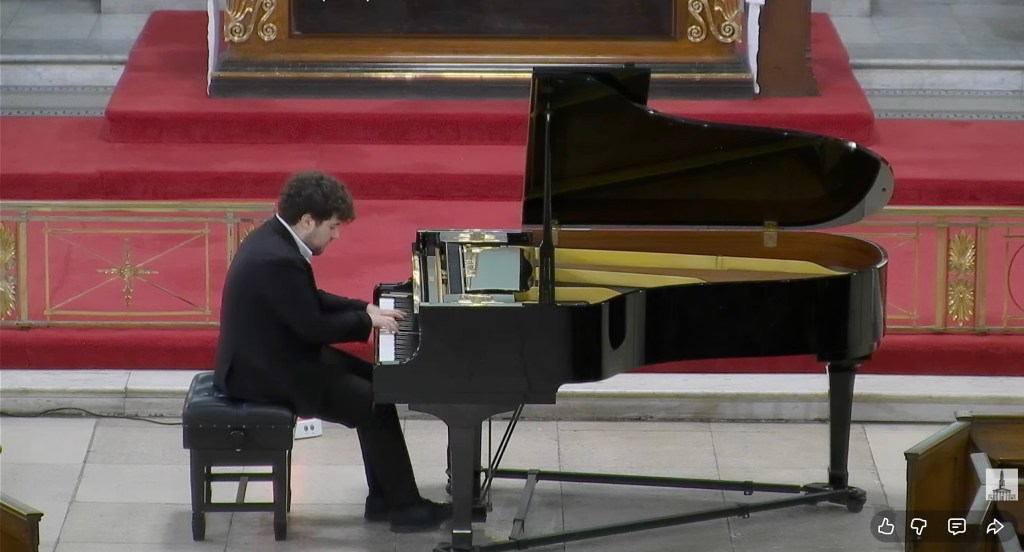
A distinguished colleague had heard him in a prize she was judging and told me he was good. In fact he won the Beethoven Prize at the RAM .
‘I think he will be one of these unique pianists! He stands out in my mind for the originality and sincerity of his playing.’ Deniz Gelenbe
She did not tell me how good, until I heard him today playing Brahms op 119 , Schubert ‘ little ‘ A minor Sonata and Prokofiev 7th Sonata. Playing of overwhelming authority and poetic beauty but also of passionate intensity and fearless brilliance.
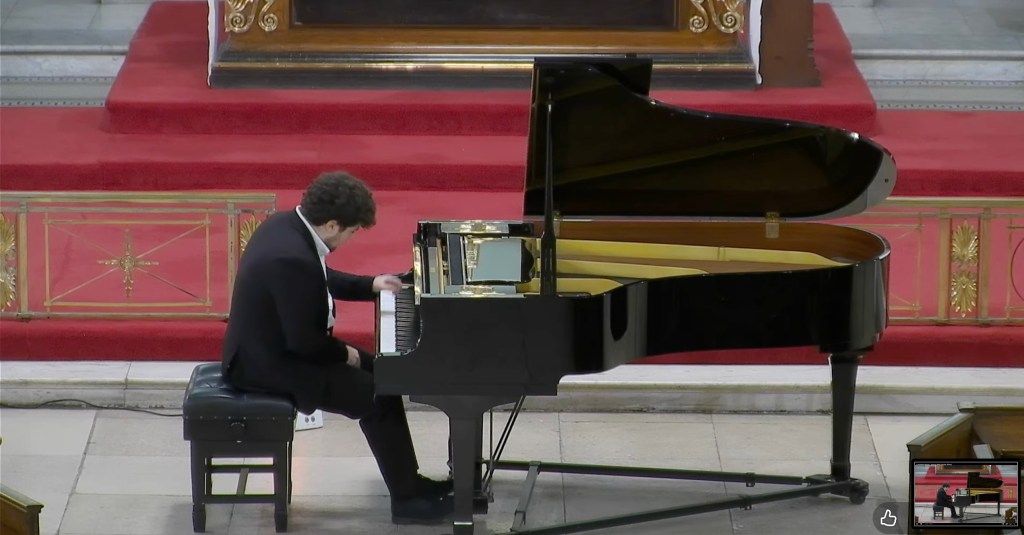
Brahms of sumptuous beauty but also of refined elegance and aristocratic authority. The Intermezzo in B minor was played with crystalline clarity and touching beauty. A radiance that comes from delving deep into each note and extracting a multitude of sounds from each one. The E minor entered with a whisper as it gradually grew in intensity only to be resolved with an ‘Andantino grazioso’ of pastoral beauty. The C major could almost be called a capriccio such was the beguiling elegance and teasing mastery of art that conceals art and which I have only heard similarly from Clifford Curzon and Myra Hess. Sumptuous sonorities in the final E flat ‘Rhapsodie’ were played with driving aristocratic energy with streams of notes just thrown off as they accompanied the noble outpouring of the chorale. Passionate pulsating rhythms were played with remarkable architectural shape and led so beautifully into the simple beauty of the ‘grazioso’ central episode. A complete change of timbre where Herman produced a liquid fluidity of sounds contrasting so well with the glorious nobility of its surrounds.
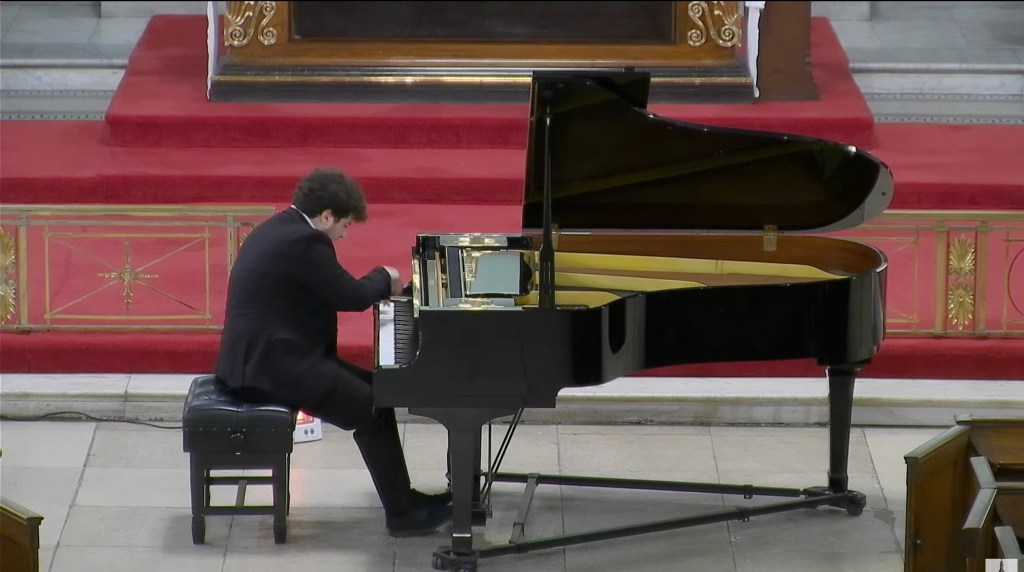
Schubert that reminded me of Gilels where the golden sounds and rare monumental beauty had moments of heart rending delicacy without ever loosing sight of the great architectural outline. Gilels had arrived in London to find a poorly attended concert in the Festival Hall! A programme of Schubert and Shostakovich which obviously was not box office but which I will remember for the rest of my life!
I was reminded of his playing of this A minor Sonata D 784 as I listened to Herman today. Playing of beauty but also of solidity and never dwelling on detail but letting the music speak for itself without any unwanted assistance from interpreters eager to point out or underline the beauty that is already there. After the etherial opening, Beethovenian declamations and following dotted rhythmic chords were played with a limpet type touch never vertical but always horizontal and deep into each key. The touching vibrancy of the second subject must be one of the most beautiful things that Schubert ever wrote. Herman played it with whispered glowing delicacy but never altering the rhythmic undercurrent that holds the structure together. The ‘Andante ‘ sang with simple beauty and the rhythmic comments that could interrupt the flow were played with extraordinary rhythmic precision so the melody was allowed to flow on one level whilst being comment on from afar. The radiance and beauty of the shadowing of the melodic line when it appears in the tenor register was one of those magic moments of ravishing monumental beauty, never sugar sweet or sentimental, but deeply moving. It showed a remarkable technical control of a pianist who actually listens to himself and can find the beauty that is hidden within every piano for those that care to seek. The ‘Allegro vivace’ was streams of sounds chattering away to each other with delicacy and brilliance. Bursting into dynamic outbursts with sumptuous fullness of sound never hard but rich in sonority. And it was noticeable that Herman rarely played vertically but his fingers clued to each key and arms wading like in water with horizontal strokes of natural elegance. There was a crystalline beauty to the lyrical episodes of grace with insinuating undulations.The final notorious double octaves were played with the same horizontal attack with the four final chords phrased by a musician who is also a poet of sound.
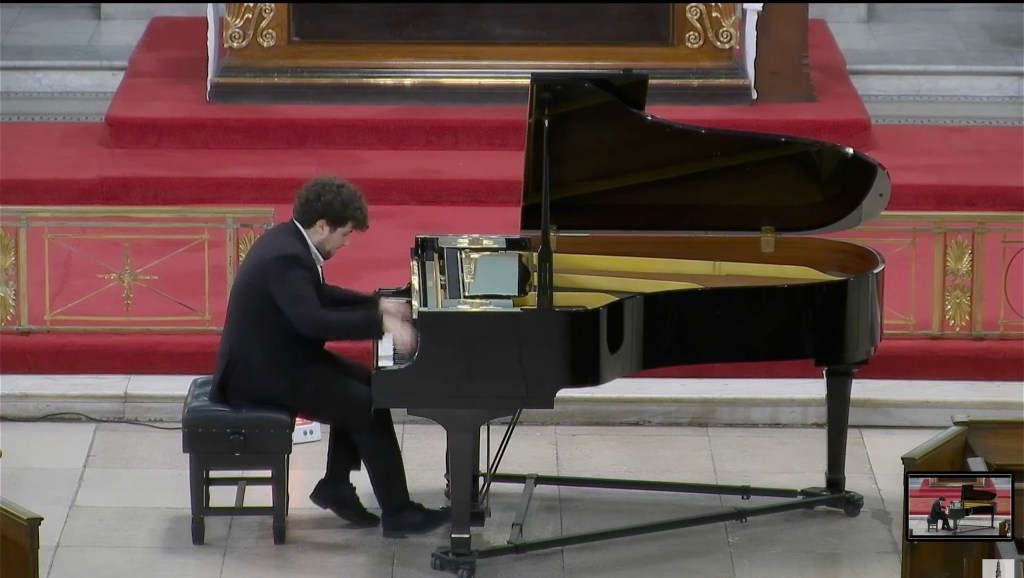
A savage demonic attack in Prokofiev ‘s most bombastic of the three war sonatas was breathtaking in its audacity and daring. The pulsating rhythm of the last movement was maintained heroically to the very last terrifying note. But it was the ‘Allegro inquieto’ that was quite remarkable for the intensity where his fearless abandon and fiery temperament was matched by his extraordinary technical mastery. Again never hard or ungrateful sounds but even if the attack was often vertical it was a blow given from a musician listening and feeling the music with searing conviction. The ‘Andantino espressivo e dolente’ was a magical moment of calm before going to the front again with even more ferocity. The ‘Andante caloroso’ was of Hollywoodian beauty and simplicity before bursting into flames of imploring beauty dissolving into glowing whispers of bewitching bewilderment. The ‘Precipitato’ began as a murmur and finished with all the guns ablaze. A control of tempo and sound that was remarkable and his total abandon at the end was a tour de force of daring of breathtaking excitement.
This is a young man to watch and nice to know he comes from a land kissed by the Gods. Puglia is where many great musician were born from Muti to Rana , Rota to Lupu, De Barberiis to De Vita ,Libetta to Grassi. Lecce the capital of Puglia ( the heel of Italy ) is quite rightly known as the Florence of the south. Putignano, Herman’s hometown, is renowned for its famous Carnaval procession forty days before Easter.
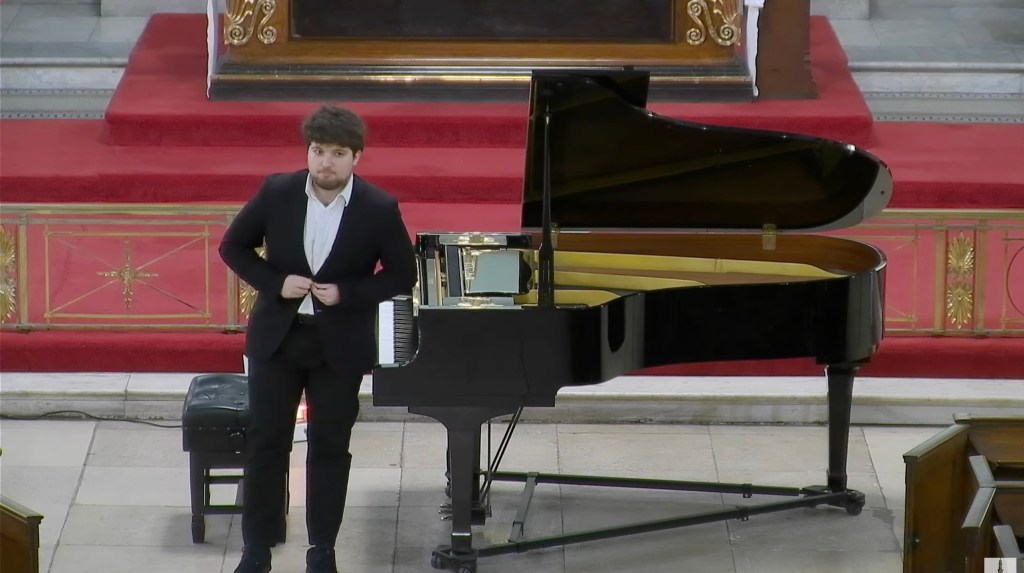
Thanks to the tireless promotion of Canan Maxton’s Talent Unlimited I was able to hear this great talent for myself at last. It was streamed live and the recording is in the link under the poster above.
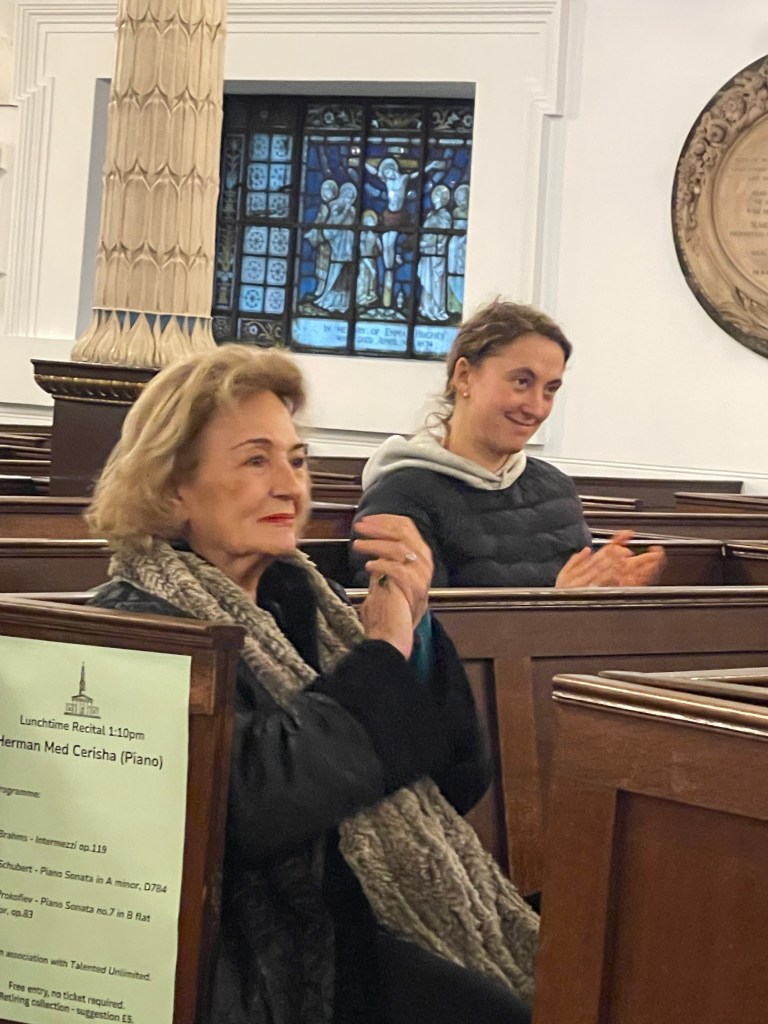
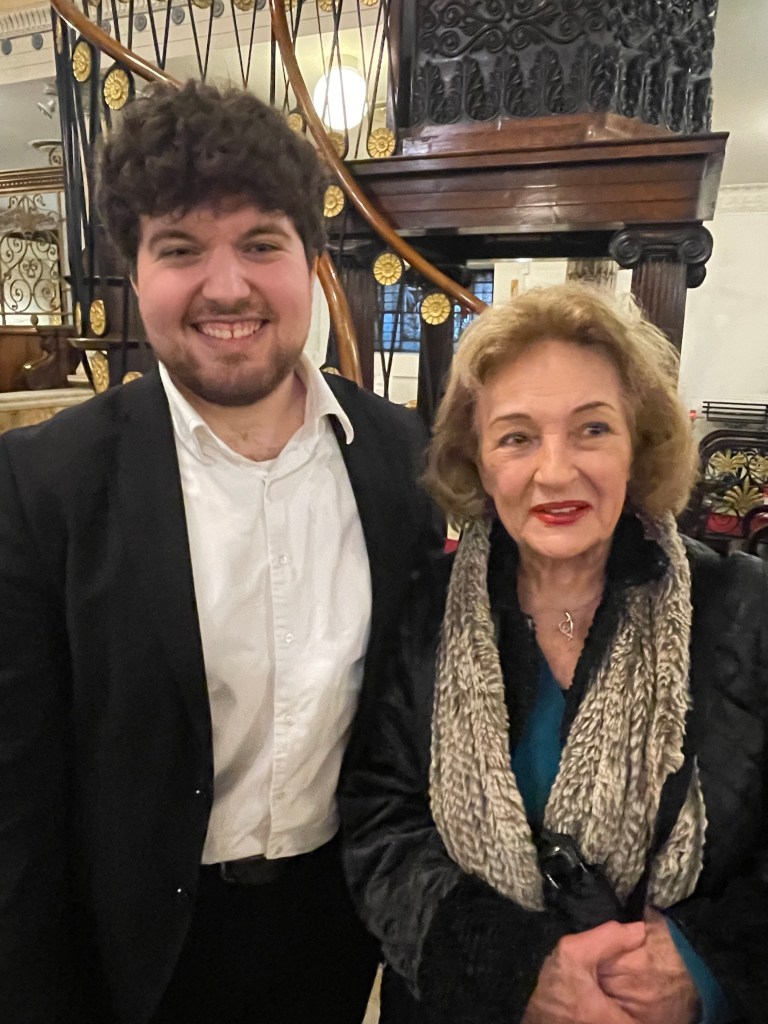
Herman Med Cerisha, a 20-year-old pianist from Putignano, Italy, began studying piano at age 6. At 8, he was accepted into the top piano class at the George Enescu National College of Music in Bucharest after achieving full marks in the entrance exam. There, he trained under Elisa Barzescu, receiving a strong foundation rooted in the Eastern European musical tradition.
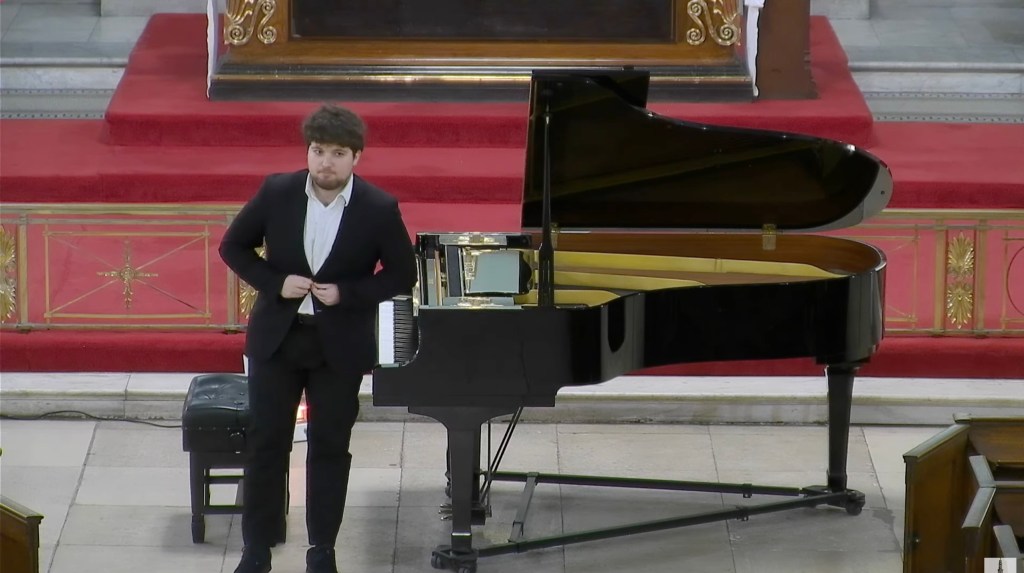
In 2020, Herman won a scholarship to study at The Purcell School and, in 2021, was named Bechstein Scholar Student of the Year. In 2024 he received multiple offers from leading UK conservatories and accepted a full scholarship to study at the Royal Academy of Music under Professor Florian Mitrea.
Herman has claimed over 40 international competition titles, including distinctions in the Chopin Junior Competition, Berman Competition, and Orbetello Competition. His 2019 win at the Pianisti i Ri competition in Kosovo led to a solo performance with the Philharmonic of Priština, where he performed Grieg’s piano concerto.
He has participated in masterclasses with renowned pianists such as Boris Petrushansky, Dmitri Alexeev, and Noriko Ogawa. He has also worked with Leonid Margarius and Franco Scala at the Imola Piano Academy.
He has performed in prestigious venues such as Wigmore Hall, Cadogan Hall playing Beethoven’s 3rd piano concerto, the Romanian Athenaeum, and Moscow’s Svetlanov Concert Hall. Between 2018 and 2022, he collaborated annually with the Arad Philharmonic Orchestra in Romania as a soloist. In 2025, Herman became a Talent Unlimited Artist, where they kindly support his musical journey.
Interview
1- Aged 8 you began training under Elisa Barzescu, receiving a strong foundation rooted in the Eastern European musical tradition. How do you recall your time under this master?
Training with Elisa Barzescu was a huge part of how I understand music today. It was a really solid and sometimes quite strict education, but it taught me discipline and how to really approach new pieces with depth.
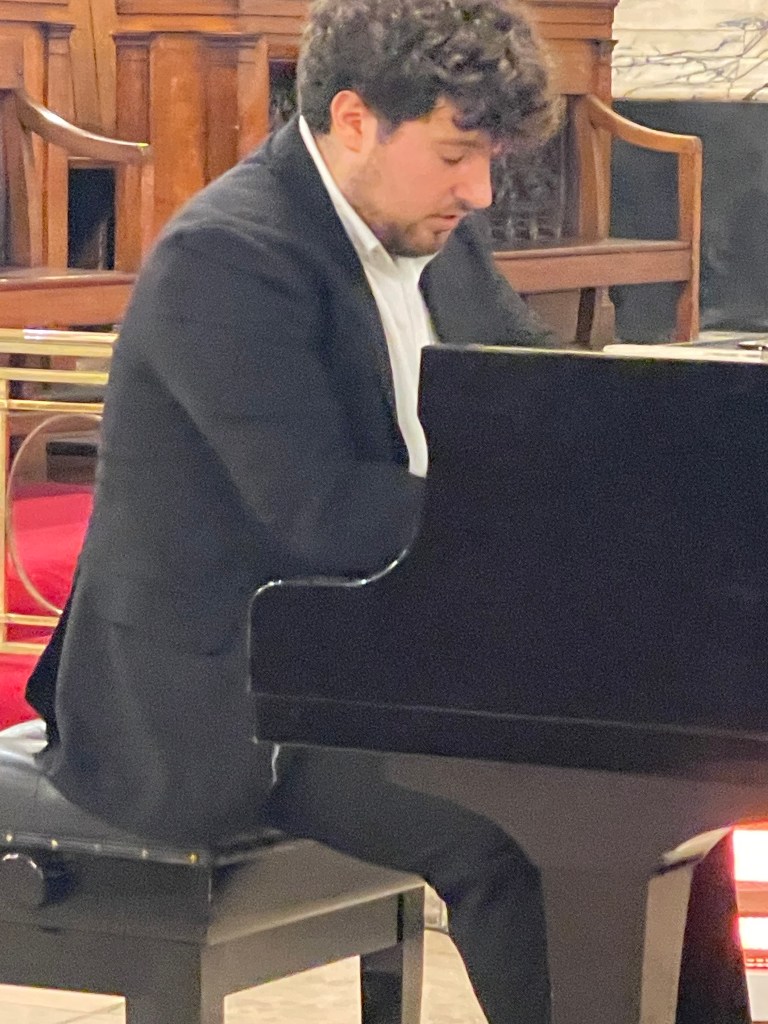
2- Is your family musical?
My dad and brother are both violinists — that’s actually why I started with violin before switching to piano.
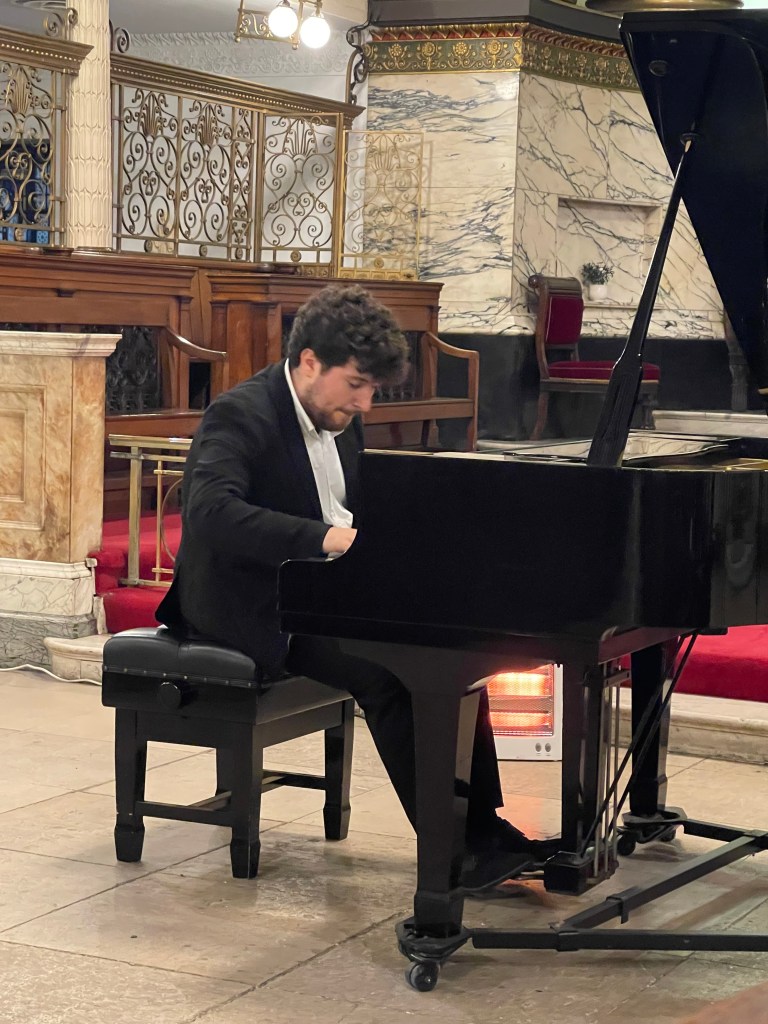
3- You have recently embarked on a full scholarship studying at the Royal Academy of Music under Professor Florian Mitrea. How is this progressing?
It’s going really well! The Academy offers so many opportunities to learn new things, especially with such incredible teachers around. I’m learning a lot from my wonderful teacher, Professor Florian Mitrea.

4- You have won an impressive number of competitions and have held Young Musician titles. Does any one of these particularly stand out for you?
Every competition has been special in its own way, but the Chopin Competition for children and youth stands out — that’s when I first thought, “maybe I want to do this for real.”
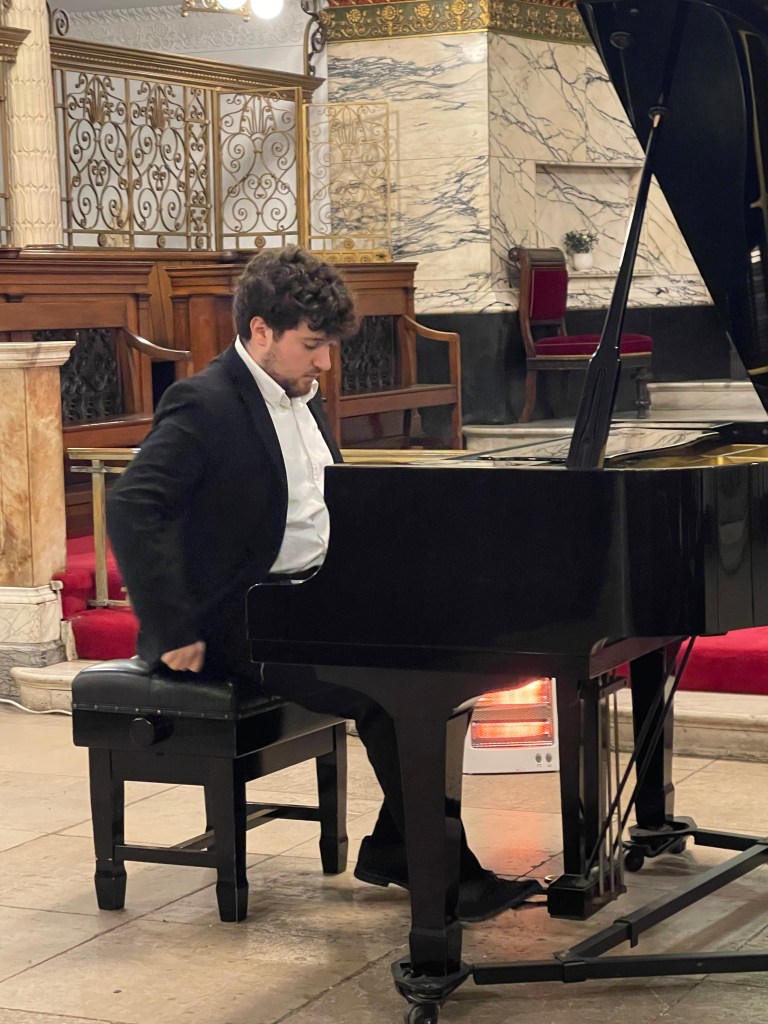
5- Between 2018 and 2022, he collaborated annually with the Arad Philharmonic Orchestra in Romania as a soloist. How enriching was this experience?
Playing with the Arad Philharmonic Orchestra was unbelievable. You learn so much from working with conductors and other musicians — it’s a completely different kind of listening. Since pianists often play solo, those collaborations really feel like a celebration.
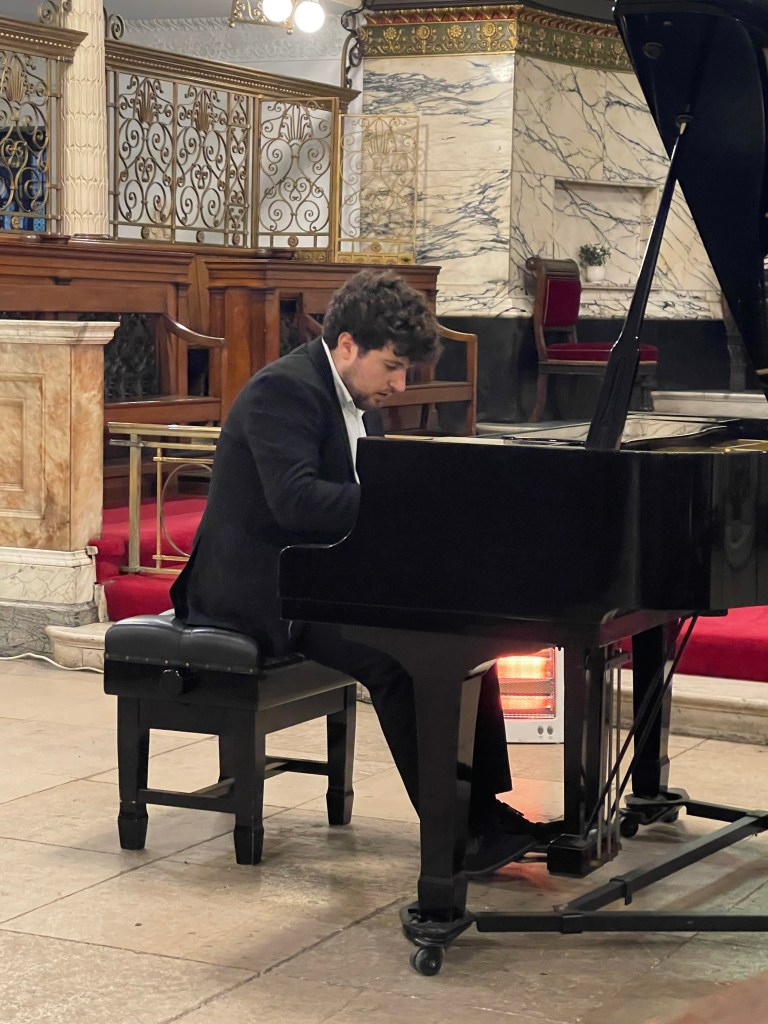
6- What are your fondest musical memories, privately or performing?
My favourite musical memories include performing with orchestra for the first time, and moments in practice when something finally clicks or a piece suddenly makes sense.
7- How often do your practice?
I try to practice every day, aiming for about 5 hours on average — but it really depends on the week!
8- Would you consider teaching in the future?
Yes, absolutely. I think teaching and sharing what we’ve learned to the next generations is one of the most meaningful things a musician can do.
9- How do you balance your time and commitments. What are the biggest sacrifices?
There are definitely many sacrifices — being away from family, lots of travelling, and spending endless hours in a four-wall room with your instrument. Finding balance is really important. I don’t think it’s healthy to only practise or think about music all the time, so taking breaks and stepping away every now and then is essential.
10- What advice would you give to young musicians at the start of their journey?
Believe in yourself and in what you’re doing. And always play because you love music — never because you feel you have to.
Rubinstein. had something to say about that too :
https://christopheraxworthymusiccommentary.com/2024/03/20/christopher-axworthy-dip-ram-aram/
 ChristopherAxworthy-MusicCommentary