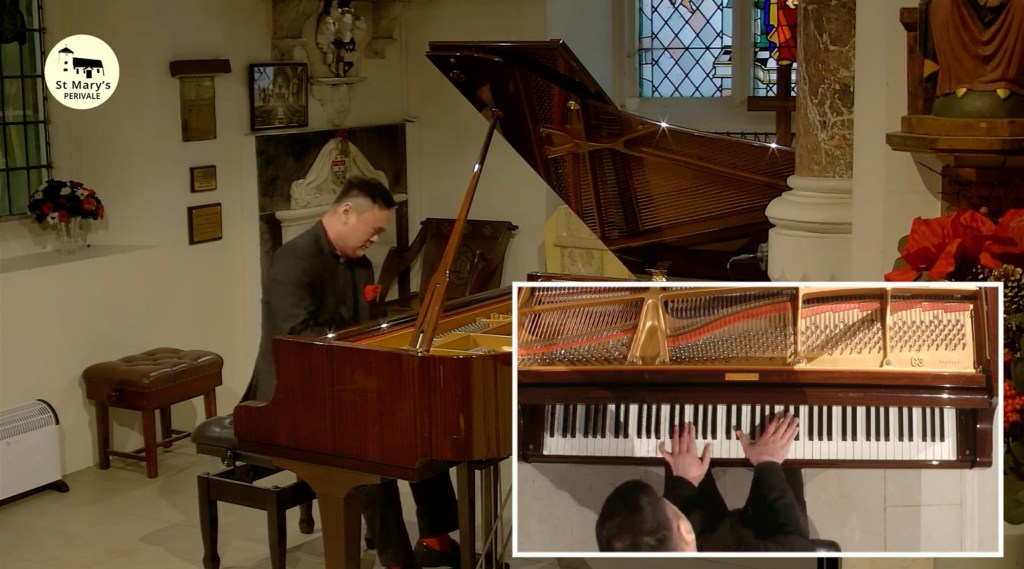

Some extraordinary playing of great authority and mastery. Sumptuous sounds of a musician who digs deep into the keys with a limpet type touch and finds golden sounds of ravishing beauty and monumental importance. A fascinating programme too with four short works by lady composers before the F minor Sonata by Brahms that Robert Schumann was to call ‘veiled symphonies’. Such is the monumental importance of all three of his piano sonatas written long before he would dare write his four actual symphonies. Mark Viner has long been an advocate of Cécile Chaminade who wrote an enormous amount of piano music rarely heard in the concert hall these days as it has for too long been considered rather lightweight and dated. Edward chose two of her piano pieces that are full of charm, a ravishing sense of balance and scintillating jeux perlé pianism.
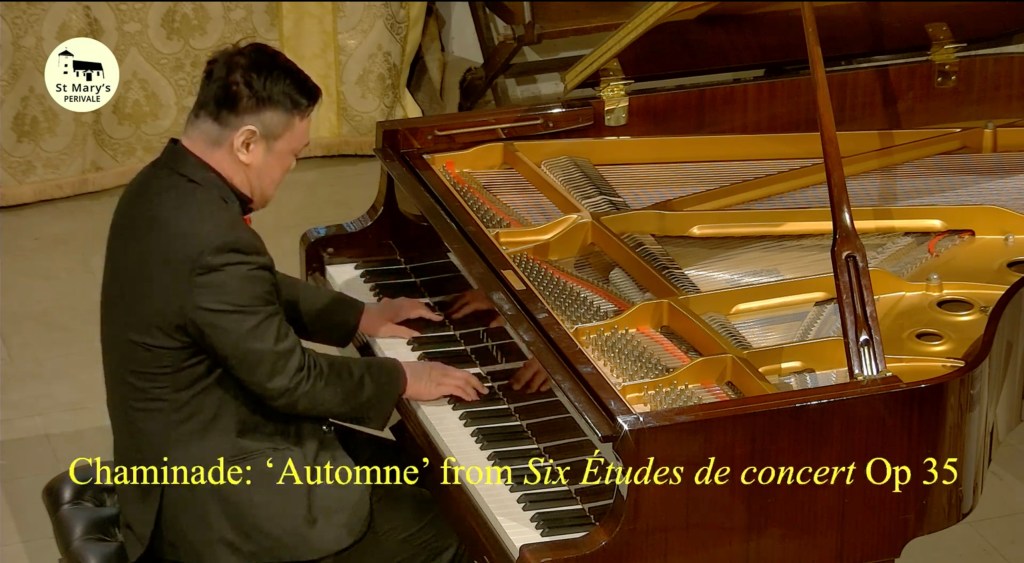
‘Automne’ is one of her best known works and would be on the piano stand of most houses, before the advent of the television. Together with Salut d’Amour, Rustle of Spring and of course Spring Song,little did the amateur pianists realise that there was more to ‘Automne’ than just a beguiling nostalgic melody. Edward showed us today the beauty of the melodic line played with real artistry and a rubato that had us hanging on to every note right to the very last one, at the top of the piano with the left hand coming to the rescue with a teasing last word! But this was also one of six studies and the central episode ( like the second and third movements of the ‘Moonlight Sonata ‘ ) were certainly not for music loving amateur pianists. These outburst of brilliance and passionate abandon were played with authority and clarity of sound as Edward swept across the keyboard with a rotation of his whole body that gave weight to all he played. The return of the poignant opening melody was played with ever more tenderness after such torrents of notes, ending with whispers of ravishing subtle beauty.
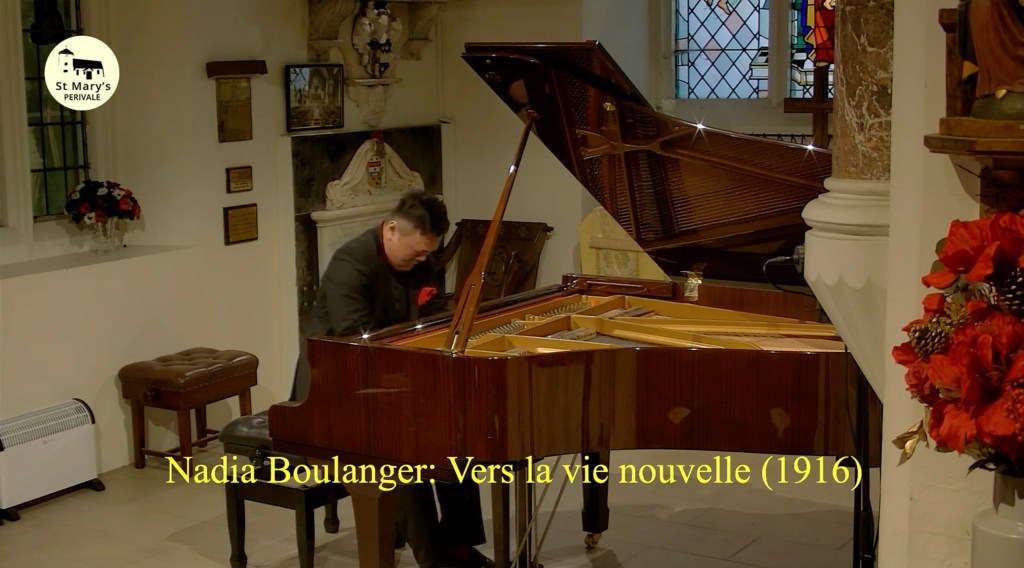
Nadia Boulanger was certainly not a salon pianist but one of the most important musicians of her time and a catalyst for so many musicians who passed through her studio in Paris. Woe betide anyone that came to her studio who was not 100% awake and ready to sing fugue subjects or transpose works at the drop of a hat. Composers would flock to her for precious advice given with absolute integrity and honesty. Gershwin asked to join her class and she refused to teach someone whose natural talent might be ruined by a tight jacket of rules and regulations. So it was fascinating to hear a piano work of hers today. Dinu Lipatti was a prodigy of hers and there are recordings of them playing together but mainly Mademoiselle spoke more of her sister ,Lilly, who had died tragically at a very early age leaving many compositions that showed the promise denied her by the cruel destiny that was to await her and also Lipatti https://youtu.be/IdiBa9HhjZ0 This was a fascinating discovery with the thick chords of imposing authority that like Busoni are searching for a new musical language. Giving way to bell like sounds spread over the entire keyboard with a chordal chorale in its midst floating into oblivion.
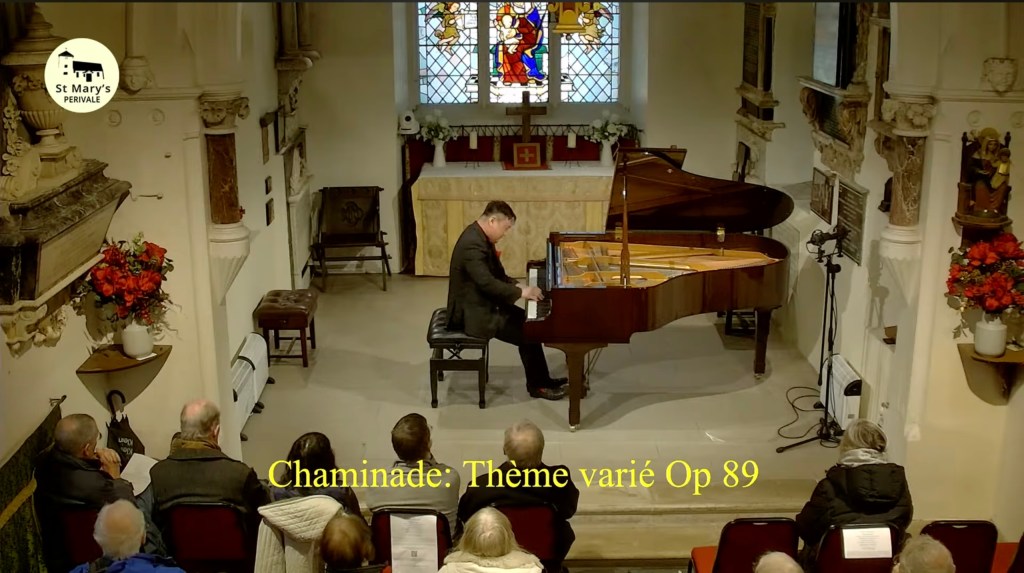
Edward after this rather serious digression turned to the simple charm and almost nursery rhyme simplicity of Chaminade’s Thème varié. Variations spread over the entire keyboard with Mendelssohnian jeux perlé brilliance always with the charm of the theme ever present until the triumphant final outpouring of mellifluous glory.
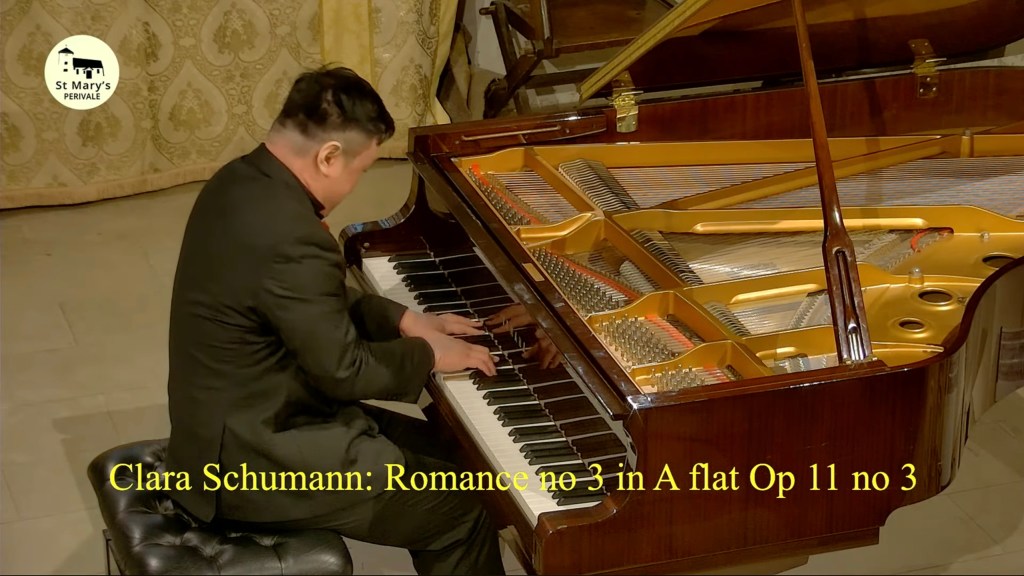
Clara Schumann’s Romance ,on the other hand, is a charming outpouring of song with its beautiful legato melody and simple accompaniment and poignant ending of great delicacy. Obviously a work that she would have included in her recitals as the first important lady concert pianist much in demand, even though she bore her husband Robert eight children and was seriously courted by Brahms after her husbands early death in a mental asylum!
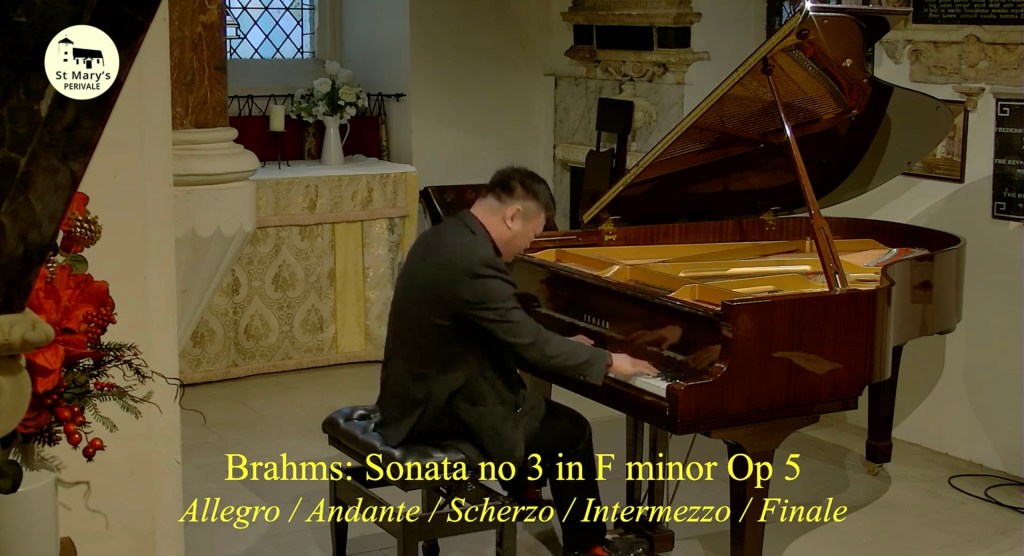
The Brahms F minor sonata is a monumental work in five movements, the last of the three that Schumann was to call ‘veiled symphonies’. The difficulty is not so much technical as musical in the first movement. Keeping the tension through taught rhythmic precision whilst allowing for an almost improvised fantasy to unwind is only for masterly musicians. The clarity and rhythmic precision that Edward brought to the sonata allowed him to show us the full architectural shape of this master work. The ‘Andante’ was allowed to unfold with ravishing beauty bursting into passionate outpourings of noble sentiment. The coda is one of those magic moments where the whispered almost religious outpouring gradually builds in intensity to a most passionately exhilarating climax. Dying away to an intense whispered ‘Adagio’ with chords that gradually extinguish themselves with fervent simplicity. The ‘Scherzo’ just shot from Edwards masterly hands with dynamic drive and uplifting excitement. A purely orchestral Trio was soothing balm before the return of the Scherzo. The Intermezzo that follows is really a link between the third and fourth movements but it contains music of searing passion and powerful emotions with the throbbing of the bass like a heart beating ever more intensely. The Allegro moderato finale was played with an extraordinary range of colour and emotion. A technical mastery that allowed Edward to abandon himself to the passionate outpouring of nobility and scintillating excitement that Brahms was to bring to the ever more exciting last pages of this monumental work.
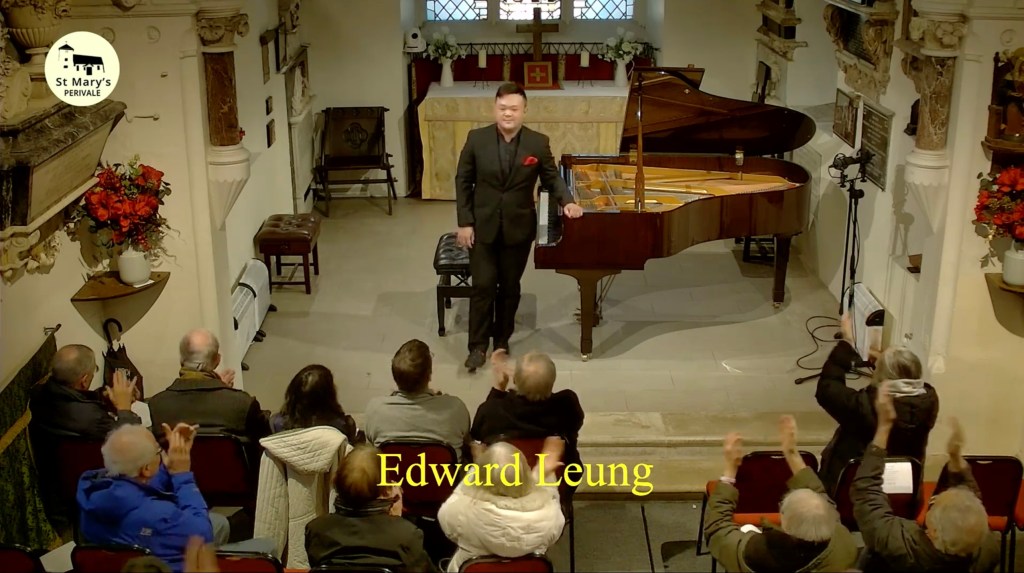
Hailed for his “taut succinctness with emotional expansiveness and a striking capacity for invention” ( BBC Music Magazine) , American pianist Edward Leung is a sought-after recitalist and chamber musician. Edward is a 2025-2027 Making Music Recommended Artist and a Bösendorfer-Amadeus Young Artist. His debut album with violinist Usha Kapoor Beach • John Corigliano: Violin Sonatas [Resonus Classics] was longlisted for Preis der deutschen Schallplattenkritik, critically acclaimed by BBC Music Magazine, Gramophone, Fono Forum, and Classical Explorer, and was featured on ABC Classic’s Festival of Female Composers and SWR2 Treffpunkt Klassik. This current season features solo and chamber music recitals at Wigmore Hall, Bridgewater Hall, Milton Court, and venues in The Hague, Edinburgh, and Antwerp.
After studies at Princeton University and the Royal Birmingham Conservatoire with Francine Kay and Pascal Nemirovski, Edward is currently the Staff Pianist at The Yehudi Menuhin School. He frequently gives masterclasses internationally and has previously taught at the Junior Royal Welsh College of Music and Drama and the Westminster School.
https://christopheraxworthymusiccommentary.com/2024/03/20/christopher-axworthy-dip-ram-aram/
 ChristopherAxworthy-MusicCommentary