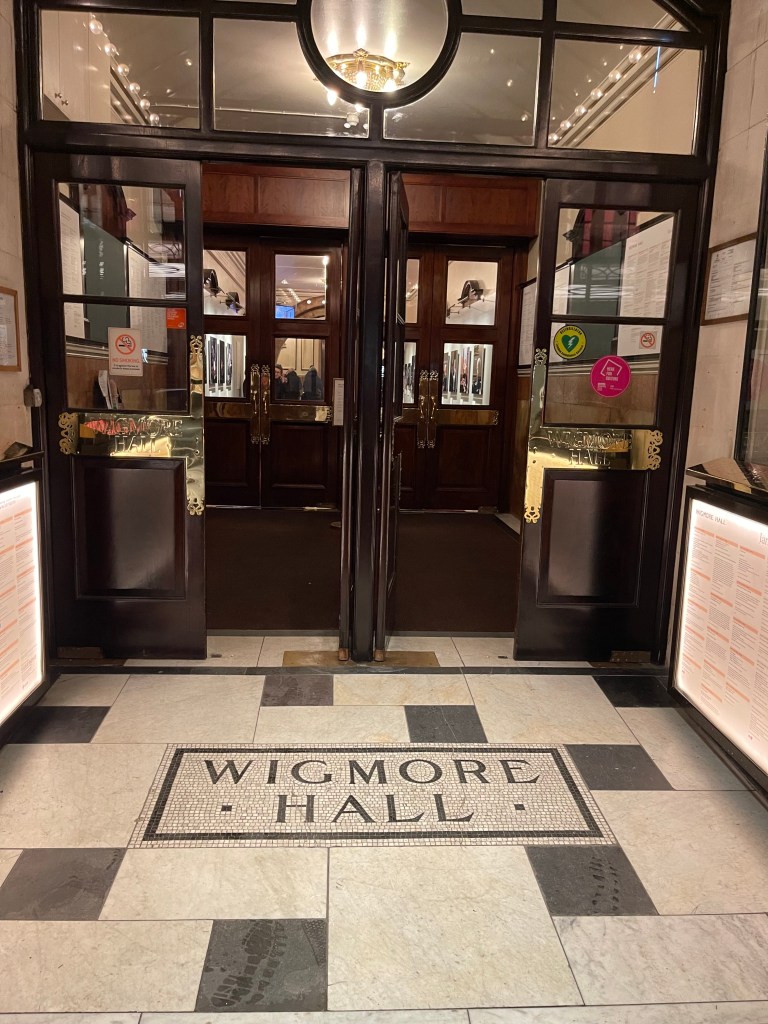
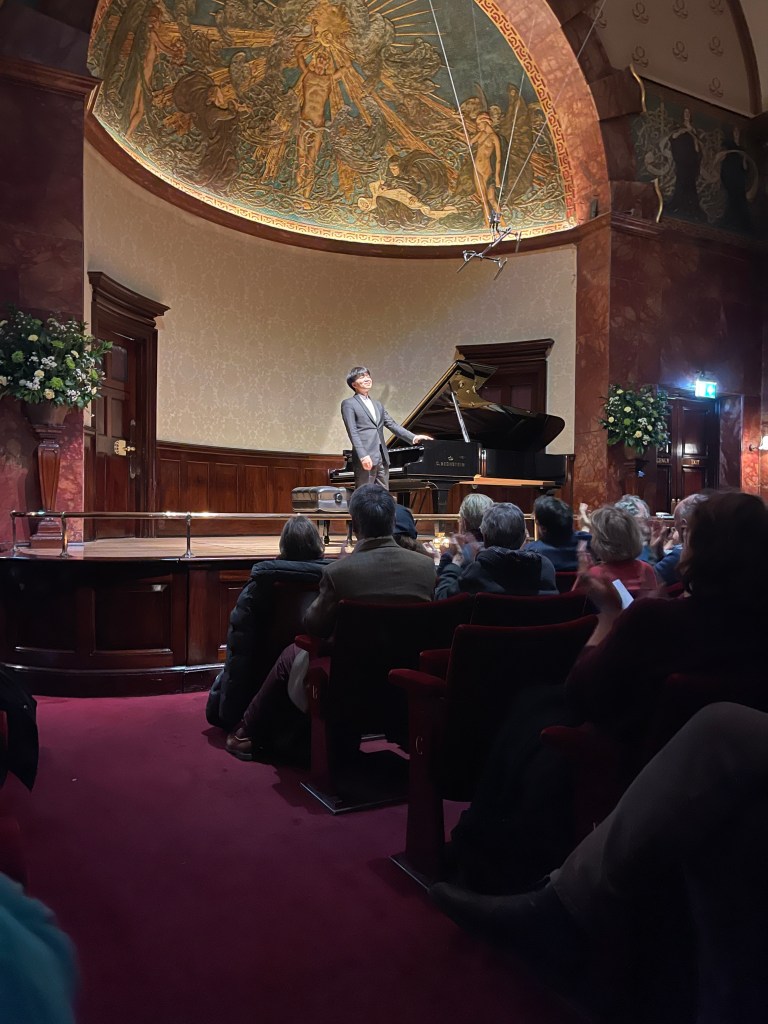
Kit Armstrong with playing of Mozart of luminosity and scrupulous attention to detail . Playing a Bechstein piano which gave a radiance and clarity to all he did .
It was in the last Mozart Sonata in D K 540 that he really could show his architectural sense of shape and a musicianship mentored by his close relationship from a very early age with Alfred Brendel.
Beginning with the Adagio in B minor grouped with the Minuet in D and the little Gigue penned late in life, which showed remarkable musicianship and mastery but missed the sense of improvised discovery that he was to find later in the two sonatas. A crystalline clarity and scrupulous attention to detail but seemed a little too earthbound missing the etherial mystery in the Adagio. The Gigue was a ‘tour de force’ of dynamic playing that reminded me of Serkin but it sounded a little too well oiled and breathless at this tempo. However remarkable playing of extraordinary intelligence and sensibility but on this occasion just missed the magical improvised invention and simplicity that Mozart had distilled in the last years of his life.
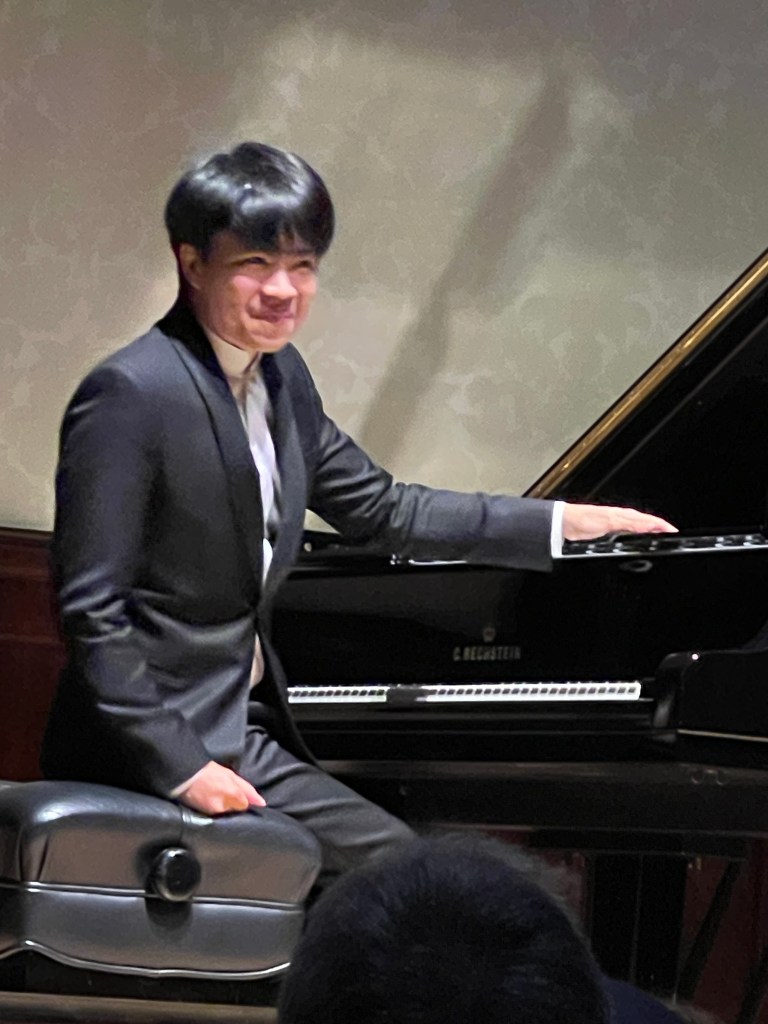
An eclectic musician of extraordinary mastery and authority. A kaleidoscope of colour of refined good taste and knowing scholarship which he brought in particular to the two main works on the programme: the Sonata in D K 576 and that in F K 533/494.
He brought a fluidity to the D major Sonata giving a beautiful shape to the teasing brilliance that Mozart imbues with such subtle meaning and charm. A sense of phrasing the allowed the music to breathe without interrupting the continual forward flow. There was an absolute clarity that allowed us to appreciate the intricate genius of Mozart as the voices converse with each other before dissolving into a whisper, where the final notes are indeed the two rests in the final bar. A beautifully expressive ‘Adagio’ where Mozart’s Bel Canto was shaped with radiance and teasing beauty. I could almost imagine Brendel listening with a twinkle in his eye as Kit played the last two bars with such a subtle jeux perlé touch. The ‘Allegretto’ was played at a courtly pace that allowed the brilliant passages that followed to be shaped with radiance and style. Mozart is enjoying himself playing with this innocent theme, juggling with it in many different and enticing ways. Kit seemed to relish and understand that this was Mozart at play and was pure opera.
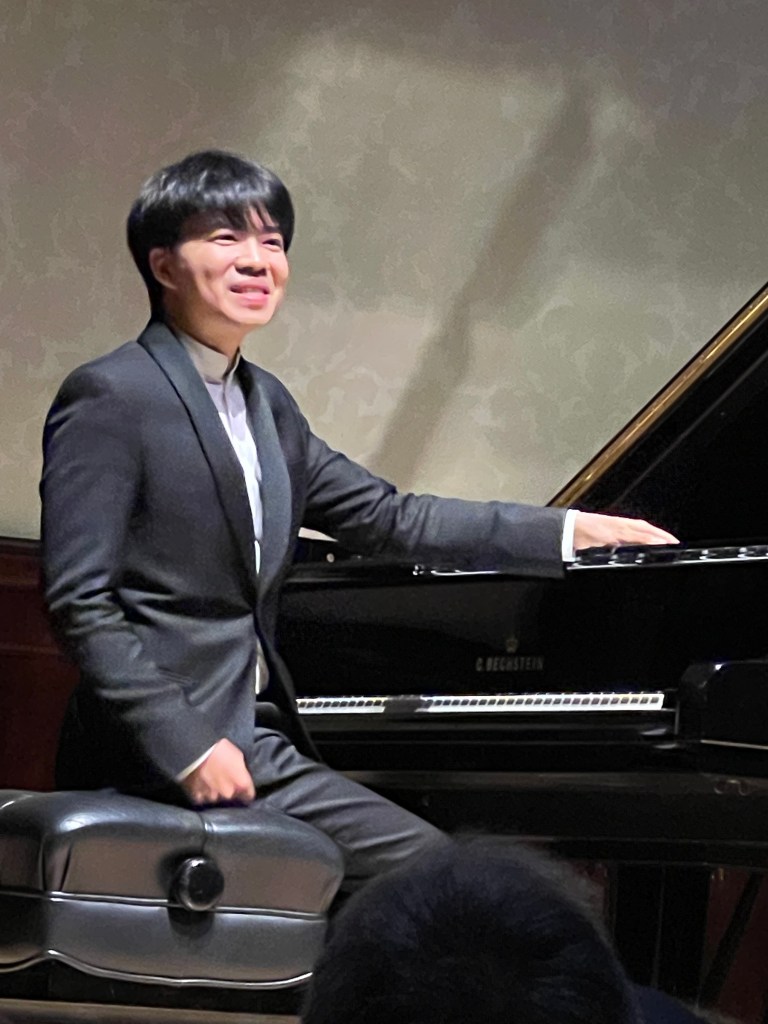
The F major Sonata he played with child like innocence. The intricate counterpoints played with a clarity and brilliance but it was more an intellectual journey than freely inspired . The ending of the first movement was a tour de force of brilliance but owed more to Rachmaninov than Mozart. I found it suddenly became rather overpowering and pianistic rather than charming and operatic. More Serkin than Kempff but nevertheless always remarkable totally committed playing. The ‘Andante’ was played with simplicity and beauty and the extraordinary development almost Beethovenian in the majestic contrasts, making the return so much more beautiful and radiant. The very intricate Rondò was played with beguiling simplicity as it was allowed to flow with charm and grace in two. A tour de force of style and understanding that made this for me the absolute highlight of a very remarkable recital.
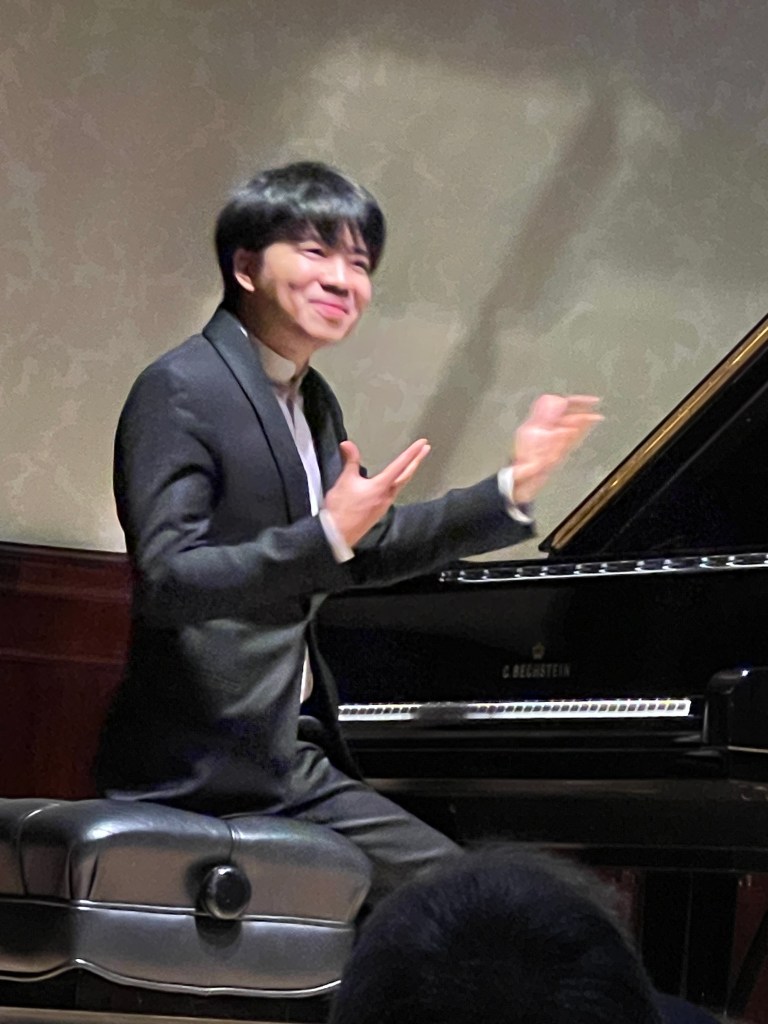
The Fantasia in F minor K 608 could almost have been written by Beethoven such was the imposing majesty of the opening. This was a true discovery from a pianist who is above all a musician of scholarship and refined good taste.
In this week when only last Monday we celebrated Alfred Brendel’s 95th at the Barbican, it was refreshing to hear this thirty year old artist continuing the message that Brendel had bequeathed to him of humility, simplicity and dedication to the composers wishes with a selfless technical mastery that rightly passes unnoticed.
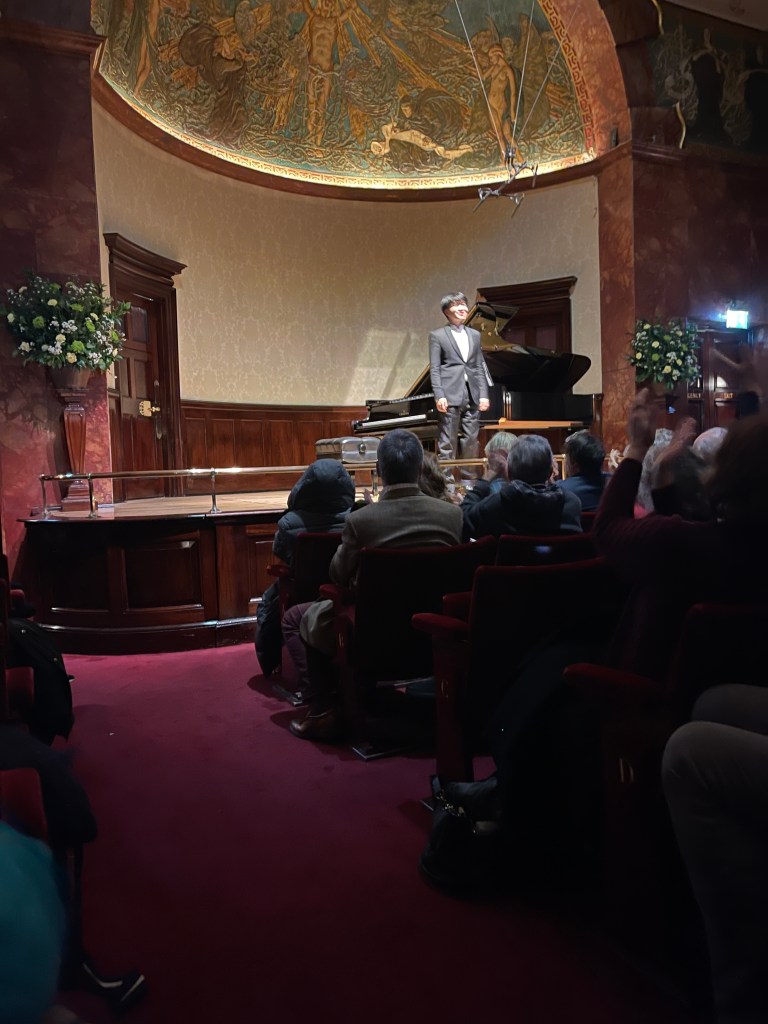
Kit Armstrong writes and performs : ‘Wolfgang Amadeus Mozart’s work for mechanical organ, faithfully reproduced as a piano piece. The limited compass of the original instrument notwithstanding, I find that the original score is much to be preferred to the various transcriptions generally played (of Clementi, Busoni, et al.). It sets “some amusing problems of digitation”*
.https://youtu.be/YsOY7WXM6g4?si=wuGmxwa8FPnT-cee
And after Mozart this eclectic young musicians chose Liszt’s Eight Variations on an original theme op 1 as an encore which had us all guessing as to who the composer might be.
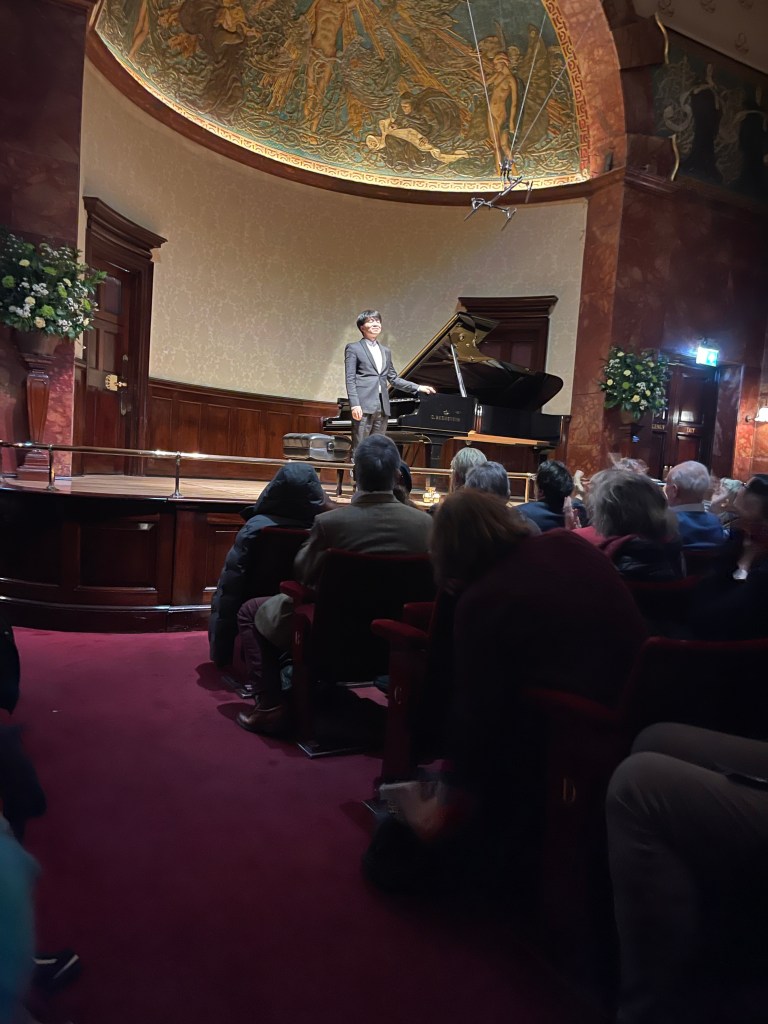
The very first Liszt work published along with his variation on Diabelli’s theme, composed in 1824. This really sounds more like Mendelssohn , and one could never have imagined that a thirteen-year-old Liszt composed such an extraordinary work written no doubt for his own use and dedicated to Sébastien Erard As Leslie Howard points out the work is also of interest because the theme turns up in the so-called Third Concerto.
Born in 1992 in Los Angeles, Armstrong has been described by Alfred Brendel as ‘the greatest talent’ he has ever encountered, not only demonstrating extraordinary aptitude at the piano but also at the organ and as a conductor, as well as being a composer in great demand.
https://youtu.be/JLu9jt4p7jU?si=-i01SqnFu9PaZUfH
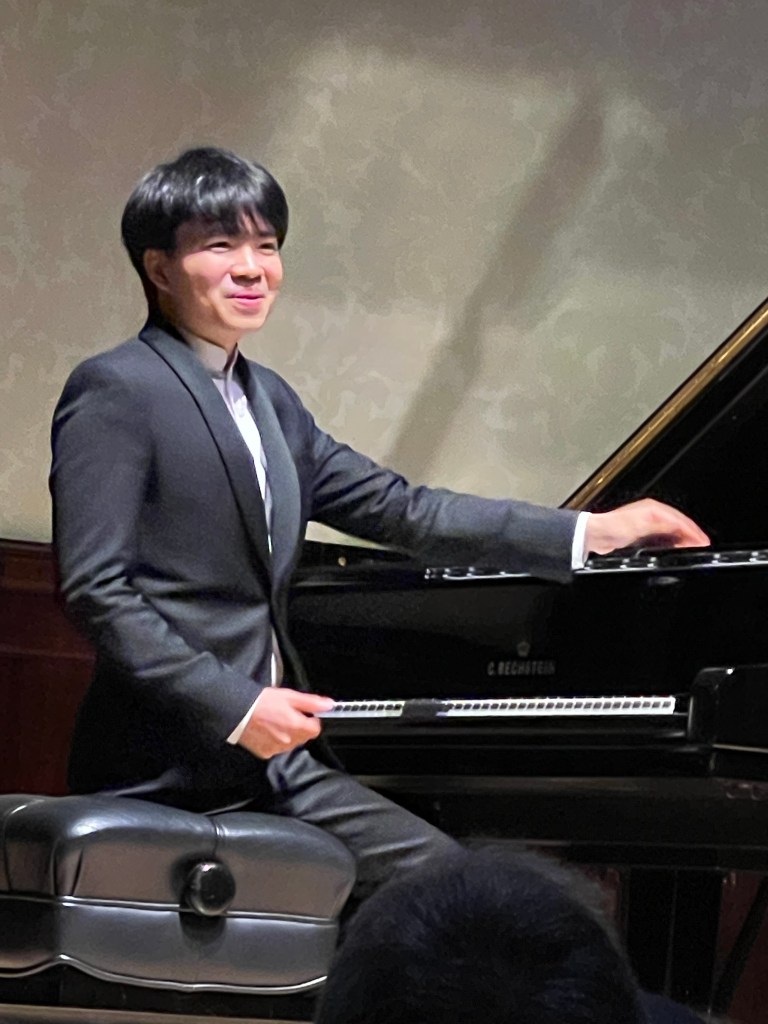
Kit Armstrong collaborates with many of the world’s most sought-after conductors and has been a guest at some of the world’s finest orchestras. In summer 2018, he was Artist in Residence at Festspiele Mecklenburg-Vorpommern and he is ‘Artist in Resonance’ at the Musikkollegium Winterthur. In the same year, he received the Beethoven-Ring by the German society, Bürger für Beethoven.
Recent and upcoming highlights include concerts with the Deutsche Kammerphilharmonie Bremen, Lucerne Symphony Orchestra, Münchener Kammerorchester, Stuttgart Kammerorchester and the Orchestre National du Capitole de Toulouse, and piano recitals at Wiener Konzerthaus, Lincoln Center, Rheingau Musik Festival, Munich’s Prinzregententheater, Ruhr Piano Festival and Schubertiade Hohenems, among others. He has appeared as organist with the Luxembourg Philharmonic Orchestra and Wiener Konzerthaus, and is scheduled to appear at the Bruckner Festival Linz. He gave his acclaimed debut as conductor at Festspiele Mecklenburg-Vorpommern in 2018 and recently was guest conductor with the Bochumer Symphoniker.
Armstrong’s debut recording with works by Bach, Ligeti and Armstrong was released in 2013 by Sony Classical, followed two years later by his second album, Liszt: Symphonic Scenes. His own compositions are published by Edition Peters.
Armstrong studied music at the Curtis Institute of Music and continued the Royal Academy of Music. Aged seven, he started studying composition at Chapman University and physics at California State University, followed by chemistry and mathematics at the University of Pennsylvania and mathematics at Imperial College London. He earned a Master’s degree in pure mathematics at the University of Paris VI. At the age of 13, Armstrong met Alfred Brendel, who has guided him as a teacher and mentor ever since. Their unique relationship was captured in the film, Set the Piano Stool on Fire, by Mark Kidel.Ever since Kit Armstrong entered the global music stage twenty years ago, his activities have exerted an enduring fascination upon music lovers. He performs recitals in major series, appears with the world’s finest orchestras, and has developed close artistic partnerships with leading instrumentalists and vocalists. He has held artist-in-residence appointments incorporating a wide spectrum of musical formats, combining his roles as composer, pianist, conductor, and organist. His project Expedition Mozart, traversing Mozart’s music in various genres with an international group of distinguished chamber musicians and soloists, is a main feature at prestigious festivals and venues.
Armstrong came to classical music through composition at the age of five. He has since created a broad oeuvre of vocal, instrumental, chamber, and symphonic works, many of which have been commissioned by notable European cultural institutions. His compositions are published by Edition Peters.
Armstrong’s piano recordings include the albums Bach, Ligeti, Armstrong (2013) and Liszt: Symphonic Scenes (2016) on Sony Classical, various live recitals on DVD, such as Bach’s Goldberg Variations and its Predecessors at the Concertgebouw Amsterdam (Unitel, 2017), Wagner – Liszt – Mozart at the Bayreuth Margravial Opera House (C-Major, 2019), and 1520-2020: A Musical Odyssey (Damis Films, 2023), a double CD dedicated to a panorama of works by William Byrd and John Bull: The Visionaries of Piano Music (2021) on Deutsche Grammophon, and Mozart’s violin sonatas with Renaud Capuçon (2023).
Born in 1992 in California, USA, Armstrong pursued undergraduate studies in physics at California State University, chemistry and mathematics at the University of Pennsylvania and mathematics at Imperial College London. Alfred Brendel has guided Armstrong as a musical mentor since 2005. In 2008, he earned a bachelor’s degree in music at the Royal Academy of Music, London, and in 2012 a master’s degree in pure mathematics at the University of Paris VI.
In 2012, Kit Armstrong purchased the Church of Sainte-Thérèse in Hirson, France, and transformed it into a hall for concerts and exhibitions, and outreach. This cultural centre has become home to interdisciplinary projects, including the yearly Semaine de la Voix, reaching a regional as well as cosmopolitan public.
https://christopheraxworthymusiccommentary.com/2024/03/20/christopher-axworthy-dip-ram-aram/
 ChristopherAxworthy-MusicCommentary