
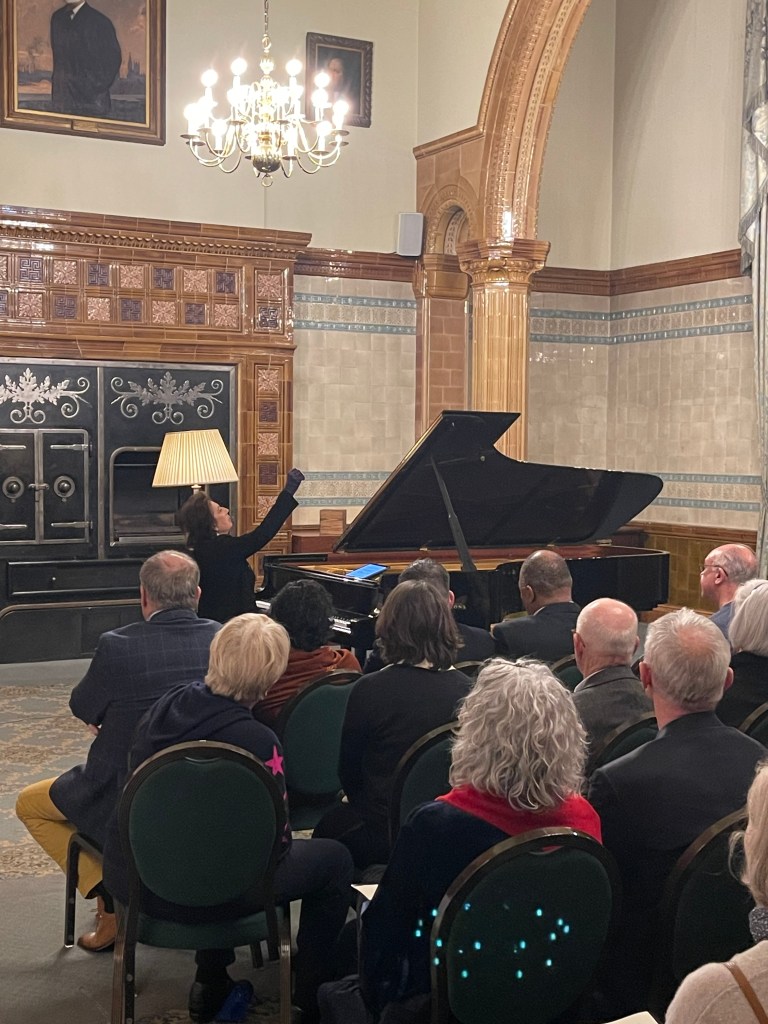
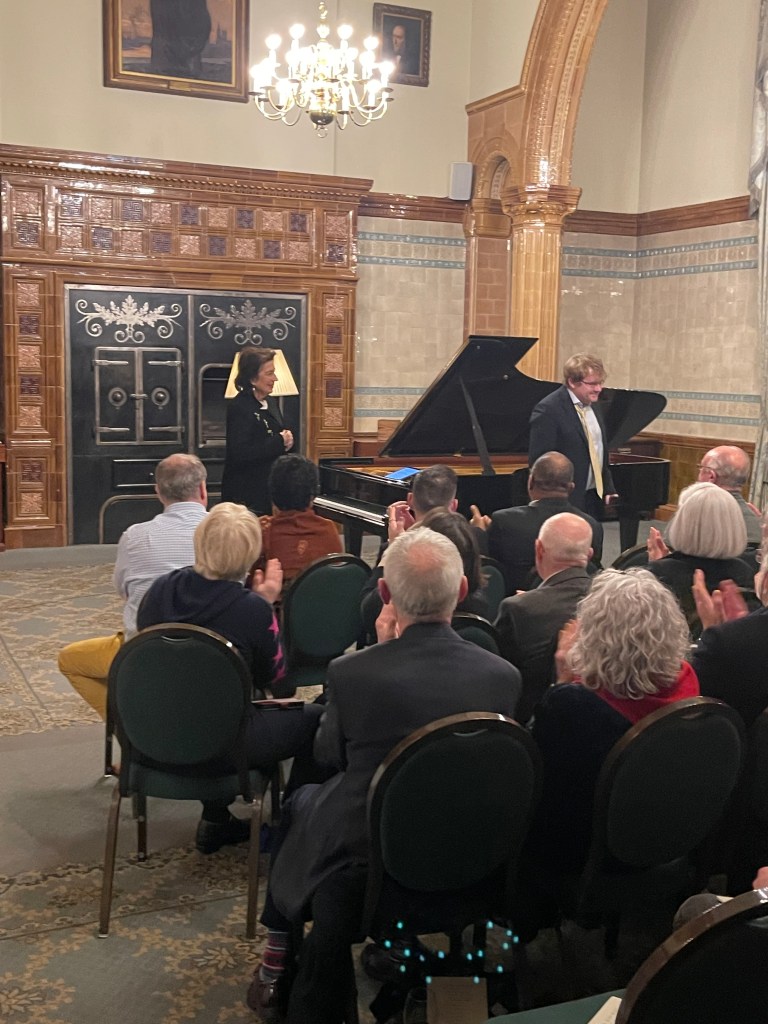
A sublime timeless Schubertiade from Dame Imogen Cooper. An outpouring in which a whole world was described in music from ethereal to dramatic from poignant to heart rending. Aristocratic playing of poise and great humanity where there was no note that was not of significance and meaning in these tone poems that were to be the last ‘miniatures’ to pour from a genius in his final year on this earth.
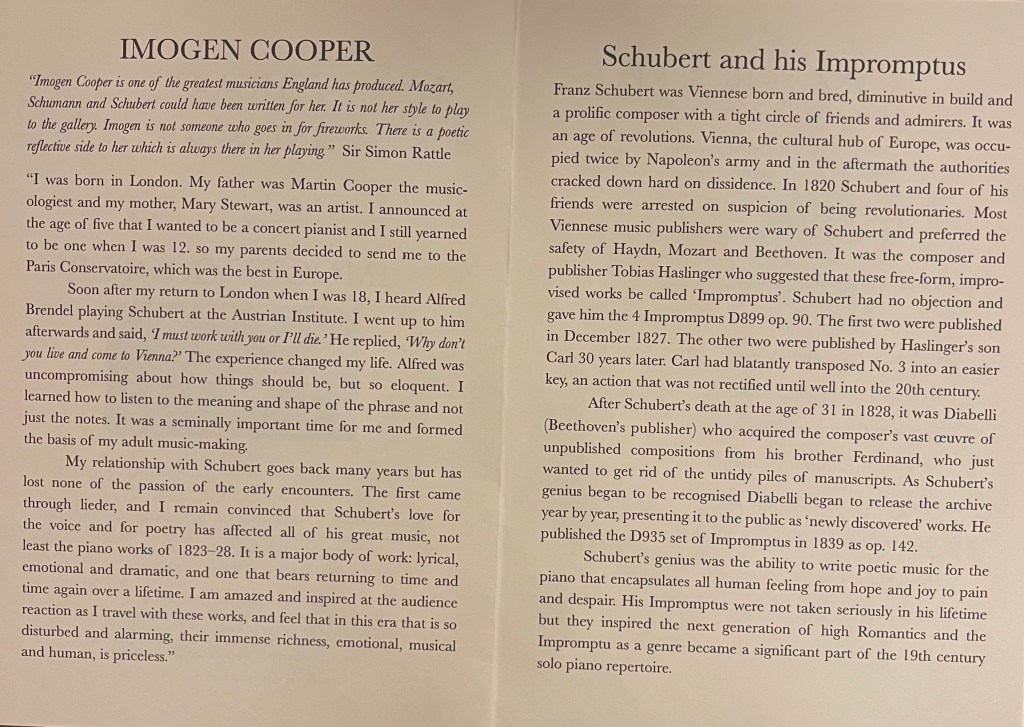
I am reminded of that other great Dame, Myra Hess, whose musicianship distilled over a lifetime as a dedicated and loyal servant to the composer, was where the piano was merely the medium to communicate the message behind the notes. The place where secrets are hidden from all but those who have found the magic key to Pandora’s box of jewels and the very heart of the composer. It was Nadia Boulanger who used to quote Shakespeare to aspiring young musicians who flocked to her studio in Paris :’Words without thought no more to heaven go’. The thought behind Imogen’s notes are surely guaranteed a place in heaven.
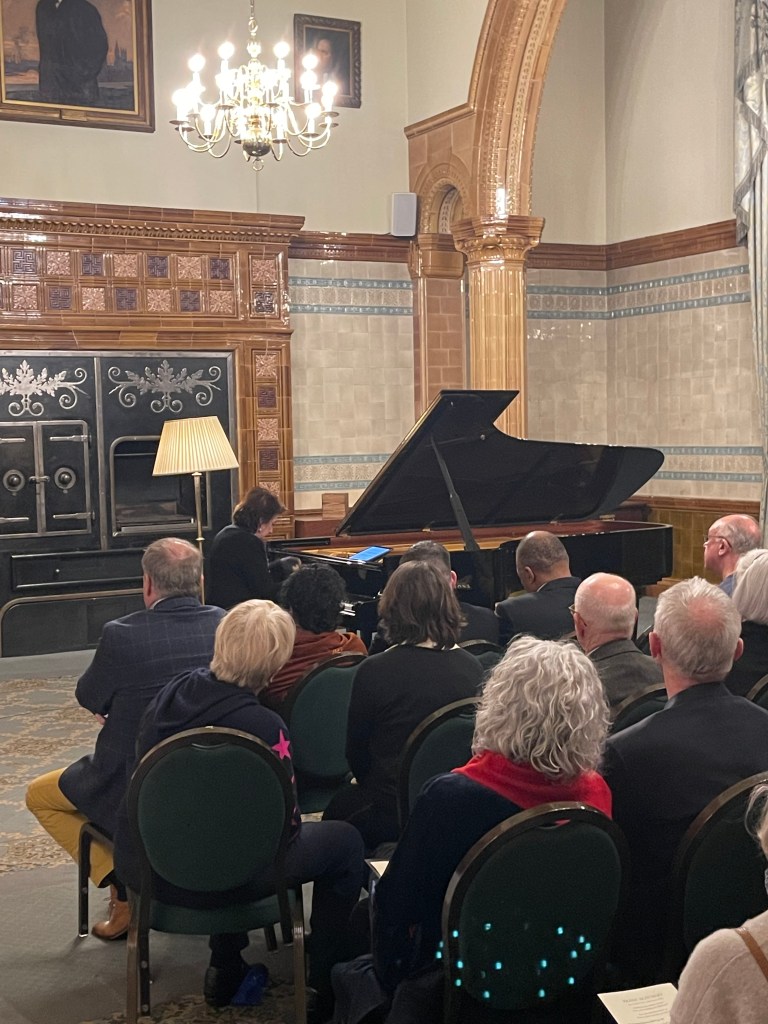
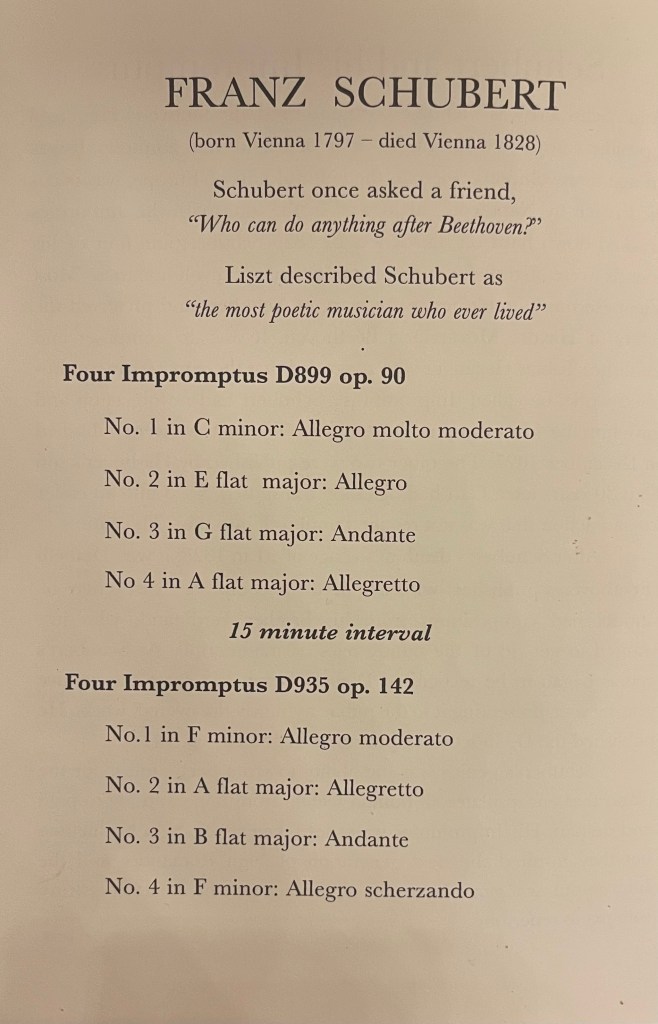
The two books of Impromptus D 899 and D 935 were written in the same period but are two collections of four Impromptu’s that are quite different in length and depth. Poetry and drama live together in sublime harmony in the first Impromptu with Imogen’s scrupulous attention to Schubert’s very precise instructions that she has distilled from a lifetime digging ever deeper into the mysterious vision of Schubert’s last days on earth. The opening ominous single G reappears so poignantly in the coda of this impromptu. It is the same G that beckons us in the last sonata D 960 , with this single note lurking always in the wings. Imogen found a veiled beauty to the single note of a melody that is heard from within the very vibration of this note ,seemingly coming from afar and answered by dry staccato chordal comments. Of course eventually bursting into song but with refined reticence.The ominous vibrating G becomes more apparent as the music becomes more agitated and dramatic, only to be calmed by one of Schubert’s most persuasive melodic outpourings of Viennese charm. The second Impromptu was made of streams of undulating gold and silver sounds where Imogen’s control and perfect finger legato created a sense of harmonic contentment. It lead so naturally into the robust almost military outbursts that Imogen played with passionate abandon and a remarkable sense of balance. Schubert’s swirling counterpoints were never clouded but suggestively revealed from within.The coda was played with dynamic drive and vehemence and the final two chords had the same finality of Beethoven’s no nonsence endings.


The G flat Impromptu was played with sublime timeless wonder with a sense of balance that allowed the melodic line to sing with a ravishing voice but also the harmonies on which it floated creating a sumptuous bed on which to lie. Drama built up from the bass with a beseeching duet between two worlds conversing so eloquently together. A powerful climax where Schubert writes ‘sforzando’ in the bass and gradually it leads to a deeply felt sigh, out of which the sublime opening is allowed to return. This time as if in a dream of whispered wonder ‘avec un sentiment de regret’. Imogen timed this moment to perfection and the silence and concentration from a full hall was one of those magic moments of collective emotion that only live performance can sometimes offer.
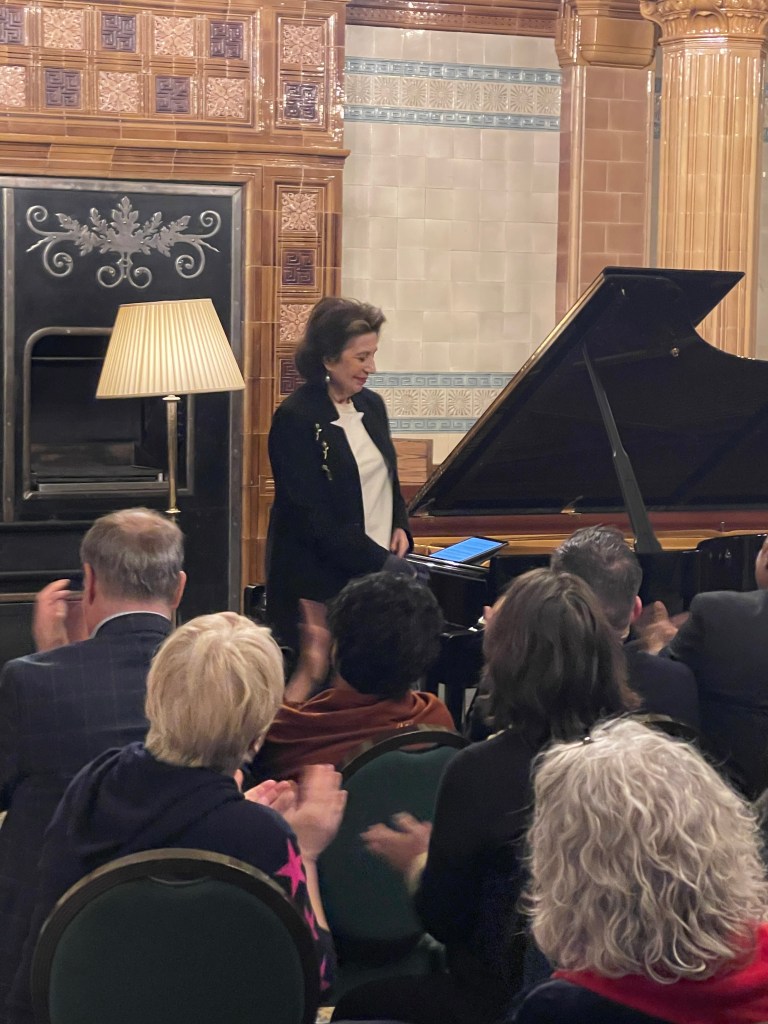

The last Impromptu could almost be called Schubert’s ‘Jeux d’eau’ such was the luminosity and fluidity that Imogen brought to the trickle of watery sounds that she conjured with transcendental mastery from the keys. A perfection of detail but above all an architectural understanding that could give such an overall shape to this extraordinary tone poem. Her wonderful sense of balance where the melodic line emerged from its surroundings but was part of a harmonic whole. Nowhere more was this apparent than in the Trio section where the ever more passionate pulsating of the heart beating chords sustained a melody of passionate vehemence.This cloud soon passes in Schubert ( not so quiescent Beethoven though) and we return to the mellifluous beauty and radiance that were ultimately to fill Schubert’s short life with joy and on occasion grief.
The second set of Impromptus are much longer than the previous ones and were only published many years after Schubert’s death in 1839, with a dedication by the publisher to Liszt. The first Impromptu opens with passion and dynamism dissolving into the etherial. Dramatic flourishes and octave declamations give way to a duet between the hands of haunting beauty. Imogen played the opening flourish with real weight but as she showed us, it is only ‘fp’ and the dotted scale that follows was played like mere rhythmic pulsations.The question and answer of the sublime central duet was played out on an undulating flow of perfectly balanced sounds. Imogen’s remarkable sense of architectural shape allowed her to show us this extraordinary Impromptu as the tone poem of haunting beauty that it truly is. The final three chords were placed with aristocratic perfection where the rests were revealed to be as poignant as the chords.The second Impromptu opened a completely different world. From the orchestrally conceived first we were now in the whispered opening of a ‘lied’ with a solo voice and accompaniment. Playing of great delicacy and beauty of poignant whispered simplicity.There was a flowing beauty to the central episode that was of freedom and plasticity with waves of sound , the bass holding the reins but the notes above allowed to flow and breathe so naturally.

The theme of the variations of the third impromptu was allowed to flow in two with beauty and refined charm. The variations emerged, each out of the previous one, which allowed for a continuous flow where the sense of character that Imogen brought to each variation was so enticing. The drama of the third variation was soon forgotten as the pastoral charm of the left hand melody of the fourth took us to the streams of jeux perlé of the fifth. Notes of such simple fluidity of undulating shapes of whispered beauty. The almost too serious coda was played out with nostalgic poignancy. The fourth Impromptu was played with remarkable control with the excitement very much within the notes. The perfect rhythmic stability that Imogen brought was quite exhilarating and equally as exciting as Serkin’s hysterical dynamism. All through the recital there was a sense of control that in no way restrained the music but gave it a nobility and inevitability of refined maturity. The character she brought to the central episode of this Impromptu was quite exhilarating and even charming and darkly dramatic. It was a kaleidoscope of emotions and a demonstration of Imogen’s mastery of allowing the music to speak with apparent simplicity and directness as it always was with that other Dame ,Myra Hess. Uncle Tobb’s ( Tobias Matthay, Myra Hess’s mentor) used to say that within every note there are hundreds of possibilities and inflections that can illuminate and reveal things where words are just not enough. Imogen has been mentored for a lifetime by Alfred Brendel one of the greatest musicians of our time.

It was only a few days ago that she and her illustrious colleagues celebrated what would have been his 95 th birthday. It was with gratitude and joy, a celebratory gala concert at the Barbican to create funds for the Alfred Brendel trust that will help young musicians of the next generation.
Imogen’s recital tonight was a memorable evening of music making and alarmingly we note that it is part of Imogen’s farewell tour!
Schubert’s Allegretto in C minor played with luminosity and simplicity was indeed a sad farewell.



 ChristopherAxworthy-MusicCommentary