
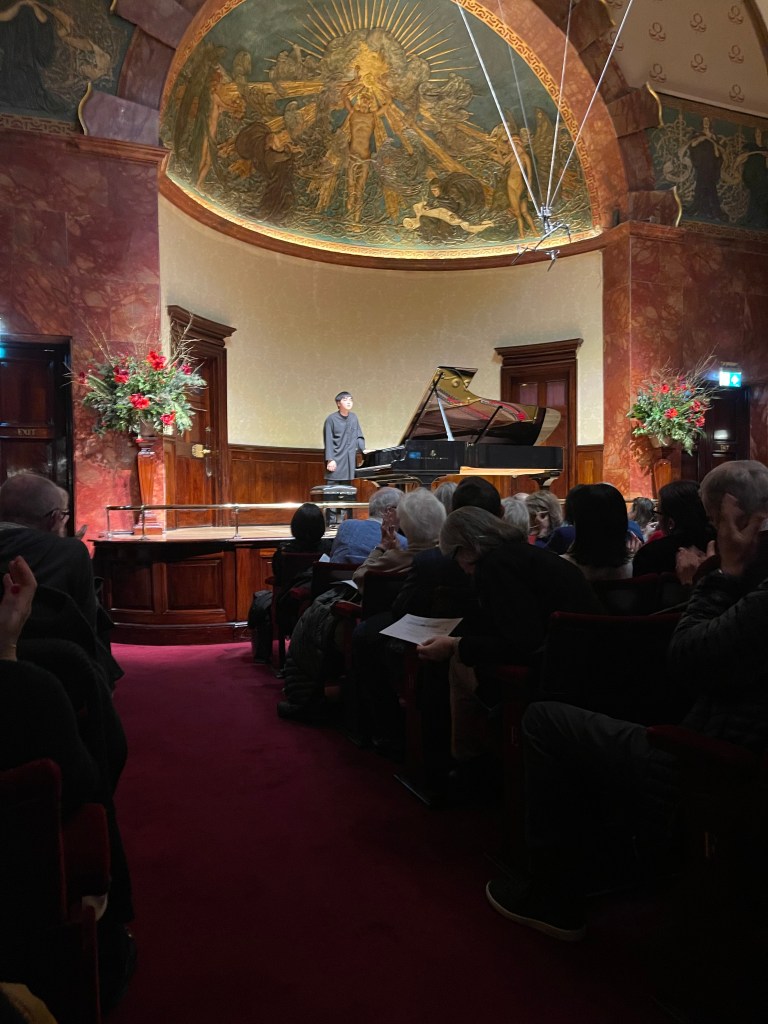
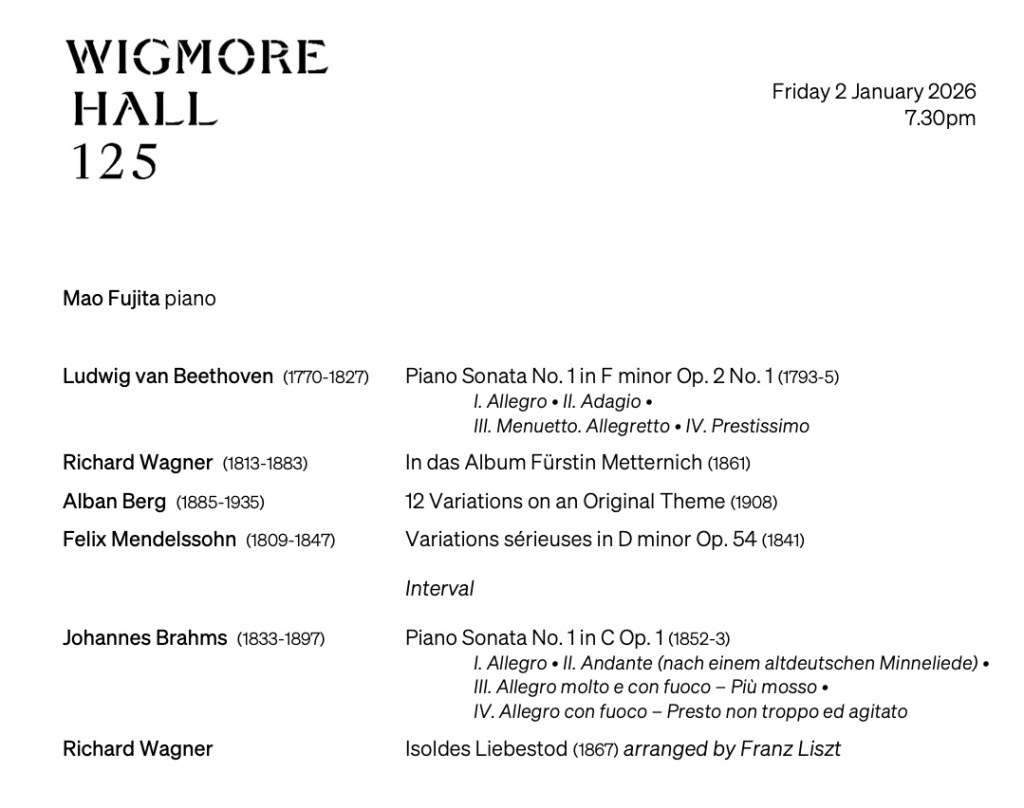
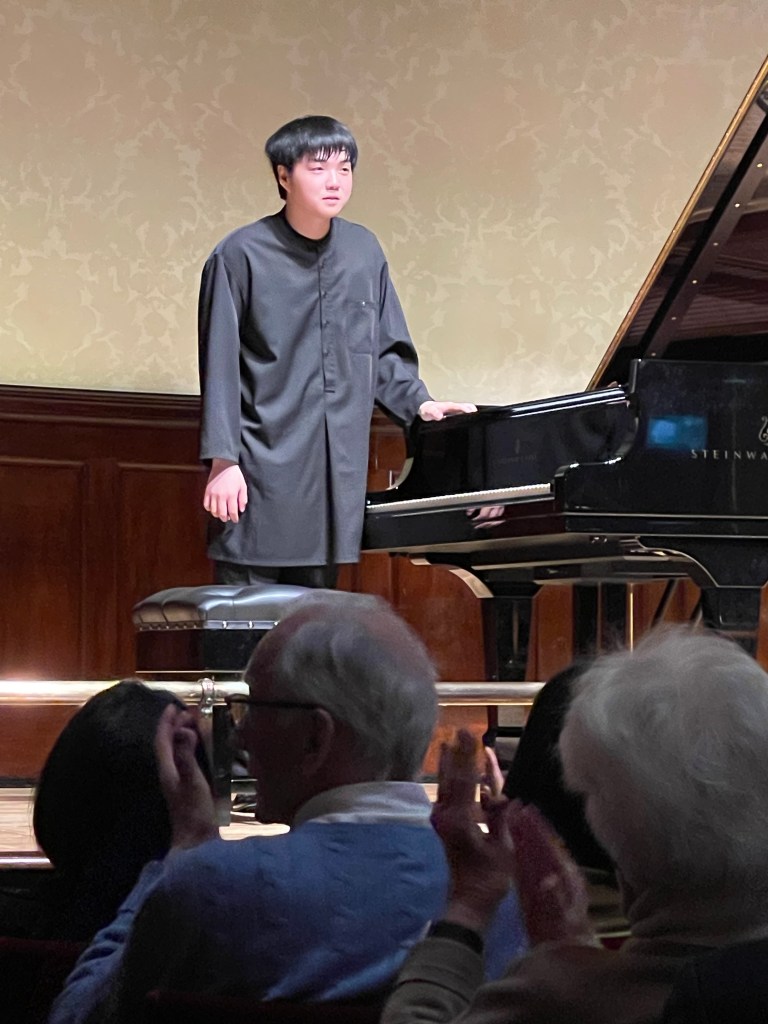
Mao Fujita with ravishing playing of clarity and delicacy. Everything he played was scrupulously observed with microscopic attention to every strand of counterpoint and a sense of balance that could allow many musical lines to live together in perfect harmony. From the very first notes of Beethoven’s first sonata there was a rare sensibility to sound that could create the most astonishing effects. His way of stroking the keys was even more evident in the ‘Adagio’ where his completely relaxed sensibility created a luminosity and fluidity of rare beauty. The final two chords carefully laid to rest but where the silence in-between became as poignant as the sounds. If the ‘Menuetto’ was a shade too fast to accommodate the ‘Trio’, it was in fact Beethoven who had written Allegretto! The ‘Minuet’ played with delicate phrasing allowed the dance element to shine through regardless of tempo indications, but the mellifluous and continuous streams of sound in the ‘Trio’ sounded breathless no matter how sensitively he shaped it. The ‘Prestissimo’ just shot from his fingers with Serkin like dynamism. Even here the mellifluous melodic central episode was floated on a cloud of sound of rare sensibility, contrasting with the driving intensity of the outward episodes in which it was wrapped, with surprising unexpected Schubertian beauty appearing, to calm Beethoven’s irascible, tempestuous impatience.
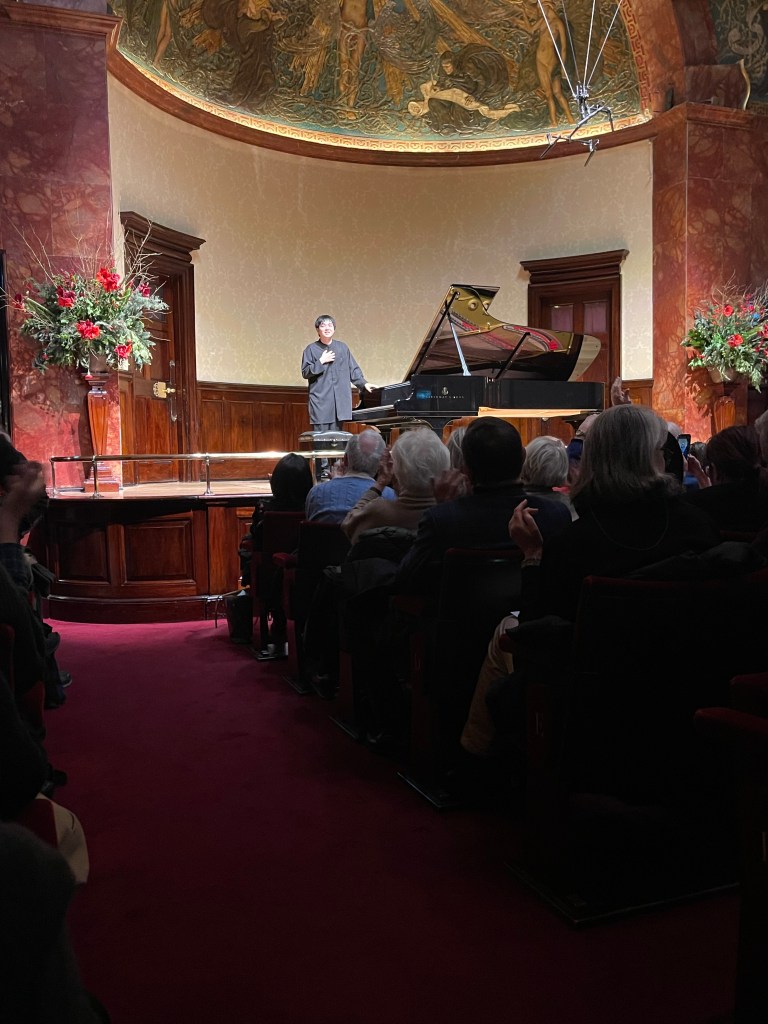
A true Florestan and Eusebius, where the latter won hands down, because of the rare sensibility to sound of this very delicate looking young man. Dressed in a distinguished silk smock as he painted pictures in sound with his total dedication to the composers he was serving. An intelligence and musicianship that he shares with his mentor Kirill Gerstein with whom he has been playing two piano recitals recently in Japan. Gerstein will be playing at the Wigmore on the 7th and is one of the finest most searching of musicians before the public and will be followed later in the month by Robert Levin a walking encyclopaedia of towering scholarship. Wigmore Academy is a unique school for ‘scandal’ indeed !
Fujita continued his musical journey with Wagner’s little ‘album leaf’ written in 1861 for Princess Pauline von Metternich, who thanks to her intervention with Napoleon III, had organised that year the première of his ‘Tannhauser’ which turned out to be such a fiasco.This short piece is a beautiful outpouring of song which Mao played with a more robust orchestral cantabile full of subtle colours, and it lead without a break into the Brahmsian theme of Berg’s 1908 Variations. It was here, as in the Mendelssohn variations that followed, that Mao’s mastery of colour and refined technical perfection allowed both sets of variations to unfold with searing intensity and ravishing beauty. The Berg was given a golden sheen with the generous use of the pedal giving a sumptuous rich sound to Berg’s practically unknown variations. The Mendelssohn are often heard in the concert hall and are a scintillating showpiece of streams of notes of driving intensity. Mao chose to use very little pedal which gave great clarity but on occasion a dryness to his extraordinary ‘ fingerfertigkeit’ where notes just poured from his sensitive fingers. Streams of golden sounds were shaped with the artistry of a pointillist painter. Allowing himself moments of glorious abandon with a continual forward drive to the final chord that Mendelssohn, like Brahms writes into the score for those few that scrupulously observe what the composer actually bequeathed to us!
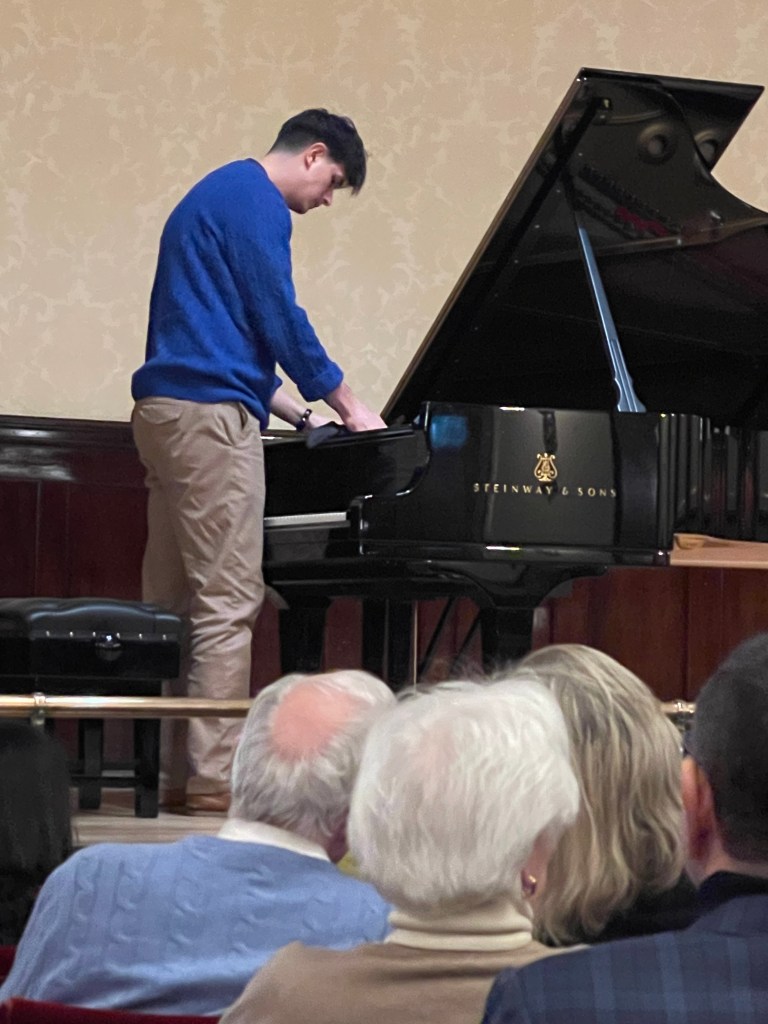
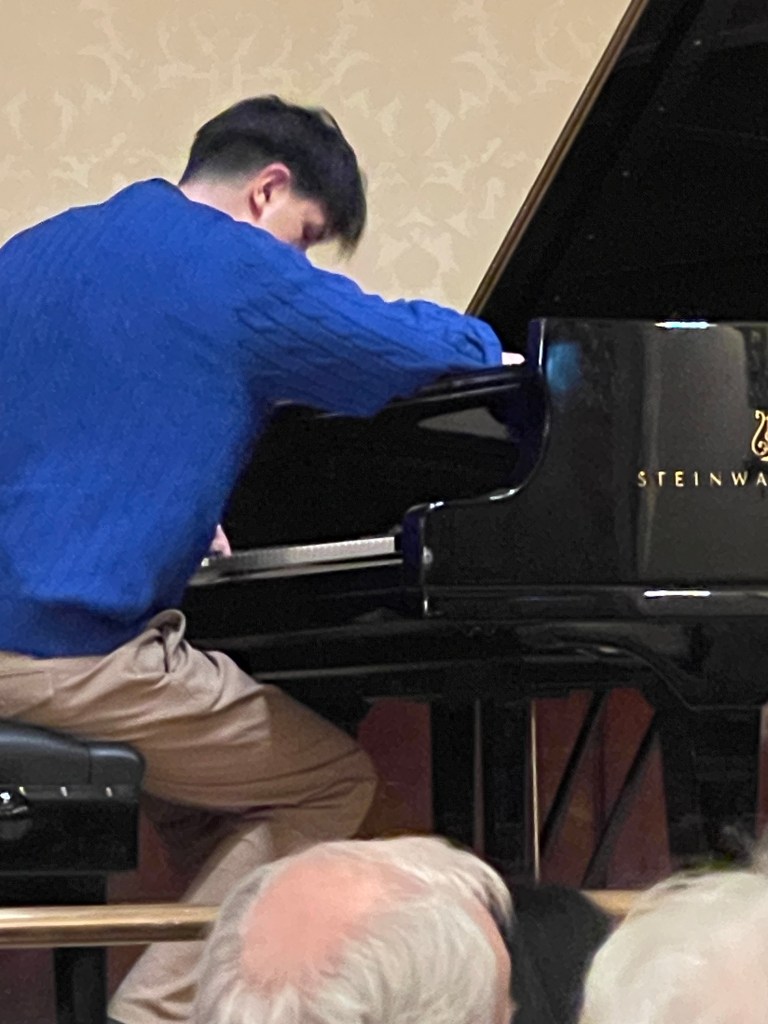
After the interval Mao brought the Berlin Philharmonic to play with Brahms’s ‘Veiled symphonic’ First Sonata erupting with dynamic drive and sumptuous rich orchestral sounds. A fearless outpouring of transcendental playing where now Florestan was in command and Eusebius appeared only with heavenly etherial sounds but where Mao managed to keep the architectural shape always in mind. There was the poignant beauty of the ‘Andante’ with its question and answer of ravishing enticement and an ending of quite etherial beauty thanks to Mao’s mastery of the pedal. Bursting into flames with the ‘Allegro molto e con fuoco’ where Mao played with great strength and rhythmic buoyancy. The ‘Presto non troppo ed agitato’ was played with enviable control but with an incisive rhythmic drive that was hypnotic.
A monumental performance from a refined young artist who first and foremost is a scholar and musician.
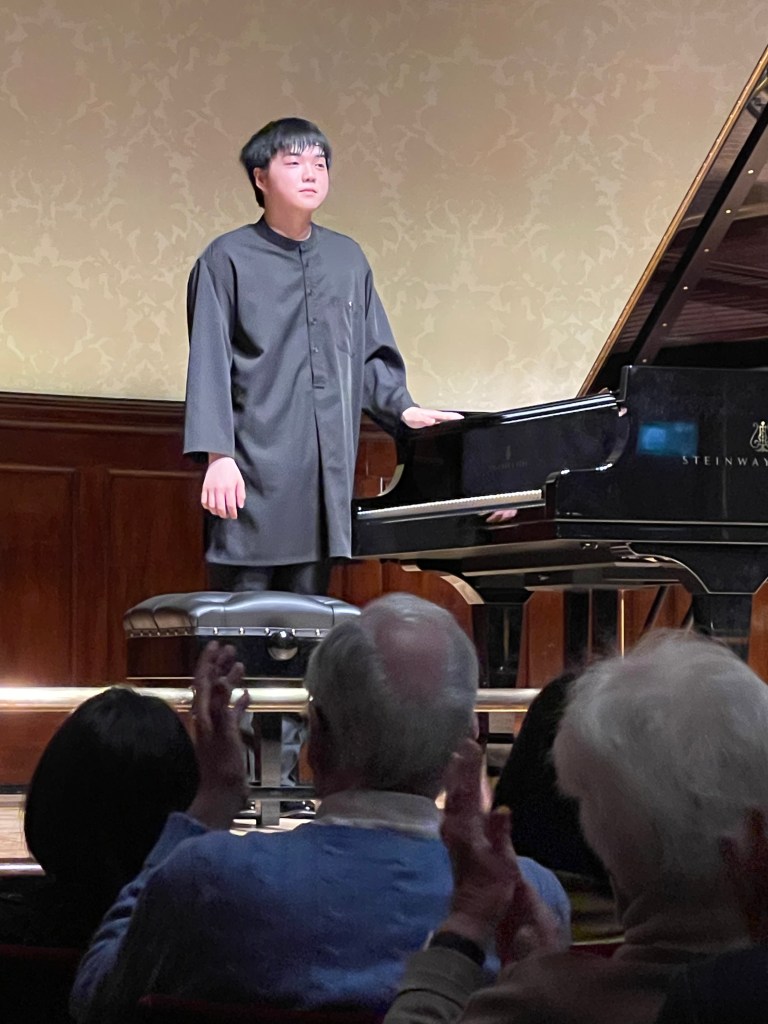
Isolde’s Liebestod grew out of moments of heart rending silence after the dramatic opening chords. Appearing as if in a Venetian mist ,in the distance were overheard the ravishing sounds of Isolde as she joins Tristan in death ‘blissfully accepting oblivion as the ultimate consummation of their love.’ Ravishing playing from a true poet of the keyboard with whispered sounds of glistening beauty and sumptuous waves of passionate outpourings with the glorious richness of Philadelphian velvet.The final chords spread over the keyboard where with baited breath we waited for the final notes to timelessly unfold as this most beautiful of all love stories came to a gloriously tragic end.
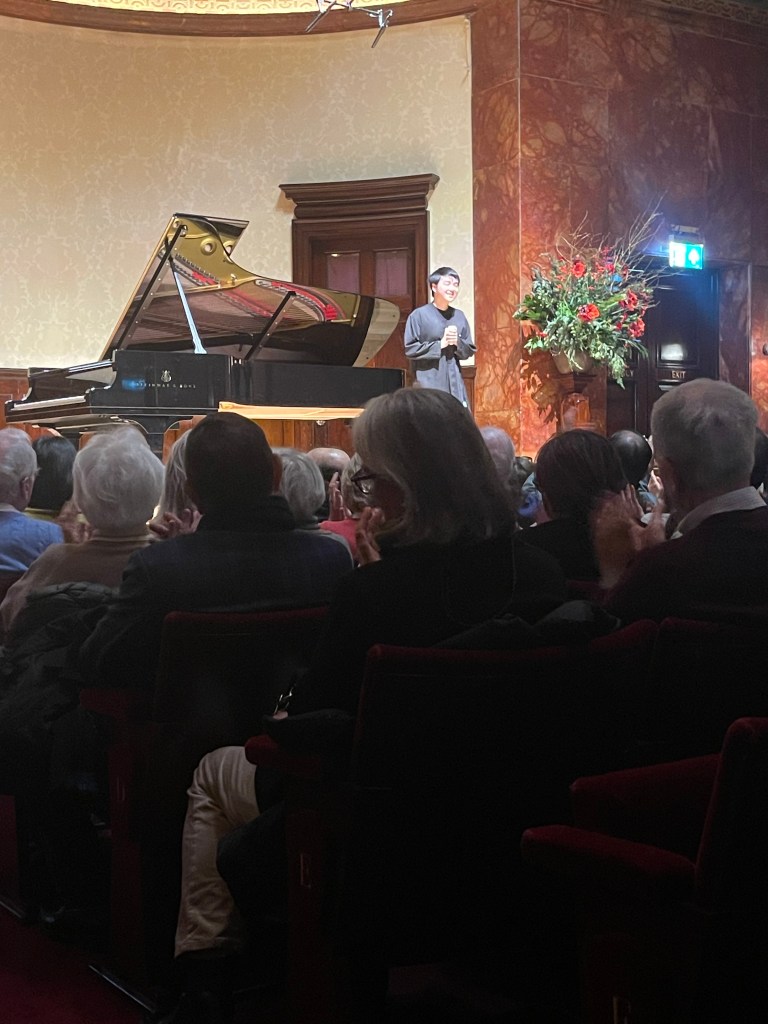
Mao took some persuading to return to the keyboard as he had obviously constructed a musical journey that concluded with Love and Death. However a small souvenir by Ravel was a whispered farewell to a public visibly moved by the artistry of this youthful painter in sound.
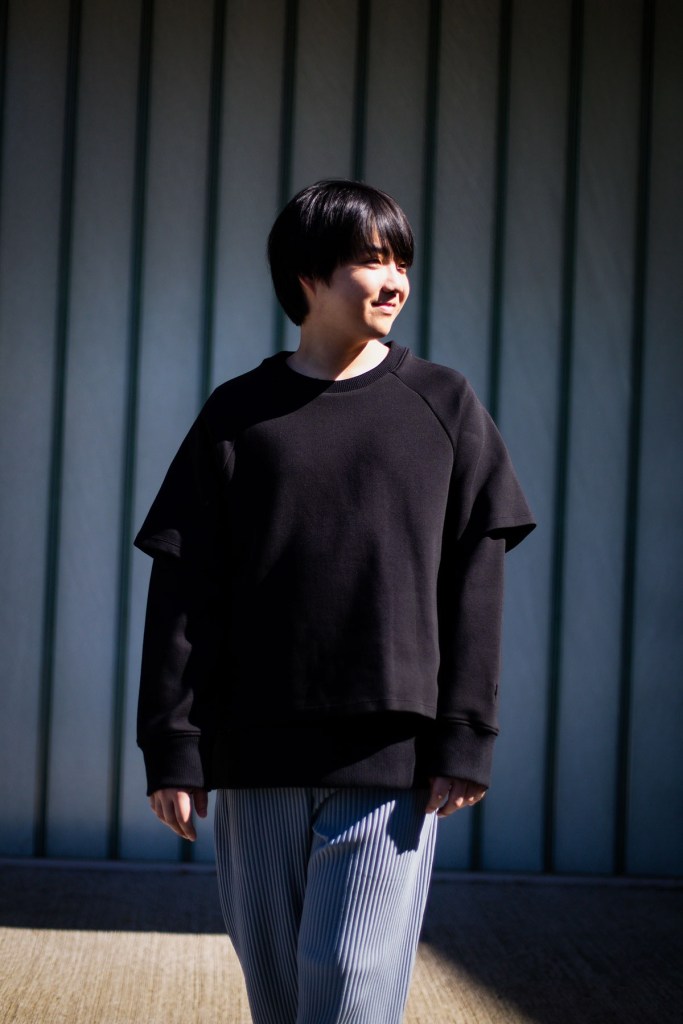
Born in Tokyo, Fujita was still studying at the Tokyo College of Music in 2017 when he took First Prize at the prestigious Concours International de Piano Clara Haskil in Switzerland, along with the Audience Award, Prix Modern Times, and the Prix Coup de Coeur, which first brought him to the attention of the international music community. He was also the Silver Medalist at the 2019 Tchaikovsky Competition in Moscow, where his special musical qualities received exceptional attention from a jury of leading musicians.
In the 2025/26 season, Fujita continues his run of impressive appearances at major festivals and venues across Europe, America, and Asia, including Salzburg Festival, Vienna, Paris, Rome, Luxembourg, Hamburg, Dortmund, Gstaad, Warsaw, Tenerife, Lisbon, Copenhagen, Lyon, and Aix-en-Provence, as well as a recital tour across North America with performances in New York, Cleveland, Boston, Minnesota, San Francisco, Vancouver, and San Diego. Season highlights also include tours in Asia and Europe with Filarmonica della Scala (Chung), Deutsche Kammerphilharmonie Bremen (Järvi), Orchestre Philharmonique de Radio France (van Zweden), and Royal Philharmonic Orchestra (V. Petrenko). In addition, he debuts with the Boston Symphony Orchestra, Toronto Symphony Orchestra, KBS Symphony Orchestra, Oslo Philharmonic Orchestra, Danish National Symphony Orchestra, as well as Orchestre de Chambre de Lausanne and returns with the Czech Philharmonic, Gewandhausorchester, Wiener Symphoniker, Deutsches-Symphonieorchester Berlin, Orchestre National du Capitole de Toulouse, and Orchestra Sinfonica Nazionale della RAI.
Fujita has worked with many of the leading conductors of our time, including Semyon Bychkov, Riccardo Chailly, Elim Chan, Myung-Whun Chung, Christoph Eschenbach, Daniele Gatti, Manfred Honeck, Jakub Hrůša, Marek Janowski, Andris Nelsons, Petr Popelka, Lahav Shani, and Kazuki Yamada. Previous orchestral debuts include the Royal Concertgebouw Orchestra, Lucerne Festival Orchestra, Symphonieorchester des Bayerischen Rundfunks, Münchner Philharmoniker, hr-Sinfonieorchester, Los Angeles Philharmonic, Cleveland Orchestra, National Symphony Orchestra in Washington, Philharmonia Orchestra, NHK Symphony Orchestra, Yomiuri Nippon Symphony Orchestra, and Tokyo Metropolitan Symphony Orchestra. Fujita is also a sought-after chamber music partner and has worked with Renaud Capuçon, Leonidas Kavakos, Emanuel Ax, Kirill Gerstein, Antoine Tamestit, Kian Soltani, and the Hagen Quartett, among others.
Fujita is an exclusive Sony Classical International artist. In October 2022, his eagerly-anticipated debut album on the Sony Classical label, a studio recording of Mozart’s complete piano sonatas, was released to unanimous acclaim for its transparent sound worlds and vividly-detailed interpretation. He has performed the full sonata cycle at the Verbier Festival, the Wigmore Hall, and across Japan’s major concert halls. His second album on the Sony Classical label, a wide-ranging and ambitious set entitled ’72 Preludes’ that champions the 24 Preludes of Chopin, Scriabin, and Yashiro, was released in the autumn of 2024.
Starting piano lessons at the age of three, Fujita won his first international prize in 2010 at the World Classic in Taiwan, and became a laureate of numerous national and international competitions such as the Rosario Marciano International Piano Competition in Vienna (2013), Zhuhai International Mozart Competition for Young Musicians (2015), and the Gina Bachauer International Young Artists Piano Competition (2016).
Fujita is a member of Konzerthaus Dortmund’s series “Junge Wilde” from the 24/25 season.
He is currently studying with Kirill Gerstein at the Hanns Eisler School of Music in Berlin.
 ChristopherAxworthy-MusicCommentary