

I have followed Thomas’s career since that first time when I heard him at the Joan Chissell Schumann Competition at the RCM. A young man who could produce sounds that were unique amongst his very well prepared colleagues . A fluidity of sound and limpet like precision that delved deep into every key extracting a kaleidoscope of sounds that like Magdalene Ho a few years later was to mark them out as born artists kissed by the Gods. As Curzon rightly said, though, piano playing is ninety per cent hard work and ten per cent talent. It is that ten per cent, though, that is made up of passion and supreme concentration that whilst they are at the keyboard nothing else exists. Of course there is also a world outside of practicalities and order and it is here that Thomas has struggled to come to terms and learn to combine both discipline and order with such a natural God given gift for music.
I listened to this recital in awe as the young teenager of yore has come of age with a confidence and mastery that brought him a standing ovation from an audience not expecting to be electrified by hypnotic performances of such mastery. What the public did not know, and why should they, that Thomas had been rung up the night before to substitute a pianist from Canan Maxton’s Talent Unlimited stable, who had been taken ill. The indomitable Canan Maxton who selflessly offers help and encouragement to many of the most talented musicians in the capital has, quite rightly, a privileged rapport with this most beautiful of churches and also with a less well know but equally beautiful venue in St Pancras Church in Euston Square.
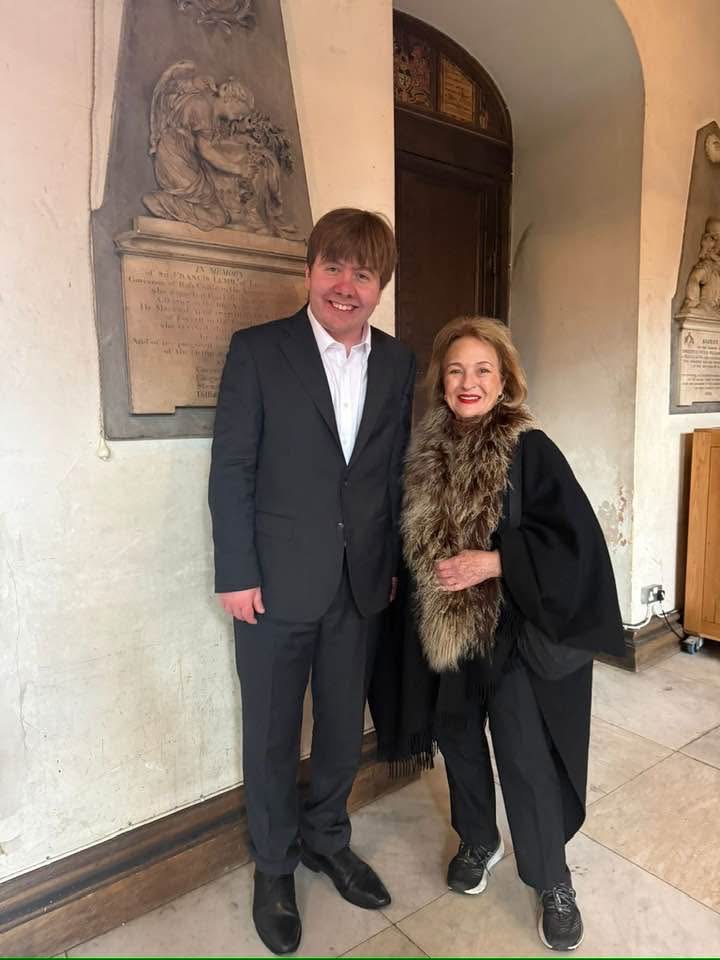
That a young artist could appear in such impeccable style with a smile on his face as he was about to play a programme that would scare the life out of any but the greatest of virtuosi. He is preparing for an important competition in Utrecht where he will be noticed and celebrated in an eclectic repertoire especially chosen by Leslie Howard, that includes many works that have been totally neglected by pianists intent on playing the same pieces over and over again instead of delving deep into the musty archives of a bygone age and finding some neglected gems.
Leslie Howard was revered as a student by Guido Agosti ( a student of Busoni) in Siena and Rome and working together with Noretta Conci (Michelangeli’s assistant for fifteen years) has recorded works that are unique to the overfull recorded library. His complete Liszt recordings for the ever adventurous Hyperion label has earnt him an entry with Olympic athletes and whatever else in the Guinness Book of Records.
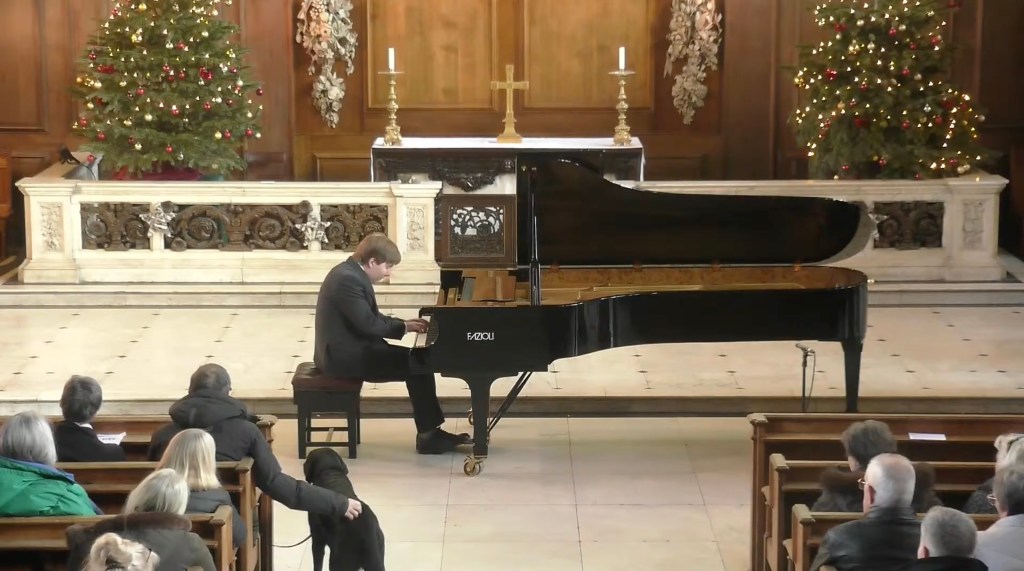
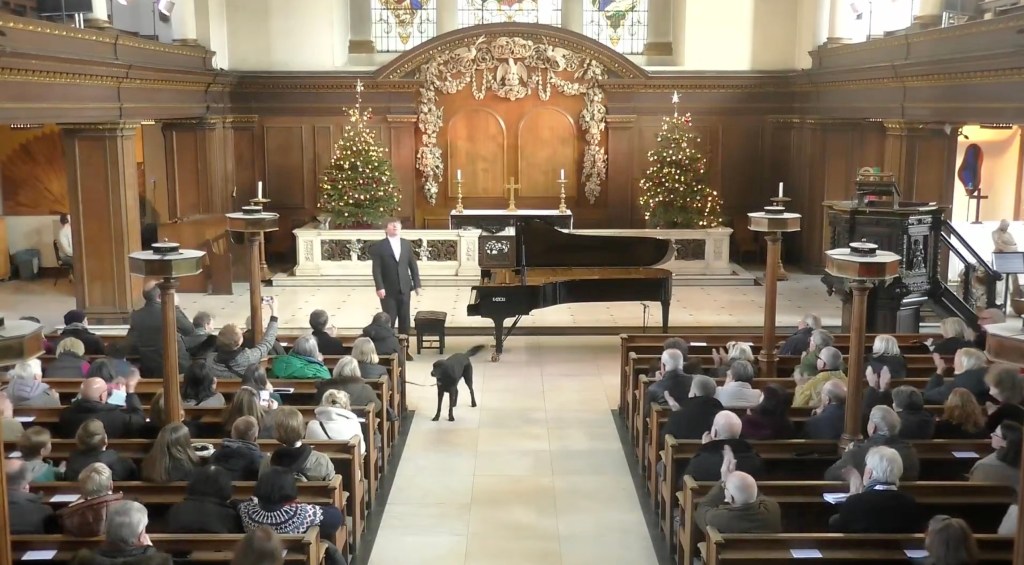
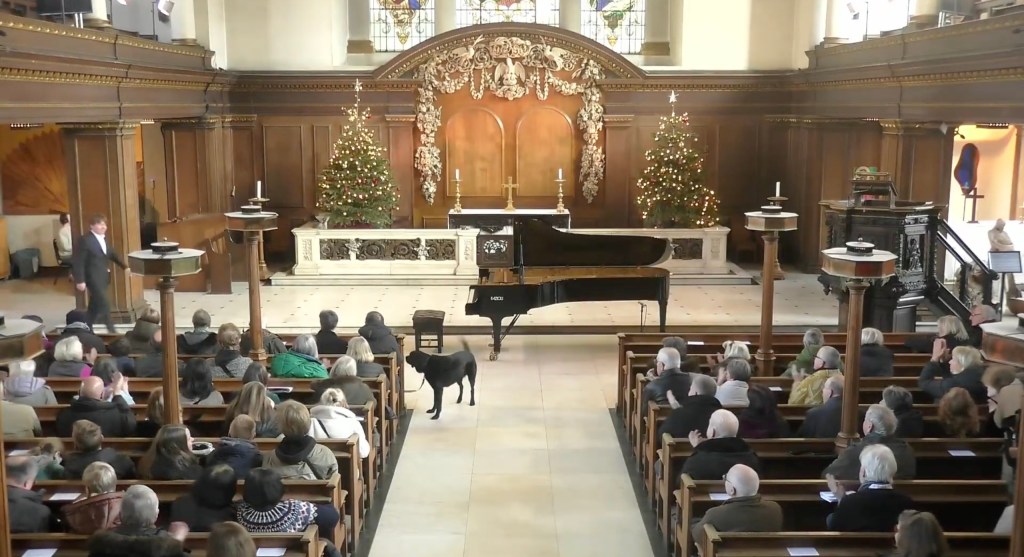
I have heard the Weber Konzertstück a few times with orchestra. The very first time was a recording with Joseph Cooper together with an equally unknown work by Turina, Rapsodia Sinfónia (1931). Josph Cooper better remembered as the compère of a television quiz ‘Face the Music ‘ but he was also a distinguished concert pianists having studied with Egon Petri ( also a student of Busoni). But the performance I remember above all was with Claudio Arrau together with Liszt Totentanz in the Royal Albert Hall. Brendel’s ( who we celebrate at the Barbican on Monday ) recording,too, is remarkable and shows with what esteem Weber is held by such great musicians, including Gilels and Richter, whose performances of the second and third Sonatas in London were memorable. It was fascinating to hear this Liszt reworking of the last two movements played with extraordinary clarity and rhythmic precision. The interruption of a glissando to the triumphant glorification of the march startled even the dog sitting with a wagging tail in the front row! Grandeur and aristocratic control with a remarkable sense of style which he had learnt for his much loved teacher and mentor Andrew Ball.
A scintillating ‘Presto Giocoso’ that Tom relished, sometimes cutting corners that he will no doubt polish with the jewel like precision he was to bring to the Weber Rondò from the Sonata n. 1. The ‘Perpetuum Mobile’, that many students have shed tears over, but that Tom played with the refined aristocratic ease of the pianists of the Golden Age of piano playing of Levitski, Lhevine and Rosenthal.And let’s never forget our own Benno Moiseiwitsch!
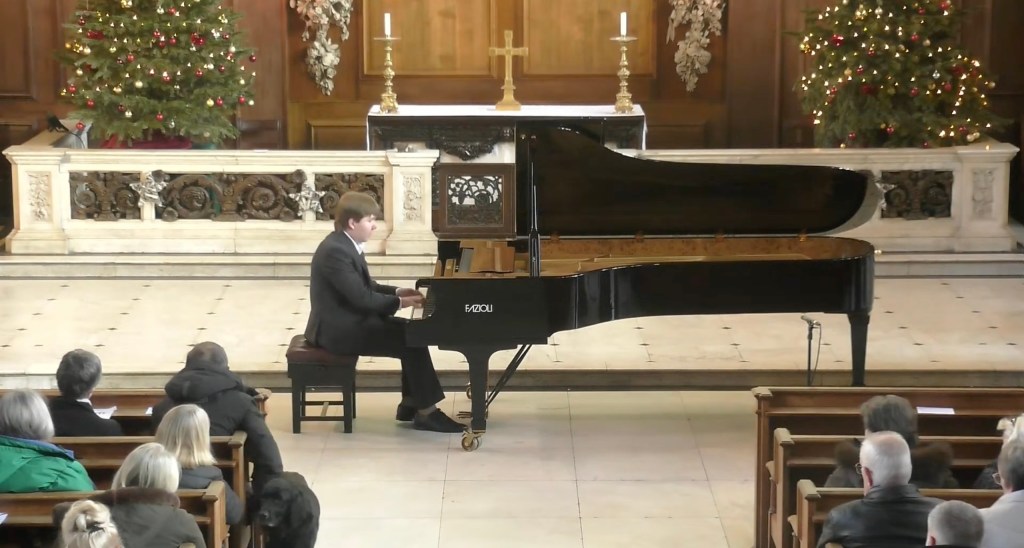
The last two movements of the ‘Pastoral Symphony’ were remarkable for the character he brought to Beethoven’s terrifying tempest and heavenly resolution as the sun comes shining through and the clouds clear with a Pastoral description in music that is without equal. Tom brought mastery, clarity and precision but above all a radiance and beauty that even had the dog wagging his tail in satisfaction !
Dmitri Alexeev was to take over the reigns from the man that I saw arm in arm together with Tom the very first time I had encountered him at the Schumann Competition.
The Alexeev’s have nurtured and helped Tom’s outrageous talent grow and be ordered allowing his sense of style and sumptuous sounds to be ever more deeply engraved in his music making. Motivated now by Vanessa Latarche, the indomitable head of keyboard at the RCM which she inherited from Andrew Ball. A small world and one big family!
An unexpected and extraordinary transcription by the legendary pianist Ignaz Friedman of the second movement of Mahler’s Third Symphony that Tom played with knife edge brilliance and an extraordinary sense of balance.
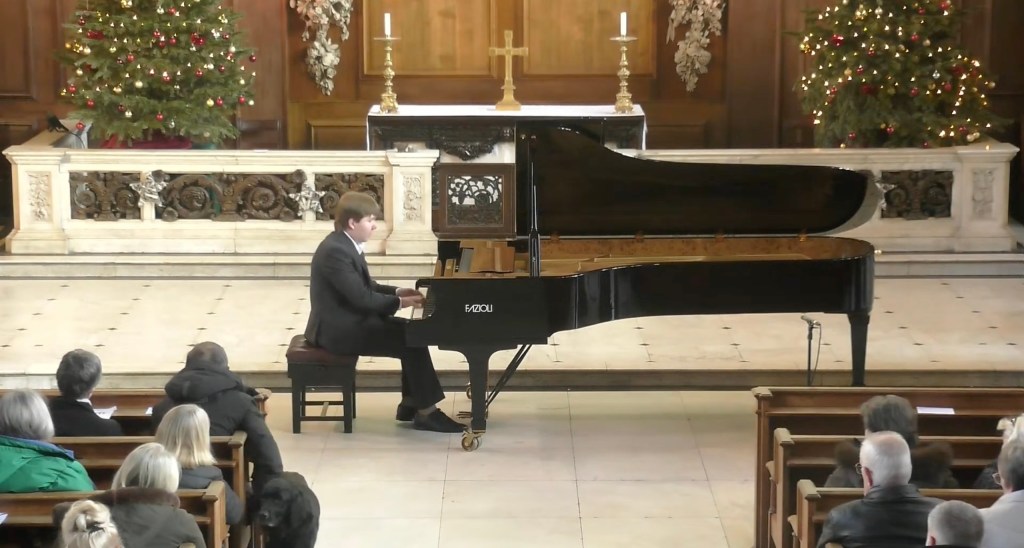
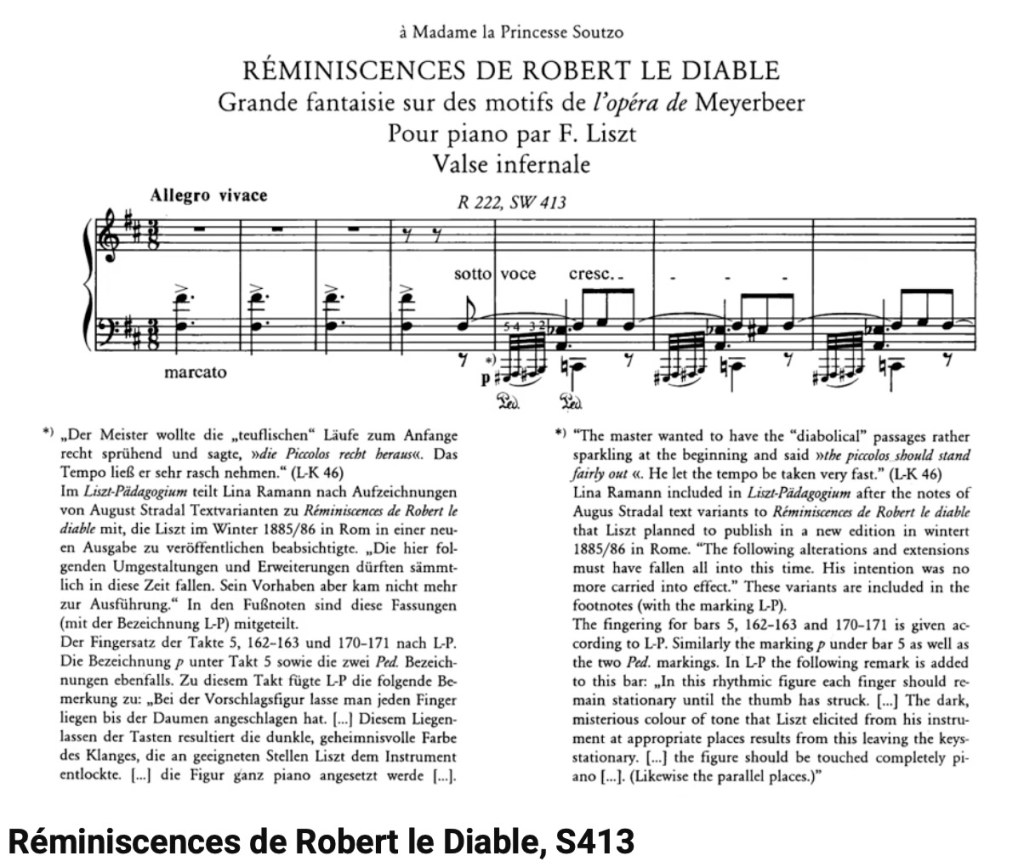
This was a prelude to some of the most demonic playing of Liszt’s almost unplayable Réminiscences de Robert Le Diable that “some day Liszt in heaven will be summoned to play his Fantasy on The Devil before the assembled company of angels.’ Exhilarating,exciting,seduc tive and quite overwhelming playing that reminded me of Sir Thomas Beecham when conducting Tchaikowsky for Horowitz to whom he complained that his orchestra could never keep up with such demonic playing.
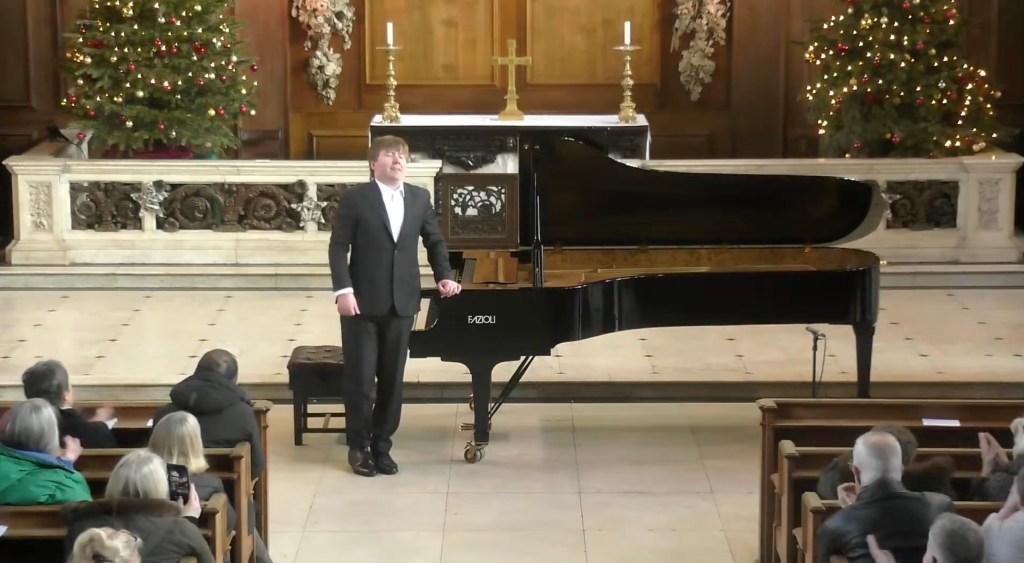
Even the dog by now was on his feet as were many of the audience to cheer an artist on the crest of a tidal wave that will carry him around the world in a lot more than eighty days !

‘The Valse infernale from Meyerbeer’s Robert le Diable was one of Liszt’s successi strepitosi in his years as a travelling virtuoso, and the title belies a more complicated genesis—in addition to the waltz, which is an orchestral firework with chorus in Act III, themes from the ballet music are also woven into this tour de force. The unpublished elaboration of Meyerbeer’s Cavatine dates from 1846, and is a bar-for-bar transcription of the Isabella’s ‘Robert, toi qui j’aime’ from Act IV. The piece ends on a dominant seventh and cannot be played by itself, but since Liszt has transposed the original up a semitone to F sharp major, it seems quite likely that he intended to add this beautifully contrasting piece of pianistic delicacy to the beginning of his famous recital warhorse, the Valse infernale‘. Leslie Howard
Horror show thrills did not originate in Hollywood — in fact, the “dream” or “nightmare factory” of movie production was anticipated in its most lurid artifacts by nineteenth and early twentieth century opera. Pacts with the devil, the undead, demoniac possession, the strutting Devil himself were part and parcel of early Romanticism, from the lofty philosophical heights of Goethe’s Faust (which gave rise to a number of musical works quite apart from the evergreen of Gounod’s Faust, Boïto’s Mefistofele, and Mahler’s “Symphony of a Thousand”) to Weber’s classic Der Freischütz, premiered in 1821, with its stunning Wolf’s Glen scene, and Marschner’s Der Vampyr in 1828, which influenced the young Wagner. All are possessed by demon-crossed lovers and rife with plot complications turning up again every season in spates of predictable B movies to gorge an apparently inexhaustible appetite. Eugène Scribe, that master of the operatic hot property, cobbled together a libretto potpourri of the genre for the wealthy Meyerbeer who composed the most phenomenally successful operatic spectacle of the century, the first “grand” opera, Robert le diable, premiered at the Opéra on November 22, 1831, to such earth-shaking success that it is credited with making the fortune of that moribund institution. Robert, son of the devil Bertram by a mortal woman, is led into temptation by his father at every turn, though ultimately saved by the love of a good woman (a theme very dear to Wagner). The third act features an epitome of poor taste that thrilled generations of opera-goers as Bertram summons the ghosts of nuns who violated their vows to dance a Valse infernale. Liszt, an avid opera fan, transcribed this waltz in 1841 as Réminiscences de Robert le diable — Valse infernale, which he performed for the first time at a recital in the Salle Erard on March 27, 1841, creating a furor — it sold out the same day it was put on sale by his publisher, Maurice Schlesinger. Schlesinger, at that time, was tossing journalistic assignments and musical hackwork to the obscure Richard Wagner, then in perilous financial straits in Paris. At an all-Beethoven fundraising concert on April 25, with Berlioz in command of the orchestra and Liszt the featured soloist, a clamorous audience refused to allow the program to proceed until Liszt at last consented to perform the Valse infernale. Reviewing the event for the Dresden Abendzeitung, Wagner snarled “Some day Liszt in heaven will be summoned to play his Fantasy on The Devil before the assembled company of angels.”
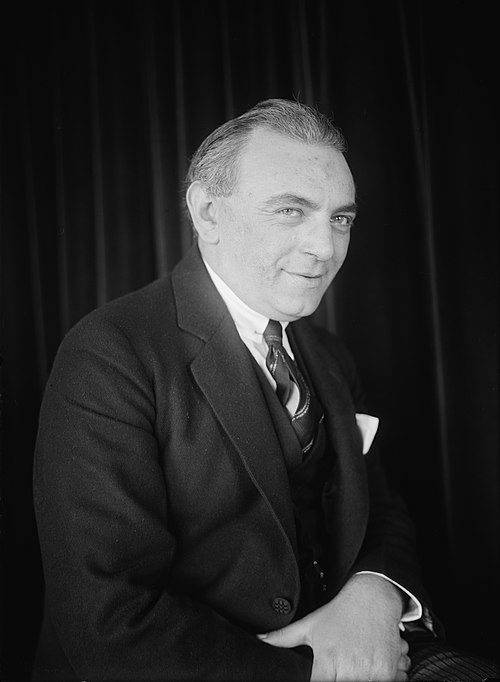
Salomon Izaak Freudmann. February 13, 1882 Podgórze, Kraków Poland
January 26, 1948 (age 65) Sydney ,Australia .
Tempo di Menuetto, Sehr mässig (What The Flowers In The Meadow Tell Me)
As described above, Mahler dedicated the second movement to “the flowers on the meadow”. In contrast to the violent forces of the first movement, it starts as a graceful menuet. Opening with a tranquil oboe solo, the music also features stormier episodes, one of which featuring rapid rolls in the rute.also known as a multi-rod, is a beater for drums. It calms down at its end, however, and the movement ends with a staccato note in the harp and glockenspiel.
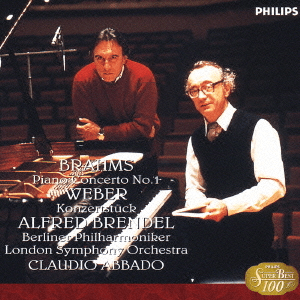
Admired by Liszt (who published his own version, with variants)
Leslie Howard writes : ‘Liszt prepared the four sonatas and six other works of Weber in practical editions for publication in 1868 and 1870. Corrected reprints were issued in 1883. Liszt’s version for solo piano of the Konzertstück, Op 79, composed for piano and orchestra by Weber in 1821. Liszt incorporates the reduction of the orchestral parts and the original solo part on the same two staves (as it had appeared in earlier editions—the original arranger of the orchestral part is not given). Liszt provides many suggestions of alternative texts and, where necessary, of a combination of the solo part and its orchestral accompaniment playable—even if with difficulty—by two hands. The structure of this single-movement concerto was of great importance to the development of Liszt the composer. Liszt first played the work in 1833, when he was not yet twenty-two, and Weber’s fusion of several sections into one movement was to be a lifelong influence upon him, if not quite such an obsession as the Schubert ‘Wanderer’ Fantasy.’
The F minor Konzertstück was first mentioned in a letter to the critic Rochlitz, dated 14 March 1815. This makes clear that Weber from the outset had some kind of programmatic concerto format in mind, since, as he put it, ‘concertos in the minor without definite, evocative ideas seldom work with the public’ (he refers to parting, lament, profoundest misery, consolation, reunion, jubilation). Subsequently in 1821 (on 18 June, the day of the Berlin premiere of Der Freischütz), he played through a version to his wife, Caroline, and Julius Benedict, explaining (according to Benedict):
The lady sits in her tower: she gazes sadly into the distance. Her knight has been for years in the Holy Land: shall she ever see him again? Battles have been fought; but no news of him who is so dear to her. In vain have been all her prayers. A fearful vision rises to her mind—her knight is lying on the battlefield, deserted and alone; his heart’s blood is ebbing fast away. Could she but be by his side, could she but die with him! She falls exhausted and senseless. But hark! What is that distant sound? What glimmers in the sunlight from the wood? What are those forms approaching? Knights and squires with the cross of the Crusades, banners waving, acclamations of the people; and there!—it is he! She sinks into his arms. Love is triumphant. Happiness without end. The very woods and waves sing the song of love; a thousand voices proclaim its victory.
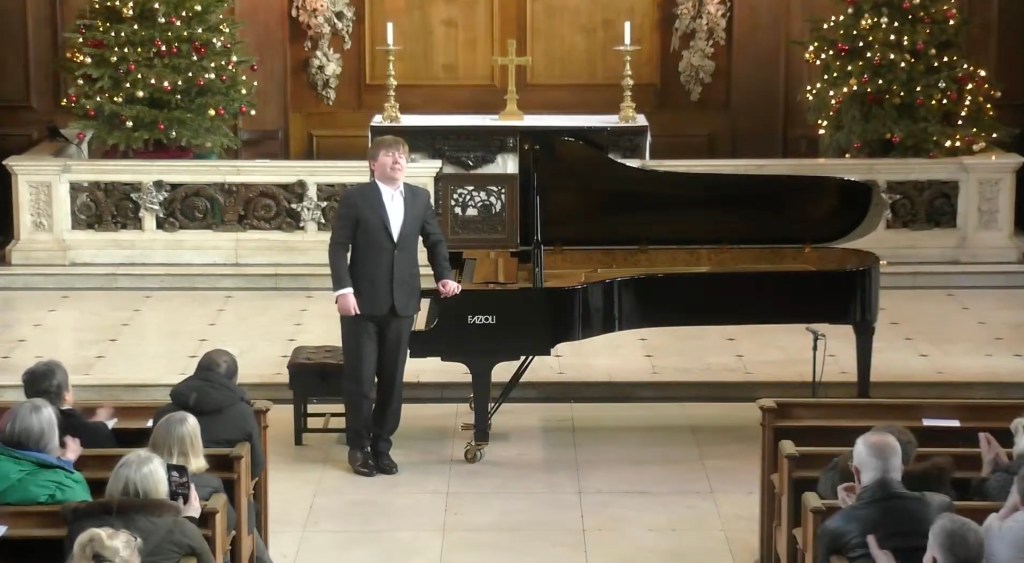
Thomas Kelly started playing the piano aged 3 and aged 9 performed Mozart’s 24th Concerto with Orchestra. Thomas studied at the Purcell School for Young Musicians and is currently the Benjamin Britten Fellow at the Royal College of Music, (the highest award for any pianist at the RCM) where he is guided by Professors Dmitri Alexeev and Vanessa Latarche.
Thomas was a prizewinner at the 2021 Leeds International Piano Competition, enjoying critical recognition and in 2022 won 2nd Prize and the semi-final concerto prize at Hastings International Piano Concerto Competition. He has won numerous international competitions including 1st prizes at the Pianale International Piano Competition (2017), Kharkiv Assemblies (2018), Lucca Virtuoso e Bel Canto Festival (2018), Theodor Leschetizky Competition (2020), and Intercollegiate Sheepdrove Piano Competition (2022). In 2024 Thomas was awarded the Queen Elizabeth, the Queen Mother Rose Bowl upon graduating the RCM, and most recently became a finalist of the International Liszt Competition in Utrecht which will take place in January 2026.
He regularly collaborates with fellow musicians, including stepping in for Nikolai Demidenko alongside Dmitri Alexeev in his transcription of Stravinsky’s Firebird Suite for 2 pianos in 2021, and performing Messiaen’s Turangalila-Symphonie with Jac van Steen conducting the RCM Symphony Orchestra at the Royal Festival Hall. Past performances include Wigmore Hall, Cadogan Hall, St John’s Smith Square, Steinway Hall, Leighton House, St James’ Piccadilly, Stoller Hall (Manchester), West Road Concert Hall (Cambridge), Leeds Town Hall, Kammermusiksaal Berlin Philharmonie, Paris Conservatoire, the TivoliVredenburg in Utrecht, the Lunel-Viel festival near Montpellier, StreingreaberHaus in Bayreuth, Teatro Del Sale and the British Institute in Florence. Thomas was also recently featured on the BBC Arts In Motion documentary series in a masterclass with Yuja Wang.
Thomas has also been a C. Bechstein Scholar supported by the Kendall-Taylor award, generously supported by the Keyboard Charitable Trust, and is grateful for the generous support of Talent Unlimited . Thomas is currently looking forward to a solo Wigmore appearance and regular concerto appearances among other upcoming performances.


 ChristopherAxworthy-MusicCommentary