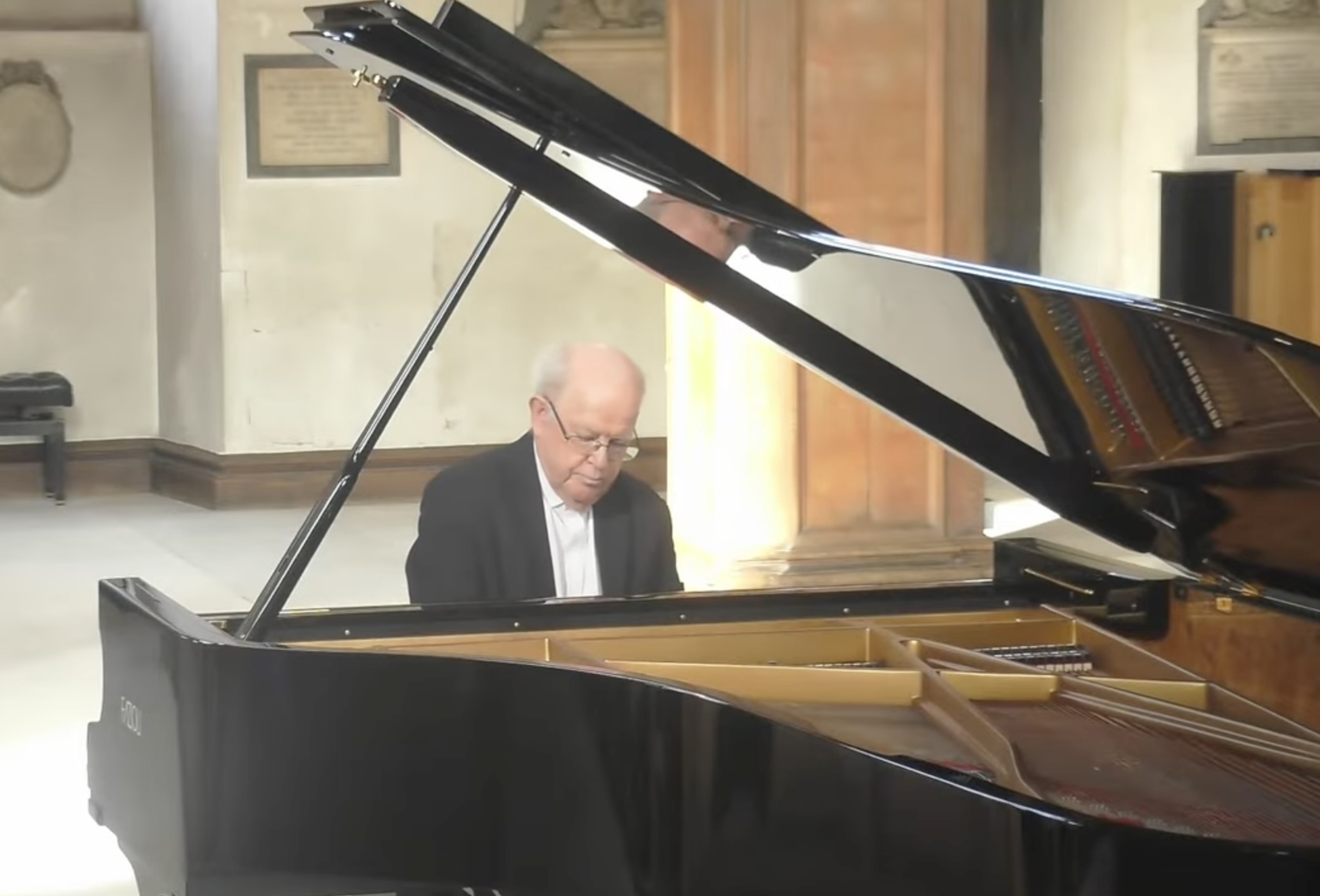
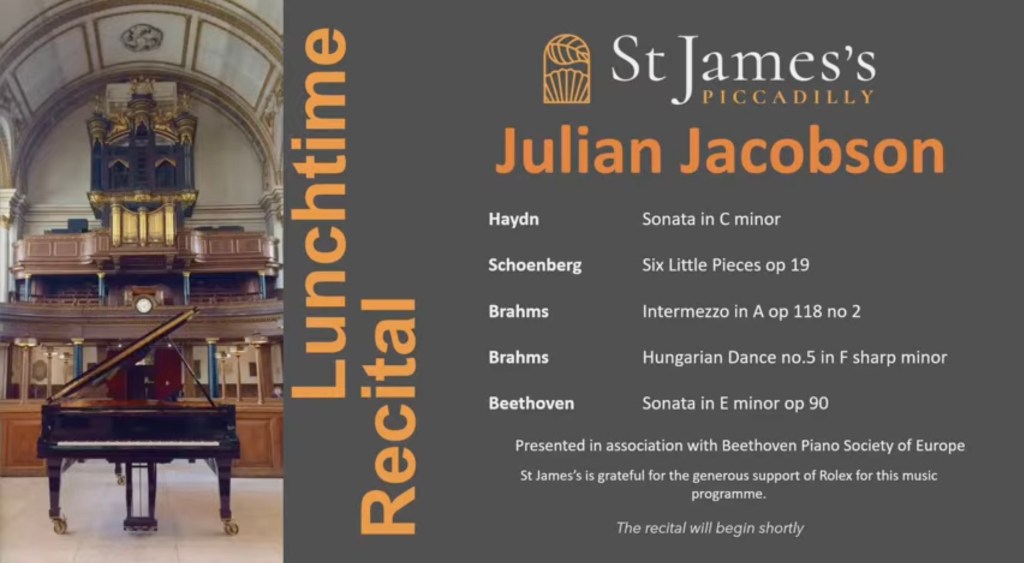
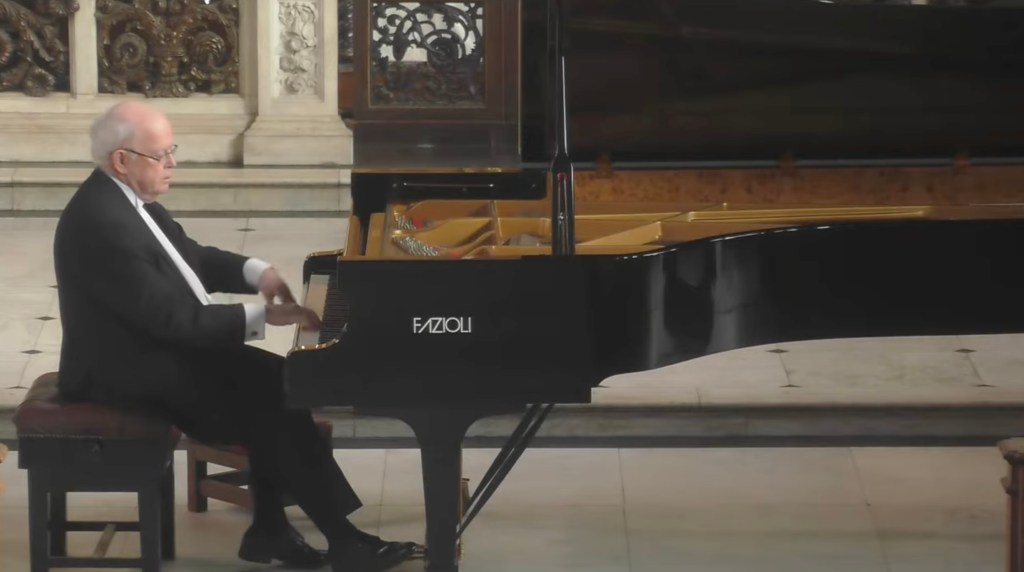
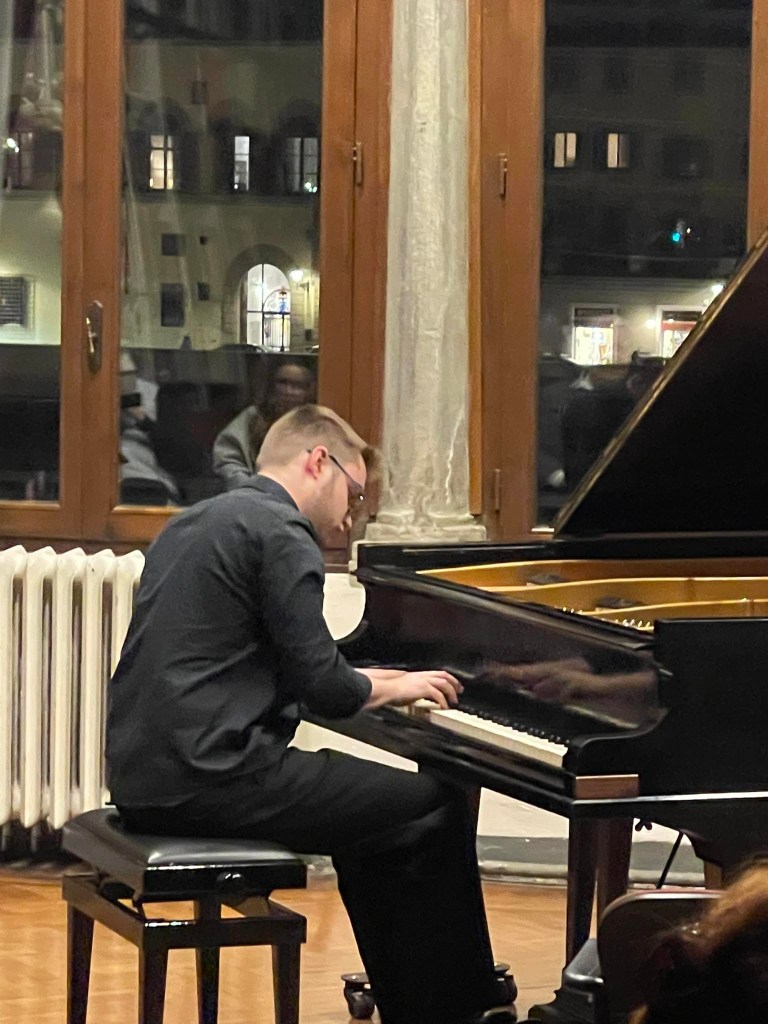
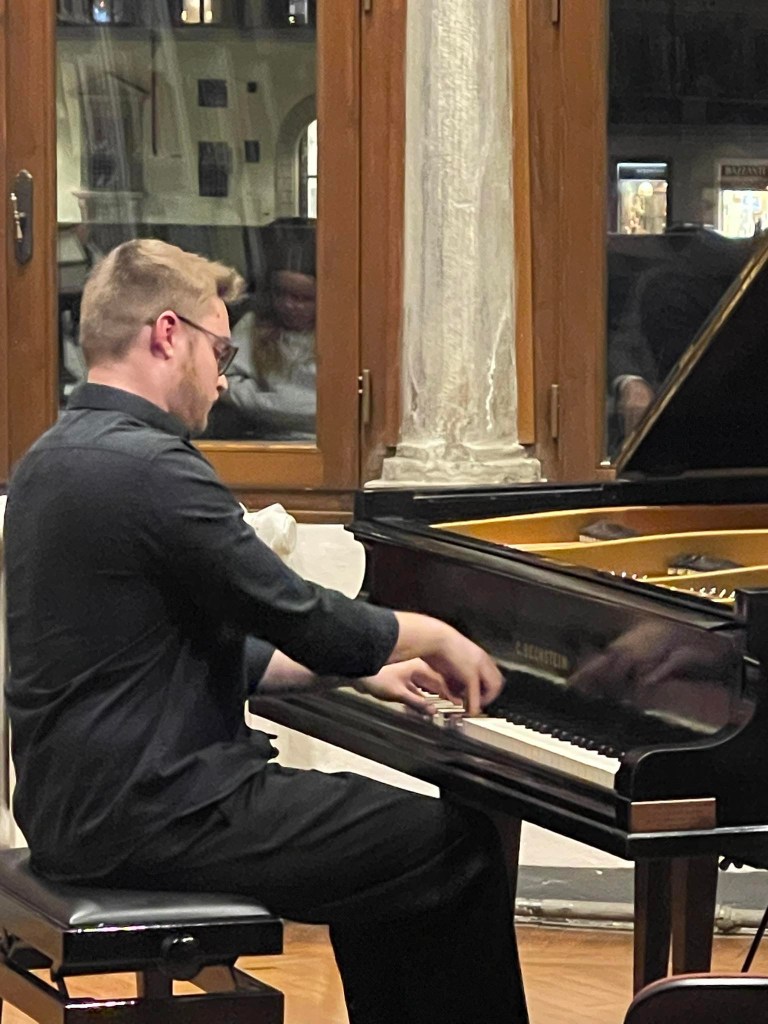
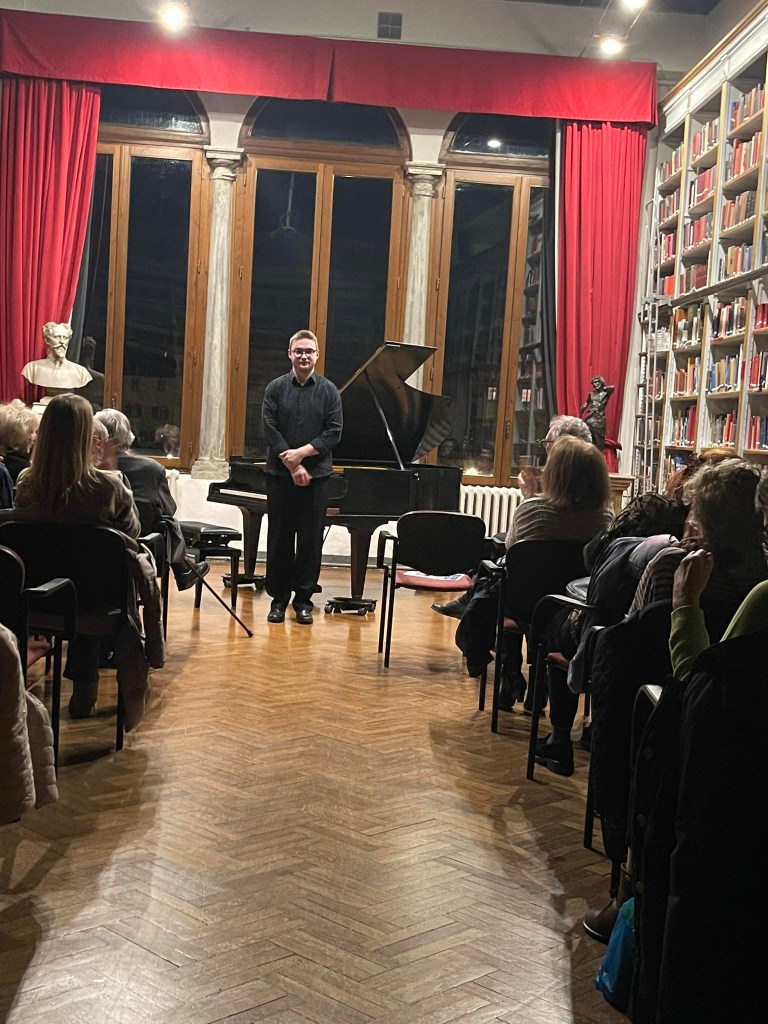
As always a very interesting programme from an eclectic kapellmeister, beginning with one of Haydn’s most beautiful Sonatas Hob XVI /20. It was played with great clarity and noble beauty with Julian’s impeccable musicianship allowing the music to unfold with simplicity and knowing scholarship.Very delicate embellishments, in particular the beautiful unfolding of an elaborated cadenza in the first movement, in no way impeded the natural architectural flow and shape but added a radiance of refreshing spontaneity. It has been suggested that this is “Haydn’s Appassionata”, and is ” the first great sonata for the piano by anybody”. Beethoven who was to inherit from his mentor Haydn the Sonata form was to take this as a starting point and transform it in thirty two steps as he battled and eventually came to terms with his genius during a tormented and struggled life.
Julian had begun with this sonata and had chosen to end the recital with Beethoven’s Sonata op 90 which in a way is so similar in spirit and is a transition from the great Sonatas of Beethoven’s middle period, looking back to the simple mellifluous beauty of his master, with Schubertian radiance, before his final great burst of energy with the last five Sonatas from op 101 to op 111.
The beautiful flowing ‘Andante’ second movement was played with poise and a poignant beauty of disarming simplicity. The Allegro final movement Julian was anticipating Beethoven where his dynamic drive was not of the more restrained fury of Haydn’s time but revealed the less gentile energy of the next century.
It was the contrast that Julian wanted to underline between Haydn and Beethoven.The Sonata op 90 is one of Beethoven’s most poetic Sonatas with the struggle between heart and head of the first movement and the mellifluous conversation with his beloved of the second. An oasis of calm before opening the flood gates to Beethoven’s final great statement through struggle to a vision of the paradise that awaited him.
The Beethoven op 90 that closed the programme began with a more gentle dynamic drive than the earlier middle sonatas and was played with the knowing mastery of a pianist who knows intimately all thirty-two sonatas, and that at the drop of a hat could play them all at one sitting. Beethoven prefaces the two movements in an unusually descriptive way with the first movement : Mit Lebhaftigkeit und durchaus mit Empfindung und Ausdruck “With liveliness and with feeling and expression throughout” and the second Nicht zu geschwind und sehr singbar vorgetragen ” Not too swiftly and conveyed in a singing manner” .And indeed it was exactly these indications that illuminated Julian’s playing today with an especially beautiful unfolding of the first movement , The Schubertian beauty of the second revealed an unusual feeling of contentment and well being.
The Six Little Pieces by Schoenberg were like a breath of fresh air inbetween Haydn and the two B’s. These are six little gems of barely a minute each, but with a kaleidoscope of colour and sentiments that are contained in such a small space. One can only marvel at how so little can mean so much, especially as Julian played each one with such concentrated mastery. A clarity and great sense of character as wisps of sound revealed a completely new sound world.The clockwork precision of the second was contrasted with the sumptuous outpouring of the third with its chordal mystery of desolation and wonder. The playful wistfulness of the fourth and the unresolved question and answer of the fifth lead into the sixth, that was written on the day that Mahler died, and was a whispered yearning and respectful lament.
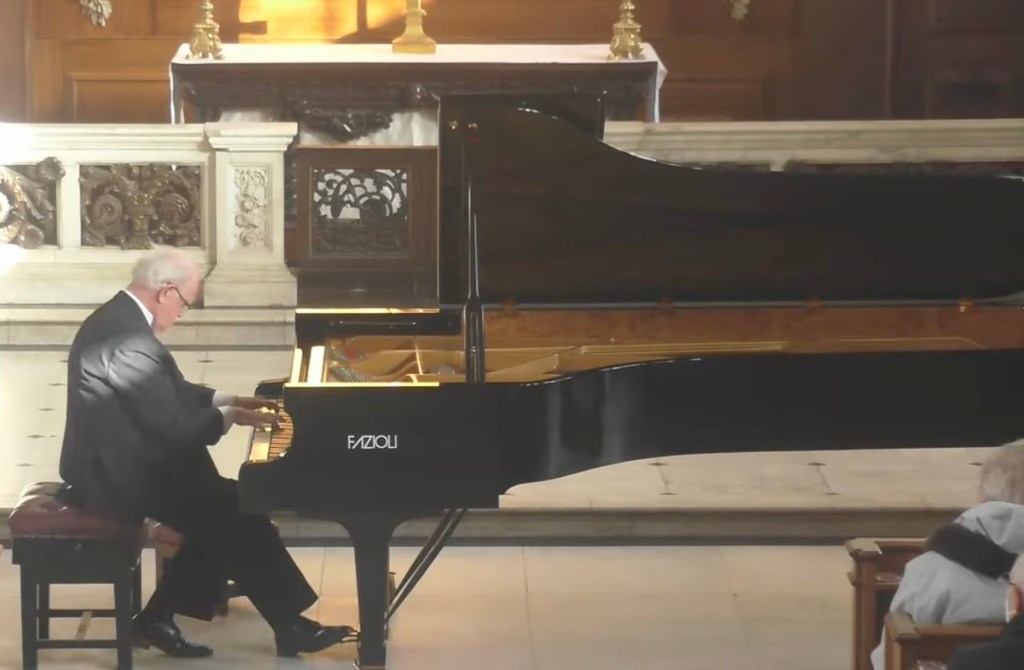
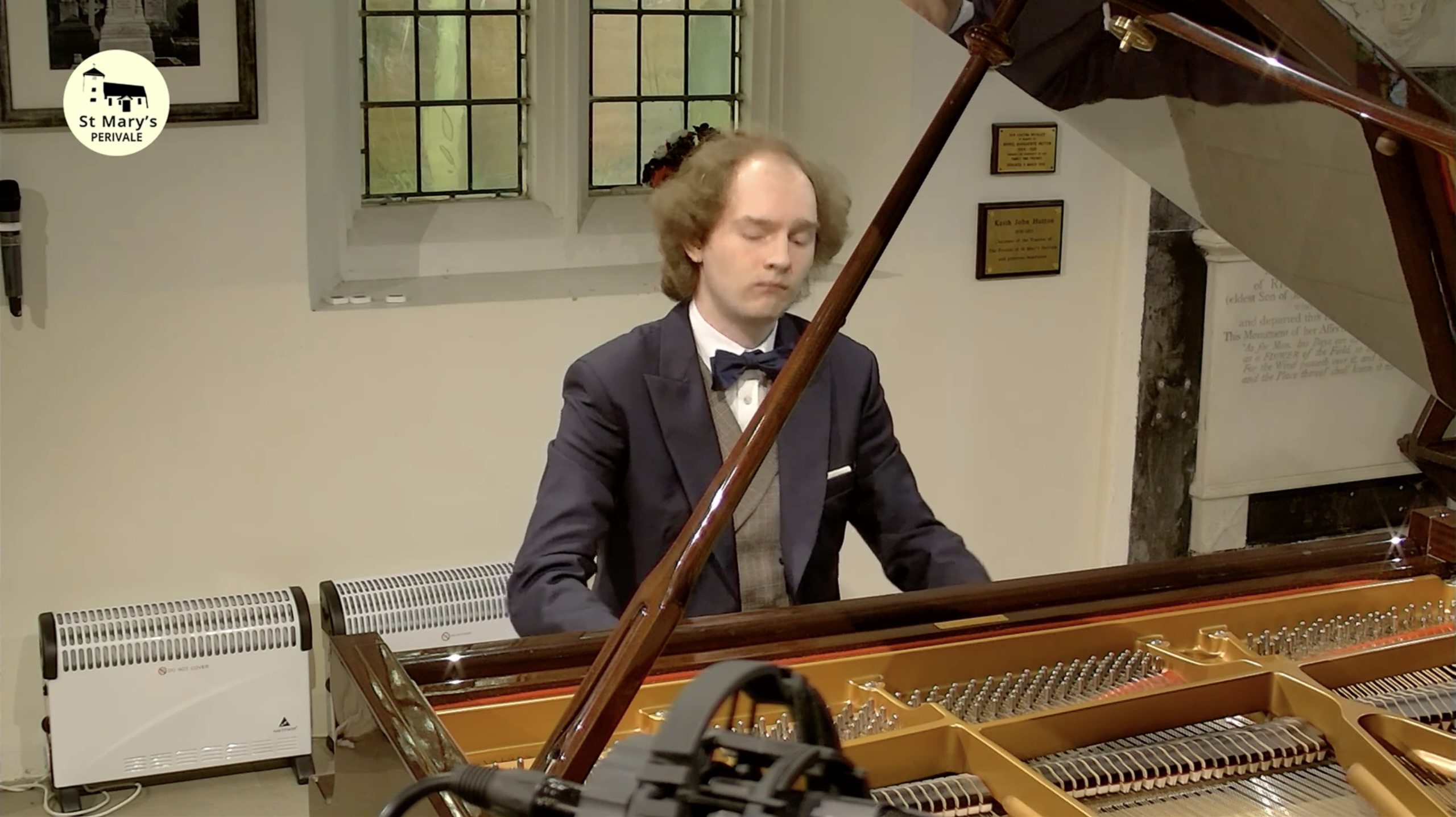
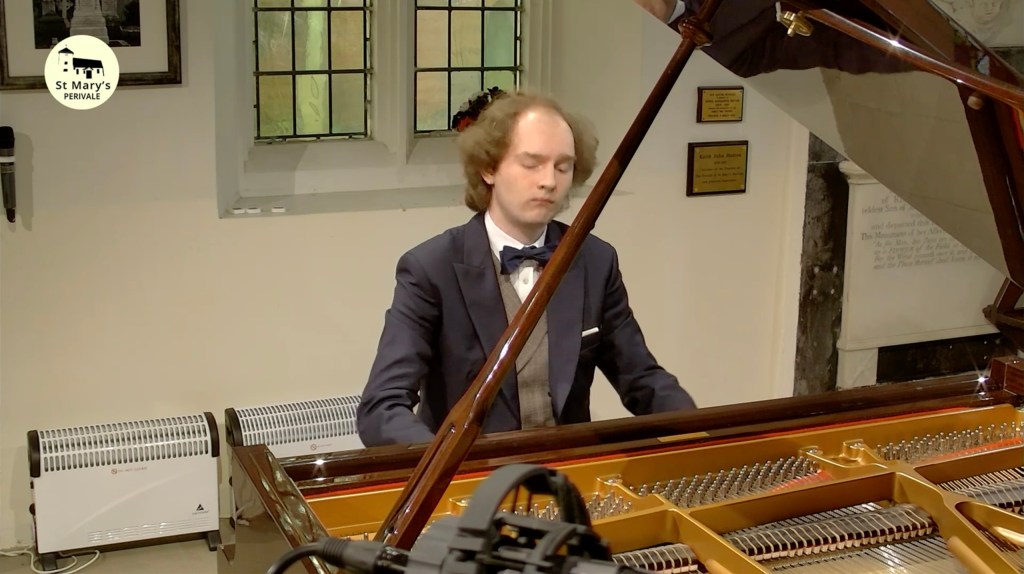
Returning to the sumptuous sound world of Brahms, Julian allowed the Intermezzo in A op 118 n. 2 to unfold with simplicity and an embracing beauty. It brought an unexpected ray of sunlight to shine onto the keys from the altar window that momentarily surprised Julian as he was about to play Brahms Hungarian Dance n. 5, which luckily he could still play with his eyes closed !
Julian Jacobson was born in Peebles, Scotland to parents who were both distinguished musicians: his father Maurice Jacobson had some piano lessons with Busoni while his mother, pianist and composer Margaret Lyell, studied in Berlin with Else Krause, daughter of Liszt’s pupil Martin Krause. Julian studied in London from the age of seven with Lamar Crowson (piano) and Arthur Benjamin (composition), and had four songs published by the age of nine. Further studies at the Royal College of Music and Queen’s College Oxford were supplemented by a period as the inaugural pianist in the National Youth Jazz Orchestra, as well as lessons from the great Hungarian pianist Louis Kentner. He made his London debut at the Purcell Room in 1974, followed immediately by the first of five appearances in the Park Lane Group’s annual Young Artists series and his Wigmore Hall debut as both solo recitalist and chamber musician. During the 1980s he established himself as a fine duo and ensemble pianist, partnering artists such as Zara Nelsova, Sandor Vegh, Ivry Gitlis, Lydia Mordkovitch, David Geringas, Christian Lindberg and Manuela Wiesler as well as many leading UK instrumentalists including Nigel Kennedy, Steven Isserlis, Moray Welsh, Colin Carr, Alexander Baillie and Philippa Davies. Jacobson’s appointment in 1992 as Head of Keyboard Studies at the Royal Welsh College of Music and Drama led to an increasing concentration on solo work. In 1994 he embarked on his first cycle of the complete 32 Beethoven sonatas; he has now presented the cycle eleven times. Five of these were “marathon” performances where he performed the entire cycle from memory in a single day – only the second pianist to attempt this. His 2003 marathon at St James’s Church Piccadilly, London, raised over £6000 for WaterAid while his 2013 marathon at the celebrated St Martin-in-the-Fields was streamed worldwide and attracted huge media coverage and rave reviews. In November 2022 he marked his 75th birthday by performing the marathon in London and at the Festival of Colonia del Sacramento, Uruguay. Since 2014 he is Chairman of the Beethoven Piano Society of Europe where he is responsible for organising many concerts, competitions and other events for young players. Presented in association with Beethoven Piano Society of Europe
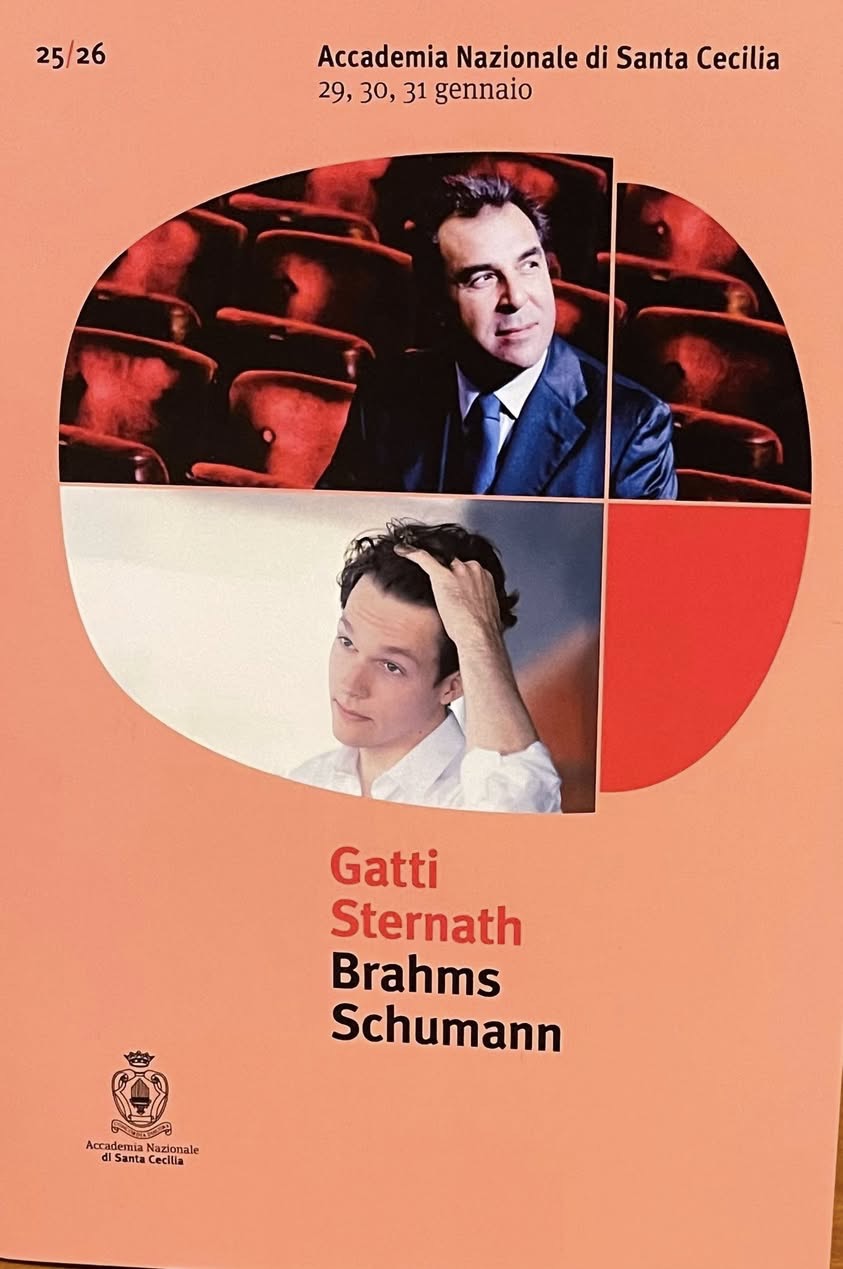
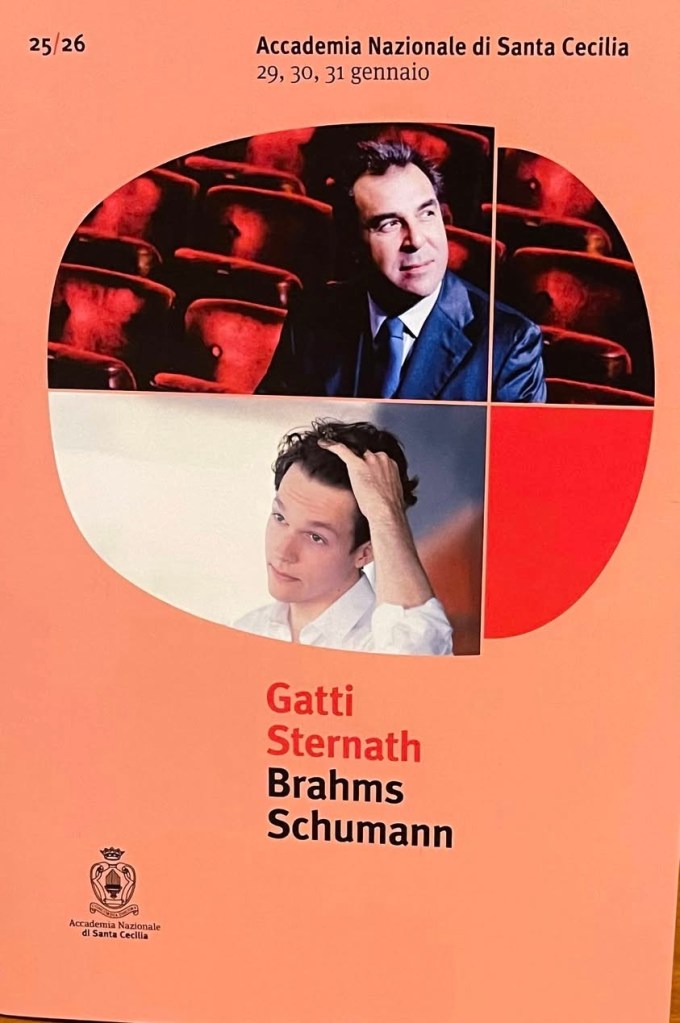
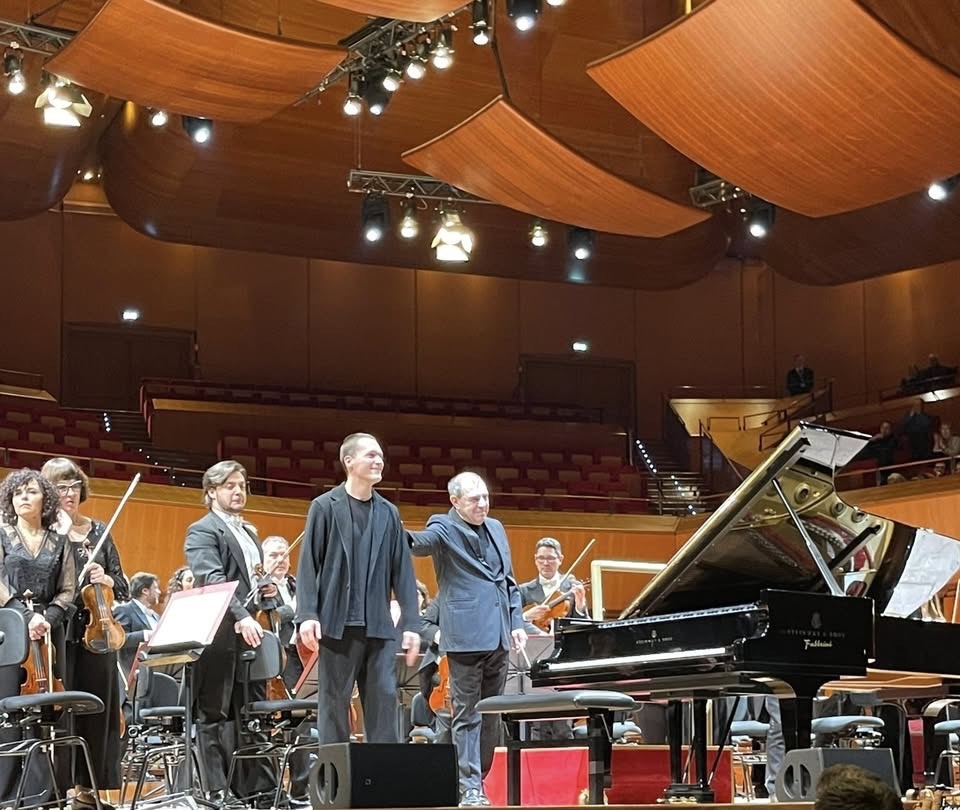
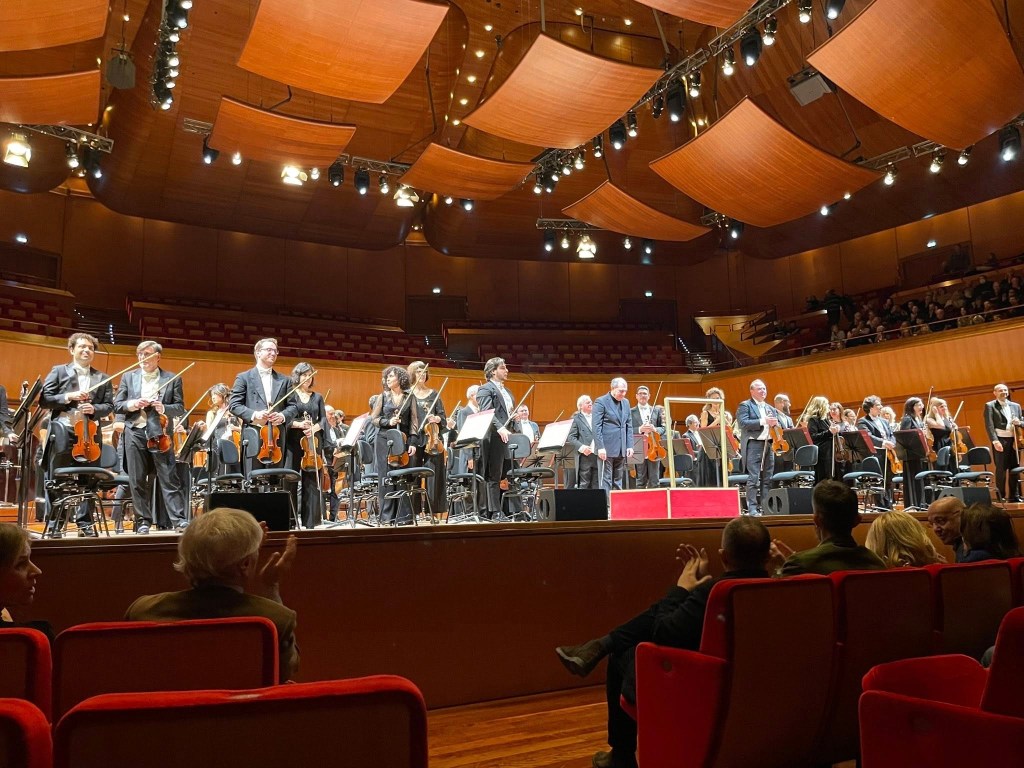
Gatti and Sternath recreating music before our very eyes .
Music making that is a voyage of discovery as rarely experienced in the concert hall.
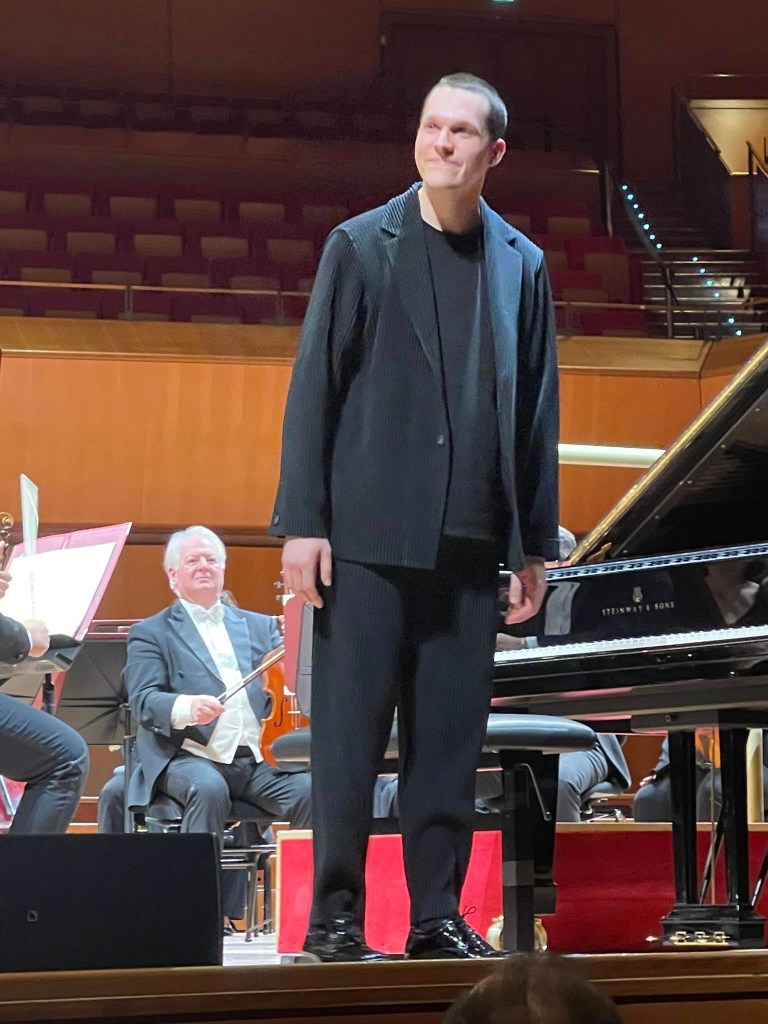
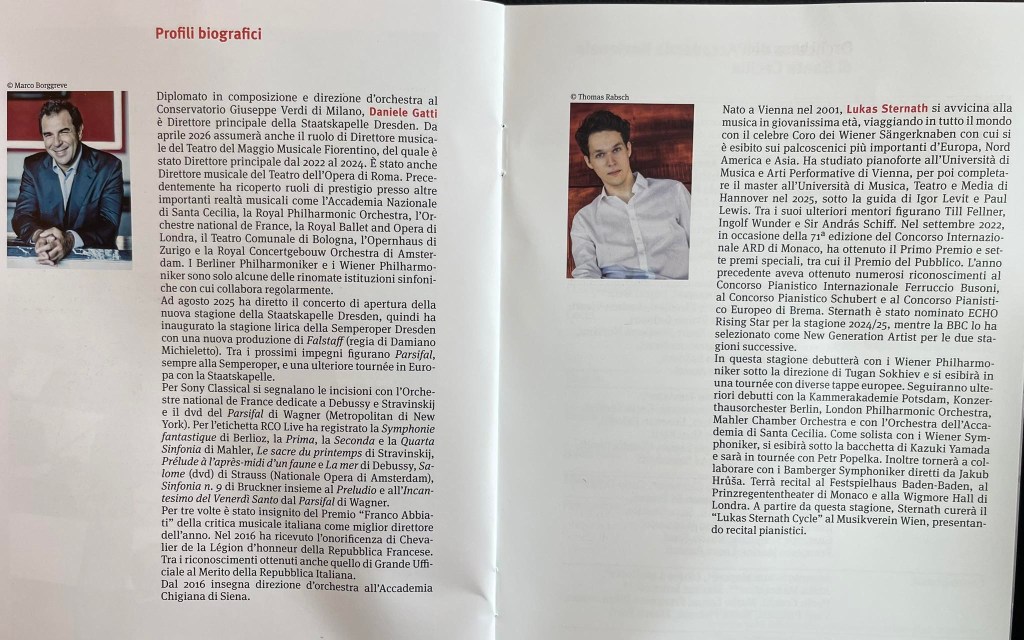
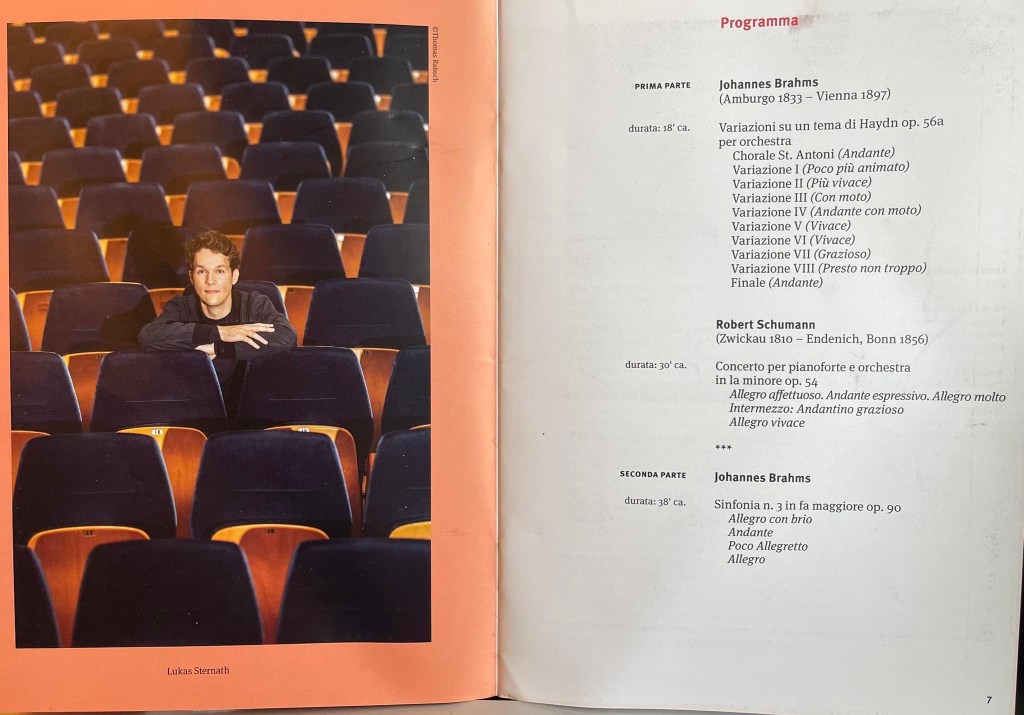
Twenty five year old Lukas Sternath mentored by Andras Schiff and Paul Lewis is a pianist who listens to himself but also to the others as he and Daniele Gatti showed us what secrets are just waiting to be awakened by musicians who have the humility and dedication to respect the composer they are serving.
Schubert Liszt Litanie brought even more magic into the hall as this young man played with heart rending simplicity one of Schubert most beautiful lieder that he offered as an encore to an audience that have rarely been so moved by so little!
The concert had begun with a rather opaque performance of Brahms Haydn Variations and in fact I thought I would just stay to hear the young Sternath who I had heard in Bolzano five years ago .
But during the Schumann this young man ignited the passion and wish to make and shape music together that I decided to listen to Brahms Third Symphony that was the favourite of my mentor Guido Agosti . I can see and hear him still intoning with passionate intensity the opening as he played it on the piano .
This young man had ignited such a musical torch that the Brahms from the first note to the last was now played with the burning urgency and voluptuous passion of a mature master who could with the minimum of movements allow these magnificent players their freedom. Simply guiding them and keeping them within a united architectural framework . It was a demonstration again of where so little can mean so much. It is called mastery ! ………and it is a mystery but the raison d’etre of live music making.
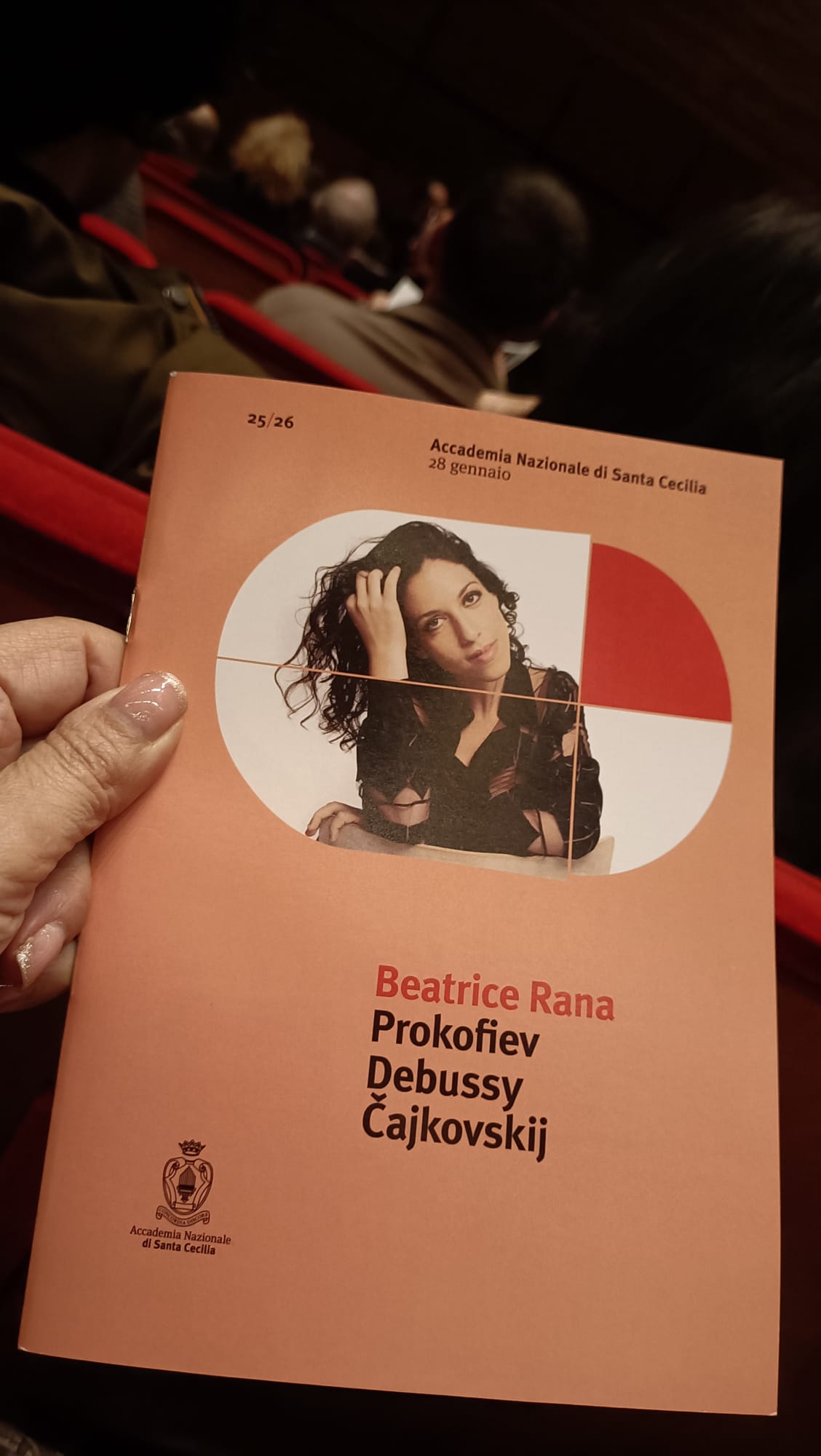
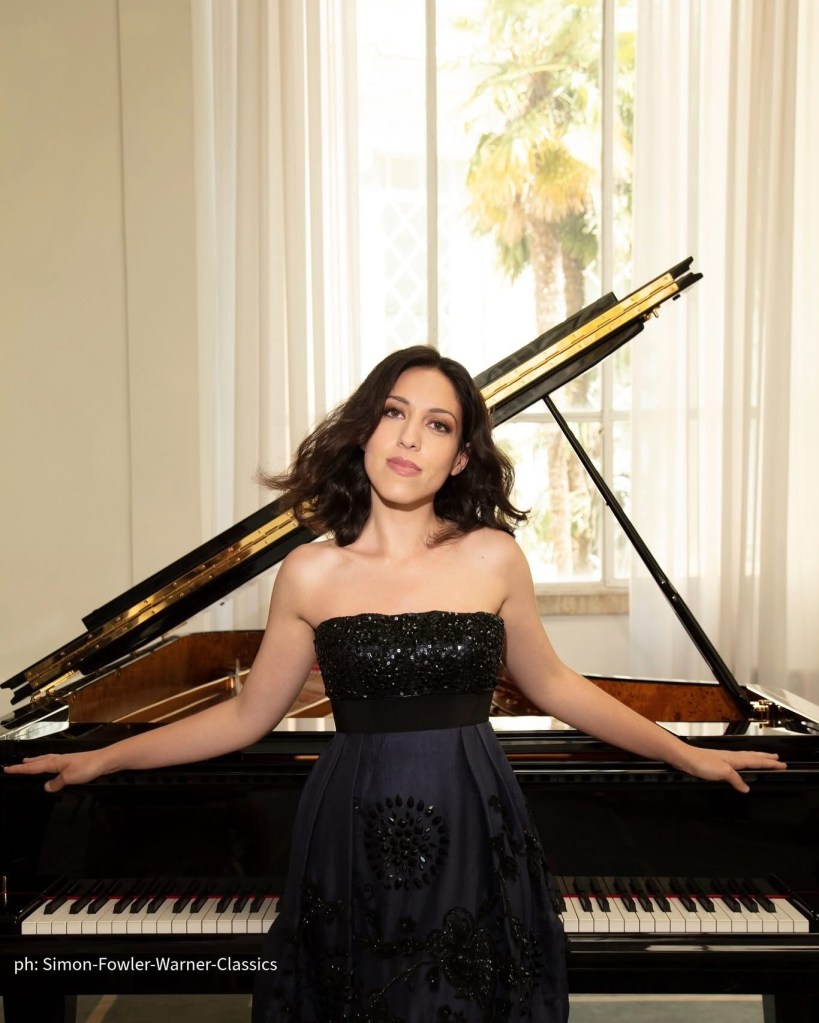
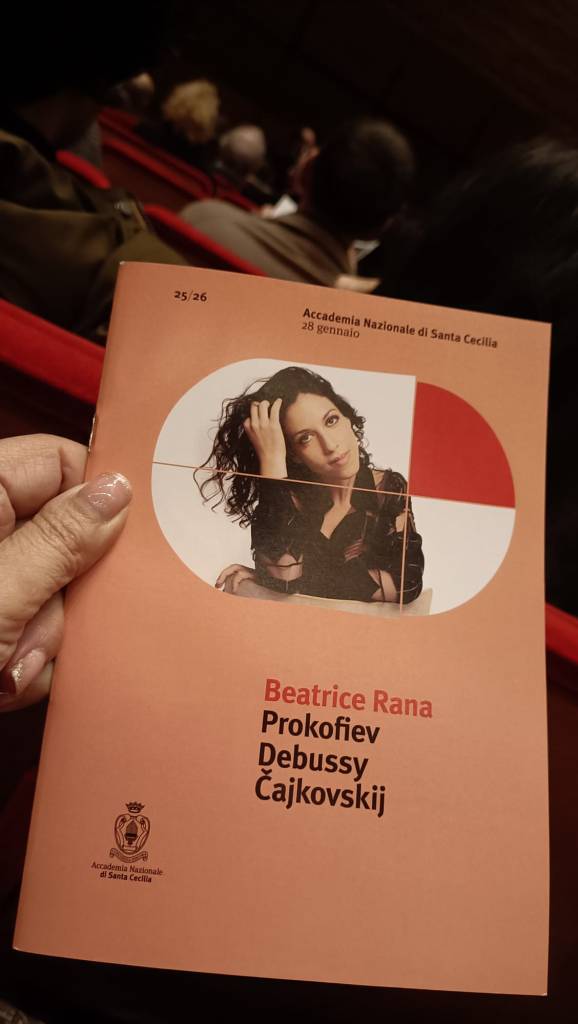
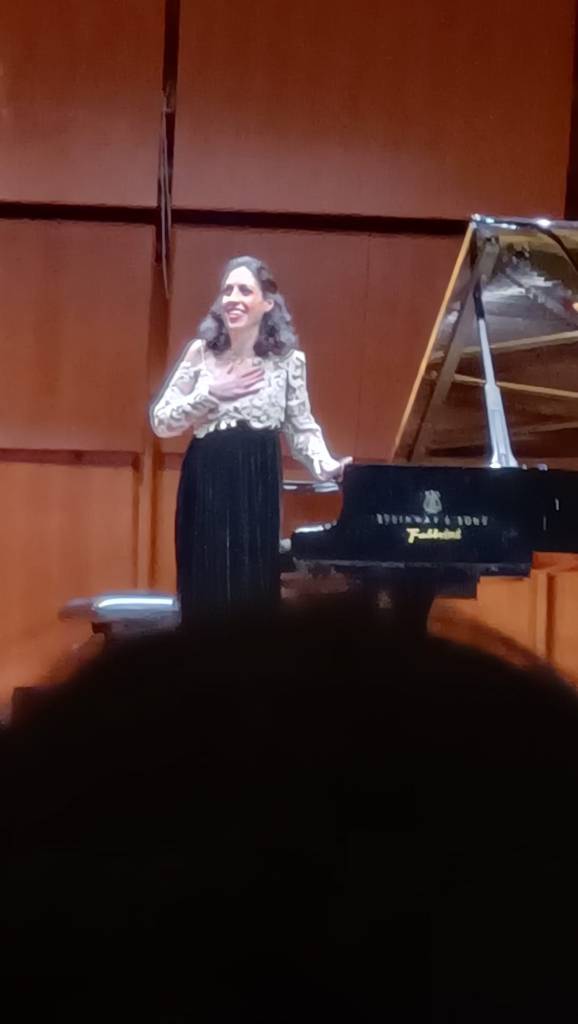
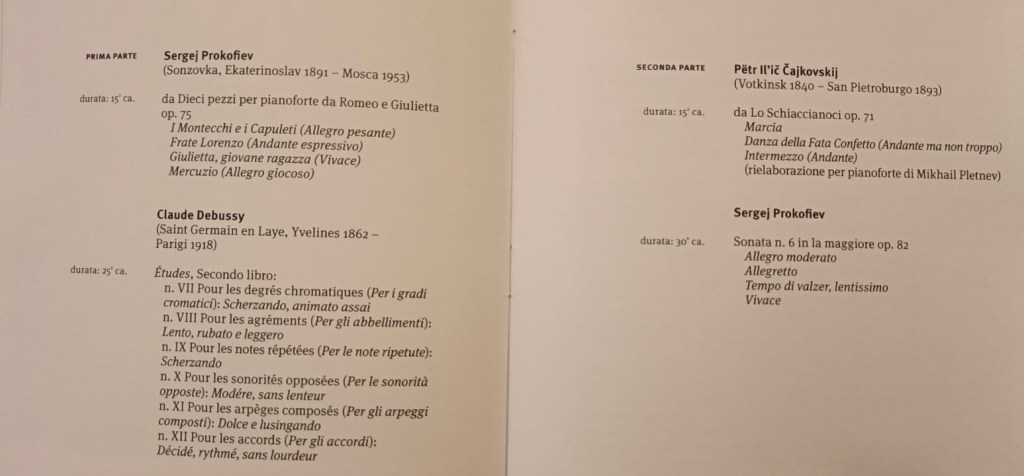
Having just arrived back in Rome I was in time to hear Beatrice Rana who I last heard at the Proms in London, playing to 6000 people with many more listening via the BBC radio. Playing of a simplicity and natural musicality that brought to life Rachmaninov’s Paganini Rhapsody in the Royal Albert Hall with a freshness and refined beauty that revealed a much maligned work as a genial amalgam of chamber music proportions and not the usual barn storming rhetoric that this work has suffered for too long ! Fou Ts’ong used to say it is much easier to be intimate in a big space than it is in a small one. It was the same simplicity and refined beauty that she revealed in Rome. Having played the same recital in the past few days at San Carlo and La Scala it was hardly surprising to see the Sala Sinopoli in Rome selling out almost immediately in her adopted home of Rome. Luckily the Rai radio had their microphones at the ready to broadcast the concert live to the many, like me , excluded from such a sumptuous feast of music. Her playing seems to be so much more colourful and fearless these days with a hypnotic use of the pedals that adds a sonorous richness to her kaleidoscopic palette of sounds . Thanks to the superb radio technicians it could be savoured, maybe even more than in the hall. A courageous programme of Prokofiev, Tchaikovsky and Debussy especially when it is obvious now that Beatrice will soon experience the joy of motherhood. The Debussy Studies written in 1915 were much criticised because the genial invention towards the end of Debussy’s life broke away from the conventional music of the day and pointed to the future, as Liszt had done in the previous century. Debussy was a great admirer of Chopin and had even edited an edition of his works and so it was to the study that he turned for his final inspiration . Not those of the first book of Chopin op 10 but those of the second op 25 where Schumann’s description of the mazurkas as ‘canons covered in flowers ‘ could well apply here too. They are technical difficulties disguised with genial fantasy and turned into miniature tone poems . Considered now as Debussy’s finest work for piano they are rarely heard in the concert hall because of their transcendental difficulty and subtle intimacy. A refined mastery of poetic understanding and a piano technique of subtle whispered refinement not bombastic showmanship. Chromatic scales of jewel like precision and the chattering of extraordinary vibrancy as Beatrice allowed Debussy’s melody to appear like a mirage in a haze of undulating sounds . Sounds that unfolded with wistful elegance and mystery as ornaments were subtly covered in exquisite pedal effects of whispered intimacy. Repeated notes that were mere vibrations gradually gaining in weight and revealing themselves with a frisson of reverberating sounds. There was magic in the air as arpeggios wafted into the air like flowers gently opening in exotic warm climes . And finally the dynamic drive of chords shaped with fearless mastery, coloured with a curiously inquisitive questioning central episode before the exhilarating and liberating final flourishes.
with Daniele Cipriani
After the interval Beatrice had chosen just three pieces from Pletnev’s ‘Nutcracker’ to calm and caress us before the extraordinary blast of the most violently disturbed of Prokofiev’s Trilogy of War Sonatas. Mikhail Pletnev the great piano virtuoso, winner of the Tchaikowsky competition and feted worldwide, had written a suite for piano from the Ballet ‘The Nutcracker.’ I believe he even played the work as part of his prize winning recital in 1978 at the age of 21. Now in his Indian Summer where his poetic search for the perfect legato still shows the refined sensibility of the youthful virtuoso which is now reduced to a mere shadow.
Beatrice chose just three of the seven pieces which she played with scintillating clarity and brilliance, bringing a luminous radiance of childlike simplicity to the ‘Sugar Plum Fairy’ before the sumptuous beauty of the Intermezzo, which she played with orchestral sounds of Philadelphian richness. It should be mentioned that Taneyev, a friend of the composer, had also made a virtuoso transcription of the Ballet. Tchaikovsky admired it enormously but had to make a simpler one for the less endowed pianists who prepared the dancers for the stage! This ‘other’ transcription seems to have been completely forgotten in the concert hall but is much admired by many inquisitive musicians. I expect Beatrice knows it ,of course, and was searching for a suitable combination with Prokofiev. As she said, in her short but very interesting Green Room interview, immediately after the concert, her programmes are a very well pondered musical journey. A moment in which the performer can also be an informer, for a public that one should never underestimate!
It was to Prokofiev that she turned to open and close this remarkable recital. Four scenes from his ballet ‘Romeo and Juliet’ opened the concert. Imposing sumptuous sounds from the very first note of the ‘Montagues and Capulets’, playing with extraordinary freedom and authority with a palette of sounds helped by a generous use of the sustaining pedal and a glorious beauty to the melodic line that follows with inner voices of subtle insinuation. Followed by an impish display of ‘fingerfertigkeit’ with a real teasing energy of intoxication. An arresting opening to a programme which, as she said in her interview, was a domestic tragedy and would finish with a worldwide catastrophe.
Prokofiev’s Sixth Sonata was the main work on the programme and she unleashed it on us with fearless abandon and breathtaking dynamic drive. Prokofiev’s demonic insistence played out with extraordinary virtuosity and architectural understanding. A burning cauldron of sounds to which the shrieks of pain and anguish would be nailed with merciless brutality. Beatrice had seen the vision that this sonata depicts of the brutality and suffering that conflict can bring as she described it in sounds with breathtaking mastery. The seemingly innocent trot of the ‘Allegretto’ was short lived as all sorts of surprises are imposed on it with beguiling insinuation. A ‘tempo di valzer,lentissimo’, was a languid outpouring of beauty and an oasis of beauty on this field of combat but soon built in passionate intensity as Prokofiev tries to find a reason for such cruelty. There was real menace to the ‘Vivace’ last movement that Beatrice played with fearless abandon and frenzy. A real boiling pot of sounds out of which Prokofiev places his leit motif with devastating effect. This was truly a masterly performance and an amazing ‘tour de force’ especially as Beatrice was not alone at the keyboard this time!
Scriabin’s beautiful study op 2 was calming balm after such violence and she played it with a freedom and sense of colour that I have never heard from her before. She could feel that the audience were following every sound with rapt attention and she lead them into a better place that is found in the paradise of sumptuous timelessness of a different age. An ovation realised yet another encore from Beatrice who must have been doubly exhausted after such a daunting programme. Like all great artists she has a reserve of energy that she shared with us in another study by Debussy of purity and scintillating brilliance finishing with an impish whispered farewell.
First composed in 1935, Romeo and Juliet was substantially revised for its Soviet premiere in early 1940. Prokofiev made from the ballet three orchestral suites and a suite for solo piano.
Moving back to the Soviet Union in 1933 following a self-imposed exile of fifteen years, Sergei Prokofiev suddenly found a new sense of purpose as a composer. Composed in a burst of frenzied activity during the summer of 1935, Romeo and Juliet nevertheless proved to be controversial even before a note of the music was heard in public. After the directors of the Bolshoi Ballet in Moscow read through the score and pronounced it “impossible to dance to,” Prokofiev, in a cold rage, extracted two suites from the ballet in 1936. Guessing—correctly—that the suites would create a demand to hear the work in its entirety, Prokofiev soon had the pleasure of seeing the Bolshoi and its bitter rival, the Kirov Ballet of Leningrad, vie for the right of the first production. The honor of the first Soviet performance fell to the Kirov on January 11, 1940, some two years after Romeo and Juliet had been given its world premiere in Brno, Czechoslovakia, in December of 1938.
In spite of its considerable length–at nearly two and a half hours, it is the most ambitious of Prokofiev’s non-operatic scores—Romeo and Juliet is a carefully molded musical and emotional structure in which the music is not only intimately related to the stage action but is also a self-referential dramatic construct which can readily stand on its own.
“Montagues and Capulets” is made up of two widely spaced moments from the ballet: the slow, threatening music which accompanies the Duke’s order that the warring families must cease fighting on pain of death, and, from the ballroom scene, the menacing and slightly oafish Dance of the Knights, which hints that the gentleman may have forgotten to take off their armor.
The cleric “Friar Laurence” is represented by a pair of themes, one in bassoons, tuba and harp, the other in divided cellos.
“The Young Juliet” brilliantly captures the rapidly changing moods of the character’s adolescent personality.
The “Death of Tybalt” forms the shattering conclusion of Act II. The music first describes the savage yet strangely high-spirited fight in which Mercutio is slain by Tybalt—neither fully aware of the seriousness of the situation until it is too late—and then the furious duel, underscored by sharp, percussive jabs and brutal dissonances, in which Romeo avenges Mercutio’s death. Heavy, measured thuds of the timpani herald Tybalt’s funeral procession, bringing the scene to a close.
Prokofiev reduced selected music from the ballet as Romeo and Juliet: Ten Pieces for Piano, Op. 75, which were performed in 1936 and 1937.
Romeo and Juliet before Parting
Folk Dance
Scene: The Street Awakens
Minuet: Arrival of the Guests
Juliet as a Young Girl
Masquers
Montagues and Capulets
Friar Laurence
Mercutio
Dance of the Girls with Lilies
Prokofiev’s Piano Sonata No. 6 in A major, Op. 82 is the first of the “War Sonatas”. It was composed in 1940 and first performed on 8 April of that year in Moscow, with the composer at the piano.It is in four movements
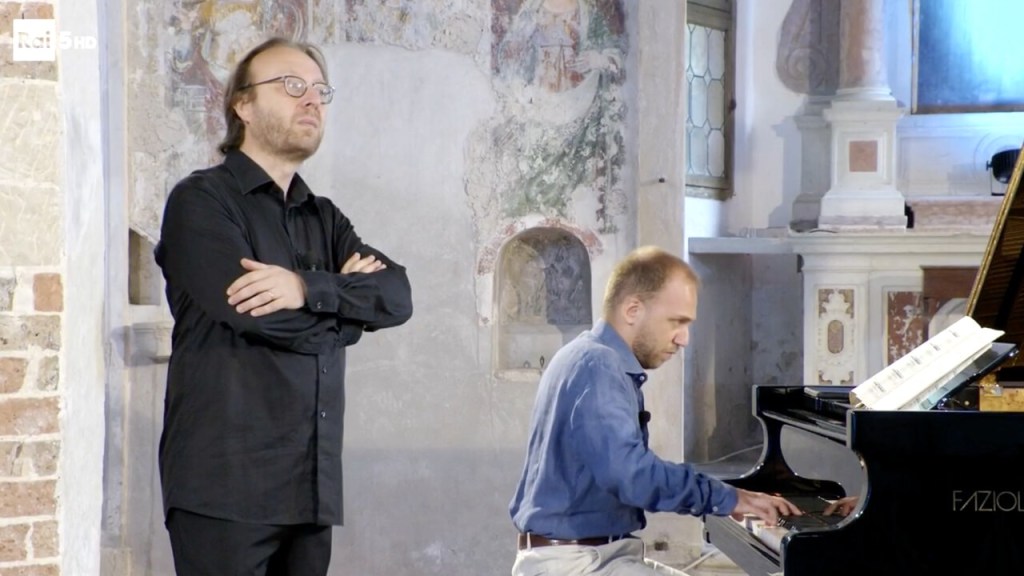
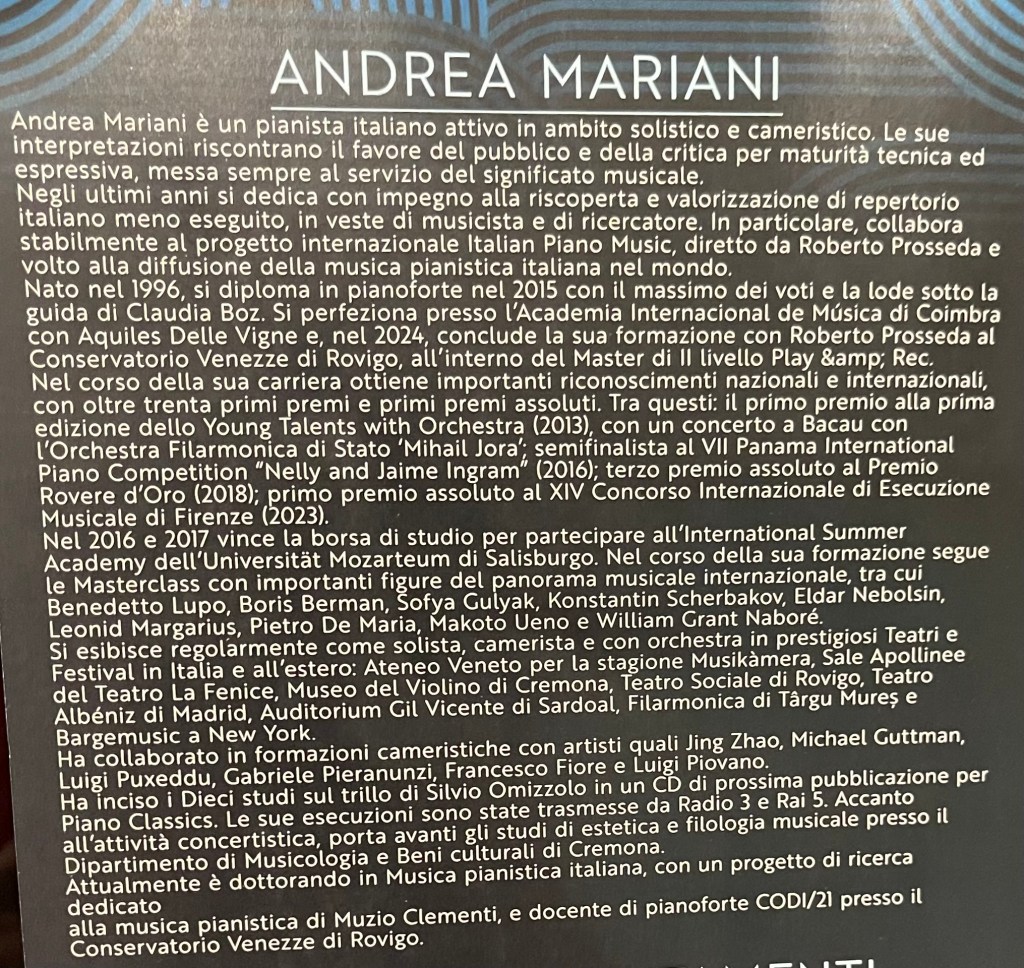
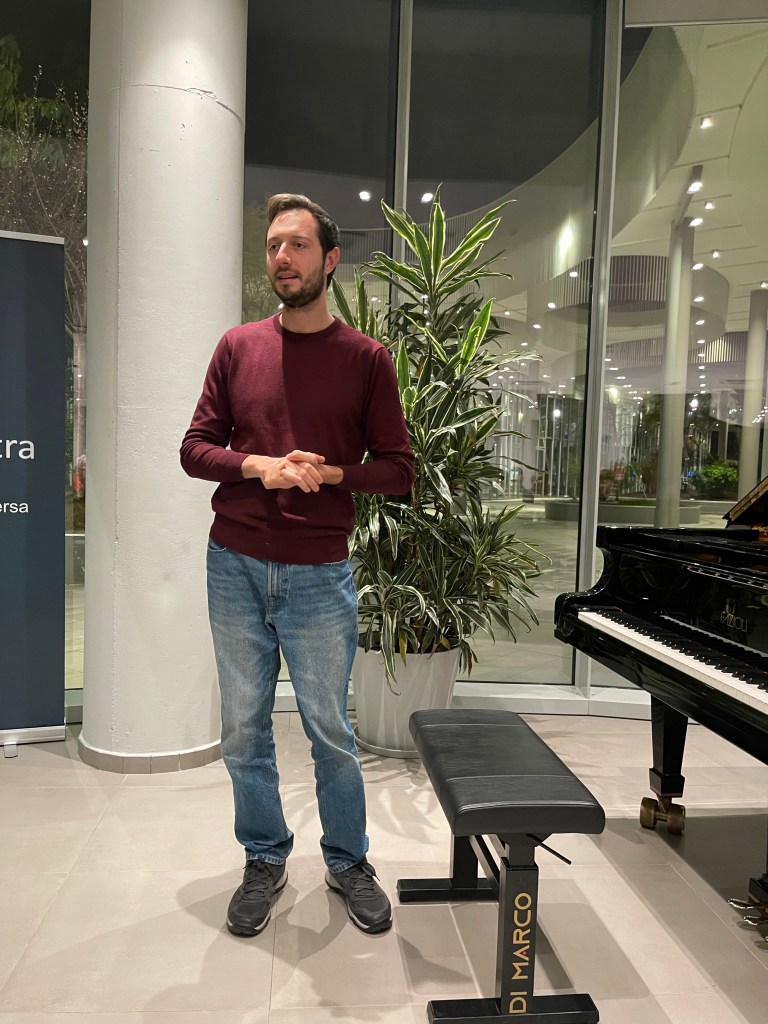
Andrea I had heard a few years ago invited by his mentor Roberto Prosseda to the festival that he organises every year in Cremona. Justly proud of his young prodigy he gave some very impressive performances including a study by Omizzolo, who was completely unknown to me at the time. In the meantime I had met Roberto in London who invited me to a recording session in the Henry Wood Hall where amongst other unknown Italian Piano Concertos with the London Philharmonic he included a concerto by Omizzolo. Roberto Prosseda and Maurizio Baglini are two remarkable musicians who I had known when they were students of Sergio Cafaro and his wife Anna Maria (Mimi) Martinelli.
Together with Francesco Libetta they have become a formidable trio and a voice for young musicians and for much music by Italian composers still completely unknown. Valerio Vicari and his Roma Tre Orchestra team have become an important component for our three heroes, where together with their brilliantly trained students they can always find a platform with a discerning public and genuine encouragement in a world where classical music is often treated as the poor relation.
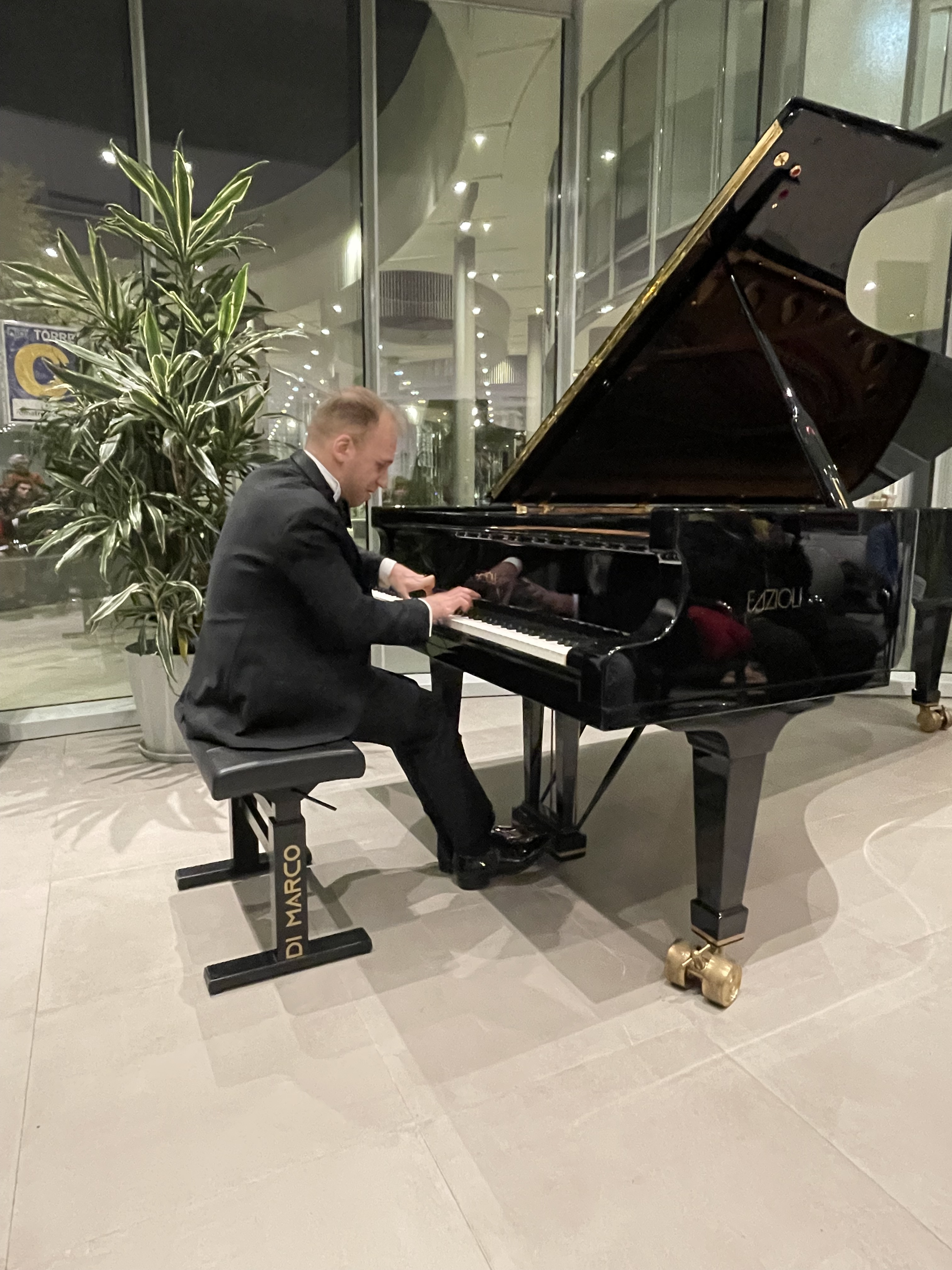
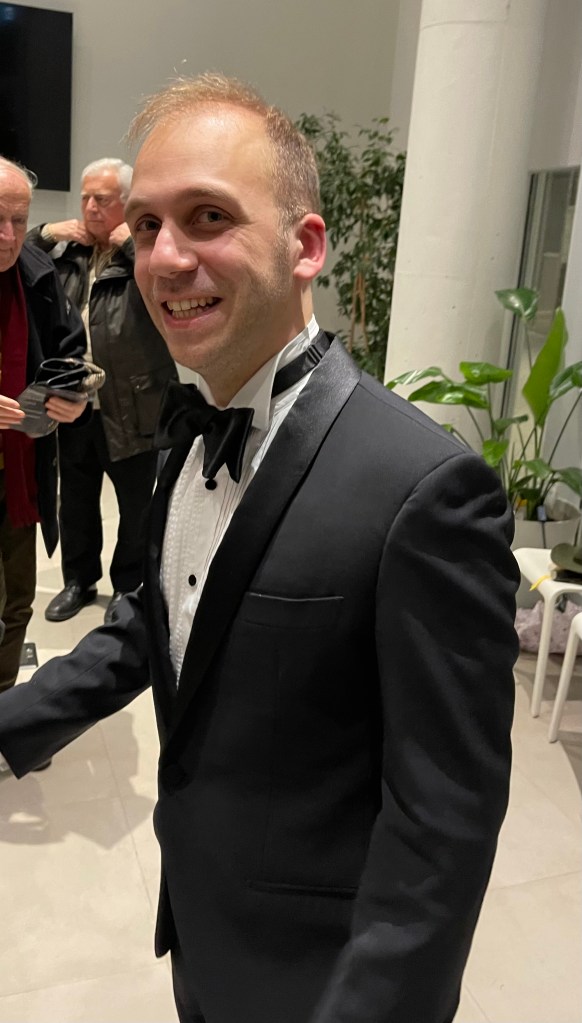
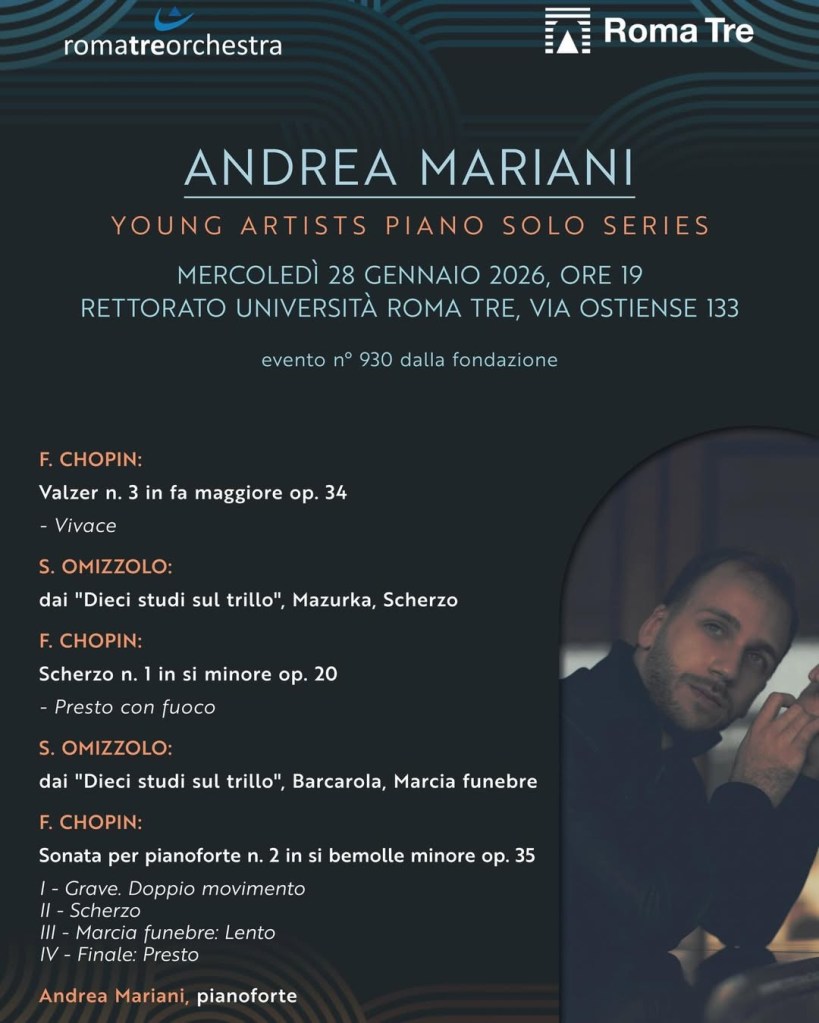
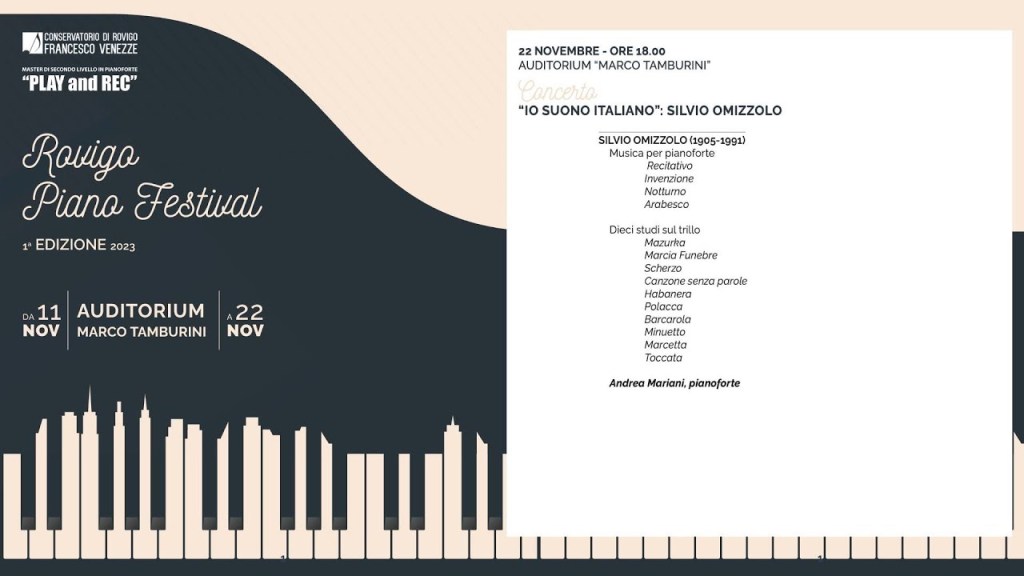
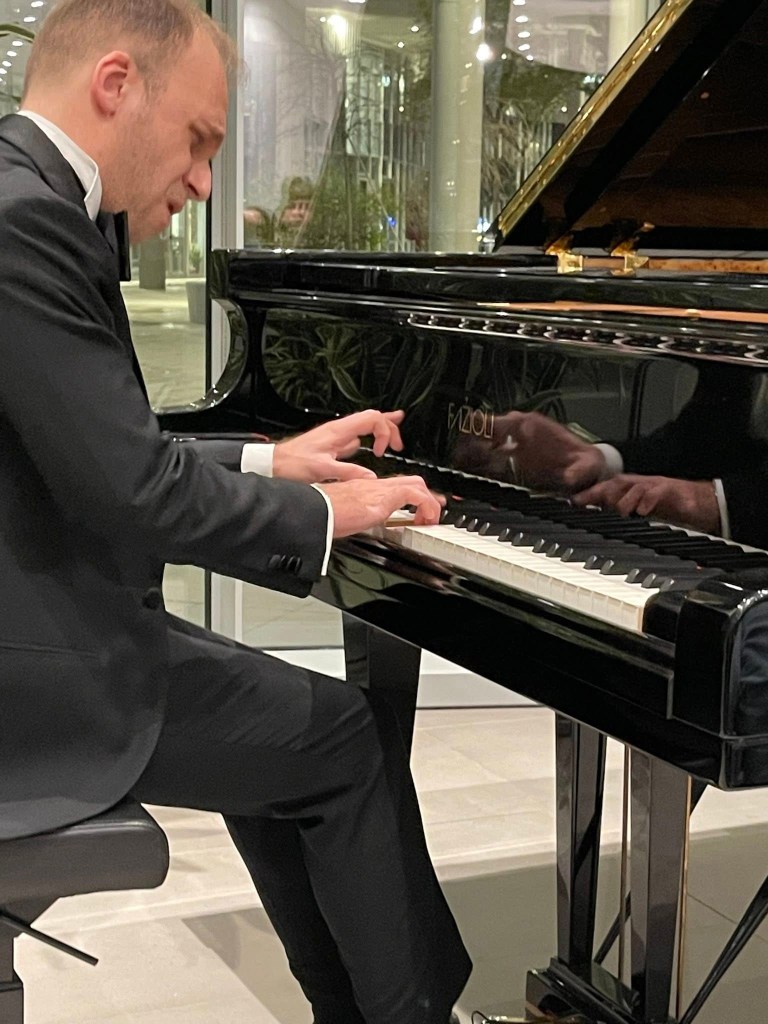
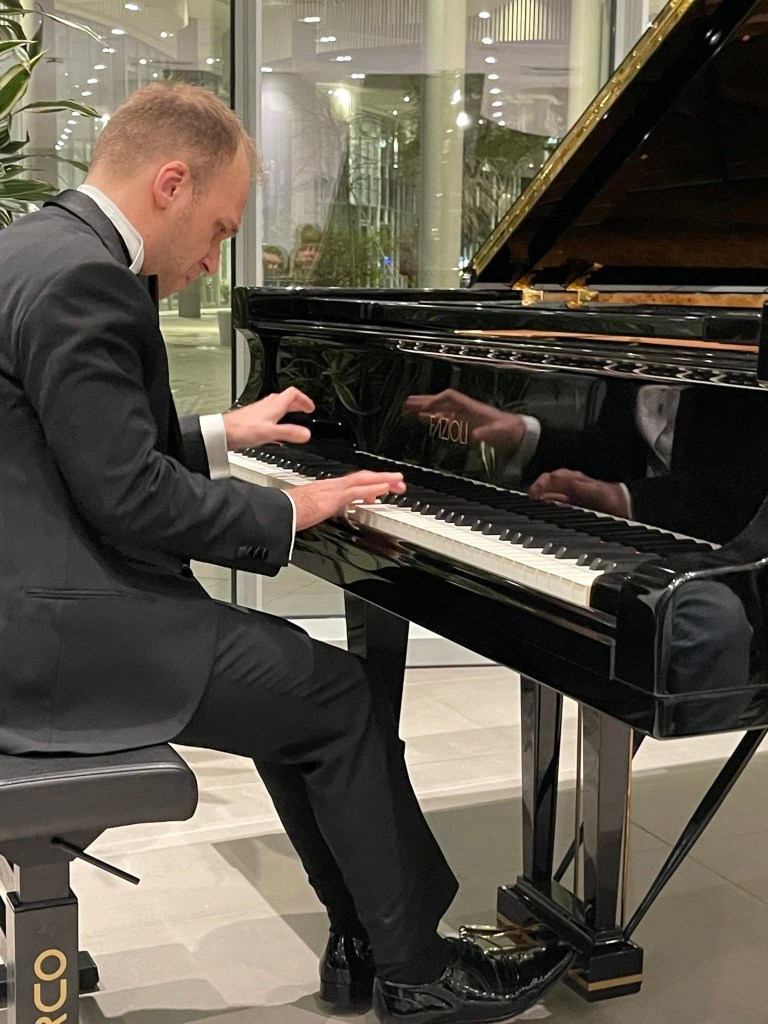
All this to present Andrea who is coming to the end of his studies in Rovigo under the eagle eye of Roberto Prosseda, preparing a doctorate on the piano music of Muzio Clementi ! The young musician who I had heard playing to Paolo Fazioli in Cremona is now an artist of quite considerable authority. A pianist who plays with weight and with his beautiful arched hand can dig deep into every key and find sounds that others search for in vain. A programme that gave me a chance to listen to more of the studies of Silvio Ormizzolo contrasted with works by the most important of all pianistic innovators Fréderick Chopin.
Roberto Prosseda working with Andrea
Andrea chose to start with the ‘Cat’ waltz by Chopin which was an unusual choice, as Rubinstein often used to play it at the end of his recitals as an encore. The reason became clear on listening to the Mazurka and Scherzo studies of Ormizzolo with which they were linked almost without a break. A Chopin waltz played with great charm and ‘old world’ rubato shaping phrases with then style of pianists of the Golden age of piano playing. It made for a beguiling opening and an introduction to the Omizzolo Mazurka played with the same teasing charm and a jeux perlé that was of master pianists of a past age. A remarkable clarity and authority brought this study to life as he had done with the ‘little’ Chopin Waltz. A musicianship that does not exclude a daring sense of style and personality. Two scherzi followed, one by Omizzolo and the other by Chopin. The Omizzolo was with cascades of notes and a whirlwind of sounds with playing of real weight and mastery. The Chopin first scherzo, I had heard Andrea play in Cremona, and today he played with even more assurance and authority of a young master. His fingers, like limpets fearlessly imbuing Chopin’s scintillating notes with a rhythmic energy and enviable accuracy! Occasionally Andrea could momentarily loose the architectural line as he brought out inner harmonies or lost the pulse in the quieter moments of reflection. He brought a great sense of line and beauty, though, to the Polish Christmas Carol that Chopin transforms into a berceuse of poignant simplicity . Of course the return of the Scherzo and the exciting coda were played with an exhilaration of burning masterly intensity. A return to Omizzolo with the Barcarolle and Funeral March from the same Ten studies on the trill. Here there was a beautiful tenor melody with the trills in the right hand played as a wistful accompaniment. It was here that Andrea’s musical pedegree shone through as he shaped the tenor melody with ravishing style and an extraordinary sense of line. Of course this cannot be compared to the study by Chopin op 25 n. 7 but it is music that deserves to be heard more often. The trills now transferred to the left hand for Omizzolo’s Funeral March floated on this wave of dynamic energy with almost military precision as it lead straight into Chopin’s ‘Funeral March’ sonata op 35.Onward Christian Soldiers!
Of course this is one of Chopin’s greatest works where he could transform the formal sonata with innovative genius so much so that Schumann was to describe it as one of Chopin’s craziest children. He described the sonata as “four of his maddest children under the same roof” and found the title “Sonata” capricious and slightly presumptuous. He also remarked that the Marche funèbre “has something repulsive” about it, and that “an adagio in its place, perhaps in D-flat, would have had a far more beautiful effect”. In addition, the finale caused a stir among Schumann and other musicians. Schumann went on to say that the last movement “seems more like a mockery than any sort of music” and when Mendelssohn was asked for an opinion of it, he commented, “Oh, I abhor it.”
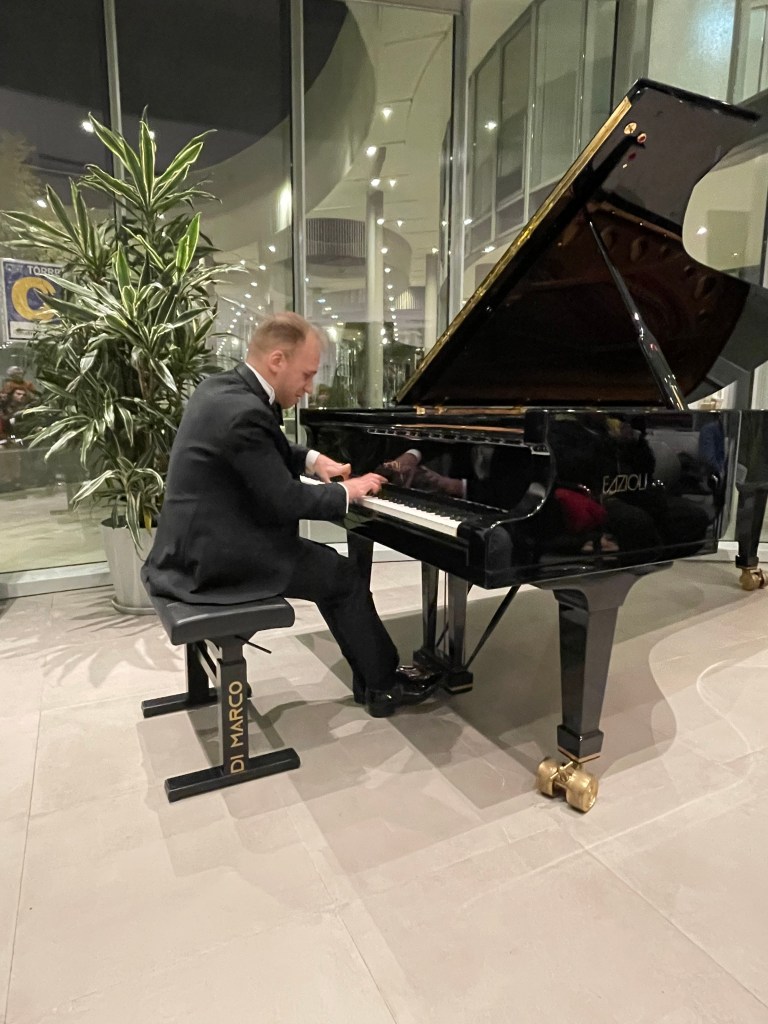
Again Andrea brought great authority and remarkable intelligent musicianship to this work which he imbued with an architectural strength of considerable importance. He even chose to play the repeat as it would appear Chopin intended it. There has been so much discussion about whether to repeat to the introduction ,which Chopin uses as the anchor for the development of this first movement. Or to go back to where the movement takes flight a few bars later at the ‘Doppio Movimento.’ Many great artists simply leave out the repeat altogether! Andrea made a very convincing case today to go back to the introduction which he did with great artistry and conviction. His playing had a dynamic drive and if he slowed down the second subject it was because he wanted to imbue it with a poignant strength and not heart on sleeve sentiment. This was a performance of a thinking musician who had something to say. The first movement ran straight into the Scherzo played with a rhythmic drive but also in certain passages a slightly relaxed waltz like lilt that was not completely convincing as it relaxed the burning forward propulsion to the beautifully lyrical central episode. At the end of the concert Andrea confided that artists have to accept the instruments that they are given and sometimes that can lead to an unexpected voyage of discovery. Andrea today had a magnificent very powerful Fazioli under his fingers. A piano that tempted him to take a path where he sometimes overstated the drama and imposing sounds that the Fazioli is capable of. It was above all in the Funeral March that he allowed full reign to the Fazioli and was tempted to think of it a military march rather than a funerial one. The melodic line submerged in a mist created by the relentless bass march suddenly burst into flames with all guns blazing. It was a highly original performance, whether successful or not, it was convincing and of a real thinking musician on a voyage of discovery . It lead into the whispered meanderings of the maddest of Chopin’s four children that Andrea played with mystery and mastery.
Persuaded to play more,Andrea played two works that he had conceived together. The heartrending delicacy of Grieg’s Arietta op 12 n. 1 was one of the most beautiful things in a remarkable recital. It was played with simplicity, delicacy and whispered beauty and contrasted with the transcendental mastery and trickery of Rachmaninov’s burningly intense Moment Musical op 16 n. 4
Valerio Vicari may spend much time the other end of Italy,in Trieste, now he has been discover by the world outside Roma 3 that he and Roberto Pujia have created. He has been called to direct the prestigious Theatre in Trieste one of the most important institutions in Italy. In Rome he has trained his valiant helpers to hold the reins in Rome with the same seriousness and passion that has made this an oasis for young aspiring musicians ……long may it last !
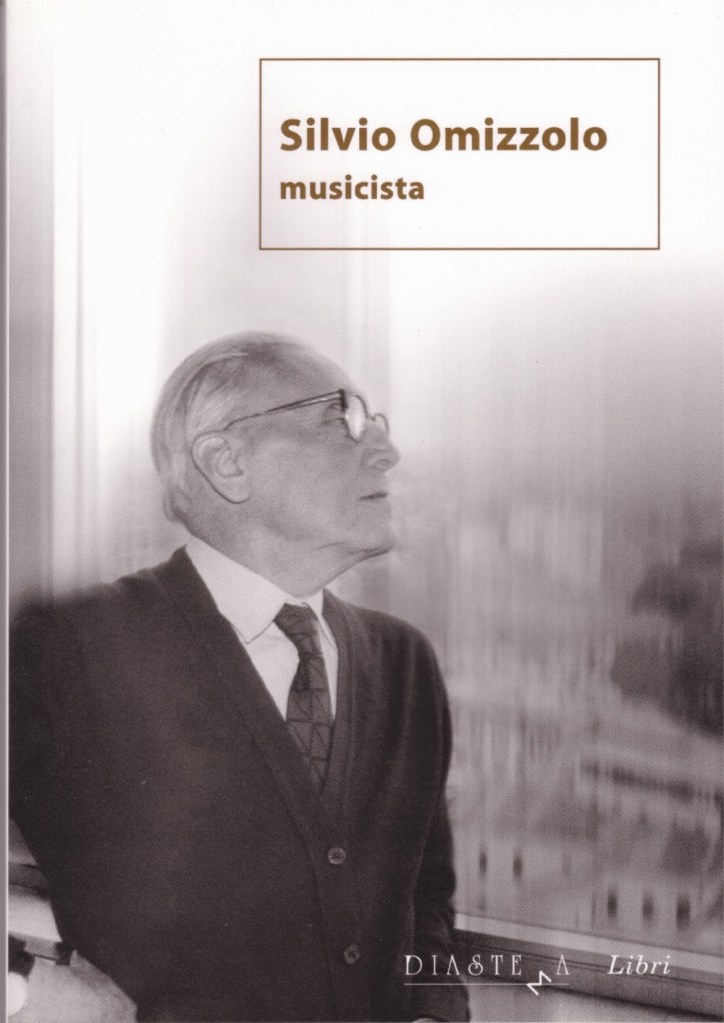
Silvio Omizzolo, born in Padua from a family whose roots were in the Asiago plateau, in the pre-Alps near Vicenza, was an excellent pianist and piano teacher, director of the Istituto Musicale C.Pollini, Padova, but also one of the main composers in the region of Venice during the XX century. A student of the composer Almerigo Girotto, from Vicenza, Omizzolo tempered his love for the romantic tradition in a constructivist language, largely based on counterpoint, which may be compared to those of Paul Hindemith and Bela Bartok; he also experimented with dodecaphonic techniques. His major works for the piano are Dieci Studi sul Trillo (1936-39), which have been recently arranged by the famous jazz player Enrico Intra and the jazz septet of Marco Gotti (Lectio brevis sul trillo per pianoforte di Silvio Omizzolo, 2005); another important work is the Concerto per pianoforte ed orchestra (1959-60), which received the 3rd prize from the Queen Elizabeth International Music Competition , Bruxelles 1969.
Silvio Omizzolo Padova 26 Agosto 1905 – 18 Marzo 1991 è stato un pianist e compositore italiano.
Si diplomò a Milano nel 1927sotto la guida del maestro Renzo Lorenzoni. Conseguì la maturità classica al Liceo Tito Livio di Padova per poi laurearsi in Giurisprudenza all’Università di Ferrara. I suoi primi lavori per pianoforte risalgono al 1928. Seguirono numerose opere sia per piano che per diverse formazioni vocali e strumentali. Nel 1943 ottenne il primo premio al concorso del “Sindacato Musicisti Italiani” e in seguito ebbe altri importanti riconoscimenti. Fra tutti, il terzo premio al Concorso Internazionale “Regina Elisabetta” di Bruxelles nel 1969 con il concerto per pianoforte e orchestra, rimane ancora memorabile per essere stata l’unica opera italiana prescelta tra duecento concorrenti.
Numerose sue composizioni, alcune delle quali edite da Zanibon e da Ricordi, sono state più volte eseguite in pubblico e trasmesse dalla RAI.
Dal 1933 al 1974 fu docente del Conservatorio Cesare Pollini di Padova. Dal 1966 al 1971 ne divenne direttore.
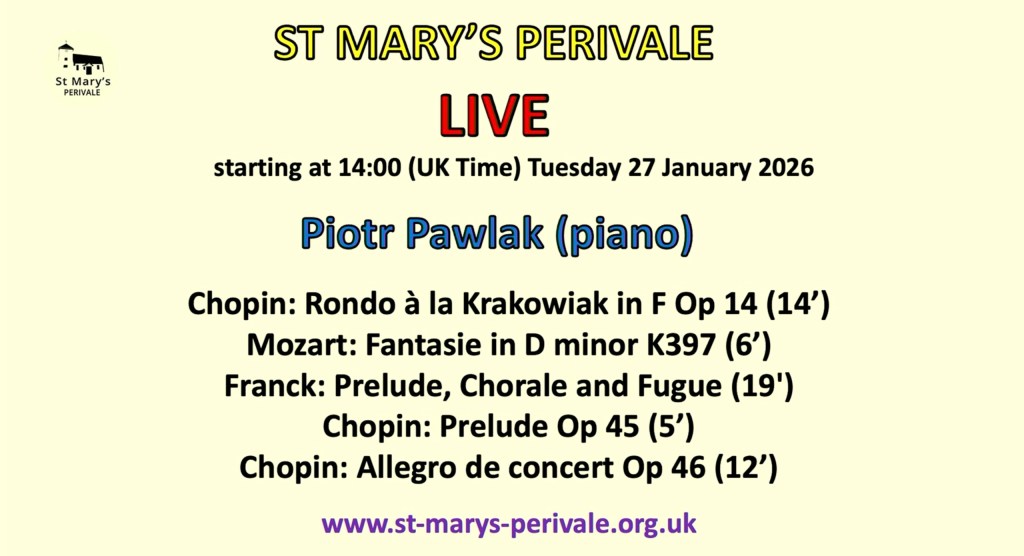
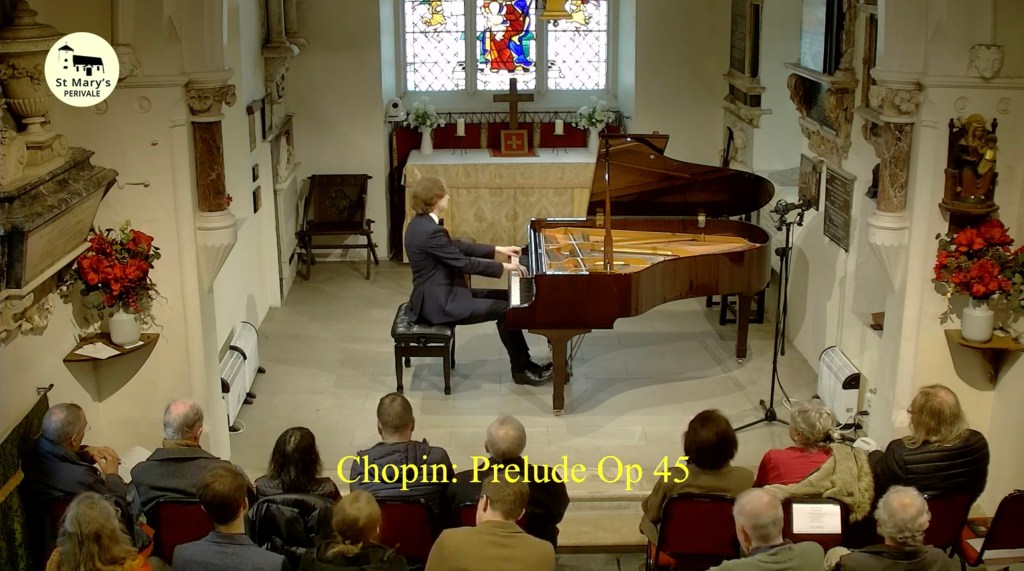
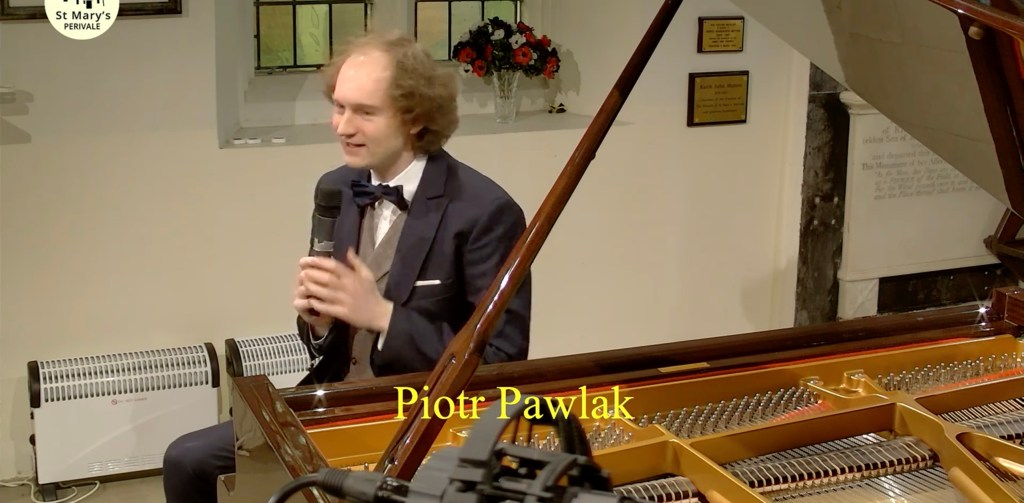
I had heard Piotr a year or so ago in the POSK annual Chopin Festival in London. It was on that occasion that I remember he wanted to explain to the pubic about the tradition of pianists of the past who used to improvise between pieces, taking us on a gentle transition to the different keys of each piece, something he went on to demonstrate in his recital. I then followed his playing in the Chopin competition in Warsaw where his stylish playing and evident love for music was much admired by a vast audience via their superb live streaming. It is easy to see why he was such an audience favourite because he exudes a sense of enjoyment in sharing his love for music and quite considerable scholarship. Judging by the comments during the live stream from Perivale today and an unusually full hall, he has a considerable following of admirers. It is playing of a crystalline clarity together with a natural way of playing that is like someone riding on a wave of sounds. A natural way of embracing the keys that allows him to produce a kaleidoscope of sounds that makes the music speak and brings all he plays vividly to life. It was Rubinstein who said you should only play music that you love and that speaks to you and it was his love for all the works on his programme that shone through his charming introductions, as it did with his music making that spoke even more eloquently ! https://youtu.be/gex0sOR7XZ0?si=_JaaqQqegHOeP4bT.
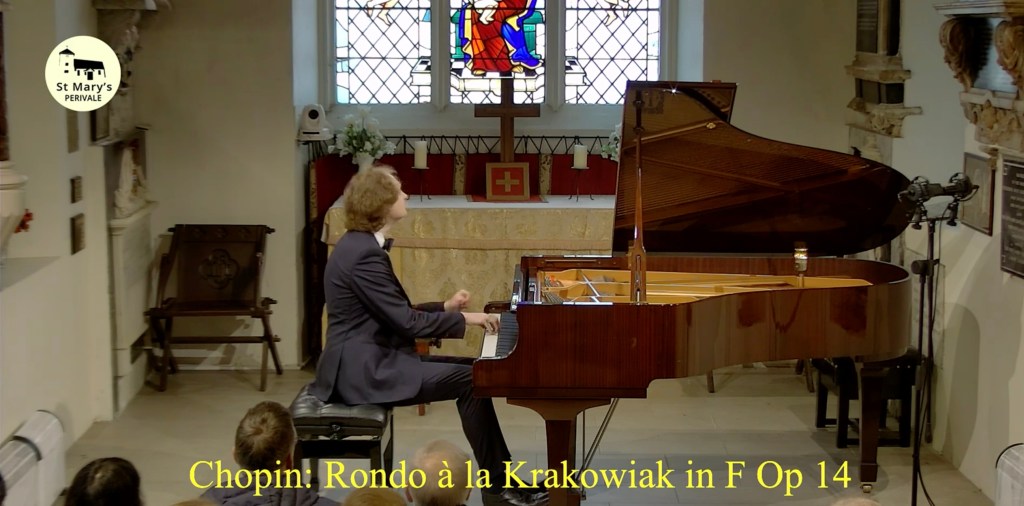
I remember discovering as a schoolboy Chopin’s ‘ Krakowiak’. It was a recording of Stefan Askenase and I found it so magical that I even bought the facsimile of the original in Chopin’s own hand. It was in the original version for piano and orchestra that I have never seen or heard of being played in public because being only fourteen minutes long it is hard to know how to programme it in orchestral concerts. It is nice to know that Chopin made this arrangement for solo piano and maybe it was with this that he astonished the public, whilst still a teenager, just before leaving Poland for good and taking up residence in Paris where he certainly made a mark. His ‘La ci darem’ variations, written for piano and orchestra and piano alone, were received by Robert Schumann with ‘Hats off,Gentlemen, a genius!’ A beautifully shaped and atmospheric introduction that suddenly sprang to life with brilliance and clarity. A cadenza taking us to a dance – Krakowiak – of irresistible style and with interludes that were washes of notes over the entire keyboard.They were played with brilliance and the jeux perlé that Chopin would have astonished his audiences with. Refined virtuosity with the Polish dance rhythms always present even in the maze of notes that poured from Piotr’s hands with flowing ease.
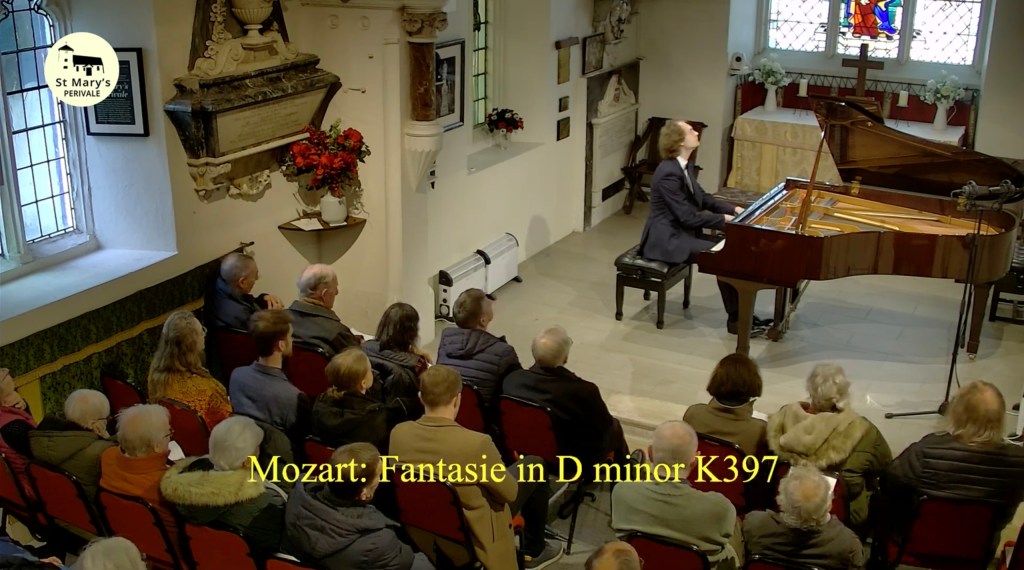
Today was Mozart’s birthday so it was as a fitting tribute that Piotr included his D minor Fantasie. As he explained Mozart had not actually finished the work and the final bars were in someone else’s hand. No matter, because Piotr is a master musician and when he got to that point he would improvise an ending that was less abrupt. There was a serenity to the opening spread out chords, the melody after this atmospheric opening played with simplicity and crystalline clarity. Beautifully shaped with great character and a palette of subtle colours, adding occasional embellishments always in good taste, being careful not to overload this simple melodic outline. Instead of the usual ending, written by an unknown hand, Piotr improvised an ending, as surely Mozart would have done, bringing back the opening themes in a poignant improvised farewell.
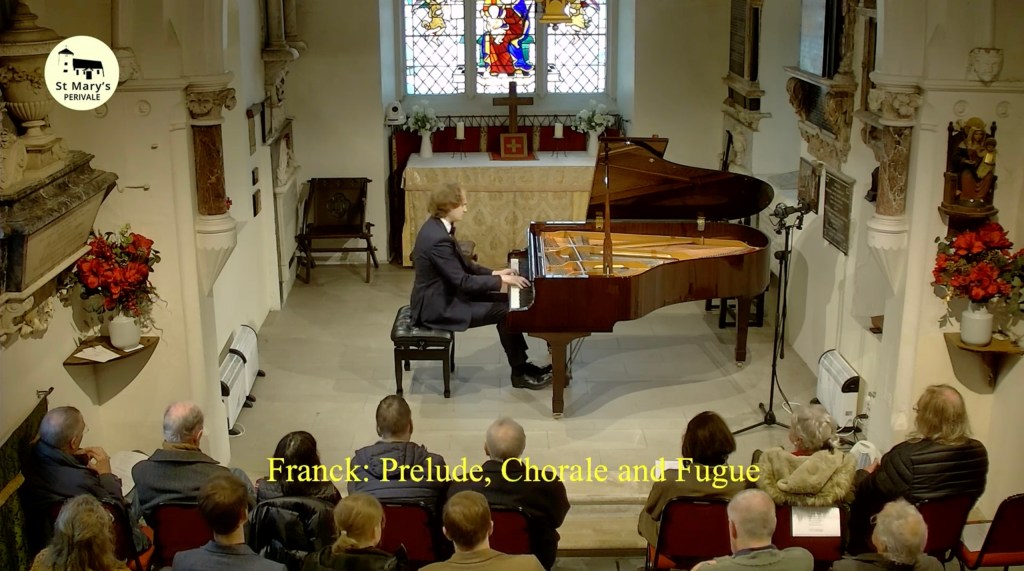
César Franck growing out of the Mozart quite simply, without any improvised interim modulations, as this too was played with a freedom but always within a strict architectural framework. It is a work that can sometimes sound fragmented, but Piotr managed to match the differing sounds of the etherial opening with the more earthbound chordal comments, in a way that one seemed to be a natural reply to the other. The meandering counterpoints ,that followed, shadowing each other and were played with clarity but also very expressive with an anguished feeling of impending mystery. His beautiful natural movements allowed the chorale to unfold with serenity and respectful beauty. It was in the same way that Chopin had described ‘tempo rubato’ to his pupils with roots firmly planted in the bass but with the branches free to flow freely above. There was always a musicianly sense of line and architectural shape as the volume almost imperceptibly increased in fervour as the music moved with a sense of improvised discovery towards the simple clarity of the Fugue. Unusually beautifully phrased as it built to a climax that was played with passion and sumptuous full sound, with a mounting tension unleashed by Piotr with almost total abandon. Suddenly a maze of notes unwound but always anchored to the insistent repeated bass notes, as the tension was released and the main theme of the ‘Prelude’ was allowed to float on this wave of mellifluous sounds. Gradually all three themes were miraculously united and incorporated into an exhilarating climax with the fervour of a true believer. If the ending was rather impetuous it was because the exhilaration and excitement that Piotr had generated almost risked to become out of control, adding a frisson of even more excitement to one of the finest performances that Dr Mather has ever heard in Perivale.
The final two works of the concert of were by Chopin and I had heard them both from Warsaw during the competition.There was an unusual clarity to the meandering unwinding ‘Prelude’ that Chopin was to pen towards the end of his life. A series of undulating modulations on which is revealed a melodic line very similar to Franck’s Chorale. I am used to hearing this work played rather faster by Vlado Perlemuter, and with a more luxuriant use of pedal, but Piotr revealed the timeless beauty of this extraordinary work where even the final cadenza was merely a shifting maze of chordal harmonies moving towards the final velvet clad chords.
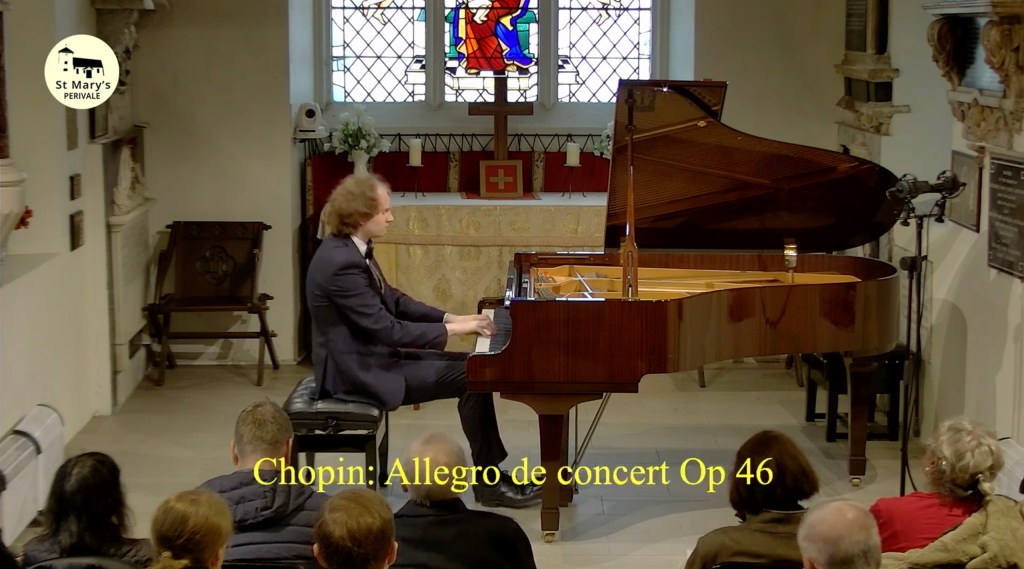
It was the same intelligence and informed musicianship that brought the first movement of Chopin’s Third Piano Concerto vividly to life, as I have only heard before from the hands of Arrau. The ‘Allegro de Concert’ op 46 is a notoriously difficult work to bring into the concert hall, not only for its technical difficulties with much Schubertian awkwardness ,pianistically speaking, but also to join them together into a whole where there is an obvious orchestral and soloist nature to the work. Where there is a will there is always a way, though, and love will always out. Piotr’s love for this work shone through a performance which was united under and umbrella of refined glowing beauty and sumptuous richness. Streams of notes were shaped into gleaming jewels of brilliance and at times of poignant significance .The final climax and exhilarating octave ending were played with aristocratic nobility and mastery.
Of course after such beautiful performances the ‘Perivalian’s’ or are they the ‘St Maryites’ were craving for more before allowing him to catch the plane back to Gdansk. Piotr with his ebullient ‘joie de vivre’ was more than happy to play some more. This time though the audience had to work as well, as he asked them to sing him a traditional English melody on which he could improvise a work of thanks to them. ‘Greensleeves’ was heard on an undercurrent of united song and it was this that Piotr with the mastery of a true kapellmeister transformed into a tone poem of intricate beauty and exhilaration. I bet Dr Mather already has a date fixed in his diary for a return match with this charming young master!
Piotr Pawlak is one of the most versatile Polish pianists of the young generation. He is the winner of many international competitions, including the V Maj Lind International Piano Competition in Helsinki (2022) and the XI International Chopin Piano Competition in Darmstadt (2017), laureate of Chopin Competitions in Beijing (2016), Budapest (2018) and Cracow (2019), the International Competition of Polish Music in Rzeszów (2019), the International Paderewski Competition in Bydgoszcz (2022) and the International Chopin Competition on Period Instruments in Warsaw (2023).
He regularly performs concerts worldwide, having appeared at numerous musical events in most European countries, as well as in the United States, China and Japan. He has performed at prestigious venues such as the Sankt Petersburg Philharmonic, Berliner Philharmonic, Sala Verdi in Milan and Teatro alla Scala, and has participated in renowned festivals such as „Kissinger Sommer” in Bad Kissingen and „Chopin and his Europe” in Warsaw.
In the 2024/2025 season, he was performing in Canada, Japan, Venezuela, Germany, Switzerland, Finland, the United Kingdom, France, Hungary and Poland, cooperating with e.g. Baltic Philharmonic Orchestra, Warsaw Radio Symphony Orchestra and Sinfonia Baltica.
Piotr Pawlak began his musical education on the piano at the age of six in Feliks Nowowiejski Music School in Gdansk with Ewa Wlodarczyk, and then he continued to study with Waldemar Wojtal until the end of his studies in 2021. He also graduated music school finishing in organ studies, under the tutorship of Hanna Dys, and he studied conducting in The Stanislaw Moniuszko Music Academy in Gdansk with Zygmunt Rychert. From 2024 he is also a student of the prestigious International Piano Academy Lake Como.
Piotr Pawlak is dedicated to reviving improvisation in the classical music world. He draws inspiration from historically informed performance practices, incorporating elements such as improvised cadenzas in Mozart’s piano concertos.
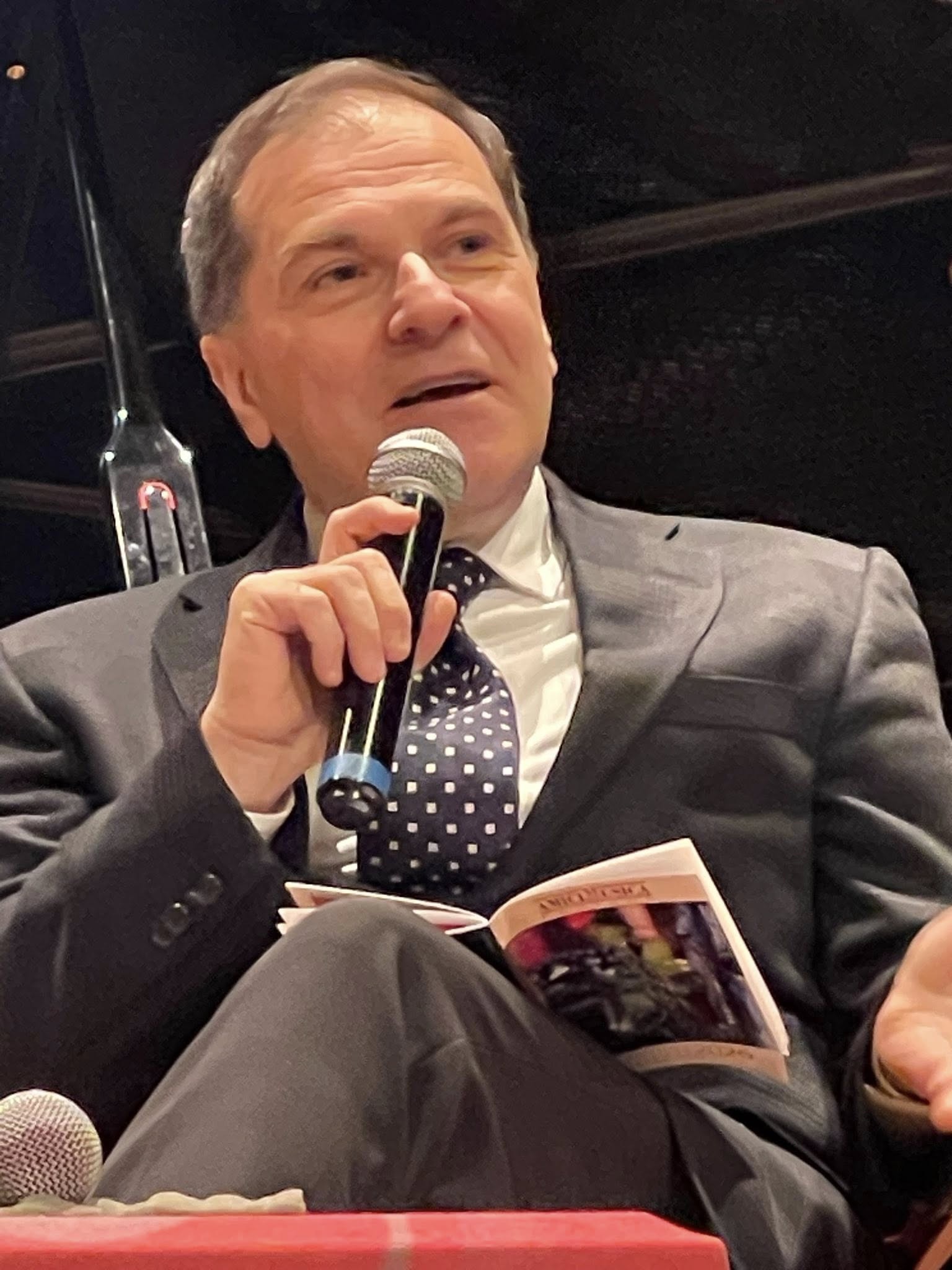
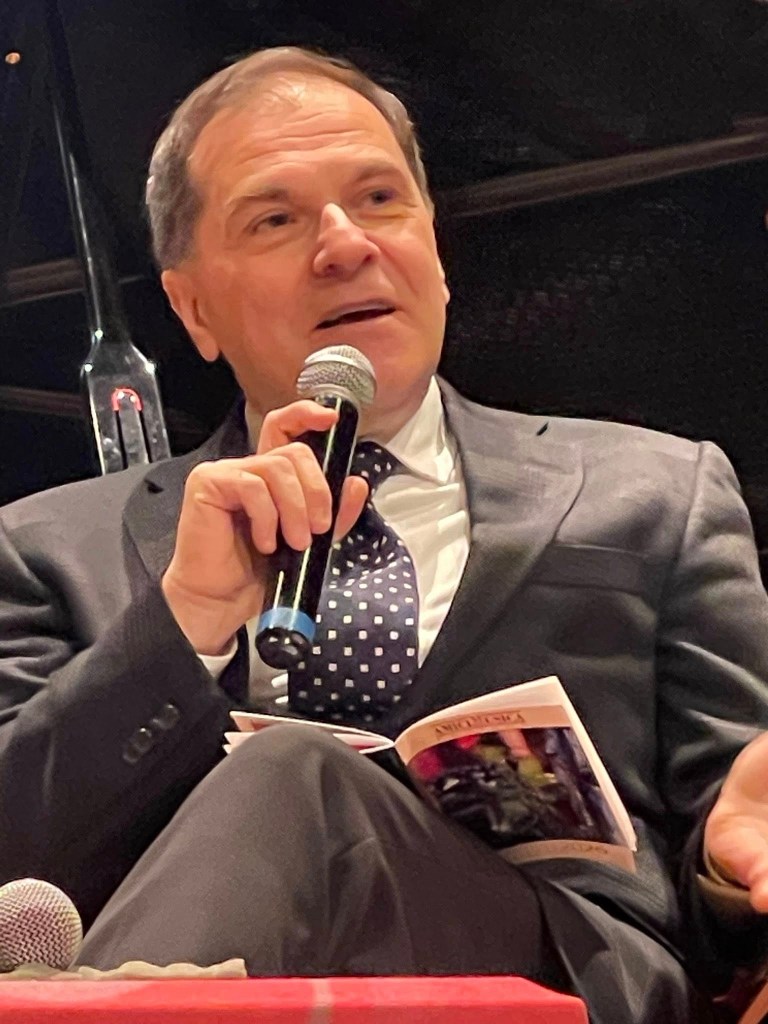
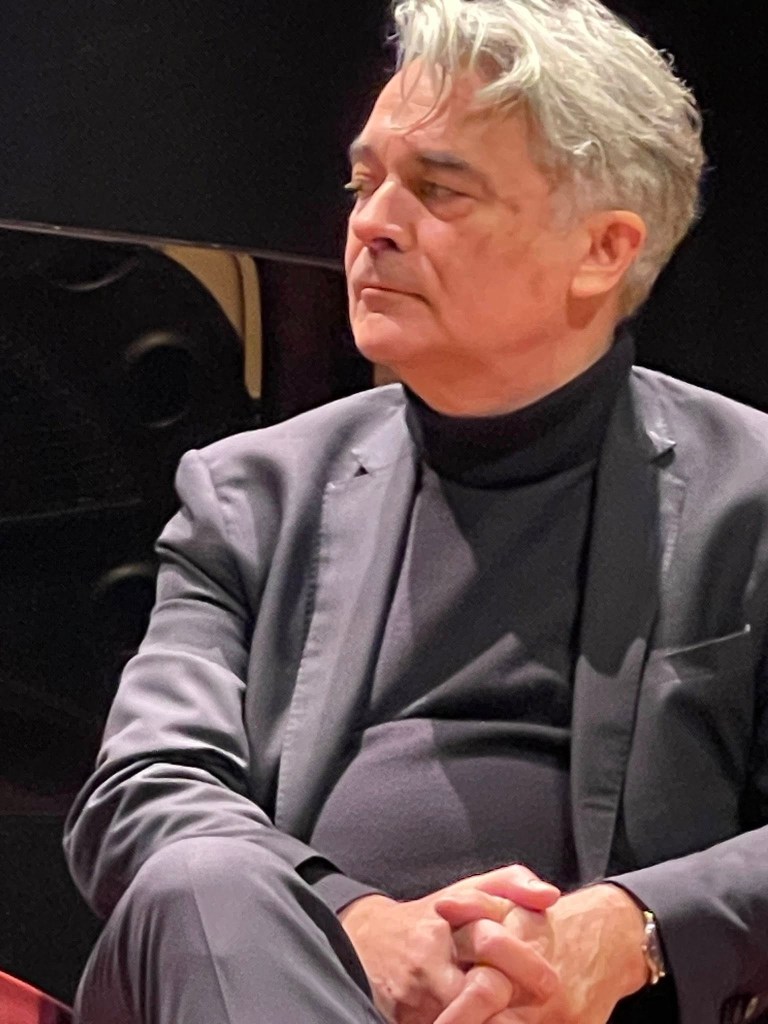
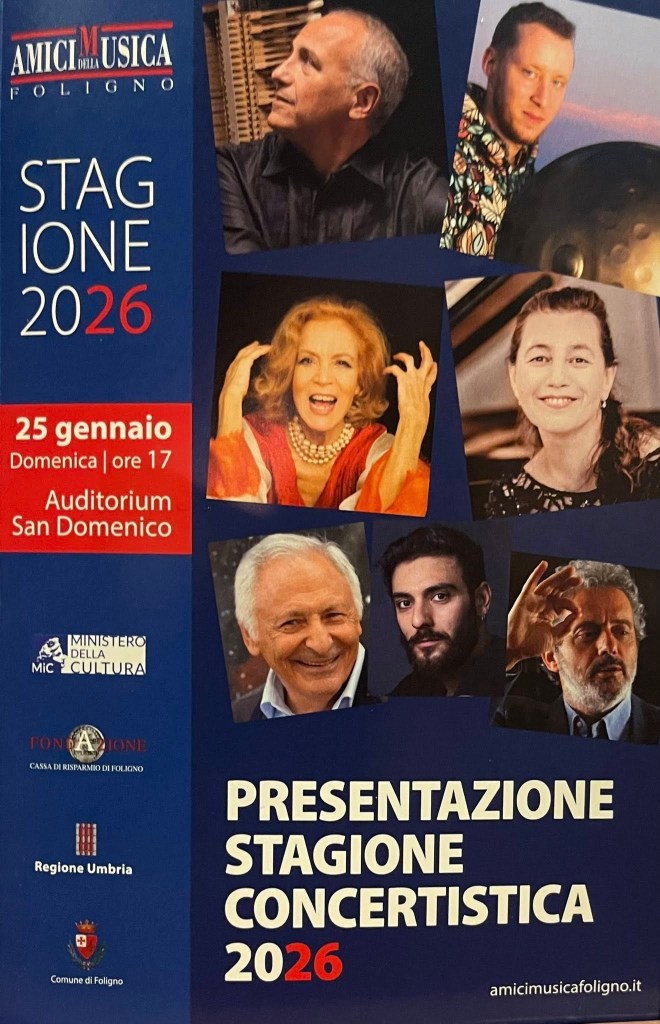
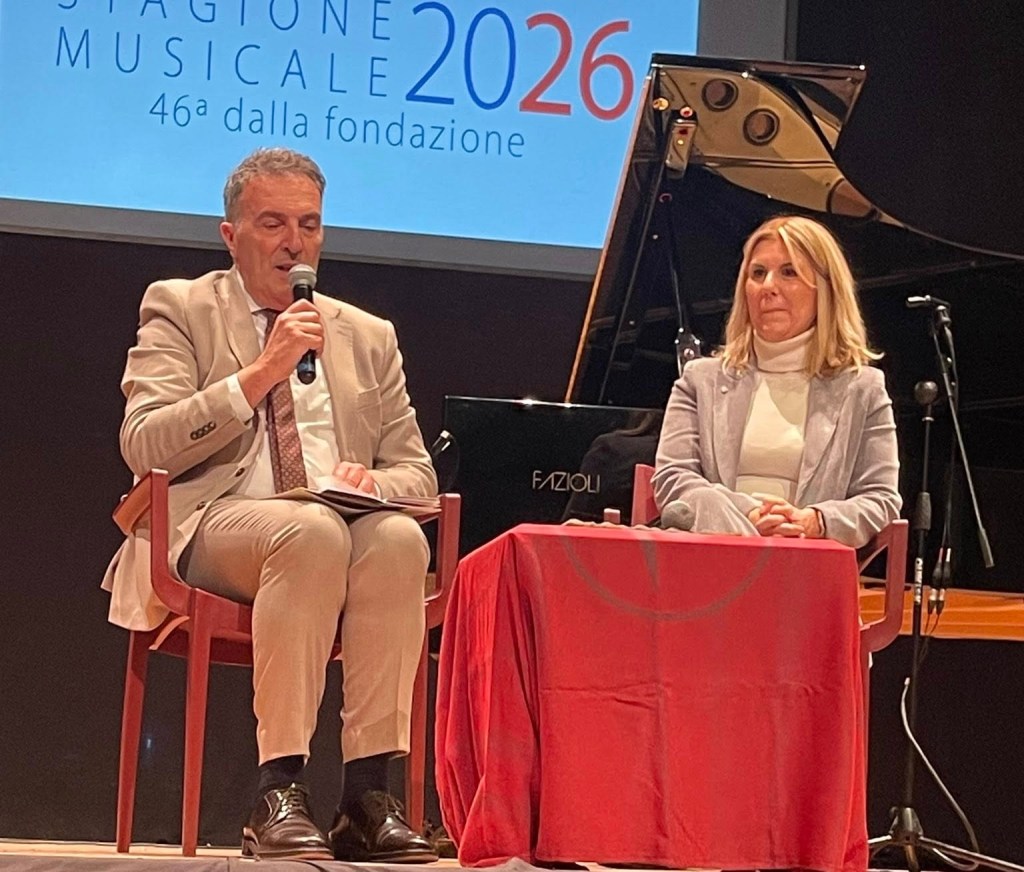
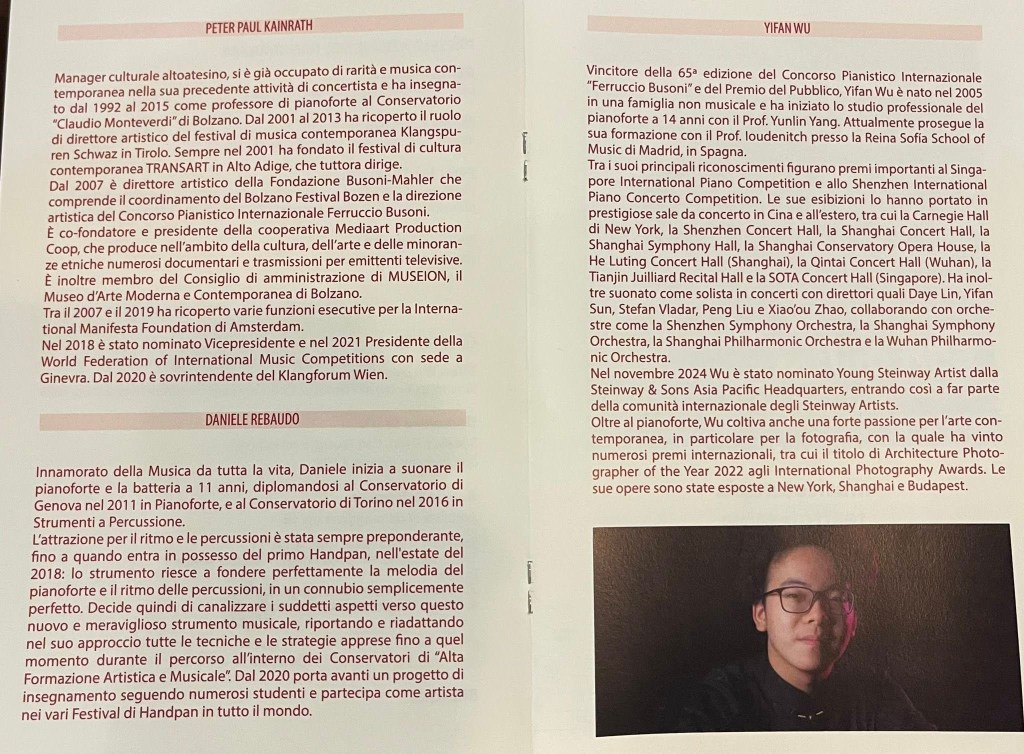
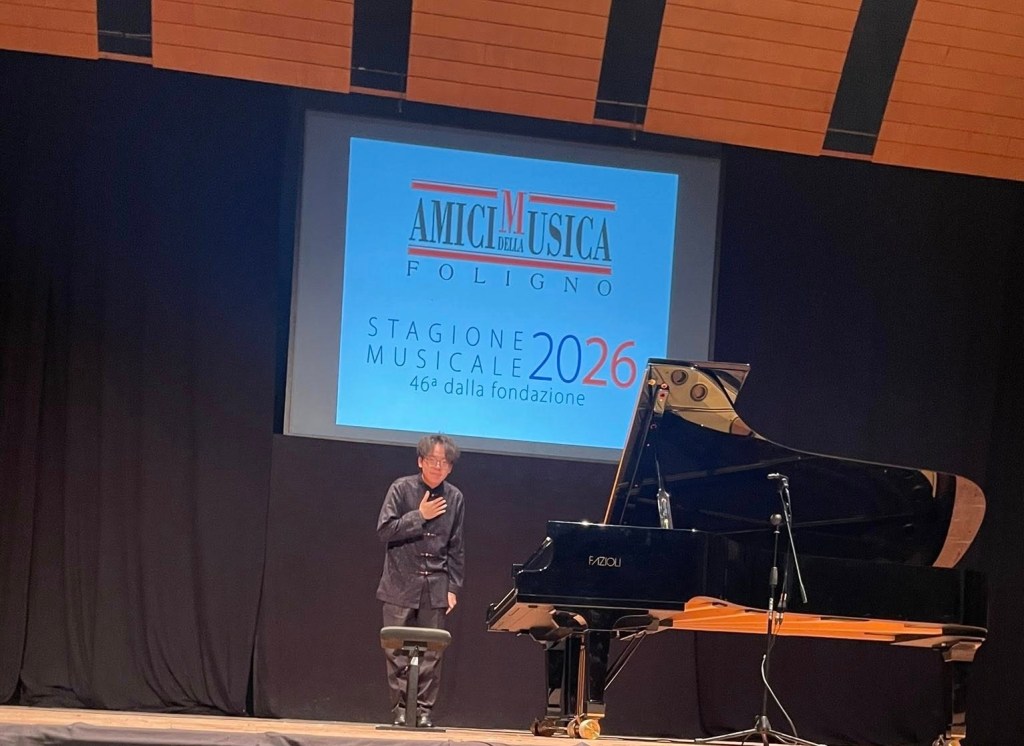
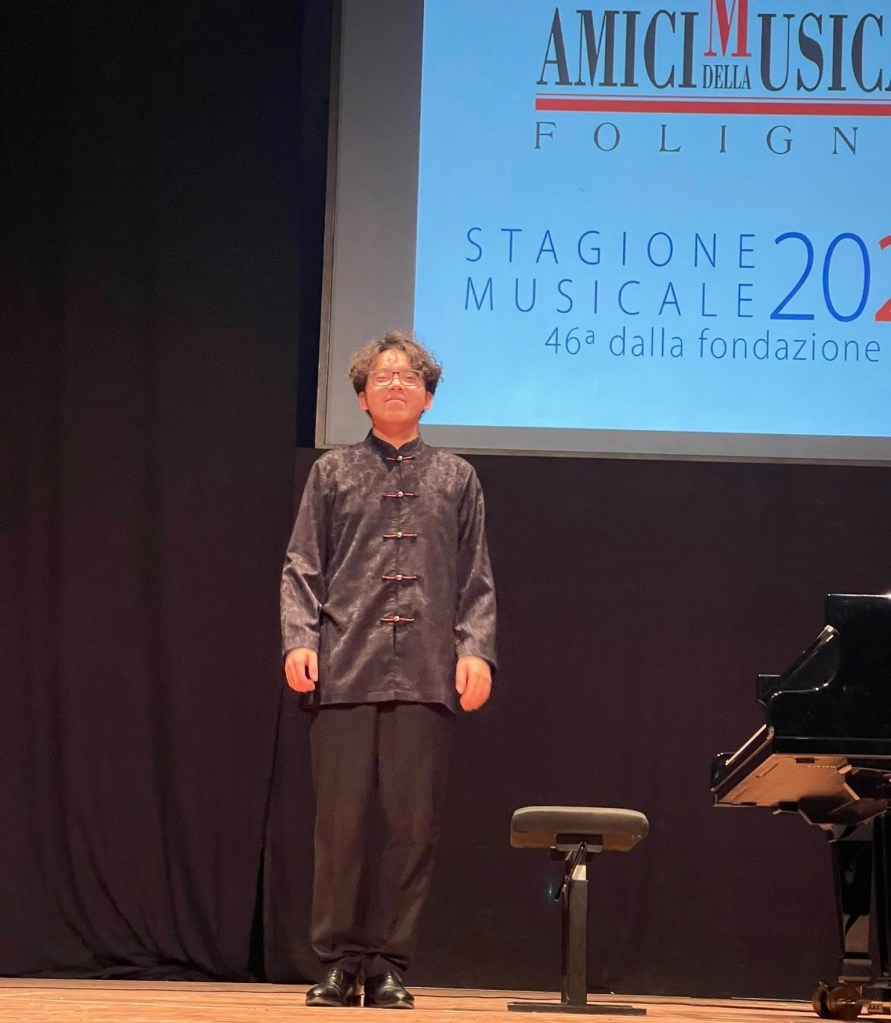
Presentation of the concert season 2026 in Foligno by the artistic director Marco Scolastra with the participation of Peter Paul Kainrath and 2025 Busoni winner Yifan Wu.
Marco in describing all the wonders he will be bringing to his home town this season wanted us to remember the much missed Elio Pandolfi on the centenary of his birth.
There has been a long tradition of inviting Busoni winners to Foligno.It was here that I first heard Michail Lifits ,Busoni winner in 2008 who is now not only a concert pianist but a revered Professor at the Liszt Academy in Weimar. This year not only Yifan Wu has been invited but also Lilya Silberstein,Busoni winner in 1987 continuing the tradition of Guido Agosti at the Chigiana Academy in Siena. She will play in duo with Kainrath’s remarkable violinist son. .https://christopheraxworthymusiccommentary.com/2025/08/28/julian-kainrath-rides-high-on-the-wings-of-ulisse-some-enchanted-evening/
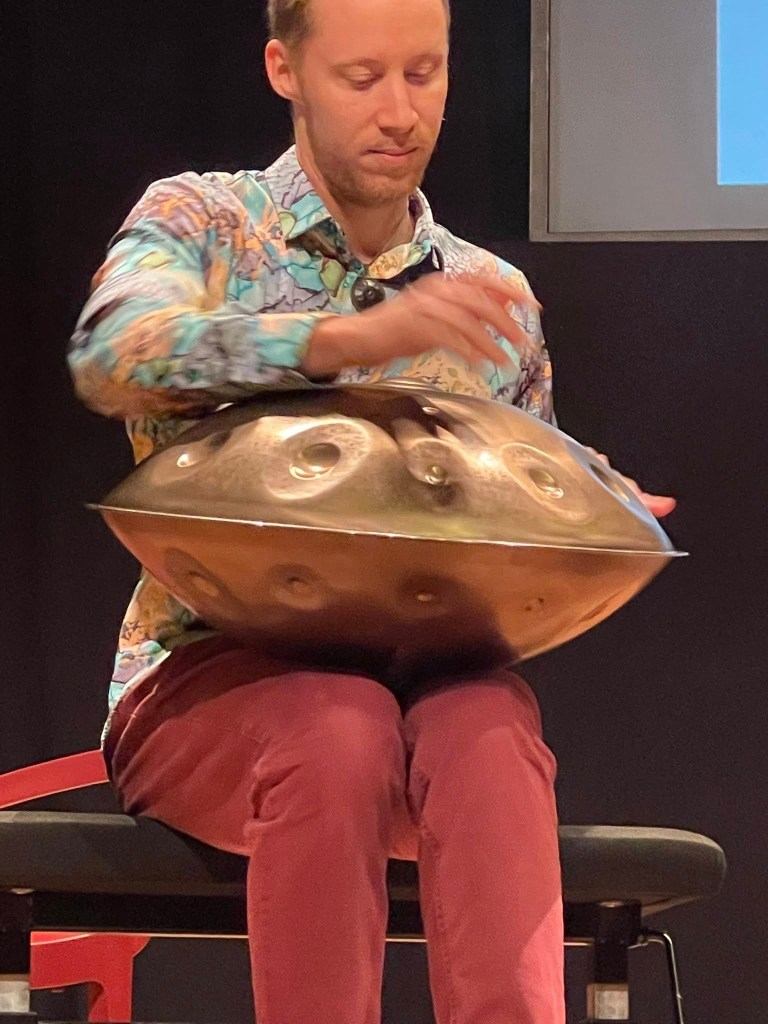
Daniele Rebaudo with L’HandpanGiorgio Battisti President of Amici della Musica with the Assessore alla Cultura
There will also be a concert of L’Handpan with Daniele Rebaudo who was persuaded to demonstrate this extraordinary instrument to us.
Dott Kainrath, since 2021 is President of the World Federation of International Music Competitions and since 2007 artistic director of the Busoni Competition in Bolzano .
He gave a fascinating talk about the new way we should be listening and conceiving music especially in relation to the 2025 winner of Busoni . Lucas Debargue and Sergio Tiempo, both jury members in 2025 , have created a new movement of ‘freedom in music’ harking back to the pianists of the turn of last century who would make use of improvisation on a journey of discovery of sounds., https://christopheraxworthymusiccommentary.com/2025/05/06/lucas-debargue-at-the-wigmore-hall-to-be-or-not-to-be/
They were musicians who were above all magicians and Kainrath made a very persuasive case to make music making more in the style of a ‘kapellmeister’ than ‘school master.’
Many of the composers were also master improvisers who wrote the music down only after it had been conceived at the keyboard.
It is an interesting path to rediscover after Pollini, Agosti, Rubinstein, Arrau, Serkin and Perahia (including in another sphere Riccardo Muti) had broken away from this freedom of tradition and taught us that our duty as interpreters was to start with a scrupulous attention to what the composer wrote. As Kainrath wisely said why can’t we combine both worlds and embrace new cultures and way of thinking?
‘Je sens, je joue, je transmet’ was the title of an article in Le Monde de la Musique dedicated to Cherkassky who would often say to me that he did not think the young pianists actually listened to themselves anymore .
In preparing us to listen to Yifan Wu he explained that we should open our ears and embrace many cultures not in a traditional way but with the idea of re discovery.
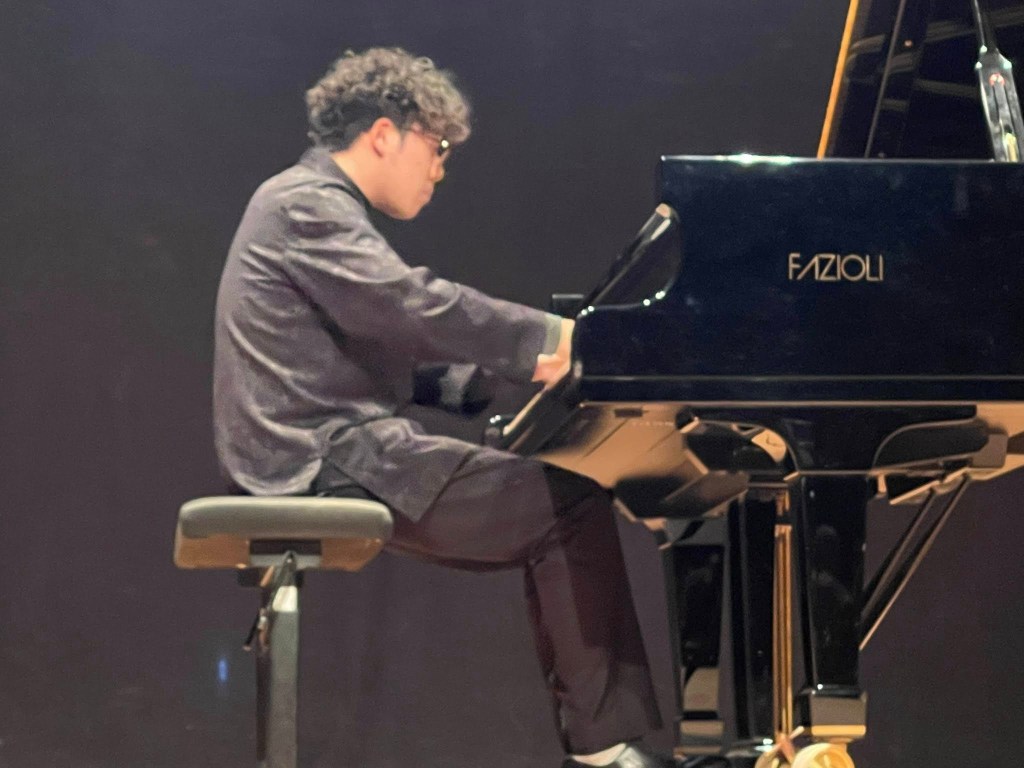
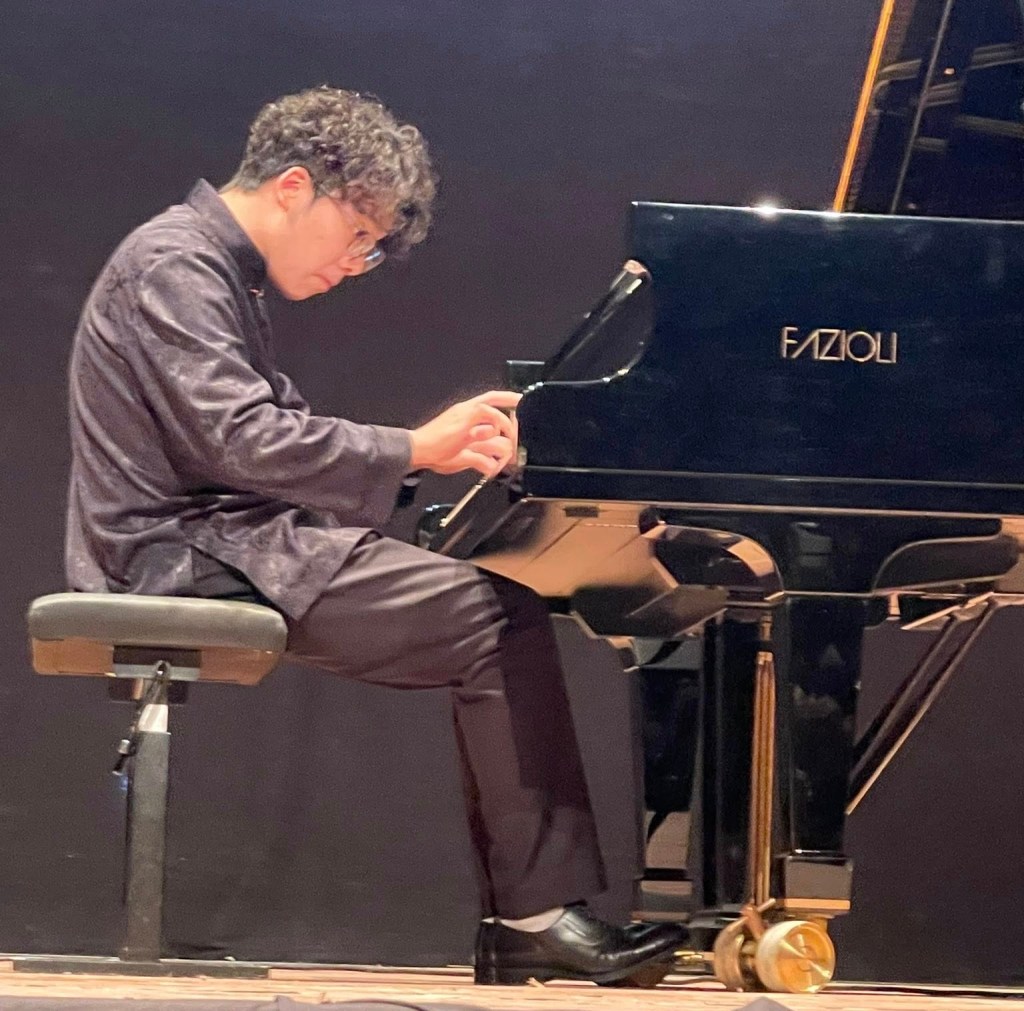
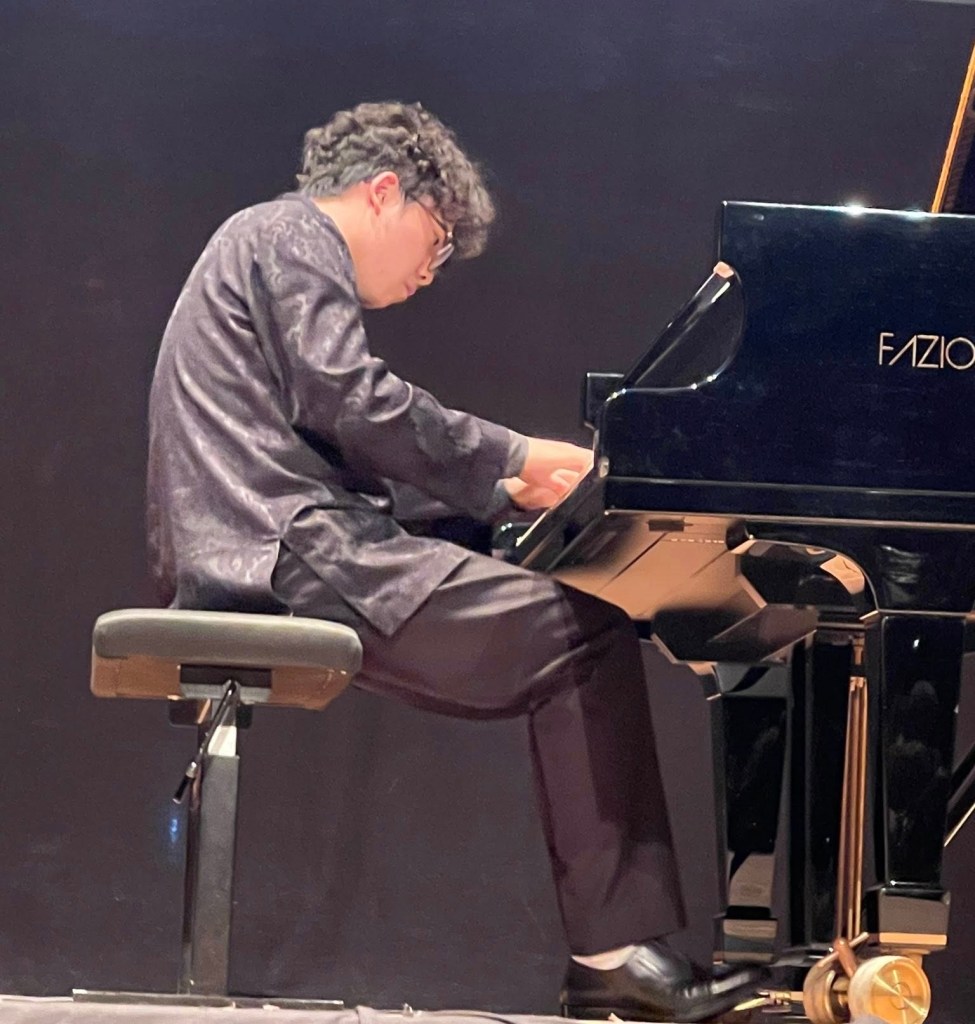
And so it was that this twenty year old Chinese pianist took the stage to demonstrate what Kainrath had explained in words .
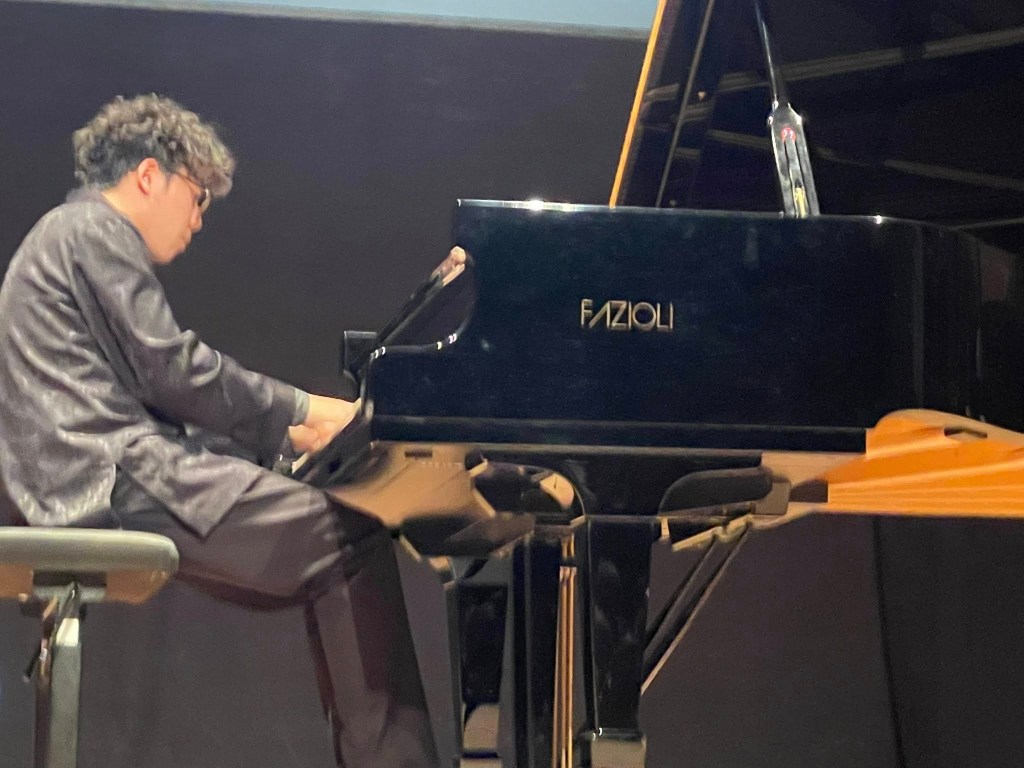
Beautiful improvisations between the works prepared our ears to listen afresh to Scarlatti and Schumann Sonatas . Musings on Beethoven 4 or Schumann songs. Adding great bass notes and a luxuriant use of the pedal to open up this black box of hammers and strings and persuade us that it could really sing with the voice of a Caballé or roar with the sumptuous sounds of Stokowski’s Philadelphia . I have never been aware that a magnificent Fazioli piano could open up to reveal a Pandora’s box of glistening jewels. Although the baroque specialist would flinch at the highly romanticised Scarlatti ( the once famous re workings of Tausig have long been banished from the concert hall and were last heard in the hands of Cherkassky.) Not Horowitz though whose studio recordings of Scarlatti found the ideal between style and colour as Argerich does today . But then Horowitz was a unique genius, master musician as well as a master magician as is today Martha Argerich, winner in 1957 of Busoni as a teenager now in her 85th year! https://christopheraxworthymusiccommentary.com/2023/08/13/all-the-fun-of-the-circus-the-busoni-competition/
Robert Levin the absolute authority on classical style is surprisingly free and a master improviser showing us that we should not be too rigid in our interpretations of the classics. When they were written there was a great liberty and freedom left to the interpreter with improvised ornamentation, Bach even wrote out a table of ornaments that could be used in his works.
The shorter pieces were beautiful bijou’s played with subtle refined sounds of whispered beauty. It is in the larger works that sacrificing the architectural line and the construction from the bass upwards is one of the hardest tricks for any magician to resolve . The beauty and colour of the young pianist in Schumann’s Sonata op 11 were remarkable but I hope that with the help of Stanisłav Ioudentich in Madrid Yifan Wu will discover how to put all the glistening bricks together to create the great Gothic Cathedrals of which we interpreters are mere servants and master craftsmen. Interpreters have long been trying to piece all the bricks together and bring to life the music of others with the ink still wet on the page https://christopheraxworthymusiccommentary.com/2021/09/04/busoni-international-piano-competition-2021/
An encore played with the score (sic) of a Scarlatti sonata did in fact produce the most satisfying performance of this short recital .
Yifan Wu is a courageous adventurer and we wish him luck as he searches for the road to El Dorado. He is well on his way as he proved today.
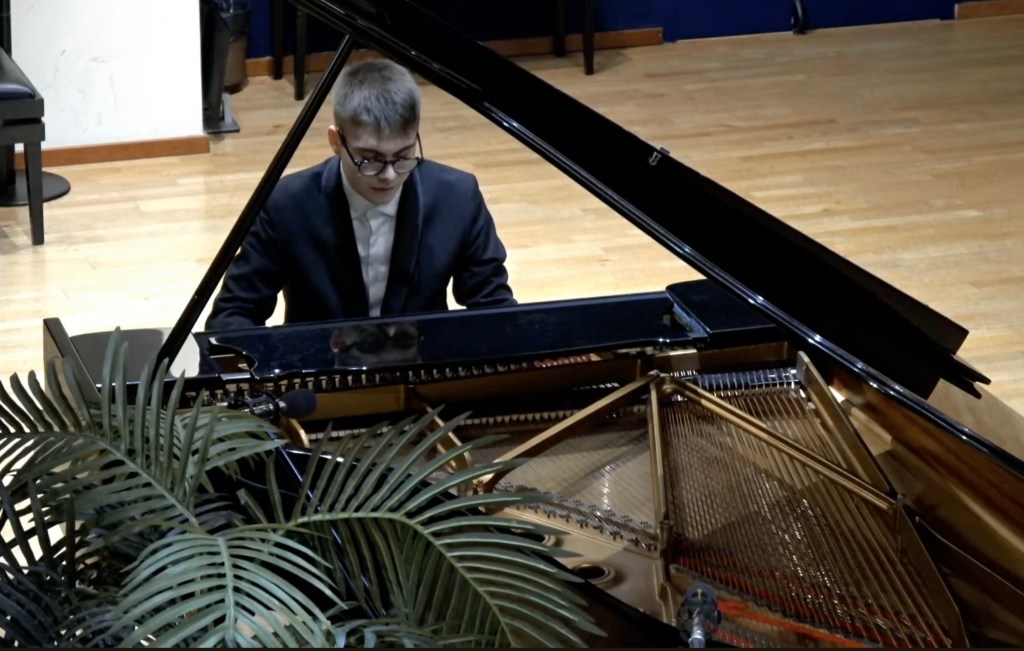
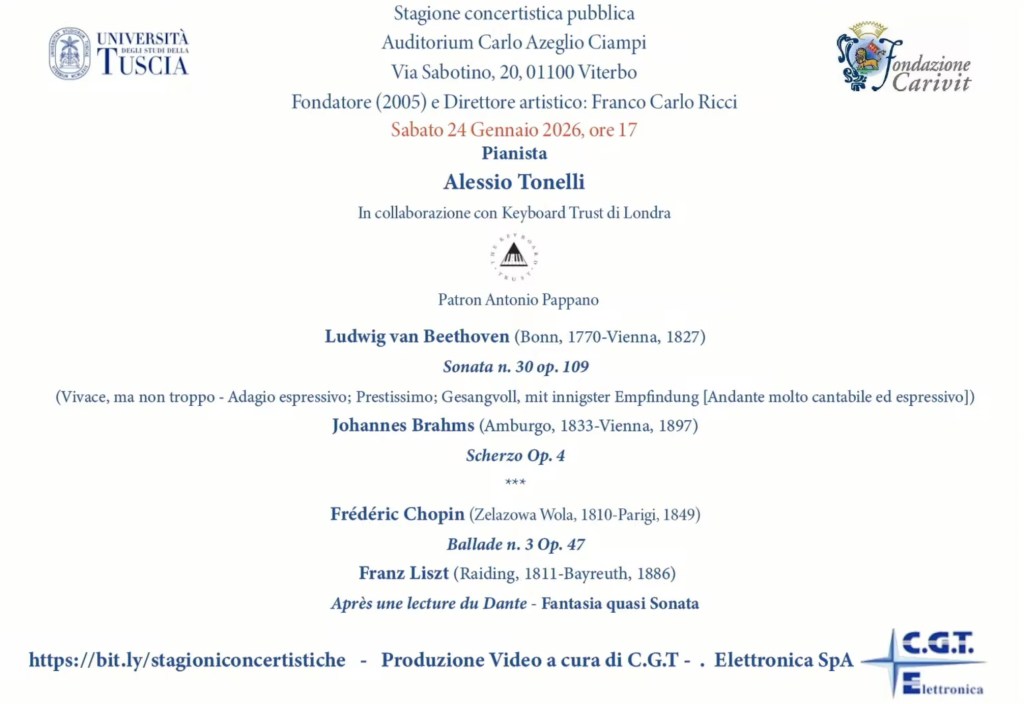
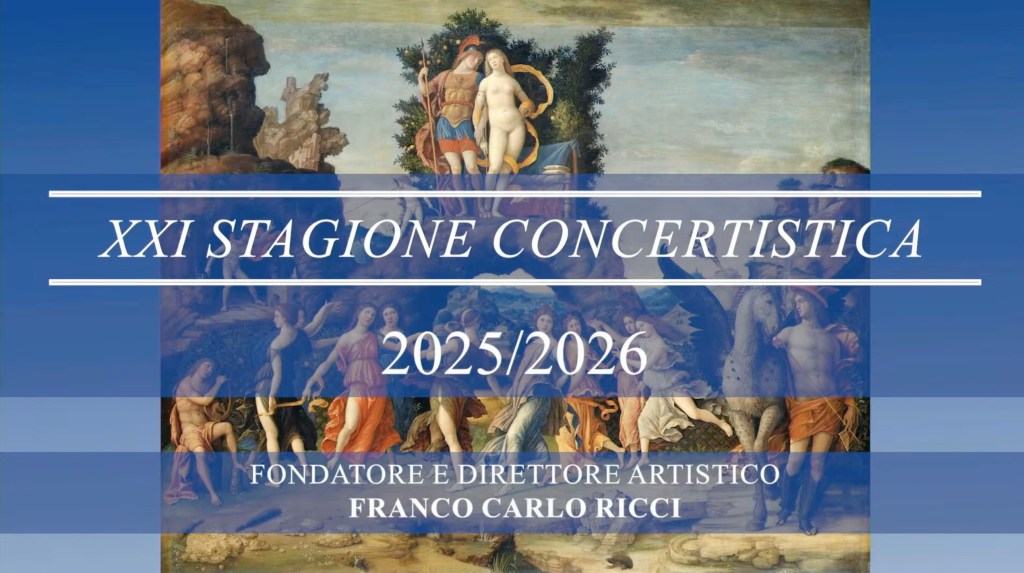
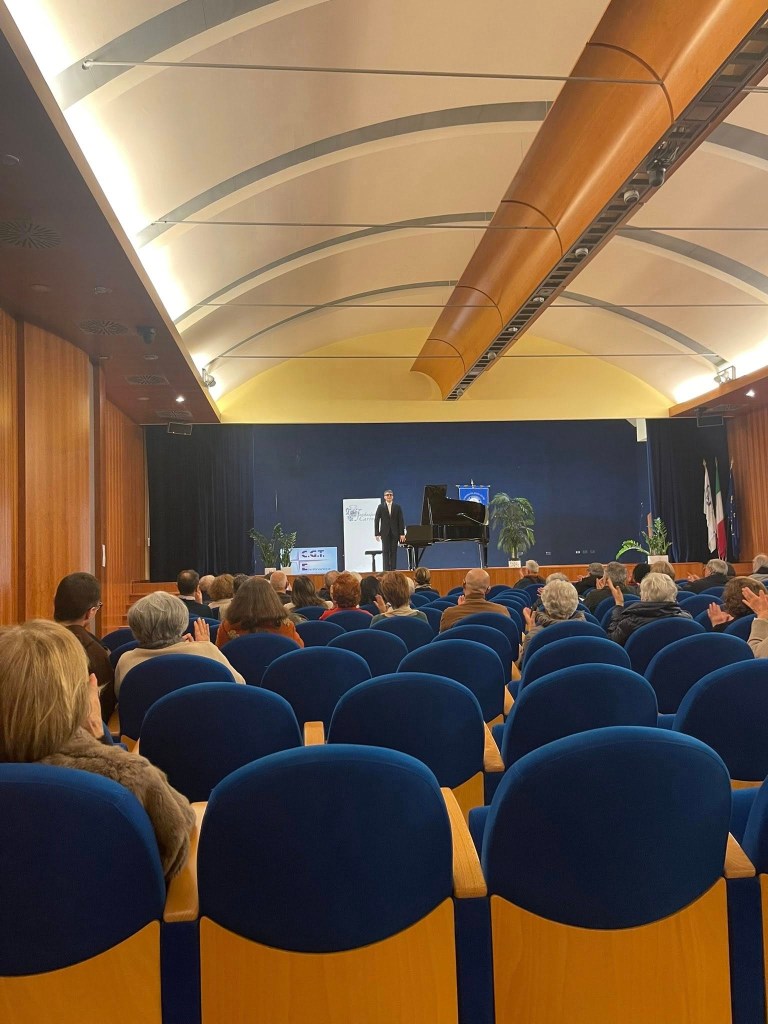
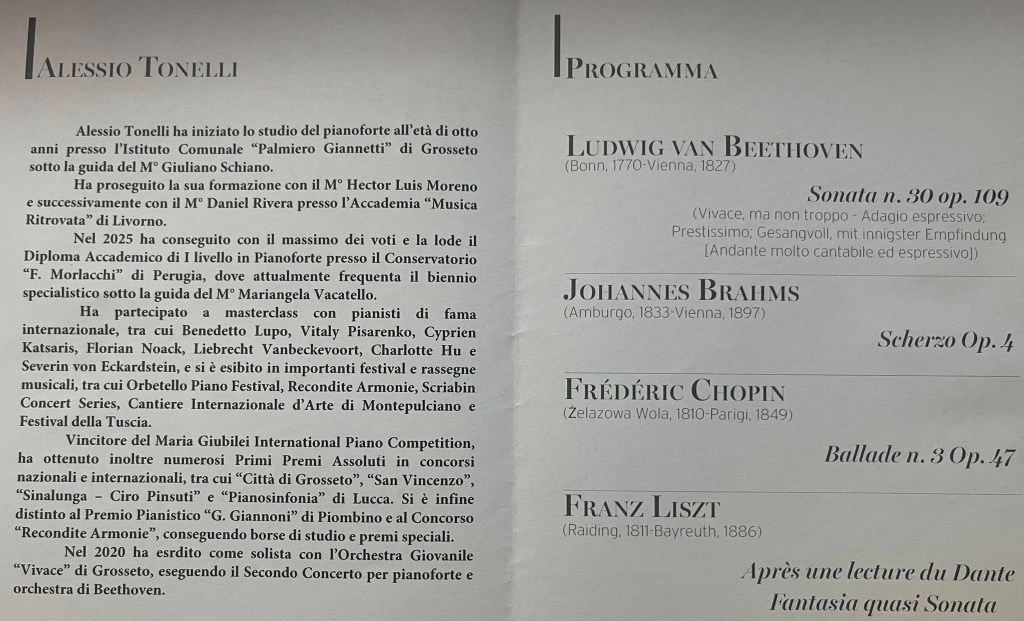
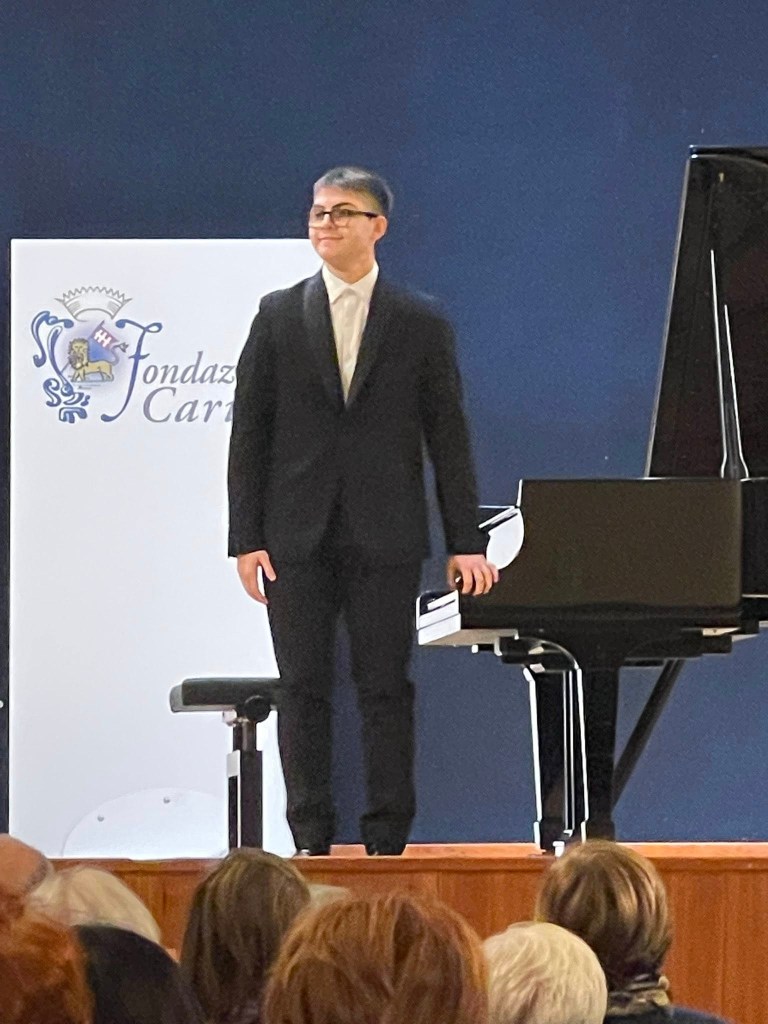
Alessio Tonelli playing in Viterbo as a top prize winner of the Recondite Armonie Competition in his home town of Grosseto and chosen by Vitaly Pisarenko to play in the prestigious concert season of Tuscia University . The 21st anniversary season created and organised every year by Prof Franco Ricci who was the first to applaud the mastery and musicianship of this young musician from the class of Giuliano Schiano, Hector Luis Moreno and Daniel Rivera . Now perfecting his studies with Mariangela Vacatello who was on the jury this week of the Utrecht Liszt Competition which Vitaly Pisarenko had won in 2008 and Mariangela was a top prize winner in 1999.
It was obvious from the very first notes of Beethoven’s Sonata op 109 that here was a young man with an impeccable musical pedigree . A young artist who delves deeply into the score paying scrupulous attention to the composer’s very precise indications . But this was only the start of a musical journey of a young artist who listens to himself and produces a range of sounds of great beauty. Whether the sumptuous rich sounds of Liszt or the delicacy of Beethoven this is a young man who loves the piano and is not capable of making ugly or ungrateful sounds at the expense of the composer of which he is a devoted servant .
Beethoven op 109, the first of the trilogy of the last of the composers cycle of thirty two sonatas, was played with sensitivity and intelligence.The ‘Vivace ,ma non troppo’ movement opened on a wave of sound that was to take us on this final journey. It is where Beethoven at last finds peace and consolation as in his isolation after a turbulent life he can only experience sounds with his inner ear. The miracle of course is that Beethoven could write these sounds down for posterity, that were only in his head, as he was totally deaf at this point . Alessio with scrupulous musicianship was able to transform these indication into sounds of mellifluous beauty.
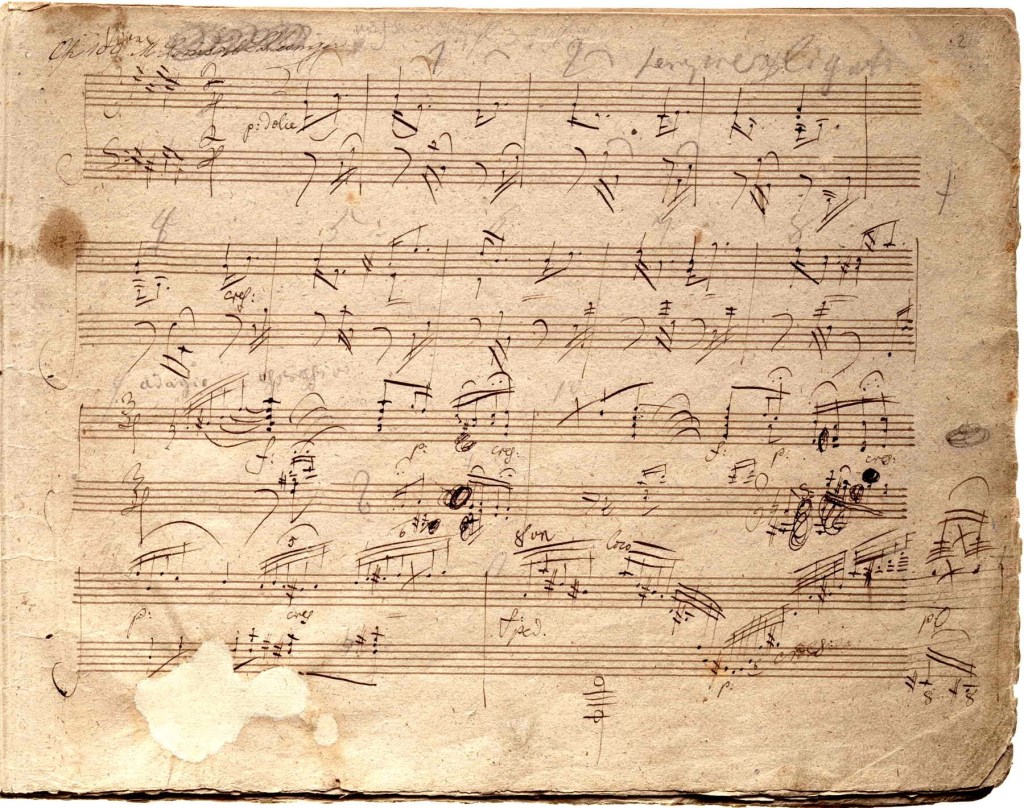
The opening ( see above the original manuscript) was like a long improvisation only interrupted by ‘recitativi’ of poignant significance. The second movement ‘Prestissimo’ was played with the dynamic drive that is indicated but there was also beauty of sound and a clarity no matter the technical hurdles he surmounted with ease. Alessio also brought a sense of struggle that is implied behind the notes and which was a complete contrast to what was to follow. The ‘Theme and Variations’ that make up the last movement were played with aristocratic poise and a maturity where this young man could allow the music to pour simply from his fingers without any unnecessary rhetoric or fussy unwanted interventions. The clarity of the ‘Allegro’ third variation was transformed into a web of meandering sounds searching for a way forward. It was here that Alessio brought a beautiful flowing shape to his playing finishing on high before the dynamic drive of the fifth variation. Played with great clarity as Beethoven’s intricate counterpoints take us to the dismantled theme. A theme that Alessio transformed on magic waves of sound gradually finding the melodic line with playing of technical authority and masterly control. Alessio allowed this wave of sounds to unwind so naturally that the theme was literally reborn with an inner intensity and delicacy. This was a masterly mature reading and hats off to Alessio’s mentors for showing him the path of a true interpreter putting his considerable technical baggage at the service of the composer.
Mariangela Vacatello’s birthday being celebrated by her colleagues at the Utrecht Liszt Competition that finished today
Brahms early Scherzo op 4 was played with great rhythmic clarity and a kaleidoscope of sounds from whispered insinuating impulses to sumptuous exciting symphonic sounds. A whimsical first episode was given great character and the second that followed was beautifully phrased with passionate virtuosity. This was the work in-between the three Sonatas of Brahms of op 1 op 2 and op 5 , that Schumann was to call ‘veiled symphonies’.It was just this symphonic sense of colour that Alessio brought to this Scherzo that has for a long time been eclipsed by it’s more imposing brothers!
It was in Chopin that Alessio’s simple and beautiful musicianship allowed this most ‘pastoral’ of Chopin’s four ballades to flow so naturally. Always supported by the bass that gave great solidity to the beautiful variations that he could float with great style above. It was Chopin that described to his pupils that music like a tree should have its roots firmly planted in the ground but the branches above allowed freedom to move naturally. Alessio playing with an aristocratic style of timeless beauty but also showing considerable technical assurance with the sumptuous full sonorities of the first great climax. There followed a menacing crescendo that Alessio played with remarkable control arriving at the final glorious outpouring of passionate intensity and glowing brilliance.
Liszt’s imposing ‘Dante Sonata’ was where all Alessio’s remarkable qualities were put at the disposal of Liszt’s extraordinary vision. It was the work of Dante that was to touch Liszt so deeply whilst on his travels with Marie d’Agoult in Switzerland and Italy .There are a multitude of emotions in a work that is a true tone poem full of passionate outbursts of heartrending intensity. Alessio showed a scrupulous attention to the composers indications where there was no empty rhetoric or mere showmanship but a story that unfolded with extraordinary emotional clarity and meaning. Alessio brought sumptuous full sounds and a remarkable technical control to the demands that the composer imposes. But there was also a great architectural line that bound this mighty work together into a unified whole. The central episode was played with delicacy and whispered beauty but always with the melodic line projected into the hall with glowing beauty. A ‘tour de force’ with playing of great authority and a technical mastery that even the treacherous final leaps were incorporated into a musical conversation and not just hurdles to be surmounted as is often the case with lesser artists.
A larger audience today than I have seen before, despite the bad weather, and who were happy to give an ovation to this young artist now perfecting his studies at Perugia Conservatory.
Alessio responded with the last of Chopin’s 24 Studies – the so called ‘Ocean’ study op 25 n.12 that he played with flowing ease and passionate intensity. Even here the phrasing and shaping of this whirlwind of sounds was of an artist who is listening to himself and shaping the sounds with sensitivity,intelligence and great style.
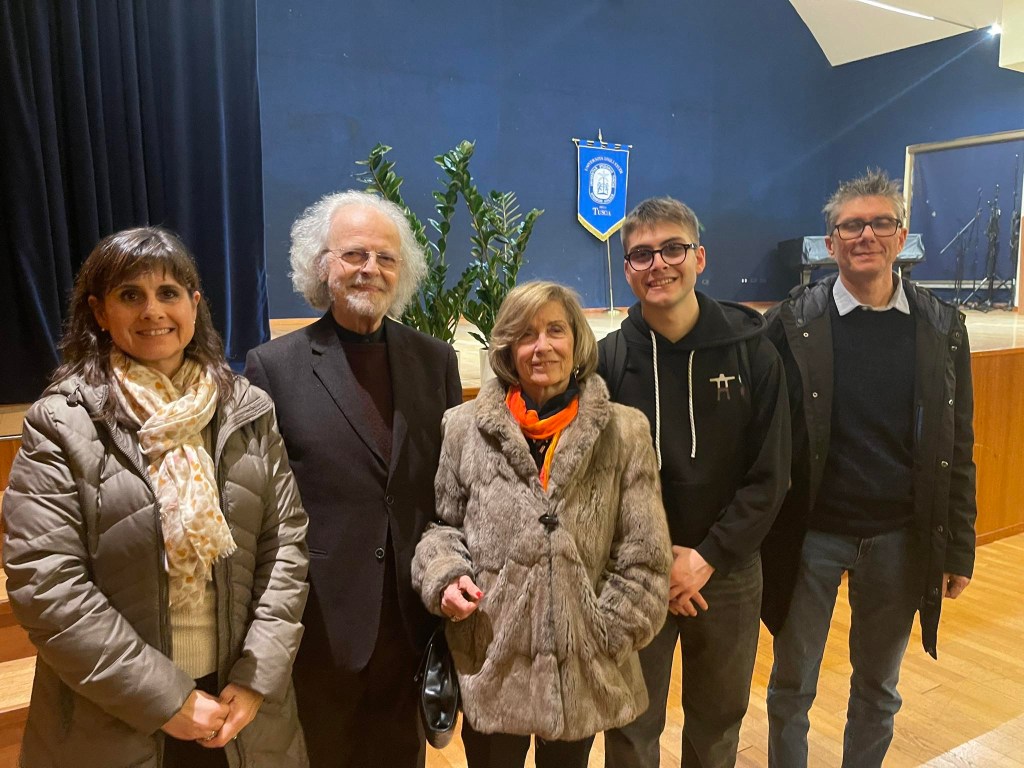
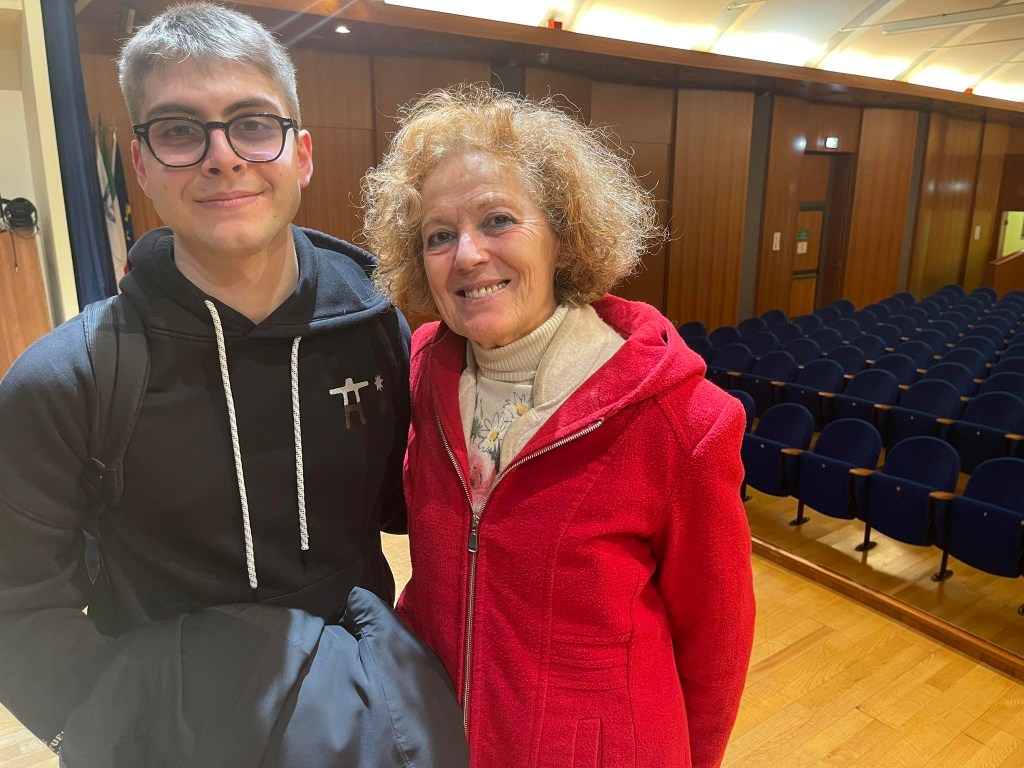
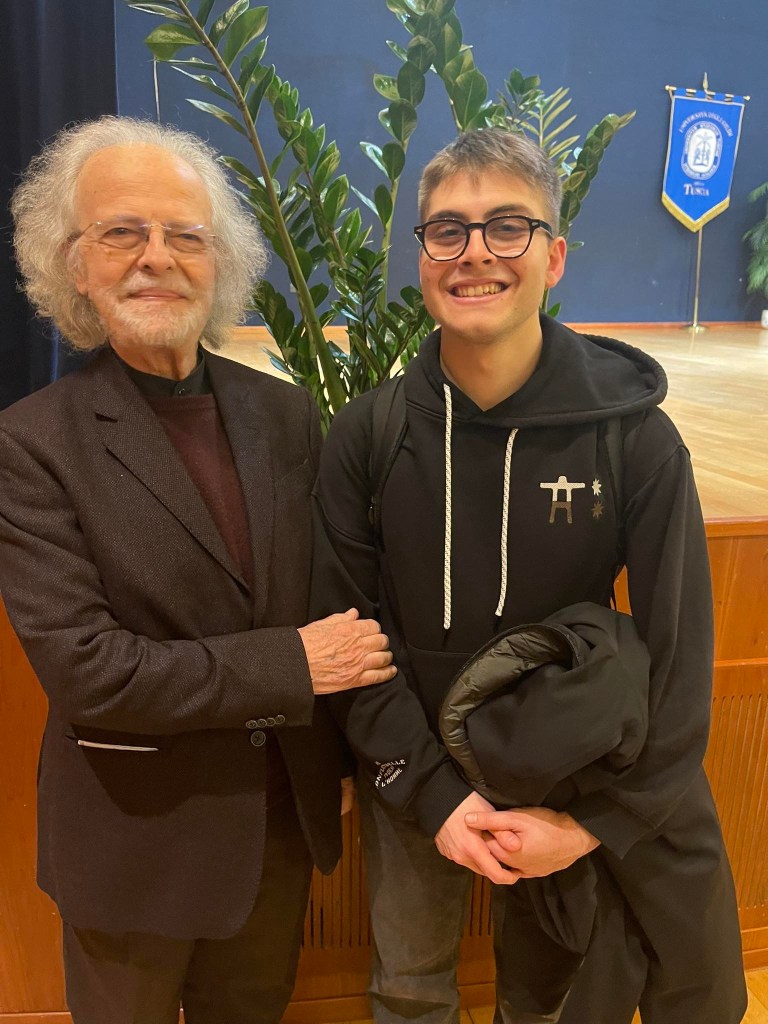
Alessio with parents, Prof Ricci and Gabriella Cicognani
Mention should be made of Gala Chistiakova and Diego Benocci who have created a vast musical activity in Grosseto including the competition of which Alessio is such a shining example of excellence.
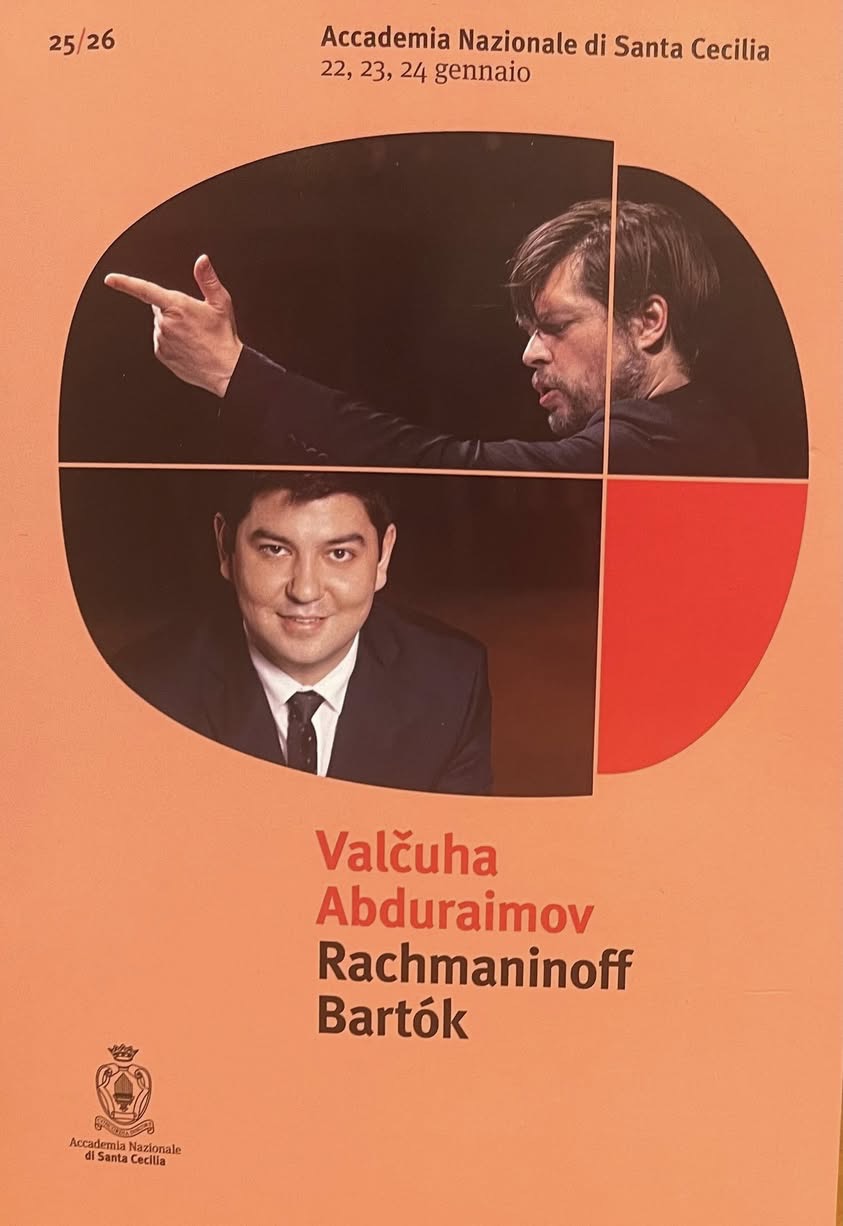
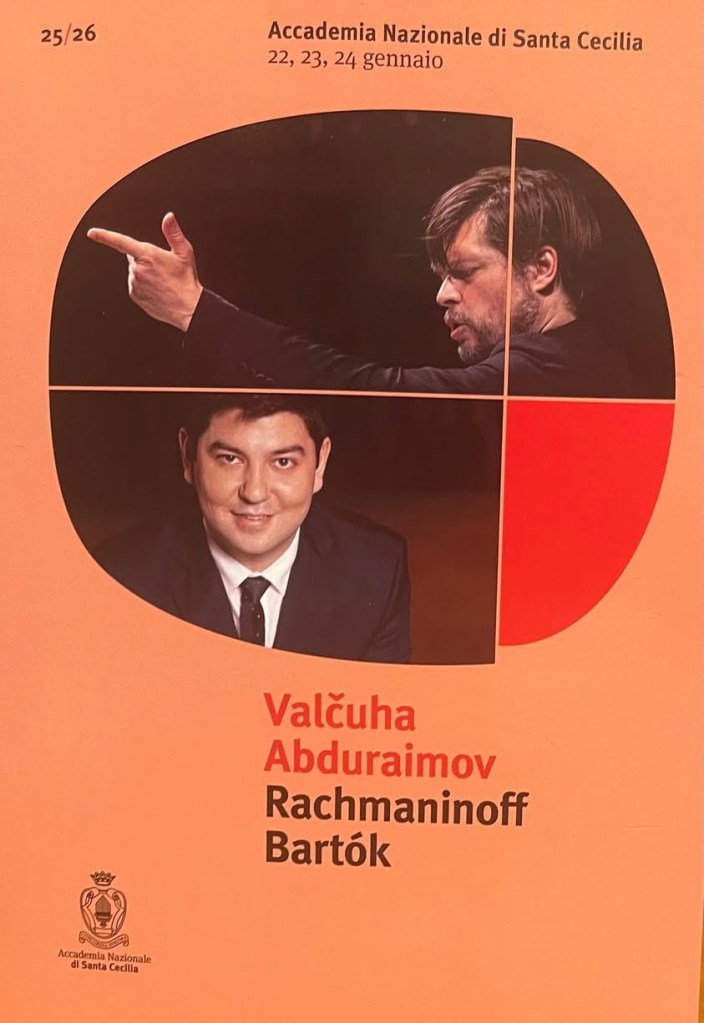
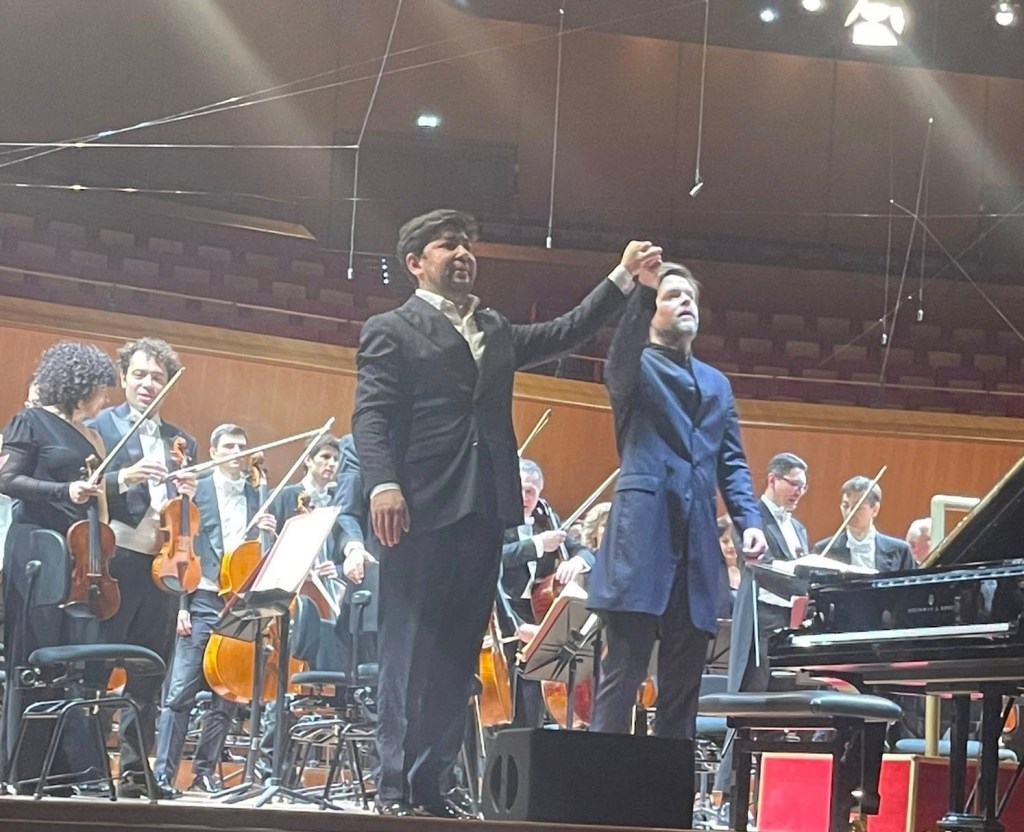
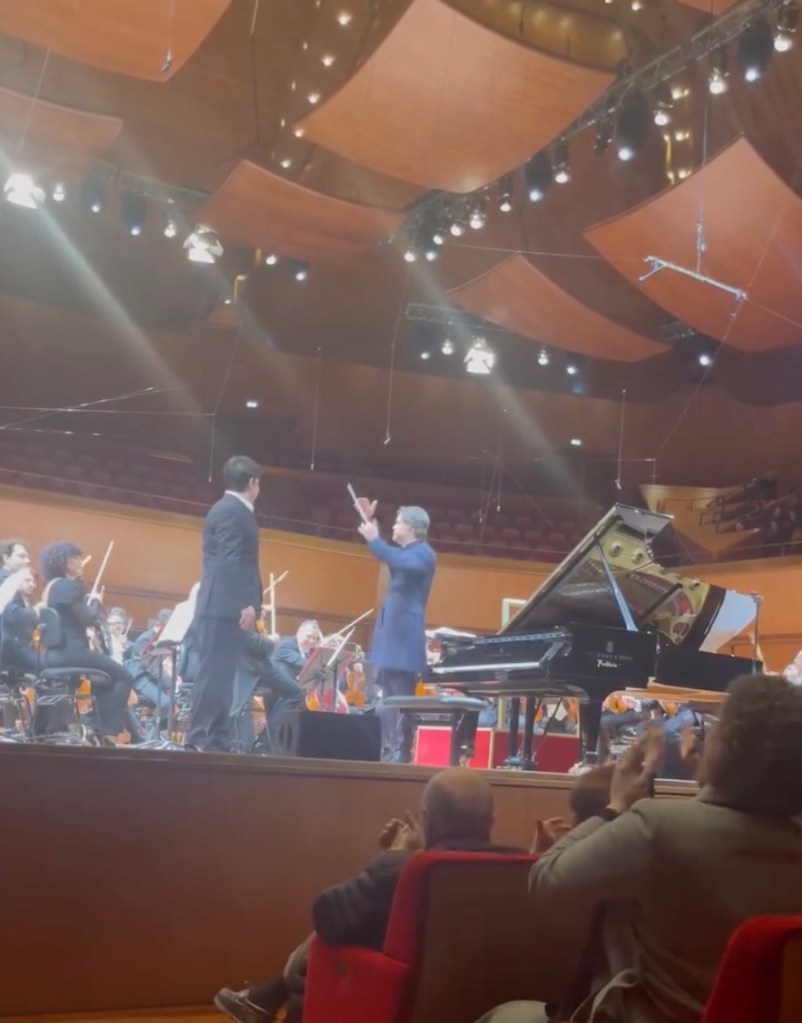
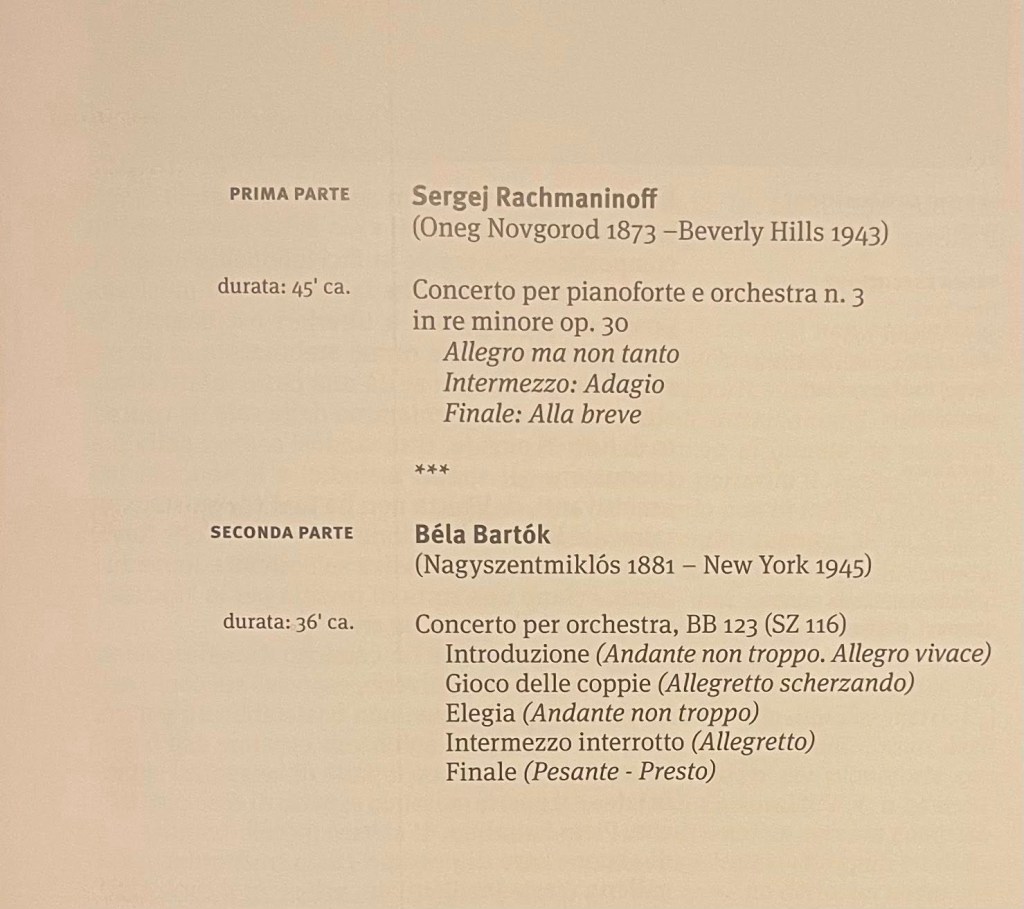
Behzod Abduraimov taking Santa Cecilia by storm with a performance of Rachmaninov’s Third Concerto of refined finesse combined with passion and fire . Nowhere more was this more evident than in the encore of a glowingly whispered Rachmaninov Prelude op 32 n 5 .
Such refined playing in such a vast hall brings to mind what Fou Ts’ong once confided : that it is easier to be more intimate in a big space than in a smaller one . I will though enjoy listening again to the recording that was made by Radio 3 that may reveal many poetic musings that might not have carried in the hall.
I remember a teacher of English who had heard Behzod as a child and was so impressed that he arranged to bring him to Europe in fact to Walton on Thames in the England. He went on to study with Stanislaw Ioudentich and at the Piano Academy Lake Como with William Grant Naboré. I heard him win the World Power Competition of Sulamita Aronovsky which was held in the Festival Hall with the London Philharmonic . Listening to him now brought back memories of the young boy playing Prokofiev Third Concerto with the same passion and poetic power that we heard today in Rachmaninov.
I also remember the party afterwards that finished so late that many illustrious guests, Peter Frankl and Fanny Waterman included, found the hall’s garage closed after midnight . A Cinderella syndrome indeed .
Talking of which I remember his Rome debut some years ago to an alarmingly sparse audience at the Teatro Olympico . We were treated to a masterly performance of Chopin’s Four Ballades that Lang Lang was to play to nearly three thousand people the next day at the Santa Cecilia Hall . No comparison is necessary but I was so surprised to see the vast Teatro Olympico so sparsely populated for such a magnificent performance that I was one of the few to buy a signed copy of his latest CD of the Tchaikowsky piano concerto!
Glad to see that the Roman public have been awoken from their slumbers at last and hope we can listen to this great artist in recital again in Rome before the world claims him!
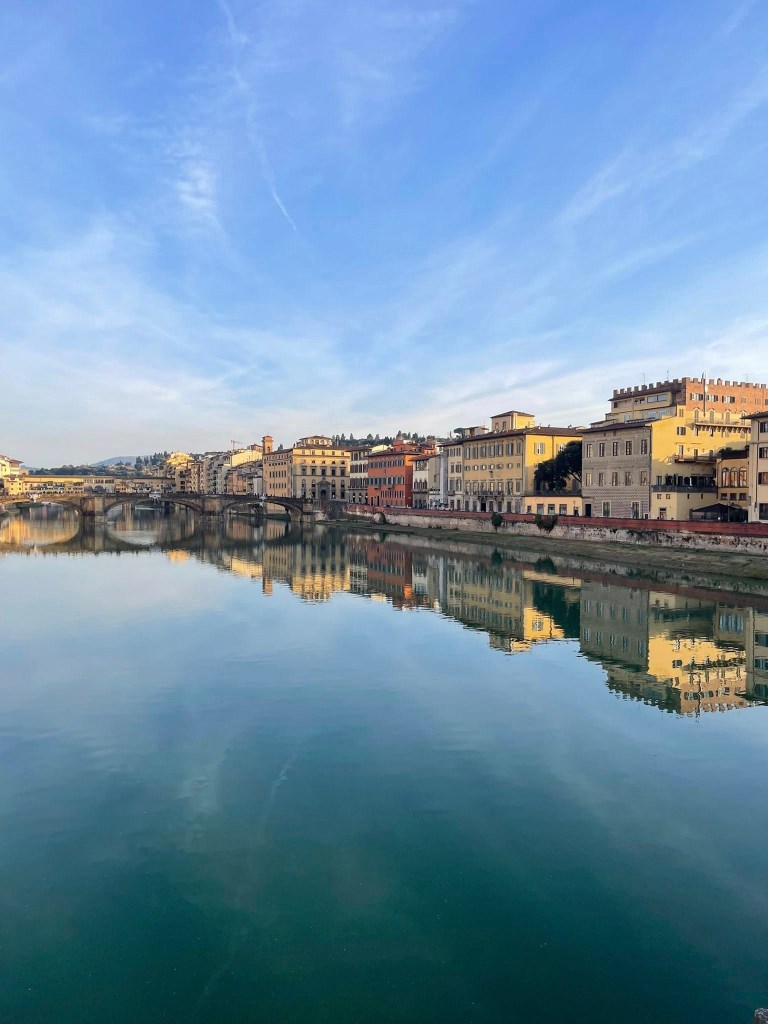
The British Institute the first building on the right and what a view !
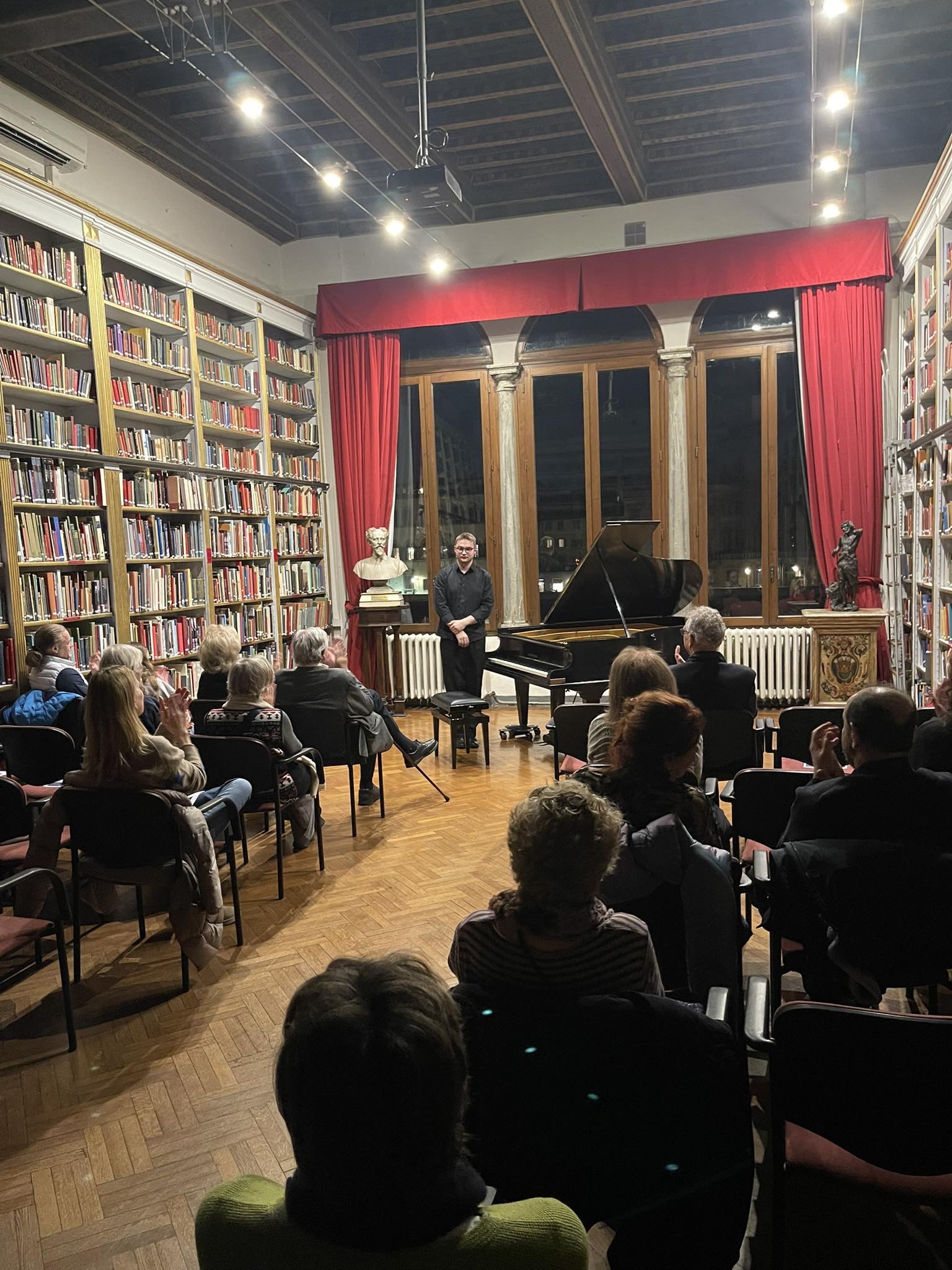
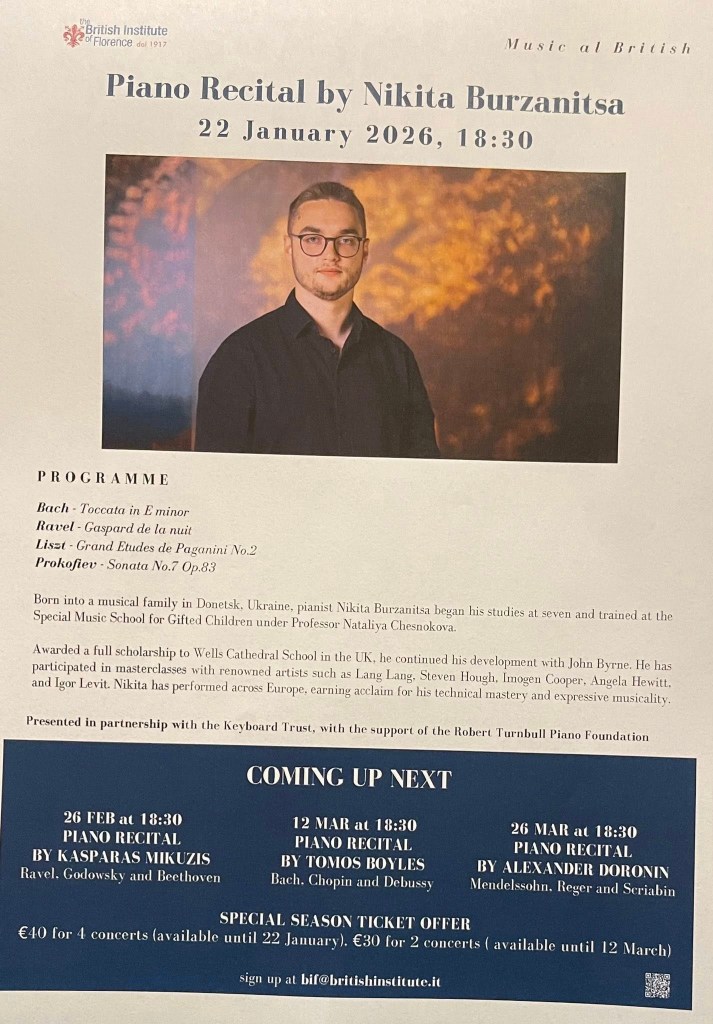
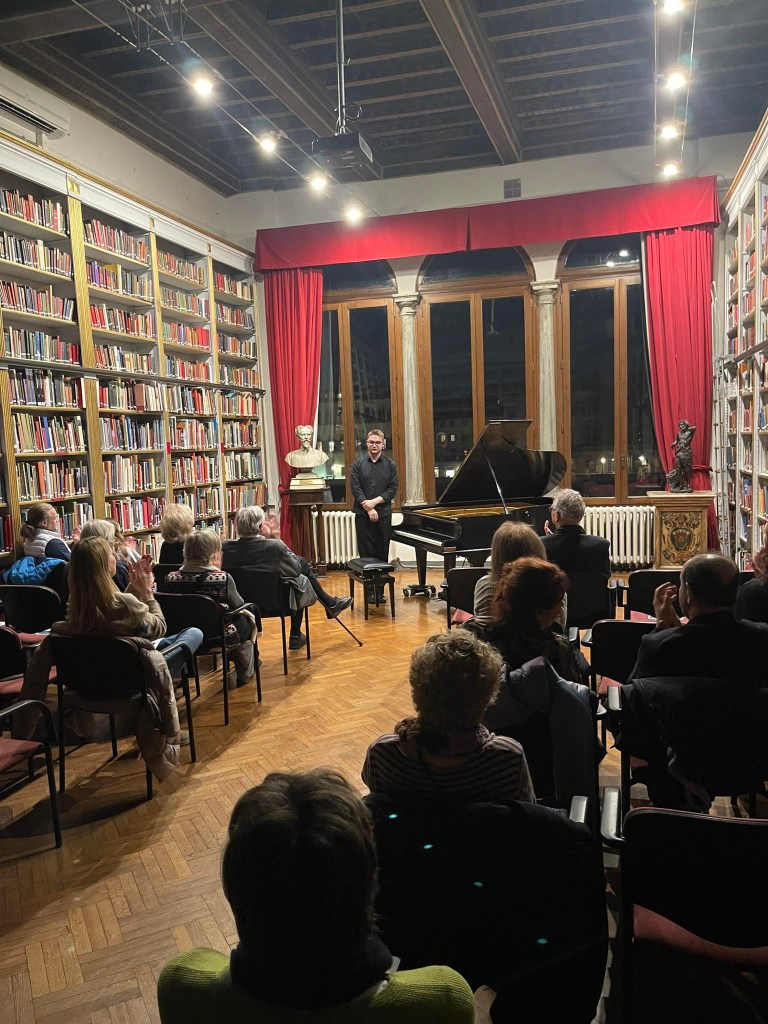
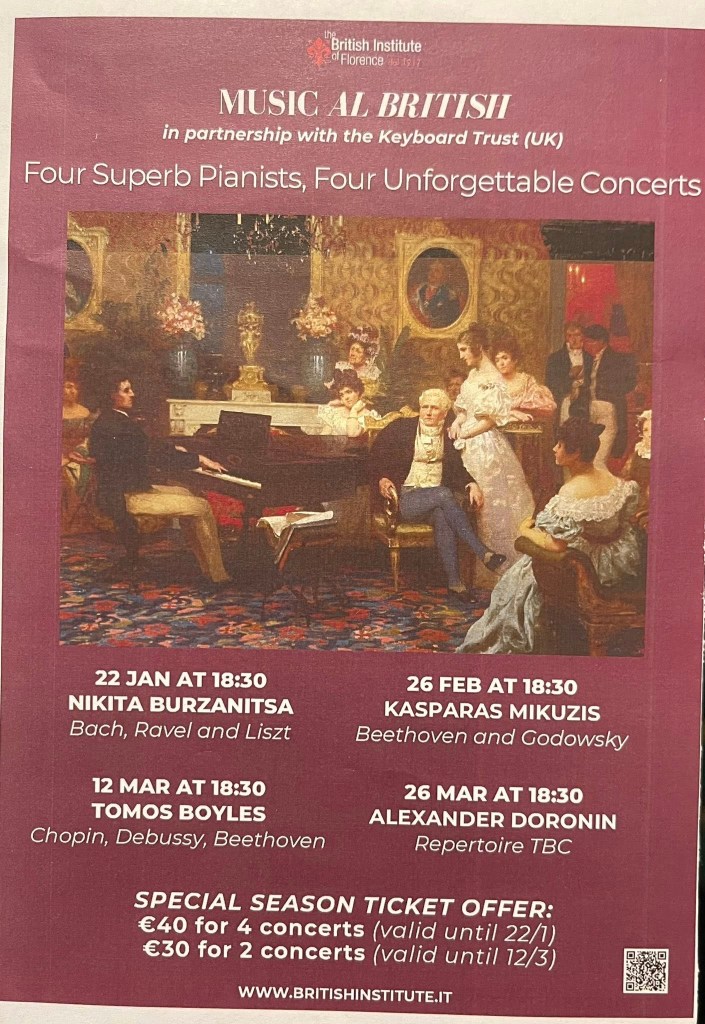
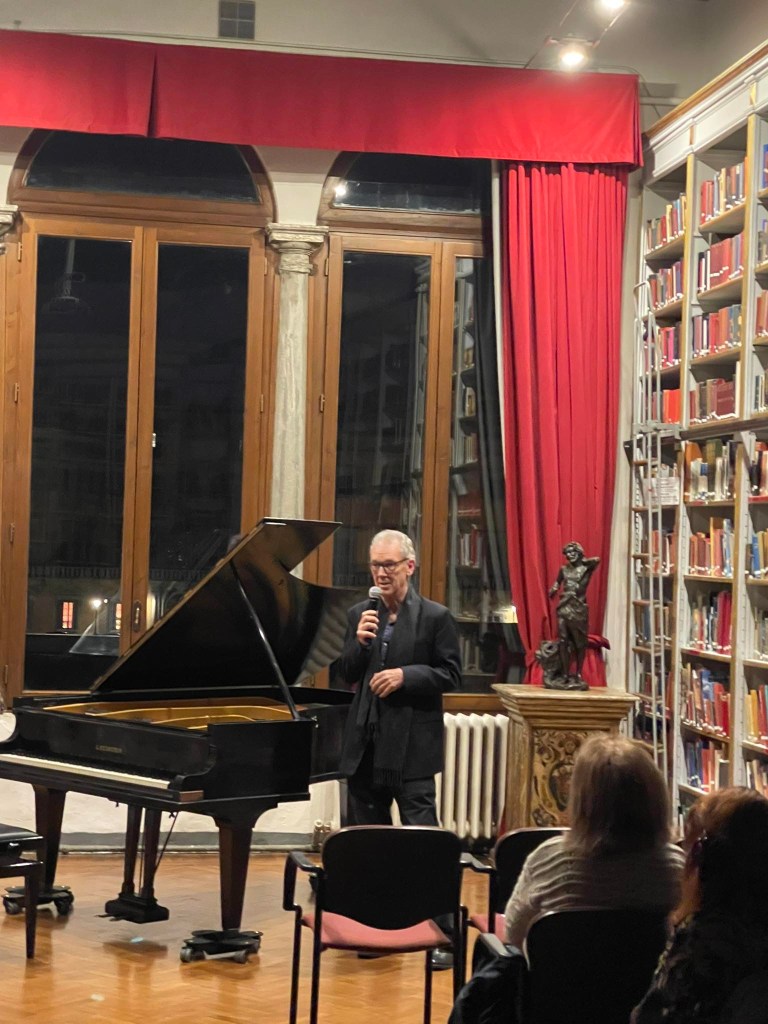
A room with a view for Nikita Burzanitsa’s birthday in Florence this evening in the Harold Acton Library of the British Institute. Some superb playing, from the absolute clarity of Bach where an improvisatory freedom made the entry of the Toccata even more of a surprise. Ravishing colours in Ravel with an extraordinary control of sound and a kaleidoscope of colours that allowed him to create the mellifluous beauty of ‘Ondine’ passing through the desolation of whispered mystery in ‘Le Gibet’ to the devilish antics of ‘Scarbo’. All played with a poetic mastery that brought these poems of Bertrand vividly to life.
Bach’s Toccata in E minor was played with very little pedal but with Nikita’s beautiful flowing movements he managed to find a rich palette of sounds. It gave a great sense of improvised freedom before the final Toccata bursting into life with dynamic drive and authority, with playing of great exhilaration and above all remarkable clarity.
Liszt’s Paganini study n 2 was played with such grace and charm that Nikita’s transcendental command of the keyboard passed almost unnoticed.
He brought a completely different sound world to Ravel.With his extraordinary control he could depict the water splashing with whispered beauty where ‘Ondine’ was free to float with radiance and glowing beauty. A sumptuous climax of rich sounds spread over the entire keyboard with remarkable technical mastery, before Ondine disappeared into the depths again with glissandi that were mere washes of sound. A whispered opening to ‘Le Gibet’ ( he found the same understated opening to the ‘Andante caloroso’ in Prokofiev) that was played with poetic beauty, bringing a glowing piercing beauty to the solo voice as the gallows in the distance could be seen and felt as the sun went down on a panorama that Nikita had been able to describe so eloquently and mysteriously in music . The misty opening of Scarbo and the fast reverberations of demonic whispered sounds opened a panorama for a ‘tour de force’ of masterly playing. Here was a master pianist observing scrupulously Ravel’s precise indications in the score, and able to turn Ravel’s intentional transcendental difficulties into poetic sounds with the musical understanding of a true poet of the keyboard.
The last work on the programme was Prokofiev’s 7 th Sonata. One of his three war sonatas where again Nikita’s astonishing palette of sounds were of a real poet of the keyboard . Transforming this usually brittle sounding sonata into an evocative lament as well a ferocious scream for help and then a fight to the finish.
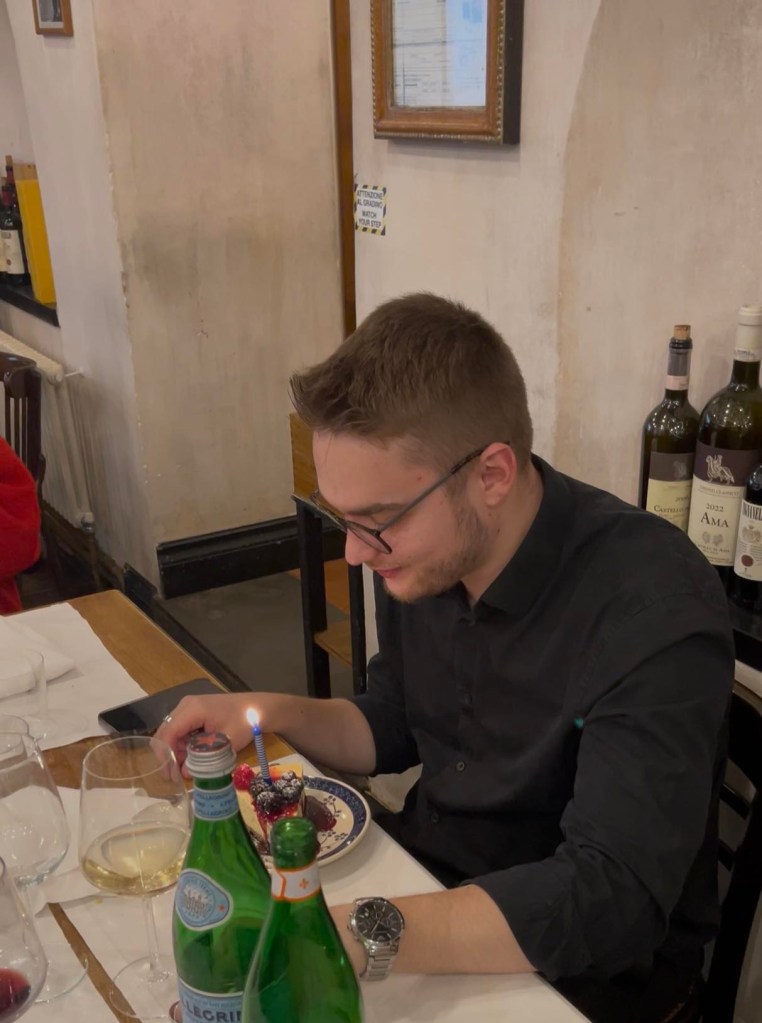
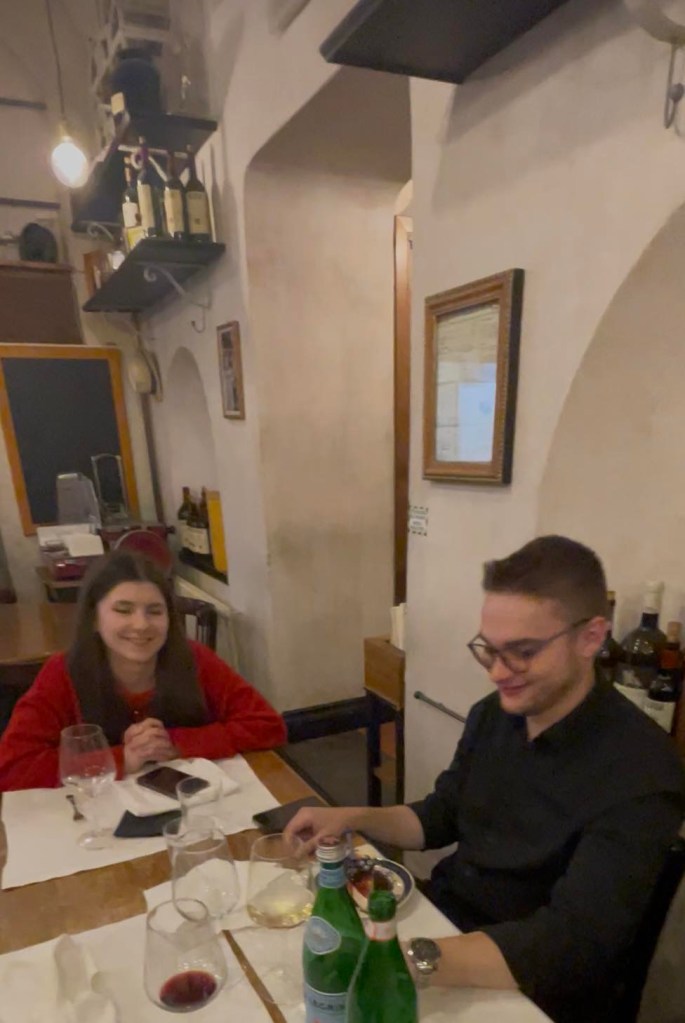
The second of Liszt’s Paganini Studies was played with such scintillating teasing charm that the thought of a study just did not cross our mind. A charm and beguiling sense of style that brought a smile to our face until of course the central episode where octaves were unleashed with an exhilarating dynamic force and energy that I almost feared for the life of this 1890 Bechstein.It was short lived because the return of the embellishments were played with even more exquisite delicacy and a charm where music could speak much louder than any words.. Prokofiev brought us an even more startling palette of sounds where Nikita’s fearless drive was contrasted with moments of radiance and unsettling peace. The end of the first movement, after war like sounds over the entire keyboard, was allowed to rest with the unsettling sound of a beacon that pierced the seemingly exhausted air with menacing rumblings in the distance. Nikita brought a whispered beauty to the mellifluous ‘Andante caloroso’ where he drew us in to listen to such marvels as lights were allowed to glow over the entire keyboard with washes of sound, notes just disappeared as they were incorporated into a poetic vision of poignant beauty. The last movement is a ‘tour de force’ for any pianist and Nikita rose to the challenge with total mastery. The whispered ‘precipitato’ was a relentless rhythmic undercurrent on which Prokofiev shoots off missiles in all directions. Gradually building in tension as more and more notes are added without any slowing of the relentless forward drive. Overwhelming excitement and exhilaration of Nikita’s performance tonight was a truly harrowing experience from this poet of the keyboard. Twenty five candles could not be accommodated on this sumptuous cheesecake Nikita with Julia celebrating in Florence after the concert
No encore could follow after such a harrowing and breathtaking experience and it was time for Nikita to let his hair down and enjoy this special day marking his first quarter of a century .
It was an honour to have Sir David Scholey back with us again in Florence. Photographed with Simon Gammell at the generously offered ritual after concert dinner celebration.
Programme:
Bach – Toccata in E minor
I. Toccata. II. Un Poco Allegro III. Adagio IV. Allegro – Fuga
Ravel – Gaspard de la nuit Ondine – Le Gibet – Scarbo
Here is a video of Nikita playing Prokofiev – Sonata No.7
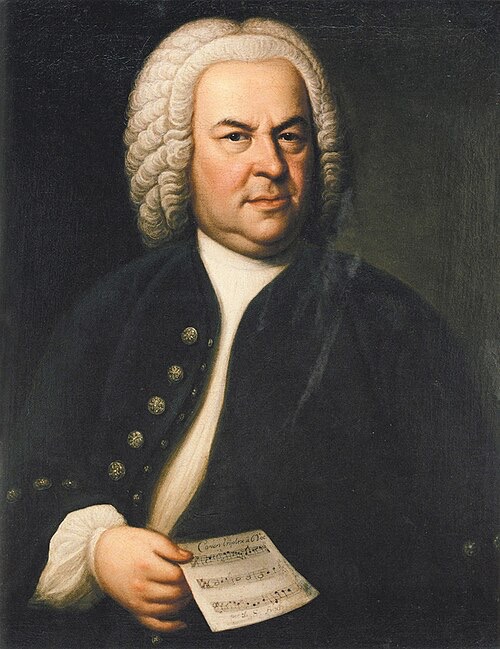
Born into a musical family in Donetsk, Ukraine, pianist Nikita Burzanitsa began his studies at seven and trained at the Special Music School for Gifted Children under Professor Nataliya Chesnokova. Awarded a full scholarship to Wells Cathedral School in the UK, he continued his development with John Byrne. He has participated in masterclasses with renowned artists such as Lang Lang, Steven Hough, Imogen Cooper, Angela Hewitt, and Igor Levit. Nikita has performed across Europe, earning acclaim for his technical mastery and expressive musicality.Bach likely composed the toccata while working as the court organist for Duke Johann Ernst of Weimar, depicted above.
Bach wrote the Toccata in E minor alongside six other keyboard toccatas, BWV 910-916 , between 1707 and 1710 or 1711, before the age of 30 The Toccata in E minor was likely composed in 1710.Some scholars have suggested potentially later dates of composition His toccatas were influenced by the Italian model of toccata, with varying lively and expressive tempos across each section of the composition, and with between two and six sections per toccata.The toccatas are typically opened by a short, striking toccata section, followed by a fugue, and then a recitative imitating the Italian aria or German fantasia forms. One section is always a fugue and fugues frequently conclude the toccatasFugal passages are often considered the most cherished features of the toccatas.
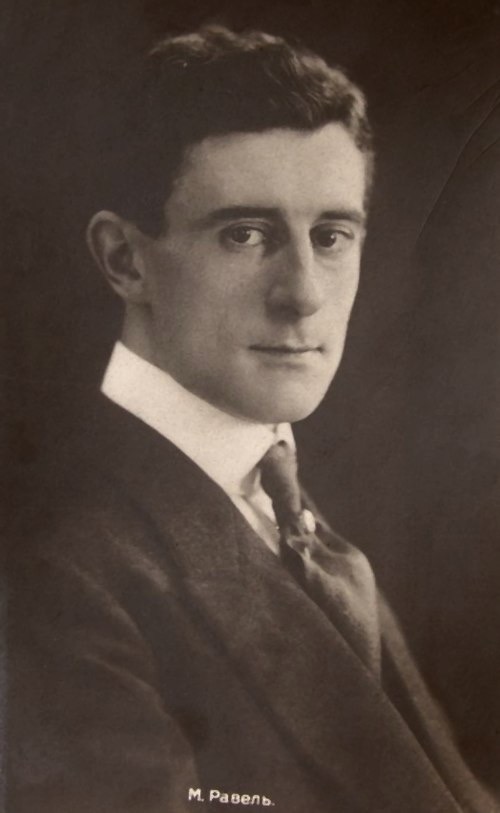
Joseph Maurice Ravel 7 March 1875 – 28 December 1937
The name Gaspard ” is derived from its original Persian form, denoting “the man in charge of the royal treasures”: “Gaspard of the Night” or the treasurer of the night thus creates allusions to someone in charge of all that is jewel-like, dark, mysterious, perhaps even morose.
Of the work, Ravel himself said: “Gaspard has been a devil in coming, but that is only logical since it was he who is the author of the poems. My ambition is to say with notes what a poet expresses with words.”
Aloysius Bertrand , author of Gaspard de la Nuit (1842), introduces his collection by attributing them to a mysterious old man met in a park in Dijon , who lent him the book. When he goes in search of M. Gaspard to return the volume, he asks, “ ’Tell me where M. Gaspard de la Nuit may be found.’ ‘He is in hell, provided that he isn’t somewhere else’, comes the reply. ‘Ah! I am beginning to understand! What! Gaspard de la Nuit must be…?’ the poet continues. ‘Ah! Yes… the devil!’ his informant responds. ‘Thank you, mon brave!… If Gaspard de la Nuit is in hell, may he roast there. I shall publish his book.'”Gaspard de la Nuit — Fantaisies à la manière de Rembrandt et de Callot is the compilation of prosa poems by Italian-born French poet Aloysius Bertrand Considered one of the first examples of modern prose poetry, it was published in the year 1842, one year after Bertrand’s death from tuberculosis , as a manuscript dated 1836 by his friend David d’Angers The text includes a short address to Victor Hugo and another to Charles Nodier r, and a Memoir of Bertrand written by Sainte – Beuve was included in the original 1842 edition.
This suite of three pieces for piano was inspired by the prose poems of Aloysius Bertrand (1807 – 1841), which were first published posthumously in 1842 under the title Gaspard de la nuit: fantaisies à la manière de Rembrandt et de Callot; they are works of an intense romanticism, fascinated by the mediaeval and the mysterious. Ondine is a water-nymph who seeks a mortal spouse in vain before disappearing in a spray of water drops. Le Gibet depicts an eerie scene at sunset as the corpse of a hanged man swings to and fro on the gibbet. Scarbo is the malevolent gnome who appears in the middle of the night furiously spreading fear and disorder.
Ravel was first introduced to the work by his friend, the pianist Ricardo Viñes who subsequently gave the work’s first performance in Paris on 9 January 1909.
Ravel said that his intention had been “to write piano pieces of transcendental virtuosity which are even more complicated than [Balakirev’s] Islamey“. (Roland – Manuel [1947] p.54.) Speaking of the third movement Scarbo, he told a pupil, “I wanted to make a caricature of romanticism, but perhaps I let myself be taken over by it.” (Perlemute [1989] p.35). His friend Hélène Jourdan-Morhange was struck however by the classical form to be found in the work: “The three poems chosen by Ravel are quite dissimilar, but because of their perfect musical realisation, they seem to have been intentionally gathered together by the poet. The structure is almost that of a sonata: Allegro, Adagio and a dazzling Finale“. (Perlemuter 1989] p.31).
The author tells an introductory story of how he sat in a garden in Dijon , and fell into conversation with a dishevelled old man who sat near him leafing through a book. The stranger recognizes him to be a poet, and speaks of how he has spent his life searching for the meaning of Art (‘L’art est la science du poète’), and for the elements or principles of Art. The first principle, what was sentiment in Art, was revealed to him by the discovery of some little book inscribed Gott – Liebe (‘Dieu et Amour’, God and Love): to have loved and to have prayed.
Then he became preoccupied by what constituted idea in Art, and, having studied nature and the works of man through thirty years, at the cost of his youth, he wondered if the second principle, that of idea, might be Satan. After a night of storm and colic in the church of Notre-Dame of Dijon, in which clarity shone through the shadows (‘Une clarté piqua les ténèbres’), he concluded that the devil did not exist, that Art existed in the bosom of God, and that we are merely the copyists of the Creator.
Then the old stranger thrusts into the poet’s hand the book, his own manuscript, telling all the attempts of his lips to find the instrument which gives the pure and expressive note – every trial upon the canvas before the subtle dawn-glow of the ‘clair-obscur’ or clarity in shadow appeared there – the novel experiments of harmony and colour, the only products of his nocturnal deliberations. The old man goes off to write his Will, saying he will come back to collect his book tomorrow. The manuscript is, naturally, Gaspard de la Nuit. Fantaisies à la manière de Rembrandt et de Callot. The next day the poet returns to restore the book to its owner, who does not come: he asks after M. Gaspard de la Nuit, to which the answer is that he is probably in Hell unless he is out on his travels – for he is, of course, the devil. ‘May he roast there!’ says the poet. ‘I shall publish his book.’
A short preface attributed to Gaspard himself explains that the artists Paul Rembrandt] and Jaques Callotrepresent two eternally reverse or antithetic faces of Art: one the philosopher absorbed in meditation and prayer upon the spirits of beauty, science, wisdom and love, seeking to penetrate the symbols of nature, and the other the showy figure who parades about the street, rows in the taverns, caresses bohemian girls, always swears by his rapier, and whose main preoccupation is waxing his moustache. But in considering Art under this double personification he has included studies upon other artists among his poetic meditations, which he has not presented as a formal literary theory because M.Séraphin has not explained to him the mechanism of his Chinese shadow-plays, and Pulchinello conceals from curious viewers the thread which makes his arm move.
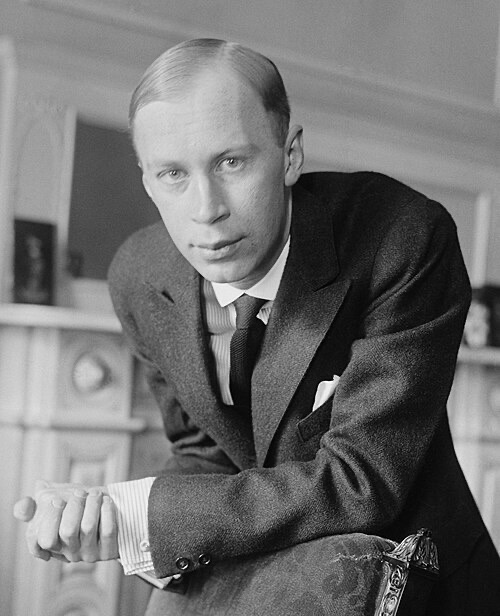
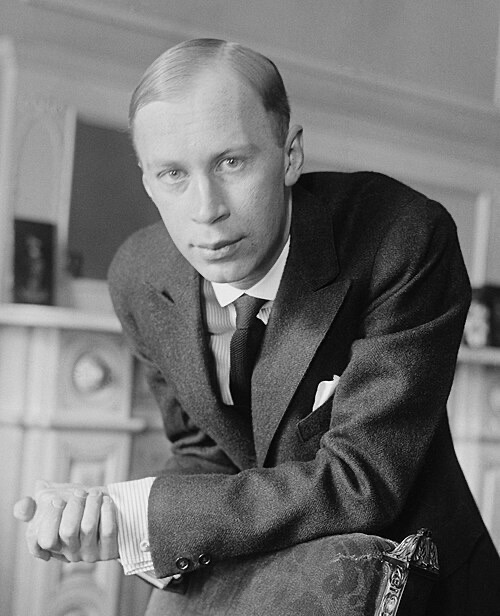
Sergei Sergeyevich Prokofiev. 15 April] 1891 – 5 March 1953
Sergei Prokofiev’s Piano Sonata No. 7 in B♭ major, Op. 83 (occasionally called the “Stalingrad”)is , the second of the three “War Sonatas”, composed in 1942. The sonata was first performed on 18 January 1943 in Moscow by Sviatoslav Richter.
On June 20, 1939, Prokofiev’s close friend and professional associate, the director Vsevolod Meyerhold, was arrested by the NKVDjust before he was due to rehearse Prokofiev’s new opera Semyon Kotko; he was shot on 2 February 1940. Although his death was not publicly acknowledged, let alone widely known about until after Stalin’s reign, the brutal murder of Meyerhold’s wife, Zinaida Raikh, less than a month after his arrest was a notorious event. Only months afterwards, Prokofiev was ‘invited’ to compose Zdravitsa(literally translated ‘Cheers!’, but more often given the English title Hail to Stalin) (Op. 85) to celebrate Stalin’s 60th birthday
Later that year, Prokofiev started composing his Piano Sonatas Nos, 6 , 7, and 8 Opp. 82–84, widely known today as the “War Sonatas.” These sonatas contain some of Prokofiev’s most dissonant music for the piano. Biographer Daniel Jaffé has argued that Prokofiev, “having forced himself to compose a cheerful evocation of the nirvana Stalin wanted everyone to believe he had created” (i.e. in Zdravitsa) then subsequently, in these three sonatas, “expressed his true feelings” The sonata was awarded a Stalin Prize (Second Class)
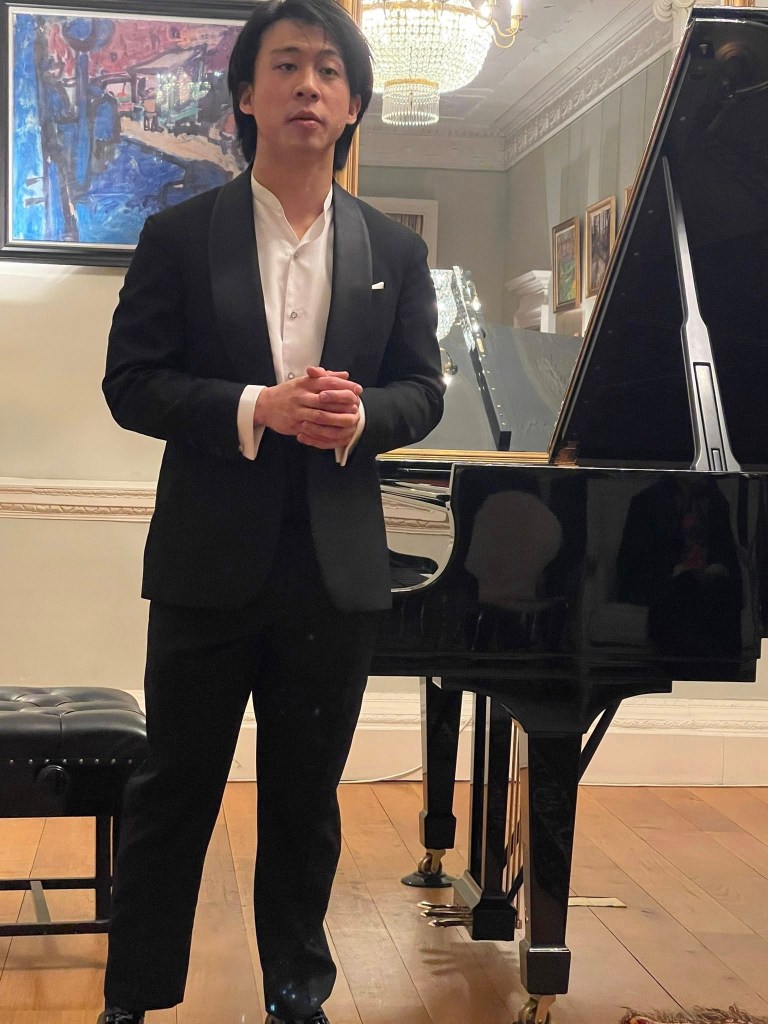
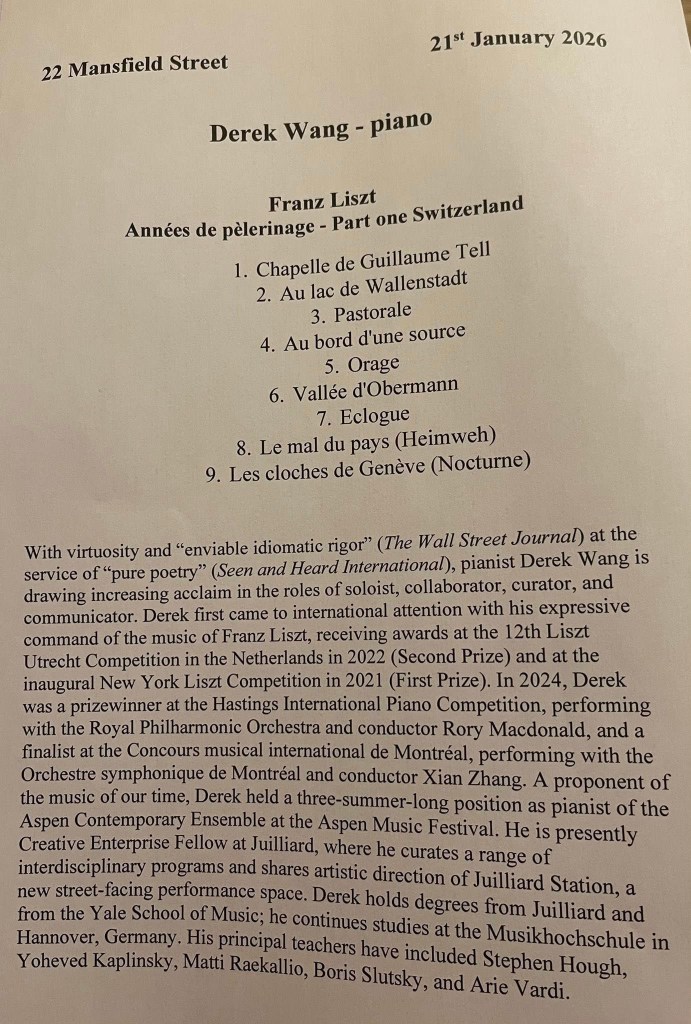
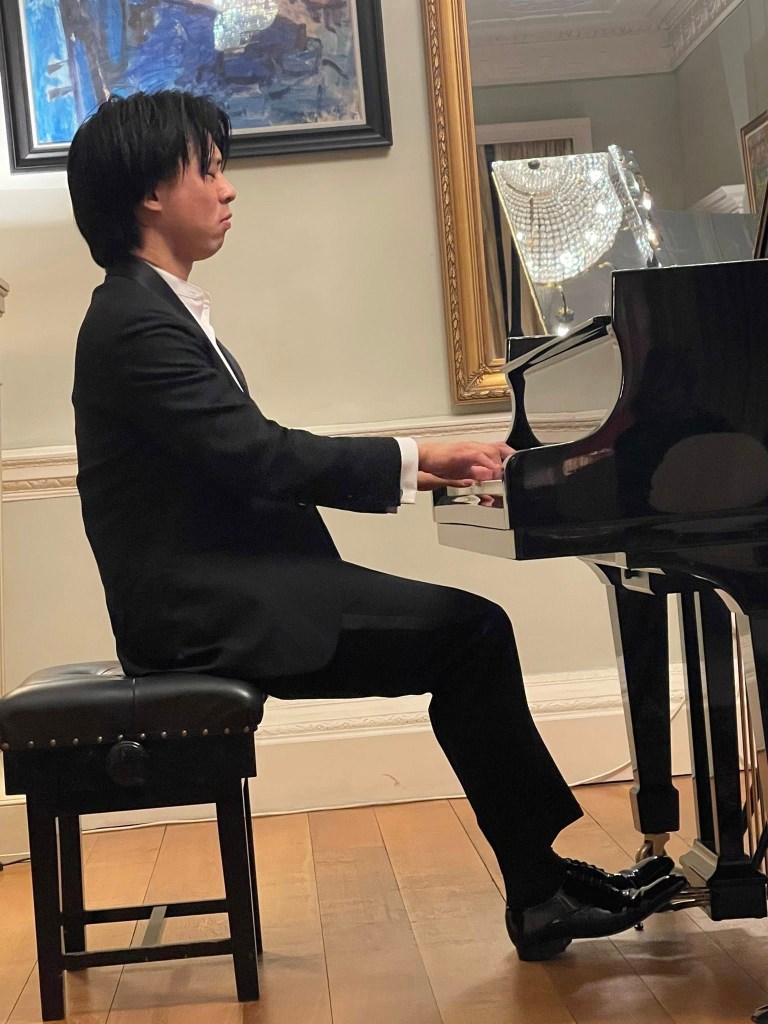
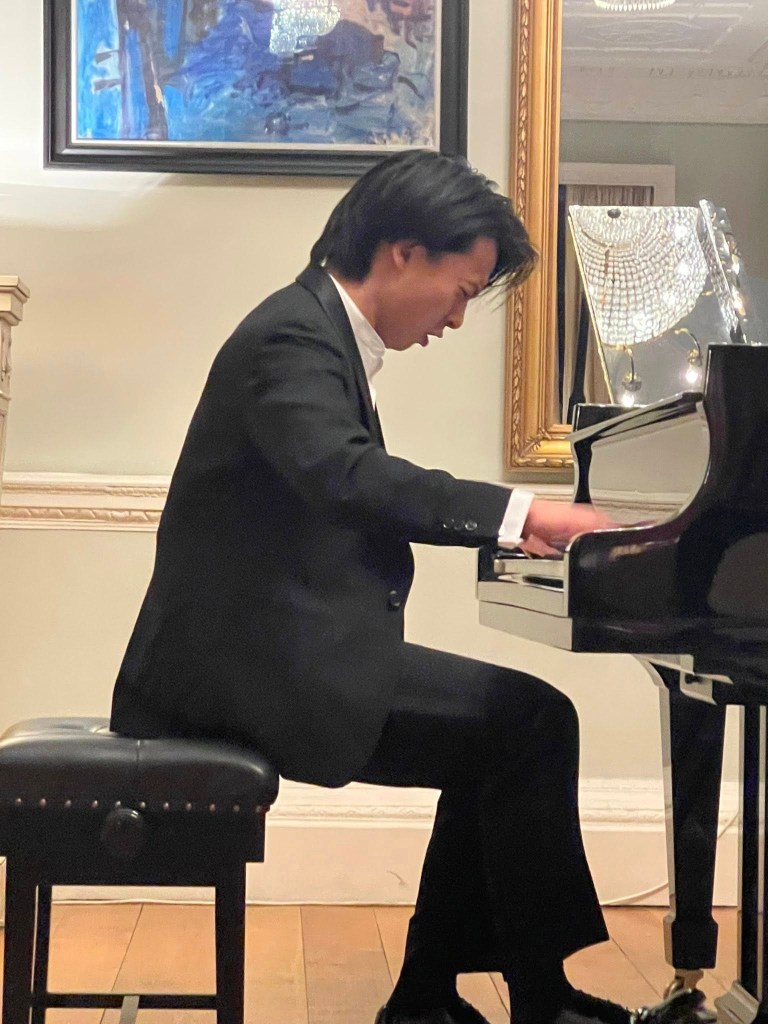
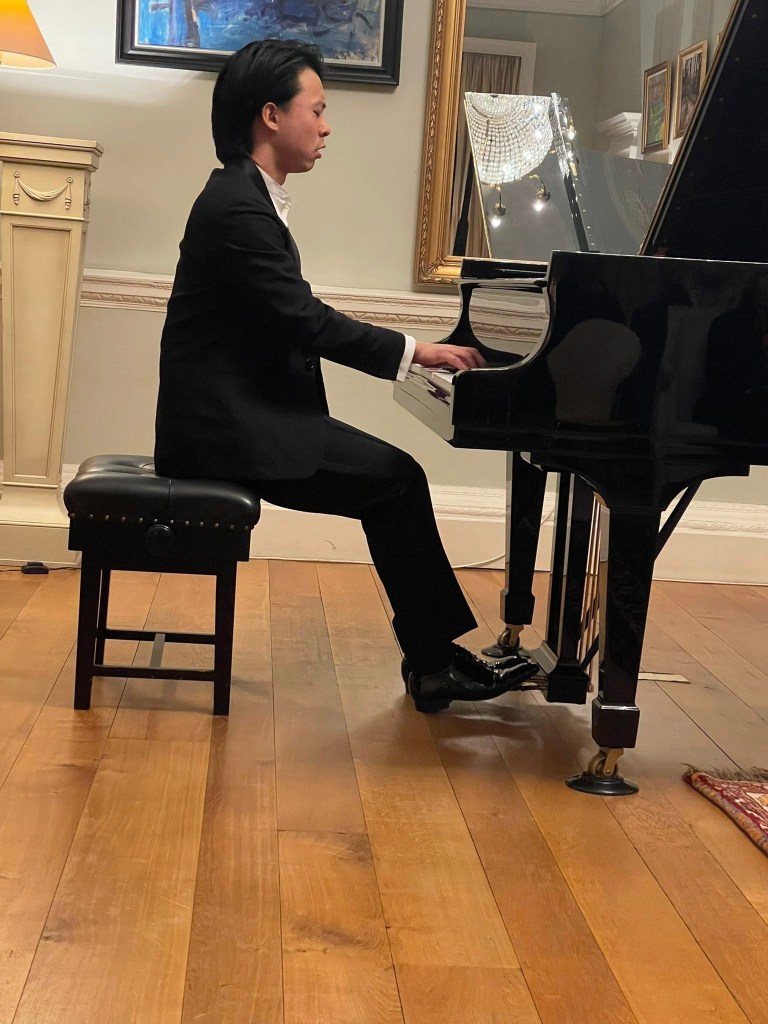
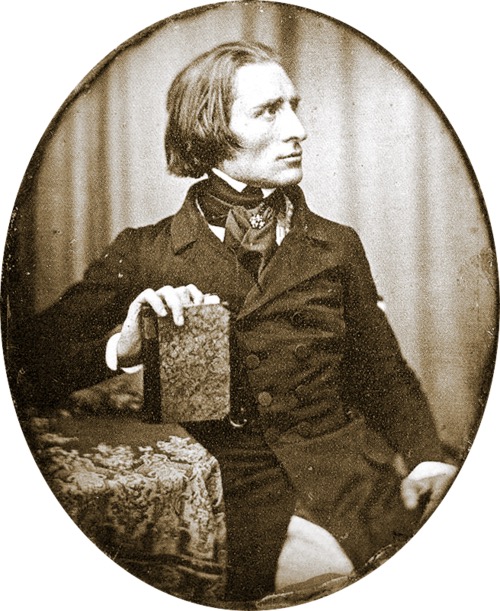
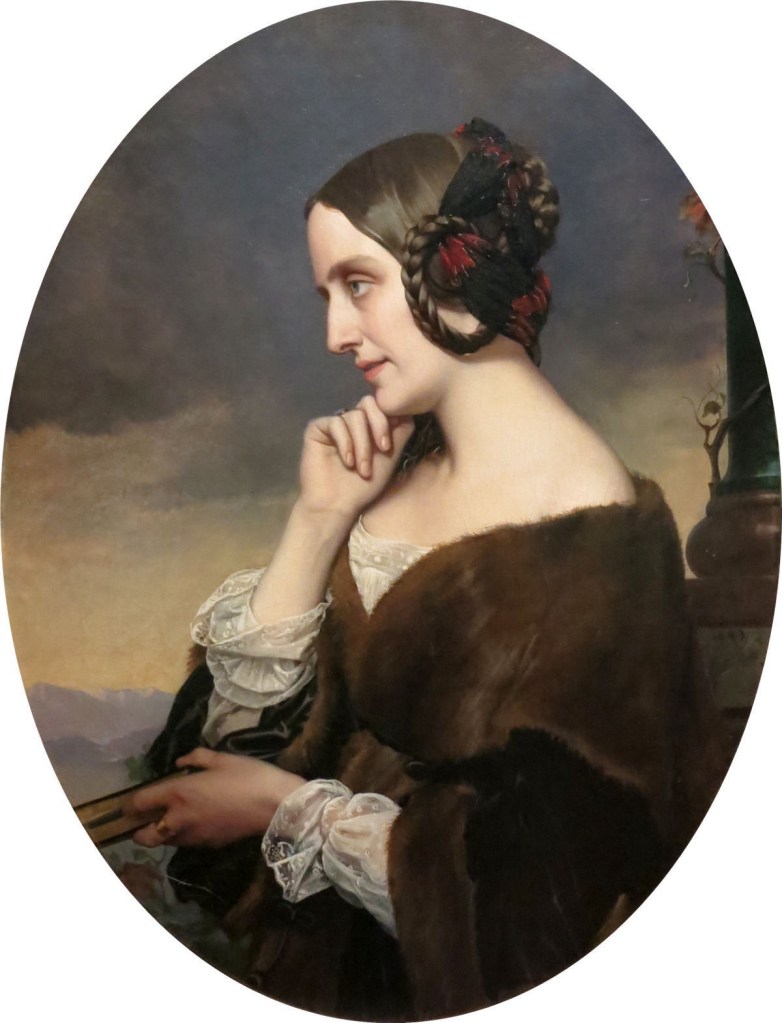
Derek Wang in London today and tomorrow ( St John’s at one ) with a moving recital in words and music about Liszt’s travels around Switzerland with the Countess Marie d’Agoult (The future mother of Liszt’s three children ).
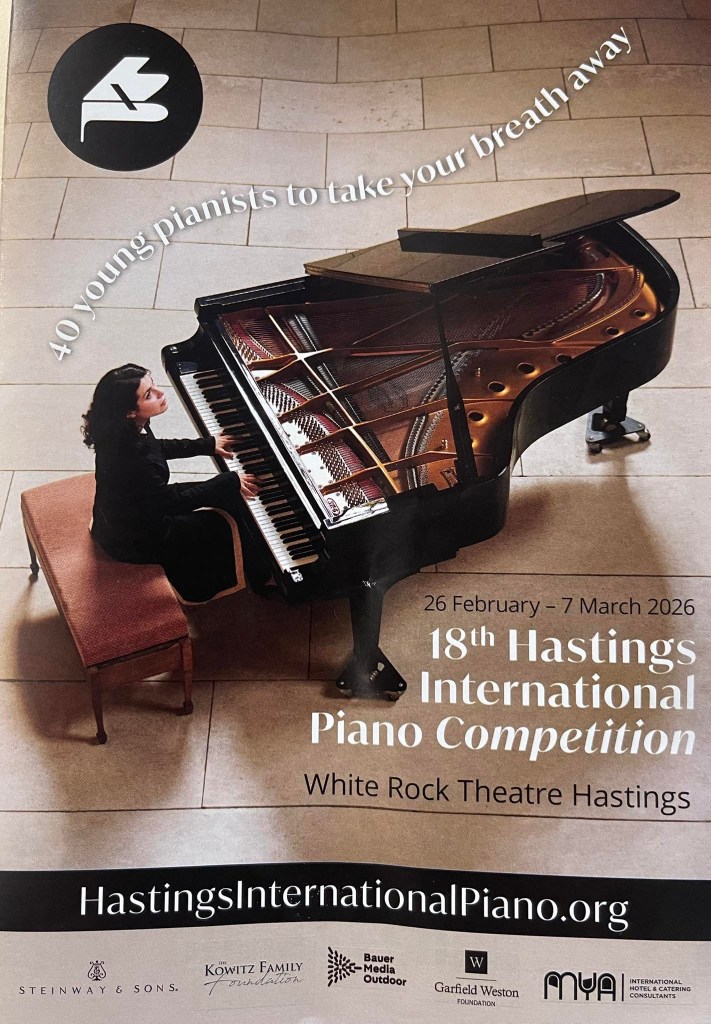
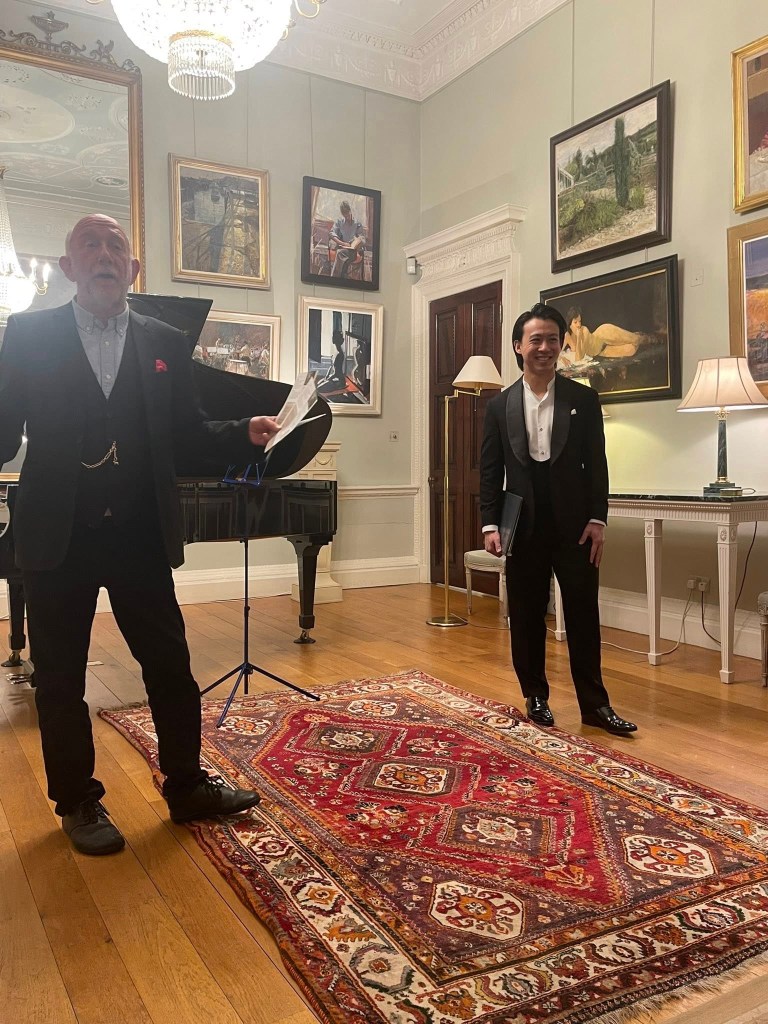
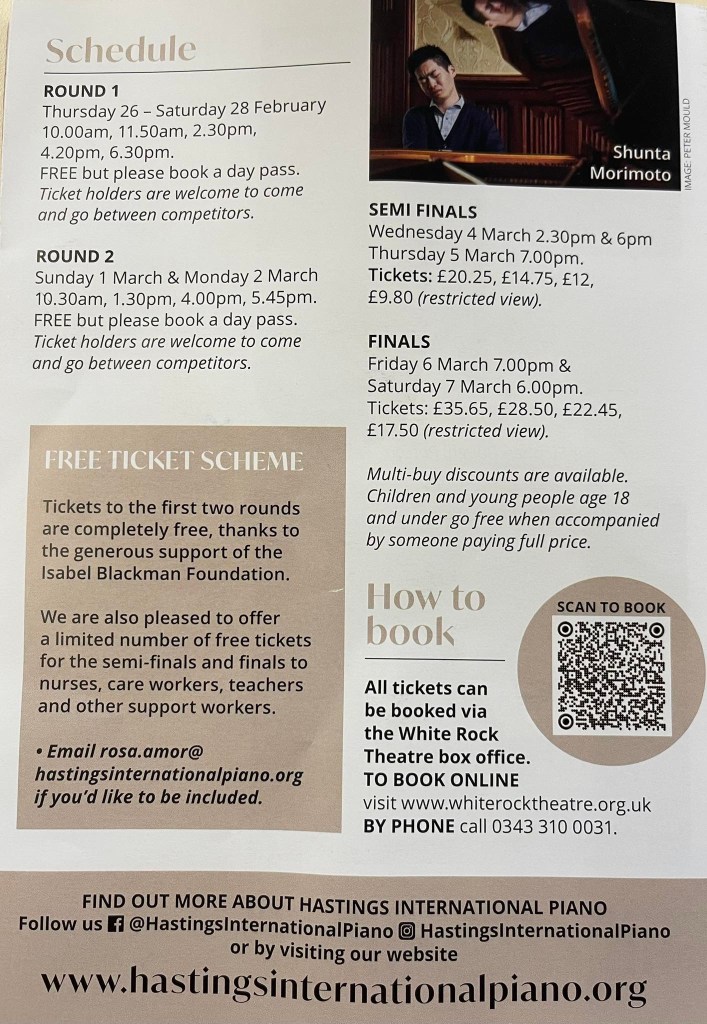
Derek a superb pianist and a prize winner of the Hastings, who had invited Derek to London into the beautiful salon of Bob and Elisabeth Boas is also an extraordinary actor creating the atmosphere of their discovery of beauty and nature and also about themselves and their innermost feelings.
Ian Brignall ,Hastings competition director
But it was the music that was played with renewed poetic sensibility together with astonishing mastery that held us mesmerised as we re lived the magic of discovery together. Opening with ‘William Tell’ played with aristocratic control and searing tension. Liszt was to say he had never been able to think of Lake Wallenstadt without weeping. Derek played it bathed in pedal as the melodic line flowed on the lapping waves with refreshing freedom. This was the last piece to be played by Alfred Brendel as an encore in Vienna after his farewell performance with Mozart Concerto K291 ( Jeunehomme !!) .
Derek followed this with the joyous outpouring of ‘Pastorale’ with its questioning ending. ‘Au bord d’une source’ is one of those jewels that was to pour from Liszt’s fingers with refined delicacy and poetic meaning. Derek played it with a wondrous sense of balance playing with beautiful grace and delicacy.
Now Derek was ready to unleash his mighty technical arsenal with ‘Orage’, that he played with passion and startling virtuosity, with extraordinary clarity and burning excitement. At this point Derek abandoned the script that he had on the stand and looked us in the eye as he delved ever deeper into the profound world of poetic beauty with the ‘Vallée d’Obermann’. It was on this wave of emotion that the beautiful tenor melody was floated into the room with innermost intensity. Derek opened up this world of self questioning, turbulent emotions and searing passion, in a performance of masterly architectural control and conviction.Veiled octaves this time, as opposed to ‘Orage’, were merely vibrations of sound to describe the agitation and turbulence of a disturbed soul. ‘Eclogue’ was a refreshing interlude full of radiance and sunshine. ‘Le Mal du pays’ on the other hand was where Derek found sombre sounds of great suggestion and nostalgia – rumblings from within or without ? As Liszt was to say, quoted by Derek : ‘The life of an artist is a long dissonance with no resolution’. However Derek finished with the glorious radiance of hope and beauty that is in ‘Les cloches de Genève’, creating with mastery another masterpiece from this suite of nine scenes of travel.
Années de pèlerinage S.160/161/162/163 is a set of three suites for solo piano by Franz Liszt. Much of it (the first suite in particular) derives from an earlier work, Album d’un voyageur, his first major published piano cycle, which was composed between 1835 and 1838 and published in 1842 Années de pèlerinage is widely considered as the masterwork and summation of Liszt’s musical style. While the first two offerings are often considered music of a young man, the third volume is notable as an example of his later style. Composed well after the first two volumes, it displays less virtuosity and more harmonic experimentation.
Première année: Suisse” (“First Year: Switzerland”), S.160, was published in 1855. Composed between 1848 and 1854, most of the pieces (Nos. 1, 2, 3, 4, 6, 8 and 9) are revisions of Album d’un voyageur: Part 1: Impressions et Poesies and Part 2: Fleurs mélodiques des Alpes. “Au lac de Wallenstadt” (No. 2) and “Au bord d’une source” (No. 4) received only minor revisions, while “La Chapelle de Guillaume Tell” (No. 1), “Vallée d’Obermann” (No. 6), and especially “Les cloches de Genève” (No. 9) were more extensively rewritten. “Églogue” (No. 7) was published separately, and “Orage” (No. 5) was included as part of the definitive version of the cycle.
Chapelle de Guillaume Tell in C major – For this depiction of the Swiss struggle for liberation Liszt chooses a motto from Schiller as caption, “All for one – one for all.” A noble passage marked lento opens the piece, followed by the main melody of the freedom fighters. A horn call rouses the troops, echoes down the valleys, and mixes with the sound of the heroic struggle
Au lac de Wallenstadt in A♭ major – Liszt’s caption is from Lord Byron’s Childe Harold’s Pilgrimage (Canto III, stanza 85): “Thy contrasted lake / With the wild world I dwell in is a thing / Which warns me, with its stillness, to forsake / Earth’s troubled waters for a purer spring.” In her Mémoires, Liszt’s mistress and traveling companion of the time, Marie d’Agoult, recalls their time by Lake Wallenstadt, writing, “Franz wrote for me there a melancholy harmony, imitative of the sigh of the waves and the cadence of oars, which I have never been able to hear without weeping.”[6]
Pastorale in E major – This piece is a revision of the third from the second book of the earlier Album, with its central section removed in the process.
Au born dune source in A♭ major – Liszt’s caption is from Schiller: “In the whispering coolness begins young nature’s play.”
Orage in C minor – Liszt’s caption is again from Byron’s Childe Harold’s Pilgrimage (Canto III, canto 96): “But where of ye, O tempests! is the goal? / Are ye like those within the human breast? / Or do ye find, at length, like eagles, some high nest?”
Vallée d’Obermann (Obermann’s Valley) in E minor – Inspired by Étienne Pivert de Senancour’s novel of the same title, set in Switzerland, with a hero overwhelmed and confused by nature, suffering from ennui and longing, finally concluding that only our feelings are true The captions include one from Byron’s succeeding canto 97, (“Could I embody and unbosom now / That which is most within me,–could I wreak / My thoughts upon expression, and thus throw / Soul–heart–mind–passions–feelings–strong or weak– / All that I would have sought, and all I seek, / Bear, know, feel–and yet breathe–into one word, / And that one word were Lightning, I would speak; / But as it is, I live and die unheard, / With a most voiceless thought, sheathing it as a sword”) and two from Senancour’s Obermann, which include the crucial questions, “What do I want? Who am I? What do I ask of nature?”
Eglogue in A♭ major – Liszt’s caption is from the next canto of the Pilgrimage: “The morn is up again, the dewy morn, / With breath all incense, and with cheek all bloom, / Laughing the clouds away with playful scorn, / And living as if earth contained no tomb!”
Le mal du pays (Homesickness) in E minor –The work is prefaced by a quotation from the ‘Troisième fragment’ of Senancour’s Obermann: ‘De l’expression romantique, et du ranz des vaches’ (‘on Romantic expression, and the Swiss pastoral melody employed in the calling of the cows’)—‘Le romanesque séduit les imaginations vives et fleuries; le romantique suffit seul aux âmes profondes, la véritable sensibilité …’ (‘The Romanesque attracts those of lively and florid imagination; the Romantic satisfies only profound souls, real sensitivity …’).
Les cloches de Genève: Nocturne in B major – Liszt’s caption is from stanza 72, earlier in the Byron’s Pilgrimage: “I live not in myself, but I become / Portion of that around me”.




 ChristopherAxworthy-MusicCommentary