
I have heard Mikhail a few times since that first encounter in Trapani in 2024 when he was awarded the Gold Medal at the International Piano Competition. There had been some fine playing from well trained pianists in a competition still in its early years. When a young Russian pianist struck up ‘Le Baiser de l’enfant Jesu’ by Messiaen, Oxana Yablonskaja and I looked at each other in disbelief that such emotion could be created by an artist with such poetry in sound.
‘The Messiaen brought tears to my eyes as the stillness and whispered sounds of heart rending significance struck deep and the pungent harmonies, sometimes like broken glass, were of searing intensity.’ Christopher Axworthy Trapani April 2024

A maturity and mastery way beyond his youthful appearance as his performance of the Corelli variations also demonstrated. I did not know him before this but on congratulating him he told me that he was studying in Weimar with an emeritus artist of the Keyboard Trust, Michail Lifits. I know him very well and whose superb recording of Schubert Sonatas have the same magic sense of fantasy and style. In fact at the 30th Anniversary of the Keyboard Trust, Michail Lifits had played Chopin’s much maligned First Ballade in a way that was a recreation of subtle poetic playing, restoring it to it’s rightful place as a supreme masterpiece.
The work of a pianist should always begin with the composer’s indications in the score and it is the start of a search for the sounds that the composer had in his head at the moment of creation. Beethoven when he was completely deaf could leave very precise instructions that miraculously he could still hear in his head and write down for posterity. Debussy too could write the most precise instructions of how he wanted certain notes to be played. Debussy had edited the works of Chopin and so had experience of composer’s notation. But in the end it is up to the interpreter and it can become a personal choice on a voyage of discovery of which the audience too plays an important role. Some interpreters are happy just to reproduce what is on the printed page and others like Mikhail dare to get up onto the high wire and risk all, in the search for the very meaning behind the notes. There is an undercurrent in the bass like a wave on which the sounds are anchored. Chopin likened it to a tree with the roots firmly planted in the ground leaving the branches free to move with the wind. The danger for a ‘stylist’ is that in the search for sound and underlining certain phrases, this wave can be lost or broken and we are left with just some ravishing moments that are not linked to a whole and in the end become disjointed and boring.The musical line is the great arch that holds a work together from the first to the last note and if it is broken a great architectural masterpiece can become merely a series of unrelated sounds. It needs a musician who with intelligence and a sense of architectural understanding can also have the same flexibility and sensitivity as the human voice.
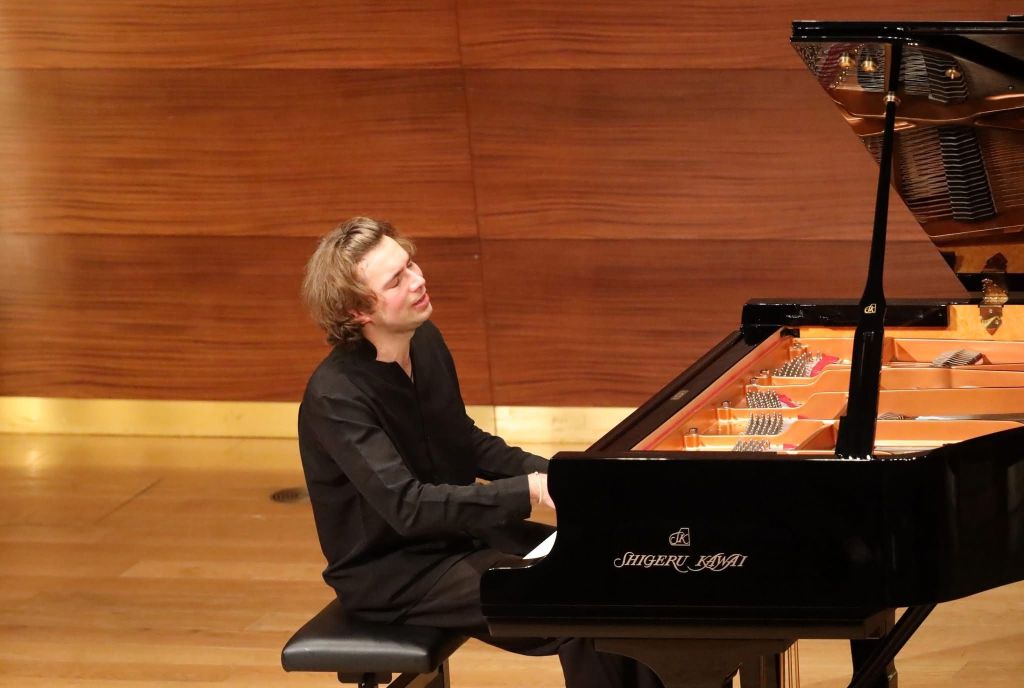
It was with the opening work of this short recital that Mikhail immediately demonstrated his credentials as a supreme stylist and intelligent musician. Schumann’s ‘Arabesque’ can sound very repetitive as the opening theme is repeated each time, interrupted by differing episodes.The term ‘Arabeske’ is used here as a poetic metaphor, not only to describe florid decoration, but also, in Schlegel’s terms, to suggest a fluid, organic system of fragments that transcends artificial Classical forms. Schumann employs modified rondo form to encompass a short ABACA rondo form, with the gently lyrical main section A, two more intense episodes B (Florestan) and C, and a beautifully pensive Epilogue (Eusebius). Each time the rondo theme returned Mikhail managed to imbue it with a different meaning especially coming after the two contrasting episodes. A beguiling sense of style and subtle colouring with an improvised freedom adding beauty not distortion with a refreshing sense of recreation. The underlining of inner harmonies adding a depth and radiance to a work that Mikhail allowed to speak with a voice of poetic beauty. It was like a singer with the same notes but with different words. The reflective epilogue was played with etherial , whispered beauty and radiance . Schumann and Schubert at the end of their song cycles would often conclude with a piano postlude where music reaches places where words are not enough.

Mikhail managed to recreate Beethoven’s ‘Appassionata’ Sonata where his sensitivity and fantasy were linked inextricably to the great architectural line that Beethoven constructs. A palette of sounds all within the first few bars with the rests speaking louder than the notes. Gradually a dynamic drive of continual contrasts becoming more and more urgent. A beautifully lyrical second subject bursting into a scintillating output of energy where Beethoven’s markings were scrupulously observed and imbued with passionate intensity. The ‘Andante con moto’ was played with full rich sound of string quartet quality as this cortège wound its way inexorably forward. Adding more notes with each of the variations that Mikhail played with great beauty and clarity, until the final whispered chord that was to explode into the ‘Allegro ma non troppo- Finale.’ A movement played with a continual forward drive and masterly control as a continuous web of notes was played with whispered weavings contrasting with explosions of passionate drive. The coda was the culmination of this movement of exhilaration and excitement and as the temperature rose Mikhail managed to keep masterly control but with breathtaking intensity. This was a remarkable performance in which Mikhail managed to combine a classical interpretation with style and imagination that brought this great work vividly to life.
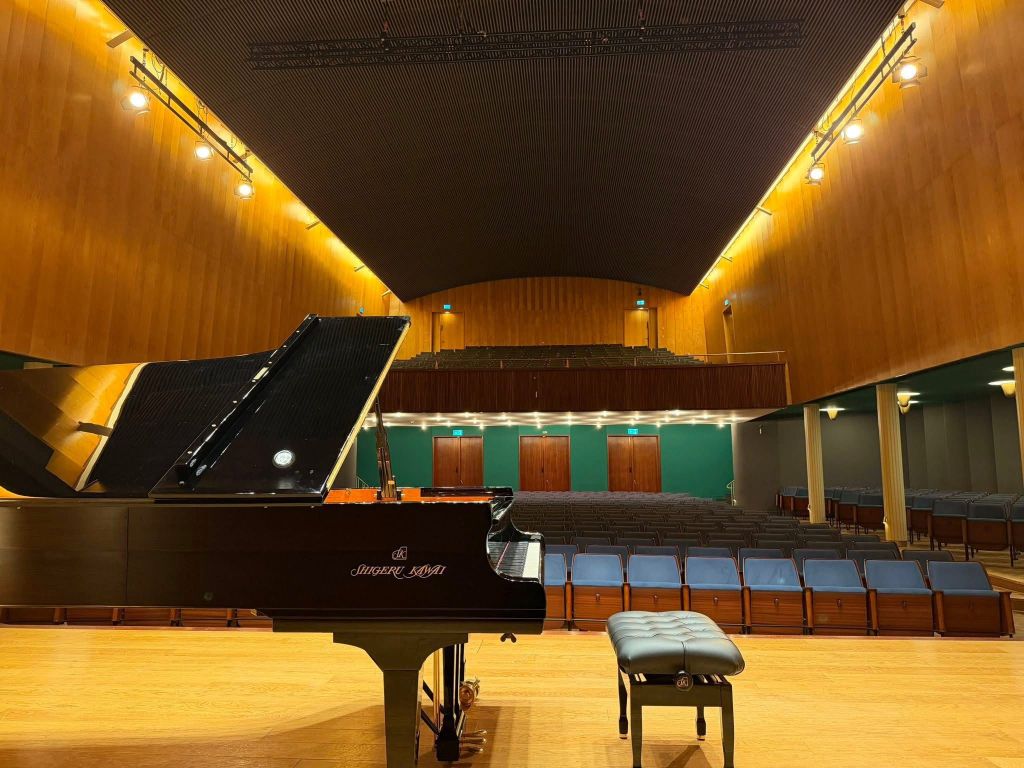
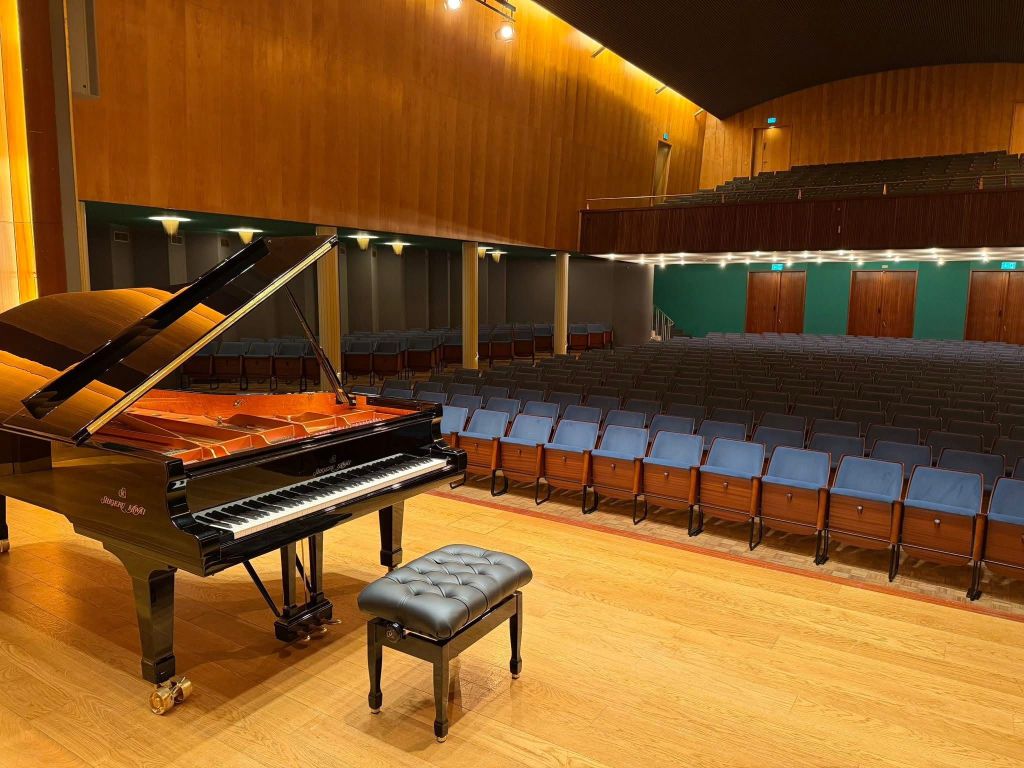
Chopin’s Sonatas have often been criticised as a series of episodes rather than one whole of architectural shape. Mikhail, as with the Beethoven, managed to combine his stylistic fantasy never forgetting the overall shape which gave great strength to the outer movements. Chords were played where the upper notes were allowed to sing in a movement where, under Mikhail’s sensitive hands, there was a radiance and beauty to all he played. A second subject that was of improvised freedom but always moving forward where even in the development there was a palette of sounds that could create such mellifluous beauty even to strands of meandering counterpoints. The ‘Scherzo’ was played with a jeux perlé that were streams of undulating sounds played with fleeting masterly radiance. The ‘Trio’ was allowed to sing with a languid beauty where counterpoints were allowed to weave their way with great freedom and a beguiling sense of colour. After the scintillating return of the ‘Scherzo’ the final chords were immediately picked up by the imperious opening to the ‘Largo.’ A bel canto played with great flexibility and freedom as the changing harmonies of the central episode were played with flowing beauty. The opening agitato of the ‘Finale’ was played with whispered menace as it gradually took flight with outbursts of scintillating brilliance. A ‘tour de force’ of control and mastery with the rondò theme returning ever more intensely until the final explosion of the coda played with brilliance and mastery. Another remarkable performance of a work that can sound very fragmented in lesser hands but that Mikhail could see the architectural shape of a tightly constructed masterwork.

An encore of Chopin’s most famous nocturne, op 9 n. 2 . Mikhail could now let his hair down and indulge in a performance that one might have heard from the Chopin experts of the Golden age of piano playing. Subtle half lights and long drawn out rubati were slightly exaggerated but worked its magic on an audience now totally won over by such poetic mastery.
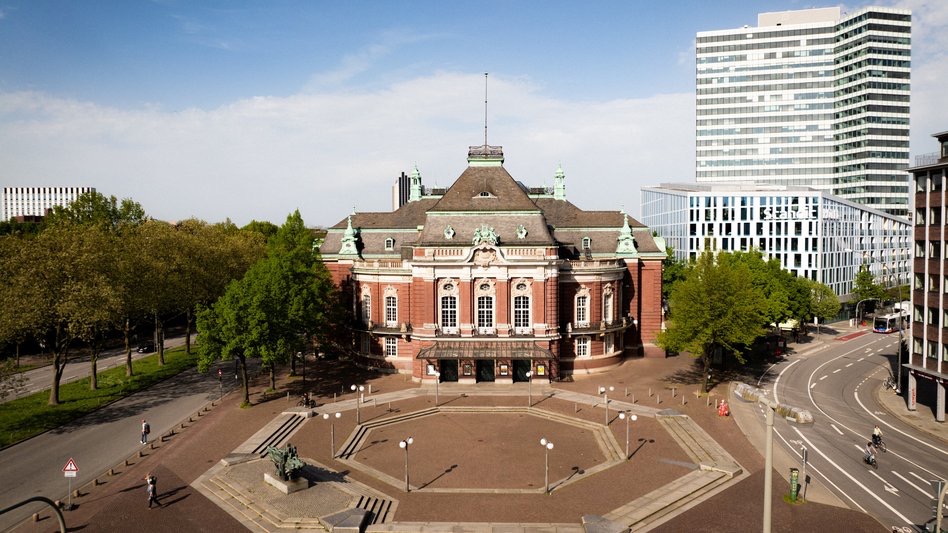

VIRTUOSOS AMONG THEMSELVES
Weimar, where piano virtuoso Franz Liszt once lived and worked, is still one of the most important training centres for young pianists today. No wonder Mikhail Kambarov was drawn to the city: at the age of 16, he came to Weimar to attend the music grammar school, and promptly won the national competition »Jugend musiziert«. Since then, he has garnered many important prizes, a coveted scholarship from the German Music Foundation and a place as a student with Michail Lifits. At the Laeiszhalle, Kambarov devotes himself entirely to the 19th century and its piano stars: Schumann, Beethoven and Chopin composed many works that remain essentials in the concert pianist’s repertoire.

PROGRAMME
Robert Schumann
Arabeske in C major, Op. 18
Ludwig van Beethoven
Sonata for Piano in F minor, Op. 57 »Appassionata«
Allegro assai – Andante con molto -Allegro ma non troppo
Frédéric Chopin
Sonata for Piano in B minor, Op. 58
Allegro maestoso – Scherzo Molto vivace – Largo – Presto,non tanto
Encore:
Frédéric Chopin
Nocturne E flat major op. 9/2
‘I would also like to say Thank you for Mikhail’s wonderful concert. His musical maturity, his interpretative range and his natural musicality were very infectious and refreshing. It was truly wonderful to listen to him and it was great that he was part of our Teatime series.’
Warm greetings from Hamburg,
Maria Busch
Künstlerische Planung / Artistic Planning. Hamburg

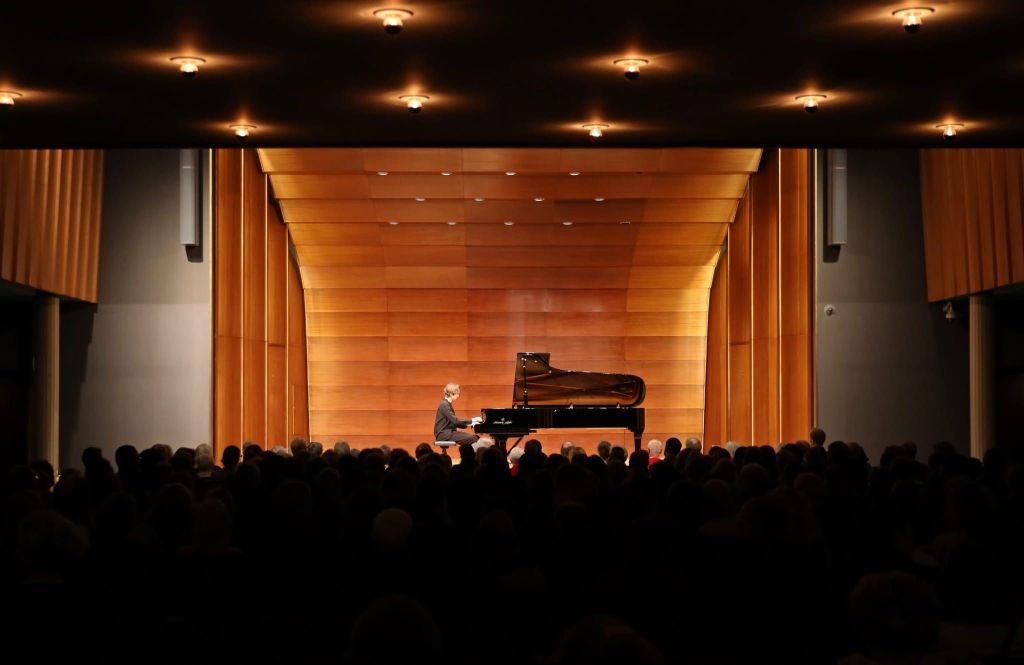

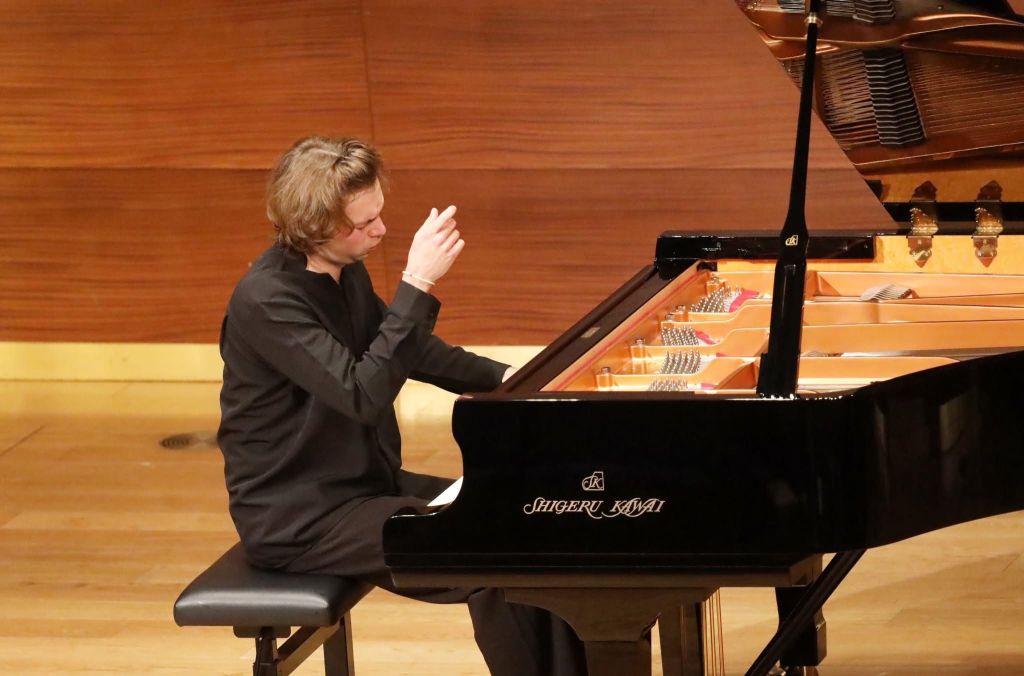
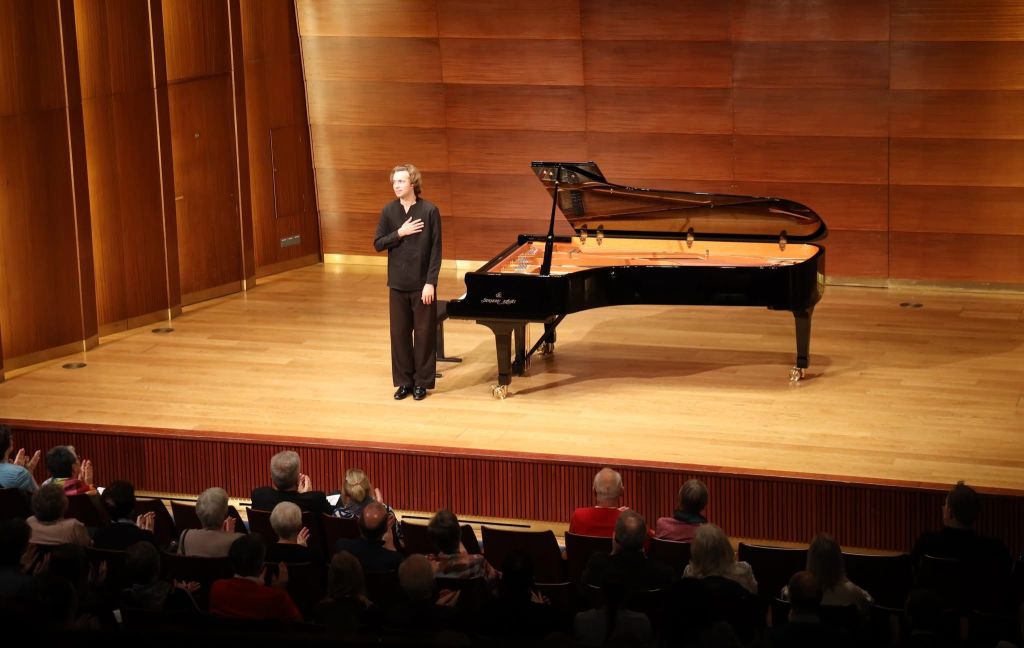

The Laeiszhalle Kleiner Saal is a music hall located within Laeiszhalle Hamburg, which proves to be one of the best music venues in the city, and is suitable for a number of musical performances. The hall has a seating capacity of 639, and has seen various kinds of performances ranging from opera and jazz, to theater recitals, children’s shows and a lot more. The 1950s style layout of the hall is also quite striking, and makes for an enhanced setting to enjoy a concert.


 ChristopherAxworthy-MusicCommentary