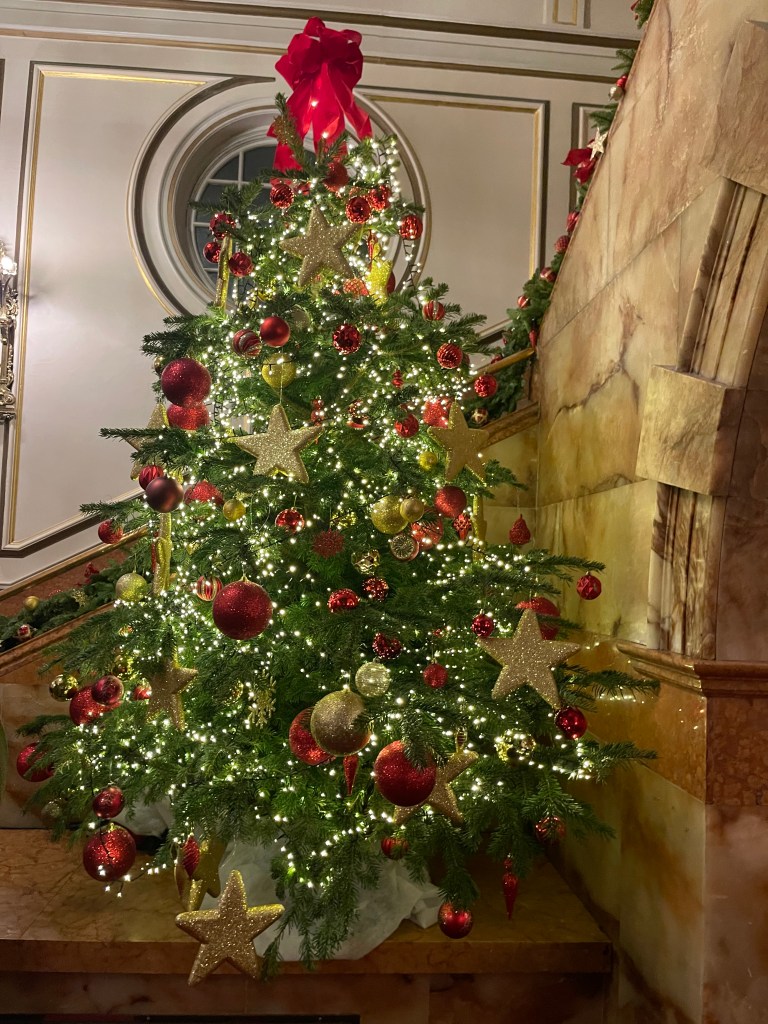
Jaeden Izik- Dzurko making his London debut at the Wigmore Hall as Gold medalist of the ‘Leeds.’
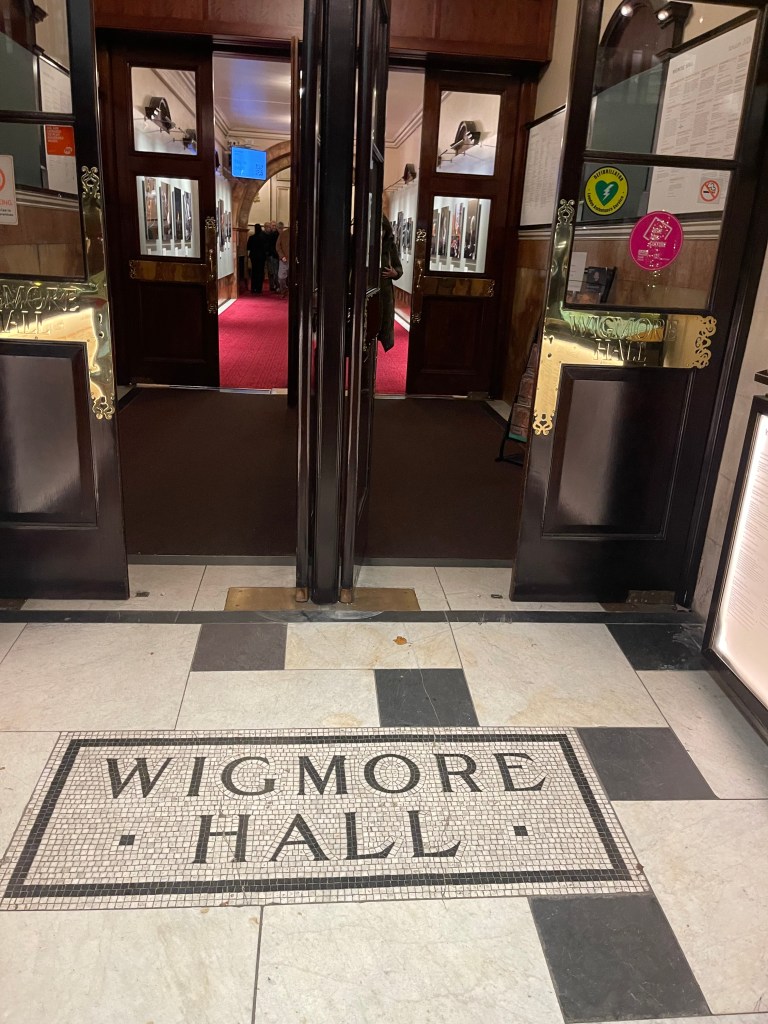
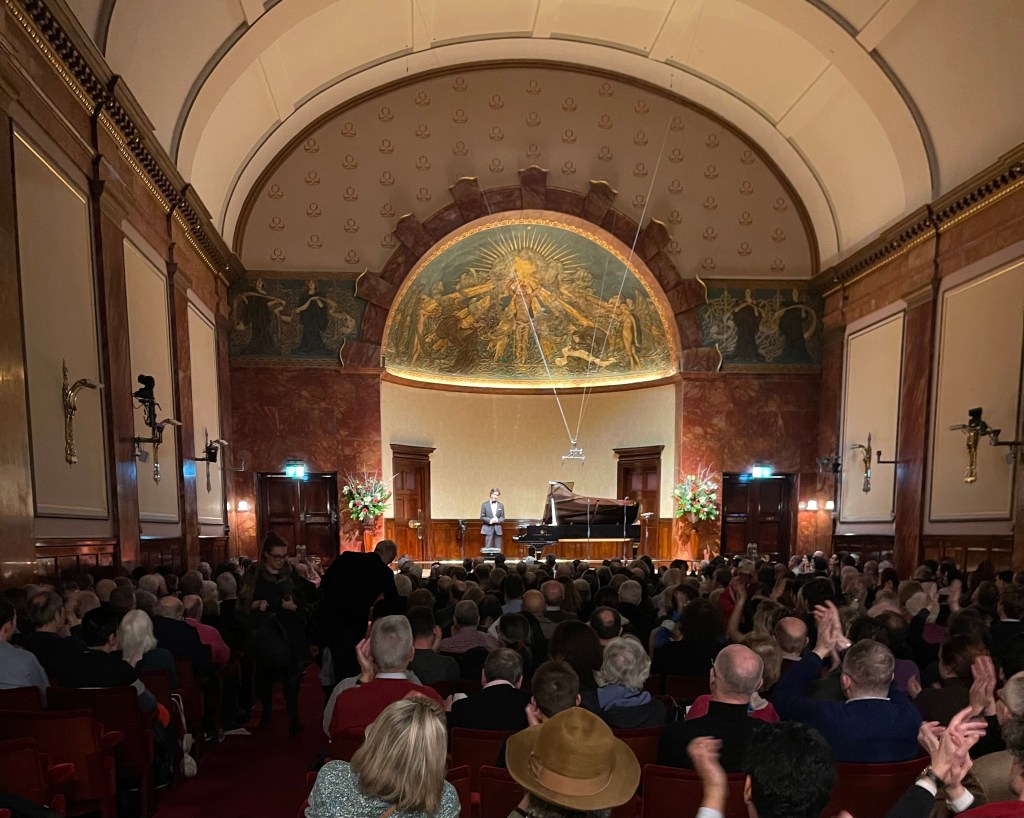
A monumental performance of Bach’s Fourth Partita opened the concert with playing of exemplary clarity and purity, where his remarkable musicianship was of an architectural awareness that gave great shape to all he did. Discreet ornamentation just added to the noble grandeur of the ‘Ouverture’ as the poignant beauty of the ‘Allemande’ was allowed to unfold with great fluidity. A ‘Courante’ that was indeed a flood of sounds played with a rhythmic elan and spritely gait. A breath of fresh ‘Air’ before the plaintive beseeching cry of the ‘Sarabande’. He chose a completely different,much paler,sound for the Minuet before the dynamic drive of the ‘Gigue’. Quite extraordinary clarity and brilliance with polyphonic playing of transcendental mastery even though loosing something of its nobility with such a high notch virtuosity.
It was in the César Franck that suddenly Jaeden opened his Pandora’s box of colours and with ravishing whispered beauty allowed the music to unfold with masterly poetic beauty. A ‘Chorale’ that was of magic sounds of glowing radiance gradually growing in intensity until the glorious declaration of a true believer. A ‘Fugue’ that built to the enormous climax that dissolves so magically into the waves of undulating sounds with which the ‘Prelude’ had opened . This time the theme was floated on this magic cloud as all three themes were joined together. Jaeden’s remarkable sense of balance allowing for a burning intensity without any hardness. A glorious final outpouring and true exultation played with aristocratic control and sumptuous full sounds.
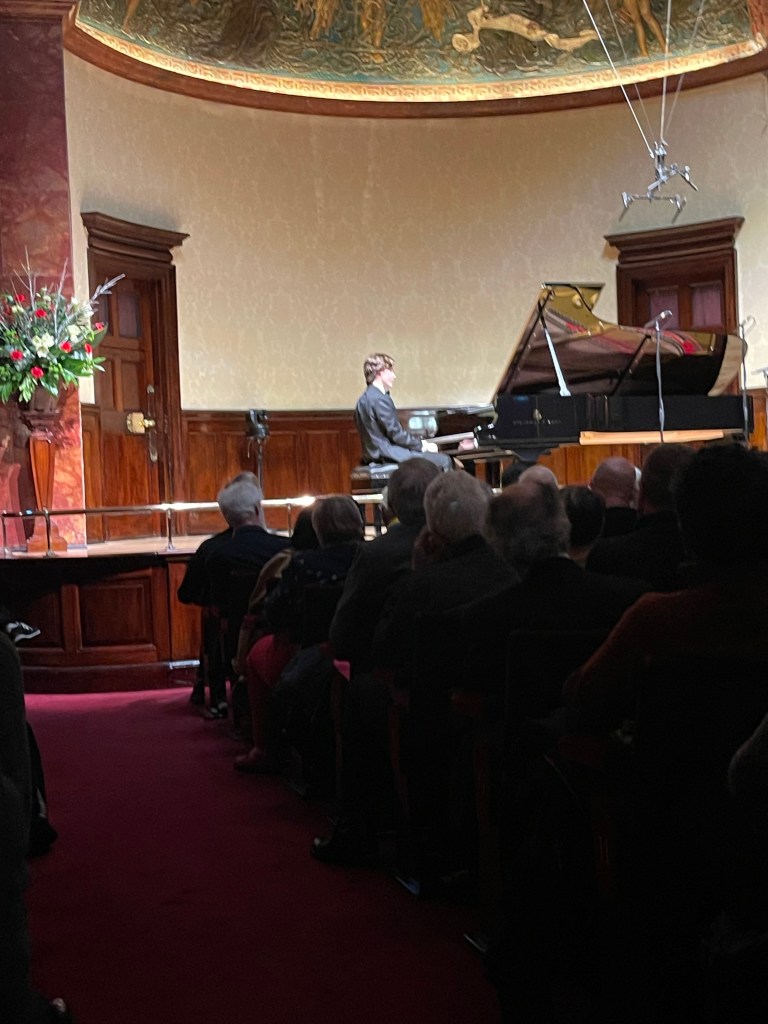
It was after the interval, though, that Jaeden threw off his noble jacket of masterly musicianship that in some way had inhibited his extraordinary poetic fantasy. Now he was to unleash on a public mesmerised by such perfection but not yet hypnotised completely by his poetic imagination.
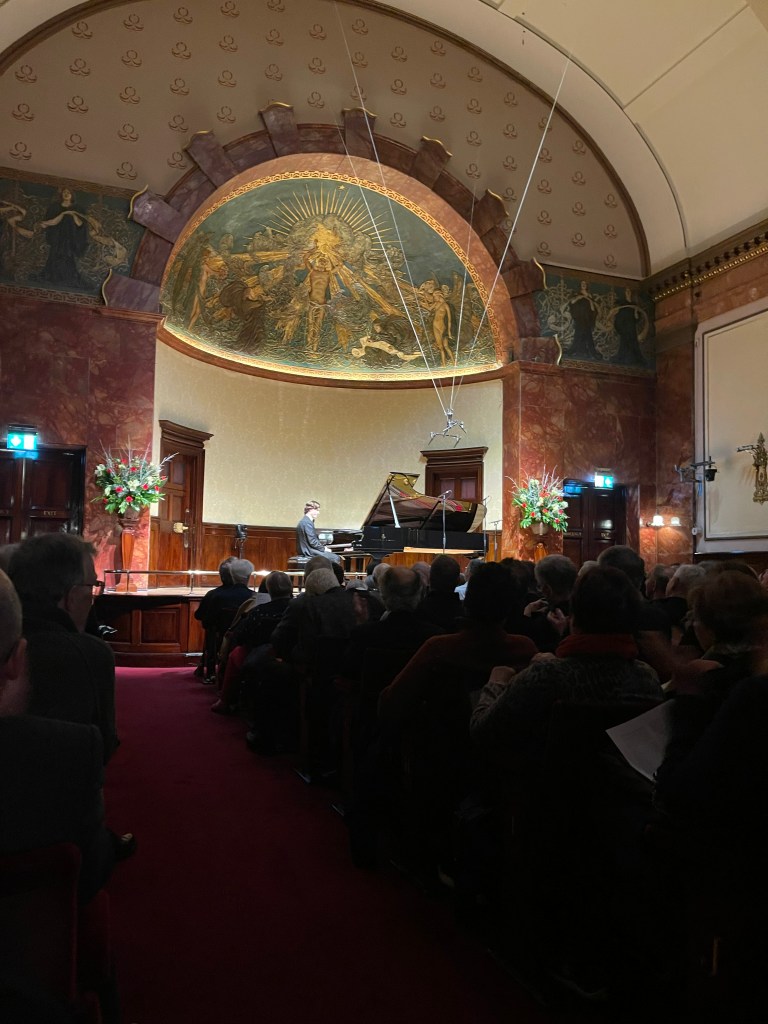
It was with Scriabin and Rachmaninov that Jaeden could give full reign to his chameleonic palette of colours and allow himself to wallow in the ravishing sounds that he could draw from the piano.
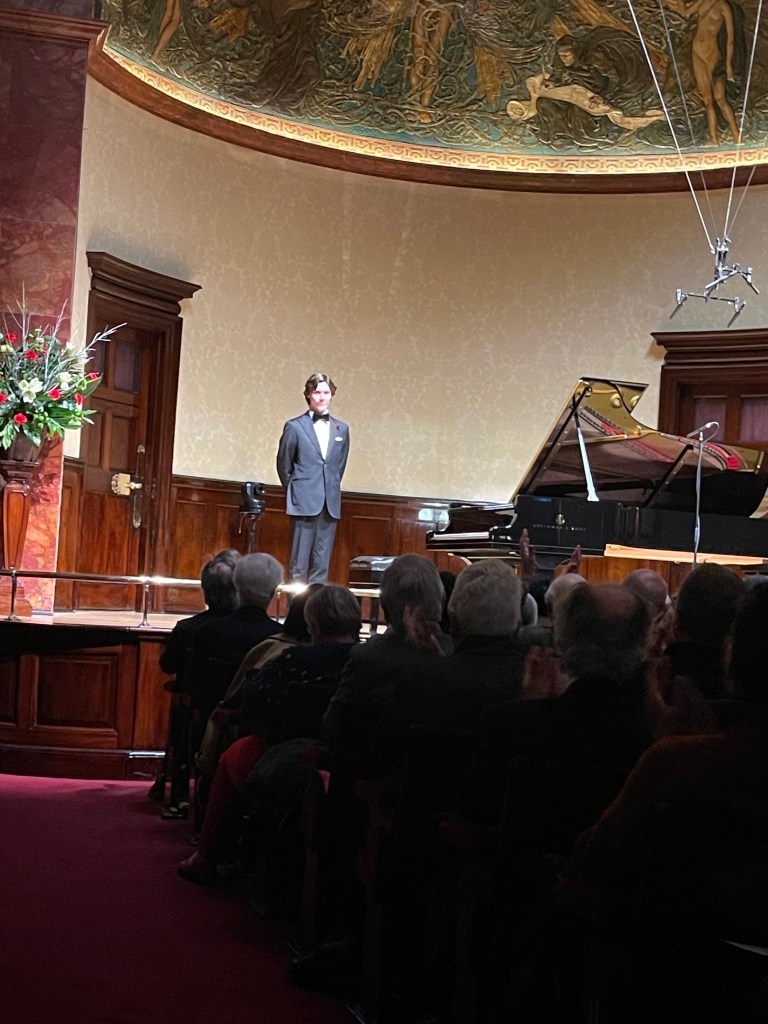
As in Leeds it was not his Brahms that astonished, although of masterly making, but it was his Rachmaninov sonata that was breathtaking and showed his supreme poetic and intellectual mastery for which he was justly covered in Gold.
From the opening whispered radiance of the Scriabin Fantaisie there was magic in the air, as it gradually grew in intensity with a boiling cauldron of sounds ever more turbulent. Suddenly the clouds passed and a melody of glowing radiance appeared out of the dark and illuminated the piano. Light and dark were united with passionate intensity and a mastery of balance, where no matter how many notes unfolded Jaeden could point his way to the ‘stars’ with ever more vehemence and conviction. A range of sounds that had been missing with his more classical approach to the works in the first half of the concert. It was as though his remarkable credentials had been demonstrated to us and now he could open his heart and poetic imagination and be as free as his mastery would allow him.
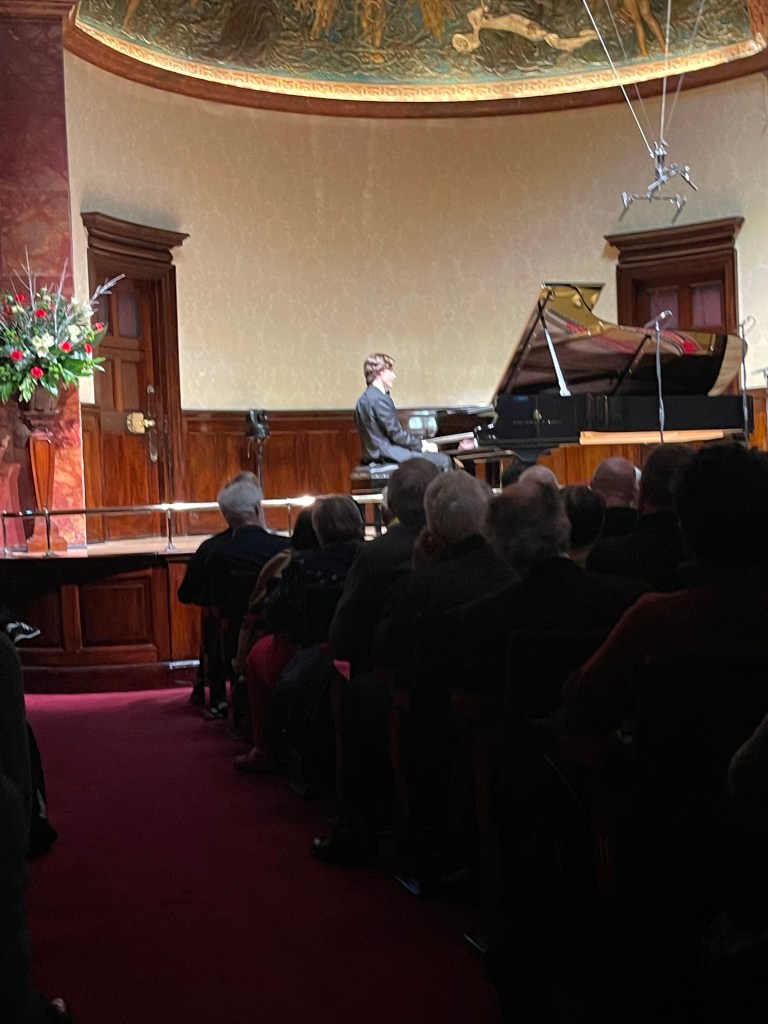
The ten preludes op 23 by Rachmaninov were more remarkable for their poetic content than for the masterly technical control of the quite considerable hurdles that Rachmaninov, with his giant hands, could throw in the path of lesser pianists !
The first prelude immediately created an aura of magic as its whispered glowing utterances drew us in, to share the ravishing beauty that poured from Jaeden delicate hands with such simplicity and elasticity. Of course this was immediately dispelled by the startling nobility and agility of the second. A stream of sumptuous sounds on which Rachmaninov places a heroic exclamative melody . Sumptuous sounds that fade into the distance as a ravishing melody can be heard in its midst. A masterly sense of balance and transcendental technical control allowed Jaeden to shape the melodic line whilst creating an aura of Philadelphian sumptuousness . This was an oasis of radiance and beauty before unleashing the turbulent crescendo of emotions that heralds the return of the main theme, ever more triumphant and heroic, both technically and poetically speaking. It was in fact Jaeden’s technical mastery that paled into insignificance as the poetry and imagination completely consumed him. A capricious third prelude with a rare sense of balance and subtle almost jeux perlé lightness with the ending played with a beguiling insinuating simplicity like the elusive end of the Paganini rhapsody. A nonchalance that is too easy for children but too difficult for adults here found the perfect balance. There was a simple radiance to the beautiful melodic outpouring of the fourth, and although not as mysterious as Richter was of compelling beauty and masterly poetic content. The fifth in G minor was played at high speed, but of breathtaking brilliance and with a dynamic range and control that was masterly. The central unashamedly romantic outpouring was played with chameleonic colours that were allowed to intertwine with insinuating beauty. Again the nonchalant ending was played with absolute perfection.There was bewitching beauty to one of Rachmaninov’s most romantic outpourings in the sixth prelude that was played with a sense of rubato that held us mesmerised, as the melodic line was stretched to its absolute persuasive limit.The C minor Prelude that followed was played with etherial sounds of swirling energy like a wind on which arose with nobility the long melodic line gradually growing in intensity and sparkling brilliance. After such scintillating exuberance the nobility of the ending was played with aristocratic poise. The eighth prelude of continual shifting harmonies was played with etherial beauty as the bass became the anchor on which the wash of notes was linked. The demonic ‘feux follets’ of the ninth was played with an extraordinary legato as Jaeden turned technical impossibilities into beguiling gems of lightness and beguiling brilliance. The last prelude with it’s beautiful languid melodic line in the bass was played with a ravishing sense of balance as the voices duetted with each other with the poetic intensity that had characterised all ten of this first set of preludes op 23.
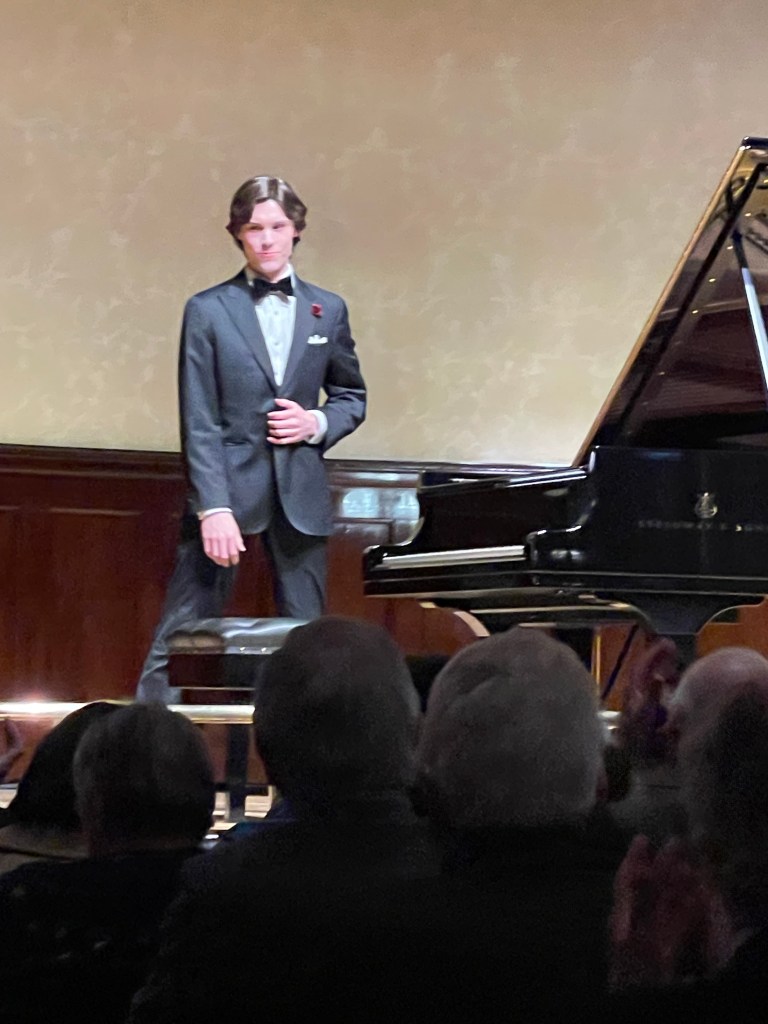
Jaeden was now ready to let his hair down with two encores starting with the extraordinarily capricious and masterly ‘fingerfertigkeit ‘ of Medtner’s fairy tale.
Enjoying his mastery and freedom now, Jaeden finally let rip with a quite breathtaking account of one of Kapustin’s most ingenious Jazz etudes. A glissando finishing deep in the bass of the piano was played with relish and was greeted by a public now ready to hear and appreciate even more what this phenomenal pianist had to offer.
Would the real Jaeden Izik- Djorko please stand up !
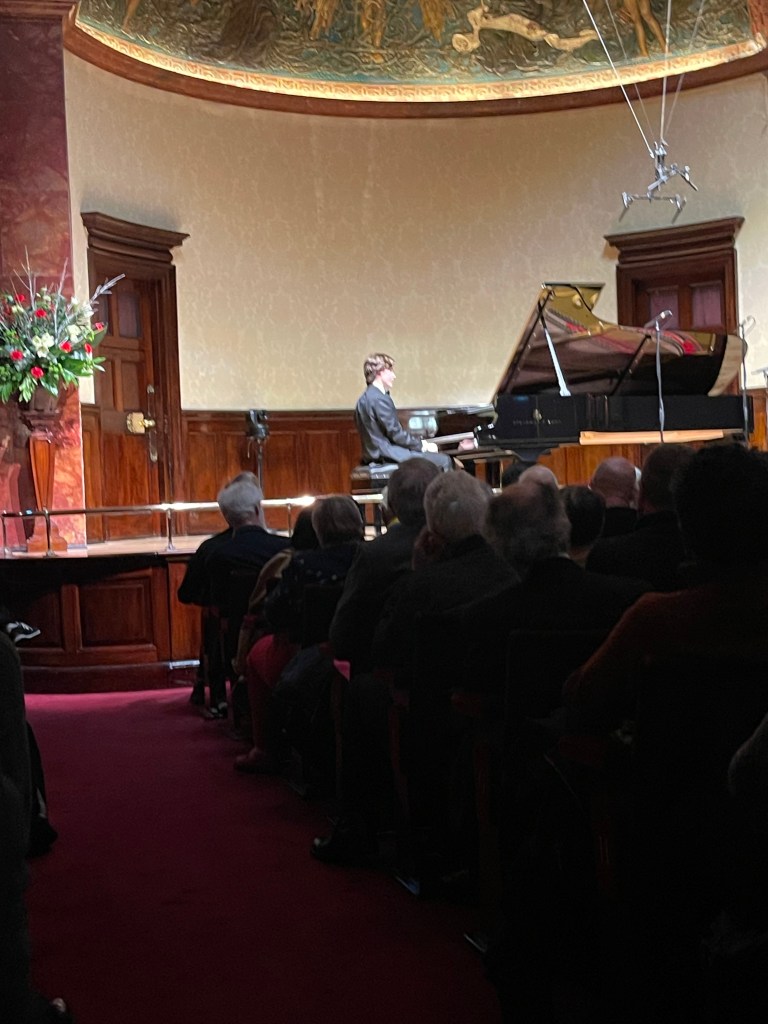
An extraordinary debut by a master pianist and above all, as Dame Fanny would have underlined , master musician!
Johann Sebastian Bach (1685-1750)
Partita No. 4 in D BWV828 (1729)
I. Ouverture • II. Allemande • III. Courante •
IV. Aria • V. Sarabande • VI. Menuet • VII. Gigue
César Franck (1822-1890),
Prélude choral et fugue (1884)
I. Prélude. Moderato • II. Choral. Poco più lento •
III. Fugue. Tempo I
Interval
Aleksandr Skryabin (1872-1915)
Fantasie Op. 28 (1900)
Sergey Rachmaninov (1873-1943)
10 Preludes Op. 23 (1901-3)
No. 1 in F sharp minor • No. 2 in B flat •
No. 3 in D minor • No. 4 in D •
No. 5 in G minor • No. 6 in E flat •
No. 7 in C minor • No. 8 in A flat •
No. 9 in E flat minor • No. 10 in G flat

Canadian pianist Jaeden Izik-Dzurko is a current recipient of the Borletti-Buitoni Trust Fellowship and the 2024 winner of the Dame Fanny Waterman Gold Medal at the Leeds International Piano Competition. He also recently became the first Canadian instrumentalist to be awarded the Grand Prize Laureate at the Concours Musical International de Montréal. The 2025/26 season features high profile debut performances at London’s Wigmore Hall, San Francisco’s Davies Symphony Hall, the Leipzig Gewandhaus (Mendelssohn-Saal), and Hamburg’s Elbphilharmonie. Jaeden will also make his debut as soloist with both the Orchestre Symphonique de Montréal and the National Symphony Orchestra of Ireland, and makes returns to the Kamloops Symphony Orchestra, Edmonton Symphony Orchestra, and the National Arts Centre Orchestra. His repertoire this season includes works by Chopin, Brahms, Grieg, and Rachmaninoff, with collaborations alongside conductors Jessica Cottis, Gemma New and Alexander Shelley. Jaeden has also made debuts at Carnegie Hall’s Weill Recital Hall, Salle Cortot, Auditorio Nacional de Música in Madrid, Krannert Center for the Performing Arts in Illinois, Vancouver Recital Society, Münchner Künstlerhaus and Sociedad Filarmónica de Bilbao. In concerto he has performed with Edmonton Symphony, Bilbao Orkestra Sinfonikoa, Orchestre Symphonique de Montréal, Orquesta Sinfónica de Madrid, Oviedo Filarmonía, Oxford Philharmonic and the RTVE Symphony Orchestra. Recent conductor collaborations include with Domingo Hindoyan, John Storgårds and Joseph Swensen. Other awards include first prize of the Hilton Head, Maria Canals, and Paloma O’Shea Santander International Piano Competitions where he also won the Canon Audience Prize and Chamber Music Award.Born in British Columbia with Hungarian-Ukrainian heritage, Jaeden formerly attended the Juilliard School and now studies with Jacob Leuschner at the Hochschule für Musik Detmold and Benedetto Lupo at the Accademia Nazionale di Santa Cecilia.
https://christopheraxworthymusiccommentary.com/2024/03/20/christopher-axworthy-dip-ram-aram/
 ChristopherAxworthy-MusicCommentary