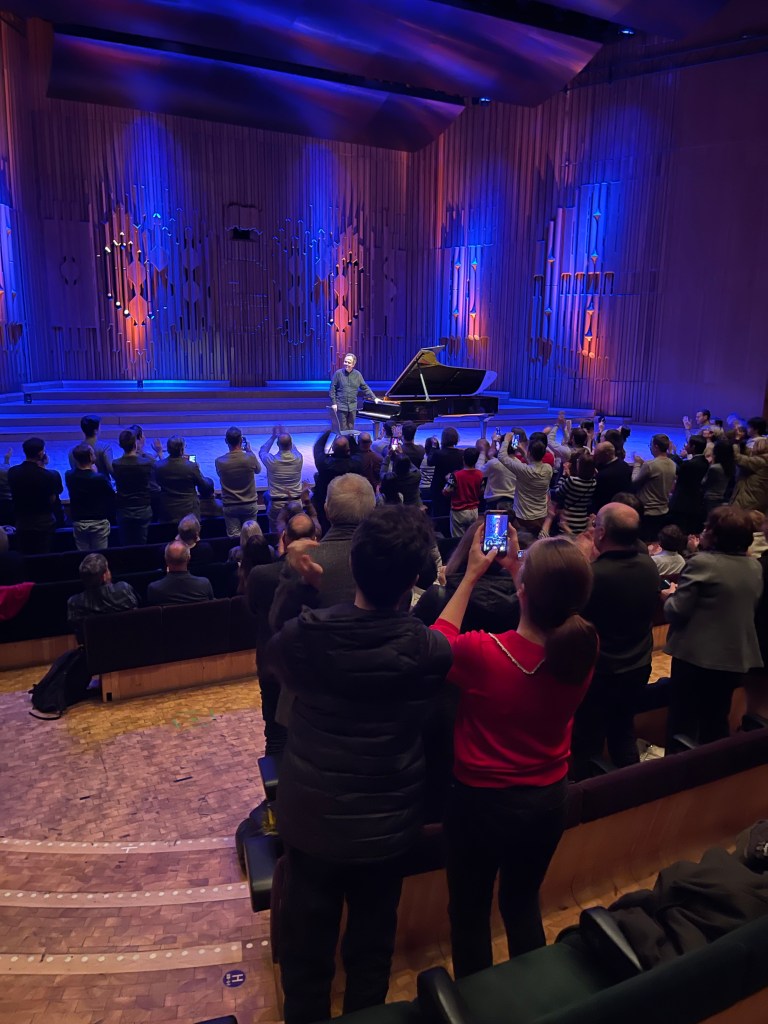
After a soul searching ‘Resurrection’ of Morales, a glimpse of Paradise with the genius of Volodos
A magic carpet of sounds and emotions with Schumann’s Davidsbündler. Whispered sounds clouded in pedal out of which shone glistening jewels of poetic beauty . A golden sound that I have only ever heard from Gilels. After the breathtaking beauty of Schumann’s duel poetic personality Volodos let his hair down with a performance of Liszt’s 13th Hungarian Rhapsody.
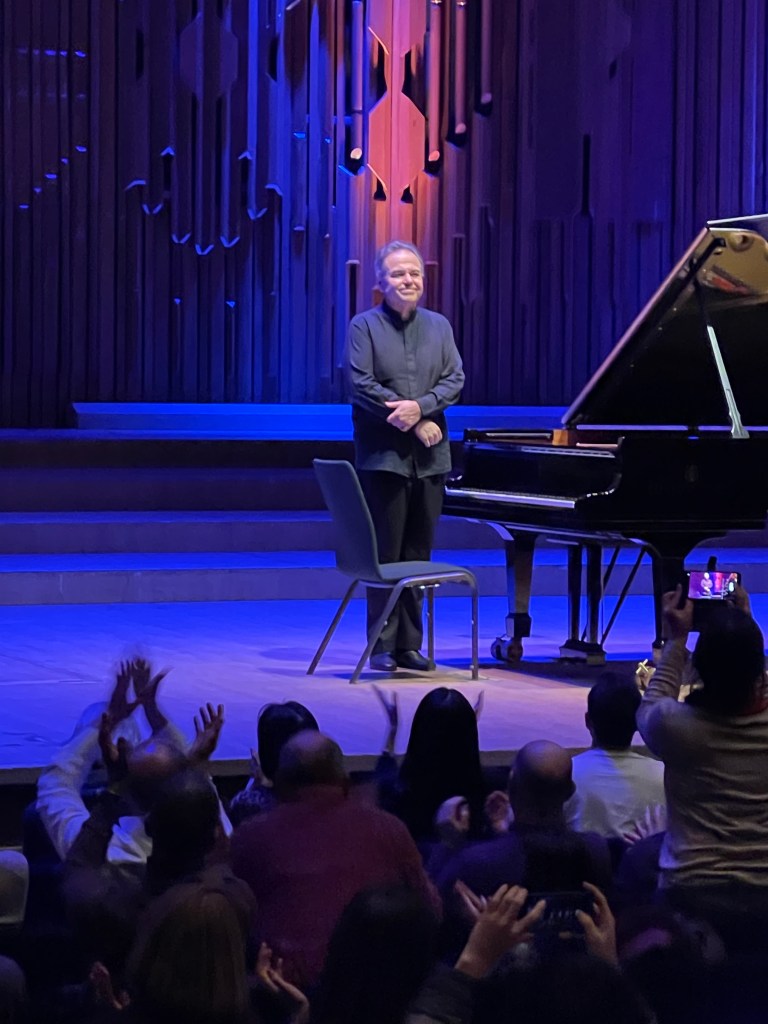
Unbelievable palette of sounds and the mind boggling virtuosity of refined brilliance of a pianist who might well be described as the greatest pianist alive or dead.
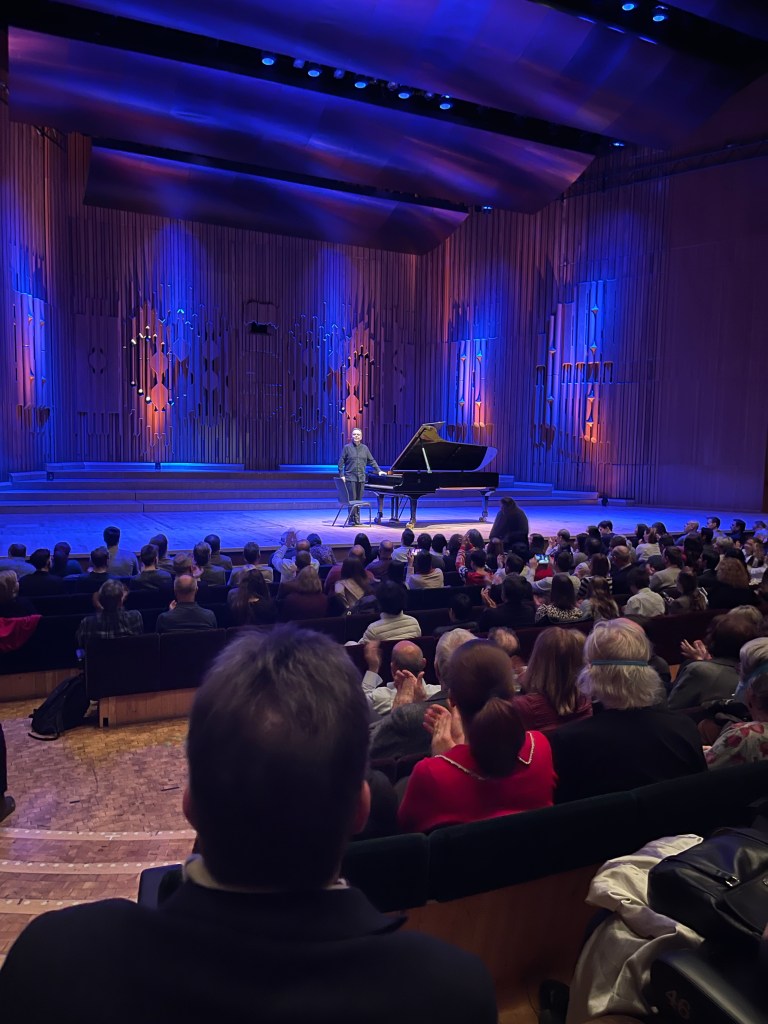
Resurrected and ready for one of Schumann’s most naively poetic works, I took my place in the Barbican Hall for a performance of Davidsbündler that was a cross between Wilhelm Kempff and Radu Lupu, yet completely original and unique to Volodos . A vision of poetic beauty and understanding that was a revelation, as he brought the printed page to life with extraordinary poetic fantasy and whispered beauty.
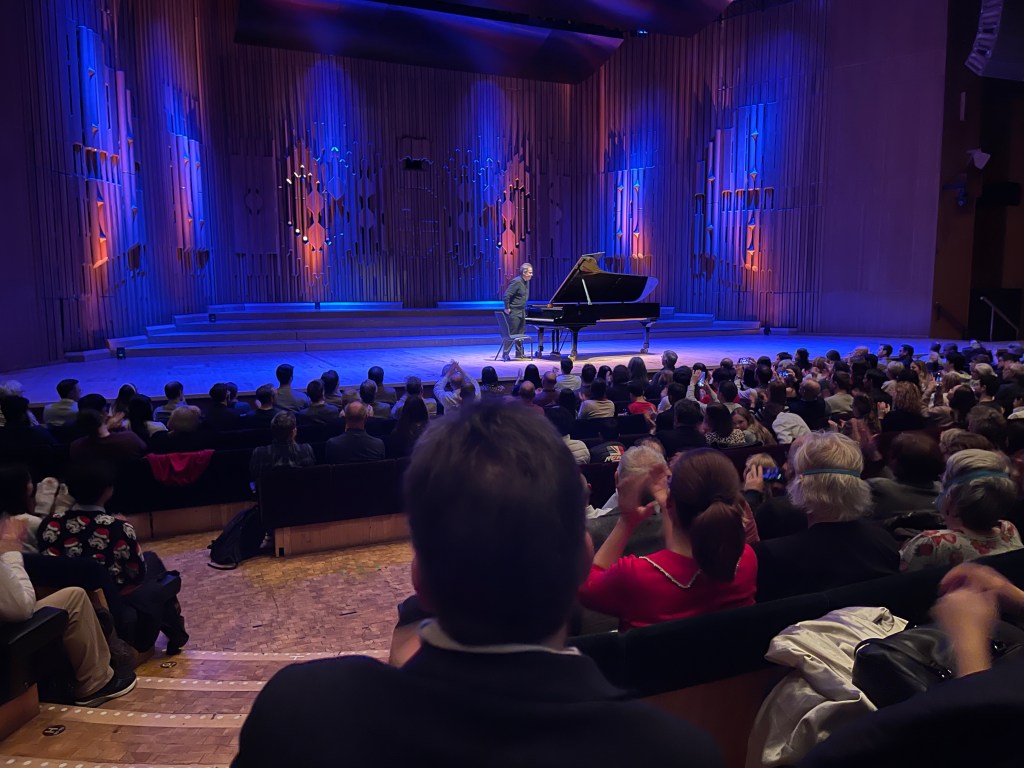
From the very subdued opening, dry and very literal but immediately transformed into flights of poetic fantasy, where the final G was like a wondrous star shining brightly. A mastery of sound and an impeccable style of radiance and whispered beauty that was quite ravishing and of an extraordinary ordered freedom. Improvisation and interpretation is a very difficult line to follow but for Volodos it was such a natural progression that it illuminated all he did with a refreshing sense of discovery. Such radiance and beauty to Eusebius’s poetic musings was followed by the impish good humour of the third dance and a coda that just appeared miraculously on a wave of notes thrown off with ‘jeux perlé’ ease. There was a whispered entry to the fourth and a disarming simplicity to the fifth with its whispered meanderings of insinuating nonchalance. I have never heard the sixth played with such featherlight rhythmic precision ,like a wind passing over the keys, with a mastery of balance as the bass was gently underlined.The broken chords of the seventh were born out of the last chord of the sixth and were of a delicacy and timeless beauty unfolding into a melody of restrained nostalgia with a beseeching beauty of gasping questioning that was barely audible on its repetition. There was a capricious chase to the eighth leading straight into the hurdy gurdy world of the circus with an ending of two impishly placed chords. There was the sumptuous Brahmsian outpouring of the tenth ‘Ballade’ and the childlike simplicity of the eleventh with its miraculous doubling of the tenor voice with such extraordinary subtlety and understated beauty that was quite breathtaking. The twelfth was thrown off with whispered impishness and shaped with a freedom and style that was of gipsy origin. Majesty and nobility of the thirteenth with a central episode that was just a cloud of sounds on which floated the chorale like melodic line, disappearing to a whisper as the coda emerged out of a mist of beauty. The fourteenth is one of the most beautiful things that Schumann wrote and it was played with a chiselled beauty as the melodic line intertwined and communed with ravishing beauty.The opening of the fifteenth was played with two hands as the piano became awash with sumptuous sounds on which arose a melodic line of subdued passionate intensity. The sixteenth was a passionate outpouring of great freedom that I have never heard played with such originality, as it lead to the whispered magic of the seventeenth like a vision from afar. The added deep bass notes of the coda giving a radiance before the arpeggiandi chords and the final whispered ending. A long pause before the opening chord of the final waltz, that was like the first glimpse of light at dawn as this languid farewell was played out with glowing beauty.
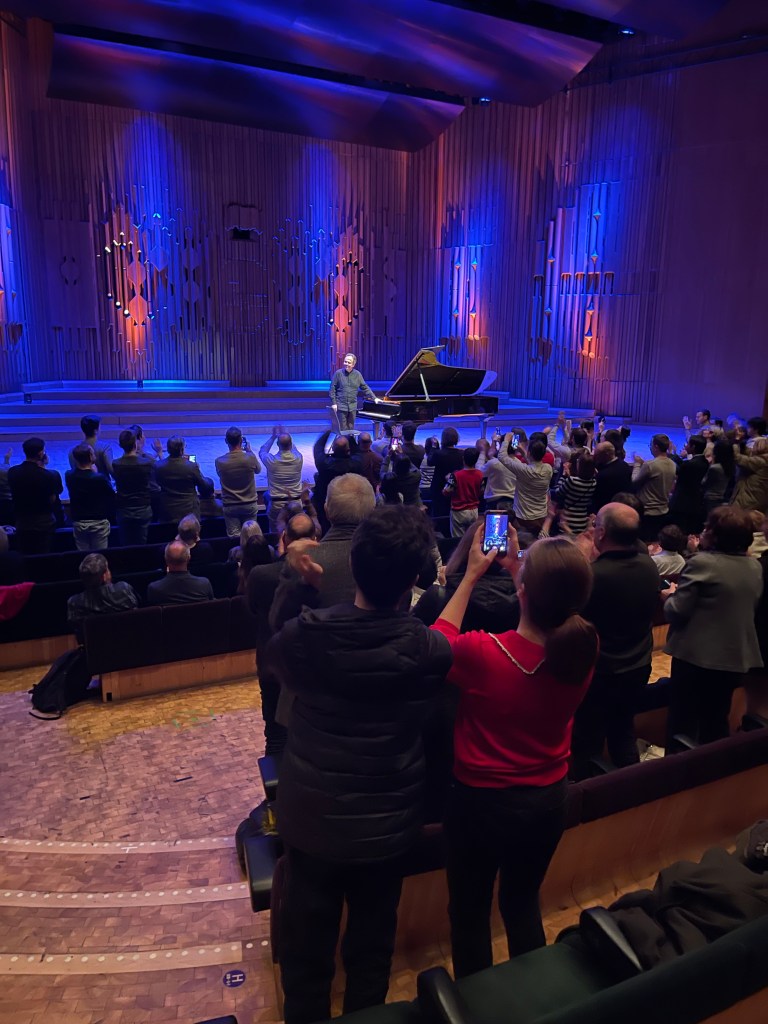
This was the most remarkable re creation of Schumann that I have ever witnessed. A musician who could convince us, like a visionary magician, that the piano is not a percussive instrument but a real orchestra full of rarified sounds of sumptuous beauty.
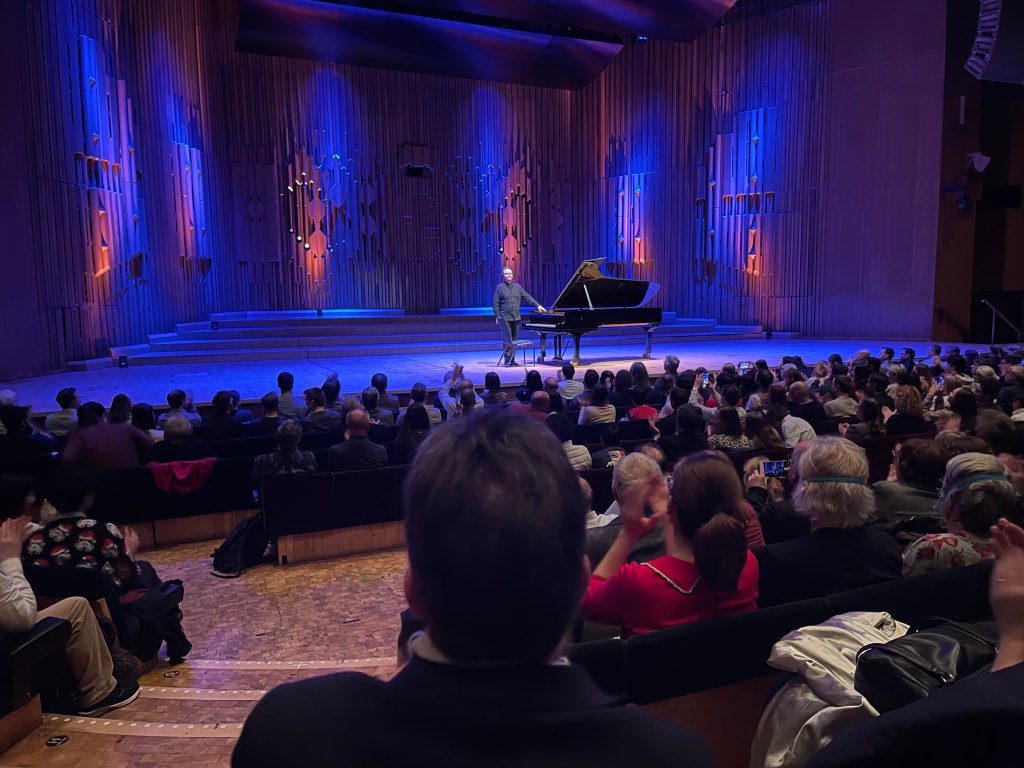
The Hungarian Rhapsody n 13 has long been a ‘cavallo di battaglia’ even if Volodos has preferred not to be known as just a juggler of notes. There were ravishing sounds of extraordinary subtlety and a use of the pedals that truly became the soul of an instrument made of hammers and strings. An improvised freedom that when he moved into top gear created sounds that had more power that the LSO, whose home we were in this evening.
A public by now on their feet, hypnotised by a magician who was a pied piper who could take us to places that we never knew existed.
Four encores, starting with the Intermezzo op 117 n.1 by Brahms, that was played with a Caballé sense of bel canto with streams of notes of glowing beauty and radiance. Followed by Schubert’s teasingly beguiling Moment Musicaux in F minor every bit as enticing as Curzon. ‘Malguena’ has long been associated with this artists and it brought the house down and the entire audience on their feet to greet our hero who had been able to ignite and seduce us as never before. A simple melody by Mompou was a calming balm to an audience in a state of delirium after such an overwhelming experience.
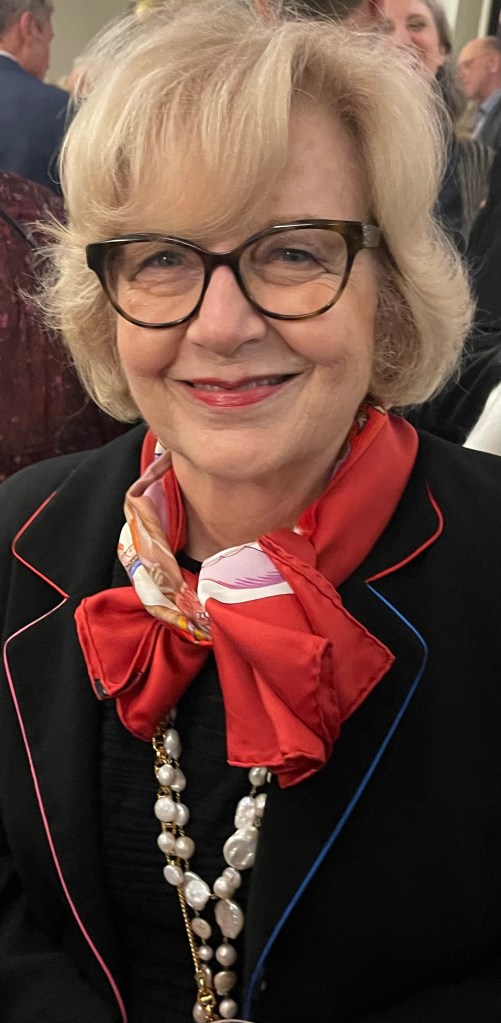
The distinguished pianist Deniz Gelenbe writes about Schubert A major Sonata D959 in the first part of the concert that I decided to miss for ‘Resurrection!’
‘ Volodos’ rendering of the Schubert Sonata D 959 was overwhelming, transcendental and magical. Time literally stopped and this monumental work seemed to pass in one breath.There was such beauty in tonal colour, rich imagination, natural flow and poetry in expression. His exquisite use of pedal and voicing allowed infinite nuances. He made silences and extreme pianissimos speak.
Even the problematic middle section of the second movement was handled with such mastery and imagination. He had control over chaos, and made it sound like an improvisation.
This was one of those unique performances which will ever be engraved in our souls.’
‘ Reaching the sublime through the subliminal… A night I’ll never forget.’ Petar Dimov
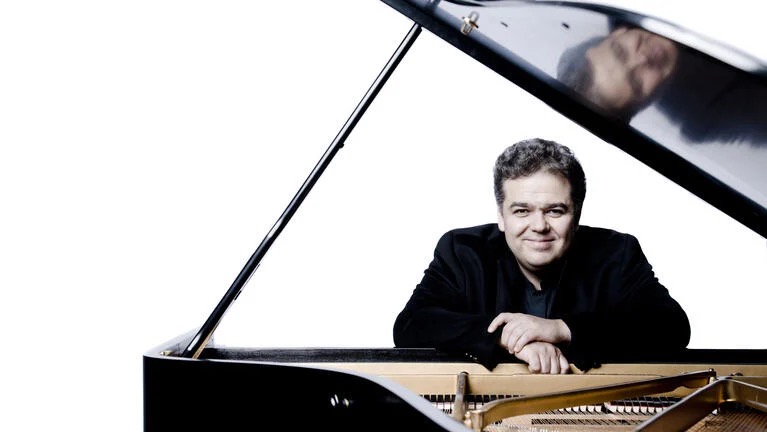
Born in St Petersburg in 1972, Arcadi Volodos
began his musical studies with lessons in
singing and conducting. He did not begin
serious training as a pianist until 1987 at
the St Petersburg Conservatory before
pursuing advanced studies at the Moscow
Conservatory with Galina Egiazarova and in
Paris and Madrid.
Since making his New York debut in 1996
he has performed throughout the world
in recital and with leading orchestras and
conductors. He has worked with, among
others, the Berliner Philharmoniker, Israel,
Muninch and New York Philharmonic
orchestras, Philharmonia Orchestra, Royal
Concertgebouw Orchestra, Dresden
Staatskapelle, Orchestre de Paris, Leipzig
Gewandhausorchester, Zurich Tonhalle
Orchestra and the Boston and Chicago
Symphony orchestras. He has collaborated
with conductors such as Myung-Whun Chung,
Lorin Maazel, Valery Gergiev, James Levine,
Zubin Mehta, Seiji Ozawa, Jukka-Pekka
Saraste, Paavo Järvi, Christoph Eschenbach,
Semyon Bychkov and Riccardo Chailly.
Piano recitals have played a central role in
Arcadi Volodos’s artistic life since he began his
career. His repertoire includes major works by
Schubert, Schumann, Brahms, Beethoven, Liszt,
Rachmaninov, Scriabin, Prokofiev and Ravel,
together with less often performed pieces by
Mompou, Lecuona and Falla.
He is a regular guest of the most prestigious
concert halls in Europe. This season he appears
here at the Barbican Centre, as well as at the
Philharmonie de Paris, Teatro alla Scala in
Milan, Vienna Konzerthaus, Victoria Hall in
Geneva, Tonhalle in Zurich, Elbphilharmonie
in Hamburg, Prinzregententheater in Munich
and Auditorium National in Madrid, as well as
8 Fri 12 Dec, Hall
in Lisbon, Rome, Brussels, Monte-Carlo, Lyon,
Seville and at the Salzburg, Roque d’Anthéron
and Klavier Ruhr festivals.
Since his Gramophone Award-winning debut
at Carnegie Hall in 1999 (Sony Classical),
he has built a singular and carefully curated
discography. Each album is built with
exceptional artistic depth, representing a
personal artistic statement, offering revelatory
interpretations that have earned him
prestigious awards worldwide.
His early discography includes three
recordings that brought him worldwide
recognition: Volodos: Piano Transcriptions,
Volodos Live at Carnegie Hall and Volodos in
Vienna. These were followed by acclaimed live
performances with the Berliner Philharmoniker
– Rachmaninov’s Third Piano Concerto
conducted by James Levine, and Tchaikovsky’s
First Piano Concerto conducted by Seiji
Ozawa. In 2007 Volodos plays Liszt was
released to great acclaim, earning numerous
international prizes. His 2010 recital at the
Musikverein was issued on both CD and DVD,
and and garnered similar praise. In 2013 he
released Volodos plays Mompou, a deeply
personal album devoted to the music of
Frederic Mompou which won a Gramophone
Award and an ECHO Klassik Prize.
Volodos plays Brahms followed a couple of
years later and was immediately considered a
landmark in Brahms interpretation. It received
numerous accolades, including the Edison
Classical Award, a Diapason d’Or, and a
Gramophone Award. In 2019 Volodos plays
Schubert was released and also gained an
Edison Classical Award.
Arcadi Volodos will release a new album in
spring 2026, featuring a live recording of
Volodos in Paris, performing works by Schubert
and Schumann.
 ChristopherAxworthy-MusicCommentary