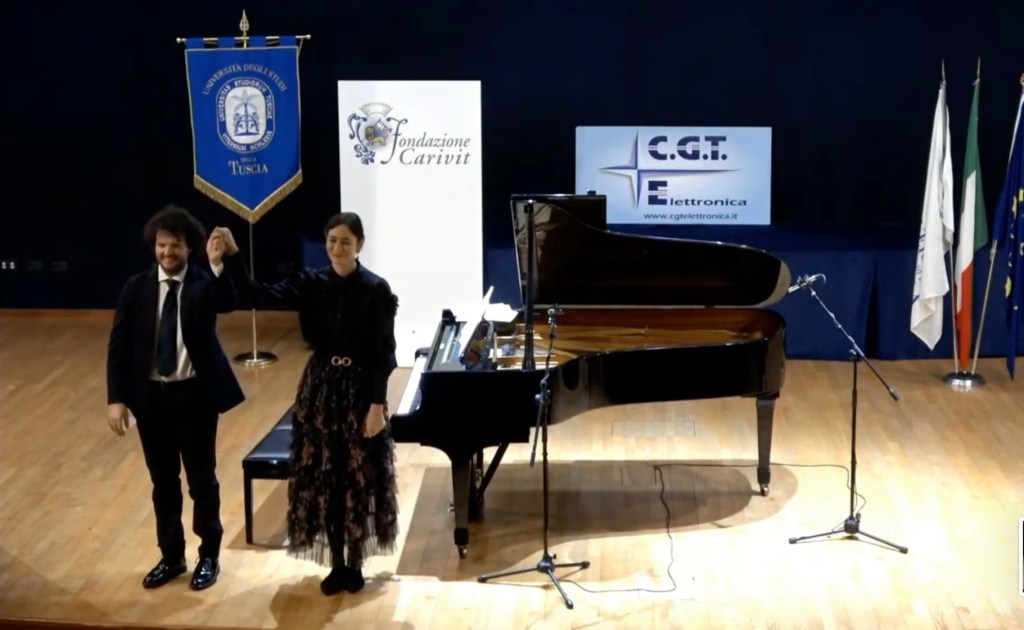
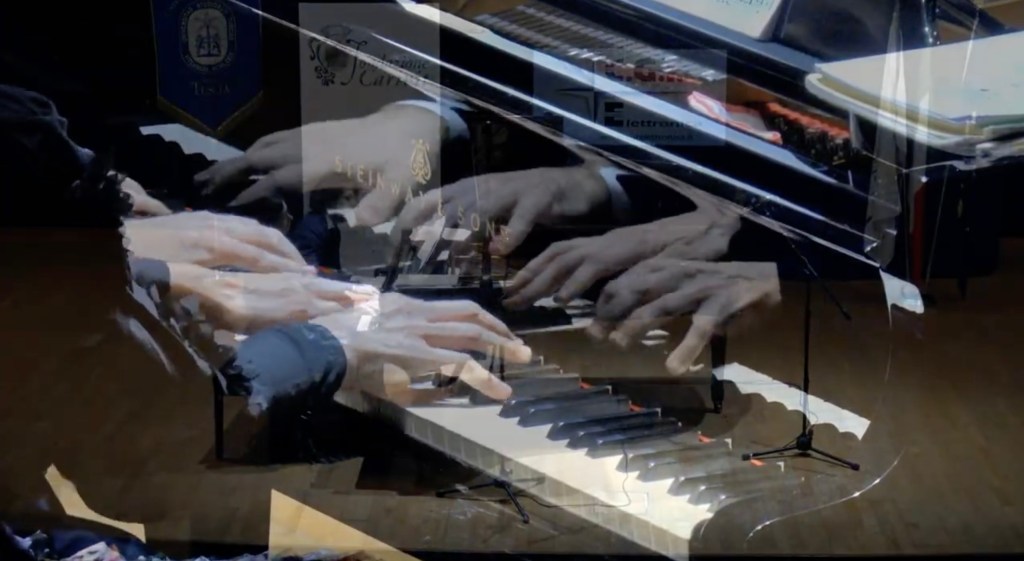
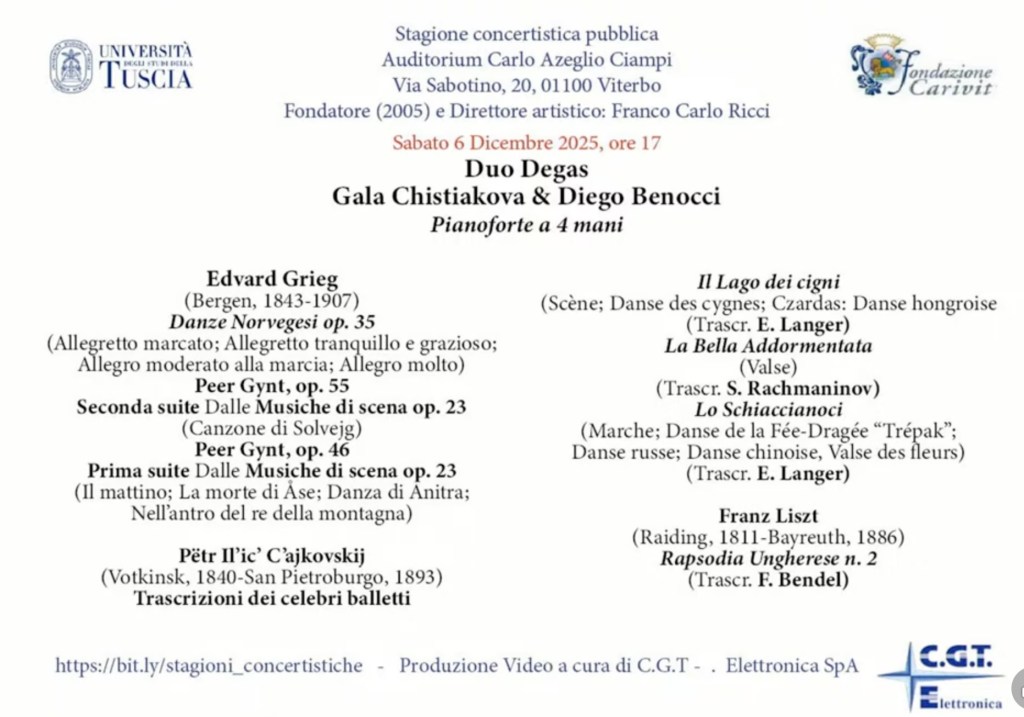
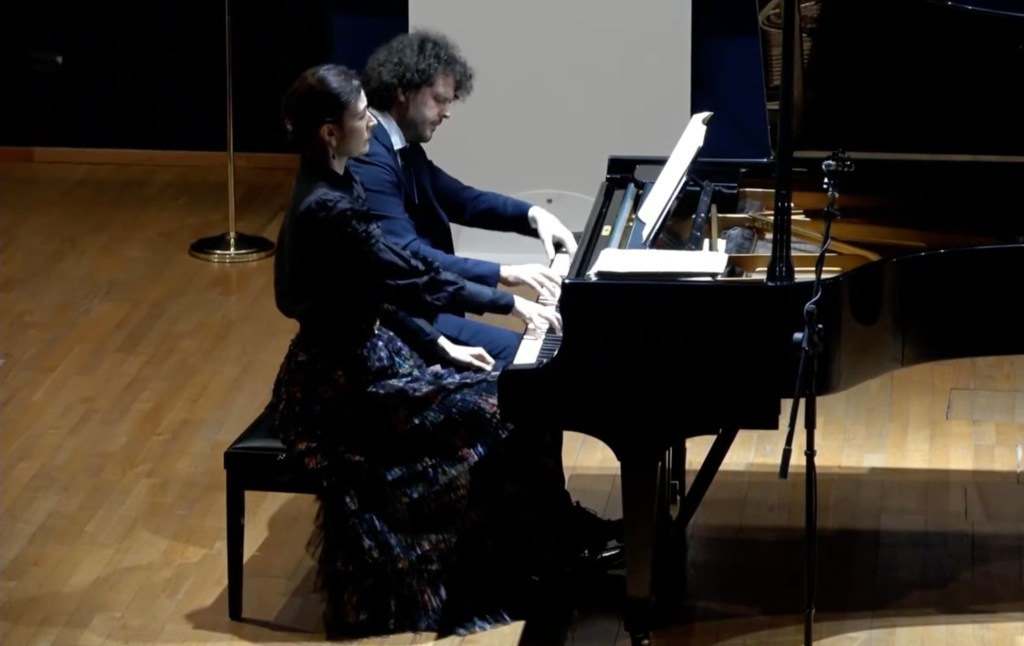
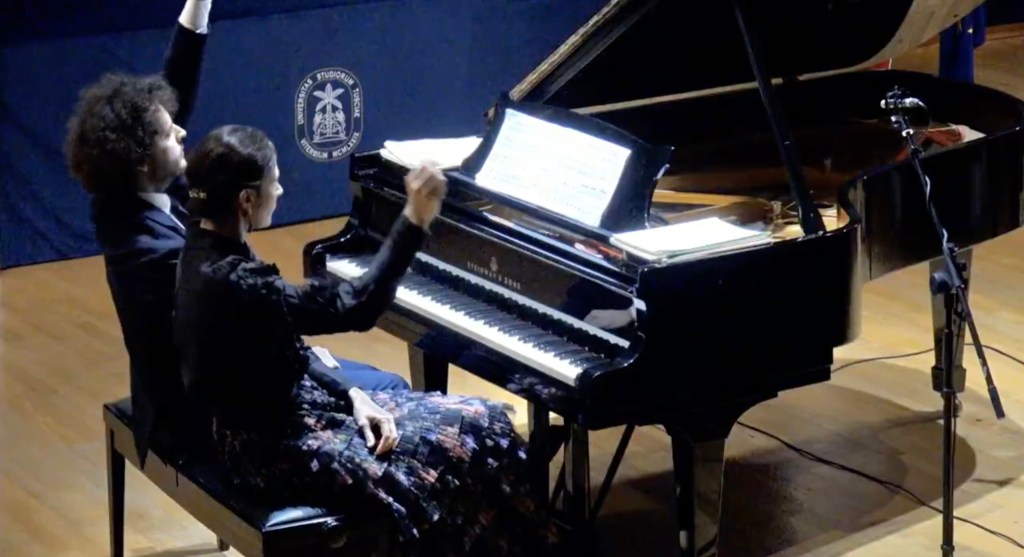
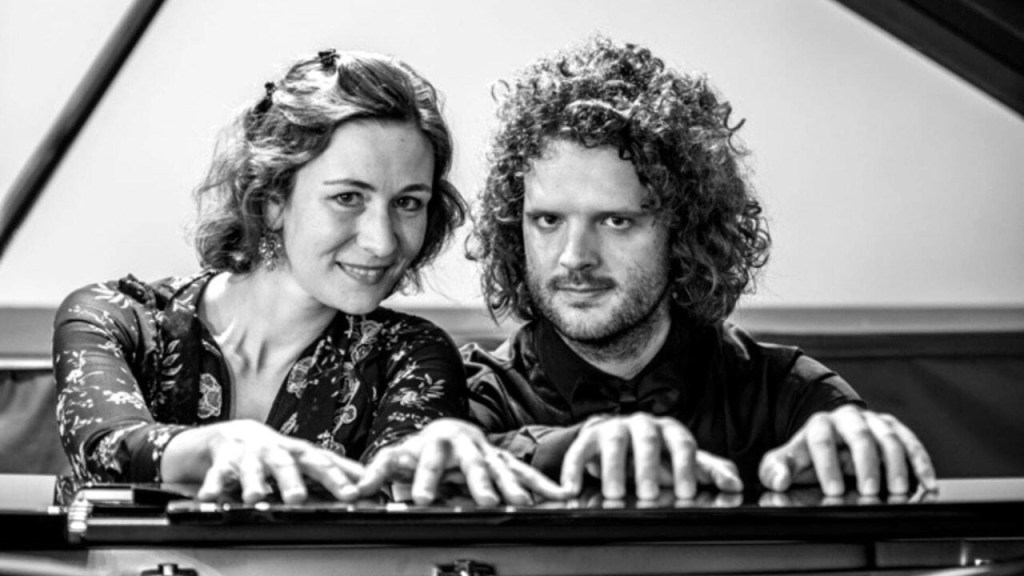
The third visit to Tuscia University of a duo that plays as one with a programme of favourite works by Grieg,Tchaikowsky and Liszt . A husband and wife team with a family of two children and a growing activity in their home town of Grosseto.
Below you can read the two reviews of their previous concerts with many of the works played today.
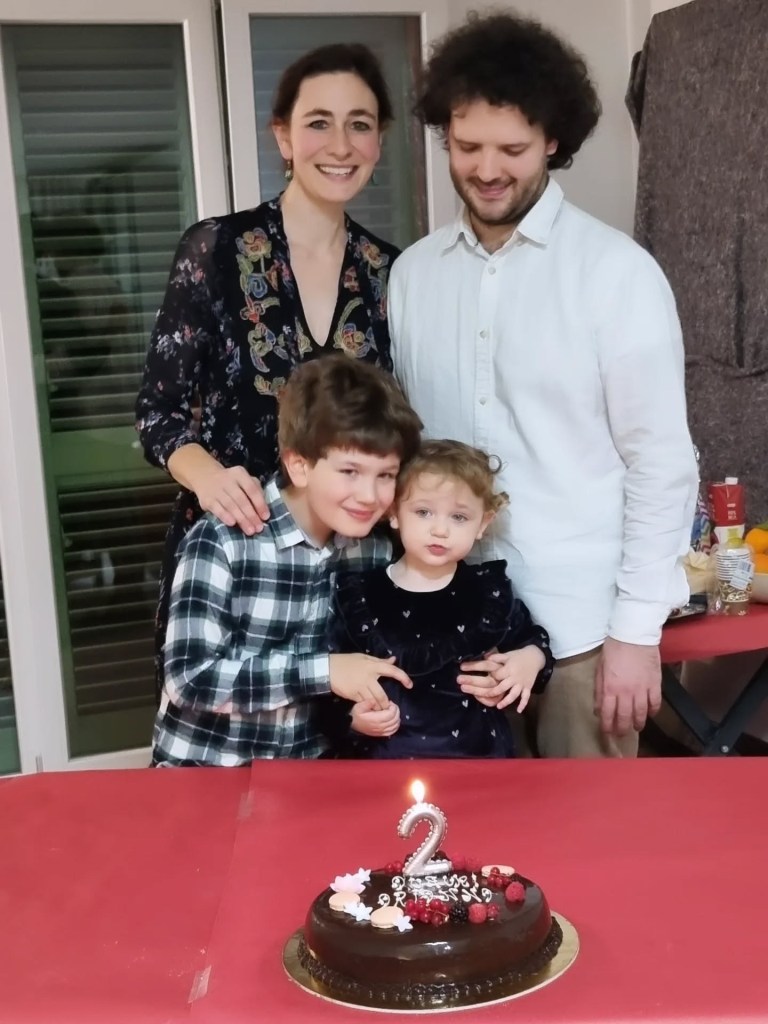
They not only perform but help to enrich the lives of young musicians with their encouragement and expert training which they had both acquired at the International Piano Academy of Imola, where they had met. Their first CD of Tchaikowsky has been acclaimed by the critics and they have just released their second with the complete piano duet works by Erik Satie.
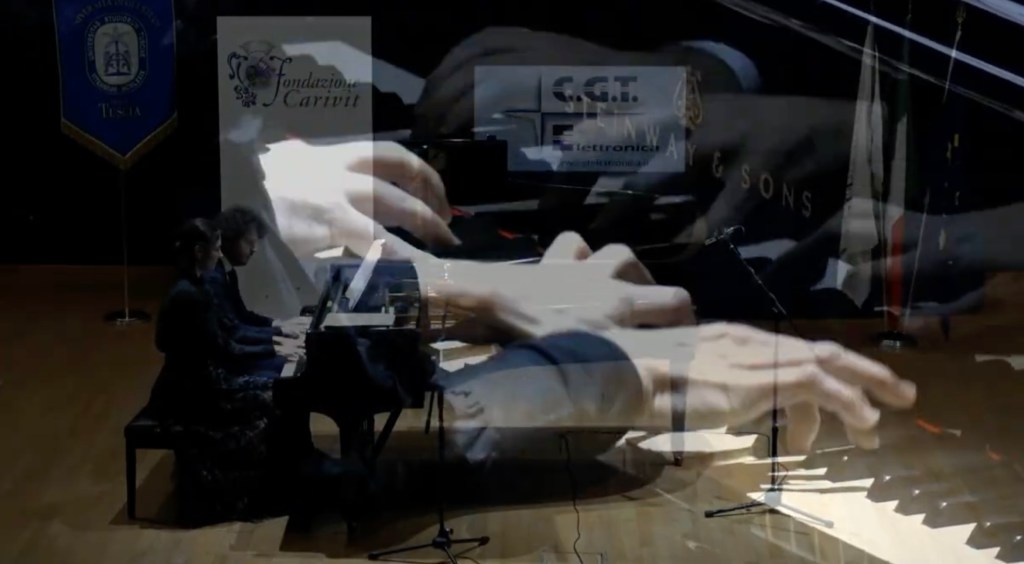
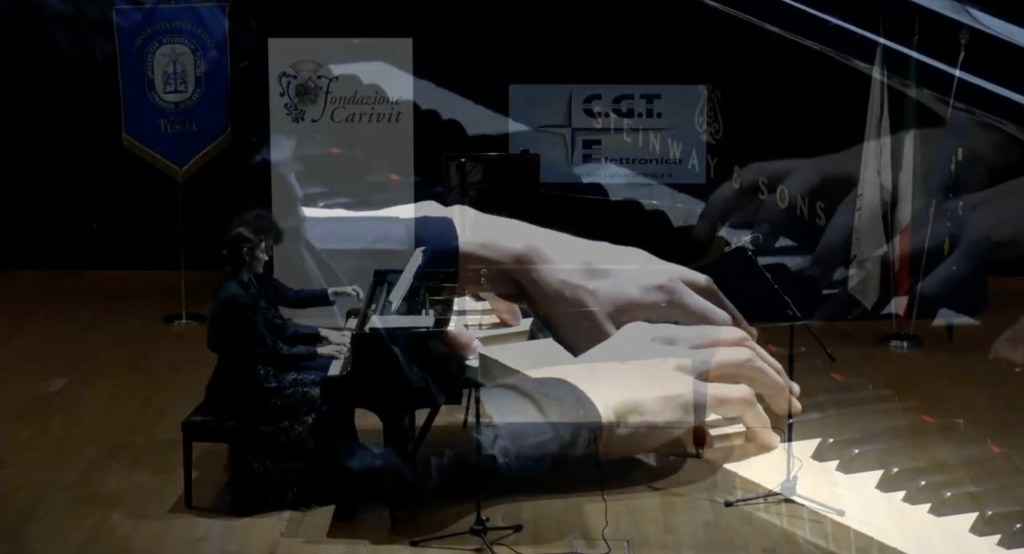
An opening with Grieg that from the very first notes of the Dances op 35 they showed their complete authority with an imposing opening of great rhythmic drive and urgency. Sumptuous rich sounds from the bass dissolving to a heartrending mellifluous outpouring of the innocent simplicity that was so much part of Grieg’s musical personality, bursting into the gleeful impish dance rhythms to end. A beguiling melody from Gala in the second dance was accompanied with insinuating rubato by Diego with an interruption of dynamic drive and exhilaration before the return of the opening haunting melody ever more teasingly beautiful. There was a capricious dance to the third played with a fleeting lightness and great sense of character as it built in intensity contrasting with the ravishing beauty of the central episode. A grandiose opening to the fourth with an almost too serious opening deep, in the bass, bursting into a rhythmic dance of question and answer between the players with a central episode of great intensity and beauty.
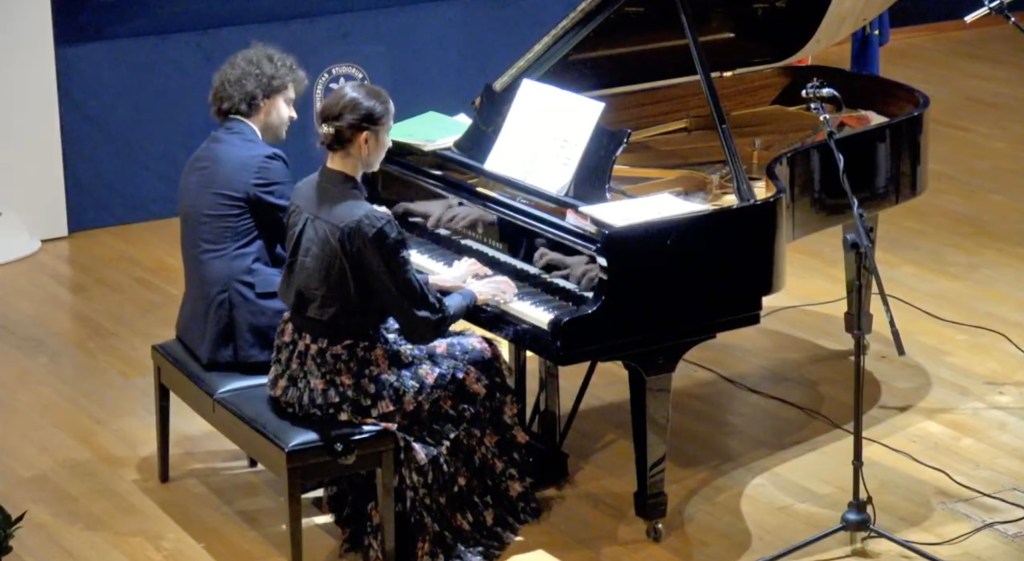
‘Solveigs’ song from Peer Gynt Suite op 55 opened with a solitary voice from Gala creating a magical atmosphere for one of Grieg’s most haunting melodies that opened out as it was ‘sung’ so sensitively by them both, with elaborations of subtle beauty.
They brought a radiance and flowing beauty to Grieg’s vision of daybreak at the opening of the suite op 46. It was followed by the poignant beauty and stillness of the slow moving chords perfectly coordinated for the ‘Death of Ase’. A brilliance to ‘Anitra’s dance’, with scintillating ornaments like tightly wound springs of jewel like subtlety. A menacing dance deep in the bass from Diego deep in ‘The Hall of the Mountain King’ gradually took flight with devilish trills from Gala as the air was ignited with ferocity and exhilaration.
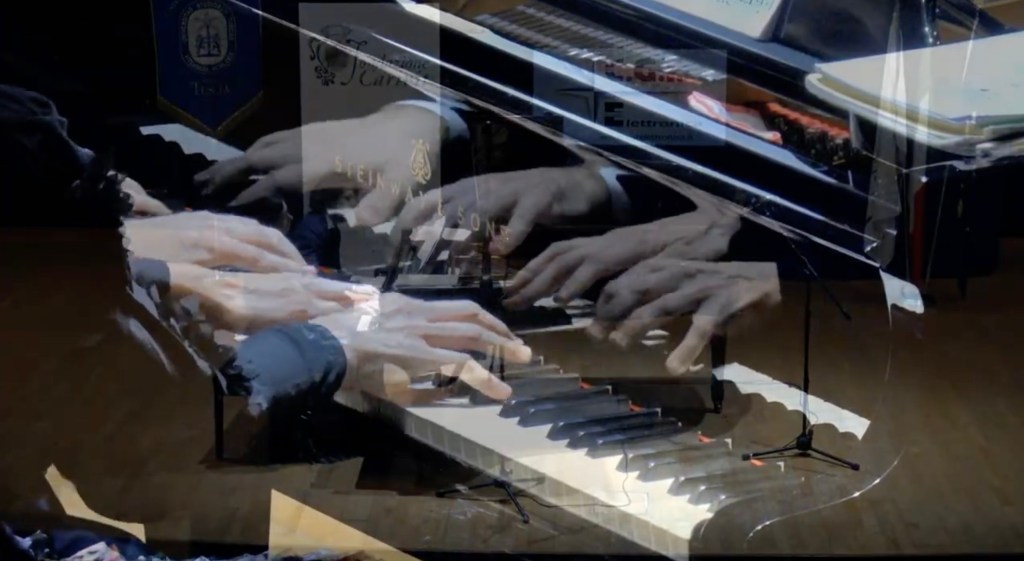
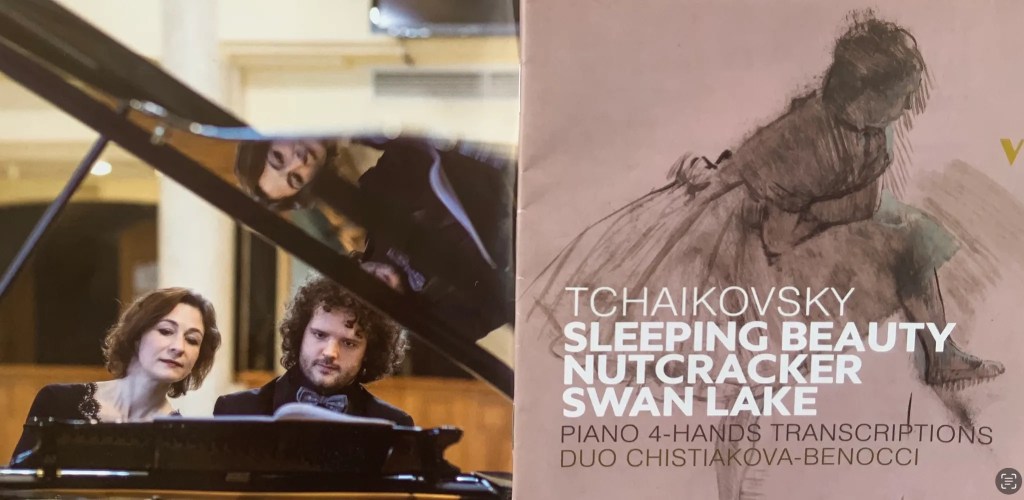
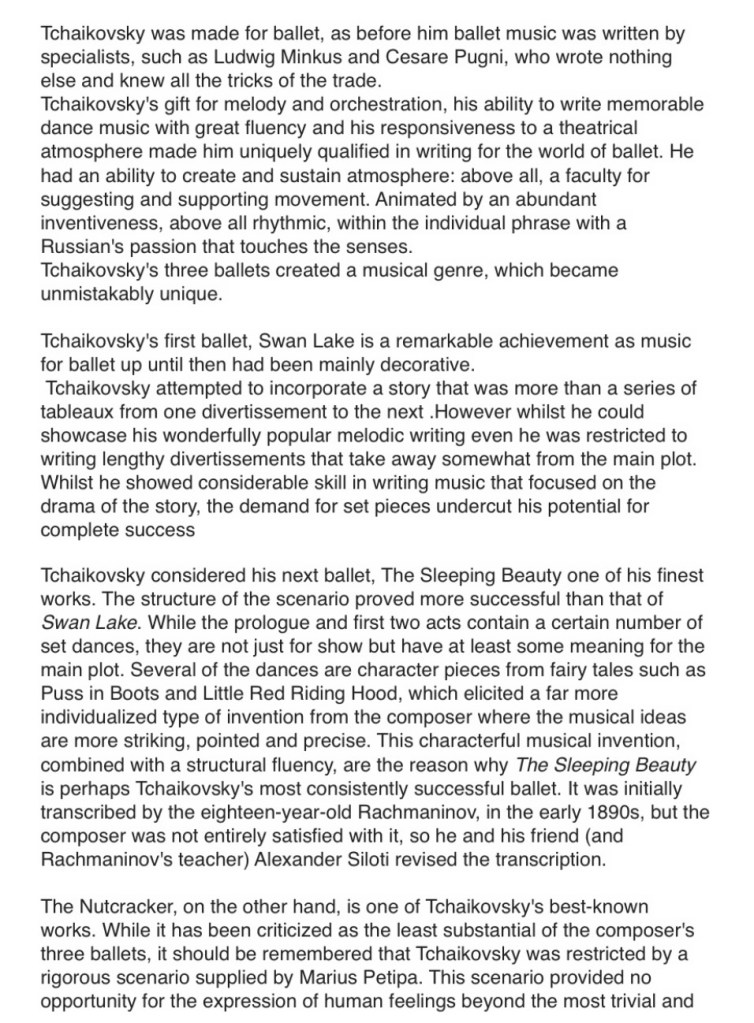
Their interpretations of Tchaikowsky’s sumptuous ballet music are full of the colours of theatre. Excitement, exhilaration and with a palette of sounds that could create the eternal magic of Tchaikowsky’s best loved scores from ‘Swan Lake’,’The Sleeping Beauty’ and ‘Nutcracker.’ And after such a feast of music they chose Liszt’s transcendental second rhapsody to close their programme. An extraordinary sense of style and colour allied to a scintillating fearless bravura brought the concert to a brilliant end.
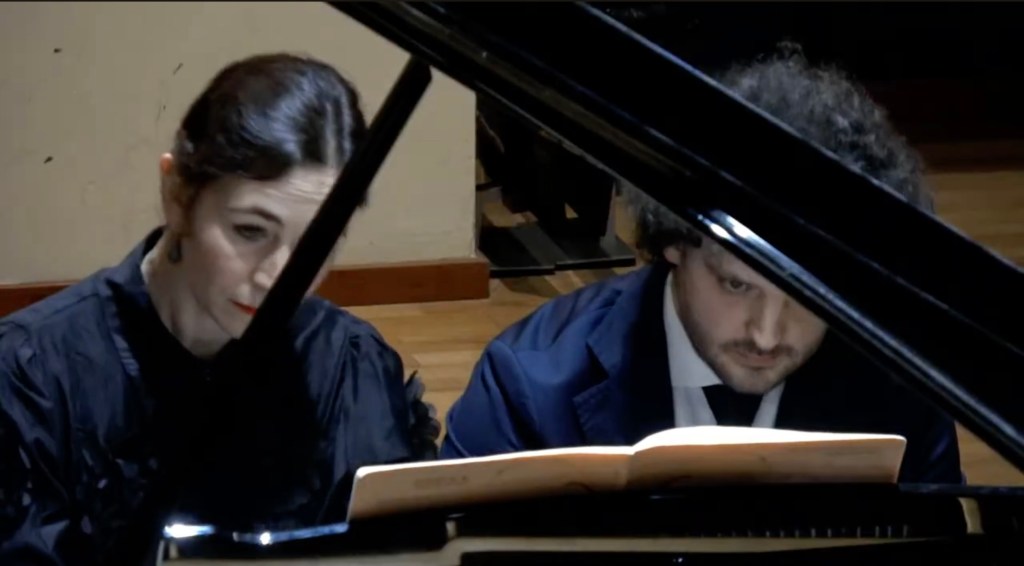
An encore of Brahms Hungarian Rhapsody n. 5 was played with gleeful mastery and was their way of thanking Viterbo for inviting them back for the third year in succession.
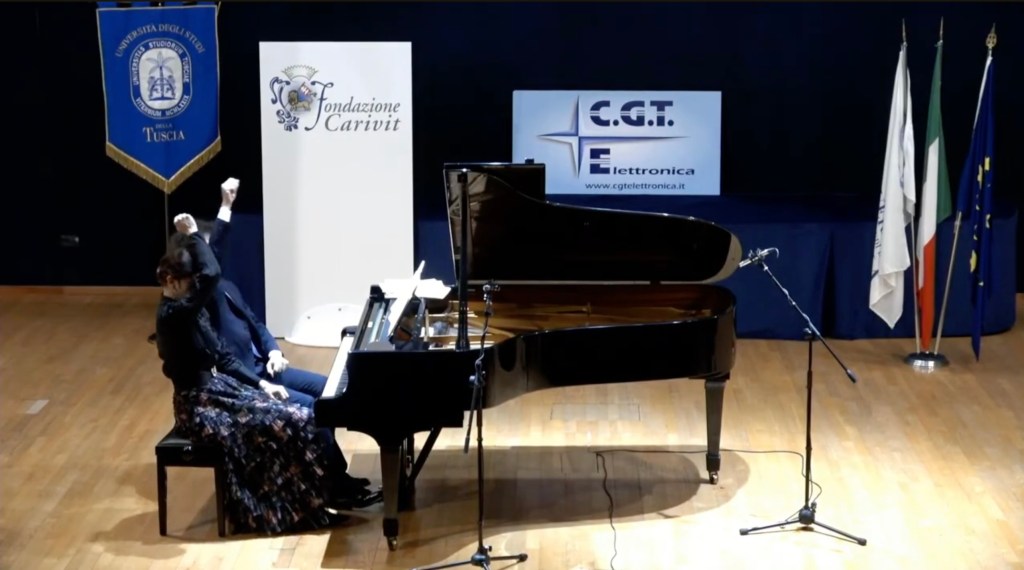
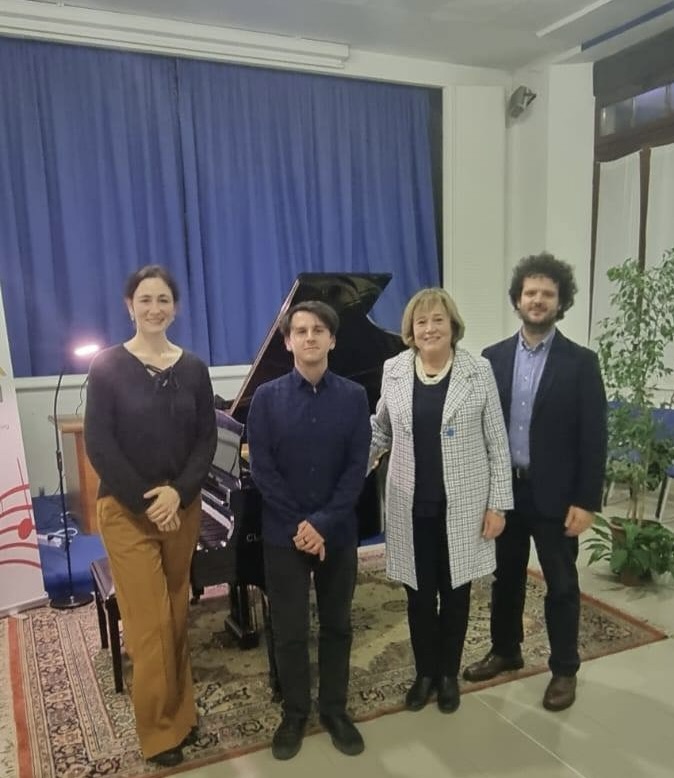
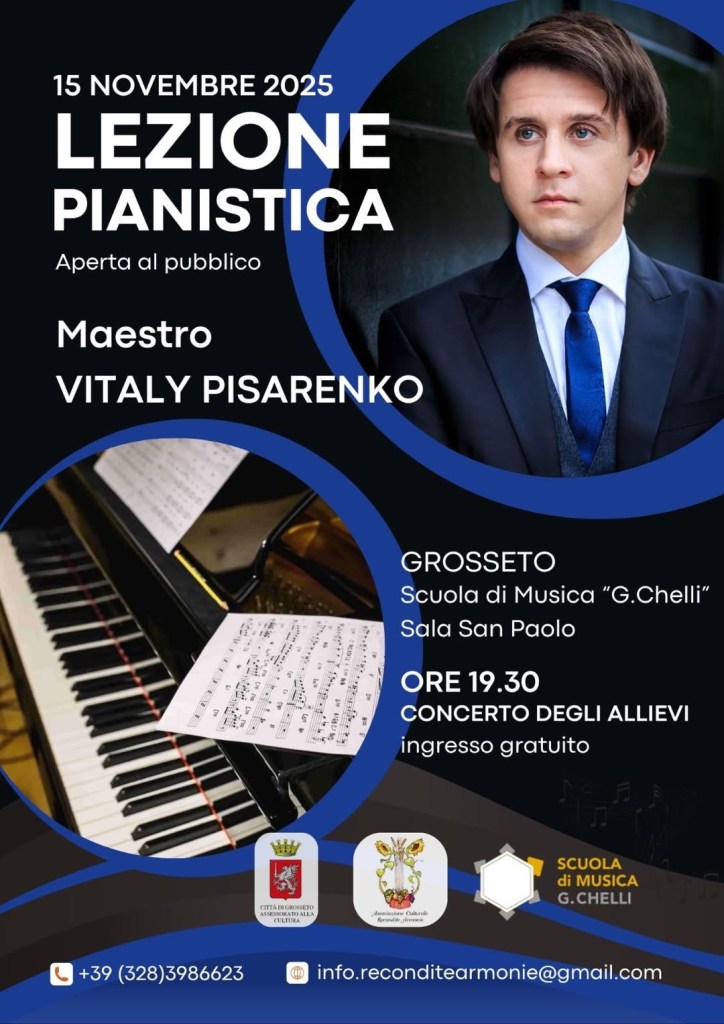
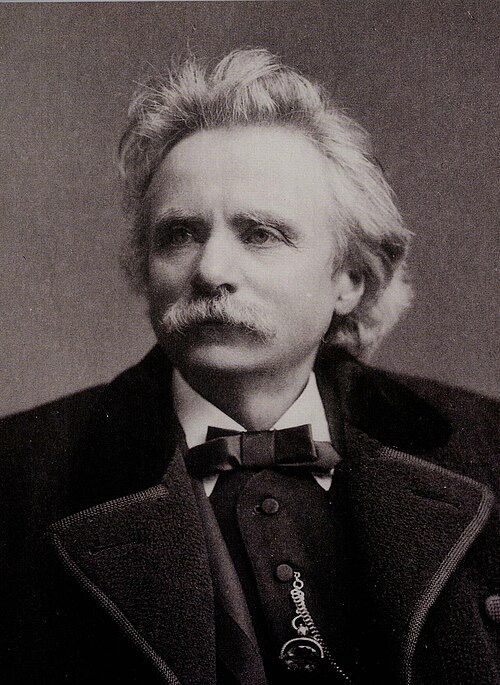
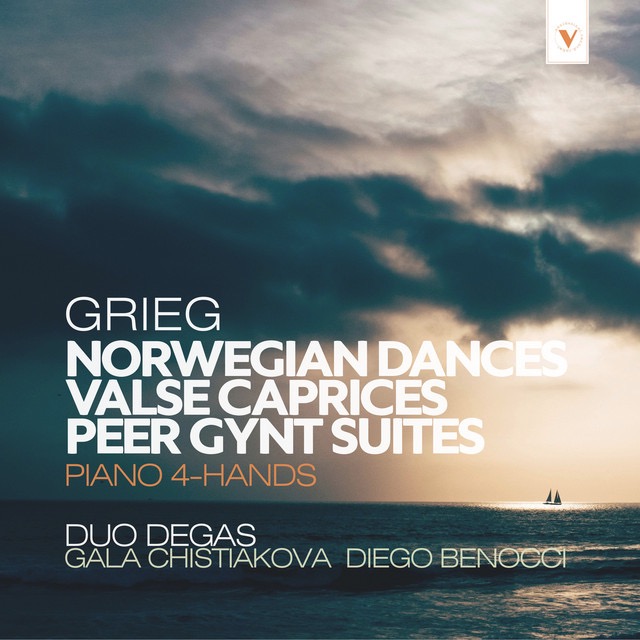
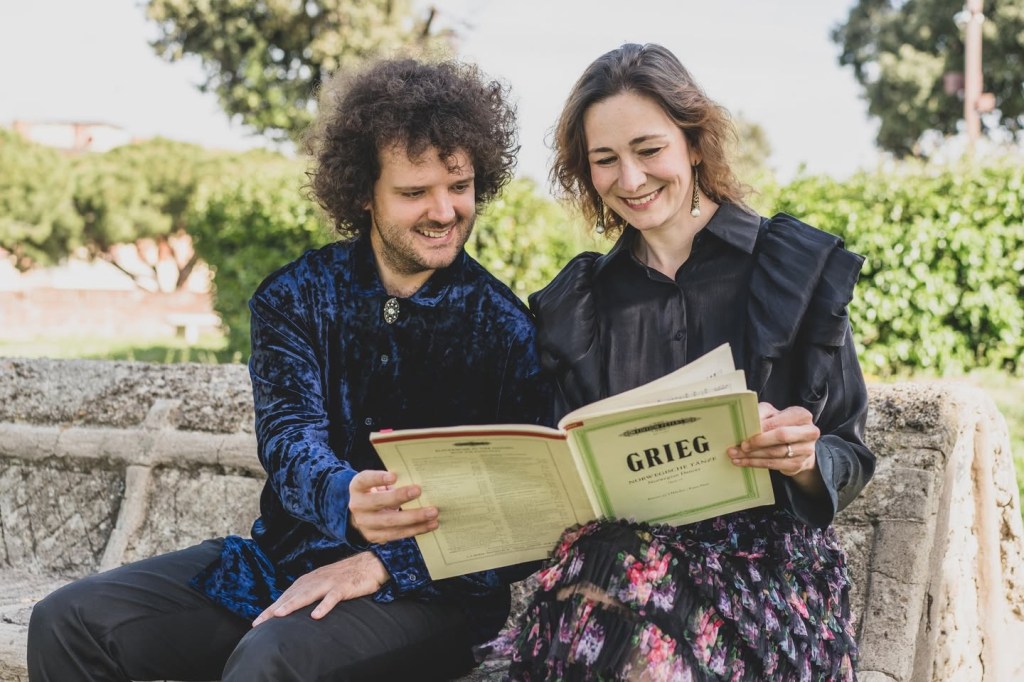
Grieg’s incidental music for Henrik Ibsen’s drama “Peer Gynt” contains some of his best-known compositions, such as “Morning mood” and “In the hall of the Mountain King”. Grieg later extracted the most beautiful pieces to form two orchestral suites and arranged himself these versions for piano solo and piano four-hands. Peer Gynt Suite no. 2 includes Solvejg’s Song op. 55,4. The decisive role that Norwegian folk music played for Edvard Grieg can be felt in almost all of his works. For his Norwegian Dances op 35, Grieg took old folk tunes from a collection published by the musician and researcher Ludvig Mathias Lindeman and arranged them for piano four hands in 1880. Peer Gynt Suite no. 1 op. 46 Morning Mood op. 46,1
The Death of Ase op. 46,2
Anitra’s Dance op. 46,3
In the Hall of the Mountain King op. 46.
In the centenary of the French composer’s passing, our collection stands as the most complete integral of Satie’s piano music ever produced.
“This musician (i.e. Satie), whose influence on the evolution of contemporary French music has been considerable, has not always been understood; yet at the same time he did everything possible to provoke precisely this reaction.”
— André Cœuroy, obituary for Satie (who left us 100 years ago)
#ErikSatie #Satie100 #PianoFourHands #DuoDegas #OnClassical #PianoMusic#ClassicalMusic #NewRecording #SatieCompleteEdition
— with Diego Benocci and Gala Chistiakova.
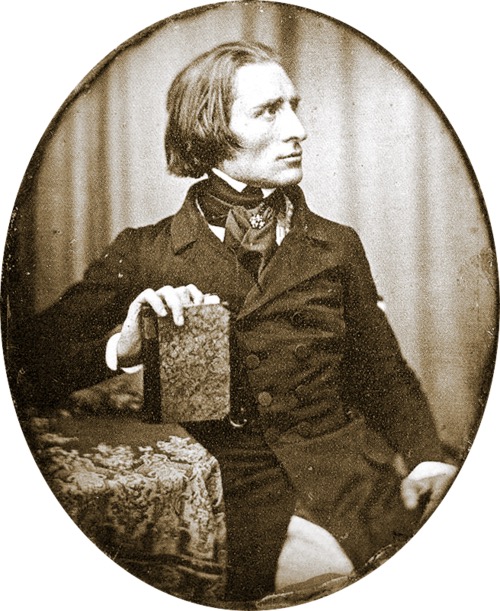
Franz Liszt 22 October 1811 Doborján Hungary 31 July 1886 (aged 74) Bayreuth , Germany
Franz Liszt was strongly influenced by the music heard in his youth, particularly Hungarian folk music, with its unique gypsy scale rhythmic spontaneity and direct, seductive expression. These elements would eventually play a significant role in Liszt’s compositions. Although this prolific composer’s works are highly varied in style, a relatively large part of his output is nationalistic in character, the Hungarian Rhapsodies being an ideal example.
Composed in 1847 and dedicated to Count Laszlo Teleki,the Hungarian Rhapsody No. 2 was first published as a piano solo in 1851 by Senff and Ricordi. Its immediate success and popularity on the concert stage lead to an orchestrated version, arranged (together with five other rhapsodies) in 1857–1860 by the composer in collaboration with Franz Doppler and published by Schuberth in 1874–1875. In addition to the orchestral version, the composer arranged a piano duet version in 1874, published by Schuberth the following year.the version that was played today was of Richard Kleinmichel/Franz Bendel.
 ChristopherAxworthy-MusicCommentary