
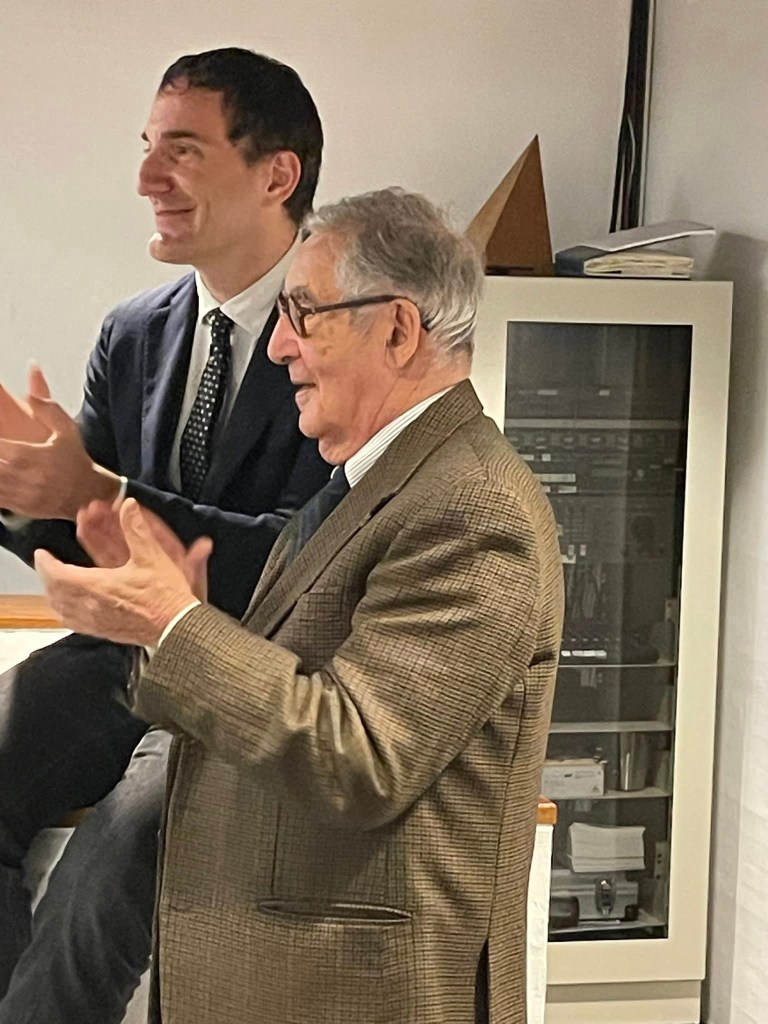
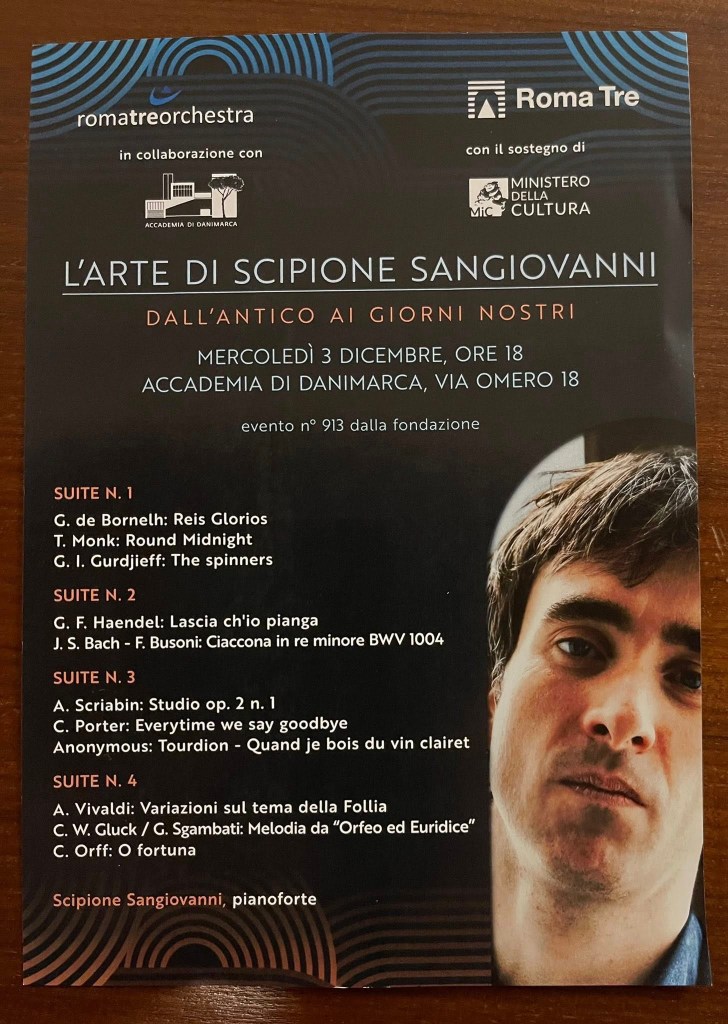
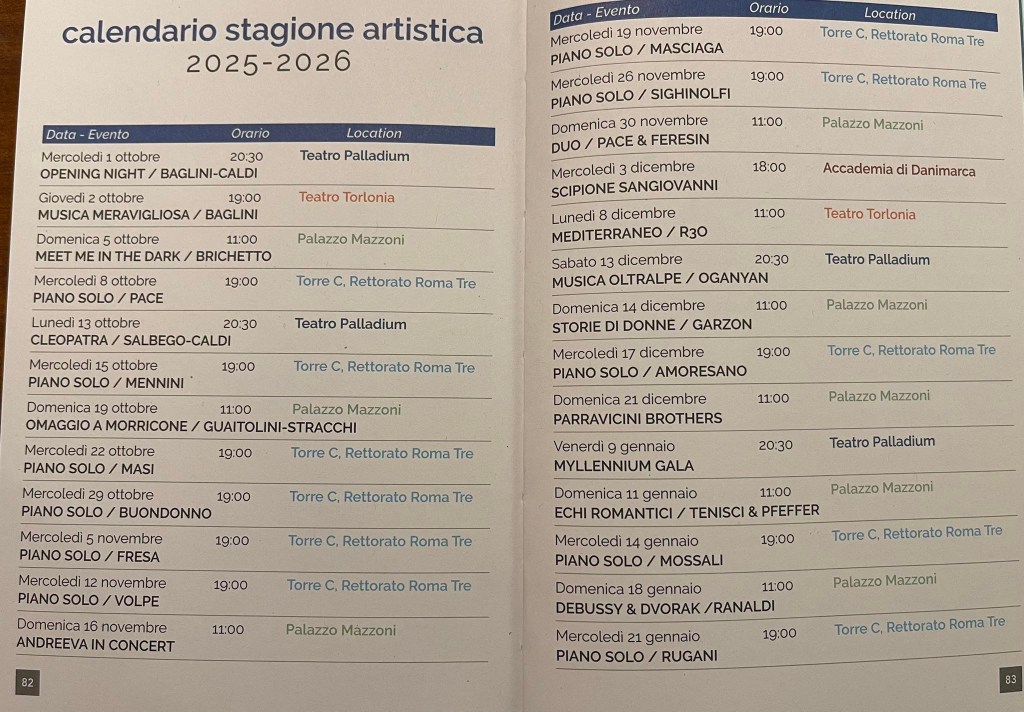
Lecce the Florence of the South, a land kissed by the Gods and which has produced some of the finest musicians of our time. One of these is without doubt Scipione Sangiovanni who I had heard many years ago when he won the Gold medal at the Monza International Competition. He performed the Liszt second concerto that had not particularly impressed me as a jury member but then as an encore he played a simple Scarlatti sonata which was of such jewel like perfection that I was completely won over.
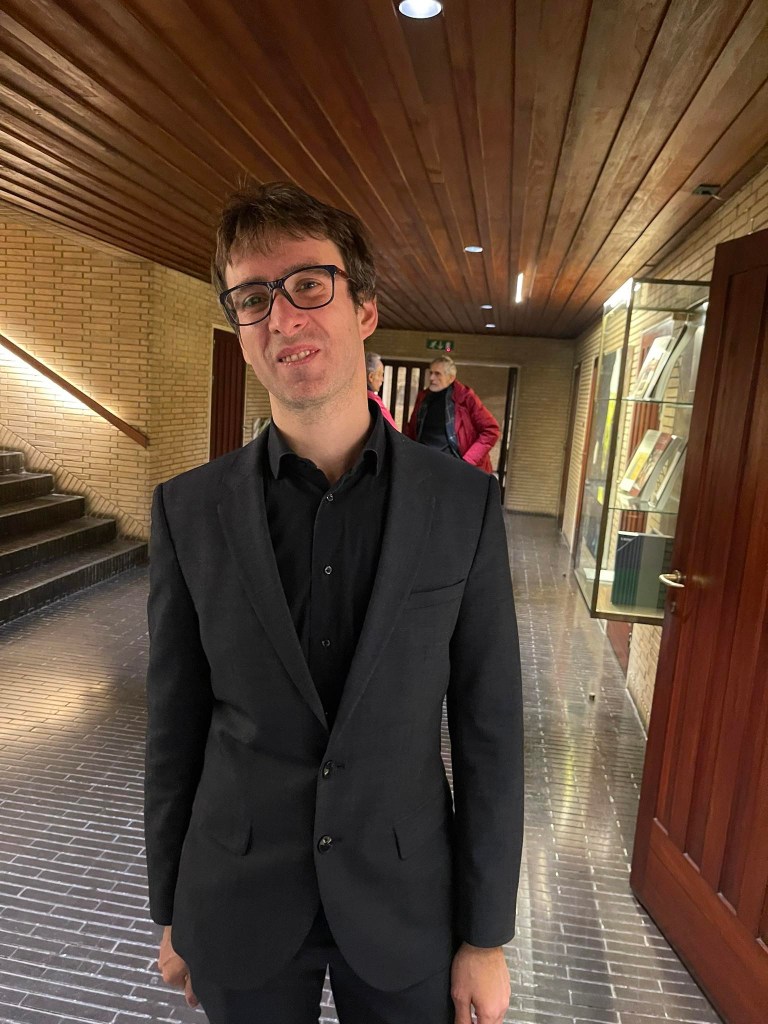
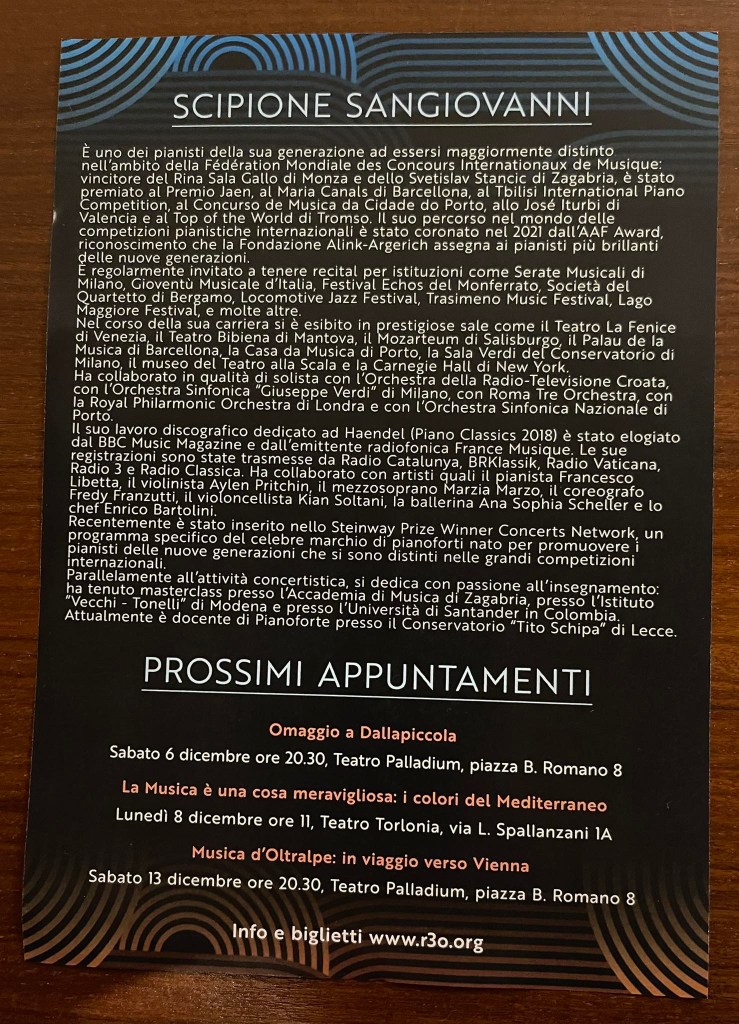
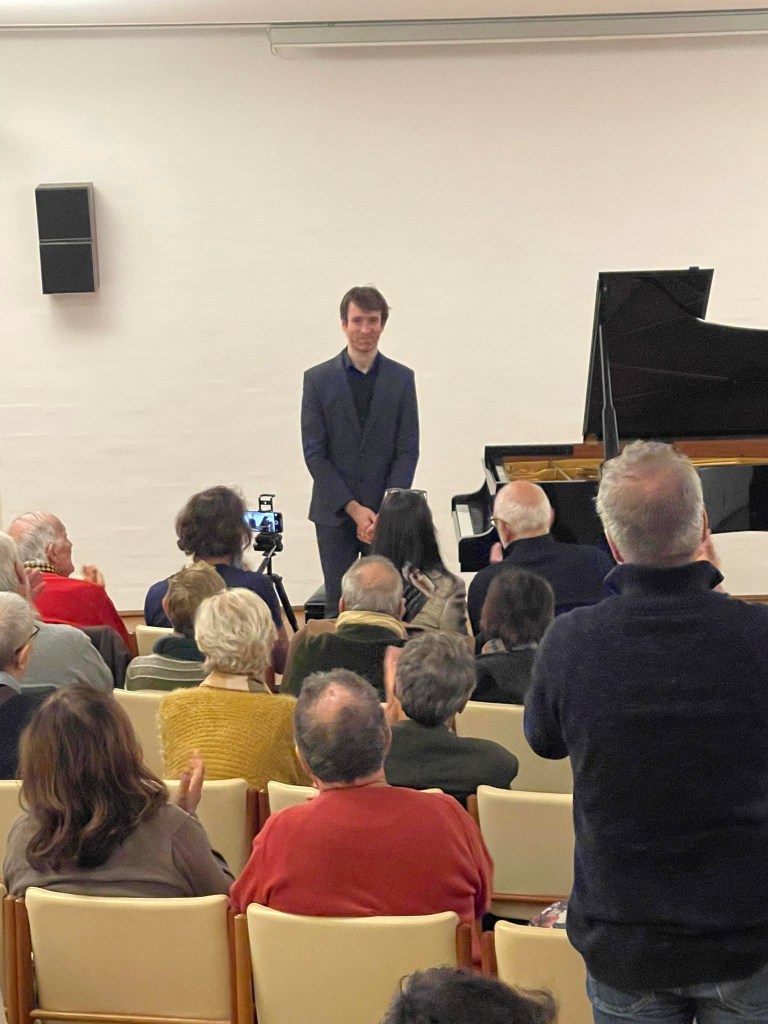
I have now been able to hear him after quite a few years thanks to Roma 3 offering a platform to young musicians at the start of their career.

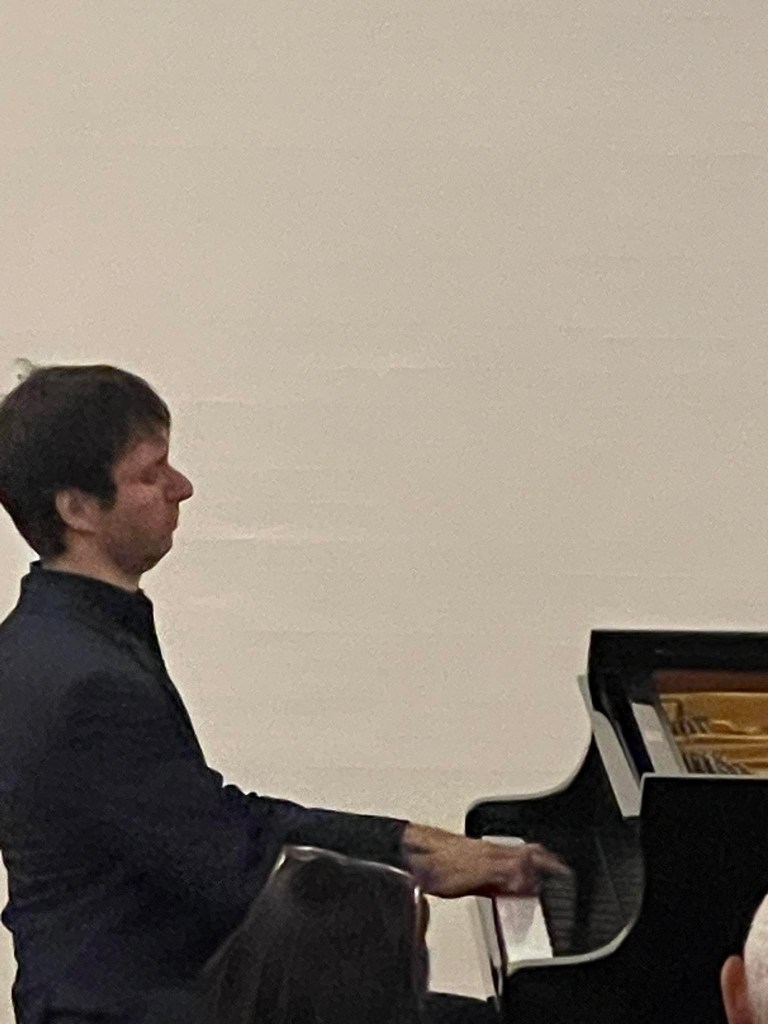
It is through these performances that I have come to understand and be overwhelmed by the mastery and intelligent scholarship of such an eclectic musician . Scipione does not fit into any category as his playing is unique in that he only plays as Rubinstein says :’the music he loves and that speaks to him’.
https://youtu.be/gex0sOR7XZ0?si=rSS9wtFMjWBoaw9r

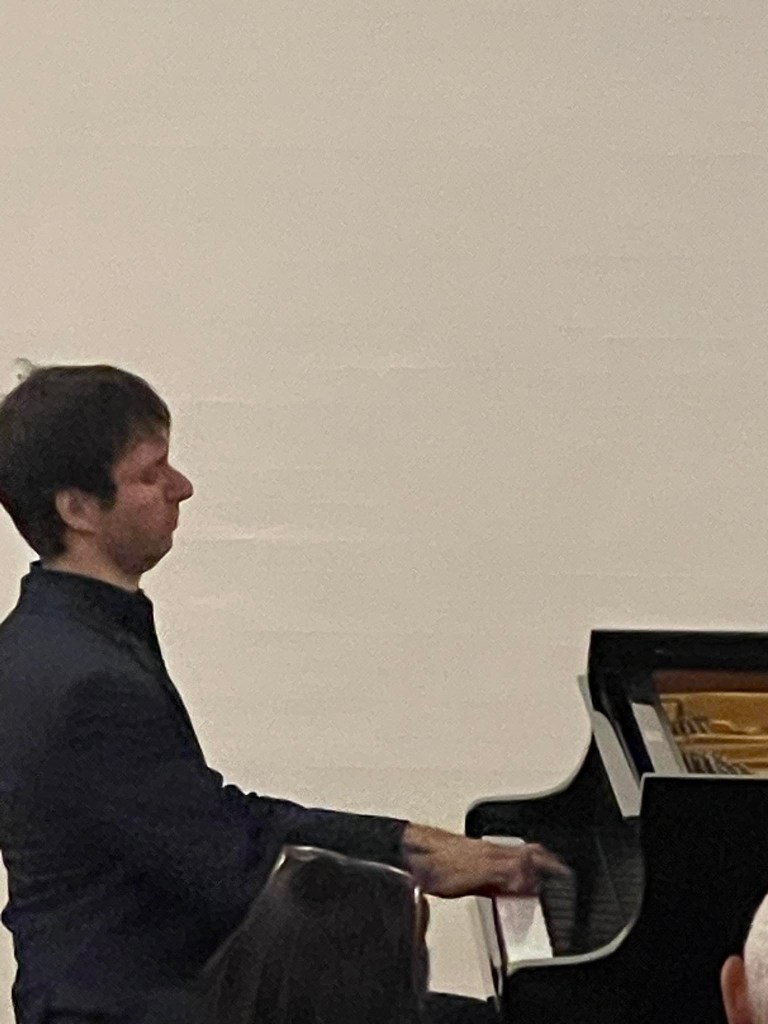
A kapellmeister who can improvise and embellish without ever loosing sight of the overall shape and real meaning behind the notes that he plays with breathtaking mastery.
A voyage of discovery that knows no boundaries as de Bornelh lives happily with Thelonious Monk, Cole Porter with Scriabin , Haendel with Bach Busoni (Sangiovanni) or Vivaldi with Carl Orff.
A strange haunting opening with bass notes adding even more resonance to this plaintiff chant of de Bornnelh, that was to end in a whisper as Thelonious Monk was allowed to enter at ‘Round Midnight’ .
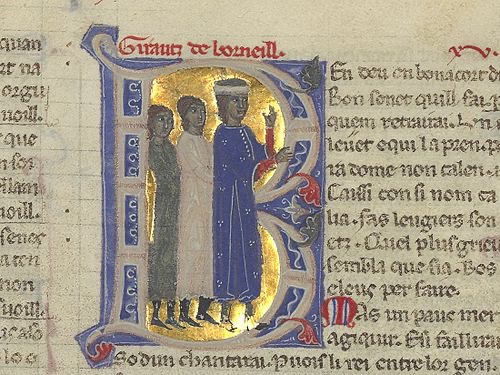
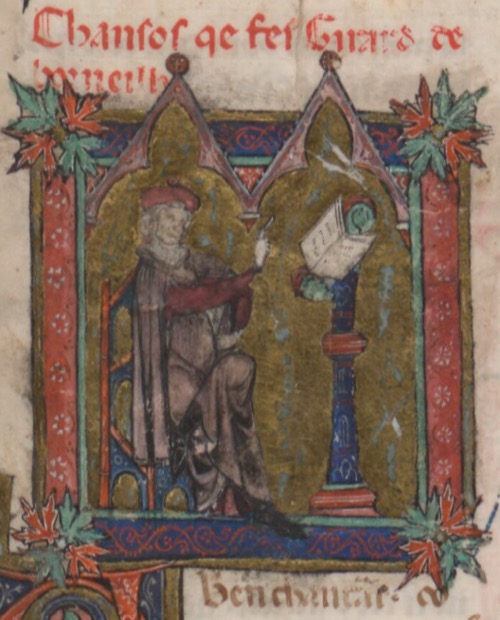
Giraut de Bornelh ( 1138 – 1215), was a troubadour connected to the castle of the viscount of Limoges . He is credited with the formalisation, if not the invention, of the “light” style, or tribal leu and was one of the most popular troubadours of his day. Giraut’s reputation endured throughout the 13th century, when he was known as the Master of the Troubadours. Dante placed him in Paradise as a poeta rectitudinis,Petrach called him “master of the troubadours”. Though rebarbative to modern taste when they adopt the high moral tone that recommended them to Dante, Giraut’s songs are not devoid of lyricism or humour. Giraut de Bornelh was formally inventive and composed in a variety of genres: cansos,sirventes,pastorelas and tensos. About ninety of his poems and four of his melodies survive; these were held in high esteem in the 13th century.
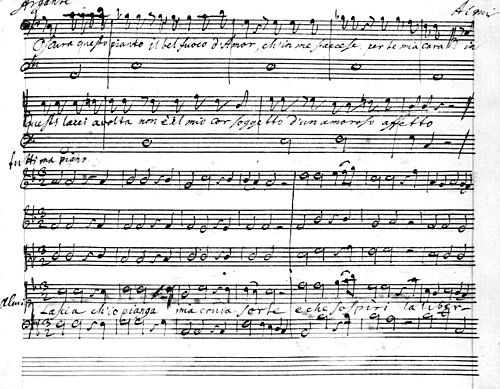
Now after Thelonious monk it was the turn of George Ivanovich Gurdjieff (1866–1877 – 29 October 1949) who was philospher,mystic,spiritual leader ,composer who was to show us the ‘Fourth way’.In essence, Gurdjieff’s “Spinners” are more than just dance; they are a living, physical embodiment of profound spiritual and psychological teachings, intended to facilitate profound inner transformation. Born in the Russian Empire in the early 1920s, he settled in France, where he lived and taught for the rest of his life. Gurdjieff taught that people are not conscious of themselves and thus live their lives in a state of hypnotic “waking sleep”, but that it is possible to awaken to a higher state of consciousness and serve our purpose as human beings. The spinners was a hypnotic perpetuum mobile and brought to an end the Suite n. 1 of four that Scipione had designed in an eclectic voyage of discovery . A free improvisation followed on Haendel’s well known aria ‘Lascia ch’io pianga’ that the composer used many times. In 1711, he used the music again for his London opera ‘Rinaldo’, and it’s act 2 aria is “Lascia ch’io pianga” (“Let me weep”), a heartfelt plea for her liberty addressed by the character Almirena to her abductor Argante. Rinaldo was a triumph, and it is with this work that the aria is chiefly associated.A series of improvised variations on Haendel’s ‘Lascia ch’io pianga’ exactly as the composer himself might have done on the harpsichord.

The Haendel lead into the monumental Bach Chaconne for solo violin but recreated on the piano by Busoni. Scipione brought a chiselled beauty, pin pointing inner harmonies on a true voyage of rediscovery. There was a certain improvised freedom as pauses were prolonged and with his extraordinary sense of balance, colours suddenly appeared nowhere more than in the long ‘violin solo’ at the centre of the work. It lead to the enormous exultation and mighty climax where Scipione could extract sumptuous rich sounds never of hardness but of vibrant illuminated radiance. Suddenly out of this mist the final appearance of the opening theme played quietly just as in the Goldberg variations, where Bach gives us a final vision at the end of a long tormented life. A remarkable revisitation and rethinking of an established classic that was just one of the revelations of this unique thinking musician. After many other fascinating things in Scriabin ,Cole Porter or Tourdion there followed capricious ever more brilliant variations of Vivaldi on La Follia with a continuous outpouring of ever more rhythmically driven improvised elaborations. After the exquisite radiant beauty of Gluck we were thrown into the sinister world of Carl Orff’s ‘O Fortuna’. It was originally a Medieval Latin Goliardic poem which is part of the collection known as the Carmina Burana, written in the early 13th century, is a complaint about Fortuna, the inexorable fate that rules both gods and mortals in Roman mythology .
In 1935–36, “O Fortuna” was set to music by Carlo Orff as a part of “Fortuna Imperatrix Mundi”, the opening and closing movement of his cantata Carmina Burana . It was first staged by the Frankfurt Opera on June 8, 1937.


Roberto Pujia,President
An encore that could combine the cadenza of Prokofiev second concerto with many things in a truly breathtaking exhibition of improvised musicianship and poetic fantasy.
Scriabin’s unashamedly romantic study in C sharp minor was played with a ravishing palette of sounds and daring that I have only heard from Horowitz. Sgambati’s wondrous arrangement of Gluck was played with distilled beauty and the seemingly improvised freedom of sound that made it so much part of Nelson Freire’s unforgettable artistry.
https://christopheraxworthymusiccommentary.com/2021/11/02/nelson-freire-rip/
Adding such personal freedom to Busoni’s recreation of Bach’s mighty Chaconne could have destroyed the very tight construction if it had not been done with masterly musical intent ‘not to destroy but to praise’.

I had to leave in order to get to Schiff ‘s concert just around the corner but I left with a heavy but uplifted heart as Scipione intoned Busoni’s most magical transcription of the Bach Chorale:’Ich ruf zu dir, Herr’.


A mastery that fears no boundaries and reminds me of the equally unique artistry of Friedrich Gulda where improvisation, jazz or classical with a mastery of colour and playing of spontaneous refined good taste all go under the title of MUSIC making of vibrant spontaneity.



 ChristopherAxworthy-MusicCommentary