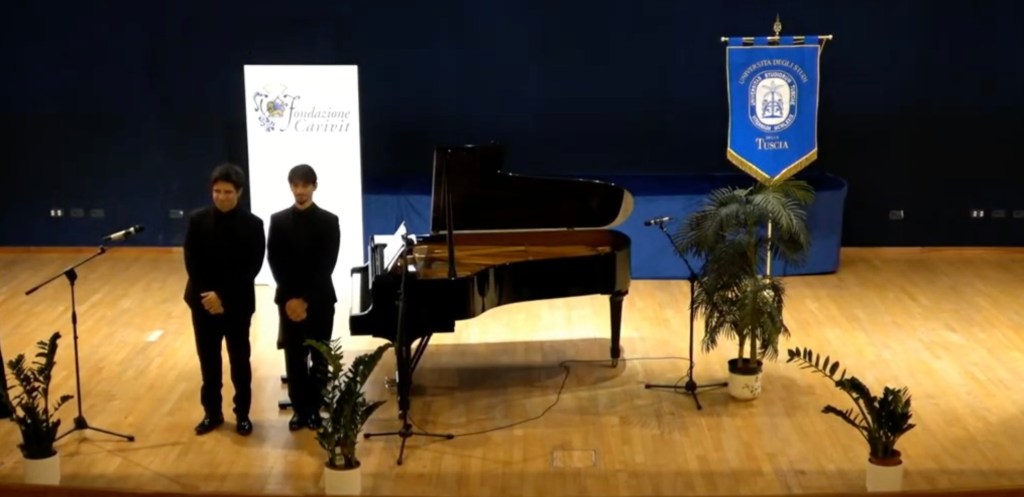
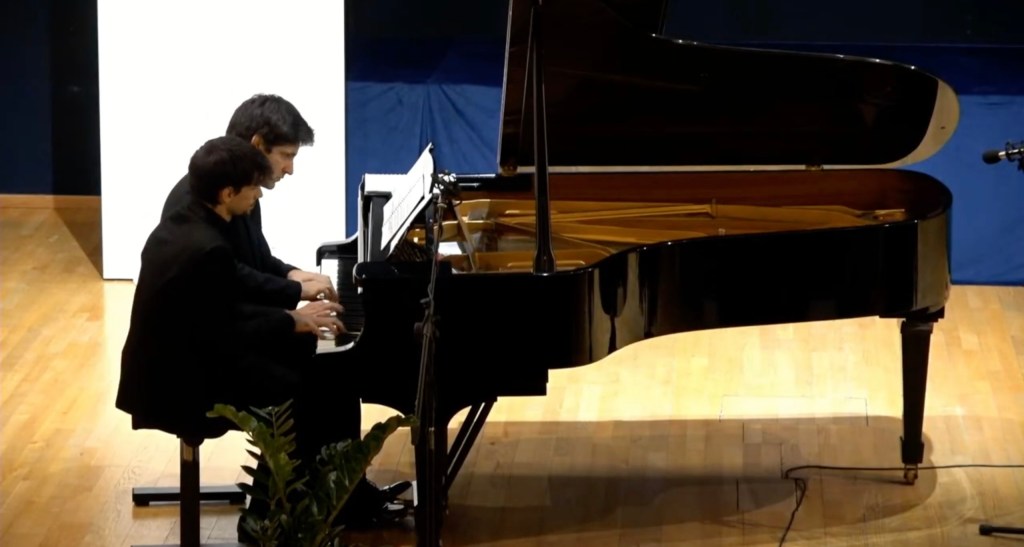
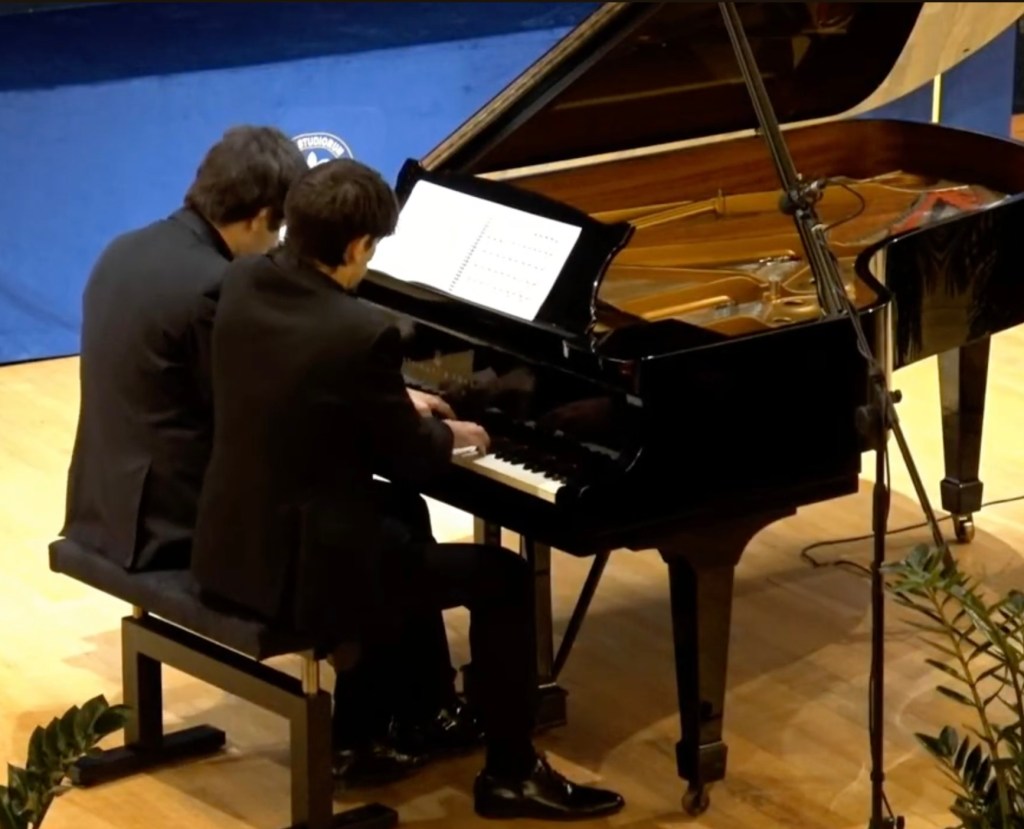
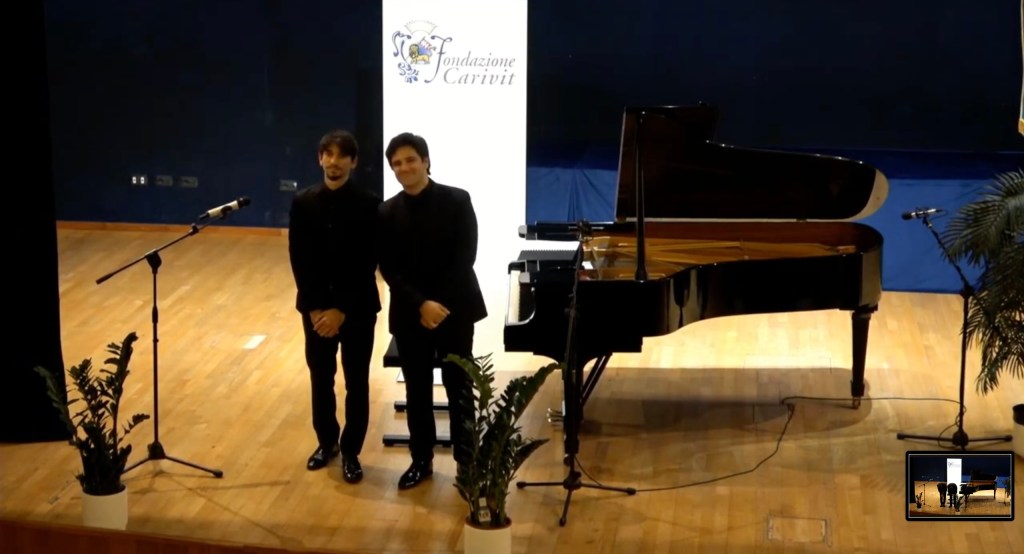
I have heard this piano duo now over the past five years and from their first streamed performance during the pandemic in 2020 they have grown in stature and experience and play truly as one. Two players that listen to each other and above all find the musical line and the architectural shape of what they are creating together. I have heard them play Stravinsky on many occasions and their dynamic drive and characterisation of The Rite of Spring and Petrushka is remarkable not only for their logistical mastery together but above all because these works were conceived not as virtuoso show pieces but as dance. Petrushka we are used to hearing the solo piano suite played with transcendental virtuosity ( the piano transcription was written for Artur Rubinstein with that very idea in mind!). Menahem Pressler on hearing a top prize winning pianist play it at his London debut, astonishing as his octaves were , exclaimed ‘ But I could never dance to that !’
Bravi and Scapicchi made everything they played speak as the extraordinarily complex score was transformed into a tone poem with a kaleidoscope of colour and chameleonic character.
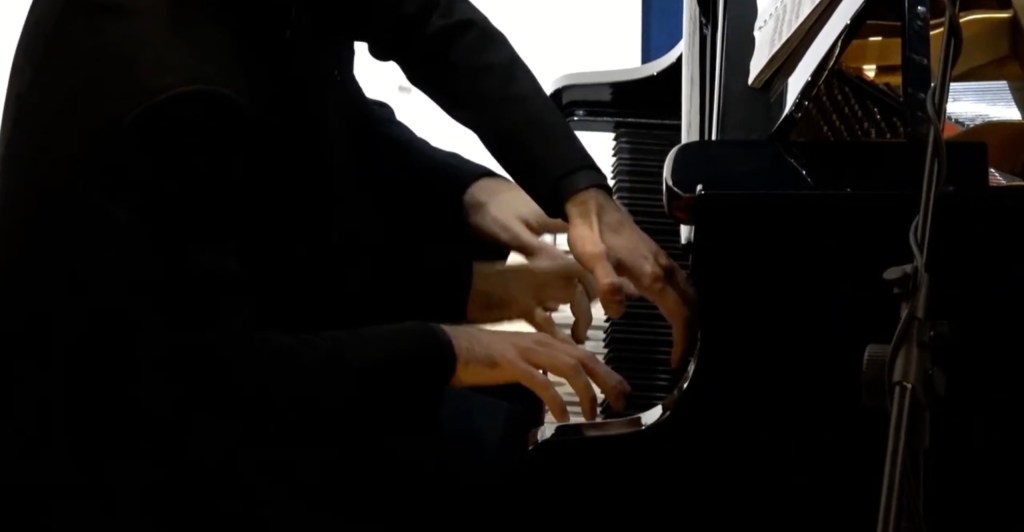
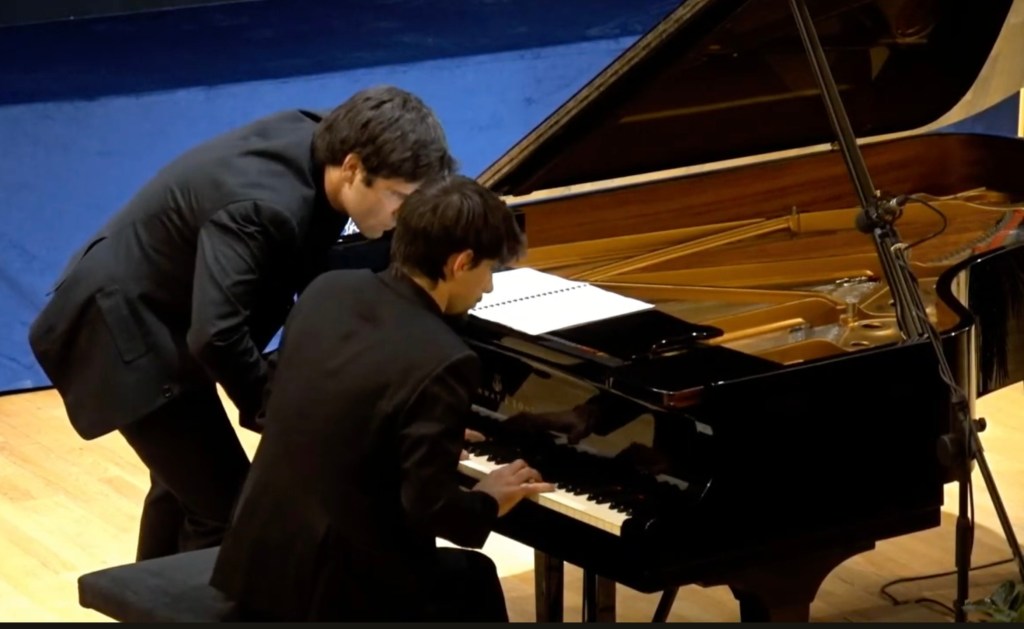
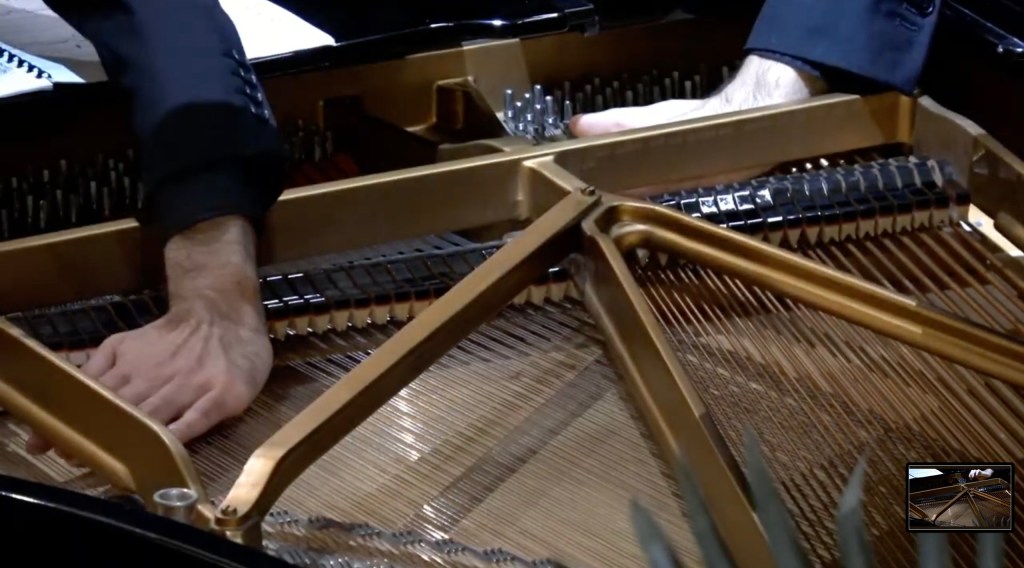
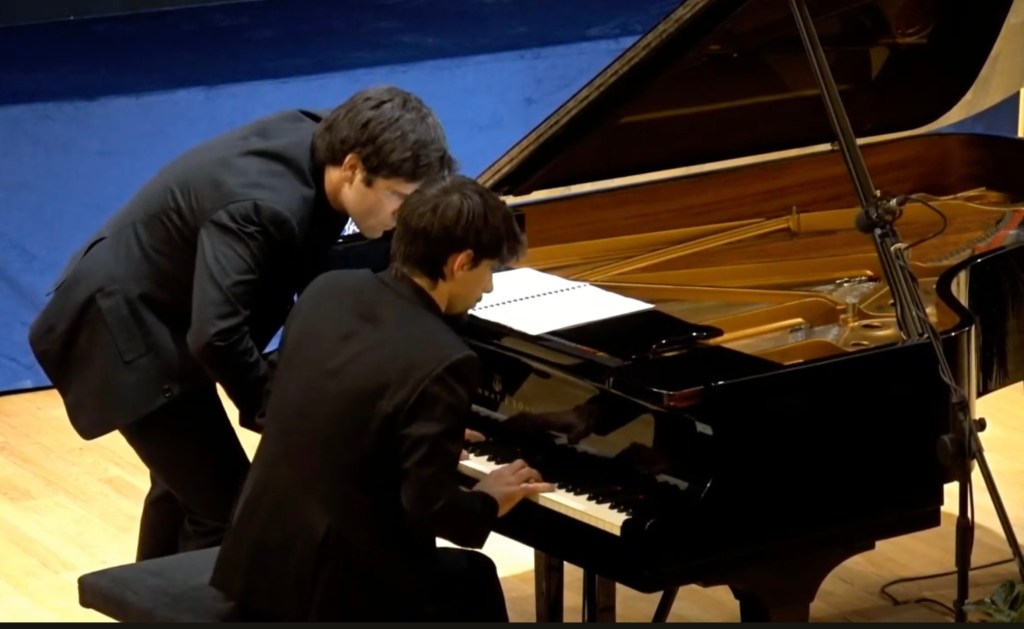
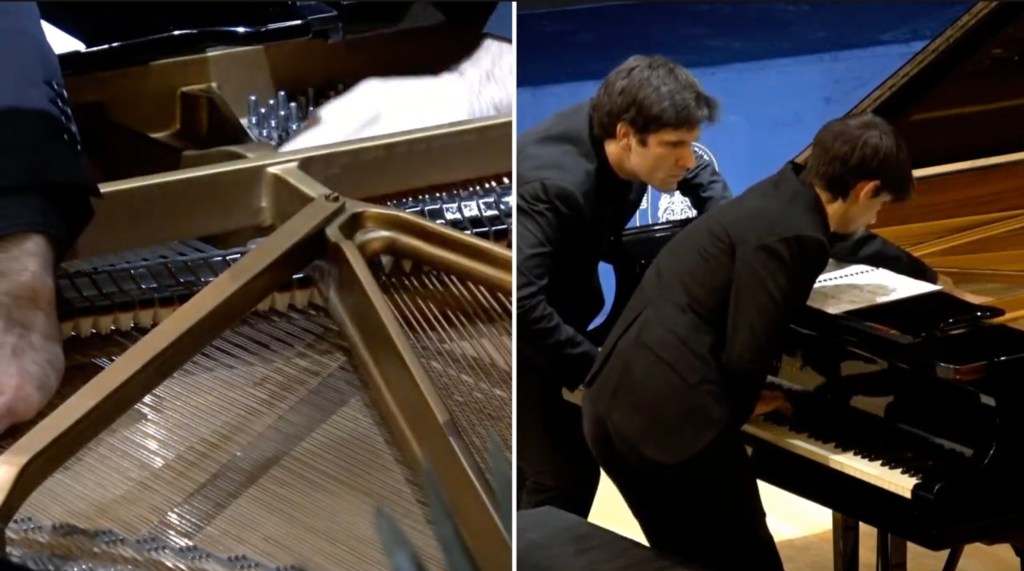
The encore I had not heard them play before, written by Fazil Say for another piano duo The Jussen brothers. Similar to his piano work ‘Black Earth’, that is quite often played these days, it relies on atmospheric effects with strange etherial sounds created by dampening the strings with the hand inside the piano.They are works that are usually played without the score simply because logistics cannot cope with so much movement on and around the keys and turning pages as well might be too much to ask. Such was the mastery of our duo today that even the page turn was incorporated into a performance that took the audience by surprise! Demanding another encore our formidable duo offered ‘La Canzonetta’,a simple one page jewel to commemorate the 100 anniversary of Luciano Berio
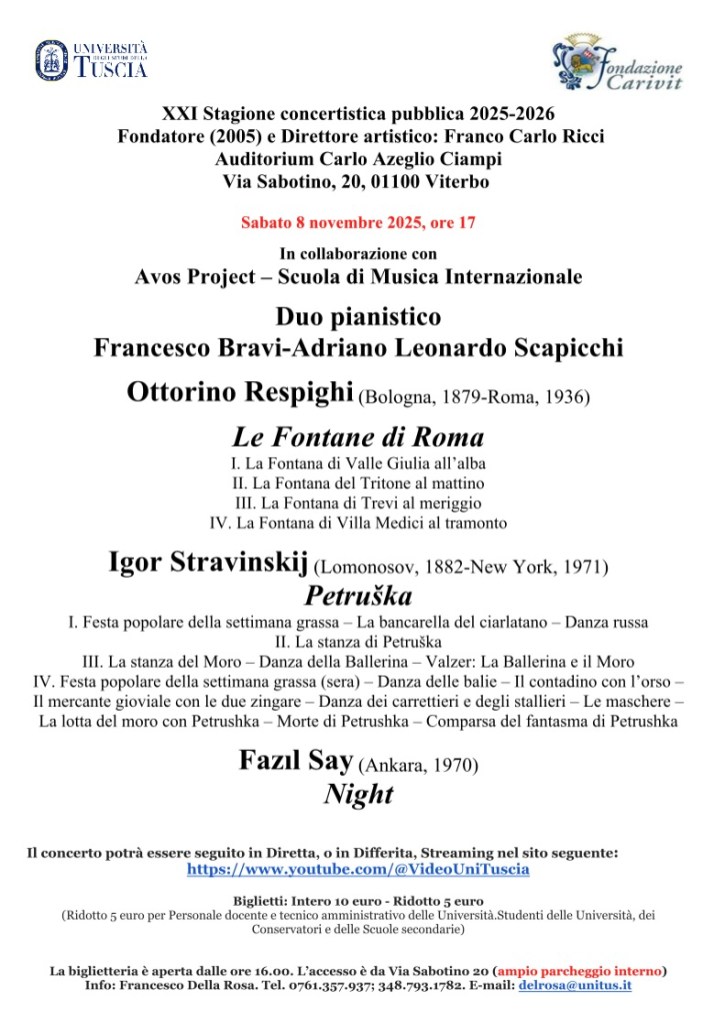
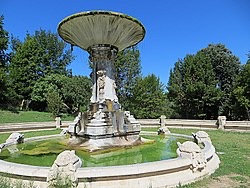
Respighi too is a new work to their repertoire and each of the four episodes of the Fountains of Rome were played with an outpouring of radiance and languid flowing beauty. Streams of notes were played with a dynamic drive and kaleidoscope of colour and no matter how many notes the sense of line and architectural shape was always beautifully outlined with clarity and sumptuous beauty. What a beautifully suggestive ending they brought to Villa Medici at sunset with its whispered vibrancy that I know so well.
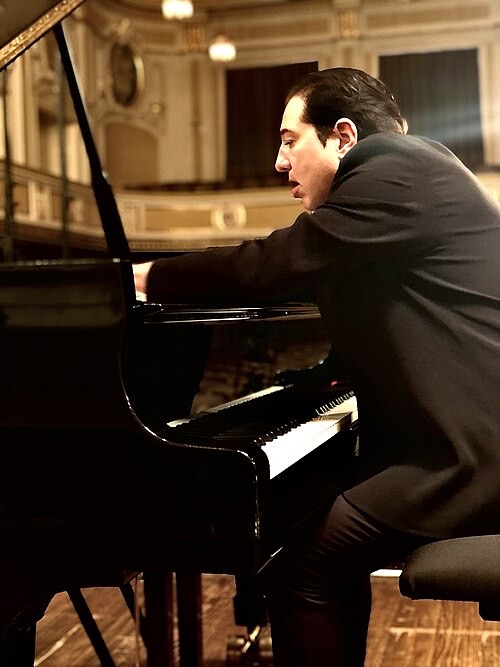
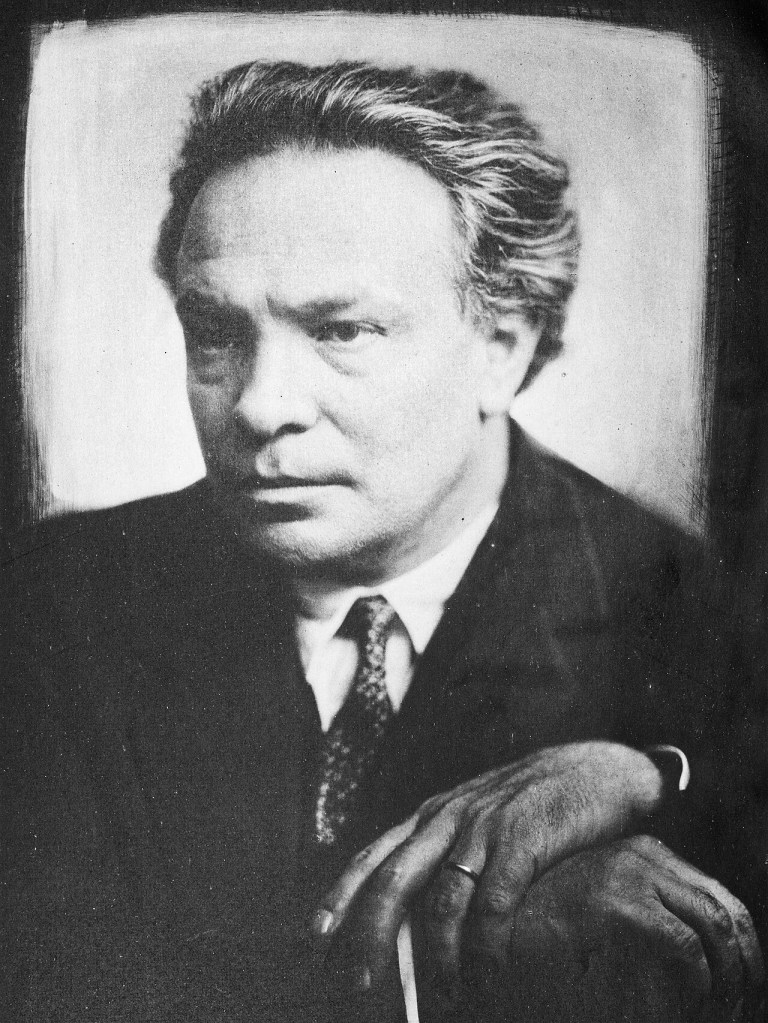
Fazil Say requires many special effects by dampening the strings to give a dull rhythmic sound like that of the Oud The Oud is similar to other types of lute, and to Western lutes which developed out of the Medieval Islamic oud.Similar instruments have been used in the Middle East , some predating Islam, such as the barbatfrom Persia. Different versions of the oud are used in Arabia ,Turkey, and other Middle Eastern and Balkan regions The oud, as a fundamental difference with the western lute, has no frets and a smaller neck. It is the direct successor of the Persian barber lute. Screenshot Fazil Say born 14 January 1970 (age 55) Ankara, Turkey Composer and pianist who attracted international attention with the piano piece Black Earth, Op. 8 (1997), in which he employs techniques made popular by John Cage’s works for prepared piano.In April 2012, Say came under investigation by the Istanbul Prosecutor’s Office over statements made on Twitter, after declaring himself an atheist and retweeting a famous poem of 11th century muslim polymath Omar Khayyam which criticises twisted conception of paradise of some fundamentalist schools and movements .Say then announced that he was considering leaving Turkey to live in Japan because of the rise of conservative Islam and growing intolerance in his home country. On 1 June 2012, an Istanbul court indicted Say with the crime of “publicly insulting religious values that are adopted by a part of the nation”, a crime that carries a penalty of up to 18 months in prison. Say told the Istanbul court he did not seek to insult anybody, but was merely expressing his uneasiness. On appeal, Turkey’s Supreme Court of Appeals reversed the conviction on 26 October 2015, ruling that Say’s Twitter posts fell within the bounds of freedom of thought and freedom of expression. Ottorino Respighi 9 July 1879. Bologna, Italy. 18 April 1936 (aged 56). Rome, Italy
The symphonic poems ‘Fountains of Rome’ (performed for the first time 100 years ago) by the Italian composer Ottorino Respighi, whisk us to the Eternal City for a unique journey between the flowing water of its famous fountains and some of its most legendary sites. Thanks to the Suites n°1 and n°2 of’ Ancient Airs and Dances for Lute’ we can travel back in time to discover once again Italian and French music of the 16th and 17th centuries reinterpreted by Respighi.
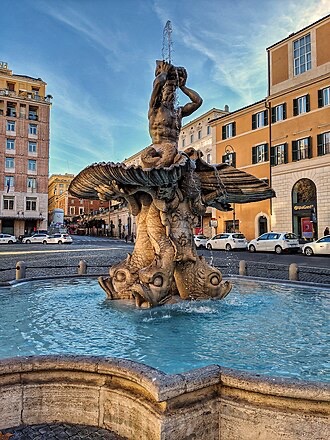
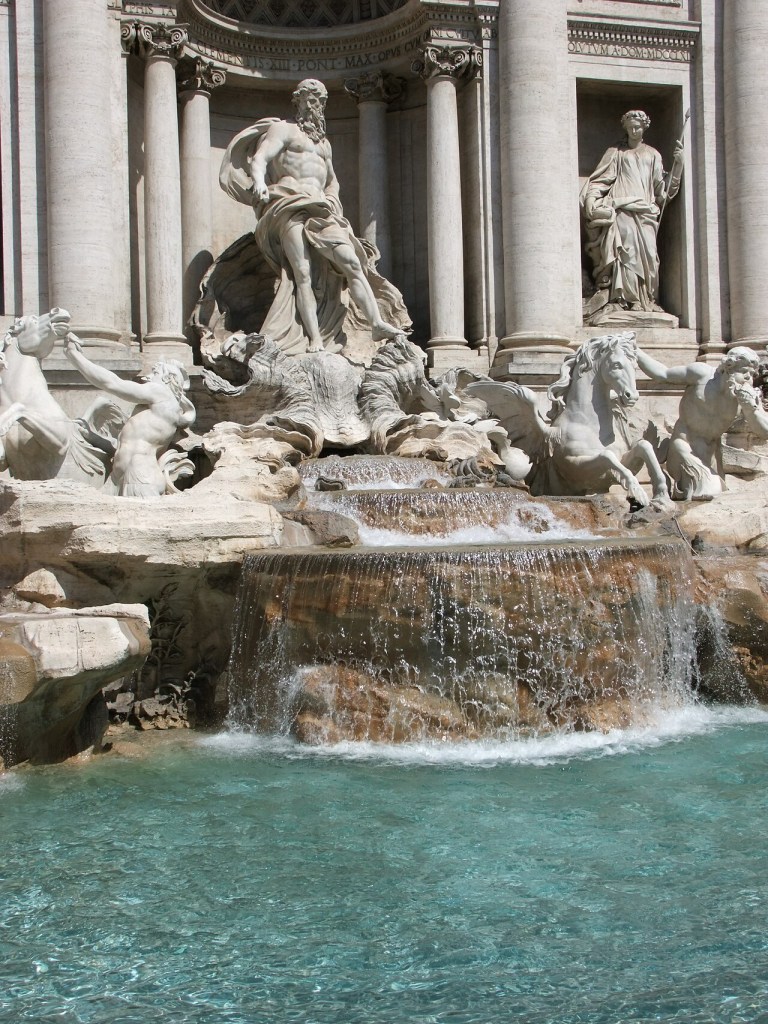
Fountains of Rome is a tone poem in four movements completed in 1916 by the Italian composer Ottorino Respighi . It is the first of his three tone poems about Rome, preceding Pines of Rome (1924) and Roman Festivals (1928). Each movement depicts a setting at one of Rome’s fountains at a different time of the day, specifically the Valle Giulia, Triton, Trevi, and Villa Medici. The premiere was held at the Teatro Augusteo on 11 March 1917, with Antonio Guarnierii conducting the Augusteo Orchestra. Respighi was disheartened at its initial mild reception and put away the score, until the piece was re-evaluated by the public following a February 1918 performance by conductor Arturo Toscanini which brought the composer international fame] The piece was published by Casa Ricordi in 1918.Fountains of Rome calls for the following large orchestra, including piano, celesta , harps, chimes, and organ ad lib.It was also transcribed for piano four hands by the composer.
“The Fountain of Valle Giulia at Dawn” (La fontana di Valle Giulia all’alba)The first section shows this fountain at daybreak in “a pastoral scene, with sheep passing and disappearing in the fresh and humid mist of a Roman dawn”.“The Triton Fountain in the Morning” (La fontana del Tritone al mattino)In the second section “it is like some joyous appeal at whose sound naiads and Tritons come trooping up, pursuing each other and mingling in a wild dance beneath the falling spray.” Figures of the Bernini fountain are seen nearby. The Tritons blow on conch shells, portrayed by the French horns.“The Trevi Fountain at Noon” (La fontana di Trevi al meriggio)The theme of third section “takes on a triumphal character. Fanfares sound. It is as if Neptune’s chariot, drawn by river-horses and followed by a cortege of sirens and tritons, were passing on the radiant surface of the water, only to vanish while muted chimes sound in the distance.”“The Villa Medici Fountain at Sunset” (La fontana di Villa Medici al tramonto)The final section portrays a much more melancholic atmosphere. “It is sad in intent, delicate, restful. Bells toll for the Angelus. Birds twitter and there is a rustling and fluttering of leaves. Then follows the silence of night.”photo credit Dinara Klinton https://christopheraxworthymusiccommentary.com/2024/03/20/christopher-axworthy-dip-ram-aram/
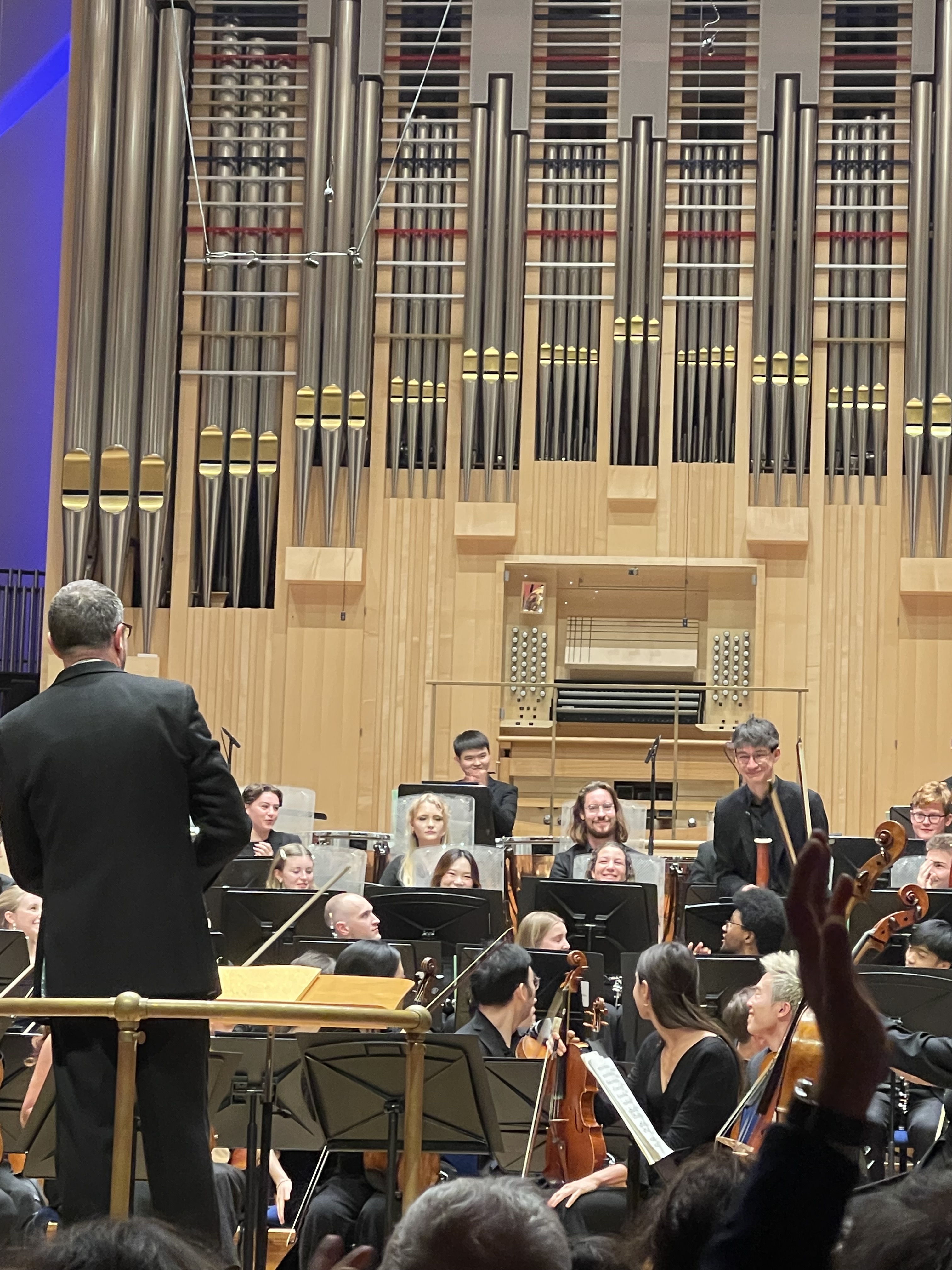
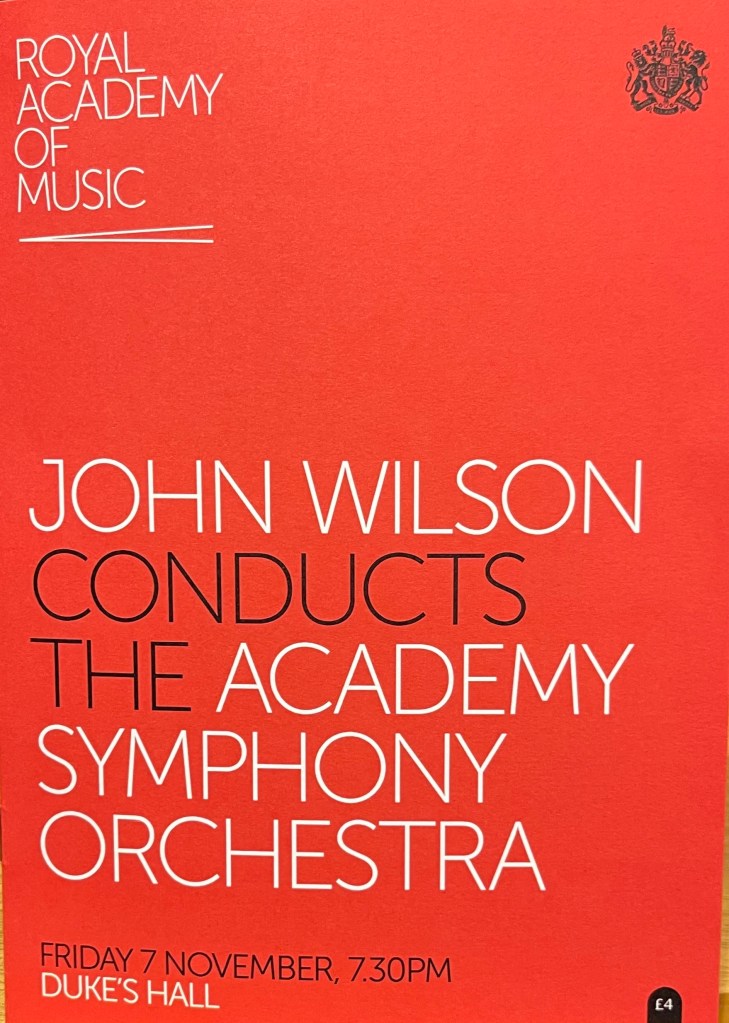
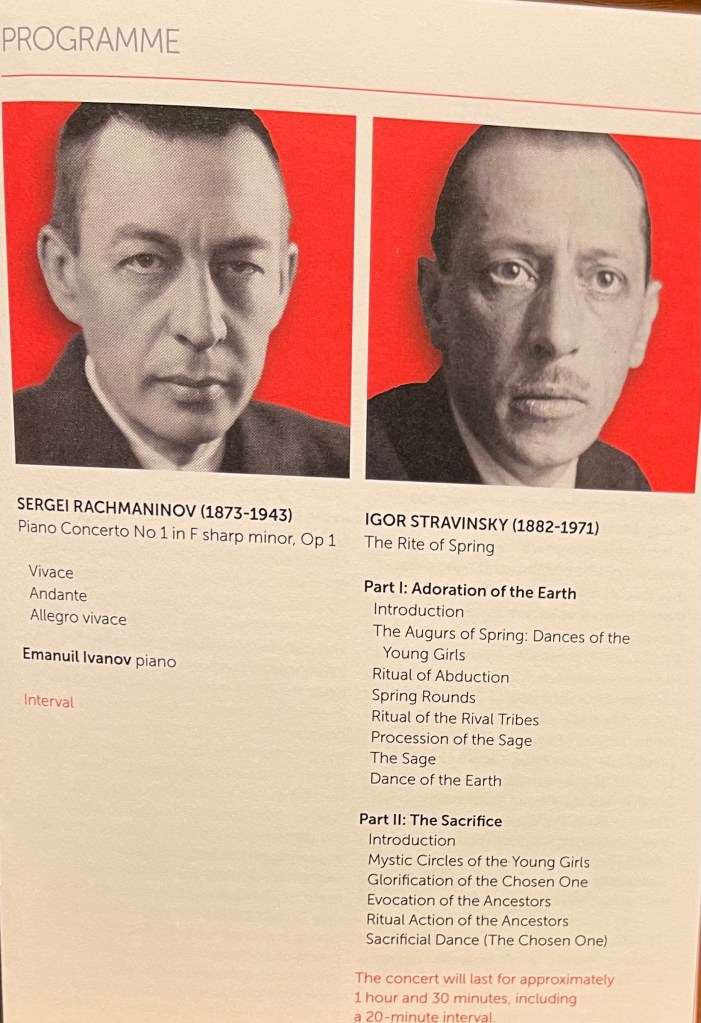
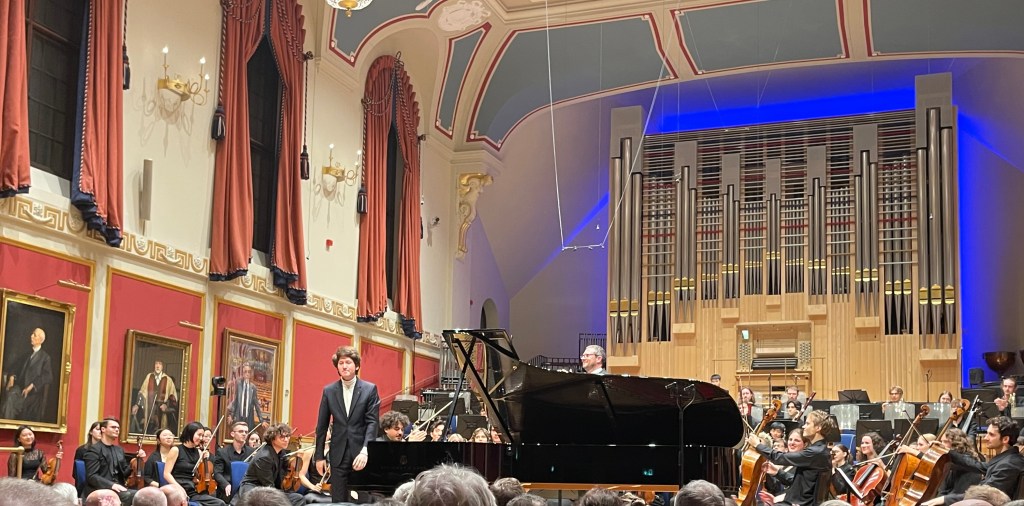
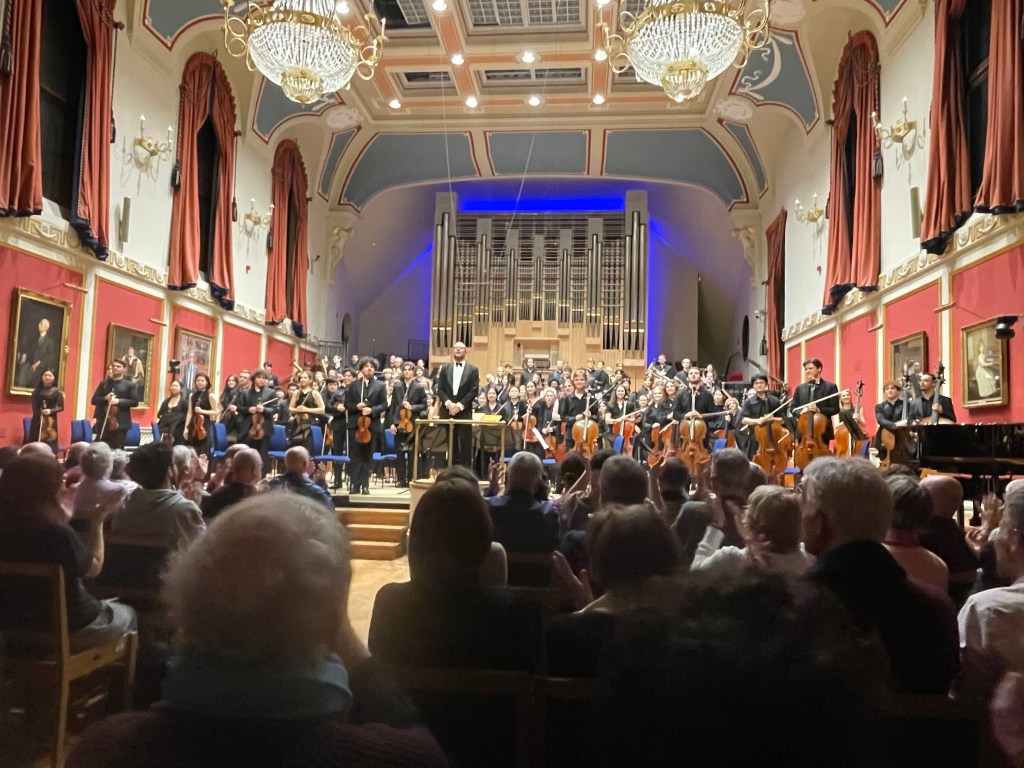
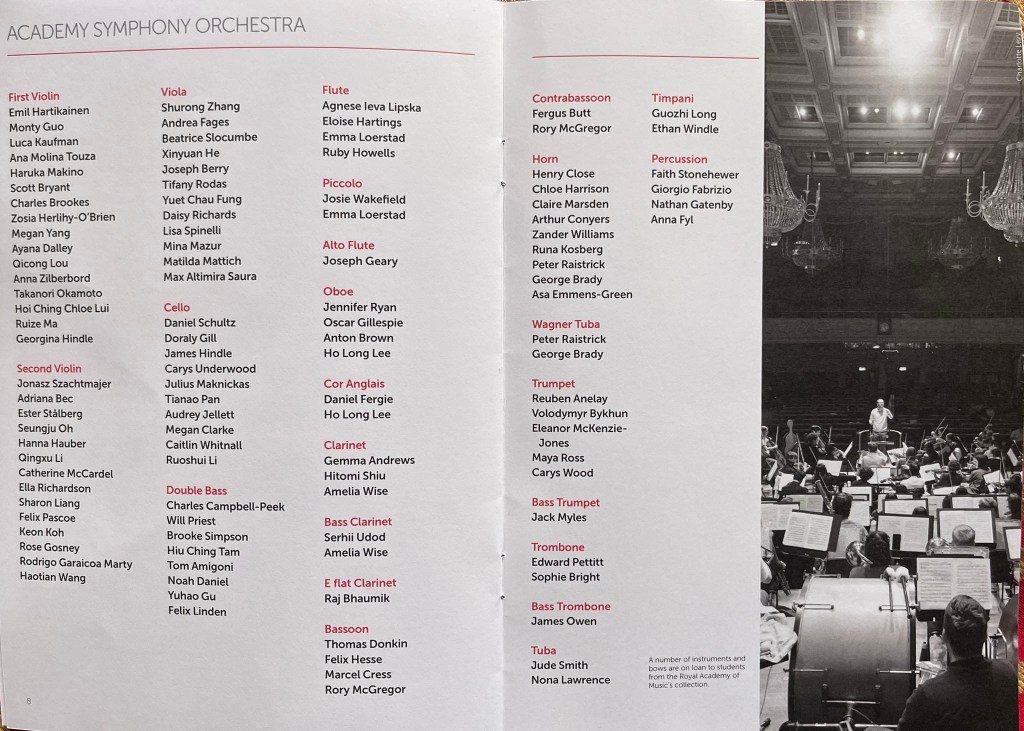
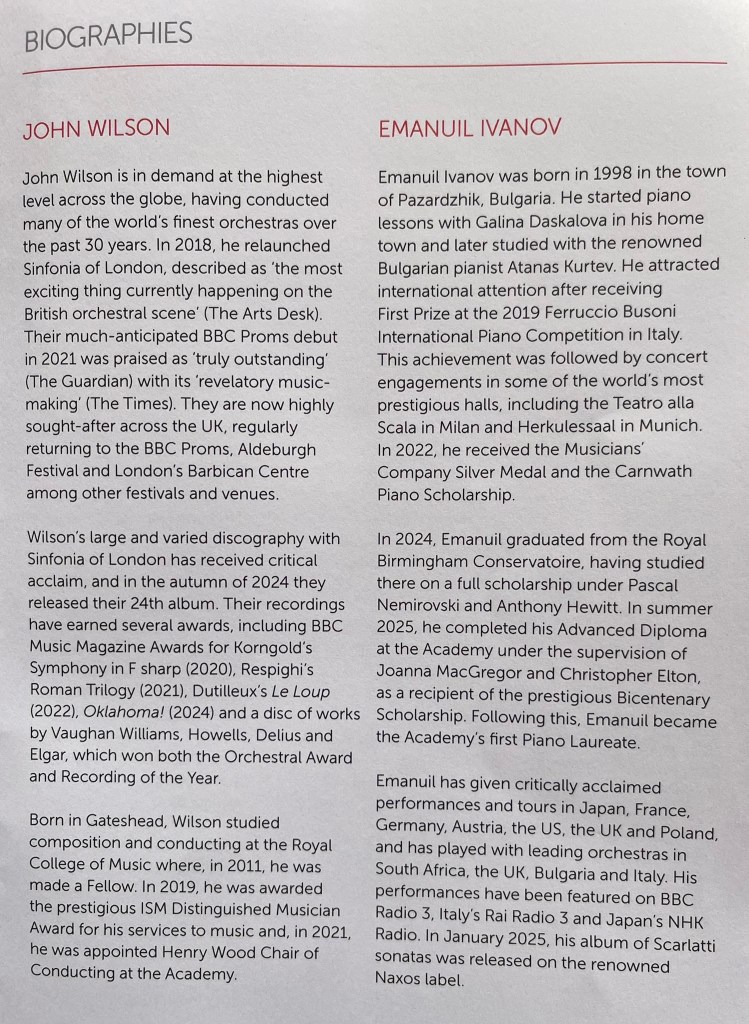
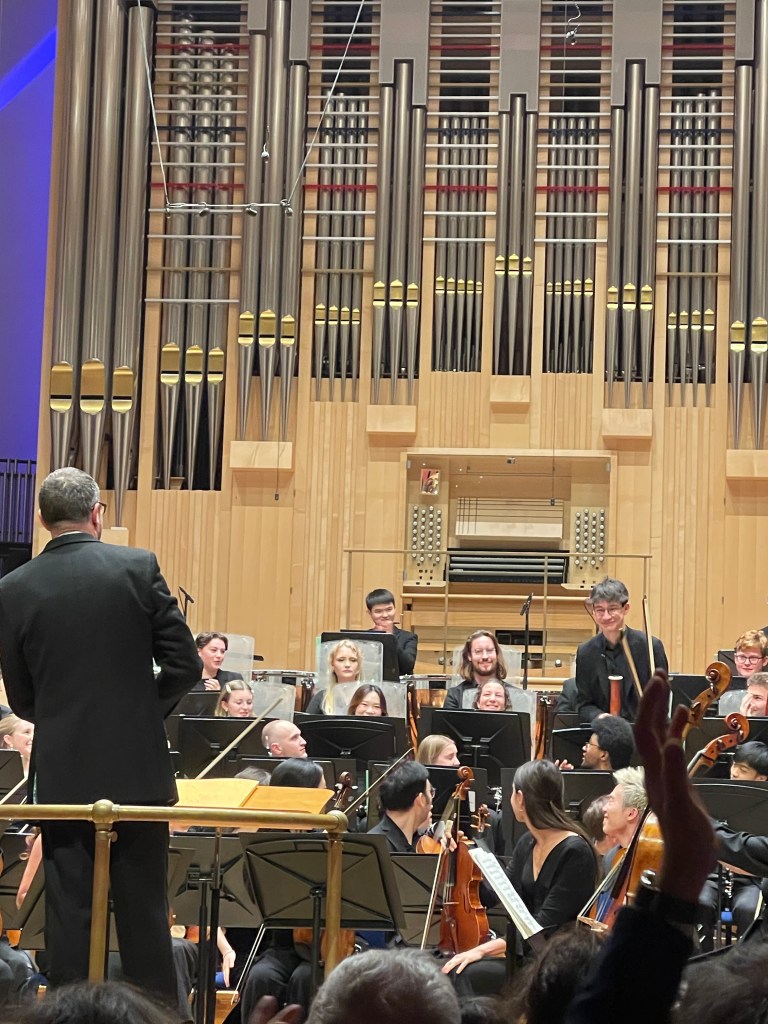
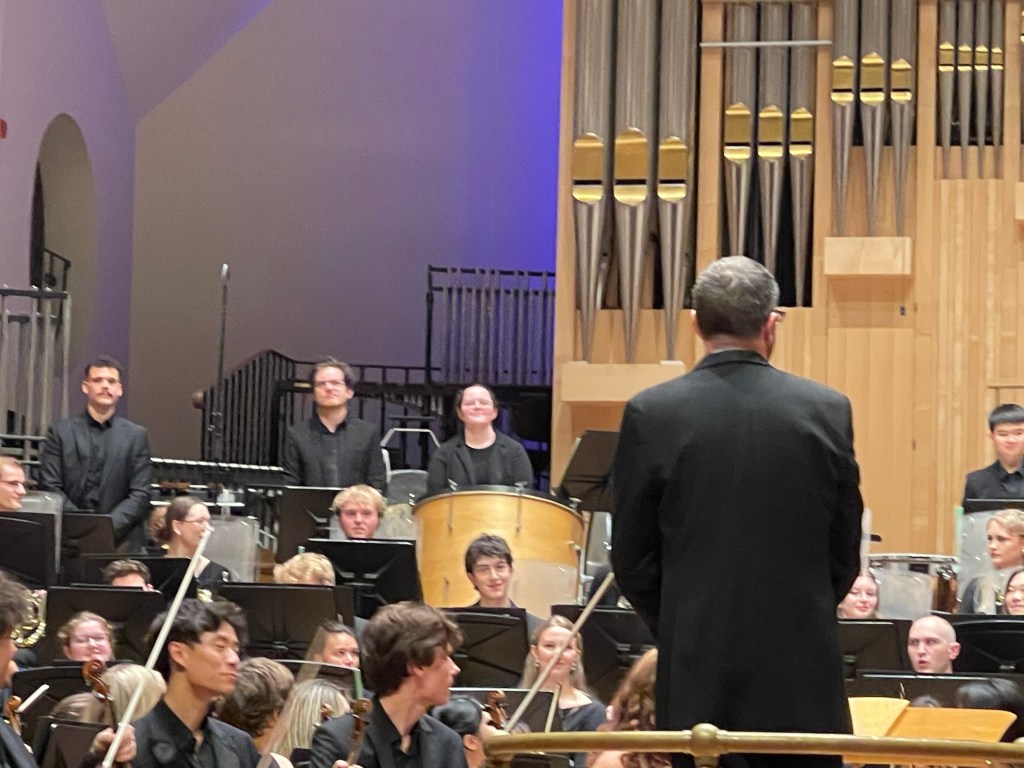
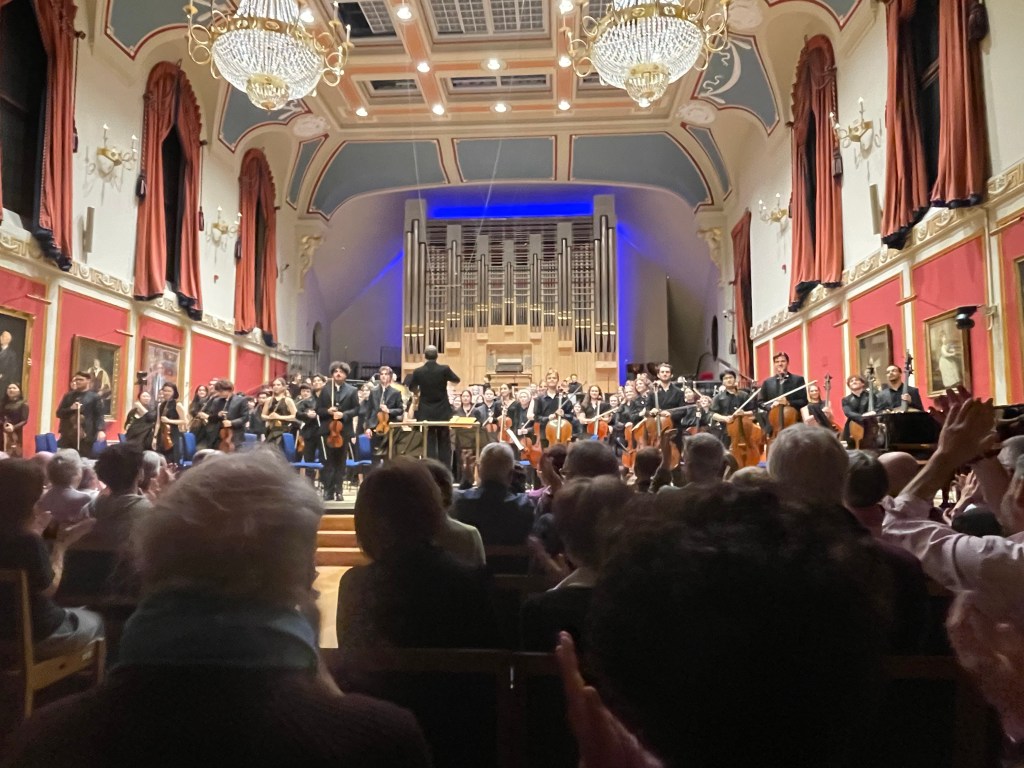
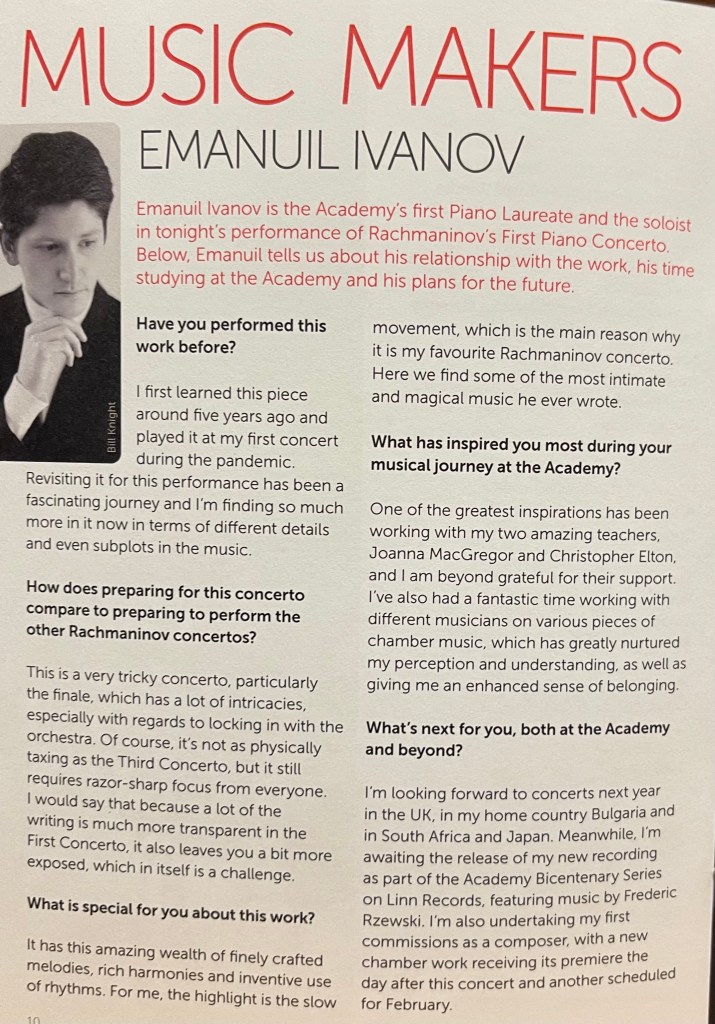
John Wilson, Henry Wood Chair of Conducting, leads the Academy Symphony Orchestra in a performance of Rachmaninov’s exuberant First Piano Concerto featuring the Academy’s first Piano Laureate, Emanuil Ivanov.
The evening concludes with Stravinsky’s The Rite of Spring, which shook the musical world at its 1913 premiere, and went on to become one of the most influential works in music history.
Emanuil Ivanov with John Wilson, what a team when combined with the mastery and youthful passion of the Academy Symphony Orchestra.
Rach 1 has never sounded like this since Byron Janis became arthritic.I am of course talking of live performance because that of Rachmaninov and Richter have always been historic recordings that are cherished by all . As Emanuil rightly says this must be one of the greatest cadenzas together with Prokofiev 2 where the piano is given a chance to almost outdo the orchestra. Emanuil came close but he did not count of John Wilson with his sumptuous Stokowskian string playing of subtle phrasing and colouring or the intricate weaving of the orchestra around the piano or the piano wrapped up around the orchestra. A true chamber performance where the piano and orchestra were united in music making of refined musicianship and a style where balance not force was the name of the game. A piano that could just add gleaming comments to the ravishing string playing in a conversation of intimacy that is all too rare these days.
The Rite of Spring was a wondrous tone poem of desolation and searing intensity. To see these young players lead by Emil Hartikainen with the passionate commitment that he transmitted to his colleagues as did Daniel Schultz leading the cello’s . Guzhi Long was the remarkable timpanist who could strike fear and menace amongst his colleagues. As the barbaric fearless playing of the wind and brass blared out with youthful glee the pungent dissonant sounds that probably so upset Monteux’s audience over a century ago. John Wilson conducting with a mastery where the sense of balance and line were so clear as to make this performance almost of chamber music proportions, such was the intensity but also the generosity of the players in a give and take of searing brutality. The Dukes Hall may have seemed too small for ‘The Rite’ but that was without taking into account the musicianship and real sense of balance of the Golden Era when beauty and not brutality reigned with the wind and brass listening to their colleagues in the string section and making wondrous meaningful music together of united architectural sense.
An offer of earplugs written on the ticket was certainly not needed with John Wilson who could mould all he touched with a wondrous sense of balance and style. I doubt that this Rite would ever have created the furor it did under Monteux. Richter’s preferred Rachmaninov Concerto could never have been played with more Philadelphian sumptuous sounds than these passionate young players . I hear there is a commercial RAM recording of Emanuil’s Rzewski variations described below …..no wonder he has been made the first RAM Piano Laureate.
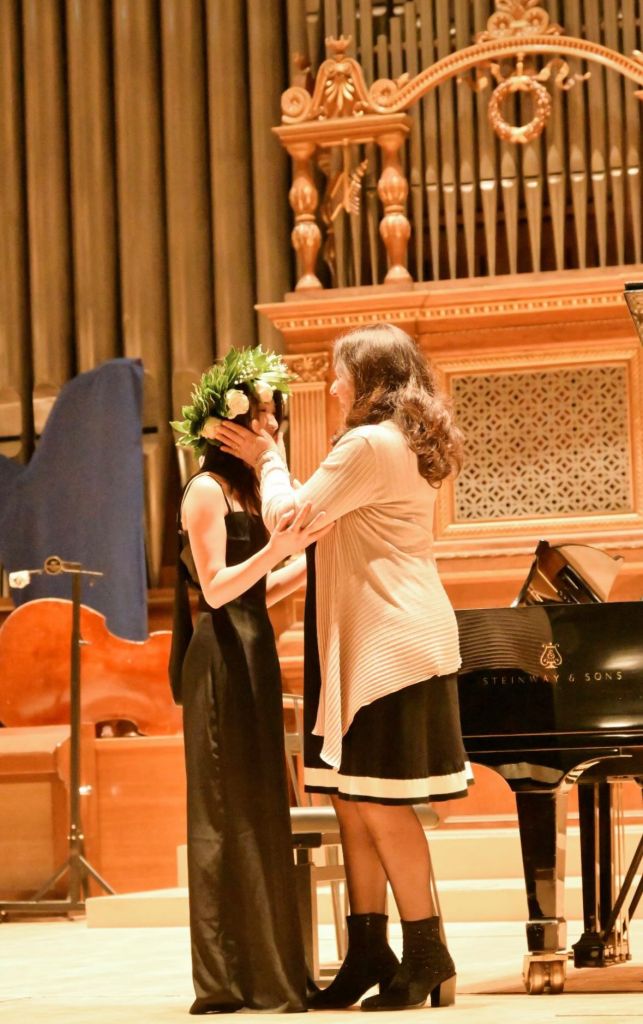
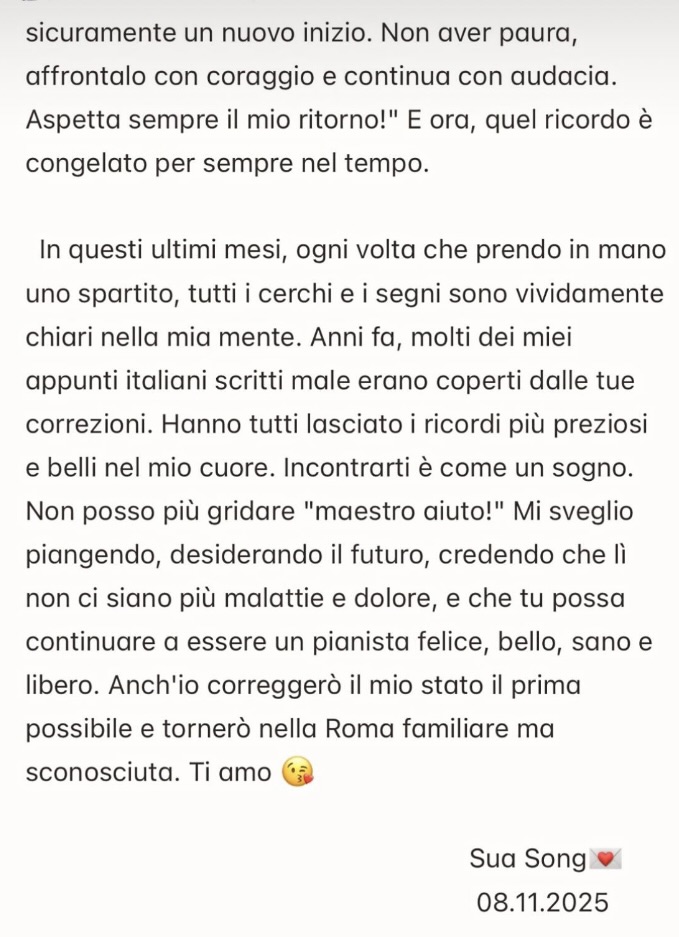
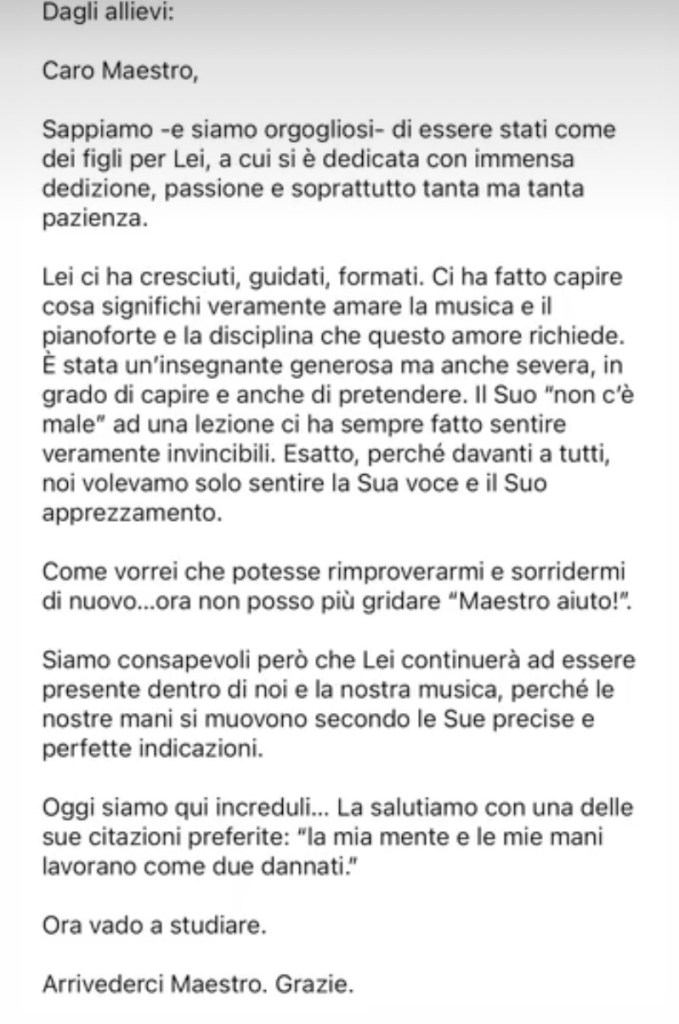
I am very sorry to hear of the death of Maura Pausini after a long illness . The widow of the renowned pianist Franco Medori of the Neapolitan school of which Maura Pansini was a proud advocate sharing her knowledge and that of her ex husband with her many students at the S. Cecilia Conservatory .
Addio al maestro Maura Pansini, pianista e soprattutto Maestra dal cuore infinito
Maura Pansini, pianista di straordinaria sensibilità e docente amatissima del Conservatorio “Santa Cecilia” di Roma, è volata in cielo dopo una lunga malattia. La sua scomparsa lascia un vuoto profondo e difficilmente colmabile nel mondo della musica e in tutti coloro che hanno avuto la fortuna di conoscerla, di ascoltarla e soprattutto di studiare con lei.
A celebration with Alfredo Conte
Diplomata in pianoforte al Conservatorio “E.R. Duni” di Matera e in Didattica della Musica al Conservatorio “Santa Cecilia” di Roma, entrambe le volte con il massimo dei voti, Maura Pansini aveva mostrato sin da giovanissima un talento limpido e disciplinato. Vincitrice di numerosi concorsi nazionali e internazionali, si era perfezionata sotto la guida del Maestro Franco Medori — suo compagno di vita e di arte — con il quale condivideva la profonda appartenenza alla grande scuola pianistica napoletana.
with her student Livia Gatto
La sua carriera l’ha portata a esibirsi nelle più prestigiose sale italiane e internazionali — dalla Società dei Concerti di Milano all’Accademia Filarmonica di Bologna, da Firenze a Napoli, da Bruxelles a Buenos Aires, a Londra e fino agli Stati Uniti e al Libano — sempre con uno stile interpretativo elegante, rigoroso e insieme intensamente poetico.
with her class at the Conservatory of S. Cecilia
Maura Pansini è stata una delle voci più autentiche della scuola pianistica di Vincenzo Vitale, di cui ha saputo custodire e trasmettere lo spirito: la purezza del suono, la fedeltà al testo e quella rara capacità di unire intelletto e cuore.
with her prize student Alfredo Conte
Ma più di ogni successo concertistico, Maura Pansini amava insegnare. Ai suoi allievi ha dedicato tutto il suo tempo, la sua energia e il suo affetto, fino agli ultimi giorni. Per lei la musica era prima di tutto un atto d’amore, e l’insegnamento un modo per trasmettere quella fiamma che ha acceso in tanti giovani pianisti oggi attivi in Italia e all’estero. Chi l’ha conosciuta la ricorda come una Maestra attenta, generosa e severa, capace di ascoltare e di guidare, con dolcezza e fermezza, con passione e competenza. I suoi allievi erano la sua vita e a loro si è dedicata con una passione infinita.
One of her last students on his graduation day Alfredo Conte with his parents
Con la sua scomparsa se ne va una protagonista autentica della scena musicale italiana, ma resta viva la sua eredità artistica e umana, custodita nel ricordo dei suoi allievi e nel suono limpido e sincero del suo pianoforte che ora continuerà a suonare attraverso le mani dei suoi studenti.
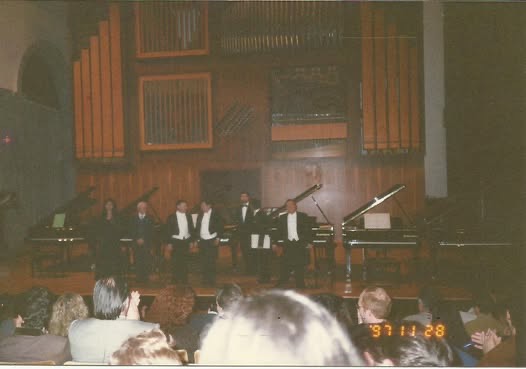
Un piccolo omaggio alla cara Maura, quando il 28 novembre 1997 la coinvolsi in uno spettacolare Bolero di Ravel per sei pianoforti (trascrizione di Sergio Cafaro) qui nella foto al Conservatorio di Napoli con (da sinistra) Sergio Fiorentino, Carlo Bruno, Sergio Perticaroli, Giueseppe Scotese (di spalle) e Franco Medori.
Maura Pansini – Pianista. Si è diplomata in pianoforte presso il Conservatorio di Musica “E.R. DUNI “ di Matera e in Didattica della Musica presso il Conservatorio S. Cecilia di Roma, in entrambi conseguendo il massimo dei voti.
Durante il corso di studi è stata sempre prescelta per rappresentare il Conservatorio nelle manifestazioni artistiche più importanti (Rassegna di musica contemporanea dedicata a G.Petrassi; Rassegna nazionale sarda di Oristano, dove ha conseguito il primo premio assoluto come solista, “Tutti a S. Cecilia” presso il Parco della Musica di Roma come pianista solista).
Vincitrice di numerosi concorsi nazionali ed internazionali , ha seguito un corso triennale di perfezionamento a Roma presso la scuola Tomàs Ludovico da Victoria, sotto la guida del M° F.Medori diplomandosi con il massimo dei voti e lode. Ha inoltre seguito corsi tenuti dai maestri V.Vitale, A.Bacchelli, B.Bloch, M.Perahia.
Intensa la sua attività concertistica, spesso ospite di importanti associazioni musicali:
Società dei concerti di Milano, Accademia Filarmonica di Bologna, AGIMus di Firenze, Art’s Academy di Roma, Thalberg di Napoli, Istituzione orchestrale di Bari, Amici della Musica di Lecce, Orchestra Sinfonica della Provincia di Matera etc.
Pur svolgendo attività prevalentemente solistica, ha collaborato in esecuzioni cameristiche e con numerosi pianisti: C.Bruno, S.Fiorentino, F.Medori, S.Perticaroli, G.Scotese E. Valentini.
Ha svolto tourneé in Brasile, Argentina, Spagna, Libano, Belgio, U.s.a, Venezuela.,Danimarca.
Da alcuni anni si occupa delle nuove metodologie per l’insegnamento della musica per l’infanzia.
Su invito del M° M. Campanella, ha partecipato nel 2011 alla maratona Liszt, omaggio che l’ Accademia Nazionale di Santa Cecilia ha promosso per celebrare il bicentenario della nascita del compositore ungherese.
È titolare della cattedra di Pianoforte presso il Conservatorio Santa Cecilia di Roma.
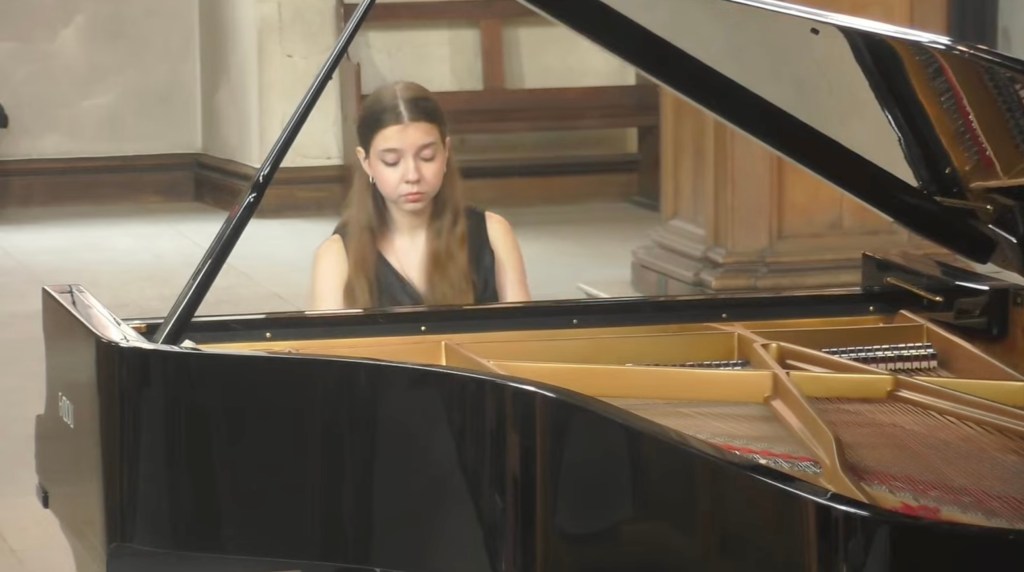
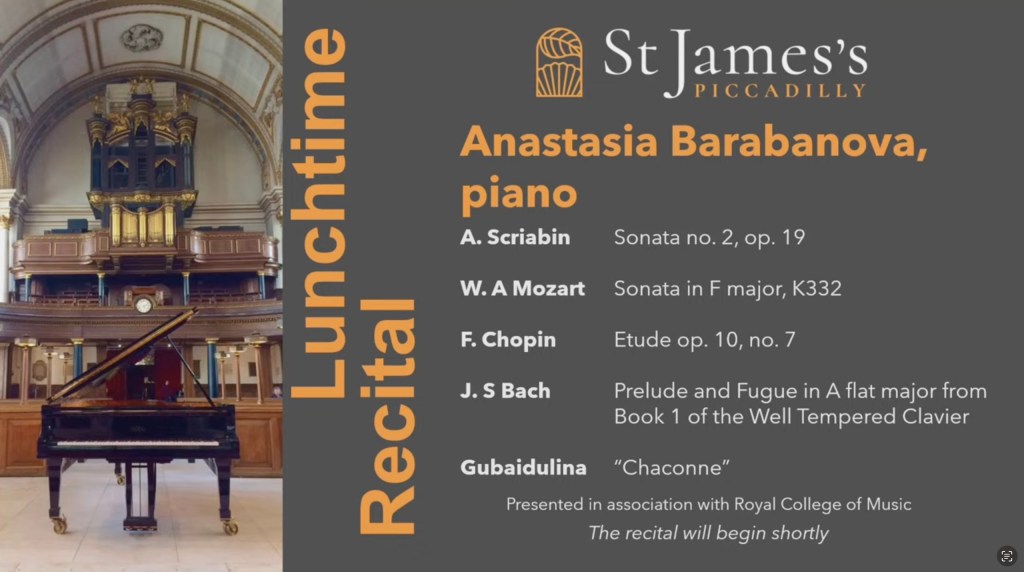
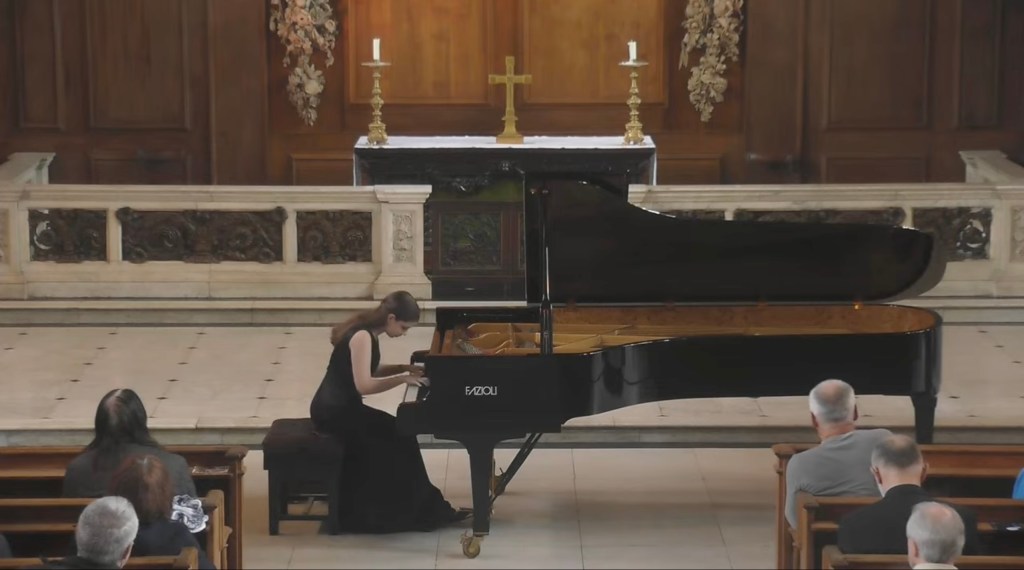
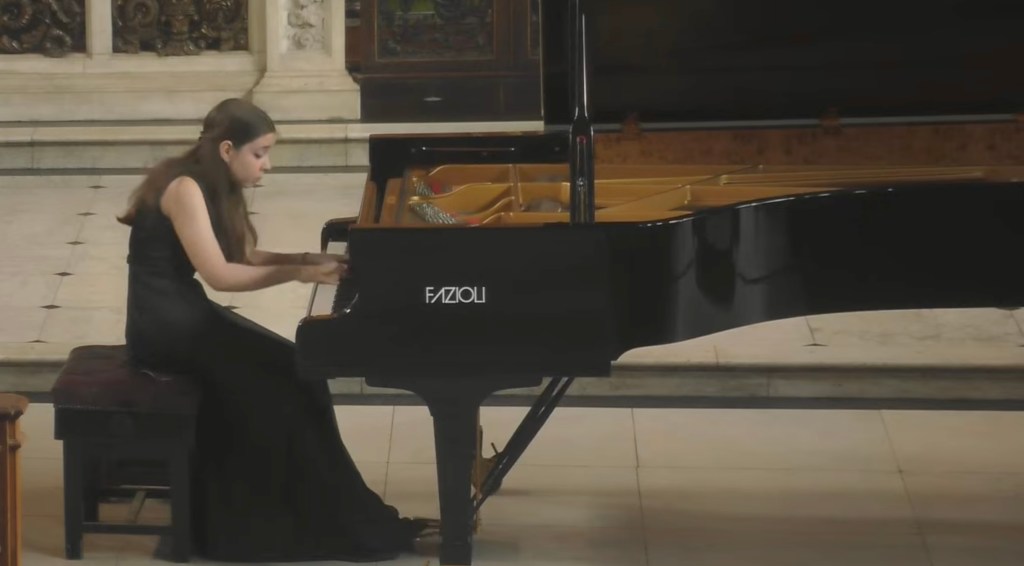
Some very fine musicianly playing of simplicity and intelligence which was reflected in Anastasia’s finely chosen programme that spanned the Romanticism of early Scriabin through the age of enlightenment of Mozart . The innovative pianistic world of Chopin and the baroque discipline of Bach to end with the extraordinary present day sound world of the Chaconne by Gubaidulina.
Scriabin’s early Fantasy Sonata in two movements showed off Anastasia’s refined palette of colour opening with a beautiful tempo of radiance and natural fluidity. As the rays of sunlight shone down on the piano they seemed to ignite the prism of sounds that were in Anastasia’s hands too, caressing the keys with delicacy and sensibility. There was passion and dynamic drive concealed within these sensitive hands as the cauldron reached boiling point . A beautiful sense of balance allowed the melodic line to glow so beautifully surrounded by a golden web of intricate sounds. The ‘Presto’ was played with great technical control and well oiled fingers, as the clouds passed and radiant sumptuous beauty could be heard with the passionate outpourings of the romantic exuberance of youthful Scriabin.
Mozart’s Sonata in F, the one on most piano stands in the living room of many families before the advent of television! It was played with clarity and simplicity as the operatic characters secretly hidden within the notes were revealed with subtlety and refined good taste. Schnabel is often quoted as saying that Mozart is too easy for children but too difficult for adults, because with so few notes Mozart could describe a whole world. With poignant meaning and character Anastasia gave us today a superb example of the ‘classical style’ so often overlooked by young pianists just raring to bite the bit! There was a crystalline beauty that she brought to the ‘Adagio’ where the trills and ornaments were played with a refined mastery and simplicity as she allowed the movement to speak with poignant meaning. The Assai Allegro just shot from her fingers as the movement sprang to operatic life with charm, wit and above all character.
The Chopin study op 10 n. 7, although not the so called ‘Butterfly’ study ( op 25 n. 9) is just the same a continual outpouring of repeated notes and a true feux follets. Whilst Anastasia had studied it well, I felt it was too earthbound and just needed wings to allow it to buzz around the keys with more gossamer lightness.
Her Bach Prelude and Fugue, however, was a true lesson in measure and clarity. Beautiful sounds where the voices were allowed to converse with simplicity as they were given the overall architectural shape of a true musician.
The Chaconne by Gubaidulina seems to be having something of discovery these days. In fact there were three performances last year in concerts I heard in the same week and by coincidence it was between the second and third that the sudden death of the composer was announced from Germany where she had lived in exile. It is a very complex piece full of pungent dissonances with a kaleidoscope of colours and moods . Deep bass notes out of which emerges a spiky marcato fugato before a hypnotic outpouring of repeated arpeggiandi are spread over the keyboard with ever more insistence and dissonance. This remarkable work finishes lying exhausted at the bottom of the keyboard with a whispered gasp of quite extraordinary effect. Anastasia revealed this wondrous world with masterly conviction and clarity but above all a fearless technical assurance that was breathtaking in its audacity.
Anastasia Barabanova, prize winner of numerous international competitions, made her debut as a soloist performing with an orchestra at the age of nine. Since then she has been performing internationally both solo and with various orchestras, such as Moscow State Symphony Orchestra, Lerman Chamber Orchestra, Kostroma Gubern Symphony Orchestra and others.
Her performance venues include Carnegie Hall (New York), St. George’s Church Hanover Square, St. Stephens Church, St. Mary Abbots Church (UK), Rachmaninov Hall and Small Hall of the Moscow Conservatory, Ehrbar Hall (Vienna). During season 24/25 she played recitals in such venues as Bechstein Hall, Burgh House, St Botolph without Aldgate, Holy Sepulchre (UK). Anastasia has performed actively in many festivals in Estonia, Germany, Israel, Russia, Spain and took part in master classes with Stanislav Ioudenitch, Vladimir Ovchinnikov, Oxana Yablonskaya, Leonel Morales Alonso, Dinara Klinton and others. She is a regular participant of concerts held by the Vladimir Spivakov International Charity Foundation. Anastasia was also a fellow of «New Names» Charity Foundation.
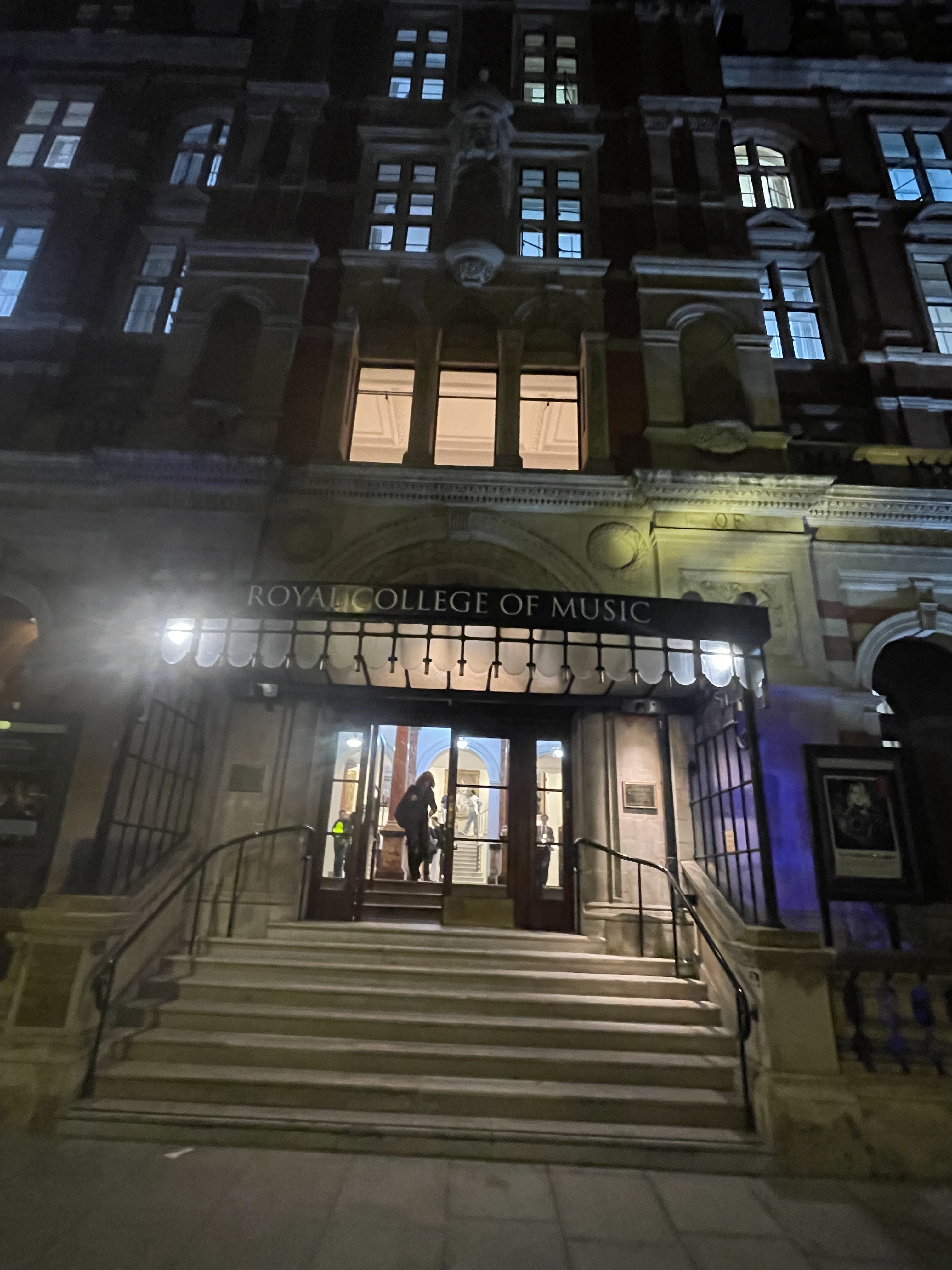
She is currently studying at the Royal College of Music, London for a Bachelor of Music degree with professor Ilya Kondratiev, where she is a Milstein Medal Award Holder, supported by the Kenneth and Violet Scott Scholarship. In 2022 Anastasia graduated with an honours diploma from Central Music School (Moscow).
She is a laureate of such competitions as Virtuoso International Music Awards Competition (UK), Gold Prize; American Protege International Concerto Competition, 1st prize; Clara Schumann International Competition, 1st prize; IV Future Stars International Piano Competition, Grand Prix and many others.
Anastasia’s repertoire ranges from Baroque era to Contemporary composers. She is also a very collaborative musician, performing a wide range of piano trios and duos, vocal repertoire with vocalists
Presented in association with Royal College of Music
Martyn Brabbins conductor Misha Kaploukhii piano RCM Philharmonic
Tom Bradbury Treacle (world premiere) Brahms Piano Concerto no 2 in B flat major op 83
Visiting Professor of Conducting Martyn Brabbins returns to direct the RCM Philharmonic in a programme of Orchestral Masterworks, with RCM composer Tom Bradbury offering a sweet treat in the form of Treacle, performed publicly for the first time.
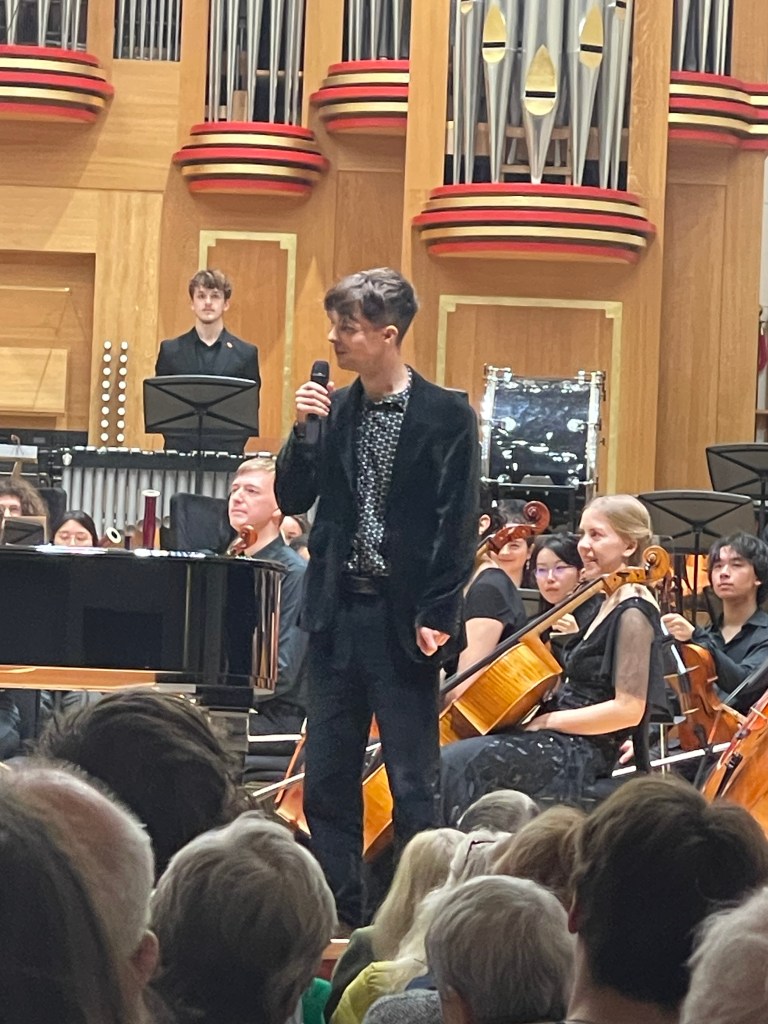
Martyn Brabbins encouraging Tom to divulge the secrets of ‘Treacle’ Tom Bradbury introducing the world première of his work
RCM Concerto Competition Winner Misha Kaploukhii takes centre stage in the stunning Second Piano Concerto by Brahms. This expansive work unfolds with a sumptuous first movement, powerful second, exquisite slow movement – including a beautiful cello solo – and richly inventive finale.
Lisa Dolgouchine’s sumptuous cello solo in the Andante
Misha Kaploukhii on his fourth outing with Brahms 2 tonight as prize winner at the Royal College of Music under the superb baton of Martyn Brabbins who also presented another prize winner Tom Bradbury with his composition ‘Treacle ‘
Misha having played the Brahms at the beginning of the year on Myra Hess’s own Steinway concert grand now housed in Bishopsgate Institute. Performances followed at St James’s Piccadilly and with the YMSO at Cadogan hall that are now crowned by a performance of aristocratic nobility and timeless beauty.
Like Arrau always thinking from the bass upwards that gives such weight and architectural shape to the longest and largest of chamber music concertos with the tiniest of Scherzos added for good measure. A rhythmic precision that is rare in this concerto but did not preclude passionate sumptuous richness of aristocratic nobility. A timeless sense of control that allowed the music to unfold in all is grandeur and at times spellbinding beauty. A wonderful duet between Lisa Dolgouchine’s cello, accompanied by the delicacy and generosity of Misha’s deeply felt musicianship, inbetween dramatic outbursts of remarkable rhythmic precision. The subtle string playing of Philadelphian beauty allowed one of those ‘velvet’ moments where the piano could project on this cushion of sumptuous whispered sounds the single unembellished notes with Mozartian purity and intensity where so few notes can mean so much. The Scherzo started a bit solidly where bar lines suddenly appeared but this was soon discarded for the simple almost improvised beauty that Misha brought even to the treacherous whispered cadenza that Brahms added to this ‘wisp’ of a Scherzo . If the last movement lacked some of the grazioso at the beginning, the orchestra and piano soon found common ground with the overall grandeur and nobility that they brought together with their youthful passion and energy of overwhelming impact and exhilarating effect.
A spontaneous ovation and even flowers were truly deserved for a performance that easily stands comparison with the other great performances of this work that have resounded in the past around these august surroundings.
By God he’s got it right judging from the ovation he got from friends and foes alike in the Amaryllis Fleming Concert Hall where I remember John Lill, Dennis Lee and George Barbour performing it many moons ago under Sir Adrian Boult.
Katya Grabova was born in Moscow and graduated from the Gnessin School of Music, before beginning her studies at the Royal Academy of Music. She has frequently appeared at the Rheingau Music Festival, Gijon International Piano Festival, “Bezszady bez granic” and the Bowdoin Music Festival. Her programme presents Nikolay Medtner’s rarely-performed Elegies Op. 59, alongside Bartók’s 3 Studies Op. 18 and Ravel’s Gaspard de la Nuit. Promoted by Royal Academy of Music.
we were overwhelmed by Katya Grabova today in the extraordinary line up of stars from the Royal Academy allowed to shine brightly at the Wigmore Hall.
Two Elegie’s op 59 by Medtner immediately showed the sumptuous sounds she would produce all through the concert , and was allied to a sense of line of great clarity even if it can often seem submerged by the maze of notes that Medtner spins. She could steer herself through this maze by accompanying the melodic line with ravishing streams of notes that just illuminated the architectural shape that in lesser hands can seem an empty outpouring. The ending of this first Elegie was of featherlight brilliance with the ravishing colours of pianists of a different age . The Golden age when pianists were also magicians of wondrous sounds. The second Elegie was of refined sensibility with a palette of multi coloured sounds .A cauldron of rhapsodic beauty and a lesson of exquisite style.
Three Studies op 18 by Bartók, where the first was a ‘tour de force’ of broken octaves of turbulence and breathtaking drive. Vibrating sounds of scintillating technical brilliance but always allied to a poetic sensibility of extraordinary mastery. The second was with glistening wafts of liquid sounds played with remarkable fluidity and masterly ease just disappearing into a whispered ending out of which was heard the great opening flourish of the third study . Out of this ‘jack in the box’, compelling sounds were spread all over the keyboard with extraordinary dexterity until a beguiling tenor melody was insinuated under this busy outpouring of devilish intricacies. A ‘tour de force’ where the word study came to mean, like in Chopin, so much more than just stale technical brilliance because allied to a vision of the poetic fantasy of miniature tone poems.
This lunchtime showcase concert ended with Ravel’s Gaspard de la Nuit. Three poems by Aloysius Bertrand : Ondine- Le Gibet and Scarbo, which was Ravel’s intention to write a piece technically even more challenging than Balakirev’s ‘Islamey’ ( that has long been overtaken by Ligeti almost a century later !) .Katya brought a crystalline radiance as the water nymph wallowed in luxuriant waters. A musicianly sense of balance where the melodic line was incorporated into the very harmonic body of the structure and no matter how intricate the washes of sound Katya never lost sight of the water nymph who was allowed to glow with radiance and sumptuous beauty. Deep bass notes as ‘Ondine’ became ever more agitated gave great depth to the sound as cascades of double notes were alternated with etherial glissandi in a magic world of wondrous sounds. The final whispered uttering of ‘Ondine’ was played with remarkable control of sound with masterly pedalling that could create this mysterious last appearance before disappearing into a wash of radiant sounds ( similar to the ending wave of sounds of Chopin’s Barcarolle which Ravel greatly admired). Katya created a quite extraordinary atmosphere of desolate beauty of the Gallows hanging in the sunset in ‘Le Gibet ‘ . Played with a whispered delicacy of poignant poetic significance. I wondered why she arpeggiated the Messianic chords that add such atmosphere to this extraordinary movement. I think it must have been a poetic license , not a small hand span? ,which was compelling and of breathtaking beauty. A single strand of melody was left ( as ‘Ondine’ had been left high and dry earlier ) was of ravishing beauty like a desolate beacon gleaming in such a barren landscape. ‘Scarbo’ just unwound with its three lazy opening notes immediately overtaken by an electric shock of repeated notes that Katya played with remarkably well oiled fingers . This was just the preparation for a piece of mystery and passion ,brilliance and self identification with this devilish world of improvised hi- jinx. Katya played with a mastery that passed unnoticed such was her poetic understanding with the washes of sound of whispered menace that would become outburst of hypnotic exhilaration and searing excitement.
Katya Grabova is establishing herself as one of the most compelling young pianists of her generation.
In 2025, she won the Aspen Piano Concerto Competition, leading to a performance with the Aspen Conducting Academy Orchestra at the Aspen Music Festival. She has performed at major music festivals including Rheingau Musik Festival and Leeds International Concert Season. Her recent appearances include performances at prestigious venues such as the Southbank Centre, Shanghai Concert Hall, the Great Hall of the Moscow Conservatory, the Tchaikovsky Concert Hall, and Lielais Dzintars Concert Hall.
A prizewinner at the Nutcracker International Contest, the Neuhaus International Music Festival, and the Mlody Virtuos Competition, Katya has performed with the Moscow Philharmonic and the Royal Academy of Music orchestras. She was also awarded the First Prize of the Mayor of Moscow Grant in piano.
Katya has worked with a range of esteemed artists, including Dmitri Bashkirov, Michel Béroff, Robert McDonald, Andrzej Jasiński, Katarzyna Popowa-Zydroń, Christopher Elton, Vanessa Latarche, Mikhail Voskresensky, Vladimir Tropp, Vladimir Ovchinnikov, Victor Derevianko, Anton Nel, Soyeon Kate Lee and Ran Dank.
Highlights of the upcoming season include her solo recital debut at Wigmore Hall supported by Royal Academy of Music and a performance of Rachmaninov’s Second Piano Concerto with the Kensington Philharmonic Orchestra.
Katya was born in Moscow and graduated from the Gnessin School of Music, where she studied with Tatiana Zelikman and Boris Berezovsky. She is currently pursuing her Master’s degree with Mei-Ting Sun at the Royal Academy of Music, where she was a recepient of Michael Gilsenan Named Award and holds a scholarship. She is grateful for the support of the Hill Foundation, the Robert Turnbull Piano Foundation, and the Talent Unlimited charity.
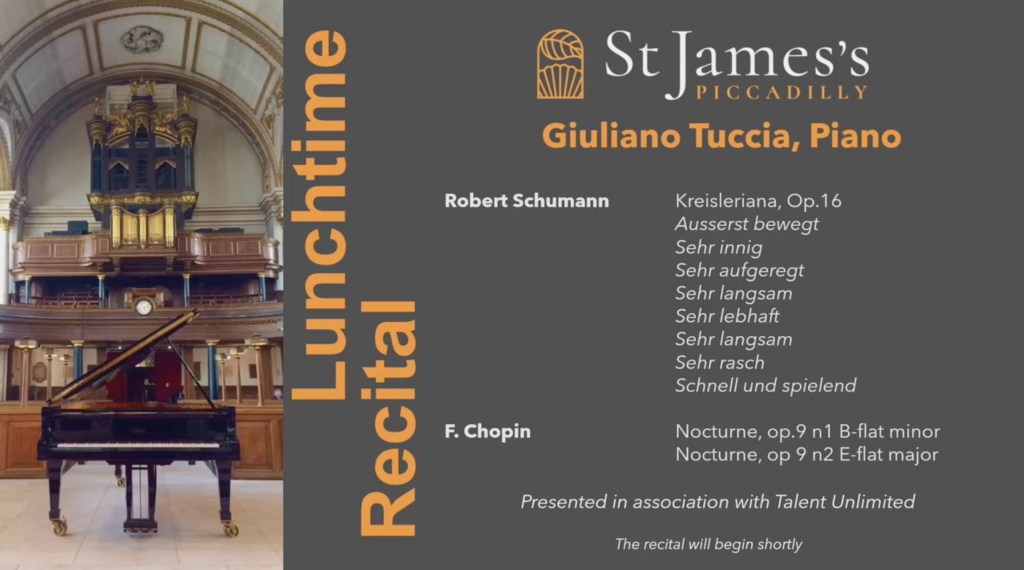
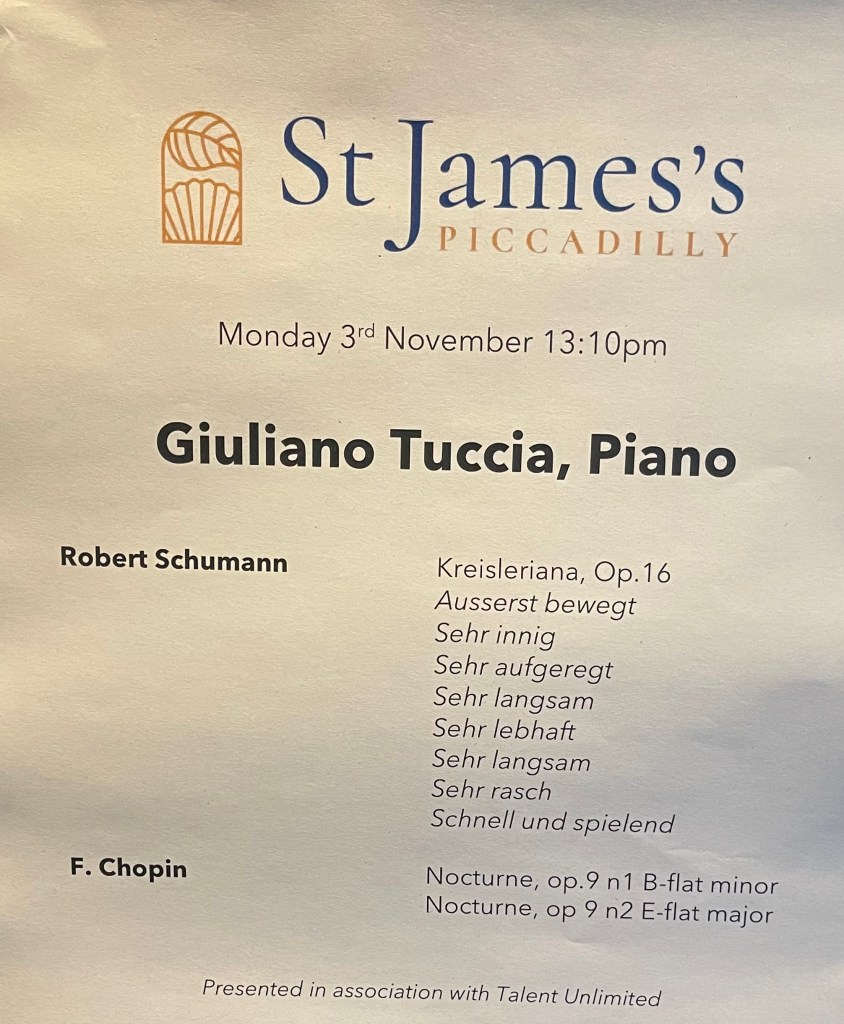
Robert Schumann (1810 – 1856): Kreisleriana, Op.16 Ausserst bewegt Sehr innig Sehr aufgeregt Sehr langsam Sehr lebhaft Sehr langsam Sehr rasch Schnell und spielend
F. Chopin: (1810-1849):
Nocturne, op.9 n 1 B-flat minor Nocturne, op 9 n 2 E-flat major
Presented in association with Talent Unlimited
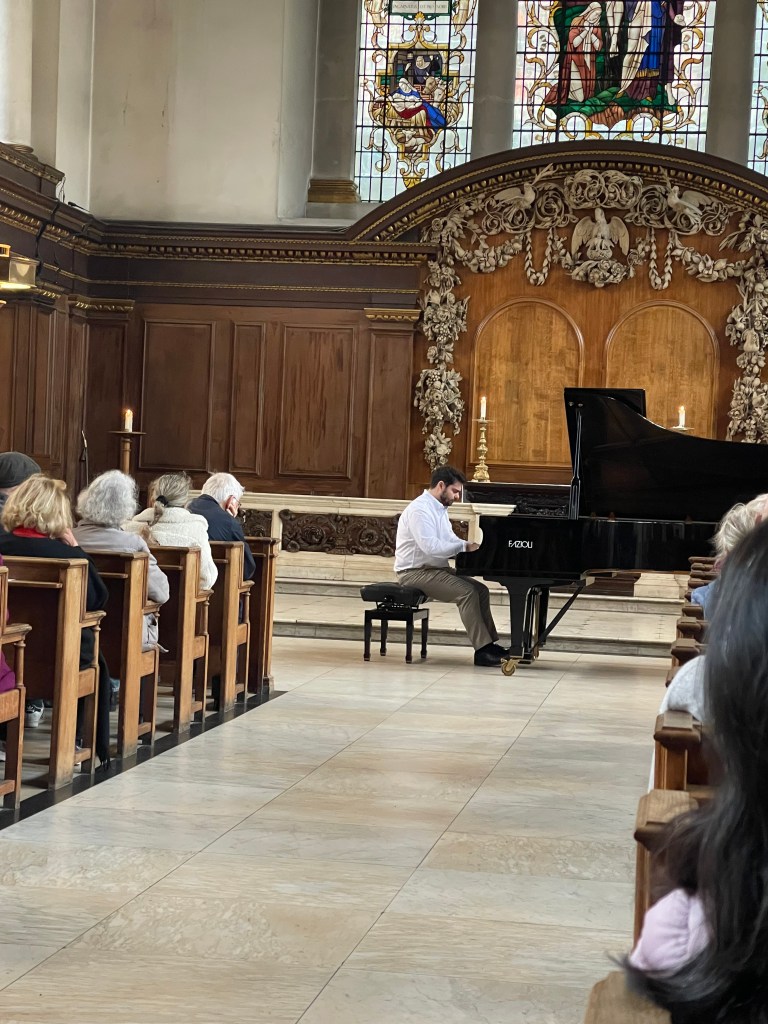
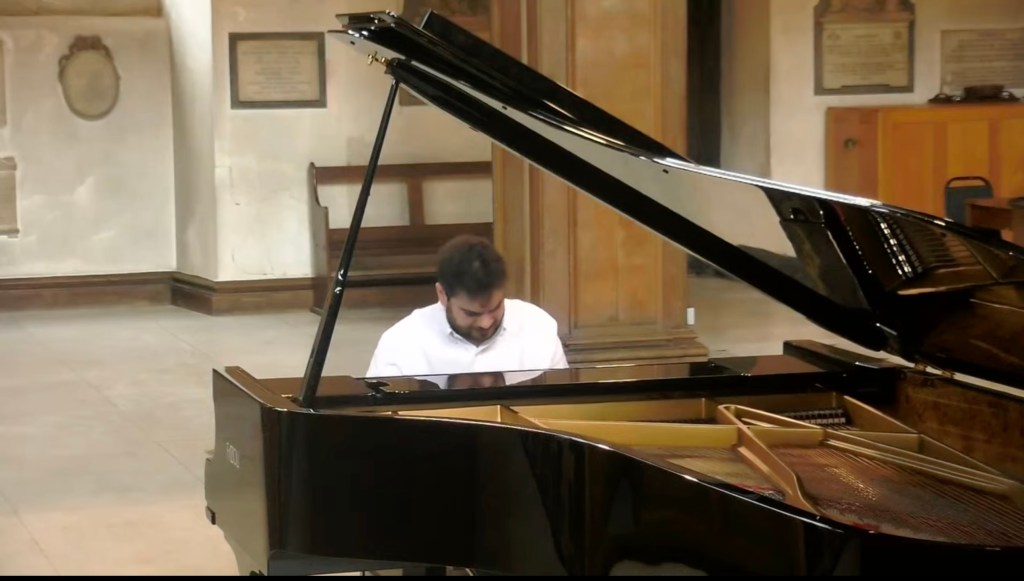
Just one major work on the programme today with two of Chopin’s earliest Nocturnes as encores. Some very expressive, stylish playing from the very first notes. A dynamic drive to the first of these eight tone poems that make up Schumann’s Kreisleriana was played with romantic ardor and subtle rubato. The central episode was a wash of delicate sounds on which the melodic line was etched with refined good taste.
The second piece was played with a beautiful legato where inner counterpoints were very subtly underlined. An improvised freedom with a melodic line of chiselled beauty on a wave of rich internal harmonies. There was a dynamic drive to the Intermezzo I : ‘Sehr Lebhaft’ of contrasting clarity as it wove its way back to the opening. The Intermezzo II: ‘Etwas bewegter’ was played with a rhapsodic freedom that seemed to loose it’s inherent drive in a rather over romanticised outpouring. The intricate counterpoints leading to the return of the opening were played with authority and a sense of line that gave great strength to a passage that can, in lesser hands, sound as though Schumann had lost his way. The whispered return of the opening was played with delicacy adding to the overall architectural shape of this second tone poem that in some hands can seem overlong.
The third piece had a rhythmic bite that contrasted so well with the central episode where voices communed with each other with yearning beauty and romantic freedom. A powerful coda was played with fearless abandon with the final chords of alternating octaves merely wafts of sumptuous sounds. The fourth ‘sehr langsam’ was played with a beautiful singing melodic line within a framework of recitativo freedom, until the clouds lifted and the wondrous beauty of the ‘Bewegter’ was allowed to glow with ravishing tenderness and beauty.
The capricious playfulness of the fifth was gradually transformed into a romantic outpouring of passionate intensity before the opening of the sixth was overheard with its tenor melody of intimate confessions. This contrasted with a strident interruption of ponderous authority played with remarkable rhythmic precision which dissolved into a wondrous rocking melody of delicate beauty.
The seventh shot from Tuccia’s agile fingers but with notes that were linked always to an anchor of harmonies with insistent forward movement. An overwhelming outpouring of dynamic drive that was suddenly curtailed with a coda of wondrous beauty. The final piece I have rarely heard played so clearly because Giuliano gave great importance to the syncopated long held bass notes allowing the limped dance of the right hand to be heard with bewitching significance. The two romantic outbursts were just momentary interruptions to this wisp of a dance that was to lead to the final whispered notes deep in the bass.
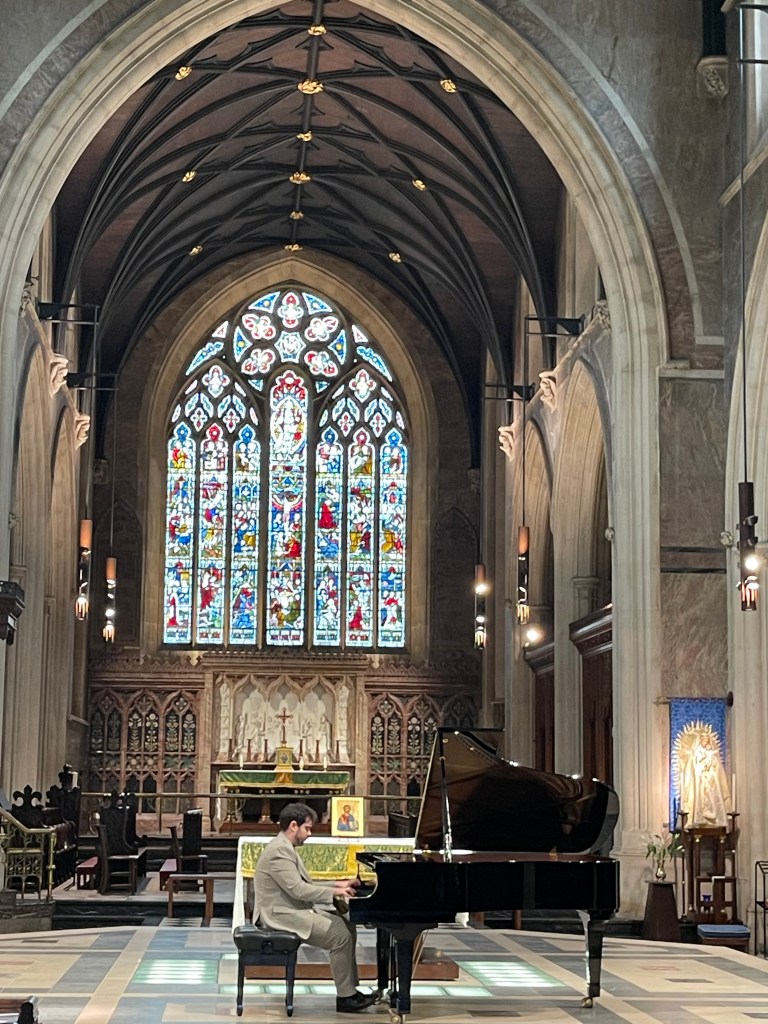
The two Chopin Nocturnes op 9 were allowed to fill this very resonant church with a Bel Canto of ravishing beauty and refined style with subtle colouring of sensitivity and whispered radiance..A palette of sounds that drew the audience in to overhear such marvels, as a barely audible trill gradually built in intensity to the sweetest of farewells of the famous Nocturne op 9 n. 2.
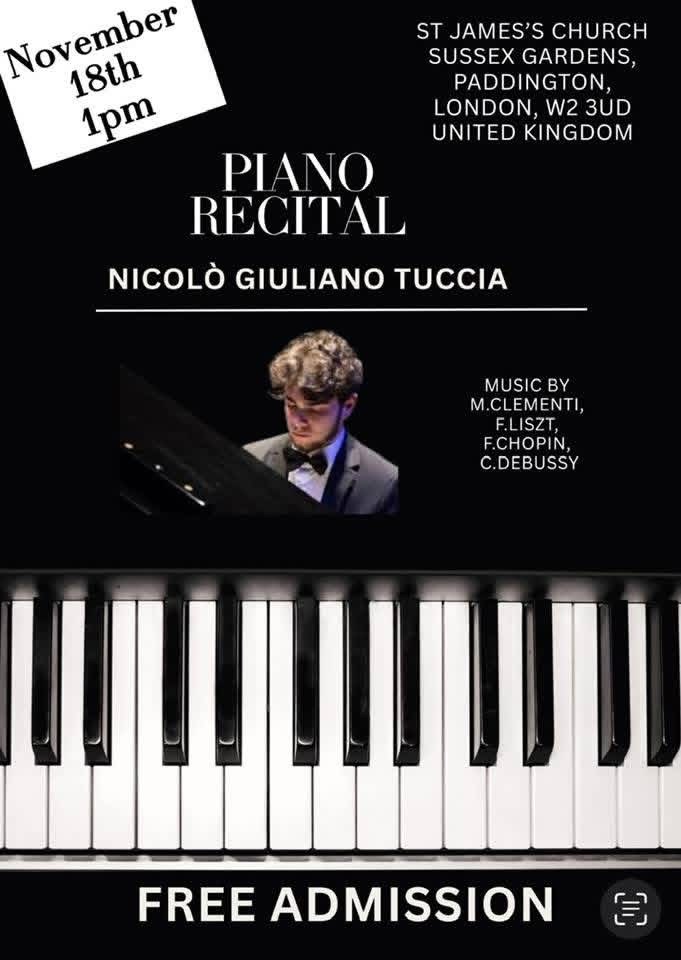
Nicolò Giuliano Tuccia is considered by Leslie Howard as one of the most sensitive and interesting musicians of his generation. Born in 1999, he began studying piano at a young age under the guidance of Maestro Giancarlo Peroni. He graduated with honors from the “B. Maderna” Conservatory in Cesena in 2022, winning a scholarship offered by the Rotary Club. He is currently attending the “Incontri col Maestro” Piano Academy in Imola, studying with maestros André Gallo, Alessandro Taverna, and Igor Roma, and pursuing a second-level Master’s at the “Francesco Venezze” Conservatory in Rovigo with maestros Federico Nicoletta and Roberto Prosseda.
He has also refined his studies at summer festivals, masterclasses, seminars, and conferences with internationally renowned maestros such as Edith Fischer, Avedis Kouyoumdjian, Riccardo Risaliti, and Sergio Tiempo.
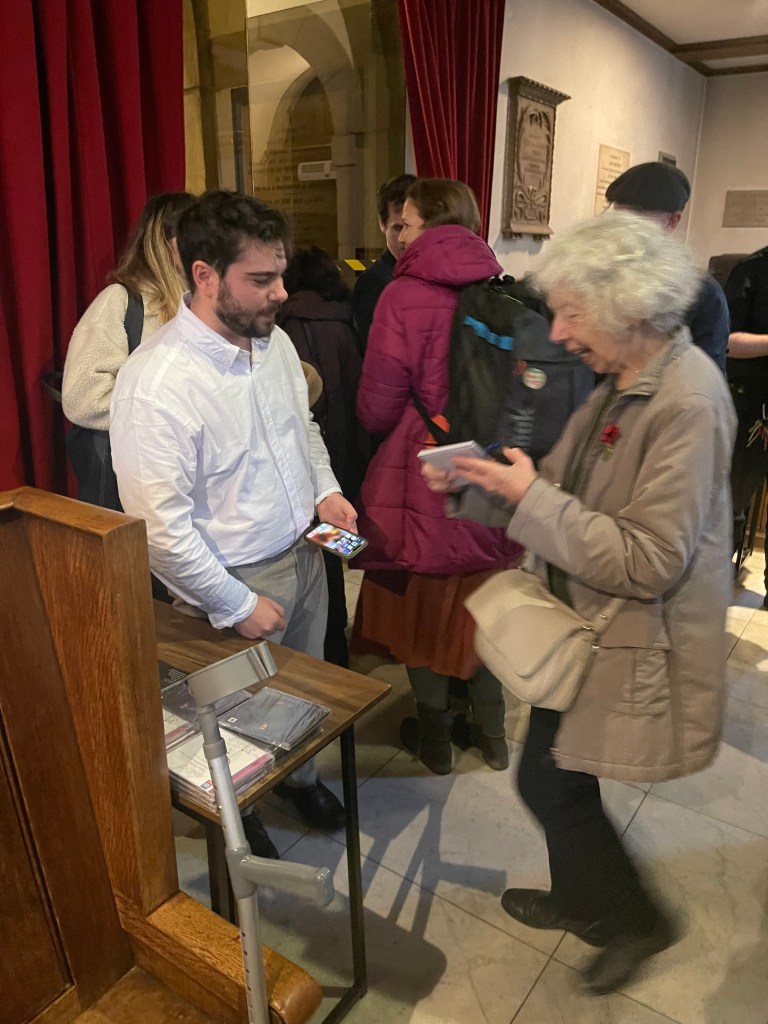
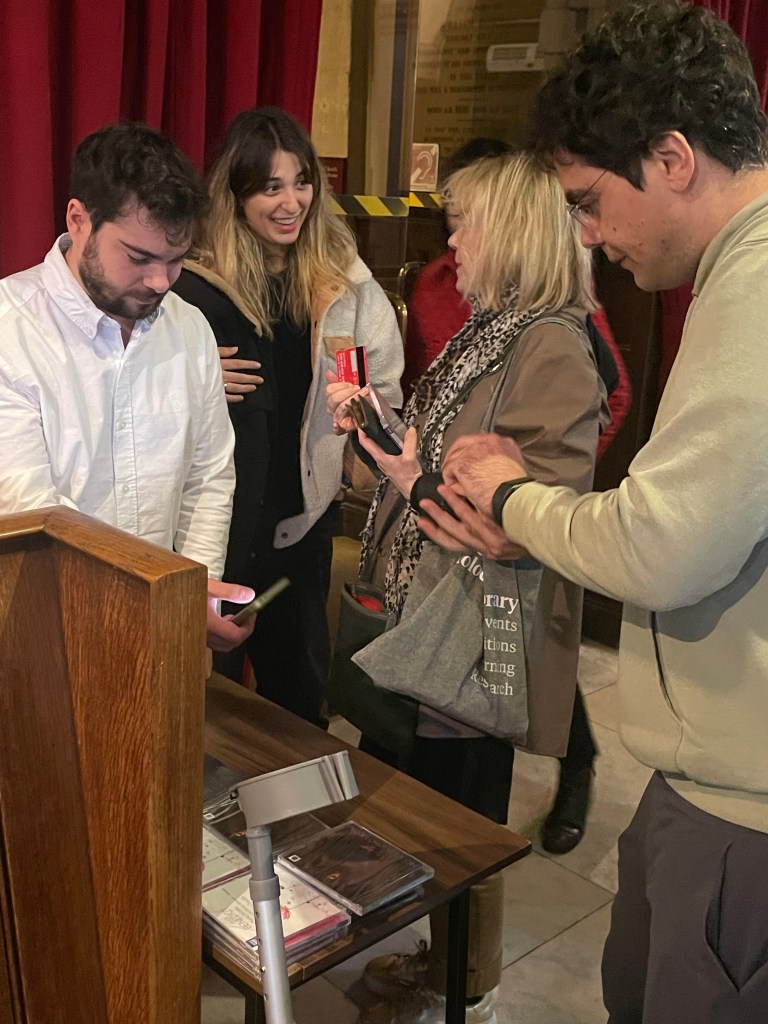
Giuliano the business man surrounded by fans wishes to purchase his CD’s after his concert
Nicolò Giuliano Tuccia boasts over 50 awards in major national and international piano competitions, including the “Sergio Fiorentino International Piano Competition” (Honorable Mention), “Elevato Piano Competition” (Honorable Mention), “Vigo International Piano Competition” (Semifinalist), MAP International Music Competition in Los Angeles (First Prize), “Kings Peak International Music Competition” (Second Prize and Special Prize), London International Music Competition (Special Mention), Nota Music (Chamber Duo) finalist prize, and many others.
Nicolò Giuliano Tuccia has performed in prestigious venues across Europe and Italy, including the “Galli Theater” in Rimini, the “Alighieri Theater” in Ravenna, the “Atti Theater” in Rimini, the “Foyer Respighi” of the Municipal Theater in Bologna, the Corelli Hall of the “Alighieri Theater” in Ravenna, the “Oratorio San Rocco” in Bologna, the “Masini Theater” in Faenza, the “Prefecture Hall” in Forlì, the “Talia Theater” in Gualdo Tadino, the “Don Bosco Cinema Theater” in Perugia, the “Officers’ Club” in Bologna, the “Raffaello Palace” in Urbino, the “Villa Carcano” in Lecco, the “Vittorio Locchi Boarding School” in Rome, the Main Concert Hall of the Porto Music Conservatory, the “Martin Codax Auditorium” in Vigo, the “Salon Bank” in Vienna, the “Remonstrantse Kerk” in Alkmaar, the “St. Marie Perivale Church” in London, the Main Concert Hall of the University of Musical Semiotics in Helsinki, the Main Concert Hall of the M.K. Čiurlionis Art Gallery in Kaunas, the “Concert Hall” of the Telki Auditorium, the “Eutherpe Hall” in León, the “St. Agatha Cathedral” of the Badia in Catania, the “Villa Rina Auditorium” in Padua, the “Steinway Hall” in London, the “House of Music” in Trieste, the “Martelli House Museum” in Florence, the Candles Factory Theater in Forlì, the Menotti House in Spoleto, the “Beethoven Chamber Music Hall” in Bonn, the Grossersaal Scholss in Bergisch Gladbach, Cologne, the Gartensaal Schloss in Wolfsburg, the Concert Hall of the IIC in Berlin, the Music Room in Rome for Rai Radio 3, and the National Gallery of Palazzo Spinola in Genoa.
Nicolò has participated in numerous festivals, including the “Conoscere la Musica” Festival in Bologna, the “Misano Piano Festival” in Misano Adriatico, the “Ravenna Festival”, the ErConcerti Festival “Le Soirees Musicaux” in Emilia-Romagna, the “Le Note Tra i Calanchi” Festival in Bagnoregio, the “Clivis Umbria” Festival, the “Kaunas Piano Festival” in Lithuania, the “Altalena Music Fest” in Hungary, the “Musical Society” Festival in Helsinki, Finland, the “HIMF” Festival in the Netherlands, the “Roma Tre Orchestra” Festival, the autumn festival at the St. Perivale Church for the Keyboard Trust in London, the “Salon de la Musique” Festival, the “Bellini Festival” in Catania, the Larius International Piano Fest in Lecco, the “Elevato Piano Competition” Festival in Bonn, Vienna, and Porto, the “Amici della Musica di Casa Martelli” Festival for the Young Sound Association in Florence, the Mozart Italy Association Festival in Trieste, the Mozart Italy Association Festival in Lecce, the “Scriabin Concert Series” in Grosseto, and for the “Friends of the Carlo Felice Theater and the Niccolò Paganini Conservatory in Genoa.”
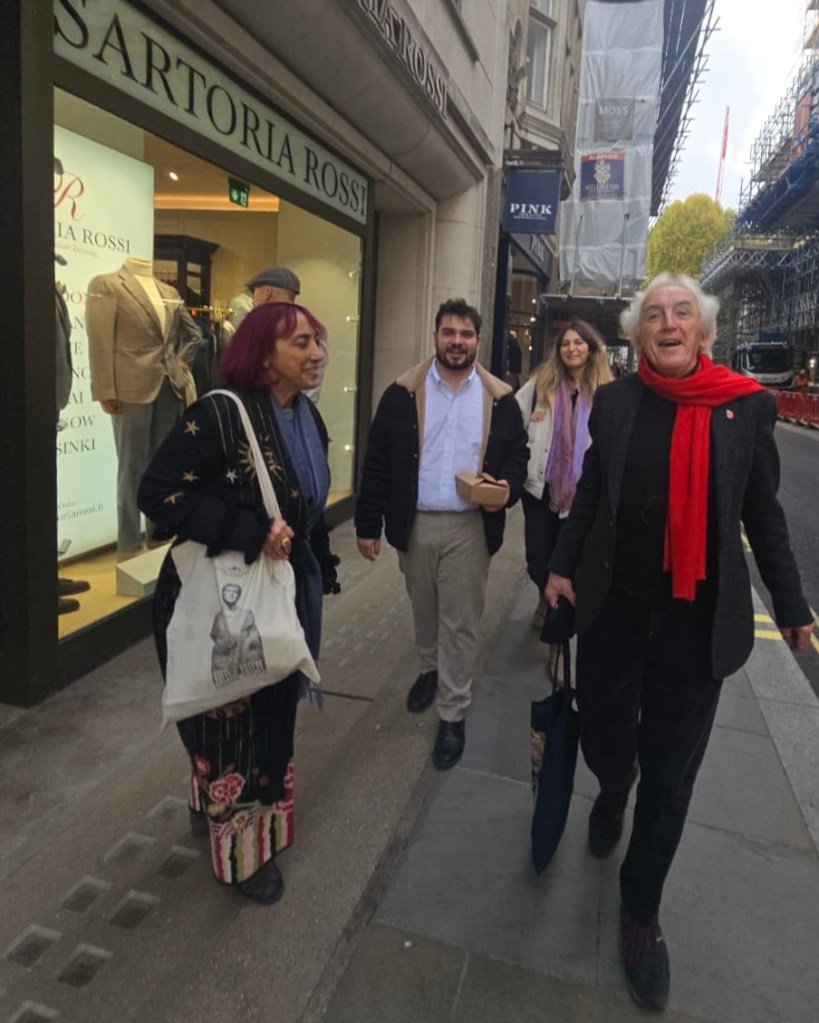
the indomitable Canan Maxton of Talent Unlimited who had invited Giuliano to play today On out way to celebrate at Yisha Xue’s club in St James’s Square photo credit Yisha Xue
Nicolò Giuliano has performed with the Bruno Maderna Conservatory Chamber Orchestra of Cesena, the “Circle Symphony Orchestra” of Padua, the “Rimini Classica” Symphony Orchestra, the “Musici Malatestiani” Ensemble, the “Marco Allegri” Symphony Orchestra, the “Fontana Mix Ensemble” Orchestra, the “Antiqva Metropoli” Orchestra, and the Bergisch Gladbach Symphony Orchestra.
Yisha Xue ( centre in red) who had invited us to her club after the concert. Giuliano and Chiara Bolognesi together with Ballet Critic Simonetta Allder
He has collaborated with conductors Jacopo Rivani, Parvi Shejazi, Antonio Raspanti, Stefano Pecci, Bernardo Lo Sterzo, and Roman Salyutov.
He has recorded for the following record labels: “Doppio Movimento”, “Movimento Classical”, IMD Music & Web, and Halidon.
In 2024, he will be on tour in Poland (Gdansk, Warsaw, and Krakow) with the “Bellini Project” in duo with Clara La Licata, and recording with the prestigious Naxos label with music by Franz Liszt and Julius Benedict. His recitals and CDs have been reviewed by the German journal Piano News, critic Christopher Axworthy, Eero Tarasti on Ampfion, Luca Ciammarughi on Amadeus Magazine, Gisela Schwarz in the “Kölner Stadtanzeiger”, and Robert Matthew Walker in “Musical Opinion.”
Giuliano feeling at home in the sumptuous surroundings of Yisha’s club
He is currently the president of the Forlì Cultura Association and artistic director of the Guido Agosti Festival in Forlì, where he annually invites prestigious pianists from around the world.
A second concert in London in the same month for a young musician who has had the courage to start a concert series in his home town of Forlì dedicated to one of the most important figures in music of the last century . Guido Agosti was born and is buried in Forlì , a disciple of Busoni, the world would flock to his class in Siena every summer to be inspired and reminded of the musical values of an interpreter who is but the humble servant of the composer.
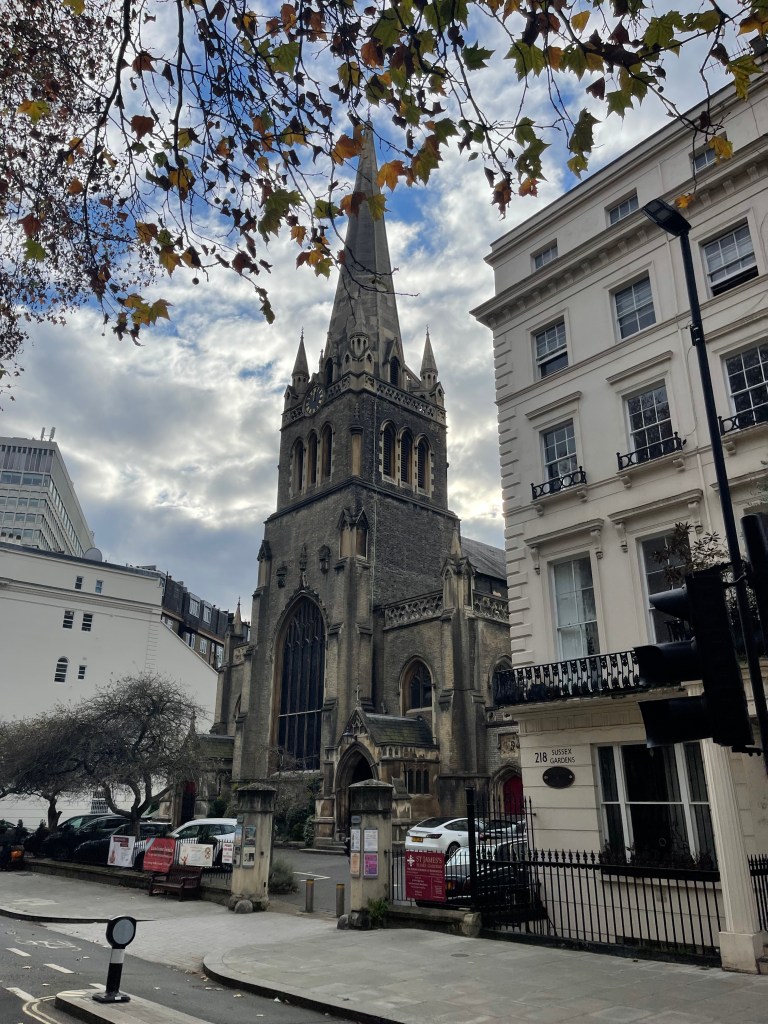
Nicolò Giuliano Tuccia in his second recital in London at St James’s Sussex Gardens began with the Sonata op 10 n 2 by Clementi . A two movement work and one of the 110 sonatas that this ‘Londoner‘ bequeathed to the world. Streams of notes of charm and beauty shaped with the ease of a master craftsman and virtuoso keyboard player. Nicolò not only played the notes with an ease and scintillating simplicity but he also imbued them with colour and beauty with above all an understanding of the overall architectural shape.
The first of Chopin’s nocturnes op 9 n.1 and 2 were played with a ravishing sense of balance where Chopin’s bel canto was shaped with poetic fantasy and beguiling freedom. In fact these five nocturnes reverberated around this noble edifice with a simple glowing beauty and subtle sense of colour . The nocturne op 37 n 1 was interrupted only by a central episode of a chorale of poignant beauty played with aristocratic poise and simplicity.The final posthumous nocturne in C minor was played with a nostalgic beauty and I was reminded that I had used it for our centennial production in Rome of Ibsen’s ‘A Dolls House’ in 1979. It has just that sense of innocent nostalgia that Nicoló captured so beautifully today.
Serenity was soon rudely interrupted by Liszt’s tragic tone poem of Hero and Leander.
The second Ballade in B minor began with the menacing waves of turbulence out of which emerges from the depths a soulful outpouring of dramatic intensity. Passionate cries were contrasted with desolate isolation as Nicoló recounted this harrowing tale with breathtaking daring as cascades of notes filled this church only to be silenced by the soulful beauty of longing and nostalgia.
Alberto Portugheis Simonetta Allder Bobby Chen
A journey that Nicoló could allow to unfold with remarkable unity as breathtaking virtuosity was contrasted with decadent beauty.
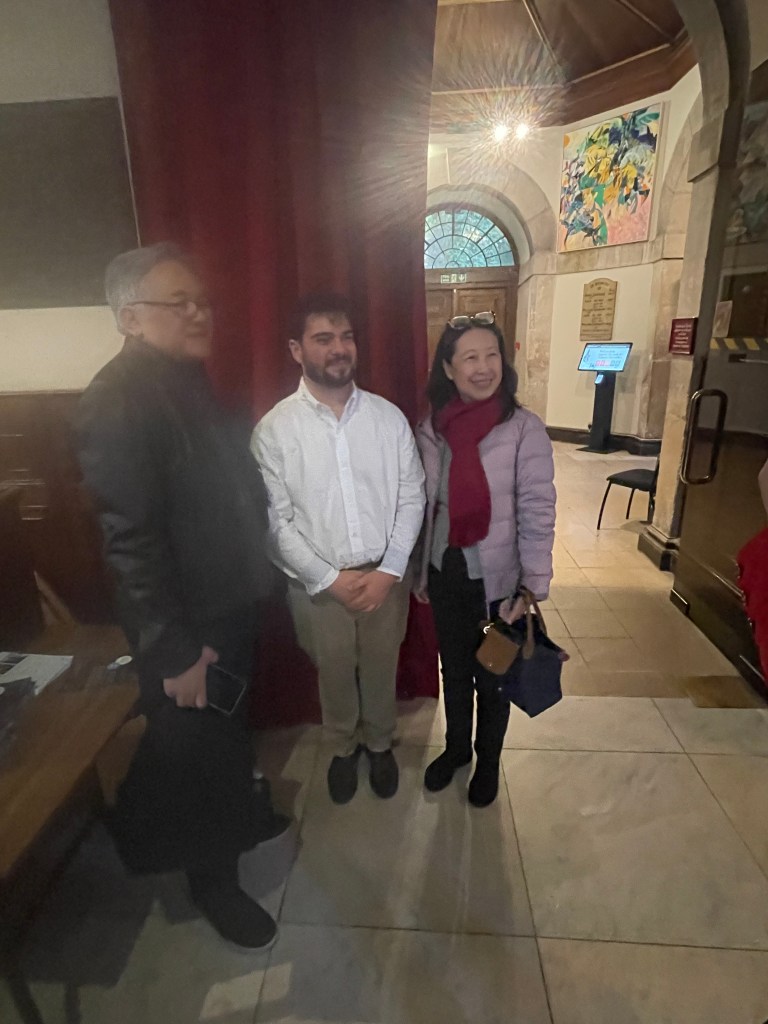
Bobby Chen with NicolòSimonetta Allder Rome Ballet Critic and PR for Spoleto Festival Alberto Portugheis with Bobby Chen
Two Preludes by Debussy took us from the desolation of lonesome footsteps in the snow to the joyous Neapolitan festivities with the radiant hussle and bustle which is so much part of Capri, the jewel that shines so brilliantly in the bay of Naples .
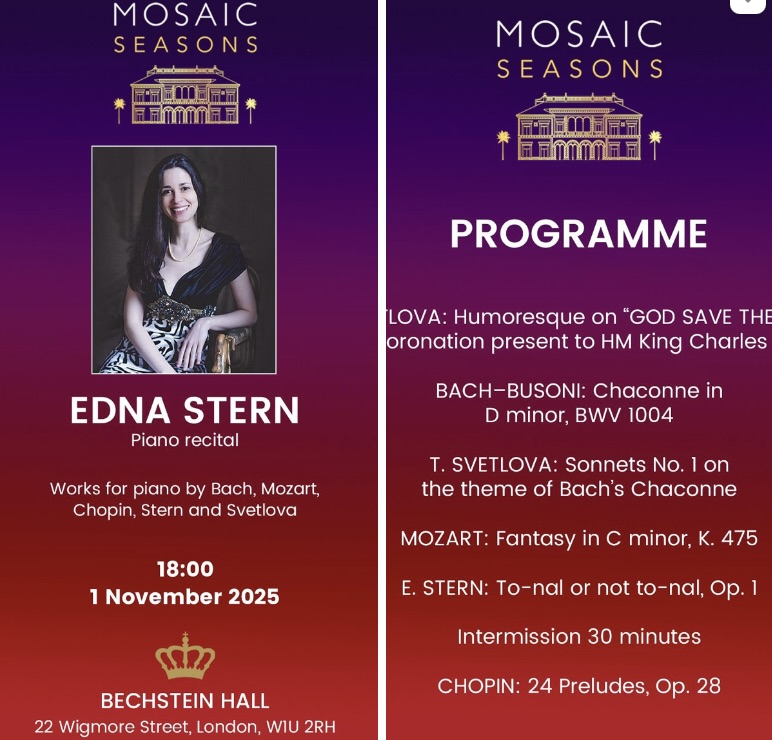
T. SVETLOVA: Sonnets No. 1 on the theme of Bach’s Chaconne
MOZART: Fantasy in C minor, K. 475
E. STERN: To-nal or not to-nal, Op. 1
Intermission 30 minutes
CHOPIN: 24 Preludes, Op. 28
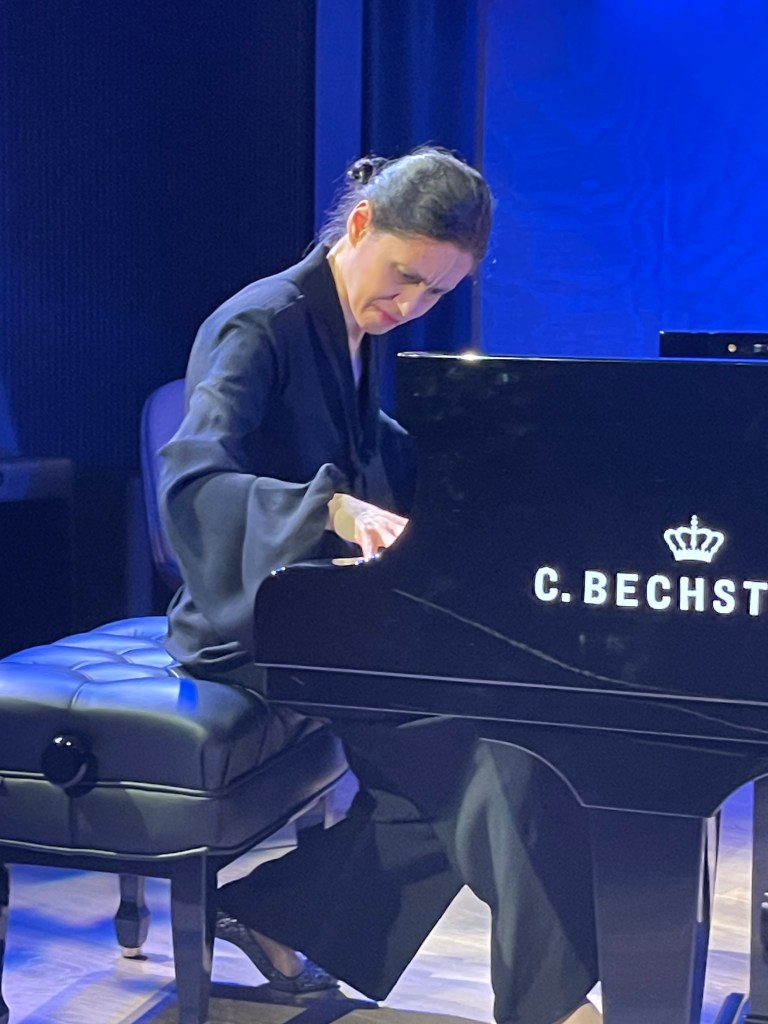
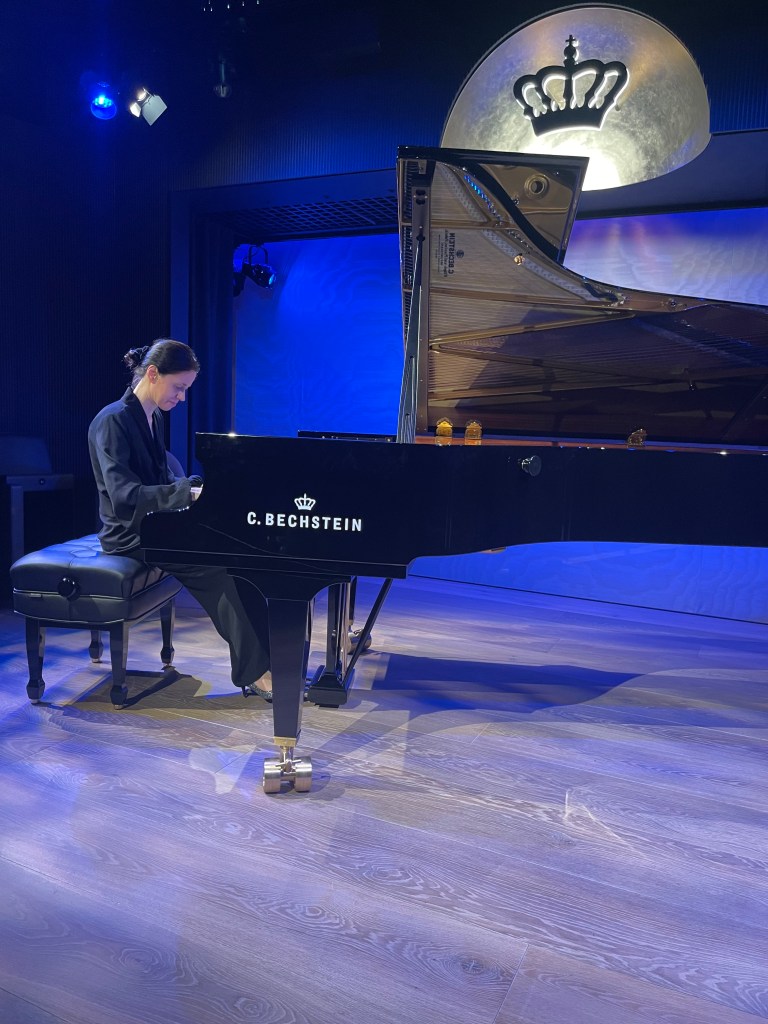
Some very beautiful playing in which Madame Stern relied more on striving to find the soul of the music with sounds of fluidity and subtle beauty than the more usual hard hitting accuracy that we are becoming ever more accustomed to these days! It was Anton Rubinstein who declared that the pedal was the ‘soul of the piano’ and it was this which was evident from the very first notes of Tatiana Svetlova’s atmospheric homage to HM King Charles III on his Coronation. A mirage of ravishing sounds where on the horizon could be overheard “God save the King”. Tradition has it that we should stand as for the ‘Hallelujah’ Chorus from Handel’s Messiah. No one moved as they were mesmerised by the glistening beauty that flowed with such beautiful movements from Madame Stern’s hands and arms. It was very noticeable the natural use of the whole of the arm like a ballet dancer, swimming with radiant ease in a magic lake of sounds.
It was the same sounds that she brought to Busoni’s recreation of the greatest work ever written for solo violin and is by J.S. Bach. Ysaÿe had tried to match this masterpiece with six of his own solo violin sonatas but ended up by having to quote from the ‘Dies Irae’ and much else without ever coming near to Bach! Madame Stern played it with the freedom of a composer on a voyage of discovery bringing a great sense of style and individuality to the extraordinary chameleonic changes of character. It was remarkable that even with these excursions to stop and stare that she never lost sight of the architectural shape of this monumental Gothic Cathedral.
confiding with her student and valiant page turner Victor Louis Bak
Tatiana Svetlova’s Sonnet n.1 on the Chaconne theme was another excursion into her atmospheric world of improvised beauty. Moments of sudden outbursts were played with crystalline clarity and rhythmic authority that just contrasted with this world of dreams that Madame Svetlova shares with us so serenely.
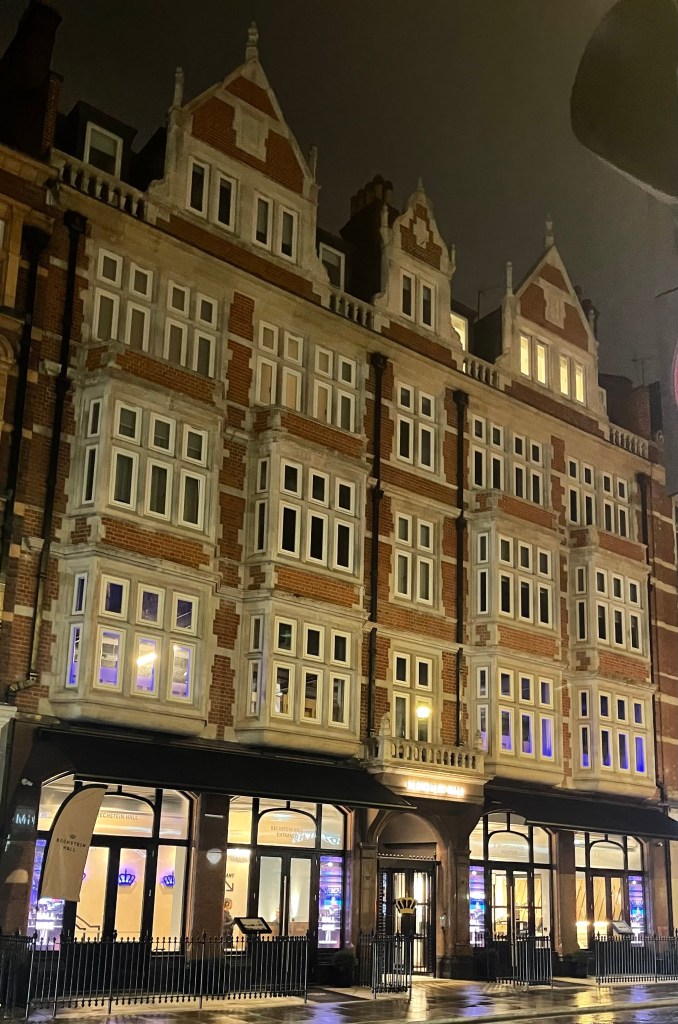
Mozart’s C minor Fantasy was played with operatic colouring and a sense of character without any hard edges but with a palette of sounds that brought this masterpiece vividly to it’s operatic life and made us sorry that it could not have been the enticing prologue to the C minor Sonata. Madame Stern’s own play on words and sounds in ‘Tonal or atonal’ she certainly nailed ,and it cleared and cleansed the air before tasting the exquisite wines that Bechstein has in its cellars downstairs.
After such Bacchian delights we were treated to Chopin’s 24 Problems op 28 . This was Fou Ts’ongs description of the Preludes which he, like Cortot , would play in concert together with the 24 Études op 10 and 25 even playing the three posthumous studies as encores. A marathon that Madame Stern had no need to match as she played the Preludes with exquisite sounds and a freedom with a play of balance that illuminated these gems as rarely can happen in larger more exposed spaces. She created in this unique space a sense of intimacy where beauty and style took the place of brutality and brilliance. The final Prelude was a case in point where her pointing of the thumb notes in the left hand with a subtle use of pedal allowed her to shape Chopin’s miraculously mellifluous outpouring with beauty and aristocratic authority rather than brutality and bruising showmanship. Two of her own pieces showed off not only her voice but more importantly her sense of improvisation in which her sudden total conviction and searing intensity ignited the comfort zone that she had enveloped us in before this unexpected outburst of dynamic drive and passionate virtuosity. Her own soothing Lullaby she sang and played and it took us back into the cocoon of beauty and elegance that she had shared with us all evening .
Edna Stern began her studies in Israel with Viktor Derevianko, a student of Heinrich Neuhaus. She continued studying with Krystian Zimerman at the Basel Hochschule and with Leon Fleisher at the Peabody Institute and at the Lake Como International Piano Foundation. Her repertoire ranges from Bach to Berio. Her recordings are highly praised by critics, receiving such awards as Diapason d’Or, Diapason Découverte, Arte Best CD, Gramophone upcoming artist, and Sélection Le Monde. Her last recording, dedicated to Hélène de Montgeroult received a Critic’s Choice of the Year 2017 of the Gramophone Magazine and Choice of France Musique, the French radio.
Edna Stern has performed at prestigious halls and festivals such as the Philharmonie of Paris, Concertgebouw of Amsterdam, Munich’s Hekulessaal, Paris’ Châtelet Theater, Moscow’s Music-House, Petronas in Kuala Lumpur and Musashino hall in Tokyo; performing in solo recitals and with orchestras, with conductors such as Claus Peter Flor and Andris Nelsons. Stern gives masterclasses all over the world, in such places as the CNSM of Paris, Rutgers University, and Tel-Aviv Zubin Mehta School of Music.
She has been a professor at the Royal College of London since 2009 and her musical activities include working with great artists in other art fields, like film director Amos Gitaï, as well as Etoile/Leading principal dancer from the Paris Opera, Agnès Letestu.
Musical Profile
Stern built a reputation as an interpreter who does not shrink from taking strong and unconventional stands and at the same time respectful of the historical tradition of interpretation and the heritage of her own teachers. She is especially known for her Bach interpretation which received awards and critical praise throughout Europe (Gold Diapason, Arte best cd, 10/10 ClassicToday, 4 stars Classica Magazine).
“With Edna Stern we avoid the clichés. Her playing is neither romantic nor baroque. It takes on perfectly the serious tone of the composer without falling into coldness or rigidity. It is at the same time an instrumental revelation and a clear sign that music is indeed alive.” – Mathias Heizmann, Arte/2009
While studying with Krystian Zimerman at the Basel Hochschule in Switzerland, she also took advantage of the famous Schola Cantorum Basilensis and its collection of authentic instruments, developing thus another facet to her musical approach. For the 2010 celebration of the birth of Chopin, Paris’ museum of instruments of the Paris Philharmonie, she was chosen as the pianist to record for their series on the museum’s original instrument, a Pleyel from 1842. This recording was released with Naïve and got enthusiastic reviews:
“The subtle chemistry of a successful Chopin. This CD has eclipsed all that we’ve heard so far in the commemoration of the bicentenary of Chopin’s birth.” – Katchi Sinna, Muzikzen 2010
Her interest in different instruments and sounds set her apart as a Mozart player and her recording of Mozart’s Concerti was chosen in France by the newspaper Le Monde as one of the 10 top CD’s of 2010, and was as well praised in the German and English critique:
“It is fascinating to hear Edna Stern’s perfect, mature and effortless technique, which she does not however use for the purpose of bragging, but puts discreetly at the service of music. She succeeds to the extent of completely disappearing behind the music… developing a whole unexpected wealth of nuances and a variety of tone colors. …a spontaneous joyful playing with beauty and respect: my Mozart- Ideal through this CD has become much closer.” – Bayrische Rundfunk, 2010
“This is an artist with a delicate touch who likes to shape every detail of phrasing and articulation as if polishing a tiny gem.” – Gramophone Magazine, 2011
Edna Stern has a special interest in interpreting and rediscovering forgotten composers. Her recording “Piano of Enlightenment” presented the music of nowadays under-estimated composers such as Galuppi and C.P. E. Bach alongside pieces by J.S. Bach, Haydn and Mozart. Her latest Montgeroult recording published by Orchid Classics was awarded a Critic’s Choice of the Year 2017 by Gramophone Magazine and Choice France Musique.
BBC Magazine writes: “Stern, playing and 1860 Pleyel trumps Bruno Robillard and Nicolas Stavy’s recordings in colour, style and panache. Textures shimmer in the Etude No. 37, the melody speaks eloquently in No. 26 and in the D minor Op. 107, the shades of Chopin Revolutionary Etude are made obvious.”
And Gramophone: “Edna Stern deserves the highest praise for resurrecting it, and has the fleet fingers and sensitive musicianship necessary to make the very best case for it.”
A very meaningful and important program she has been playing these last few years features Sonatas written by Jewish Composers from Theresinstadt. She has been the first to perform and record Karel Reiner’s 2nd Piano Sonata “Victory”. Her performance in New York earned her an immediate invitation to perform in Los Angeles at the Colburn School of Music as part of the “Recovered Voices” project of James Conlon.
Edna Stern recorded fifteen albums spanning the Baroque (3× J.S. Bach, C.P.E. Bach), Classical (Mozart Concerti, Piano of Enlightenment, 3× Beethoven Sonatas, Montgeroult, Johann Simon Mayr Concerti), Romantic (Schumann, 2× Chopin) and 20th century (Fire of Black and White album) periods.
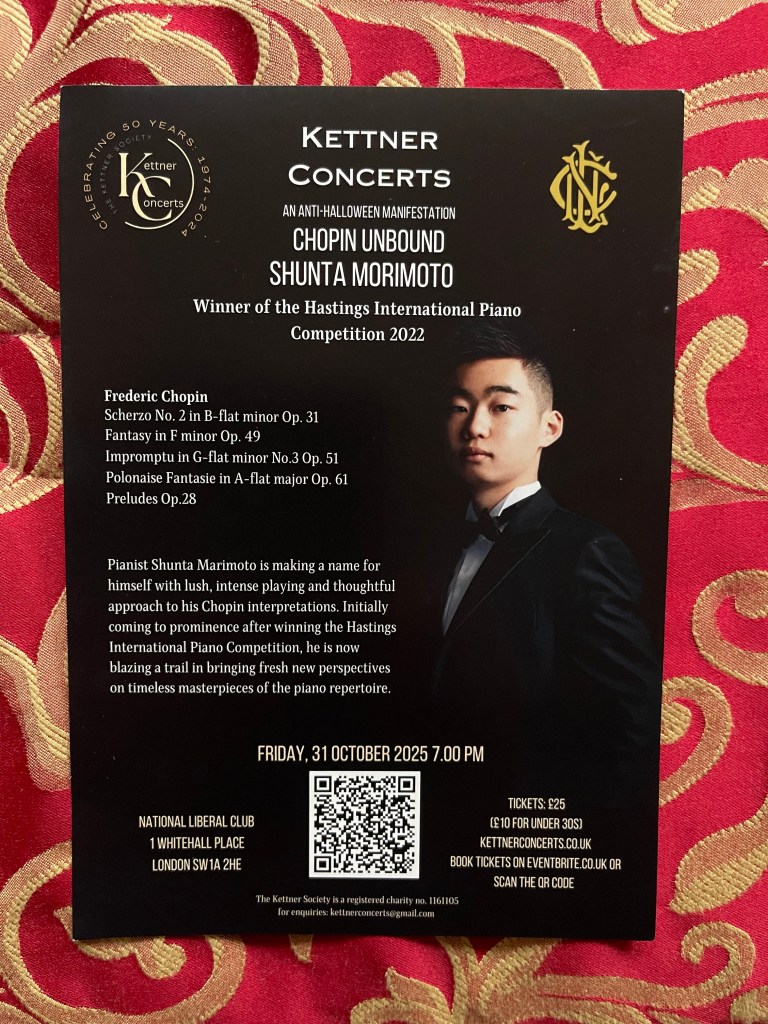
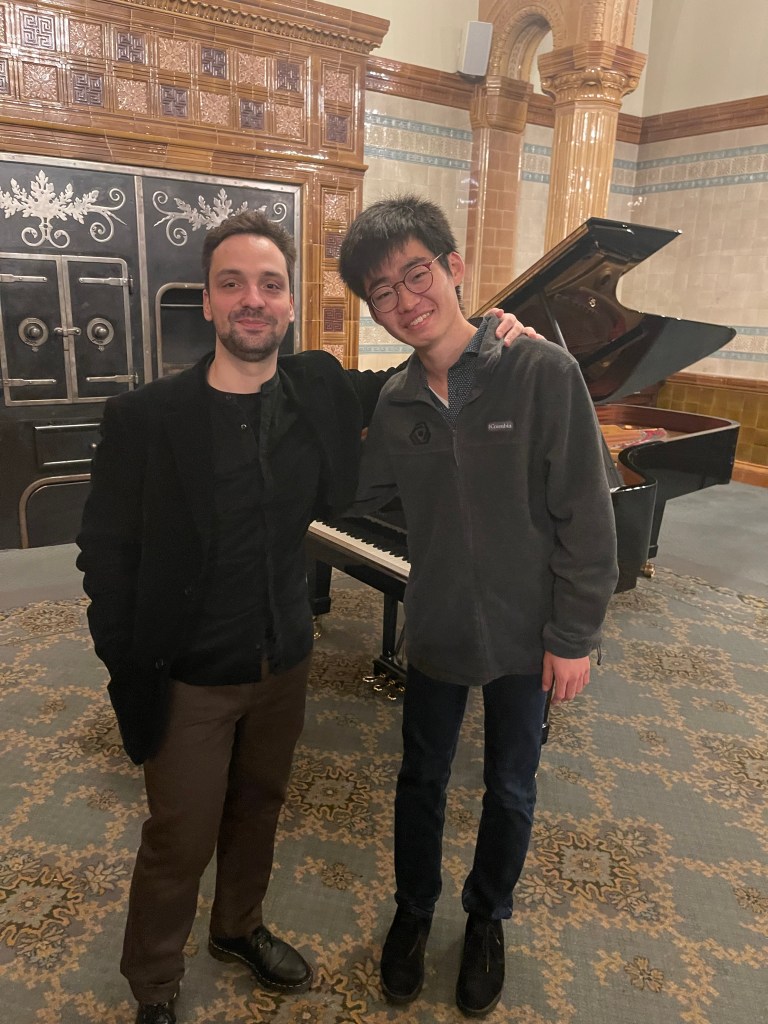
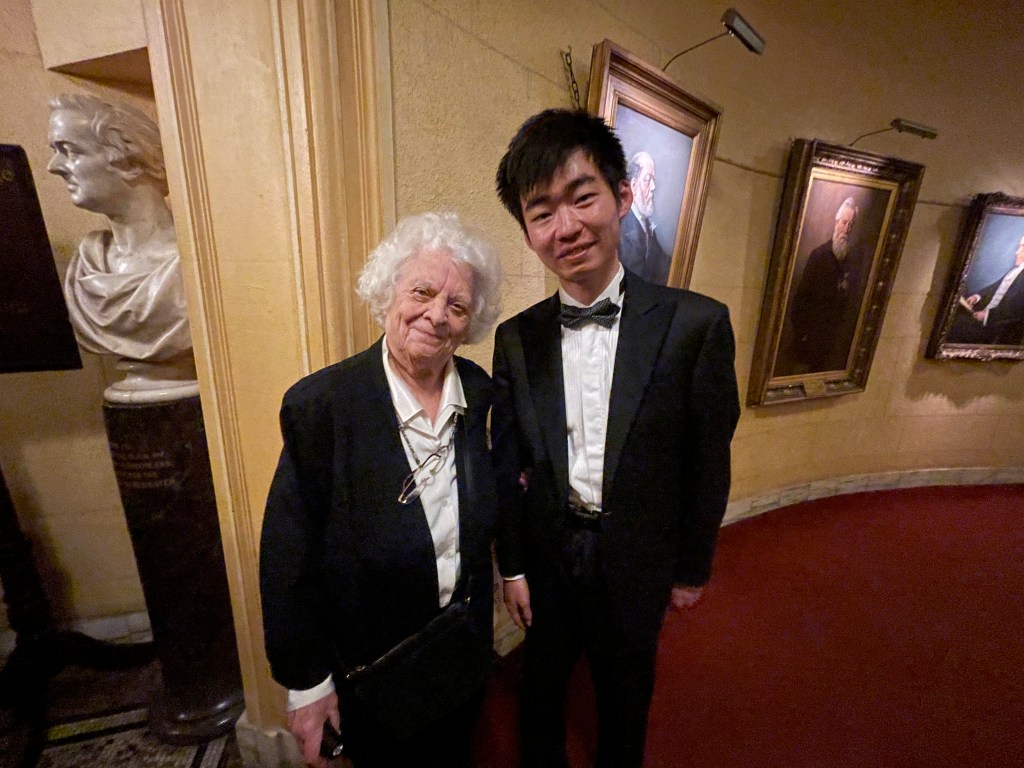
Shunta Morimoto also from the International Piano Academy Lake Como where Edna Stern studied with Leon Fleisher ……
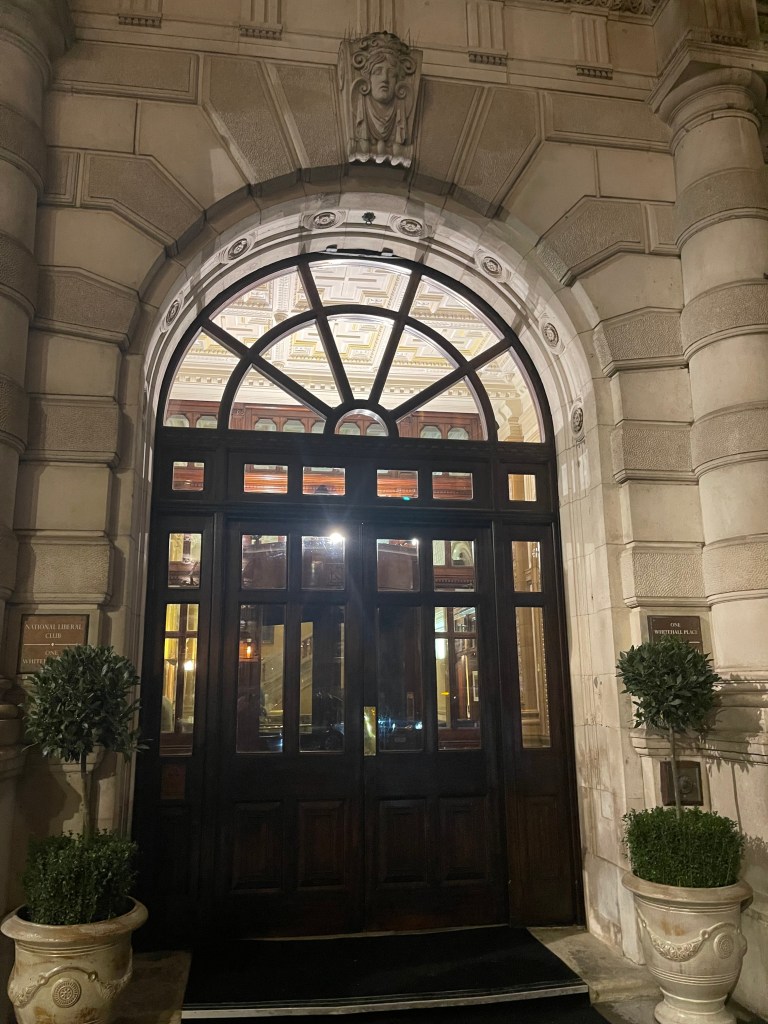
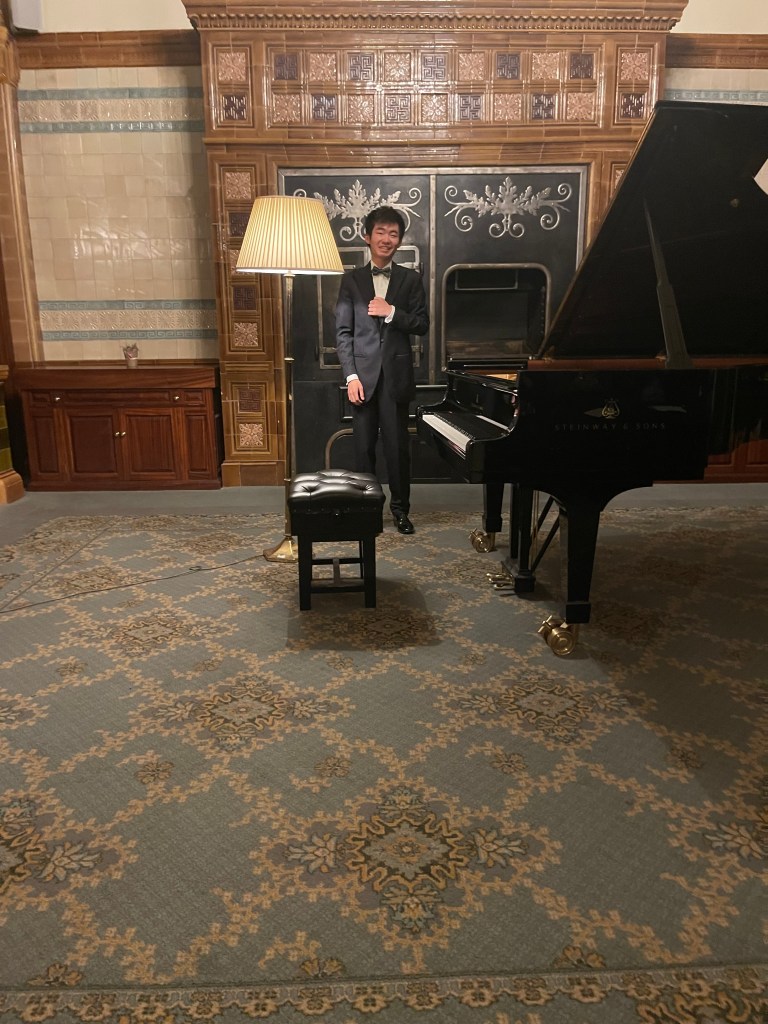
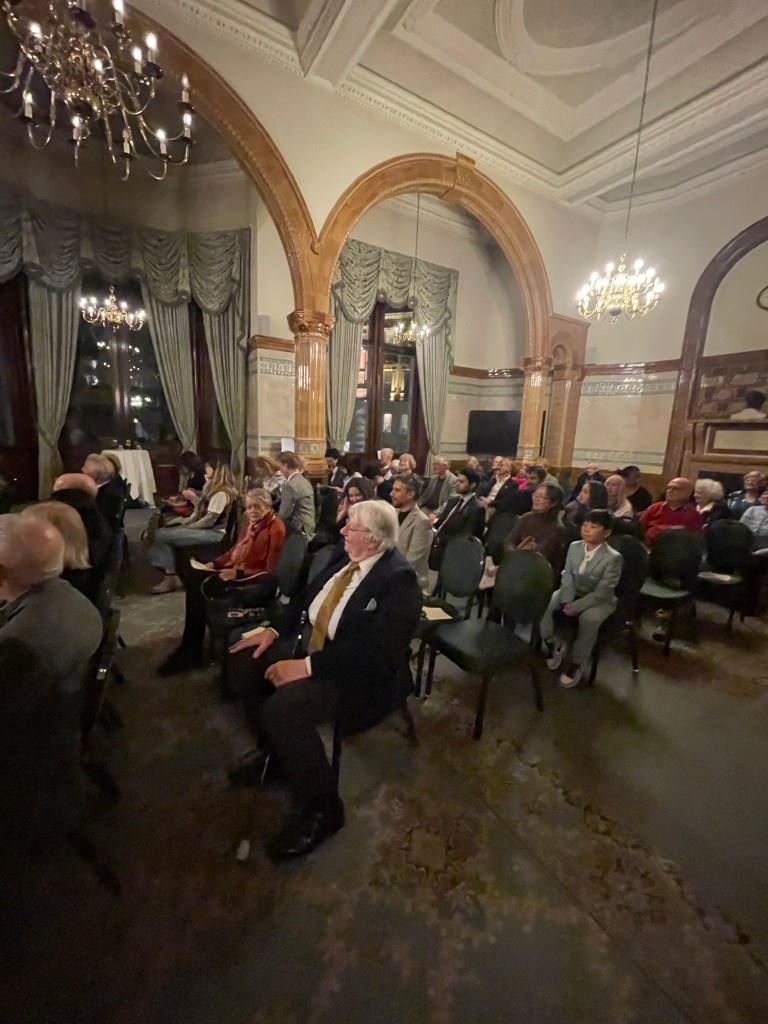
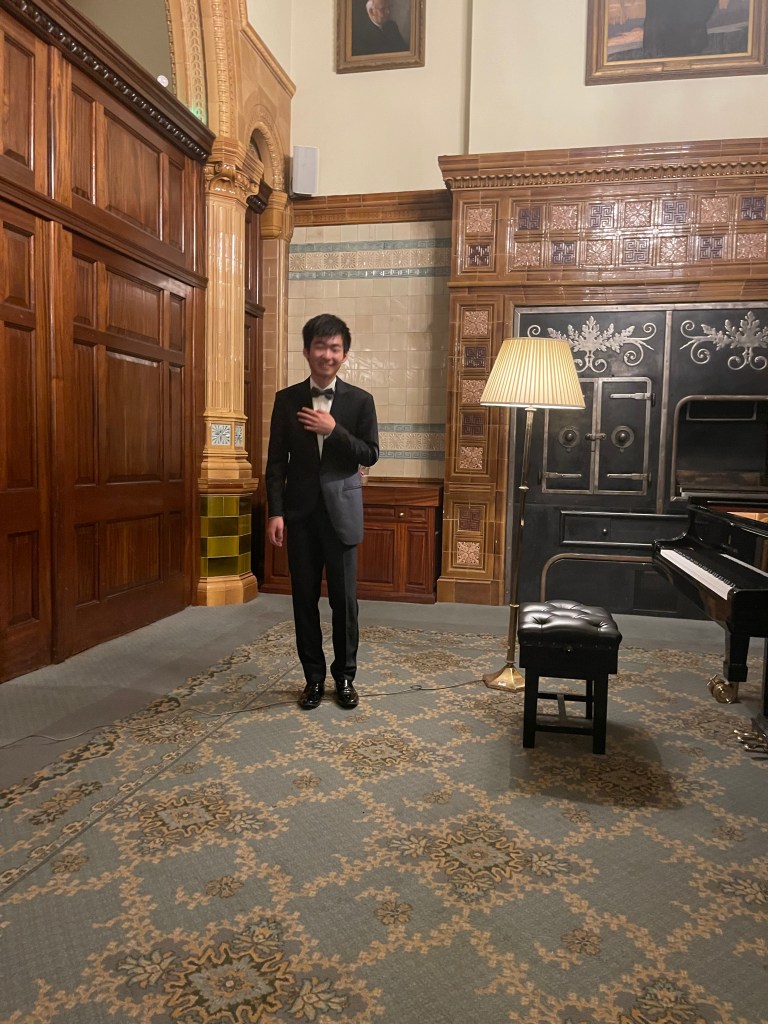
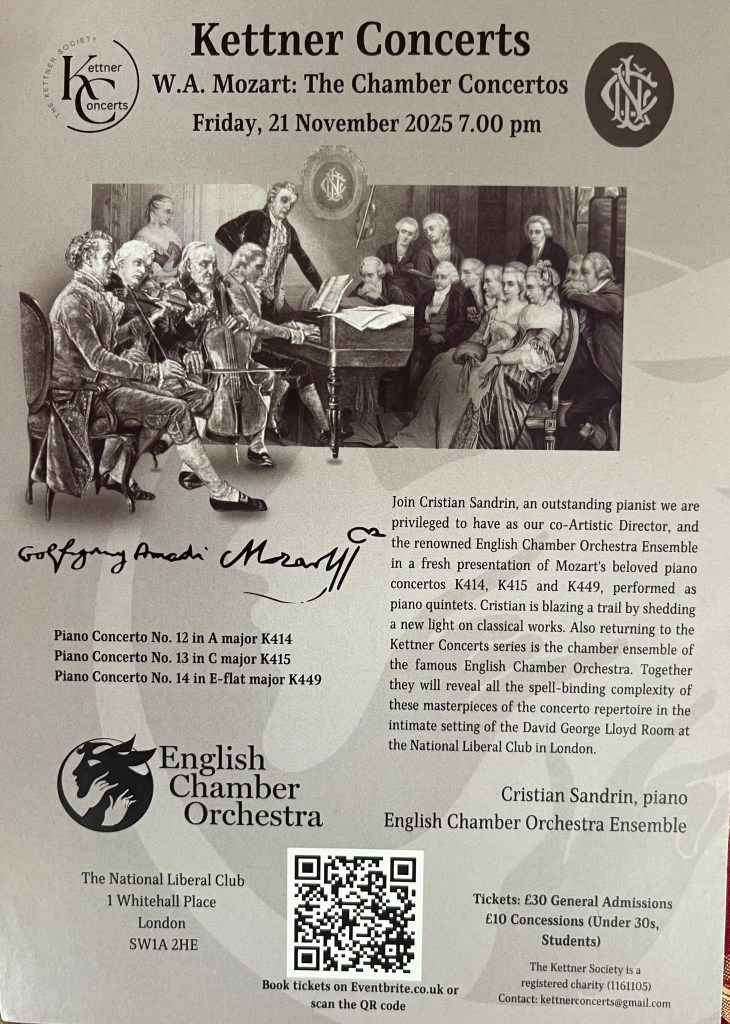
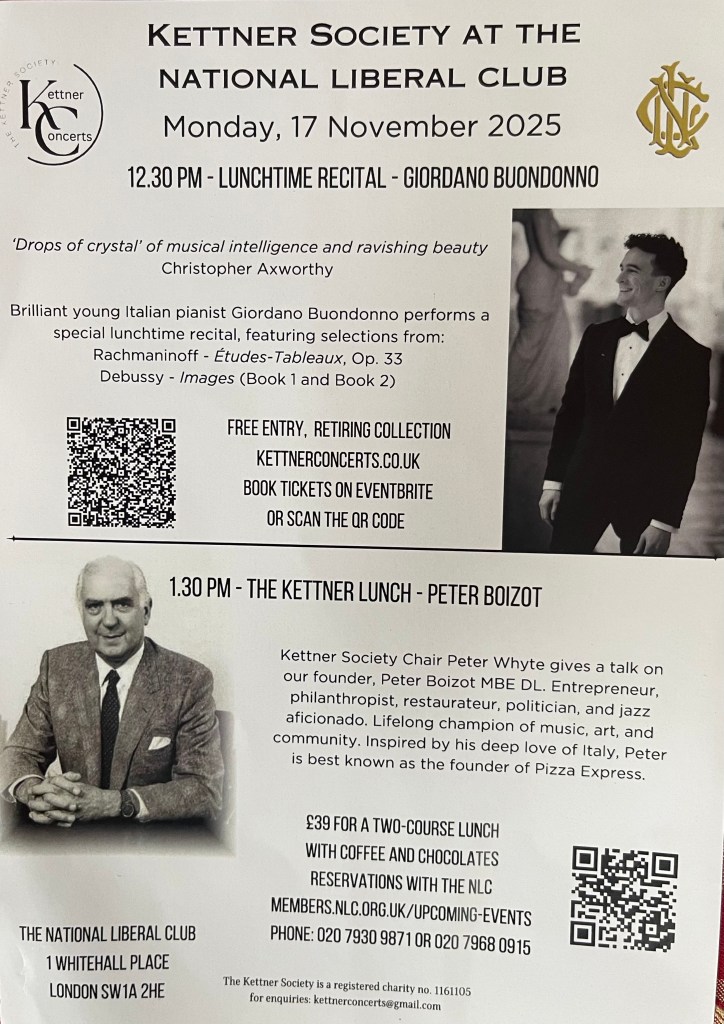
Last night in the National Liberal Club with Nicolò Tuccia and fiancé Chiara Bolognesi who have inaugurated their Guido Agosti concert Series in Forlì , the city where the great disciple of Busoni was born and is buried. Nicolò will play in St James Piccadilly tomorrow Monday 3rd Nov at 1.10 for Canan Maxton’s remarkable Talent Unlimited Trust that helps talented young musicians find concerts in London where Victor Louis Bak had played for her toohttps://christopheraxworthymusiccommentary.com/2025/04/14/homage-to-guido-agosti-gala-piano-series-in-forli-2025/
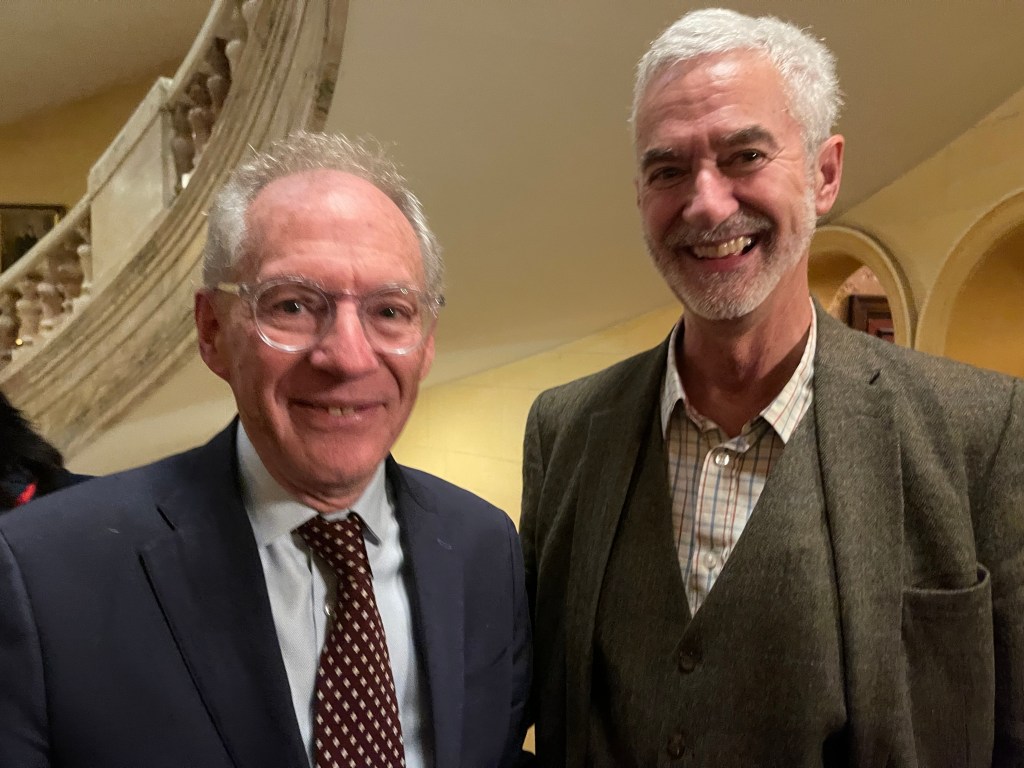
with Cristian Sandrin co Artistic director the indomitable Mary Orr holding the fort having prepared the programme
Overwhelmed by Chopin playing that has not moved me so much since we awaited Rubinstein’s yearly recitals in London. Can it really have been 50 years ago because it still remains so vividly etched in my memory.
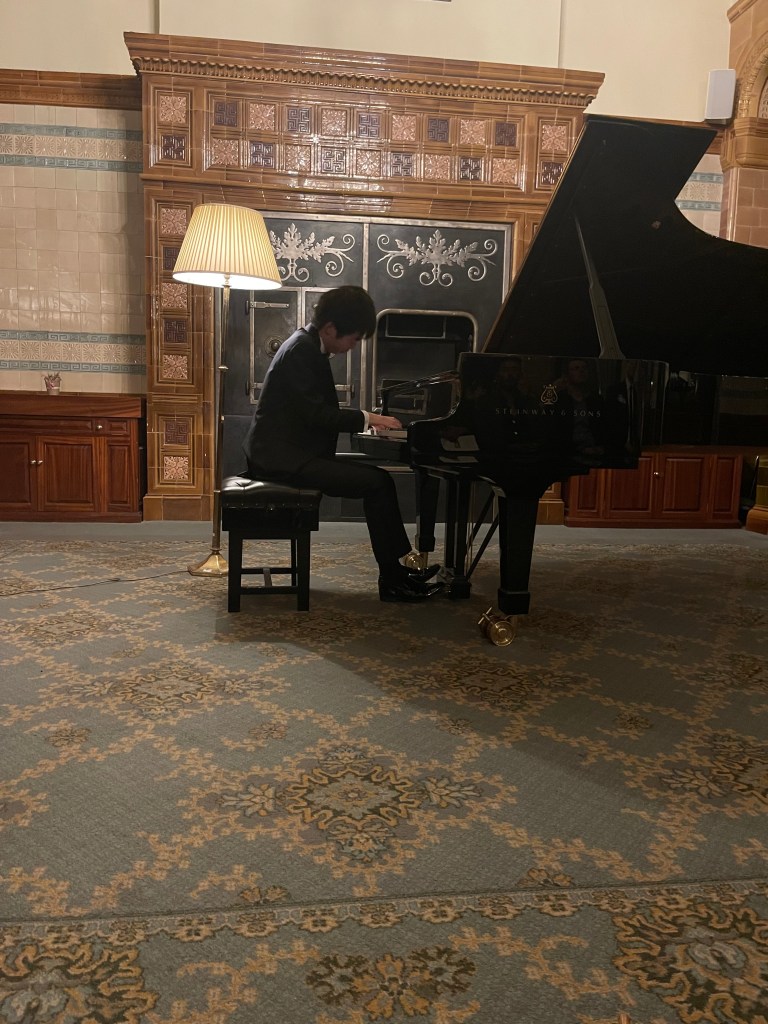
We have heard much Chopin in the past weeks with the competition in Warsaw but nothing comparable to what was heard in the Liberal club last night .
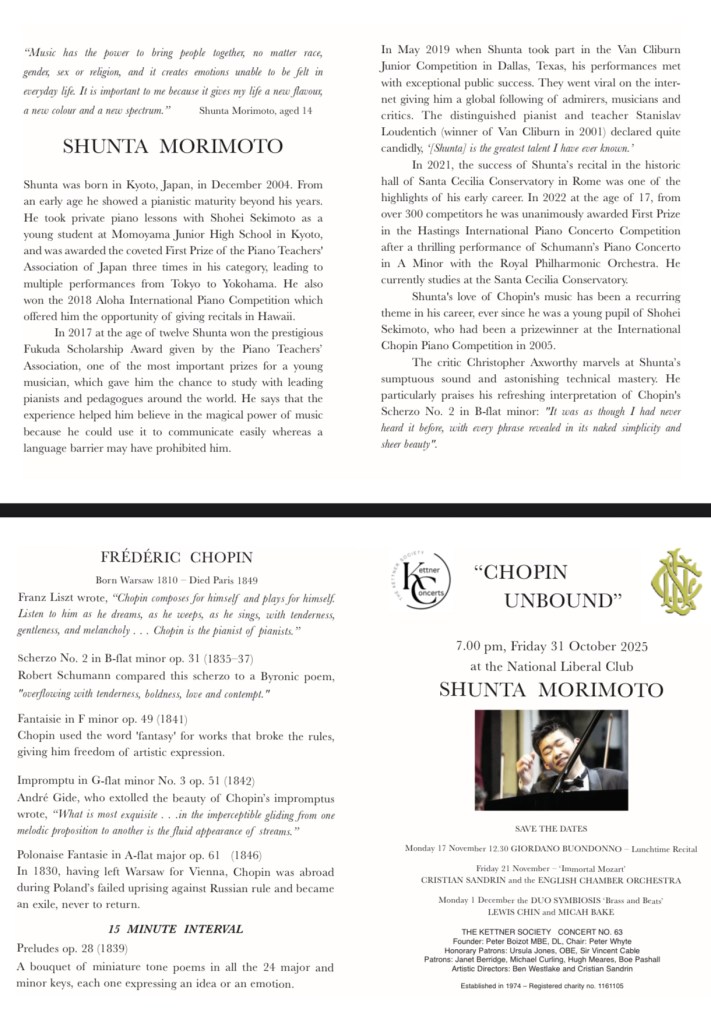
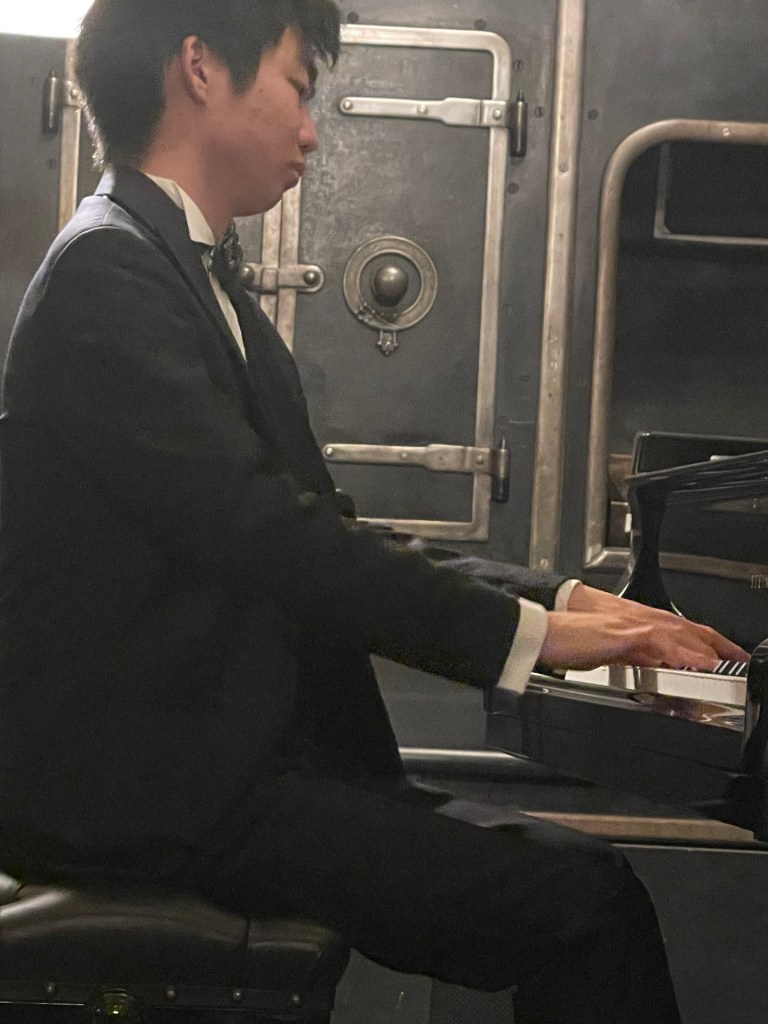
‘Words without thought no more to heaven go’ Nadia Boulanger used to exhort the students that would flock to her studio in Paris . She could not have found a more attentive disciple than Shunta Morimoto as he played with the simplicity and aristocratic mastery of Rubinstein who made the works of Chopin his own, speaking so directly to our heart and soul.
Stanisław Ioudenitch described Shunta Morimoto on awarding the 17 year old boy the Gold Medal in Hastings as the greatest talent he has ever known.
Last night Shunta has come of age and quite simply at 21 he is ready to conquer the hearts and souls of the greatest concert halls worldwide. Much needed in this age of stale CD perfection and as Gilels used to say, live music making is like fresh food compared to the stale canned food perfection of recordings. Public performances are a two way experience where audience and soloist are united in a quasi religious ritual.
Mitsuko Uchida explained in the green room after a memorable concert in Perugia why she was against ‘selfies ‘ or pirate recordings on phones. ‘A performance should remain as a memory that becomes more beautiful with time and not just a printed copy of a moment that will turn brown at the edges with time’. Shunta is no longer part of the circus arena that the International Competition circuit has inevitably become, with its comparative performances between super trained young hero’s. What we heard last night cannot be compared because Shunta takes us with him on a wave of sound and emotion, a voyage of discovery where time stands still as we stop and stare hypnotised by music making that really can speak louder than words…..just as I remember (sic) from Rubinstein.Those present last night will never forget the voyage that this young man shared so generously with us. As Rubinstein so rightly said ‘You cannot teach talent ‘ https://youtu.be/gex0sOR7XZ0?si=WkUGp9eoFYCdkrG1
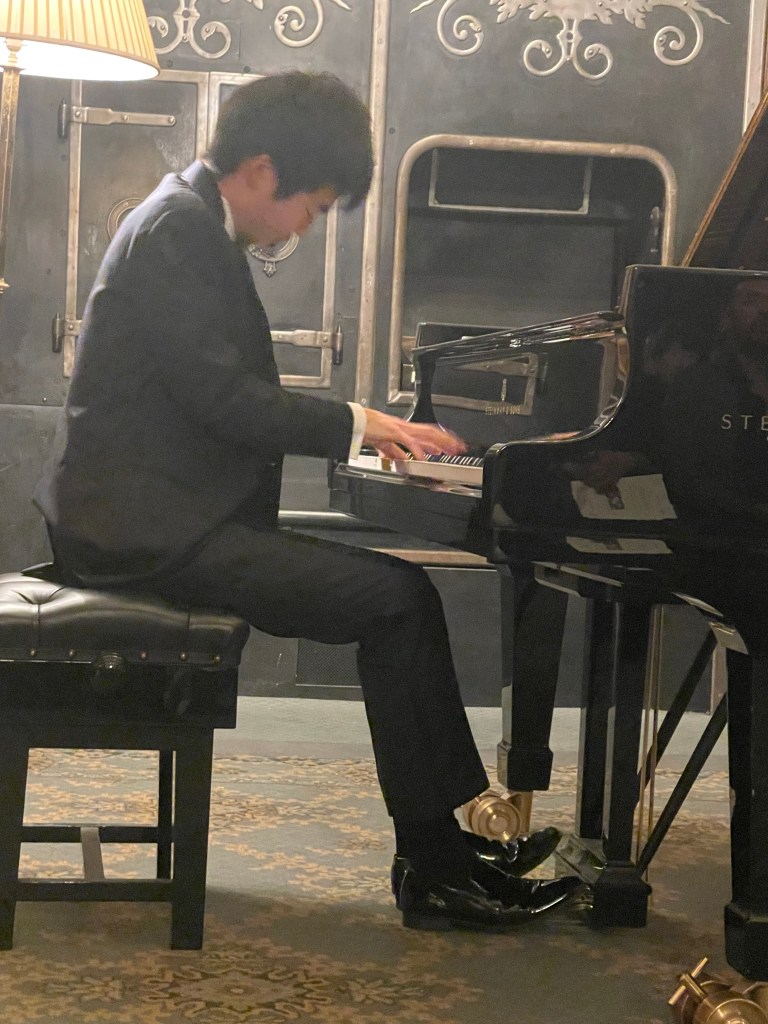
From the very first notes we were were immediately immersed into a world of drama, fantasy and passionate involvement . The Scherzo in B flat minor was played with an extraordinary range of dynamics which seemed almost like hearing it for the first time. And yet everything was written in the score for those ,like Shunta, who can delve deeply. The ‘sostenuto’ was of whispered beauty ‘sotto voce’ and was played with a stillness and a wondrous sense of discovery. Building to an overwhelming climax that was fearless and breathtaking for its audacity and total conviction.
The Impromptu in G flat was next in his well thought out programme and was played with seductive beauty with an insinuating rubato and the exquisite legato of French elegance. The beautifully expressive tenor melody of the central episode entered as if from afar gradually coming closer with passionate insistence before the magically whispered return of the opening melodic outpouring of elegance and refined good taste. No one dared move as the ominous opening of the Fantaisie was heard in the distance without breaking the spell that had been created. Here was a master story teller where every note had a meaning of extraordinary potency. An explosion of passion and mastery that was at times quite overwhelming. Waves of arpeggios that were mere wafts of sound leading to the carefully placed pianissimi G flat octaves that herald the change of key for the whispered beauty of the ‘Lento sostenuto’. Timeless confessions of extraordinary poetic beauty were suddenly interrupted by a single sharp chord ,as marked quite clearly in the score. An eruption as the first episode returned , but leading this time to a coda and whispered cadenza with an extraordinary pedal effect. William Naboré, Shunta’s mentor for the past five years in Rome, had told me of the effect of holding silently the E flat that allowed the cadenza to reverberate without any pedal and which Shunta played to perfection with ghostly effect. It was the same holding silently of the bass note in the opening of the Polonaise Fantasie that allowed for etherial clarity as the chords were allowed to reverberate over the entire keyboard. A whispered fantasie with the interruption of the Polonaise rhythm but played mezzo forte on a whirlwind of nobility and aristocratic elegance. Coming to a rest with four chords played with golden beauty as the ‘Poco più lento’ opened on a velvet carpet of sumptuous beauty and etherial magic. Trills that became mere vibrations in Shunta’s poetic hands as this extraordinarily original work built to the climax that was played with fearless abandon and mastery.
After a short interval Shunta returned to play the twenty four preludes op 28. Fou Ts’ong may have described them as twenty four problems but Shunta played them with extraordinary poetic mastery. Of course the sixteenth was no problem for Shunta who played this brilliant étude as a searing mass of smouldering energy. It was the fourth and the seventh that was so remarkable, though, where so few notes could mean so much . The deep bass notes of the seventeenth I have never heard played with such depth and meaning just as the twenty fourth was not melody and accompaniment but a whole cauldron of passionate urgency. There was a radiance and simplicity to the ‘Raindrop’ Prelude where his incredible control of sound in the central episode made the return of the melody even more expressive and radiant. A ‘tour de force’ of mastery and poetic understanding combined with an intelligence that could delve deep into the score and find unexpected beauty.It was as though the so-called Chopin tradition had never existed, and it was just Shunta and Chopin recreating the music as if the notes were still wet on the page. Two waltzes op 42 and op 70 n. 3 were offered as encores to a very enthusiastic audience, and were played with impeccable style and beguiling insinuation. A refined palette of colours that could recreate these miniature masterpieces with imagination and aristocratic style.







































 ChristopherAxworthy-MusicCommentary