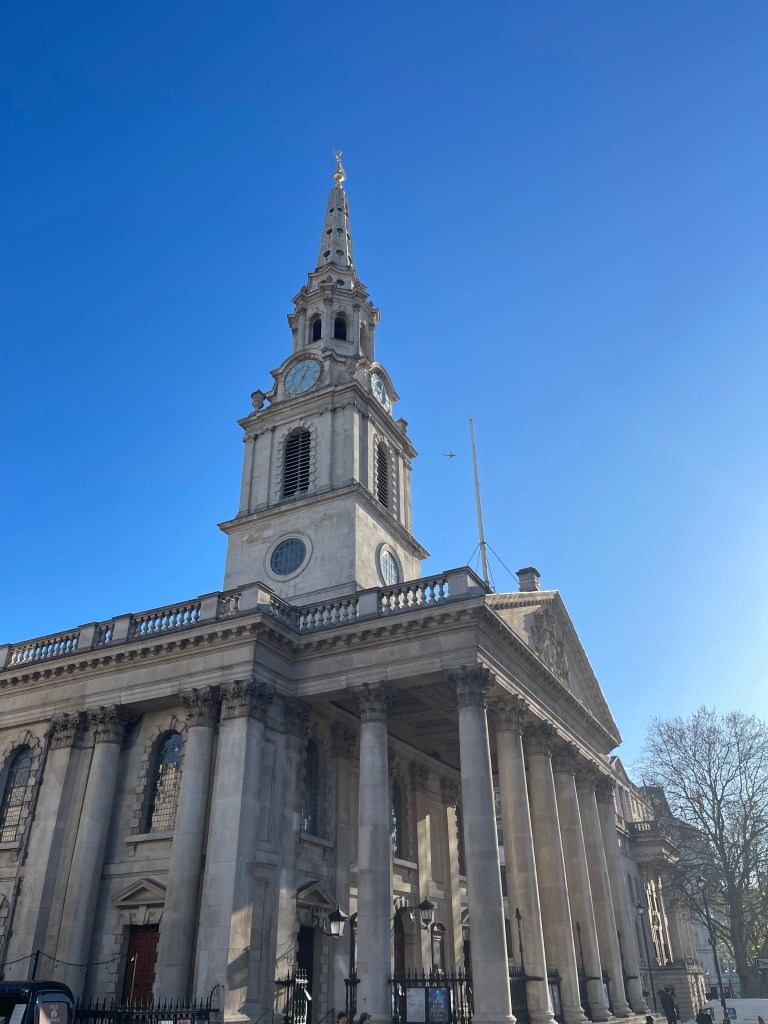
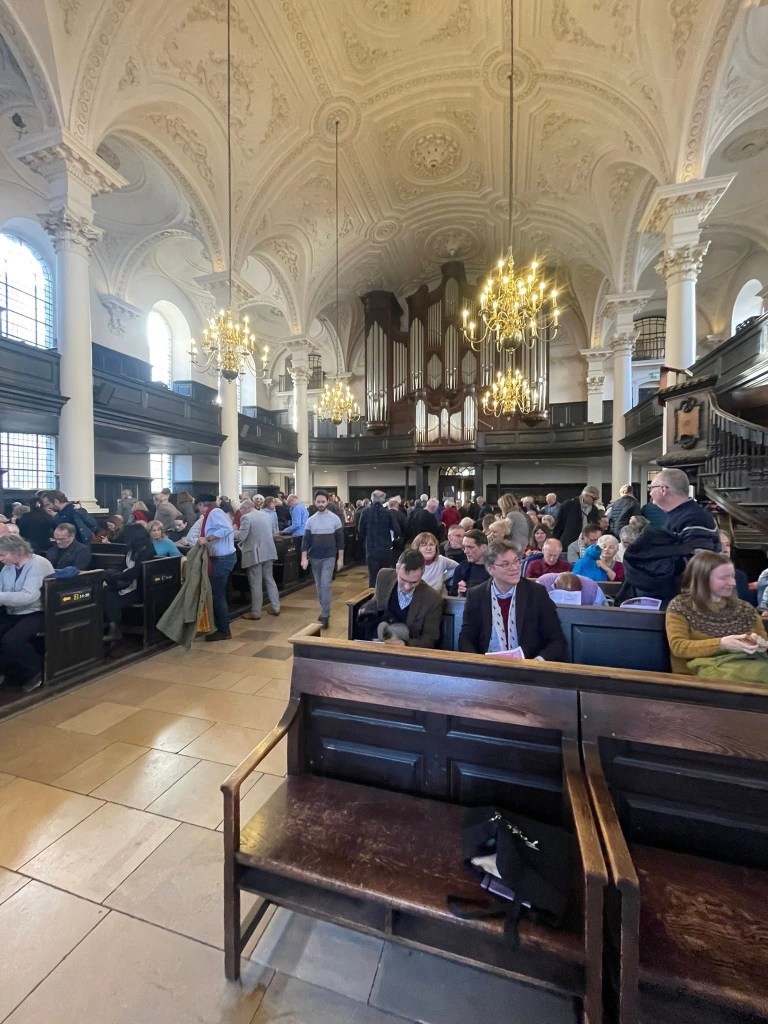
George Fu at St Martin in the Fields with Bach’s Goldberg Variations. Played with simplicity and mastery, bowing before this great monument as he brought each variation vividly to life.
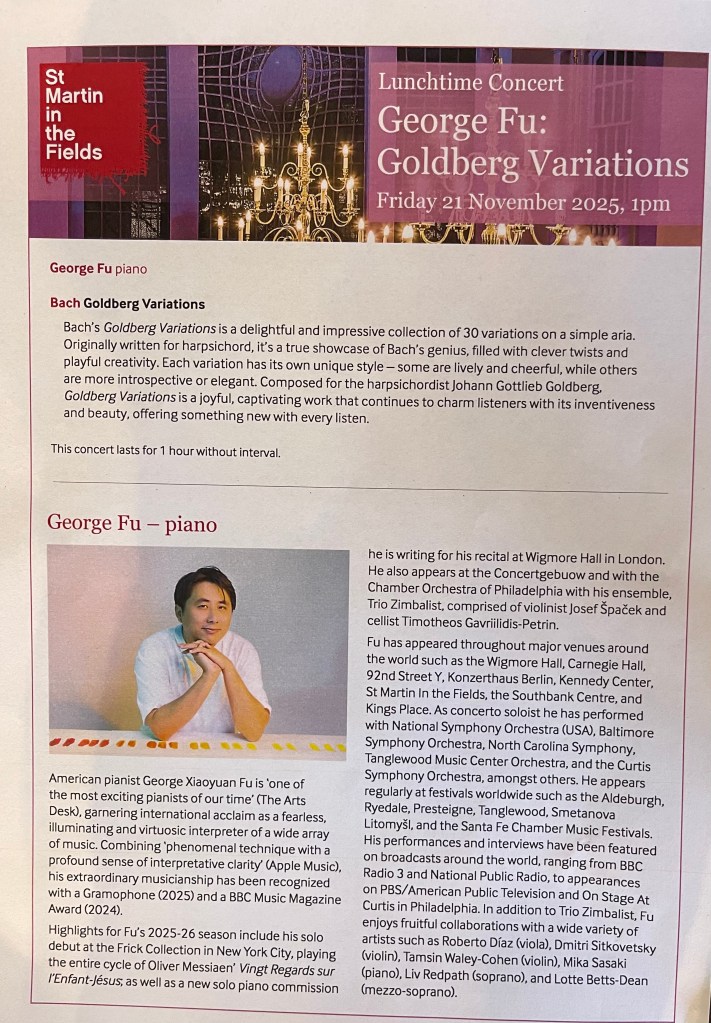

Written to relieve the tedium of the sleepless nights of Count von Kayserling who had commissioned Bach to write a work for the court harpsichordist Johann Goldberg to play to him . Hence the name for these monumental variations that are considered to be by many the finest variations ever written . Music to listen to by candlelight, which might have been even more evocative, but in the masterly hands of George Fu the music speaks with a directness and simplicity that transcends any terrestrial platforms.


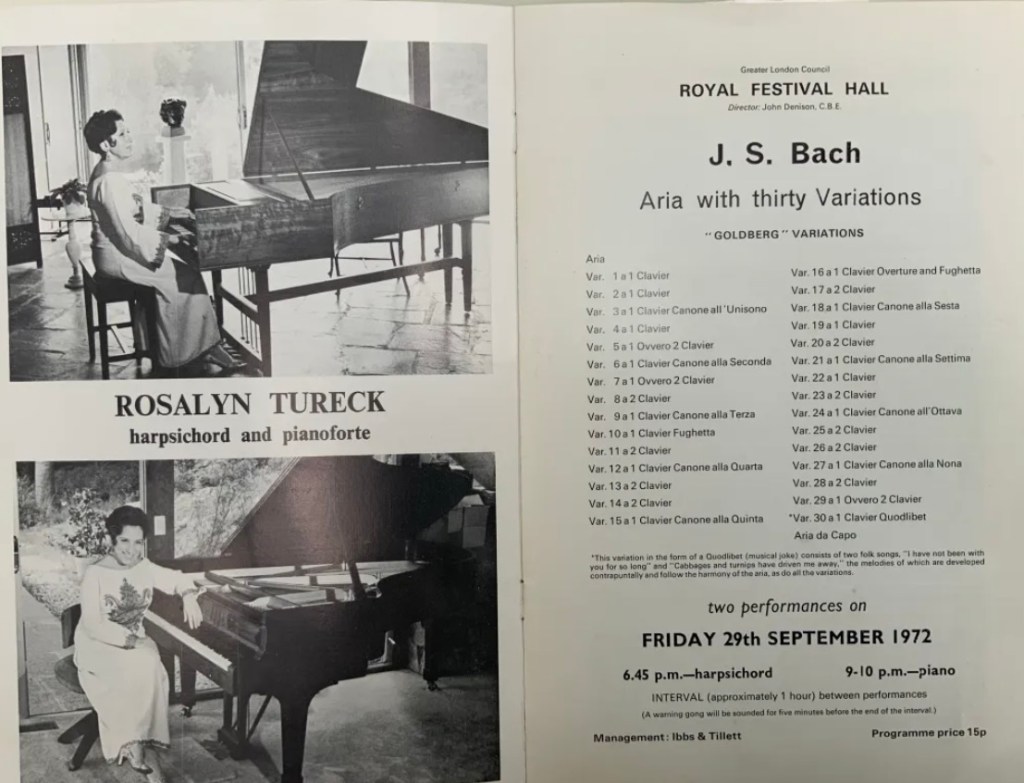
This was only George’s second performance and he refrained from the modern day habit of adding ornaments, allowing Bach’s music to speak on a sustaining instrument with just the minimum that the composer indicates in the score. Of course George is a composer and music is a living breathing thing not just notes to be produced in a historical replica. The tenth variation so simple on the page until George pulled out the stops, or adding bass octaves on the piano, which gave great importance to what is even in Rosalyn Tureck’s hands a simple ‘Fughetta’. Slightly anticipating the French Overture of the sixteenth that signals the half way mark, and even here going into the higher register of the keyboard (a different manual on the harpsichord ) and is the beginning of the magisterial ascent to the 29th Variation . This leads inevitably, in Hollywoodian style, to the monumental Quodlibet or musical joke where Bach combines two folk songs ‘I have not been with you for so long ‘ and ‘Cabbages and turnips have driven me away’ .


The joke is on us because this is one of the greatest moments in all music when the Aria floats in on the reverberating final ‘G’ , like a whispered apparition after a voyage of a lifetime.
A journey that had started with the dynamic drive and unrelenting forward movement of the first variation contrasting with the simple clarity of the second and the subdued meandering beauty of the third. George using the pedals throughout his performance but not to blur the edges or create unnecessary atmospheres but merely to clarify the knotty twine as Bach’s counterpoints need no help from external devices. A bold and determined fourth ( eliminating the repeat for time requirements of this concert ) as streams of notes played of the fifth ( also not repeated ) with fluidity and startling clarity.
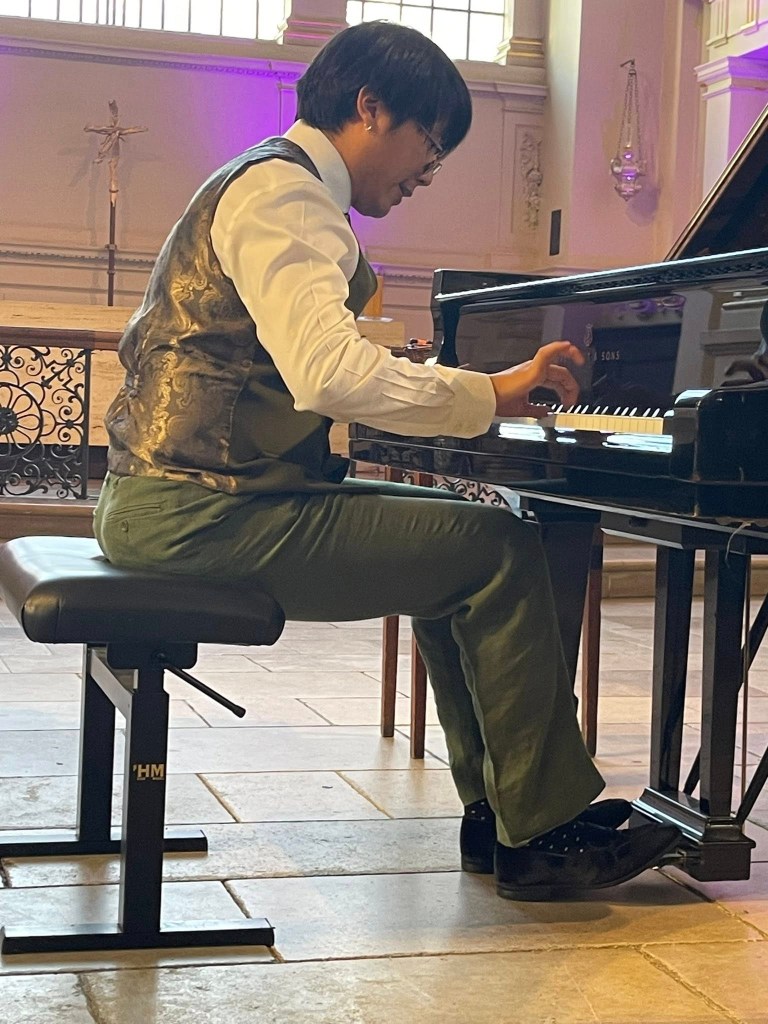
Straight into the weary counterpoints of the sixth and the wistful dance of the seventh that was played with whispered pristine clarity.Tip-toeing delicacy to the weaving web of knotty twine of the eighth leading to the beautiful contemplative ninth with is poignant bass counterpoints subtly underlined.The tenth I have never heard given such importance as in George’s noble hands today, with a call to arms of bold contours adding bass reinforcement using sometimes both hands! This ,of course, contrasted with the streams of single notes chasing each other around the keyboard, only to be united in a final delicate flourish.The ‘Canone alla Quarta’ was played with the simplicity of a string orchestra opening the way for the purity and simple radiance where the melodic line was allowed to flow with Bach’s bel canto just as florid as Bellini’s. The second part was played with a poignant whispered beauty which made the energetic explosion of the fourteenth even more startling. A variation of dynamic drive spread over the whole keyboard with brilliance and sparkling mastery. The ‘Canone alla Quinta’ with its weighty appoggiaturas was deeply meditative but also played with unusual rhythmic drive as it reached into the infinite with the questioning final three notes.

Answered by the majestic entry of the French Overture, with the crystalline clarity of the ornaments, as it took flight even transposing an octave higher register in the ritornello.The knotty twine of the seventeenth was played with admirable precision as the first vision of the ending came into sight with the eighteenth, like a seed being planted in our minds, as we could begin to see the end in sight far in the distance. Now the gentle lilting beauty of the nineteenth ( played without repeat) as George struck up a dizzying conundrum of repeated notes.The ‘Canone alla Settima’ ( n. 21) was a deeply meditative outpouring .With the twenty-second we begin to feel the end is nigh even though the cascades of notes of the twenty-third and the gentle lyrical beauty of the twenty-fourth could hardly have prepared us for the profound aristocratic beauty of the twenty-fifth. George played these ravishing whispered confessions with glowing sounds that were never blurred but exuded a radiance of heartrending significance.

From twenty six to twenty nine all hell let loose, with streams of notes and a forward drive where even the trill like device ( that Beethoven was to copy in his Sonata op 109) had a clarity and drive that lead to the mighty added octave opening of the twenty- ninth. A brilliant outpouring of exhilaration and exuberance that found and outlet only with the opening up of the ‘chorus line’ of the Quodlibet. George allowing himself now full reign for the glorious affirmation to resound around this magnificent edifice with unrestrained glory.
The magical return of the Aria made us aware of the long journey we had travelled together.
It was the moment when the Universal Genius of Bach enriches the life of mankind forever more.
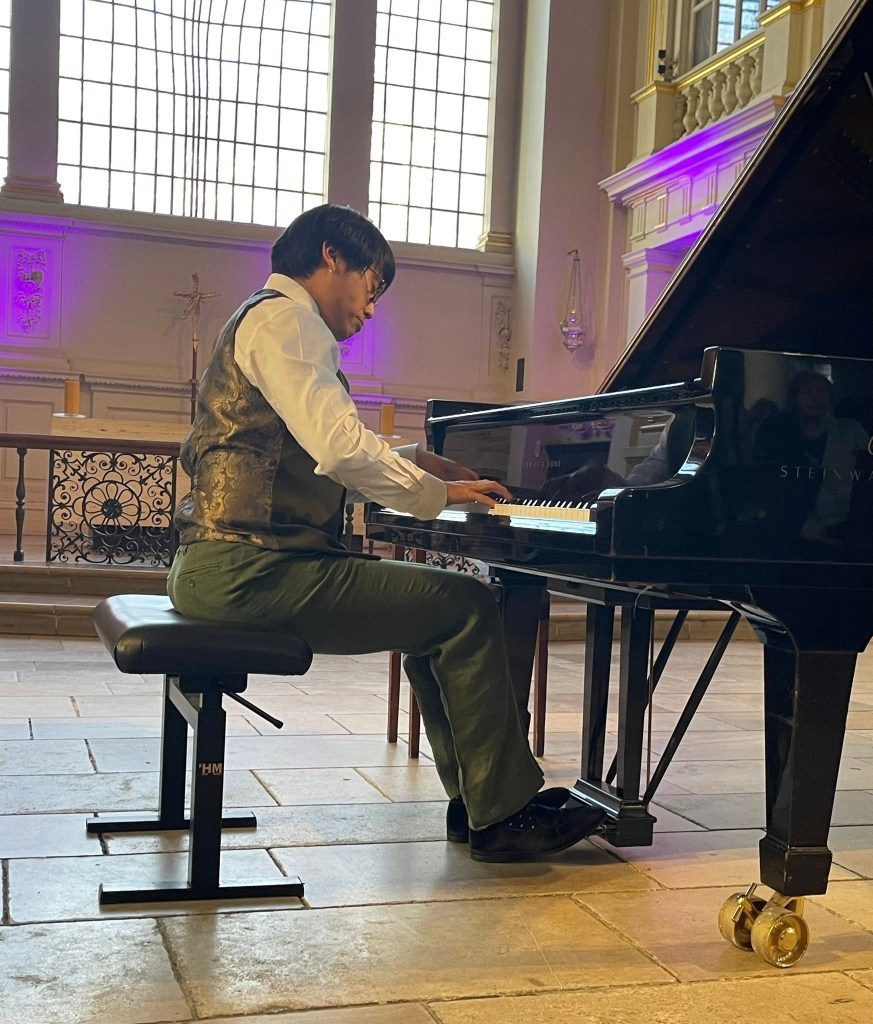
George had prepared us for this moment and struck the first whispered note of the Aria at the same moment as our hearts, that were now beating together.

An ovation for a monumental performance was greeted by a moment of frivolity where George could let his hair down with the impish antics of Papá Haydn adding some of his own hi jinx too ! ( Last movement of the sonata in C ‘ English ‘ Hob XVI/50).



 ChristopherAxworthy-MusicCommentary