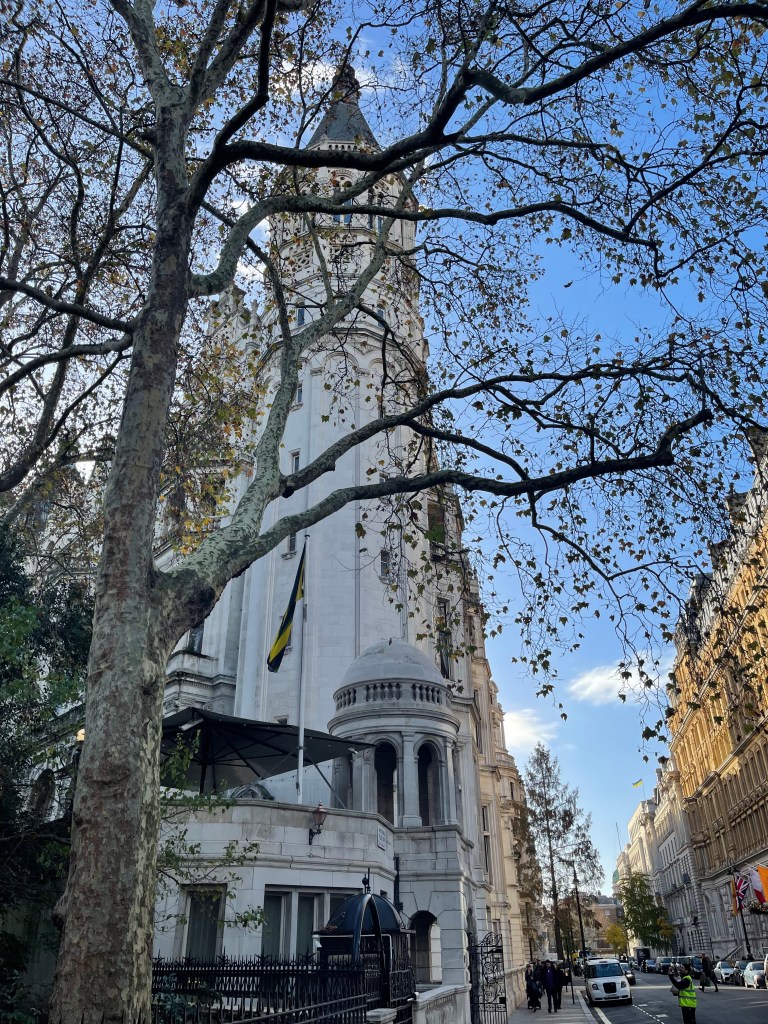


The Kettner Concerts are going full sail in this period, as we approach Christmas. Mozart piano concertos with Cristian Sandrin and the ECO ensemble in three separate venues https://christopheraxworthymusiccommentary.com/2025/11/15/mozart-reigns-in-cristian-sandrins-hands-from-twickenham-and-beyond/
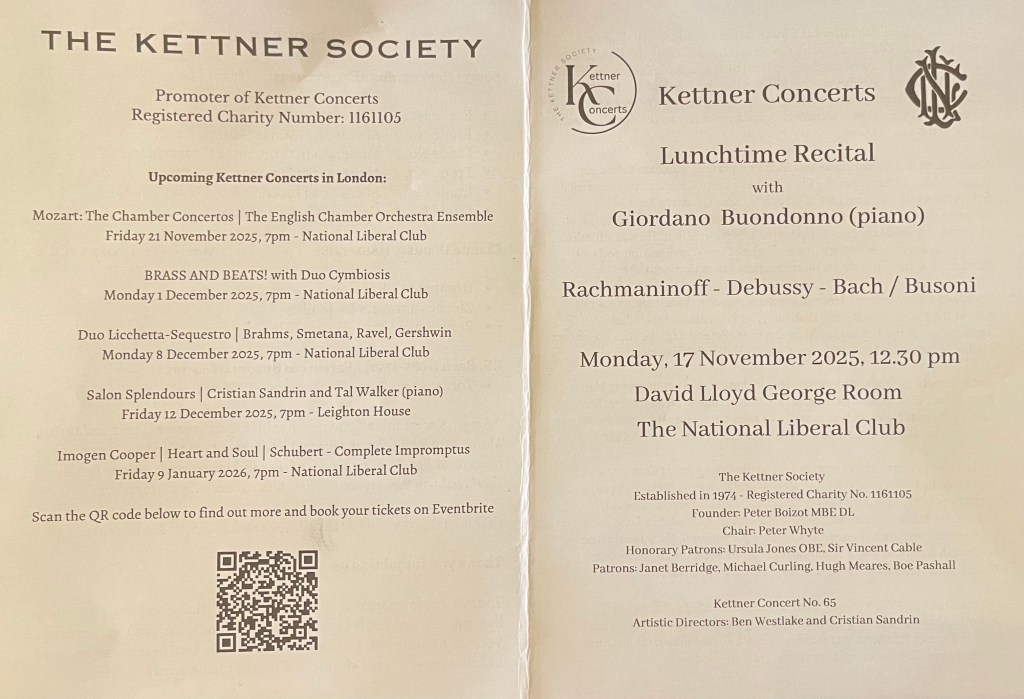
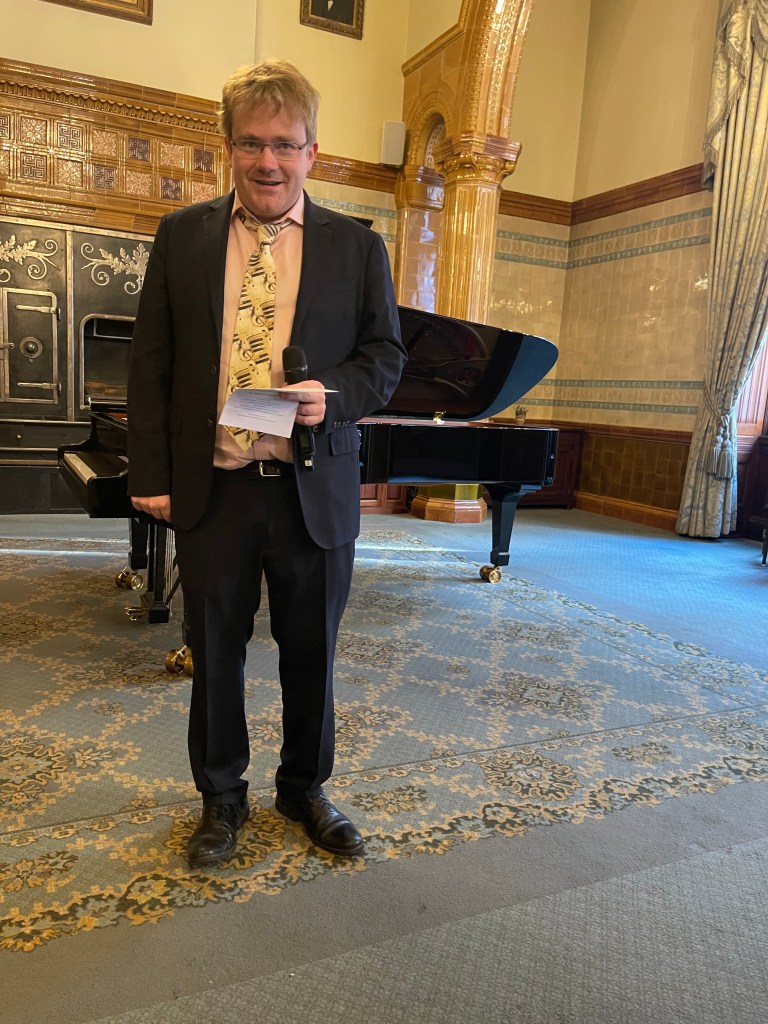
Today a pre lunch recital by Giordano Buondonno followed by the Kettner Lunch with a talk by Peter Whyte about their founder Peter Boizot.
And just a few weeks ago the pianistic genius of Shunta Morimoto. https://christopheraxworthymusiccommentary.com/2025/11/01/shunta-morimoto-at-the-national-liberal-club-a-musical-genius-comes-of-age/
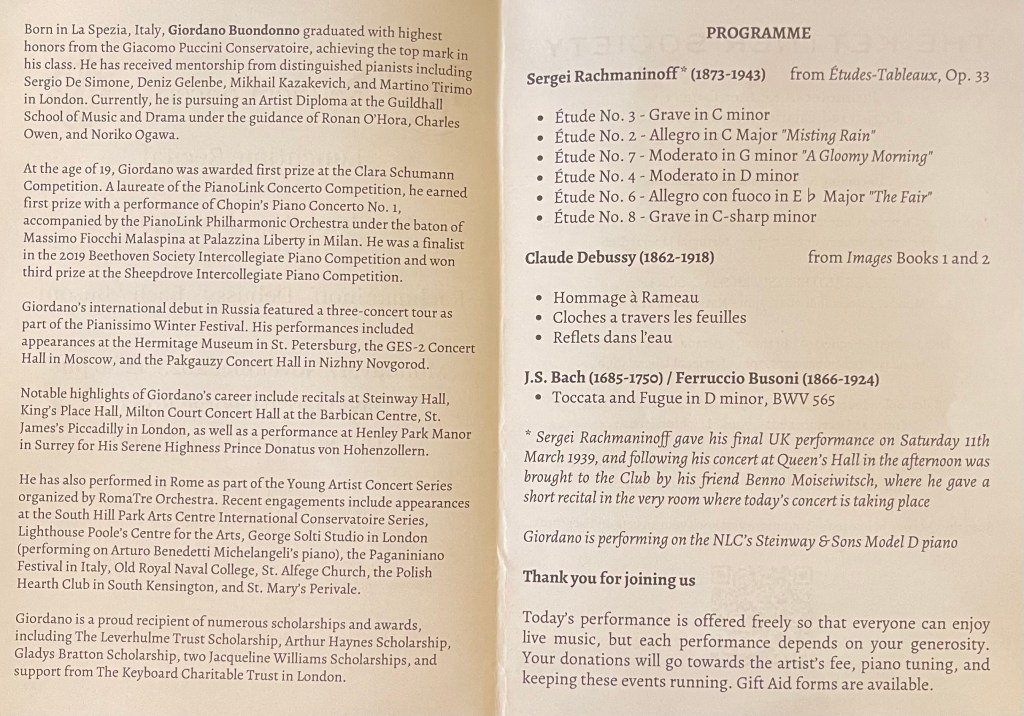
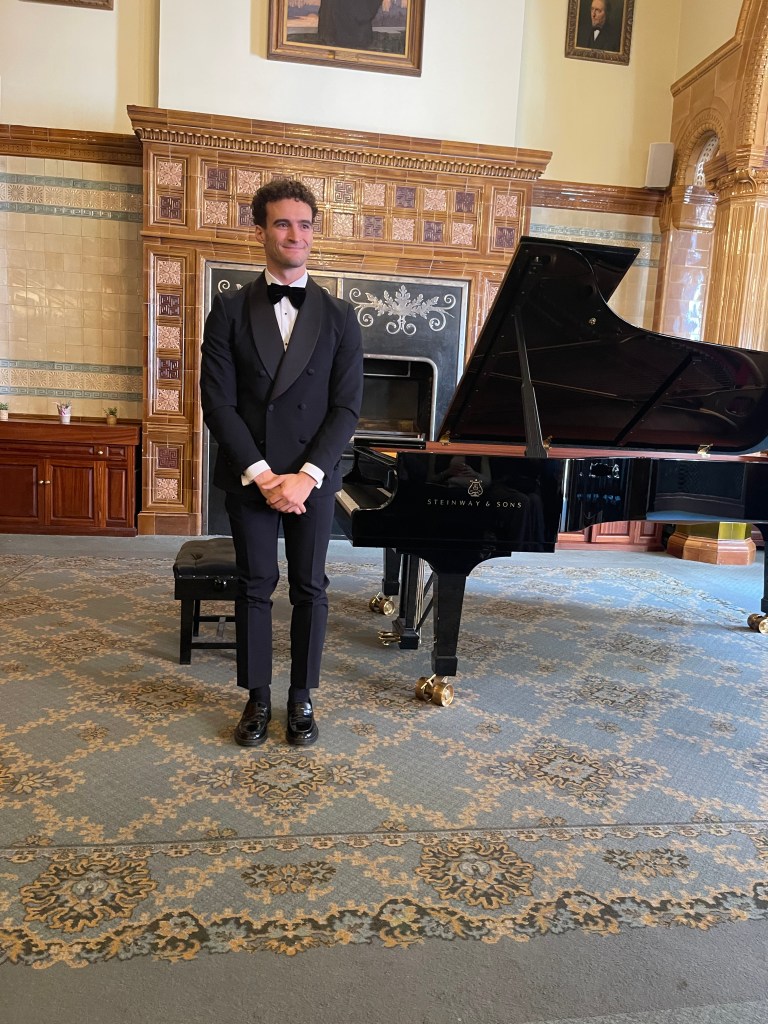
Giordano Buondonno is a young Ligurian born pianist who obviously had been much influenced by Michelangeli in his youth, as indeed in Italy he was revered as a God. Although his studies have brought him for the past five years or so to London, studying first at Trinity Laban with Sergio De Simone, Deniz Gelenbe and Martino Tirimo, and finishing his Masters at the Guildhall with Ronan O’Hora, Charles Owen and Noriko Ogawa. Illustrious names in the world of music,but the admiration for Michelangeli was born before he came to London, and although receiving expert advice from his mentors, that very particular sound world has remained as his goal.

Giordano’s flat fingers hitting the keys with bell like sounds of crystal clarity as well as caressing the keys when a more hazy sound was required. His brilliant technical command is also allied to a musicianship of impeccable pedigree and intelligence but his insistence on crystalline clarity can lead to a lack of warmth and orchestral colouring.
Giordano chose a programme that showed off his mastery, as six of Rachmaninov’s Études Tableaux resounded around this hall.

It is where Rachmaninov had given his last concert in Europe in 1939 before fleeing to the USA where he was to die in Beverley Hills in 1943. My old teacher Vlado Perlemuter used to love telling how Rachmaninov would come on stage looking as if he had just swallowed a knife, but the sounds he could make at the keyboard were the most sumptuous and rich that he had ever heard. Appearances can be deceptive indeed.

The étude n. 3 was played with languid nobility and etherial beauty, on a continuous wave of sumptuous timeless sounds.There was a chiselled beauty to étude n. 2 shining over a hovering accompaniment always ready to take flight. A purity of sound like drops of crystal with sounds of eery isolation. Étude n. 7 was of a languid beauty overtaken by a brooding bass of piercing clarity and a surge of sounds over the entire keyboard as the opening melodic outpouring returns ‘avec un sentiment de regret’ of ever more poignant nostalgia for the composer’s homeland. Étude n. 4 was in continual agitation with a beguiling insistance of stop and start brilliance and dynamic rhythmic drive. Étude n. 6 is the shortest and is a call to arms of noble resistence. The final étude n. 8 was a cauldron of Scriabinesque flames played with brilliance and mastery and that brought this series of ‘Tableaux’ to a scintillating end.

Debussy was a speciality of Michelangeli so it was hardly surprising to see it on the menu today! Michelangeli’s Debussy was admired by many, but also criticised by musicians that thought it too free and cold with more of a research of timbre than interpreting Debussy’s very precise instructions.
Giordano Buondonno showed us that the search for timbre could also be related to a scrupulous attention to the score with two pieces from Images Bk 1, adding the bells that were to shine so beautifully from Bk 2 .
‘Hommage a Rameau’ was played with a lazy grace of respectful nobility and he brought great contrast to the sumptuous hazy opening before the piercing clarity of the melodic line shining like a star with crystalline clarity exploding into a nobility of the brilliance of Michelangeli rather than sumptuous richness of Rubinstein. ‘Cloches a travers les feuilles’ were bells of piercing clarity shining through leaves that were washes of sound. It ended up with Giordano creating a magical atmosphere of whispered haziness. ‘Reflets dans l’eau’ was played with crystalline clarity were Giordano’s spindly fingers created waves of sound on which the melodic line could shine with piercing penetration. Remarkable playing of mastery and intelligent musicianship but, as with Michelangeli, can often be too much in the present and it is like looking at the Sistine chapel restored by the Japanese. Although one can admire the hidden details, for me it looses something of its atmosphere and mystery.
The wife of Busoni was often introduced to people as Mrs Bach- Busoni such was her husband’s fame for bringing the great organ works of Bach into the concert hall. The greatest of these transcriptions, or as Ben Westlake so rightly said, recreations, is the Chaconne, the greatest work ever written for solo violin. After which came the works for Organ in C major, D major and D minor. Busoni was an eclectic thinking musician and a great pianist, the direct descendent of Franz Liszt , but he could not help also adding too many personal things to Bach’s keyboard works that are master works in their own right.

The D minor Toccata and Fugue , like the Widor Toccata, is one of the best known works for organ. As soon as Giordano struck up the opening notes there was a knowing glance of recognition that shot around this magnificent David Lloyd George Room. There was a nobility and masterly control to Giordano’s playing with an architectural understanding that could guide us through the recitativi before the whispered magical entry of the fugue. It was here that Giordano’s superb clarity and precision unraveled Bach’s knotty twine and took us on the wondrous journey that only the master of Köln was capable of offering to the Glory of God on High.

https://christopheraxworthymusiccommentary.com/2024/03/20/christopher-axworthy-dip-ram-aram/
 ChristopherAxworthy-MusicCommentary