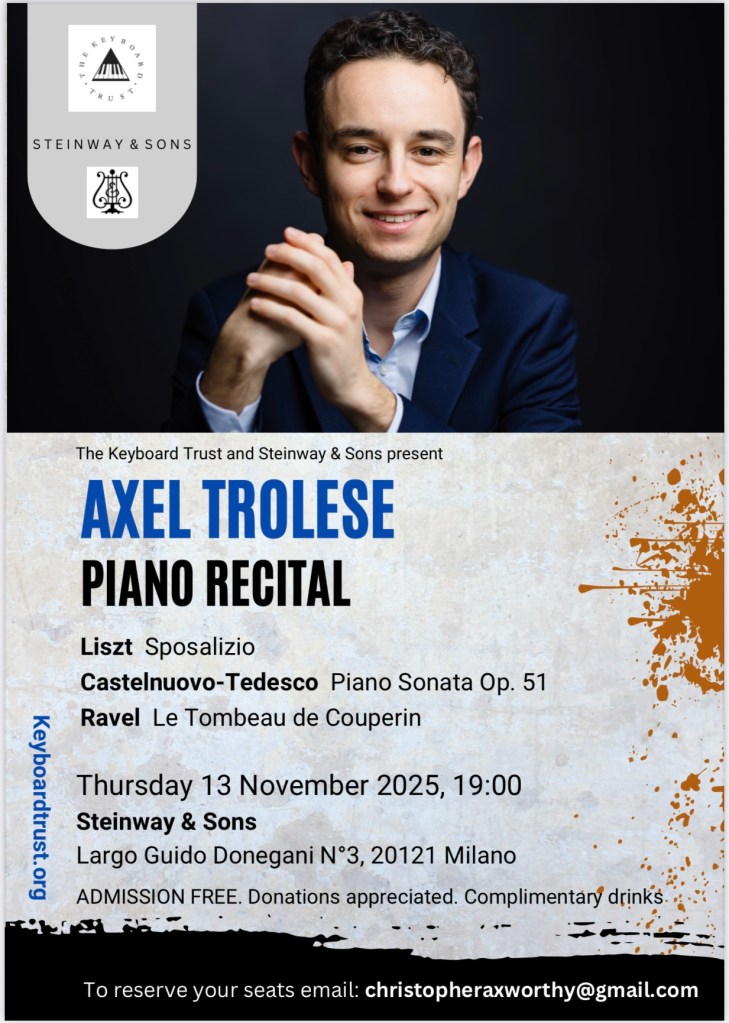
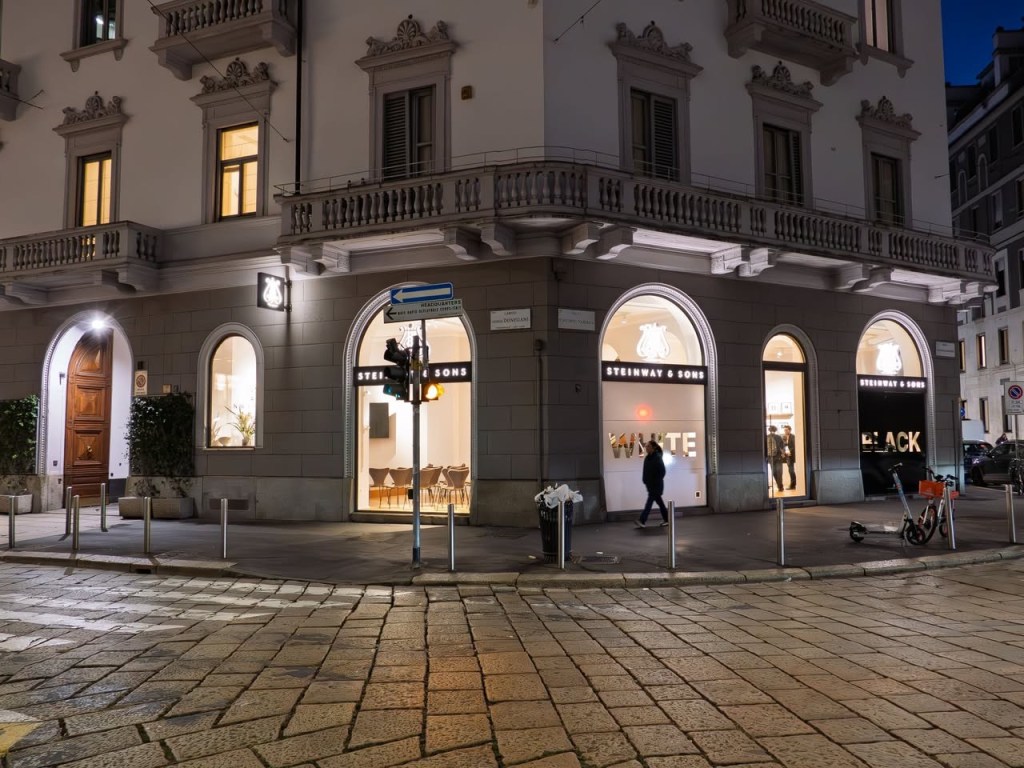
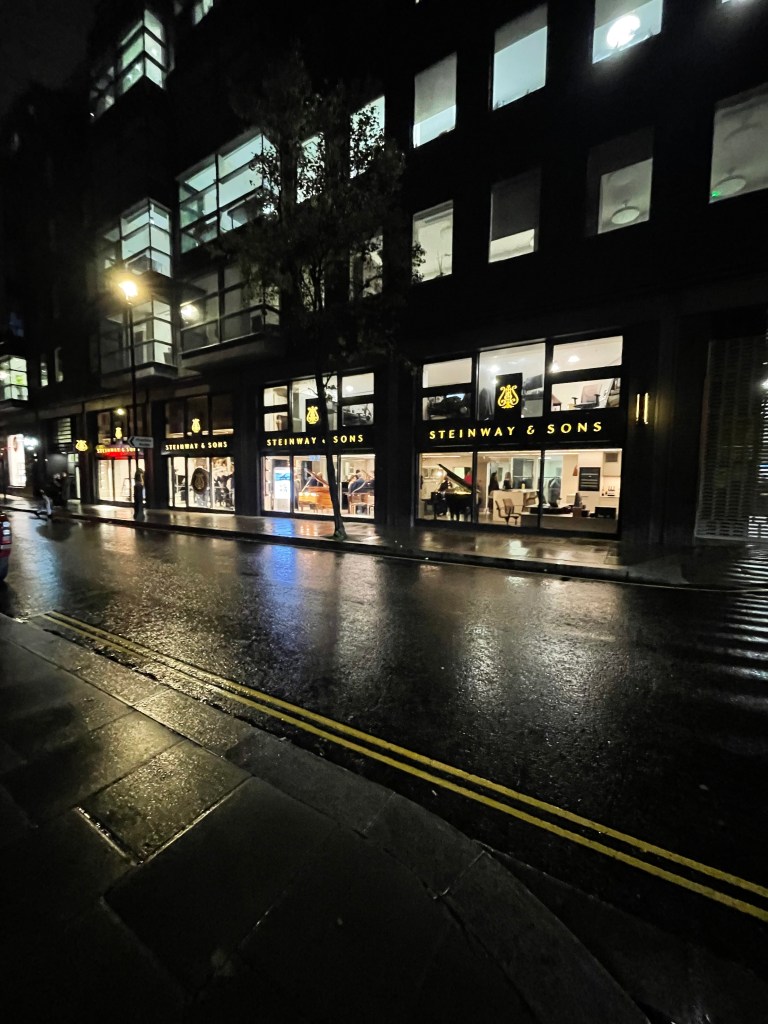
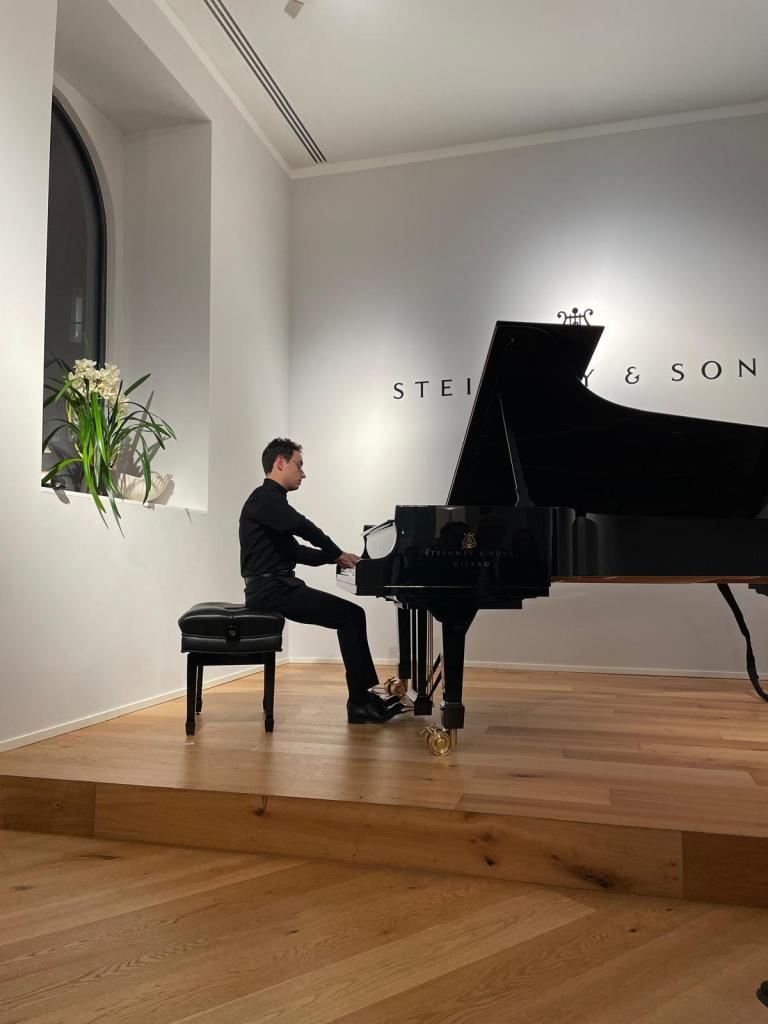
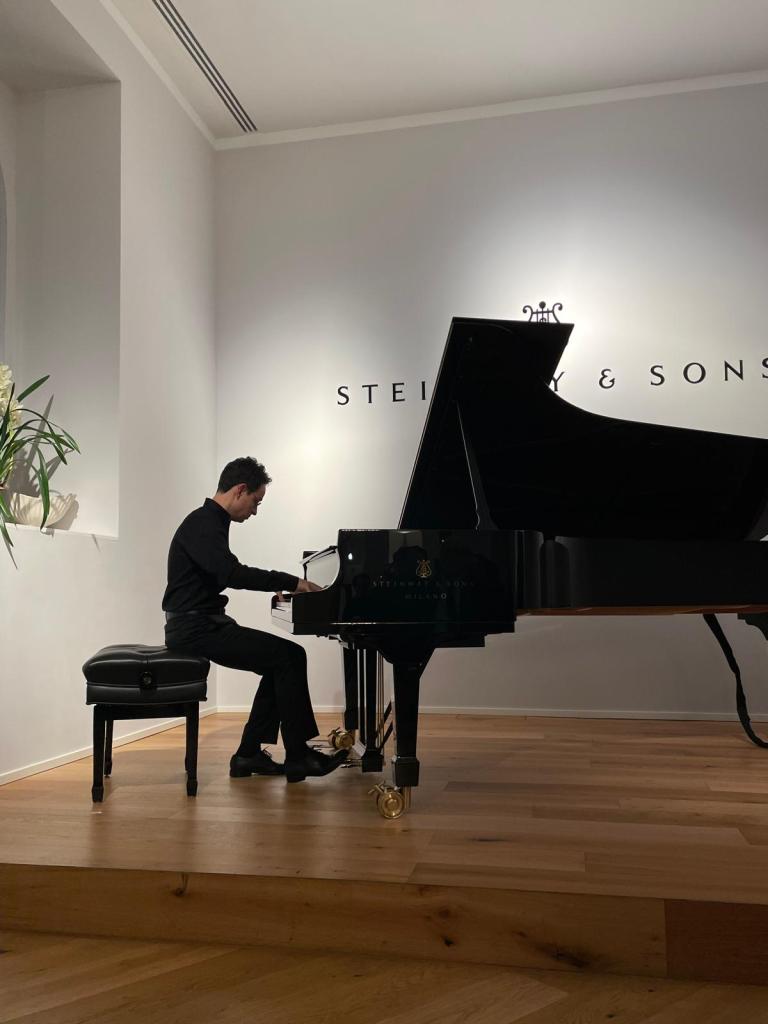
Whilst we were celebrating the 150th Anniversary of Steinway & Sons in London on the same day Axel Trolese was celebrating in music at the Flagship Steinway & Sons in Milan.The Keyboard Trust have had a long and glorious association with Steinway & Sons giving brilliant young artists a platform at the beginning of their career. I am happy that Axel had a full house and even happier to read this review which I share below .
A review by Alfredo Di Pietro
Viviamo in un mondo condizionato dagli “hype”, dal clamore temporaneo che vede in azione i siti specializzati e i blog, sempre a caccia di lampi di visibilità con cui investire le persone. Ma quanto accaduto ieri sera al Flagship Store Steinway & Sons assume un valore differente da questa logica. In ascolto c’era un pubblico raccolto, silenzioso e attento di fronte al giovane pianista Axel Trolese, un artista che conosco da tempo, oggi maturo e in grado di affrontare qualsivoglia repertorio. Ci ha regalato, con il tipico slancio e generosità della gioventù, un recital variegato e, bisogna sottolinearlo, difficile, organizzato dall’associazione The Keyboard Trust, che meritoriamente dal 1991 supporta i giovani pianisti di talento nello sviluppo della loro carriera. Uno strumentista che non arriva proprio in sordina a questo novembrino recital milanese, reduce da importanti riconoscimenti come il Premio Casella al Concorso Premio Venezia. Senza contare le sue numerose esibizioni in prestigiose sale e rassegne in Europa, America e Asia.
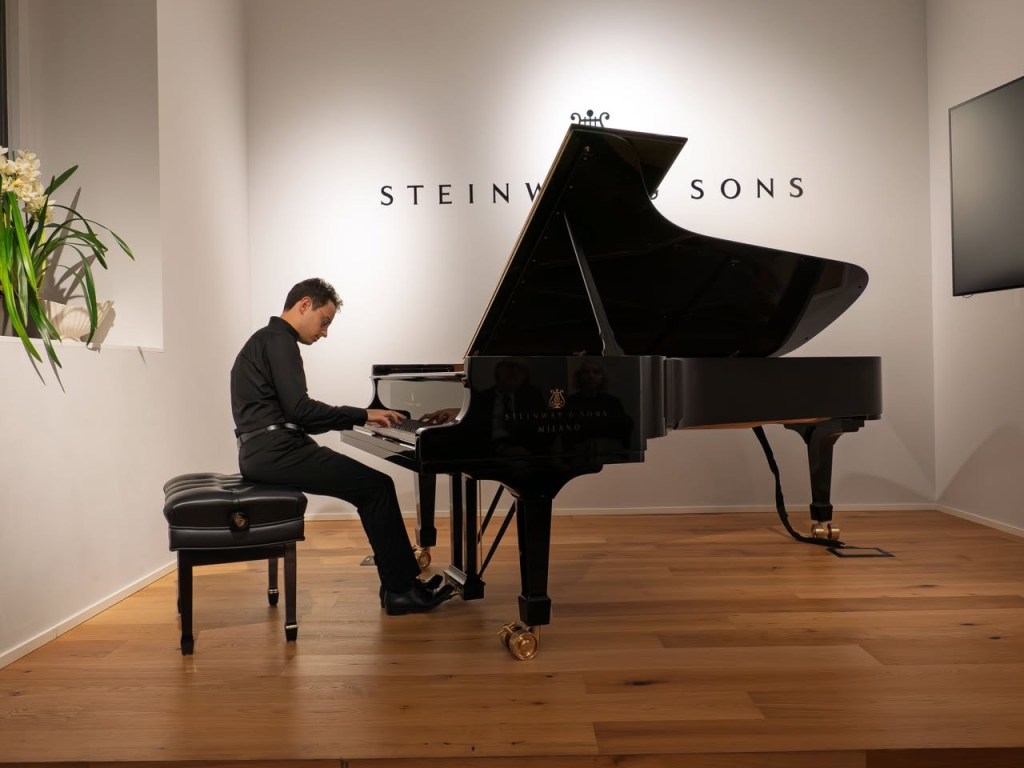
Io l’ho incontrato proprio a una di queste, l’Amiata Piano Festival, rionoscendo subito in lui un interprete valoroso e sincero. Axel si approcciato al pubblico senza apparente apprensione, come un consumato concertista affronta il palcoscenico, quasi incurante del difficile compito che lo aspettava. Un’occhiata al programma di sala è in tal senso significativo, iniziando con lo Sposalizio di Franz Liszt, dalla nota raccolta Années de pèlérinage. Deuxième Année. Italie, S 161. Lui lo esegue con tocco sensibile, delicatezza e profondità di accenti, come si conviene a un brano che ci ricorda come la produzione lisztiana non sia solo fuoco e fiamme, ma anche assorta pensosità. Siamo di fronte a una rimembranza delle impressioni che l’autore ebbe alla vista della tela di Raffaello sulle nozze tra Maria e Giuseppe, la quale si trova a pochi passi dalla sede del concerto, nel milanese Museo di Brera. Il nostro pianista è riuscito a ricostruire una tessitura sonora dolce e screziata di misticismo, con dei solenni accordi tesi a immergere chi ascolta in un’atmosfera d’incantata trasfigurazione.
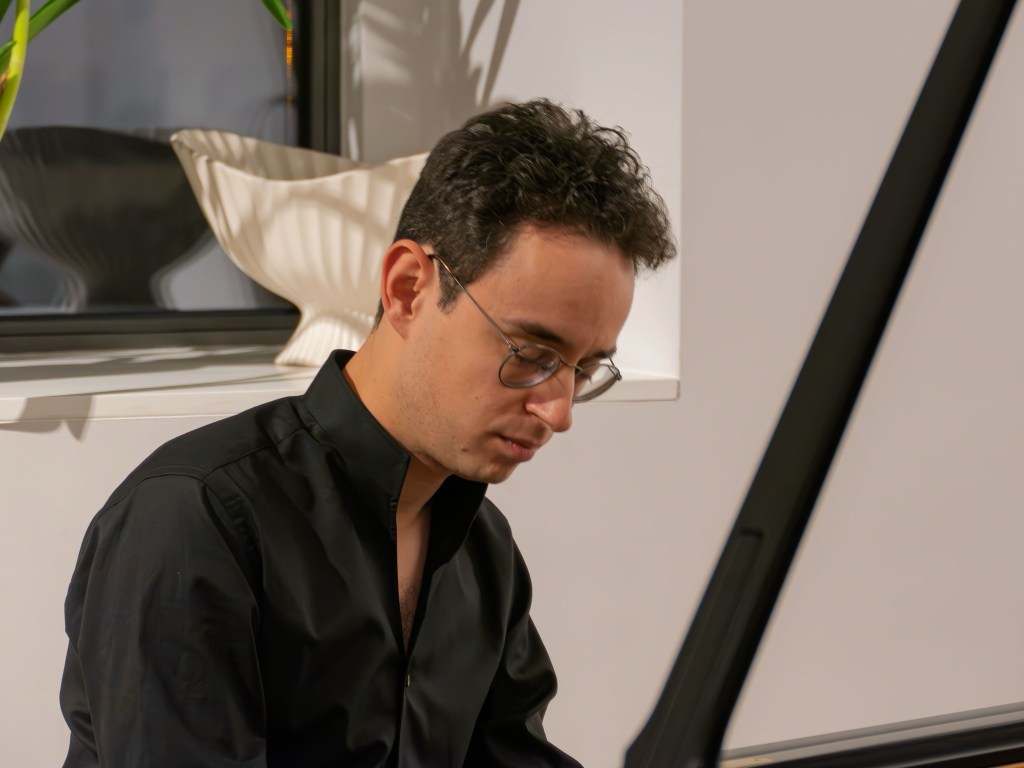
È molto probabile che gran parte del pubblico non conoscesse la Sonata per pianoforte Op. 51 di Mario Castelnuovo-Tedesco. Questo fa riflettere su quanti capolavori come questo ancora oggi rimangano sepolti nella polvere. Fu composta nel 1928 ed eseguita per la prima volta nel 1929 da Walter Gieseking, che era anche il dedicatario, poi pubblicata a Vienna dalla Universal-Edition nel 1932. Opera di grande impegno, che Axel Trolese affronta con estrema concentrazione, avvisando il pubblico di predisporsi a “sopportare” il linguaggio dissonante che contiene. Personalmente, pur non essendo propenso alla sensazione di “conflitto uditivo” che le dissonanze provocano, nettamente agli antipodi di un andamento consonante, cioè percepito come più gradevole all’orecchio, ho dovuto ammettere che il geniale compositore non poteva fare scelta più felice per esprimere la drammatica tragicità di questa sonata. Un’opera in tre movimenti, dal nostro affrontata con grande energia, soprattutto nei tempi estremi.
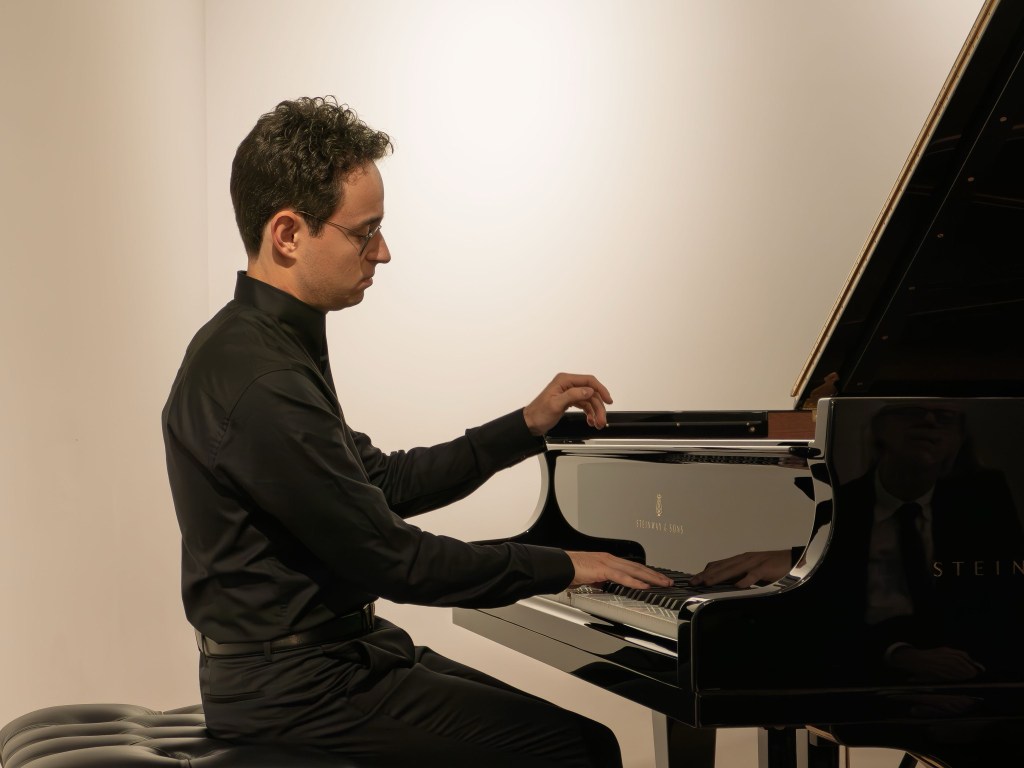
Uno dei movimenti è noto per la sua indicazione “Rude e violento”, e tale davvero è stato, anche se la potenza sonora del grancoda Steinway & Sons Spirio era decisamente straripante per l’ambiente in cui era stato messo a suonare. Ma alle esigenze artistiche e all’impeto dell’interprete non può essere messa la mordacchia: legittimamente Axel ha, come si suol dire in gergo tennistico, lasciato andare il braccio nei frangenti di maggior veemenza. Quanta distanza tra questa sonata e l’opera che è seguita! Parliamo di Le tombeau de Couperin, suite per pianoforte di Maurice Ravel scritta fra il 1914 e il 1917, durante la prima guerra mondiale. Ognuno dei sei movimenti è dedicato a un amico del compositore caduto in guerra, due invece sono quelli ricordati nel Rigaudon, Pierre e Pascal Gaudin, entrambi uccisi dalla stessa granata. Arte sottile e camaleontica quella del nostro Axel, che dopo i tellurici affondi della sonata di Castelnuovo-Tedesco cambia completamente registro in questa stupenda composizione raveliana.
Questi “tombeaux” erano in realtà delle elegie funebri, che nella musica settecentesca comprendevano delle raccolte strumentali in onore di musicisti o anche celebri personaggi. Qui Ravel manifestò un cambio di rotta, poiché concepì questa suite prima dello scoppio della guerra come un tributo a François Couperin, di cui lui era un grande ammiratore. Tuttavia, alla fine ci fu una doppia dedica, quella al grande maestro del clavicembalo barocco rimase, ma si aggiunse anche quella agli amici scomparsi. Axel qui si trasforma in un “clavicembalista”, cambia tecnica, e di conseguenza timbro, spezzando l’elemento di continuità che aveva tenuto in precedenza. Si produce in una lettura tersa, rigorosa e trasparente, il suo pianismo diventa più appuntito e percussivo, proprio in vista dell’emulazione dell’antico strumento a corde pizzicate. E mentre un pubblico disciplinato, silenzioso, attendeva che il pianista elargisse tali perle musicali, all’esterno del Flagship Store c’era una fila di ragazze fuori dalle porte della sede di Radio 105, tutte in festante attesa dell’ex One Direction, Louis Tomlinson. La musica, in ogni sua declinazione, unisce e affratella. E va bene così…
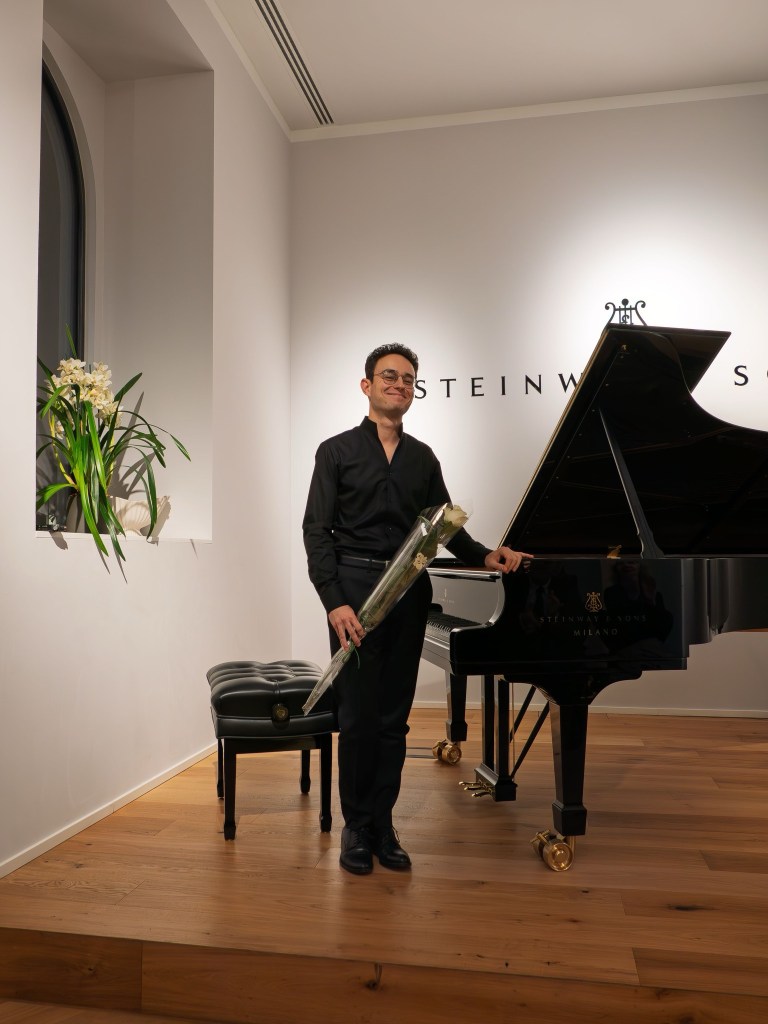
Review by Alfredo Di Pietro translation in English
We live in a world shaped by “hype,” by the temporary buzz generated by specialized websites and blogs, always on the lookout for flashes of visibility to fire at people. But what happened last night at the Steinway & Sons Flagship Store carries a meaning far removed from that logic. The audience listening was intimate, silent, and attentive before the young pianist Axel Trolese—an artist I have known for some time, now mature and capable of tackling any repertoire. With the typical enthusiasm and generosity of youth, he offered us a varied and, it must be emphasized, difficult recital, organized by The Keyboard Trust, an association that since 1991 has commendably supported talented young pianists in developing their careers. He is a performer who certainly didn’t arrive quietly at this November recital in Milan, fresh from important recognitions such as the Casella Prize at the Premio Venezia Competition—not to mention his numerous performances in prestigious halls and festivals in Europe, America, and Asia.
I first met him at one of these, the Amiata Piano Festival, immediately recognizing in him a courageous and sincere interpreter. Axel approached the audience with no apparent apprehension, like a seasoned concert artist stepping onto the stage, seemingly unfazed by the difficult task ahead. A glance at the programme was telling in this regard, beginning with Sposalizio by Franz Liszt, from the well-known collection Années de pèlerinage- Deuxième Année. Italie, S 161. He performed it with sensitive touch, delicacy, and depth of phrasing, as befits a piece that reminds us that Liszt’s output is not all fire and flames but also meditative introspection. We are faced with a remembrance of the impressions the composer experienced upon seeing Raphael’s painting of the marriage between Mary and Joseph, which is located just a few steps from the concert venue in Milan’s Brera Museum. Our pianist managed to reconstruct a sound texture that was sweet and tinged with mysticism, with solemn chords aimed at immersing the listener in an atmosphere of enchanted transfiguration.
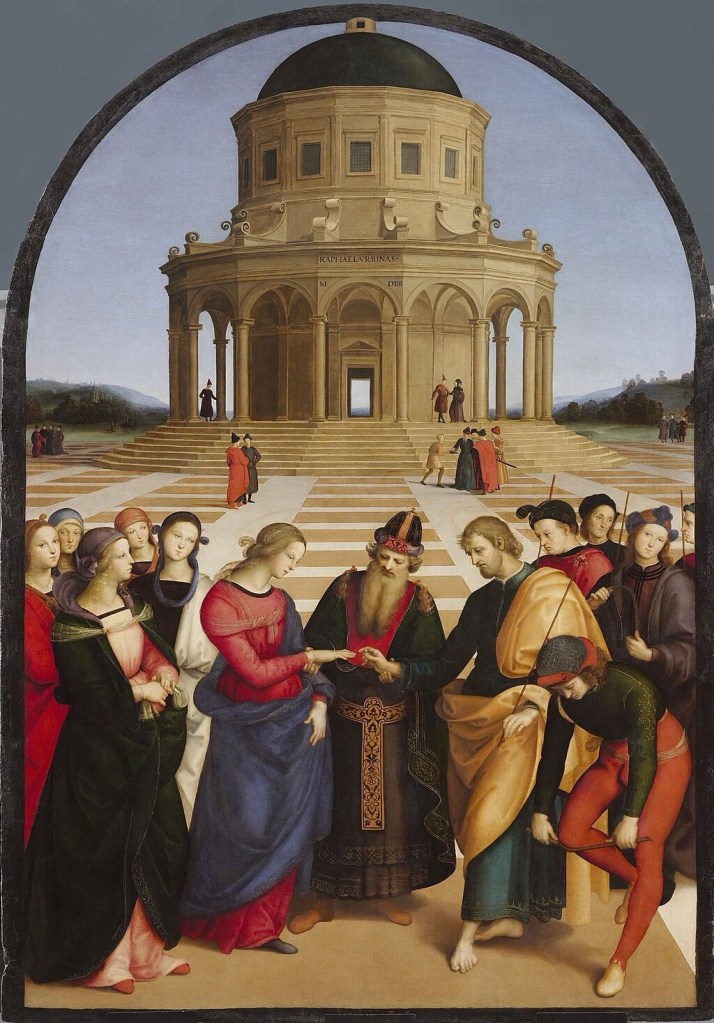
The Marriage of the Virgin by Raphael 1504
Housed in the Pinacoteca di Brera
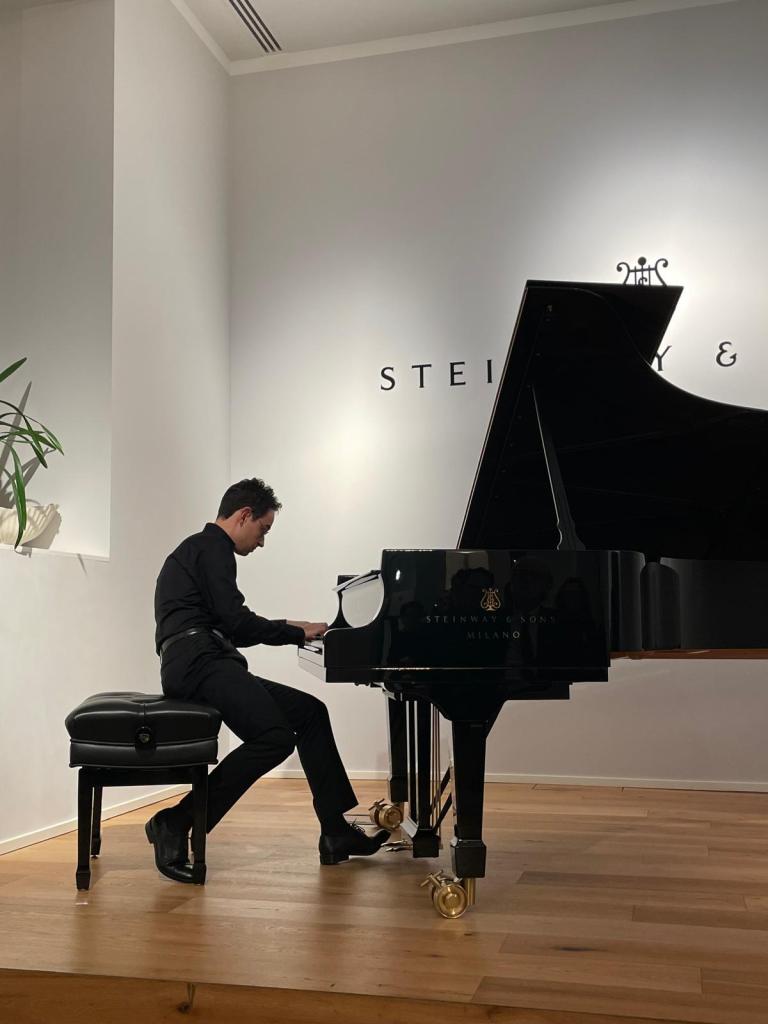
It is very likely that much of the audience was unfamiliar with Mario Castelnuovo-Tedesco’s Piano Sonata Op. 51. This prompts reflection on how many masterpieces like this still remain buried in dust. It was composed in 1928 and first performed in 1929 by Walter Gieseking, who was also its dedicatee, and later published in Vienna by Universal-Edition in 1932. A work of great commitment, which Axel Trolese approached with extreme concentration, warning the audience to prepare to “endure” the dissonant language it contains. Personally, though not inclined toward the sensation of “auditory conflict” that dissonances provoke—decidedly at the opposite end of the spectrum from consonance, which is perceived as more pleasant to the ear—I had to admit that the brilliant composer could not have made a better choice to express the dramatic tragic quality of this sonata. A three-movement work, tackled by our pianist with great energy, especially in the outer movements.
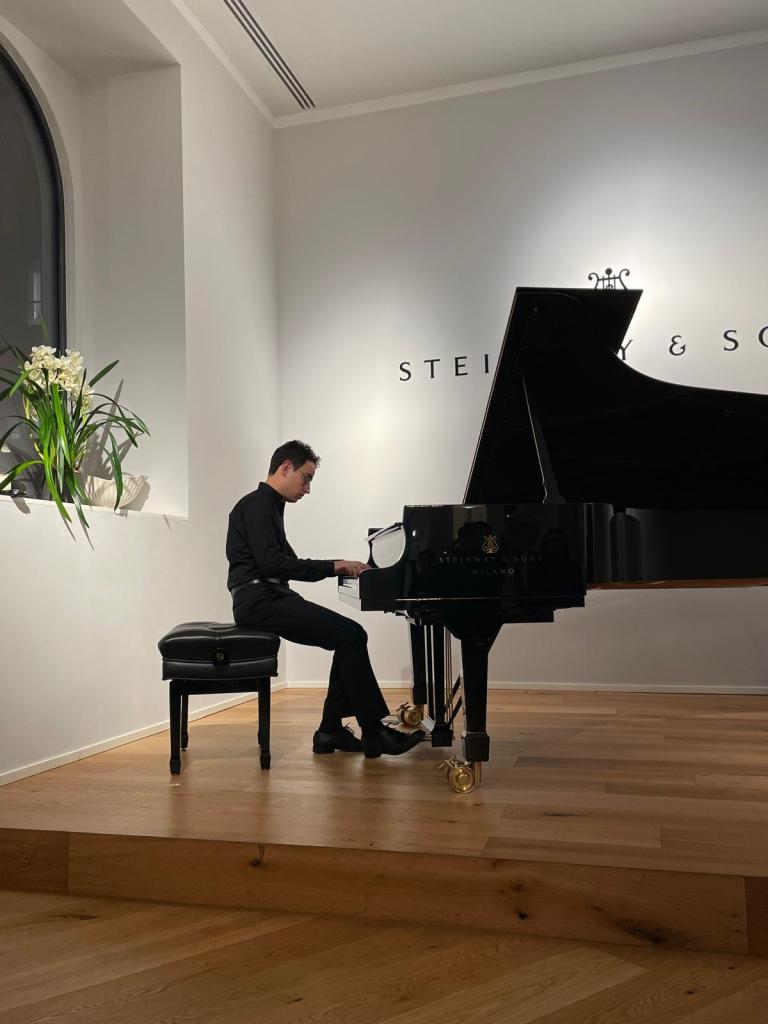
One of the movements is famed for its marking “Rude e violento” (“Harsh and violent”), and so it indeed was, even though the sound power of the Steinway & Sons Spirio grand piano was decidedly overwhelming for the environment in which it was placed. But one cannot muzzle artistic needs and the interpreter’s impetus: quite legitimately, Axel, as one might say in tennis jargon, let his arm go in the moments of greatest vehemence. How vast the distance between this sonata and the work that followed! We are speaking of Le tombeau de Couperin, Maurice Ravel’s suite for piano written between 1914 and 1917, during the First World War. Each of its six movements is dedicated to a friend of the composer who fell in the war; two are commemorated in the Rigaudon, Pierre and Pascal Gaudin, both killed by the same shell. Subtle and chameleonic was Axel’s artistry here, for after the telluric plunges of Castelnuovo-Tedesco’s sonata he completely changed register in this splendid Ravel composition.
These “tombeaux” were in fact funeral elegies; in eighteenth-century music they often comprised instrumental collections in honor of musicians or other notable figures. Here Ravel showed a shift in direction, for he had conceived this suite before the war as a tribute to François Couperin, whom he greatly admired. Ultimately, there was a double dedication: the one to the great Baroque harpsichord master remained, but it was joined by the tribute to his fallen friends. Axel here transformed himself into a “harpsichordist,” changing technique and consequently timbre, breaking the line of continuity he had maintained earlier. He offered a clean, rigorous, and transparent reading; his pianism became more pointed and percussive, aimed at emulating the ancient plucked-string instrument. And while a disciplined, silent audience awaited the pianist’s delivery of such musical gems, outside the Flagship Store there was a line of girls queued in front of the Radio 105 headquarters, all joyfully waiting for former One Direction member Louis Tomlinson. Music, in all its forms, unites and brings people together. And that’s perfectly fine…

 ChristopherAxworthy-MusicCommentary