
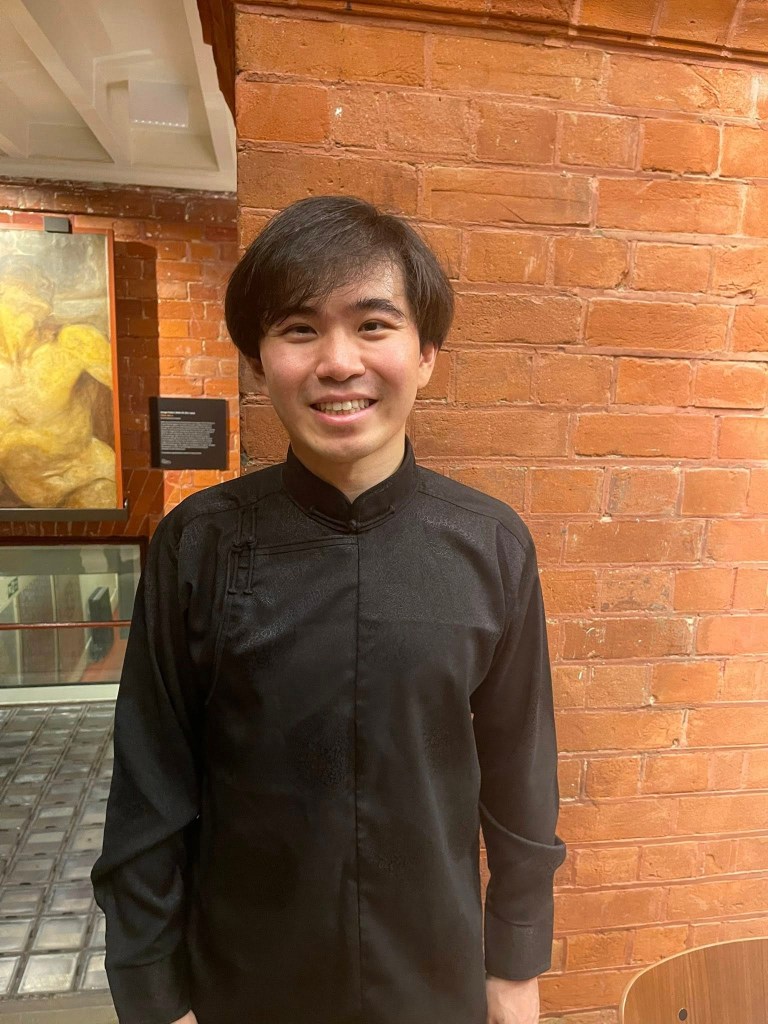
A pianist with a pedigree how could it be otherwise, as Tony remembered that we had met some years ago in Fiesole, the town overlooking Florence, where the legendary Eliso Virsaladze holds court, sharing her wisdom and musicianship with a select few of masterly students. It was this superb musicianship that shone through all we heard tonight culminating in a masterly performance of Chopin’s B minor Sonata. A technical perfection that is not underlined and never draws attention to itself as his enviable limpet fingers are at the service of the composer he is transmitting.
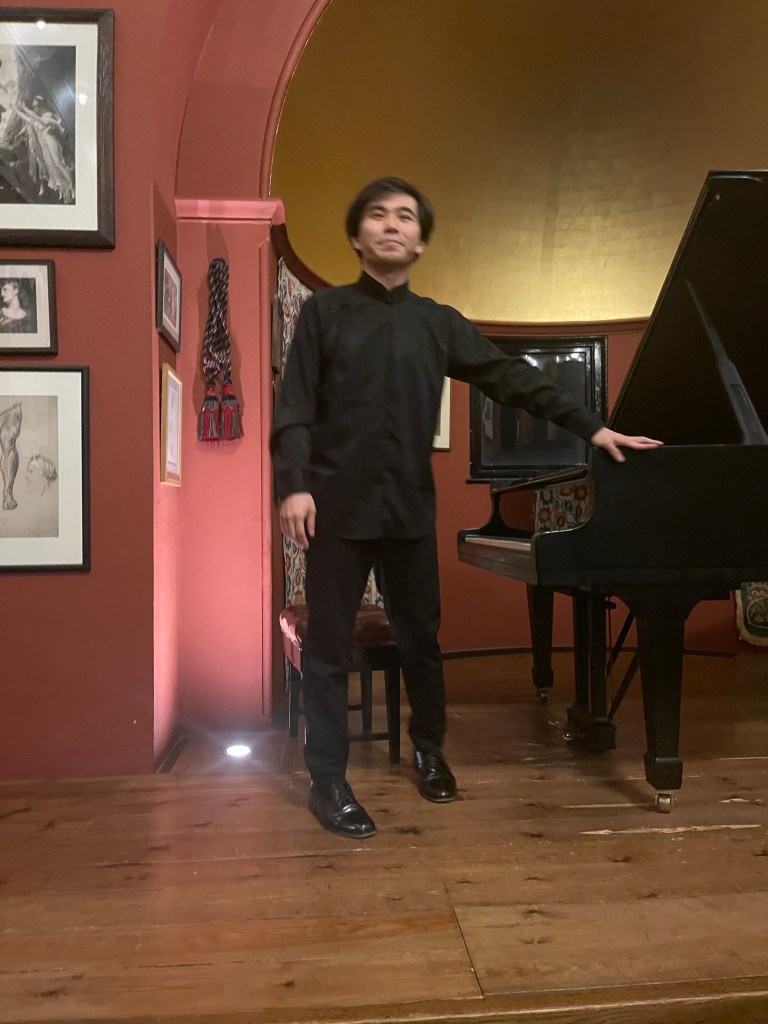
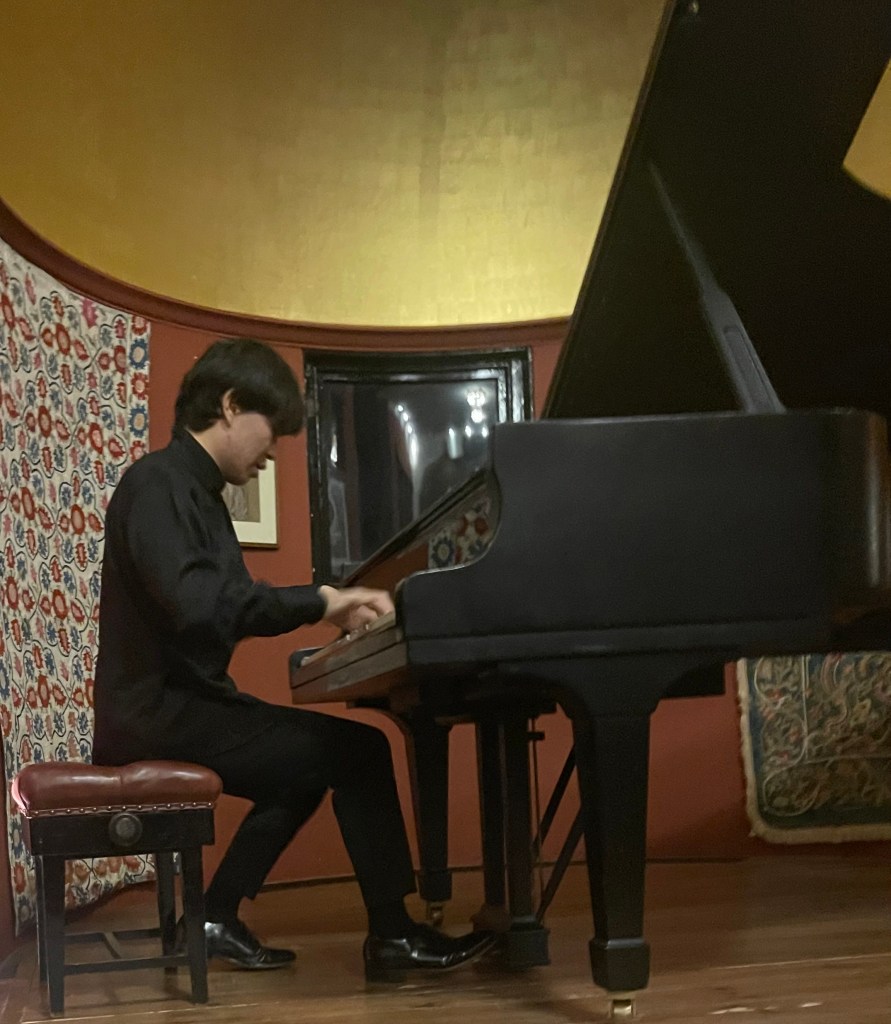
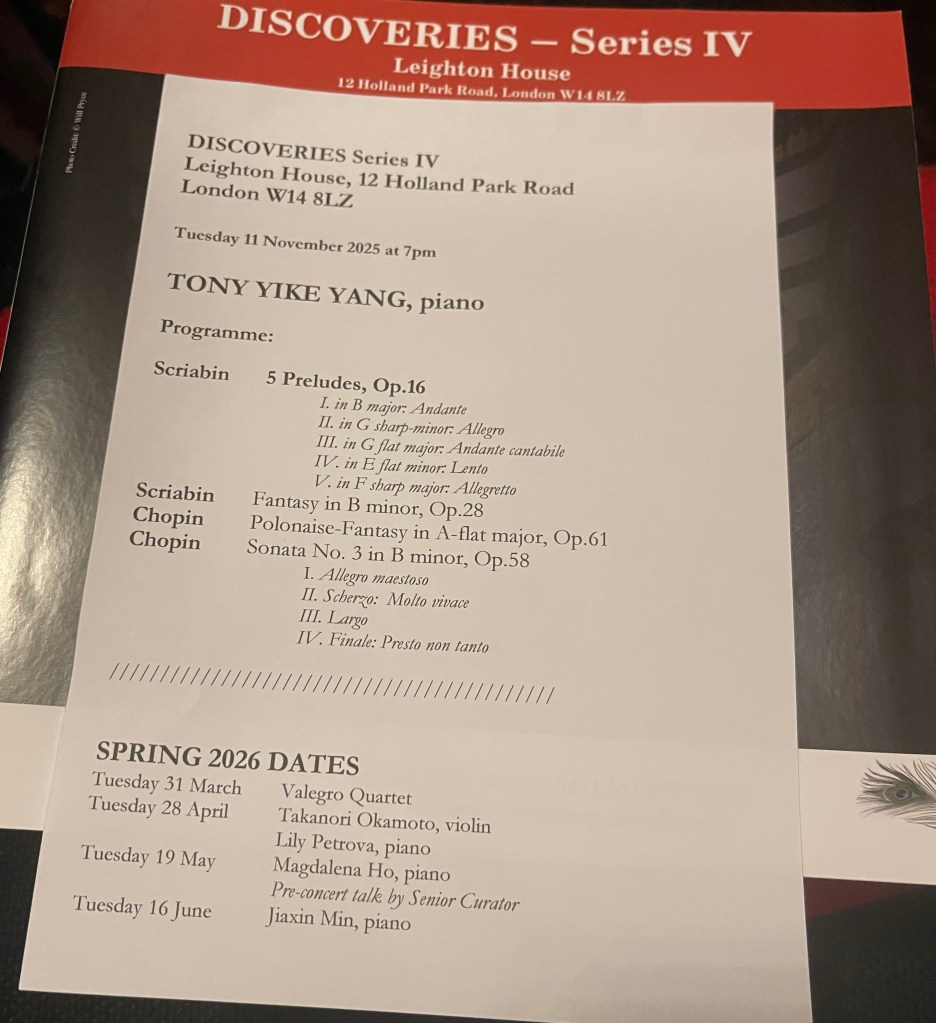
And transmitting is the word because he brought the group of early Scriabin pieces vividly to life with their quicksilver insinuating harmonies and ravishing sounds of subtle changing colours. But within all this beauty there shines a magic sound which guides us through this maze, giving an architectural shape and strength to this glowing mass of golden shreds. The five preludes op 16 were written between 1894 and 1895 and link up perfectly with the B minor Fantaisie op 28 written in 1900. Infact the final prelude in F sharp major was linked without a break to the Fantaisie in B minor. These are five preludes that at most are two pages long and are but gasps of ravishing beauty and intimate confessions. Infact the final prelude was played with a simplicity and a nostalgic beauty like a picture postcard tinged with brown at the edges opening up to gasps of radiant beauty that became the haunting opening of the Fantaisie. The Preludes had immediately established that this is an artist with a searching soul of deep intimate communication. A superb sense of balance where Scriabin’s magic world could unfold with decadent beauty and exquisite style.There were sudden impulsive outpourings of improvised freedom and presumptuous insistence. But it was always the subtle glowing beauty of pastoral simplicity as in the fourth in E flat minor that allowed this refined young artist to bewitch us with the serenity of plaintive poignancy.
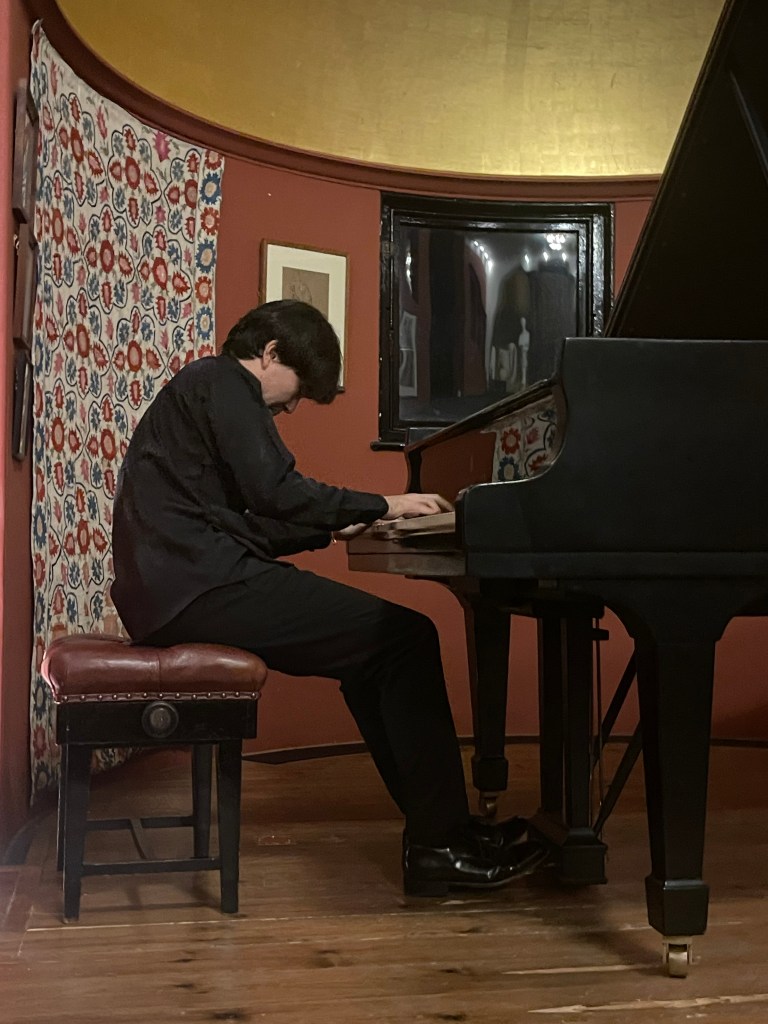
But not for long because Scriabin’s demonic character was about to erupt in the Fantaisie. ‘Vers la flamme’ just fourteen years later was to bring this youthful yearning to its ultimate conclusion as Scriabin searched for, but never truly found, his ‘Star’ .The Fantaisie could be seen or felt on the horizon in this sumptuous atmosphere that Tony had been able to create from so little. Opening like a flower to reveal such soporific radiance and decadent romantic indulgence. Tony was able to follow these chameleonic changes with a masterly sense of colour with sounds that ranged from the sumptuously Philadelphian to the glistening whispers of intimacy. Tony’s mastery of the pedal allowed him to guide us through this cauldron of devilish sounds of extraordinary effusions giving them a masterly architectural shape of intelligence and burning communication.
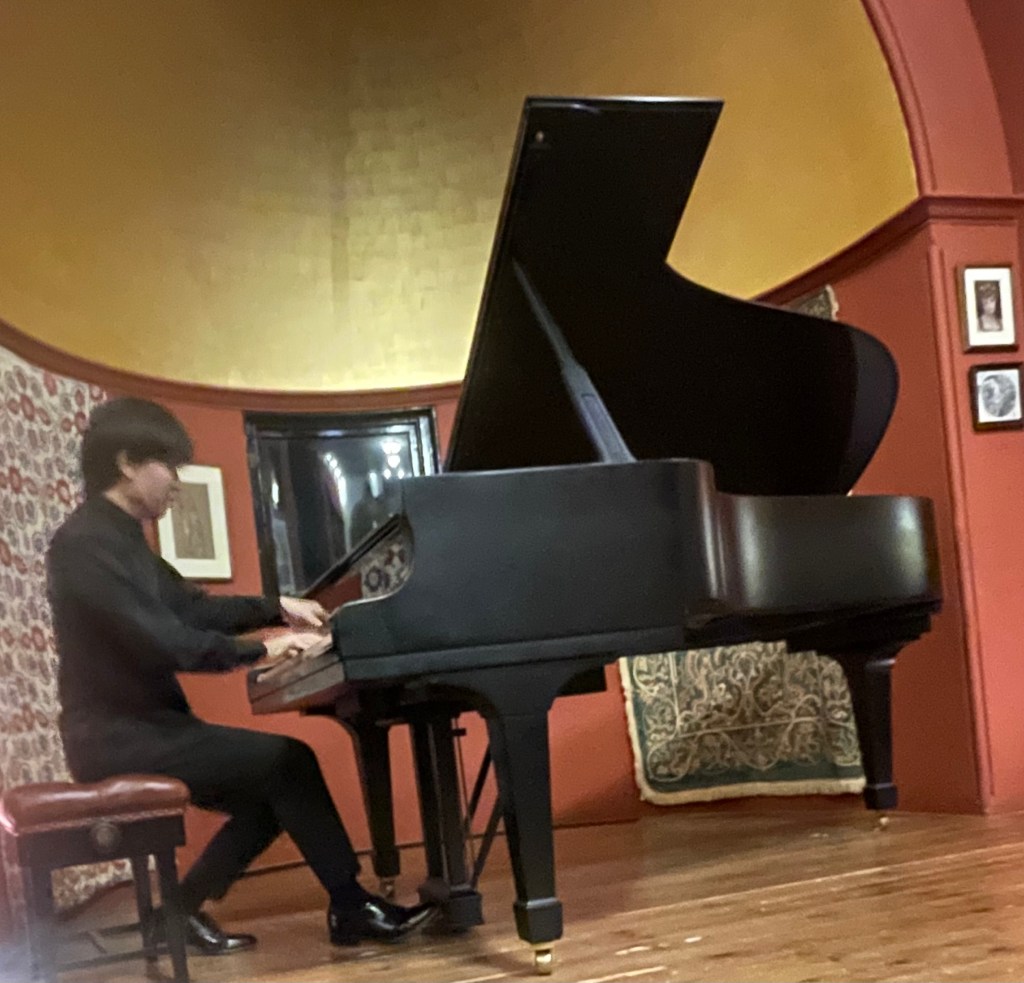
It was the same intelligence that allowed him to shape Chopin’s Polonaise – Fantasy, with its innovative form that the composer at the end of his life had created combining improvised fantasy with the rhythmic precision of the polonaise. There was magic in the air as the opening commanding chords were left to reverberate over the entire keyboard. It was here too the knowing artistry of this young musician as he held down silently the bass C flat and B double flat so that Chopin’s indication with pedal could be followed but without too much cloudiness. All through his performances there were knowing ‘tricks of the trade’ where Chopin’s very precise instructions could be adhered too without any distortion but simply conveying the innovative meaning that all interpreters should search for in the score. The cry of the Polonaise was soon absorbed by a wind of sounds passing over the landscape with Tony’s penetrating playing of intensity and singing bel canto. A weight to the sound that his limpet fingers could suck from the keys without any ungrateful hardness or showmanship. Added bass notes in the central ‘poco più lento’ were a knowing way of opening up the sonorities in a piano where beauty had to be sought out by a magician who can create miracles, turning a bauble into a gem. The return of the opening flourishes after the glistening vibrancy of etherial sounds was ‘pianissimo’ as Chopin marks and is rarely noted by lesser interpreters.The build up to the final mighty climax was played with masterly control allied to a passionate commitment leading to five whispered bars interrupted only by a single piercing A flat judged to perfection by this inspired young artist. Not waiting for the applause to die down he burst into the Allegro maestoso of the Sonata in B minor!
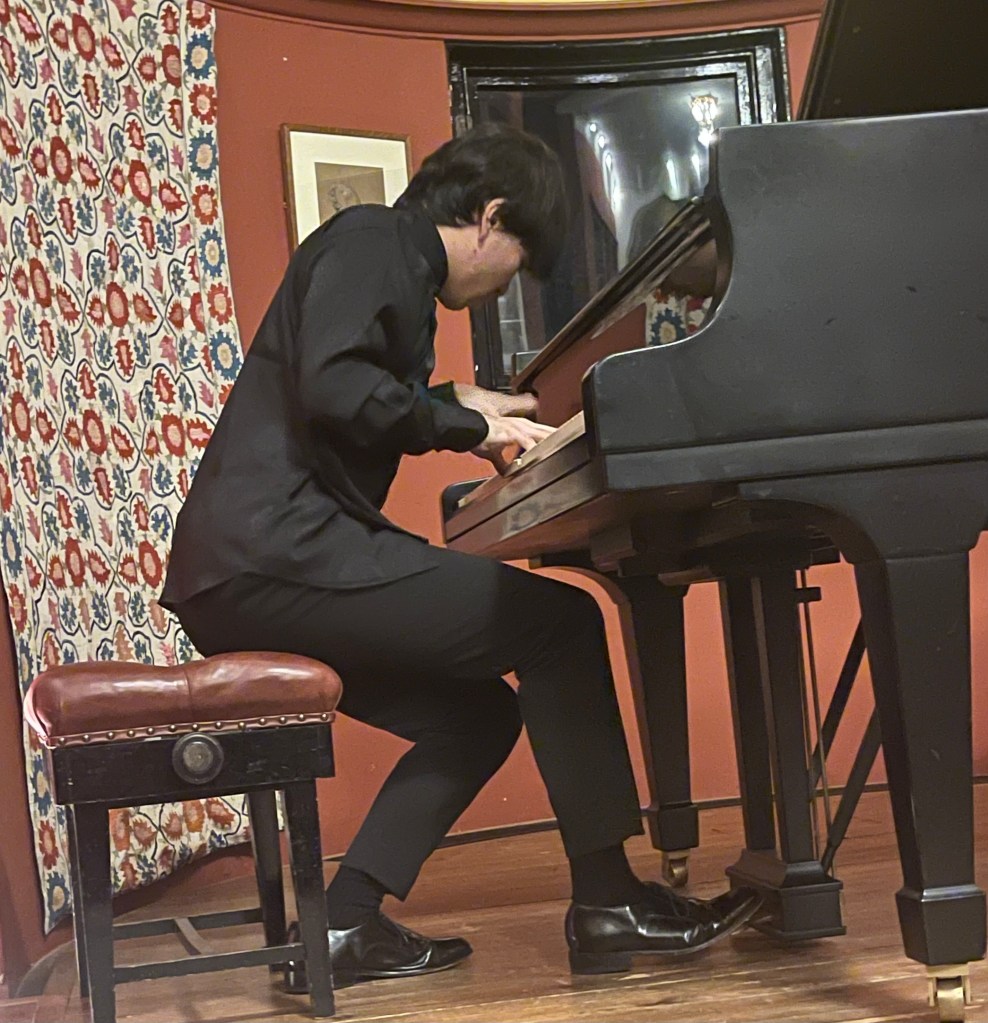
It was here in particular that Tony’s intelligent musicianship combined with his hypnotic poetic commitment was always of good taste and with the overall shape of the work in mind.A beautiful outpouring of bel canto for the second subject that continued with streams of sounds, always singing with flowing beauty. Leading straight into the development of burning intensity without the formal repeat. An added B in the bass just opened up the glorious sound of the invigorated second subject where Chopin had never indicated a diminuendo or implied rallentando . Here Chopin had simply indicated a cascade of notes arriving at the sostenuto and a more intense outpouring of the second subject after such a troubled voyage.
The ‘Scherzo’ just flew from his fingers with limpet like mastery but it was the ‘Trio’ that revealed a true master of line and colour and added nobility to a movement often used as a scintillating respite between two movements of searing intensity. A ‘Largo’ that was born out of the final flourish of the scherzo as it dissolved into a cantabile of poignant simplicity .Streams of arpeggios were supported by the occasional added bass note to open up the piano and make it surrender the beauty that can only be found hidden deep within such an instrument. The whispered opening of the Finale gave Tony space to build up the tension before the first appearance of the rondò theme that was to reappear each time with more and more impetuosity and burning intensity. Cascades of notes spilt over the entire keyboard with the mastery of a musician and seasoned master who knows when he can allow his fingers free reign .The final appearance of the rondò theme was breathtaking for its audacity and fearless abandon and the treacherously tricky coda was played with mastery and technical brilliance.
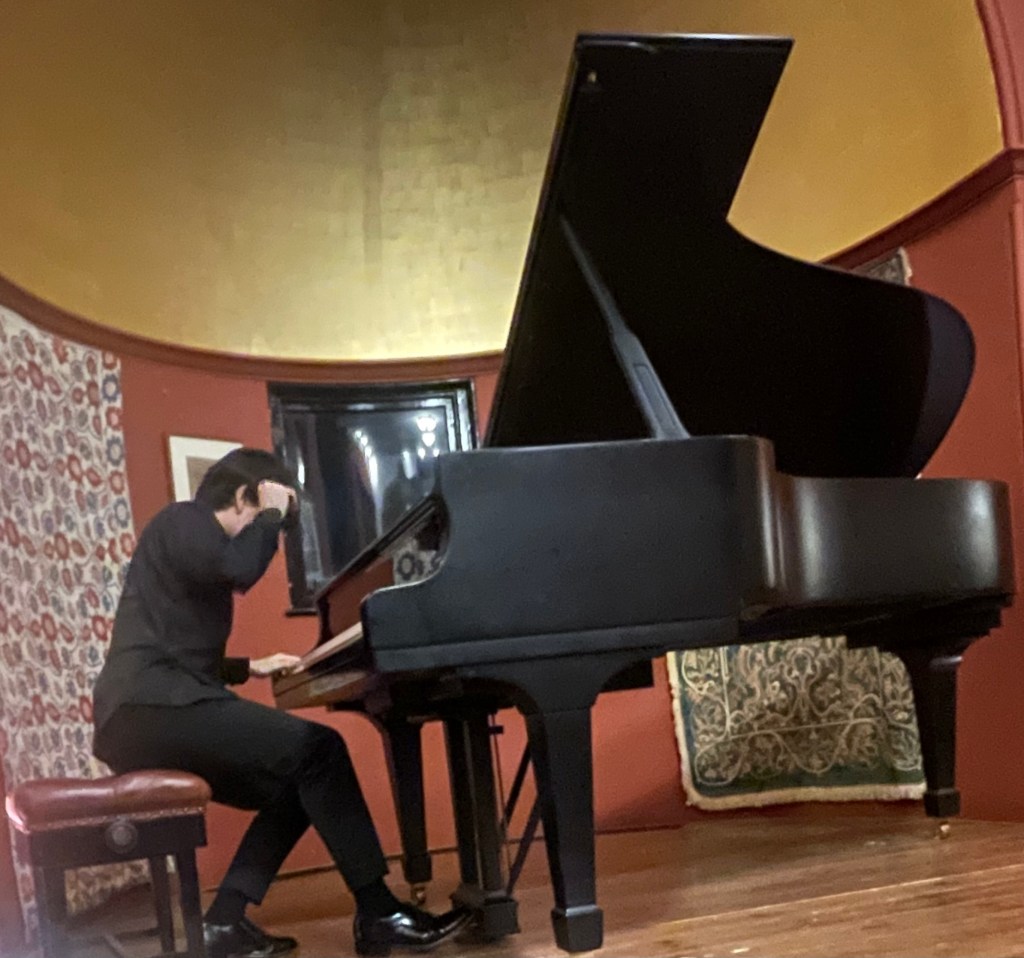
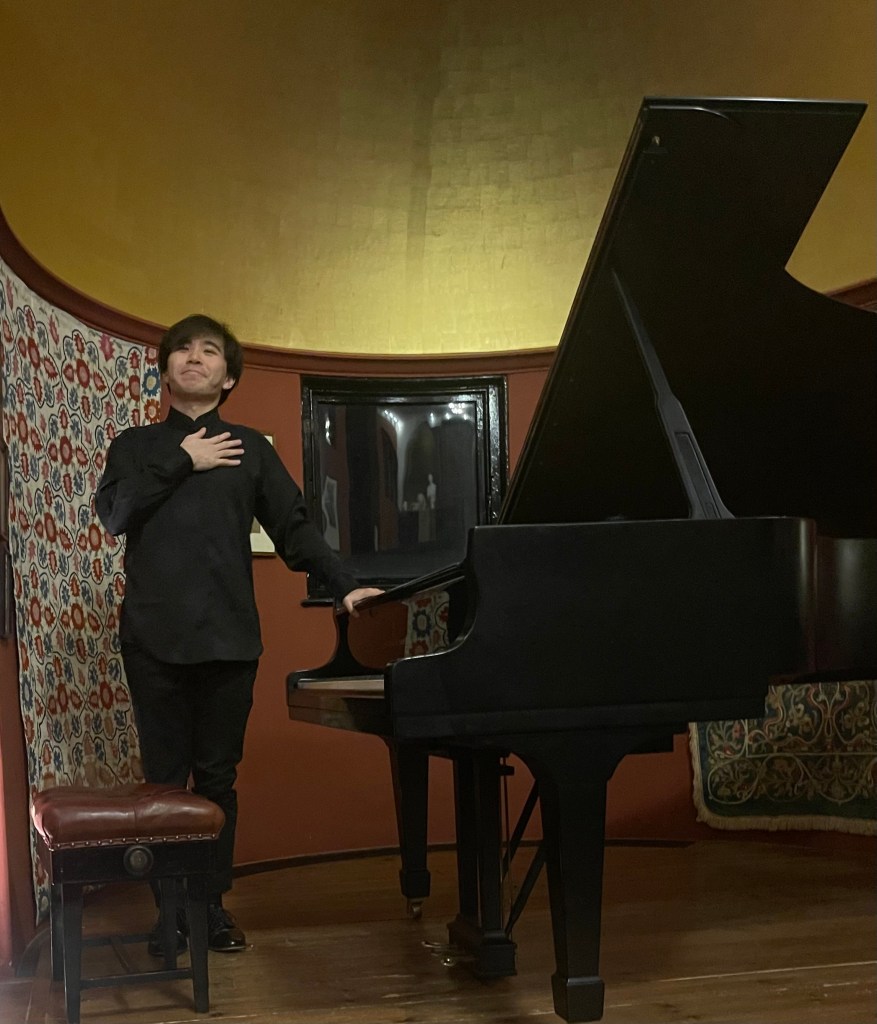
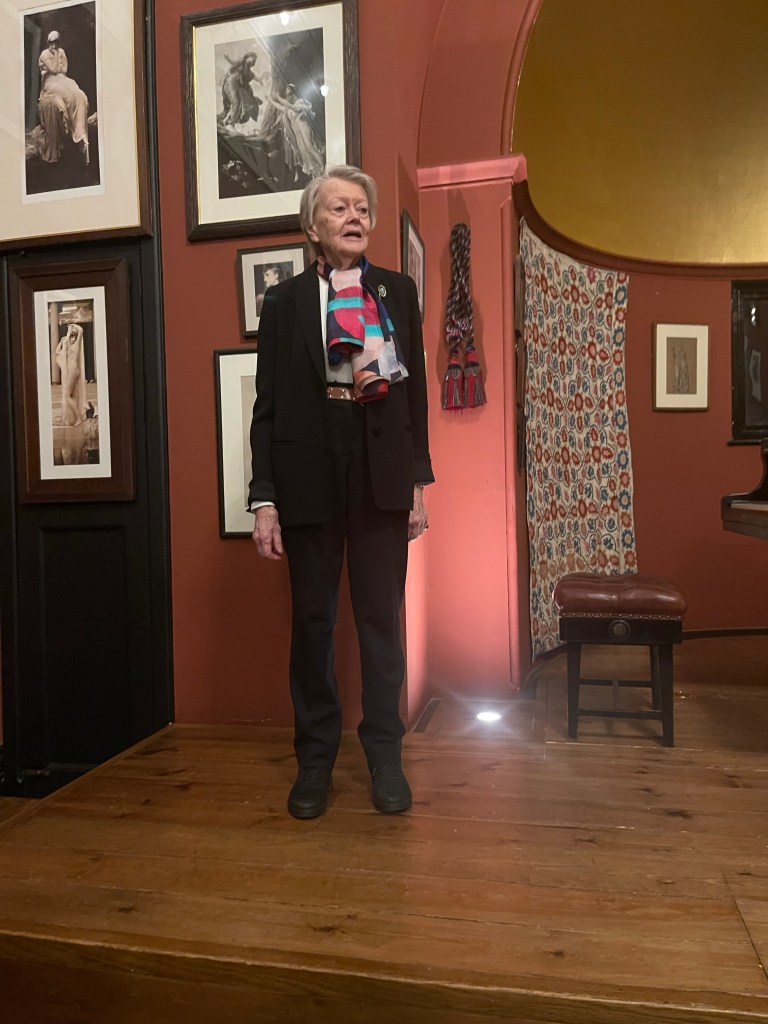
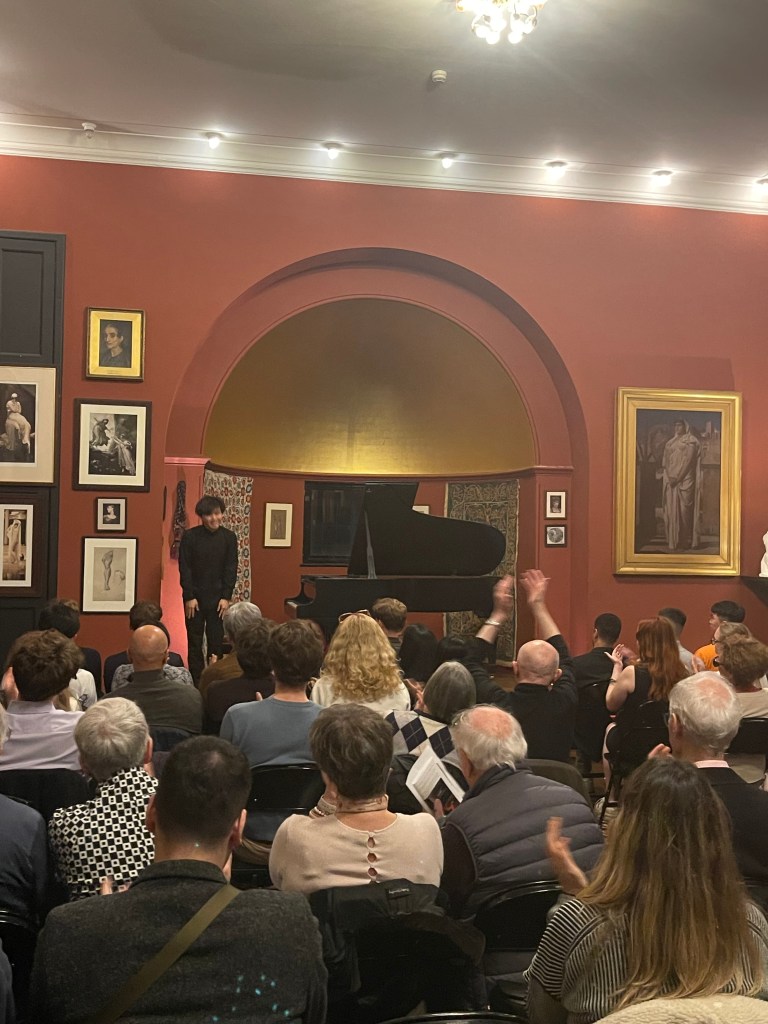
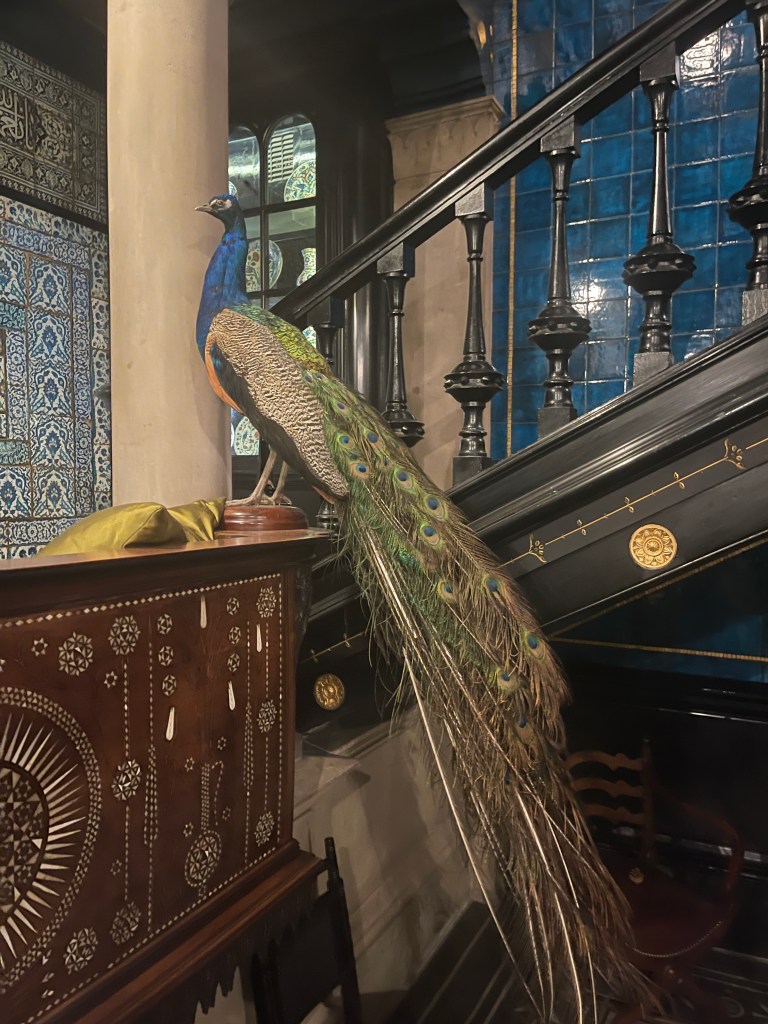
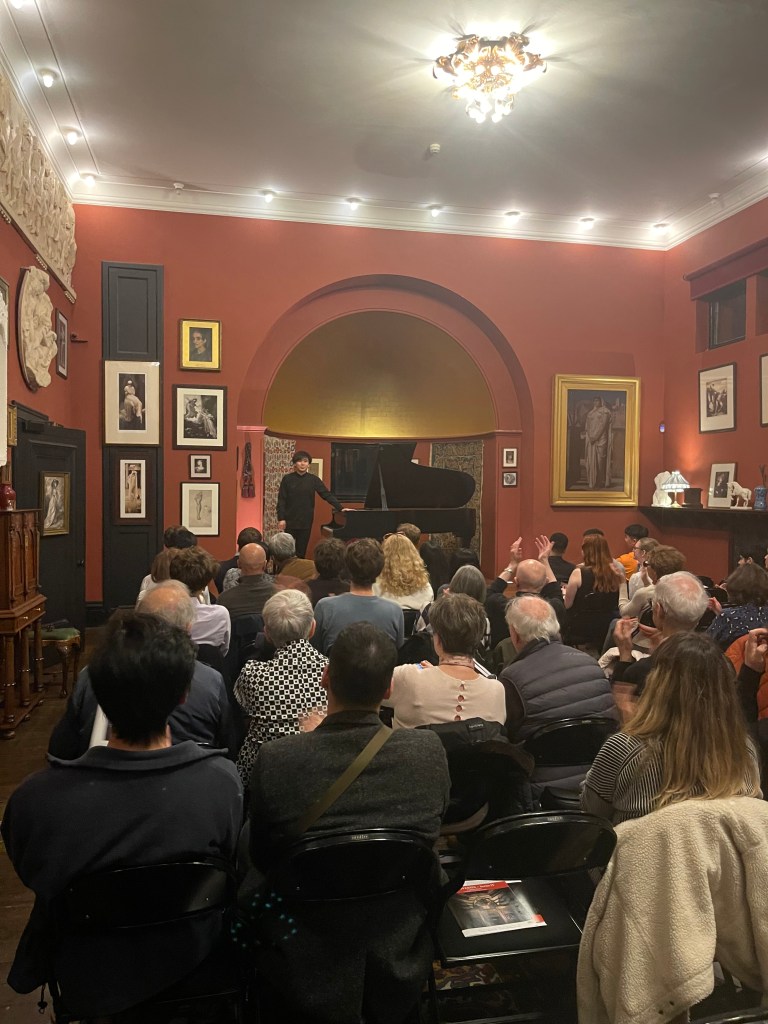
After such a performance I was not expecting any more, as this young artist had already given us an hour of intense music making of total commitment .But out of the ovation that greeted him , in this sumptuous Art Nouveau Music Room, Tony sat once more time at the piano and like Rubinstein during his Indian Summer we could hear the opening notes of the Polonaise Héroique op 53.
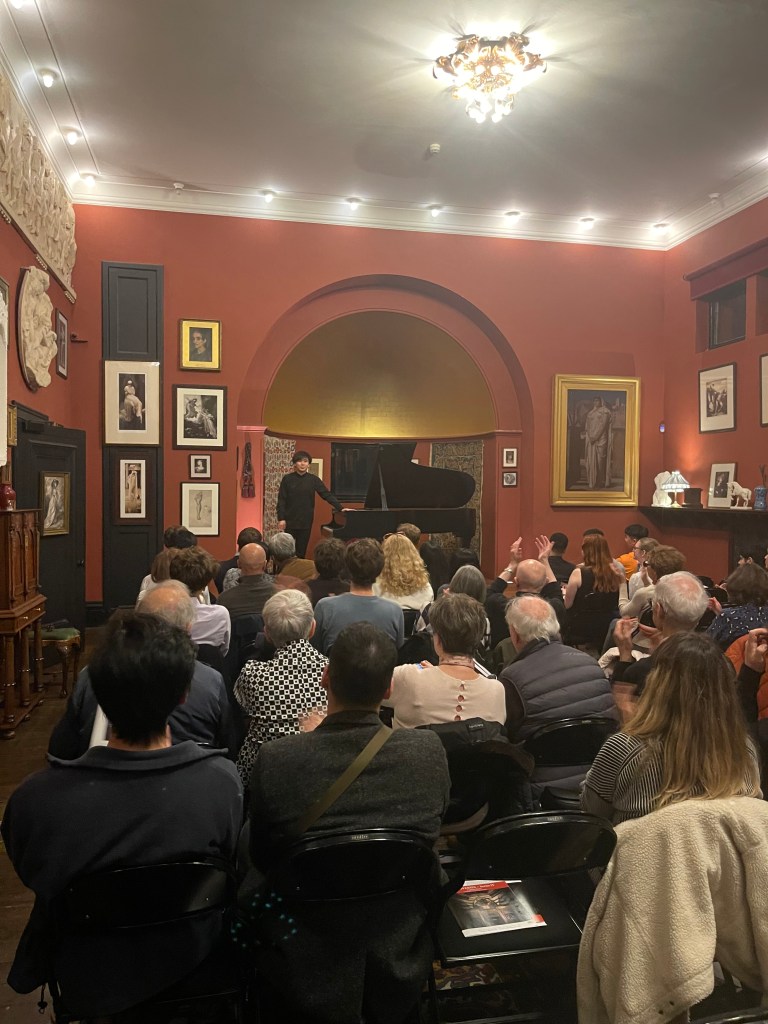
A performance of breathtaking audacity and Aristocratic nobility. A cavalry that was of noble breed as it sped across the keyboard like a wind passing, with the cavalry bugles ablaze. A beautiful quasi improvised respite just made the final glorious outpouring even more exhilarating .
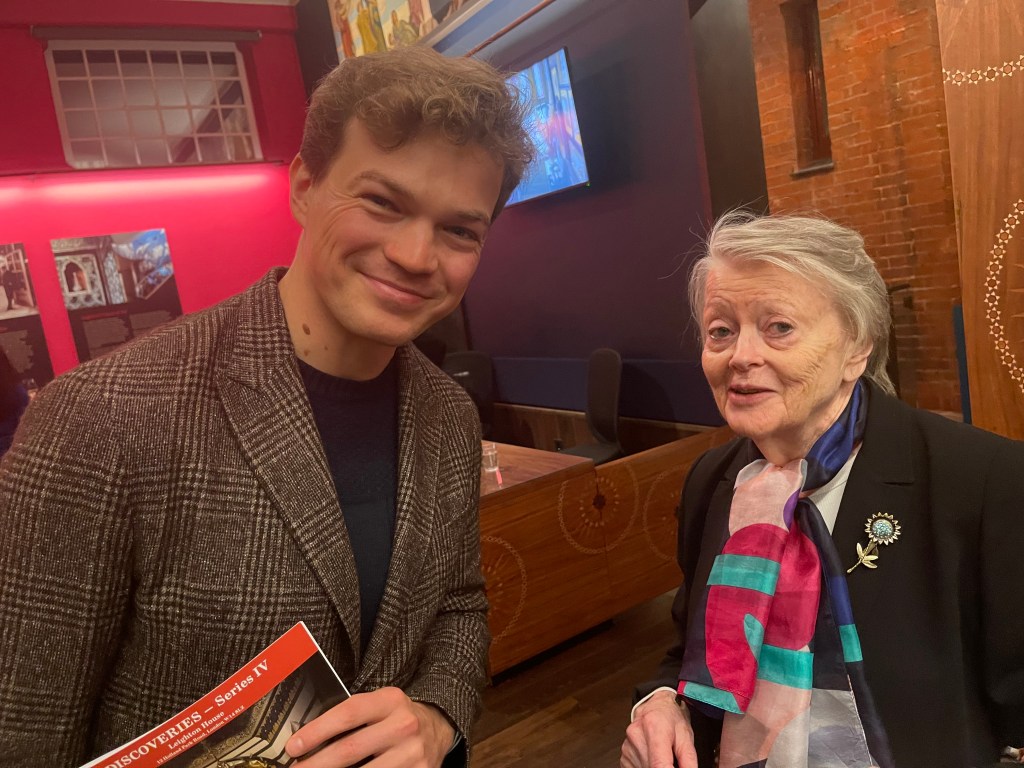
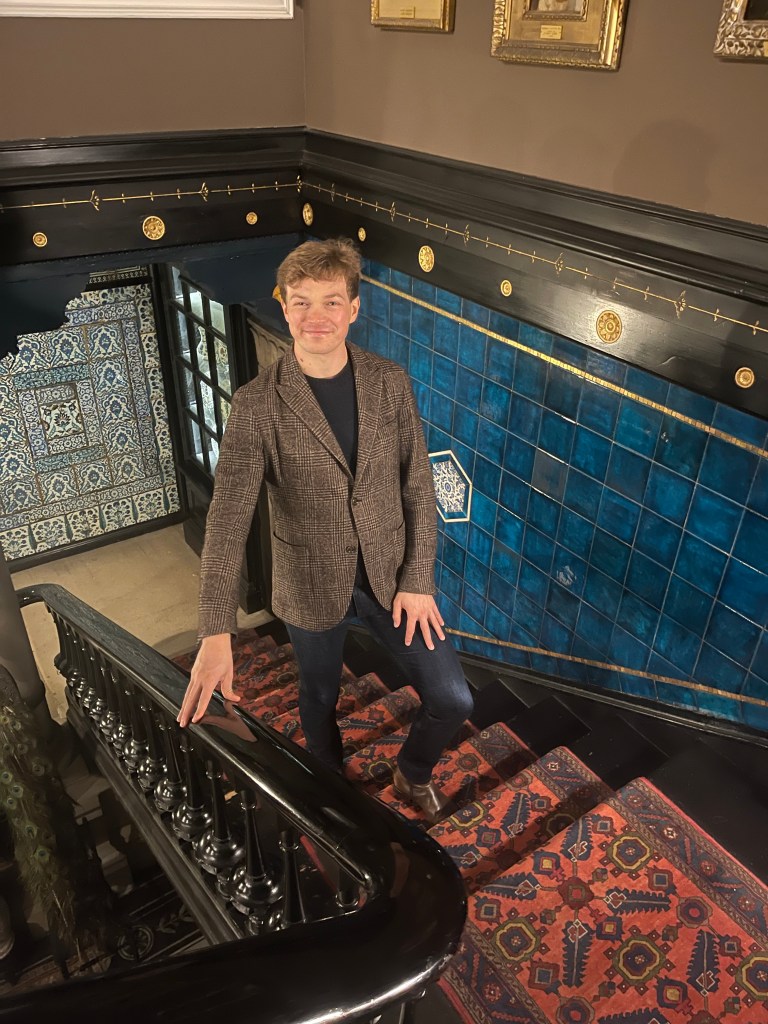
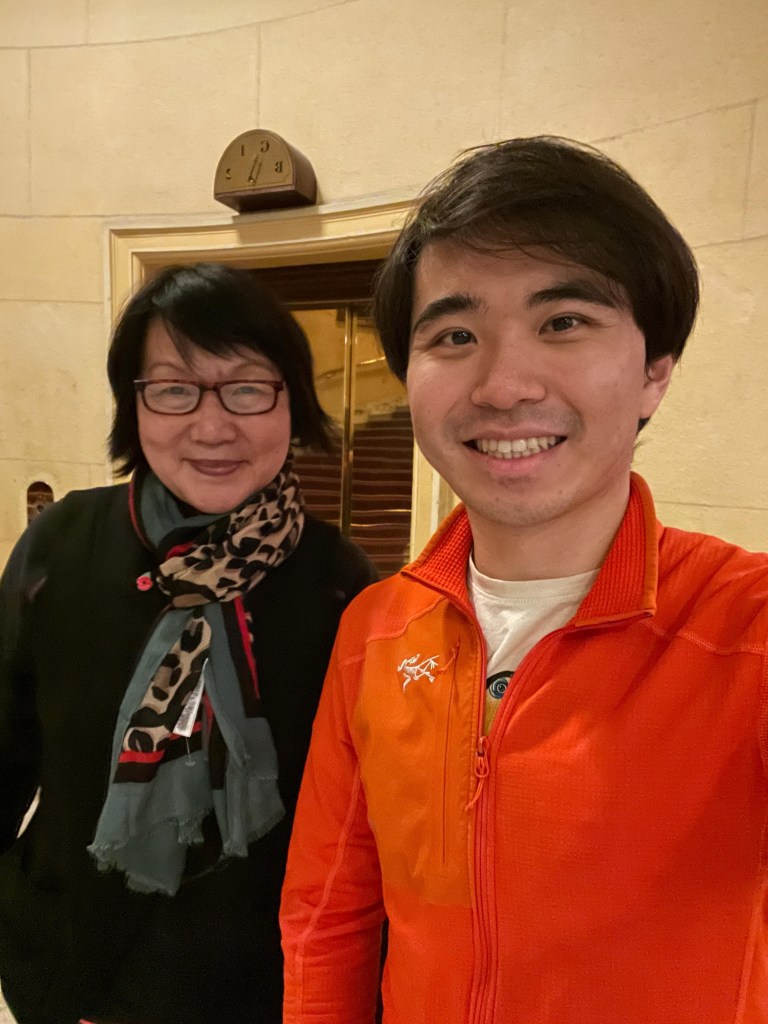
Hailed by CBC Music as one of Canada’s finest young musicians, pianist Tony Yike Yang first rose to international acclaim at the age of 16 after becoming the youngest-ever laureate in the history of the International Chopin Piano Competition in Warsaw, winning the 5th prize in 2015. Additionally, Yang has also won prizes at the Van Cliburn, Gina Bachauer, Hilton Head, Cooper, and the Bosendorfer & Yamaha USASU International Piano Competitions.
As a soloist, Tony has performed internationally in venues such as the Tokyo Metropolitan Theatre, Carnegie Hall in New York, the National Philharmonic in Warsaw, Seoul Arts Center, the National Arts Centre in Ottawa, Osaka Symphony Hall, Koerner Hall in Toronto, Great Hall of the Moscow Conservatory, Severance Hall in Cleveland, Esplanade Singapore, Teatro Municipal in São Paulo, Stadtcasino Basel, Milan Conservatory, Aula Simfonia Jakarta, and the Millennium Amphitheatre in Dubai.
Concerto highlights include appearances with the Cleveland Orchestra, Warsaw Philharmonic, Orchestre Métropolitain, Fort Worth Symphony, Basel Proms Orchestra, Ontario Philharmonic, Jakarta Sinfonietta, Toronto Sinfonietta, Edmonton Symphony, Changsha Symphony, Chongqing Symphony, Hilton Head Symphony Orchestra, Symphony Nova Scotia, and the Hohhot Philharmonic.
Tony is also passionate about the role of music in the greater community. Among his most devoted projects include a comprehensive collaboration with Looking at the Stars, a charity that brings classical music to prisons and correctional facilities across Canada, Lithuania, and the United States. Tony also works closely with Chamber Music Kenya as an ambassador of piano performance and education to eastern Africa, as well as the Guangdong Disabled Persons’ Federation to bring live music to visually-impaired youth in the Guangdong province. Since 2018, Tony has been appointed a Youth Cultural Ambassador for the City of Guangzhou.
Tony has also performed for dozens of royalty, dignitaries, and ambassadors such as HRH Camilla, the Queen of the United Kingdom, HRH Queen Mathilde of Belgium, former Canadian Prime Minister Stephen Harper, former Kuwaiti Prime Minister Sheikh Nasser Al-Sabah, and Polish President Andrzej Duda, among others.
Born in Chongqing and raised in Toronto, Tony is a recent graduate of Harvard University where he obtained a Bachelor of Arts in Economics. He is Artist-in-Residence at the Ingesund Piano Center in Sweden and at the Chinese University of Hong Kong-Shenzhen, and in the past, was a fellow at the Oberlin-Lake Como International Piano Academy. Studying under such illustrious musicians that include Dang Thai Son,Julia Mustonen Dahlkvist,Eliso Virsaladze and William Grant Naboré .Currently pursuing his Master of Music at the Hochschule für Musik, Theater und Medien Hannover under Prof. Arie Vardi, Tony is a recent recipient of the Harvard University Robert Levin Prize in Musical Performance, and is named as “One To Watch” by Scala Radio UK.
 ChristopherAxworthy-MusicCommentary