Fun and games but what music !
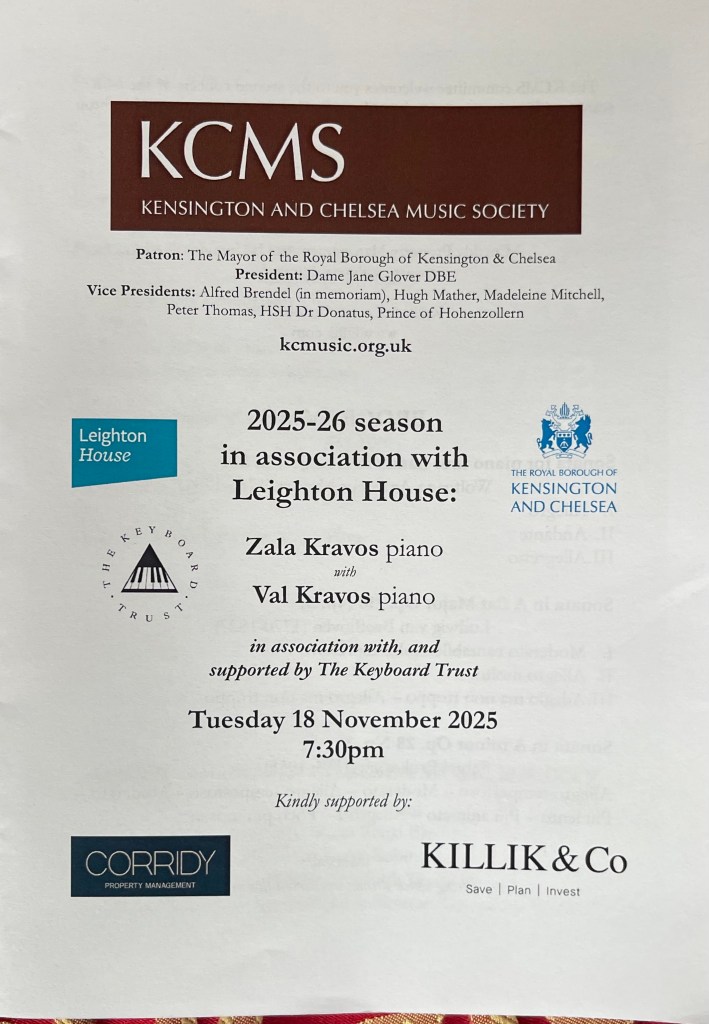
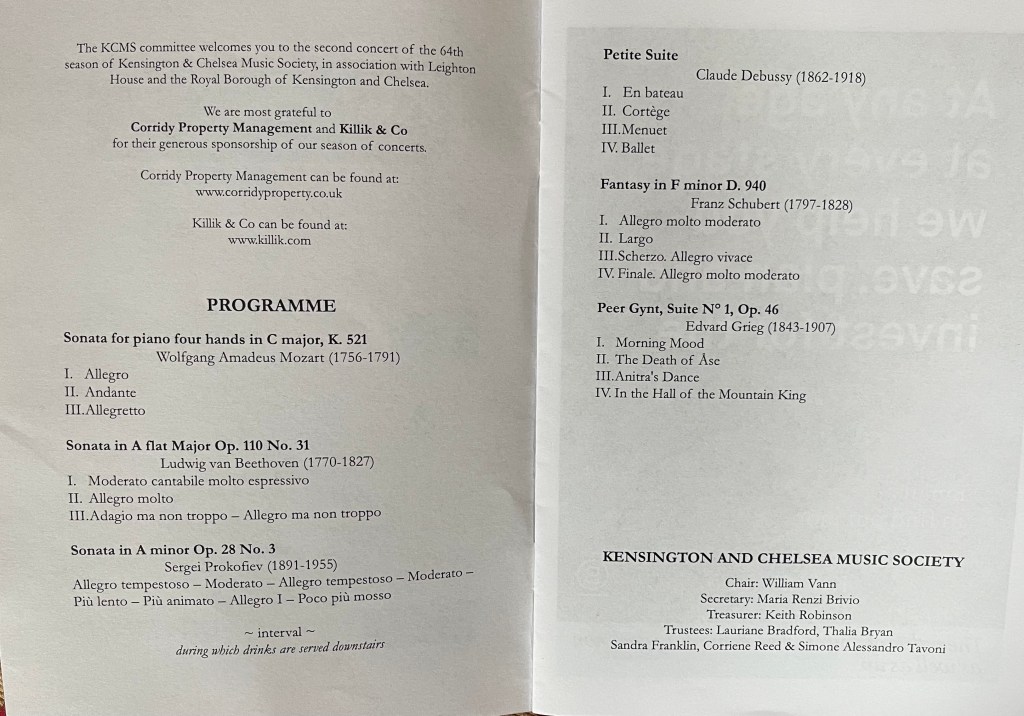
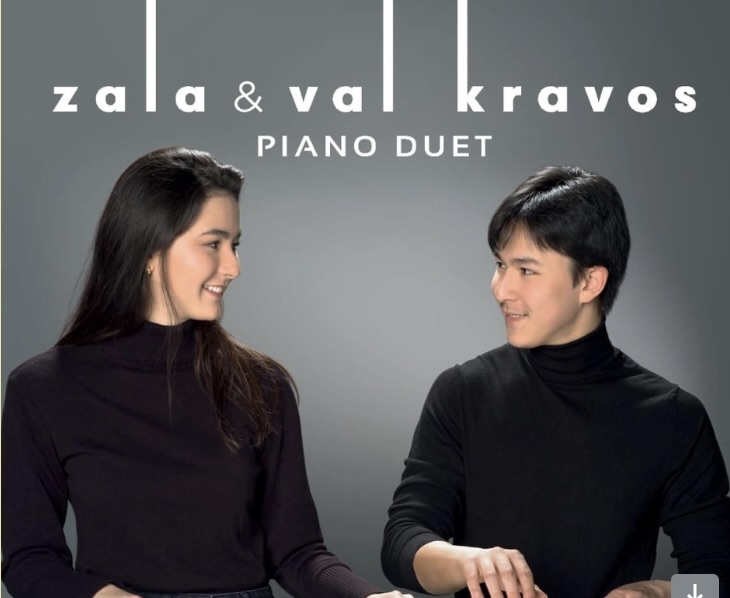
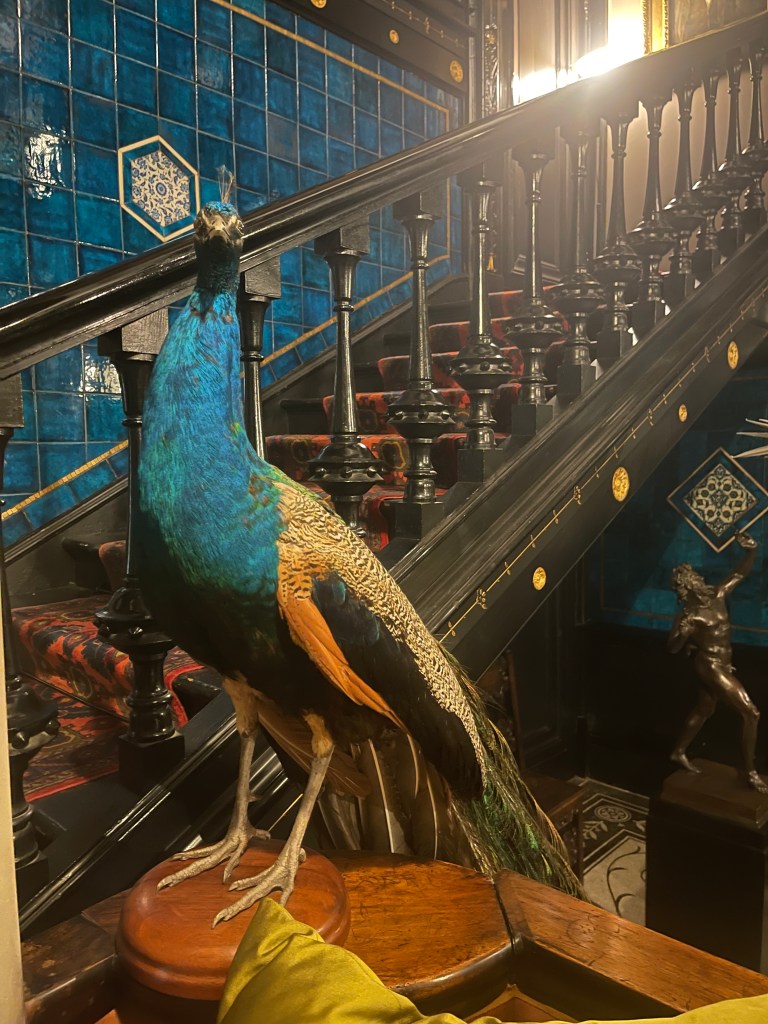
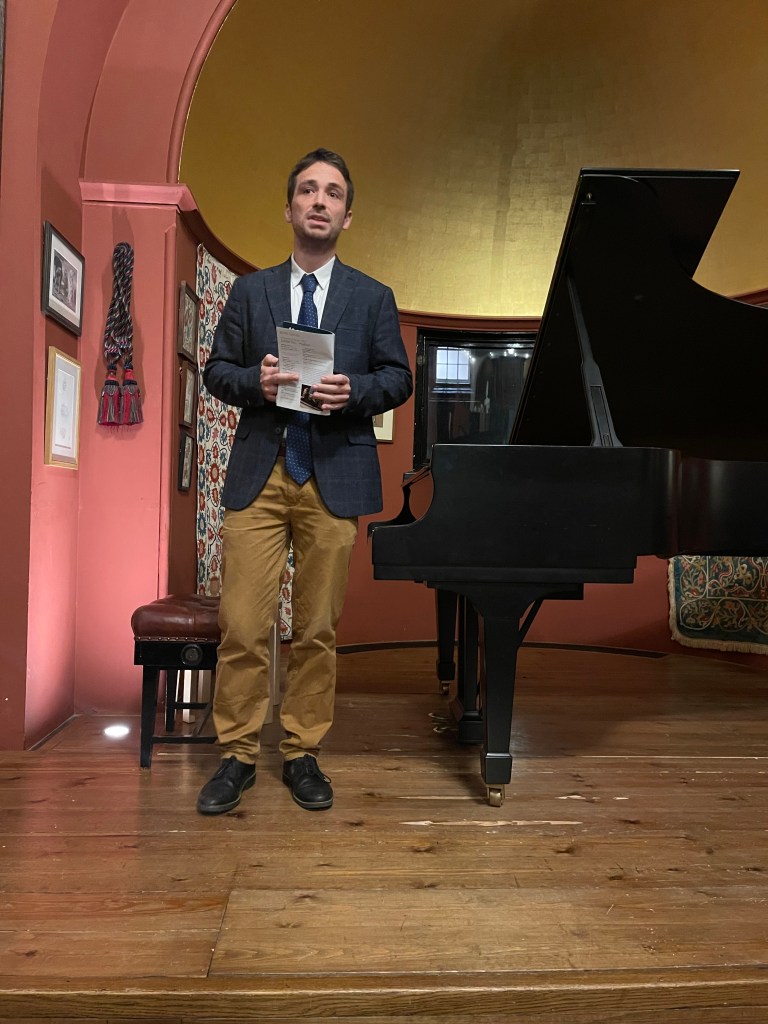
At Leighton House when the KCMS join forces with the Keyboard Trust even the Peacocks have a smile on their face as Zala and Val Kravos led us up the ‘garden path’ with music making of masterly Hausmusik that Frederic Leighton’s music room has not seen for many moons .
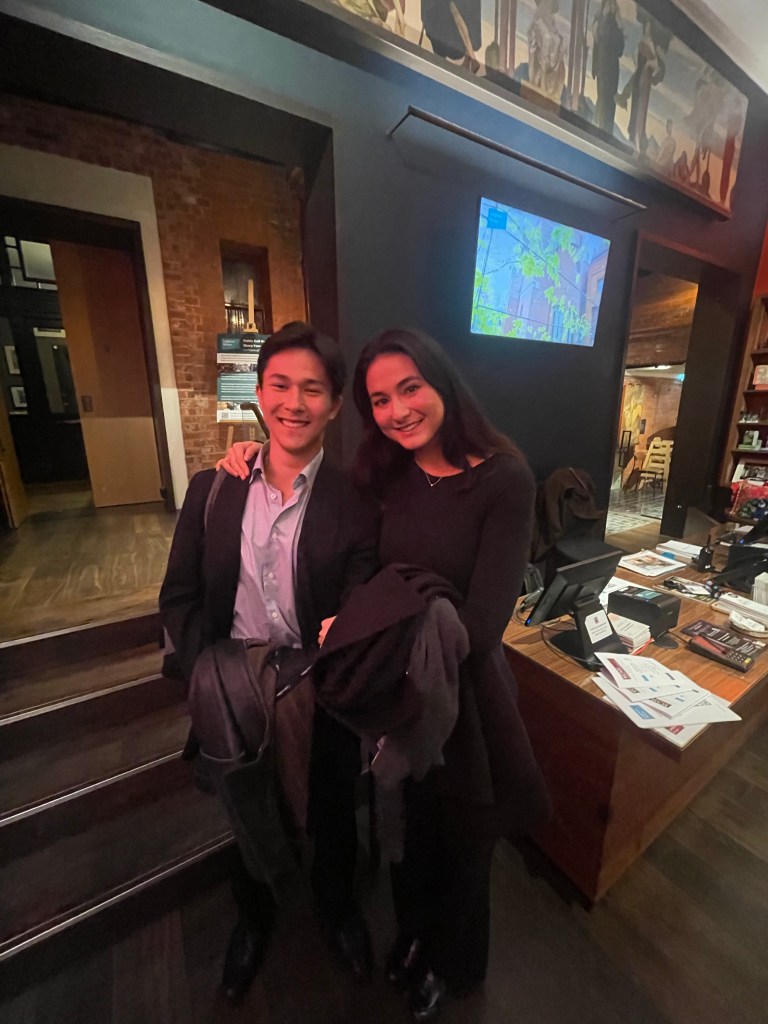
Brother and sister in their early twenties, both master musicians perfecting their skills as a duo in Paris at the École Normale, having gained their Bachelors with honours as soloists from the RCM in London and LUCA in Brussels.
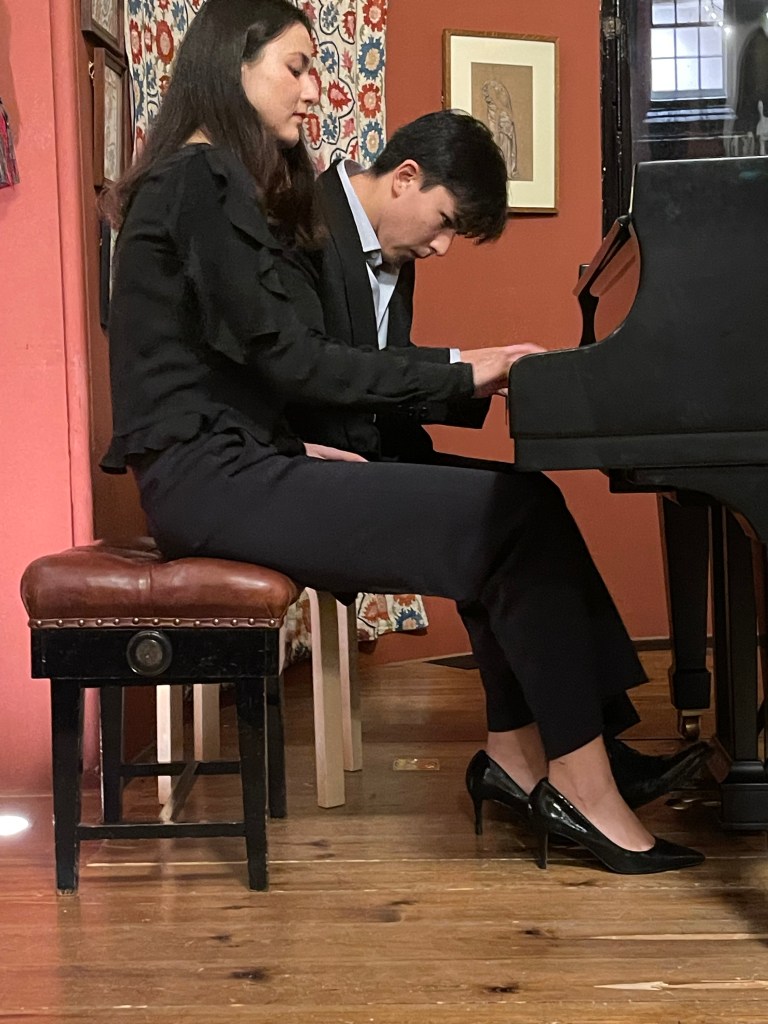
Filling this warmly rich salon with music making of rare beauty and mastery. From the last work for piano duet by Mozart played with impish intent by a duo who have the music in the hearts and soul and have no need of a printed aide memoire to invade their intimate musings.
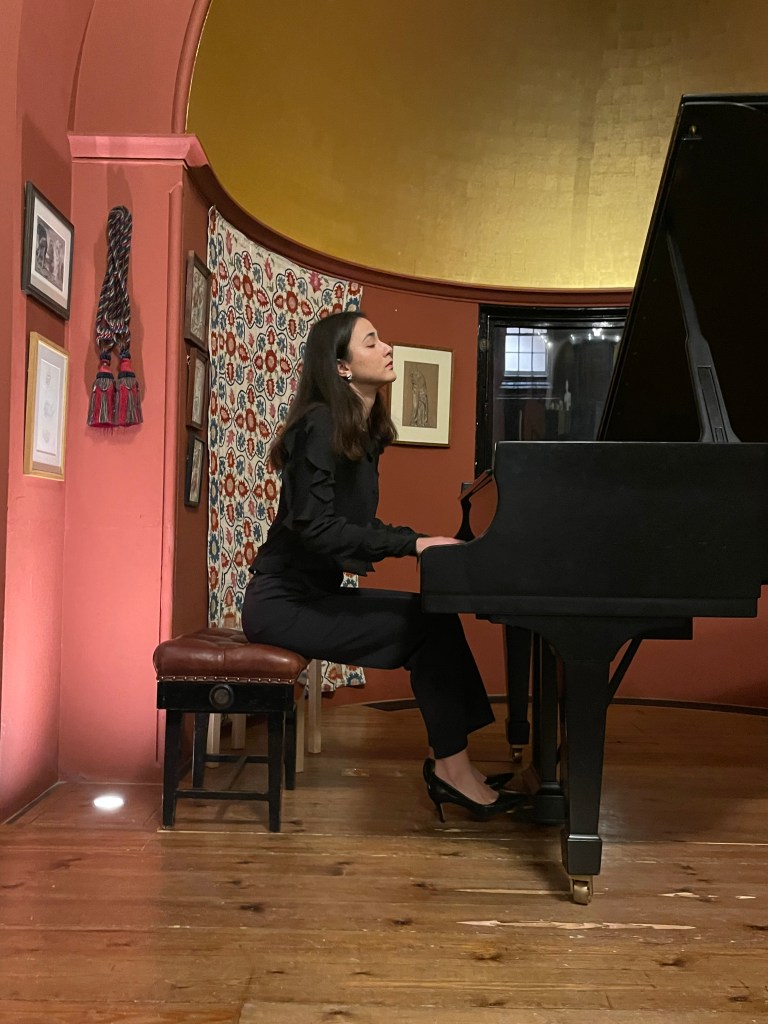
Beethoven’s penultimate sonata played with intelligence and aristocratic poise before letting rip with the atomic explosions of Prokofiev’s third Sonata.
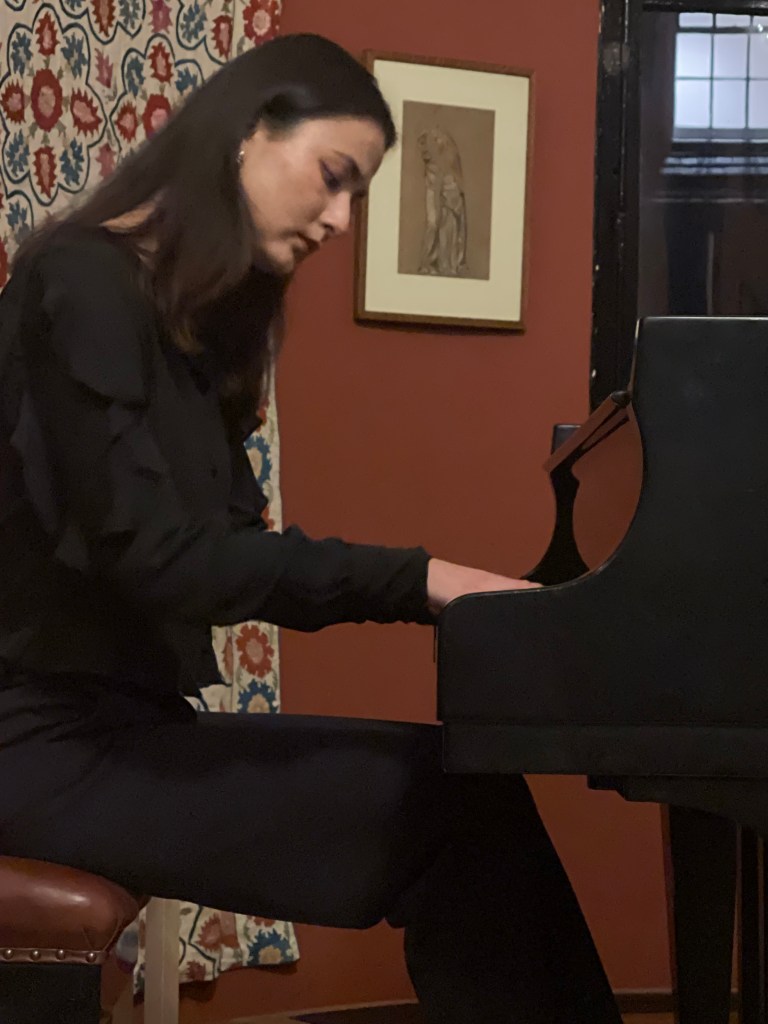
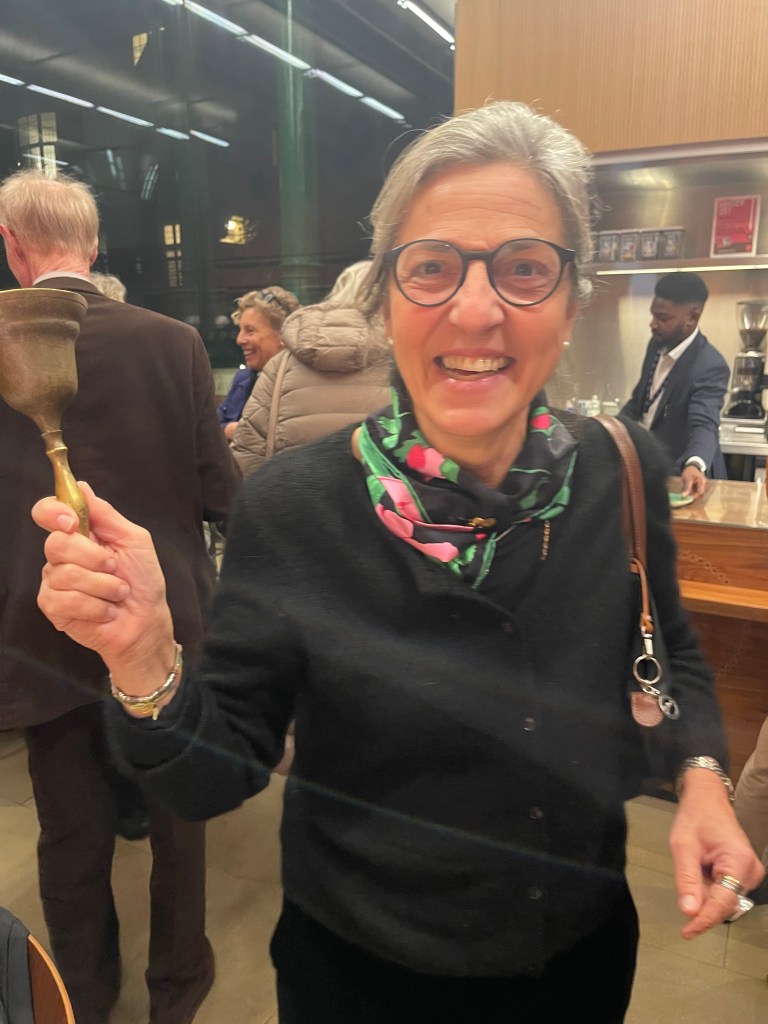
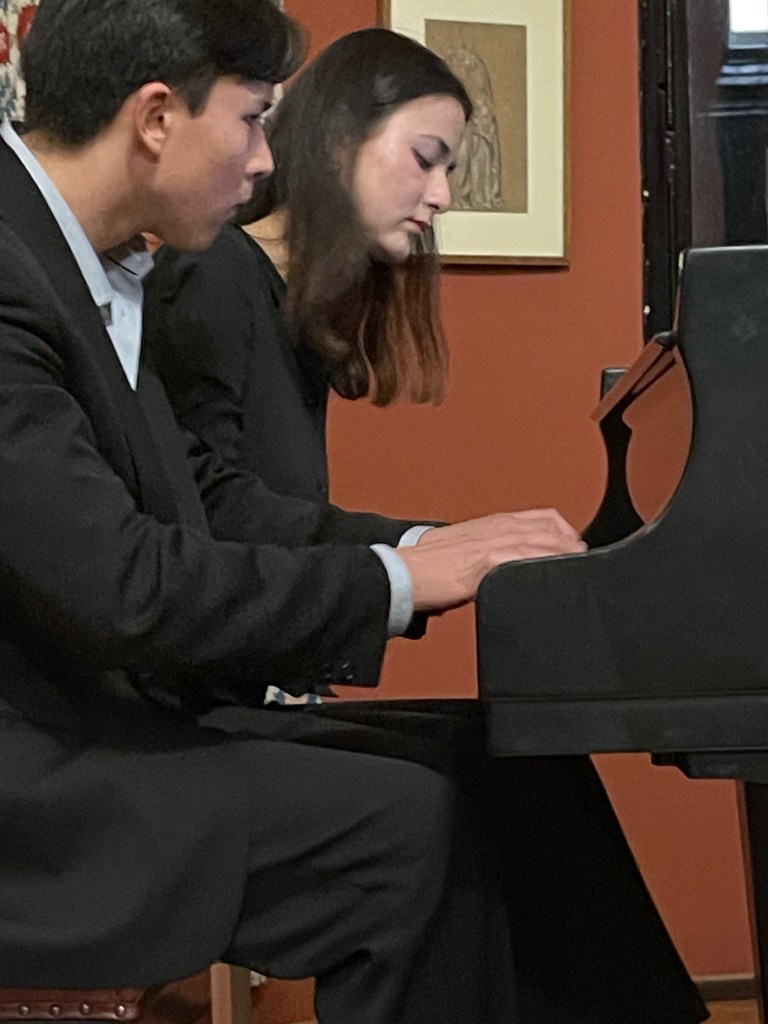
The second half with everyone in much better spirits having been summons from the bar by the KCMS’s delightful cryer, we were ready to be seduced by Debussy’s Petite Suite. With Val seated in the front seat but with the sumptuous back seat driving of Zala, the piano radiated sounds of whispered secrets and scintillating charm. This was surely the highlight of an extraordinarily enjoyable evening where knowing glances between brother and sister created a voyage of discovery that we were all enticed to follow.
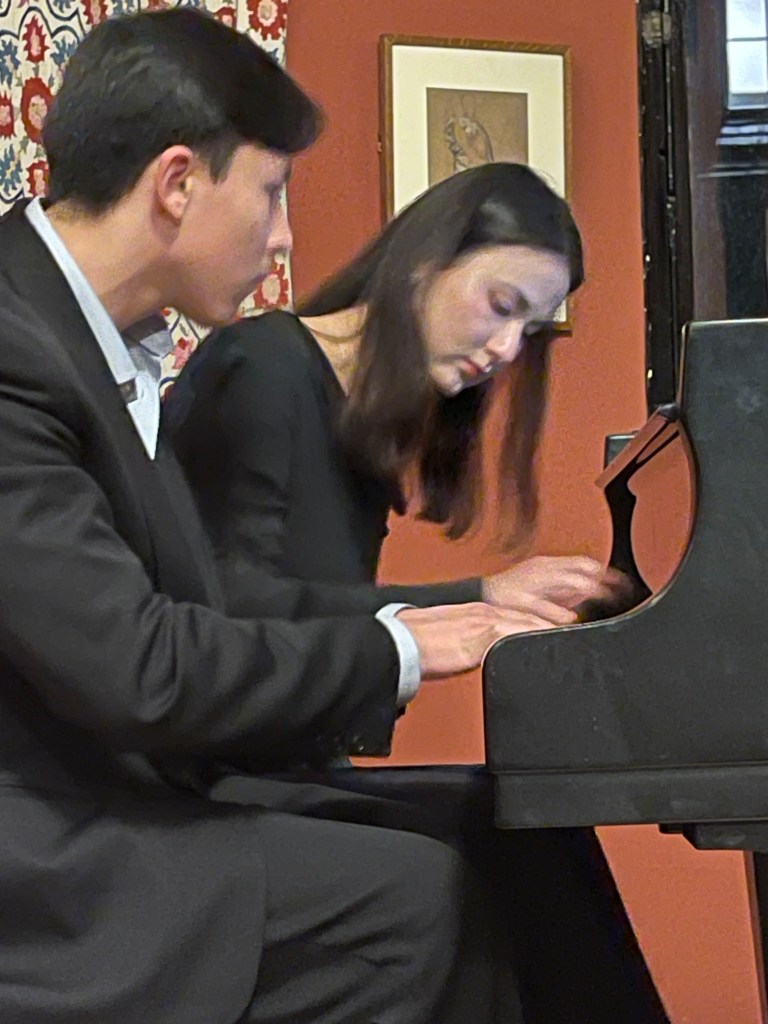
Of course the Fantasy in F minor had Zala in the front seat and she even took control of the pedals as this wondrous work unfolded with masterly musicianship and playing of four hands but united as two.
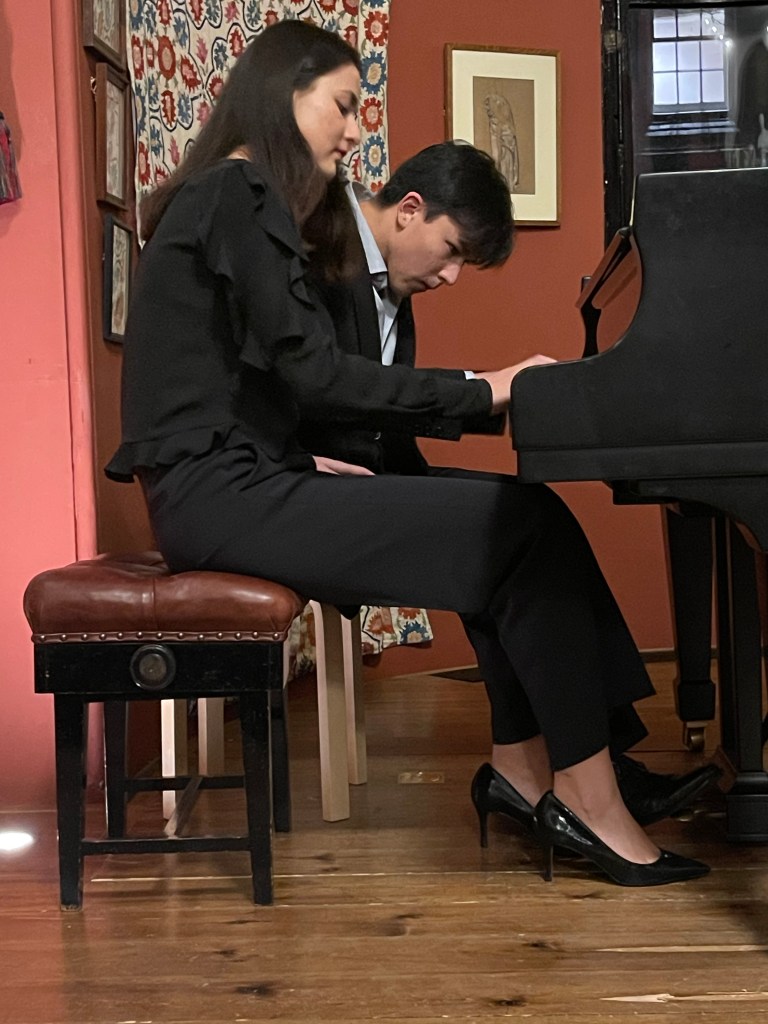
Griegs op 46 suite was a kaleidoscope of emotions from the atmospheric Morning and serious intent of the Death of Ase, to the impish caprice of Anitra’s Dance and the wild tarantula like abandonment ‘In the Hall of the Mountain King’.

One of Brahms most loved Hungarian dances was the Kravos family way of thanking us for offering such a sumptuous occasion for them to share their music with.
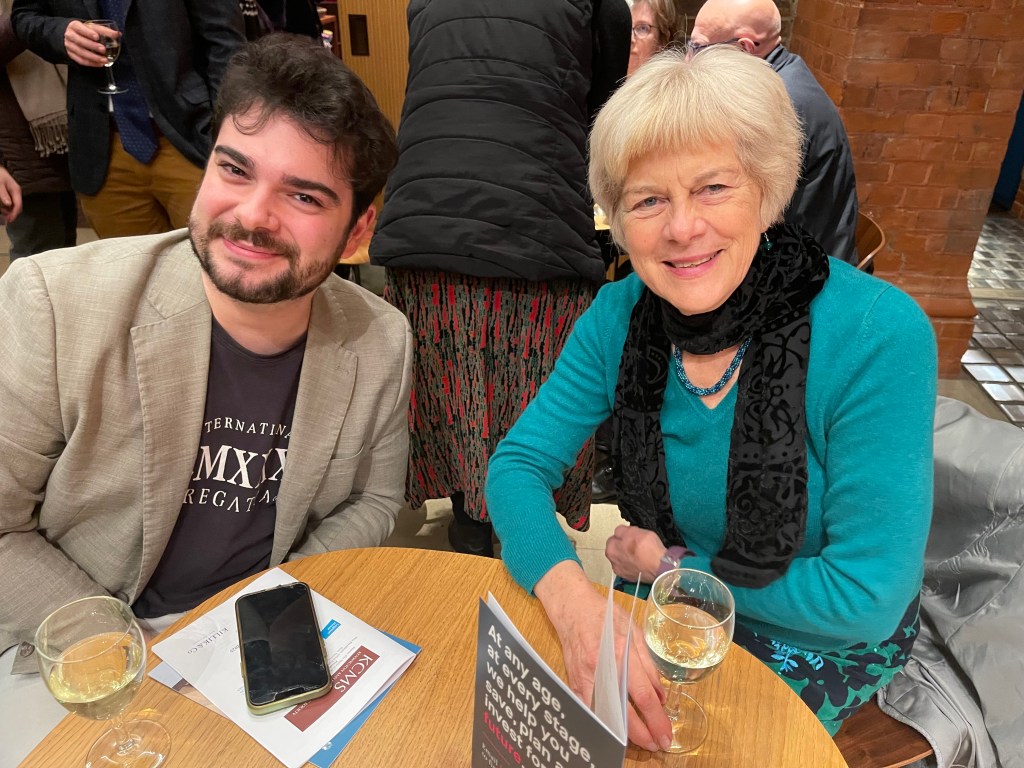
https://christopheraxworthymusiccommentary.com/2025/11/03/nicolo-giuliano-tuccia-at-st-jamess-playing-of-style-with-a-refined-palette-of-sumptuous-sounds/
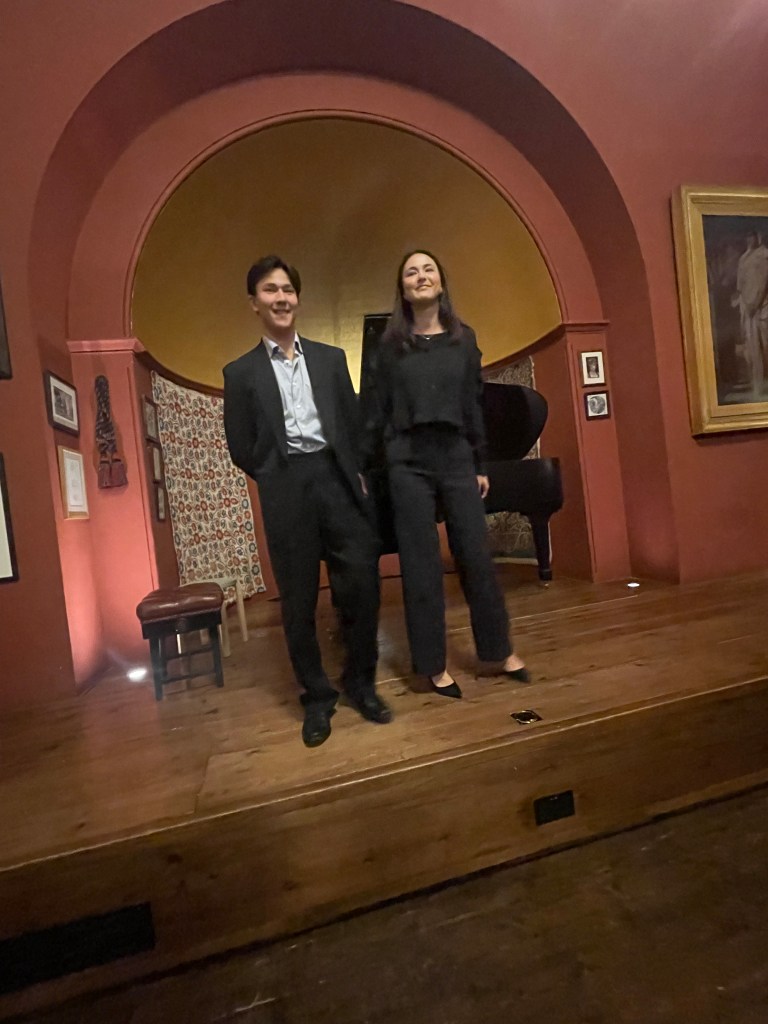
Originally from Slovenia but raised and educated in Luxembourg, Zala and her younger brother Val have performed since early childhood across Europe, as well as in China and the United States. They have excelled as soloists, including in performances with orchestras, as chamber musicians, and in piano four-hands and two-piano configurations. Their musical journey began at the Conservatory of the City of Luxembourg, where they earned multiple diplomas in piano performance, music theory, and piano four hands. They have won several national and international competitions for young musicians, but for several years, they have preferred focusing on public performances and recordings. As outstanding talents, they attracted the attention of distinguished mentors early in their careers. Zala studied under Maria João Pires and Louis Lortie at the Queen Elisabeth Music Chapel in Belgium, while Val trained with Jacques Rouvier at the Musica Mundi School in Belgium and Sylvia Thereza, former assistant to Pires. From 2019 to July 2025, Zala pursued her studies at the Royal College of Music in London, graduating in 2023 with a First-Class Bachelor’s degree and completing a two-year Master of Music in Performance (Keyboard) with Distinction under Norma Fisher . Val earned a Bachelor’s degree in piano performance from the LUCA School of Arts in Belgium. Both are currently in their first year of a Master’s programme at the École Normale de Musique de Paris ‘Alfred Cortot’, specialising in piano four-hands and two-piano repertoire. In 2021, they recorded an album of piano four-hands music in Germany, following Zala’s debut solo album in 2017 at age fourteen. Both recordings feature iconic repertoire from various periods alongside original compositions written for them by contemporary Luxembourgish and French composers. These albums have garnered critical acclaim and media attention across multiple countries.
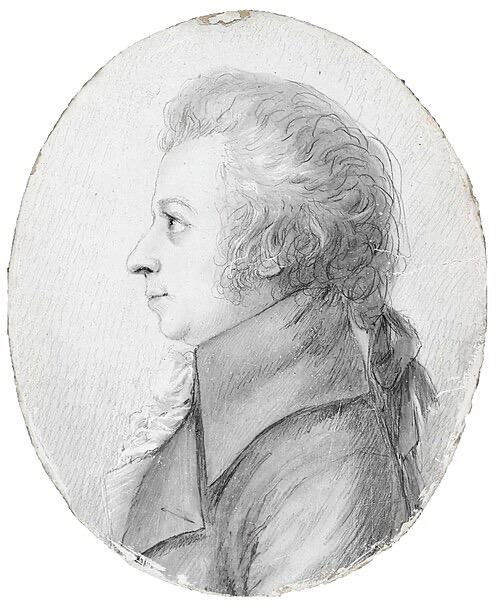
The Sonata in C major for piano four-hands, K.521 was composed by Mozart in 1787 and was his last complete piano duet sonata It is in three movements:
Allegro, Andante and Allegretto.The autograph manuscript of the sonata is preserved in the Fitzwilliam Museum,Cambridge.
In Mozart’s thematic catalog, (Köchel) the piece was dated May 29, 1787. On that same day, he also received word of his father’s death. Mozart then shared the sad news with his close friend Gottfried von Jacquin, a Viennese court official and amateur musician, and subsequently dedicated the piece to Gottfried’s sister, Franziska von Jacquin. In Mozart’s letter to Gottfried, he noted that the piece is “rather difficult” and therefore instructed Franziska to “tackle it at once”.It was published at the turn of the year 1787/1788 by music publisher Franz Anton Hoffmeister . Instead of Mozart’s original intention to dedicate it to Franziska von Jacquin, one of his most talented pupils, it was dedicated to Nanette and Barbette Natrop, daughters of Viennese businessman Franz Wilhelm Natorp, also in the Jacquin circle.
Four-hand piano music—two players at one keyboard—first surfaced in England in the early seventeenth century and became immensely popular in the mid-eighteenth century. As children/teenagers in the 1760s, Mozart and his gifted older sister Maria Anna (Nannerl) greatly popularized four-hand playing all over Europe through the tours they were taken on by their father Leopold. A famous painting of the Mozart family from about 1780 depicts the two showing crosse-hand technique at the keyboard, their father standing by with violin, and a portrait of their recently deceased mother on the wall.
Wolfgang apparently wrote his first four-hand sonata, K. 19d, in London in 1765 when he was nine years old. Nannerl also mentioned in a letter of 1800 that she had other similar four-hand works in her possession, some of which may have been even earlier works, but all of which regrettably are lost. Wolfgang returned to the genre in 1772 with the D major Sonata, K. 123a (K. 381), probably influenced by seeing circulating manuscripts of Charles Burney’s four-hand sonatas even before they were printed in 1777 as the first published set of piano duets. Mozart went on to complete three more, of which the present C major Sonata of 1787 was the last.
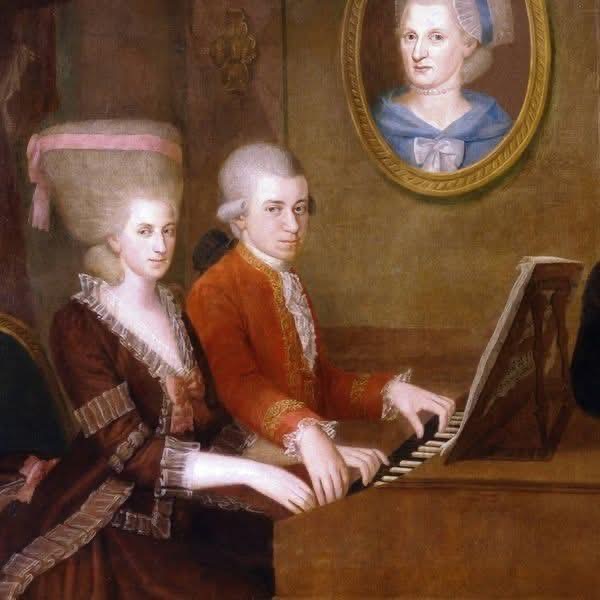
In Mozart’s day it was customary for the woman to play primo (the higher part, often with the melody) and the man secondo (the lower part, often with the bass support)—Wolfgang and his sister always played thus and perhaps instigated the custom. (From 1769 onward, having reached marriageable age, Nannerl was no longer permitted to perform in public.) Charles Burney, famous for his observations on musical life in many European countries, requested that a lady who wished to play piano duets should remove the hoops from her skirt, and not be embarrassed if her left hand occasionally grazed the gentleman’s right !
Vienna
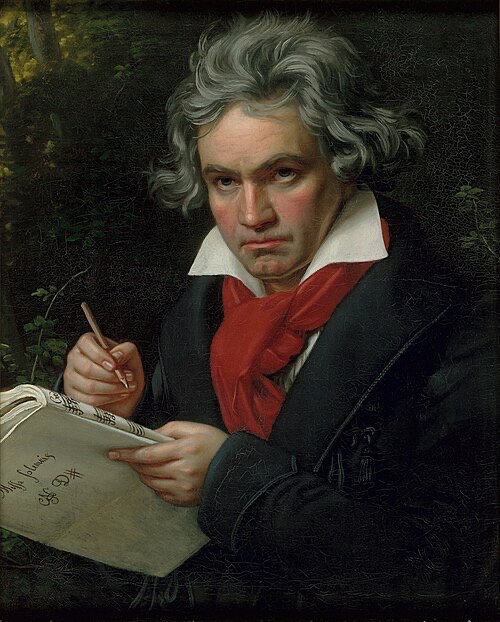
The Piano Sonata No. 31 in A♭ major, op 110, by Beethoven was composed in 1821 and published in 1822 and is the middle sonata in the trilogy ( op.109, 110, and 111) that he wrote between 1820 and 1822, and is the penultimate of his thirty two Sonatas for piano . Though the sonata was commissioned in 1820, Beethoven did not begin work on Op. 110 until the latter half of 1821, and final revisions were completed in early 1822. The delay was due to factors such as Beethoven’s work on the Missa solemnis and his deteriorating health. The original edition was published by Schlesinger in Paris and Berlin in 1822 without dedication, and an English edition was published by Muzio Clementi in 1823.
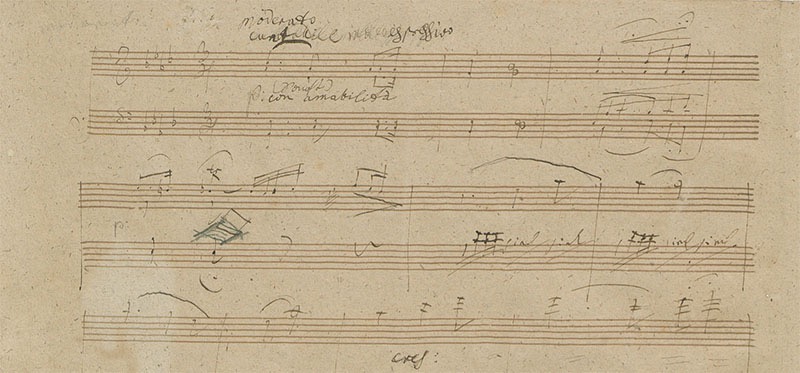
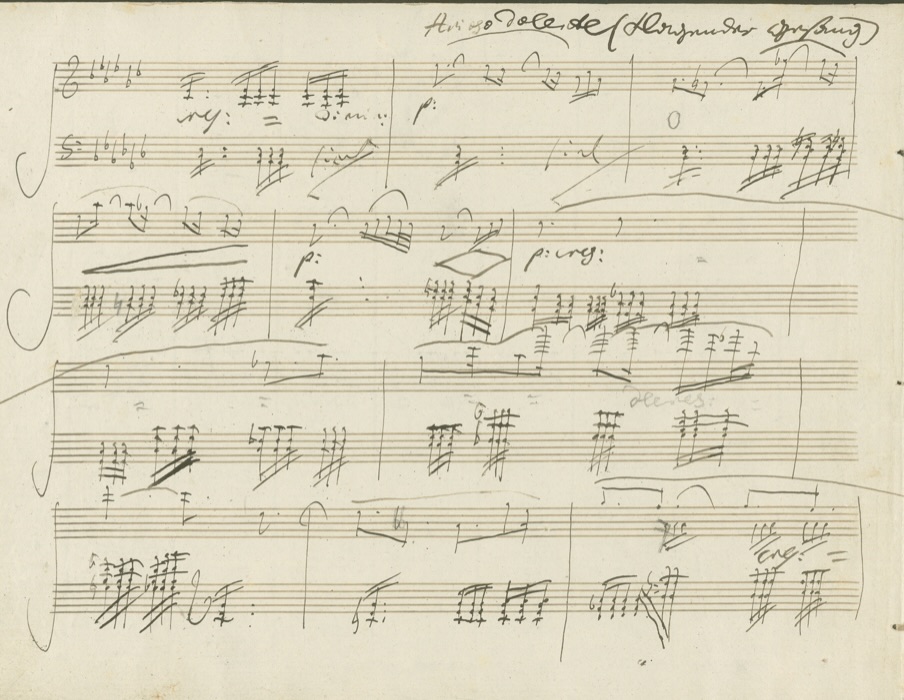
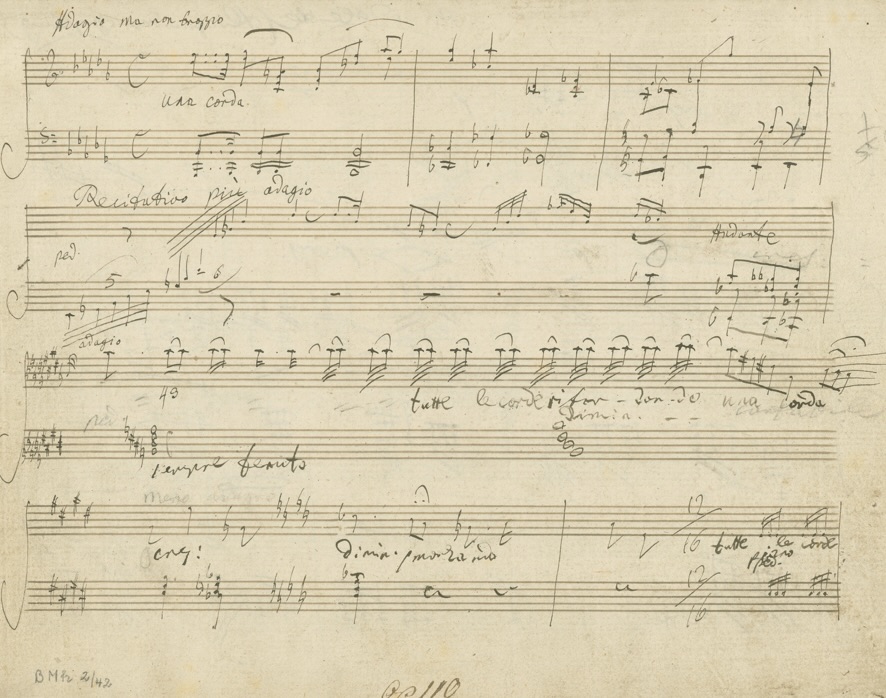
The work is in three movements ( above are some pages from the original manuscript housed in Bonn ) : The Moderato first movement follows a typical sonata form with an expressive and cantabile opening theme. The Allegro second movement begins with a terse but humorous scherzo, which is probably based on two folk songs, and is followed by a rather technically treacherous Trio . The last movement comprises multiple contrasting sections: a slow introductory recitativo , an arisoso dolente, a fugue , a return of the arioso, and a second fugue in inversion that builds to a passionate and heroic conclusion.Critics have noted :”Not a single note is superfluous” Hermann Wetzel; “In none of the other 31 piano sonatas does Beethoven cover as much emotional territory: it goes from the absolute depths of despair to utter euphoria … it is unbelievably compact given its emotional richness, and its philosophical opening idea acts as the work’s thesis statement, permeating the work, and reaching its apotheosis in its final moments.Opus 110 is a journey into the infinite”Jonathan Biss The first known recording of the Op. 110 sonata was made on 14 December 1927 and 8 March 1928 by Frederic Lamond and was subsequently recorded on 21 January 1932 by Artur Schnabel in Abbey Road Studios, London, for the first complete recording of the Beethoven piano sonatas and was the first to be recorded in the set. Myra Hess’ recording of the work in 1953 was described as among her “greatest successes in the recording studio” “In a last euphoric effort, its conclusion reaches out beyond homophonic emancipation, throwing off the chains of music itself.” – Alfred Brendel
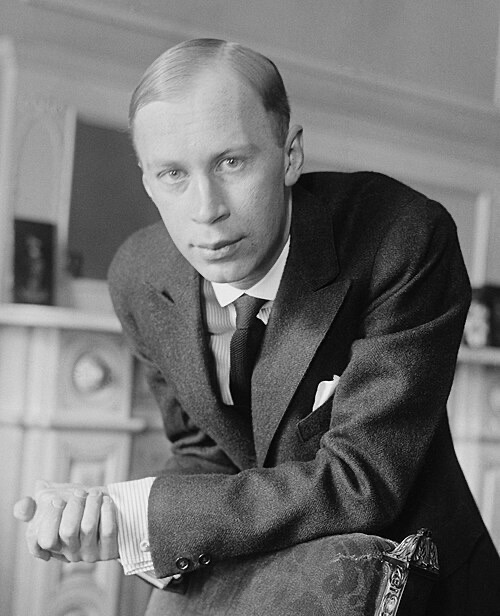
Piano Sonata No. 3 in A minor, Op. 28 (1917) by Sergei Prokofiev was composed using sketches dating from 1907. Prokofiev gave the première of this in Saint Petersburg on 15 April 1918, during a week-long festival of his music sponsored by the Conservatory. Early in his creative life, Prokofiev developed a highly individual way of writing for the piano. Though the differences between the piano textures of his early and late works are palpable, the main qualities of his piano writing are recognizable throughout.Prokofiev composed this piece in 1917, the same year as his fourth sonata . Both of these sonatas bear the subtitle “From the Old Notebooks”. This sonata derives from works that he composed as a teenager. In a letter to Miaskovsky on 26 June 1907, Prokofiev wrote about Piano Sonata no. 3: “It will remain…in one movement: pretty, interesting, and practical”. This sonata reveals most of the traditional sections in a sonata-form, within which Prokofiev employs his own blend of nineteenth- century Russian and twentieth-century characteristics.
This third sonata of his nine sonatas was a clear departure from his previous humorous style with his second sonata from 1912. After the energetic and virtuoso third sonata, his fourth sonata and pieces that followed it were a clear departure from the style of his third sonata. He would compose extremely lyrical and introverted pieces after this.
Allegro tempestoso – Moderato – Allegro tempestoso – Moderato – Più lento – Più animato – Allegro I – Poco più mosso
The sonata is the shortest of his piano sonatas, being in a single movement in sonata form and lasting approximately 7–8 minutes, but it is one of the most technically demanding pieces Prokofiev ever wrote for the piano.
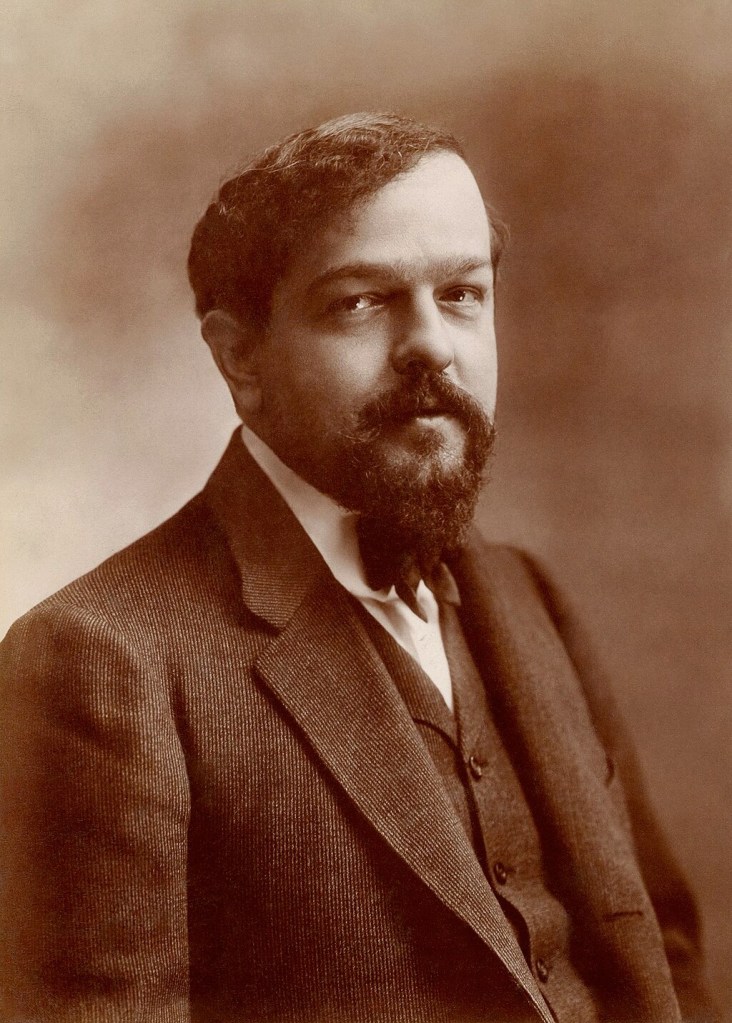
The Petite Suite, L.( Lesure) 65, is a suite for piano four hands by Claude Debussy . It has been transcribed many times, most notably in an orchestral version by Debussy’s colleague Henri Büsser.
The suite, which was composed from 1886 to 1889, was first performed on 2 February 1889 by Debussy and pianist-publisher Jacques Durand at a salon in Paris. It may have been written due to a request (possibly from Durand) for a piece that would be accessible to skilled amateurs, as its simplicity is in stark contrast with the modernist works that Debussy was writing at the time.
The work, which lasts about 13 minutes ,has four movements :
- En bateau (Sailing): Andantino
- Cortège (Retinue): Moderato
- Menuet: Moderato
- Ballet: Allegro giusto
The first two movements are inspired by poems from the volume ‘Fêtes galantes’ by Paul Verlaine(1844–1896).
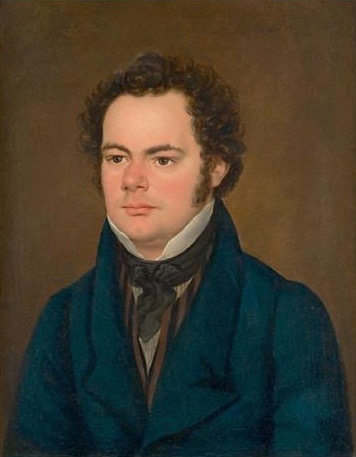
The Fantasia in F minor by Franz Schubert , D.940 (op. posth. 103), for piano four hands , is one of Schubert’s most important works for more than one pianist and one of his most important piano works altogether. He composed it in 1828, the last year of his life. A Dedicated to his former pupil Caroline Esterházy It has been described as “among not only his greatest but his most original” compositions for piano duet. Schubert began writing the Fantasia in January 1828 in Vienna and was completed in March of that year, and first performed in May. Schubert’s friend Eduard von Bauernfeld recorded in his diary on May 9 that a memorable duet was played, by Schubert and Franz Lachner The work was dedicated to Caroline Esterházy, with whom Schubert was in (unrequited) love.
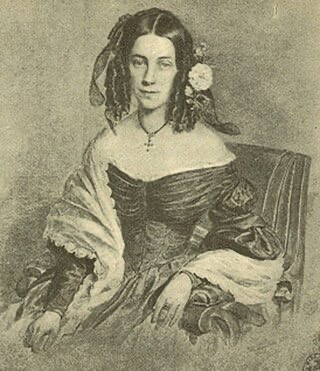
Schubert died in November 1828 and after his death, his friends and family undertook to have a number of his works published. This work is one of those pieces; it was published by Anton Diabelli in March 1829. The original manuscript resides at the Austrian National Library
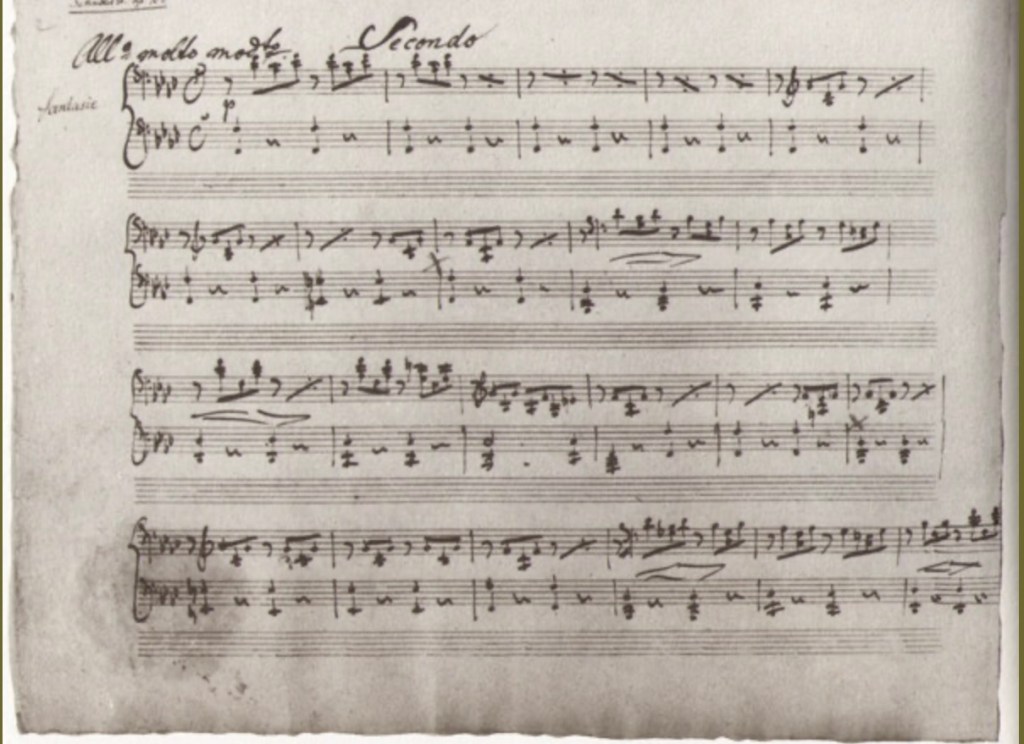
The Fantasia is divided into four movements, which are interconnected and played without pause. A typical performance lasts about 20 minutes.
- Allegro molto moderato
- Largo
- Scherzo. Allegro vivace
- Finale. Allegro molto moderato
The basic idea of a fantasia with four connected movements also appears in Schubert’s Wanderer Fantasy, and represents a stylistic bridge between the traditional sonata form and the essentially free-form tone poem. It was the forerunner of the leit motif where themes become characters in a developing drama creating a new less formal art form that was to open the way for Liszt’s father in law Richard Wagner with his ‘Ring’ cycle of operas. The basic structure of the two fantasies is essentially the same: allegro, slow movement, scherzo, allegro with fugue. The form of this work, with its relatively tight structure (more so than the fantasias of Beethoven or Mozart ), was influential on the work of Franz Liszt , who arranged the Wanderer Fantasy as a piano concerto, among other transcriptions he made of Schubert’s music.
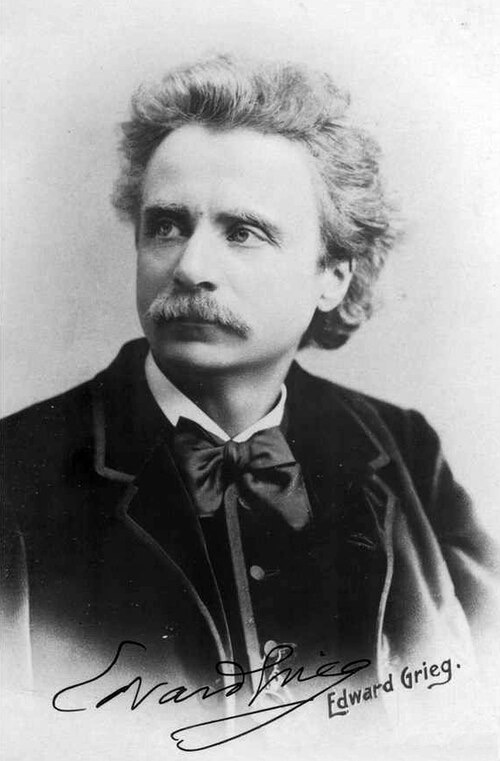
Peer Gynt, op 23, is the incidental music to Henrik Ibsen’s 1867 play Peer Gynt, written by Grieg in 1875. It premiered along with the play on 24 February 1876 in Christiania (now Oslo).Over a decade after composing the full incidental music for Peer Gynt, Grieg extracted eight movements to make two four-movement suites. The Peer Gynt suites are among his best-known works, although they began as incidental compositions. Suite No. 1, Op. 46 was published in 1888, and Suite No. 2, Op. 55 was published in 1893.
Edvard Grieg was one of the definitive leaders of Scandinavian music. Although he composed many short piano pieces and chamber works, the work Grieg did for this play by Ibsen stood out. Originally composing 90 minutes of orchestral music for the play, he later went back and extracted certain sections for the suites. Peer Gynt’s travels around the world and distant lands are represented by the instruments Grieg chooses to use.
When Ibsen asked Grieg to write music for the play in 1874, he reluctantly agreed. However, it was much more difficult for Grieg than he imagined, as he wrote to a friend:
“Peer Gynt” progresses slowly, and there is no possibility of having it finished by autumn. It is a terribly unmanageable subject ” Edvard Grieg (August 1874)

Even though the premiere was a “triumphant success”, it prompted Grieg to complain bitterly that the Swedish management of the theatre had given him specifications as to the duration of each number and its order:
I was thus compelled to do patchwork… In no case had I opportunity to write as I wanted… Hence the brevity of the pieces.
For many years, the suites were the only parts of the music that were available, as the original score was not published until 1908, one year after Grieg’s death, by Jonab Halvorsen
Grieg was simultaneously nationalistic and cosmopolitan in his approach to composition and that was due to his extensive travelling around Europe throughout his lifetime (1843-1907). Grieg believed that his music represented the beauty and rural truths of the Norwegian landscape, but at the same time still represented Europe as an incredibly inclusive, cultural hub for the arts. Grieg was a true musical painter and his roots were so firmly tied within Norwegian folk music that the evocations of nature that can be heard in certain compositions is overwhelming. The first suite from Henrik Ibsen’s drama Peer Gynt, was first and foremost written as incidental music, and the order that they movements appear within the suite differ from that as they appear within the drama.
Grieg and Ibsen first met in Italy in 1866 and after Grieg was commissioned to do Peer Gynt, it premiered in Oslo in February 1876, with the orchestra being conducted by Grieg. Therefore, Ibsen asked Grieg to write the incidental music for his drama, Grieg was very keen, but soon the doubt as to whether he could actually complete this tricky task set in. The show is packed full of intense drama, comedy and tragedy, and with all of these themes buzzing around, Grieg found it notoriously difficult to compose on the short time scale that Ibsen had set and because of this Grieg lost some enthusiasm due to the high level of complexity.
Grieg commented in a letter to a friend in 1874 that, “Peer Gynt progresses slowly and there is no possibility of having it finished by autumn. It is a terribly unmanageable subject.” Within the whole play, Grieg wrote 33 separate pieces of incidental music, however the two famous suites were hand-picked by Grieg himself, and show off the highlights of the show. The outline of the story is fairly simple – Peer Gynt is the protagonist of the story and the drama is set around his travels, dreams and crimes. Thus, each act is accompanied but incidental music which compliments the theme.
At first, all of the incidental music was published as a piano duet, and after Grieg’s death in 1907, the suites were orchestrated for a full orchestra, and subsequently published. The suite n. 1 op 46 is the one played today to end the concert
Movement I: Morning Mood
The first movement within the suite is entitled Morning Mood, and it is one of Grieg’s most well-known compositions.Even without its title, this piece paints a strong sound of nature and the natural landscape, and you can really hear Grieg’s roots within the rural land. This piece captures the beginning of the day in the mountains and forests of Norway and everything is peaceful and positive within the drama and Peer Gynt’s dreams.
Movement II: Aase’s Death
The second movement within this suite is entitled Aaes’s Death and it is a very big shift in tone from the previous movement. As shown in the title, this movement is about the death of Aase, who is Peer Gynt’s mother. The scene behind this piece is awfully tragic – Aase is dying alone on one of the mountains in the Norwegian wilderness and nobody is there to help her. This movement is haunting and dark, which emphasises Grieg’s more emotional hand and masterful grip on powerful music.
Movement III: Anitra’s Dance
The third movement is depicting a seductive dance which emphasises the grace and beauty of Anitra, who is a daughter of a chieftain, and Peer Gynt is infatuated with her. This movement acts as the fun and playful scherzo of the suite. Its in 3/4 time and has a waltz feel to it.
Movement IV: In the Hall of the Mountain King
The final movement of the suite is the ever-loved In the Hall of the Mountain King, which is another of Grieg’s instantly recognisable works. This movement depicts an unusual dance of gnomes, that in the story are actually chasing Peer Gynt, which is why when the recognisable melody is played repeatedly, it gets more and more aggressive. The melody is passed around the whole orchestra and there is barely a moment where not one instrument is playing this theme. Each time it comes back it gets more savage, which is representing the gnomes chasing Peer Gynt around the mountains.
Programme notes compiled by Christopher Axworthy co artistic director and trustee of the Keyboard Trust

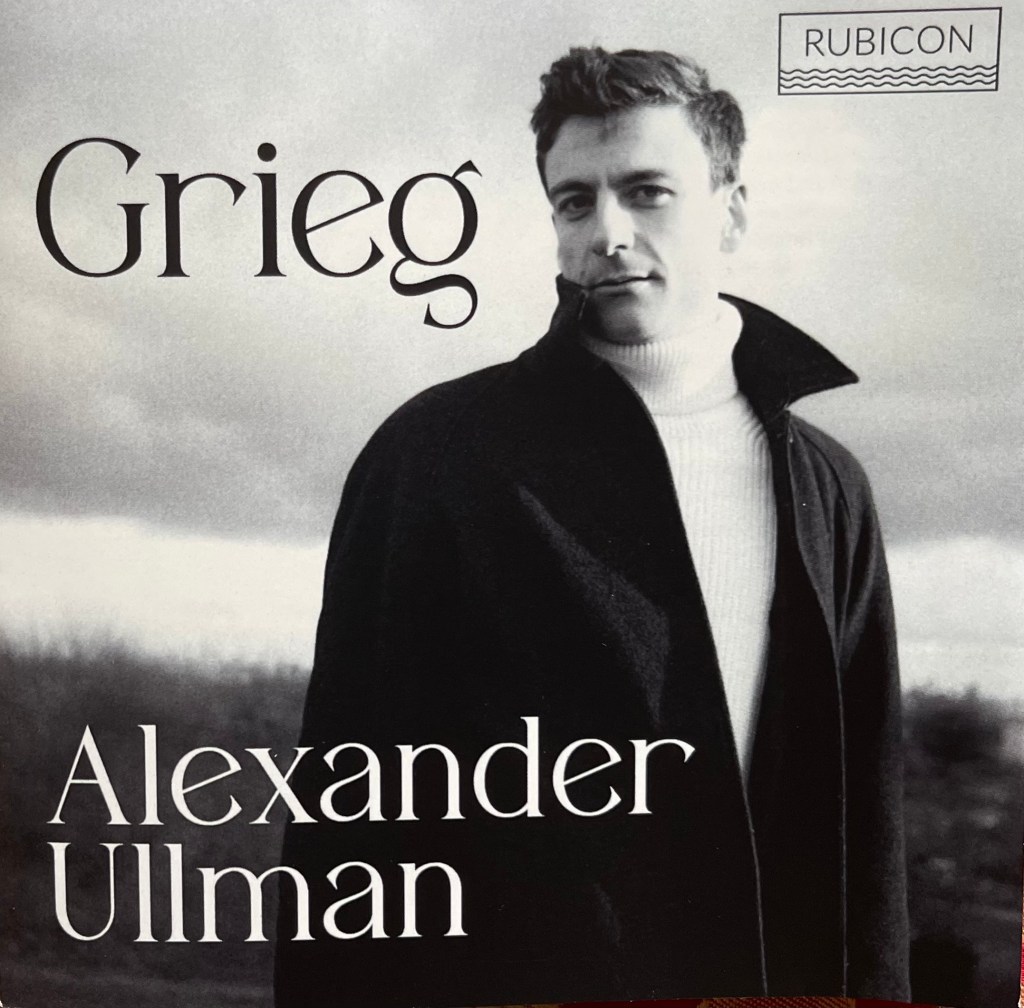
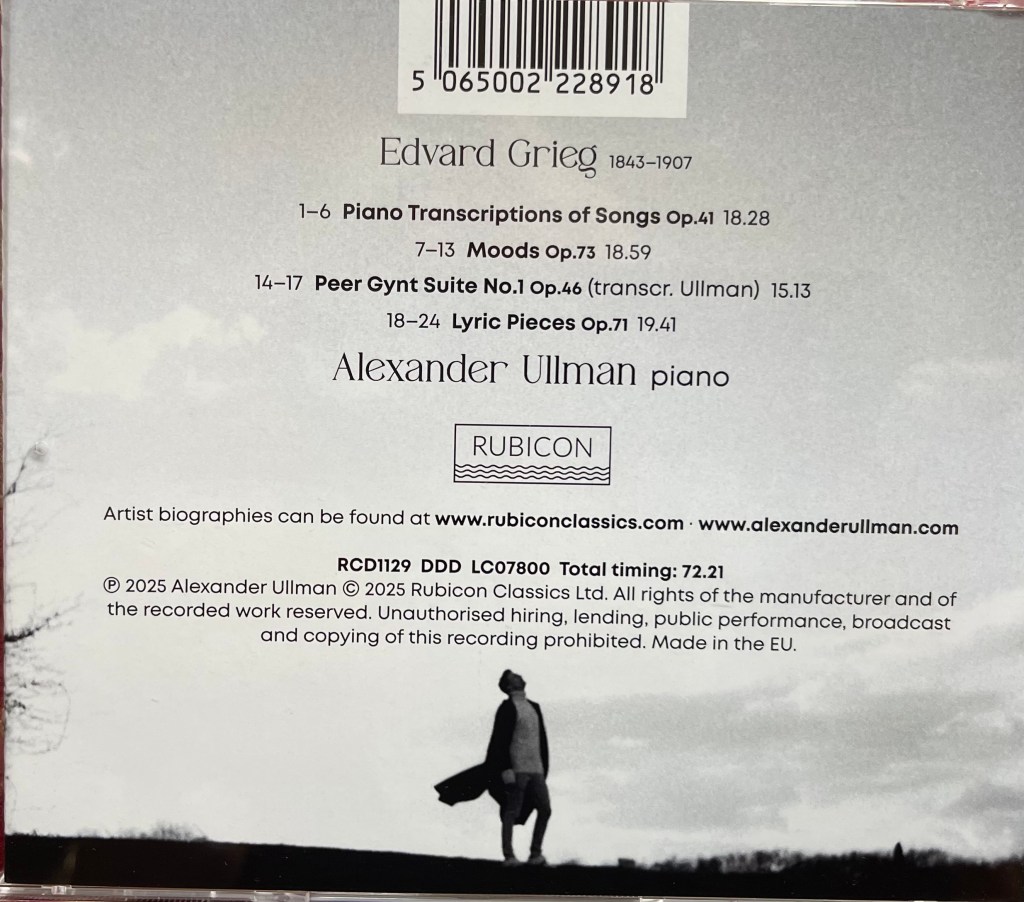
This month ,by coincidence,Alexander Ullman,emeritus KT artist has just recorded the works of Grieg for piano https://christopheraxworthymusiccommentary.com/2021/10/11/alexander-ullman-the-supreme-stylist-at-the-wigmore-hall/
 ChristopherAxworthy-MusicCommentary