

Promoted by Royal Academy of Music.

- Béla Bartók 1881-1945
- Three Studies Op. 18
- Nicolas Medtner 1880-1951
- Two Elegies Op. 59
- Maurice Ravel 1875-1937
- Gaspard de la nuit
After being dazzled by Milda Daunoraite https://christopheraxworthymusiccommentary.com/2025/10/02/dazzling-milda-daunoraite-takes-the-wigmore-hall-by-storm/
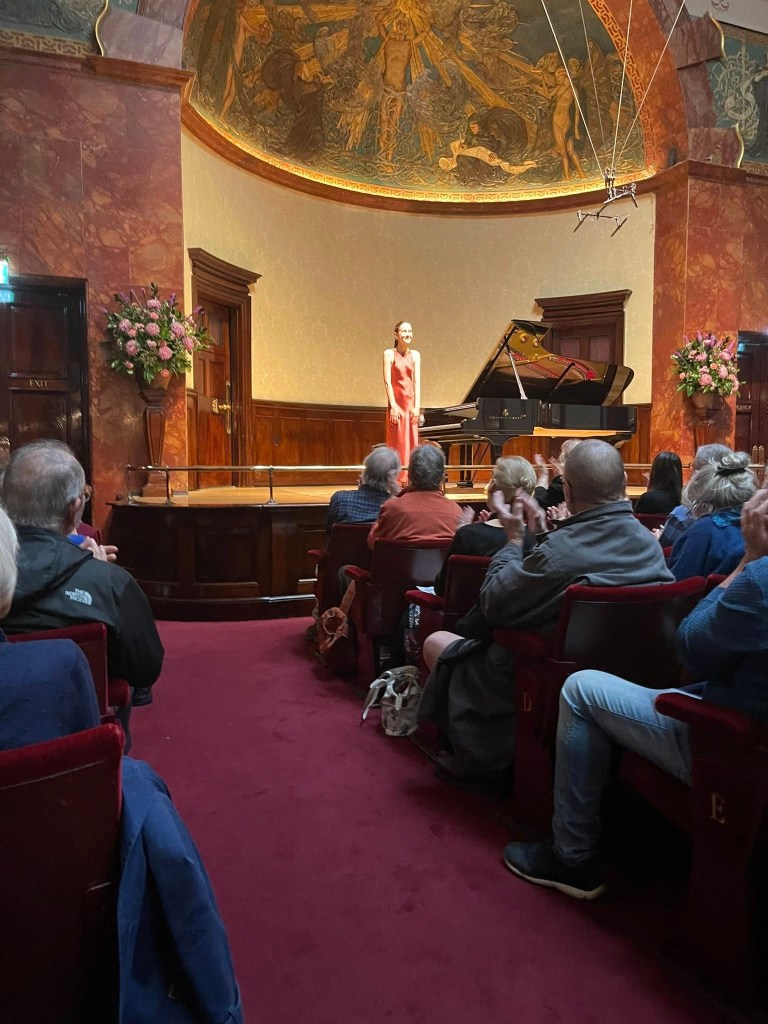
we were overwhelmed by Katya Grabova today in the extraordinary line up of stars from the Royal Academy allowed to shine brightly at the Wigmore Hall.

Two Elegie’s op 59 by Medtner immediately showed the sumptuous sounds she would produce all through the concert , and was allied to a sense of line of great clarity even if it can often seem submerged by the maze of notes that Medtner spins. She could steer herself through this maze by accompanying the melodic line with ravishing streams of notes that just illuminated the architectural shape that in lesser hands can seem an empty outpouring. The ending of this first Elegie was of featherlight brilliance with the ravishing colours of pianists of a different age . The Golden age when pianists were also magicians of wondrous sounds. The second Elegie was of refined sensibility with a palette of multi coloured sounds .A cauldron of rhapsodic beauty and a lesson of exquisite style.
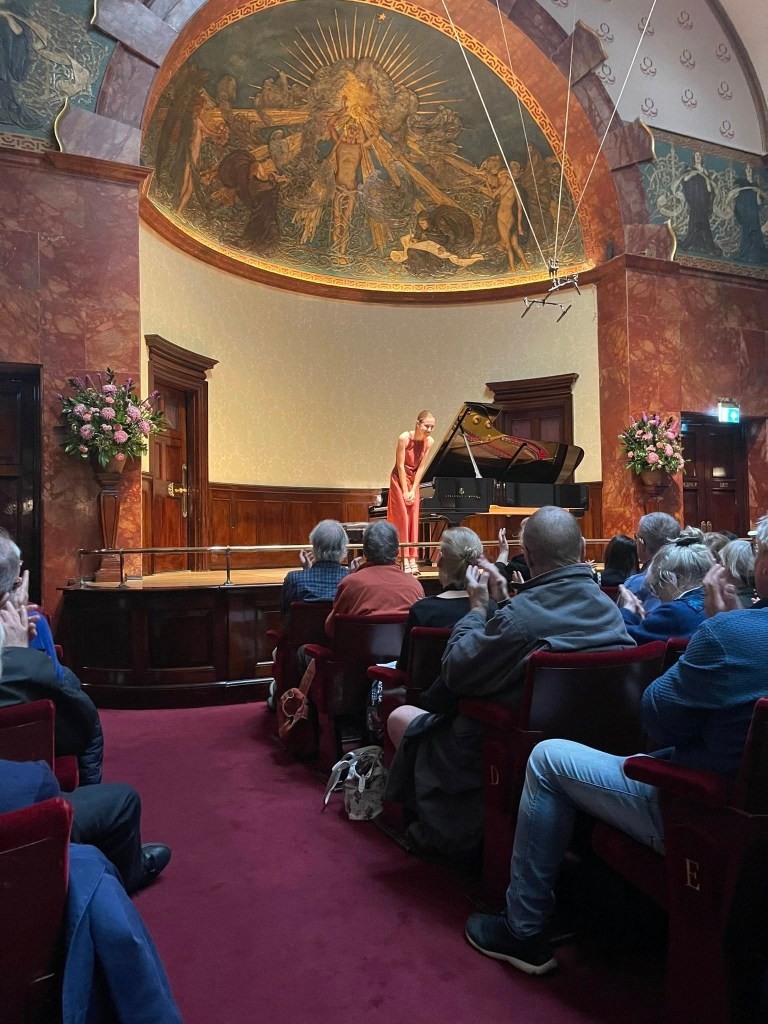
Three Studies op 18 by Bartók, where the first was a ‘tour de force’ of broken octaves of turbulence and breathtaking drive. Vibrating sounds of scintillating technical brilliance but always allied to a poetic sensibility of extraordinary mastery. The second was with glistening wafts of liquid sounds played with remarkable fluidity and masterly ease just disappearing into a whispered ending out of which was heard the great opening flourish of the third study . Out of this ‘jack in the box’, compelling sounds were spread all over the keyboard with extraordinary dexterity until a beguiling tenor melody was insinuated under this busy outpouring of devilish intricacies. A ‘tour de force’ where the word study came to mean, like in Chopin, so much more than just stale technical brilliance because allied to a vision of the poetic fantasy of miniature tone poems.

This lunchtime showcase concert ended with Ravel’s Gaspard de la Nuit. Three poems by Aloysius Bertrand : Ondine- Le Gibet and Scarbo, which was Ravel’s intention to write a piece technically even more challenging than Balakirev’s ‘Islamey’ ( that has long been overtaken by Ligeti almost a century later !) .Katya brought a crystalline radiance as the water nymph wallowed in luxuriant waters. A musicianly sense of balance where the melodic line was incorporated into the very harmonic body of the structure and no matter how intricate the washes of sound Katya never lost sight of the water nymph who was allowed to glow with radiance and sumptuous beauty. Deep bass notes as ‘Ondine’ became ever more agitated gave great depth to the sound as cascades of double notes were alternated with etherial glissandi in a magic world of wondrous sounds. The final whispered uttering of ‘Ondine’ was played with remarkable control of sound with masterly pedalling that could create this mysterious last appearance before disappearing into a wash of radiant sounds ( similar to the ending wave of sounds of Chopin’s Barcarolle which Ravel greatly admired). Katya created a quite extraordinary atmosphere of desolate beauty of the Gallows hanging in the sunset in ‘Le Gibet ‘ . Played with a whispered delicacy of poignant poetic significance. I wondered why she arpeggiated the Messianic chords that add such atmosphere to this extraordinary movement. I think it must have been a poetic license , not a small hand span? ,which was compelling and of breathtaking beauty. A single strand of melody was left ( as ‘Ondine’ had been left high and dry earlier ) was of ravishing beauty like a desolate beacon gleaming in such a barren landscape. ‘Scarbo’ just unwound with its three lazy opening notes immediately overtaken by an electric shock of repeated notes that Katya played with remarkably well oiled fingers . This was just the preparation for a piece of mystery and passion ,brilliance and self identification with this devilish world of improvised hi- jinx. Katya played with a mastery that passed unnoticed such was her poetic understanding with the washes of sound of whispered menace that would become outburst of hypnotic exhilaration and searing excitement.
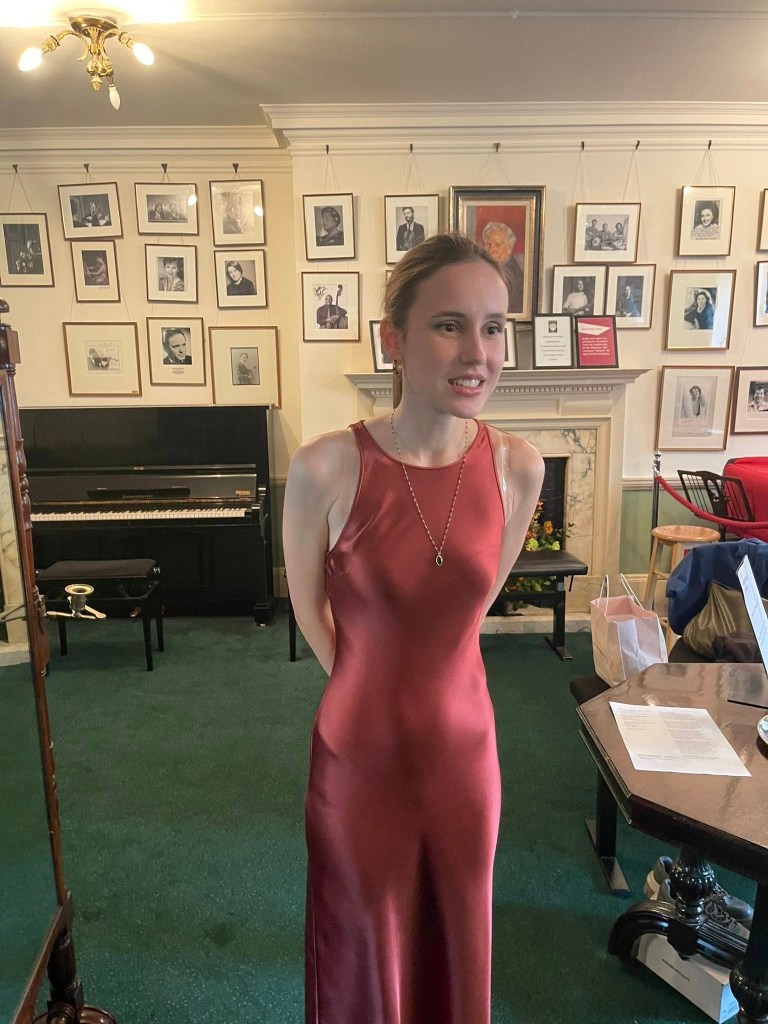
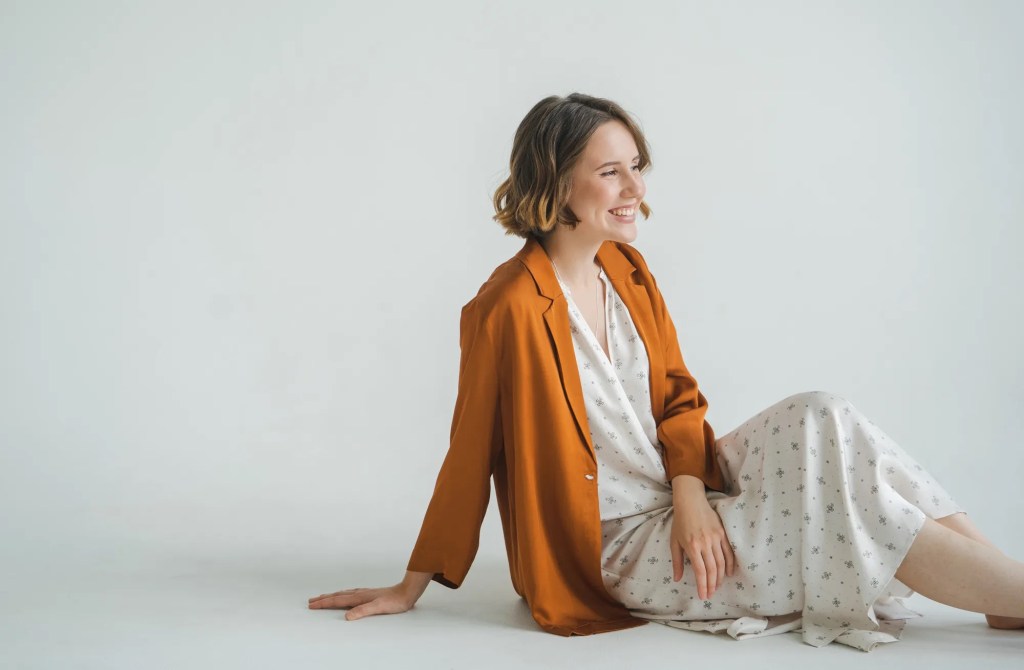
Katya Grabova is establishing herself as one of the most compelling young pianists of her generation.
In 2025, she won the Aspen Piano Concerto Competition, leading to a performance with the Aspen Conducting Academy Orchestra at the Aspen Music Festival. She has performed at major music festivals including Rheingau Musik Festival and Leeds International Concert Season. Her recent appearances include performances at prestigious venues such as the Southbank Centre, Shanghai Concert Hall, the Great Hall of the Moscow Conservatory, the Tchaikovsky Concert Hall, and Lielais Dzintars Concert Hall.
A prizewinner at the Nutcracker International Contest, the Neuhaus International Music Festival, and the Mlody Virtuos Competition, Katya has performed with the Moscow Philharmonic and the Royal Academy of Music orchestras. She was also awarded the First Prize of the Mayor of Moscow Grant in piano.
Katya has worked with a range of esteemed artists, including Dmitri Bashkirov, Michel Béroff, Robert McDonald, Andrzej Jasiński, Katarzyna Popowa-Zydroń, Christopher Elton, Vanessa Latarche, Mikhail Voskresensky, Vladimir Tropp, Vladimir Ovchinnikov, Victor Derevianko, Anton Nel, Soyeon Kate Lee and Ran Dank.
Highlights of the upcoming season include her solo recital debut at Wigmore Hall supported by Royal Academy of Music and a performance of Rachmaninov’s Second Piano Concerto with the Kensington Philharmonic Orchestra.
Katya was born in Moscow and graduated from the Gnessin School of Music, where she studied with Tatiana Zelikman and Boris Berezovsky. She is currently pursuing her Master’s degree with Mei-Ting Sun at the Royal Academy of Music, where she was a recepient of Michael Gilsenan Named Award and holds a scholarship. She is grateful for the support of the Hill Foundation, the Robert Turnbull Piano Foundation, and the Talent Unlimited charity.

https://christopheraxworthymusiccommentary.com/2025/07/01/tomos-boyles-at-st-marys-perivale-intelligence-and-masterly-control-combine-with-poetic-sensibility/


 ChristopherAxworthy-MusicCommentary