
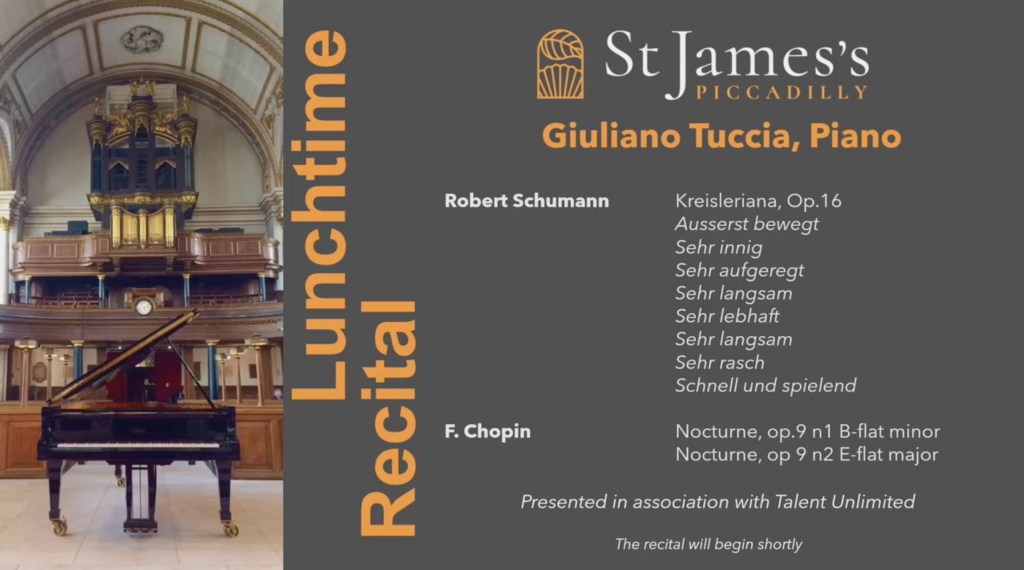

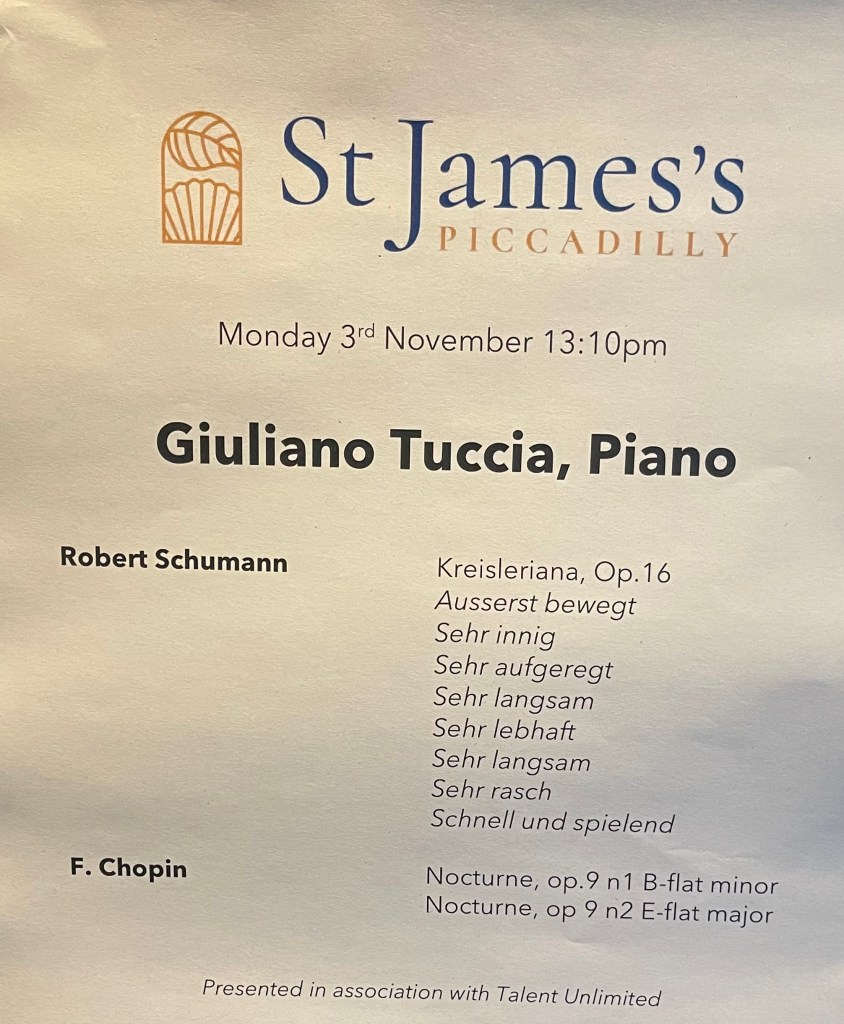
Robert Schumann (1810 – 1856): Kreisleriana, Op.16
Ausserst bewegt
Sehr innig
Sehr aufgeregt
Sehr langsam
Sehr lebhaft
Sehr langsam
Sehr rasch
Schnell und spielend
F. Chopin: (1810-1849):
Nocturne, op.9 n 1 B-flat minor
Nocturne, op 9 n 2 E-flat major
Presented in association with Talent Unlimited

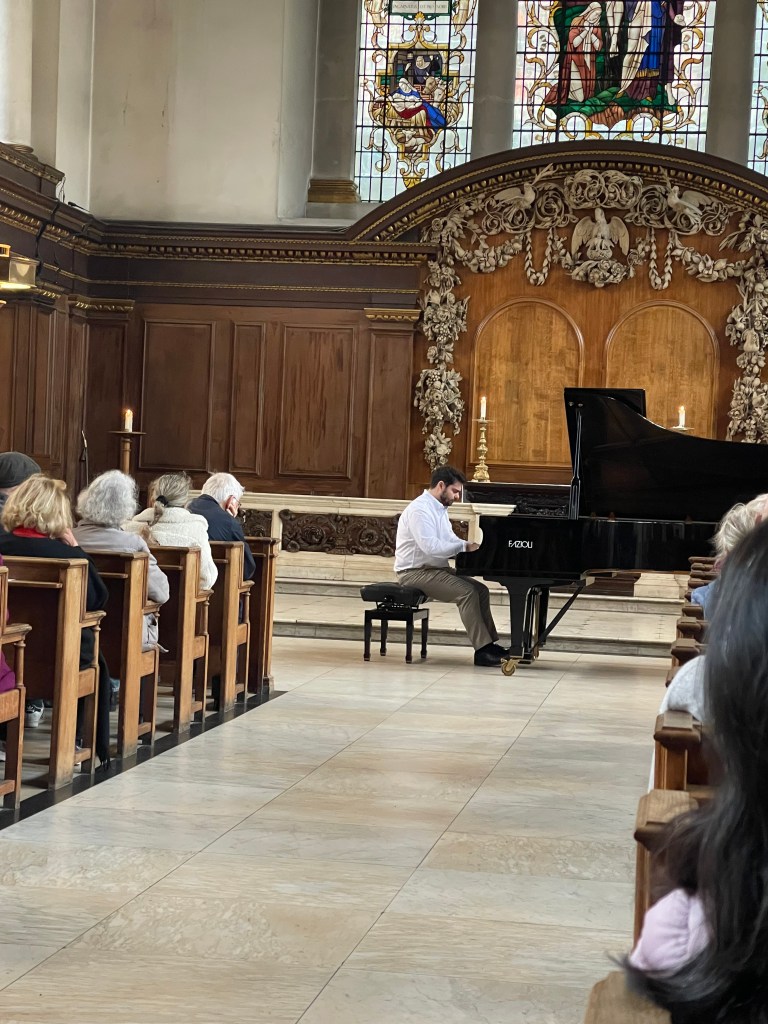
Just one major work on the programme today with two of Chopin’s earliest Nocturnes as encores. Some very expressive, stylish playing from the very first notes. A dynamic drive to the first of these eight tone poems that make up Schumann’s Kreisleriana was played with romantic ardor and subtle rubato. The central episode was a wash of delicate sounds on which the melodic line was etched with refined good taste.

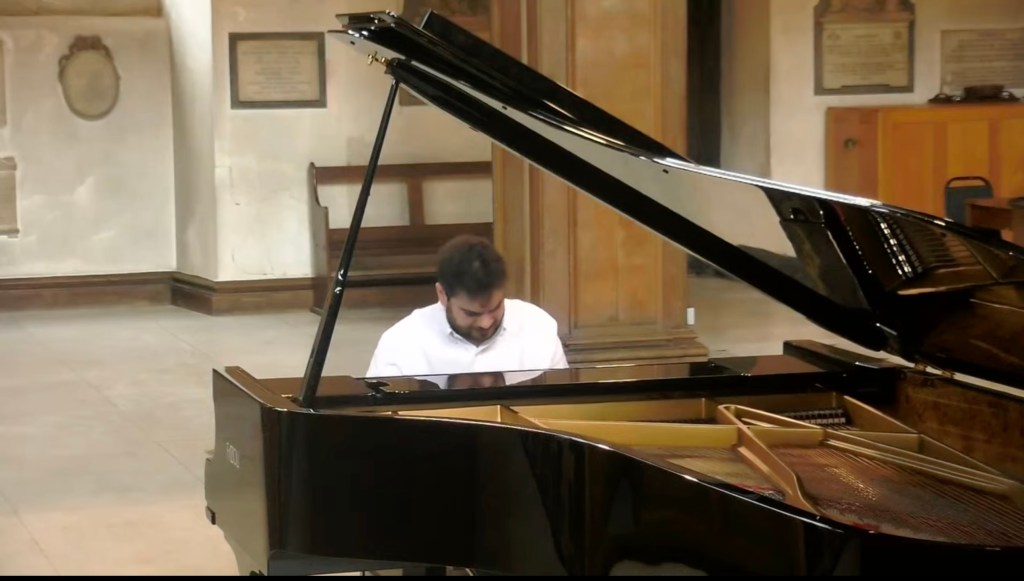
The second piece was played with a beautiful legato where inner counterpoints were very subtly underlined. An improvised freedom with a melodic line of chiselled beauty on a wave of rich internal harmonies. There was a dynamic drive to the Intermezzo I : ‘Sehr Lebhaft’ of contrasting clarity as it wove its way back to the opening. The Intermezzo II: ‘Etwas bewegter’ was played with a rhapsodic freedom that seemed to loose it’s inherent drive in a rather over romanticised outpouring. The intricate counterpoints leading to the return of the opening were played with authority and a sense of line that gave great strength to a passage that can, in lesser hands, sound as though Schumann had lost his way. The whispered return of the opening was played with delicacy adding to the overall architectural shape of this second tone poem that in some hands can seem overlong.

The third piece had a rhythmic bite that contrasted so well with the central episode where voices communed with each other with yearning beauty and romantic freedom. A powerful coda was played with fearless abandon with the final chords of alternating octaves merely wafts of sumptuous sounds. The fourth ‘sehr langsam’ was played with a beautiful singing melodic line within a framework of recitativo freedom, until the clouds lifted and the wondrous beauty of the ‘Bewegter’ was allowed to glow with ravishing tenderness and beauty.

The capricious playfulness of the fifth was gradually transformed into a romantic outpouring of passionate intensity before the opening of the sixth was overheard with its tenor melody of intimate confessions. This contrasted with a strident interruption of ponderous authority played with remarkable rhythmic precision which dissolved into a wondrous rocking melody of delicate beauty.

The seventh shot from Tuccia’s agile fingers but with notes that were linked always to an anchor of harmonies with insistent forward movement. An overwhelming outpouring of dynamic drive that was suddenly curtailed with a coda of wondrous beauty. The final piece I have rarely heard played so clearly because Giuliano gave great importance to the syncopated long held bass notes allowing the limped dance of the right hand to be heard with bewitching significance. The two romantic outbursts were just momentary interruptions to this wisp of a dance that was to lead to the final whispered notes deep in the bass.

The two Chopin Nocturnes op 9 were allowed to fill this very resonant church with a Bel Canto of ravishing beauty and refined style with subtle colouring of sensitivity and whispered radiance..A palette of sounds that drew the audience in to overhear such marvels, as a barely audible trill gradually built in intensity to the sweetest of farewells of the famous Nocturne op 9 n. 2.

Nicolò Giuliano Tuccia is considered by Leslie Howard as one of the most sensitive and interesting musicians of his generation. Born in 1999, he began studying piano at a young age under the guidance of Maestro Giancarlo Peroni. He graduated with honors from the “B. Maderna” Conservatory in Cesena in 2022, winning a scholarship offered by the Rotary Club. He is currently attending the “Incontri col Maestro” Piano Academy in Imola, studying with maestros André Gallo, Alessandro Taverna, and Igor Roma, and pursuing a second-level Master’s at the “Francesco Venezze” Conservatory in Rovigo with maestros Federico Nicoletta and Roberto Prosseda.
He has also refined his studies at summer festivals, masterclasses, seminars, and conferences with internationally renowned maestros such as Edith Fischer, Avedis Kouyoumdjian, Riccardo Risaliti, and Sergio Tiempo.

Nicolò Giuliano Tuccia boasts over 50 awards in major national and international piano competitions, including the “Sergio Fiorentino International Piano Competition” (Honorable Mention), “Elevato Piano Competition” (Honorable Mention), “Vigo International Piano Competition” (Semifinalist), MAP International Music Competition in Los Angeles (First Prize), “Kings Peak International Music Competition” (Second Prize and Special Prize), London International Music Competition (Special Mention), Nota Music (Chamber Duo) finalist prize, and many others.

Nicolò Giuliano Tuccia has performed in prestigious venues across Europe and Italy, including the “Galli Theater” in Rimini, the “Alighieri Theater” in Ravenna, the “Atti Theater” in Rimini, the “Foyer Respighi” of the Municipal Theater in Bologna, the Corelli Hall of the “Alighieri Theater” in Ravenna, the “Oratorio San Rocco” in Bologna, the “Masini Theater” in Faenza, the “Prefecture Hall” in Forlì, the “Talia Theater” in Gualdo Tadino, the “Don Bosco Cinema Theater” in Perugia, the “Officers’ Club” in Bologna, the “Raffaello Palace” in Urbino, the “Villa Carcano” in Lecco, the “Vittorio Locchi Boarding School” in Rome, the Main Concert Hall of the Porto Music Conservatory, the “Martin Codax Auditorium” in Vigo, the “Salon Bank” in Vienna, the “Remonstrantse Kerk” in Alkmaar, the “St. Marie Perivale Church” in London, the Main Concert Hall of the University of Musical Semiotics in Helsinki, the Main Concert Hall of the M.K. Čiurlionis Art Gallery in Kaunas, the “Concert Hall” of the Telki Auditorium, the “Eutherpe Hall” in León, the “St. Agatha Cathedral” of the Badia in Catania, the “Villa Rina Auditorium” in Padua, the “Steinway Hall” in London, the “House of Music” in Trieste, the “Martelli House Museum” in Florence, the Candles Factory Theater in Forlì, the Menotti House in Spoleto, the “Beethoven Chamber Music Hall” in Bonn, the Grossersaal Scholss in Bergisch Gladbach, Cologne, the Gartensaal Schloss in Wolfsburg, the Concert Hall of the IIC in Berlin, the Music Room in Rome for Rai Radio 3, and the National Gallery of Palazzo Spinola in Genoa.

Nicolò has participated in numerous festivals, including the “Conoscere la Musica” Festival in Bologna, the “Misano Piano Festival” in Misano Adriatico, the “Ravenna Festival”, the ErConcerti Festival “Le Soirees Musicaux” in Emilia-Romagna, the “Le Note Tra i Calanchi” Festival in Bagnoregio, the “Clivis Umbria” Festival, the “Kaunas Piano Festival” in Lithuania, the “Altalena Music Fest” in Hungary, the “Musical Society” Festival in Helsinki, Finland, the “HIMF” Festival in the Netherlands, the “Roma Tre Orchestra” Festival, the autumn festival at the St. Perivale Church for the Keyboard Trust in London, the “Salon de la Musique” Festival, the “Bellini Festival” in Catania, the Larius International Piano Fest in Lecco, the “Elevato Piano Competition” Festival in Bonn, Vienna, and Porto, the “Amici della Musica di Casa Martelli” Festival for the Young Sound Association in Florence, the Mozart Italy Association Festival in Trieste, the Mozart Italy Association Festival in Lecce, the “Scriabin Concert Series” in Grosseto, and for the “Friends of the Carlo Felice Theater and the Niccolò Paganini Conservatory in Genoa.”
Nicolò Giuliano has performed with the Bruno Maderna Conservatory Chamber Orchestra of Cesena, the “Circle Symphony Orchestra” of Padua, the “Rimini Classica” Symphony Orchestra, the “Musici Malatestiani” Ensemble, the “Marco Allegri” Symphony Orchestra, the “Fontana Mix Ensemble” Orchestra, the “Antiqva Metropoli” Orchestra, and the Bergisch Gladbach Symphony Orchestra.

He has collaborated with conductors Jacopo Rivani, Parvi Shejazi, Antonio Raspanti, Stefano Pecci, Bernardo Lo Sterzo, and Roman Salyutov.
He has recorded for the following record labels: “Doppio Movimento”, “Movimento Classical”, IMD Music & Web, and Halidon.
In 2024, he will be on tour in Poland (Gdansk, Warsaw, and Krakow) with the “Bellini Project” in duo with Clara La Licata, and recording with the prestigious Naxos label with music by Franz Liszt and Julius Benedict. His recitals and CDs have been reviewed by the German journal Piano News, critic Christopher Axworthy, Eero Tarasti on Ampfion, Luca Ciammarughi on Amadeus Magazine, Gisela Schwarz in the “Kölner Stadtanzeiger”, and Robert Matthew Walker in “Musical Opinion.”

He is currently the president of the Forlì Cultura Association and artistic director of the Guido Agosti Festival in Forlì, where he annually invites prestigious pianists from around the world.


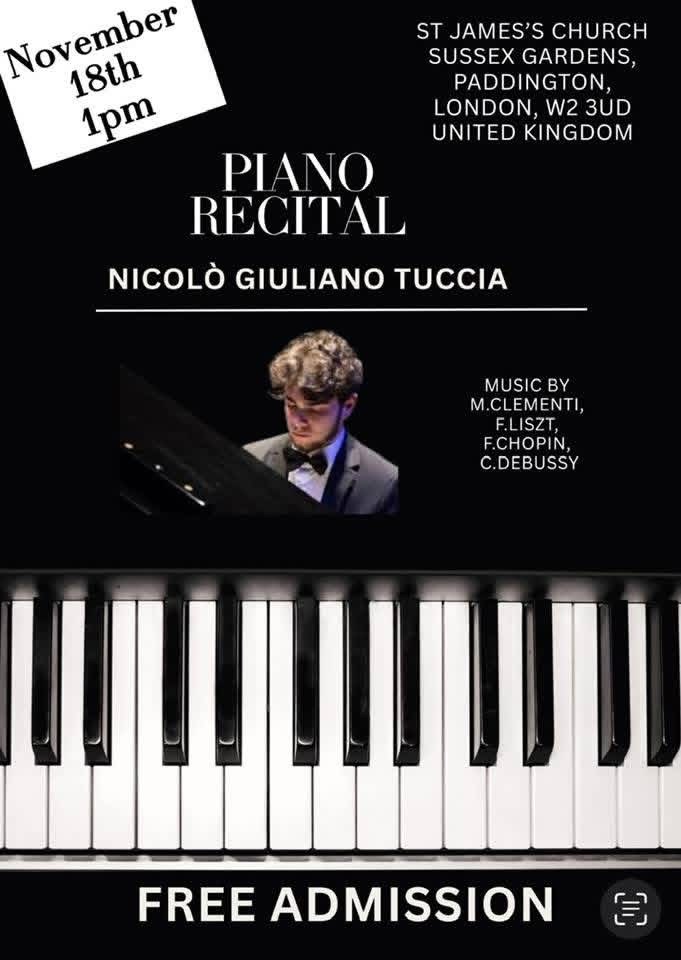
A second concert in London in the same month for a young musician who has had the courage to start a concert series in his home town of Forlì dedicated to one of the most important figures in music of the last century . Guido Agosti was born and is buried in Forlì , a disciple of Busoni, the world would flock to his class in Siena every summer to be inspired and reminded of the musical values of an interpreter who is but the humble servant of the composer.
https://christopheraxworthymusiccommentary.com/…/homag…/
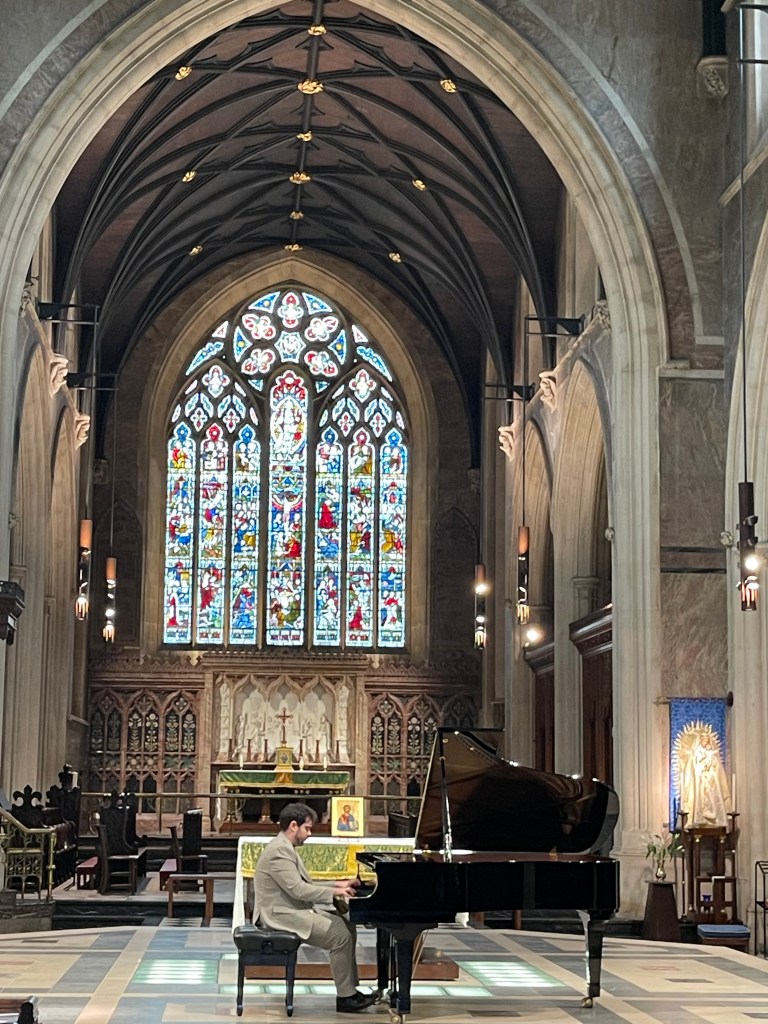
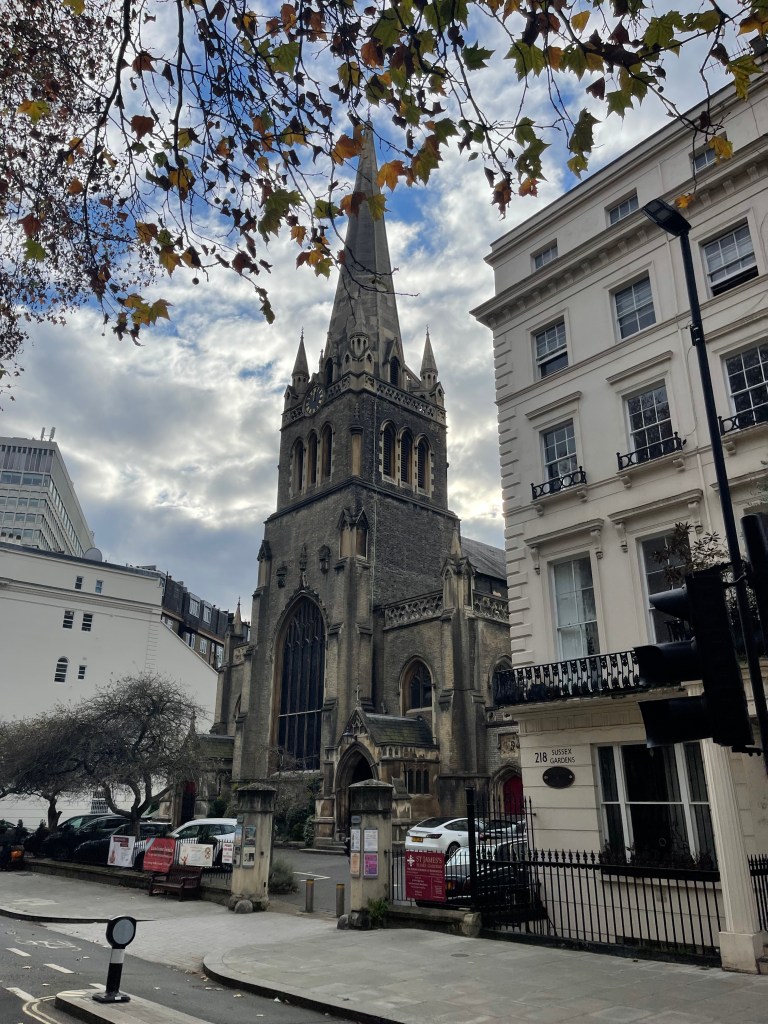
Nicolò Giuliano Tuccia in his second recital in London at St James’s Sussex Gardens began with the Sonata op 10 n 2 by Clementi . A two movement work and one of the 110 sonatas that this ‘Londoner‘ bequeathed to the world. Streams of notes of charm and beauty shaped with the ease of a master craftsman and virtuoso keyboard player. Nicolò not only played the notes with an ease and scintillating simplicity but he also imbued them with colour and beauty with above all an understanding of the overall architectural shape.
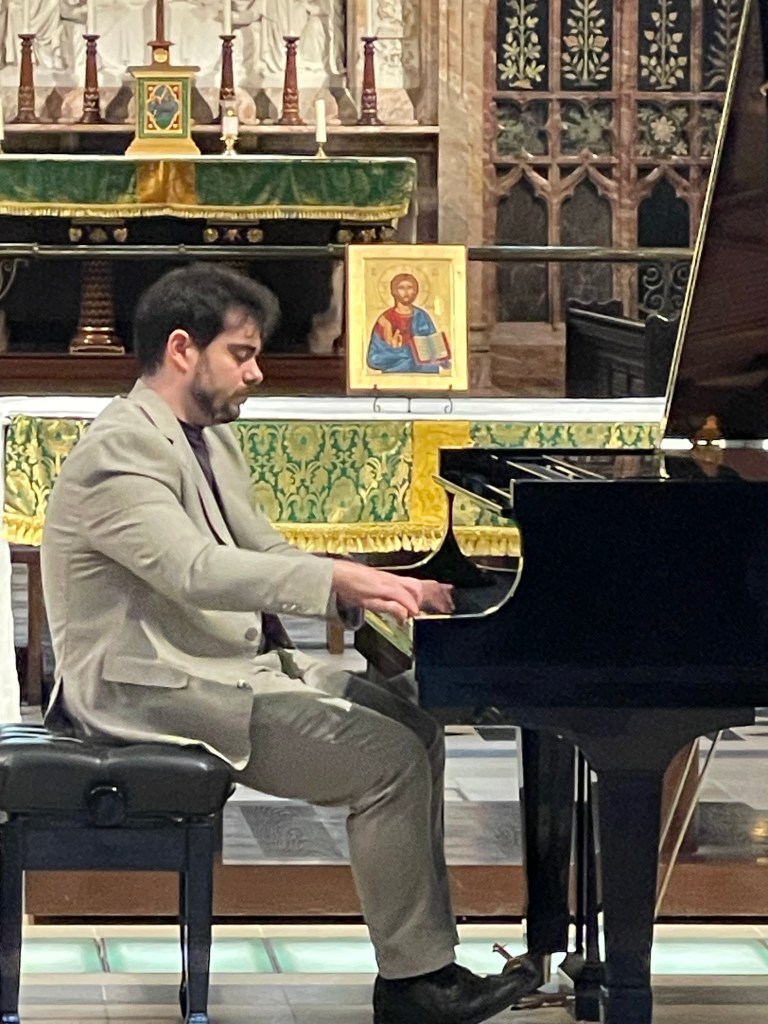
The first of Chopin’s nocturnes op 9 n.1 and 2 were played with a ravishing sense of balance where Chopin’s bel canto was shaped with poetic fantasy and beguiling freedom. In fact these five nocturnes reverberated around this noble edifice with a simple glowing beauty and subtle sense of colour . The nocturne op 37 n 1 was interrupted only by a central episode of a chorale of poignant beauty played with aristocratic poise and simplicity.The final posthumous nocturne in C minor was played with a nostalgic beauty and I was reminded that I had used it for our centennial production in Rome of Ibsen’s ‘A Dolls House’ in 1979. It has just that sense of innocent nostalgia that Nicoló captured so beautifully today.
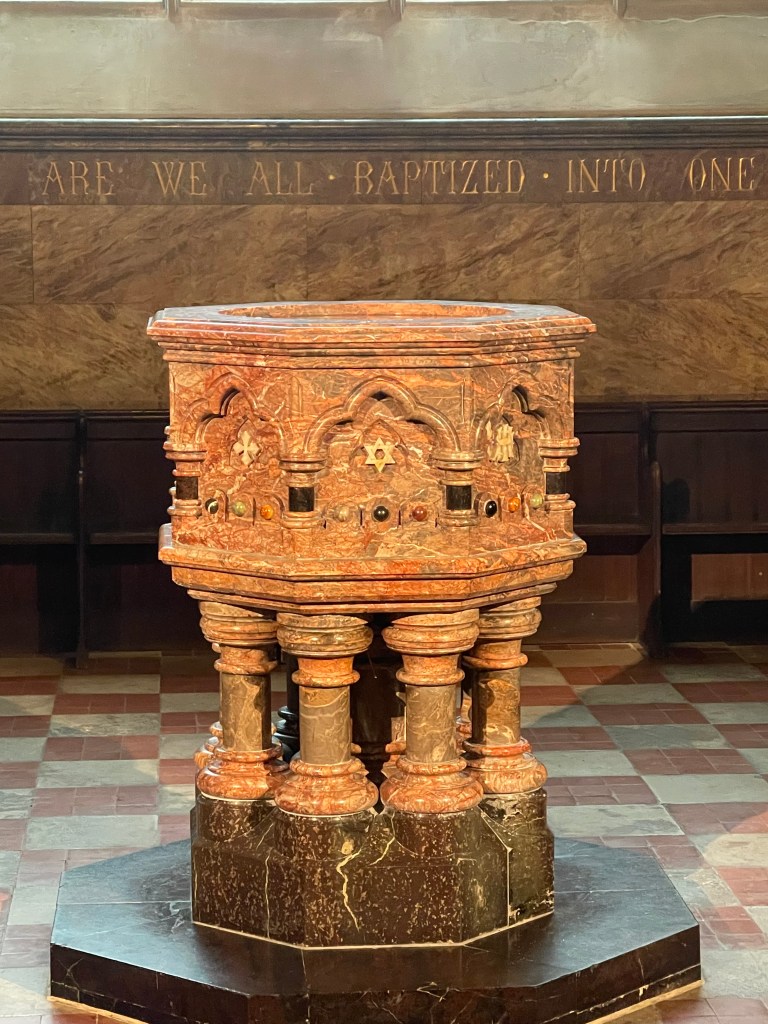
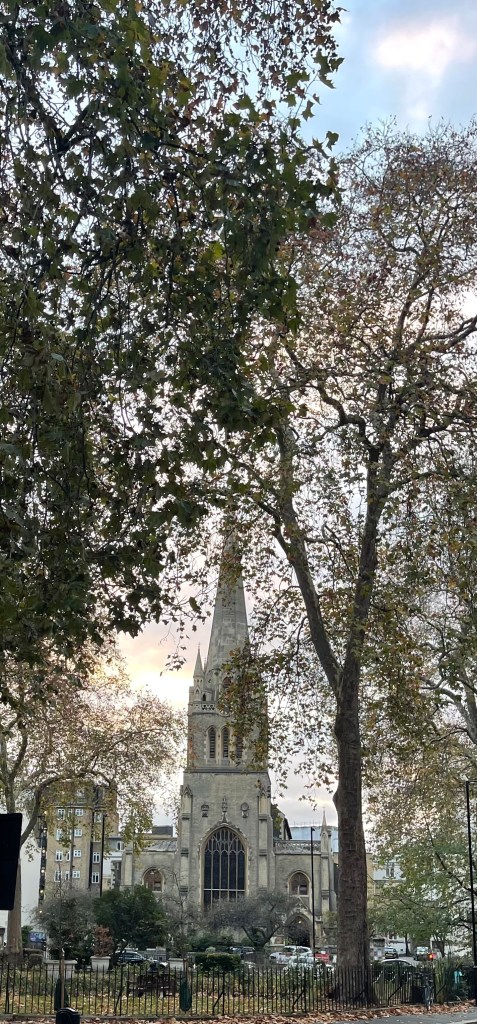
Serenity was soon rudely interrupted by Liszt’s tragic tone poem of Hero and Leander.

The second Ballade in B minor began with the menacing waves of turbulence out of which emerges from the depths a soulful outpouring of dramatic intensity. Passionate cries were contrasted with desolate isolation as Nicoló recounted this harrowing tale with breathtaking daring as cascades of notes filled this church only to be silenced by the soulful beauty of longing and nostalgia.

A journey that Nicoló could allow to unfold with remarkable unity as breathtaking virtuosity was contrasted with decadent beauty.


Two Preludes by Debussy took us from the desolation of lonesome footsteps in the snow to the joyous Neapolitan festivities with the radiant hussle and bustle which is so much part of Capri, the jewel that shines so brilliantly in the bay of Naples .


 ChristopherAxworthy-MusicCommentary