Overwhelmed by Chopin playing that has not moved me so much since we awaited Rubinstein’s yearly recitals in London. Can it really have been 50 years ago because it still remains so vividly etched in my memory.
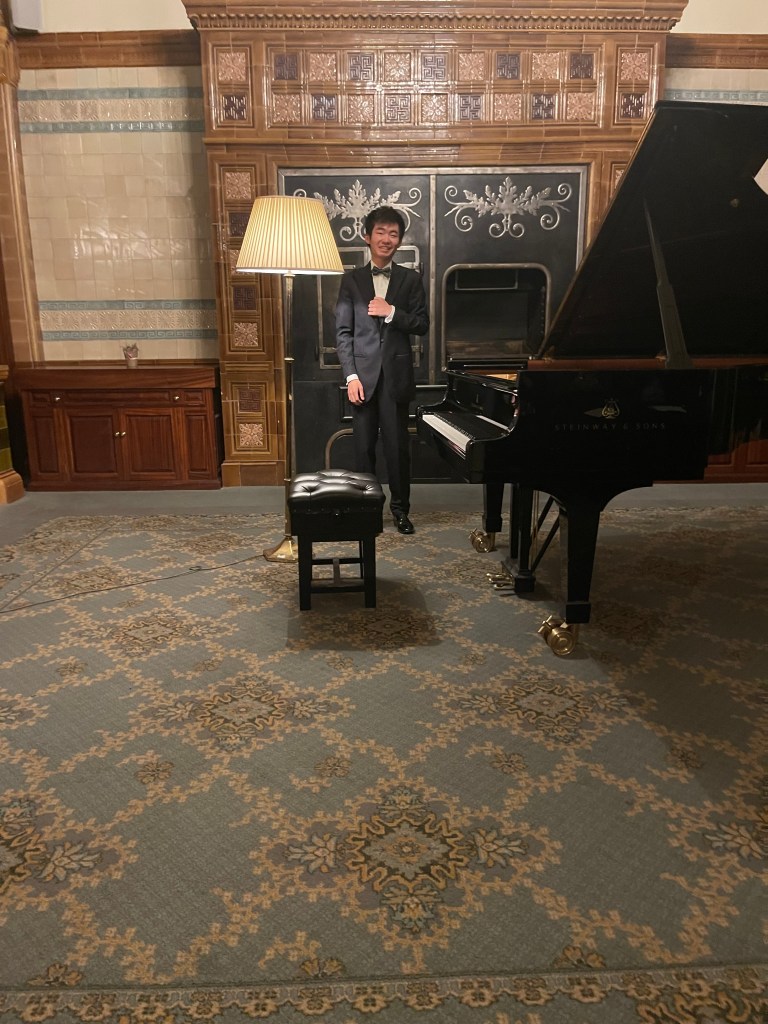
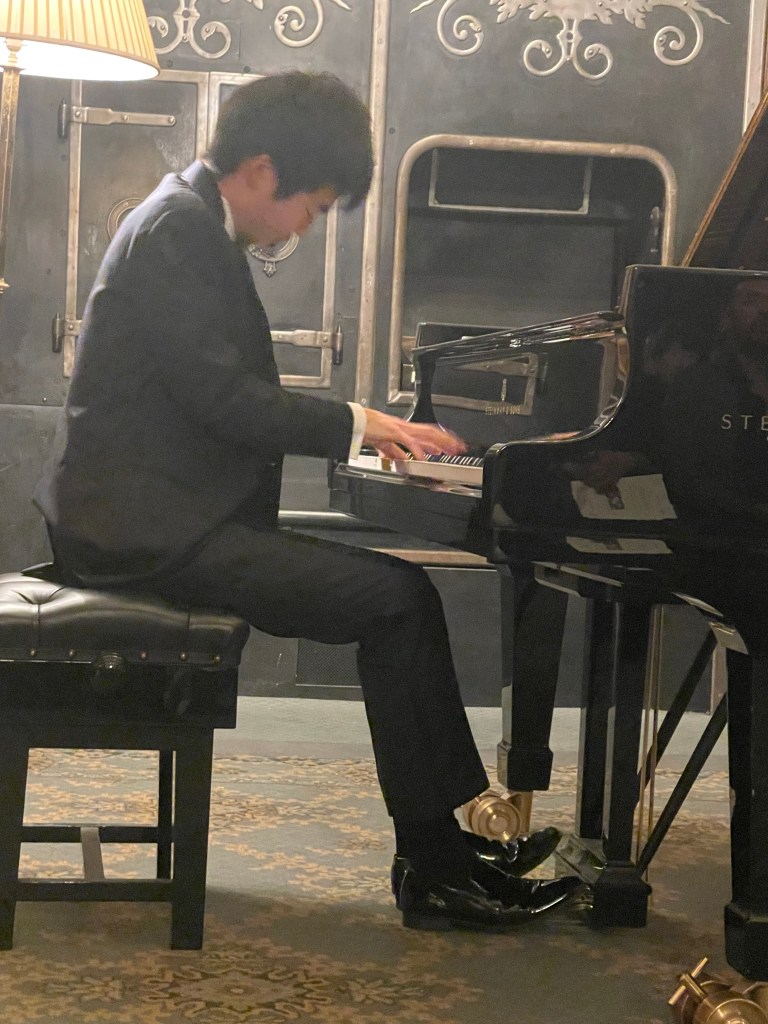
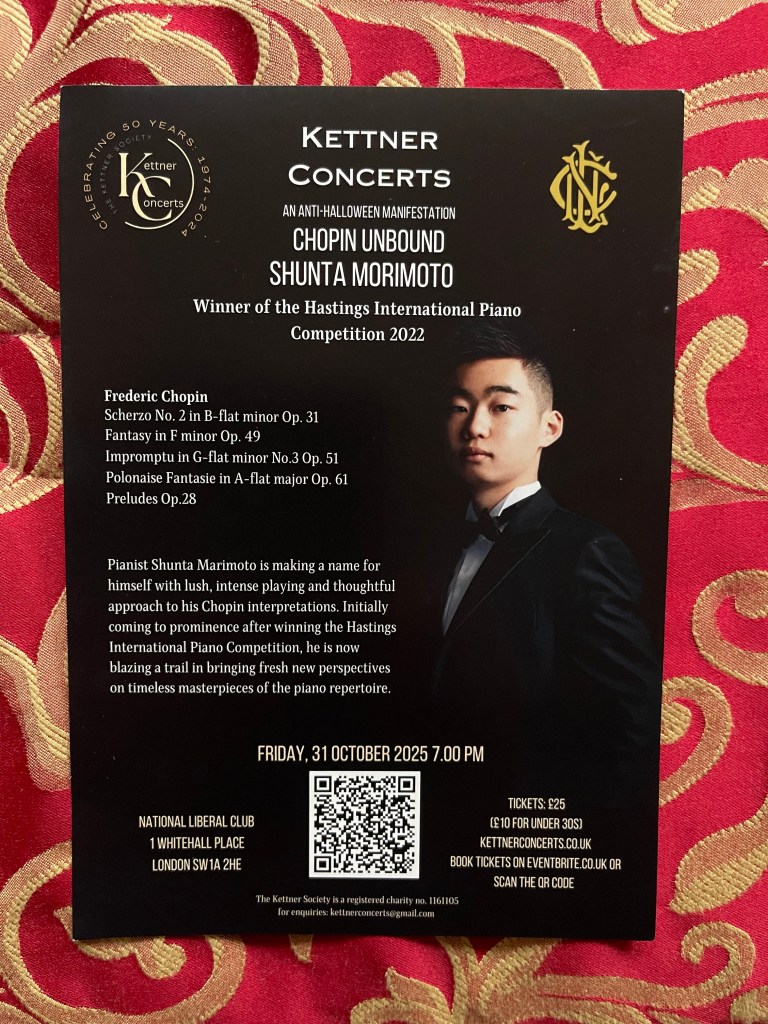
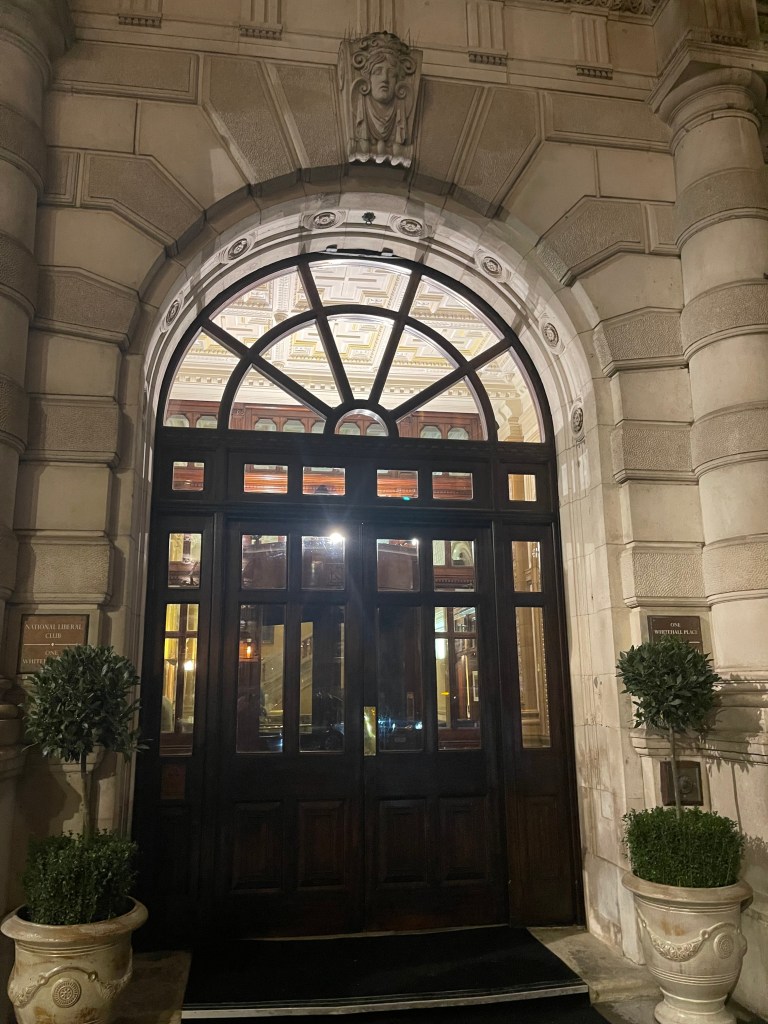
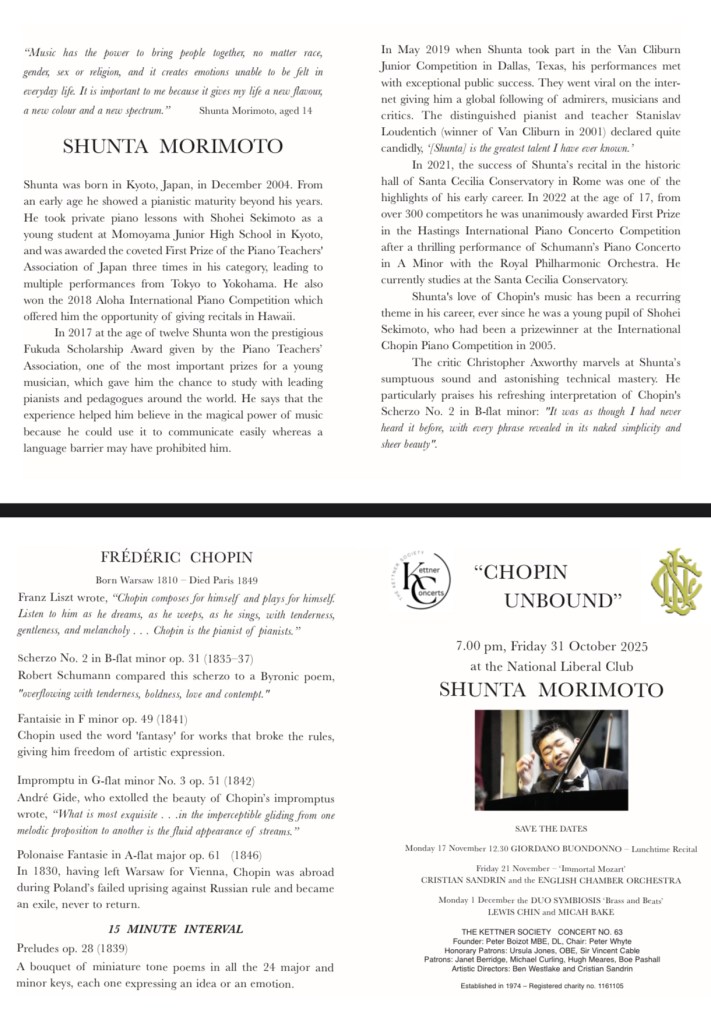
We have heard much Chopin in the past weeks with the competition in Warsaw but nothing comparable to what was heard in the Liberal club last night .
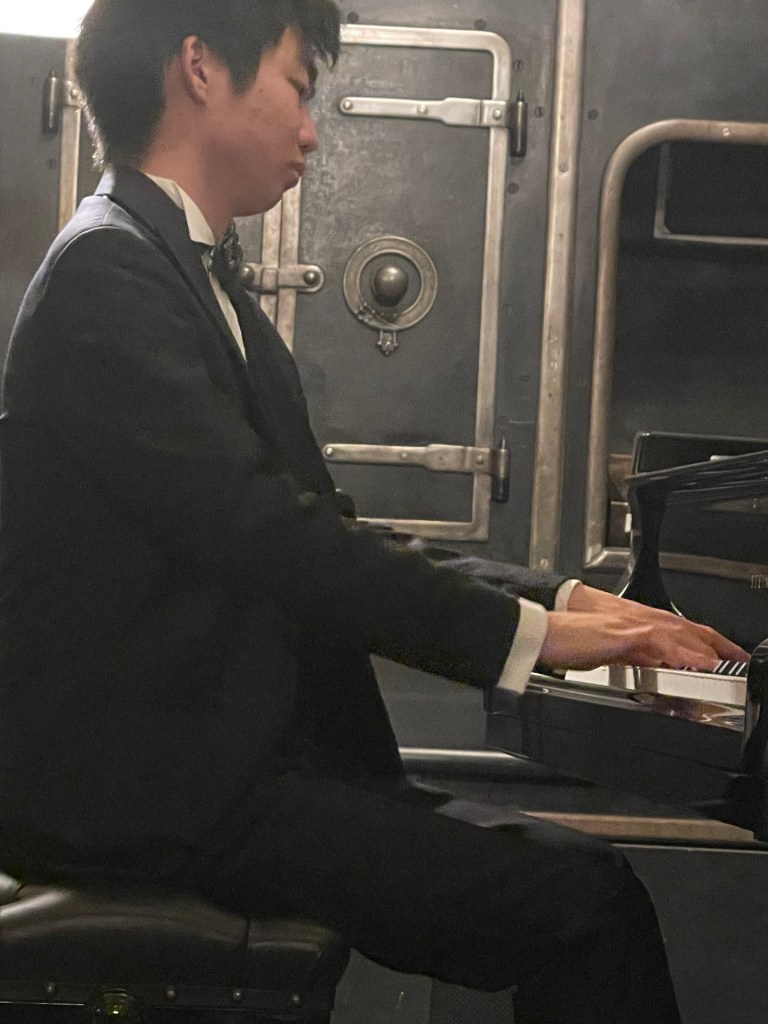
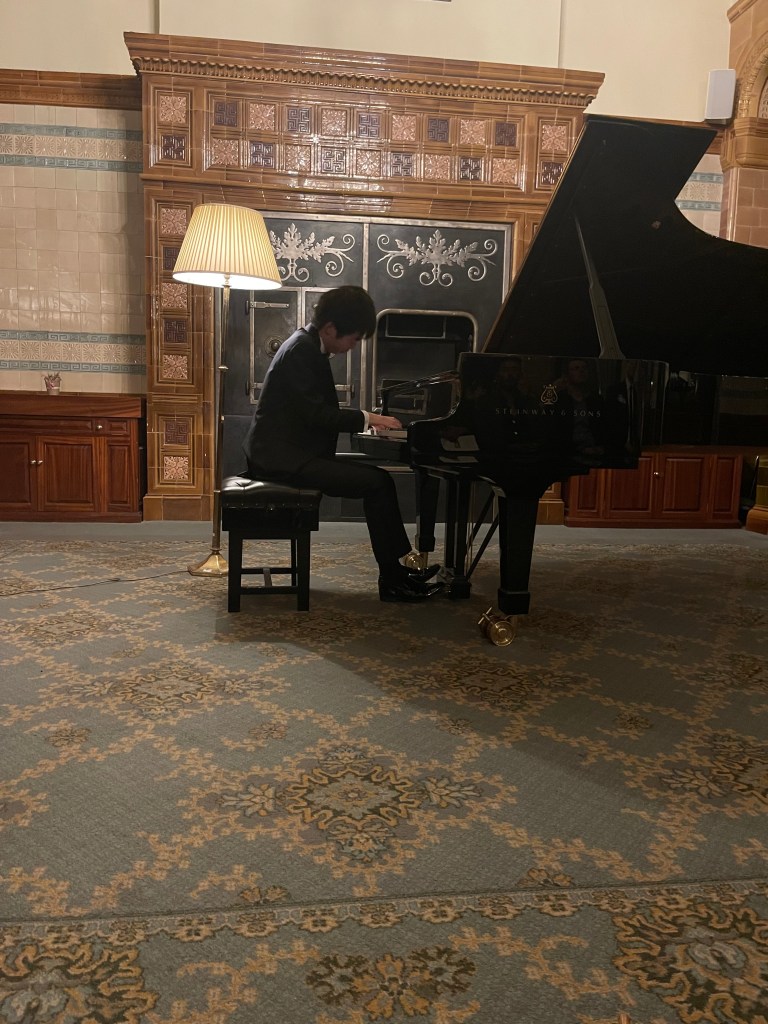
‘Words without thought no more to heaven go’ Nadia Boulanger used to exhort the students that would flock to her studio in Paris . She could not have found a more attentive disciple than Shunta Morimoto as he played with the simplicity and aristocratic mastery of Rubinstein who made the works of Chopin his own, speaking so directly to our heart and soul.
Stanisław Ioudenitch described Shunta Morimoto on awarding the 17 year old boy the Gold Medal in Hastings as the greatest talent he has ever known.
Last night Shunta has come of age and quite simply at 21 he is ready to conquer the hearts and souls of the greatest concert halls worldwide. Much needed in this age of stale CD perfection and as Gilels used to say, live music making is like fresh food compared to the stale canned food perfection of recordings. Public performances are a two way experience where audience and soloist are united in a quasi religious ritual.
Mitsuko Uchida explained in the green room after a memorable concert in Perugia why she was against ‘selfies ‘ or pirate recordings on phones. ‘A performance should remain as a memory that becomes more beautiful with time and not just a printed copy of a moment that will turn brown at the edges with time’. Shunta is no longer part of the circus arena that the International Competition circuit has inevitably become, with its comparative performances between super trained young hero’s. What we heard last night cannot be compared because Shunta takes us with him on a wave of sound and emotion, a voyage of discovery where time stands still as we stop and stare hypnotised by music making that really can speak louder than words…..just as I remember (sic) from Rubinstein.Those present last night will never forget the voyage that this young man shared so generously with us. As Rubinstein so rightly said ‘You cannot teach talent ‘ https://youtu.be/gex0sOR7XZ0?si=WkUGp9eoFYCdkrG1
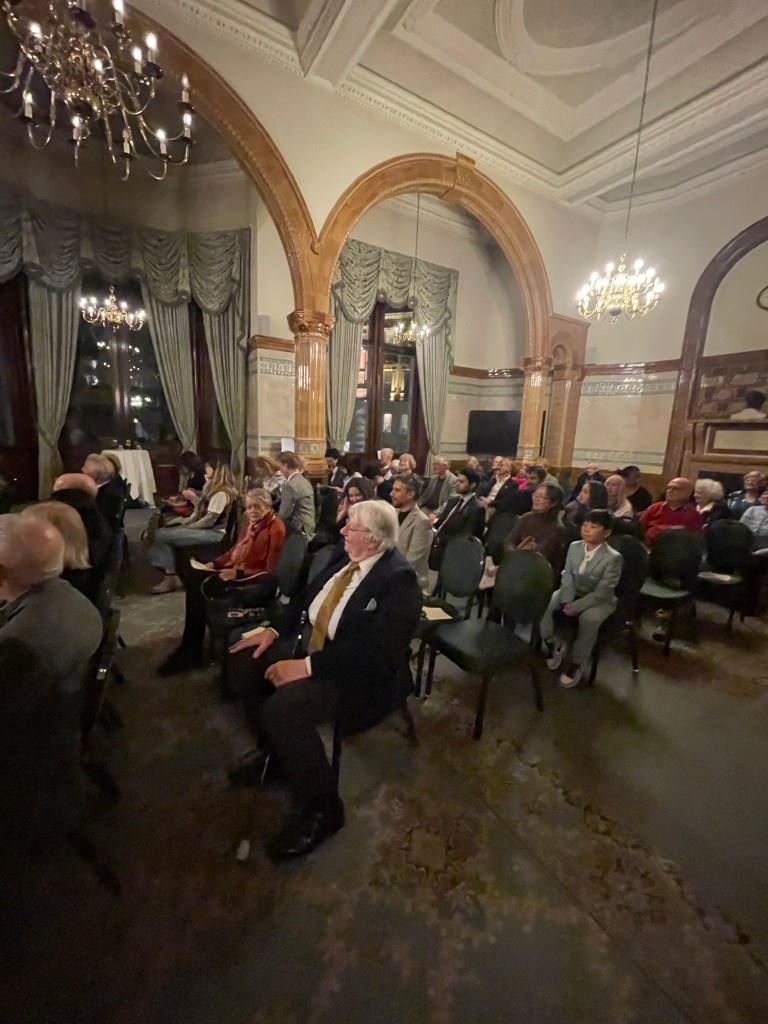
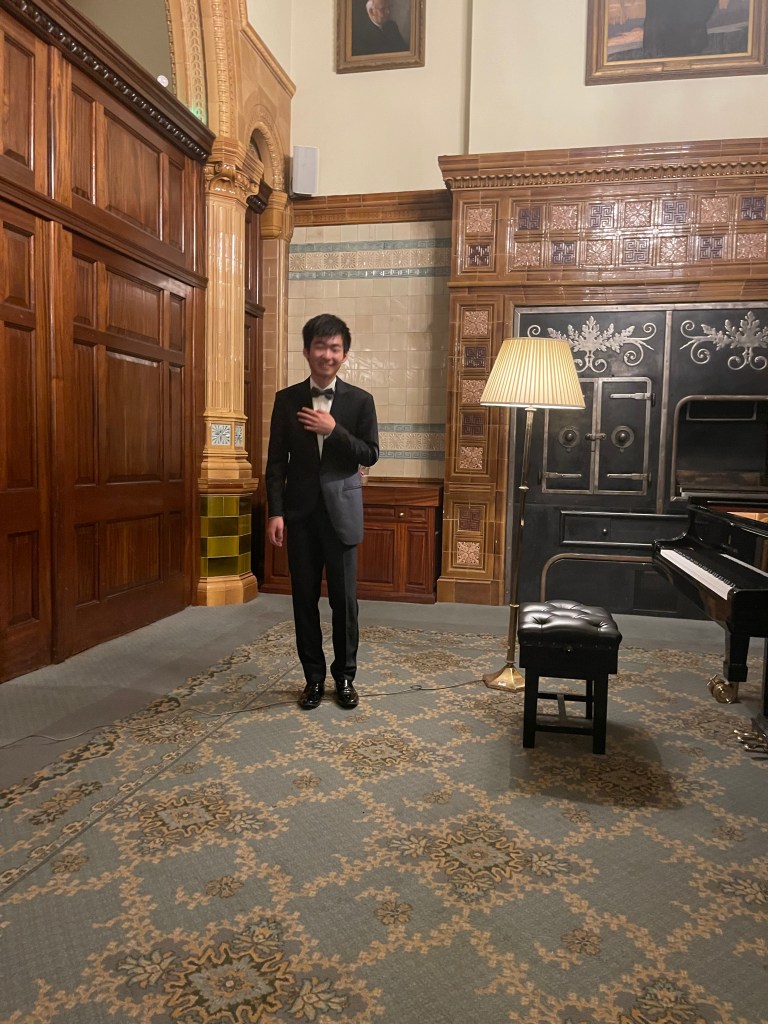
From the very first notes we were were immediately immersed into a world of drama, fantasy and passionate involvement . The Scherzo in B flat minor was played with an extraordinary range of dynamics which seemed almost like hearing it for the first time. And yet everything was written in the score for those ,like Shunta, who can delve deeply. The ‘sostenuto’ was of whispered beauty ‘sotto voce’ and was played with a stillness and a wondrous sense of discovery. Building to an overwhelming climax that was fearless and breathtaking for its audacity and total conviction.
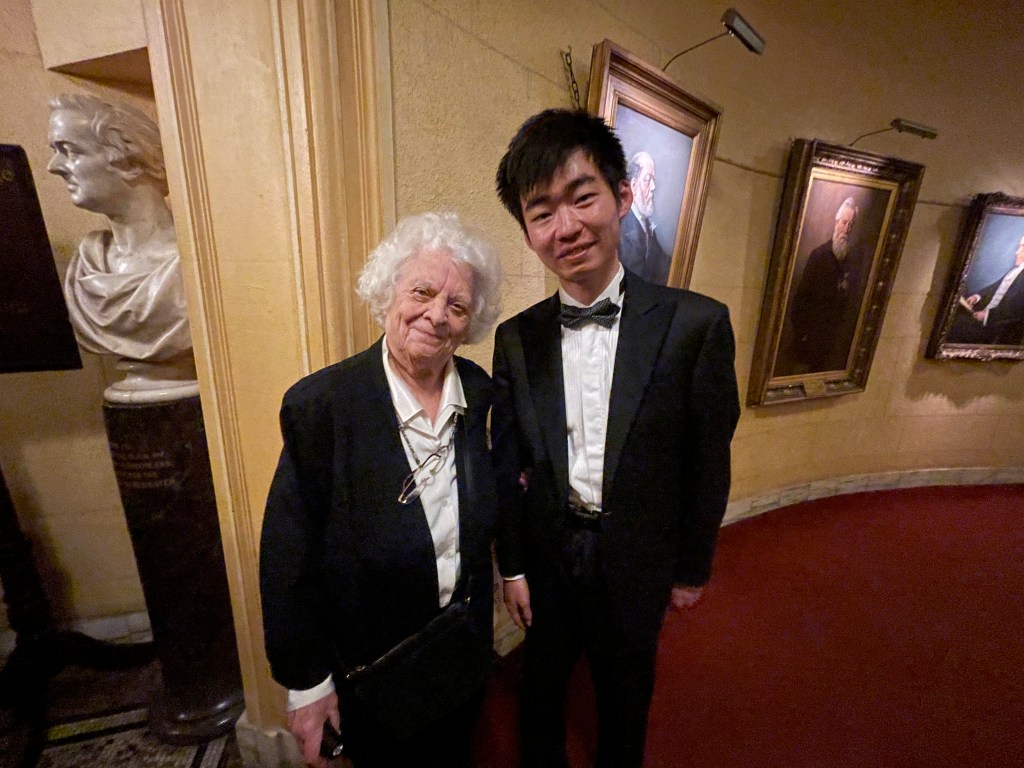
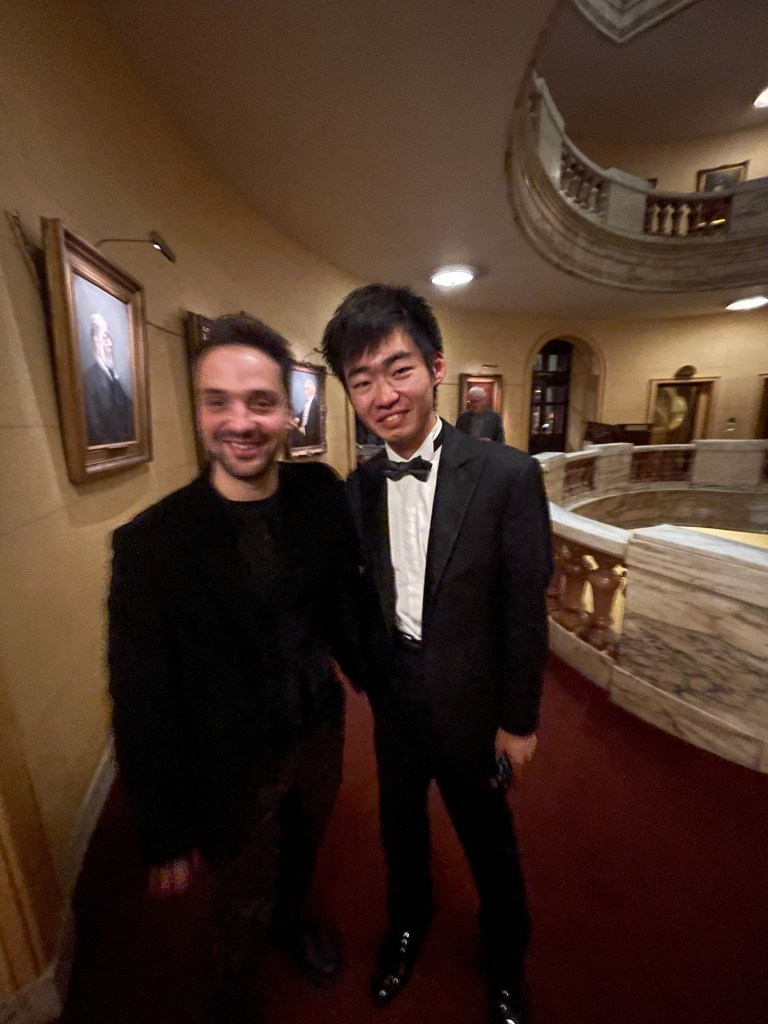
The Impromptu in G flat was next in his well thought out programme and was played with seductive beauty with an insinuating rubato and the exquisite legato of French elegance. The beautifully expressive tenor melody of the central episode entered as if from afar gradually coming closer with passionate insistence before the magically whispered return of the opening melodic outpouring of elegance and refined good taste. No one dared move as the ominous opening of the Fantaisie was heard in the distance without breaking the spell that had been created. Here was a master story teller where every note had a meaning of extraordinary potency. An explosion of passion and mastery that was at times quite overwhelming. Waves of arpeggios that were mere wafts of sound leading to the carefully placed pianissimi G flat octaves that herald the change of key for the whispered beauty of the ‘Lento sostenuto’. Timeless confessions of extraordinary poetic beauty were suddenly interrupted by a single sharp chord ,as marked quite clearly in the score. An eruption as the first episode returned , but leading this time to a coda and whispered cadenza with an extraordinary pedal effect. William Naboré, Shunta’s mentor for the past five years in Rome, had told me of the effect of holding silently the E flat that allowed the cadenza to reverberate without any pedal and which Shunta played to perfection with ghostly effect. It was the same holding silently of the bass note in the opening of the Polonaise Fantasie that allowed for etherial clarity as the chords were allowed to reverberate over the entire keyboard. A whispered fantasie with the interruption of the Polonaise rhythm but played mezzo forte on a whirlwind of nobility and aristocratic elegance. Coming to a rest with four chords played with golden beauty as the ‘Poco più lento’ opened on a velvet carpet of sumptuous beauty and etherial magic. Trills that became mere vibrations in Shunta’s poetic hands as this extraordinarily original work built to the climax that was played with fearless abandon and mastery.
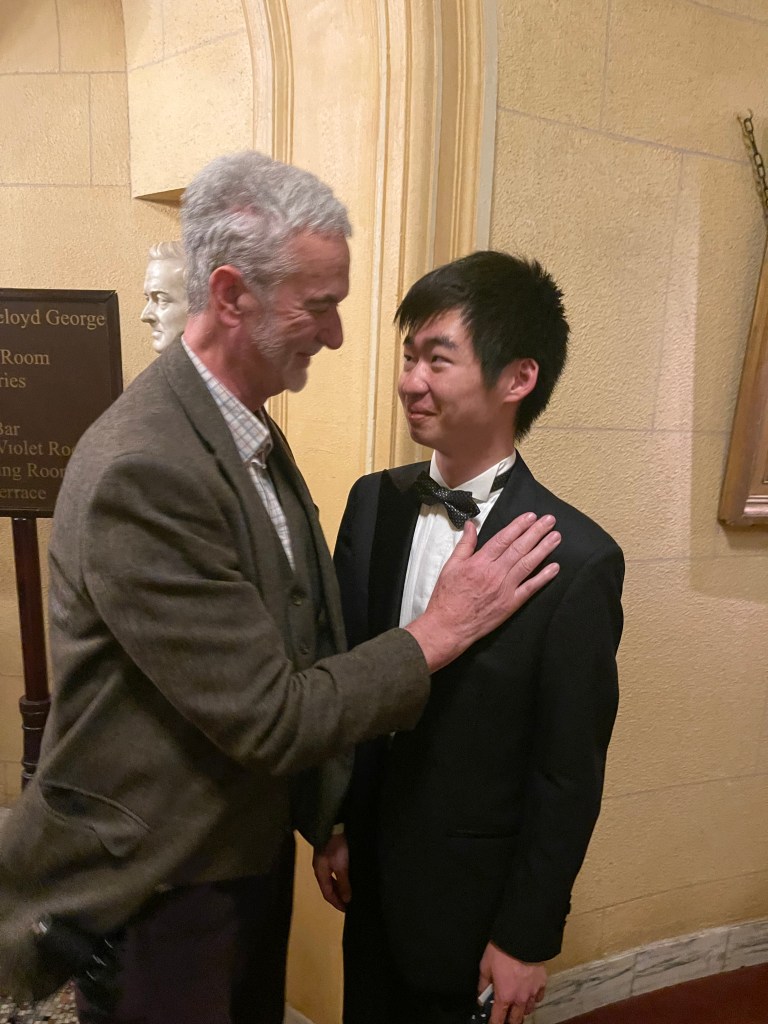
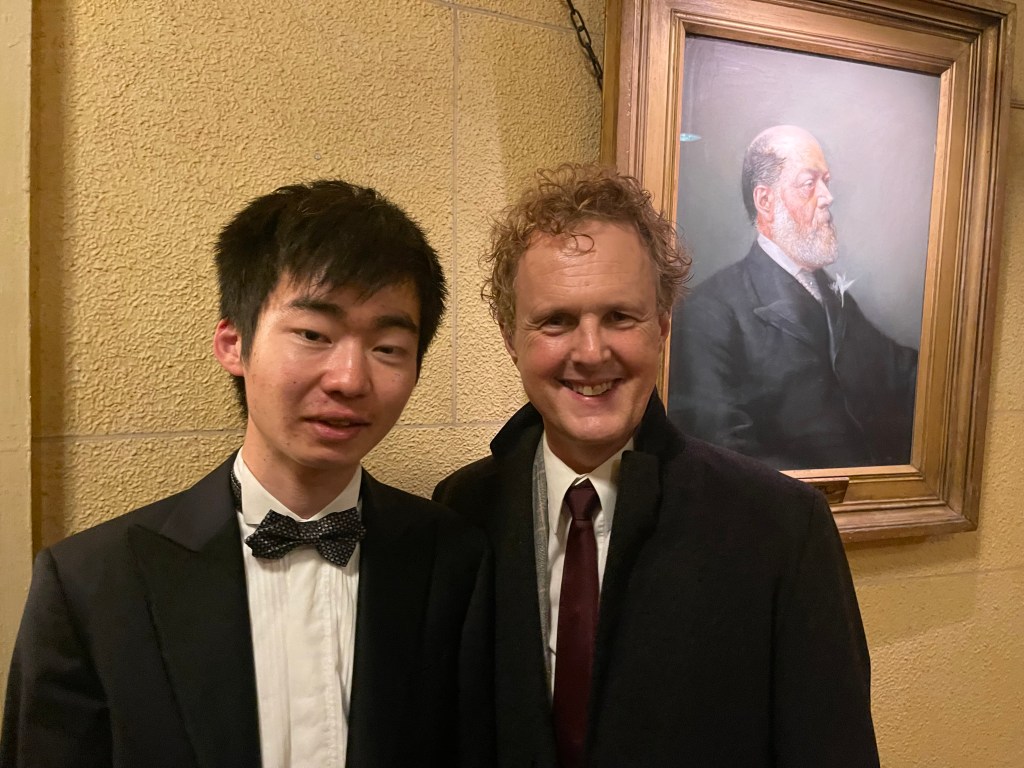
After a short interval Shunta returned to play the twenty four preludes op 28. Fou Ts’ong may have described them as twenty four problems but Shunta played them with extraordinary poetic mastery. Of course the sixteenth was no problem for Shunta who played this brilliant étude as a searing mass of smouldering energy. It was the fourth and the seventh that was so remarkable, though, where so few notes could mean so much . The deep bass notes of the seventeenth I have never heard played with such depth and meaning just as the twenty fourth was not melody and accompaniment but a whole cauldron of passionate urgency. There was a radiance and simplicity to the ‘Raindrop’ Prelude where his incredible control of sound in the central episode made the return of the melody even more expressive and radiant. A ‘tour de force’ of mastery and poetic understanding combined with an intelligence that could delve deep into the score and find unexpected beauty.It was as though the so-called Chopin tradition had never existed, and it was just Shunta and Chopin recreating the music as if the notes were still wet on the page. Two waltzes op 42 and op 70 n. 3 were offered as encores to a very enthusiastic audience, and were played with impeccable style and beguiling insinuation. A refined palette of colours that could recreate these miniature masterpieces with imagination and aristocratic style.

 ChristopherAxworthy-MusicCommentary