

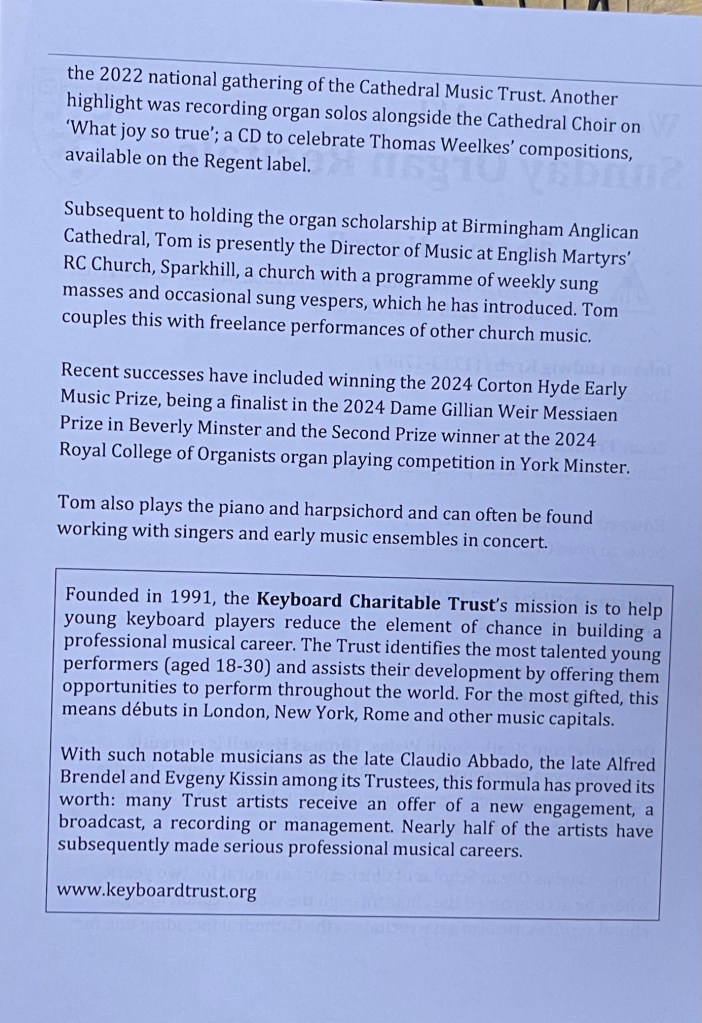
Tom served as Organ Scholar of Chichester Cathedral (2020-2022) and took part in a CD ‘What joy so true’ to celebrate Thomas Weelkes (Regent label).
As a hobby, Tom has played the carillons of York Minster, Bournville and Saltley and has recently published an anthology of bell music (Carillon Society of Britain and Ireland).
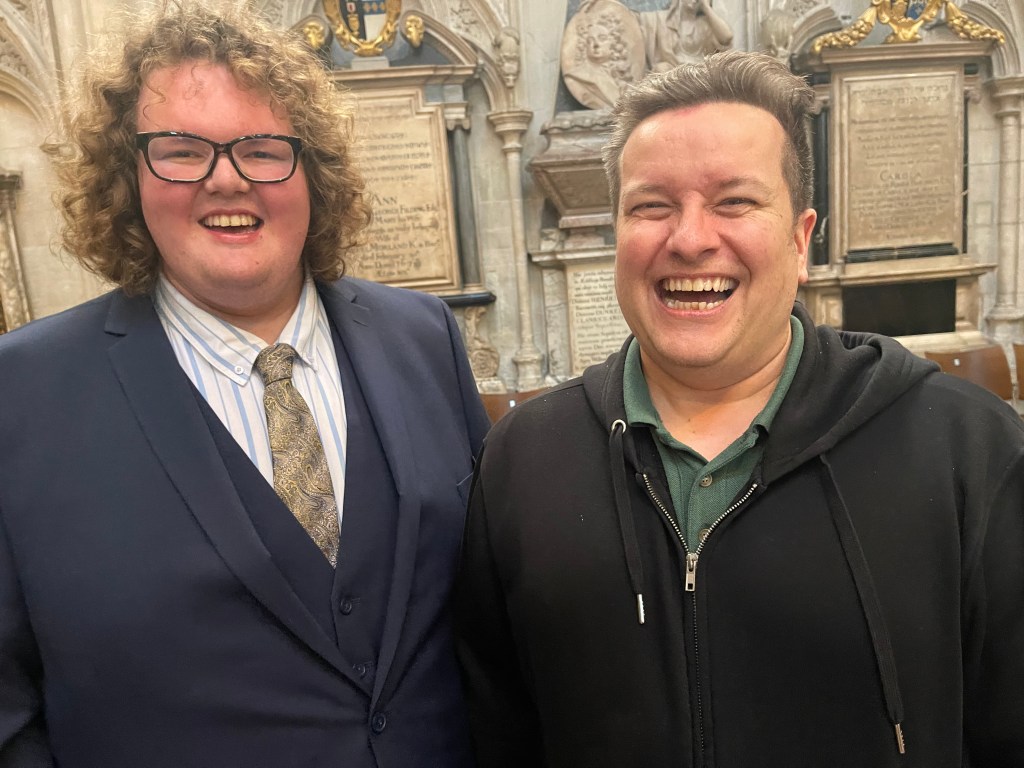
Review by Daniel Moult Head of Organ Royal Birmingham Conservatoire
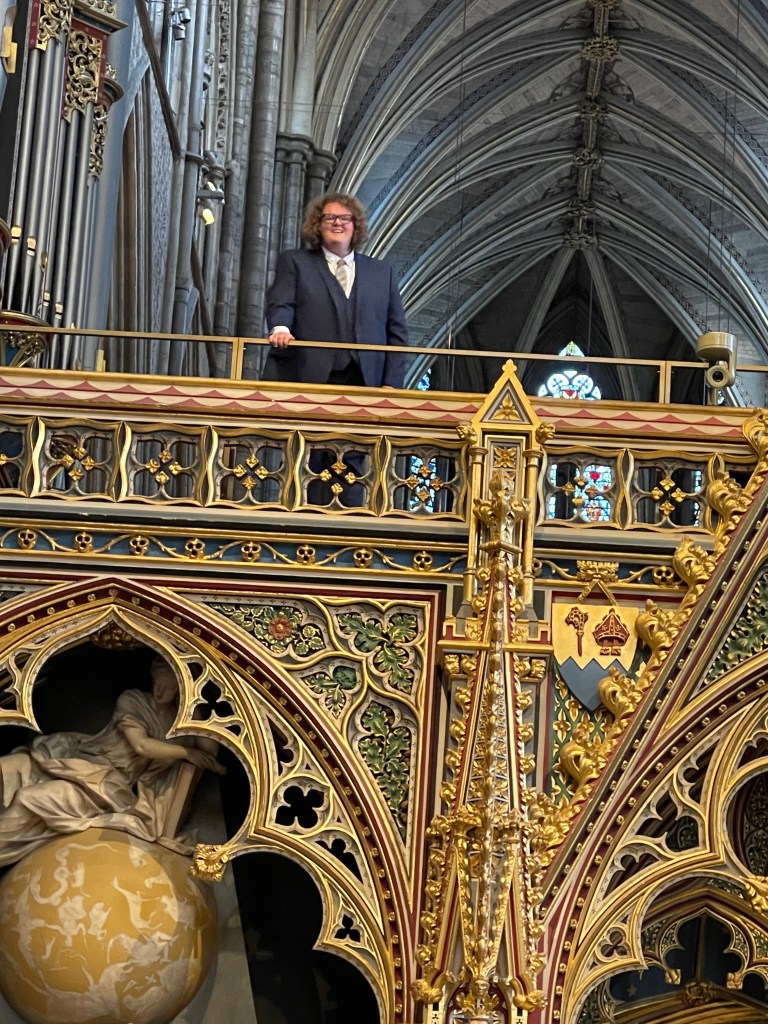
THOMAS HOWELL has already established his reputation on the UK organ scene whilst still an undergraduate at the Royal Birmingham Conservatoire, studying under Daniel Moult and Nicholas Wearne. He has held positions at the cathedrals of Chichester and Birmingham, is
a competition winner (including second prize at the prestigious IAO RCO Competition 2024), and is also active as a piano accompanist and carillonneur (in his spare time). His adoption by the Keyboard Trust will open further opportunities in the UK and beyond, not least
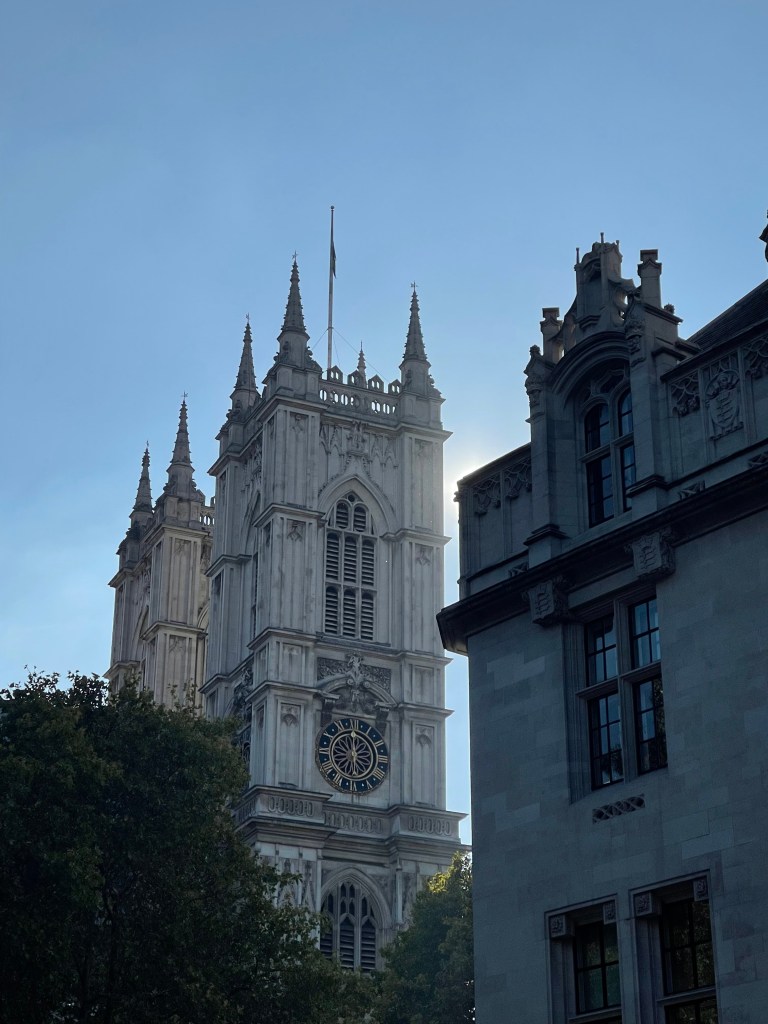
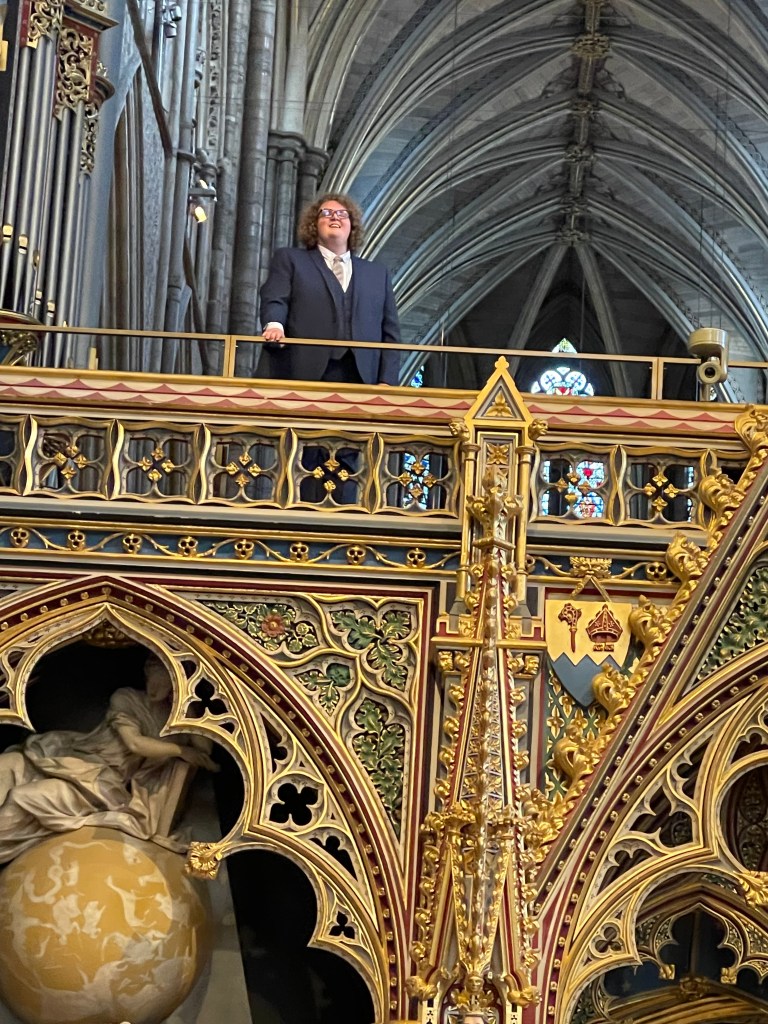
Sunday’s recital in the Summer Organ Festival Young Artist Platform at Westminster Abbey.
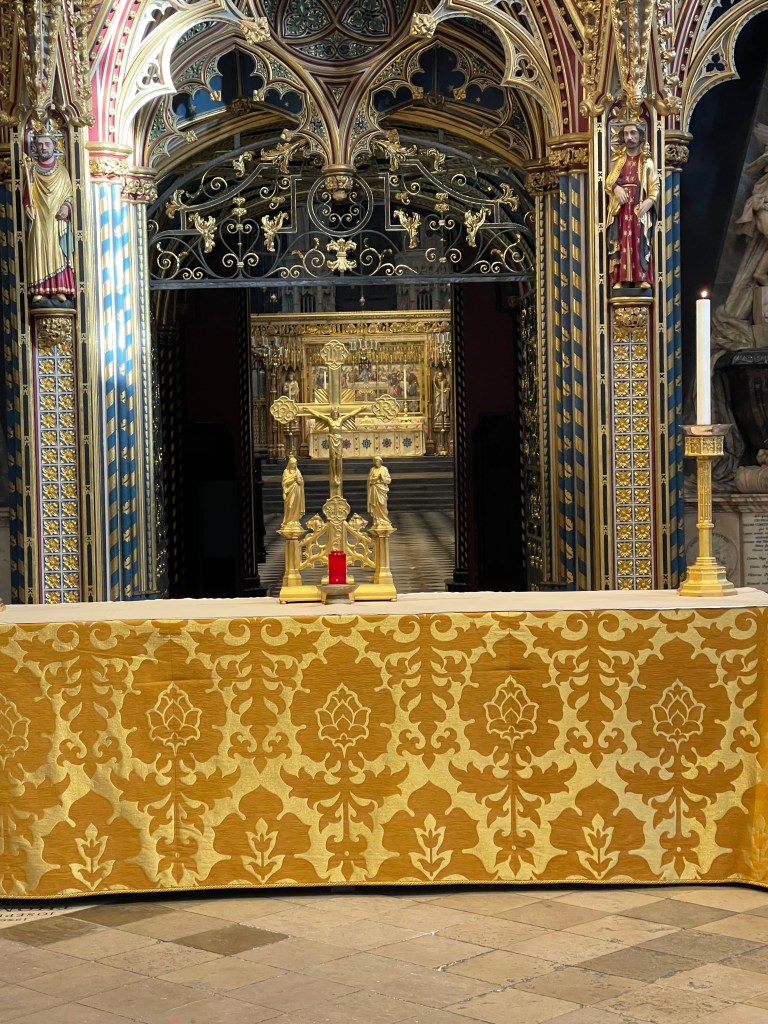
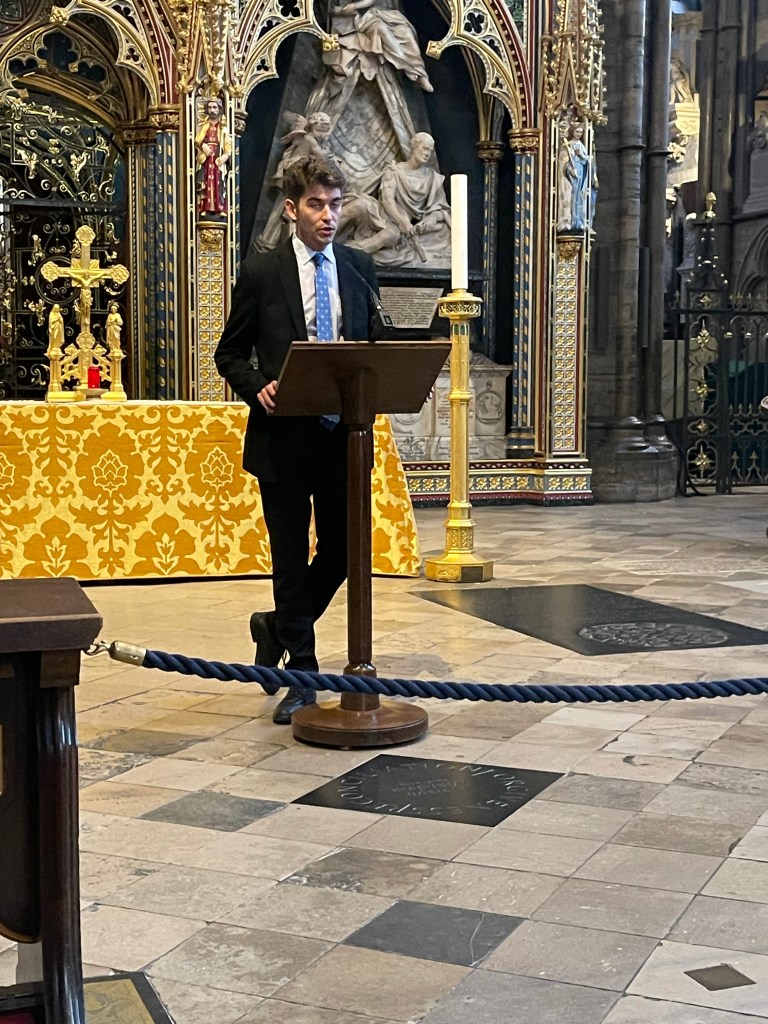
The Abbey organ has power and authority, but is not without its traps for the unwary. Its position on the screen at the head of the Nave means that the sound can be rather diffuse, a situation not helped by the substantial acoustic in the main body of the building.

Thomas was able to overcome these issues with commendable success, in playing that was invariably clear, well-paced, and in sympathy with the size of the room. Whilst this is a challenge facing all organists performing in many a cavernous space, it is a skill which can elude even the experienced concert player.
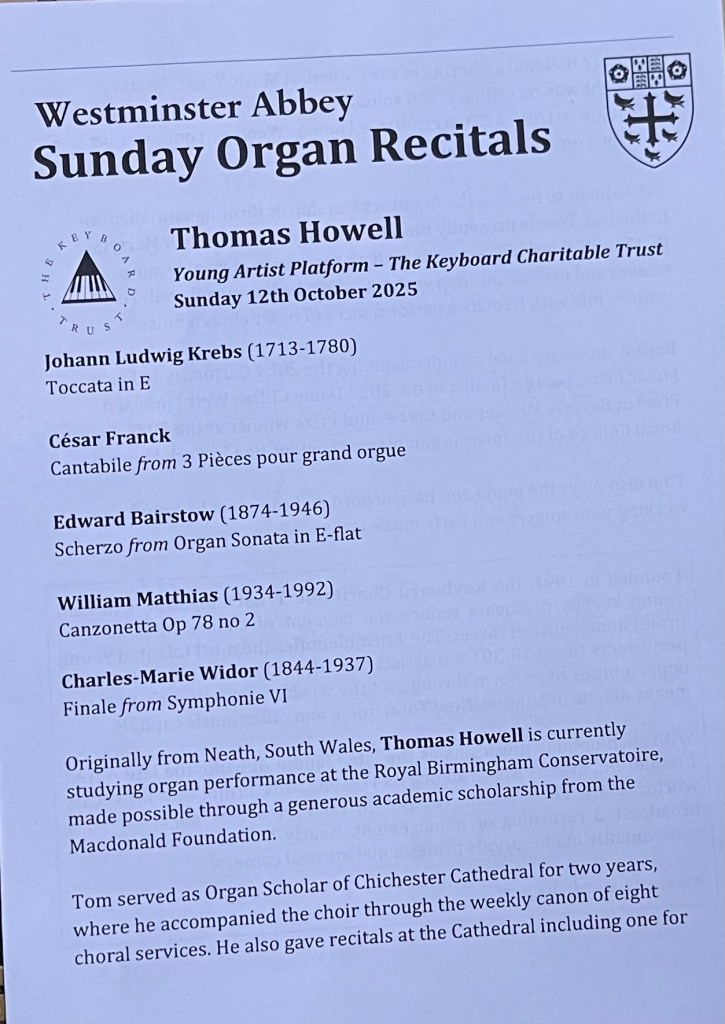
But from the outset, in his charming rendition of Johann
Ludwig Kreb’s Toccata in E, Thomas was able to project the material with unstinting clarity and rhetorical poise. Many organ concerts now include a large tv screen, so that the audience can engage visually with the performer (as with a piano or other instrumental
recital). This is not the case at the Abbey, although the stunning architecture is perhaps a differently inspiring and engaging stimulus. So the non-organists might not have appreciated the deft footwork involved in the opening pedal solo of this galant work by one of Bach’s
favourite students.
In the best tradition of English town hall organ concerts, Thomas’ programme presented an eclectic stylistic mix with nothing beyond seven minutes’ or so duration. This was the perfect
solution to the festival, which attracts both a large tourist audience and more familiar concert goers.
The Cantabile by César Franck took us to a very different sound world and emotional space, showing a beautiful sense of line and a confident control of bigger architecture, as well as a fine control of legato. This is a small masterpiece, with its modest size belying the intensity of the material and the superb compositional craft. Thomas
summoned up the colours specifically demanded by Franck, with apt and well-balanced registrations.
But it was the subsequent Scherzo from the Organ Sonata of Sir Edward Bairstow which fitted the Abbey organ’s Edwardian pedigree like a glove. Suitably refined and plummy tones graced this curious music, at times rumbustious and fun, but elsewhere darker and even menacing. If the series allowed for spoken introductions or brief programme notes (a mixed blessing, of course), it might have been appropriate to mention the background of the Sonata. Bairstow composed this whilst on holiday on the Isle of Arran in
1937, with Europe in an already precarious political state.
Proud of his Welsh heritage, Thomas included as his penultimate piece the elusive Canzonetta by fellow Welshman, William Matthias. Alternating between folk-like simple melody and more extended harmonies (sometimes reminiscent of Olivier Messsiaen), the
short work was perhaps a little more of a challenge for the largely non-musician audience.
But is sometimes good to take our audiences beyond their comfort zones, and I sensed that this curious and effective piece held their attention.

Whatever the case, the Final from Charles-Marie Widor’s Symphonie VI blew away any lingering mystery or uncertainty, with
its unabashed opening swagger. Here, the true ‘ff’ of the instrument was revealed (the louder sections of the Bairstow having been deliberately held in check) to powerful effect. As is sometimes the case with Widor’s finales, the middle section is less direct in expression, although this made for a yet more arresting return to the main material. And the ending was suitably cataclysmic, with a massive G major final cadence filling the space with optimism and joy.

Young organ performers today face a dilemma, as they must find their own musical way in the midst of social media populism and the cult of the personality.

In the case of Thomas, he exhibited a strong and mature musical character of his own, and gave us an accessible
programme of integrity and substance. His future is surely bright, and he and others will be the ambassadors of the organ that showcase the organ art and its rich heritage.



 ChristopherAxworthy-MusicCommentary