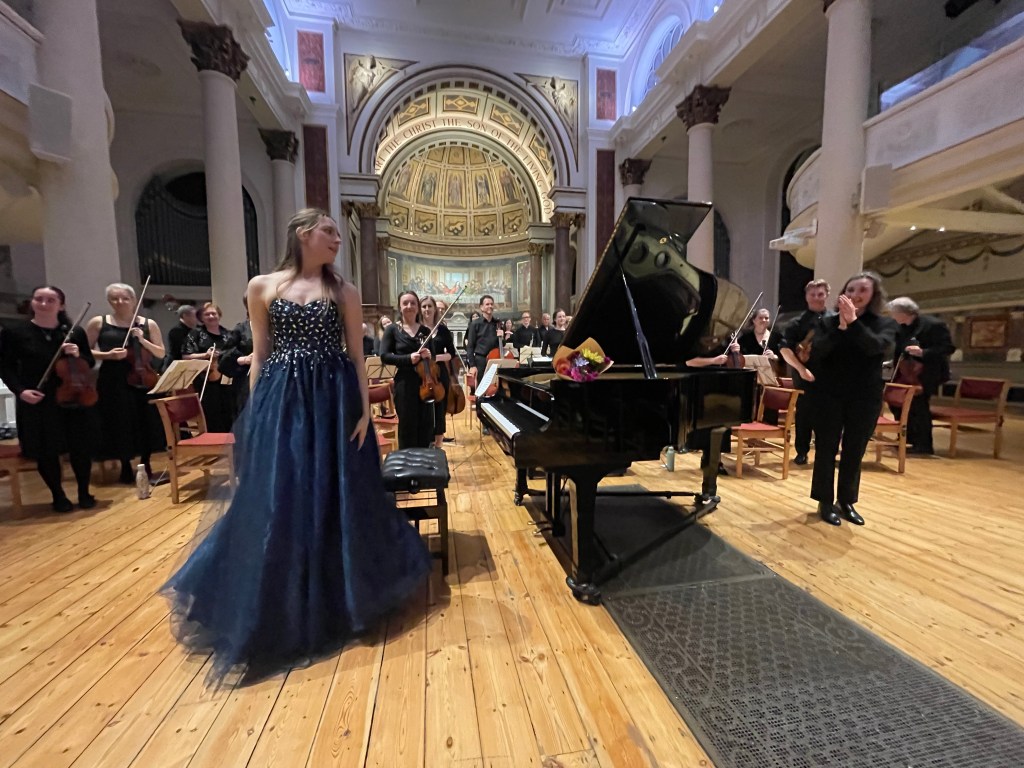

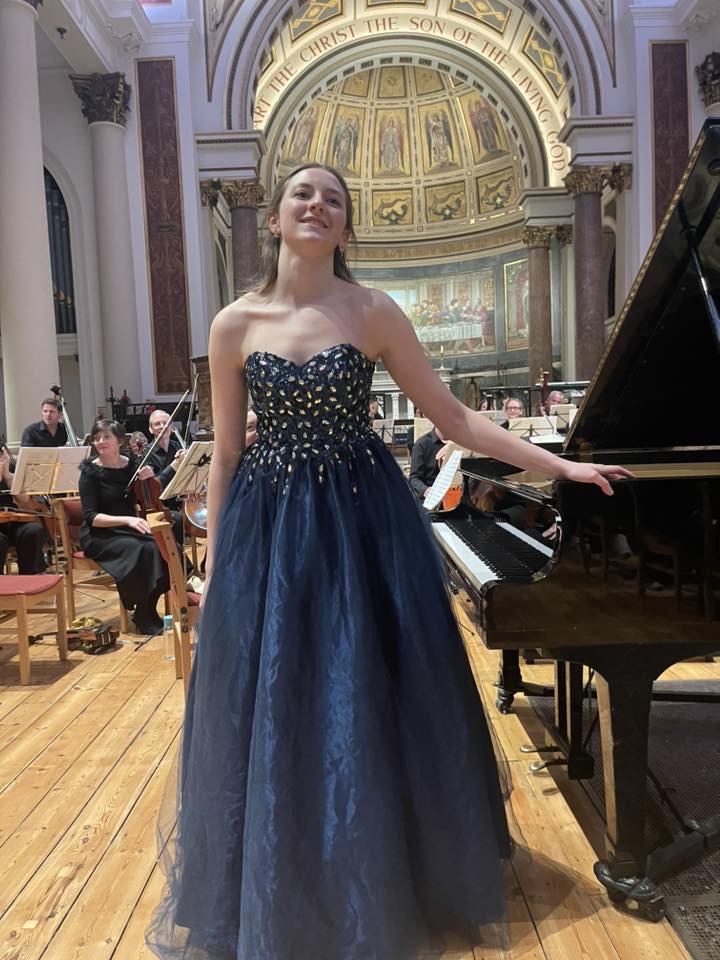
The Schumann Piano Concerto, one of the most beautiful of all Romantic concerti for its chamber music quality where the piano is part of a whole and not just the virtuoso pianist battling with the orchestra. A concerto that requires more musicianship than muscle, as the pianist must dialogue with the orchestra with a question and answer and give and take that requires the orchestra to listen as attentively as the pianist. It was just this dialogue that immediately captured the attention with the poetic almost improvised freedom of the central rhapsodic episode of the first movement.
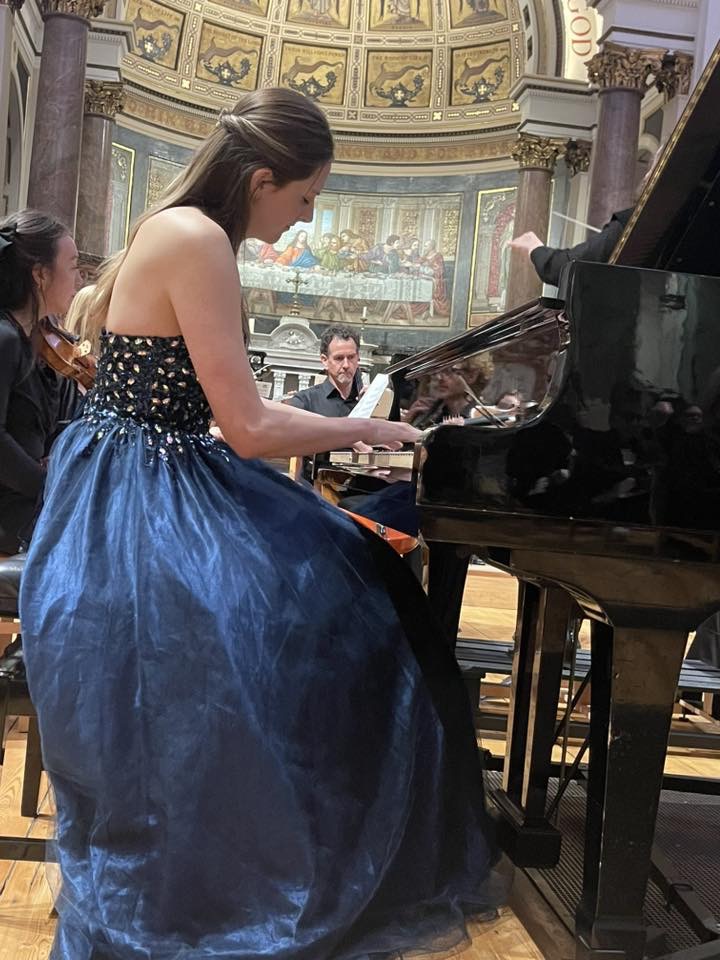
Dominika’s refined arpeggios like an Aeolian harp on which she floated one of Schumann’s most poetic of melodies that was answered by the beauty of Massimo Roman’s clarinet . A duet where each player was listening to the other whilst the excellent Michal Oren was ever vigilant to keep the orchestra on their toes also listening and ready to follow with unusual flexibility this poetic outpouring between two voices.

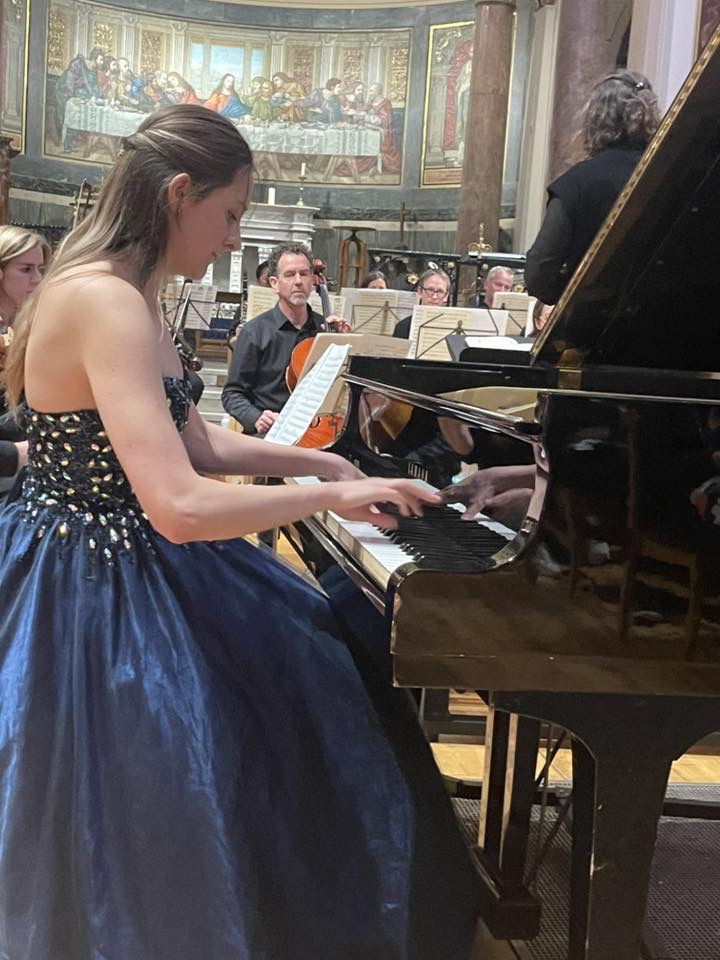
It was the same chamber music quality in the ‘Andantino grazioso’ where Dominika’s refined playing was answered by the orchestra in a dialogue of poetic poignancy. The perfect tempo, set by Dominika, allowed this movement to flow with natural freedom where the ‘cello’s too could have an important voice in this continual dialogue between the piano and orchestra. Some whispered playing of glowing beauty at the end of this second movement when Schumann allows the melodic line to disintegrate before linking it to the dynamic drive of the ‘Allegro vivace’ last movement. Dominika here as in the first movement playing with masterly control but always where the architectural shape was formost in her mind. Her heart, of course, was always ready to shape Schumann’s ebb and flow of jeux perlé in the last movement with beguiling charm and poetic rhythmic drive.


The cadenza in the first movement showed even more Dominika’s refined musicianship. Shaping the phrases with beauty and elegance where even the tempestuous chordal climax was merely a series of moving harmonies reaching out to the long trills that would take her back to continue the poetic dialogue with her colleagues.
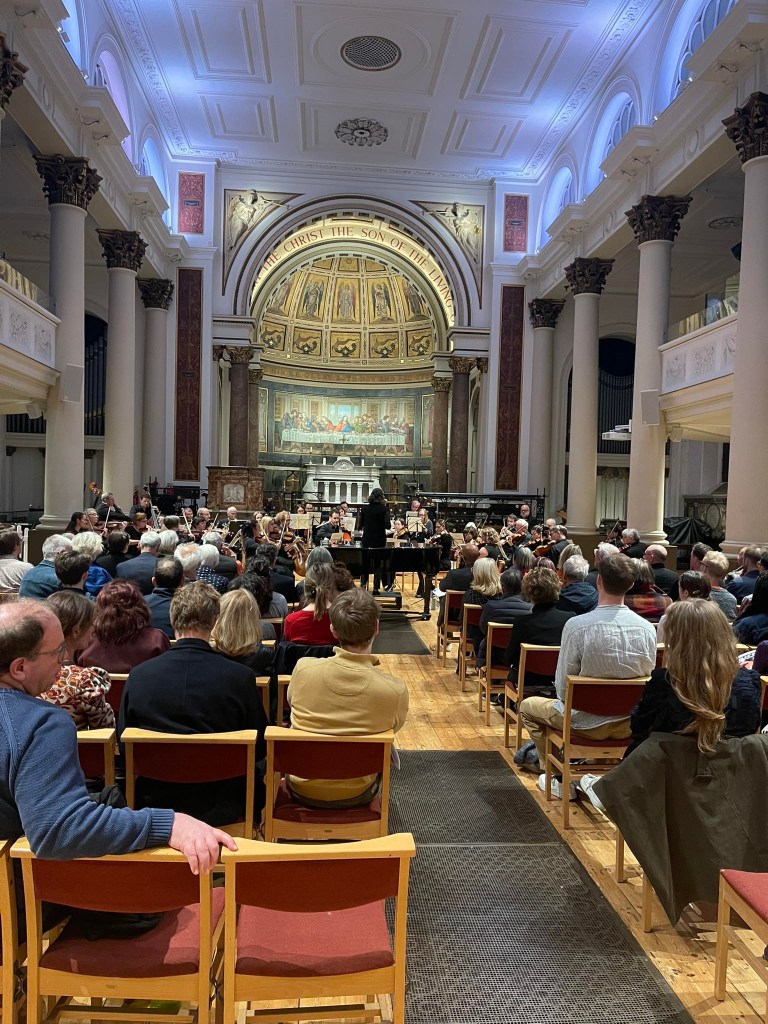
An unexpectedly refined performance with a non professional group of players was greeted by an ovation and Dominika, the guest soloist, was invited to play some more.
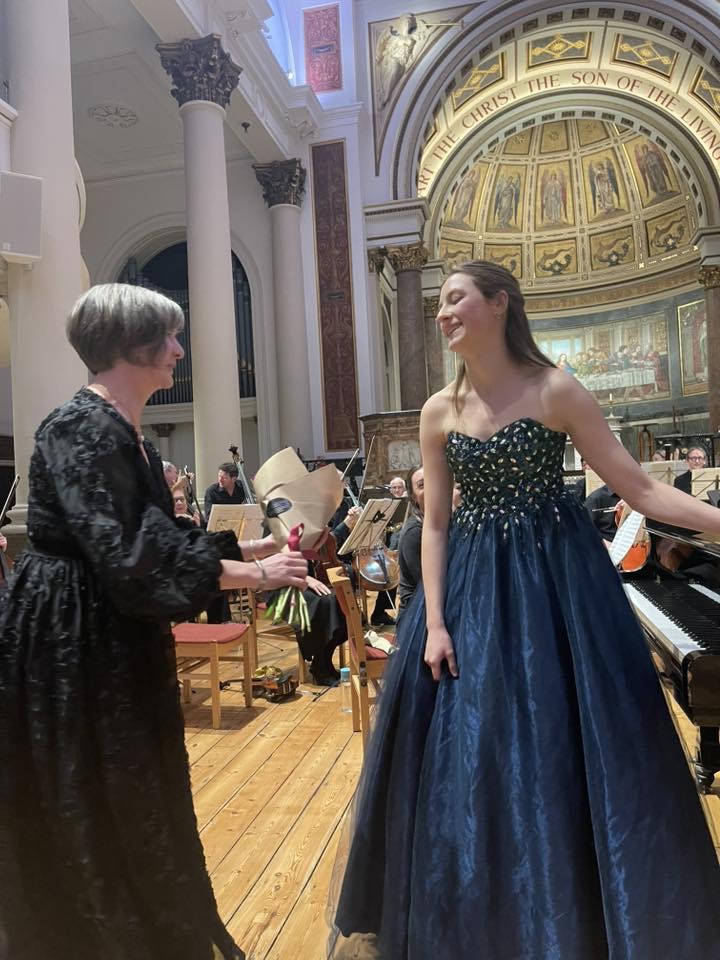

Chopin’s Berceuse was the ideal choice as Dominika’s glowing sounds wafted around this beautiful church with radiance and refined beauty as her aristocratic music making held the audience ,which included the orchestra at this point , spellbound.

An orchestra that Michal Oren enticed to listen to themselves as she at the helm directed them with musicianship and style,as we were immediately aware of from the very opening Overture in Italian Style.

 ChristopherAxworthy-MusicCommentary