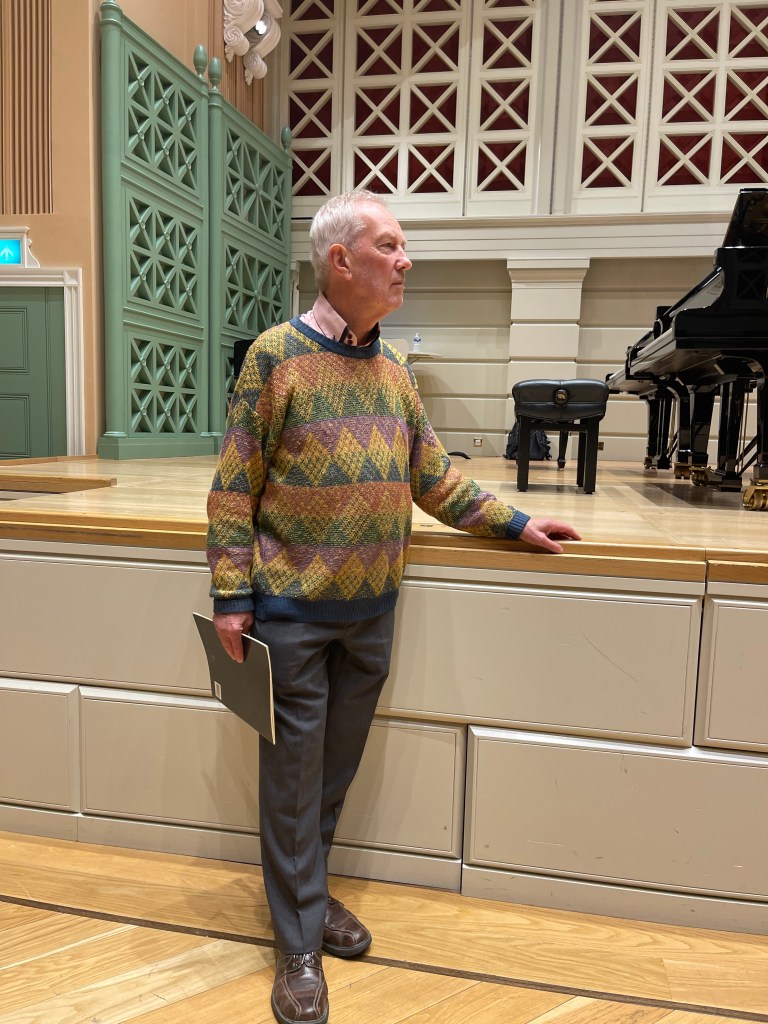
Roy Howat sharing his intimate knowledge of French music bequeathed to him by Jacques Février and Vlado Perlemuter . He is one of the founding editors, with Pierre Boulez, François Lesure and others, of the Paris-based Complete Debussy Edition (Œuvres Complètes de Claude Debussy), for which he has edited much of the piano music. His other publications include the books, Debussy in Proportion and The Art of French piano music, Author of many important books on French Music for which he was recently made Chevalier de l’Ordre des Arts et Lettres by the French government.
He was able to give inspiration and practical help to four very fine students.


Debussy Images is standard repertoire and Book two was sensitively played by Rebekah Yinou Tan but the Fantaisie for piano and orchestra and the Ballade are rarities in the concert hall.
Howat was able to explain the origin, varying editions and the evolution of the works .
The early Fantaisie brilliantly played by Imogen Edwards was abandoned by Debussy and only published long after his death .


It was composed between October 1889 and April 1890, but only received its first public performance in 1919, a year after Debussy’s death. The work is dedicated to the pianist René Chansarel, who had been scheduled to play the solo part for the cancelled premiere in 1890 . The first public performance of the work, scheduled in 1890, was cancelled when Vincent d’Indy, who was chosen as conductor, claimed that he did not have enough time for rehearsals and proposed to perform only the first movement, which Debussy declined.Over the next few years the very self-critical Debussy made numerous revisions, but eventually gave up on the work and declared that the Fantaisie would never be published or performed during his lifetime.It received its first public performance posthumously on November 20, 1919,in London by the Royal Philharmonic Orchestra with Alfred Cortot as soloist.It was published first in a two-piano version (2nd piano is a reduction of the orchestra score) made by Gustave Samazeuilh in 1919, with the full score in 1920, both by Eugène Fromont, one of Debussy’s early publishers.
I only ever remember that eclectic young prize winner of the first Leeds Jean Rodolphe Kars play it in public and he has since become a Catholic priest in the Emmanuel Community ! Martha Argerich subsequently made a recording of it with Daniel Barenboim conducting .

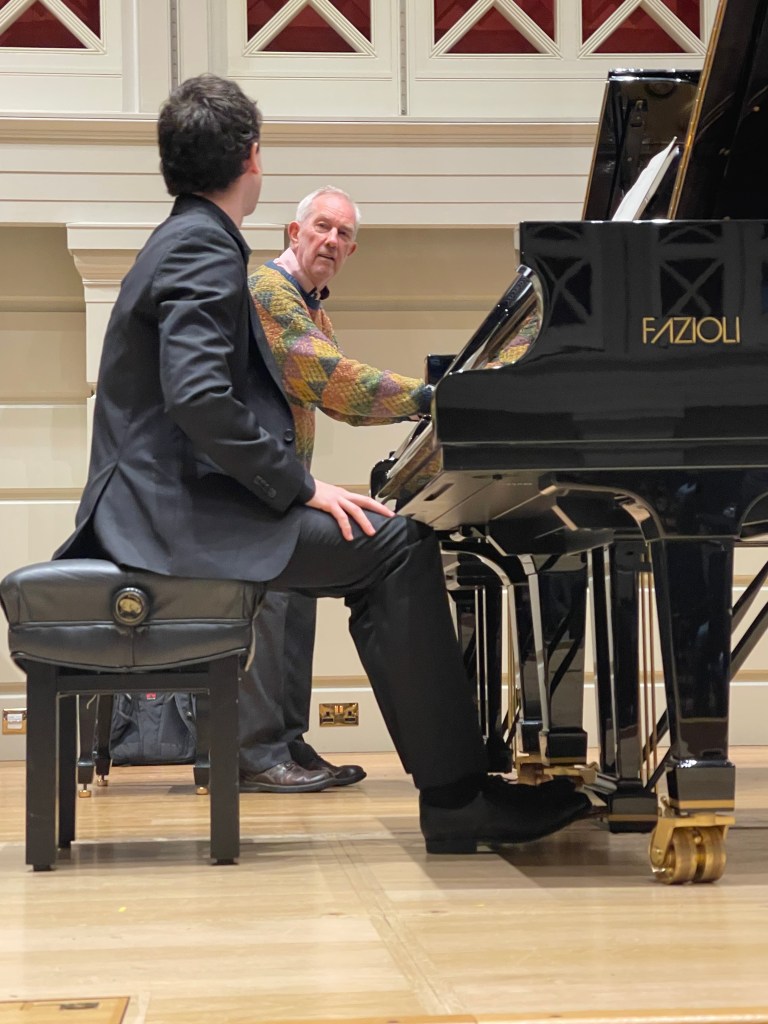

The Ballade is an early work and a true rarity and was played with ravishing sounds by a young Italian student Franco Barzelatto who managed to tame a not easy Fazioli piano .
The first thing Howat asked was if he knew the origin of the piece . Which he certainly did !
Debussy composed a “Ballade slave” in 1890, and in 1903 he revised and republished it simply as Ballade. Coloured both with exuberance and melancholy, it shares kinship with the far more popular Arabesques written shortly thereafter.
In a letter to his publisher, Debussy wrote of “the art of turning the pedal into a kind of breathing which I observed in Liszt when I had the fortune to hear him in Rome.” That he was referring to an event which had taken place decades earlier confirms the lasting impression the master made on the younger composer. Debussy was 21 when he won the prestigious Prix de Rome in 1884. The scholarship granted a three-year stay at the French Academy in Rome, where on three occasions in January of 1886, Liszt and Debussy met.
Upon returning to Paris, Debussy began to achieve a broader recognition and the publication of solo piano pieces soon followed, among them a “Ballade slave” in 1890. Though Debussy had indeed spent three months in Russia during his late teens, there is little about this enchanting piece that sounds remotely Russian or Slavic, and in 1903 he would revise and republish it simply as Ballade. Coloured both with exuberance and melancholy, it shares kinship with the far more popular Arabesques written shortly thereafter. Its neglect is inexplicable and it is a concert rarity.
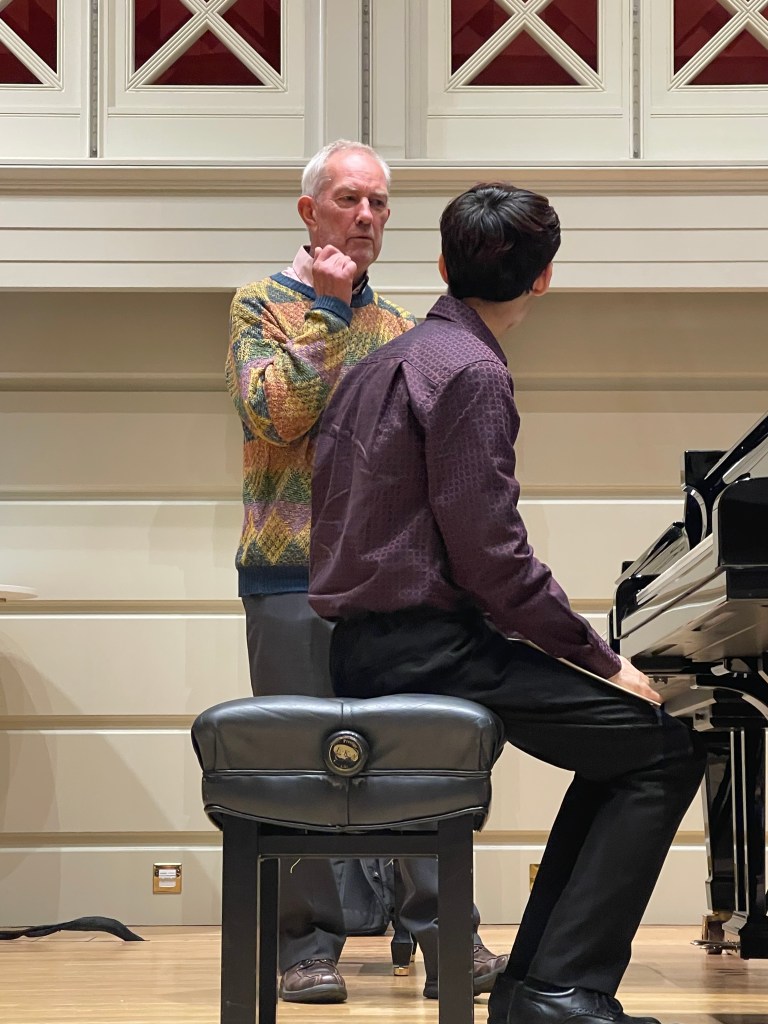


I did not know that a Roy Howat had also studied with Jacques Février, the companion of Poulenc whose rarely heard Trois Pièces were given a scintillating performance by Leo Little . He was able to pass on inside information about Poulenc’s pedalling and to recommend listening to the historic performance of Poulenc and Février playing the two piano concerto.
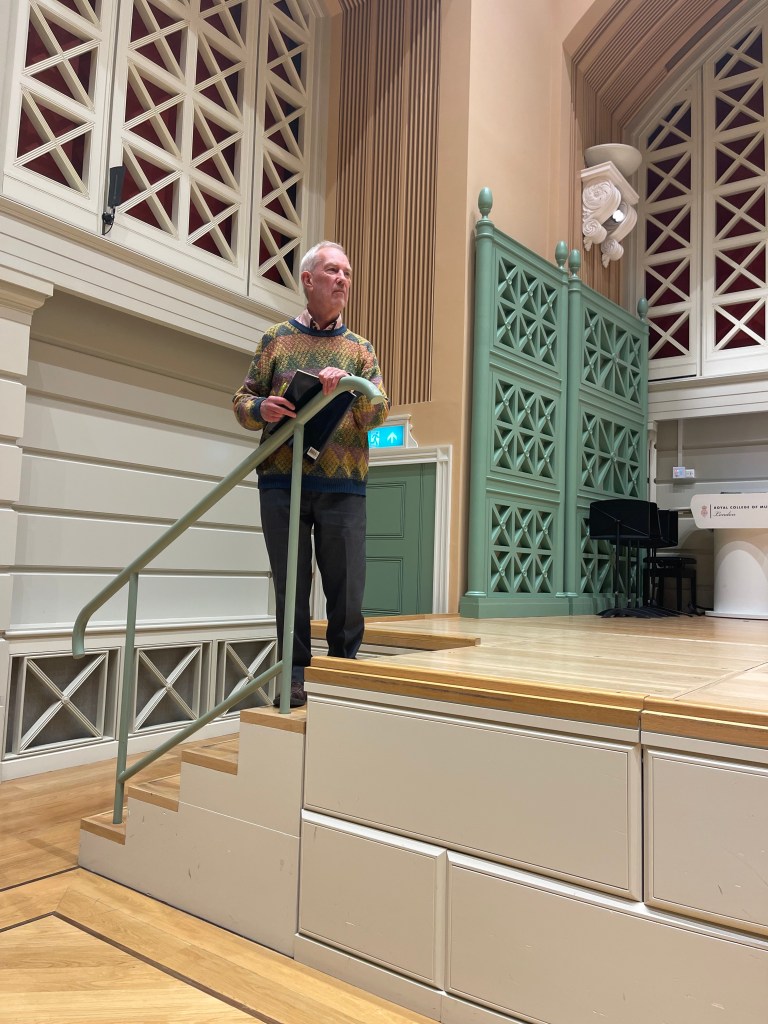
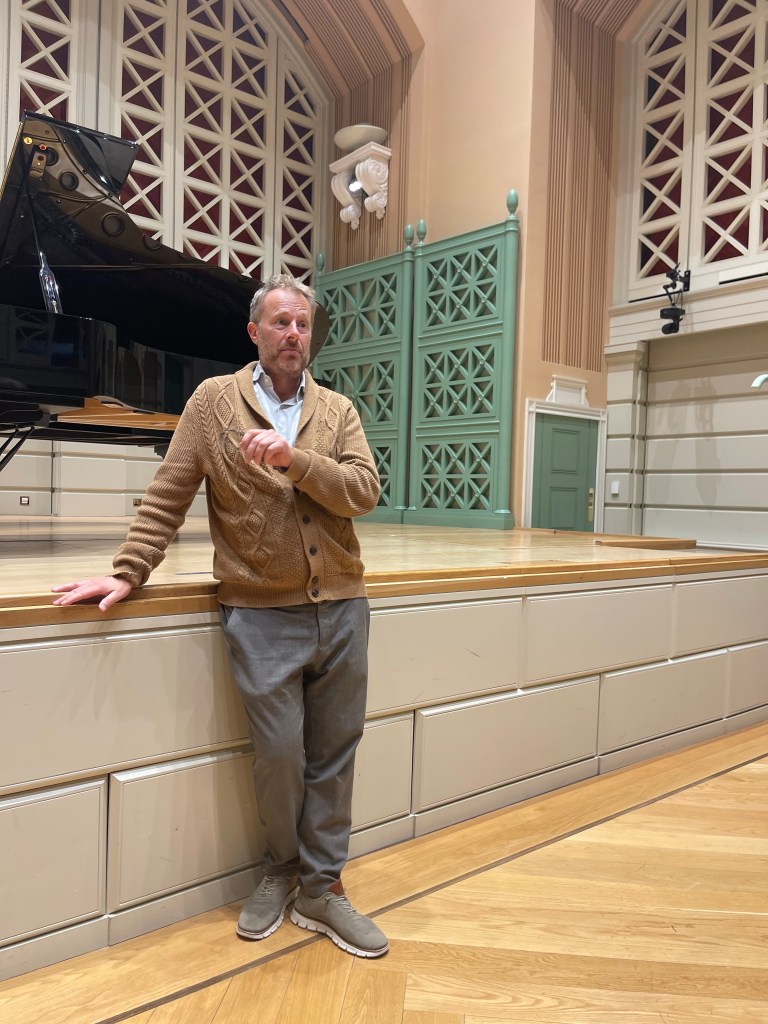
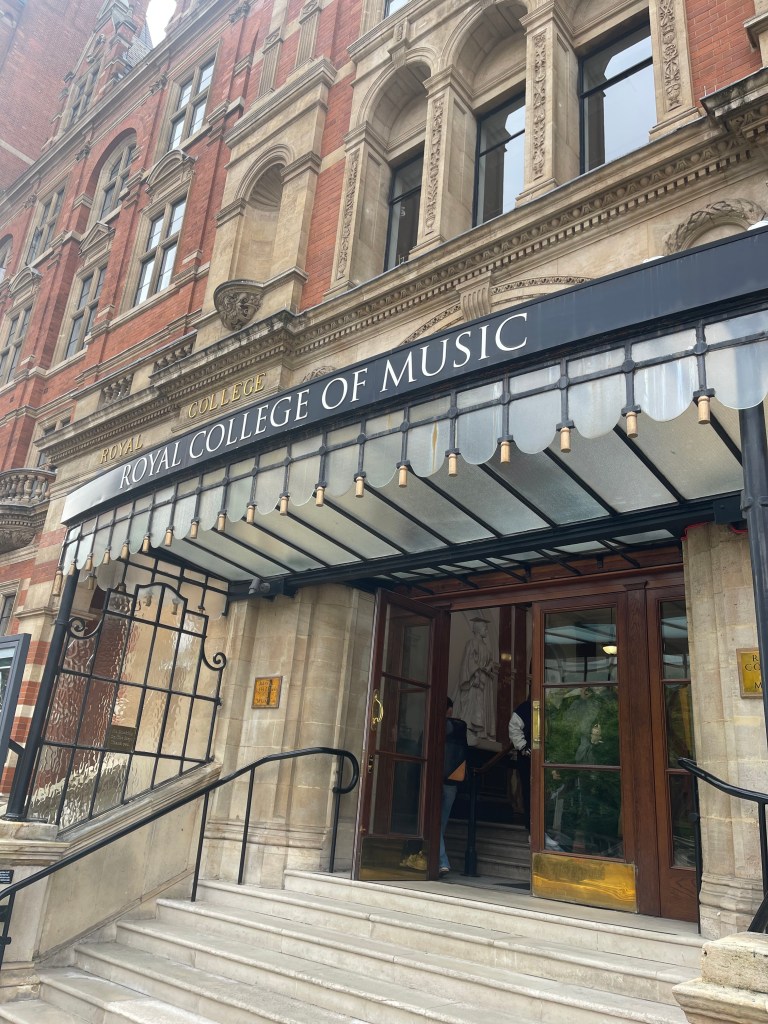
In thanking Roy Howat Ian Jones mentioned the most complete edition for Peters of Chopin’s Studies that are in the process of being published. Roy Howat was a disciple of Vlado Perlemuter who was a protégé of Cortot and together with his authoritative scholarship it should make for an exciting return to the RCM in the future.
I had first met Roy Howat at the funeral ,in Ewelme eight years ago, of Vlado Perlemuter’s life long companion Joan Flockhart Booth https://christopheraxworthymusiccommentary.com/2017/12/19/in-praise-of-joan-2/

 ChristopherAxworthy-MusicCommentary