
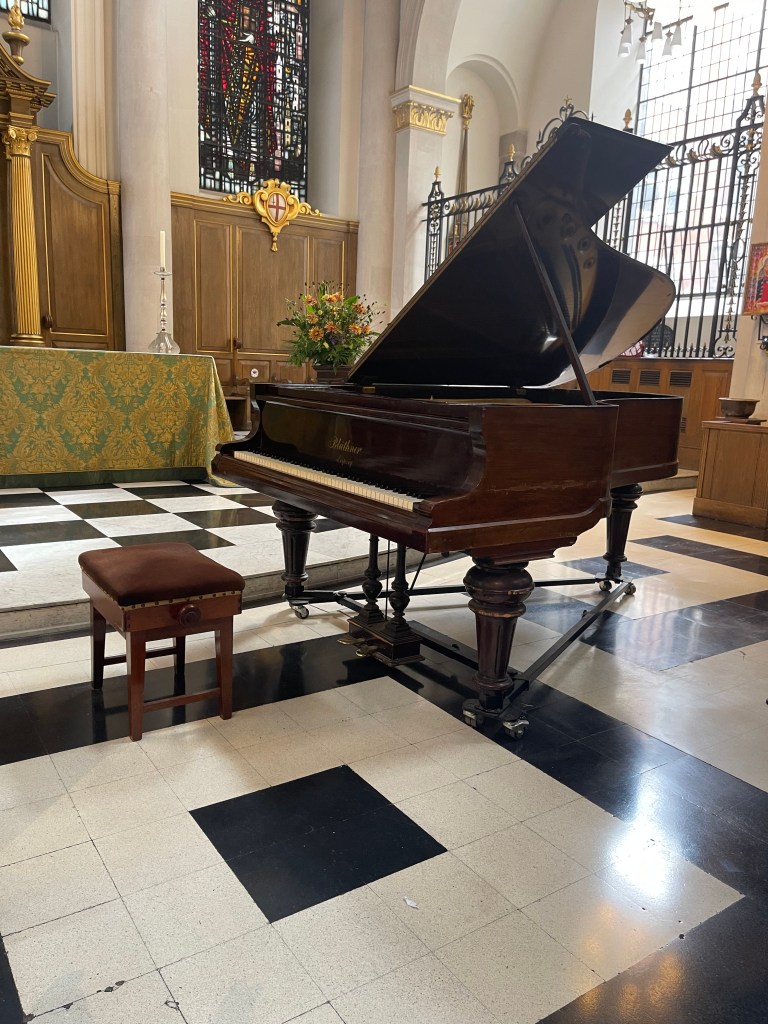
An old Blüthner and very resonant acoustic could not diminish a masterly performance of Beethoven’s last Sonata from this former student of Charles Owen, Katya Apekisheva and Gordon Fergus -Thompson. A magnificent pedigree that shone through all she played today despite not having the ideal tools for her trade.


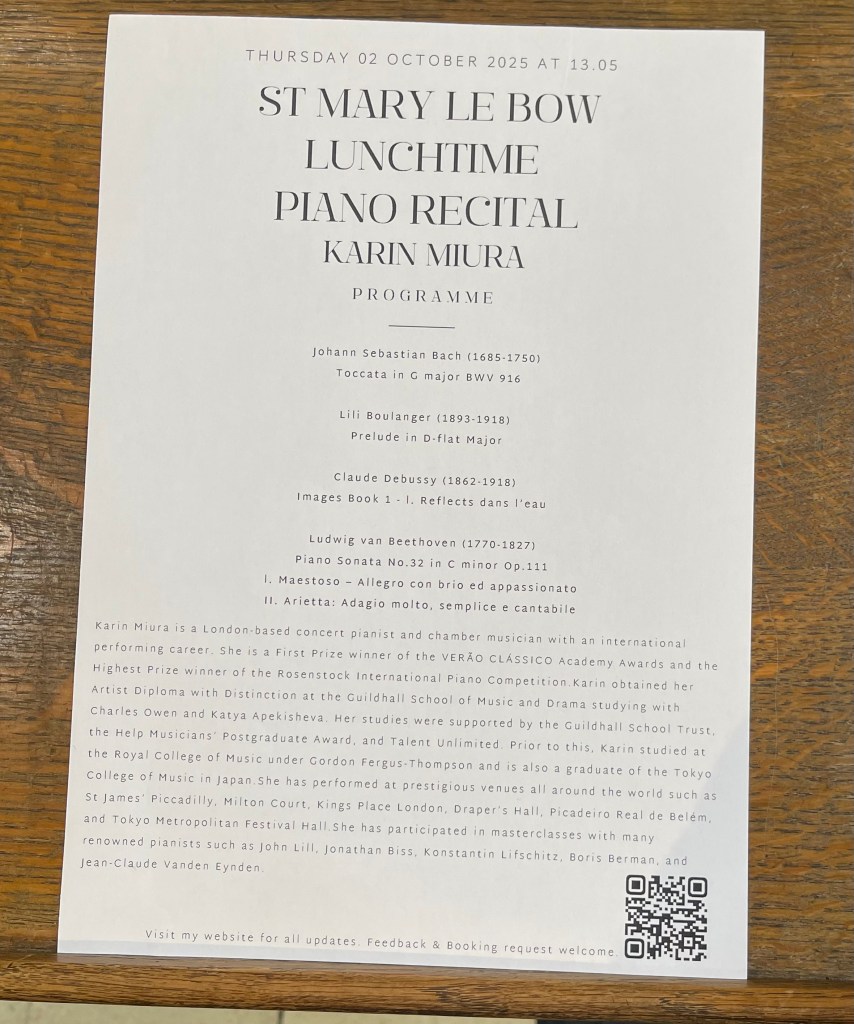
Perlemuter often used to describe rather worn out instruments as ‘casseroles’ and opening with Bach’s G major Toccata I thought we were going to be in for a tough ride.
Her very classical approach to Bach allowed her to play with clarity, rhythmic drive and precision but the lack of colour and real sense of the ‘song and dance’ made this youthful Toccata rather monumental and earthbound, instead of being a voyage of improvised fantasy and discovery.
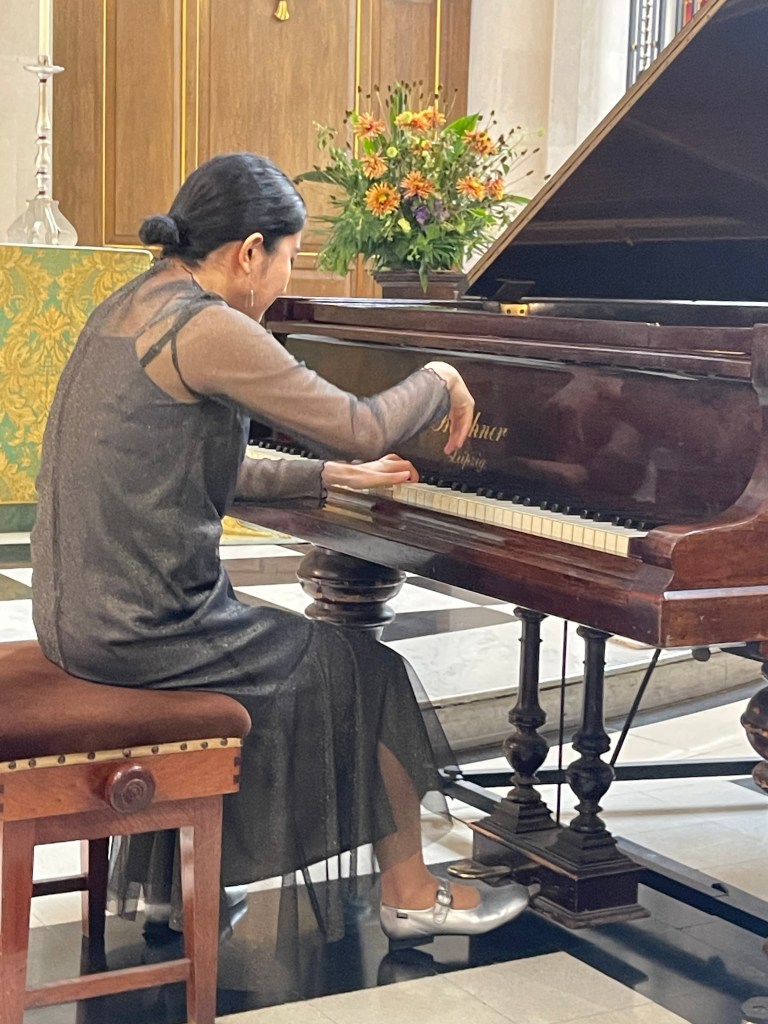

It was in the French music that followed, that Karin persuaded our old friend to surrender the secrets that were hidden in an instrument of obvious noble pedigree.
There followed a remarkably modern sounding piece by the nineteen year old Lili Boulanger, destined to die only six years later at the end of the First World War, in 1918. Full of strange colours of great originality it contrasted so well with Debussy’s mellifluous ‘Reflets dans l’eau’. Boulanger and Debussy were destined to die in the same year but one aged 56 and the other cruelly at only 25.
I studied with her sister Nadia Boulanger who was always talking of the remarkable genius of her sister who was to be taken from us before realising her enormous potential.
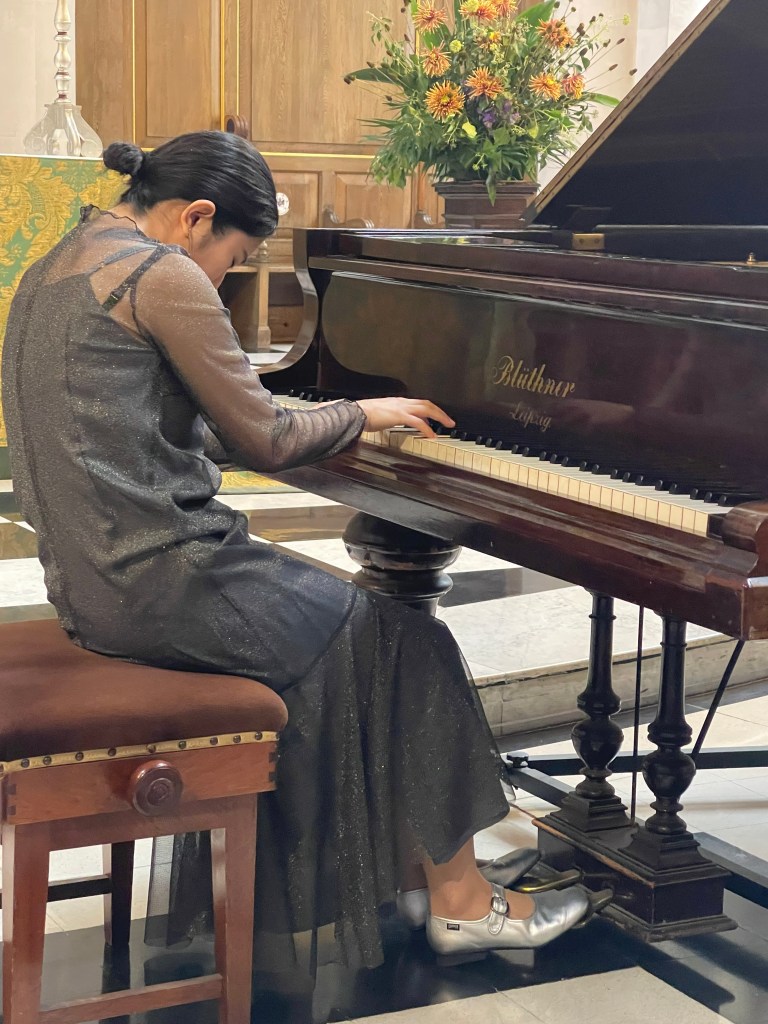

The Debussy was bathed in pedal but always very clearly articulated which allowed Karin to maintain the musical line with such clarity, surrounded by washes of sound that wafted around this noble edifice. Some very refined phrasing of delicacy and ravishing beauty as Karin had now persuaded this ‘casserole’ to give up the secrets that were hidden within .
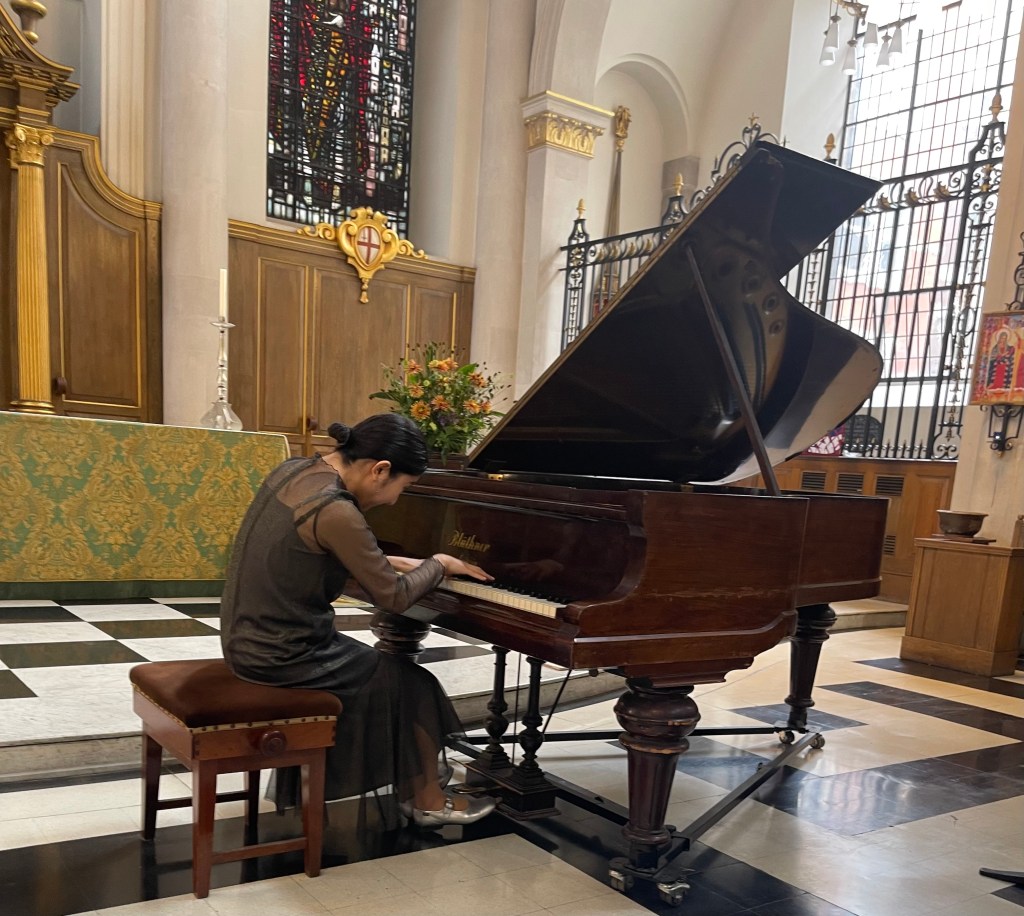
The scene was now set for the main dish of this lunchtime feast of music, and Karen opened the Sonata op 111 with nobility and fearless attention to Beethoven’s indications. After this arresting introduction the ‘Allegro con brio ed appassionato’ took flight with some very solid playing of great conviction and towering authority. Respecting the composers wishes with scrupulous attention to detail, without ever loosing the rhythmic drive. Even the repeat of the exposition had more drive to it as it lead into a development of orchestral proportions. No slowing at the end either, so the arrival of C major set the scene for the quartet texture that she found for the ‘Arietta’.
Simplicity and an aristocratic melodic outpouring that Karin played with a sense of harmonic meaning, allowing the variations to flower so naturally. Infact it was the bass that sustained the variations and an undercurrent that brought us with ever more agitation to the explosion of the third variation that Karin played with remarkable authority.The sudden dynamic contrasts that Beethoven indicates brought great drama to this agitation before dissolving to the celestial paradise that the composer was to inhabit in these final works. Fragments of the ‘Arietta’ just floated on a vibrating bass before reaching miraculous heights with filigree sounds out of which we could hear in the distance the ‘Arietta’ and which Karin played with disarming simplicity and radiant beauty .Gradually building to a climax and exultation that was played with masterly control and weight, allowing the music to dissolve into vibrations that were discreetly played trills, out of which the ‘Arietta’ was heard one last time with glowing beauty. A performance of great maturity and technical mastery that allowed her to exult this Blüthner piano as I am sure it has rarely been dominated before

 ChristopherAxworthy-MusicCommentary