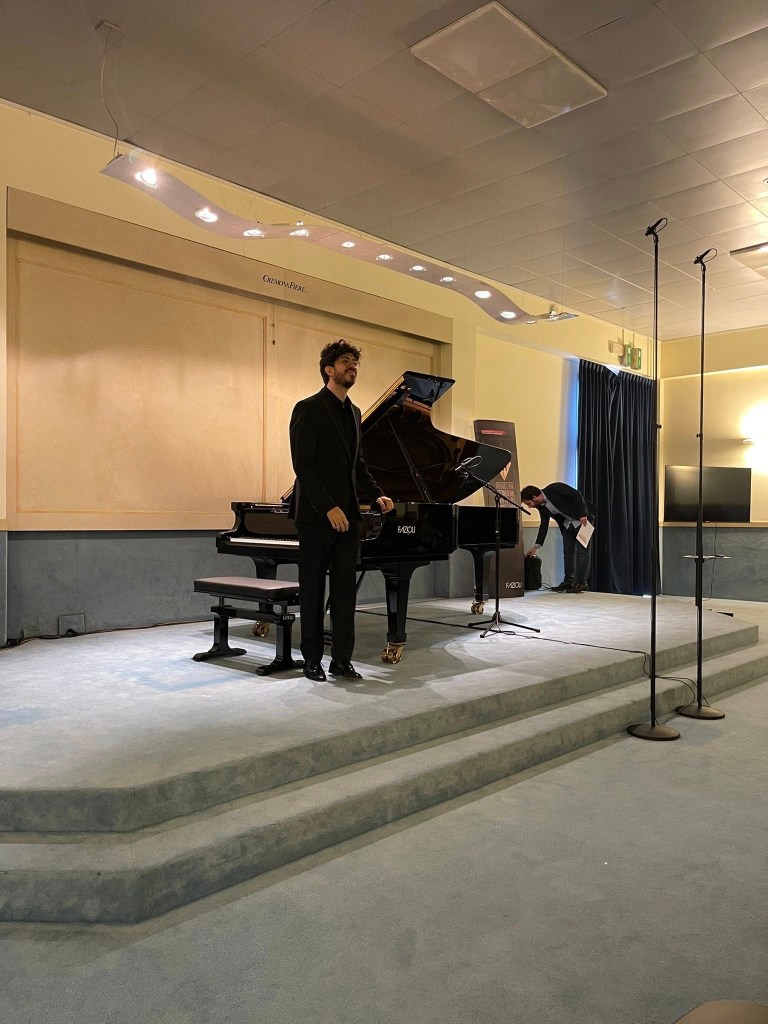
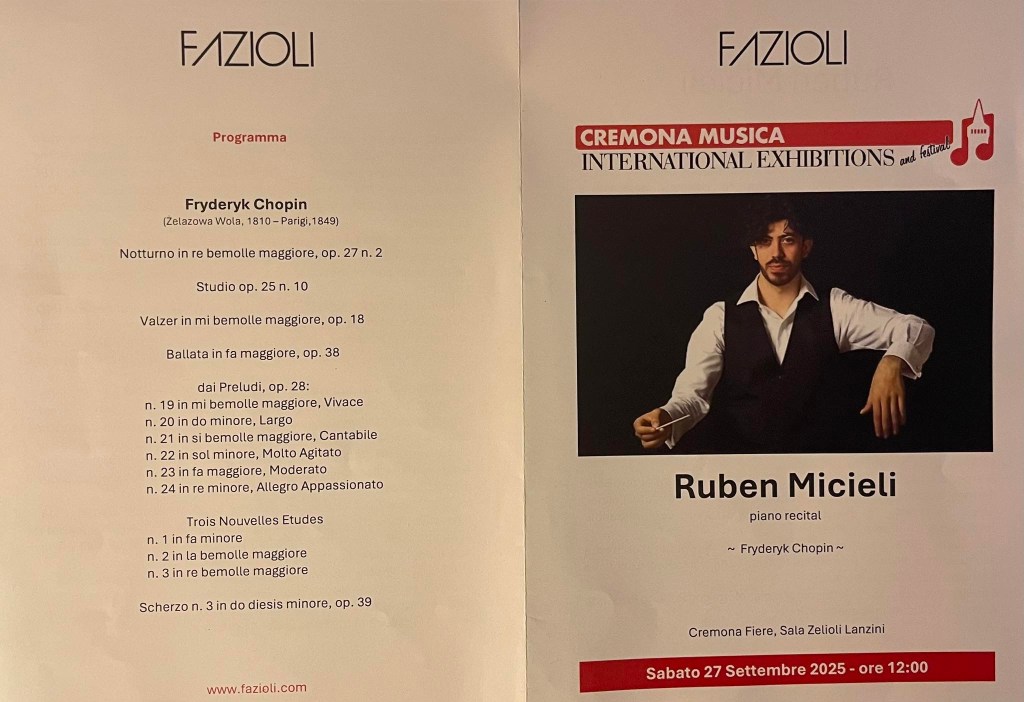
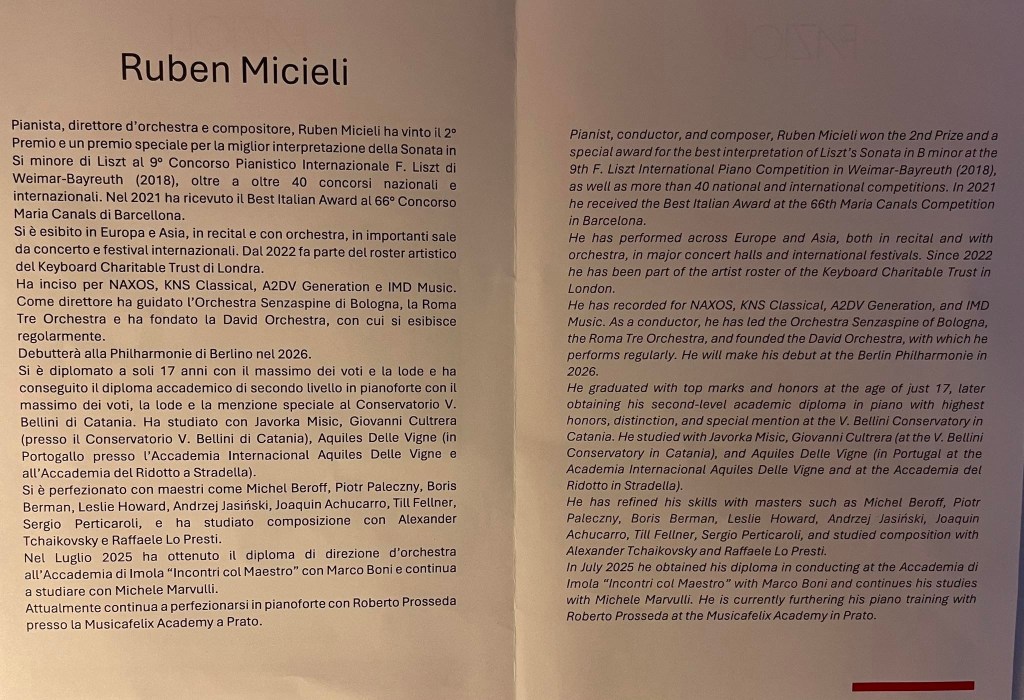
Ruben plays with a great sense of style but being also a conductor he never gets lost and always there is a sense of architectural shape to his playing no matter how sensitively and stylistically he plays. Nowhere more was this evident than in the Waltz op 18 where you feel a real sense of theatre with a grace and beguilingly seductive charm. A lightness of Les Sylphydes where you could almost see the dancers enjoying every moment of this early Waltz with playing of such refreshing ‘joie de vivre’. The concert had begun with a ‘bang’, metaphorically speaking, because Ruben’s playing is all horizontal and with beautifully relaxed movements like birds just fluttering over the keys. So Chopin’s mighty Octave study was played as a true tone poem with the outer episodes played with clouded clarity. Octaves became waves of shifting harmonies before settling into a central episode where Chopin’s octaves become a glorious bel canto of ravishing beauty. Played with a whispered delicacy of great beauty where Ruben’s refined sense of phrasing was that of a singer where every note had an inflection and subtle meaning. A magical transition back to the more voracious octaves was one of the many magic moments where Ruben’s artistry held us spell bound.
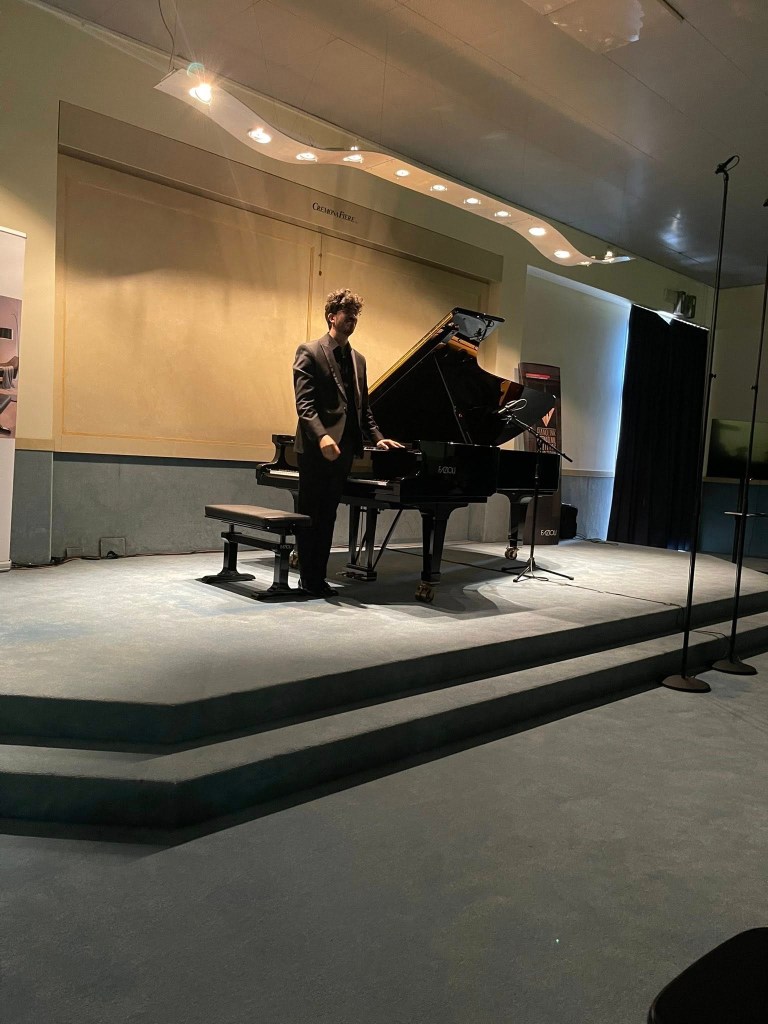
The Second Ballade with its gently whispered opening and tumultuous interruptions all played under an umbrella of a sound world that united the work into an architectural whole. Ruben always thinking up from the bass that gave a sumptuous richness to this extraordinary work. After a very passionately driven coda the gentle opening returns in a stroke of Genius as Chopin’s magical journey comes full circle.
The Preludes op 28 from 19 to 24 include some of the most beautiful ‘problems (to quote Fou Ts’ong) that Chopin ever penned. The beautifully mellifluous E flat ,one of the technically most difficult as the continual leaps should give the impression of the magic of an Aeolian Harp ( as op 25 n. 1 without the leaps!). Played with mastery where the difficulties just disappeared as the music was allowed to flow with such natural beauty and shape. Ruben brought a remarkable control to the mighty C minor Prelude used by Busoni and Rachmaninov as the theme of a series of variations. A sound world that Ruben created without any hardness as one phrase melted into the other, until was left only a barely whispered outline where even the final chord, marked ‘forte’ was more of inner than outer meaning.The twenty first prelude was played with fantasy with exquisite ornaments as this is an artist who listens to himself and plays with impeccable style .His octaves in the twenty second prelude sang in the left hand as they rarely are allowed to do .Just growing out of the previous prelude with a magical legato that belied their technical proficiency. The twenty third was ‘au bord d’une sourse’ of exquisite timeless beauty. The final prelude showed us Ruben’s quite unique sound world of sumptuous sounds without ever becoming hard or ungrateful as the temperature rose. There were breathtaking moments of passionate involvement and sublime beauty where Ruben’s love for the sound world of the piano shone through all he touched .A Midas touch indeed!
The three posthumous studies written for the treatise that Fétis was preparing, are three jewels where the problems of rhythmic juxtaposition and difference of touch are wrapped up in works of wondrous beauty. Chopin on his deathbed had asked Alkan to complete it. A rubato of an elasticity that passed unnoticed as Ruben cast a spell over us in a world where technical problems just did not exist. The opening of the D flat staccato and legato was of such refined elegance that ‘we could have danced all night’.
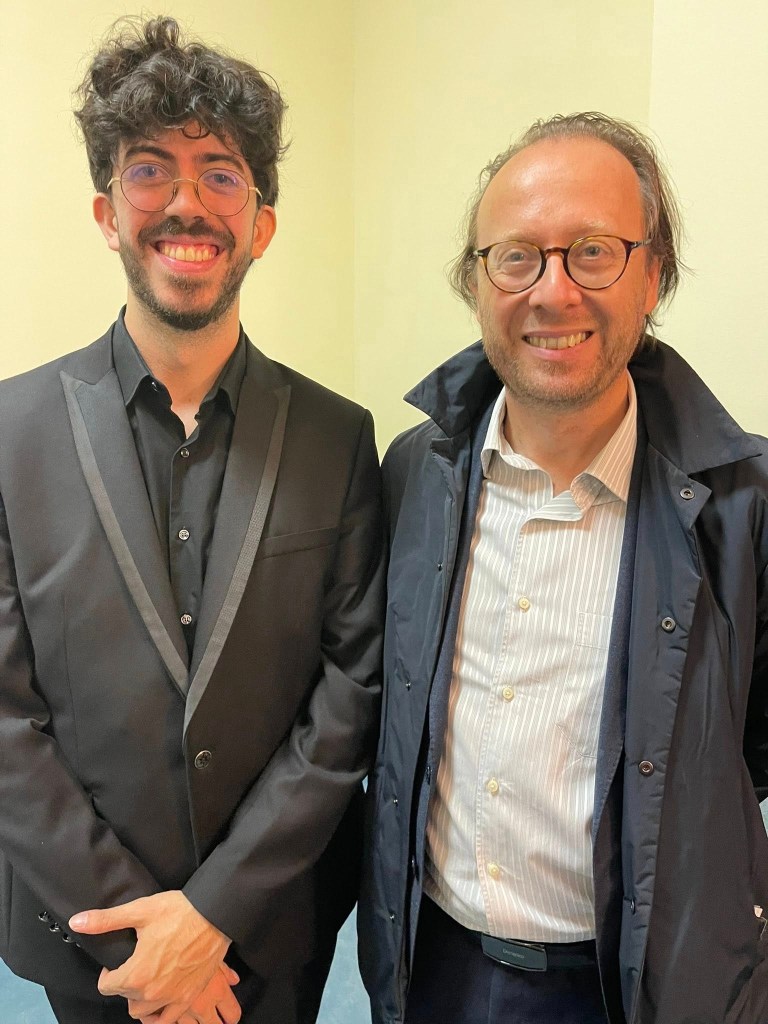
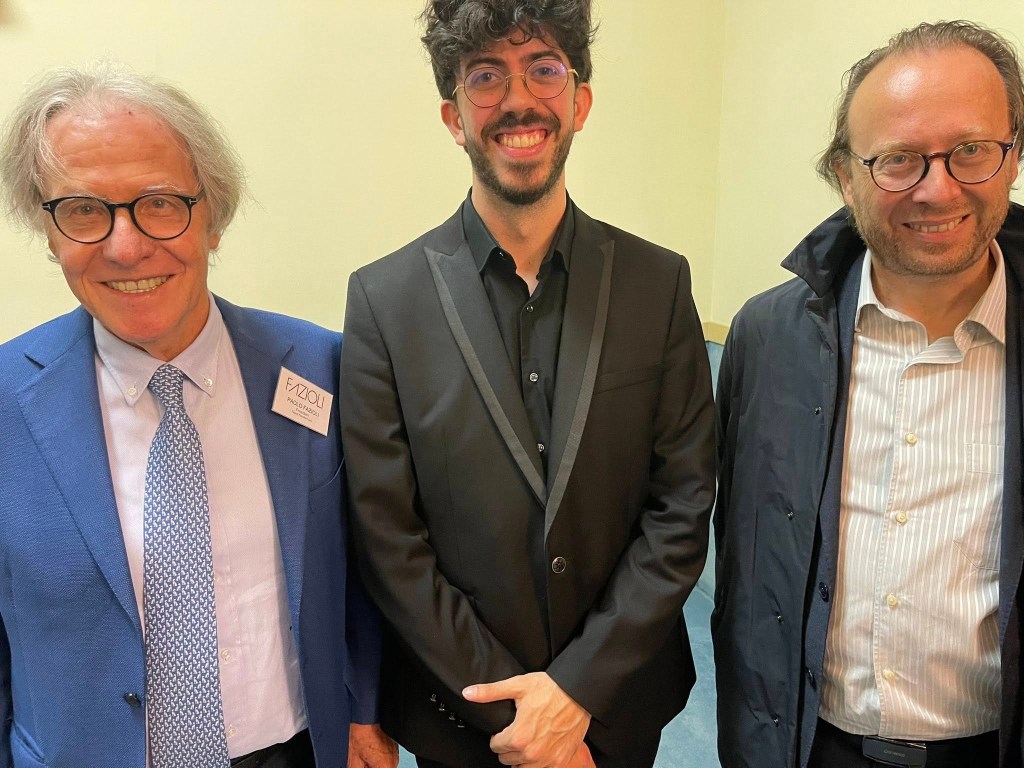
The third Scherzo began with mysterious menacing beauty opening out to a chorale where Ruben’s sense of line was quite unique . Magical embellishments just illuminated the sumptuous beauty of a chorale that was worthy of Chopin’s inspiration: J.S. Bach. Exhilaration and excitement but above all as I told Ing Fazioli :’ This young artist makes your piano sing as never before’ .
An encore of a Mazurka that was a true dance of subtle colour and beguiling insinuation. Roberto Prosseda looking proudly on, as they had worked on these works of Chopin together over the past year . I remember Fou Ts’ong whenever he heard that Robert was in his class was thrilled at the journey of discovery that they would share together.
https://christopheraxworthymusiccommentary.com/2024/03/20/christopher-axworthy-dip-ram-aram/
 ChristopherAxworthy-MusicCommentary