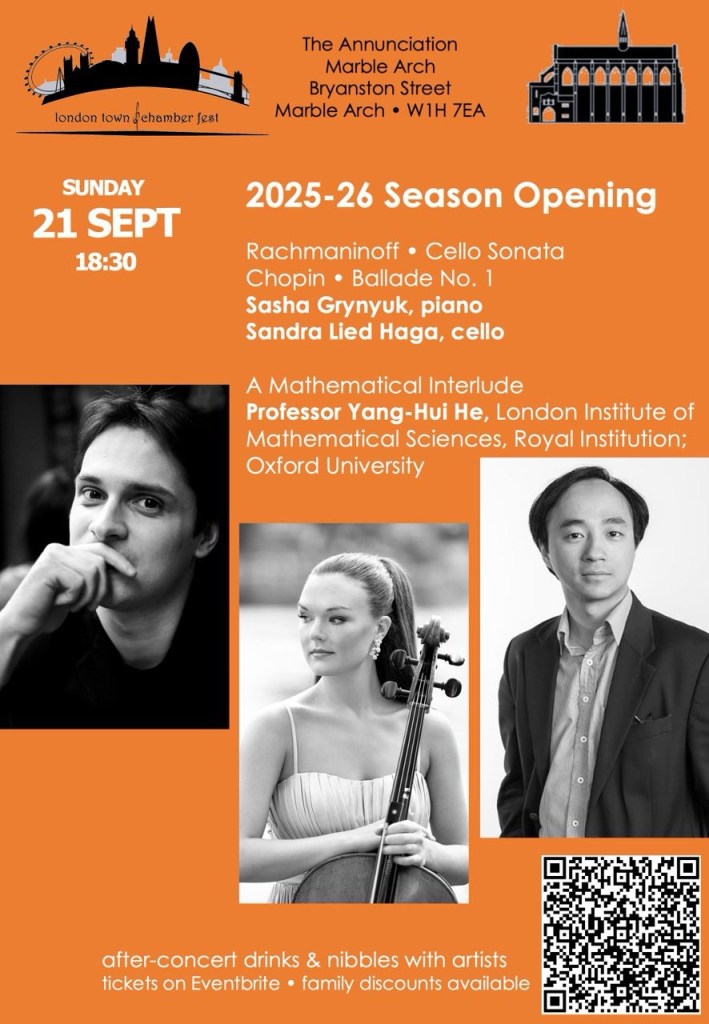
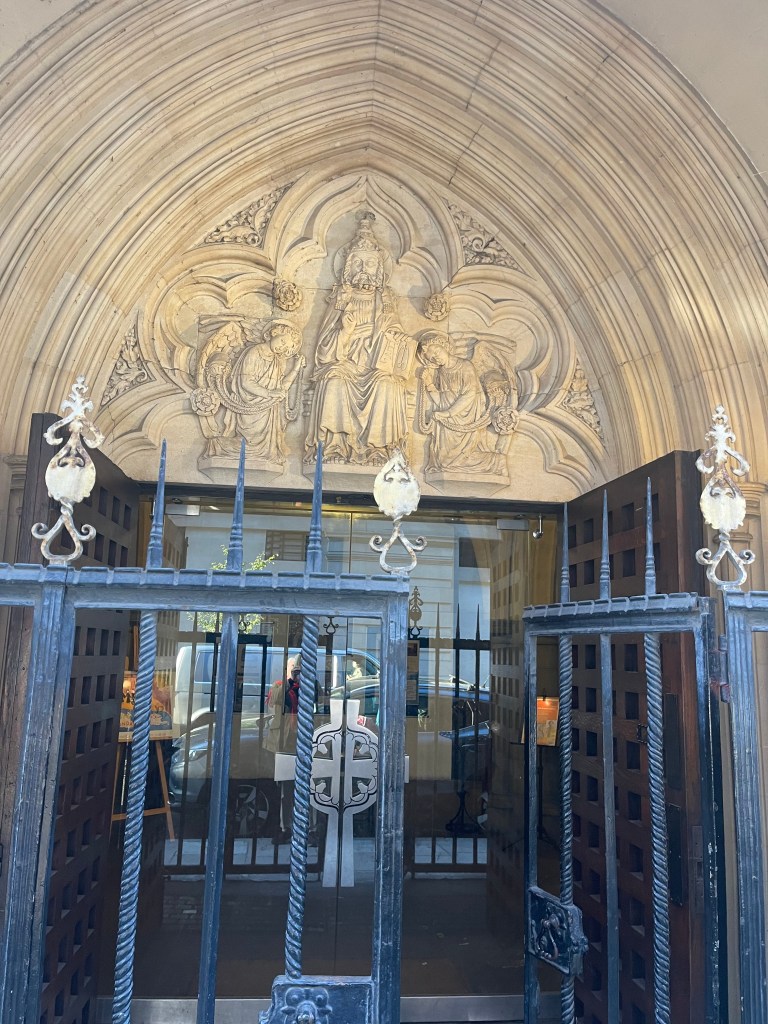
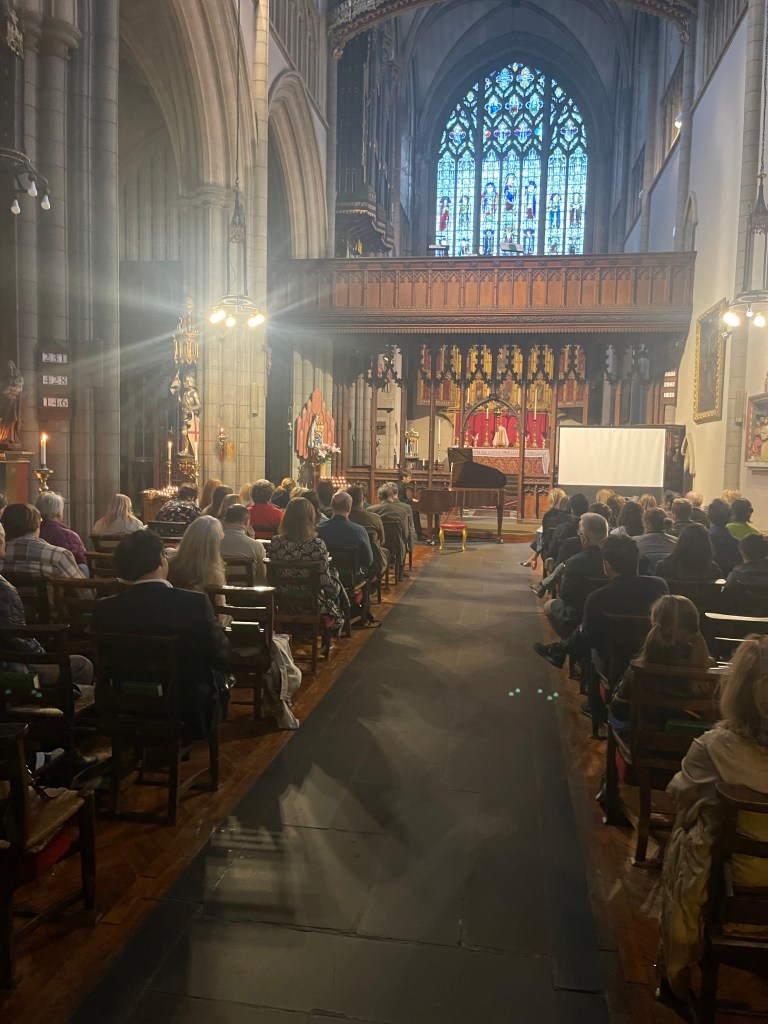
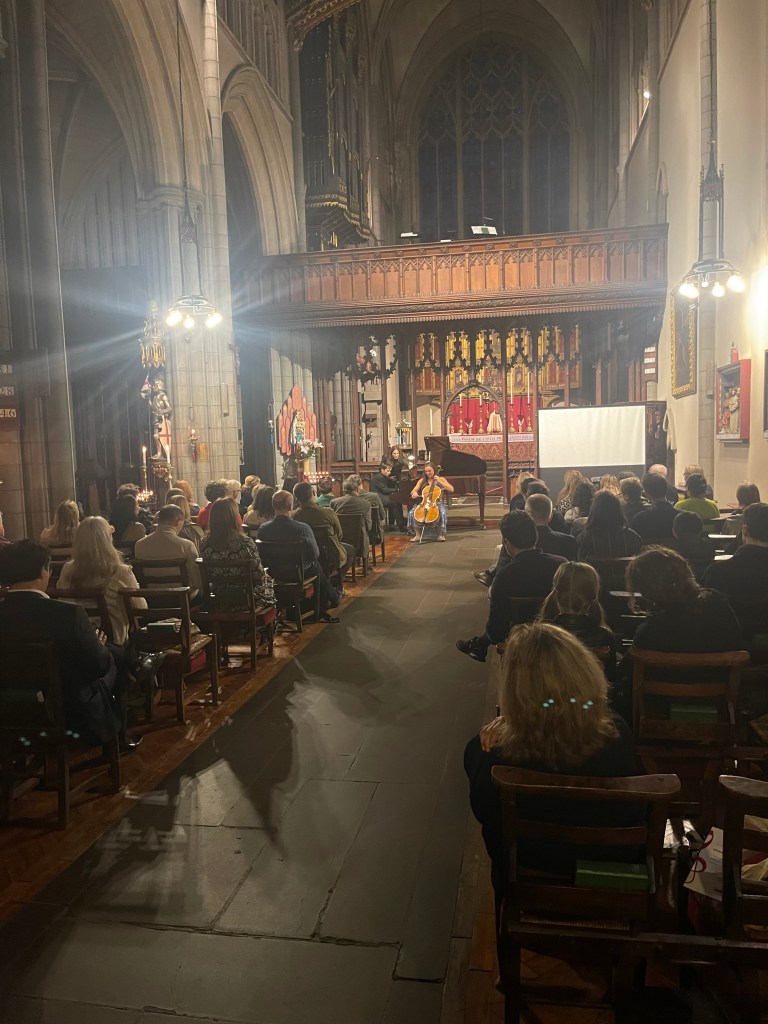
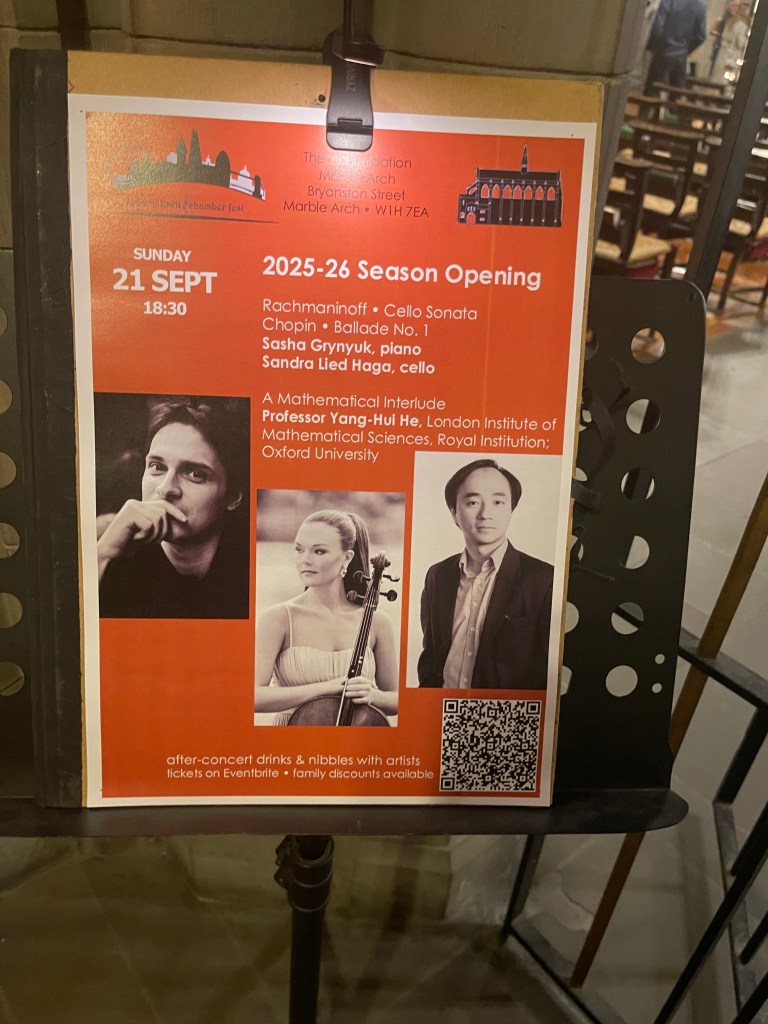
A refreshingly varied programme in this beautiful church just a stone’s throw from Marble Arch . A cavernous edifice with a remarkable acoustic that is particularly suited to chamber music ensembles. It is this that Sasha Grynyuk and his wife Katya Gorbatiouk have dedicated their concert series, elaborating the evening with distinguished speakers linking music to a much bigger world .
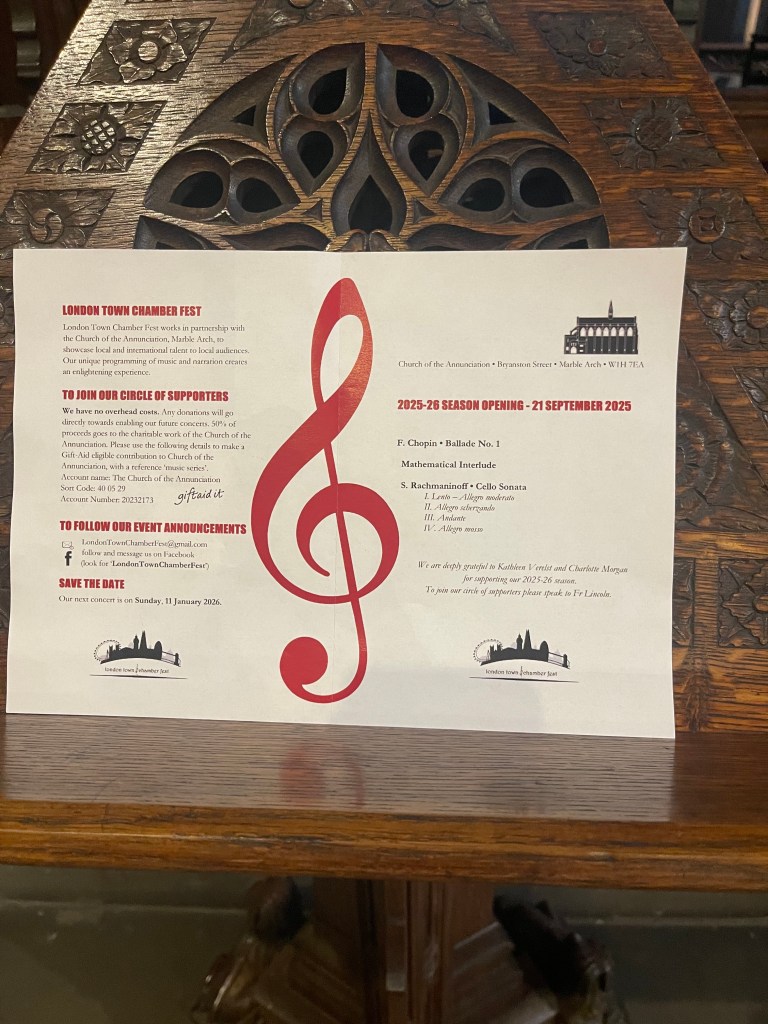
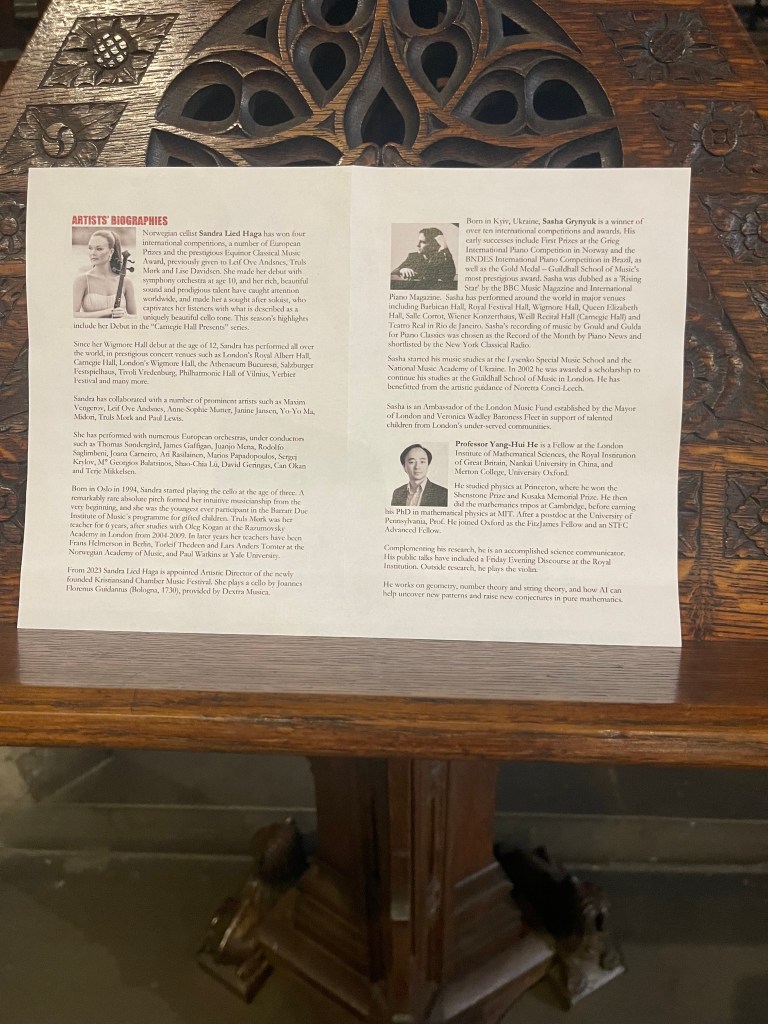
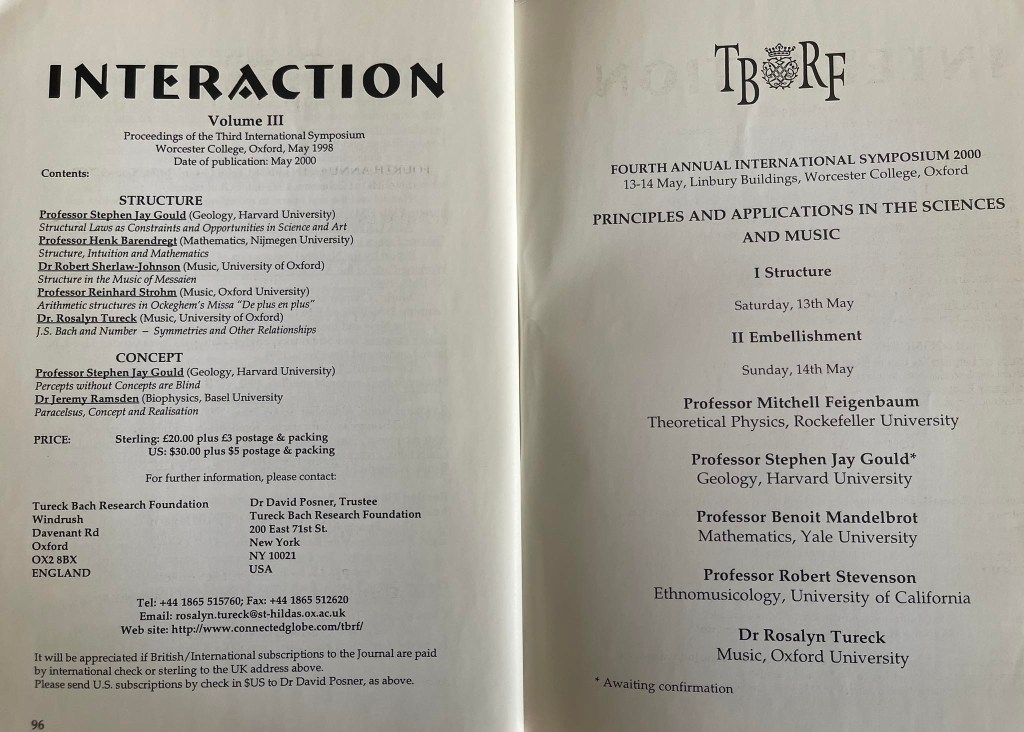
Just as Rosalyn Tureck used to do with her Bach Institute ‘Symposiums’ in Oxford, where scientists and mathematicians would share their knowledge with musicologists and instrumentalists with many sides to a prism that shone rays in so many different directions.
Today the star of the concert was Rachmaninov. Following a performance of Chopin’s First Ballade that Sasha Grynyuk recreated with delicacy and poetic understanding .
Chopin’s often much abused score, where the composers very precise instructions were interpreted by a real musician today and not just turned into a showpiece for traditional virtuosi for self gratification .
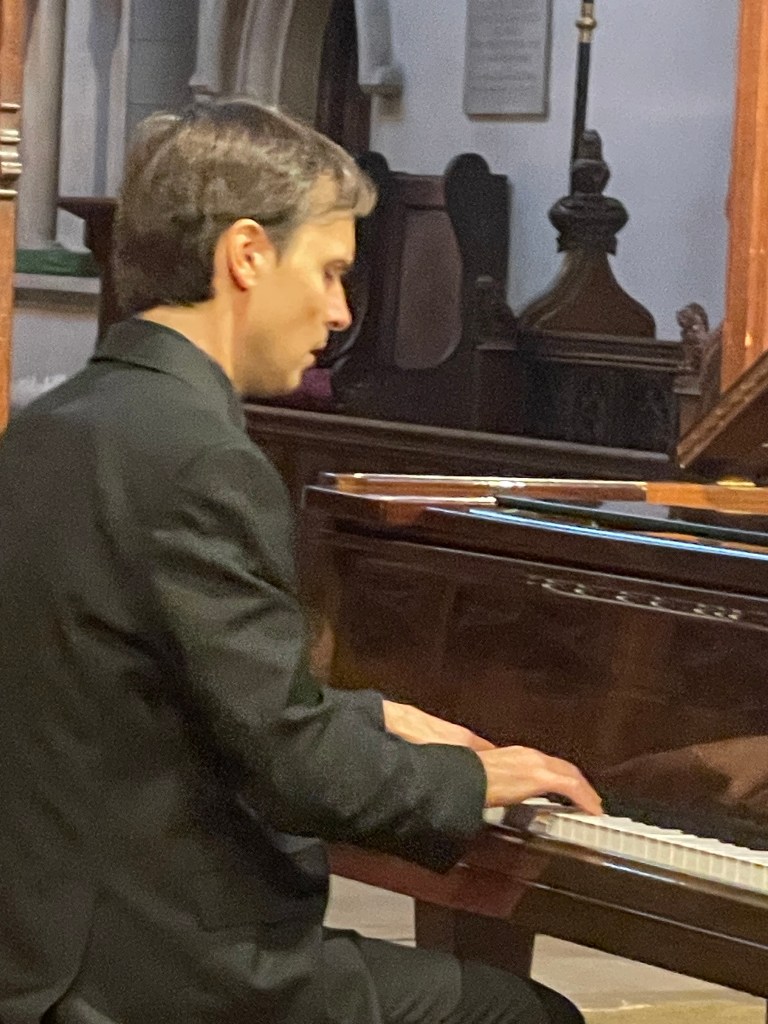
Sasha managed to play with a disarming simplicity keeping the music always moving forward on an architectural wave of undulating beauty . There were of course explosions of passion and brilliance but always under the roof of a vigilant musician.
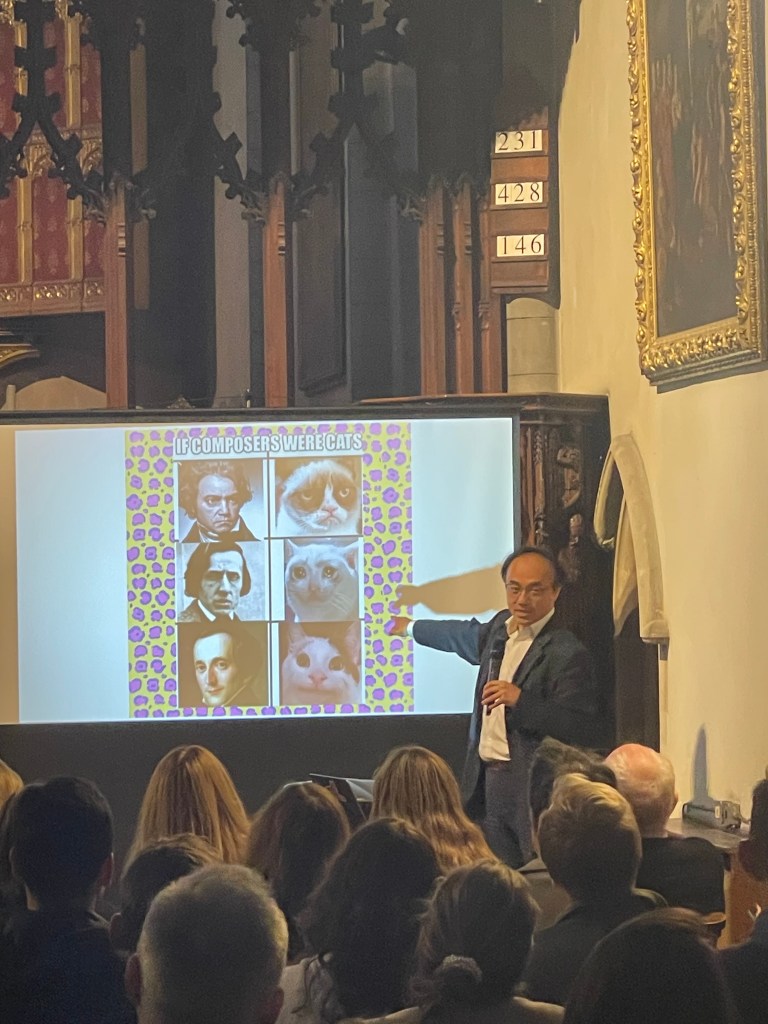
A short provocative and highly amusing talk by Professor Yang-Hui He, a distinguished mathematician from Princeton and Cambridge and now a fellow at Oxford .
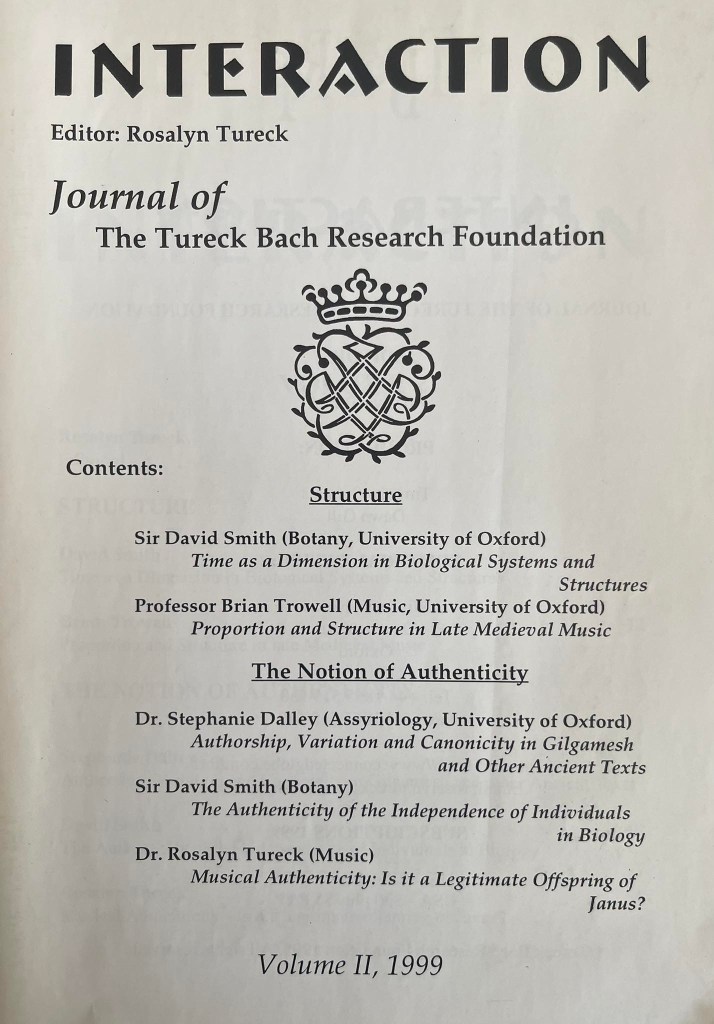
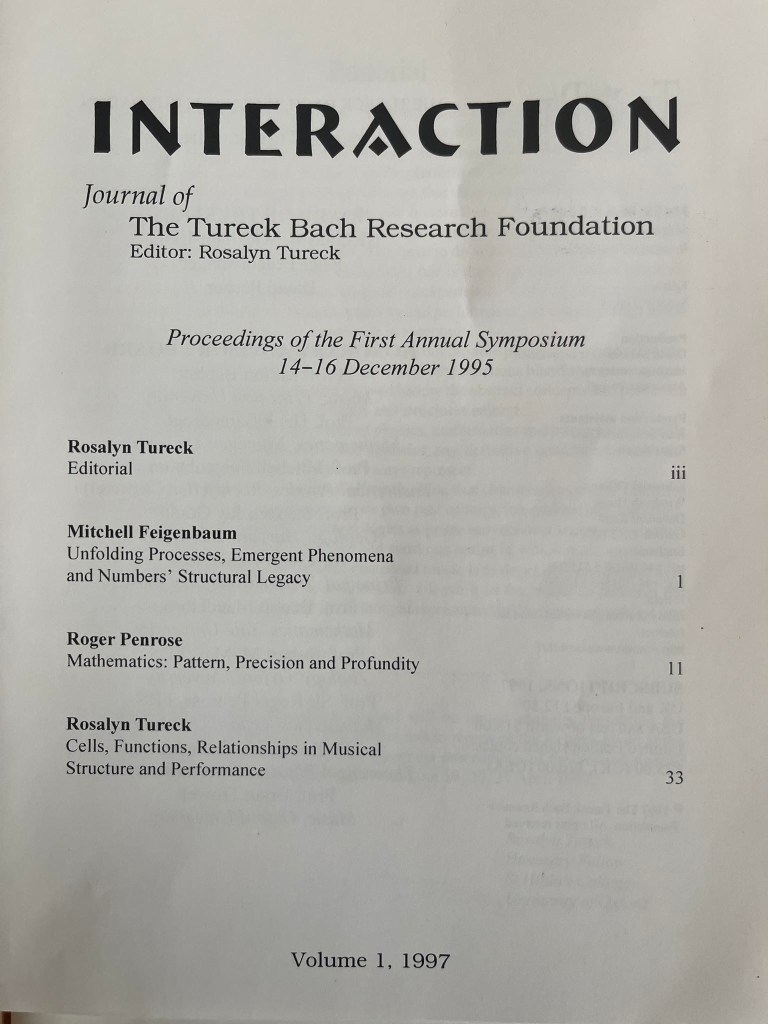
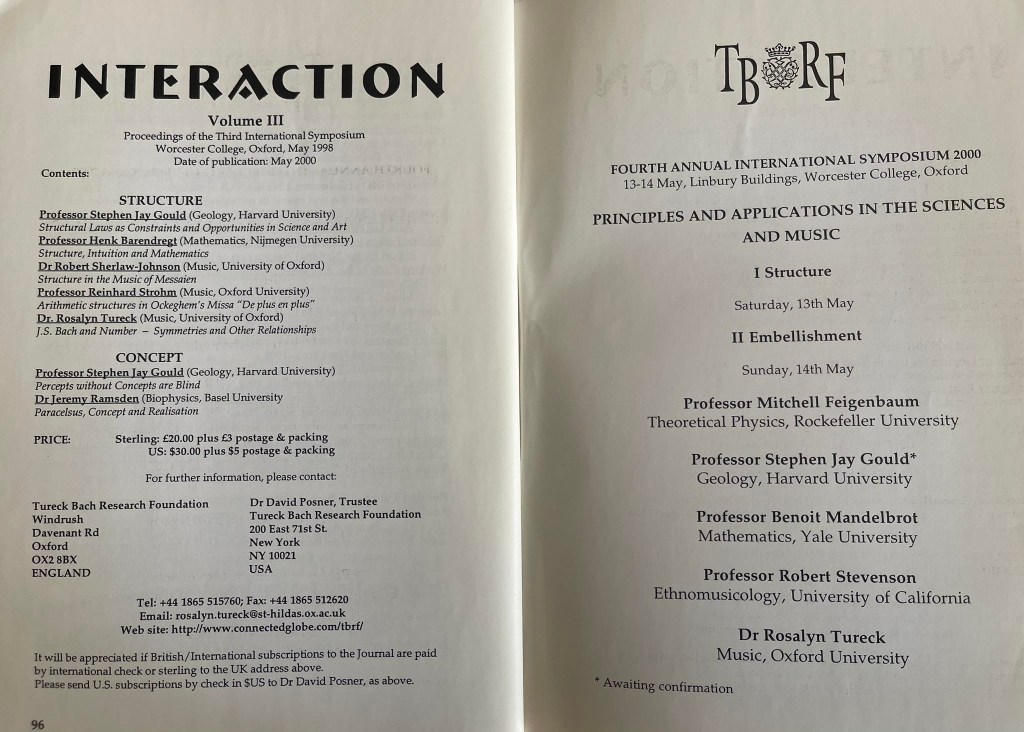
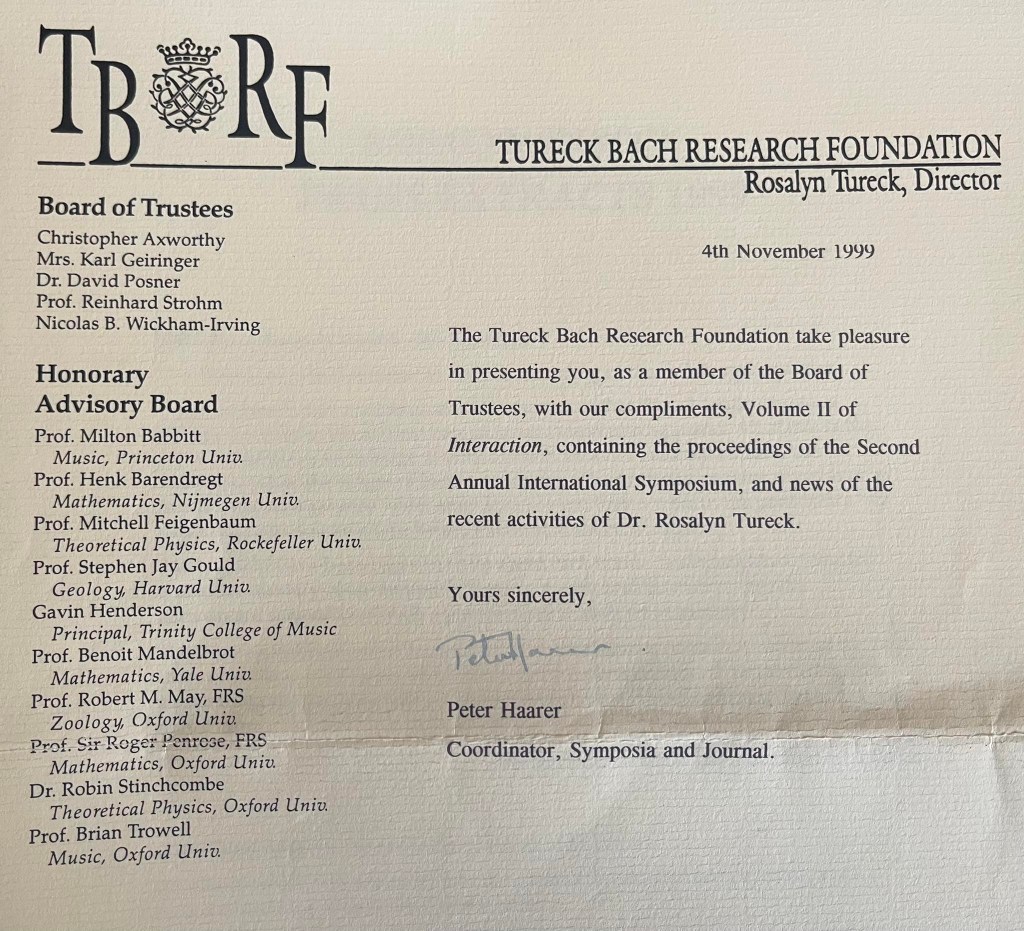
He often gives talks at the Royal Institution where Rosalyn had been very happy to talk about Bach and Mathematics and to enjoy the stimulus of an exchange of views amongst intelligent experts of their various fields.
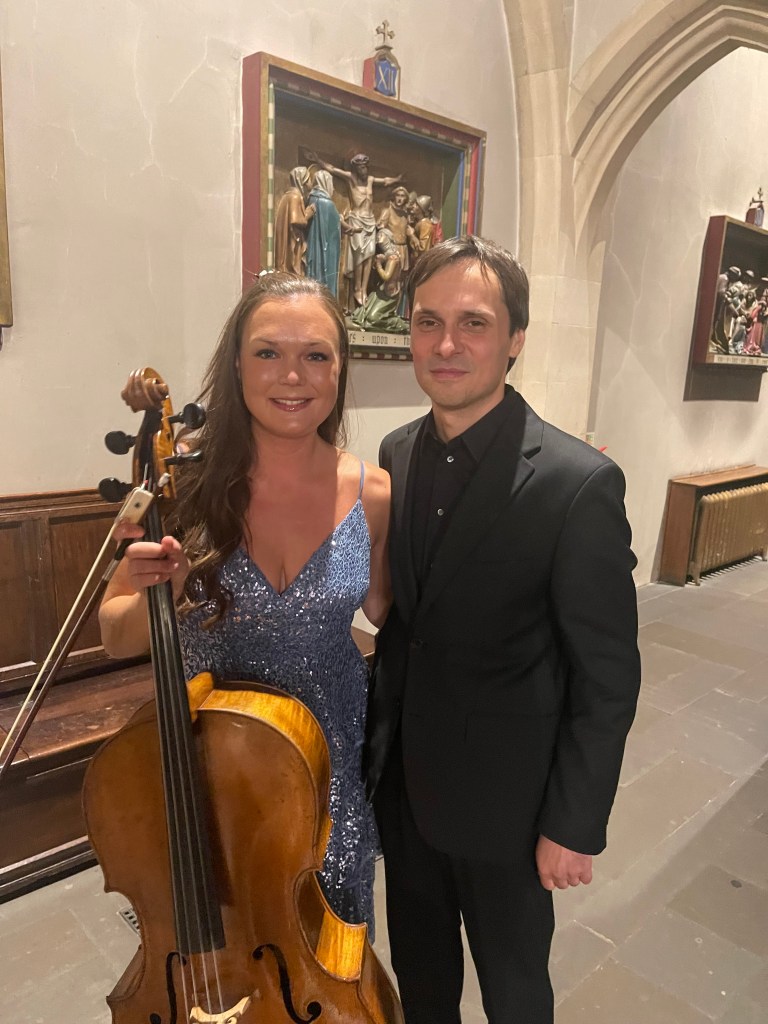
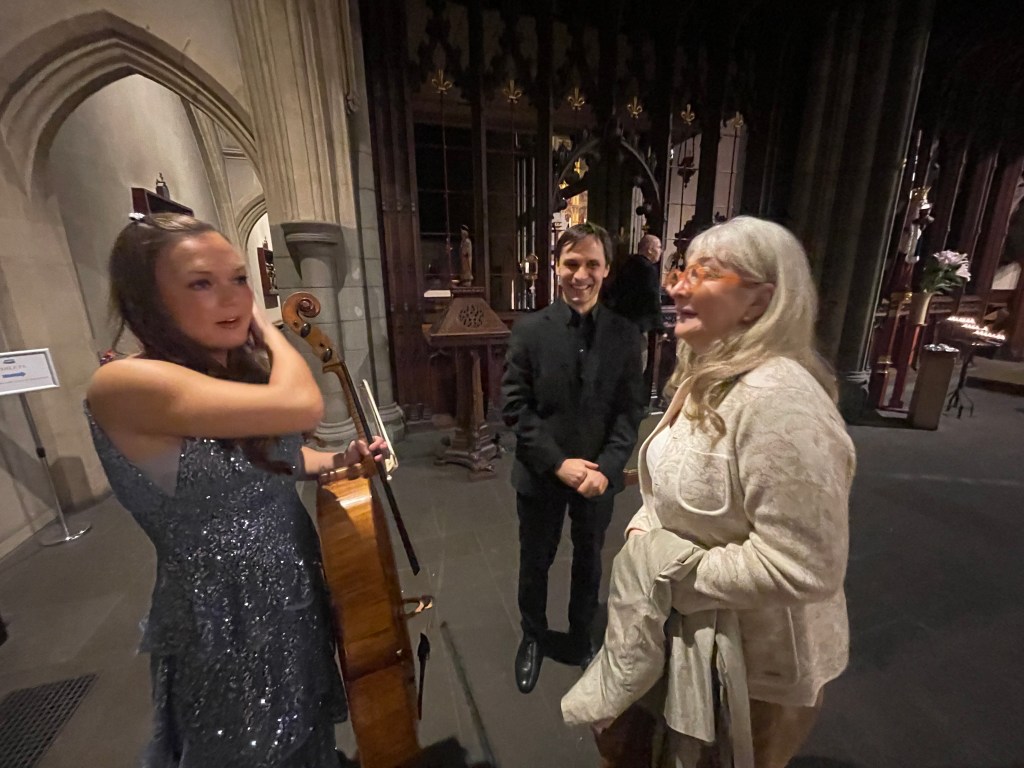
The main part of the evening was dedicated to the cello of Sandra Lied Haga and her wonderful 1730 Guidantus instrument ( Italian- Bologna) There is a growing tradition of wonderful Norwegian cellists appearing ever more regularly in concerts around the globe .
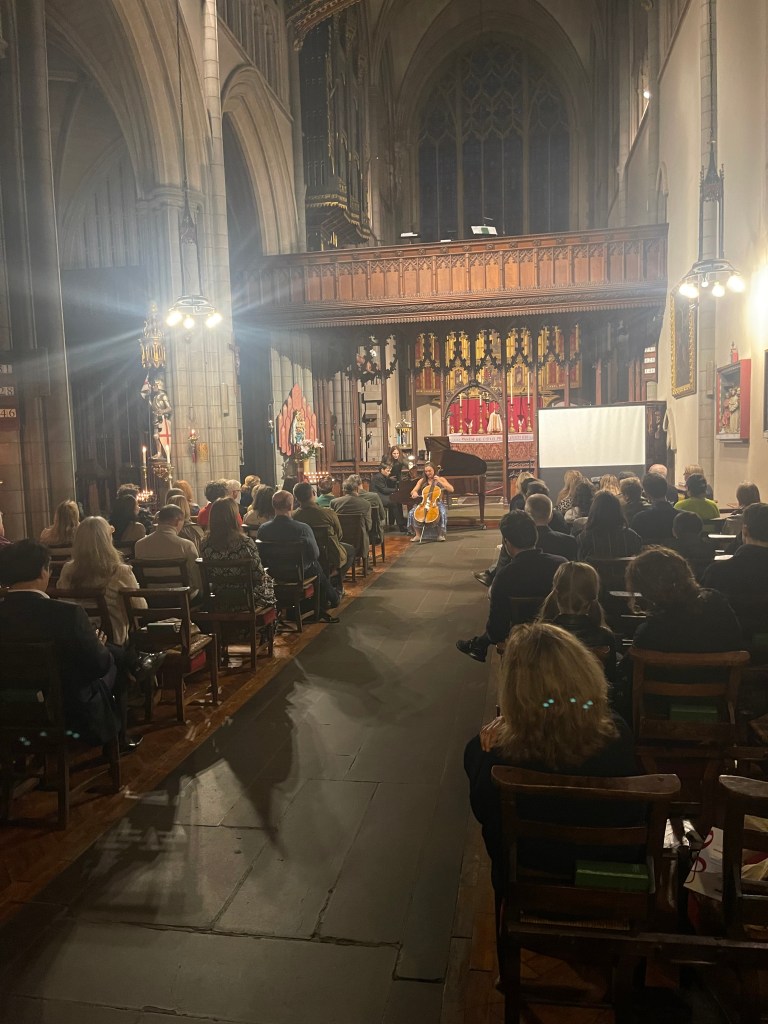
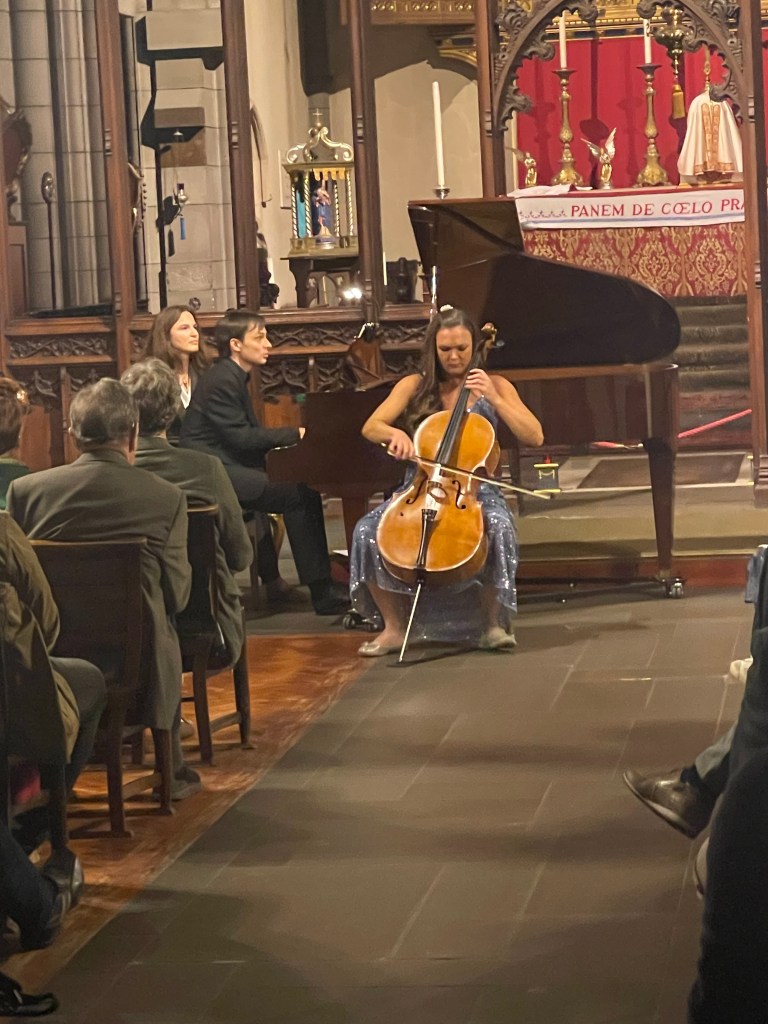
Sandra allowed this ravishing score to unite as one with Sasha, in a performance of beauty and passionate involvement . Listening to Sandra playing by heart, but also with heart, with an intelligence that could unite with Sasha’s committed playing . What a wonderful acoustic that belies the cavernous enormity of this church , as the sounds mingled together with sumptuous beauty and intimate vibrancy. It was Fou Ts’ong who told me he found it easier to play intimately in a big space than a smaller one . This was indeed a performance of intimacy and it made me think that this must surely be Rachmaninov’s finest work. It reminded me of Schubert in the way that intricate webs of sound would suddenly reveal so unexpectedly a mellifluous outpouring of beauty . Like a cloud suddenly passing and the radiance of the sun suddenly revealed . There was a burning intensity to their playing where the luminosity of the piano was matched by the sumptuous beauty of the cello . A duo of miraculous ‘mutual anticipation’, where we were on a wondrous voyage of discovery together and we,the public, were just as responsible for the destination as the musicians.
A Scherzo of menacing rhythmic drive where even here, like in Schubert, the composer has a song in his heart bursting to share.
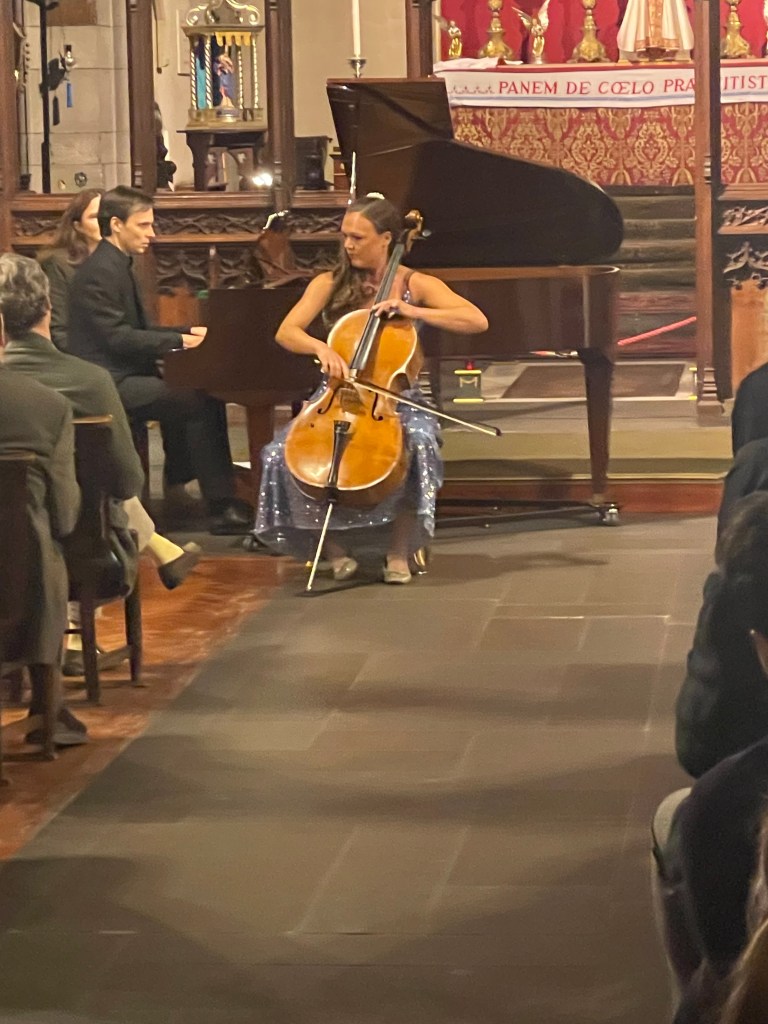
And of course the most wondrous song was to be revealed in the aching beauty of the ‘Andante’, as the cello and piano vibrated together with Rachmaninov’s heart full of wondrous beauty. After this the brilliance and excitement of the ‘Allegro mosso’ was a glorious release to such poignant emotions .
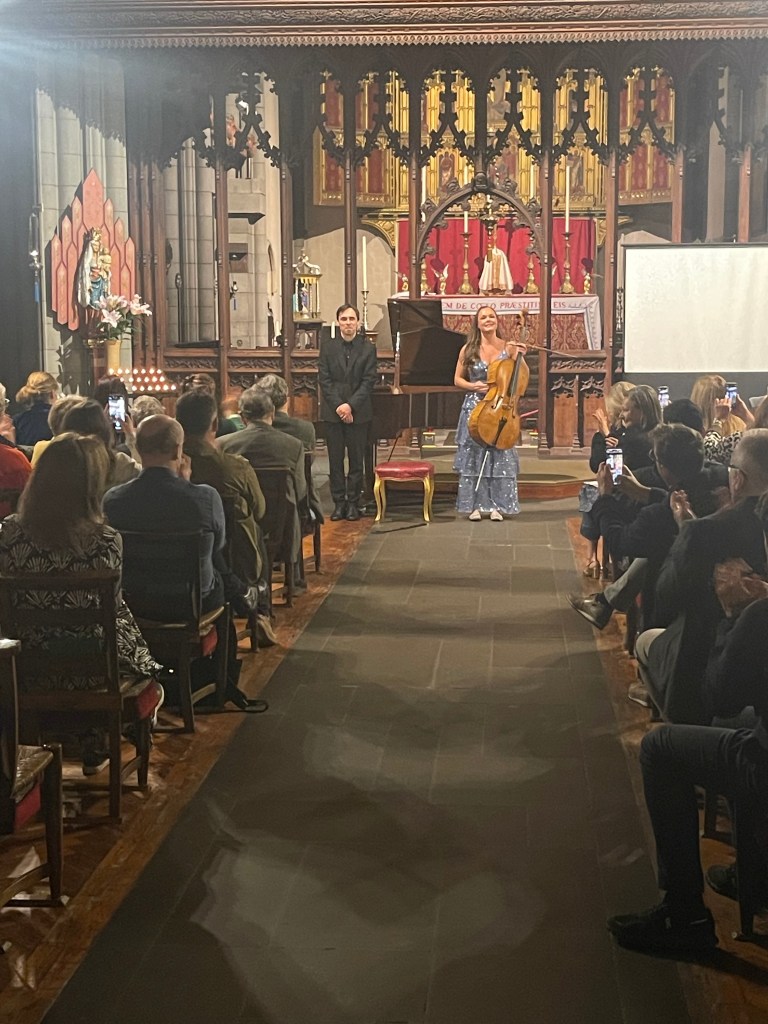
The ‘Vocalise’ op 34 , a wondrous song without words, was the only way that such emotions could be reconciled after their masterly performance by the same composer of the Sonata op 19 .
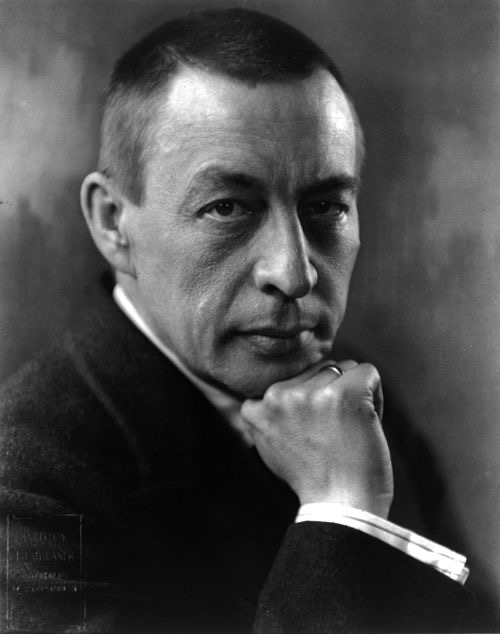
Born. 1 April 1873 Semyonovo, Staraya Russia Died 28 March 1943 (aged 69)
Beverley Hills California .U.S.
Sonata in G minor for Cello and Piano, op. 19 was completed in November 1901 and published a year later.
Rachmaninoff regarded the role of the piano as not just an accompaniment but equal to the cello. Most of the themes are introduced by the piano, while they are embellished and expanded in the cello’s part.
Rachmaninoff dedicated the work to Anatoliy Brandukov, who gave the first performance in Moscow with the composer at the piano, on 2 December 1901. Rachmaninoff seems to have made some last-minute alterations after the premiere, as he wrote the date “12 December 1901” on the score.
Vocalise” is a song by Rachmaninov , composed and published in 1915 as the last of his 14 Songs or 14 Romances, op. 34.] Written for high voice (soprano or tenor ) with piano accompaniment, it contains no words, but is sung using only one vowel of the singer’s choosing . It was dedicated to soprano singer Antonina Nexhdanova and is performed in various instrumental arrangements more frequently than in the original vocal version.
Although the original publication stipulates that the song may be sung by either soprano or tenor voice, it is usually performed by a soprano. Though the original composition is in the key signature of C-sharp minor, it is sometimes transposed into a variety of keys, allowing a performer to choose a vocal range more suitable to the natural voice, so that artists who may not have the higher vocal range of a soprano can perform the song.For solo instrument and piano.
Transcriptions abound but of course the ‘cello is the nearest to the heart strings ………
- for alto flute and piano, arranged by James Guthrie
- for clarinet and piano, arranged by Stanley Drucker
- for trumpet and piano, arranged by Romain Leleu
- for trombone and piano, arranged by Christian Lindberg
- for euphonium and piano, arranged by Steven Mead
- for violin and piano, arranged by Jascha Heifetz
- for violin and piano, arranged by Karl Gutheil
- for viola and piano, arranged by Leonard Davis, English viola player
- for viola and piano, arranged by Paul Silverthorne
- for cello and piano, arranged by Anatoliy Brandukov
- for cello and piano, arranged by Jascha Heifetz and Mstislav Rostropovich
- for cello and piano, arranged by Raphael Wallfisch
- for double bass and piano, arranged by Stuart Sankey
- for double bass and piano, arranged by Oscar G. Zimmerman (in D minor)
- for saxophone and piano, arranged by John Harle
- for horn and piano, transcribed by Himie Voxman
- for bassoon and piano, arranged by Leonard Sharrow (in C minor)
- for theremin and piano, arranged by Clara Rockmore
- for flute and piano, arranged by Robert Stallman
- for oboe and piano, arranged by Humbert Lucarelli
For solo instrument
for trumpet, arranged by Rolf Smedvig
for solo piano, many arrangements, including by Alexander Siloti, Alan Richardson (1951), Zoltán Kocsis, Earl Wild, Sergio Fiorentino
for organ, arranged by Cameron Carpenter
for double bass, arranged by Gary Karr
for saxophone, arranged by Larry Teal
for theremin, arranged by Thorwald Jørgensen[2]
https://christopheraxworthymusiccommentary.com/2024/03/20/christopher-axworthy-dip-ram-aram/
 ChristopherAxworthy-MusicCommentary