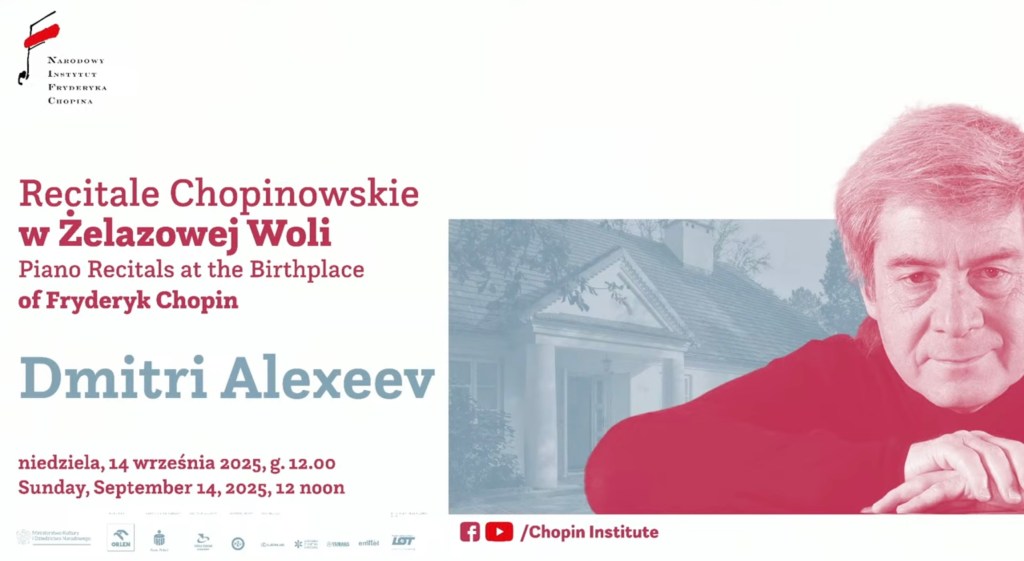
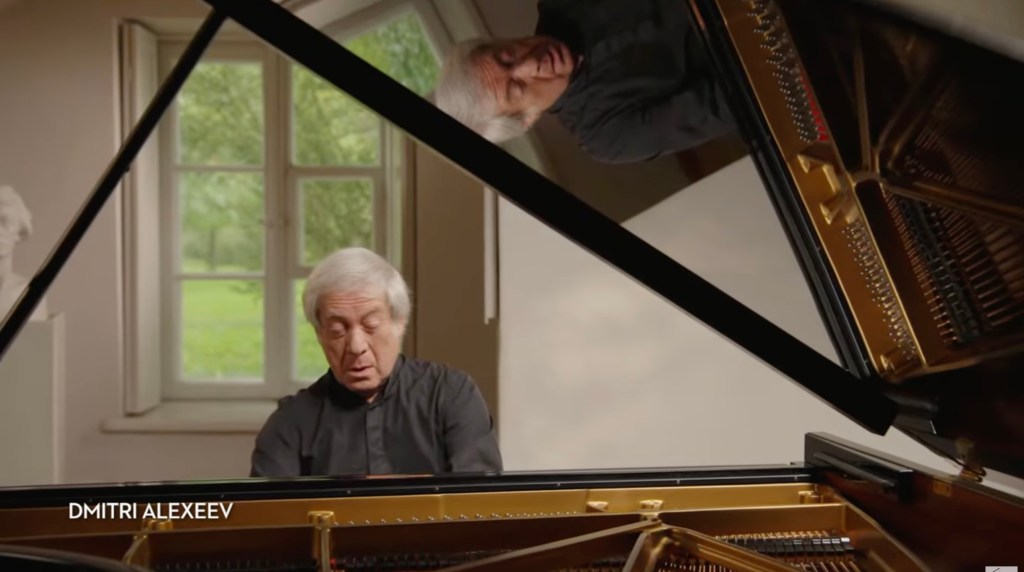
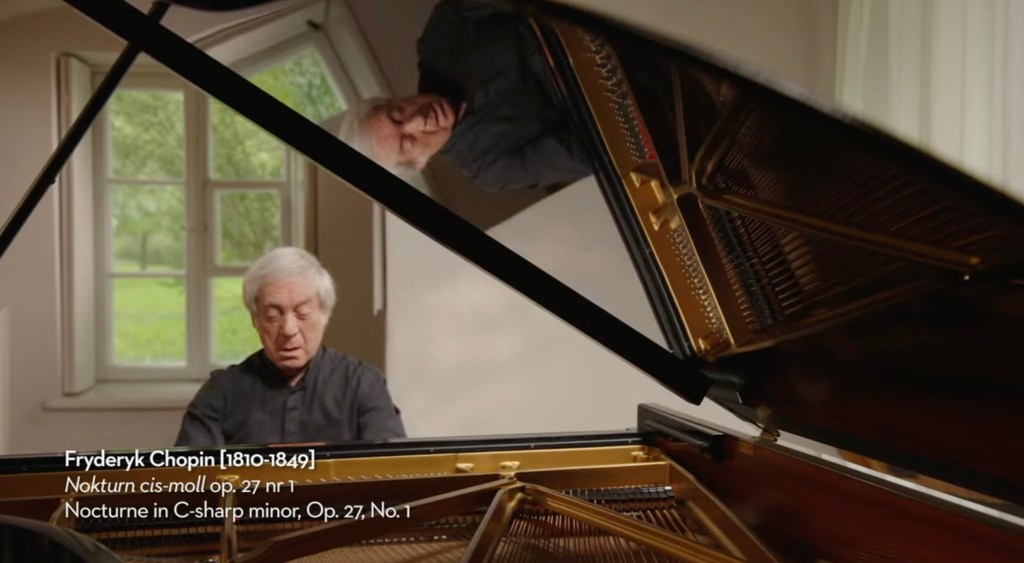
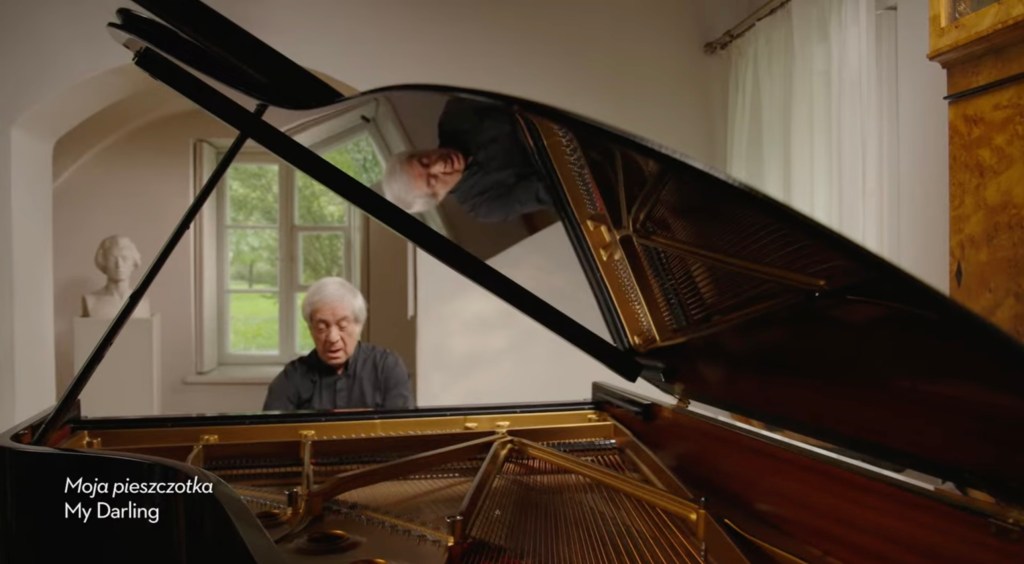
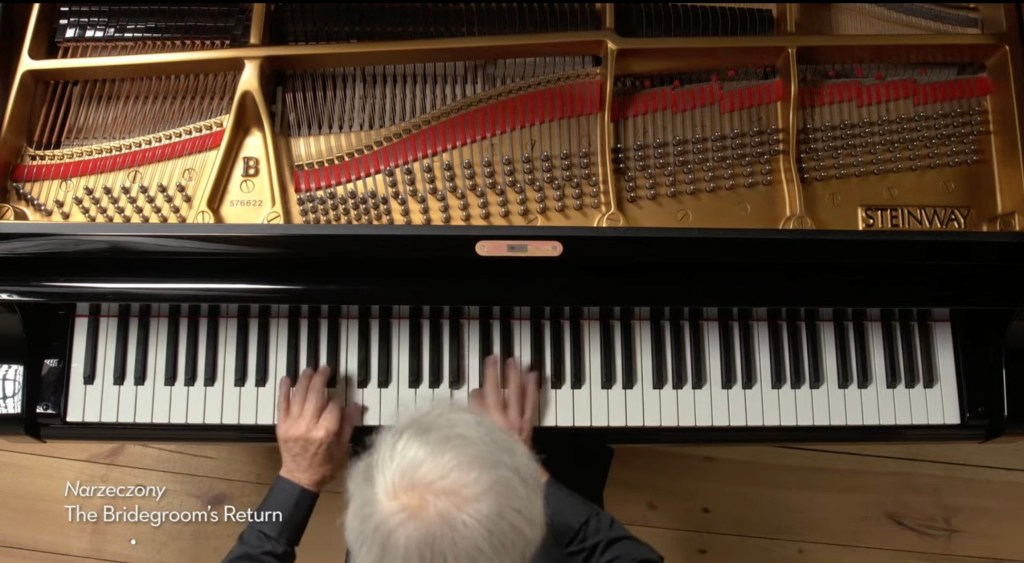
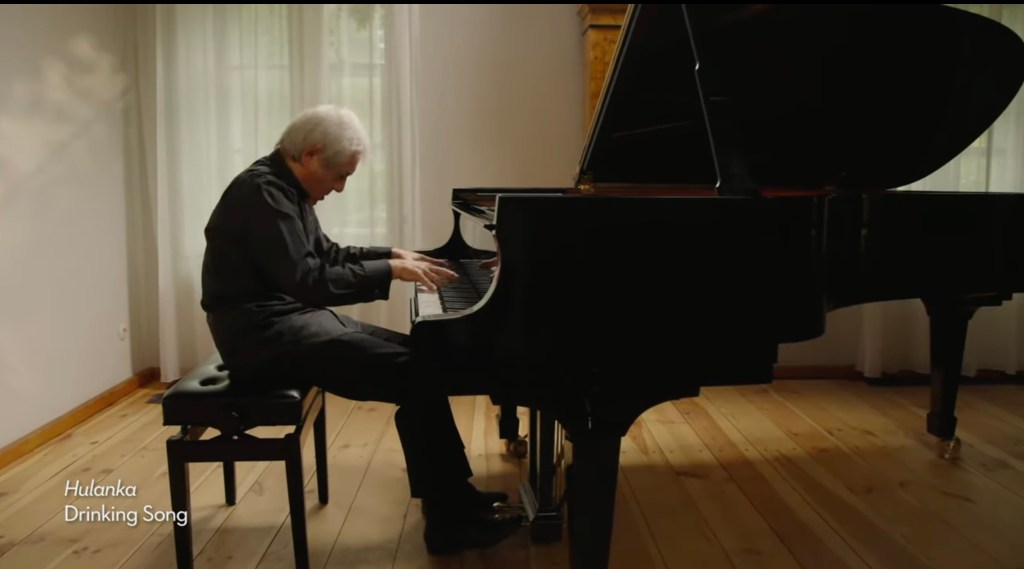
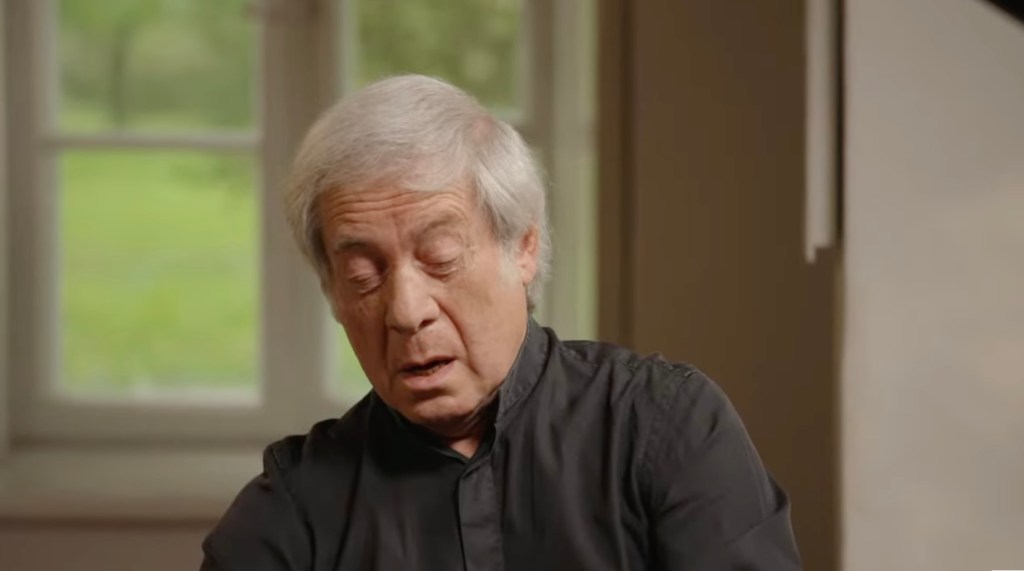
Watching Dmitri Alexeev playing in Chopin’s birthplace of Źelazowa Wola it is interesting to reflect on the lost art of Bel Canto. In these days leading up to the Chopin Competition in Warsaw next month, there is a line up of many of the finest young players trying out their programmes and refining their playing ready to go into the arena and fight it out like the gladiators in the Colosseum in Roman times. We bystanders are able to take advantage of this feast of music created by a young emigré who was forced to leave his homeland at the same age as many of these competitors. Chopin was to die at the age of 39,though, and was destined never to see his homeland again but his genius was able to create a new art form for a piano that now had a ‘soul’. It was Chopin with his innovative genius that could create an enormous number of masterpieces that just seemed to pour from his pen with such ease. It is significant that the last work from his pen was a Mazurka showing his deep Polish inheritance that was to fill everything he touched. Chopin was able to bring the art of Bel canto to the piano as no one before or since has been able to do with the same aristocratic beauty.
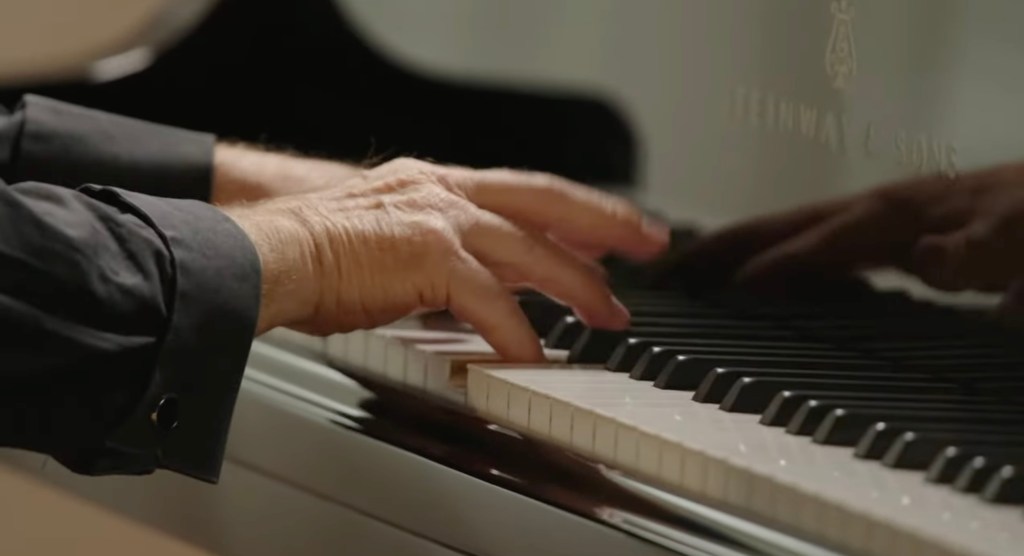
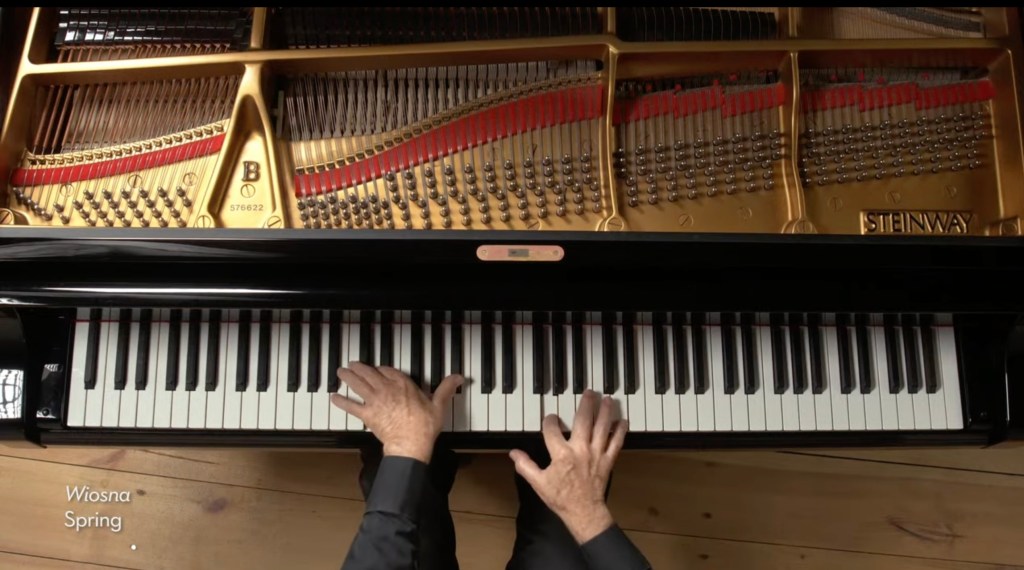
It is an art that can only be created by listening and creating a balance between the hands that can allow the melody to sing as Chopin himself described to his aristocratic lady pupils in Paris. His music is like a tree firmly planted in the ground but with branches free to move as nature would take them. Watching Alexeev and Argerich there is a very noticeable arch to their hand that is able to delve deeply into each key with a weight that can extract the sound without any hardness.Fingers like limpets that seem to be sucked into each key and as Agosti used to say with fingers of steel but with a wrist of rubber.
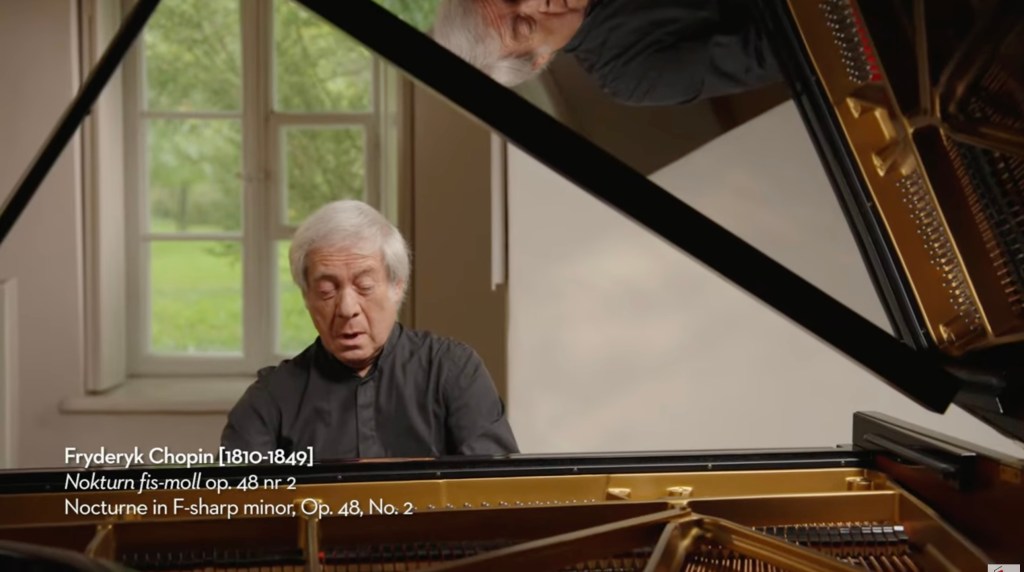
Both Alexeev and Argerich in their Indian summers have reached twice the age of Chopin and have discovered the secret of the true art of Bel Canto. A programme today of short pieces by Chopin, never rising above mezzo forte, but Alexeev extracting more meaning from every note than all the enormous forces together of the Berlin Philharmonic with Bruckner! Every note had a life of its own as like a singer there were inflections of poignant meaning that made the music talk – a true song without words. But music can speak louder than words because it is a language that is universal and goes straight from the heart to the heart. I remember Fou Ts’ong telling me of the surprise in Warsaw when he won the much coveted Mazurka prize in one of the first editions of the Chopin competition after the war.A Chinese pianist !! https://christopheraxworthymusiccommentary.com/2021/01/13/roberto-prosseda-pays-tribute-to-the-genius-of-chopin-and-the-inspirational-figure-of-fou-tsong/
As he explained the ‘soul’ knows no frontiers or confines and the sentiment in Chinese poetry is the same that is found in the works of Chopin. Ts’ong’s father was an expert in Chinese literature and paid dearly for his intellect in Mao’s Cultural Revolution.
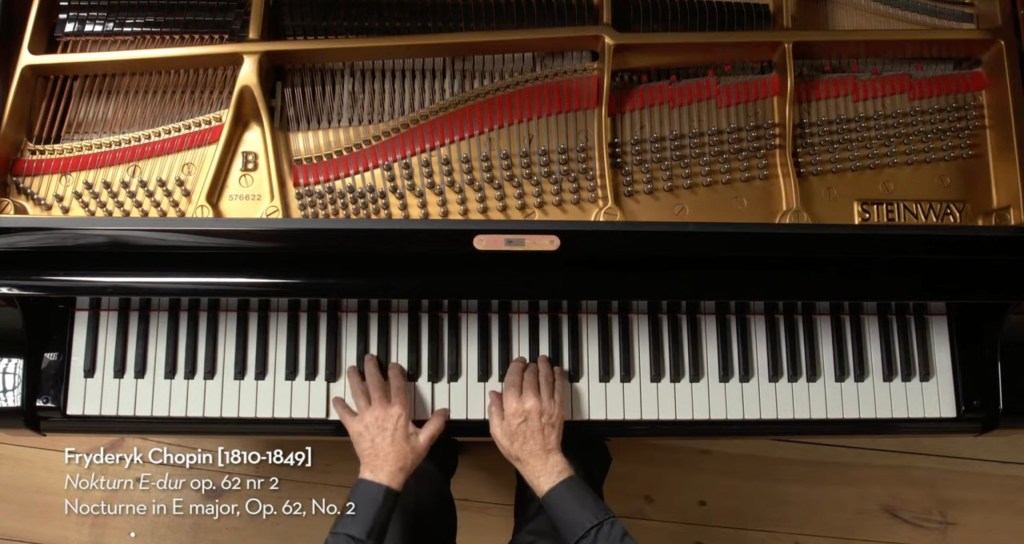
Alexeev chose a very special programme today ( luckily leaving out the Polonaise Fantaisie which must be the most played piece of Chopin these day ). We were able to be deeply touched by three of Chopin’s most beautiful Nocturnes .
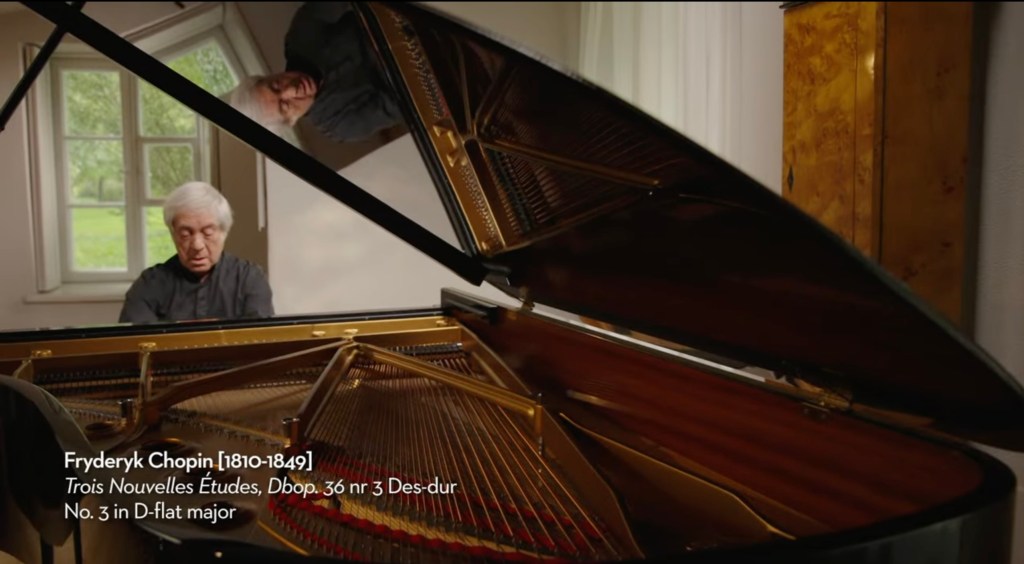
The three posthumous studies that show the art of playing with the juxtaposition of rhythm and touch not speed and force. Chopin wrote these three extra studies, after his 24 op 10 and 25, for a proposed treatise on piano technique by Fétis that Chopin bequeathed to Alkan, a pianist he admired above all others, to finish for him.
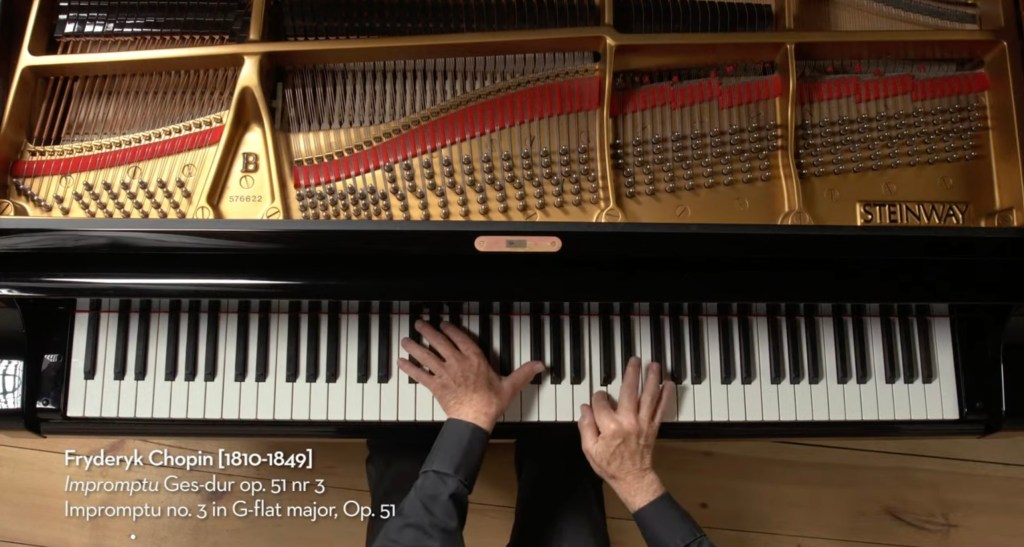
Alexeev even included the most beautiful of the four Impromptus – an outpouring of bel canto of aristocratic insinuating beauty.
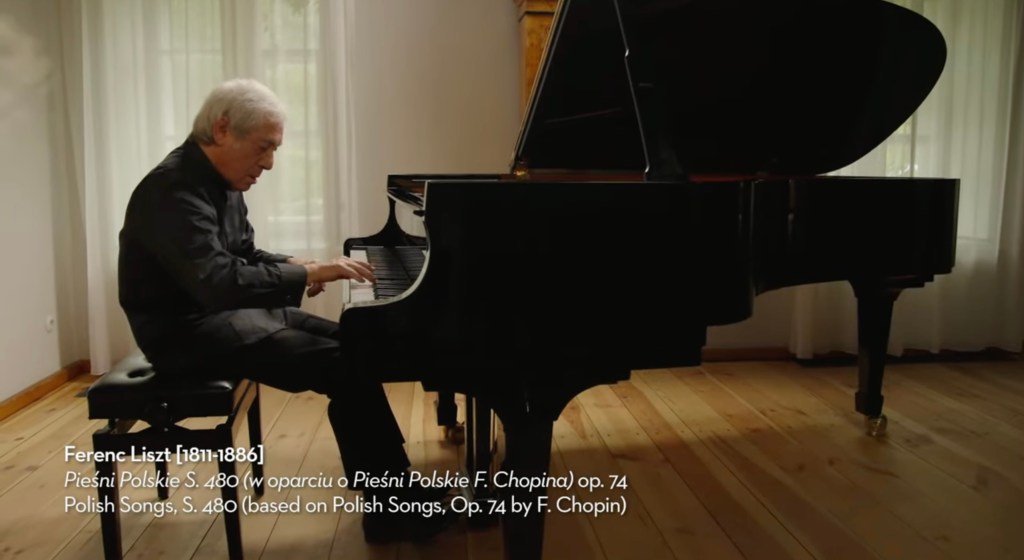
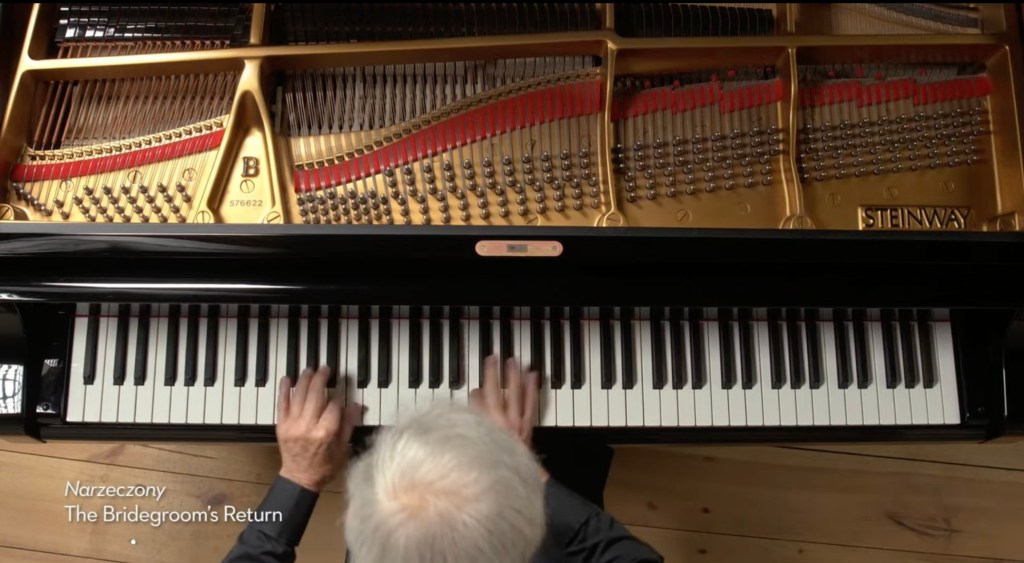
And I am sure it was not by coincidence that he included Chopin songs in the masterly arrangement of Liszt .Not Liszt the showman but Liszt the innovative poet who could extract the subtle beauty from these much neglected songs and bring them back to the piano which was were the soul of Chopin had always lain.
 ChristopherAxworthy-MusicCommentary