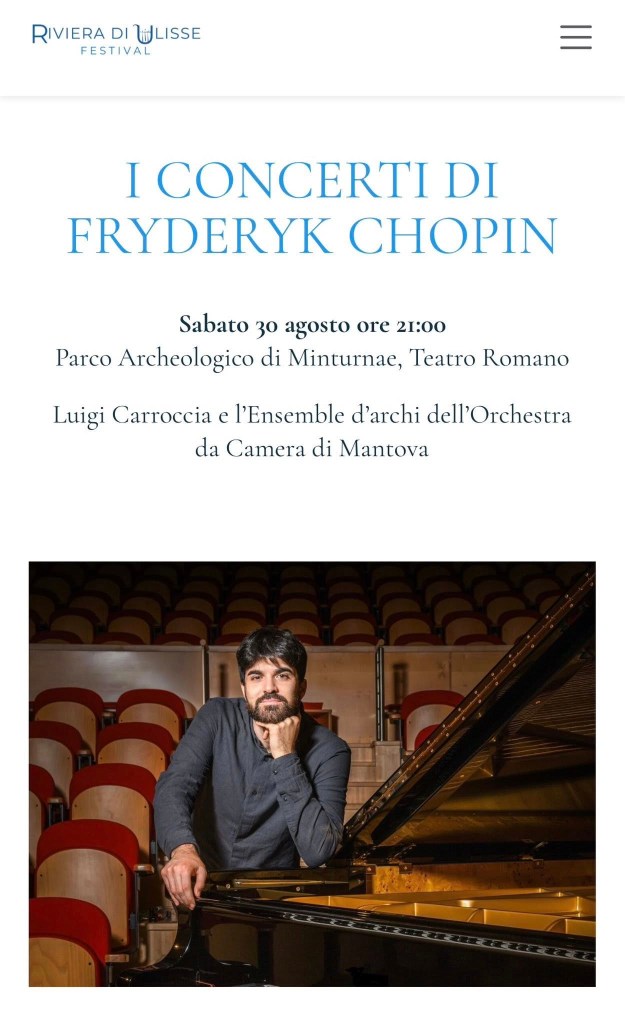
Luigi Caroccia flying high on wings of song.
The art of Chopin’s bel canto seduces the senses in the Riviera di Ulisse
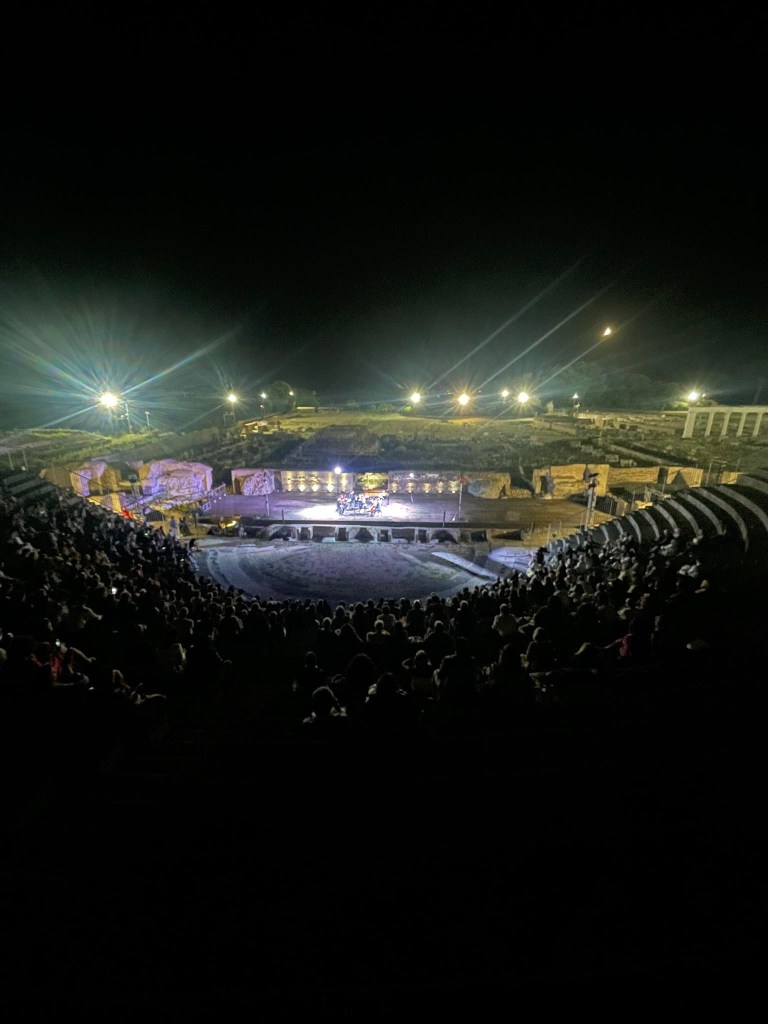
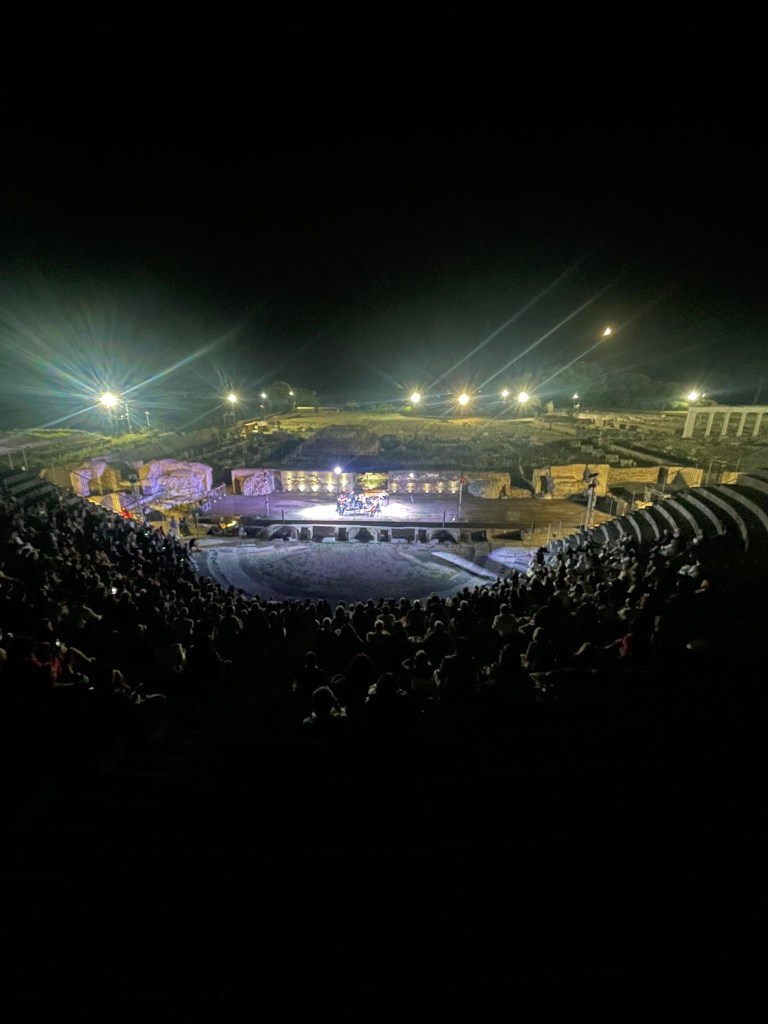
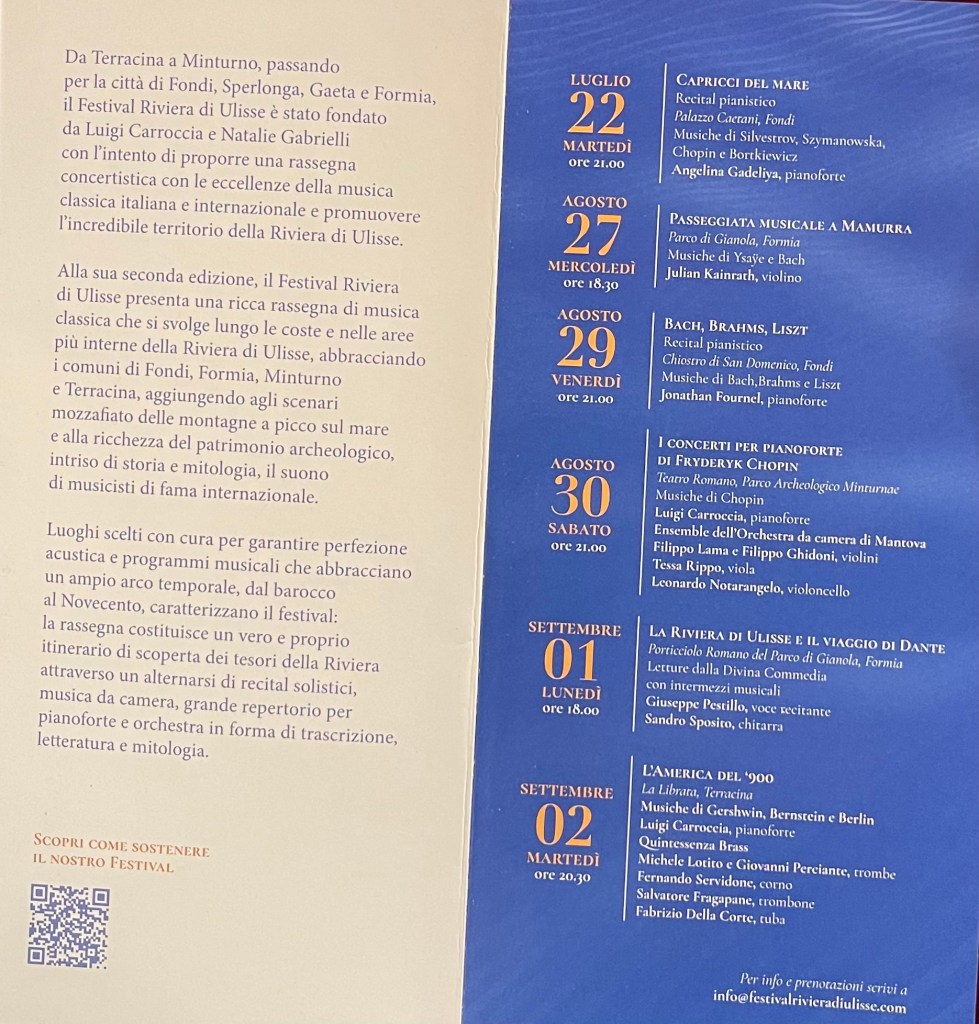
The two Chopin concerto’s ignite the perfumed air in the Teatro Romano of Minturno as the ravishing melodic invention of the young Chopin was allowed to unfold on the golden web with which they were born.
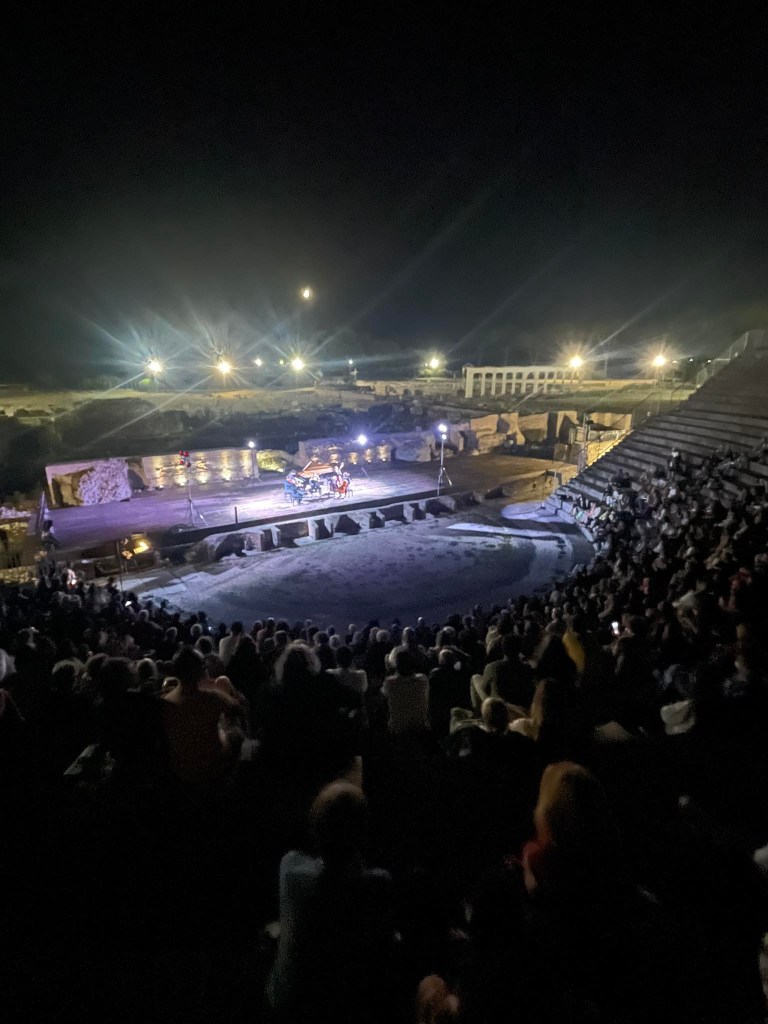
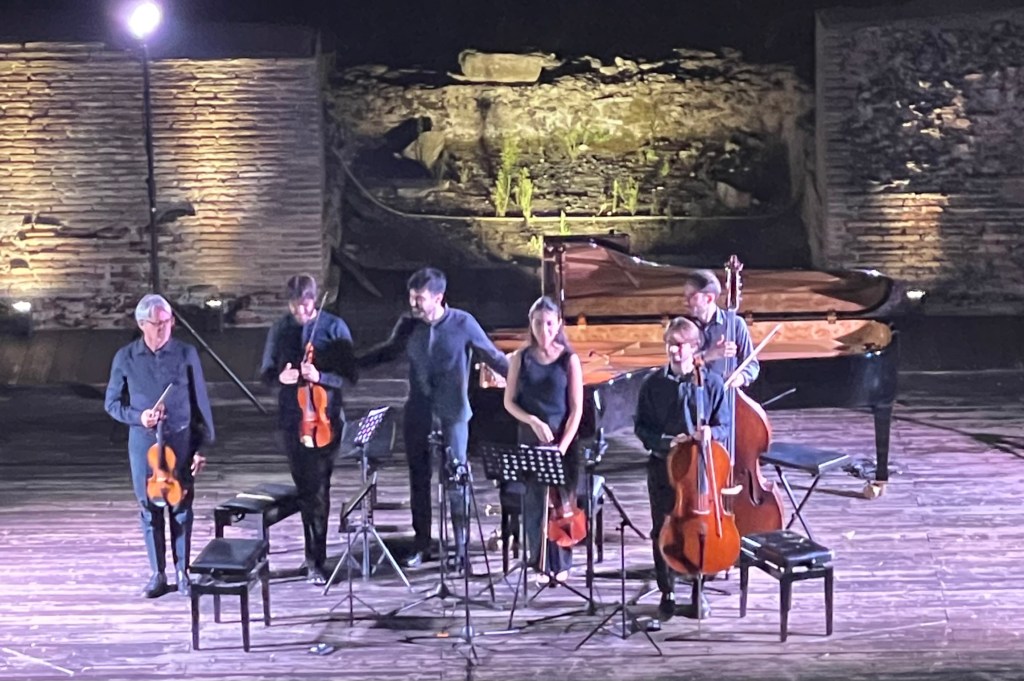
Players from the orchestra da camera di Mantova were ready to join this wondrous voyage of discovery, as the jewel like sounds of the chiselled beauty that Luigi sculptured with his refined fingers wafted over the centuries of history that surrounded us.
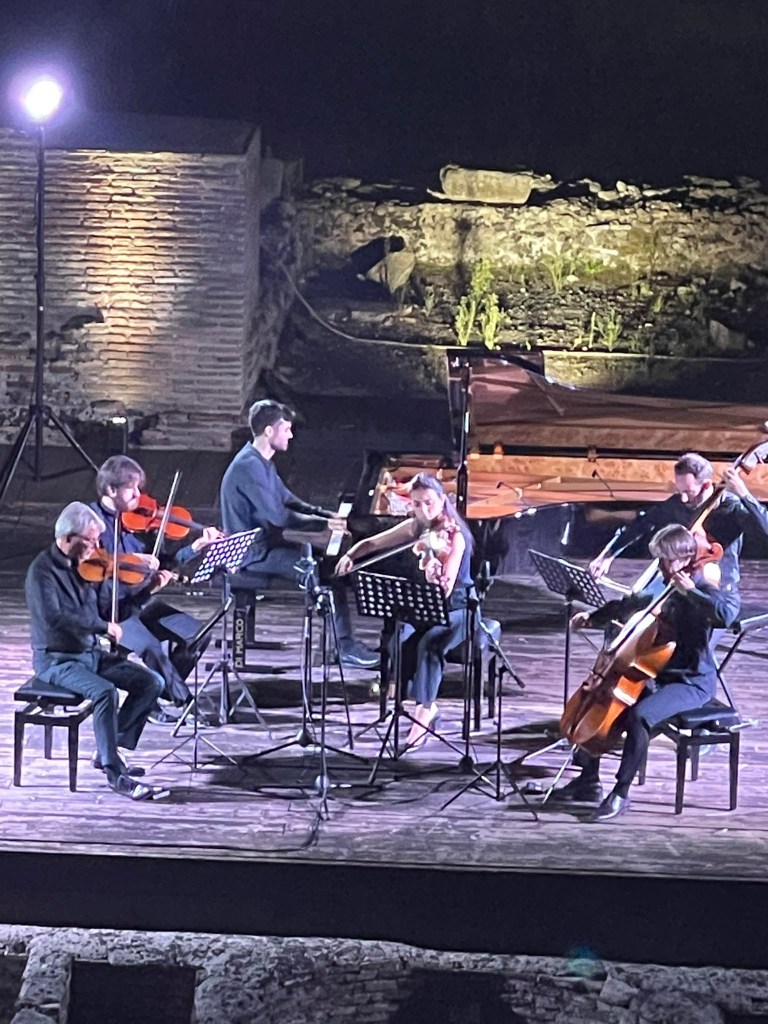
Players from one of the finest chamber orchestras in Europe were : Filippo Lama and Filippo Ghidoni ,violin; Tessa Rippo,viola; Leonardo Notarangelo,’cello; Alessandro Schillaci,double bass. I have heard the Chopin Concerti several times with a chamber ensemble of string quartet but this is the first time with a quintet. The double bass gave a depth of sound that gives so much more strength to the ‘tutti’s’ where one can easily miss the full climactic moments of the piano continued into the orchestral tutti’s. It was the superb viola of Tessa Rippo who could even imitate Chopin’s horn call in the second concerto and the sumptuous beauty of the first violin of Filippo Lama that could give such full radiance alone. The ‘cello and second violin too filling the textures with chamber music subtlety but there were one or two strange non legato phrasings where we missed the weight of the orchestra.
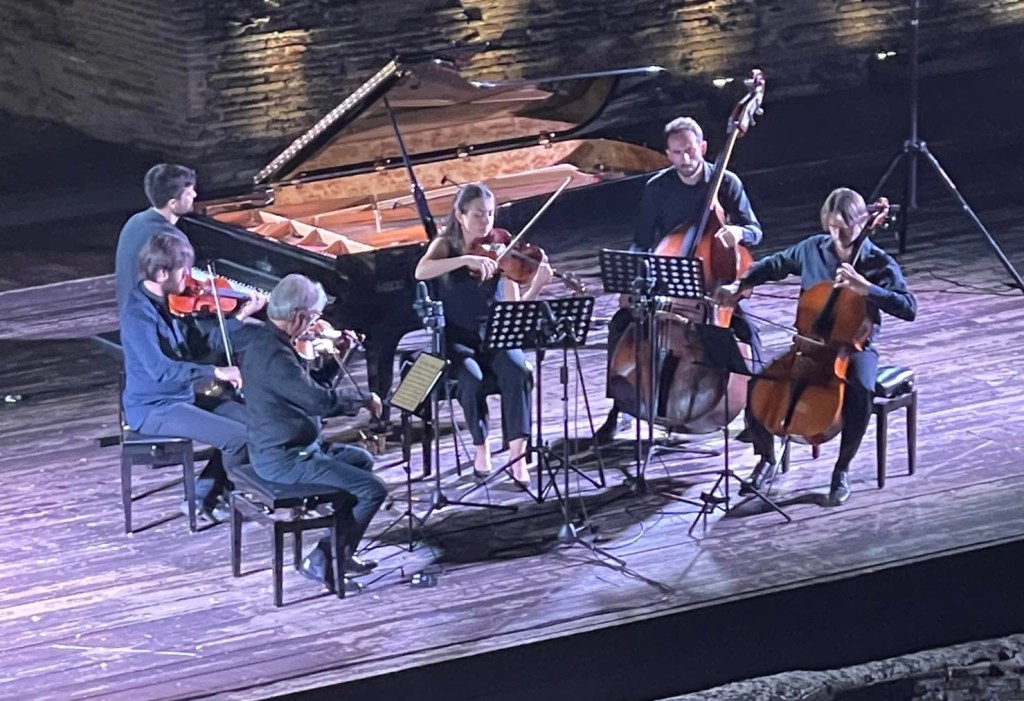
What we gained of course was a superb chamber ensemble of musicians listening to each other and especially listening to the freedom of bel canto that allows the melodic lines to blossom with radiance and beauty. Becoming free as the soloist ,as Chopin himself described to his aristocratic lady pupils. Music should be like a tree planted in the ground, with the branches free to move as freely as they like. Music in this formation became a precious jewel that was allowed to glisten and gleam as is rarely possible when you have a ‘policeman’ at the helm of an orchestra that seems to have little to do ! https://christopheraxworthymusiccommentary.com/2016/05/30/chopin-concerti-at-the-chopin-society/ https://christopheraxworthymusiccommentary.com/2024/12/01/chopin-reigns-at-the-national-liberal-club-and-st-marys-perivale-the-triumph-of-misha-kaploukhii-and-magdalene-ho/
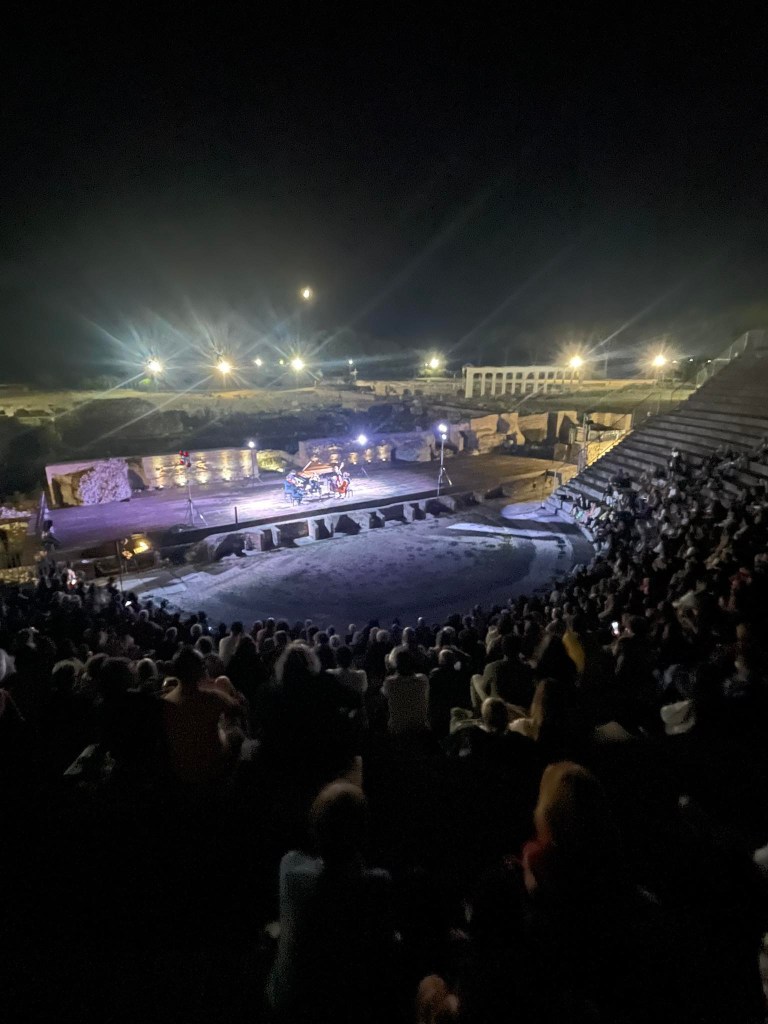
Chopin concertos that have never been allowed to sing so eloquently and vibrantly. Even the brilliant jeux perlé became but streams of wondrous sounds greeting an audience that this theatre has not seen since the Romans found and inhabited this wondrous paradise.Hopefully this rediscovery of well known classics in chamber formation will continue next year with the 3rd Season of the Riviera di Ulisse. I have heard recently the Beethoven Piano concertos being reborn in the arrangement for piano and quintet by Vinzenz Lachner There is of course the supreme magic of Mozart’s own three concerti K413,K 414,K 415 for piano and quartet that I had heard years ago from Fou Ts’ong and the Allegri Quartet and that I have never forgotten.
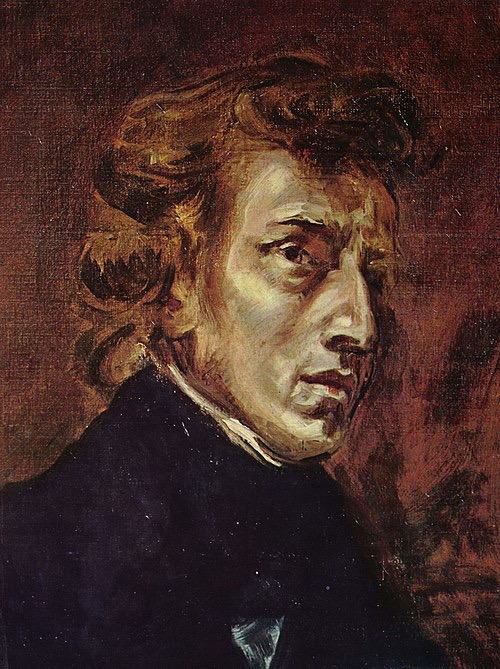
Fryderyk Franciszek Chopin. 1 March 1810 Żelazowa Wola ,Poland -17 October 1849 (aged 39)
Paris, France
Chopin’s compositions for piano and orchestra originated from the late 1820s to the early 1830s, and comprise three concert pieces he composed 1827–1828, while a student at the Central School of Music in Warsaw, two piano concertos , completed and premièred between finishing his studies (mid 1829) and leaving Poland (late 1830), and later drafts, resulting in two more published works. Among these, and the other works in the brilliant style which Chopin composed in this period, the concertos are the most accomplished.
Variations on ‘Là ci darem la mano’in B♭ major (1827), Op. 2.
Fantasy on Polish Airs , in A major (1828), Op. 13.
Rondo à la Krakowiak , in F major (1828), Op. 14.
Piano Concerto n. 2 in F minor (1829–1830), Op. 21.
Piano Concerto n. 1 in E minor in E minor (1830), Op. 11.
Grande polonaise brillante (1830–1831), in 1834 expanded with an introductory Andante spianato for solo piano, and a fanfare-like transition to the earlier composition, together published as op. 22
Drafts for more concertos, ultimately resulting in the Allegro de Concert for solo piano (1832–41), Op. 46.
The Piano Concerto No. 1 in E minor, Op. 11, was written in 1830, when he was twenty years old. It was first performed on 12 October of that year, at the Teatr Narodowy (the National Theatre) in Warsaw, with the composer as soloist, during one of his “farewell” concerts before leaving Poland
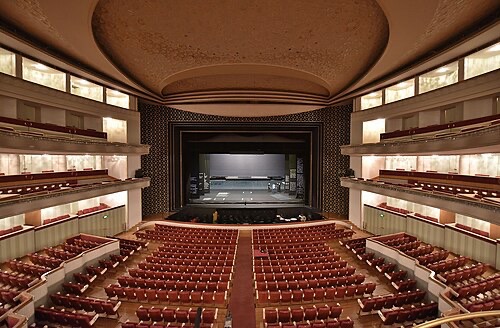
It was the first of Chopin’s two piano concertos to be published, and was therefore given the designation of Piano Concerto “No. 1” at the time of publication, even though it was actually written immediately after the premiere of what was later published as n. 2. The presenter of the concert form S. Cecilia Academy in Rome , told us that it was published as number one because the orchestral parts of the other concerto could not be found!
The premiere, on 12 October 1830, was “a success…. a full house”. There was “an audience of about 700” and the he concerto was premiered with Chopin himself at the piano and Carlo Evasio Soliva conducting. The piece was followed by “thunderous applause”. Seven weeks later, in Paris, following the political outbreaks in Poland , Chopin played his concerto for the first time in France at the Salle Playel . It was received well, once again. François-Joseph Fétis wrote in La Revue musicale the next day that “There is spirit in these melodies, there is fantasy in these passages, and everywhere there is originality”. Opinions of the concerto differ. Some critics feel that the orchestral support as written is dry and uninteresting, for example the critic James Huneker , who wrote in Chopin: The Man and his Musicthat it was “not Chopin at his very best”. Sometimes musicians such as Mikhail Pletnev feel a need to amend Chopin’s orchestration.On the other hand, many others feel that the orchestral backing is carefully and deliberately written to fit in with the sound of the piano, and that the simplicity of arrangement is in deliberate contrast to the complexity of the harmony. It has been suggested that the orchestral writing is reminiscent of Hummel’s concertos in giving support to the piano rather than providing drama. Harold Schonberg , in The Great Pianists, writes “…the openings of the Hummel A minor and Chopin E minor concertos are too close to be coincidental”.However, Schumann took a rather different view when he reviewed Chopin’s concerti in 1836 declaring that “Chopin introduces the spirit of Beethoven into the concert hall” with these pieces.While composing it, Chopin wrote to his friend Tytus Woyciechowski, saying “Here you doubtless observe my tendency to do wrong against my will. As something has involuntarily crept into my head through my eyes, I love to indulge it, even though it may be all wrong”. This sight may have been the well-known soprano Konstancja Gladkowska, believed by some to be the “ideal” behind the Larghetto from Chopin’s Second Piano Concerto, although some believe Chopin may have been referring to Woyciechowski
The Piano Concerto No. 2 in F minor, . op. 21, was written in 1829. Chopin composed the piece before he had finished his formal education, at around 20 years of age. It was first performed on 17 March 1830, in Warsaw, with the composer as soloist. It was the second of his piano concertos to be published (after n. 1), and so was designated as “No. 2”, even though it was written first.
 ChristopherAxworthy-MusicCommentary