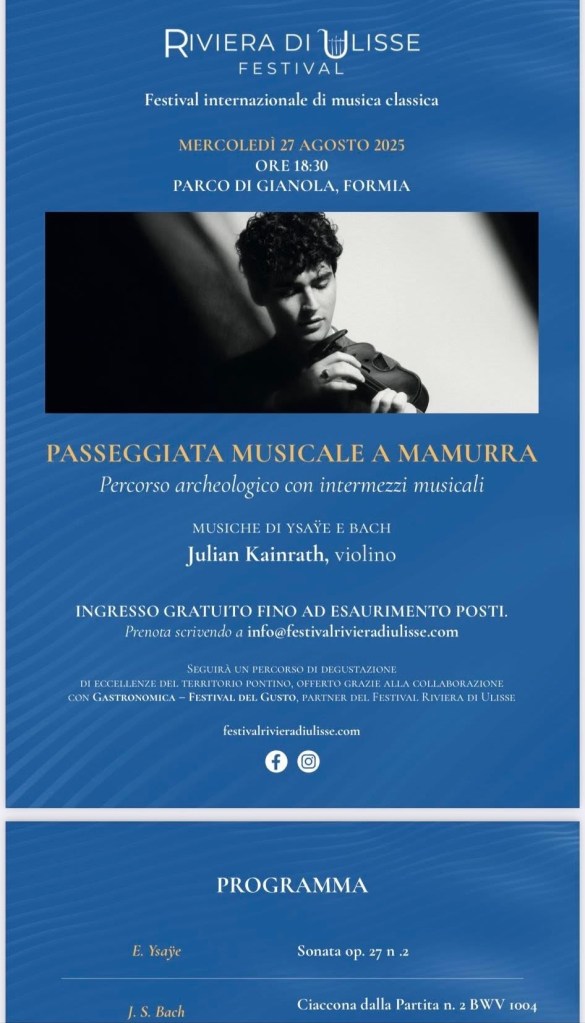
Whilst his father Peter Paul Kainrath inaugurated today the 65th Busoni Competition in Bolzano his son Julian enchants the Riviera di Ulisse with Bach’s greatest work for solo violin .https://christopheraxworthymusiccommentary.com/2023/08/13/all-the-fun-of-the-circus-the-busoni-competition/
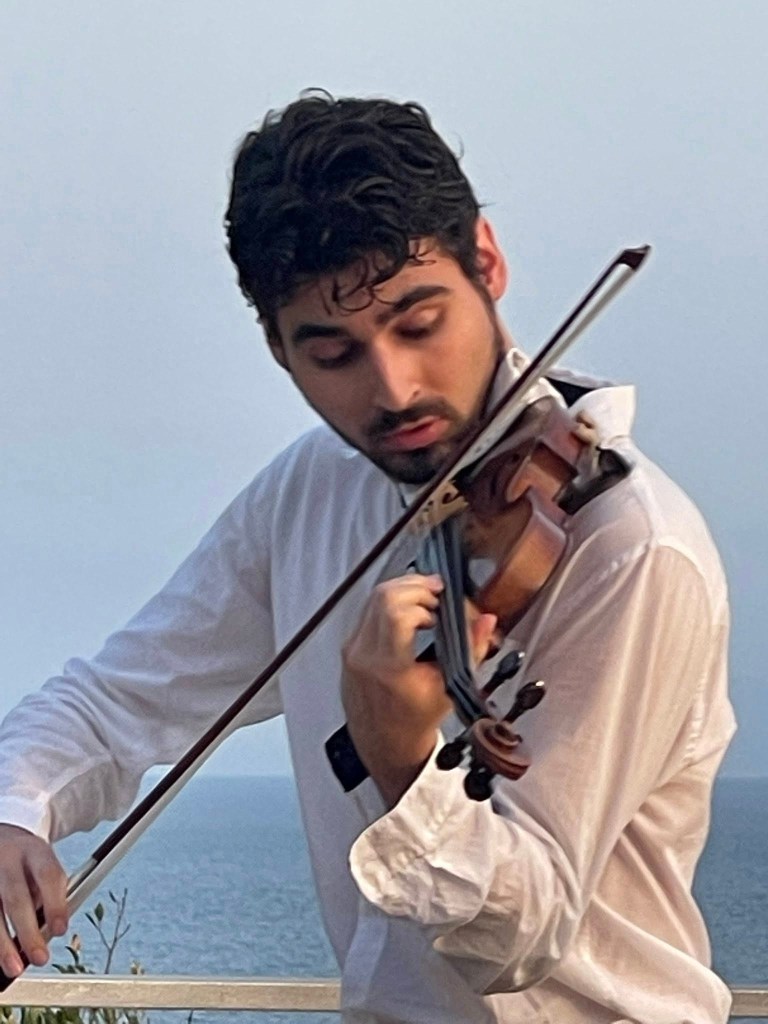
The mighty Chaconne was wafted into this magic land with mastery and the magisterial authority that is of the very few. An extraordinary architectural and rhythmic drive that allowed this great gothic cathedral to arise from the hands of this young man creating a unified whole of extraordinary potency. Even the contrasting episodes were combined so naturally with that aristocratic authority and humility that I well remember on listening to Menuhin when he gave a lecture recital at the Royal College of Music. An illustrated lesson in which he described the difficulty of phrasing and bowing in a way that would never break the musical line. It was this today that I heard from Julian with a musical line that from the opening to the final triumphant ending was never allowed to sag or loose the energy within the very notes themselves.
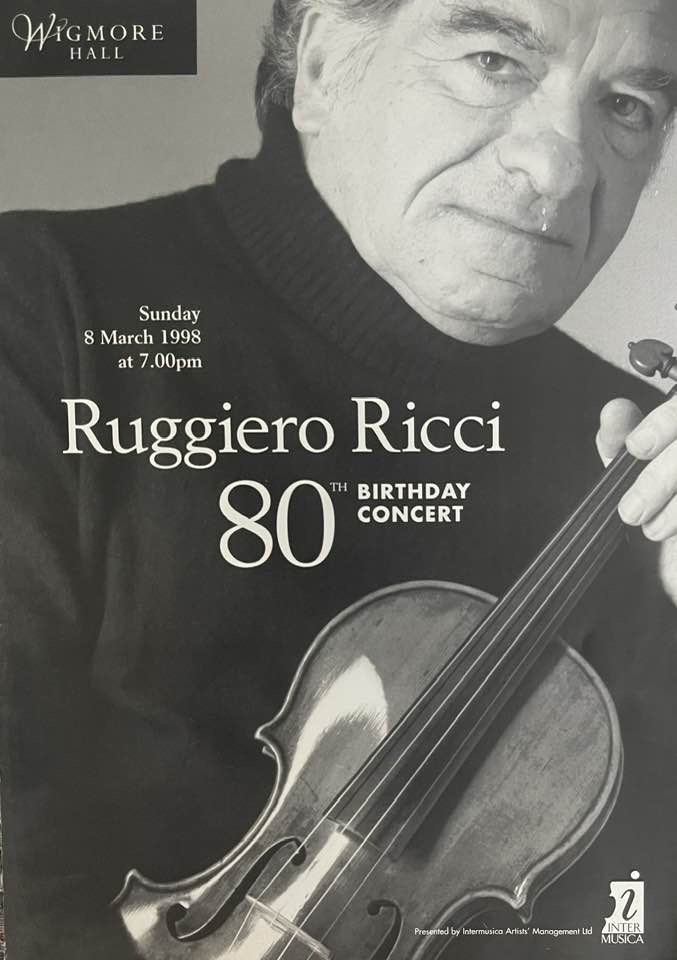
It was Ruggiero Ricci who played this great work at his 80th birthday concert in London. He insisted on standing up for this work whereas the others he had to play sitting down. He had been to a Chinese restaurant the night before the Wigmore Concert and was left with food poisoning on the actual day when Jack Rothstein had organised a celebration for one of the greatest violinists of our age.

There was no celebration for him after the concert but a trip to spend the night at the London Clinic nearby. Liver sausage sandwiches and a bill for fifteen hundred pounds for the night. ‘ That was the most expensive Chinese meal I have ever had ‘,he quipped in his dry American humour’ .
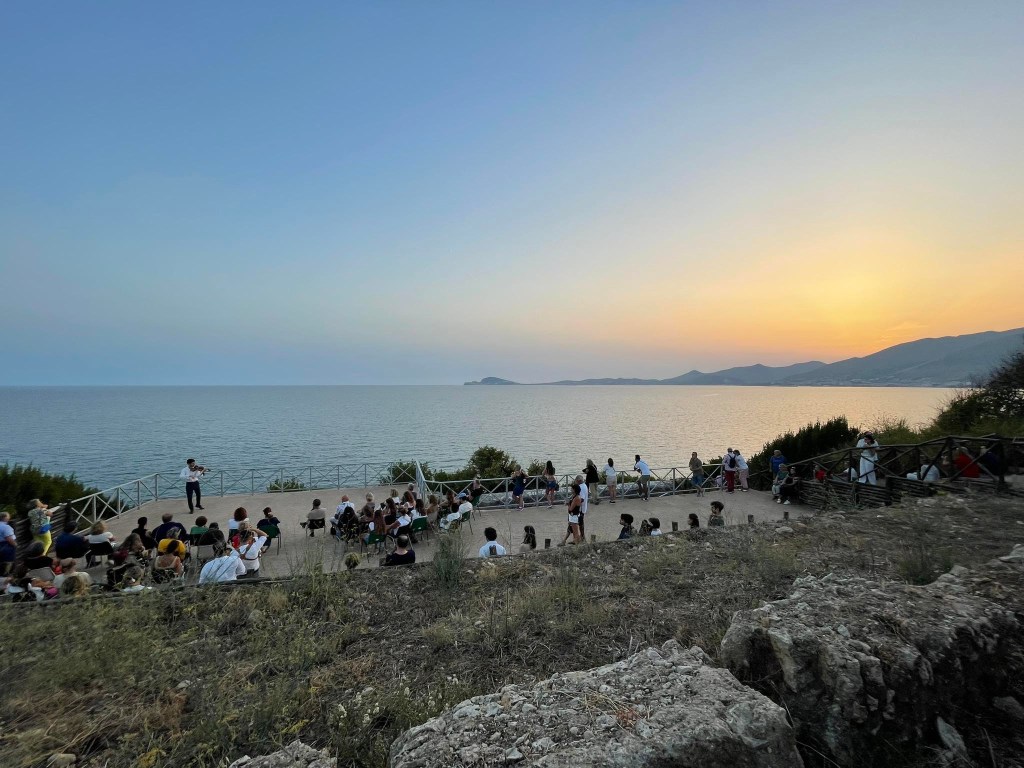
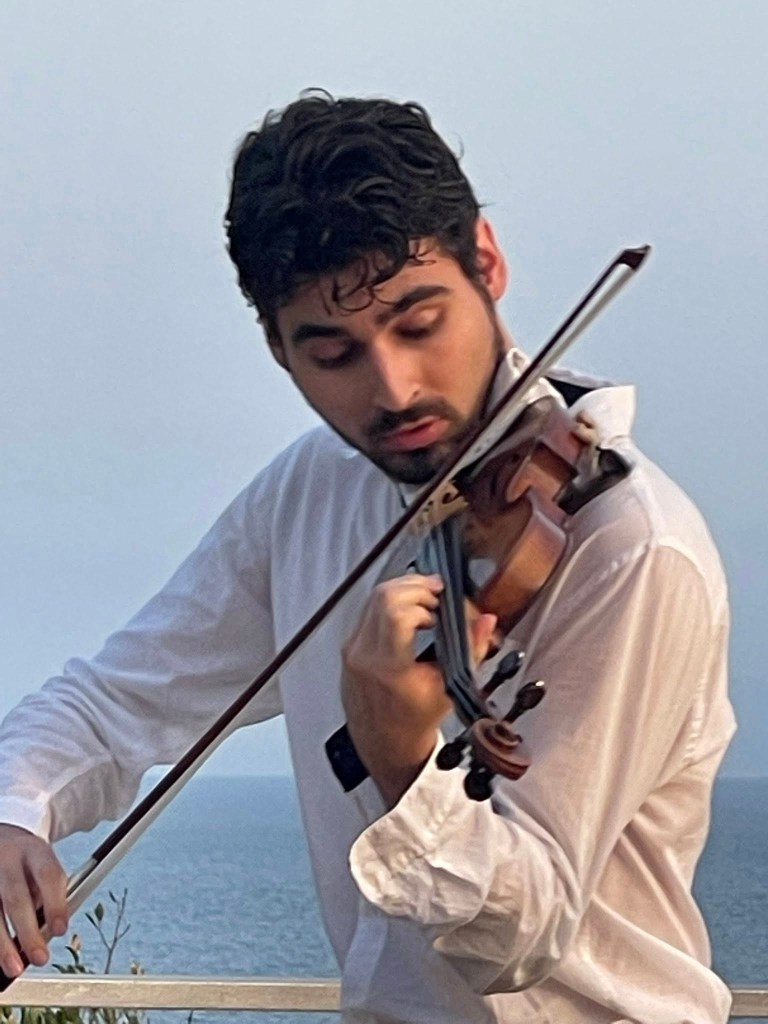
Julian of course played it standing up with his back to the sea and the magnificent outline of Gaeta and Formia creating a magical backdrop in this almost unknown paradise that is the Gianola Park.


Like Ysäye whose Dies Irae was also heard floating in this rarified air as the birds glided by to see where such wondrous sounds were coming from. I remember Ruggiero Ricci playing this Sonata in a solo recital he gave for Euromusica in Rome. Julia his wife could not accompany him this trip so I looked after him as over the years they had become close friends. He had made a mistake packing his shoes and had two different ones that he tried to hide by standing one on the other whilst giving a phenomenal display of mastery – his left hand even in his 70’s was the envy of all other violinists.

He was staying in his usual Hotel S. Anna the other side of S.Peters Square. After a dinner next to the theatre , I accompanied him back to the hotel. We did not know that S. Peter’s Square is shut at night ! No problem exclaimed Ruggiero as he climbed over the barrier and we were chased by the police through the square. Ruggiero had the priceless Huberman Strad under his arm!
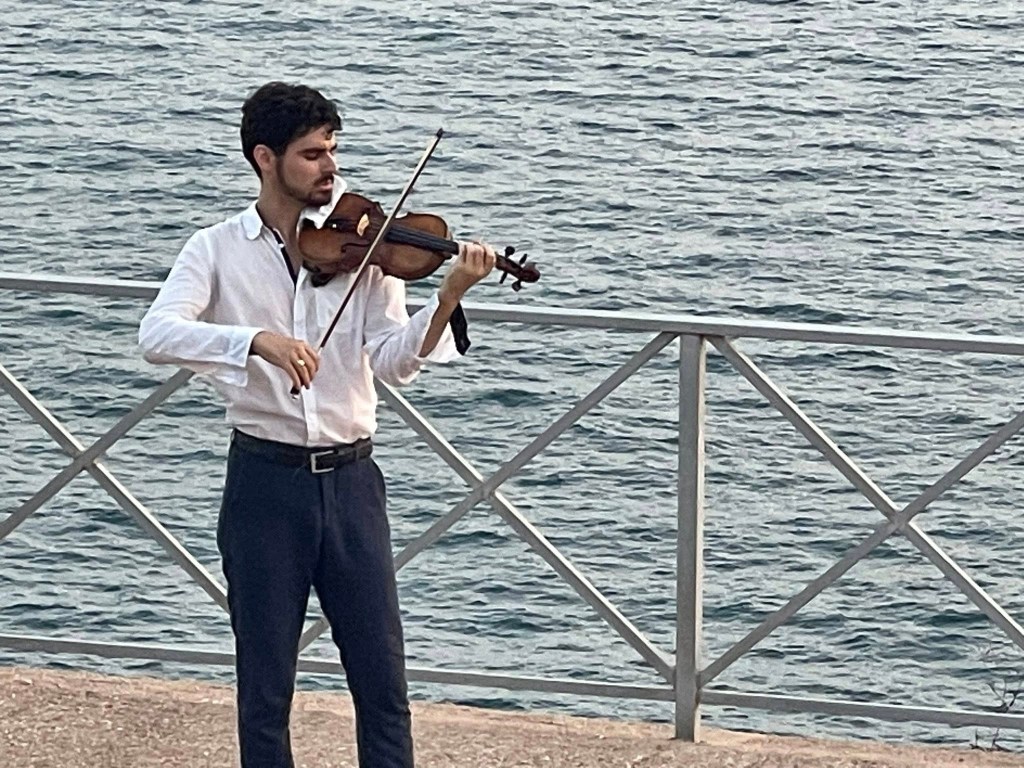
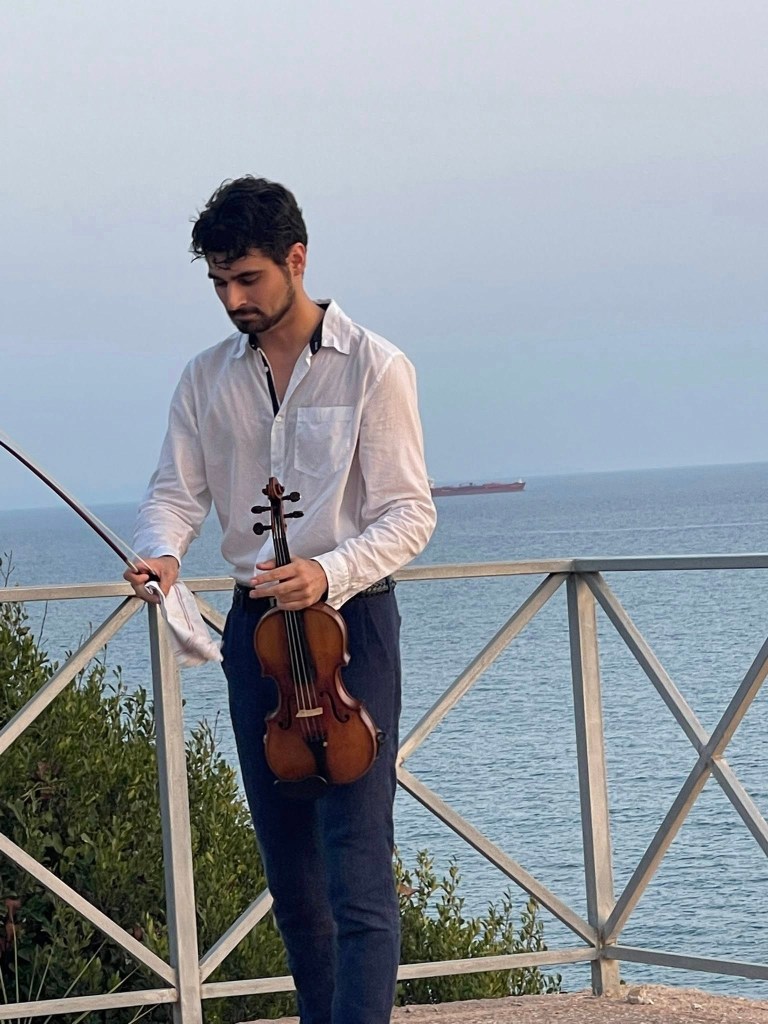
The Ysaÿe Sonatas are a ‘tour de force’ for any violinist and Julian played this second sonata with impeccable technical perfection but also a sense of style that made sense of the capricious nature of the work . All the ‘tricks of the trade’ that a master violinist could contemplate were mastered with ease and the final variations were quite breathtaking in their dynamic drive.



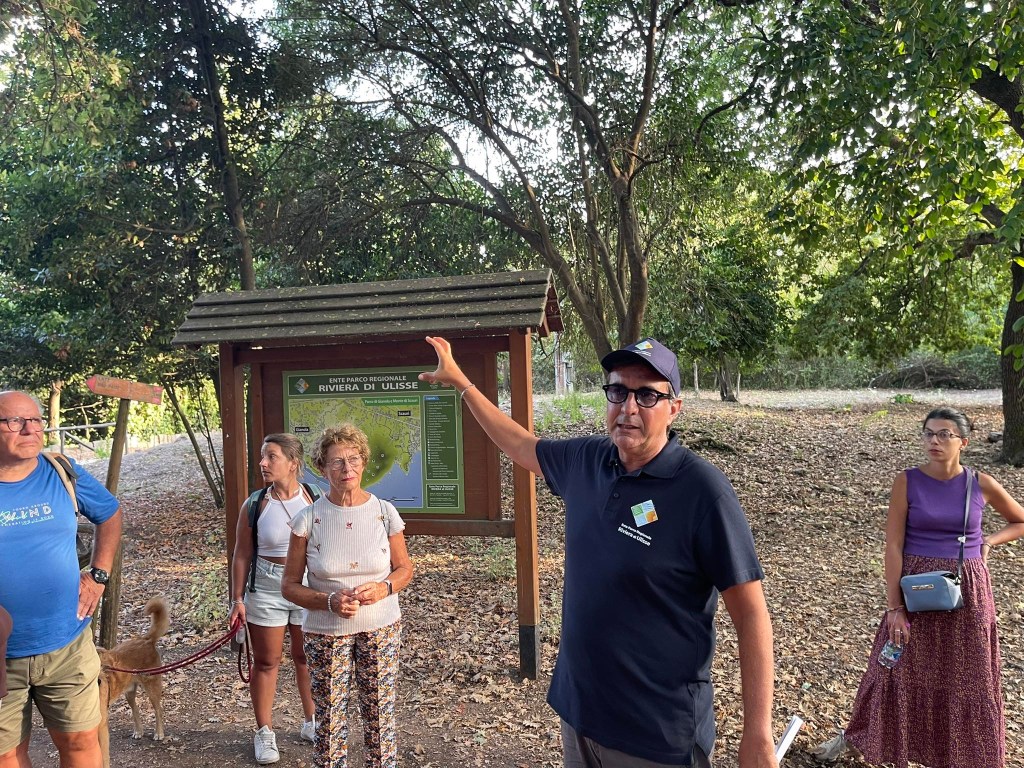

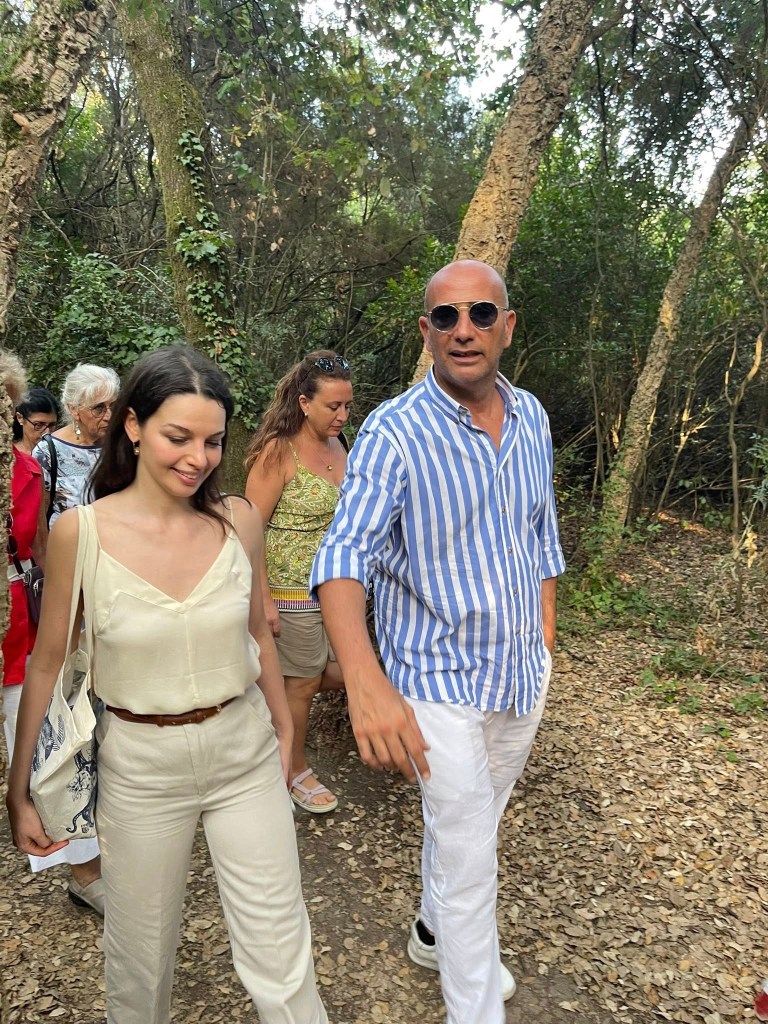


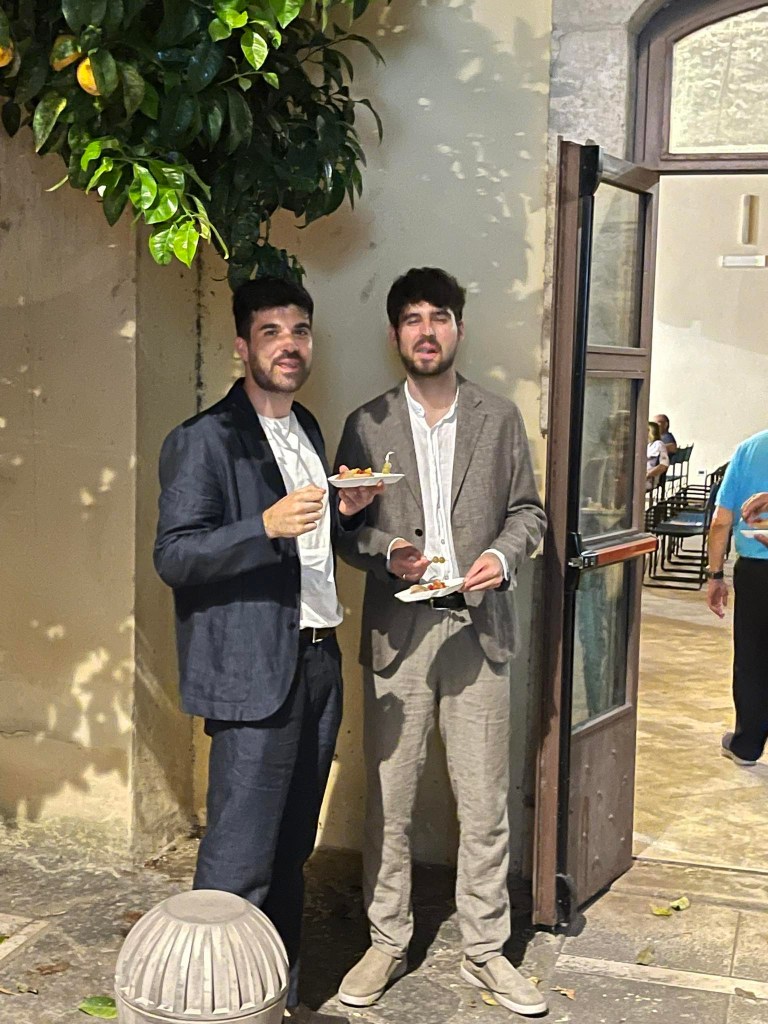
Louis Lortie
Julian Kainrath is a highly talented violinist and a wonderful friend. I have had the pleasure of performing with him when he was 15. His playing is becoming more and more confident and personal. He is intelligent, curious and versatile. He has a bright future ahead of him!
Till Fellner
Winner of the International Classical Music Awards (ICMA) Discovery Award in 2022 at the age of 16, and of the Ysaye International Music Competition in 2025, Julian Kainrath regularly performs both as a soloist and recitalist. Born in Merano, Italy, he started his violin studies at the age of six and has been given public performances since he was ten years old. Announcing the ICMA’s Discovery Award the President of the Jury Remy Franck said: “our winners are the expression of the highest artistry”. Julian’s appearance under conductor Adam Fischer with the Luxembourg Philharmonic Orchestra at the Luxembourg Philharmonie was highly praised by critics: “In the second program item, the audience was treated to a particularly outstanding performance. The 16-year-old violinist Julian Kainrath from Merano, winner of the Discovery Award, not only gave a brilliant rendition of the Introduction and Rondo capriccioso by Camille Saint-Saens, but also, despite his young age, knew how to give this work a very personal interpretation, after which one can hope for much more to come from this true artist”.
During the 2024/2025 season, Julian performed recitals and concertos with orchestra in Italy, Germany, France, Austria, Switzerland, and the United States. Highlights include his debut in Venice at the Apollonian Halls of Teatro La Fenice; a performance of Bach’s Sonatas and Partitas for solo violin at the Ristori Baroque Festival in Verona; debuts with the Leverkusen Symphony in Germany, the University of Milan Orchestra, and the Bari Symphony Orchestra under the baton of Neil Thompson; as well as a Bach-focused project with the Klassische Philharmonie Bonn. He also undertook several tours across cities in Italy, Austria, Germany, and Belgium.
His 2024 summer festival appearances included the Engadin Festival in St. Moritz, Switzerland; the Althafen Stiftung in Berlin; and the Tonadico Festival in Italy. In 2025, he performed in Austria (Stiftskonzerte Klassik), Rome (Riviera di Ulisse Festival), and Bulgaria (Art Gallery of Sofia).
In the upcoming season, Julian will return to the Merano Music Weeks Festival in Italy, perform with the Zürcher Kammerorchester under the direction of Daniel Hope, and embark on an extensive tour in Italy alongside pianist Lilya Zilberstein.Julian’s performances included recitals with pianists Till Fellner and Louis Lortie.
The recital at the BA Classica Festival in Busto Arsizio, Italy, with the great pianist Louis Lortie was a milestone in Julian’s musical development: “The concert offered moments of sublime music thanks to the synergy between the two performers, which deeply moved the audience,” wrote the critics. Since then, Louis Lortie has become an important mentor and point of reference.
During the 2020 pandemic, Julian was invited by the Konzerthaus Wien, the renowned concert hall in Vienna, to participate in their virtual concert series Konzertzuhaus. Together with the celebrated pianist Till Fellner, Julian performed a Beethoven violin sonata to mark the composer’s anniversary year. Shortly afterward, the two were invited to perform a full recital in Appiano, Italy.
Julian has also performed at the Società del Quartetto in Bergamo, at Amici della Musica in Padua, at the Austrian Cultural Center in Washington, D.C., USA, and at the Jeunes Talents Festival in Cannes, France. He appeared at the Suoni a Ledro Festival, in the Sala delle Colonne of the Leonardo da Vinci Museum in Milan, in Trieste with the Ferruccio Busoni Orchestra, and at the magnificent Ehrbar Saal in Vienna, Austria. He has performed in the Angelika-Kauffmann-Hall in Schwarzenberg, Austria; at the Teatro alla Scala Museum in Milan; at the Teatro Ristori in Verona with the orchestra I Virtuosi Italiani; at the Bergerac Festival in France; and in Bern, Marseille, Munich, and Liechtenstein.
Since the age of 15, Julian has maintained an intense performing schedule. In previous seasons, he was invited to perform at numerous venues in Italy, including the Settimane Musicali Festival in Merano, the Società dei Concerti in Milan, Mattinate Musicali Internazionali in Trieste, Camerata Ducale in Vercelli, and the Bolzano Bozen Festival with the Streicherakademie Bozen orchestra.
At the age of 14, Julian was selected as a “resident student” at the 26th Verbier Festival, where he performed concerts and took masterclasses with renowned violinists such as Pamela Frank, Donald Weilerstein, and Kristóf Baráti. He also studied under violinist Ilya Gringolts at the Accademia Chigiana in Siena, Italy, and had the opportunity to perform a recital dedicated to Steve Reich together with Gringolts. He participated in the Sommerakademie Schloss Heiligenberg under the guidance of Marc Bouchkov and was awarded a prize for his performance.
Julian made his orchestral solo debut in South America (Bolivia) in 2015, at the age of 10. In 2016, he was invited by the National Symphony Orchestra of Ukraine to perform in Kyiv. At the age of 13, he toured with the Innstrumenti Chamber Orchestra, performing at the Haus der Musik in Innsbruck and at the Kursaal in Merano, earning enthusiastic praise from the press (“the young South Tyrolean has such an organic connection to his instrument, and outstanding technique and musicality,” “the applause was for the 13-year-old Julian Kainrath, who confidently played Sarasate’s Zigeunerweisen… what a fullness of sound came from his instrument!”, “he dashed through the variations with bravura and received a thunderous ovation”).
Julian has also performed at the Arsonore Festival in Graz, in the Young Excellence in Concert series in Salzburg, in recital in Bressanone, Italy, and appeared in a RAI broadcast performing works by Paganini and Bartók.
Julian studied violin with Dora Schwarzberg in Vienna and was admitted at the age of twelve into the class of Boris Kuschnir at the University of Music and Performing Arts in Graz, Austria. Since 2023, he has been a student of Marc Bouchkov at the Conservatoire Royal de Liège in Belgium.
From 2019 to 2021, Julian was a scholarship holder of the International Music Academy in Liechtenstein.
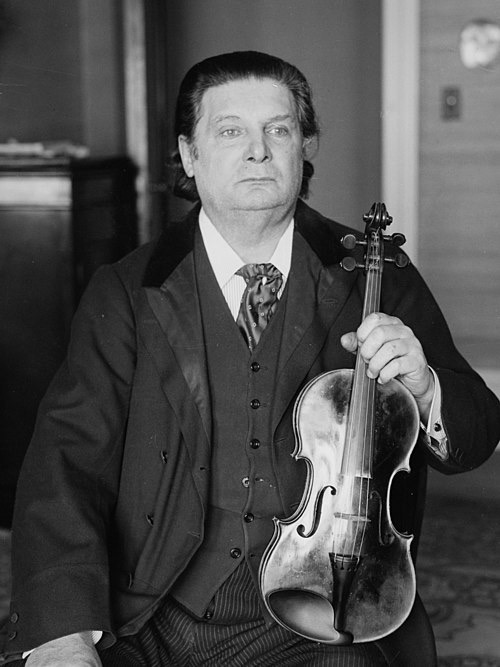
The Sonata for Solo Violin, Op. 27, No. 2 “Jacques Thibaud” is in four movements from Six sonatas for solo violin by Eugène Ysaÿe, each one dedicated to one of Ysaÿe’s contemporary violinists.6 Sonatas for solo violin op 27 (each dedicated to a different famous violinist and written in their corresponding styles)
Sonata No. 1 (“Joseph Szigeti “)
Sonata No.2 (“Jaques Thibaud “)
Sonata No.3 (“Georges Enescu “)
Sonata No. 4 (“Fritz Kreisler”)
Sonata No. 5 (“Mathieu Crickboom”)
Sonata No. 6 (“Manuel Quiroga”)
Sonata No. 7 (posthume) (“Manuel Quiroga”)
Characteristics of the “Thibaud” sonata
- Obsession; Prelude
- Malinconia
- Danse des Ombres; Sarabande
- Les furies
Sonata No. 2 was dedicated to Jacques Thibaud , a friend of Ysaÿe’s. The fact that Thibaud had lived in Ysaÿe’s home, and the fact that Ysaÿe once lent his Guarnerius and Stradivarius to Thibaud when Thibaud’s violin adjustment was not ready for concert, show Ysaÿe’s admiration for his friend. This sonata greatly resembles the style of Johann Sebastian Bach, and includes direct quotations of his music within.
I. Obsession – Prelude :Poco vivace
At the very beginning of the movement, Ysaÿe directly quotes the beginning of Prelude from J.S.Bach’s Partita n. 3in E major for solo violin. Much like Bach’s E major Prelude, the movement consists of virtuosic sixteenth notes throughout, yet Ysaÿe’s use of chromatic tonality clearly sets the piece in the genre of early 20th century music. Direct quotes from Bach’s Prelude appear frequently, showing Ysaÿe’s “obsession” with Bach’s work. Another prominent theme is the “Dies Irae”, a plainchant from the Catholic Mass for the Dead Ysaÿe often employed his own symbols to indicate specific directions to players; for example, in the 74th bar of this movement, he uses one of his symbols over the first note of each beat to indicate that these notes should be played by the whole bow.
II. Malinconia – Poco lento
The Malinconia contrapuntally resembles the style of Bach, perhaps most of any of the movements of the second sonata. It employs the siciliano rhythm, found in the first solo sonata for violin by Bach. It specifies the violinist to play with a mute, to dampen the tone and volume, something fairly unusual for a solo sonata. The Dies irae is not stated within the movement until the final few bars, where it is played uninterrupted on top of a drone.
III. Danse des ombres – Sarabande (Lento )
The sarabande is based on a theme-and-variation pattern. The theme itself is again a variation of Dies irae. In the first few bars, the theme is played with pizzicato , making it sound as if played by guitar or lute. The movement consists of six variations, and each variation develops gradually to the end. In the first variation, for example, Ysaÿe instructs the player not to use vibrato , in order to maintain a simple tone. The last variation is composed of technically demanding thirty-second notes , all played forte. Then, the theme is repeated, but this time, it is played with the bow.
IV. Les Furies – Allegro furioso
The Dies Irae melody appears recurrently throughout the movement. Some of the Dies Irae figures are played sul ponticello, for instance in measures 41 and 58.

Born 21 March 1685 Eisenach Died 28 July 1750 (aged 65) Leipzig
The Partita in D minor for solo violin, BWV 1004 Johann Sebastian Bach , by , was written between 1717 and 1720. It is a part of his compositional cycle called Sonatas and Partitas for Solo Violin .
- Allenande
- Corrente
- Sarabanda
- Giga
- Ciaccona
Except for the ciaccona, the movements are dance types of the time, and they are frequently listed by their French names. The final movement is written in the form of variations, and lasts approximately as long as the first four movements combined.Yehudi Menuhin called the Chaconne “the greatest structure for solo violin that exists”.
Joshua Bell has said the Chaconne is “not just one of the greatest pieces of music ever written, but one of the greatest achievements of any man in history. It’s a spiritually powerful piece, emotionally powerful, structurally perfect.”
Johannes Brahms in a letter to Clara Schumann described the piece, “On one stave, for a small instrument, the man [Bach] writes a whole world of the deepest thoughts and most powerful feelings. If I imagined that I could have created, even conceived the piece, I am quite certain that the excess of excitement and earth-shattering experience would have driven me out of my mind.” He later transcribed it for piano left hand.

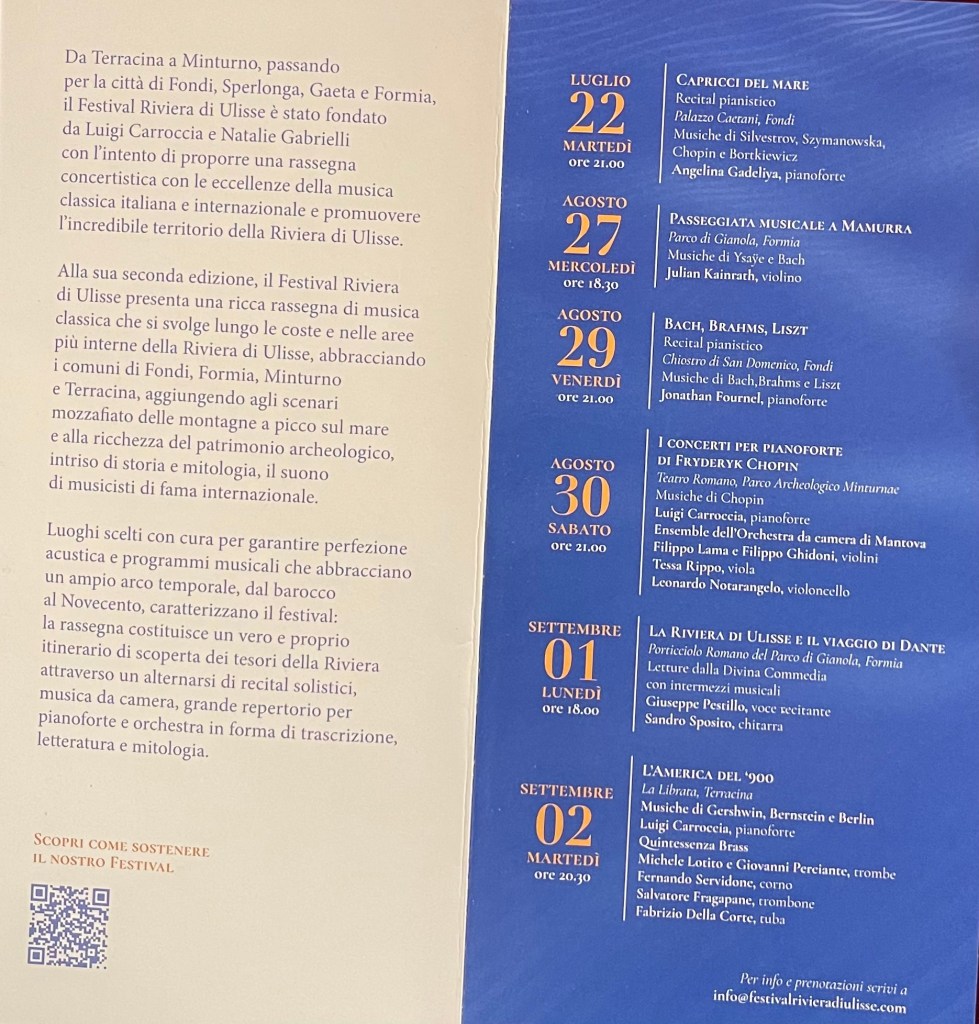
This was the first concert in this years’ series .
On Friday the 29th August in Fondi for the third concert in Riviera di Ulisse 2025, the long awaited appearance in Italy of Jonathan Fournel, 2021 winner of the Gold Medal at the Queen Elisabeth of the Belgian’s Competition.
The programme includes; Bach Italian Concerto, Brahms Intermezzi op 117 and the Liszt B minor Sonata .
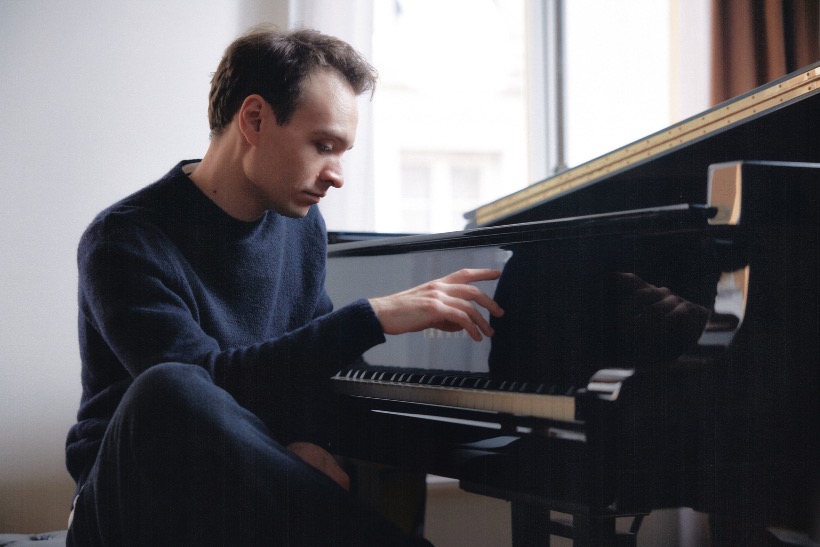
He has collaborated with orchestras including the NHK Symphony Orchestra, Macao Orchestra, Royal Scottish National Orchestra, Orchestre Philharmonique du Luxembourg, Orchestre National d’Île-de-France, Orchestre de Chambre de Paris, Orchestre National de Bordeaux, Orchestre National de Lille, Orchestre National de Montpellier, Deutsche Radio Philharmonie, Nordwestdeutsche Philharmonie, Brussels Philharmonic, Belgian National Orchestra, European Union Youth Orchestra, NOSPR Katowice, Slovak Philharmonic and the Croatian Radio and Television Orchestra.
On Saturday 30th August in the Teatro Romano in Minturno ,the fourth concert 2025, Luigi Carroccia performs the Two Chopin Piano Concerti
A violinist’s dream come true Roman Simovic writes : ‘Recording complete Ysaÿe sonatas has always been a dream of mine’. Full album coming 29 August 2025
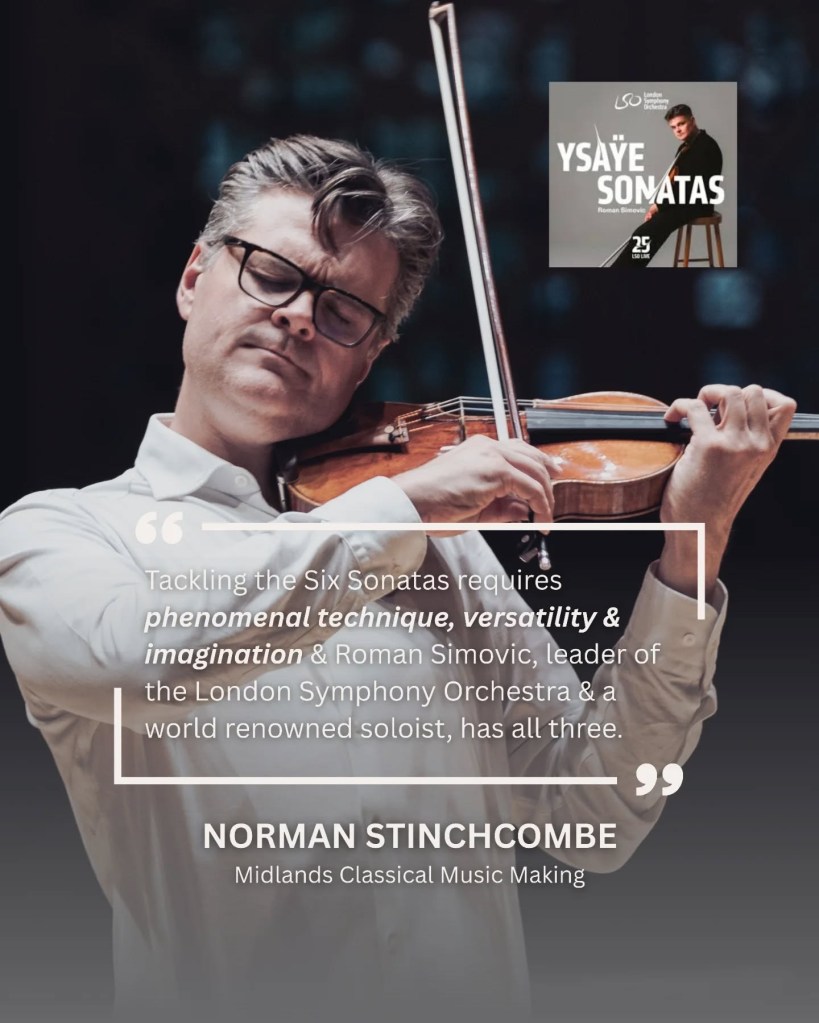
Ysaÿe: Sonatas for Solo Violin, Roman Simovic (LSO Live CD & SACD) ★★★★★
The Belgian violinist and composer Eugène Ysaÿe (1858-1931) was nicknamed “The King of the Violin” for his amazing virtuoso technique and refinement as a chamber musician and founder of the lauded Quatuor Ysaÿe. He composed too but none of his eight concertos were published in his lifetime. He wrote one undoubted masterpiece, a set of Six Sonatas for Solo Violin of 1924 inspired by hearing the great Joseph Szigeti play Bach’s solo sonatas and partitas. Ysaÿe’s set pays homage to them but he never indulges in pastiche and mock-baroque, and uses the musical language of his own time. He does allow himself a moment of whimsy in the opening of Sonata No.2 which has a direct quote from the Prelude of Bach’s Partita in E minor, as if the soloist were overheard practising before beginning Ysaÿe’s piece. Each Sonata was dedicated to a soloist and with their style and technique in mind, from star players like Szigeti, Jacques Thibaud, George Enescu and Fritz Kreisler to the little-known Matthieu Crickboom who played second fiddle in the Quatuor Ysaÿe. Tackling the Six Sonatas requires phenomenal technique, versatility and imagination and Roman Simovic, leader of the London Symphony Orchestra and a world renowned soloist, has all three. Ysaÿe’s is a well-designed programme beginning with the longest and most Bachian, the four-movement No.1 in G minor dedicated to Szigeti, with its Grave opening and a fugato section, and ending with the sparkling single movement No.6 infused with dance rhythms from the dedicatee Manuel Quiroga’s native Spain. Simovic chills the bone with No.1’s weird sul ponticello effects and delights with the irresistible Iberian gaiety of No.6. There’s lots to admire along the way; No.3’s gradual build up from dark mutterings to blisteringly fast conclusion; No.2’s wistful slow ‘Malinconia’ movement played raptly by Simovic and his extrovert panache in the final whirlwind rustic dance of No.6. He is aided by Jonathan Stokes’ perfect sound balance, recorded at Jerwood Hall in the LSO’s St Luke’s Centre, giving Simovic an almost palpable presence.


 ChristopherAxworthy-MusicCommentary