
Bruce Liu takes the proms by storm with a performance of Tchaikowsky G major concerto that will go down in history .
A concerto made famous by Cherkassky and of course Emil Gilels and now in our time Alexander Kantarow .

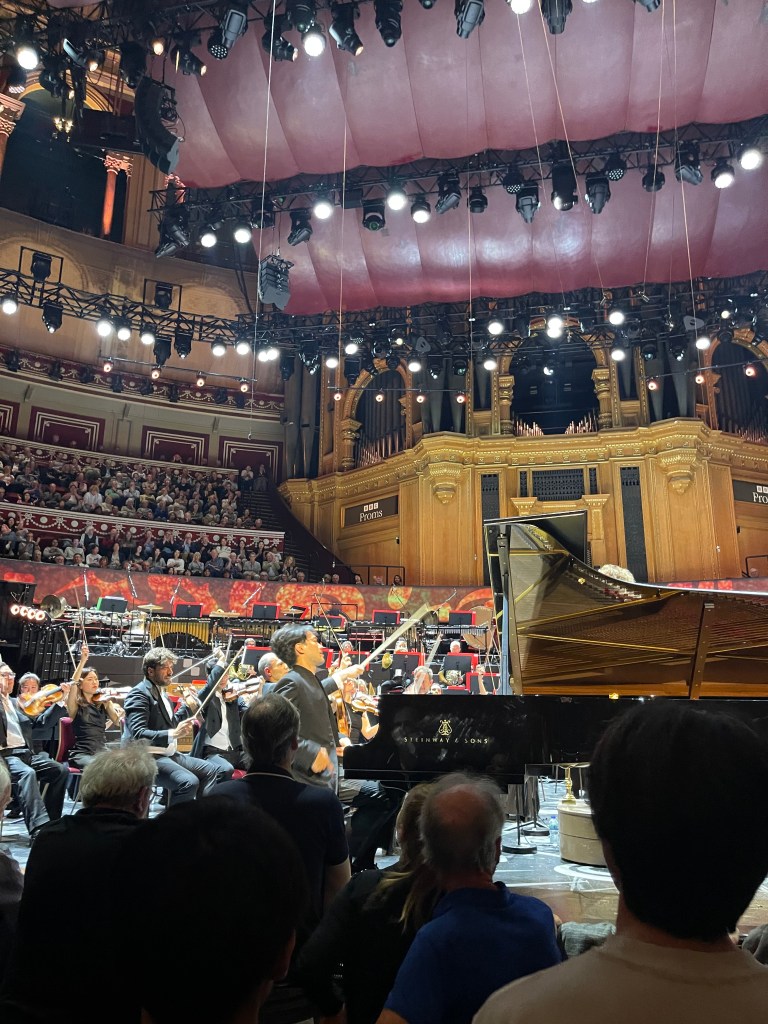
But today magnificence from this lythe Chinese Canadian winner of the Gold medal in Warsaw in 2022 filling the halls worldwide with playing of such streamlined purity but tinged with the style of the great pianists of the Golden Age .
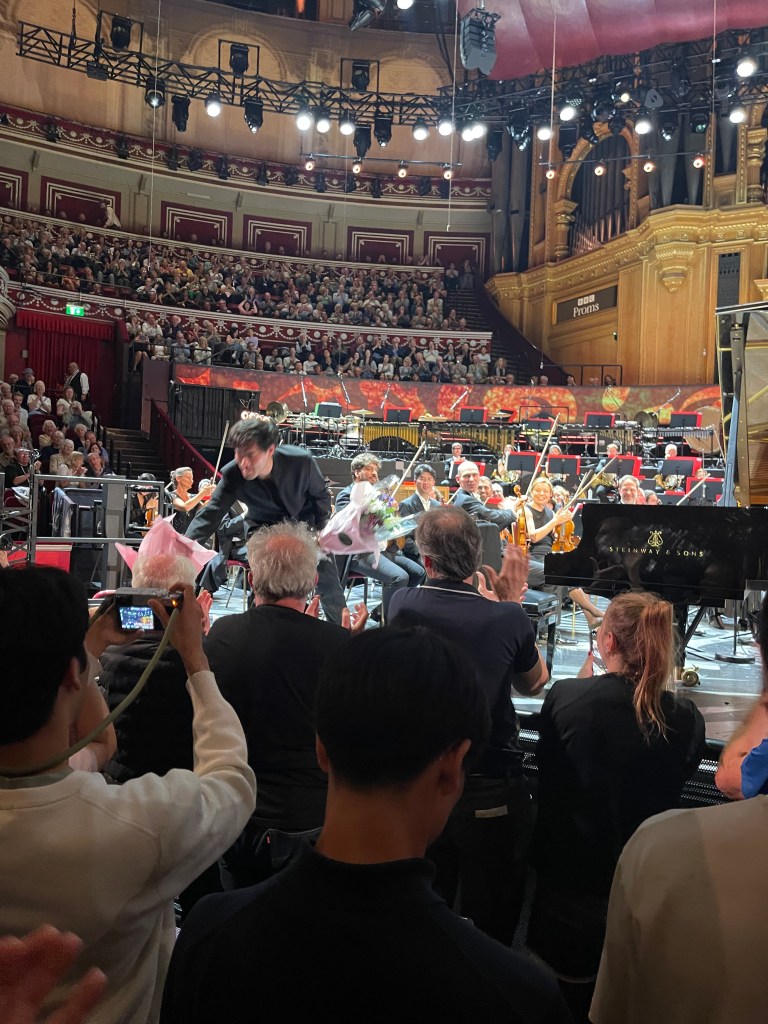
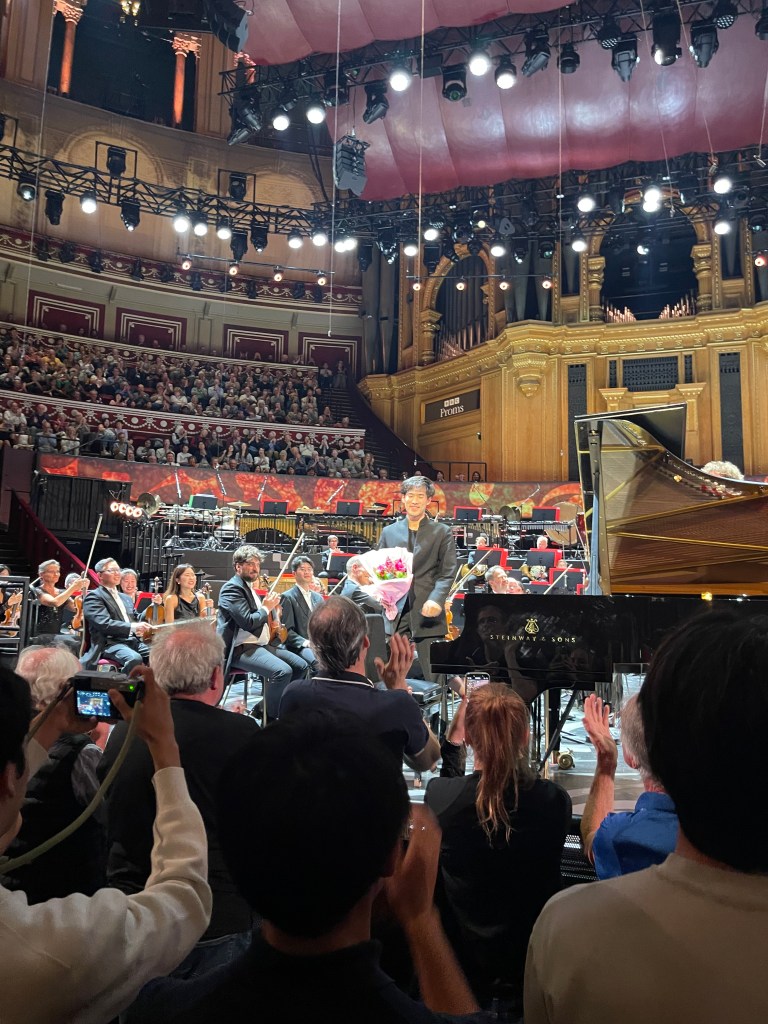

To see the delight on his face as scintillating streams of notes flowed from his fingers with refined brilliance a sort of modern day jeux perlé . It reminded me of Cherkassky who took a delight in his ravishing playing that could stream from his fingers and create a bond between him and the audience.
Fearless technical feats of sumptuous octaves and chords that would be transformed into the seductive melodic outpouring for which Tchaikowsky is loved .
A slow movement thankfully not cut so we could revel in the seductive beauty of the first violin and cello communing with the piano in what is a trio with orchestra of radiance and melting beauty .
The driving rhythms of the last movement played with a ‘joie de vivre’ and a tonal mastery as Bruce bounced the melodic line on top of the orchestral accompaniment in a play of chamber music proportions, where he suddenly played with a twinkle in his eye a beguiling sotto voce that was daring for its audacity. The race to the end showed off the phenomenal technical perfection of this remarkable young man and a superb conductor Santtu-Matias Rouvali who was never left behind but stimulated by such brilliance as they reached for the heights together.

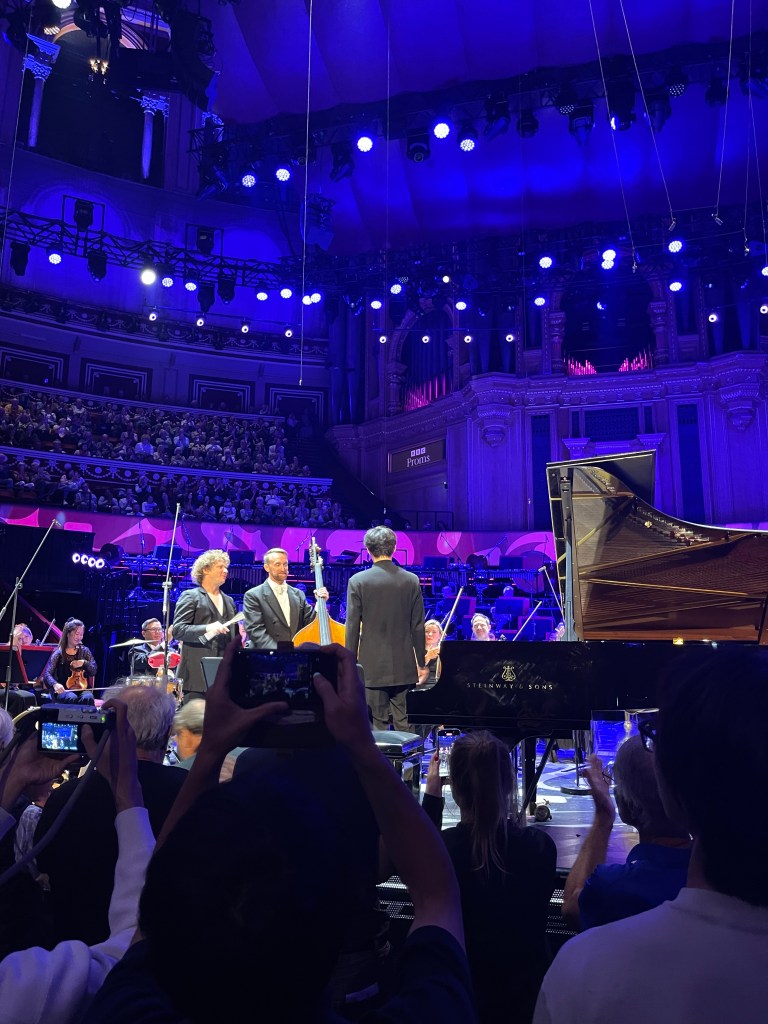
Another Trio for an encore where the conductor on drums and percussion with double bass joined Bruce in Scott Joplin’s Maple Leaf rag that brought the house down .https://www.facebook.com/reel/2742485082617637


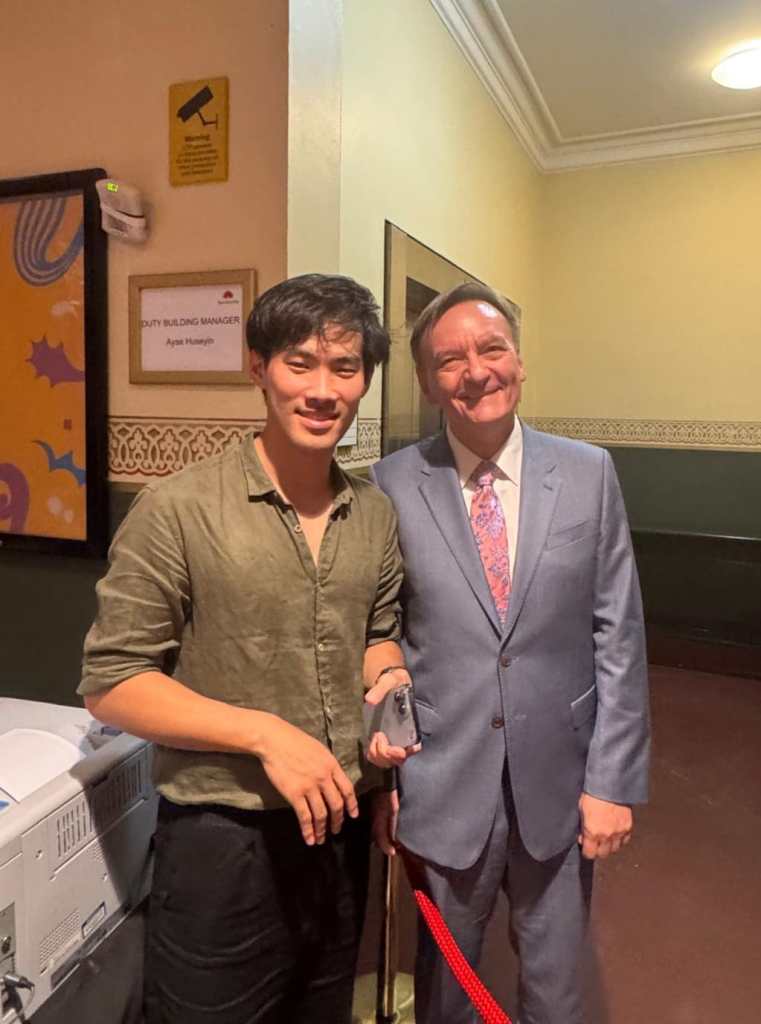
photo credit Yisha Xue
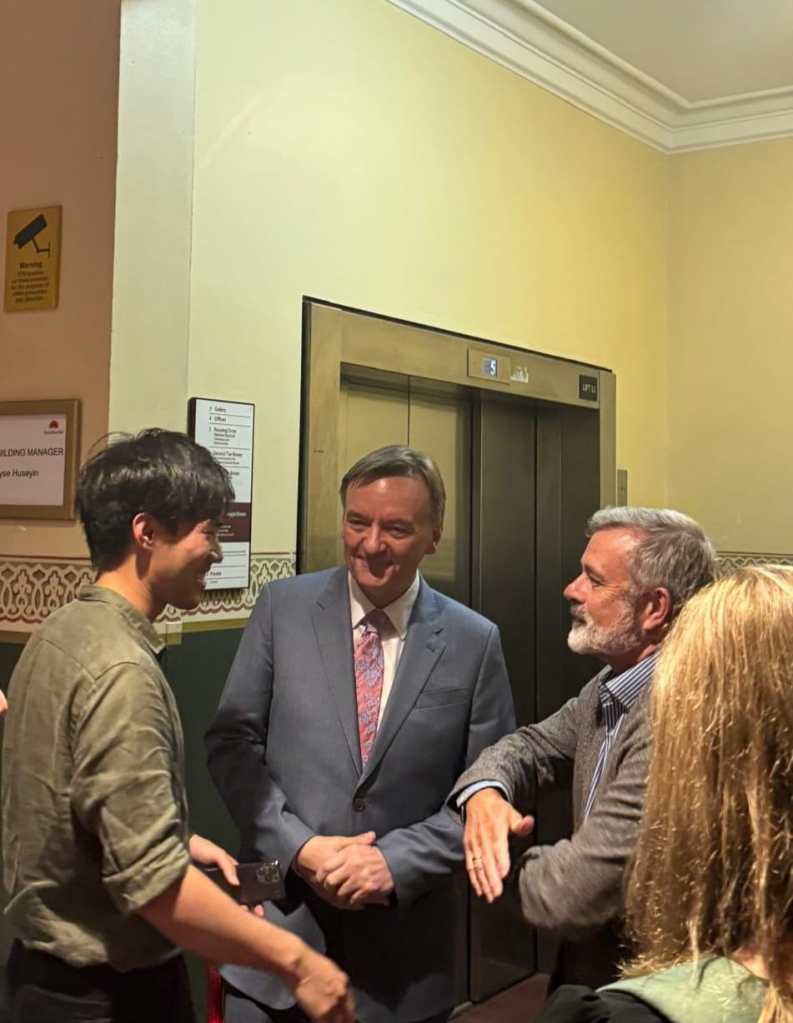
photo credit Yisha Xue

Yisha Xue on the right with friends

Born. 7 May 1840 Votkinsk Russia Died 6 November 1893 (aged 53) Saint Petersburg, Russia
By 1879 the First Piano Concerto was becoming increasingly popular.

Nikolai Rubinstein had likewise made amends with the composer (after his initial harsh criticism) by learning and performing the work, which added to its popularity. Tchaikovsky felt compelled to reciprocate. He started composing a new piano concerto in October while staying with his sister in Kamenka. He wrote to his patroness, Nadezhda von Meck, “I want to dedicate it [the new work] to N. G. Rubinstein in recognition of his magnificent playing of my First Concerto and of my Sonata, which left me in utter rapture after he performed it for me in Moscow.”
The writing went quickly. By the following March, Tchaikovsky had completed the concerto and orchestrated it. Still, he was concerned about Rubinstein’s reaction, writing again to von Meck, “I tremble at the thought of the criticisms I may again hear from Nikolai Grigoryevich, to whom this concerto is dedicated. Still, even if once more he does criticise yet nevertheless goes on to perform it brilliantly as with the First Concerto, I won’t mind. It would be nice, though, if on this occasion the period between the criticism and the performance were shorter. In the meantime I am very pleased and self-satisfied about this concerto, but what lies ahead—I cannot say.”
The composer need not have worried. Rubinstein’s reaction was this time understandably cautious. He suggested tactfully that perhaps the solo part was episodic, too much engaged in dialogue with the orchestra rather than standing in the foreground, but adding, “… as I say all this, having scarcely played the concerto once through, perhaps I am wrong.” Tchaikovsky rejected Rubinstein’s criticism, but without any rancour whatsoever. In fact, when Tchaikovsky received news of Rubinstein’s death in March 1881, he was devastated and left immediately from Paris to attend the funeral. The first Russian performance was entrusted to Tchaikovsky’s friend and former pupil Sergei Taneyev , but the concerto had its world premiere in November 1881 in New York City , with the pianist Madeline Schiller.

During the course of July–September 1880, Tchaikovsky worked on the proofs of the concerto, which was subsequently published by Pyotr Jurgenson in Moscow :
- Arrangement for two pianos — October 1880
- Full score — February 1881
- Orchestral parts — February 1881.
When in 1888 Pyotr Jurgenson wanted to reprint the concerto, Aleksandr Siloti proposed to Tchaikovsky a number of fundamental changes to the first and second movements. Tchaikovsky did not agree with these, and decided only to make changes to the piano part: “I absolutely cannot agree to your cuts, and especially those in respect of the first movement… my author’s sensibilities strongly riled by your displacements and changes, and it is impossible for me to agree to them. I want the Second Concerto in the form I had Sapelnikov play it , and I have marked your copy accordingly… your idea of transferring the cadenza to the end left a bitter taste, and made my hair stand on end” . In his letter of reply of 1/13 January 1889, Siloti wrote: “Of course I will play the Second Concerto in the way you indicated, with the big violin solo in the second movement completely cut!” . The concerto was not reprinted in the 1880s.
In 1891, Tchaikovsky returned to the idea of reprinting the concerto. In a letter to Pyotr Jurgenson of 30 March/11 April 1891, he wrote: “The Second Concerto is also impossible in its current form. I recall that you wanted to reprint it—but I don’t know your position now. It contains many blunders of mine, but the number of mistakes in the parts is, in a word, disgraceful. I have endured many torments with this concerto at rehearsals” .
However it was not until 1893 that Alexsandr Siloti began to prepare the concerto in a revised edition, with the agreement of the author. Under intense pressure from Siloti , Tchaikovsky agreed to many changes, while being careful to preserve its overall form and protect his original concept:
No, my dear Sasha, I’m not completely happy with your projected changes in the Andante. You would have it that the melody occurs twice, and then for no rhyme nor reason an inexplicably long coda at the end. This structure seems somehow very odd and curtailed! On the other hand, with my cut there is at least a brief piano cadenza which serves to separate the shortened andante from the coda […] And so in my opinion, one should use either 1) my earlier cuts or 2) your version, but preserving pages 68 and 69. Later on page 71 your cut is absolutely fine […] As for the small changes in the other movements, for various reasons I cannot quite reconcile myself to them […] So let all your corrections appear in the form of ossia, i.e. as one chooses.
Cuts are unnecessary in the 1st movement, and if you have your way then it would turn out as something terribly odd and incomplete in form. The repeat of the main section after the recapitulation is absolutely essential in sonata form—otherwise the listener might not catch on, and will be surprised and confused that the end has come so abruptly. Would you really play this concerto in such a state? I don’t know. And so, sweet, kind, dear Sasha, thank you for your interest and attention to this unfortunate second concerto, which, however, I like far more than the first. And I shall be terribly grateful to you for your proofs to come. And do not be angry that I do not completely agree with you about the changes and cuts [28].
Notwithstanding the fact that Tchaikovsky rejected many of the proposed changes, Aleksandr Siloti significantly altered the concerto, introducing cuts and transpositions to which the author had not given his consent. This version of the concerto was published by Pyotr Jurgenson in 1897, after the composer’s death: the full score and orchestral parts in September and the arrangement for two pianos in October.
In 1955, the original version of the concerto was published in volumes 28 and 46 of Tchaikovsky’s Complete Collected Works , edited by Aleksandr Goldenweiser, in which the author’s text was reproduced from the autograph full score and arrangement for two pianos.
Following the first performances Tchaikovsky was upset by the concerto’s relative lack of popularity , as he considered it to be among his best works, and one with which he had worked with pleasure. In the late 1880s he made some alterations and cuts, as many pianists considered the concerto to be too long.
https://christopheraxworthymusiccommentary.com/2024/03/20/christopher-axworthy-dip-ram-aram/
 ChristopherAxworthy-MusicCommentary