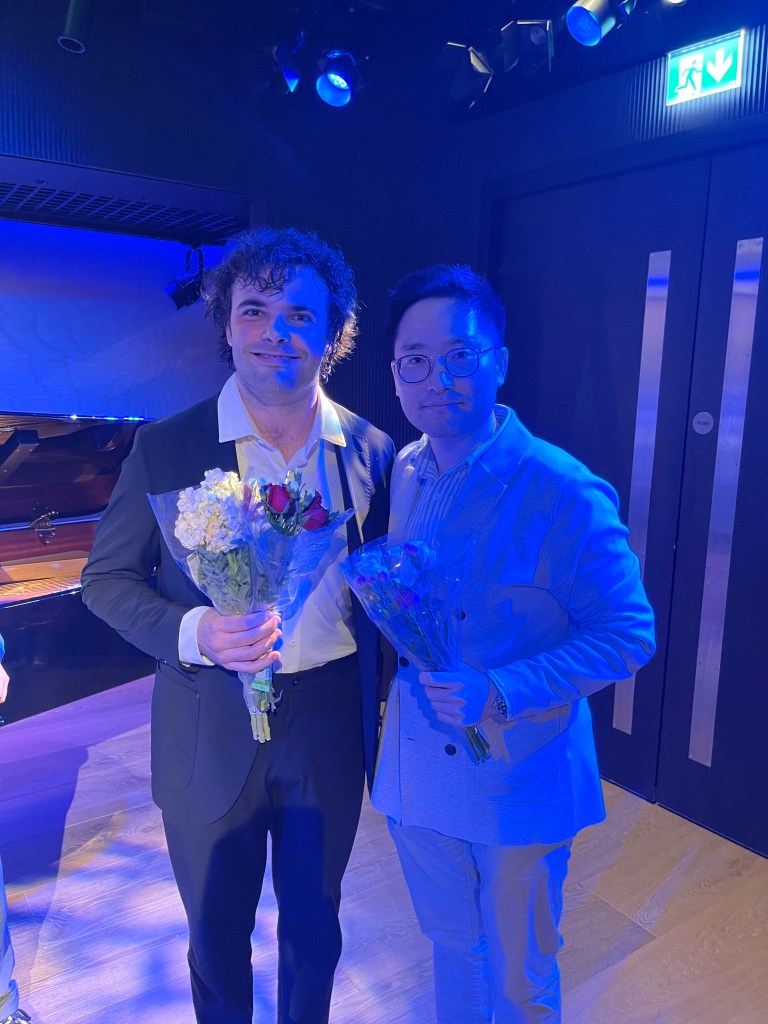
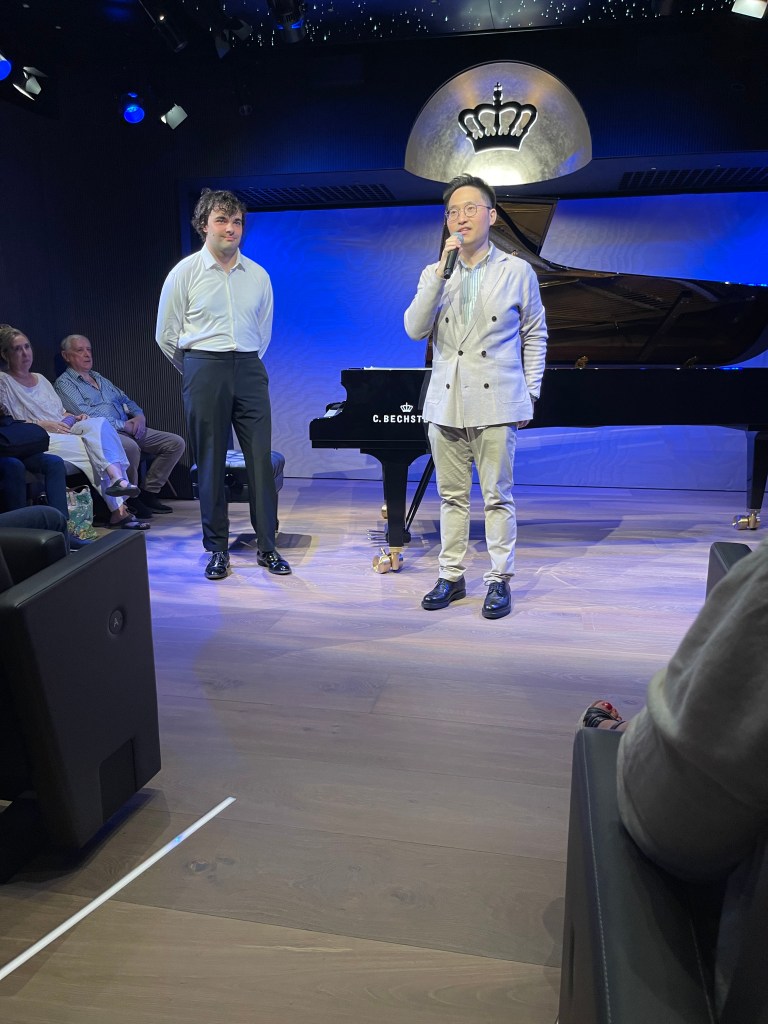


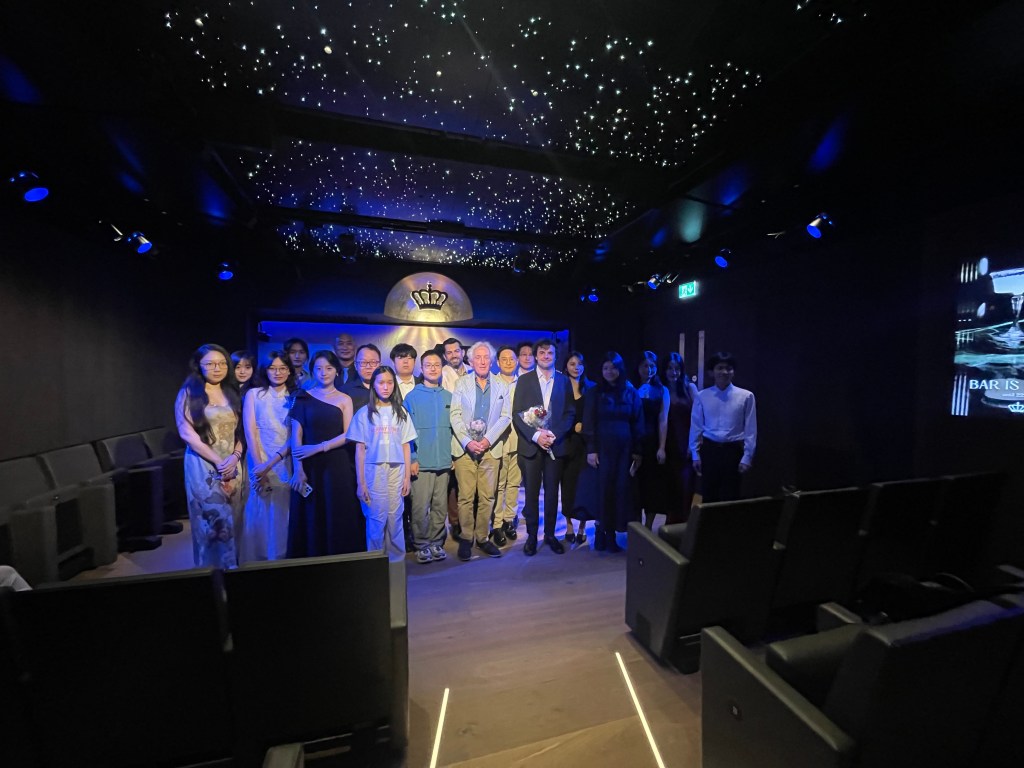

Twenty two year old Yichen Yu heading for Warsaw in what looks to be a gladiators fight to the finish

Playing of refined sensibility and a musical intelligence that like Perahia can see things in the score that lay hidden and are only revealed to the blessed few, those with a musical imagination and a technical mastery that is at the service of the composer.
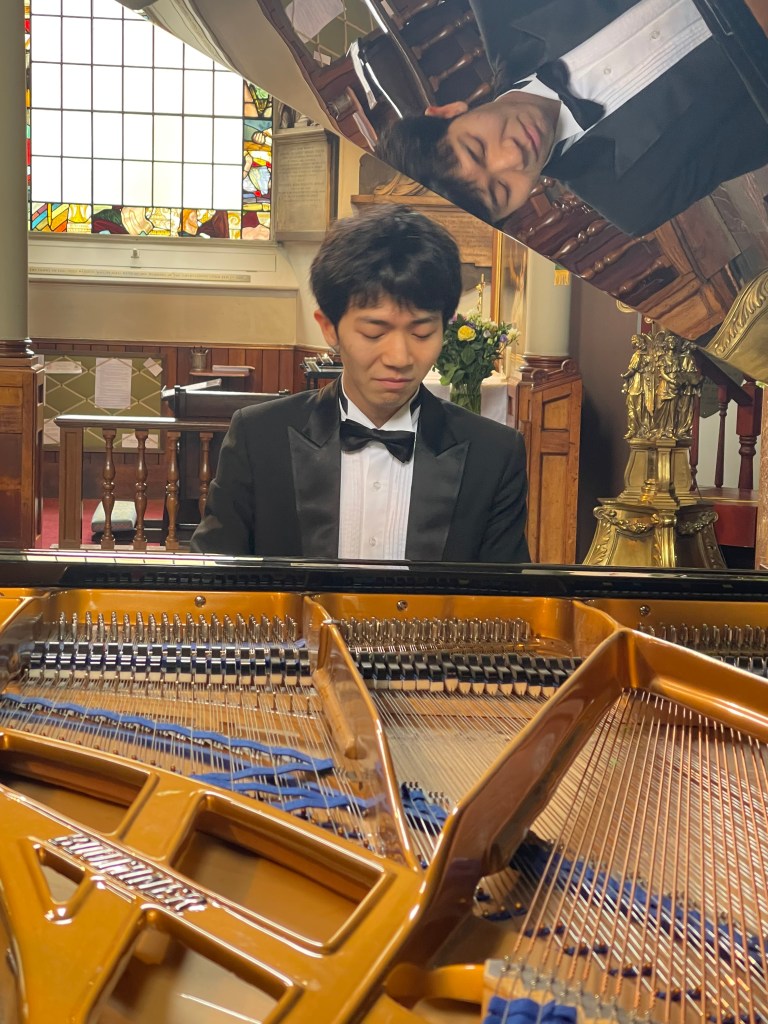

A young man of the stature of Chopin but like the innovative genius of the modern piano has a heart and soul that when needed can roar as loud as any lion. The Waltz op 18 showing from the first notes a refined elegance of delicacy and buoyancy, allowing the music to speak with the beguiling rubato of ‘Les Sylphides.’ There was a refreshing sense of spontaneity and discovery to the Second Ballade. Passionate outbursts but always with a crystalline clarity and the sense of line of a story being told by a true poet of the keyboard.

A wonderful sense of legato to the three Mazurkas op 50 with the poignant beauty and radiance of the last in C sharp minor.
A beautifully expansive opening to the Polonaise-Fantasy with the final vibration placed with gentle care before the Polonaise erupts with a kaleidoscope of colours. Leading to a deeply expansive and poignant central episode before the subtle build up to the tumultuous climax .
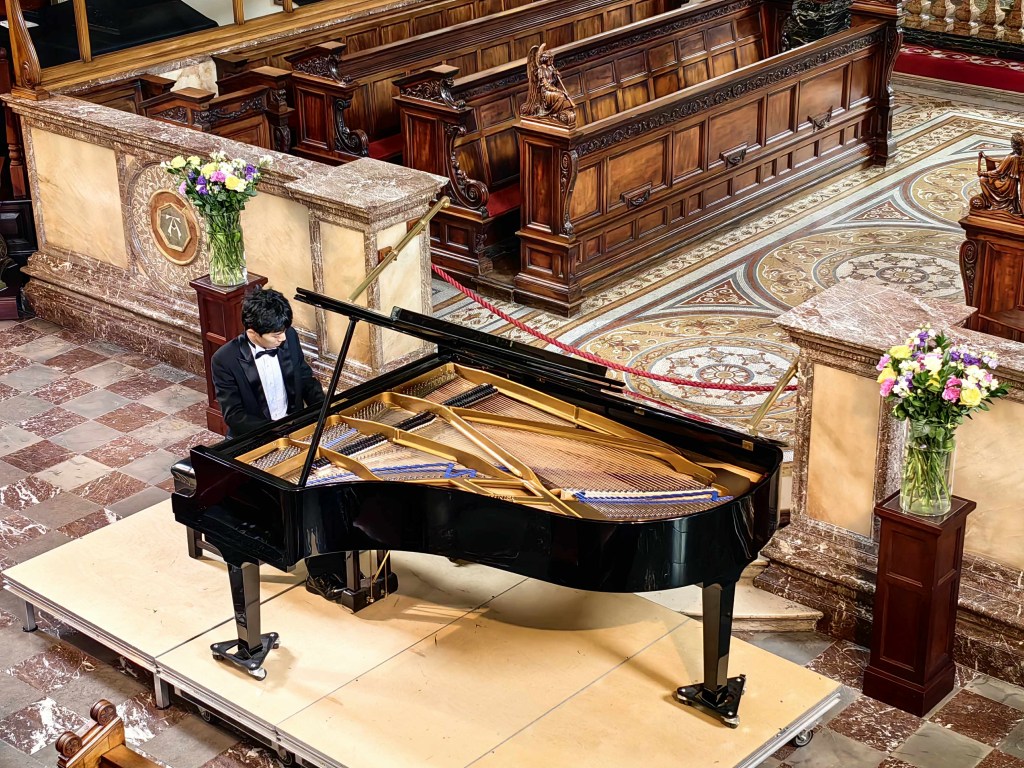

The twenty four preludes were certainly not the twenty four problems which Fou Ts’ong was to describe. A very stylish opening of great sensitivity and extraordinary intelligence with a style that was as though discovering this work for the first time . The third prelude like a continuous stream of water on which the melodic line could float. There was a poignant beauty and refined delicacy to the fourth and what magic he brought to the end of the cello melody of the sixth. A disarming simplicity to the shortest of these twenty four gems was followed by the subtle brilliance and controlled passion of the eighth. The ninth was quite sensational, as I have never known the left hand octaves take on such a major role before. It was followed by the fleeting ‘jeux perlé’ of the tenth and the silky legato of the eleventh. Restrained brilliance to the thirteenth but played with a mastery that allowed the music to move inexorably forward to the final dramatic two octaves. A radiant flowing beauty and magical sense of balance to the thirteenth and after the wind blowing quite gently over the graves, we arrived at the sublime simplicity that only a great pianist can bring to such a well worn tone poem as the ‘Raindrop ‘ prelude . Ravishing beauty where even the ominous central episode was never allowed to overwhelm. The sixteenth, that usually strikes terror into the finest of pianists, was played by Yichen with a musicality and rise and fall of the swirling notes sustained by an unrelenting left hand. It lead to the joyous outpouring of the seventeenth . The nineteenth, one of the technically most difficult, was played with an ease and grace where yet again it was the music that was utmost in this poet’s heart and fingers. The final Prelude was played with a power and passion that belied the stature of this young artist.


It was the same passion and dynamic drive that he brought to the Polonaise ‘Héroique’ that he finished his recital with.
I have never heard the notorious march of the cavalry played with such mastery that the octaves disappeared into the background as the bugle call was what interested our young pianist, playing with a seamless legato and a superb sense of balance.
The encore of Chopin’s study op 25 n 7 was played with delicacy and strength with an intelligence full of poetic insights.
A remarkable artist and a true poet of the keyboard .

Realms of gold for the 3rd concert in this remarkable series of Hao Yao’s Classical D International Piano Festival .

Today an eighteen year old Xuanxiang Wu who plays quite simply with the unforgettable golden sound of Gilels.

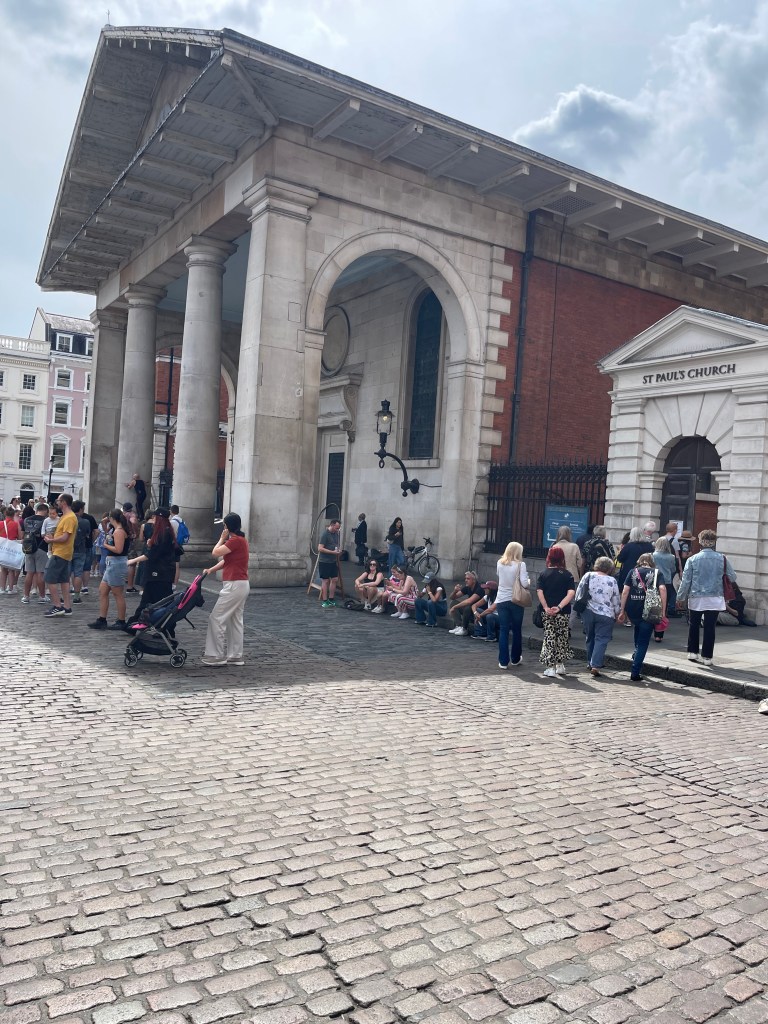
The actor’s church in Covent Garden was the favourite venue of Sviatoslav Richter, intimate with a perfect acoustic, just a stone’s throw from the Opera House, but if you approach it from the gardens behind it is an oasis of peace and beauty .

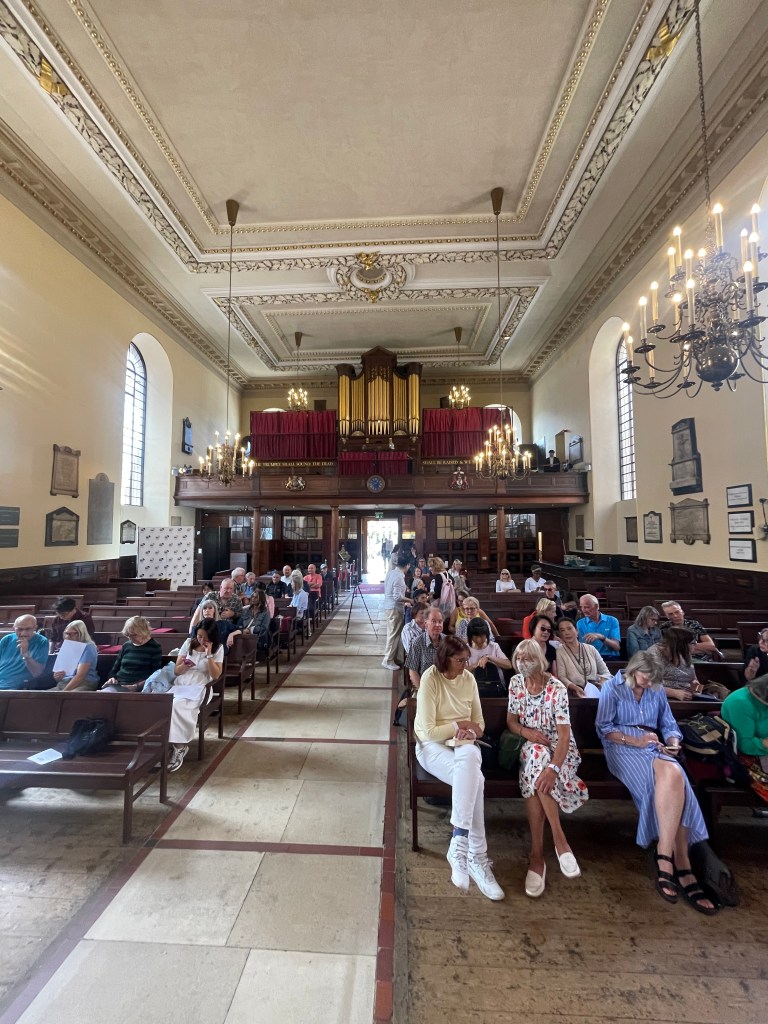
All the garden benches dedicated to famous actors,with poetic inscriptions, one of which caught my eye: ‘We shall never look upon his like again’. In this age of fast communications it is so refreshing to see how so few words can mean so much . ‘A life’s work nobly done ‘ might well have described Richter or Gilels or even Sybil Thorndyke, whose plaque with her husband overlooked the piano today. She was a great actress but also an accomplished pianist.

A Young Chang piano donated to the church was just another coincidence that allowed this wonderful Chinese pianist to create sounds that this noble edifice has certainly not heard since Richter.


A young pianist trained in Shanghai conservatory but for the past four years has been accepted by the Junior Juilliard in New York. Now his studies will begin in earnest with Yoheved Kaplinsky ………he will delve deep into the vast piano repertoire ready for a world that will be waiting with open arms for such a great artist.


After a seamless Schubert Wanderer Fantasy, where none of the awkward joins were allowed to disturb the genial invention of a work that was to lead the way for all those that were to follow Schuberts all too short time on earth. A towering performance of Chopin’s study in C sharp minor op 25 n 7, that was like climbing a mountain to survey the world from on high, before returning to the ethereal beauty on earth. Liszt’s ‘Harmonies du Soir’ barely whispered opening with jewels that started to glisten and gleam in its midst until exploding into unimaginable passion .
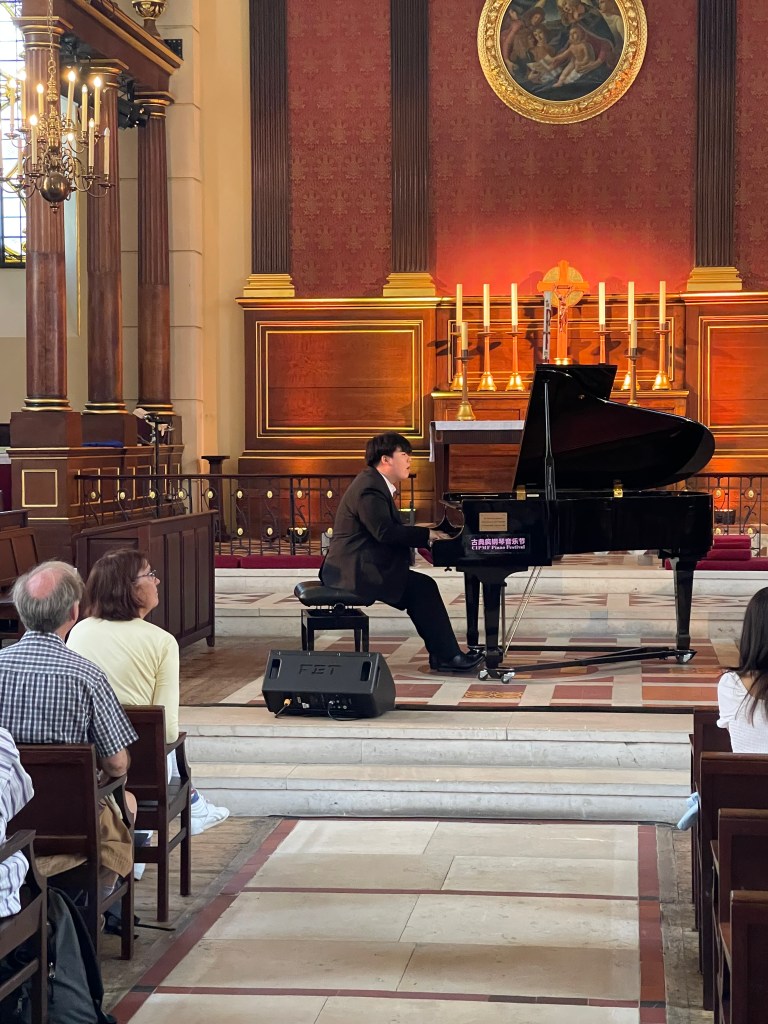
Beethoven too, with the simple passionate outpouring to ‘Thérèse’ that some say was his mysterious distant beloved.
It was played with a rhythmic precision without any hard edges or ungrateful sounds. It was a masterly outpouring of Beethoven for his love. It was played with the same love and beauty with which it was penned.


The ‘Don Juan’ Fantasy is a famous ‘tour de force’ that strikes terror into any pianist. Not on this occasion, as such was the mastery of our young pianist that he not only played with phenomenal technical control and overwhelming virtuosity. He imbued all he did with a remarkable sense of balance, with radiance and a sense of character that the actual superhuman feats of dexterity were never even thought of. This was Mozart’s ‘Don Giovanni’ brought to life as probably only Liszt himself could have done. Transforming the sedate ladies of the Parisian Salons into a mob of screaming fans.
But this was nothing compared to the absolute perfection of Ravel’s Ondine offered as an encore .

I have never heard such radiance and beauty with the melodic line of that golden sound of Gilels allowing the water nymph her just voice over the swirling water in which she evolved .
A second encore of Chopin’s ‘Aeolian Harp’ op 25 n. 1, brought to mind Sir Charles Halle’s description of Chopin himself playing it on his last visit to England the year before he died .

What a festival and voyage of discovery is opening up in London in these days

Yesterday Yichen Yu with silver in his fingertips and an overwhelming love and mastery in his heart, and now Wu inhabiting the Realms of Gold of Gilels
Tomorrow Xinyuan Wang , bronze prize winner at the Leeds in 2018, at 1 in St Marylebone Church opposite Madame Tussaud’s and at 7 Martin Garcia Garcia, prize winner in Warsaw, in the reborn Bechstein Hall – with a masterclass from 4 o clock onwards
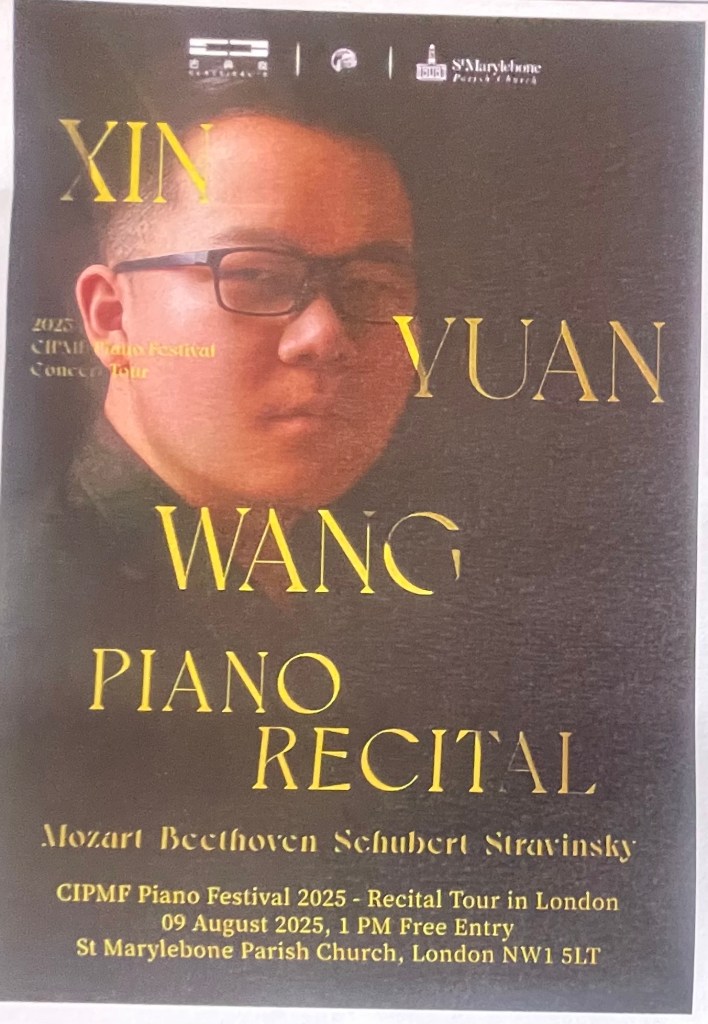
The fourth recital in this remarkable festival of Classical D, bringing some extraordinary Chinese pianist to London in August to astonish and amaze those that choose culture rather than the sun.

After the twenty two Yichen Yu, heading shortly for Warsaw, with the refined sensibility and intelligence of a Perahia.

It was followed by Xuanxiang Wu in St Paul’s Covent Garden. The preferred venue for Richter in later life when he craved anonymity, as he was only the messenger for the Gods that he worshiped.
Not Richter but the Golden sound of Gilels from the hands of this eighteen year old master.

Today it was the turn of Xinyuan Wang , bronze prize winner in Leeds in 2018 , the year Eric Lu won the Gold Medal.
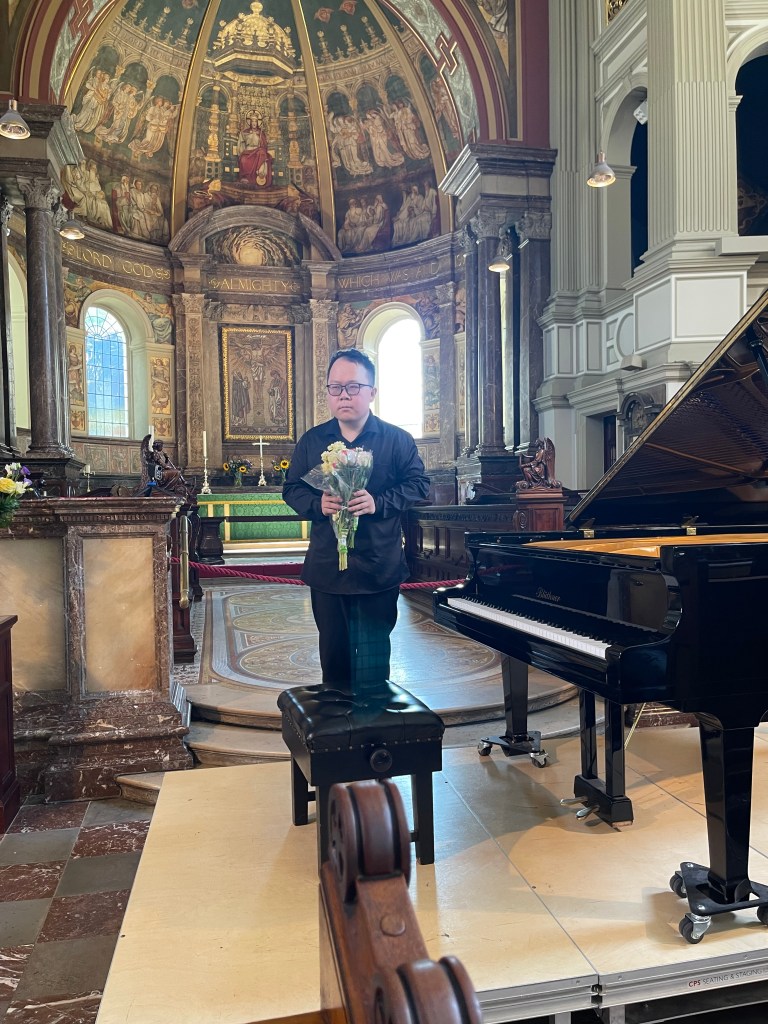
Already a veteran of the Wigmore Hall, but now unjustly neglected in Europe although treated as a God in China .

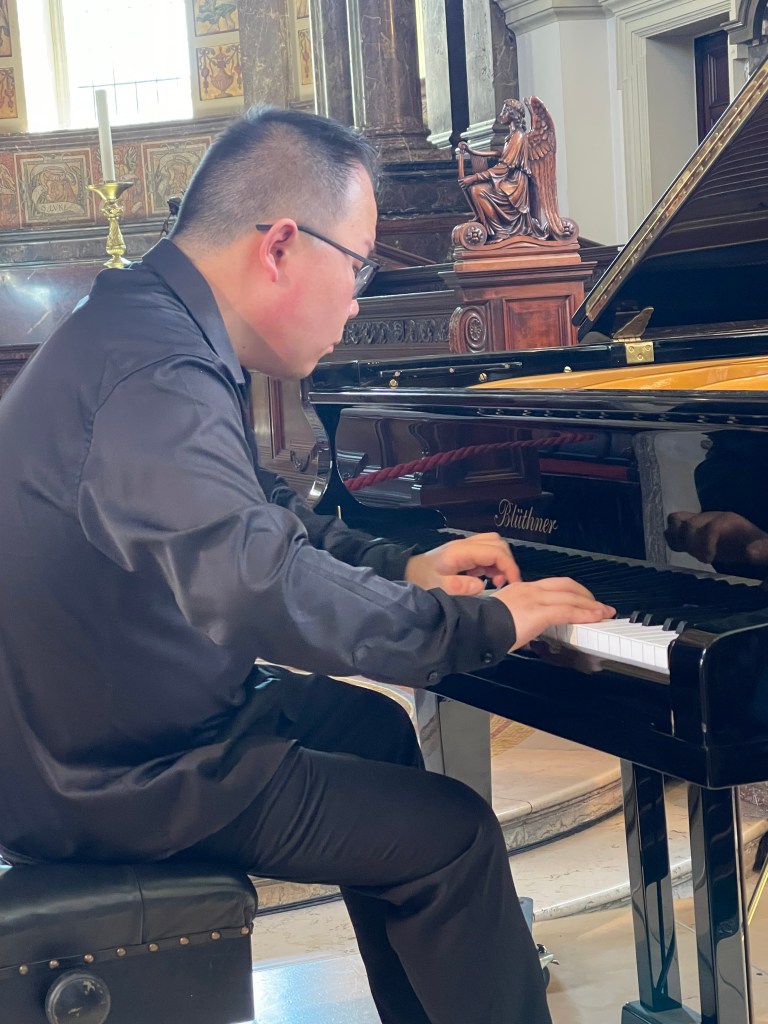
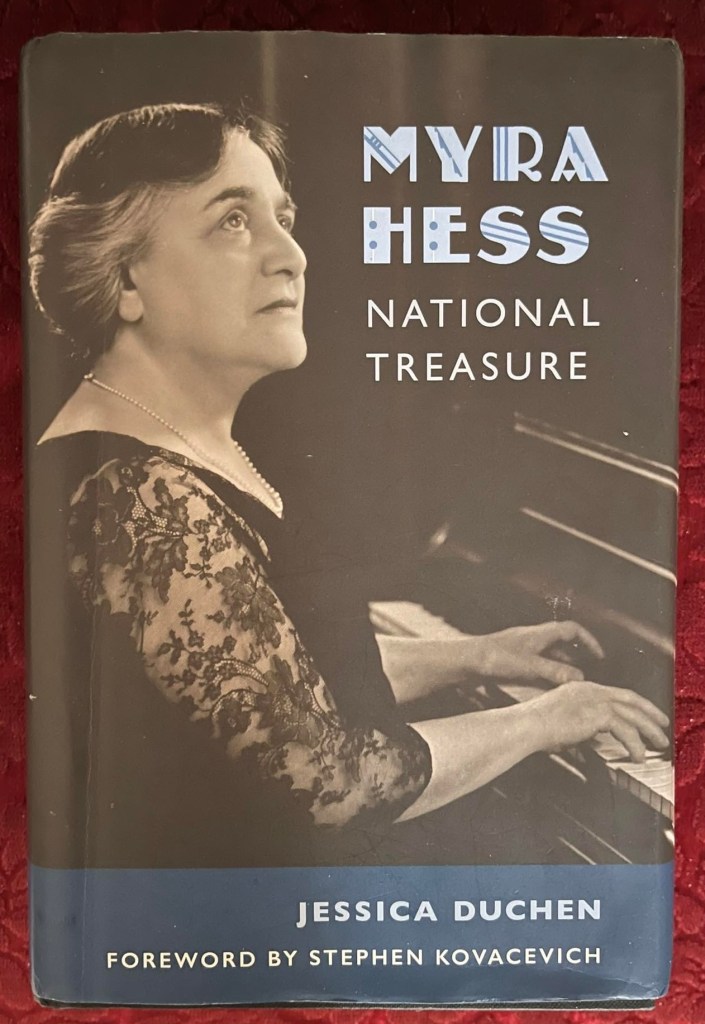
A musician’s musician that can only be likened to Solomon, Myra Hess or her pupil Stephen Kovacevich.
A programme of Mozart, Schubert and Beethoven with encores of Brahms and Schumann. Only allowing himself a ‘Firebird’ finale where Agosti’s miraculous 1928 transcription, sanctioned by Stravinsky, was added to, by a master musician who had looked at the original score and added many details that Agosti had chosen not to include. ‘Augusti’ indeed as the misprint in the programme underlined !

A pianist who not only thinks up from the bass but more particularly using the tenor register (of the thumb and first finger of the left hand ) to add a depth and sonority that indeed reminded me of his illustrious forbears.
It was Schnabel who commented on his programmes having a second half as boring as the first . Schiff too, has pointed out that he sticks with the classical repertoire because one lifetime is not enough to delve deeply into these masterworks and try to find the spark of genius that had created them.

It was exactly this that we heard today .
A Mozart D minor fantasy played with chiselled purity and the subtle inflections of the human voice leading straight into the early D major Sonata, where Mozart’s mischievous ‘joie de vivre’ was turned into sound. Very subtle ornamentation just added to the colour and ebullience of the Genius of Mozart
Beethoven’s ‘Appassionata’ where it was not only the notes that were etched in stone but rests that became the rock on which the work is conceived. The swirls of notes in the first movement were anchored to a bass that I have never heard played with such authority. After a very deliberate but unrelenting last movement the coda just erupted with the frenzy and almost uncontrolled passion of a Serkin.
The four late Schubert impromptus were played, or more correctly recreated, with a simplicity and subtlety that allowed the music to speak as it only can in the hands of a master musician. Annie Fischer, Pires or Brendel spring to mind, as works we have known and loved for a lifetime suddenly appear as new. No gimmicks or personal distortions but music that spoke a language that is only given to truly inspired and dedicated musicians.


The ‘Firebird’ just erupted with a clarity and total authority that when the actual bird was heard hovering in the intoxicating air above the piano, it was so exhilarating and of overwhelming ravishment that you could hear the tension in the hall, even after more than two hours of music. An audience united as one, an all too rare occasion when the genial inspiration of the composer has been transmitted with humility and mastery.
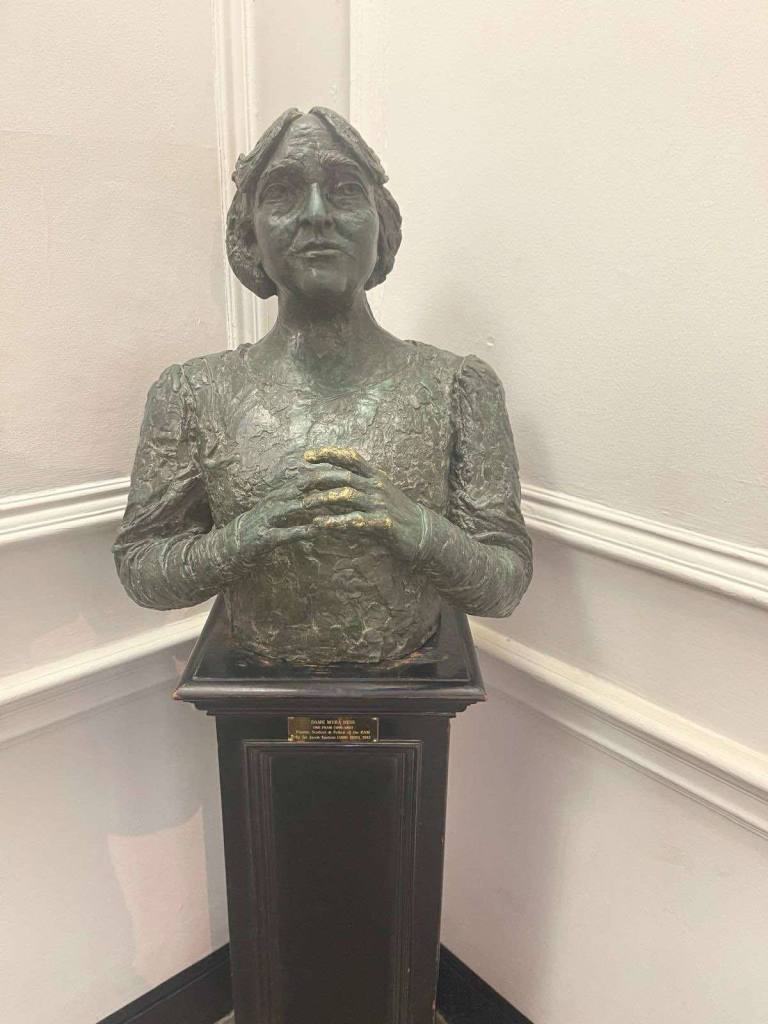
Brahms A major Intermezzo op 118 n.2 was the encore that this master musician offered as an antidote after such exhilaration . It was with the same sound that I remember from the recordings of Myra Hess, who no doubt was hovering above, in the church which is opposite the studio of Uncle Tobbs at the RAM. It is where her bust sits proudly on the staircase as a reminder of the musical values that we must aspire to for all those that enter such a hallowed edifice.
An audience that could not get enough of the music that was evolving from this remarkable artist, was offered another encore ‘perchance to dream ‘. Schumann’s ‘Traumerei’, a dream performance indeed!


London, look what you have missed for too long !
With the passing of Brendel here is the true heir to continue the message of the musical values and integrity that we were privileged to be reminded of for the past sixty years.
Masterclass of Martin Garcia Garcia at Bechstein Hall

Two master students playing Liszt and Chopin, with the Maestro giving them some indications on how to find more character and colour. From the first important question of what picture does the piece conjure up in your imagination?
Both are master pianists as demonstrated in their own recitals in this remarkable festival of Chinese pianists of Classical D of Hao Yao .

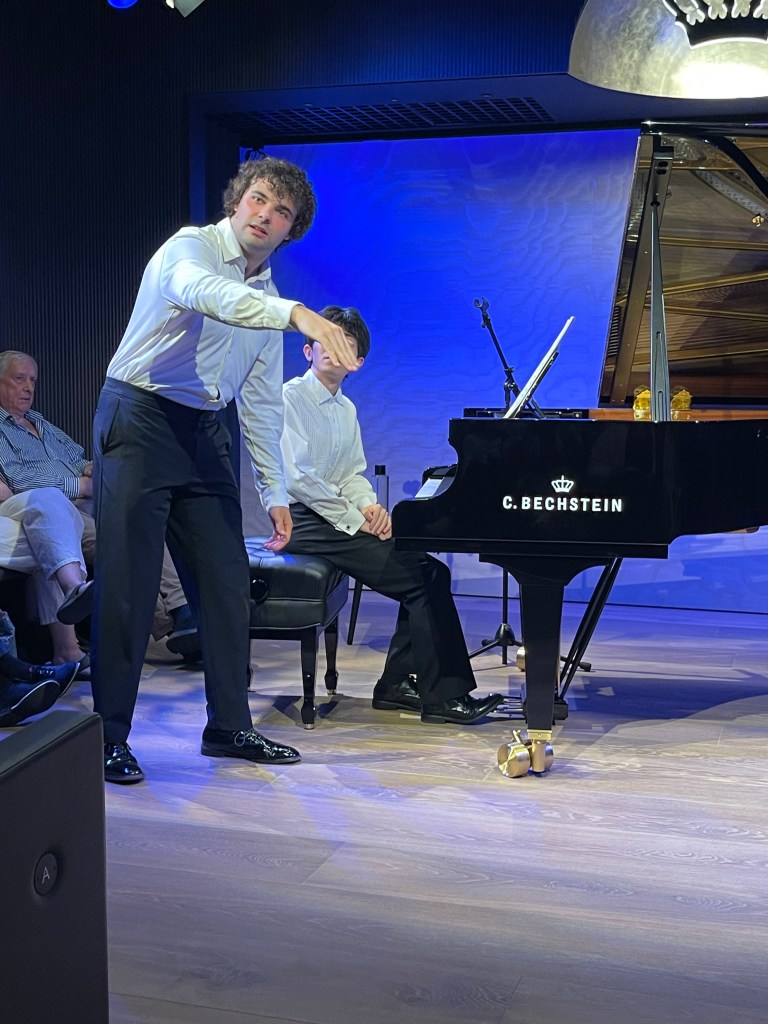
But Martin pointed out that they are afraid of showing their emotions and allowing the music to speak. It was this that Martin tried to show them, with phrasing like a bird in flight that must have a beginning and ending, with phrases of one natural movement. And especially of the relaxed flexibility and beauty of the hand and arm like a painter with strokes of a single line.
What is the pedal for ? What is in your mind as you play? A left hand that should be much more flexible and the anchor on which all evolves.
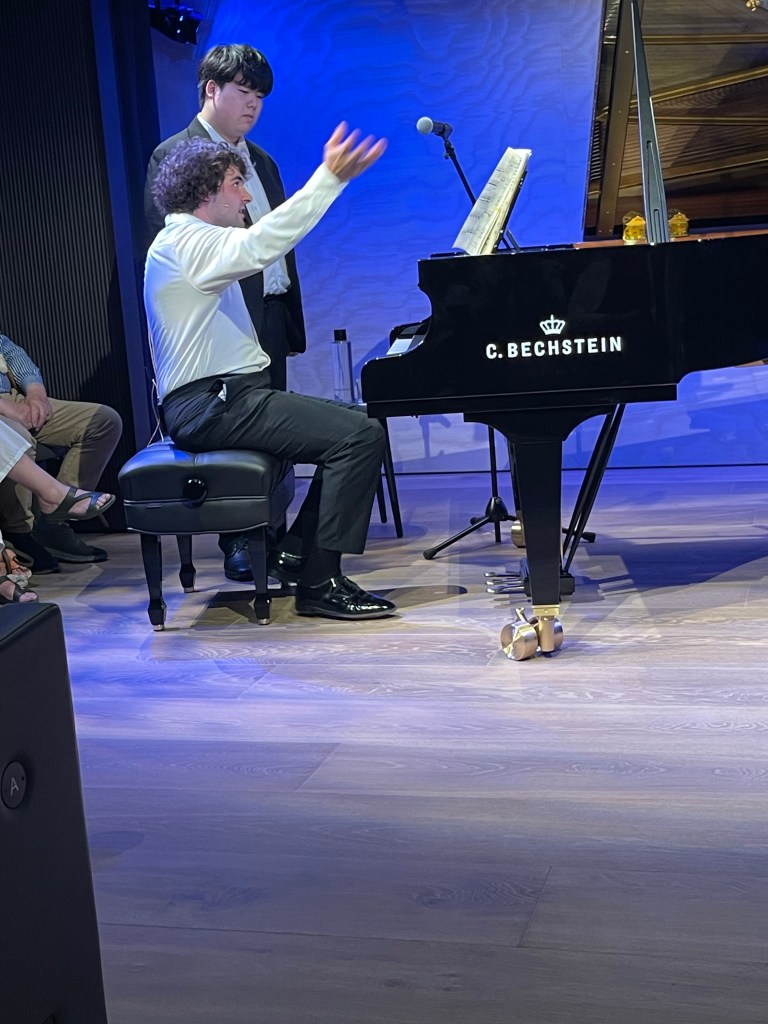
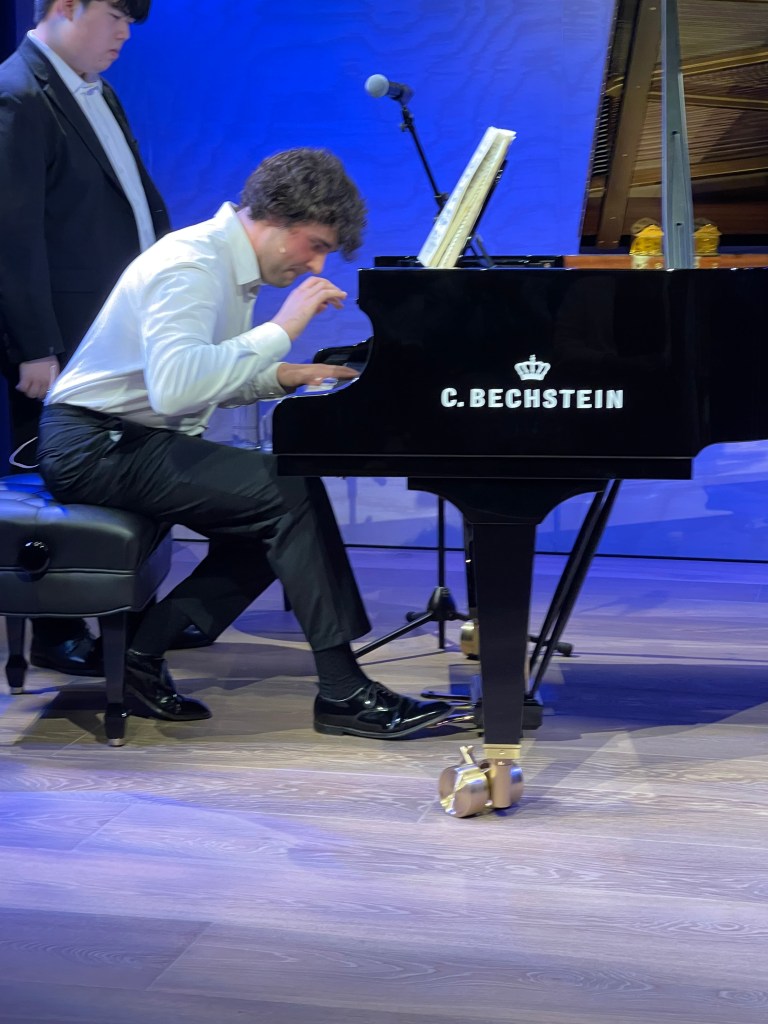
A fascinating glimpse into what can turn a master craftsman into an artist …….but how to do that ? Martin with patience and passionate involvement helped his two colleagues find a path, that he was to demonstrate with such mastery just an hour later, with his own recital .
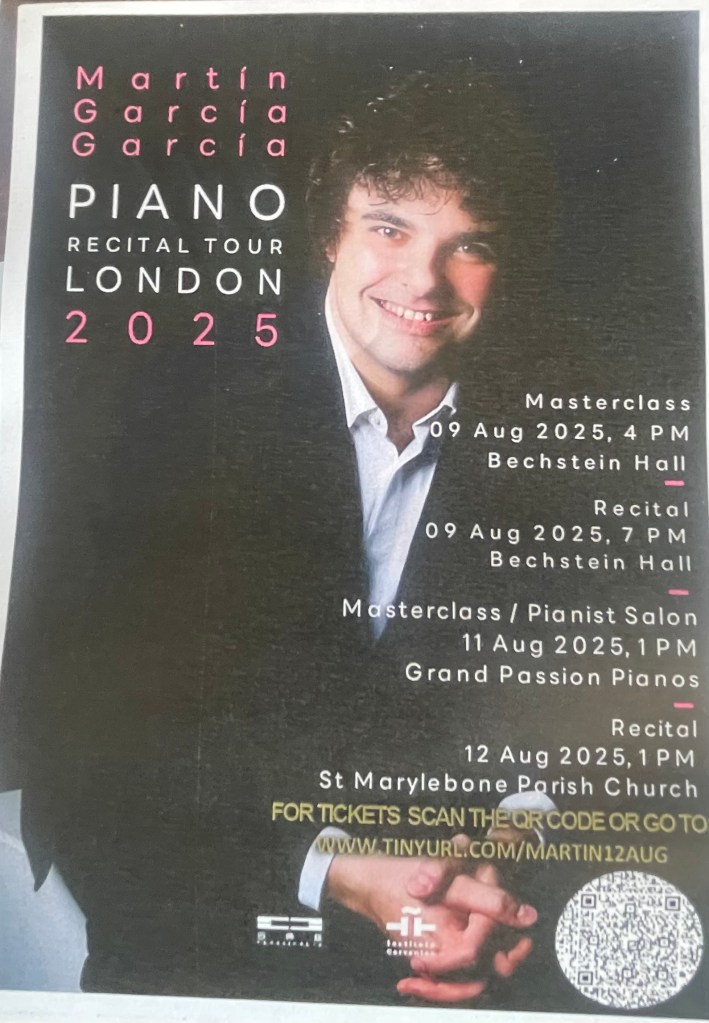
And after a two hour masterclass there was just time for Martin Garcia Garcia to catch his breath before embarking on a wondrous journey of Schubert Rachmaninov and Liszt .

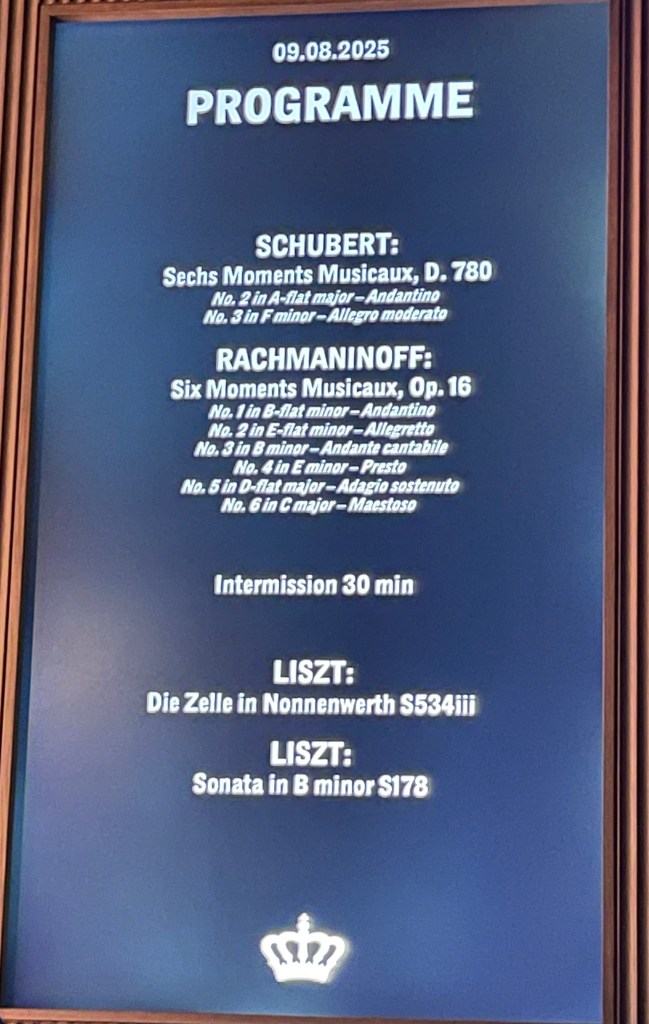
Ending with the monumental Sonata in B minor that Liszt had dedicated to Schumann as a thank you for his dedication of the C major Fantasy op 17. It is one of the pinnacles of the piano repertoire but it took time for musicians and public to appreciate the innovative genius of Liszt, who thanks to Schubert had created a new art form from the classical sonata of it’s age. Even Clara Schumann, into whose hands the score was given as her husband was already in an asylum, declared it an ugly noise. Brahms famously fell asleep when Liszt was playing it to an enthusiastic Wagner.

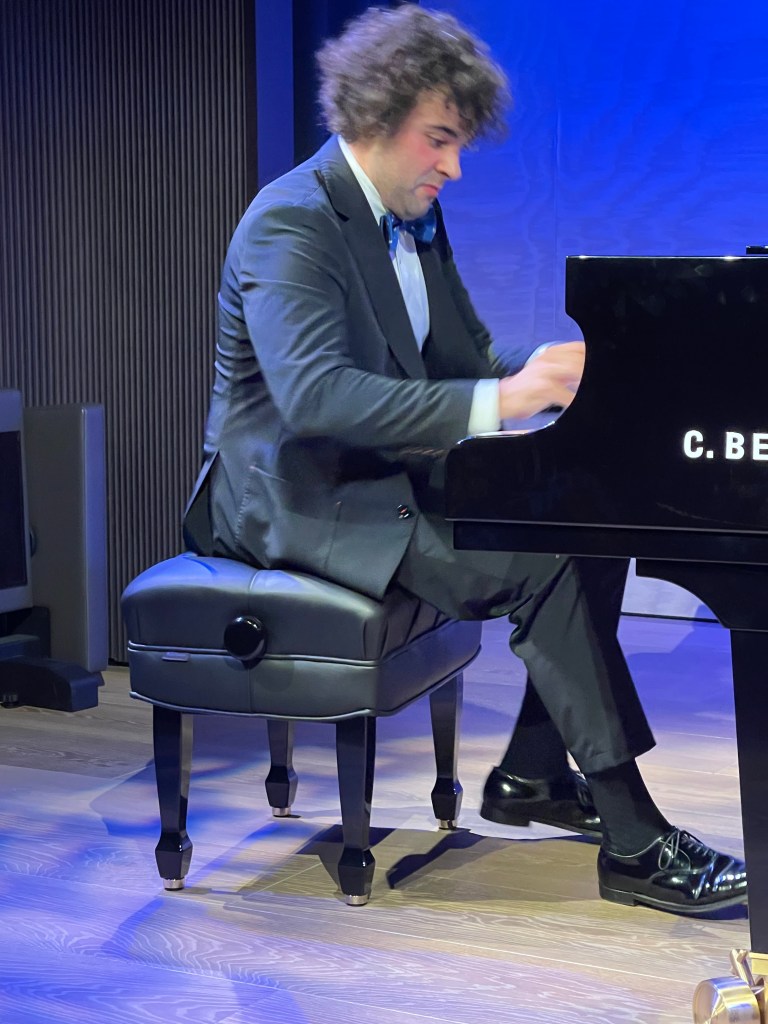
The three main themes at the opening are the characters that pervade the sonata and the ‘leit motif’ that is the the life blood of this romantic art form. It is a work full of emotion and scintillating brilliance of ravishing beauty, but it is wrapped in a form that has an architectural, even monumental shape. Even the tumultuous final climax is followed ( Liszt added as a genial afterthought ) by two pages in which the three main themes literally disintegrate before our very eyes . It is, according to Vladimir Ashkenazy, some of the most remarkable music ever written for the piano . The sonata finishes, as it had begun, with whispered notes deep in the bass and just a final B which closes this wondrous journey.

Martin not only understood the shape of the work but he was able to imbue the characters with a striking personality without ever loosing sight of the overall journey that we were embarked on. Amazing feats of transcendental virtuosity, with the final octaves passing from the right to the left hand with a precision and dynamic drive that is rarely heard in the concert hall.
Ravishing beauty too of the Andante Sostenuto and the quasi adagio, that was continued after the passionate intensity of the central episode, where Martin combined control with romantic fervour.
This was the very demonstration that he had shown Xuanxiang Wu earlier in the masterclass .
He was able to combine control and technical mastery whilst reaching an emotional intensity of passionate conviction . There was magic in the air as the climax dissolved into barely whispered scales marked ‘pianississimo!’

Scintillating ‘jeux perlé’ was contrasted with overwhelming feats of burning energy and drive. Nowhere more than in the development section. which miraculously dissolves into ravishing arabesques . Drama of operatic proportions too, with chords hammered out ‘fortississimo’ and ‘pesante’ only to be answered by the improvised radiance of the recitative. A remarkably mature account from a young man with passion in his blood, but it is a passion tempered with maturity that allows for delicacy and sensitivity. A lasting, cherishing love .
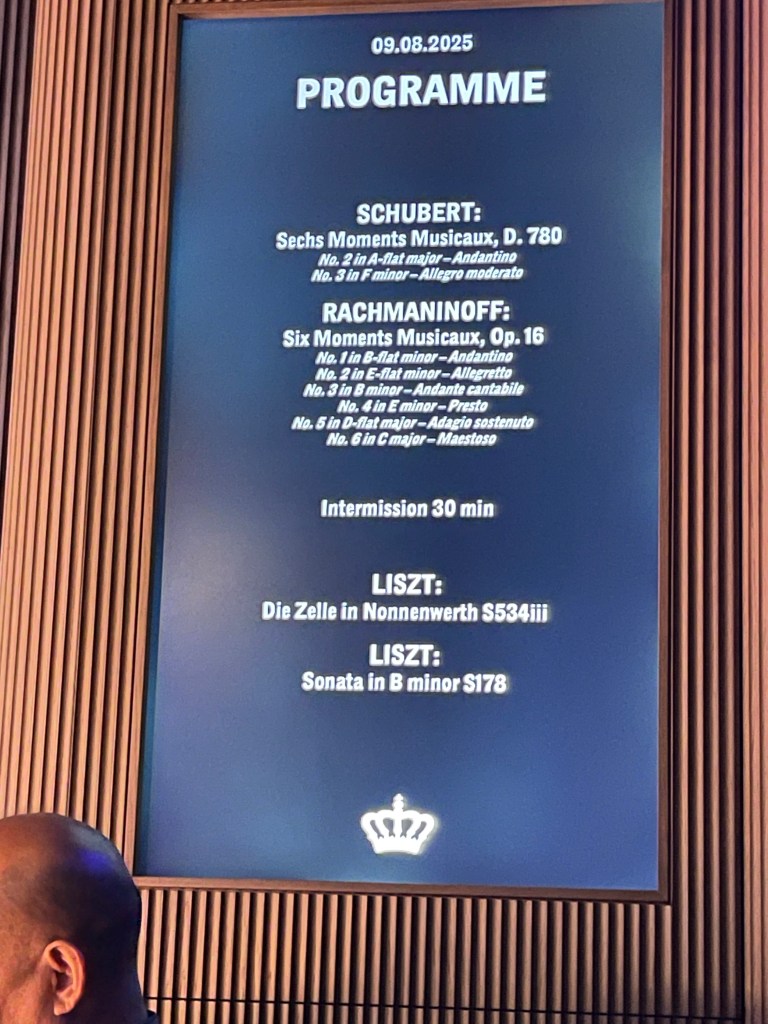
It was the same beauty that had preceded the Sonata, with a discovery of a work unknown to me: ‘Die Zelle in Nonnenwerth’ of mellifluous beauty and startling originality . Martin played it with the same ravishing beauty and sumptuous kaleidoscope of sounds that he had brought to the two (of six) Moments Musicaux by Schubert that had opened the programme.
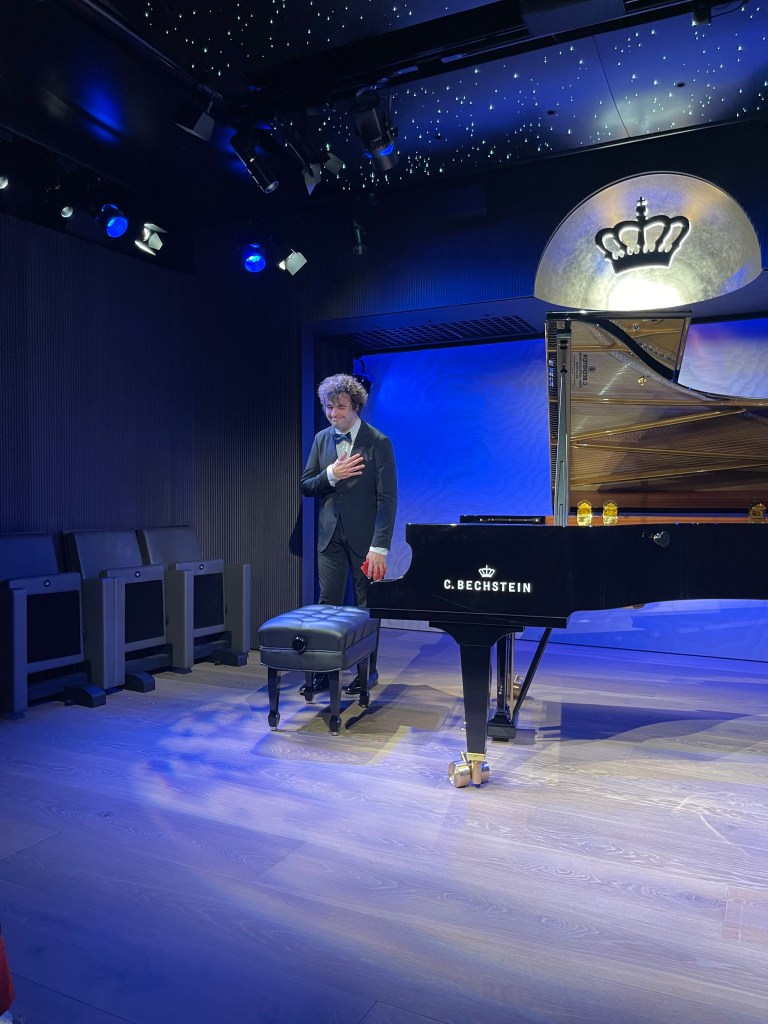
There was delicacy and fantasy to the A flat ‘moment’, and beguiling elegance to the mischievous F minor. This was followed by the complete Moments Musicaux by Rachmaninov op 16.
A feast of an unashamed romantic outpouring, with streams of notes over the entire keyboard . There was a deep brooding nobility to the B minor ( always such a poignant nostalgic key for Rachmaninov ) and the disarming simplicity and poignant outpouring of the fifth. The fourth and sixth were played with overwhelming passion where the glorious sounds of this Bechstein Concert Grand were allowed full reign from the hands and body of this hot blooded Spanish virtuoso.
Two Chopin encores of the First Impromptu op 29 and the Waltz op 42 showed his remarkable natural musicianship. Personality, mastery and intellect are a diabolical combination for an artist of style from the Golden Age of piano playing .
His overwhelming love and mastery showed an obvious enjoyment that shone through all he did, whether masterclass or concert . He truly inhabits that wonderland of Music
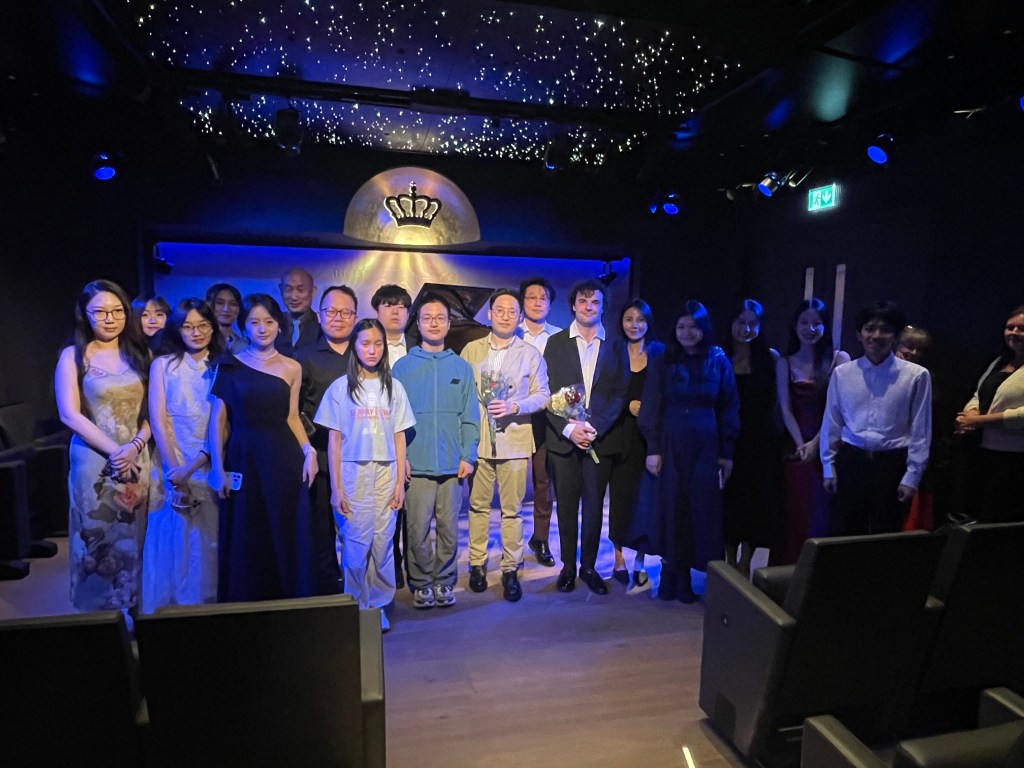
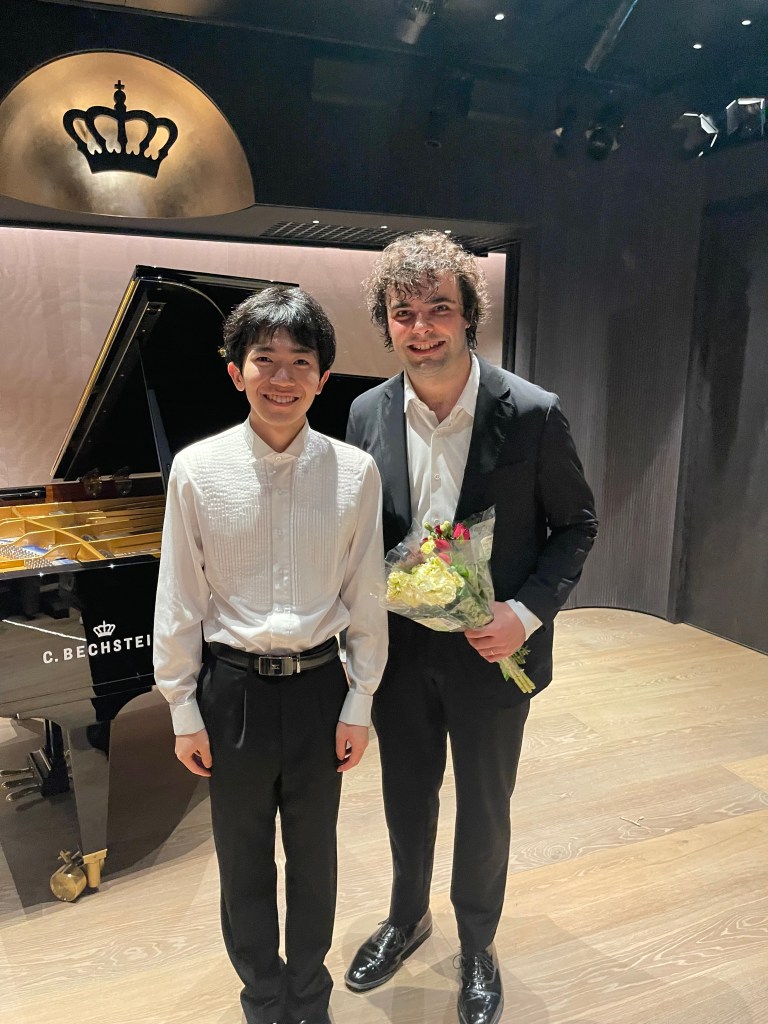


A Masterclass with Martin Garcia Garcia at Muzz Shah’s Grand Passion Piano Salon.

A tour of Pleyel pianos and the difference between Pleyel and Erard or Steinway expertly explained in this oasis of refined elegance that has been created with love, passion and expertise by Muzz Shah in Newman Street
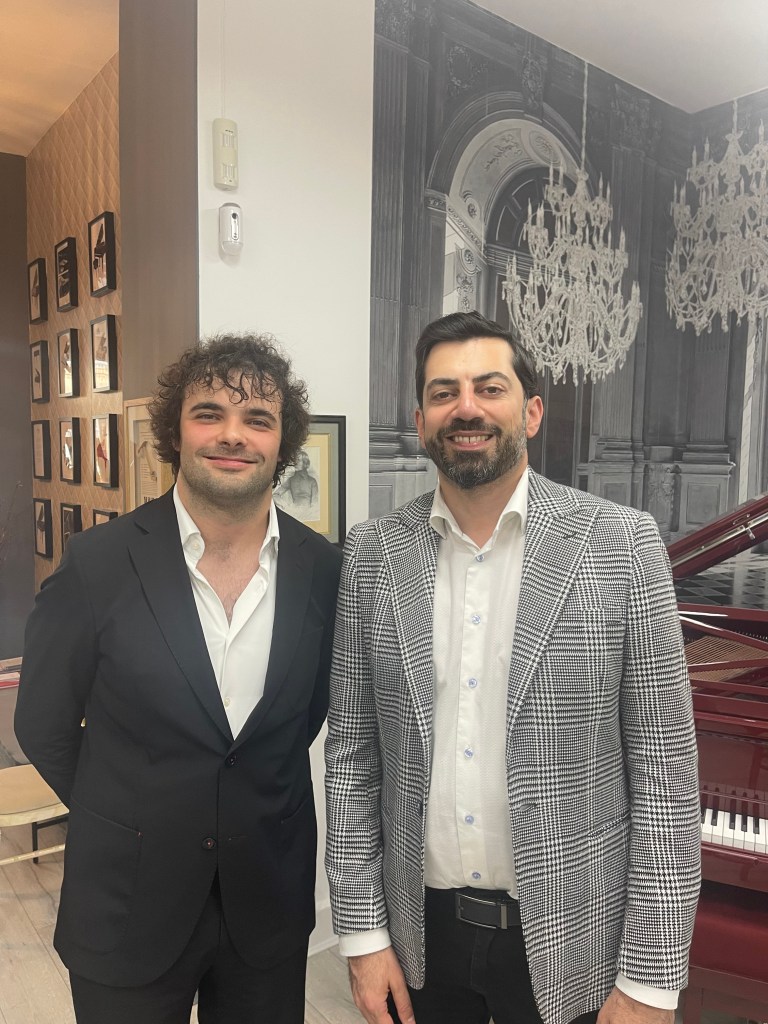
Another fascinating glimpse from Maestro Garcia Garcia , into what goes to make up an artist .
Talent of course, but also hard work and serious preparation .
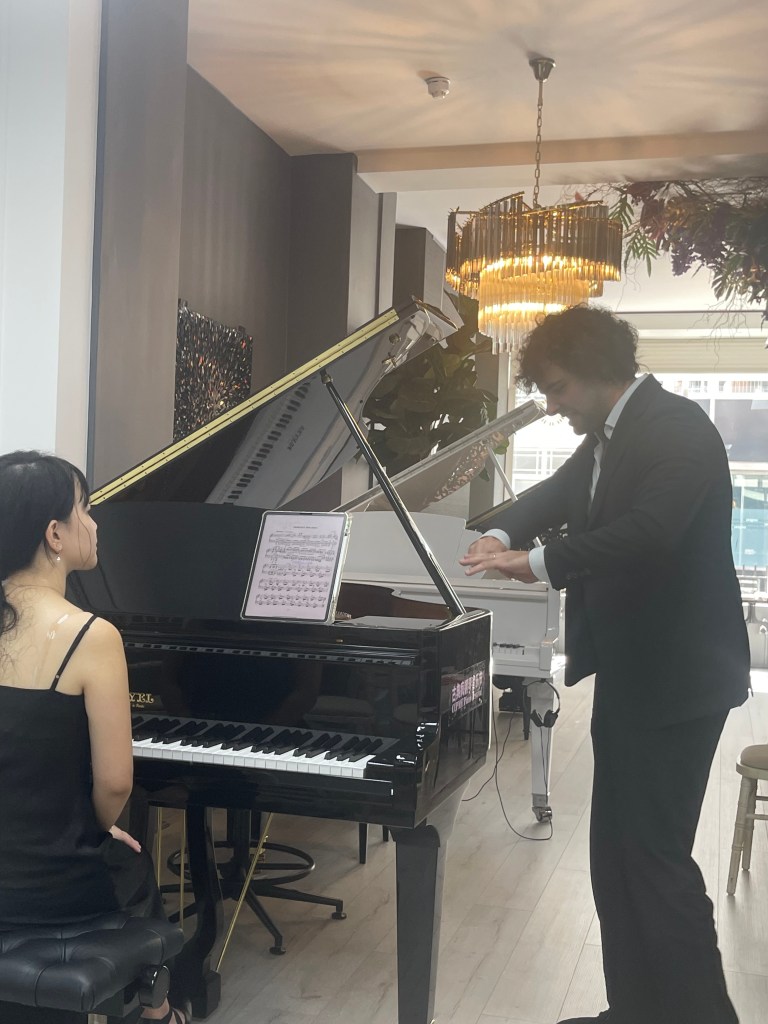
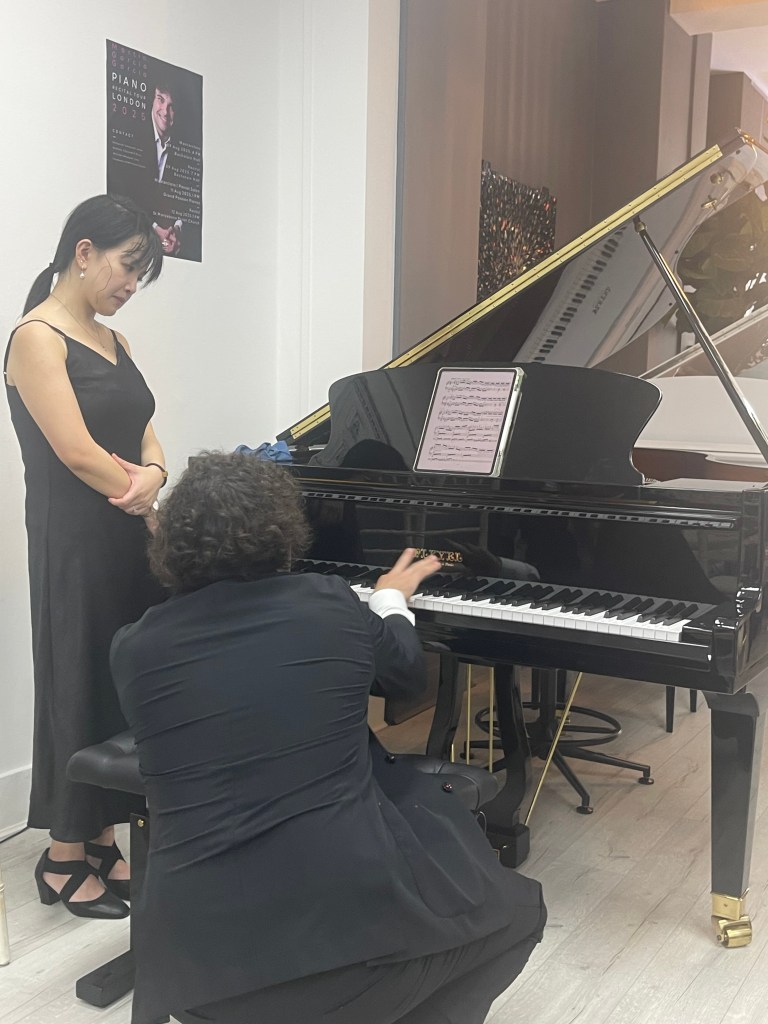
How to articulate with the fingers and how to use your whole arm with relaxed horizontal movements.


Feeling the weight of the keys with bird like movement from below .
And above all sing with a voice of spontaneity and freedom.


An inspiring lesson from a real artist, for those with ears to appreciate it.


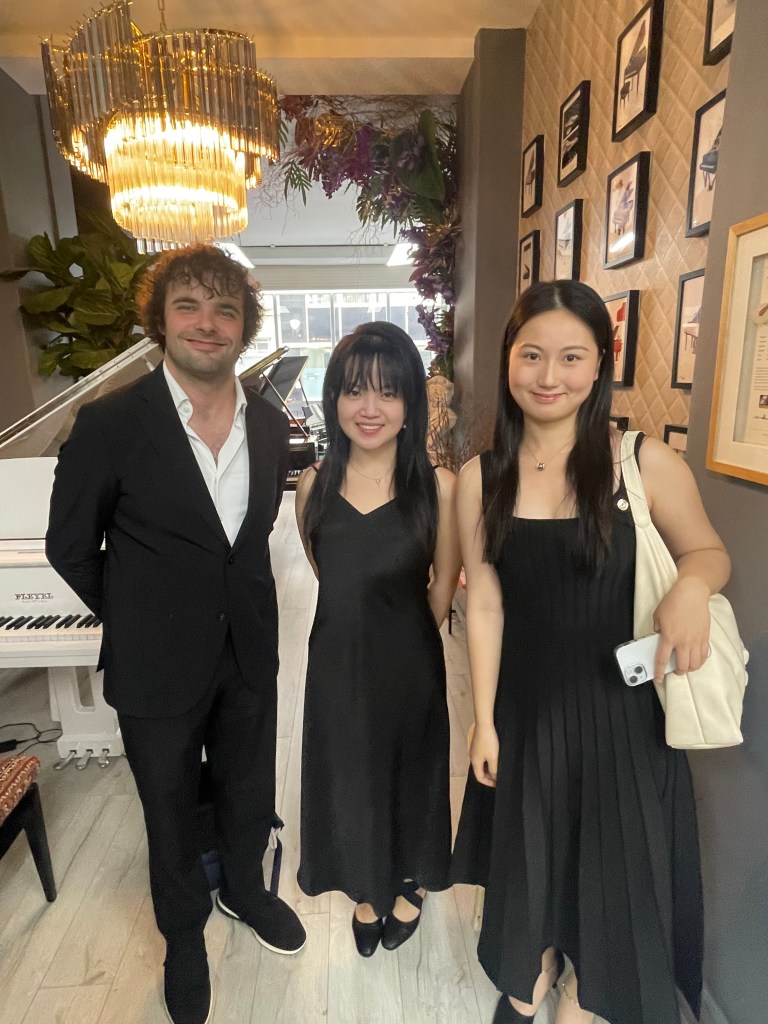

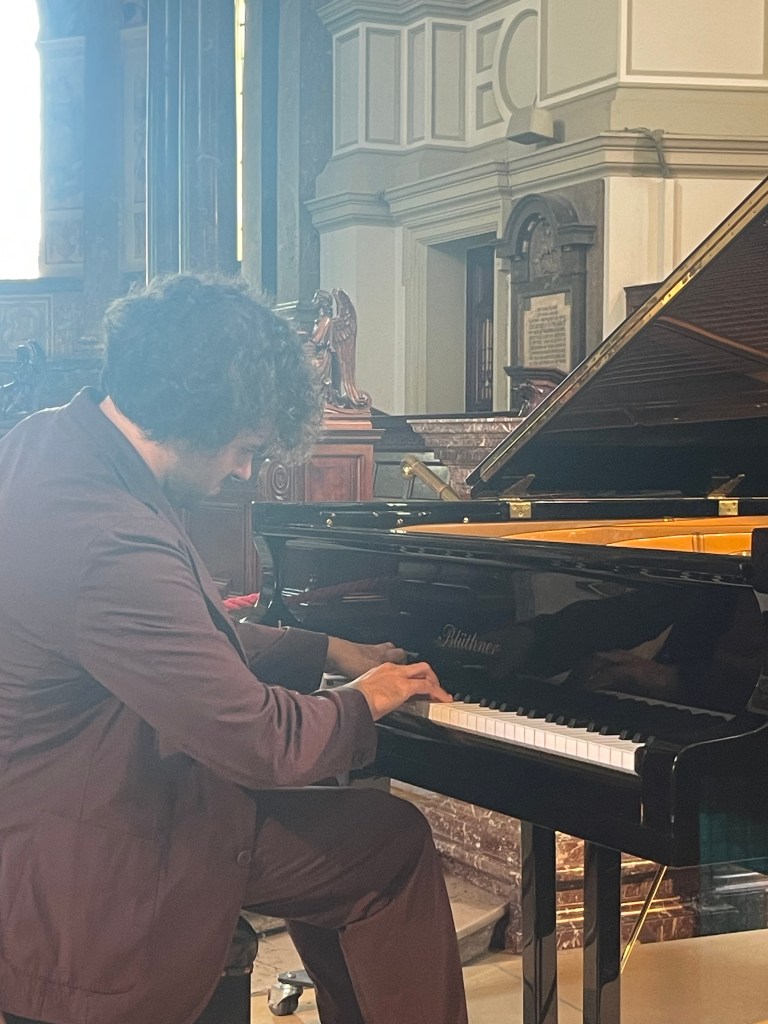
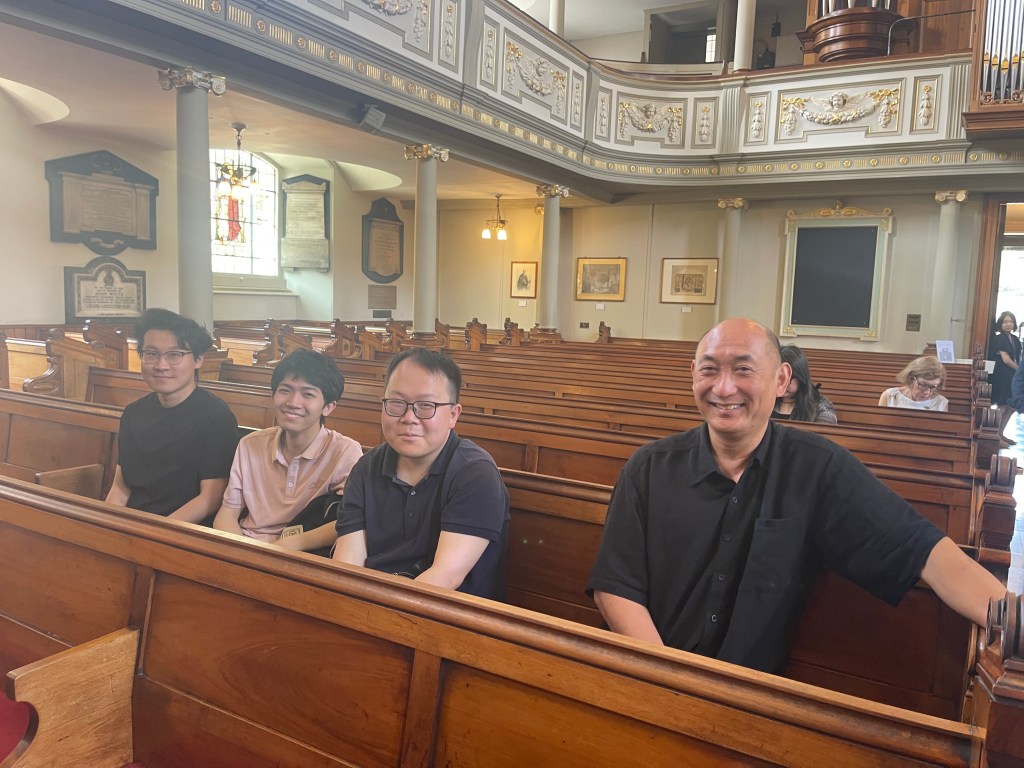
Tropical heat in London but in St Marylebone Church there was a different sort of heat generated by ravishingly beautiful piano playing from a great artist. To quote the distinguished pianist Alberto Portugheis : ‘Apart from being a great pianist I find that every pore of his skin and cell of his body breathes music’. It was exactly this that ignited the atmosphere in this church that sits opposite Madame Tussaud’s and the Royal Academy.

A Polonaise-Fantasy of Chopin that was very subdued and more fantasy than polonaise, but of such beauty that from the very opening chords one wanted this curtain opener never to stop. Each note of these reverberations spread over the entire keyboard with a voice that only Caballé could have matched. A distant roll of the drums and the polonaise is born, but this is the genius Chopin at the end of his life where every note of every counterpoint was of radiance and beauty. The throbbing of the polonaise could be heard throughout but it was more the throbbing of the heart than the cavalry of the previous Polonaise Hérioque. A voluptuously luxuriant central episode brought us back to the magic of the opening . This time, though, the paper was ignited that gradually caught fire under Martin’s masterly control until bursting into the glorious final outpouring of exhilaration and nobility. Of course dying away to a whisper where Martin, too, understood the architectural shape of this genial construction as he struck the final chords with velvet gloves, perchance to dream.

One of Chopin’s last and greatest works but Martin had a surprise in store today. Having played the Liszt Sonata and Moments Musicaux by Schubert and Rachmaninov together with a rare work by Liszt ‘Die Zelle in Nonnenwerth’ , to a rapturous reception at the reborn Bechstein Hall. I was astonished to see today’s programme with Chopin’s very early first sonata , that I have never seen on concert programmes before. Followed by Mompou’s Chopin Variations equally rarely heard. Not the bombastic variations by Busoni or Rachmaninov on the C minor prelude but variations on Chopin’s shortest and most graceful prelude in A , not surprisingly used for the Ballet ‘Les Sylphides’ and just right for Mompou to transport us into his wonderland of whispered sonorities.
Three pieces from the fantastic world of Albeniz’s Iberia had us stamping our heels and clicking our fingers as Martin’s infectious Spanish hot blooded passion truly ignited the hall and almost finished our valiant hero off after over two hours of sublime music making.

Chopin’s first sonata op 4 I have only heard once in public fifty years ago just over the road at the Royal Academy. Shura Cherkassky who lived just a stone’s throw away at the White House in Portland Place had been persuaded to play in the morning to the students.It was followed by other great pianists including Magaloff and Perlemuter ! Shura was obviously in taciturn mood as he played all three Chopin Sonatas one after the other, with hardly any pedal and without his kaleidoscope of colours for which he was legendary and that he had left at home that day ! Ashkenazy plays it on his complete Chopin recordings as does Martino Tirimo on his imminent complete Chopin. Martino is and honorary member of the Chopin Society UK where Martin had included it in his all Chopin programme for the official launch of the Chopin Competition 2025. He was very happy to hear it being played in public and was very pleased to discuss it with me . Written in 1828, when Chopin was 18 and a student of Józef Elsner, to whom the sonata is dedicated. Despite being one of his earliest works, the sonata was not published until 1851 by Tobias Haslinger in Vienna, two years after Chopin’s death.The Sonata op 4 compared to the other two masterpieces op 35 and 58 can seem very ungrateful on the written page. Martin proved today how appearances can be deceptive when one is in the hands of a poet of the keyboard with a technical mastery and kaleidoscope of sounds that can turn what seem baubles into gems. We were astonished today to hear such a beautiful outpouring of Bel Canto with Martin steering us through this youthful work and making sense of Chopin’s knotty twine, finding a sense of line with a superb sense of balance and a beguiling rhythmic drive. He even chose to follow Chopin’s repeats where he filled the music with even more sense of style. A development that was even knottier, as Chopin, the student ,was fast overtaking his teacher with the genius that was to shine through all he did. A development where Chopin’s brilliance as a pianist is obvious too, with moments of technical complexity but always under an umbrella of sound that gave such cohesion to seemingly pointless meanderings.
Martin gave us the same sense of architectural shape that he had brought to his performances recently of Rachmaninov’s early first sonata also much misunderstood. What an extraordinary ending to the first movement, after tumultuous octaves a final nonchalant aside! Chopin’s only Minuet ,they tell me, but what charm and magical sounds of radiance Martin brought to it with jewels shining in the dark. A trio in E flat minor of strangely fragmented music brought us back with relief to the plodding insistence of the minuet. A ‘Larghetto’ played with great concentration and intensity, but which seemed to have all the ingredients of Chopin’s Bel Canto but without that absolute genial inspiration that was to inspire his op 9 Nocturnes and show the voice of absolute genius.A Finale marked Presto, two in a bar , and at 18 pages by far the longest and most intricate of the movements. It was played with quite extraordinary brilliance and dynamic drive. The throbbing melodic line being developed into an intricate web of brilliance, showing the pianistic genius that was about to create a new world for the modern piano of the day with pedals.This was the Chopin who had burst onto the scene in Paris with his op 2 and had inspired Schumann to declare: ‘ Hats off,Gentlemen, a Genius’. Martin showed us too his pianistic genius, that could shape such an outpouring of notes into a cohesive shape with a sense of style and a range of colours that was quite extraordinary. Martin ,in all he does, played with the same love and passion that he does every time he touches the keys, and after such a ‘tour de force’ we were happy to have a break to allow him and us to recover from such a voyage of discovery.

https://christopheraxworthymusiccommentary.com/2024/10/20/posk-chopin-festival-2004-mak-dubiel-pawlak-swigut-a-feast-of-music-and-full-immersion-with-lady-rose-cholmondeley-and-prof-john-rink/
The variations on a Theme by Chopin is a large work imbued with that wondrous sound world that inspired so many miniature atmospheric pieces for the piano. In Martin it has found the ideal interpreter bringing to life a composer much neglected not say even denigrated by some! Guido Agosti ,a prodigy of Busoni, who held court for over thirty years in Siena ,once took the music of a piece by Mompou and put it in the waste paper basket saying to his very fine student ,’Now play me some music’! If only he could have heard Martin today! An improvised beauty with sounds of a fluidity and subtle radiance of playing of horizontal sounds rarely reaching mezzo forte or with ungrateful accents . A magical variation for the left hand and a jeux perlé variation of fleeting brilliance. Martin’s playing of Chopin’s theme alla Mompou will long be remembered as a thing of beauty and a joy forever. Long drawn out variations similar to Fauré were played with intense concentration and extraordinary communication .
La Vega, El Polo and Lavapiés, three pieces from Albeniz’s Iberia played with mysterious fluidity with glistening echos of distant dreams. Melodic lines etched in sumptuous gold with pointed fingers of extraordinary sensitivity and the joyous outpouring of the radiant heat of Spain.

Martin had played with inspired artistry and total commitment for over two hours of intense music making but he still had time to greet the many admirers who wanted to meet the man who had share such a wondrous journey with them


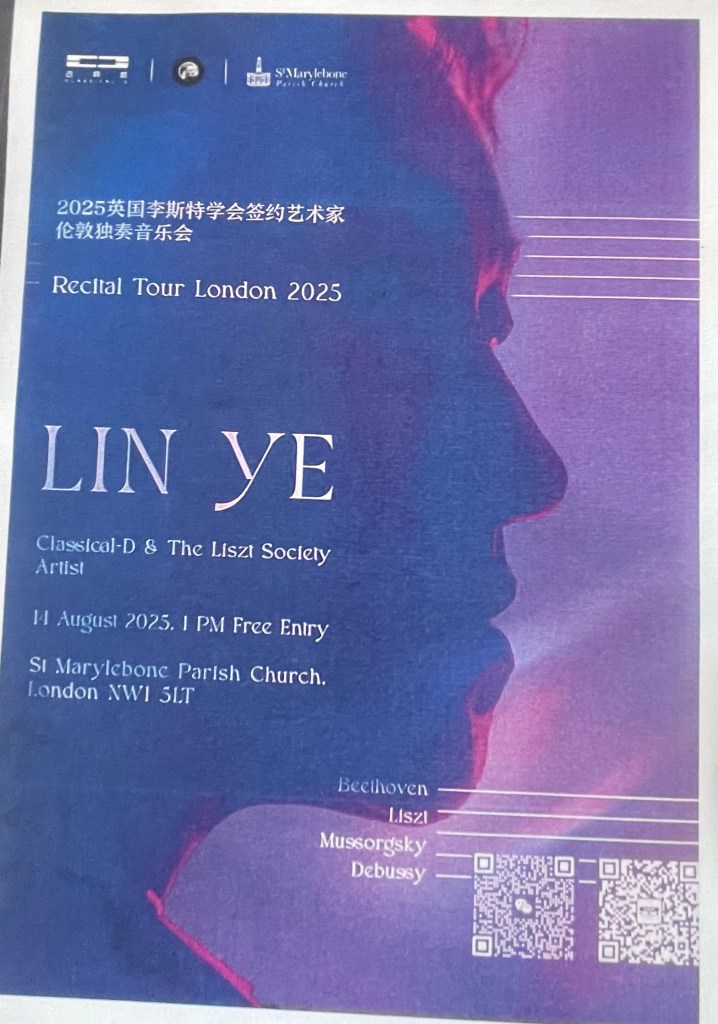

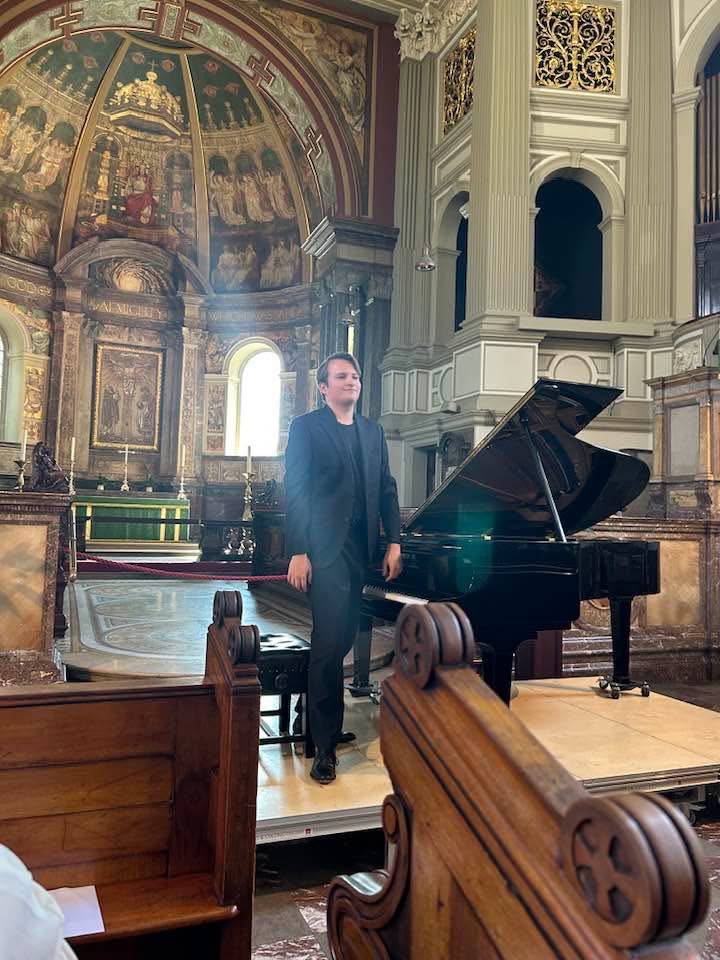
‘Misha Kaploukhii at St Marylebone Parish Church. A superb performance! Bravo Misha’

 ChristopherAxworthy-MusicCommentary