
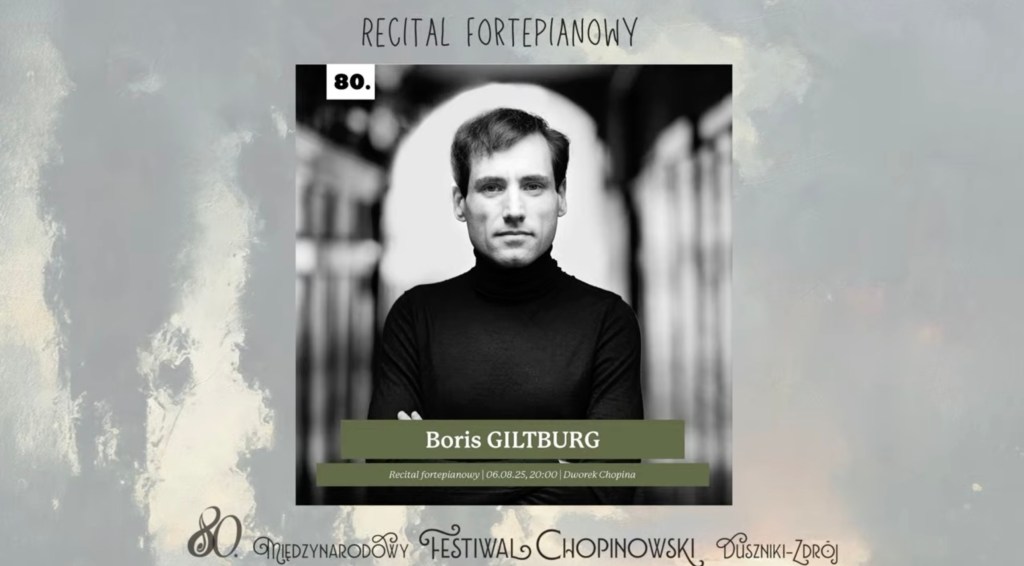

Having heard Aristo Sham and Kevin Chen recently at Duszniki I was fascinated to hear also Boris Giltburg. Maestro Paleczny has such a line up for his festival that unfortunately time to hear them all on their superb streaming is just not possible during the summer months. However I was very interested to hear Boris Giltburg, an established artist and a house favourite at London’s Wigmore Hall, with recordings of Rachmaninov Concerti that have been very highly praised. I recently was at a masterclass for the Beethoven Society at the Reform club in London and was very impressed by his musicianship and simplicity but above all his absolute respect for the score allied to a technical mastery that could find colours and subtle shadings that seemed to elude his young colleagues.

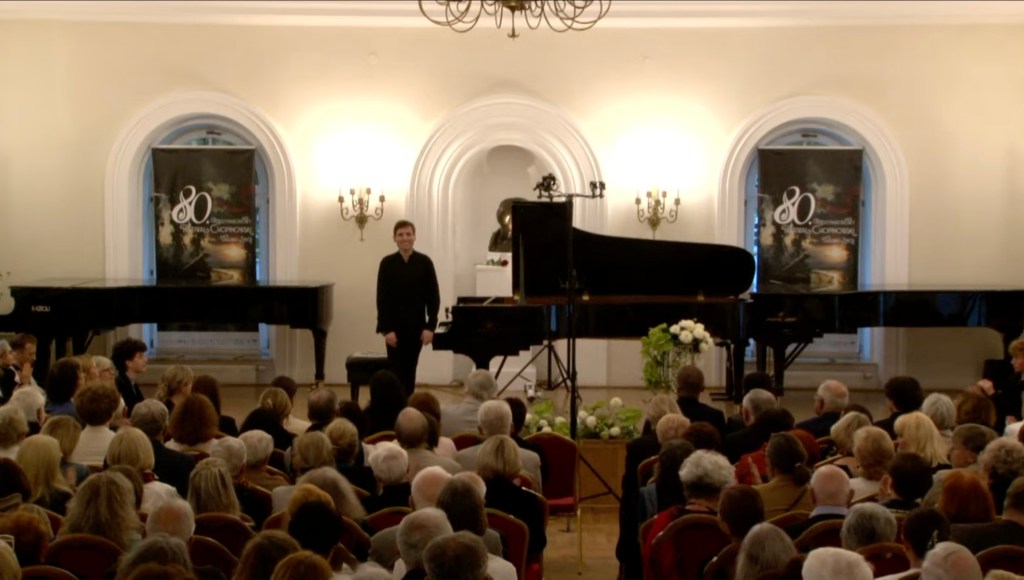

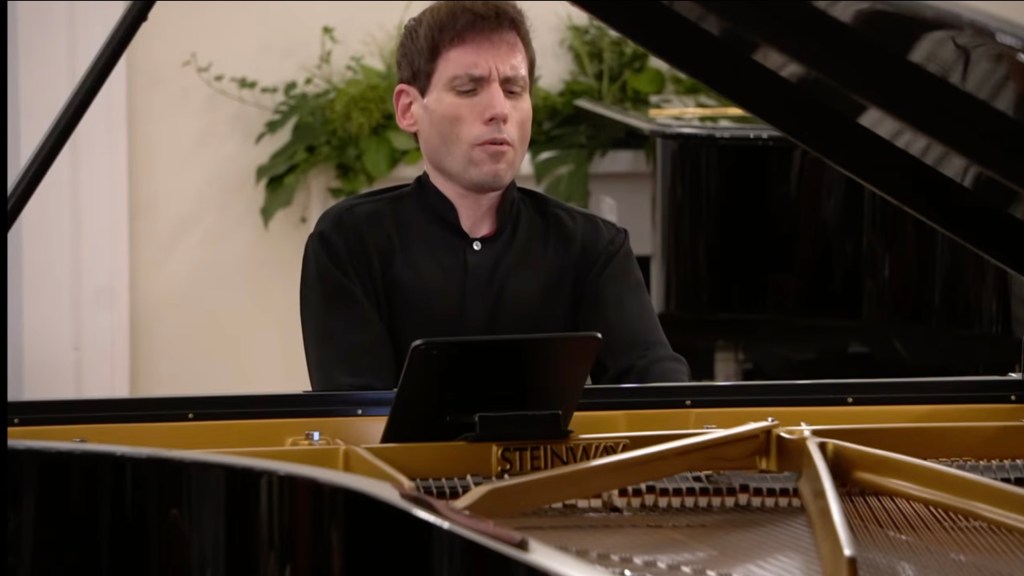
Drama and nobility combined in the ninth and the tenth was thrown off with charm and humour.The dramatic intensity of the hard driven twelfth was relieved by the rustic mazurka rhythm that Boris found hidden within. A languid flowing beauty to the thirteenth was answered by the searing momentary intensity of the fourteenth.There was a radiance and lightness to his ‘raindrop’ ,fifteenth, with a brooding troubled intensity to the central episode played with crane like movements of his arms that gave a dramatic rhythmic punch to this extraordinarily evocative Prelude. Almost jumping off the seat for the tumultuous opening flourish of the sixteenth which he went on to dispatch with enviable mastery and breathtaking precision, the phrases swelling as they rose and fell with excitement and exhilaration. The seventeenth entered immediately with its flowing luxuriant beauty with the deep bass notes creating a magical atmosphere on which the melodic line was allowed to sleep walk in this wondrous landscape. A very slow unwinding of the cadenza flourish of the eighteen build up in intensity until the final chiselled notes were driven home with burning vigour deep in the bass. Beauty and radiance of the nineteenth showed no sign of the technical difficulty of this prelude as Boris shaped the melodic line with refined good taste and style. The mighty twentieth in C minor, used by Rachmaninov and Busoni as a basis for variations ,was played very slowly and deliberately with an enviable control of sound.We held our breath as the sounds became ever more whispered. A beautiful radiance to the melodic line of the twenty first was interrupted by the melodic entry of the octaves deep in the bass of the twenty second. A refreshing fluidity of the twenty third was played with great restraint until a pause before the dynamic passionate intensity of the final heroic explosion of transcendental drive leading to the final three inexorable ‘D’s ‘ deep in the bass. This was a quite extraordinary performance of the elusive preludes where Boris was able to give an architectural shape to the whole whilst giving such character to each one.

The opening of the B flat minor Sonata immediately demonstrated the power and nobility that Boris was to imbue to this remarkable work. Like a great opera singer or actor entering the scene with an overwhelming physical presence that immediately caught our attention as the ‘doppio movemento’ unfolded with agitated brilliance. The debate of whether or where to repeat the exposition was dismissed by Boris by entering immediately the development with Chopin’s extraordinary inventive mastery combining the two main themes in a question and answer that was to explode with passionate vehemence. There was the same aristocratic control that I remember from Rubinstein which like him made the exhilarating accelerando towards the final chord even more breathtaking. A ‘Scherzo’ played with fearless abandon and extraordinary mastery only interrupted by the disarming simplicity of the Trio which in the coda was allowed all the time necessary to unwind with the final two bass notes played with a whispered barely audible pizzicato.The scene was set for the desolate stillness of the Funeral March that was played with a rich palette of harmonic sounds with the Trio of a barely whispered radiance glistening over a masterly controlled left hand wave of sounds. ‘The wind over the graves’ of Chopin’s extraordinarily original last movement was played with a clarity and phrased as rarely heard in lesser hands giving such an intense musical line before the final majestic chord.

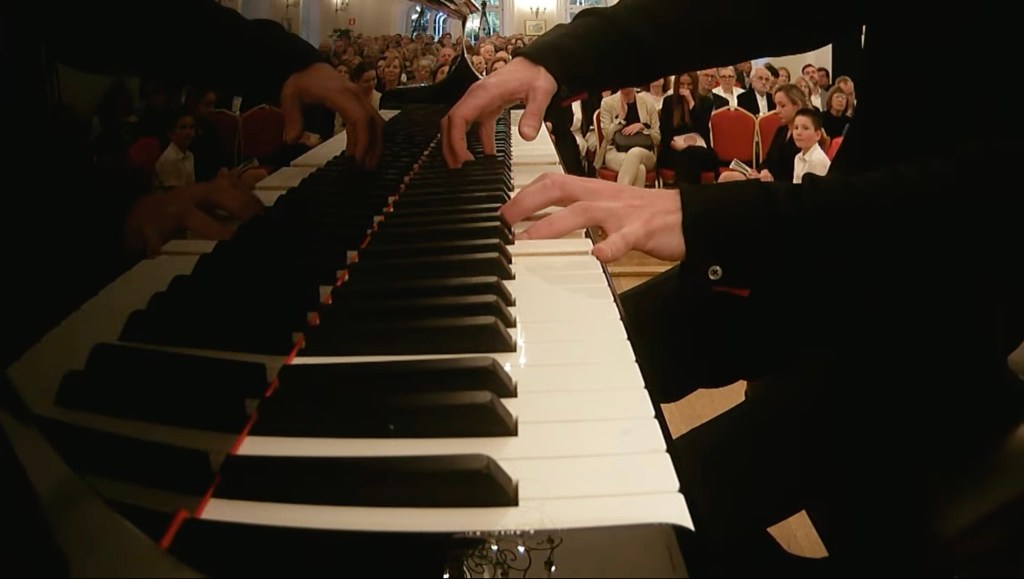
The Fourth Ballade and Scherzo were given masterly performances. The Ballade, from the whispered radiance of the opening where the variations were allowed to unfold so naturally gradually increasing in intensity and transcendental difficulty. All played with superbly phrased passages but with a forward movement that was to take us to the explosion of undulating waves of sound and dramatic enigmatic chords. A coda that was the romantic outpouring of a disturbed soul and genial master of contrapuntal pianistic flourishes. A quite extraordinary mastery and control was tinged with the burning sense of excitement that only live performance can add.
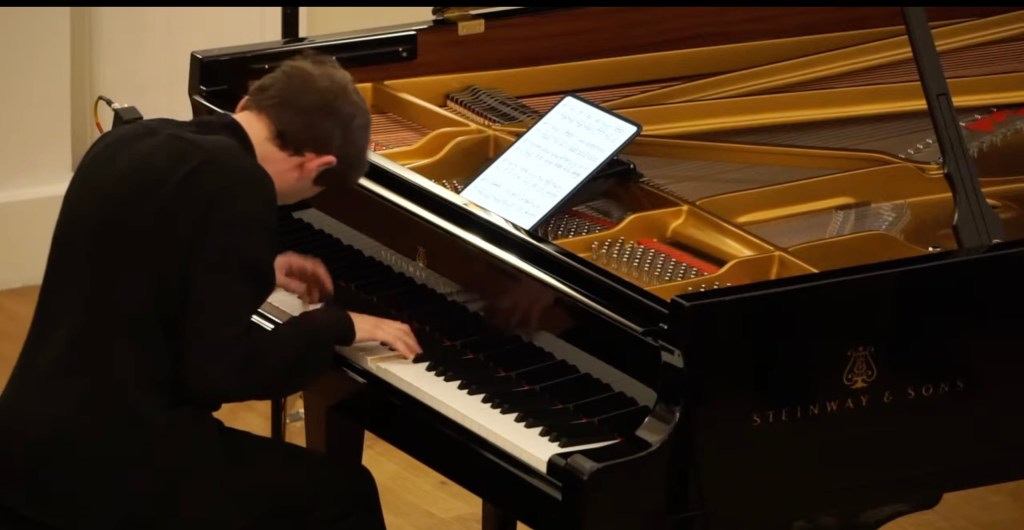
The Fourth Scherzo too was played with masterly control and ravishing beauty. The jeux perlé thrown off with golden sounds that just embroidered Chopin’s genial melodic invention. A flowing luxuriant beauty to the central episode that was allowed to unfold with radiance and poignant beauty before the exhilaration and excitement of the final glorious pages. I would have expected a spontaneous standing ovation usually lead by Maestro Paleczny but although three glorious encores were requested and shouts of approval were heard from the back of the hall the audience remained stubbornly and surprisingly seated.

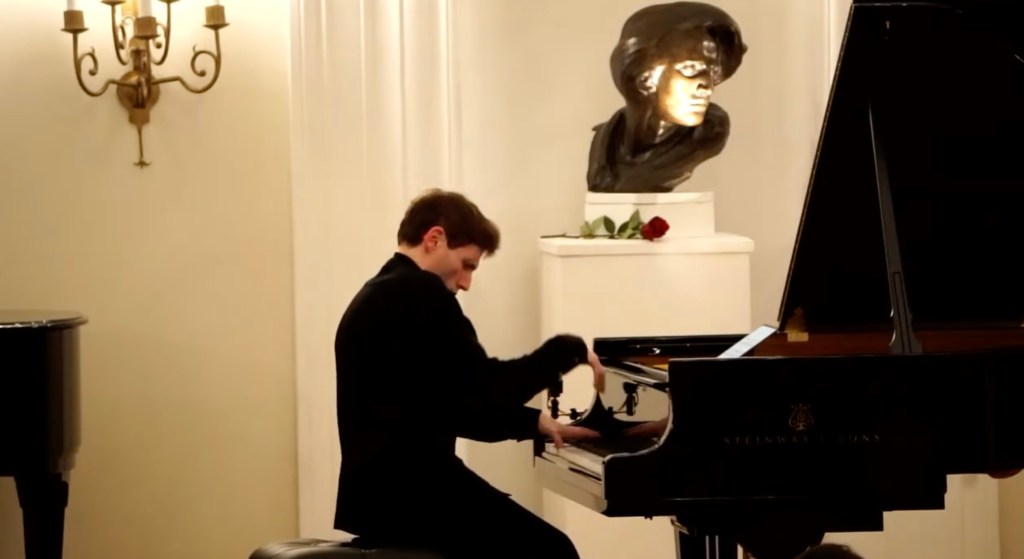
Encores that had included Rachmaninov’s ravishingly beguiling Polka to WR, an exquisite Chopin study op 25 n. 5 and an extraordinarily agile Rachmaninov Prelude op 25 n. 5 . All played with the mastery and musical intelligence that had been then hallmark of some of the finest performances of these masterworks that I have ever heard. Could it be, as I had indicated before that the use of the I pad whilst allowing me to enjoy the live stream did not have the same emotional impact in the hall that one would have expected. However ‘Hats off’ to an extraordinary musician who with or without an aide memoire is one of the finest pianists before the public today.


 ChristopherAxworthy-MusicCommentary