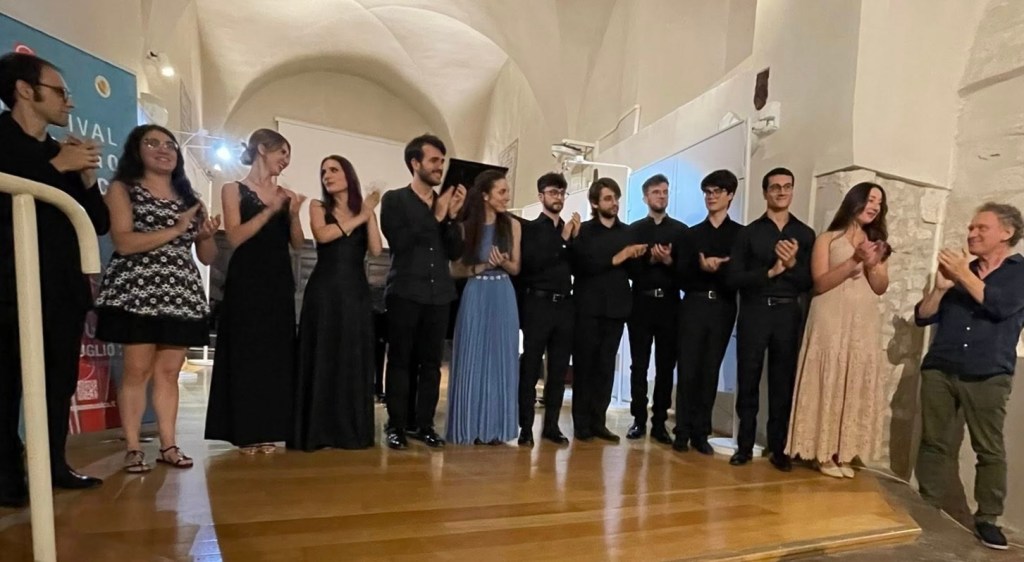
Twelve superb musicians each one with his own personality but stamped with the integrity and musicianship of the light that guides them.
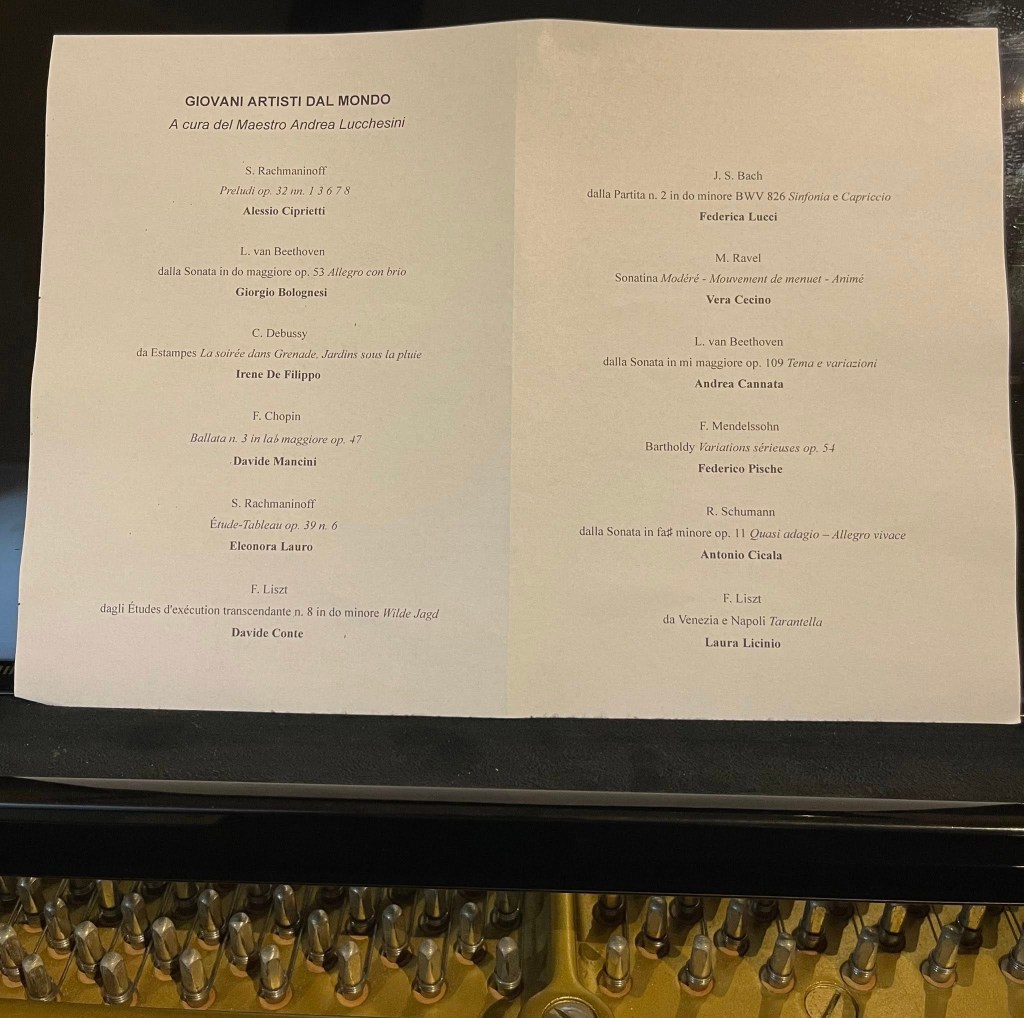
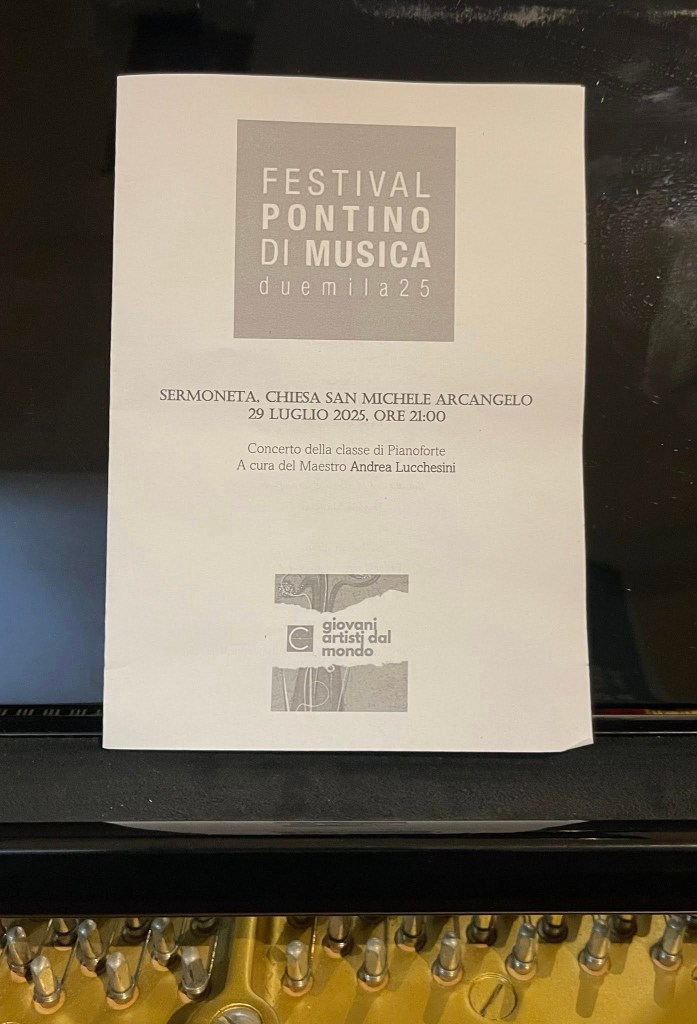
Concerto finale dei pianisti del corso di Andrea Lucchesini
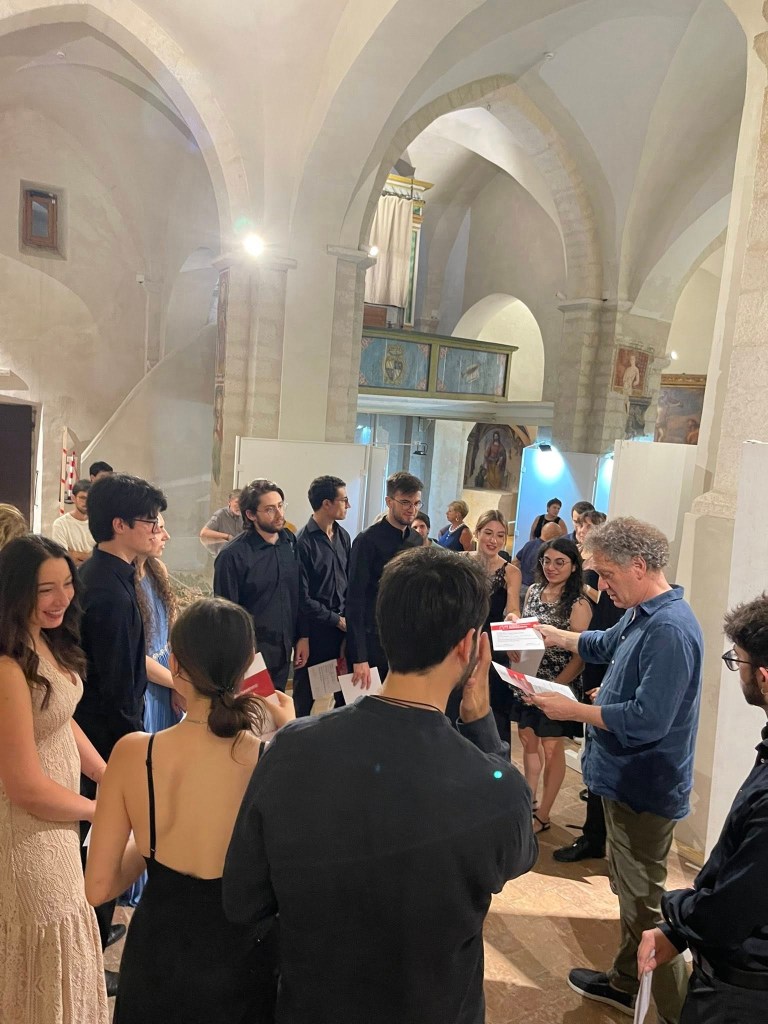
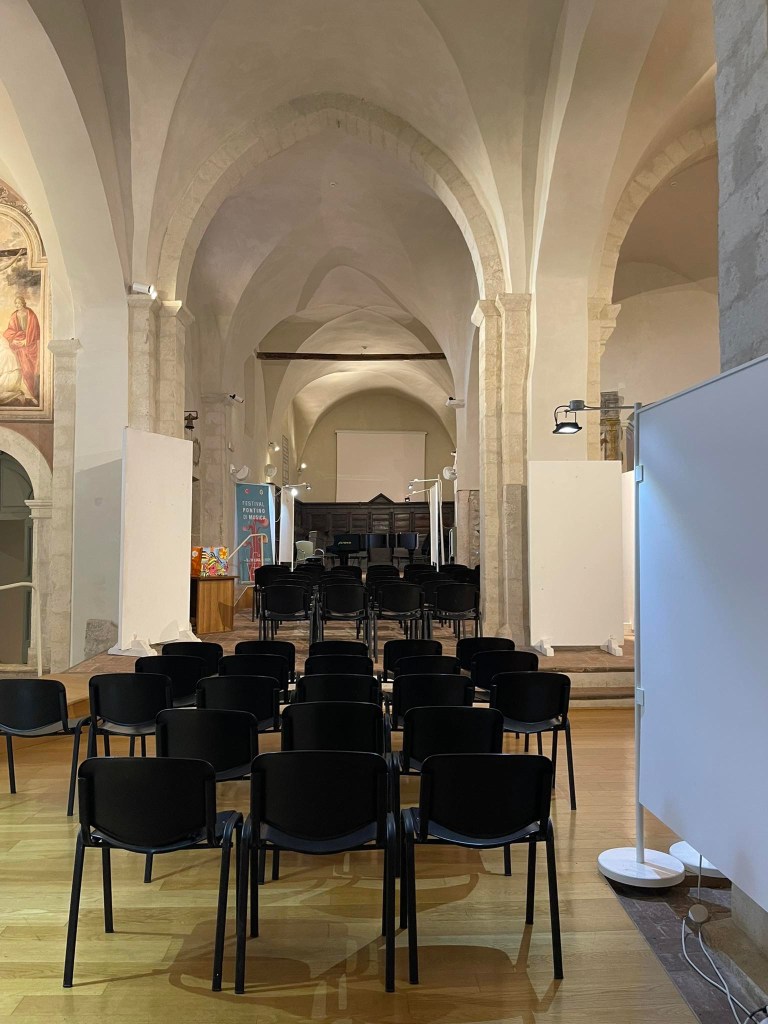
The great tradition continues in Sermoneta with the class of Andrea Lucchesini .
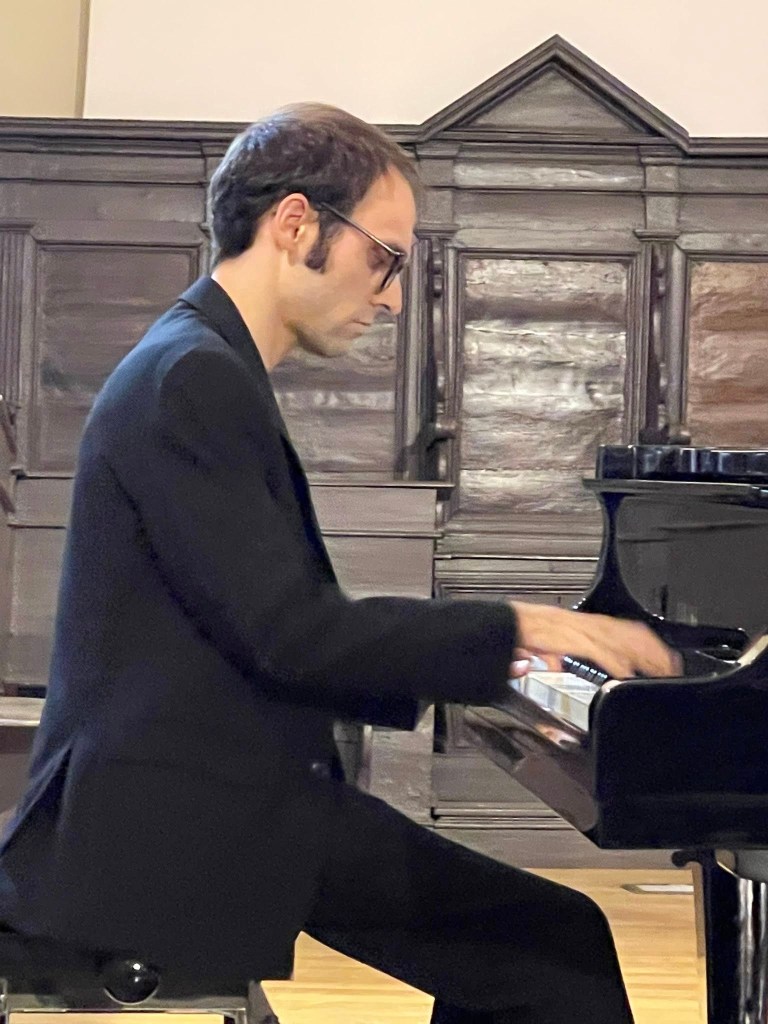
From the dynamic drive and searing authority of Alessio Ciprietti who opened this final concert with five Rachmaninov Preludes from op 32
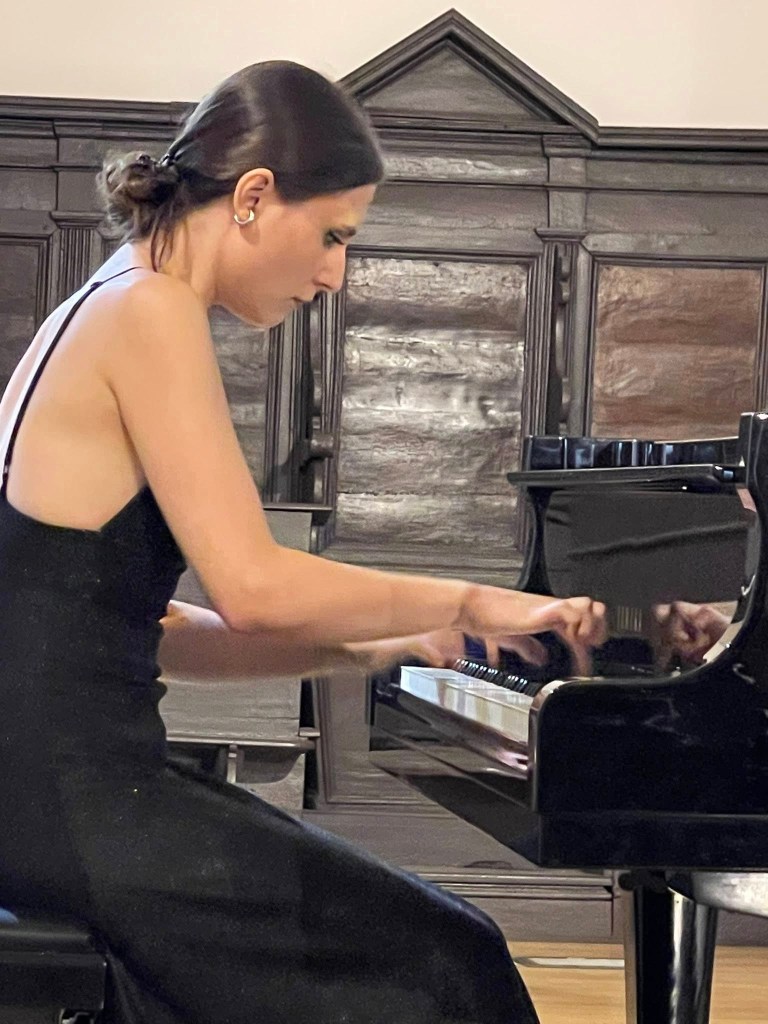
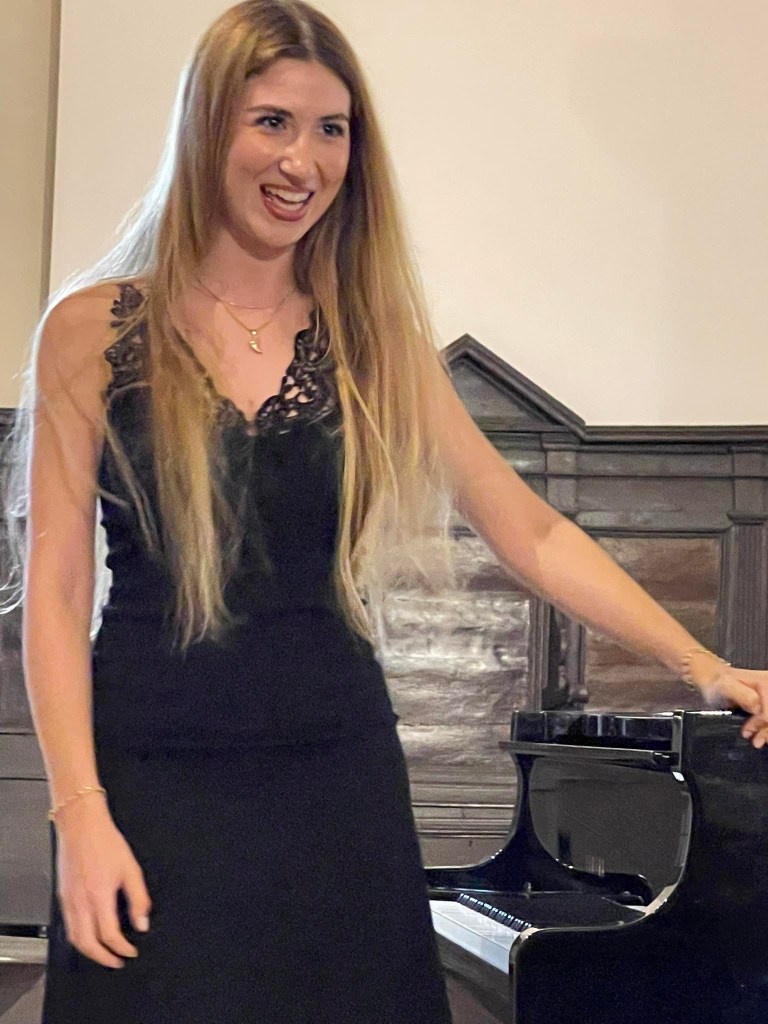
to the final breathtaking virtuosity and stylish playing of Liszt’s Tarantella from Laura Licinio , not only brava but also bella , che non guasta as they say over here !
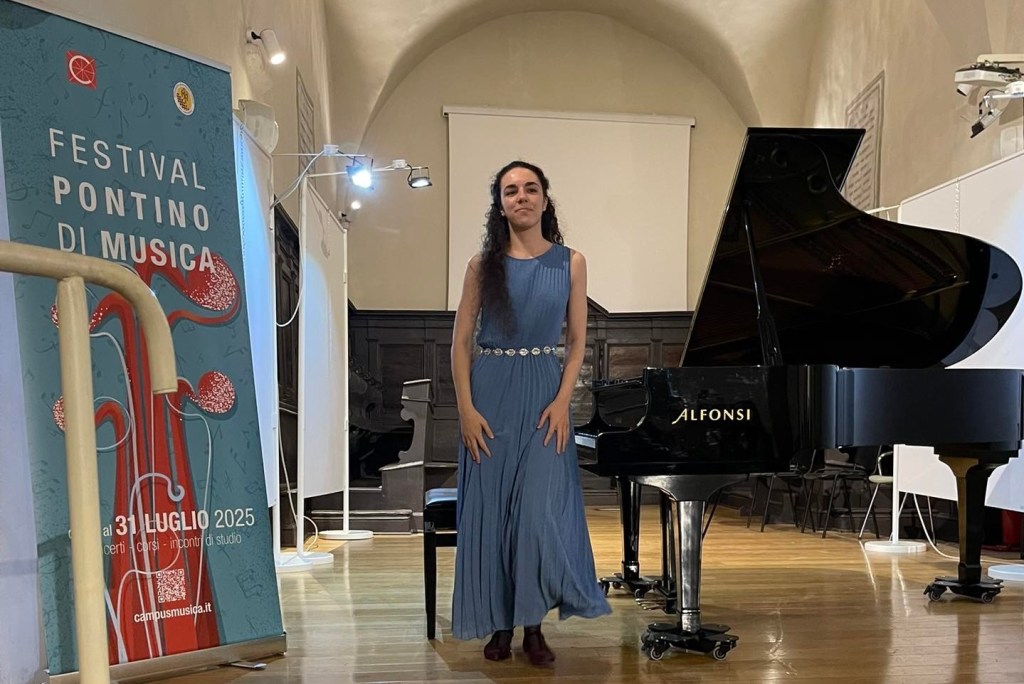
An incredible clarity and drive to Federica Lucci’s Bach second partita was only matched by Vera Cecino’s magical account of Ravel’s Sonatine.
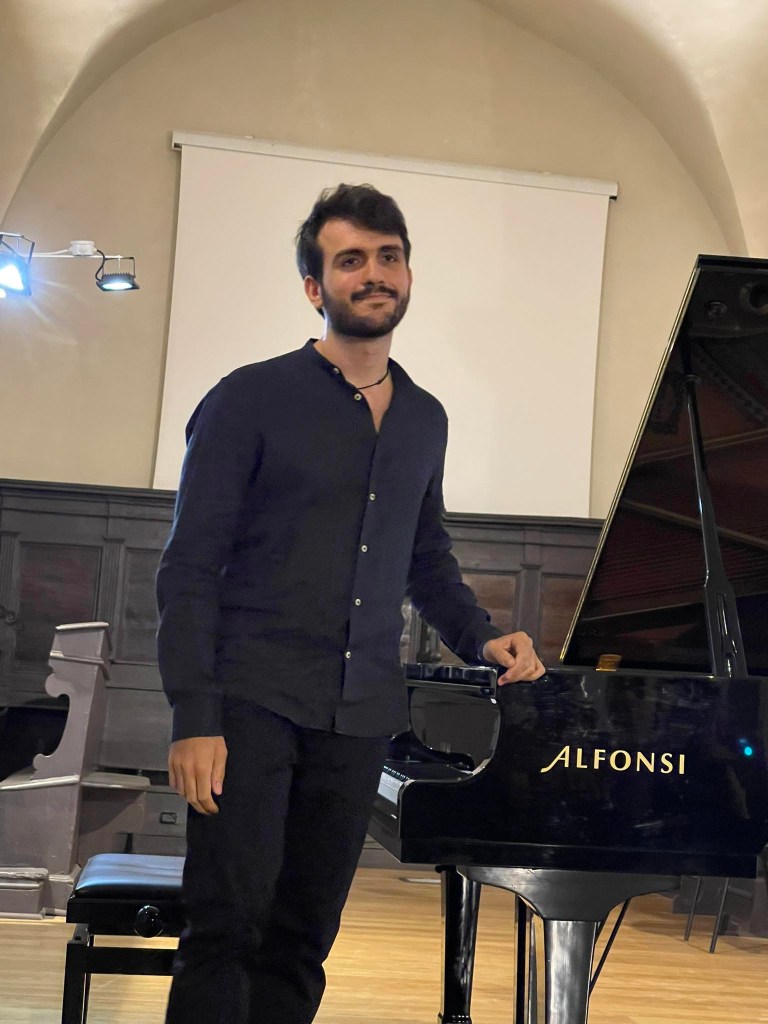
A hair raising account of Mendelssohn variations from a simpatico but above all masterly Federico Pische.
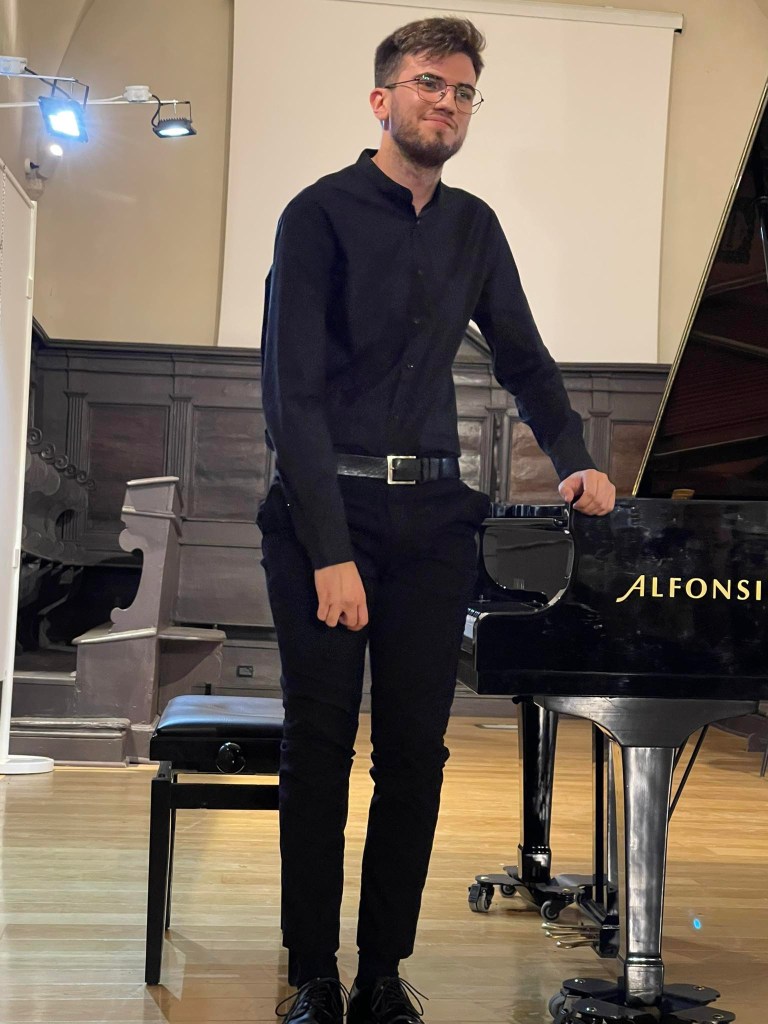
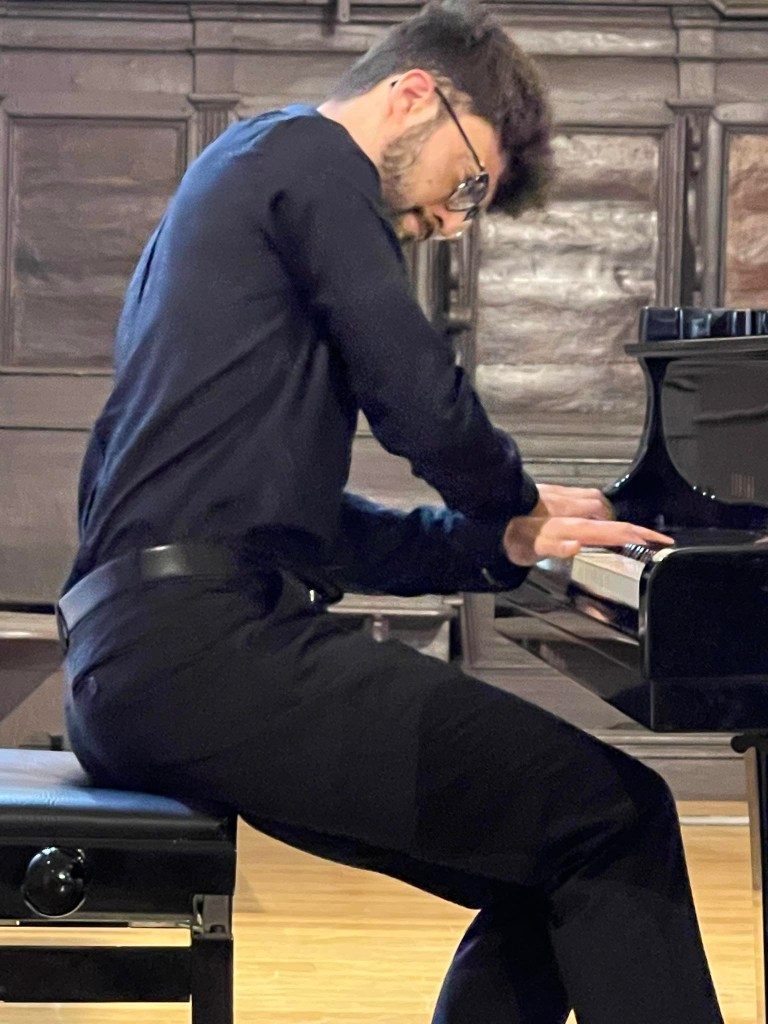
Musicianly playing of great authority and aristocratic poise of two master works by Beethoven (op 109) and Schumann (op 11) was by Antonio Cicala and Andrea Cannata .
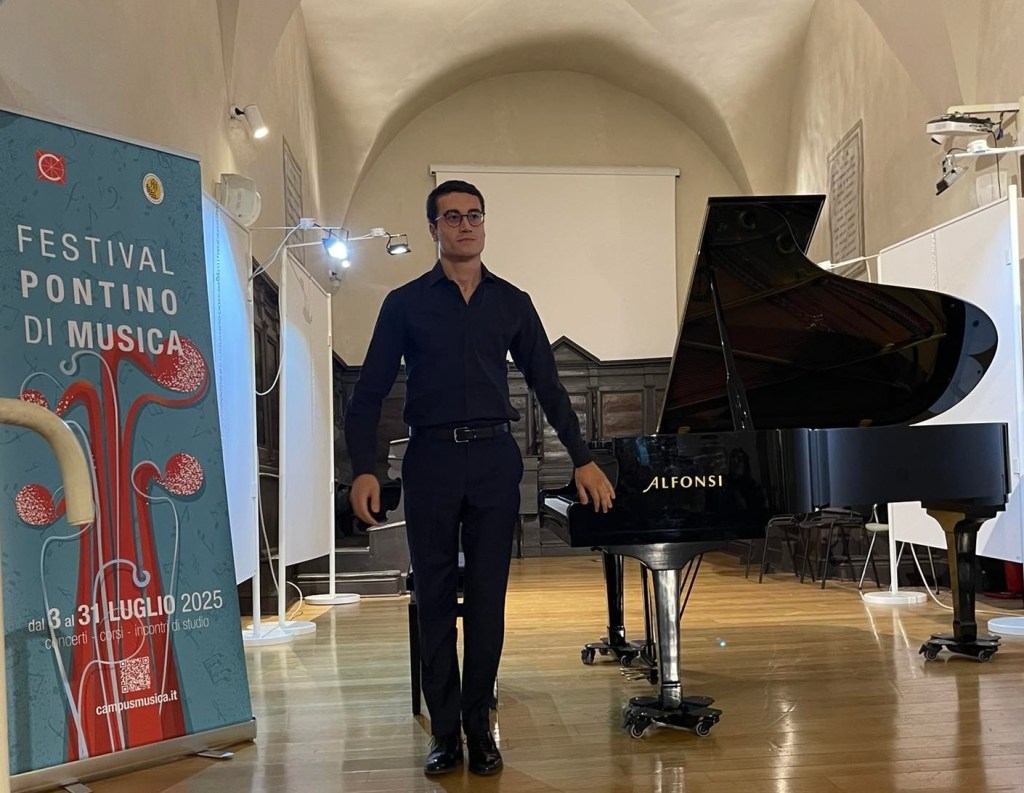
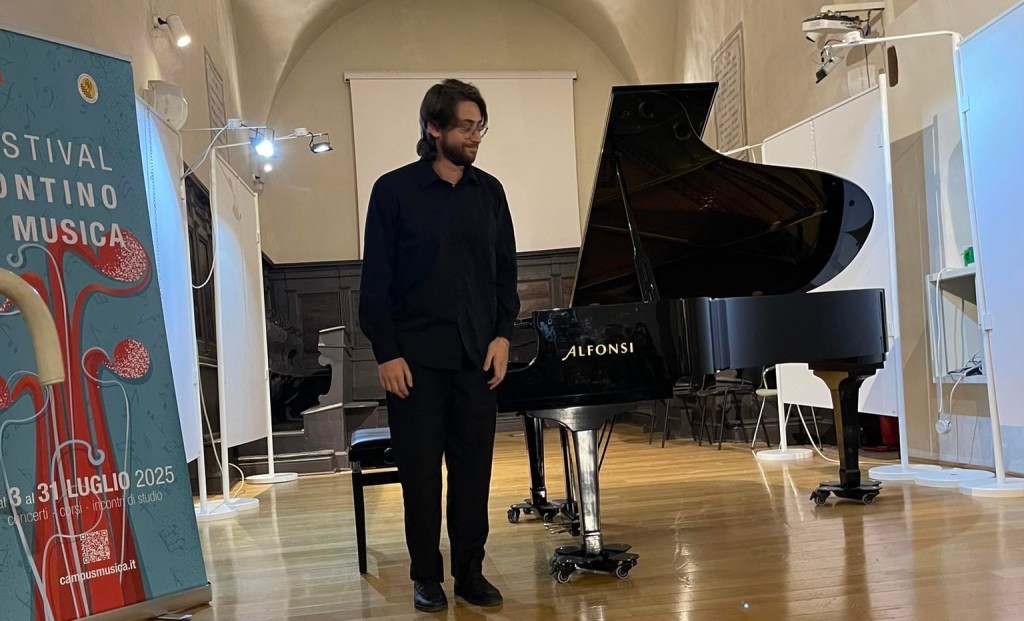
Matched by an equally impressive account of the scales and arpeggios of Beethoven’s op 53 ( to quote Delius) played with great intelligence by Giorgio Bolognesi. Irene De Filippo showed off the same poetic artistry as in her Clara Schumann Trio but this time with Debussy Estampes . Davide Mancini brought poetic justice to the most pastoral of Chopin’s four Ballades bringing this third one to a noble and sumptuous climax.
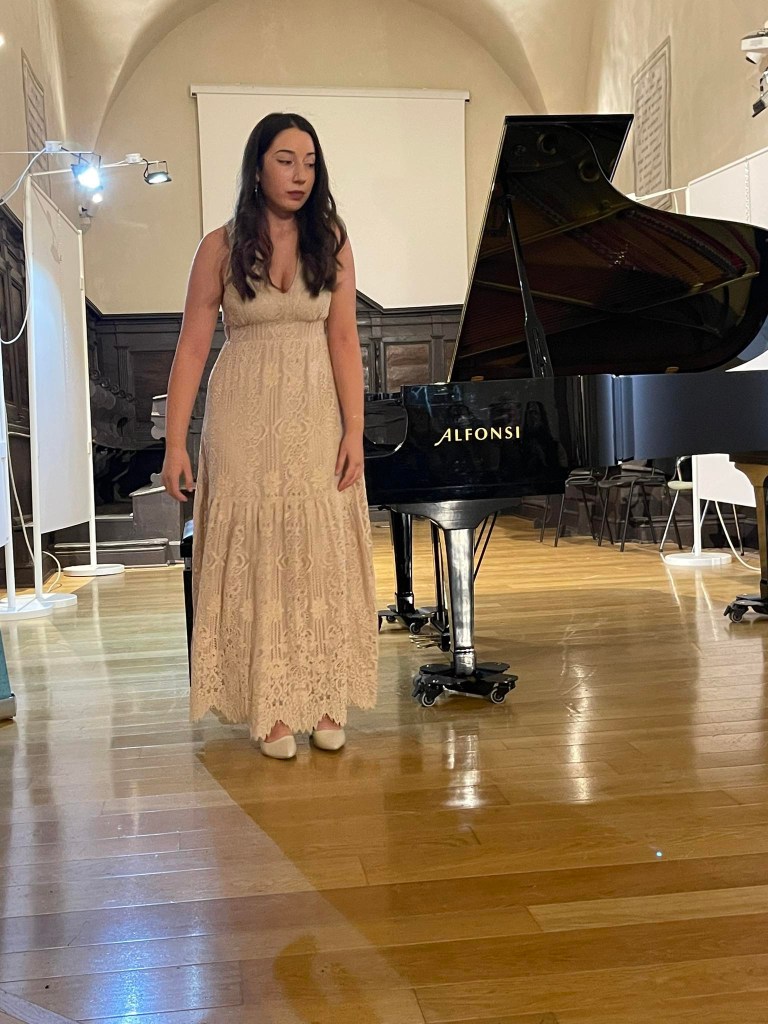
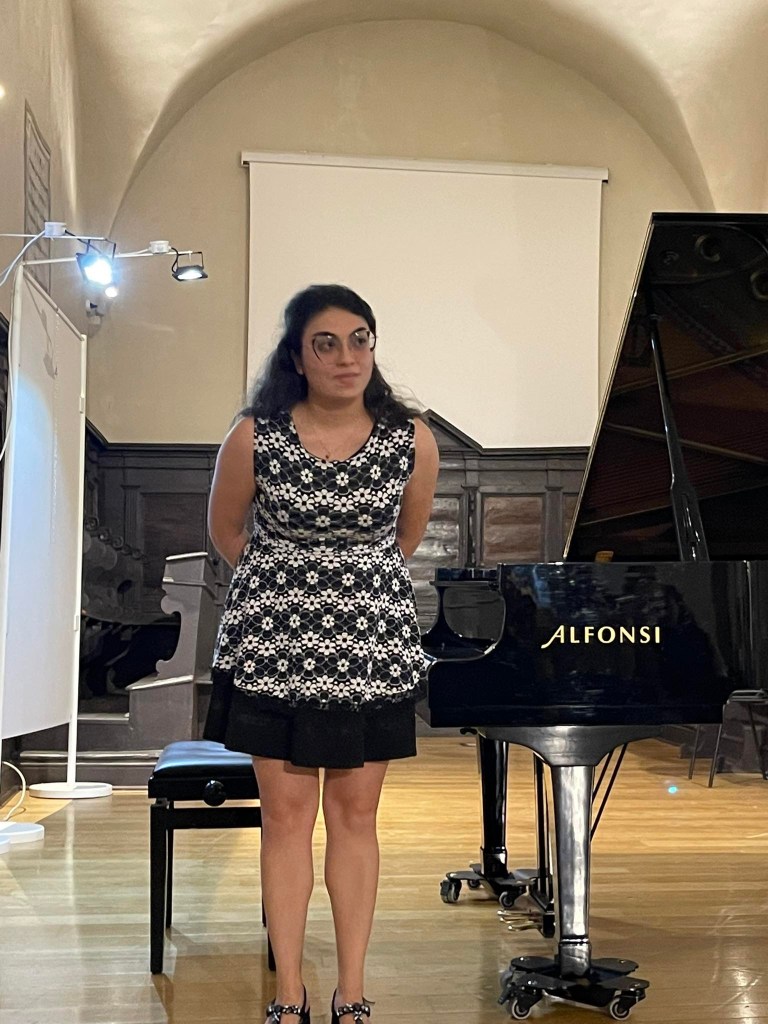
Eleonora Lauro was our ‘red riding hood’ with Rachmaninov’s tone poem of op 39 n 6 played with diabolical characterisation and technical mastery .
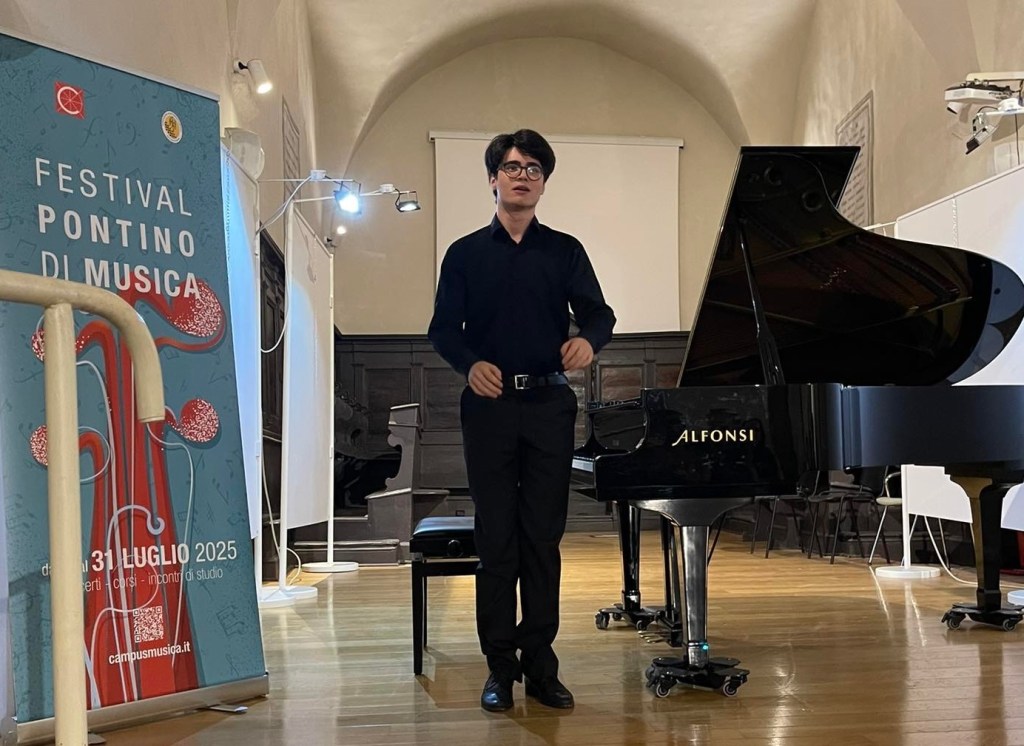
But it was Davide Conte who stole the show with a breathtaking ,all or nothing performance,of Liszt’s Wilde Jagd .
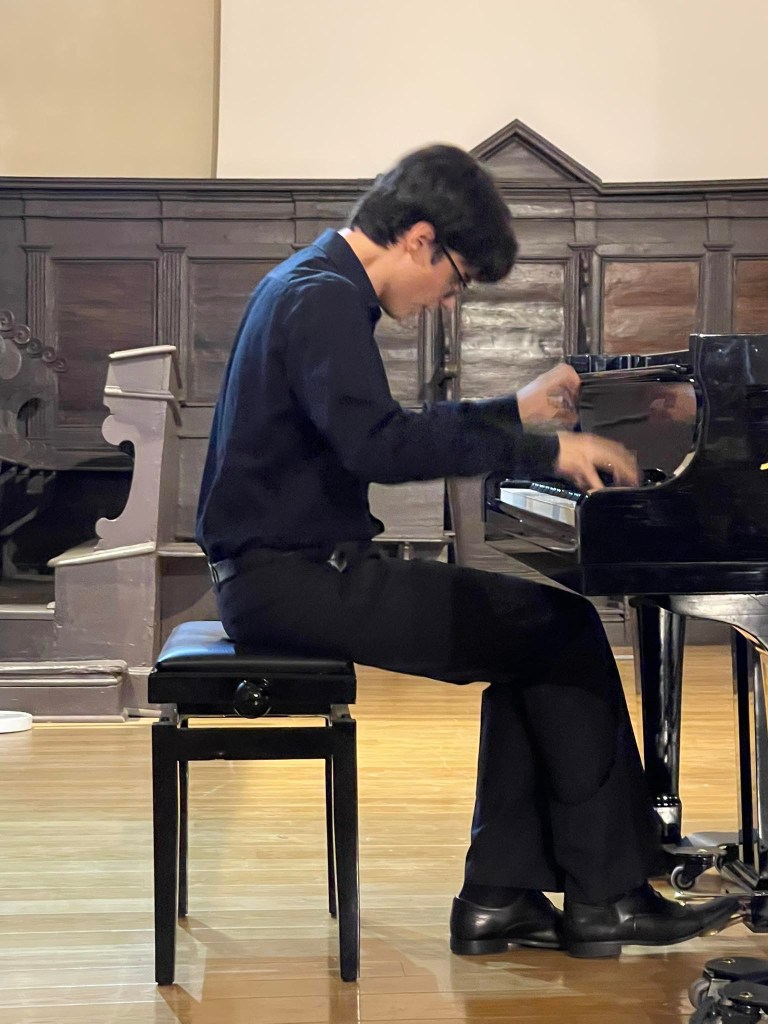
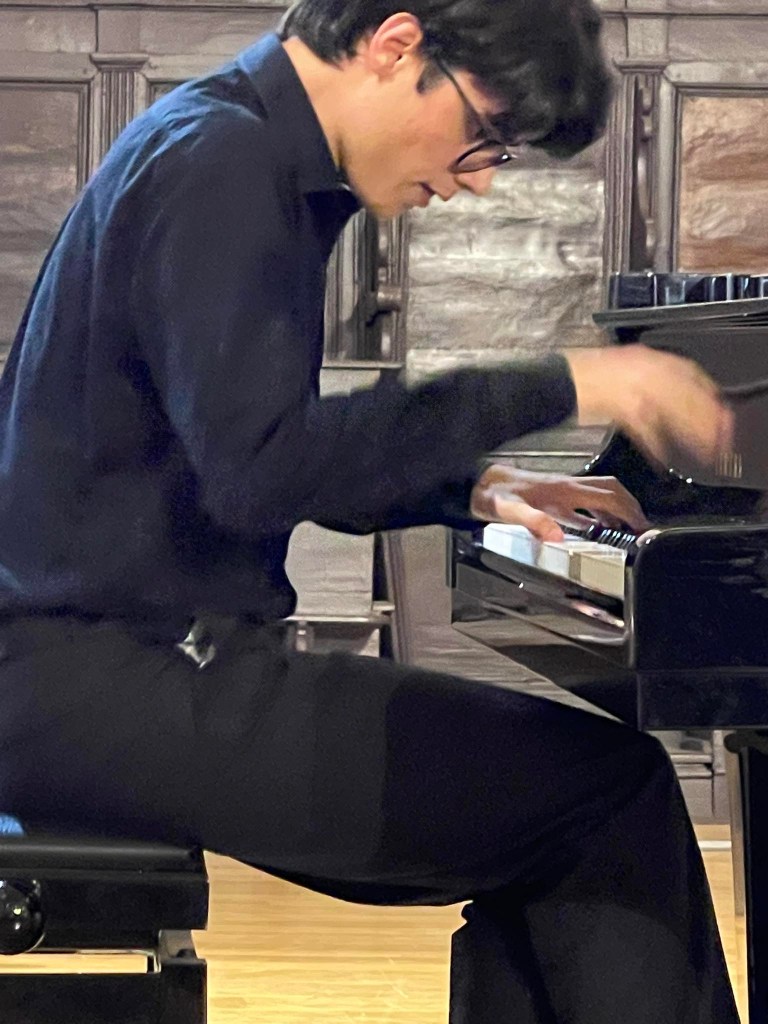
This nineteen year old pianist looked as though he was born at the keyboard such was the total conviction of a remarkable performance that looked and sounded so right.
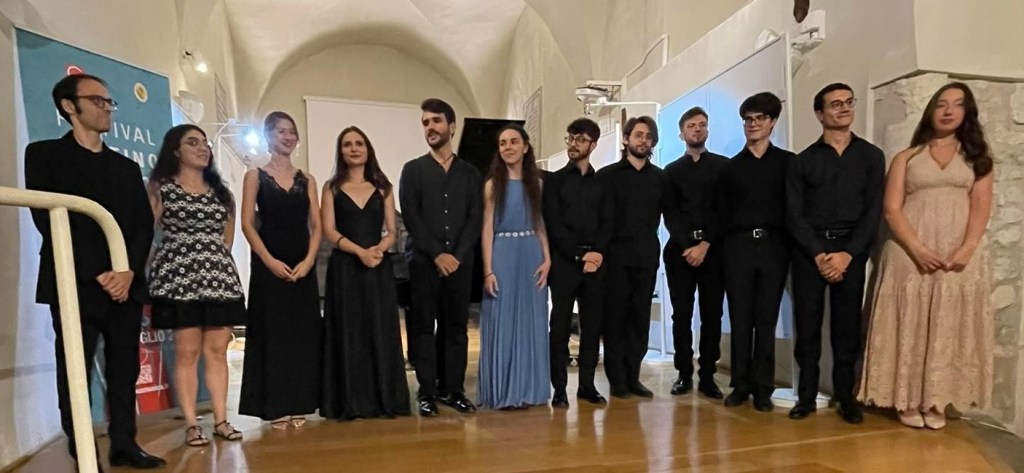
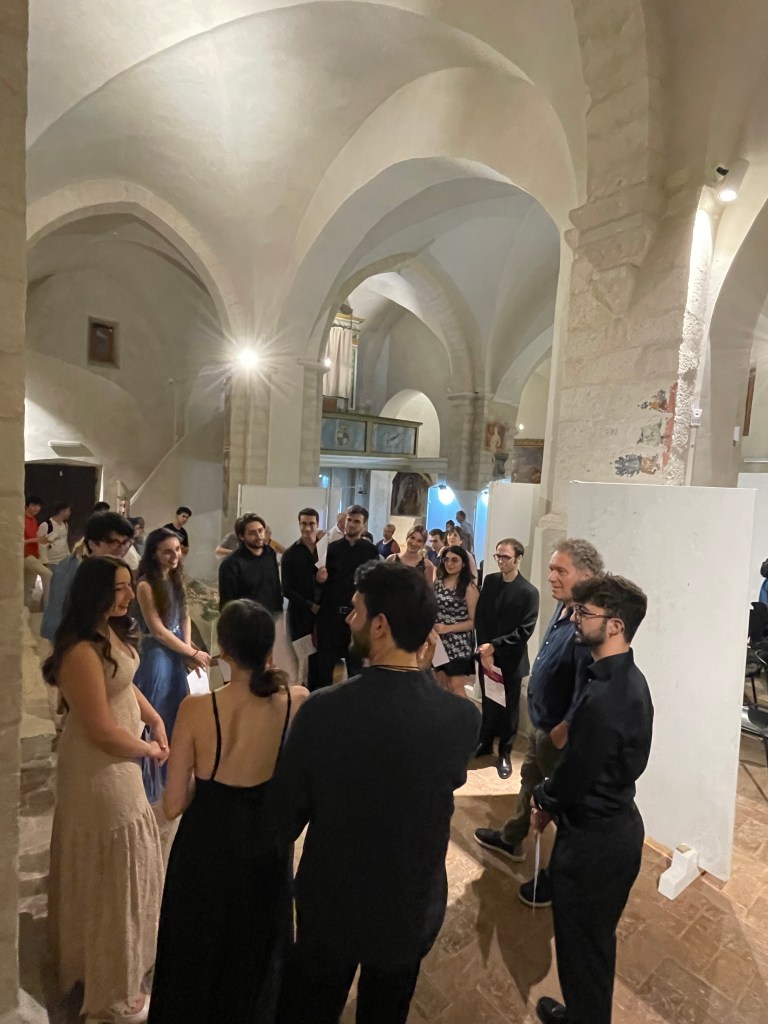
All the pianists dressed impeccably for this gala concert and each one presenting their performance with exemplary professionality .
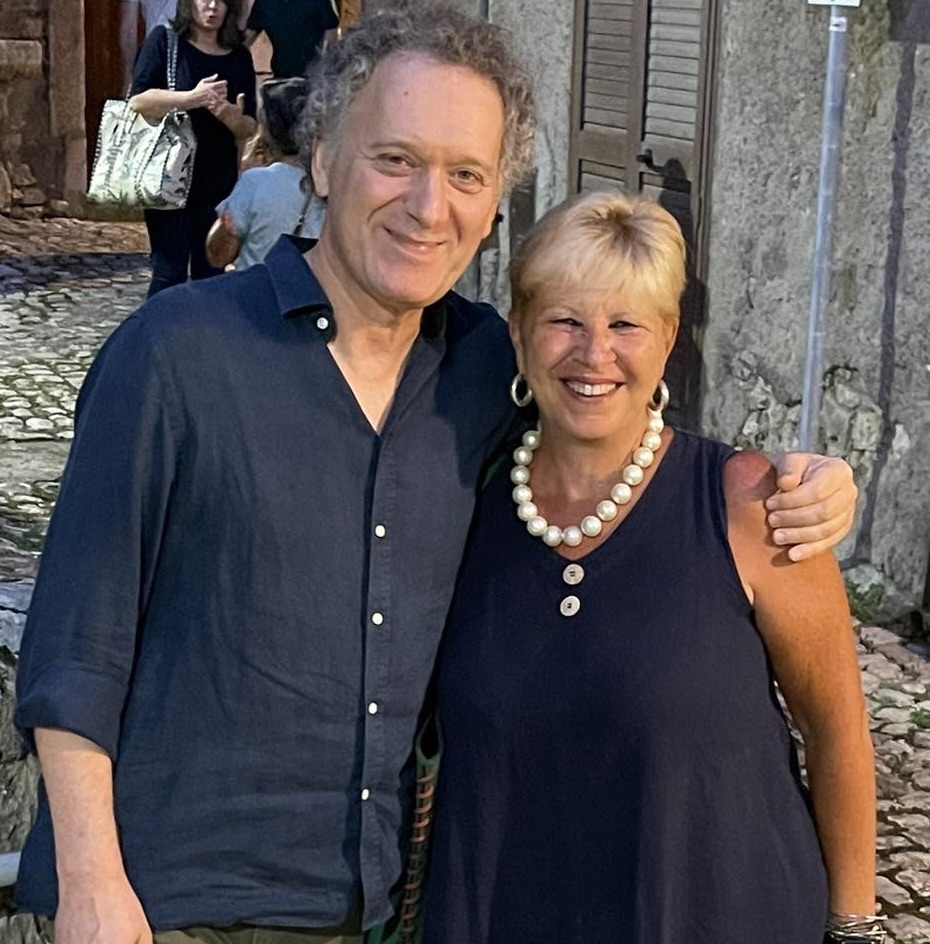
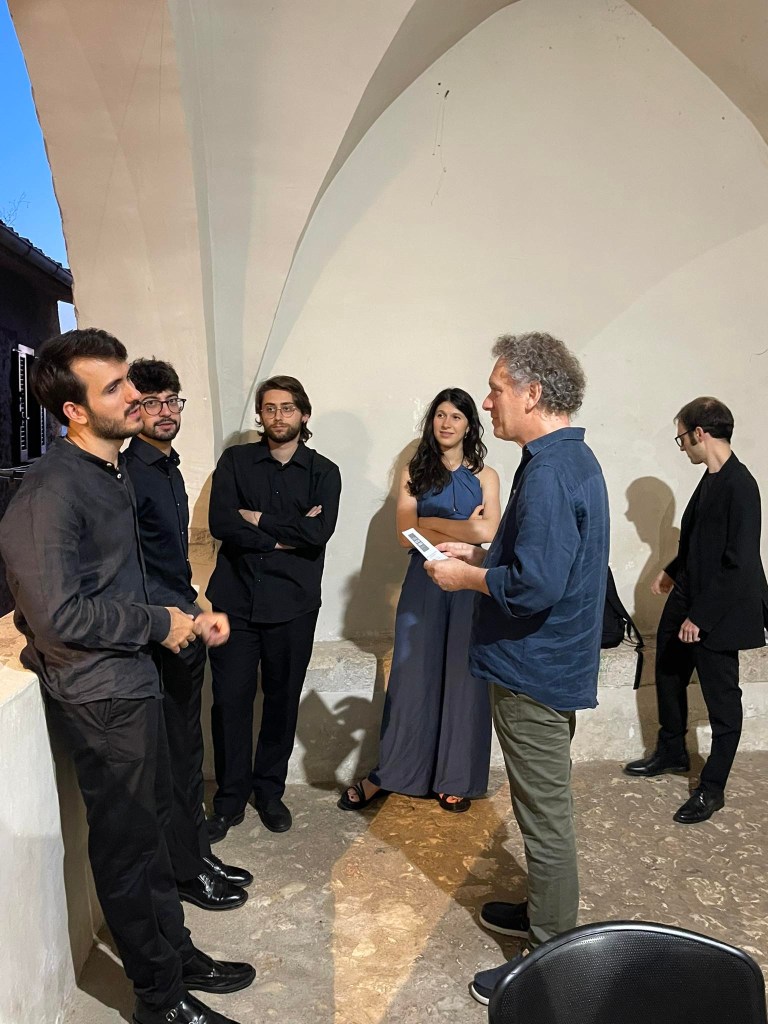
Under the eagle eye of a great pianist who had known how to unite this happy band into a unified group of dedicated artists of humility and mastery .
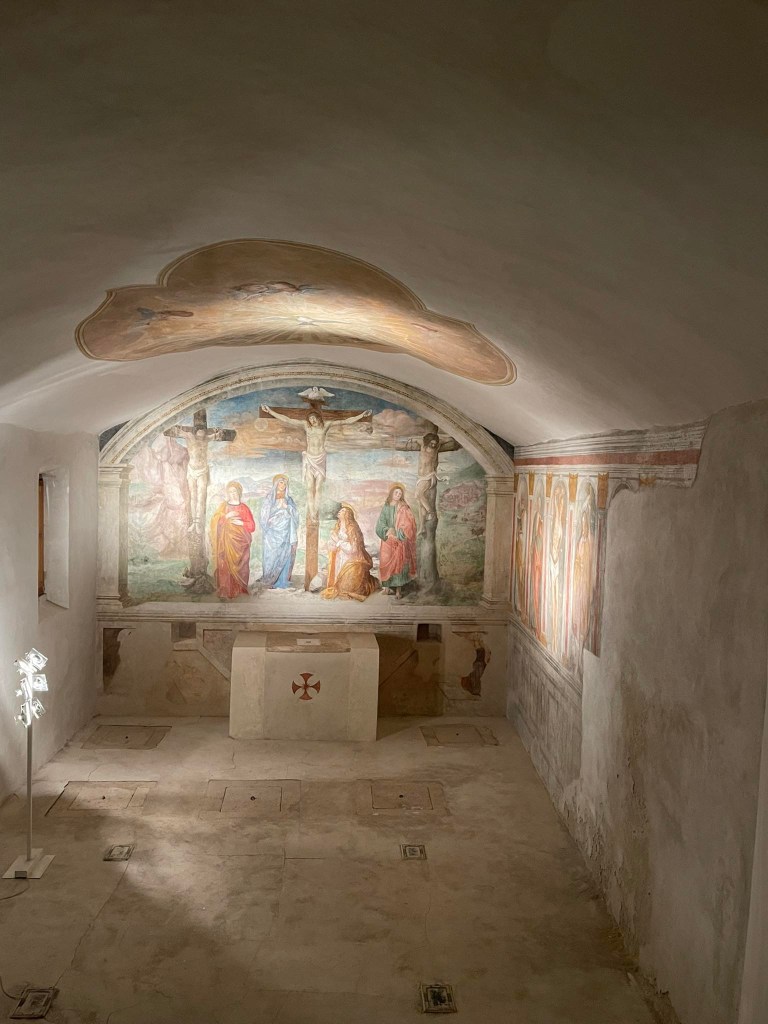
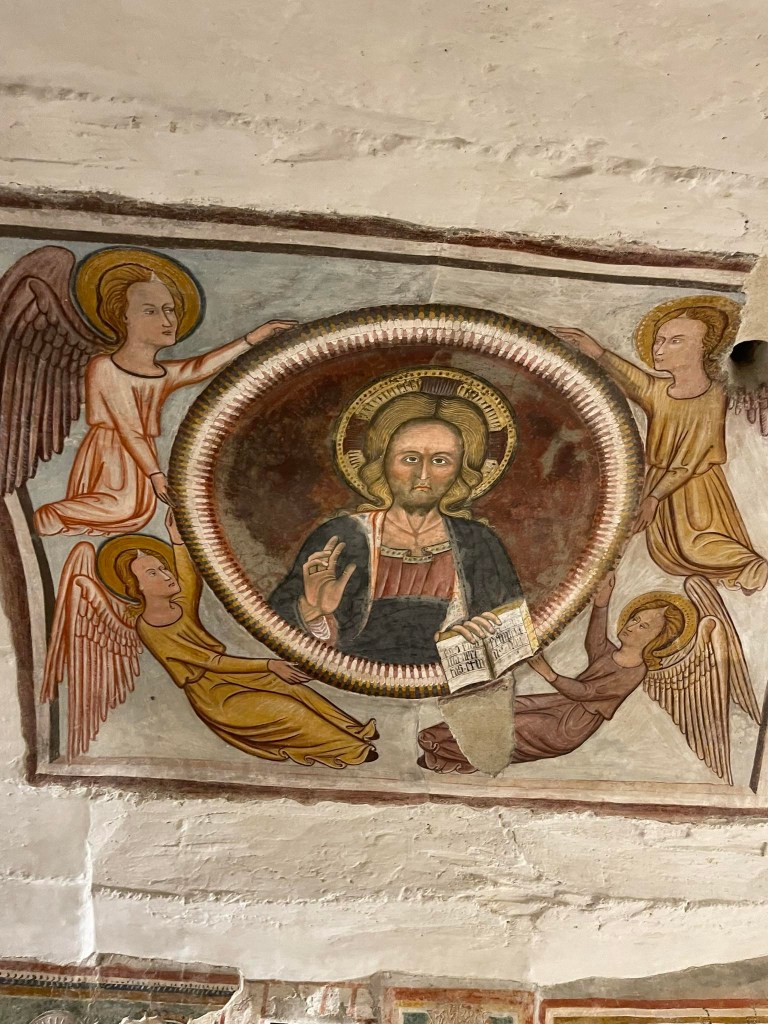
Maintaining a tradition that was started with Kempff and continued through the years with amongst others Charles Rosen,Fou Ts’ong and Eliso Virsaladze
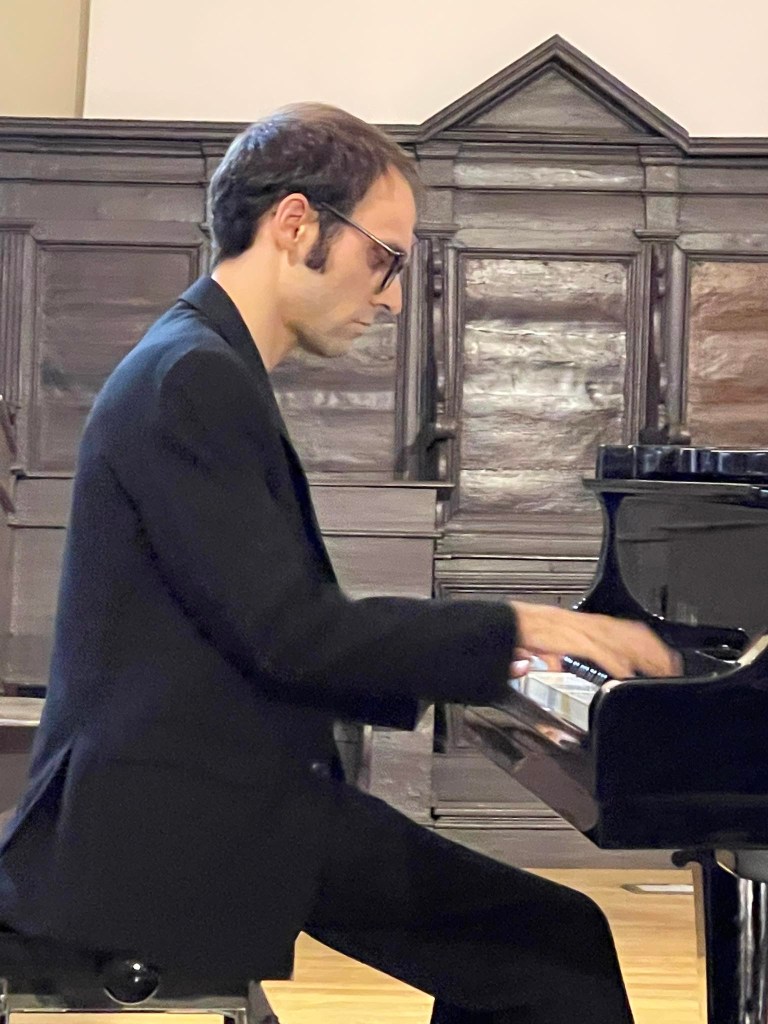
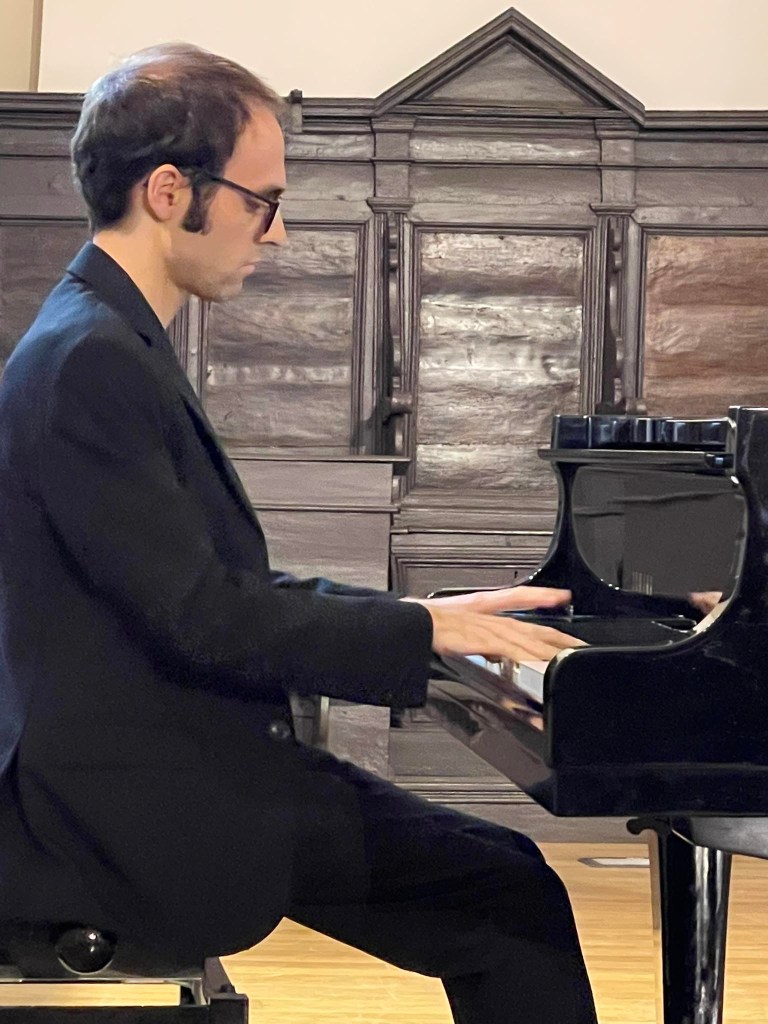
Serghei Rachmaninov Preludes op. 32 nn. 1 3 6 7 8 . Playing of great authority with sumptuous sounds and and exhilarating dynamic drive. Beautiful hand position with long spindly fingers that play with delicacy and precision. He brought a subtle beauty and radiance to the slow meditative n 7 in F major after the dark transcendental difficulties of n. 6 in F minor.Ending with quite extraordinary clarity and mastery and a brilliant sense of characterisation of n. 8 in A minor Alessio Ciprietti
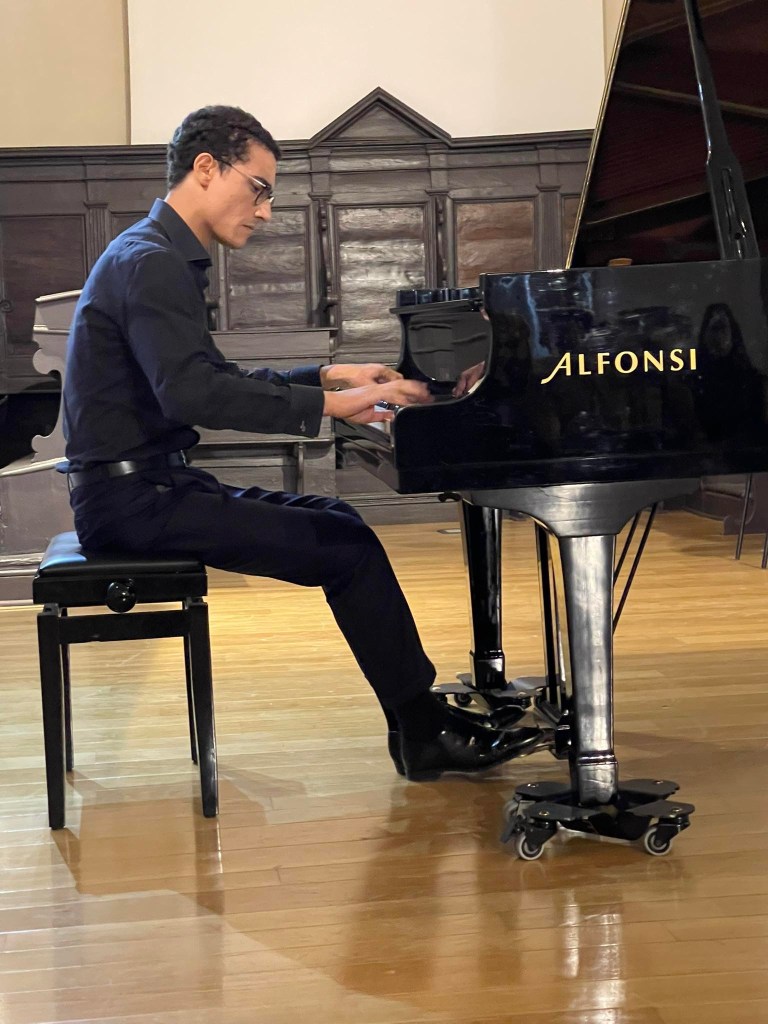
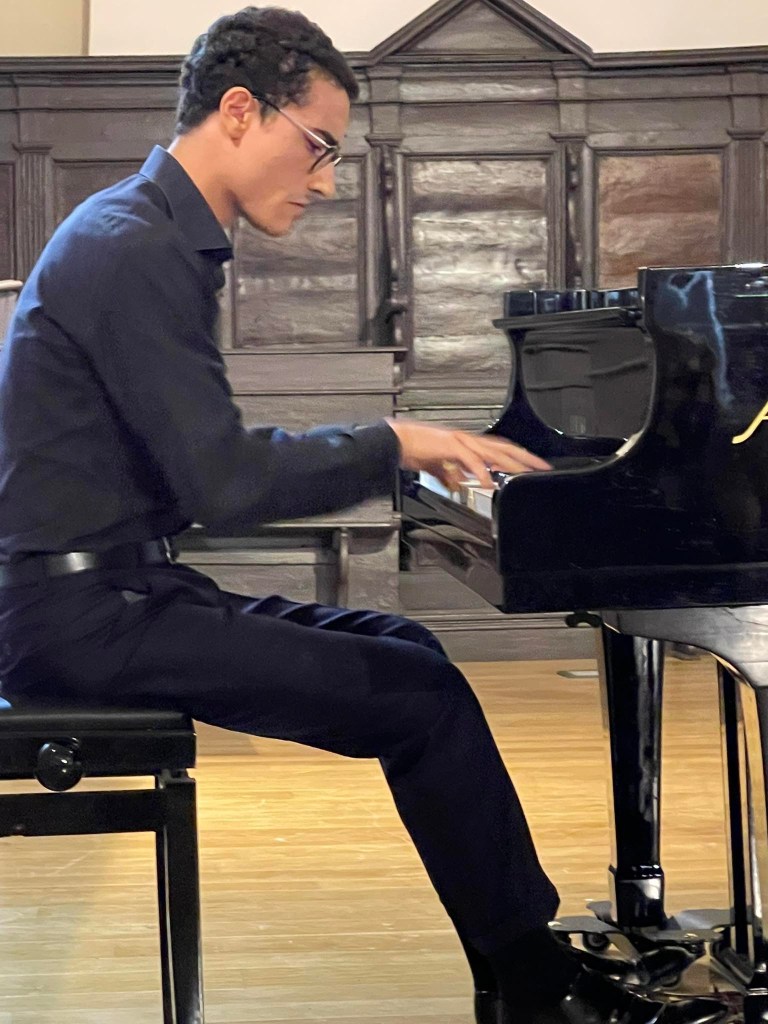
Ludwig van Beethoven, first movement of the Sonata in C major op. 53 ( Waldstein -Aurora ), Allegro con brio. Played with precision and rhythmic drive and a sense of architectural shaping that allowed him to maintain the same tempo throughout and gave such strength to this the first of the great sonatas of the composers so called middle period.The second subject flowed well but could have been connected to the opening where more bodily participation would have helped with the natural flow of the music that is in fact made up of scales and arpeggios ( like the ‘Emperor’ concerto ).These are but elements of a master craftsman and was played with respect and intelligence where the joints could have been more well oiled. A very fine performance and a pity there was no time to hear the last movement with its radiant genial introduction. Giorgio Bolognesi
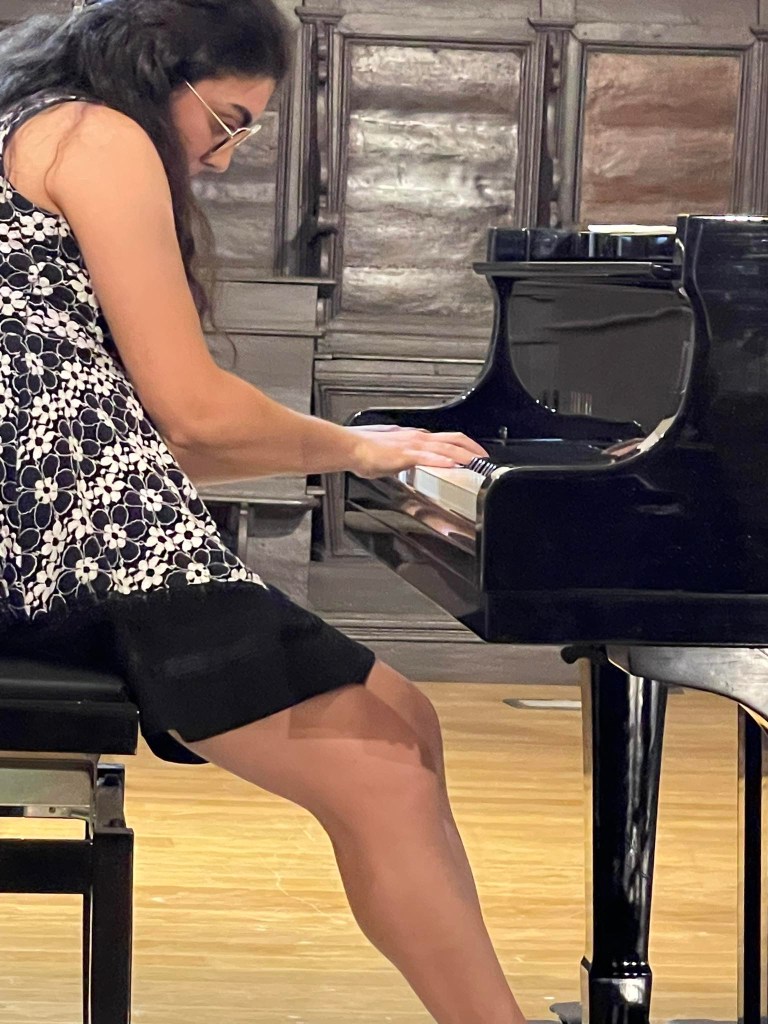
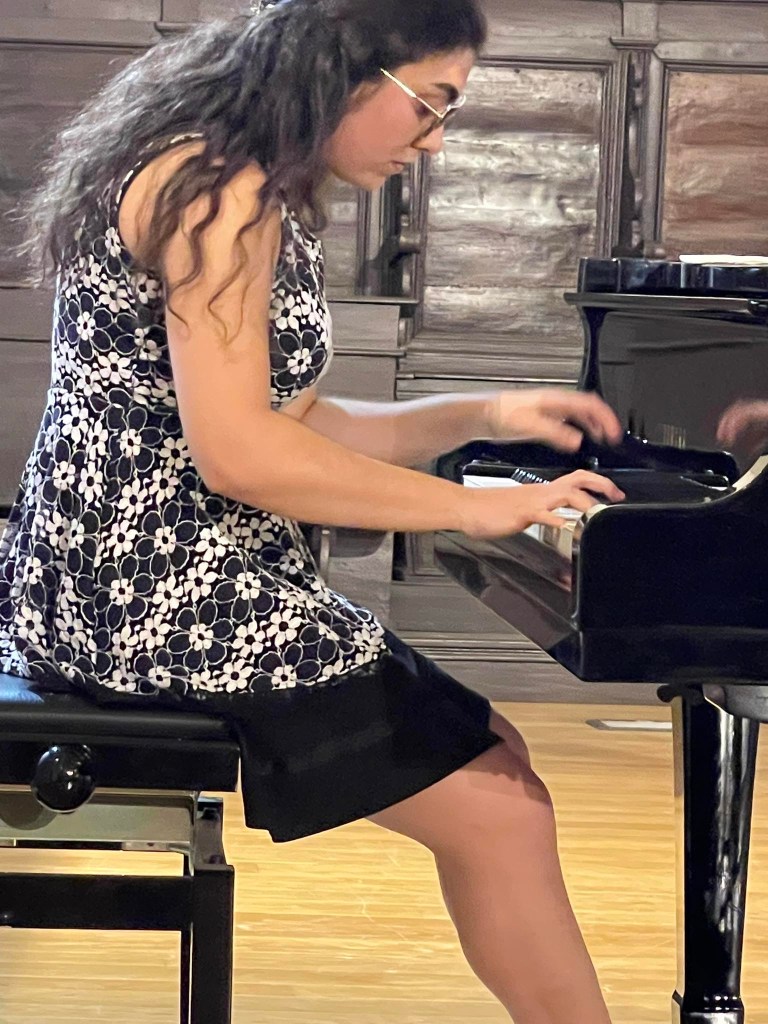
Claude Debussy from Estampes La soirée dans Grenade, Jardins sous la pluie. Irene,as with her Clara Schumann Trio, likes to bathe her sounds in sumptuous long pedals that can blur the images but give access to a kaleidoscope of colours. It was the same in her sumptuously atmospheric performance of ‘La soirée dans Grenade’, where her reliance on the pedal seemed to exclude a true finger legato and sense of weight. What a revelation her ‘Jardins’ was, where she allowed the music to flow without blurring the edges and it made for a clarity with the chiselled melodic line allowed to sing out with the simplicity and purity of the two nursery rhymes that Debussy incorporates with such mastery into this evocative score . Irene De Filippo
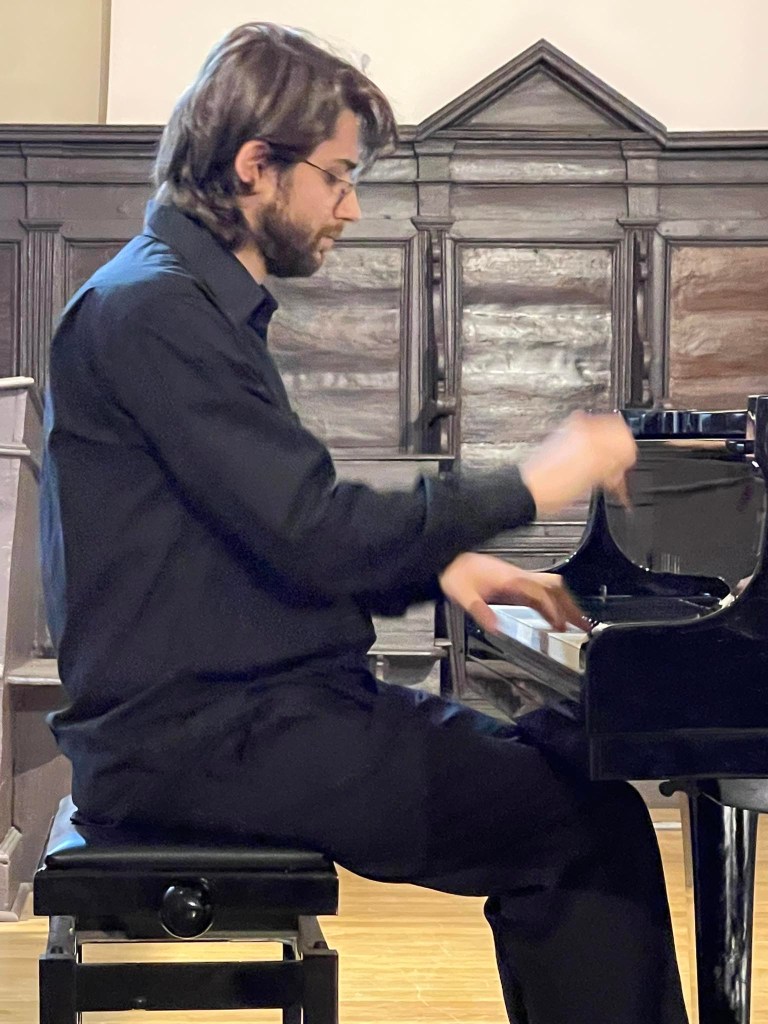
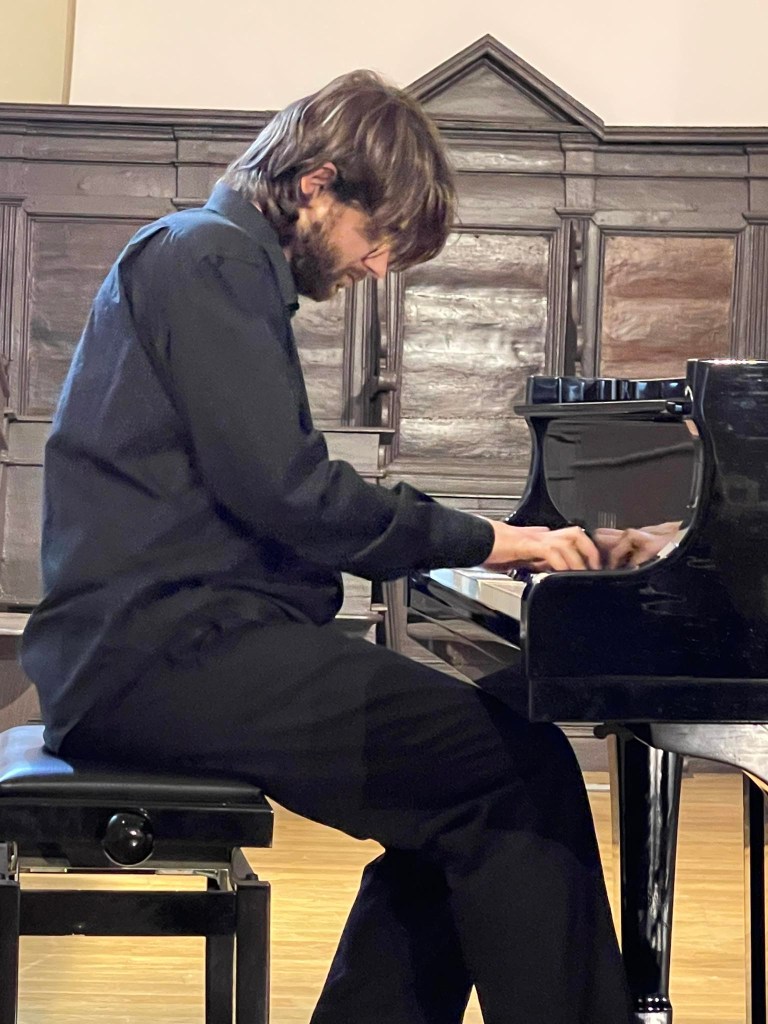
Frederick Chopin Ballade n. 3 in A flat major op. 47 Beautifully shaped with subtle delicate phrasing for one of Chopin’s most mellifluous Ballades. A continual flow that Davide allowed to grow so naturally, with beautiful subtle decorations played with strength and beauty with the ‘fiortiori’ played on the beat as the music lead inexorably to the final noble climax, played with sumptuous full sounds. The final cascade from the top to the bottom of the keyboard was played like a painter with one stroke on the canvas ( too often divided between the hands for technical reasons ) with the imperious final chords played with aristocratic authority. Davide Mancini
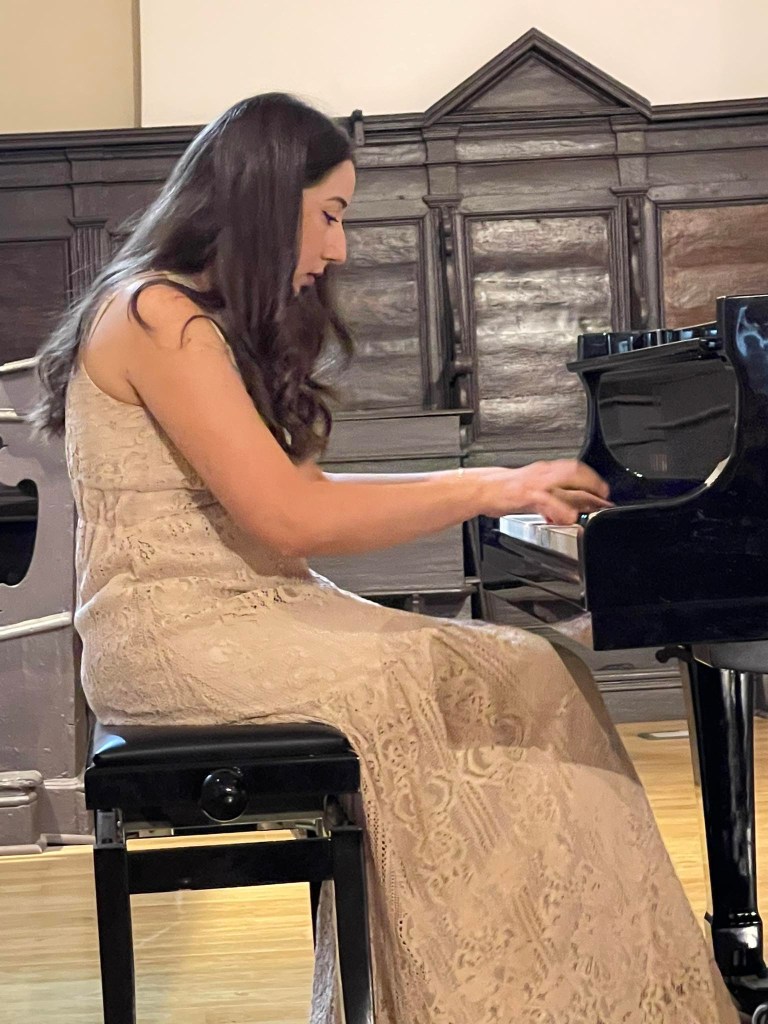
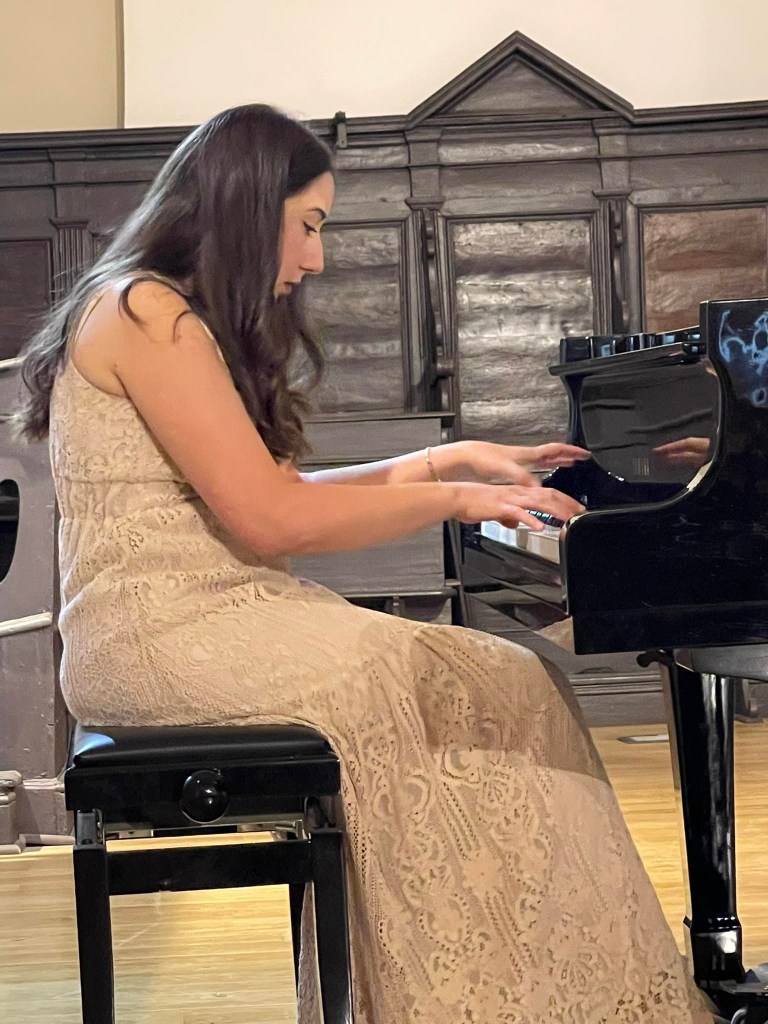
Serghei Rachmaninov Étude-Tableau op. 39 n. 6 . A tour de force of brilliantly characterised playing. The terrifying outbursts of the ‘Red Riding Hood’ Study were played with fearless abandon and masterly control with a dynamic drive of hypnotic persuasion. Eleonora Lauro
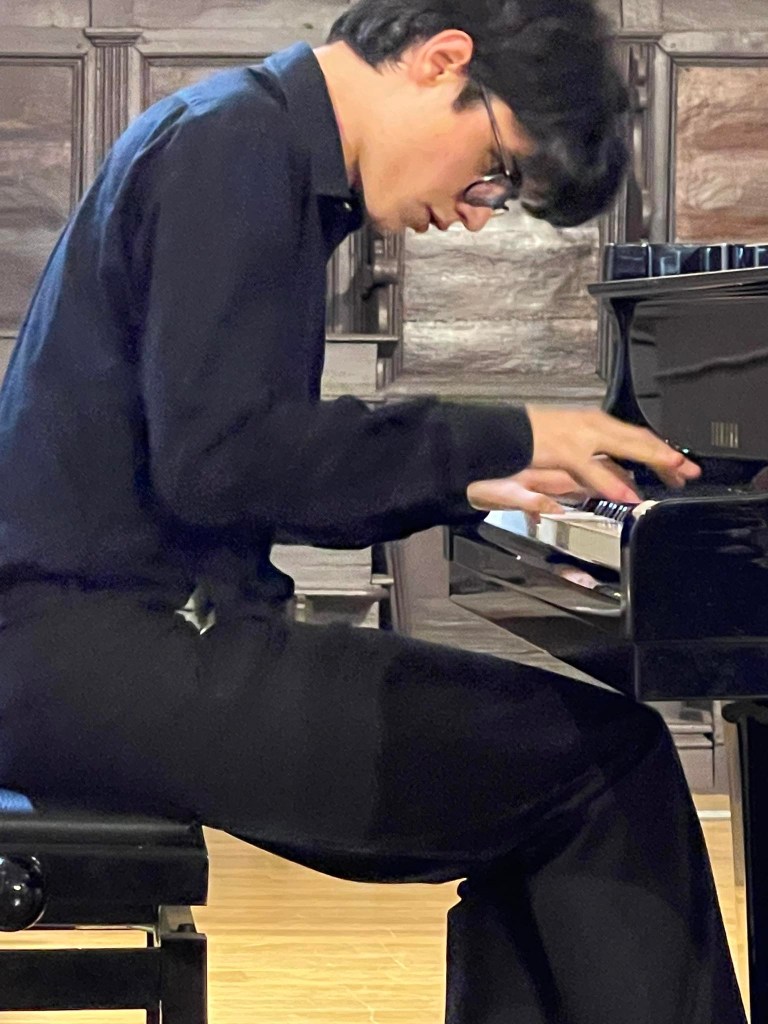
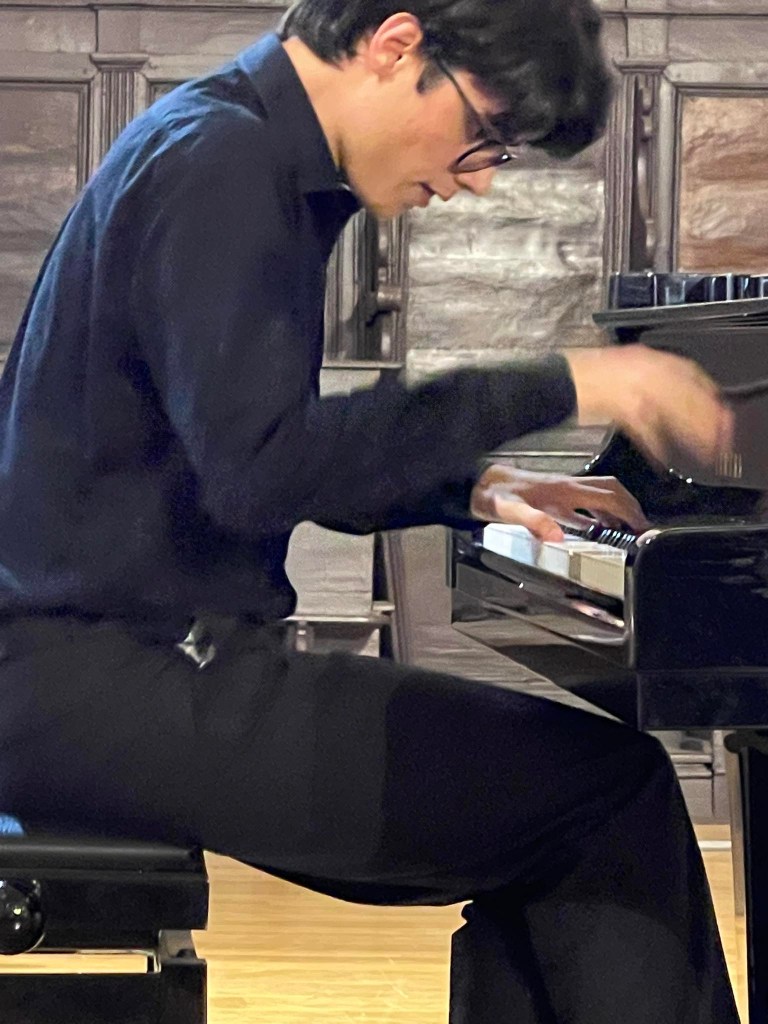
Franz Liszt from the Études d’exécution transcendante : n. 8 in C minor, ‘Der Wilde Jagd’ . A young man who truly belongs to the keyboard with playing of mastery and control, producing playing of breathtaking abandon. Ravishing beauty with the minimum of pedal that allowed for such clarity and with beautiful inner voices that just added to the sumptuous Romantic outpouring of overwhelming emotional impact. Davide Conte
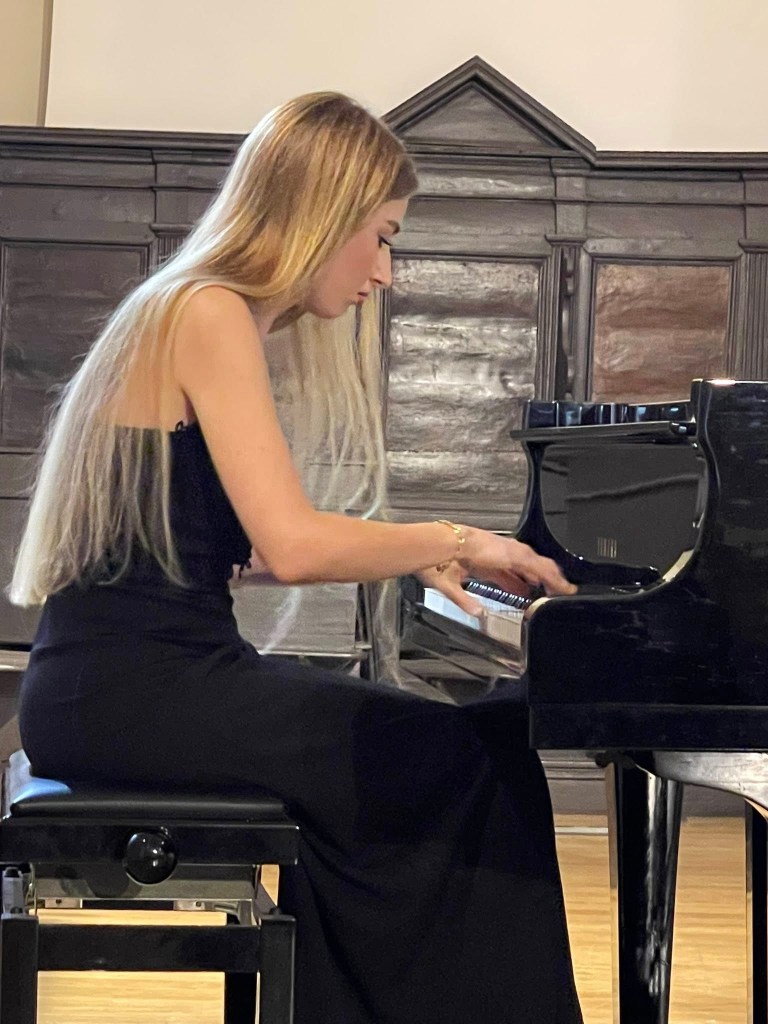
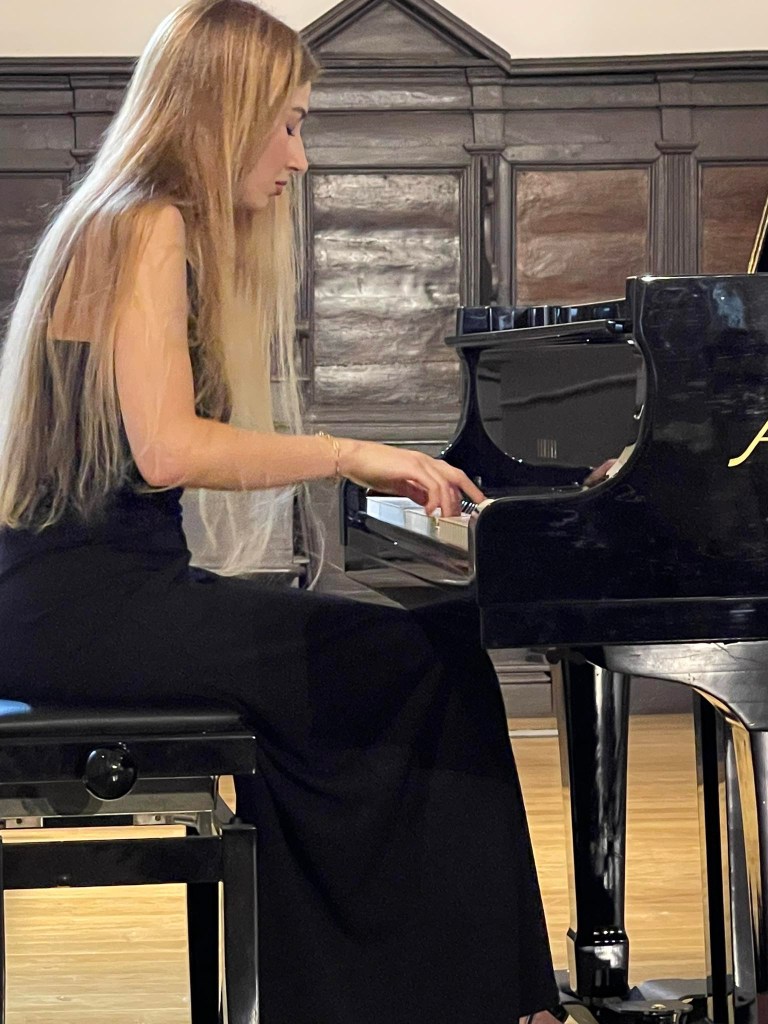
J. S. Bach from the Partita n. 2 in C minor BWV 826 Sinfonia e Capriccio. This was really quite masterly Bach playing of extraordinary clarity and a flowing radiance that just made one aware that Bach’s music is based on the song and the dance. A purity and radiance to the melodic line played almost without pedal but with a remarkable finger legato. A ‘fingerfertigkeit’ that created an almost hypnotic rhythmic drive with the energy coming from within the very notes themselves. This is one performance that I would have loved to have heard complete, not just two movements. A musician with a burning fire from within allied to a masterly control of the keyboard Federica Lucci
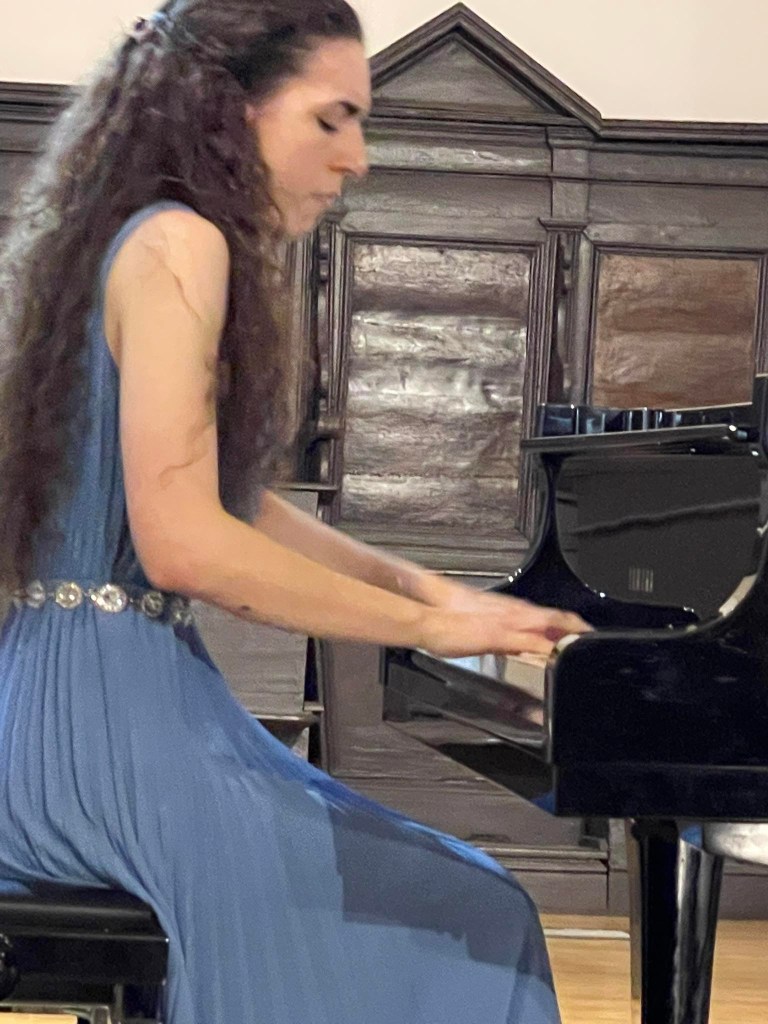
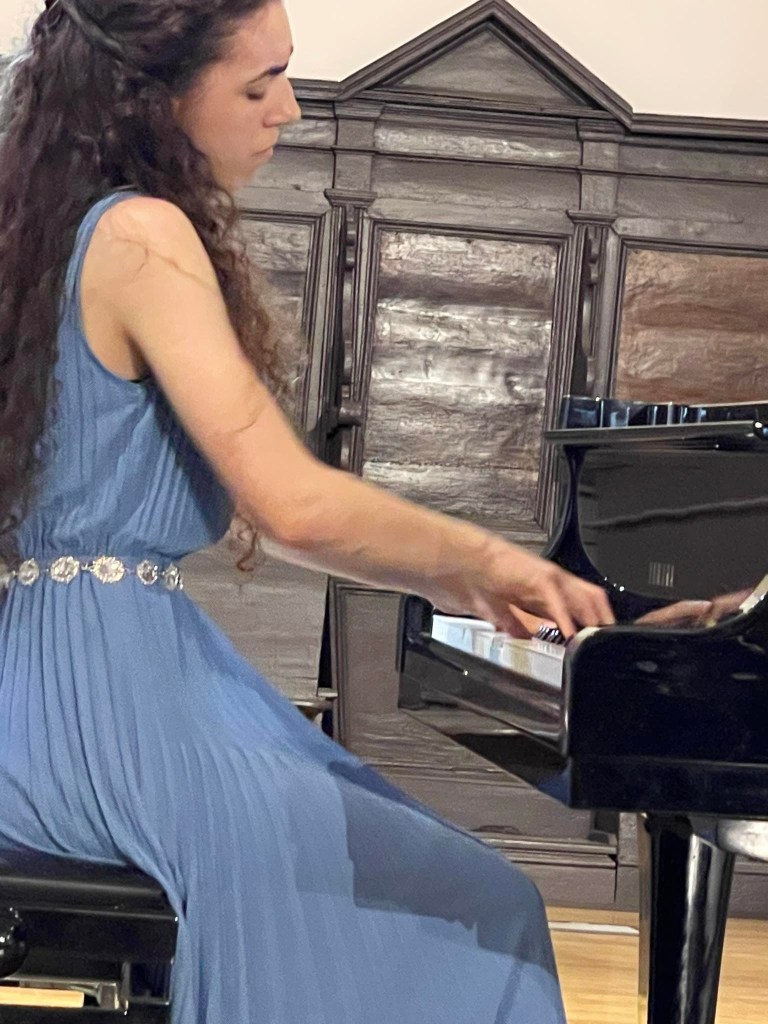
Maurice Ravel’s Sonatine : Modéré – Mouvement de menuet – Animé This was a pure outpouring of sumptuous music making. Colours that were born from a need to create beauty and ravishment. A range of colours but above all a sound world that created a remarkable musical picture where there was no note out of place. Beauty, passion and intelligence combined in a masterly performance of Ravel’s elusive Sonatine ,where Schnabels famous dictum referring to Mozart is so apposite also here: ‘Too easy for children but too difficult for adults’ Vera risked all because her talent and vision demanded it, and coming from the magnificent school of Maddalena De Facci, who like her brother Elia cannot do any less than allow her talent to flower and speak for itself. As Rubinstein says you cannot teach talent…….but I would add that you can ruin it ! https://youtu.be/gex0sOR7XZ0?si=JPhXDBIy0x5DFnjn
Vera Cecino
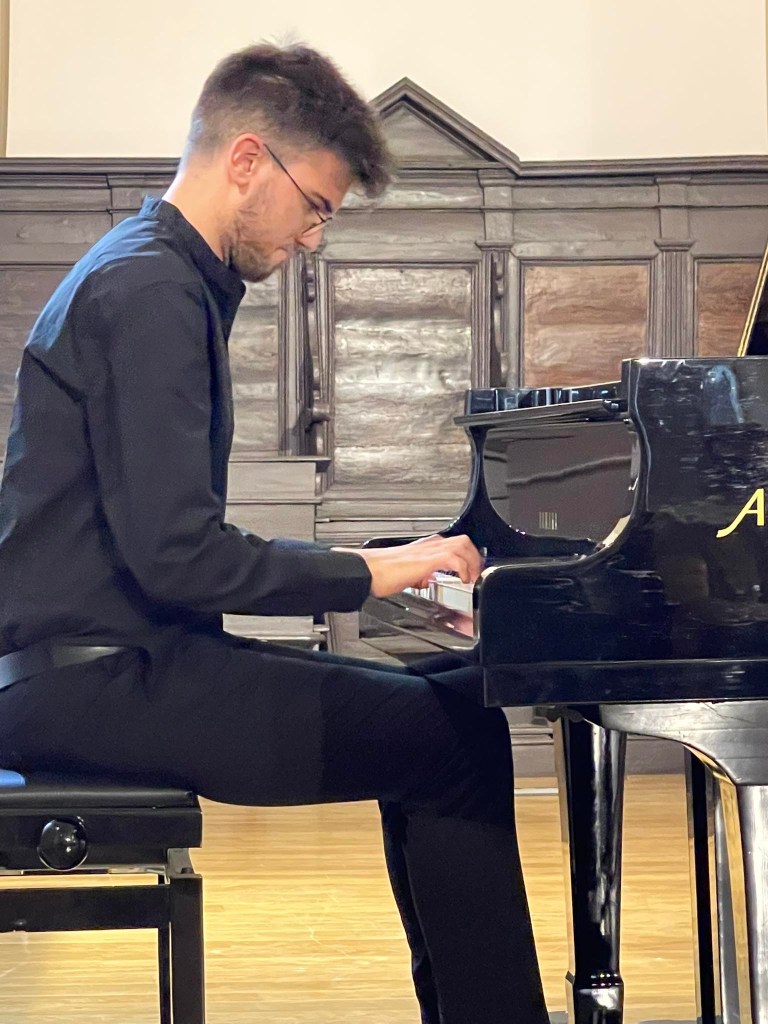
Ludwig van Beethoven from the Sonata in E major op. 109 Tema e variazioni .This is the very heart of Beethoven’s last thoughts expressed with simplicity and beauty, only to be equalled by the Arietta and variations of his final sonata op 111. It was played with bold string quartet texture where every note had a role to play as the variations gradually evolved with mellifluous beauty and unusual delicacy. A more horizontal approach would have allowed for even more fluidity but Andrea’s technical and musical mastery was never in doubt. Eliminating a sometimes hard vertical edge to the sound could have made the etherial voyage into paradise of the last variation even more magical. An enviable technical command and intellectual understanding that now needs to be tampered with the poetic inner meaning behind the notes. Andrea Cannata
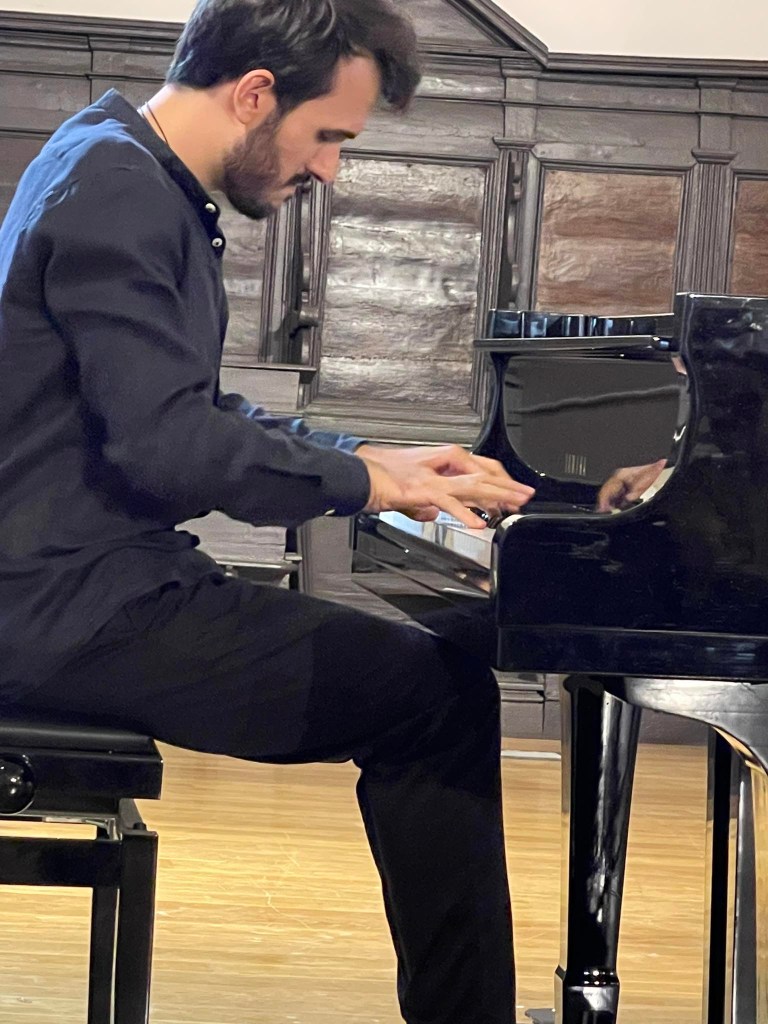
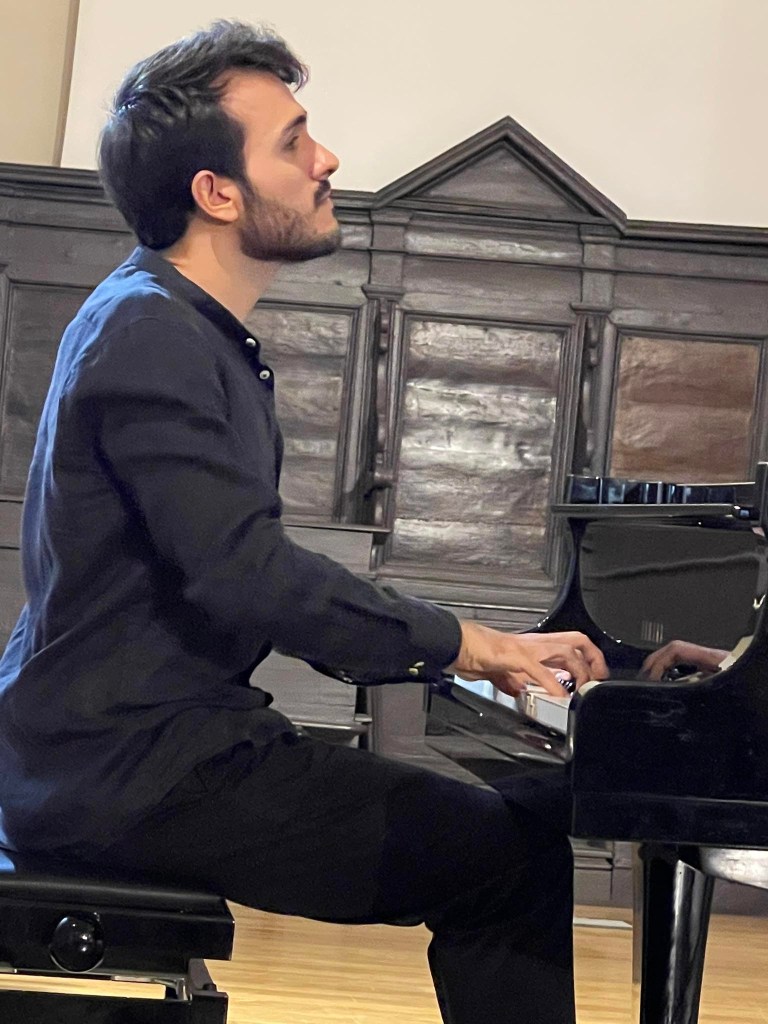
Felix Mendelssohn-Bartholdy Variations sérieuses op. 54. A tour de force of playing with the refined poetic opening tempered by the ravishing jeux perlé of the variations. An architectural shape to a work of great effect where in lesser hands Mendelssohn’s seemingly endless musical and pianistic invention can seem superficial and just facile note spinning. Federico imbued all he did with masterly musicianship and a humility that defied the exhilaration and excitement that Mendelssohn’s cascade of notes can produce.This was a tone poem of poetic enticement and ravishment from a young man who was obviously listening attentively to the sounds that were pouring from his well oiled fingers and intent of turning what so often can seem like a bauble into a gleaming gem. Federico Pische
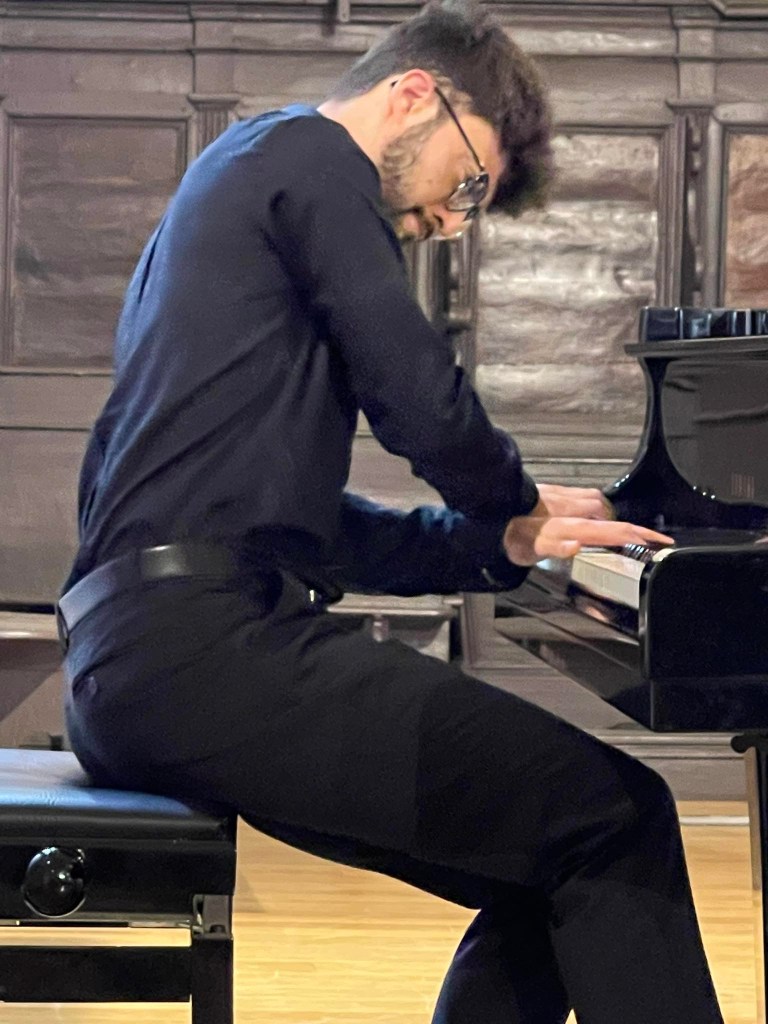
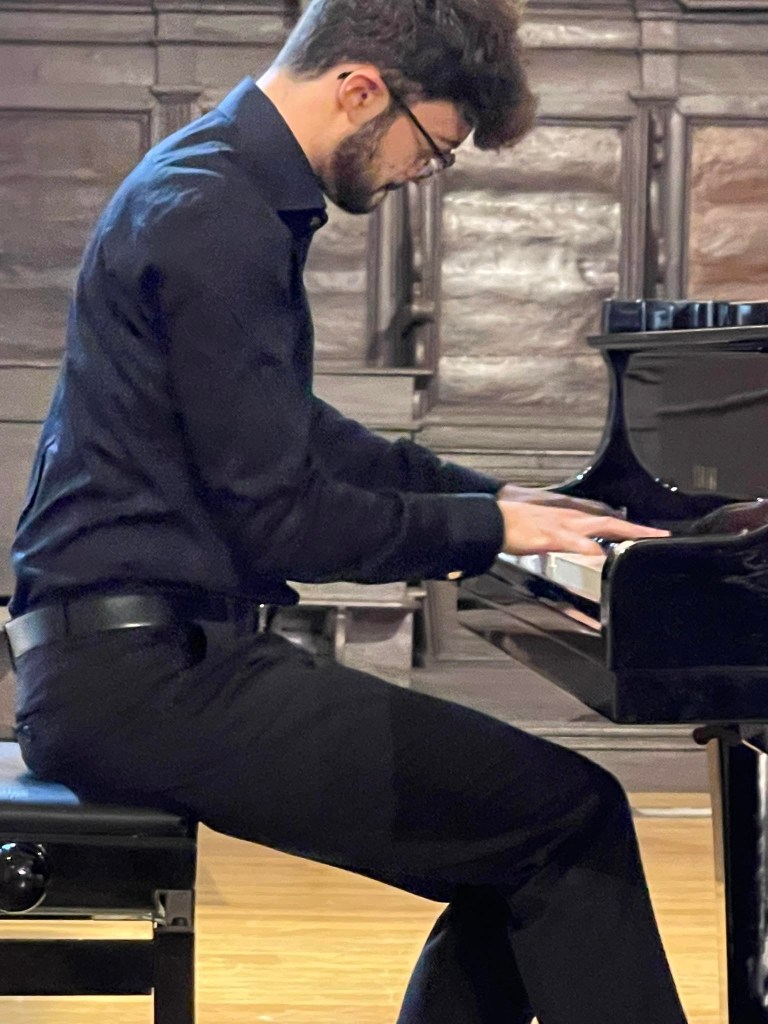
Robert Schumann from the Sonata in F sharp minor op. 11 Quasi adagio – Allegro vivace . This is one of the hardest works of Schumann to give an overall architectural shape to. This young pianist opened with the great passionate outpouring of the ‘Quasi adagio’ that he played with almost operatic abandon and freedom . A deeply moving opening statement played with great authority and poetic understanding that burst into the ‘Allegro vivace’ that bubbled over with rhythmic drive alternating with unexpected bursts of melodic beauty. Played with a continual flowing drive and a technical mastery that swept all before it and created a first movement that is quite unique in the Romantic piano repertoire. Antonio Cicala
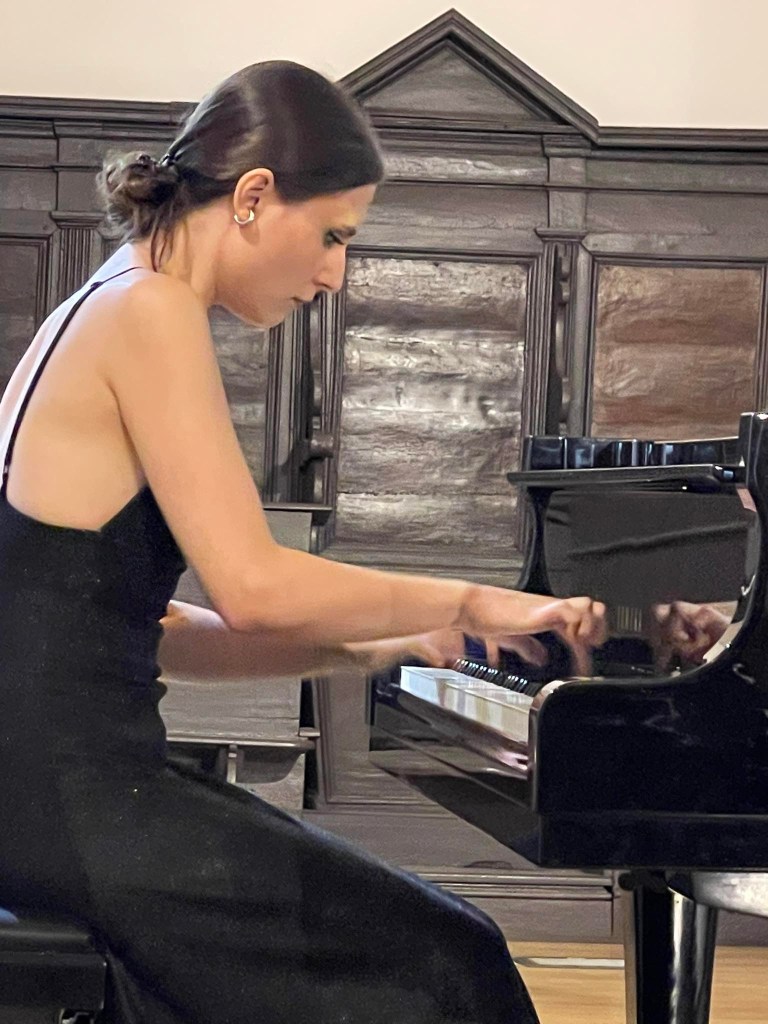
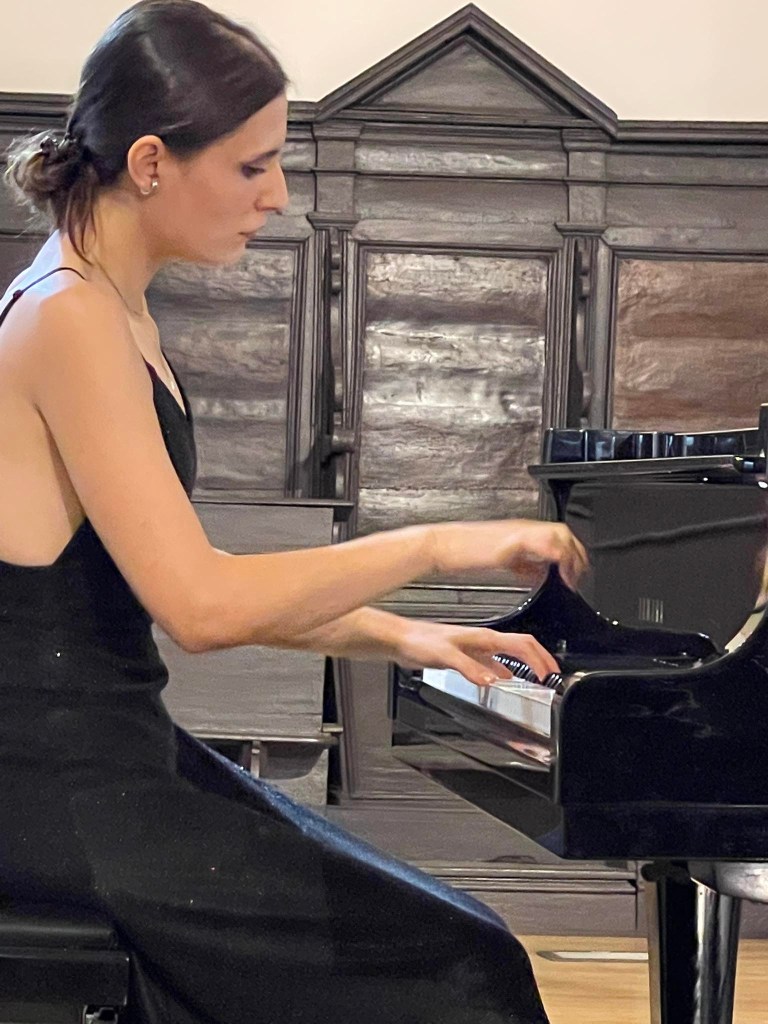
Franz Liszt from Venezia e Napoli :Tarantella. Liszt asks specifically that the Tarantella should be linked to the aria that preceeds it in the Suite Venezia e Napoli ( the pedal indications make this quite clear). However it is often played by great virtuosi on its own, as it was today (I remember taking Cherkassky to the Amici della Music of Florence, of which Maestro Lucchesini is now artistic director, where he too played it as a solo piece together with Brahms Sonata op 5,Scriabin 4th Sonata and Chopin Ballade op 23 ) It is a piece of great effect and when played as today, with extraordinary clarity and mastery, it can be a breathtaking ending to a recital.The beautiful song of the central episode was played with ravishing beauty and the embellishments played with absolute mastery never allowing the tempo to sag.The final pages were overwhelming and breathtaking and this beautiful young lady reminded me of Martha Argerich who I also remember playing Liszt at La Pergola in Florence and I remember the entire audience cheering this extraordinary young lady as we should have done today! Laura Licinio
 ChristopherAxworthy-MusicCommentary