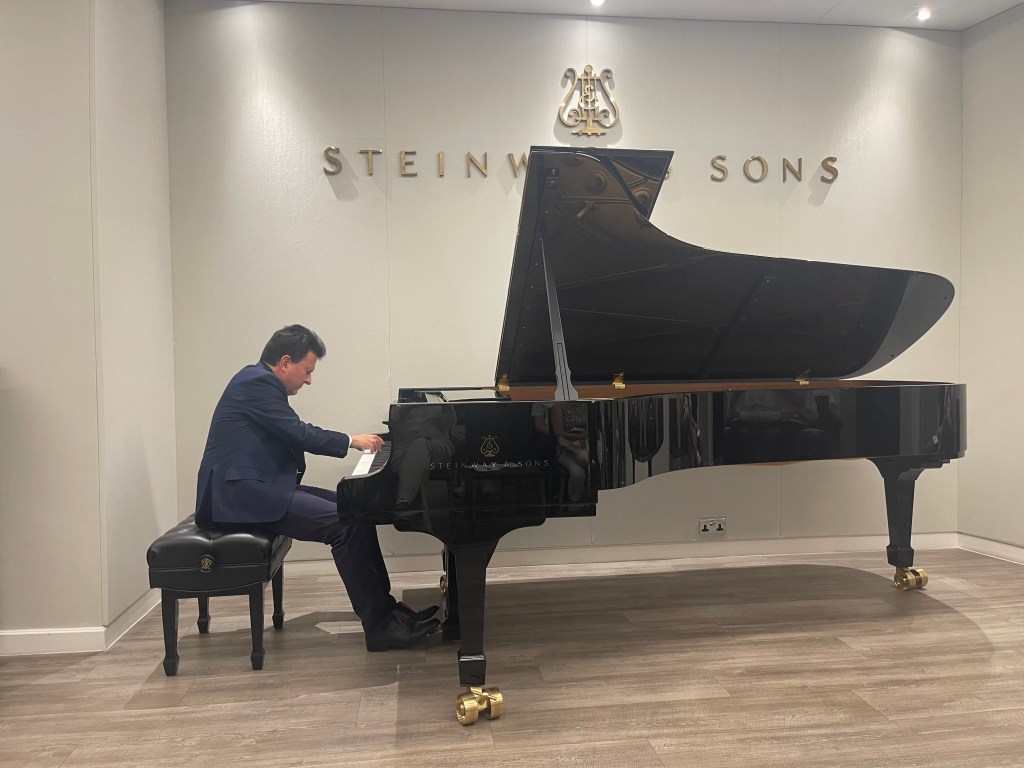

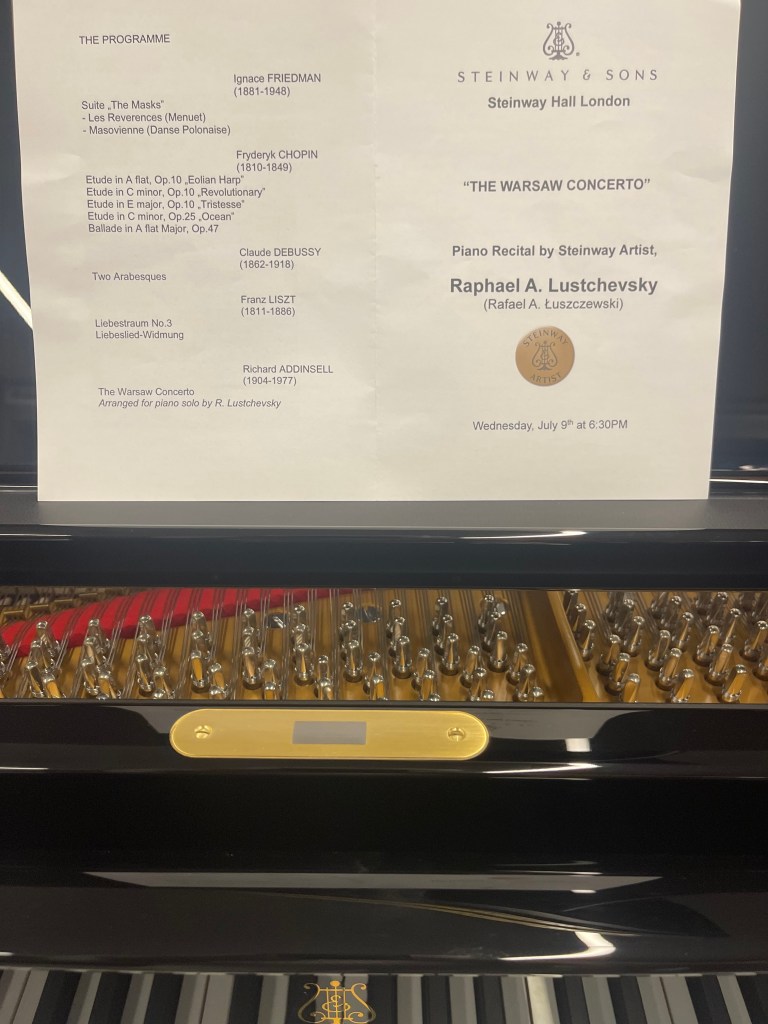
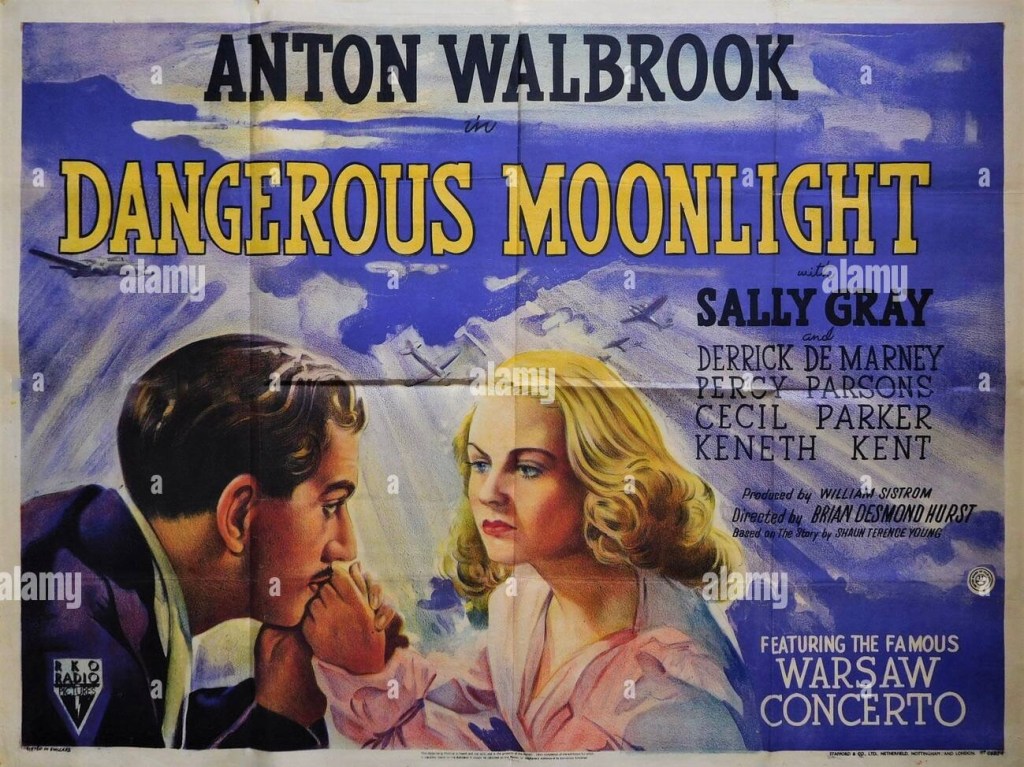
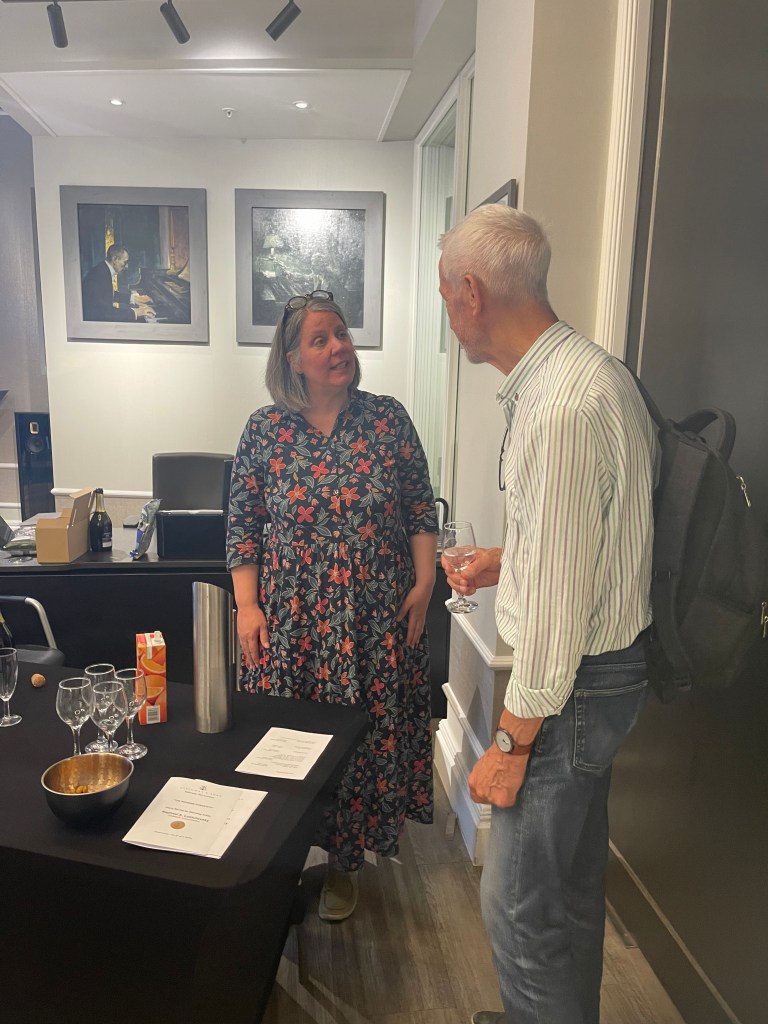
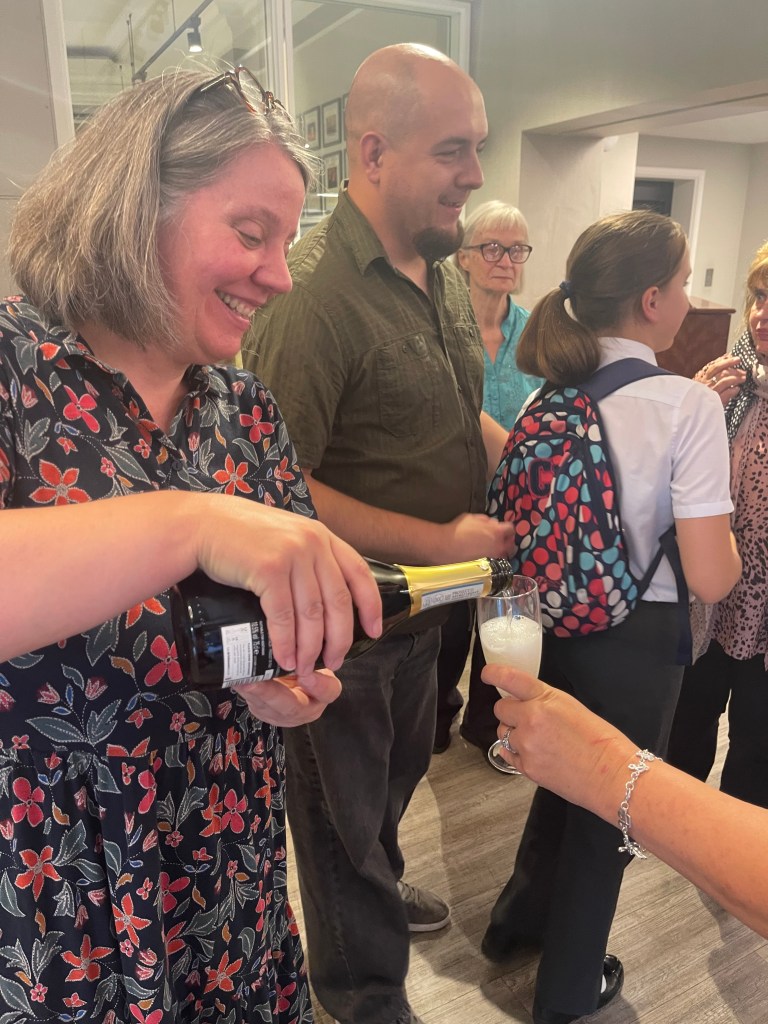
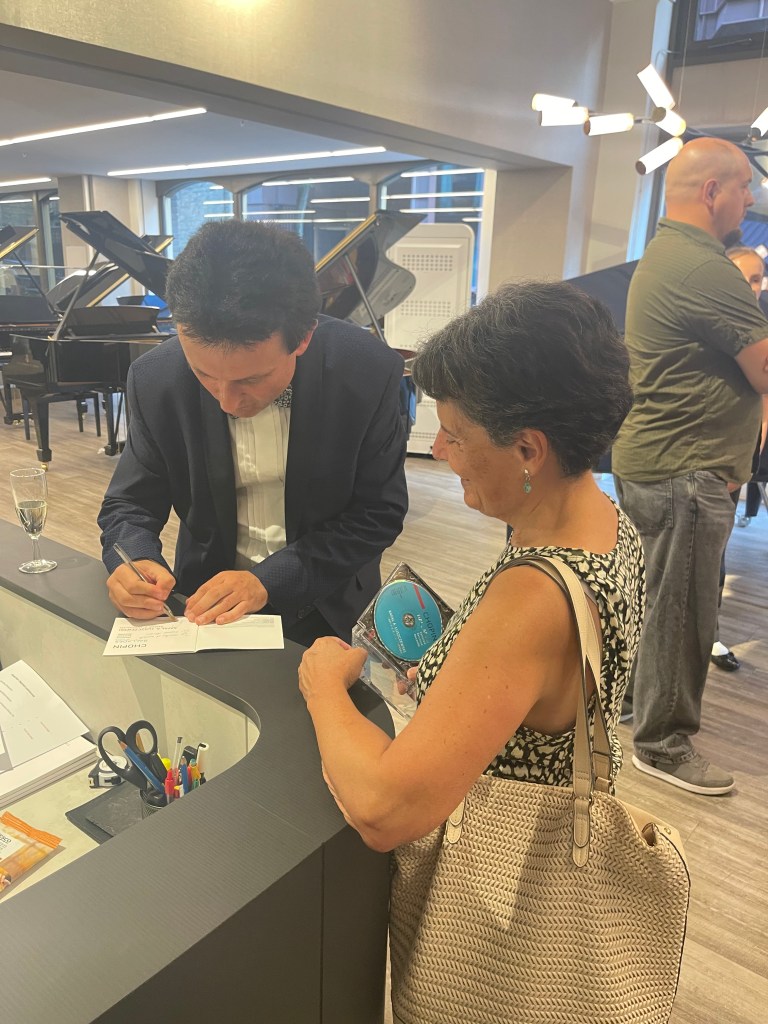
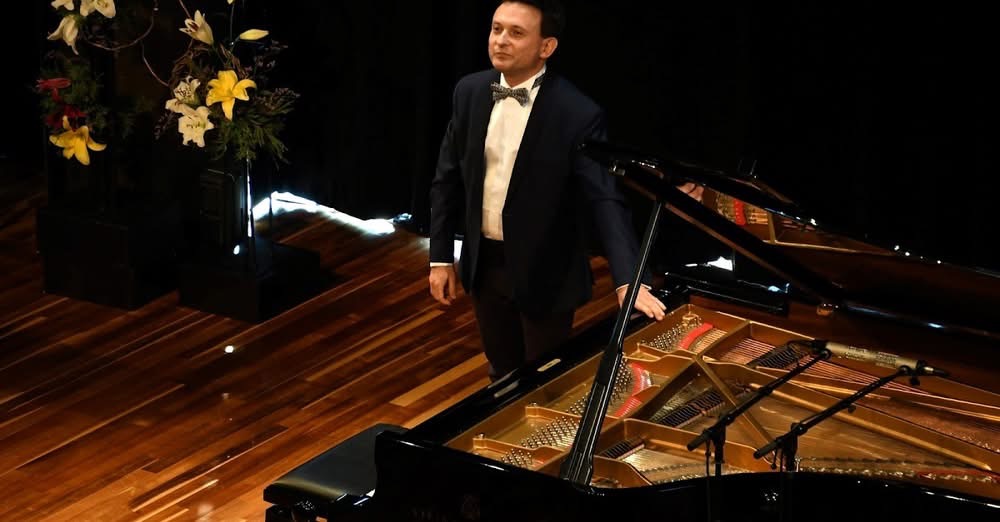
Dangerous Moonlight strikes at Steinways with Raphael Lustchevsky taking the role of Louis Kentner with the same mastery and astonishing style that the Warsaw Concerto by Addinsell was to have defined our two countries in 1941 as In the midst of World War II, Polish musician Stefan (Anton Walbrook) meets American journalist Carole (Sally Gray) as the Nazis are marching into Poland. Though both are forced to flee the Germans, they fall in love and, after leaving Eastern Europe, get married. Although marriage and a life as a musician bring Stefan joy, he is unable to forget his commitment to his country, and is compelled to return to the fighting, despite Carole’s fears and concerns.
A master pianist with a programme of works that were once standard fare in every front parlour, but now the parlour no longer exists and they are all too rarely heard in the concert hall. Interesting to note that Friedman, a disciple of Leschetitzky, had fled to Australia during the war which explains the wonderful Russian school of piano playing in Australia with the likes of Eileen Joyce. Friedman died in Australia but was buried in Geneva in the 1950’s ! ?
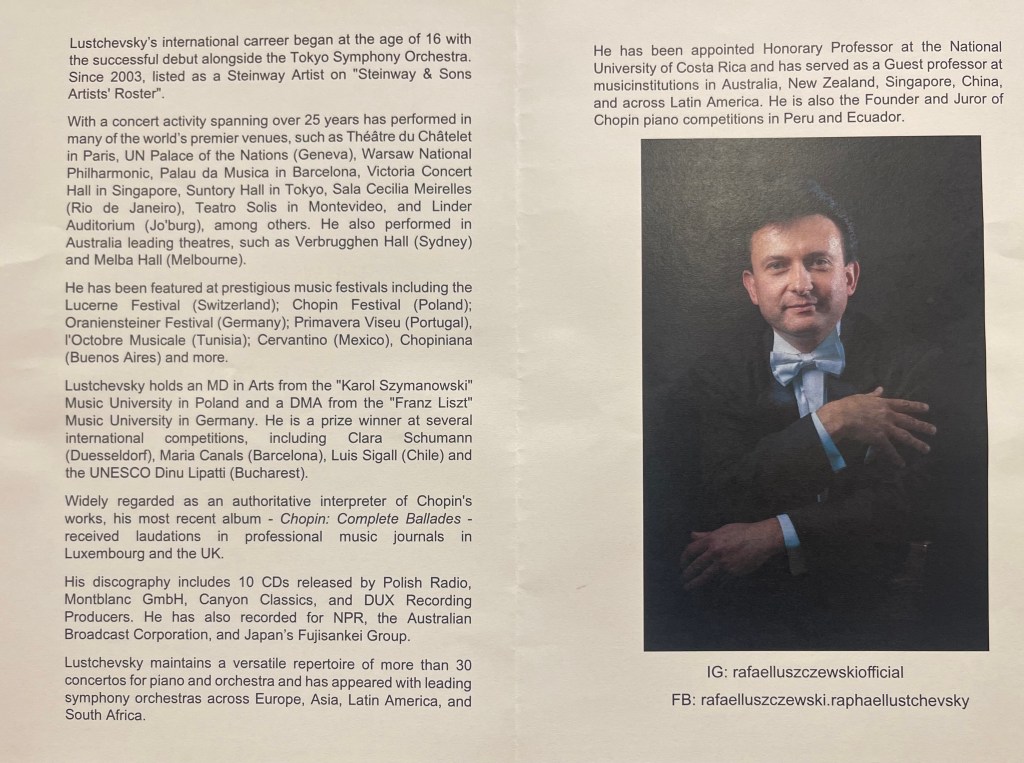
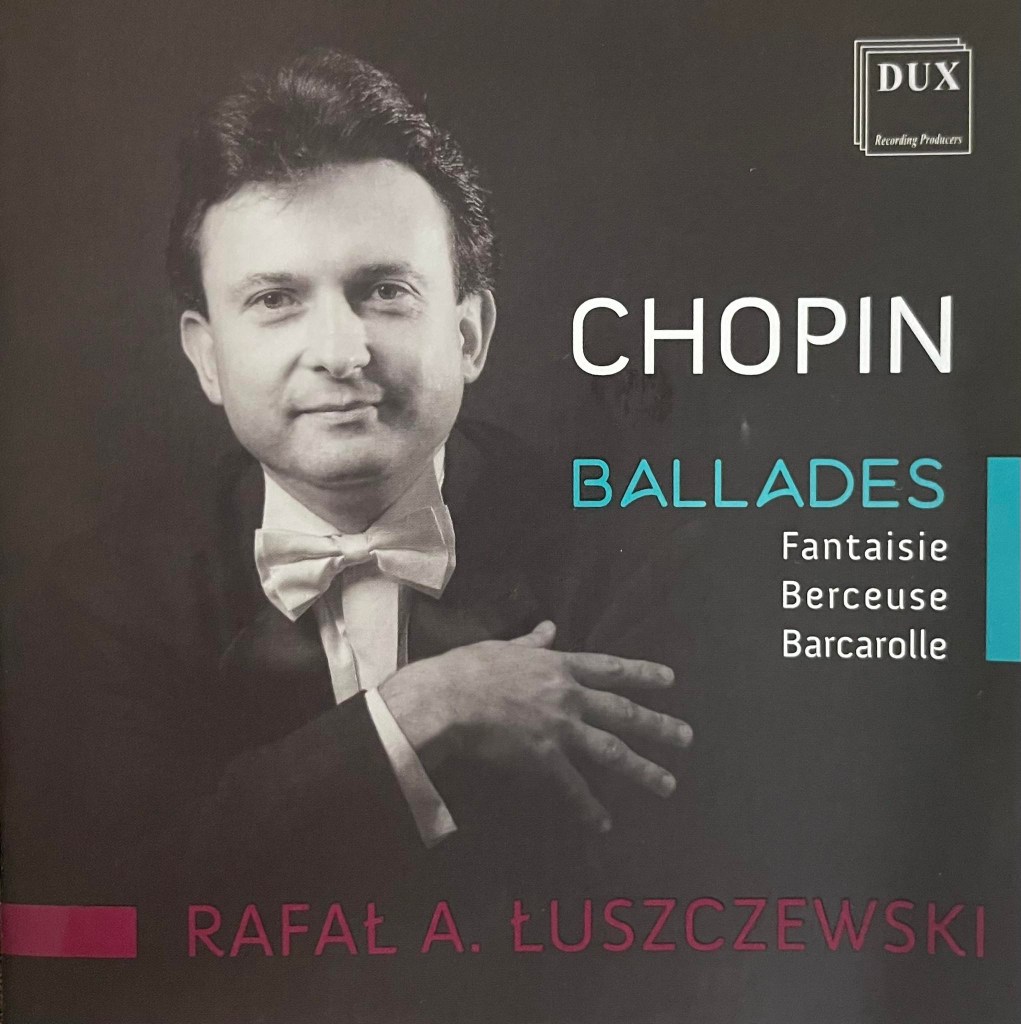
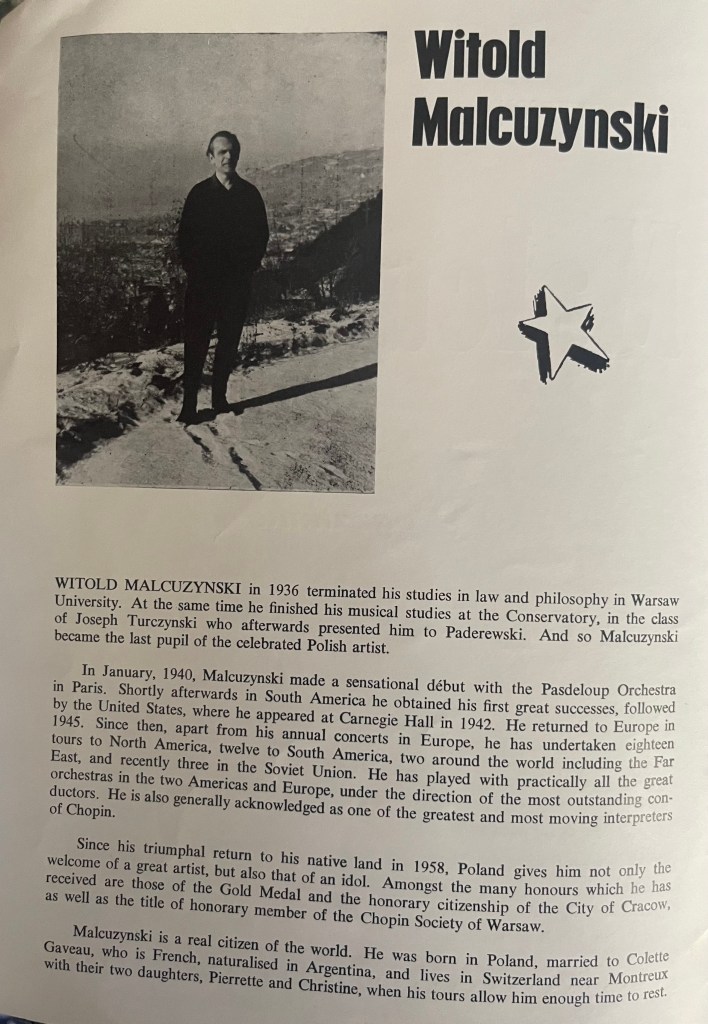
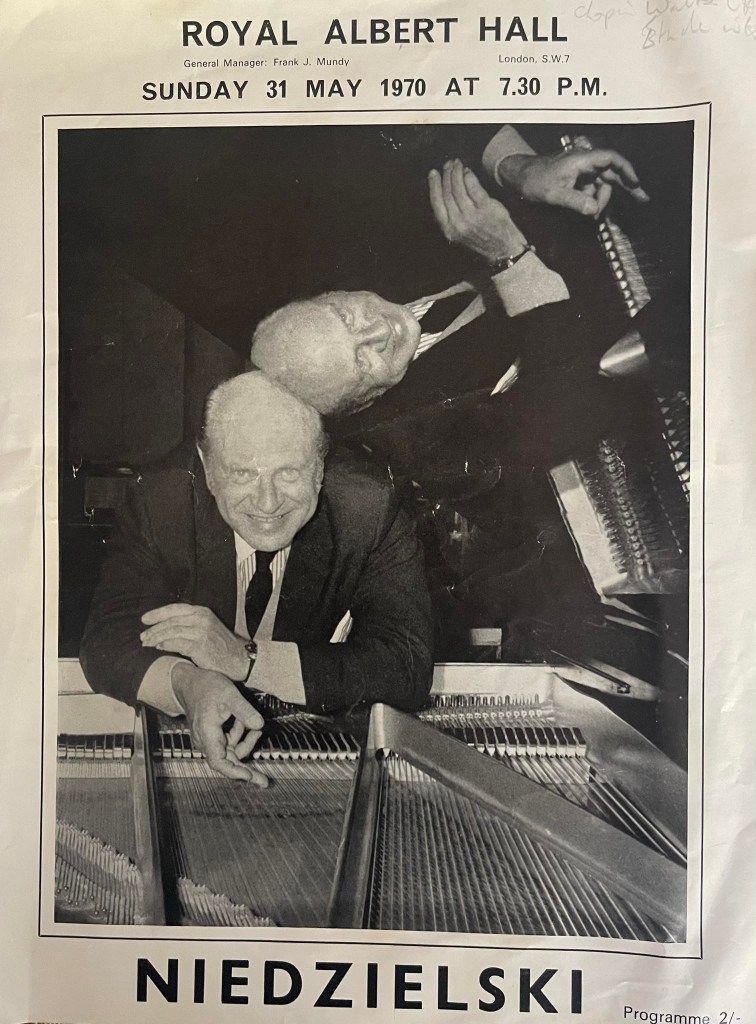
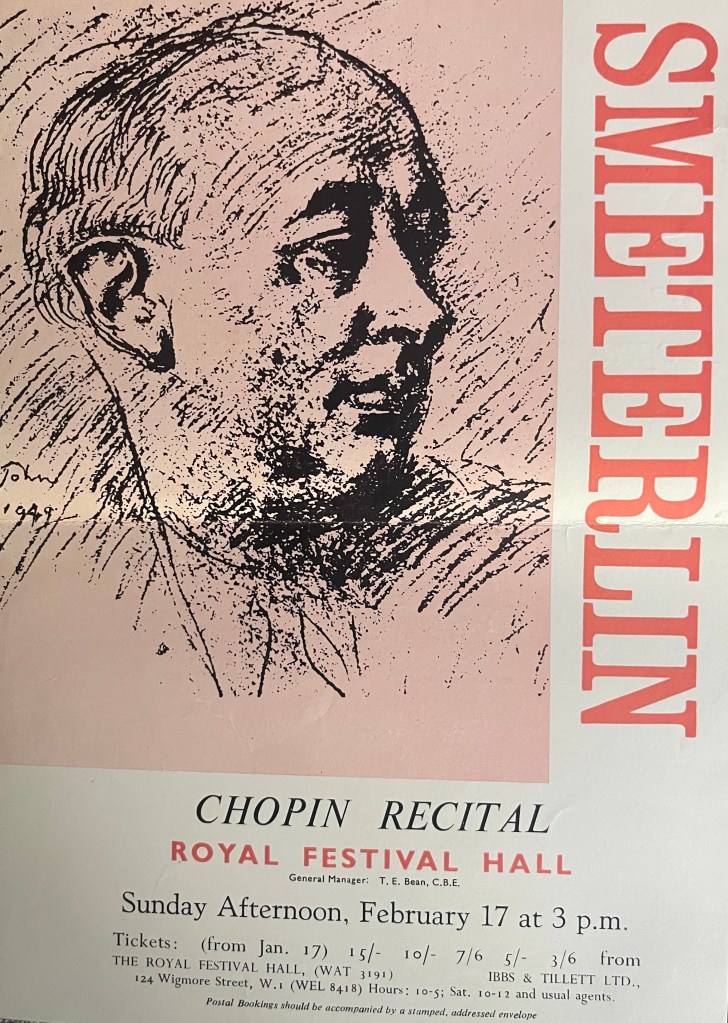
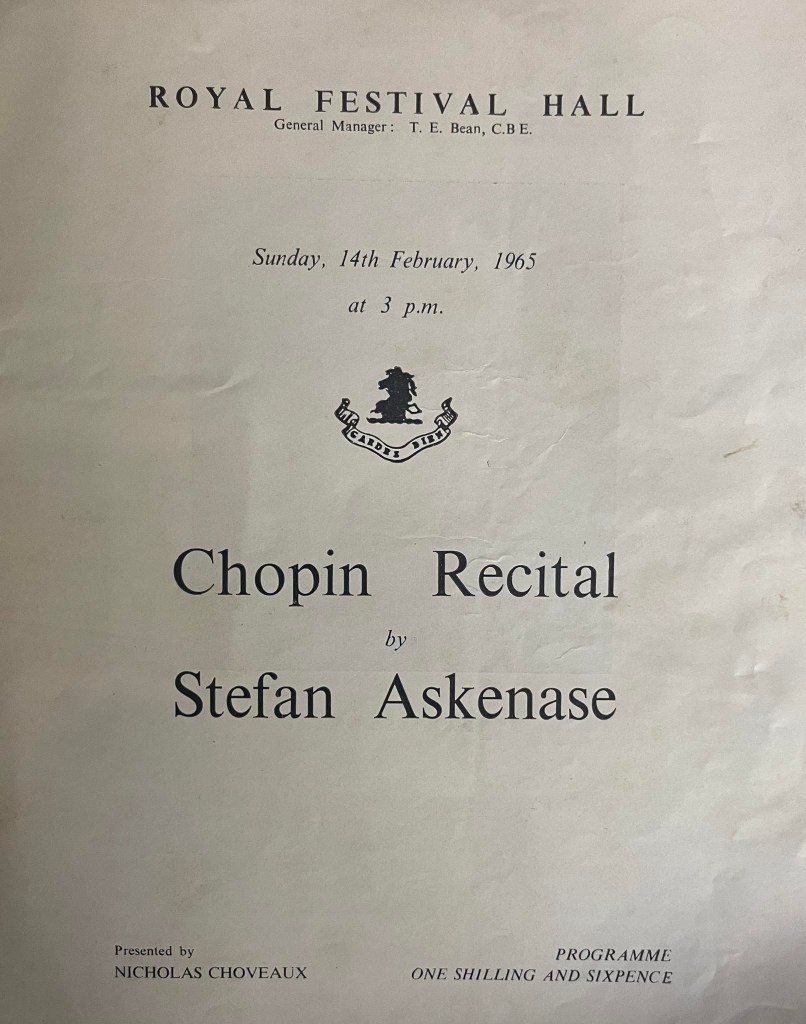
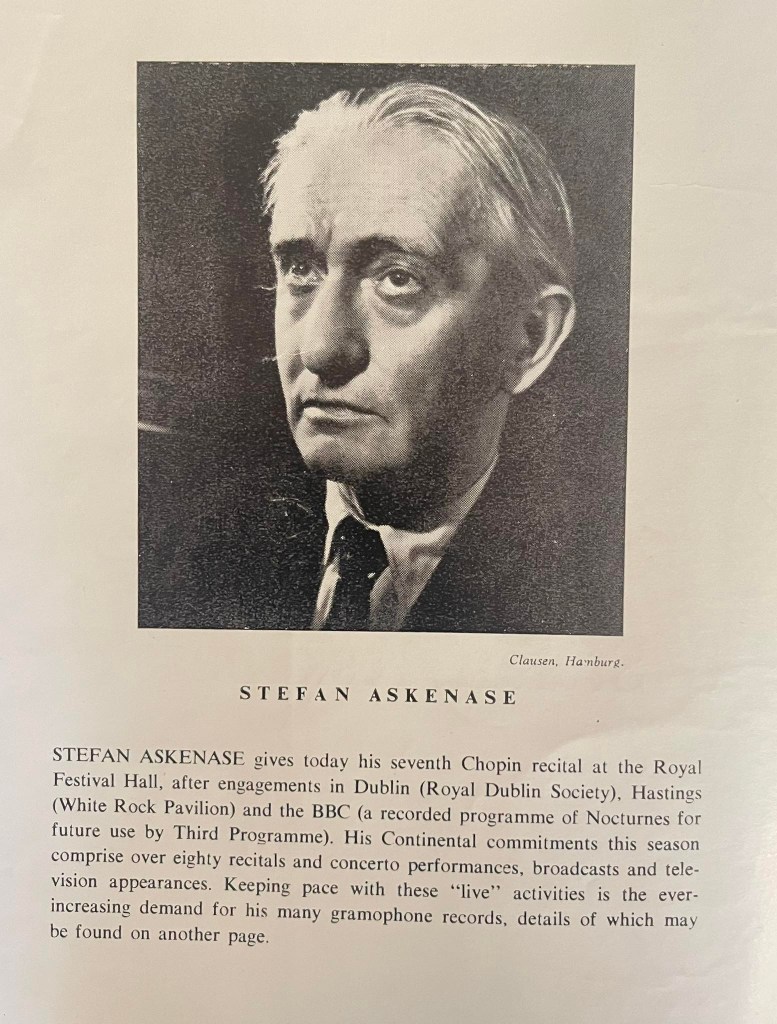
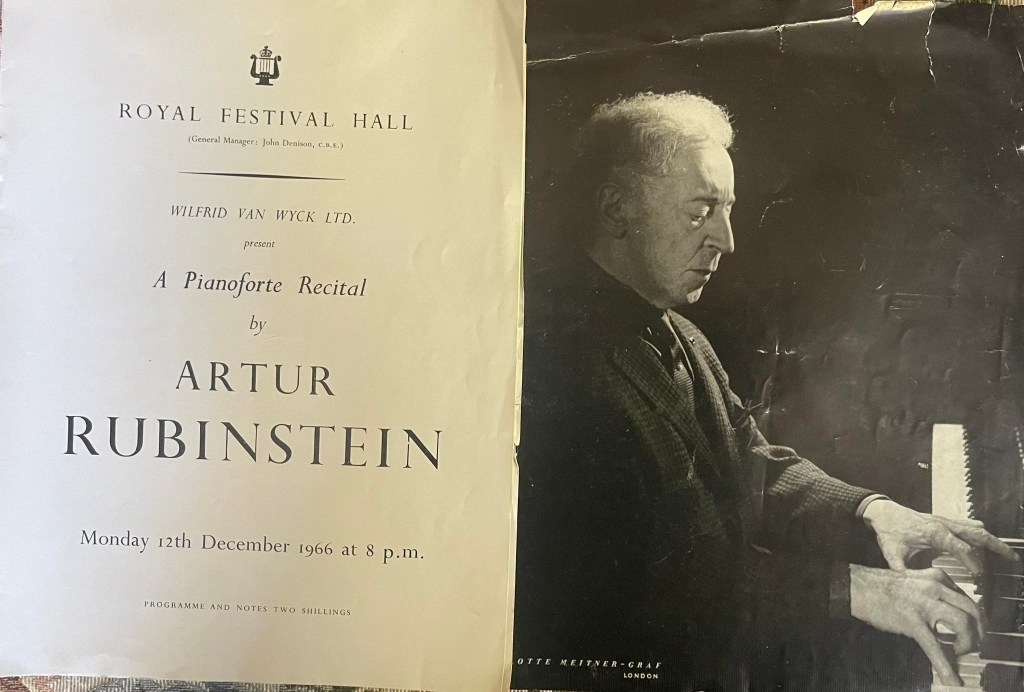
Played with great style and limpet like fingers of such authority as we used to hear from that great Polish school with post war pianists such as Malcuzinski, Niedzielski, Smeterlin, Askenase and of course the greatest of them all Artur Rubinstein. And from a later generation Zimmerman who like Raphael had studied with Jasinski .
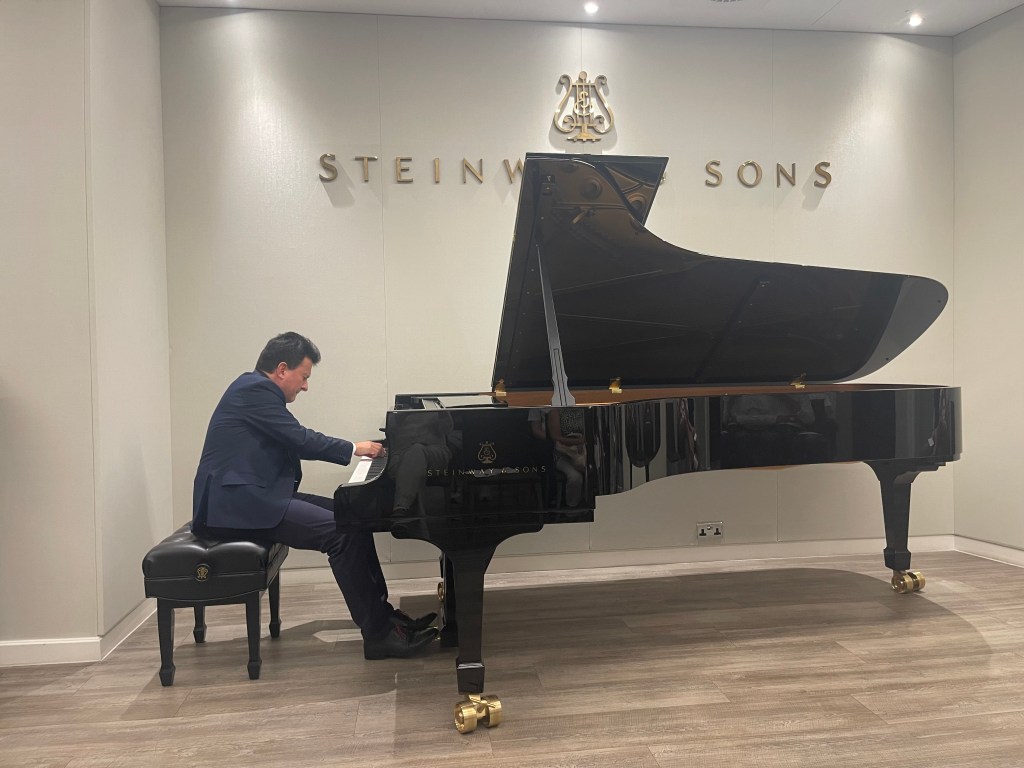
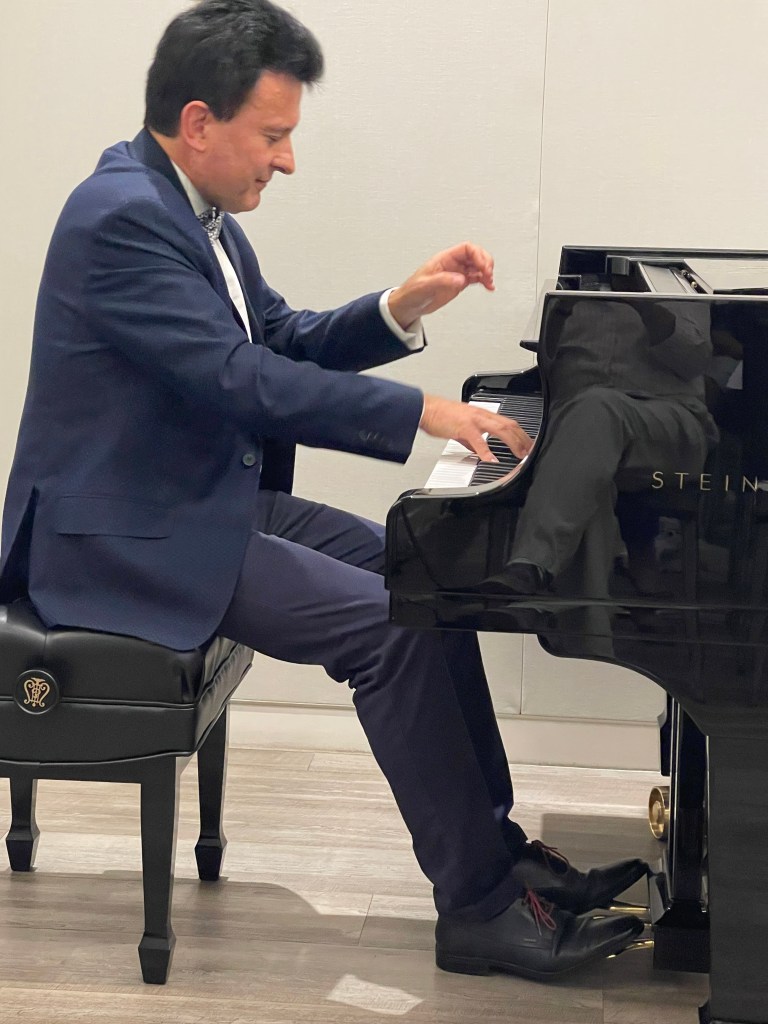

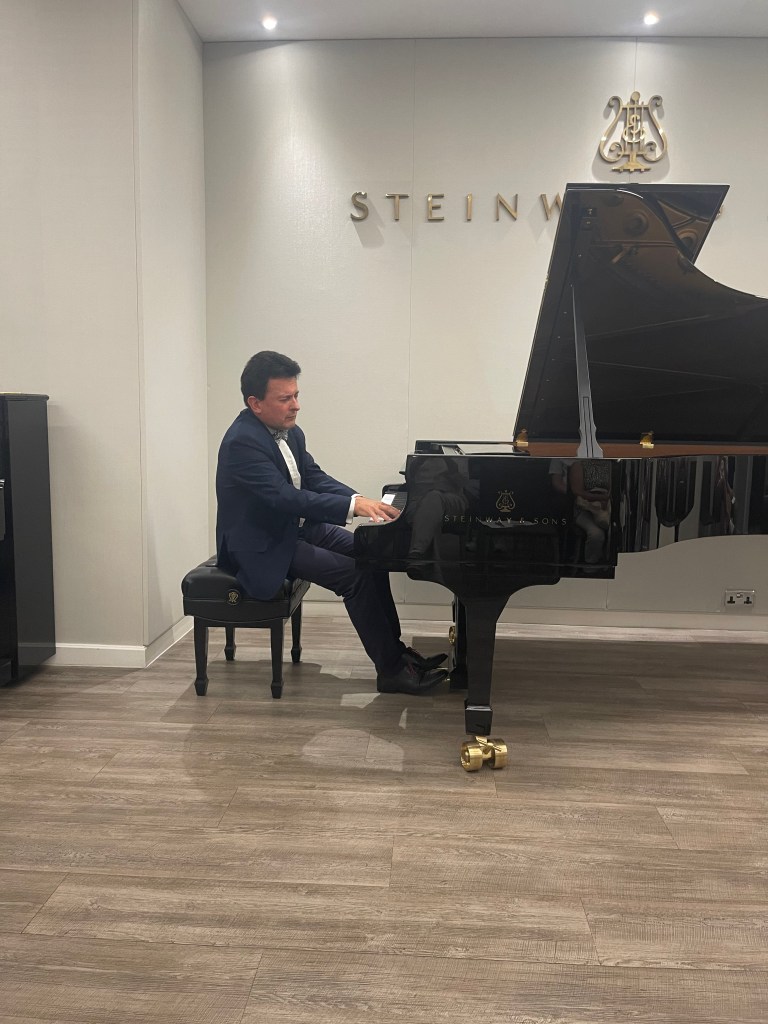
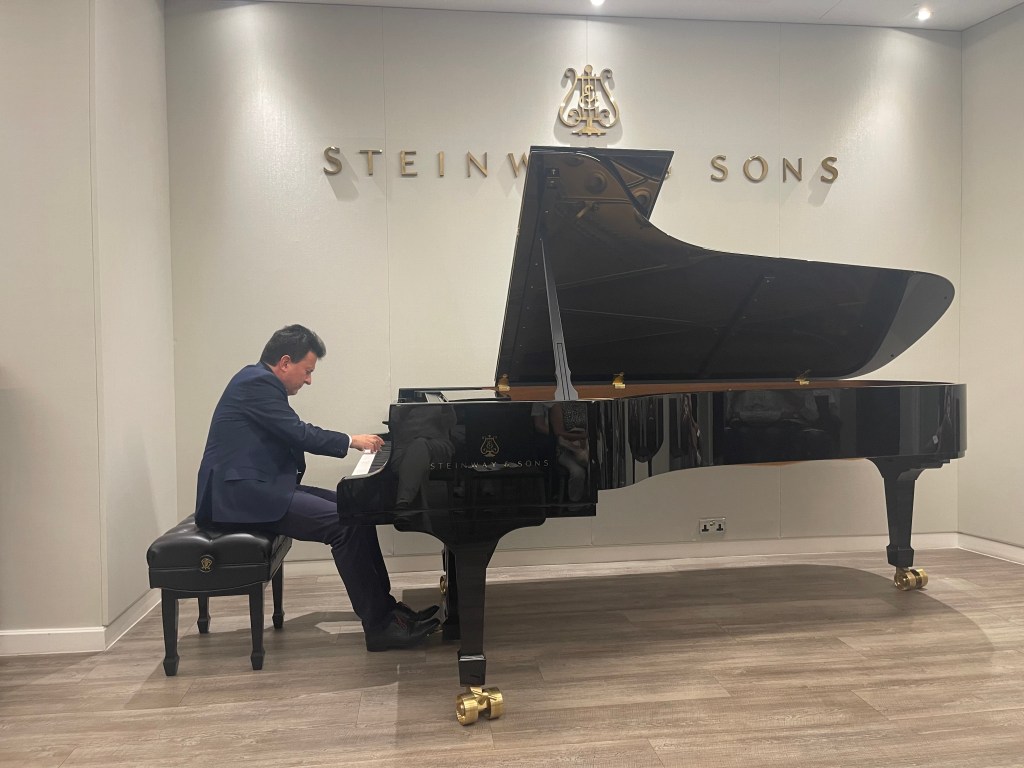


Liebestraum , Widmung, the two Debussy Arabesques , four Chopin etudes :The Aeolian Harp, Tristesse, Revolutionary and Ocean together with the beautifully simple and elegant third Ballade. A superb sense of balance but also of solidity.
The two works by Friedman were played with a charming flowing beauty and it was wonderful to see his hands belonging to each key, finding warm rich sounds as he played with a beguiling style that brought these salon pieces vividly to life .The ‘Masovienne’ ,a dance from a lost period of charm mixed with nostalgia, was played with masterly understanding.
There was a beautiful sense of line to the study op 25 n. 1 by Chopin, that was played with extraordinary clarity and an ending of exquisite beauty, as the left hand trill was just allowed to vibrate as it arrived so delicately on the final chord. There was passion and poetry in the study op 10 n. 12 ‘Revolutionary’, with a dynamic drive that was breathtaking and a technical control of enviable assurance. The study op 10 n. 3 ‘Tristesse’ was played with aristocratic good taste of poignant beauty. The change of tempo for the central episode became in effect a mazurka ( as Chopin does in his Polonaise op 44) that contrasted so well with the radiant beauty of one of Chopin’s most memorable melodies. The study op 25 n 12 ‘Ocean’ was truly overpowering with its exuberance and exhilaration, it may have seemed slightly too much for such a small room but when played by a musician who is listening and judging the sound it was totally convincing.
Raphael had a strange way of pointing to the first note in the third ballade, almost like pointing the way for a performance that was to be played with great authority. An architectural shape ,with great poetic understanding and a sense of style that was never allowed to become sentimental but had, as in all his playing, a strength and personality that swept all before it. A natural flexibility that allowed the phrases to be shaped with the great bel canto line always in mind . As he had started with a straight finger I cannot help but comment on his alternating hands for the final flourish which took me by surprise!
The two Debussy ‘Arabesques’ were played with a beautiful fluidity and chiselled beauty with a sense of improvised freedom. A refreshing quixotic shape to the second was played with a capricious sense of style alla ‘Golliwog ‘ but with a beautifully atmospheric ending.
Drama, passion and heroic beauty, with sumptuous rich harmonies gave new life to Liszt’s Liebestraum and showed what true love is really about. With fearless abandon he scaled the emotional heights in ‘Widmung’ the work that Schumann had dedicated to Clara and given to her as a birthday present as proof of his undying love. Liszt had elaborated this song with sumptuous beauty and cascades of notes of overwhelming intensity. Played with extraordinary mastery and passion, we were now ready for the Warsaw Concerto!


A programme that put these miniature masterpieces once more on the map when played with such mastery as today. Culminating in an overwhelming performance of passion and heart on sleeve radiance of the Warsaw concerto. Addinsell had been asked to write a concerto like Rachmaninov who had turned down the film commission . Well Addinsell certainly succeeded and came up with a concerto in many ways much better because it is so unashamedly theatrical and everyone’s idea of what a piano concerto should be .A.I. eat your heart out !
The Warsaw Concerto is a short work for piano and orchestra by Richard Addinsell , written for the 1941 British film Dangerous Moonlight , which is about the Polish struggle against the 1939 invasion by Nazi Germany . In performance it normally lasts just under ten minutes and is an example of programme music , representing both the struggle for Warsaw and the romance of the leading characters in the film. It became very popular in Britain during World War II.
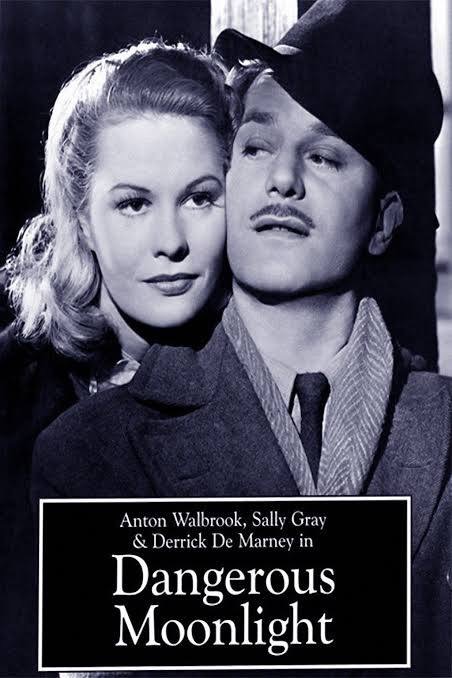
The concerto is written in imitation of the style of Rachmaninov and initiated a trend for similar short piano concertos in the Romantic style, which have been dubbed “tabloid concertos”, or “Denham concertos” (the latter term coined by Steve Race )
The composer, Richard Addinsell , was born in London and initially studied law before turning to a career in music. His time at the Royal College of Music was brief, as he was soon drawn to musical theatre, and he also wrote for radio, but his most memorable contributions are to a series of film scores beginning in 1936. He wrote the music for the 1939 film Goodbye ,Mr Chips, the original Gaslight (released in 1940, not to be confused with the later Hollywood version), Scrooge, and Dangerous Moonlight (1941, also released in the US as Suicide Squadron).
- Percy Grainger transcribed and recomposed the work for two pianos in the 1940s.
- Pierre Boulez was, in his youth, house pianist at the Folies Bergère Club in Paris “playing the Warsaw Concerto, engulfed in kitsch and lit by pinkish light – and that was while he was writing his second sonata”
The success of the film led to an immediate demand for the work, and a recording was dutifully supplied from the film’s soundtrack (at nine minutes, it fit perfectly on two sides of a 12-inch disk playing at 78 rpm) along with sheet music for a piano solo version.Such unexpected success had another consequence. The off-screen piano part was played by Louis Kentner, a fine British/Hungarian musician known for his performances of Franz Liszt , but he had insisted that there be no on-screen credit, for fear that his participation in a popular entertainment would harm his classical reputation.He lost his qualms when the recording sold in the millions, and Douglas notes that he even asked for royalties (they were granted). Ultimately the Warsaw Concerto was such a hit that it made the then unusual journey from movie screen to concert hall.
The concerto was not part of the original plan. According to Roy Douglas, at that time orchestrator for all of Addinsell’s scores: “The film’s director had originally wanted to use Rachmaninov’s Second Piano Concero, but this idea was either forbidden by the copyright owners or was far too expensive”.Thus Addinsell wanted the piece to sound as much like Rachmaninov as possible, and Douglas remembers, “while I was orchestrating the Warsaw Concerto I had around me the miniature scores of the Second and Third Piano Concertos, as well as the Rhapsody on a Theme of Pagnini “Although it is at the heart of Dangerous Moonlight, the Concerto is never performed complete but rather revealed piecemeal. The opening of the work is heard when the two protagonists meet, and it is further developed when they are on their honeymoon. Finally, in the only extended concert sequence, we are given the closing section but its use is not restricted to scenes with the “composer” at the piano. The themes are found as underscoring throughout the film, and in this way a brief concert piece gains a dramatic resonance that belies its small scale.
Dangerous Moonlight takes place at the start of World War II and tells the story of a Polish concert pianist and composer, Stefan Radecki (Anton Walbrook ) who defends his country by becoming a fighter pilot. After an air raid in Warsaw by German Luftwaffe , he is discovered by an American reporter, Carol Peters (Sally Gray), practising the piano in a bombed-out building. It is the opening of his Warsaw Concerto, at this point a work in progress, and the first line he says to her is, “It is not safe to be out alone when the moon is so bright” (referring to the moonlight bombing raids). Gazing intently at Carol and disclosing “something lovely you’ve just given me”, he introduces the lyrical second theme of the Concerto. And, indeed, this melody is always associated with Carol. Like Rachmaninoff, Addinsell introduces it almost as a nocturne. Stefan speaks of the piece later in the film: “This music is you and me. It’s the story of the two of us in Warsaw, of us in America, of us in … where else I don’t know. That’s why I can’t finish it”. But finish it he does. Similar to the way that Rachmaninoff returns to his second theme in his Second Piano Concerto, the “Carol” melody is used, not only to bind together the emotional strands of the drama, but to bring the Concerto to a triumphant conclusion. Throughout the film, the unfinished piece is defined in a relationship with Chopin’s “Military ” Polonaise , symbolising Polish patriotism.It is “completed” when the Polonaise elements are integrated with the Romantic theme, implying the fusion of romantic and patriotic love.
Within the context of its story, Dangerous Moonlight is also effective in creating the impression of a larger work written and performed by the film’s fictional composer and pianist. When snatches of the Concerto are first played, one character tells another, “I’ve got the records”, and when the “premiere” is shown, we are provided with a close-up of the program, Warsaw Concerto, with three movements listed. Only one movement was actually written by Addinsell.
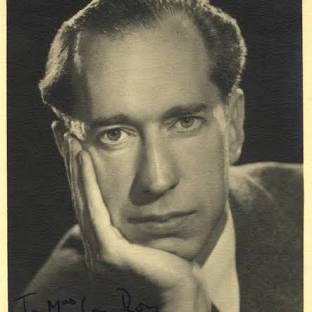
Richard Addinsell 13 January 1904 London- 14 November 1977 (aged 73) Brighton
Educated at Hertford College, Oxford. Royal College of Music ( two terms) , London.
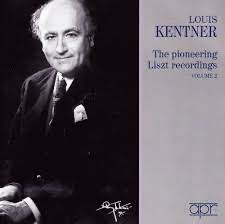
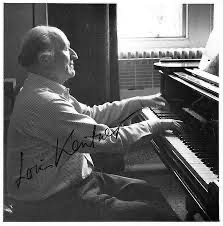
Louis Philip Kentner CBE (19 July 1905 – 23 September 1987)He was born in Karwin,Austrian Silesia (present-day Czech Republic), to Hungarian parents. He studied at the Royal Academy in Budapest from 1911 to 1922, studying with Arnold Székely , Hans Koessler,Zoltan Kopdály and Leó Weiner. While a student, he first became acquainted with Béla Bartók, who remained a lifelong friend.In 1935 he moved to England permanently with his wife, the fellow Hungarian pianist Ilona Kabos, and they made their home in London. Kentner gave radio broadcasts of the complete sonatas of Beethoven and Schubert , the complete ’48’ by Bach, and the complete Années de pèlerinage of Liszt . At the composer’s request, he was the soloist at the Hungarian premiere of Bartók’s Piano Concerto n. 2, in Budapest in 1933, under Otto Klemperer In November 1942, Kabos and Kentner gave the world premiere of Bartók’s Concerto fro two Pianos ,Percussion and Orchestra in London .He also gave the first European performance of the Concerto n. 3 in London with Sir Adrian Boult on 27th November 1946. He and Yehudi Menuhin (his second wife’s brother-in-law) gave the first performance of Walton’s Violin Sonata, in Zürich on 30 September 1949.He was President of the British Liszt Society for many years, until his death. In 1975
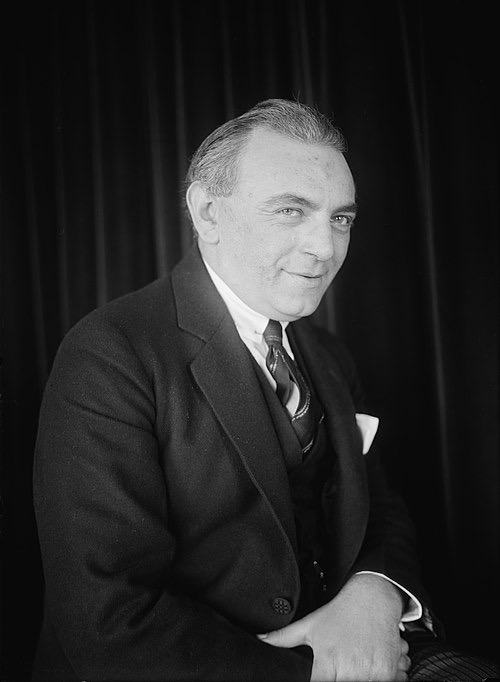
Salomon Izaak Freudmann February 13, 1882 Kraków – January 26, 1948 (age 65)
Sydney Australia
Ignaz Friedman was a child prodigy and studied with Hugo Reimann in Leipzig and Theodor Leschetizky in Vienna and participated in Busoni’s master classes.His official début in Vienna in 1904 featured a program of three piano concertos, rivaling the similar programs of established titans like Busoni and Godowsky , and he remained a titan throughout his career. His style was quiet and effortless, imbued with a sense of rhythm and color, grounded in a sovereign technique, and much has been written about his peerless interpretations of Chopin in particular. As with his compatriot and contemporary Moritz Rosenthal , Friedman’s Chopin interpretations, particularly those of the mazurkas , are considered by many to be unsurpassed. Despite having given 2,800 concerts during his career, he sometimes received lukewarm reviews in America in later years, as younger critics were becoming accustomed to modernist playing .Rachmaninov admired Friedman’s playing very much and considered him as a great virtuoso in a style more romantic than his own. Friedman was never successful in an America that had adopted a much more modern and straightforward presentation with recording technology that prompted a different sensibility. Therefore, Friedman remains as one of the last representatives of the bygone era even during the life of Rachmaninov.At the outbreak of the Second World War, Friedman was in Europe, but managed to escape when a concert tour in Australia was offered at the last moment. He settled in Sydney and remained there until his death (which occurred on Australia Day , 1948). His last concert was in Sydney on July 24, 1943, after which neuritis in his left hand forced him to retire from the concert platform.
He composed more than 90 works, mainly piano miniatures, as well as pieces for cello and a piano quintet , but his compositions have not found a niche in the standard repertory. The complete vocal output (37 songs) was issued as a recording in 2022. Friedman arranged many works, especially those of J.S. Bach and Domenico Scarlatti . He also edited an almost complete edition of the piano works of Chopin and produced editions of Schumann and Liszt.
https://youtu.be/2qLVvfqYP4g?si=L6mR5OtEdyDg5nyK
 ChristopherAxworthy-MusicCommentary