
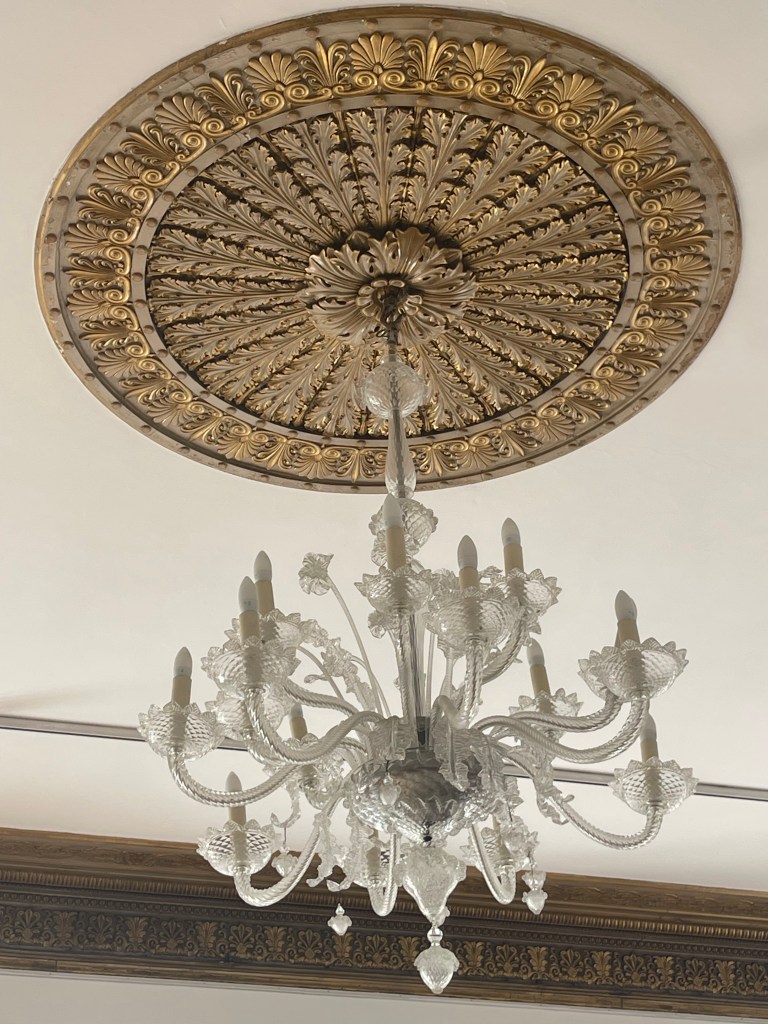
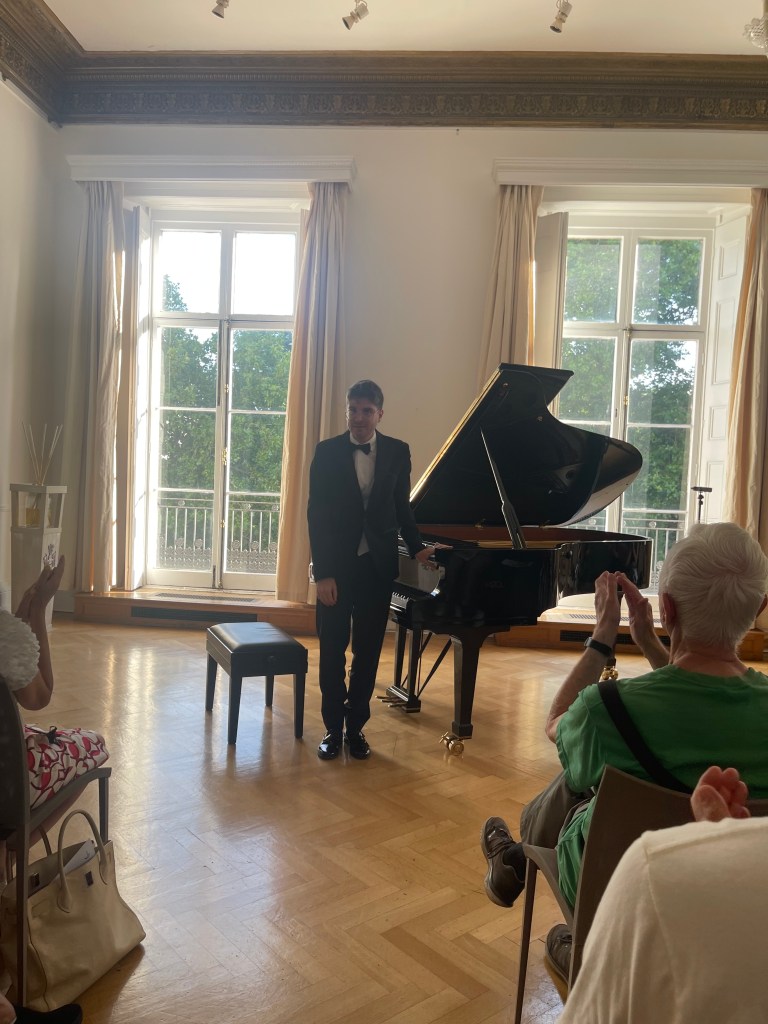
Overlooking Belgrave Square, Antonio Morabito gave a recital in the beautiful salon of the Italian Institute .
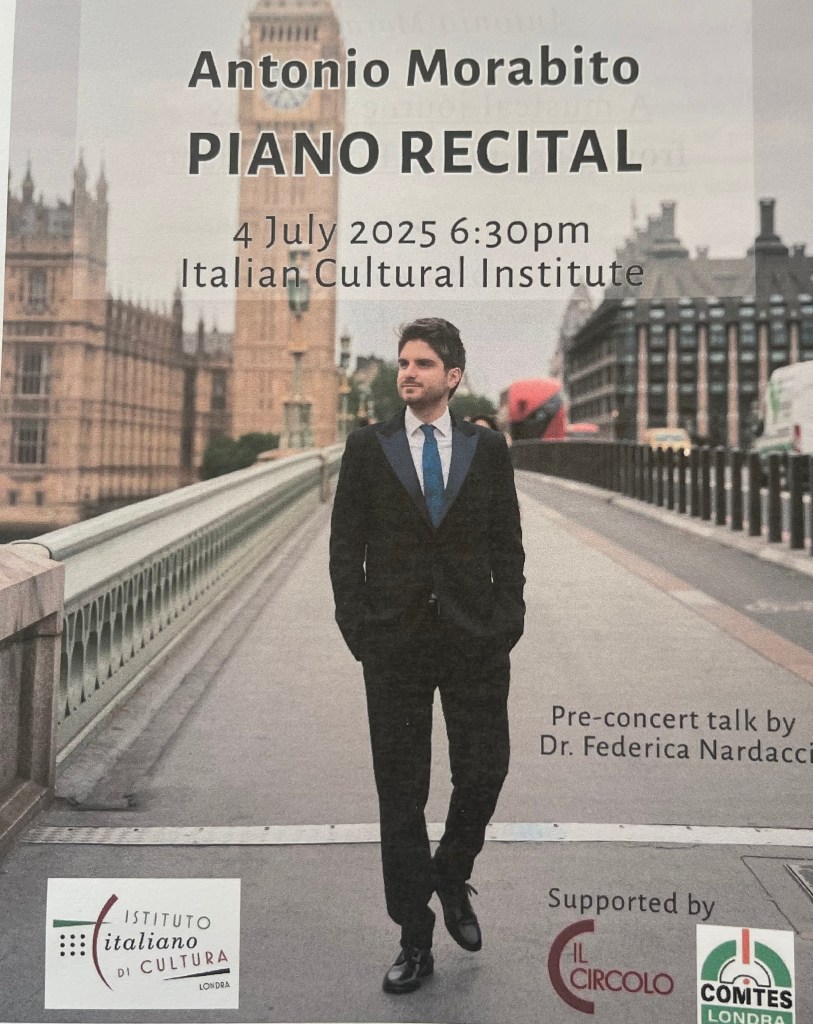
A shining Fazioli piano too,for a musical journey in Italy from the Baroque to Romanticism.The Fourth of July , Independence day in the USA , with its power struggles and defence costs and ever stricter immigration rules. As opposed to Italy ‘The Land of Dreams’ and birthplace of the genius of Michelangelo and Da Vinci, described by Rostropovich as the ‘Museum of the World.’ Of course many ‘Americans ‘ are of Italian origin so it was fitting that Antonio should offer his musical journey in Italy today of all days.
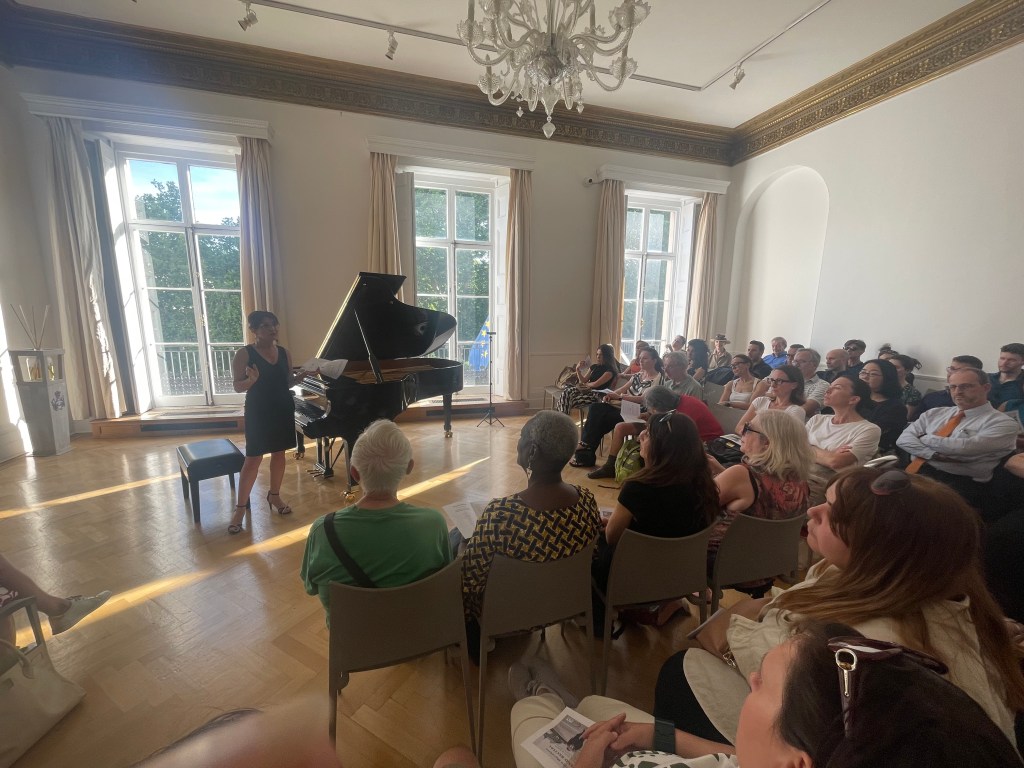
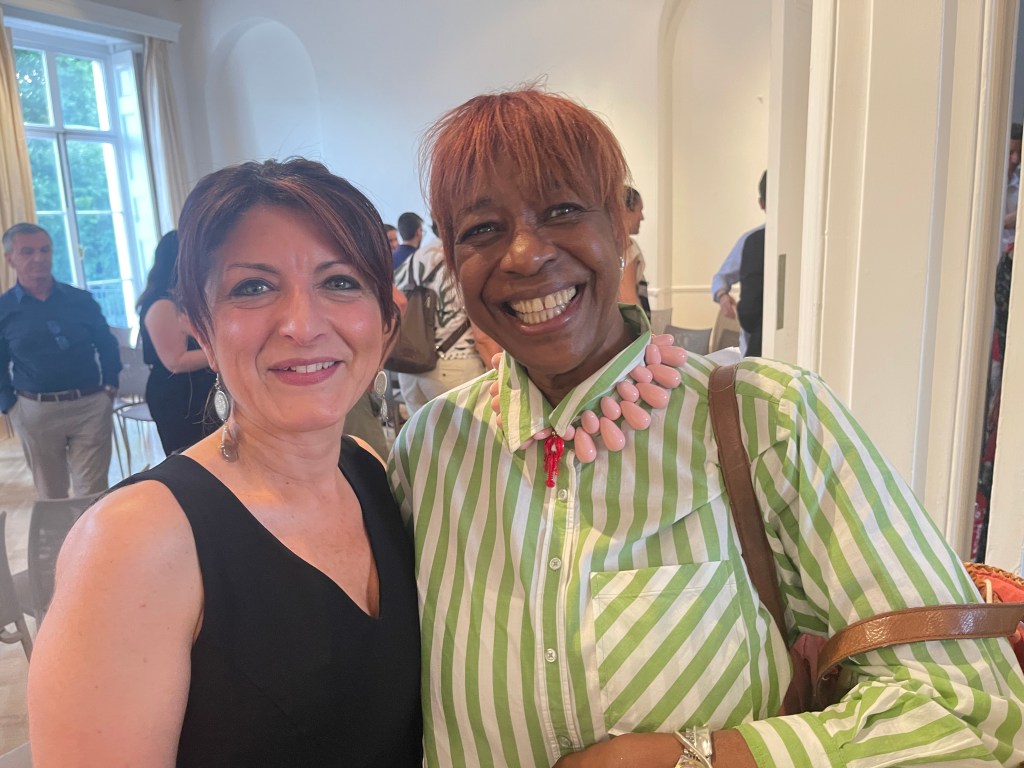
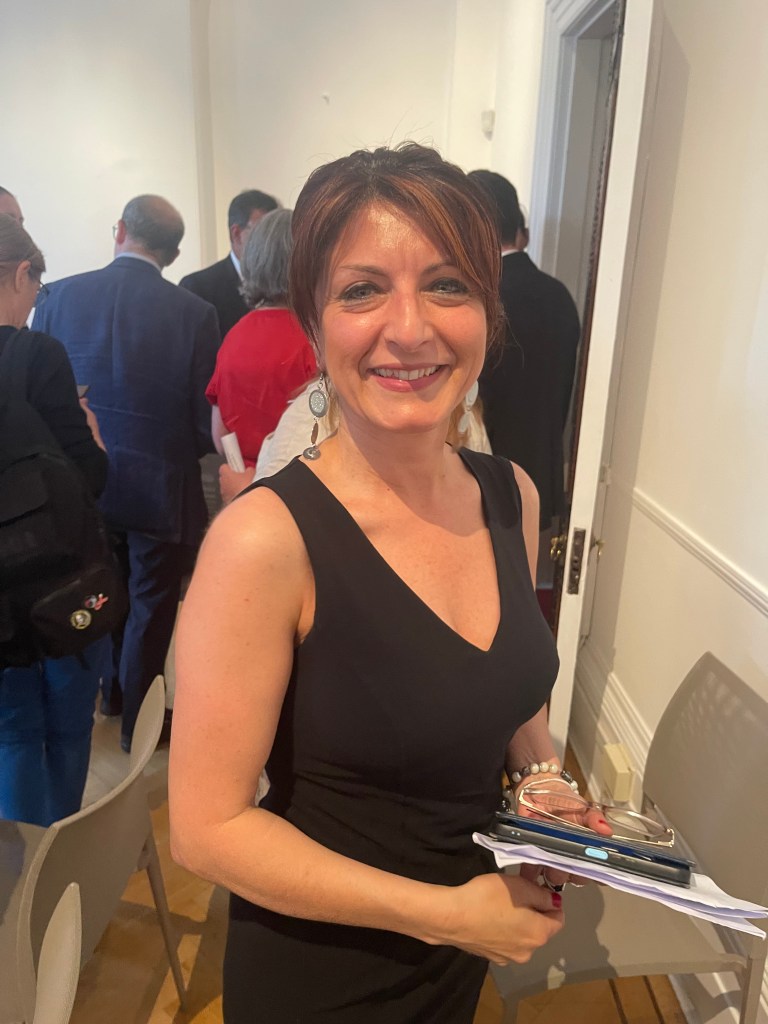
Introduced by Federica Nardacci ,authoress of the Black Pearl, a play about the last days of Maria Callas. She outlined the journey that Antonio was about to share with us.
https://youtu.be/BQvb920TKAI?si=YdxCCcIbq2modGRf
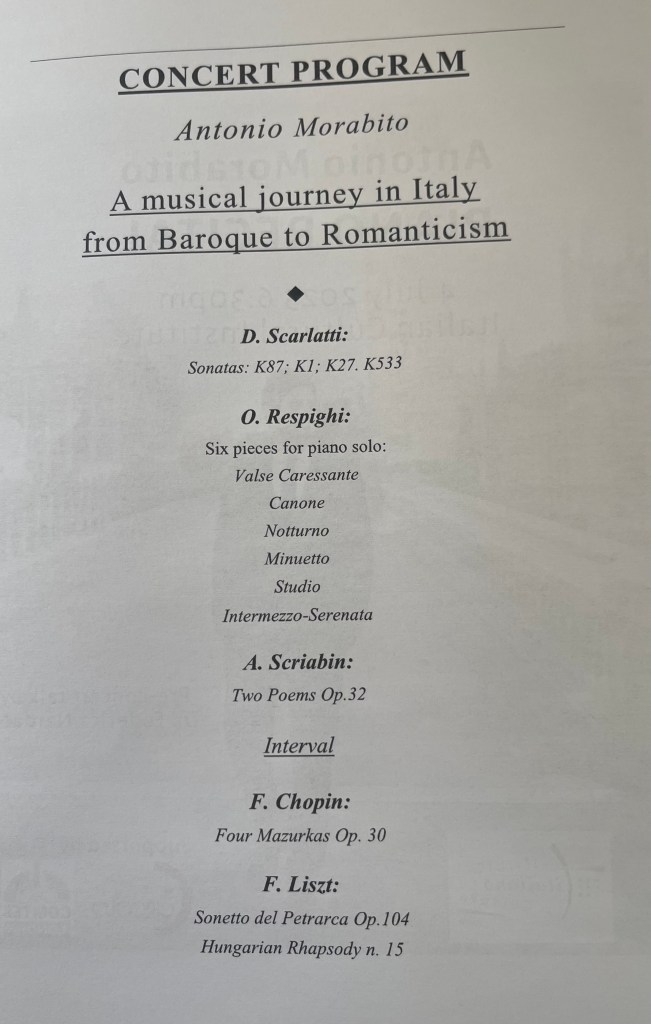
Four Scarlatti Sonatas poured from Antonio’s fingers with jewel like brilliance and stylistic beauty but it was the six character pieces by Respighi that stole our hearts.
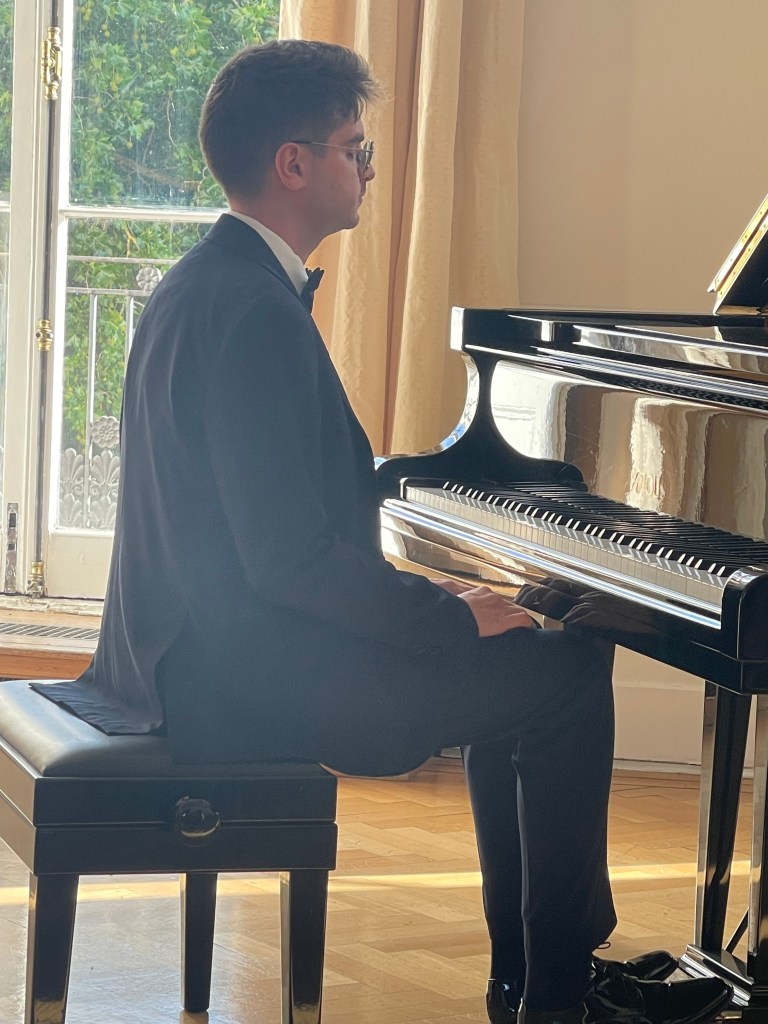
Antonio playing with sumptuous rich sound and refined rubato he took us into a world when miniature salon pieces describe a pre war era of simple unadorned charm and radiance . Written at the turn of the twentieth century , the opening “Valse Caressante” shows elements of French salon lyricism and was played with great charm and beguiling style . The Baroque is highlighted in the “Canone” but the most popular of the set, the “Notturno”, shows signs of Impressionism. It was here that Antonio was able to find colours of sensitive beauty and radiance giving an architectural shape to this exquisite tone poem. The “Minuetto” is reminiscent of the Classical era; and the “Studio” brilliantly played is molded after Chopin’s Études; The “Intermezzo-Serenata”, resembling Fauré, demonstrates Respighi’s Romanticism and was played with a kaleidoscope of colours and whispered beauty.
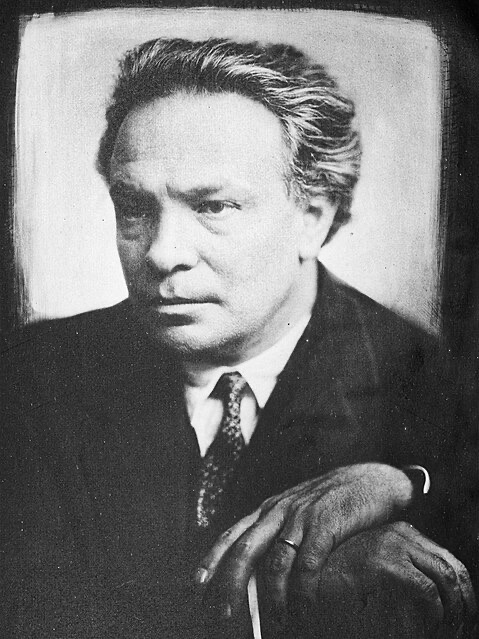
This led beautifully into the two poems by Scriabin op 32 . The first is a well known piece often played by Horowitz and Antonio imbued it with the insinuating charm and refined delicacy that was so characteristic of a composer who was later to be obsessed with reaching his star. The second poem showed us this other more demonic side to Scriabin’s character. Played with dynamic drive and rich sumptuous sounds it brought the first half of this fascinating recital to a passionately stormy end .
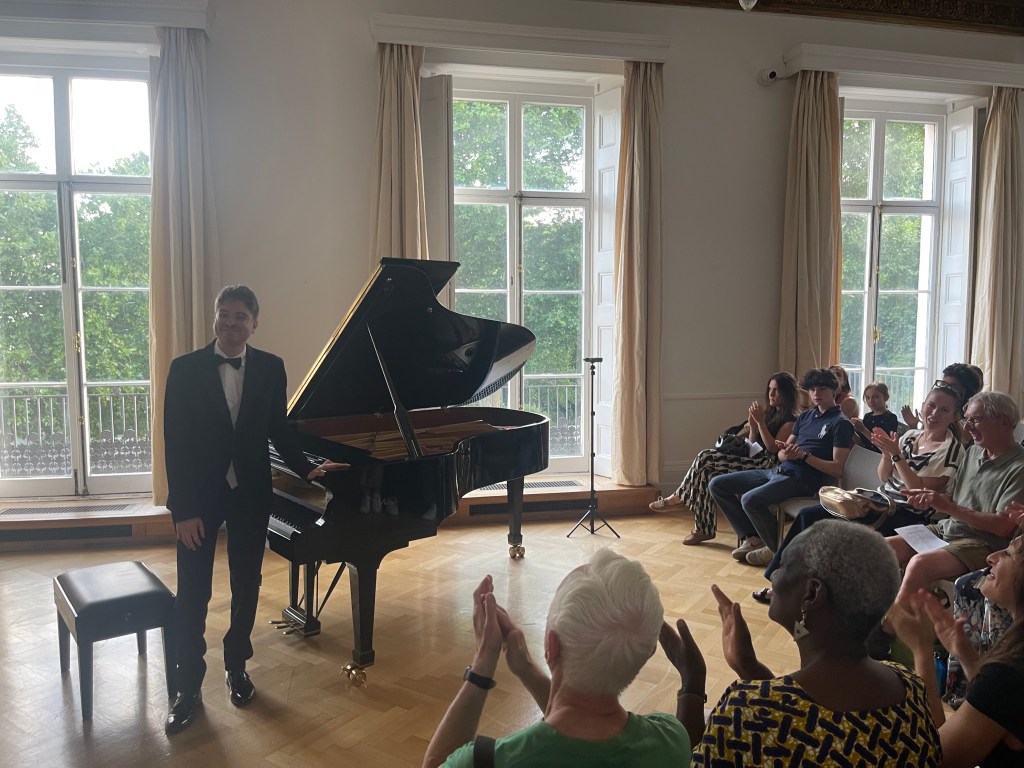
Opening the second half with Chopin who had been such an influence on the early works of Scriabin. Antonio played the four mazurkas op 30. Full of the deep nostalgia for his homeland, Chopin imbues these miniature tone poems with the dance but also the tears that made Schumann describe his 52 Mazurkas as ‘canons covered in flowers ‘ . They were played with great style and refined good taste before Antonio burst into the poetic world of Petrarca with Liszt’s Sonetto 104. A ravishing tale of whispered asides and romantic passionate outbursts and was played with breathtaking abandon and remarkable technical mastery. The final work was the rousing Radetzky March of Liszt’s Hungarian Rhapsody n. 15. Here Antonio could let his hair down and relish Liszt’s scintillating brilliance and rumbustuous call to arms. Brilliantly played it brought Antonio’s journey to an exhilarating end.
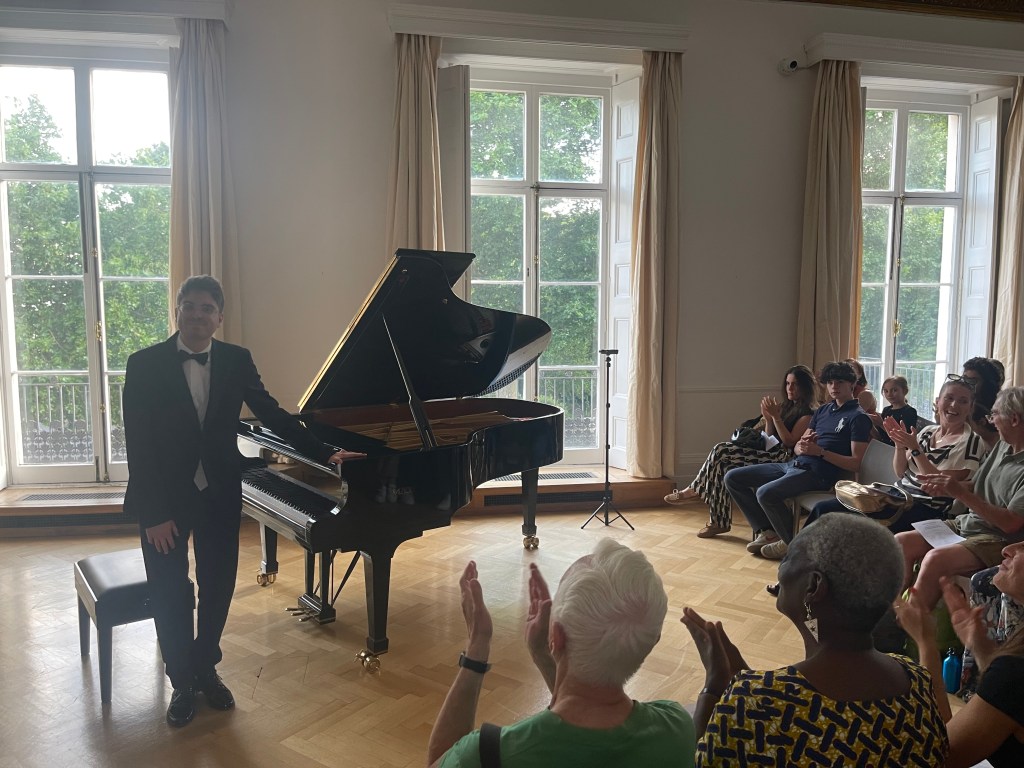
Chopin’s most famous nocturne in E flat op 9 n. 2 was an encore that he dedicated to a friend who had come especially from Italy to relish the refreshing journey that Antonio had offered us today.






 ChristopherAxworthy-MusicCommentary