

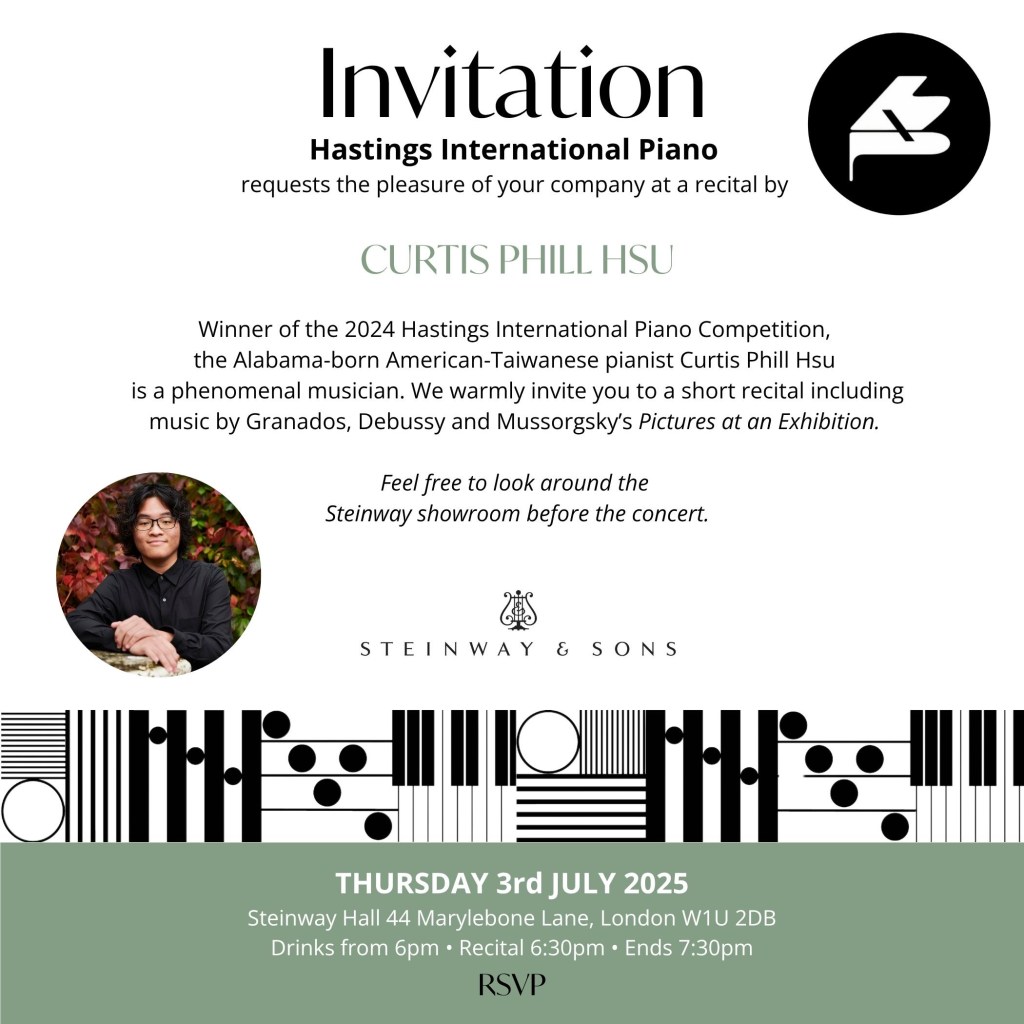
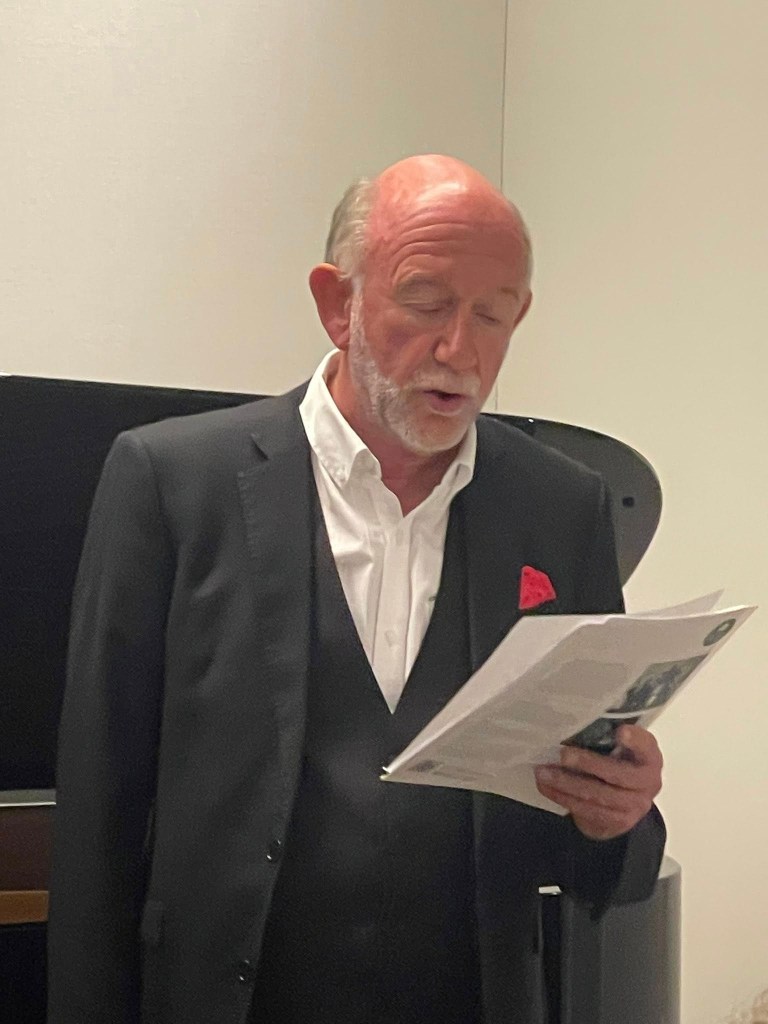
More superb playing from Curtis Phill Hsu that just confirms the importance of the Hastings International Piano as a competition whose priorities are with music with a capital ‘M’. Many competitions are appearing on the horizon, almost daily, and creating events that draw people in to listen, many for the first time, and offering opportunities to young musicians to share their talent with a vast arena worldwide, via the very fine streaming facilities offered by nearly all International Competitions. Hastings is proving to be a competition where musical integrity and humility as interpreters, takes precedence over showmanship and entertainment ! I was very surprised to hear Curtis playing in a private concert the ‘Hammerklavier’ Sonata and even more surprised that he had chosen the Schumann Piano concerto for his Prize London Concert with the RPO. Shunta Morimoto had won the Hastings playing the Schumann concerto deciding to play Beethoven Four at his Prize Winners Concert, not Rachmaninov 3 as one might have expected from other competition finalists. Not that they cannot play the notes but that they choose to play less notes with more penetrating depth of the classical / romantic repertoire, rather than the more obvious and spectacular Russian repertoire. Curtis played the ‘‘Hammerklavier’ with remarkable mature musicianship just as he did the ‘Waldstein’. He also played ‘Gaspard de la Nuit’ and the Liszt ‘Sonata’ with remarkable musicianship and respect for what the composer had written in the score. He did not play, following a pianistic tradition, but following faithfully what the composer had written in the score and interpreting it with his own poetic imagination and intelligent musicianship.


Today he played another pinnacle from the pianistic repertoire with Mussorgsky’s ‘Pictures’. Restoring it with refreshing originality and fidelity to the place it deserves as one of the masterpieces of the pianistic repertoire.
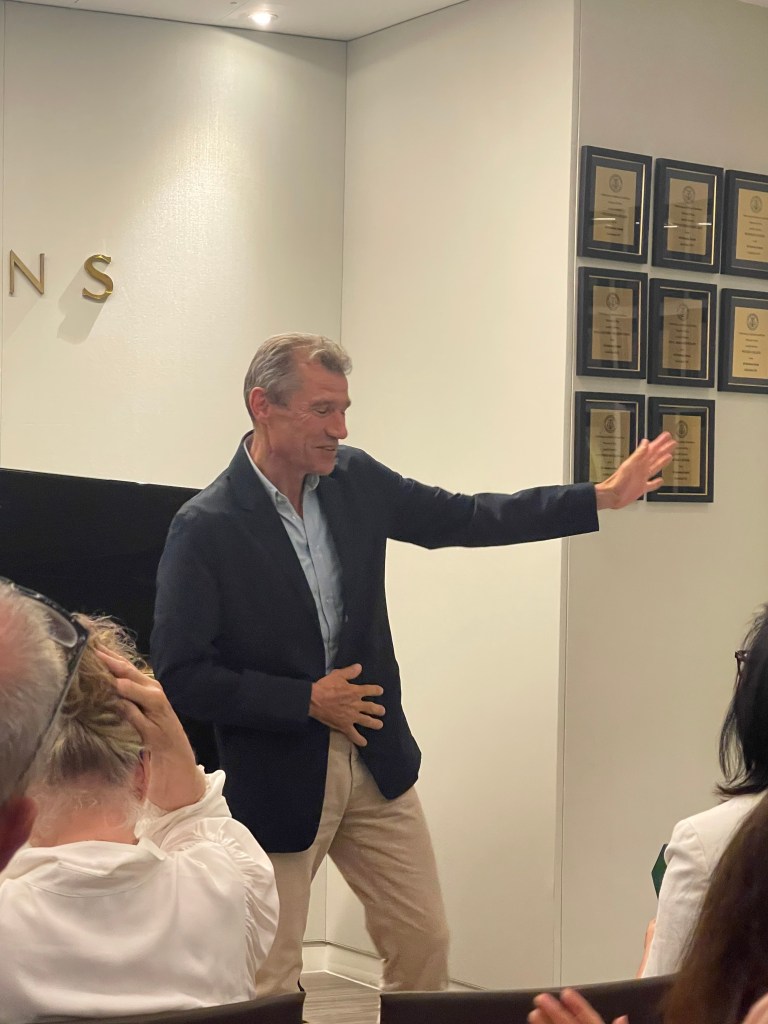


He had opened this short recital with Granados ‘Allegro de Concierto.’ We forget what a magnificent pianist Granados must have been. Listening to the transcendental bravura of this work today we get an idea of what the world lost when a torpedo sunk his ship in the English channel. He was the teacher of Frank Marshall who was the teacher of Alicia de Larrocha, and also the author of Goyescas, that was to be his untimely downfall! A Lisztian showpiece that had won the thirty year old, first prize at the Madrid Conservatory over Manuel de Falla. Curtis played it with great flair and a transcendental mastery of sumptuous ease with wonderful rich sounds that never became hard or ungrateful. Cascades of notes as this young man, with his curly locks, threw himself into the piano with breathtaking commitment and dynamic drive. A great mop of hair that moved and swayed as the music became a vibrant part of Curtis’s whole being. Refined delicate contrasting passages were played with a rich palette of subtle sounds, as Curtis shaped this forgotten showpiece with an architectural control from a pianist who was listening to every note. A magnificent Steinway ‘D’ Concert piano which would fill a hall of two thousand with sumptuous sounds, was today in the new Steinway Concert Room that can hold only forty. Curtis miraculously was listening and could taylor the sound to the space without ever sacrificing his dynamic drive or enviable passionate energy.
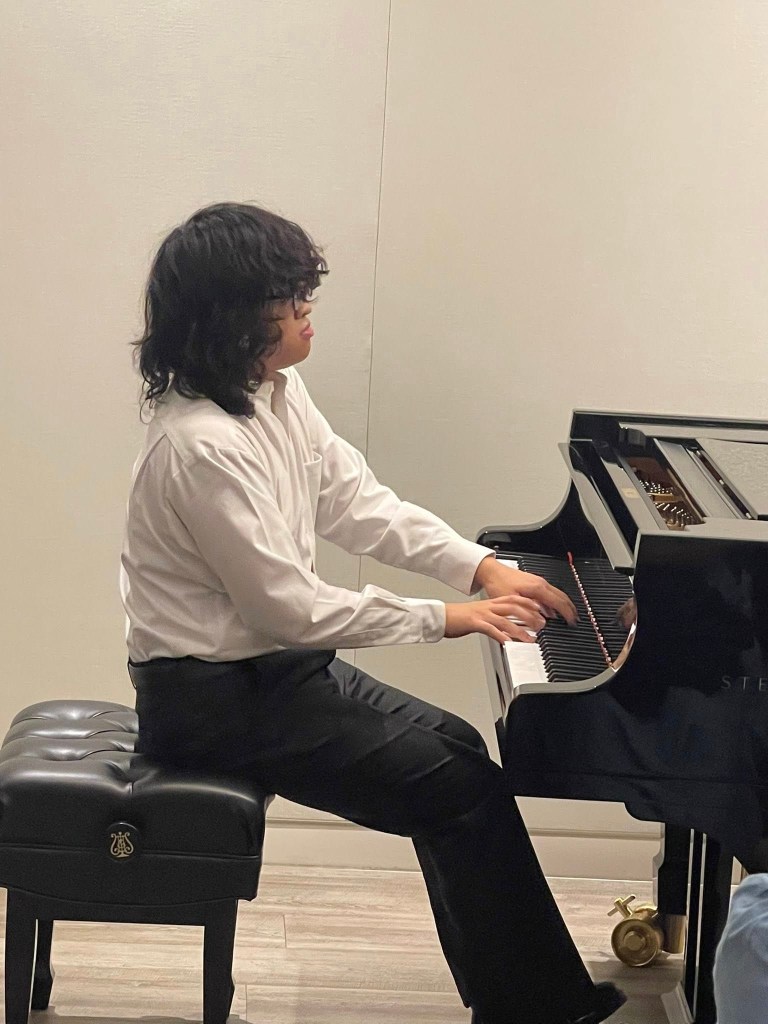
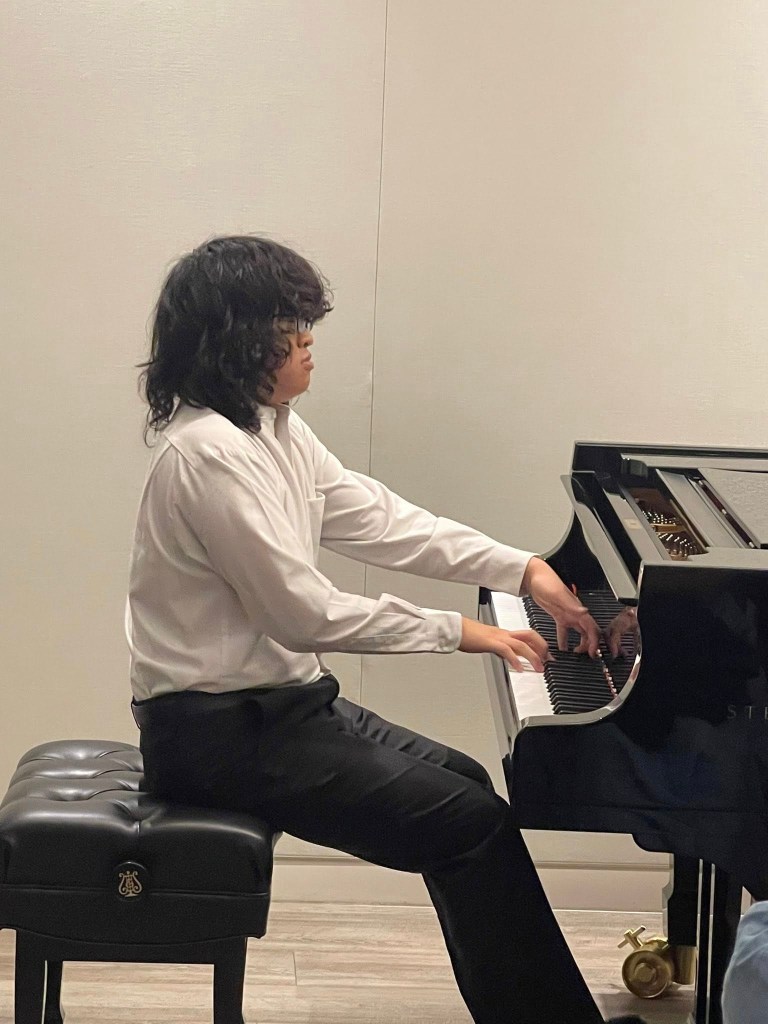
The magnificence of the piano allowed Curtis to find sounds in the five Debussy preludes that were of subtle ravishing multifaceted colours, like looking into a gently turning prism. The ‘Girl with the Flaxen Hair’ has never sounded so carefree and delicately radiant. Just as the ‘Hills of Anacapri’ were full of the Neopolitan hustle and bustle, with a nervous energy, and even insinuating titivation ,before exploding with a sunlit climax and a final shriek of joy. ‘Voiles’ was the prelude that Richter illuminated the Festival Hall with, in one of his first visits to the west, when we were astonished not by how loud and fast he could play but at how quietly and with what control! Curtis, too, filled the hall with ravishing sounds of radiant beauty ,with barely whispered sounds on which he could float lightly chiselled notes that penetrated the mist without any forcing or hardness. It was very noticeable to watch Curtis stroke the keys like paddling in water, with a continuous circular movement of completely relaxed arms. A masterly use of the pedals, too, allowed the wind in the final two Preludes, to enter with extraordinary gusts of sounds, where notes were transformed into bursts of energy and rumbling sounds deep in the depths of the keyboard. A technical mastery at the service of his poetic imagination, where there were no sounds that were out of place, as this was a musical conversation of great artistry. I remember Rosalyn Tureck when someone commented that her performances were note perfect.’I do not play wrong notes, because my playing is a musical conversation where one note is answered by another’.

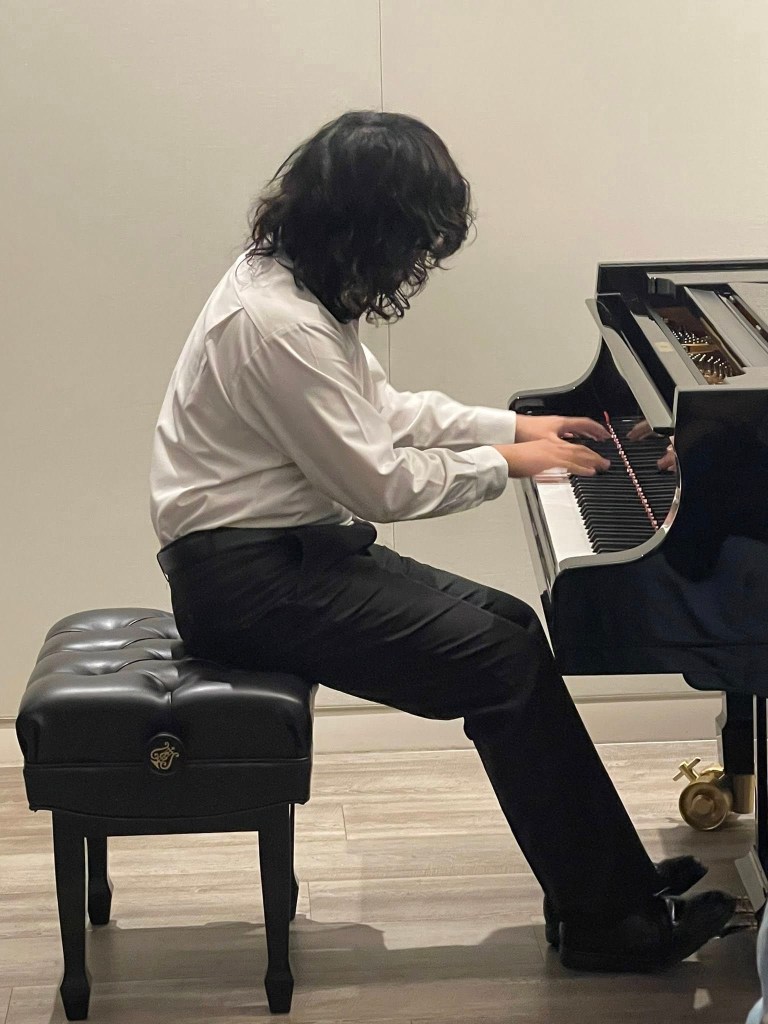
Mussorgsky was played, from the very first notes, with an authority and imperious control that was remarkable. ‘Gnomus’ suddenly sprang to life and became a miniature tone poem with Curtis’s scrupulous attention to the composers very detailed markings. The long trills in the left hand were played with a vibrating insistence on which the right just made sharp comments. The final scale ending was breathtaking, as it was ‘con tutta forza’, not hard hitting but with an internal drive that swept all before it. ‘The Old Castle ‘ was played with whispered beauty, with the gently pulsating bass notes, like a heart beat ever present, as this visionary marvel appeared as if by magic. Curtis’s extraordinary finger control gave the ‘Tuileries’ an unusual clarity with the ritenuto espressivo just relieving the tension before disappearing into the heights. ‘Bydlo’ was played unusually beautifully, a very quiet opening leading to the climax ,before, once again, dying away to a mere murmur. The ‘Unhatched Chicks’ was thrown off with masterly ease, with the central trills merely streams of sounds where the bass played such an important part.The strident entry of ‘Goldenberg’ was played with full rich sound and dramatic effect contrasting with the whispered colours that he gave to the pleading ‘Schmuyle’.The ‘Marketplace in Limoges’ was played immediately at the end of the strident promenade, with great drive and energy. Arriving after a dynamic build up to the mighty desolate notes of the ‘Catacombs’, before the murmured beauty and extraordinary precision of the vibrated notes of ‘With dead in a dead language’. ‘Baba -Yaga’ burst onto the scene with brutal energy, but even here Curtis could not make an ugly sound as he shaped even this outpouring with extraordinary musicianship .The tolling bells in the’Great Gate ‘ were overpowering because the melodic outline that Mussorgsky weaves above them was barely audible, exactly as Mussorgsky writes, and too often is not respected for a pianistic exhilaration offered too early. The exhilaration and masterly final pages came only after the mighty scale that crashed from top to bottom of the keyboard, where Curtis allowed himself a final punch home on the last eight notes.
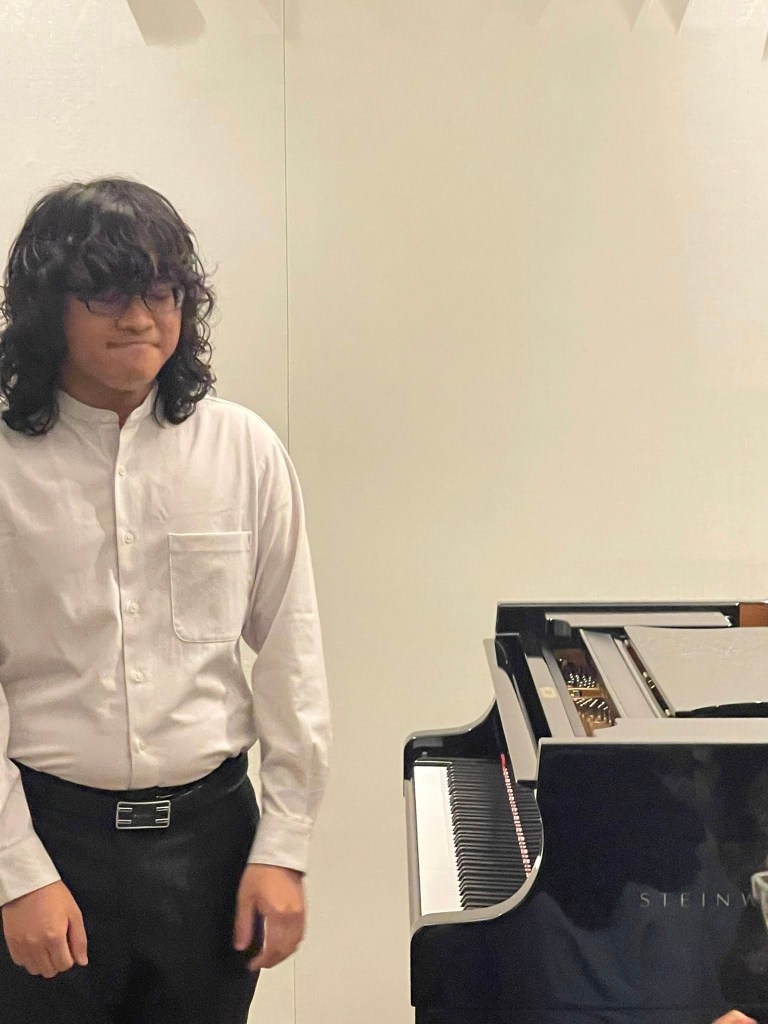
Another masterly performance from Curtis to add to the other masterworks that he is preparing with such intelligence and mastery. Asked by Vanessa for a few more notes – as she had done after the ‘Hammerklavier’, Curtis not seeming to want to play any more. after such a gargantuan performance, suddenly ran to the piano and played one of his own compositions.’ Praeludium sent us happily into the foyer to discuss music with Curtis and the Hastings contingent , up for the day in London, over drinks that Steinway very generously allow after such special occasions .
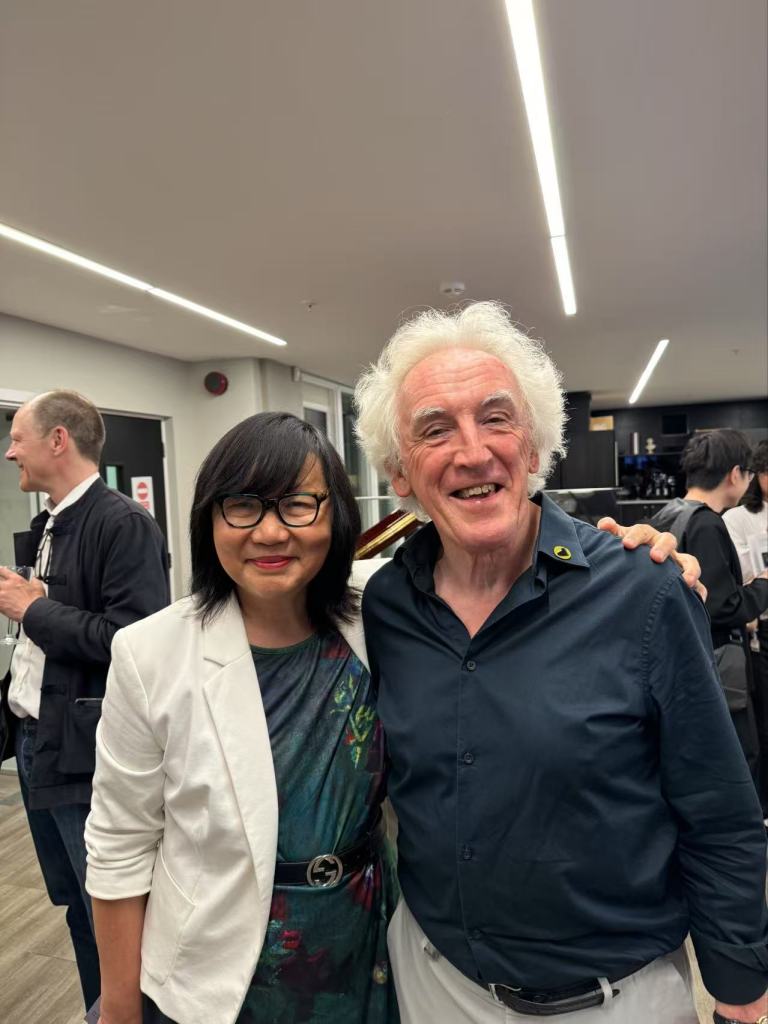

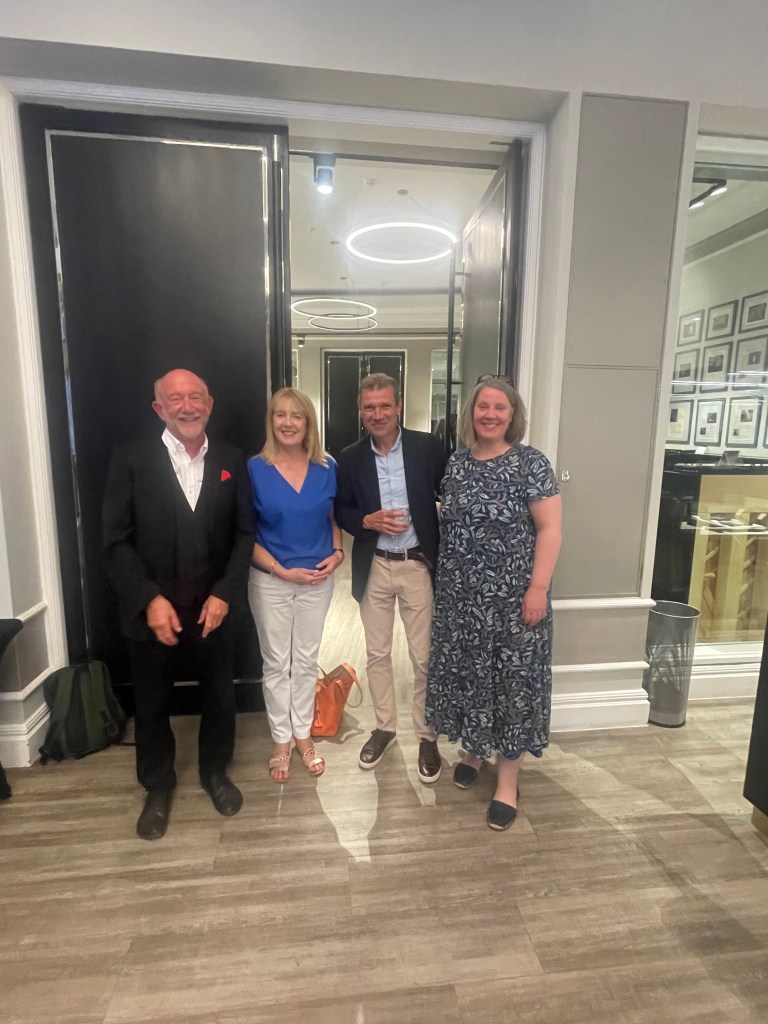



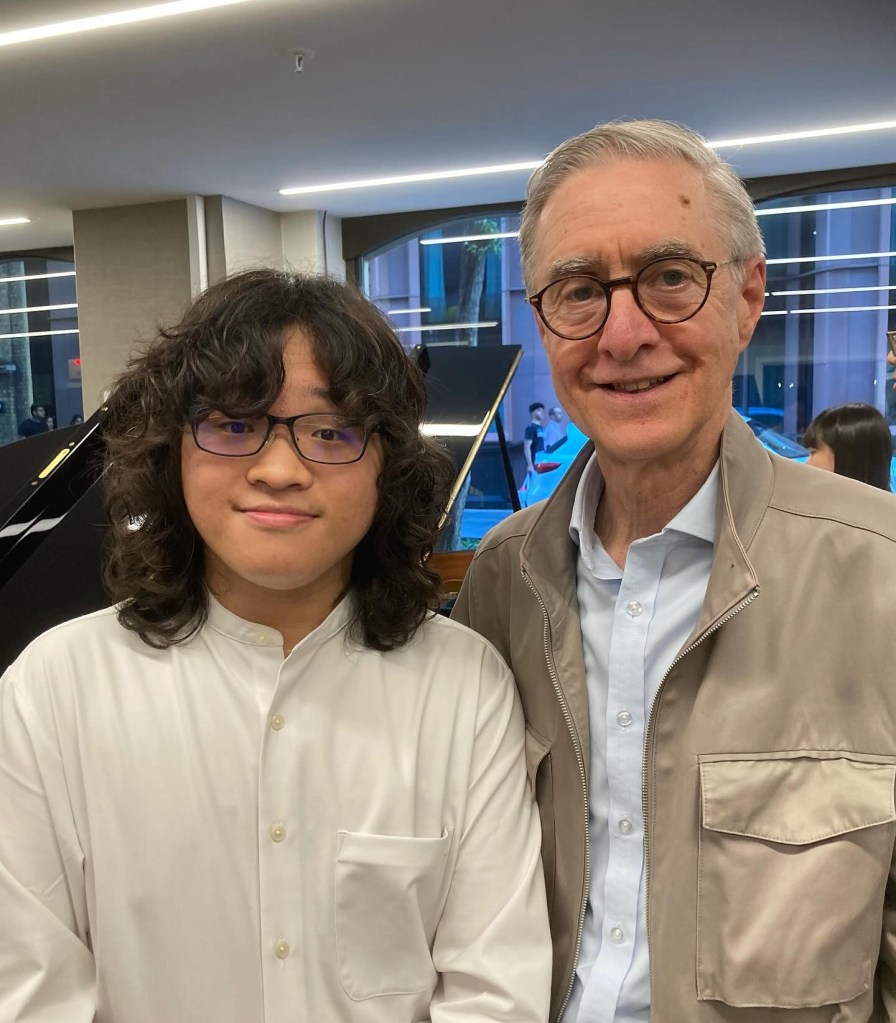
Thanks to Yisha Xue for the photo.
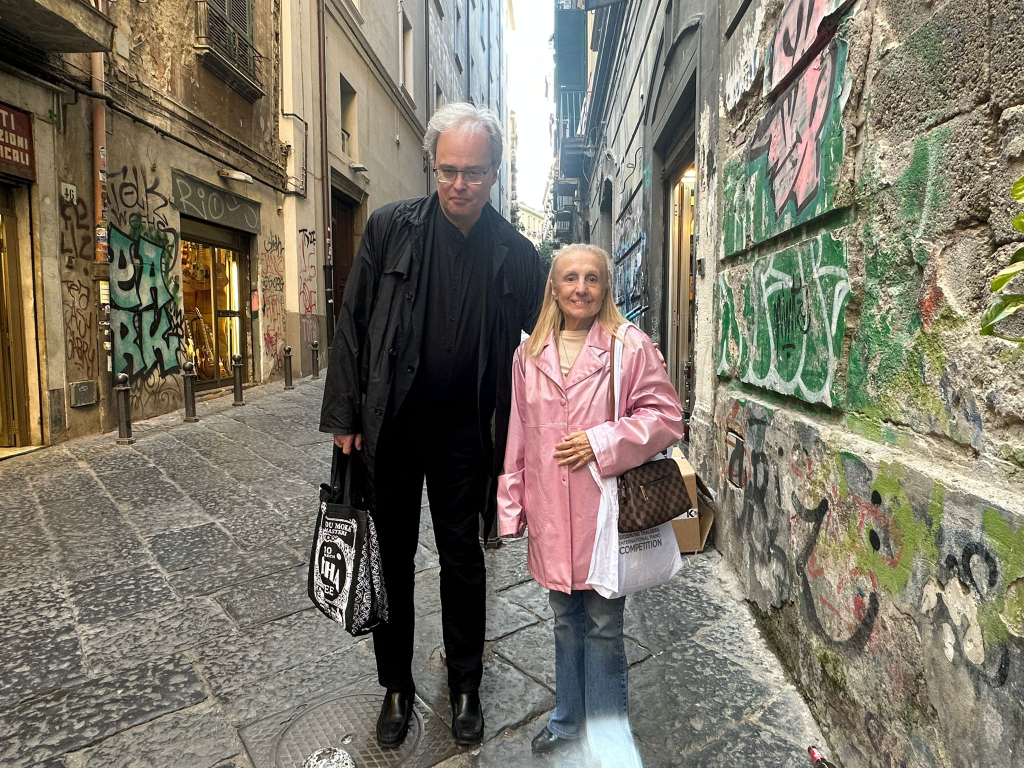
In the photo in Naples Martha Noguera with Andreas Weber,mentor of Curtis from an early age , both on the jury of the Thalberg International Piano Competition. Andreas is married to the pianist Ji-Hye Jung
https://christopheraxworthymusiccommentary.com/2025/06/28/martha-noguera-with-heroism-and-artistry-igniting-the-balmy-nights-of-the-eternal-city/

 ChristopherAxworthy-MusicCommentary