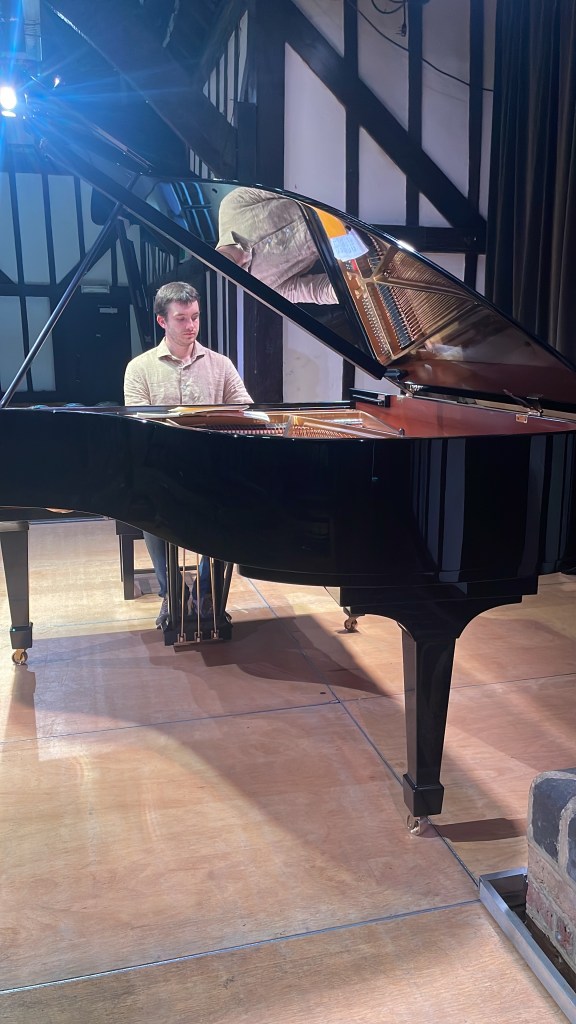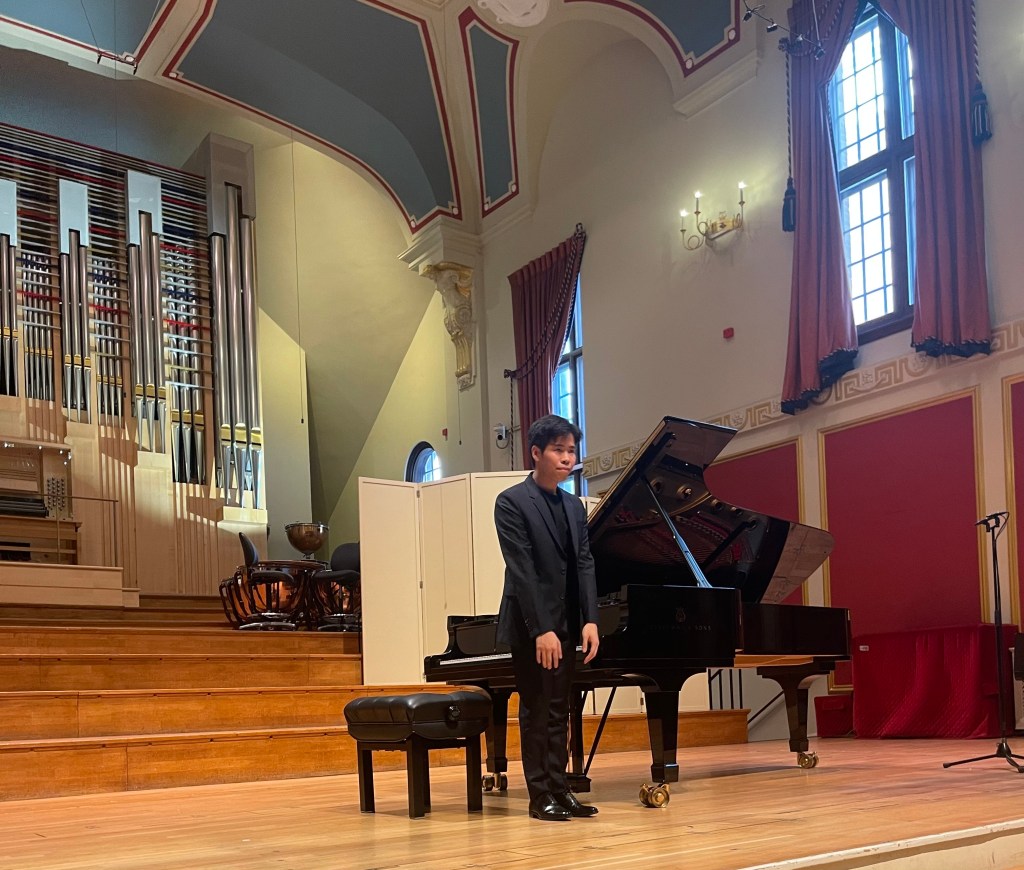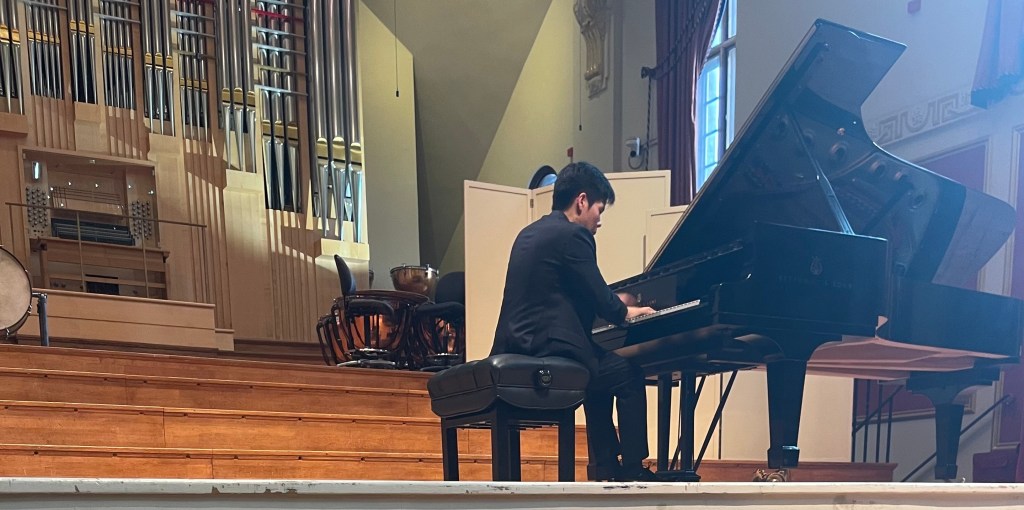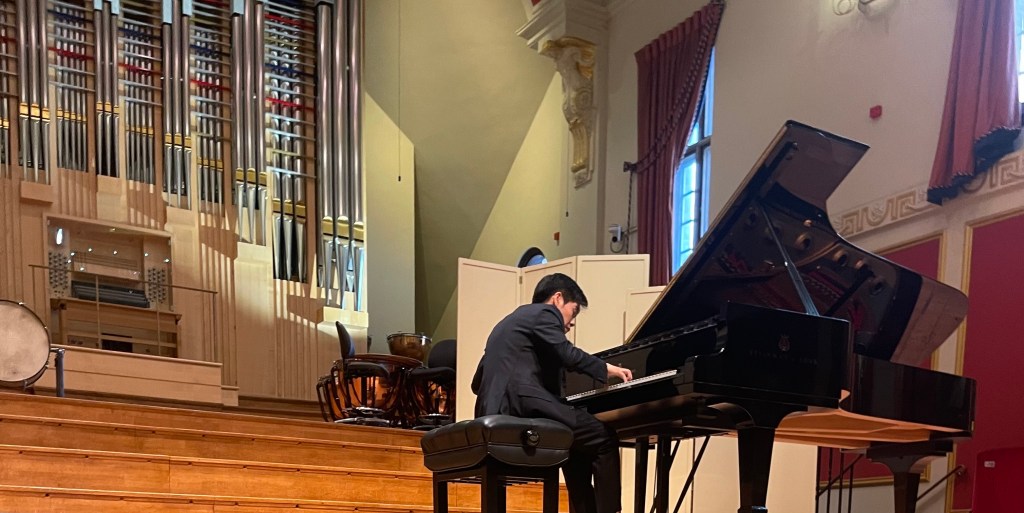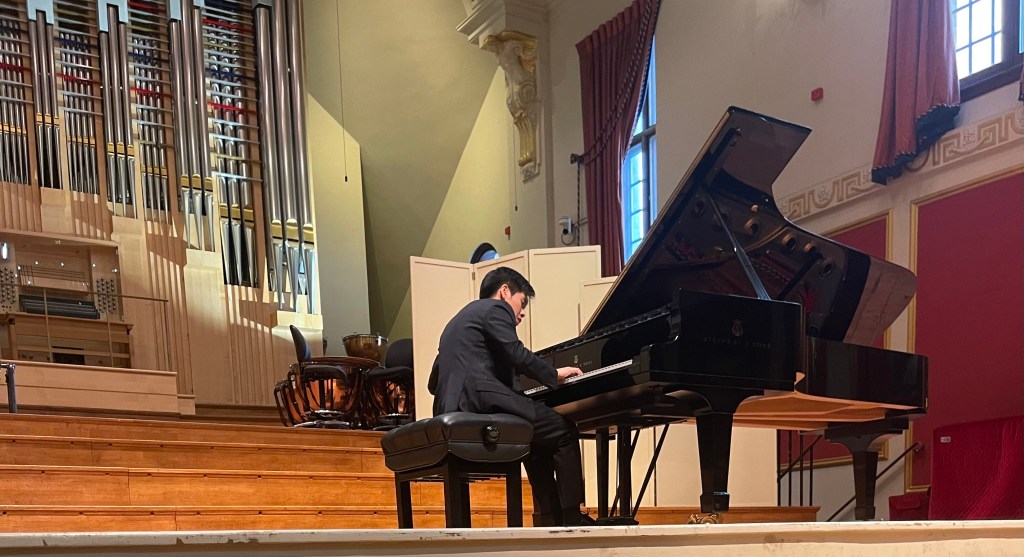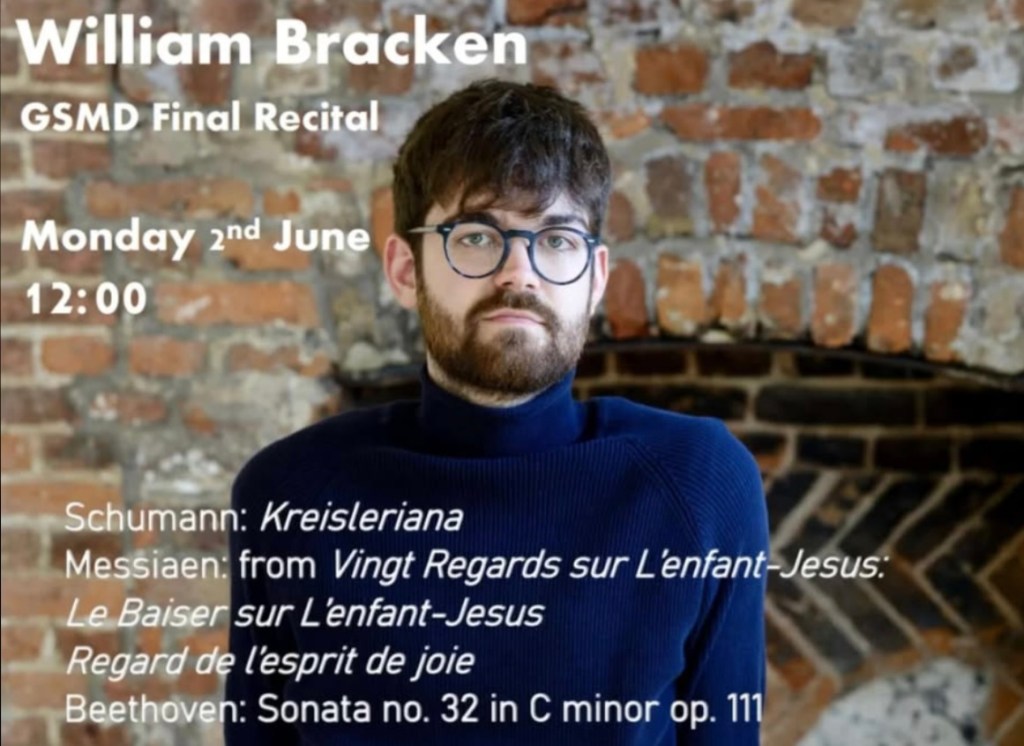
William Bracken at the Guildhall ‘ Intelligence and genial mastery combine’

Will Bracken coming to the end of his studies at the Guildhall with a recital that demonstrated his intelligence,artistry and intellectual curiosity
I have listen to many of his performances over the past four years culminating in this final recital as he joins the competition circuit in search of an audience that can appreciate and give just recognition to his remarkable gifts.


His performances of Messiaen are quite extraordinary for their clarity, luminosity and fearless virtuosity
But today there was much more than considerable technical mastery there was the depth of feeling and poignant intensity of a true believer. I mean that of an artist so immersed in a world of pungent heart renching sounds that he can communicate to a public creating a complicity where rests are stretched to an aching longevity and chords placed with daring deliberation . There is the feeling that the music is being created in that very moment. The moment of creation which in any language is a miracle .


Le Baiser was played with whispered daring with a Richterian tempo that like the great master could miraculously never loose the melodic line or the tension within the notes no matter how quietly or slowly he played. A climax that was like an anxious cry of bewilderment that soon passed as we caught a glimpse of the paradise that awaits . A web of barely audible sounds that embraced the child Jesus as an aura of peace , serenity and goodwill were restored.
After this oasis of paradise we were treated to the barbaric and at times violent assaults that Will played with breathtaking daring and complete mastery . The cries of joy like broken glass grating our very being before the savage race was on again .
Such overwhelming conviction that there was no thought of the notes or incredible technical mastery involved . Here was a young master in a sort of cult (dare I say religious fervour) with obsessive dynamism that was driven by a force of nature greater than Will’s conscious knowledge.


Will still has some of the affectations of Brendel and Serkin of shaking his fist in the air at moments of great intensity . Brendel admitted it and said it was better than Gould who used to sing and grunt.
No one dared tell Serkin because it was part of the highly wound spring within, that was released on a public held in his electric spell of intellectual mastery.
Will has other gifts of Brendel ,though , which he demonstrated with a masterly performance of Beethoven’s last sonata.
A fearless opening, as Will knows that this is not play safe Beethoven . Three opening declamations growing in intensity until they at last arrive at the home key and the Allegro appassionato, that gripped us with Will’s crystalline fingers, like boiling water in a burning cauldron of irascible intensity. If forte and fortissimo were sacrificed for passionate intensity it was only a young man’s burning desire to communicate the composers turbulent intentions. A wonderful natural ending with no sign of a ritardando but a completely natural way of coming to rest and preparing the celestial cloud on which one of Beethoven’s most serenely poignant melodies could sing with radiance and glowing beauty . A string quartet texture where subtle strands became the stream out of which each variation grew. The third variation usually played like a Paganinian exercise was here played with great sweeps of horizontal sounds. There was magic in the air as the barely murmured fragments were pieced together in a glorious outpouring of exhilaration and glorious acceptance. Will took all the time needed on the trills that were mere vibrations on which eventually the melody woukd float so miraculously. It is the minutes of shared silence after the last chord has sounded that is the greatest confirmation of a miracle that has been shared with a public completely absorbed into the celestial world that Beethoven could see in the not too distant future. Will’s was a magnificent performance worthy of a Brendel where the wonder of recreation is their raison d’etre and a bow at the feet of the universal genius of Beethoven.
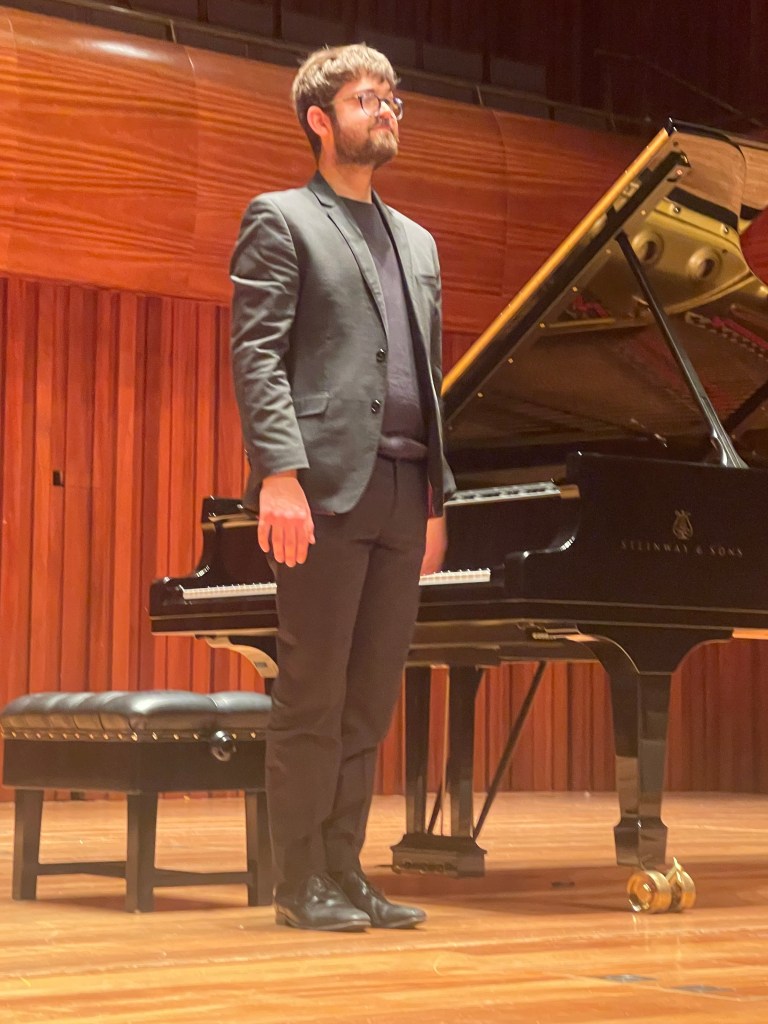

Having praised this superb young musician I have to share my surprise with his opening work of ‘Kreisleriana’ that was too fast and drastically over pedalled and seemed to show a lack of weight or real finger legato, throwing his hands into the air instead of deep into the notes. This was luckily only the impression of the first two of the eight miniature tone poems that make up this masterpiece of Schumann. Suddenly the sprightly rhythms of the third were crystal clear and the mellifluous counterpoints of the central episode were allowed to comune together without risk of collision .The fourth although rather slow retained it’s beauty and radiance and showed Will’s thinking musicianly mind untainted by tradition
The whispered entry of the fifth I have never heard so clear rhythmically, but also like a shadow in the distance with the central episode opening up to a romantic fervour. Beautiful sounds of the sixth where a magical reawakening was of glowing radiance. Will’s took Schumann’s markings for the seventh too literally though ( remember that Schumann broke his fingers trying to get them to move in an impossible direction ) and the ‘jiggery pockery’ he had to get up to in the left hand to try to keep the speed up should probably go down in the Guinness book of records ! All was redeemed with the last episode where Schumann tries to combine his two diametrically opposed characters together. Long resonant syncopated notes of Eusebius in the left hand, with the capricious ‘will o’the wisp’ of Florestan chattering above . Passionate interruptions were played with a masterly sense of balance and colour and a work that had begun in confusion finished with a clarity and musical understanding rarely heard on the concert platform.

Backstage with the renowned Mike Oldham
https://christopheraxworthymusiccommentary.com/2024/03/20/christopher-axworthy-dip-ram-aram/

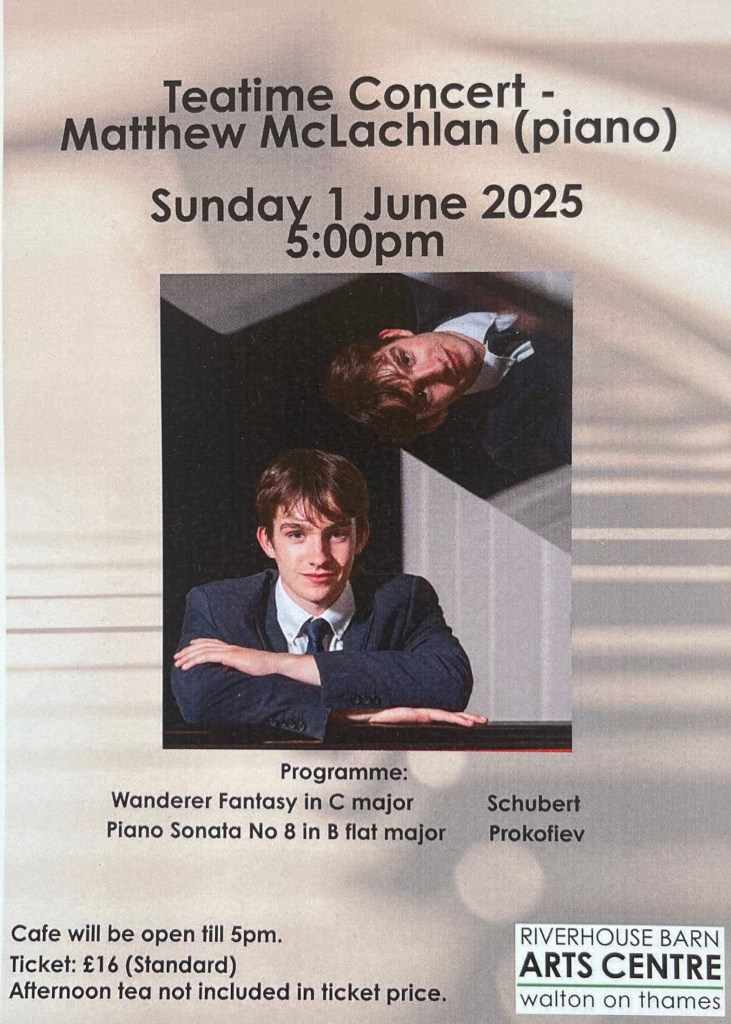
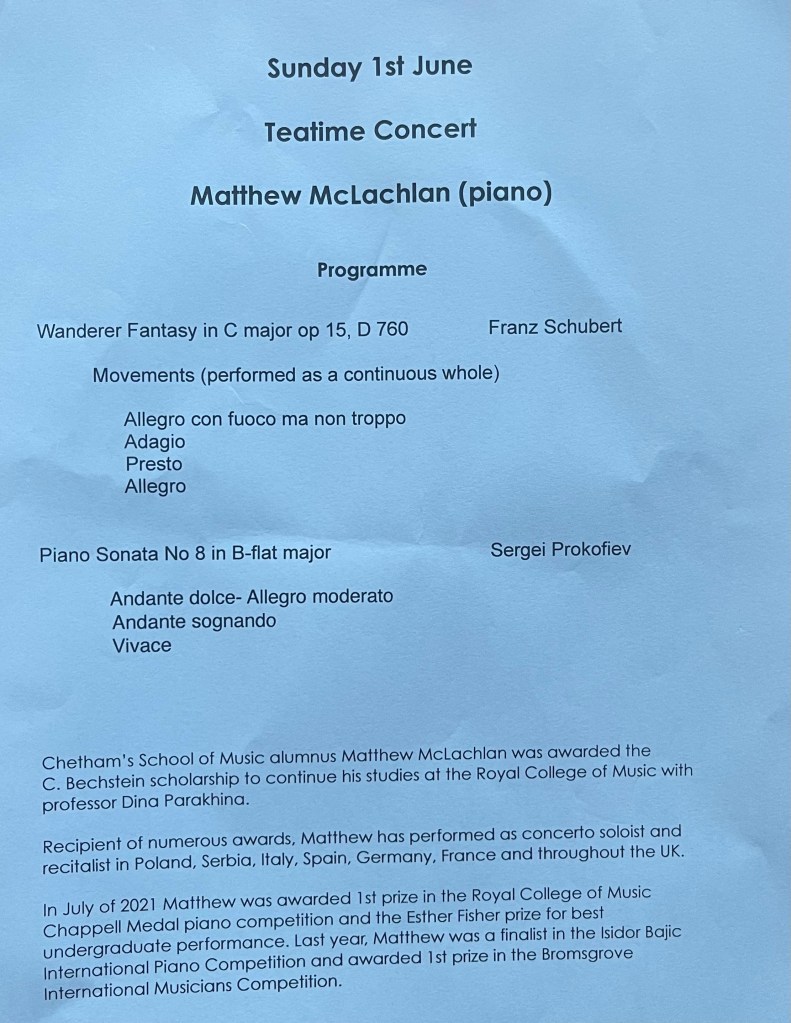
Matthew McLachlan ‘Tea for Two with mastery and persuasion’.

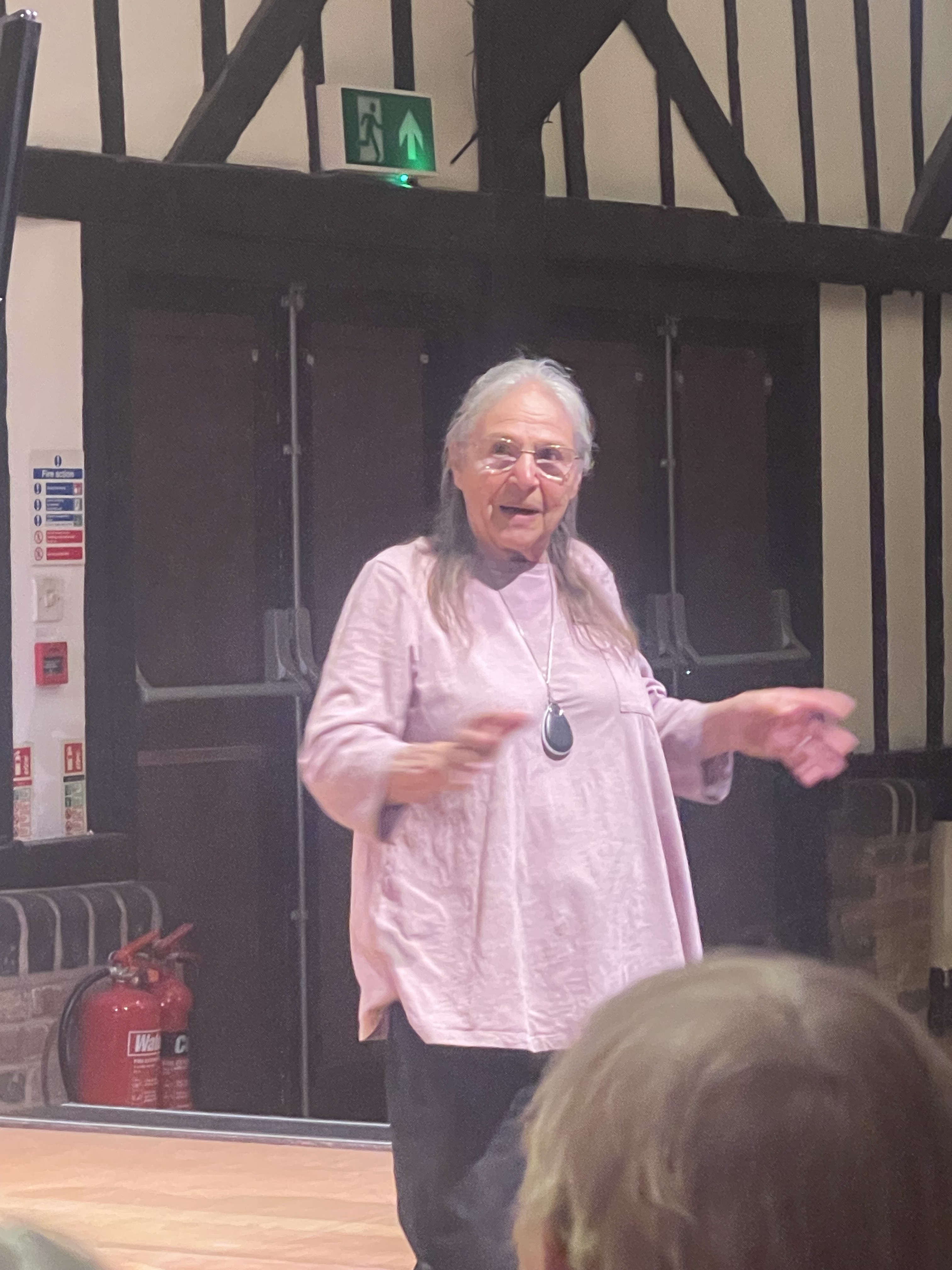
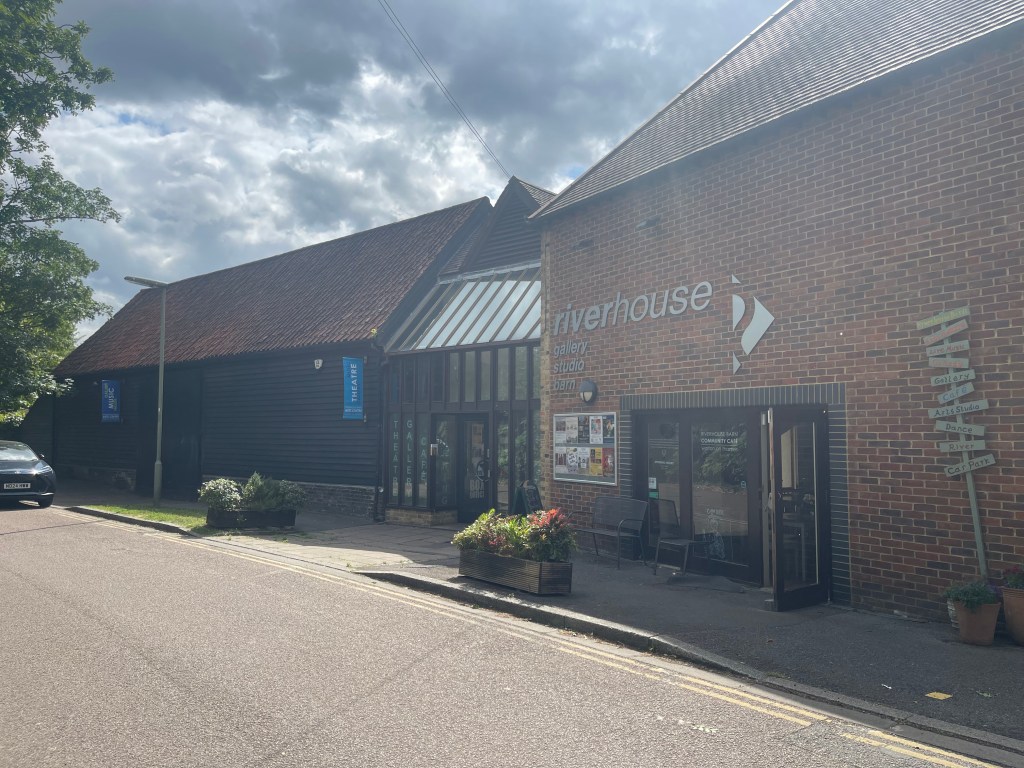
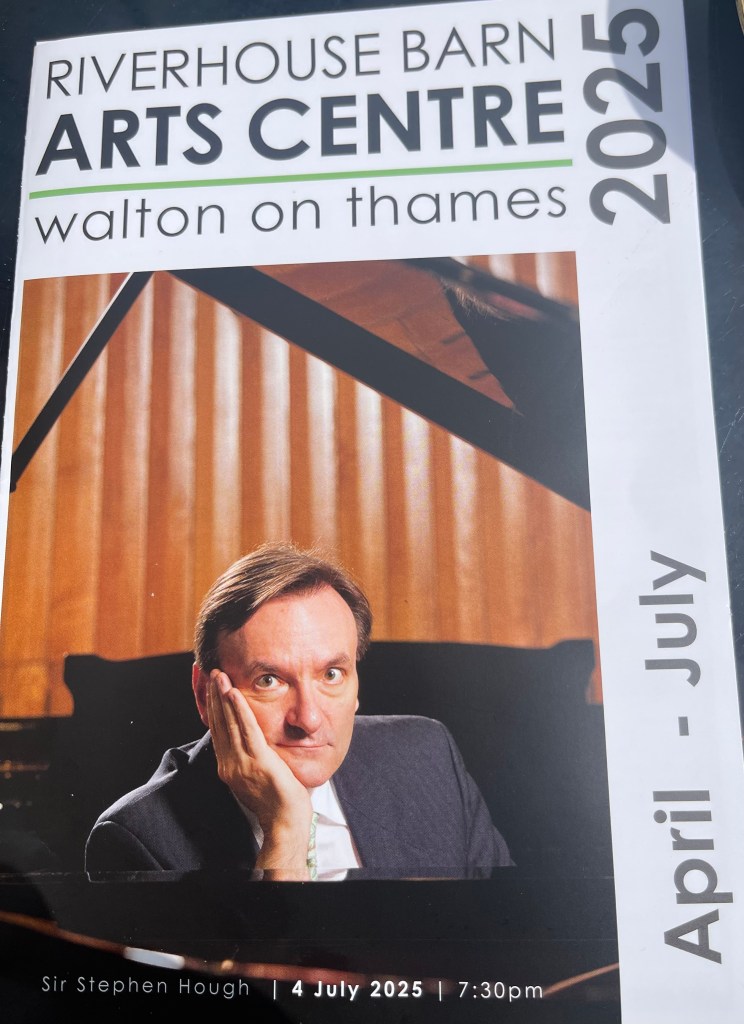
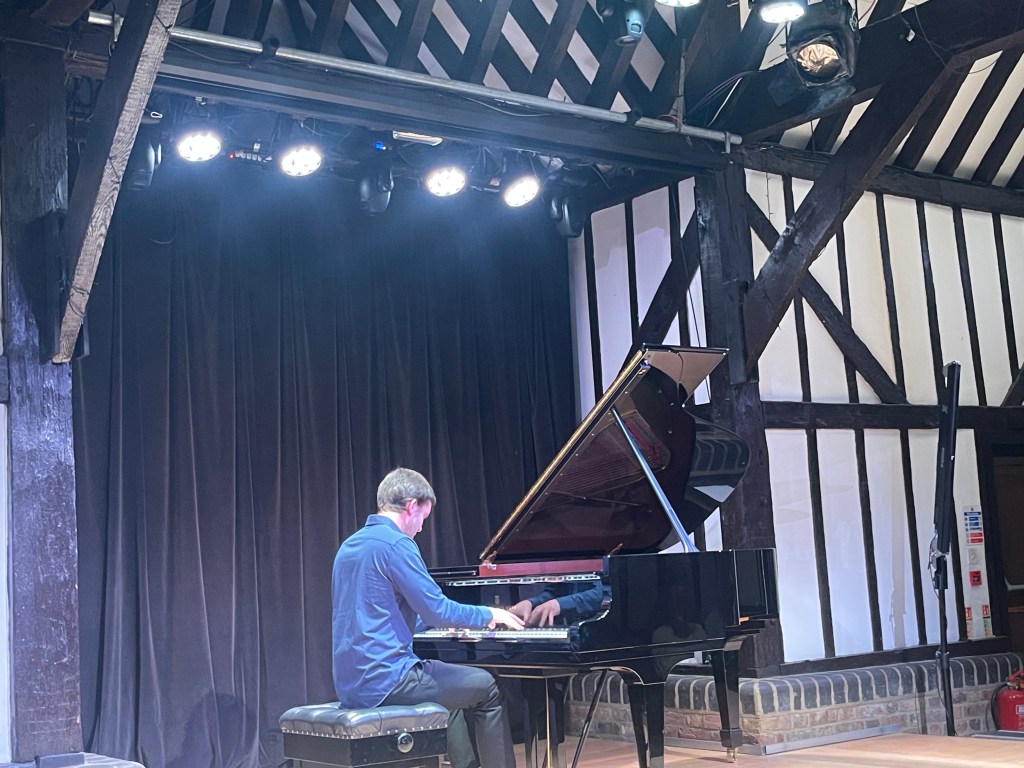
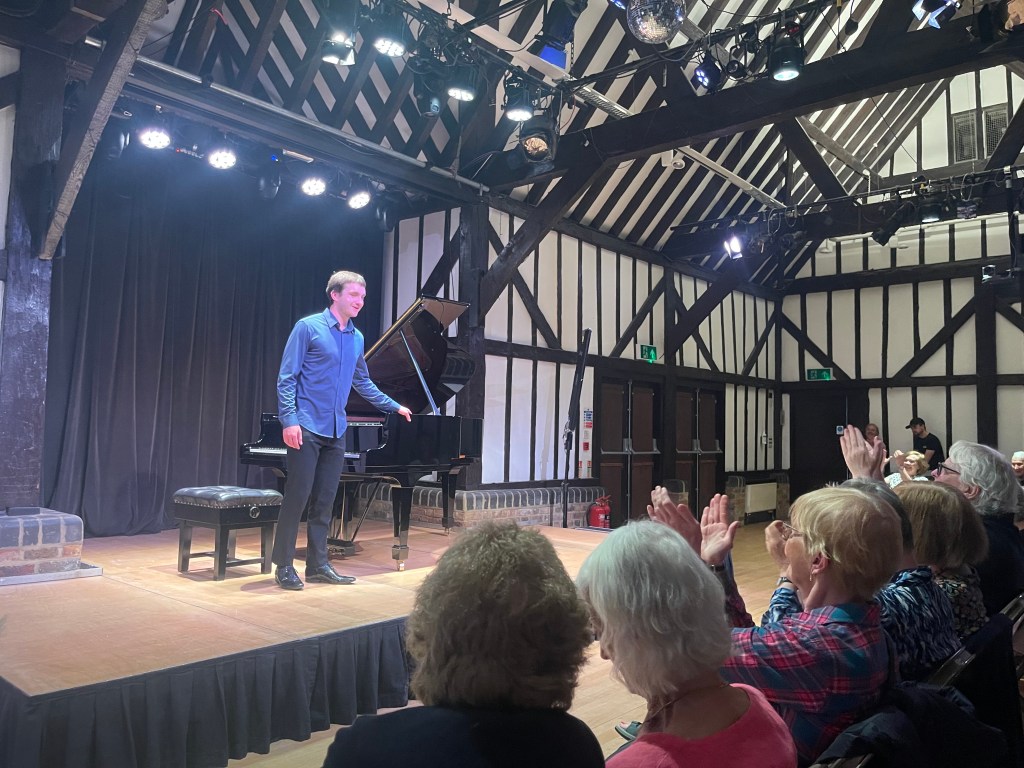
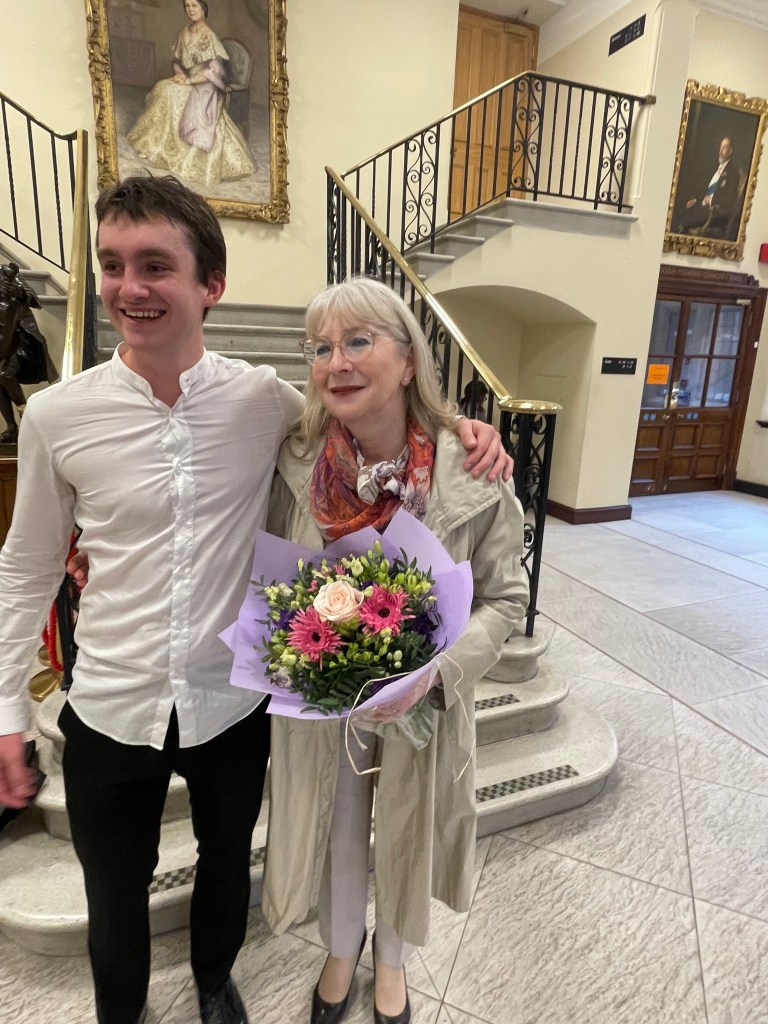
One of the remarkable McLachlan clan embarked at the Riverhouse Barn Arts Centre in Walton on Thames where the indefatigable Susan Segal at 85 still runs a tight ship with superb professional and human expertise.

Today it was the turn of Matthew the middle son who is about to graduate from the Royal College as is his sister Rose from the Guildhall.

The elder brother Callum is making a name for himself on the competition circuit as he completes his studies in Salzburg and Cologne.

Murray is playing ,lecturing and teaching non stop around the globe whist Katherine is trying to keep pace and order , not only playing the piano herself but also running the biggest summer school in Europe every summer at Chethams.Their youngest son is on a football scholarship in New York and whilst his brothers and sister are playing the piano he is playing the field with the same remarkable skill and enviable talent.

https://christopheraxworthymusiccommentary.com/2022/11/16/matthew-mclachlan-at-st-marys-dark-horses-and-united-families-of-true-artists/

Just two works on this ‘Teatime Concert’ , but two of the landmark masterpieces of the piano repertoire

Schubert ‘Wanderer’ Fantasy op 15 was one of the first works to create a new form in music . The sonata form had been the formal structure until Schubert introduced the transformation of themes, in this case from his song Der Wanderer, that was to influence all those that came after him and lead ,via Liszt, to the leitmotif of Wagner.

It is also an unusually challenging work for the pianist where virtuosity and stamina are linked with passion and poetry

.Matthew played deep into the keys allowing the sound of this beautiful Steinway to sing without any percussive interruptions. The Allegro con fuoco kept remarkably under control, and where most pianist in the excitement of the moment tend to accelerate Matthew managed to always maintain the same pulse with aristocratic control. Beautiful rich sounds to the ‘Wanderer’ and variations that unfolded with a natural mellifluous beauty.

A ‘Scherzo’ that just flew from his well oiled fingers with washes of brilliance in the trio that brought real excitement and exhilaration before the nobility of the Fugato last movement .It was here too that his control and sense of poetry and virtuosity brought this remarkable work to an astonishing end .

After a brief interval Prokofiev’s most beautiful but also most troublesome sonata. The last of his trilogy of War Sonatas is a great song that unwinds with knotty twine that only the finest musicians can steer through with a clear path. Matthew brought great clarity as the seemingly serene opening was imbued with menace and nostalgia with eruptions of extraordinary fantasy and diabolical drive. Matthew with his head down steering his way through troublesome waters with remarkable ease and passionate involvement, where Prokofiev ignited a self identification in him that had been missing in Schubert. A very long and complex first movement was contrasted with the seeming innocence of the ‘dreaming’ uplifting rhythm of the Andante. The chameleonic change of moods in the last movement were played with dynamic drive and diabolical precision .

A rather difficult programme for ‘Teatime’ but was greeted with great enthusiasm in a beautiful barn that was surprisingly full.

A prelude by Scriabin op 11 n 15 was a ravishing calming balm after such intense music making . It was one of the 24 Preludes that had won Matthew the most prestigious prize for pianists at the Royal College whilst only in his second year .

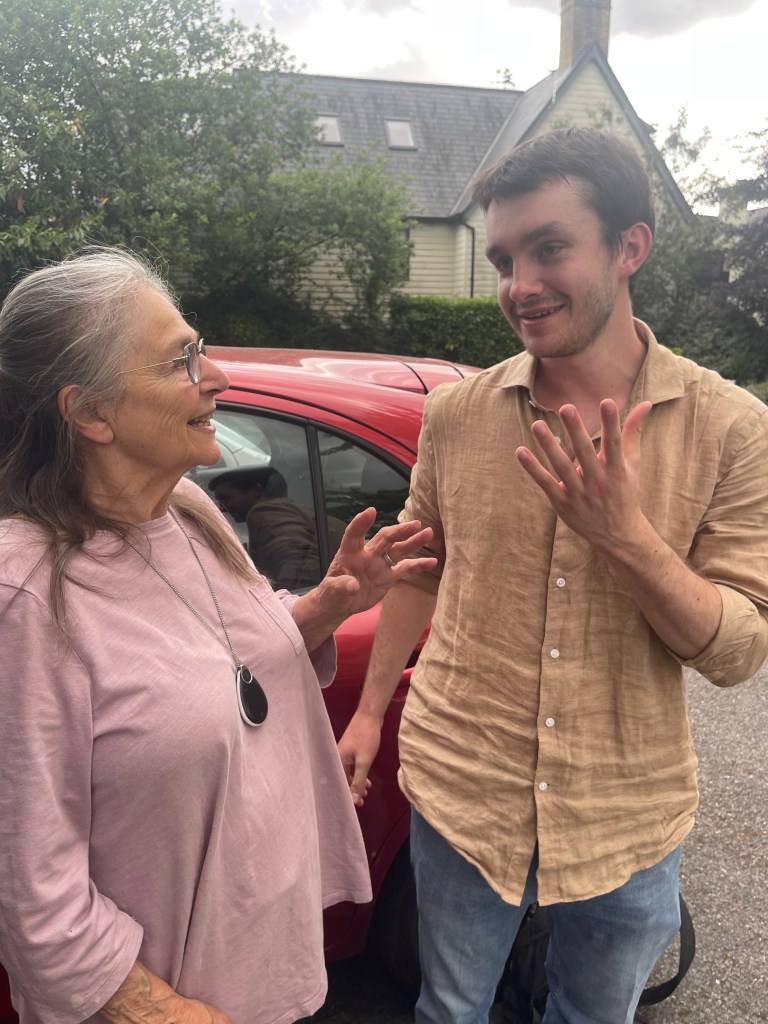
The remarkable Susan Segal in post concert discussion with Matthew before driving him to the station
https://christopheraxworthymusiccommentary.com/2024/03/20/christopher-axworthy-dip-ram-aram/

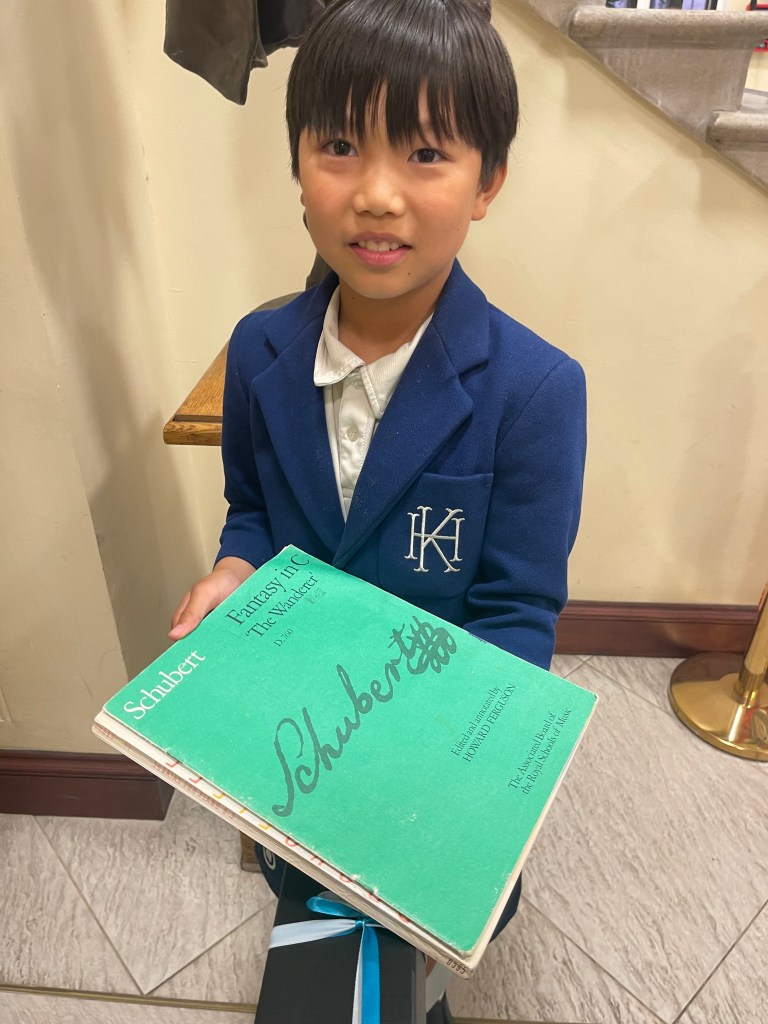
Anson Wong ‘on wings of song’ at the Royal Academy in London

I have heard many graduation recitals in the past few days and am very impressed by what I have heard especially for the musicianship and respect for the composers intentions that has shone through even minor mishaps that could occasionally happen under the strain of condensing four years of intensive study into an hour long recital. Anyone who knows me or is silly enough to read my thoughts that I all to all too readily share with anyone wanting to know my personal reaction to what I have heard. I listen to each performance and it stands on its own. I do not do comparative performance preferring to leave the circus aspect of competitions to others. But if I had to say of all the wonderful performances that I have heard at the RCM and the RAM in the past days, which was the one that shone most brightly in my memory, it would have to be the performances by Anson Wong.

Everything he played sang with a radiance and beauty but above all a sense of balance that was of the magic of a past era. The transcription of the ‘Adagietto’ by Mahler was worthy of Cherkassy, with that golden sound of the melody and insinuating notes swirling above and below in a web of ravishing sounds. This was a transcription in the style of Godowsky and amazingly not only played with an extraordinary sensitivity and kaleidoscope of colour but was also written by Anson. A transcription worthy of becoming part of the standard repertoire for many pianists who are only too happy to delve into the archives and find dusty copies of Alkan,Chaminade,Blumenthal or Thalberg. Works that belong to an age when pianists were magicians who through a subtle use of the pedals and infinite gradations of touch could give the impression that a box of hammers and strings could sing as beautifully as any of the greatest bel canto singers of their day.

https://youtu.be/IHlz43QCliQ?feature=shared

But it was not only the transcription that was of subtle beauty but also Beethoven’s op 101 Sonata and even more remarkably Prokofiev 8th Sonata ,so often played by the militia instead of a poet.

The opening movement of Beethoven was a great wave of sounds that had begun somewhere in the distance and just came into view only to disappear into the distance again. So similar to op 109 where the undulating sounds enter like the water in Visconti’s film ‘Death in Venice’ where a black screen begins to come alive as we are made aware of the water lapping in the lagoon of that city of dreams. Anson played it with a fluidity and no hard edges but a sense of architectural shape that had strength but always under the umbrella of genial creation. Technical mastery too, with the diabolical dotted rhythms of driving intensity. A slight respite with the trio but always with a cauldron ticking away under Anson’s feet .There was a simple aristocratic beauty to the slow movement that was allowed to flow with ornaments that were those of a singer not an instrumentalist. Even the cadenza unwound with poetic sensibility following Beethoven’s very sparing use of pedal, as the opening theme wafted in as if in a dream. A spell soon to be broken by Beethoven’s irascible temperament and quite extraordinary transcendental mastery. To maintain the rhythmic impetus with all the difficulties that Beethoven strews in the path, requires a mastery of musicianship and technical perfection that is of the very few. The fugato last movement, although not quite as complex as the sonata that follows, is certainly a great preparation where only those with a transcendental command of the keyboard can do justice to Beethoven’s knotty twine. Anson proved himself to be a master, as the tension never sagged or had to be accommodated. Even the imperious interruptions were far more arresting because the tension within the silences became fundamental to Beethoven’s irascible impatience.

Prokofiev’s 8th Sonata ,although the last of his trilogy of ‘War’ sonatas, is the one where peace and reconciliation reign after the stormy volcanic eruptions from the very start of the sixth and seventh. Too often hammered out by pianists more interested in the technical genius of Prokofiev than the poetry that lies within . The opening is every bit as poetic as Beethoven’s op 101 and was played by this young man with a deeply felt improvisatory sense of discovery. Of course there were explosions too and the extraordinary sweep across the keyboard before the recapitulation was overwhelming and alarming but never ugly. Massive full sounds but never that metallic sound that so often passes for ‘echt’ Prokofiev. This was one of the sonatas written for two of the greatest poets of the keyboard : Gilels and Richter who showed us that frenzy and diabolical abandon were those of poets not the militia.The second movement was indeed a dream as the melodic line unfolded with dance like simplicity and an extraordinary sense of balance that could show us so clearly the musical line that too often can be confused. The last movement was a whirlwind with a kaleidoscope of sounds and changing character. An astonishing ‘tour de force’ of resilience and stamina even the final notes saying ‘he is dead but will not lie down!’ The genius of Prokofiev in this young man’s hands shone through with a mastery and poetic beauty that was quite extraordinary. I see that in the Dublin competition, where he was a top prizewinner last week, he had played Prokofiev’s second concerto – one of the most transcendentally difficult in the repertoire , but like this sonata there is a poetic fantasy, too often neglected by lesser pianists only concerned with flexing their muscles instead of revealing their soul as this young man certainly did today.

Words cannot describe how grateful and thrilled I am to be awarded third prize and Beethoven Prize at the 2025 Dublin International Piano Competition! This is my first major international competition and I never expect myself to be able to progress so far into the competition – nowadays to be accepted into video rounds out of almost 200 applications is already an achievement. Thanks so much to my teachers Chris Elton and Mr Kwok for all their teachings and comments for me during my preparation for this comp(and Hilary for listening to my run-through!). Biggest thanks to my parents for accompanying me throughout the competition and taking care of me amongst the huge stress. Thank you @cooneychoons for writing a piece with such room for imagination and interpretation in the quarterfinal round, I really enjoyed learning and playing it. Thanks also to ConTempo Quartet @amantu.cello for playing Brahms Piano Quintet with me — it was my first time playing it, but they are so open to my ideas and were absolutely amazing (they had an 8-hour rehearsal with all the semi-finalists on the first day!!). Thanks also to Jonas Alber and the @nationalsymphonyorchestrairl for playing Prokofiev 2nd with me, I had such fun playing this difficult music with them (another first for me, playing this concerto!) Finally, big thanks to @dipcie for organising the competition with such efficiency and care — i absolutely enjoy my time in Dublin, walking amongst the streets, visiting different practice houses, and performing at the enormous national concert hall. Biggest congrats to @pf.youngho and @carterjohnsonpiano too! Looking forward to having the chance to play at Dublin again!!!
#dublín #dublininternationalpianocompetition #piano #ireland #competition #music

Anson Wong was born in Hong Kong, his music journey starts at the age of four. He graduated from Diocesan Boys’ School and had been a junior student at the Hong Kong Academy for Performing Arts (HKAPA) since nine, majoring in piano, bassoon and composition. He is now a bachelor degree piano student at the HKAPA, studying with Prof. Gabriel Kwok. He has won numerous prizes in the annual Hong Kong School Music Festivals, Silver prize of 17th Chopin International Piano Competition in Tokyo, the Gold Prize Award and two additional special jury prizes in the Ishikawa International Piano Competition held in Kanazawa, Japan. He was invited to perform in the 6th Shenzhen Piano Music Festival in 2018, alongside other awarded students from Beijing, Shanghai, Macau, Taiwan and Shenzhen. He had also participated in masterclasses by Professors Robert Levin, Gottlieb Wallisch, Arnulf von Arnim and Andreas Frölich in the Salzburg Mozarteum International Summer Academy. Apart from being an able pianist, he is also an accomplished composer. He has studied composition at the Hong Kong Academy for Performing Arts since 2013 with Ms. Poly Ng. In 2017, he won the first prize of the 69th Hong Kong School Music Festival Open class Composition Category with the piece ‘The 5 Elements’. In 2018, he was awarded the Gold standard composition winner in the notation category of the TI:ME Electronic Music Composition Contest in the United States with his composition ‘D’Urban’. He had also presented his original compositions ‘Galaxy’ and ‘Pearl of Orient’ at the 2012 and 2013 Yamaha Asia Pacific Junior Original Concert respectively held in Malaysia and Hong Kong, each with favourable reviews. His abilities in composition is also showcased in his participation in the 2010, 2014 and 2016 Yamaha Asia Pacific Electone Festival held in Taiwan, Malaysia and Macau respectively, in which he composed and performed his compositions himself. In the 2016 season, he was awarded the Grand Prix of the Senior Section, championing in improvisation, performance and composition. He is completing his studies at the Royal Academy of Music with Christopher Elton and this is his final exam performance for his Masters of Music – Piano performance M.Mus.

https://christopheraxworthymusiccommentary.com/2024/03/20/christopher-axworthy-dip-ram-aram/