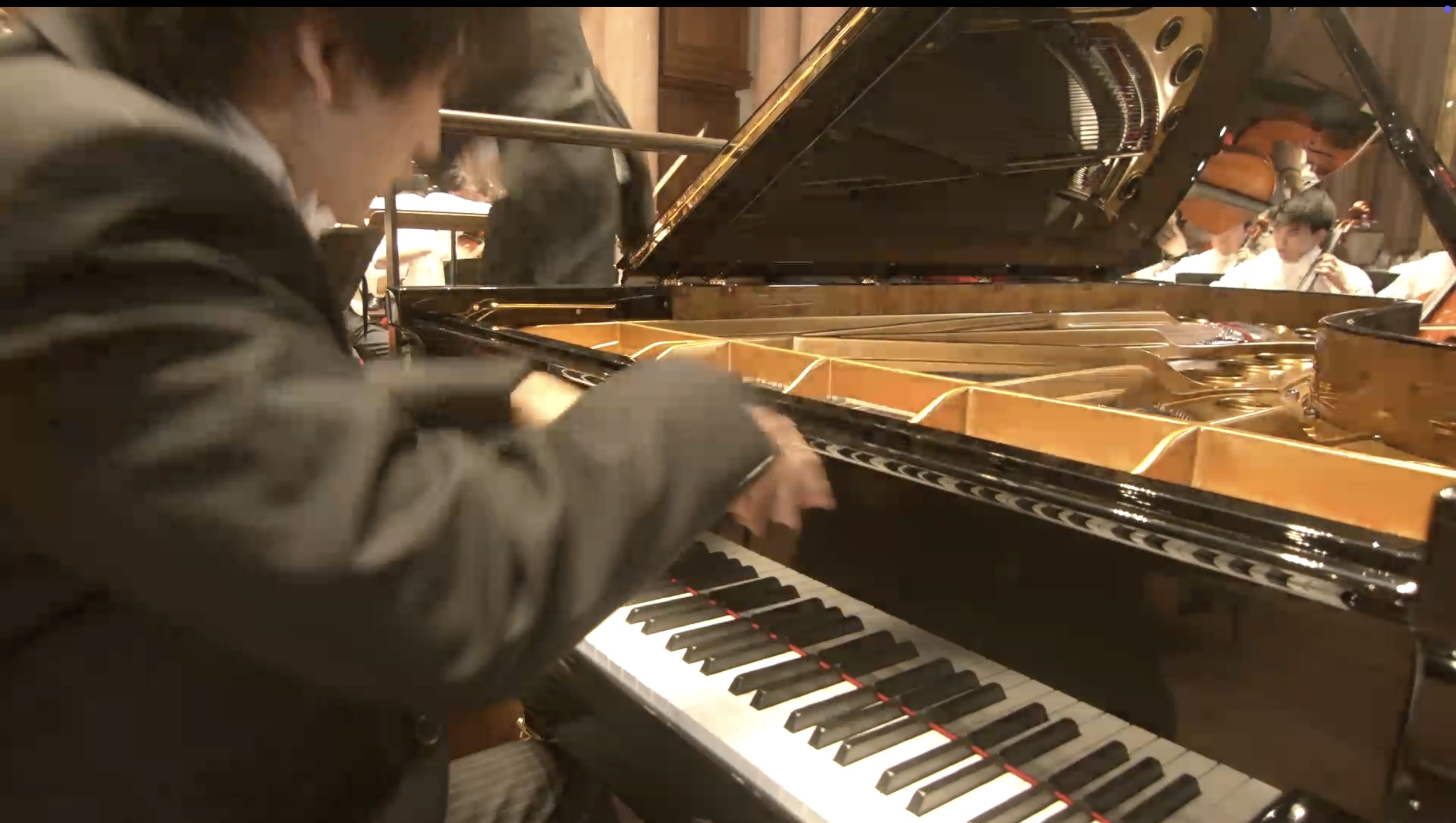
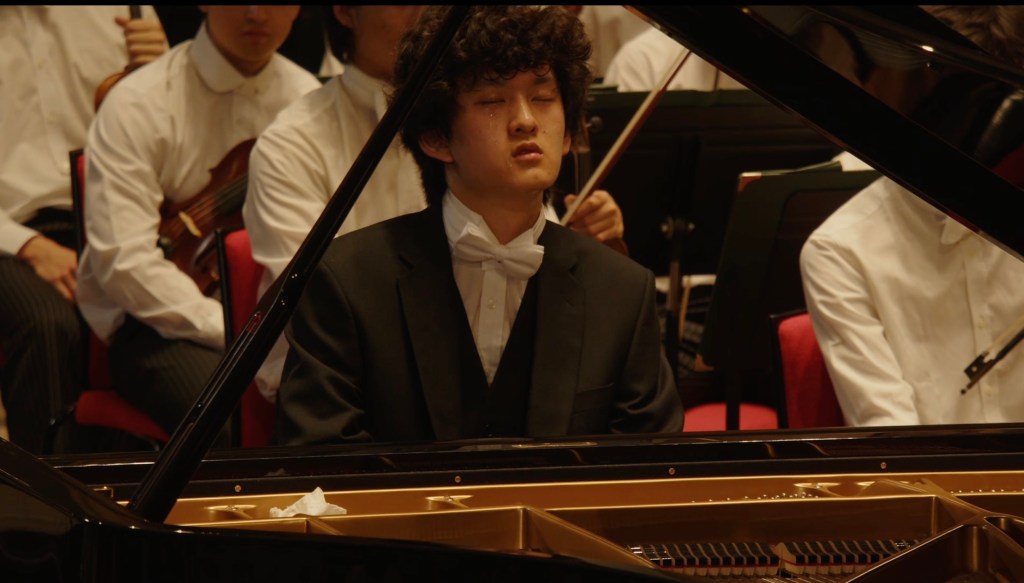
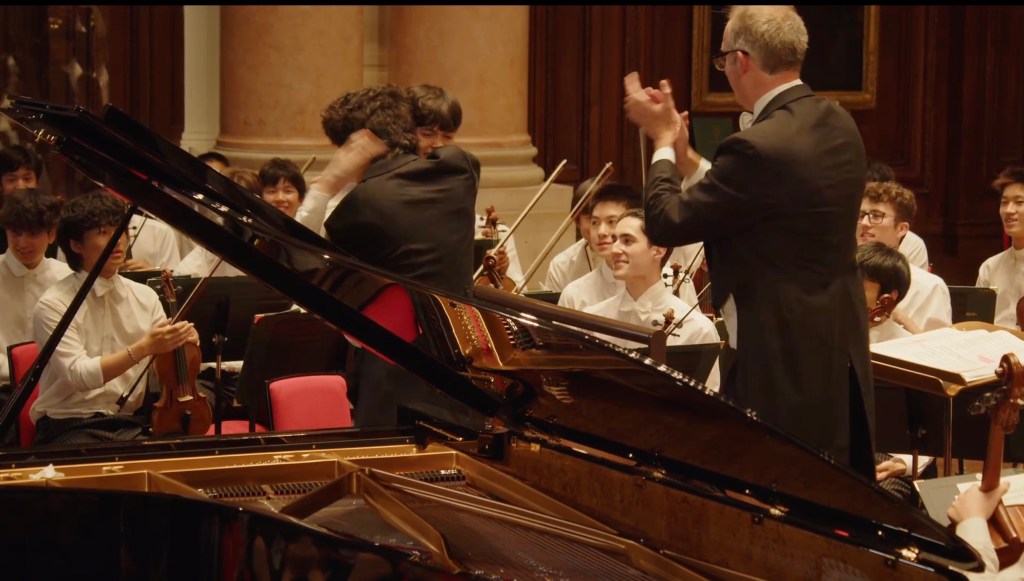
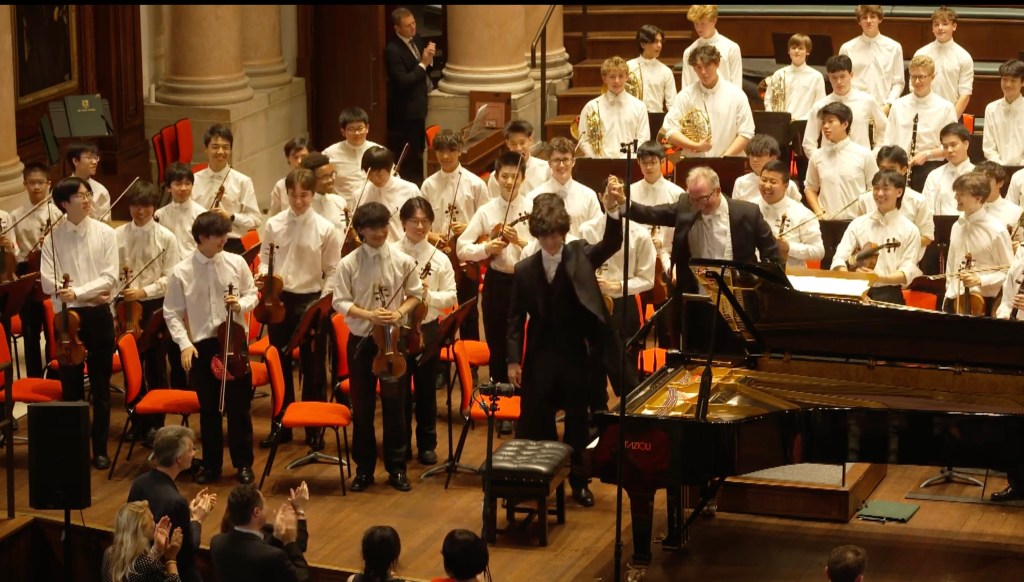
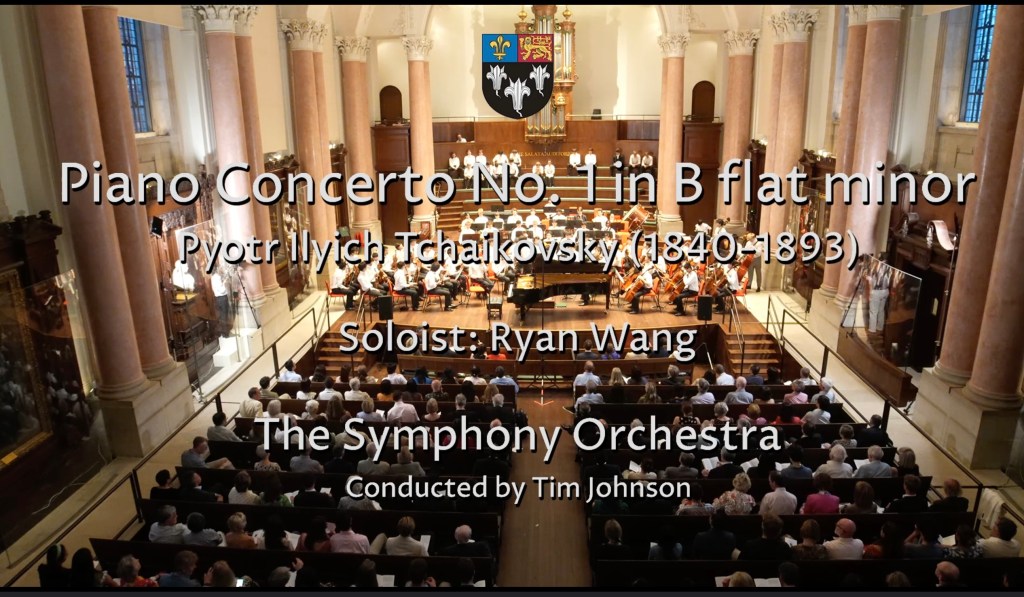
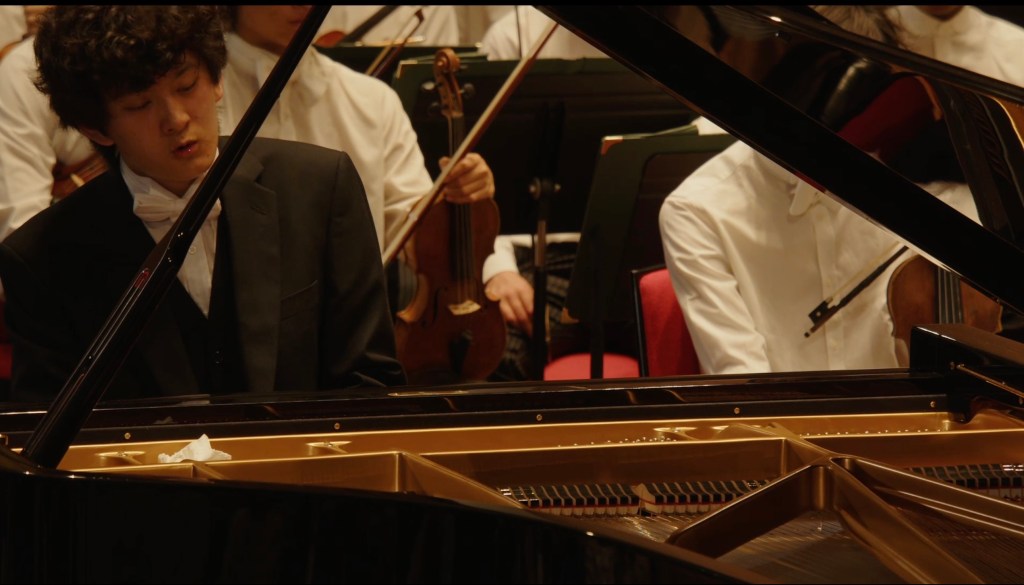
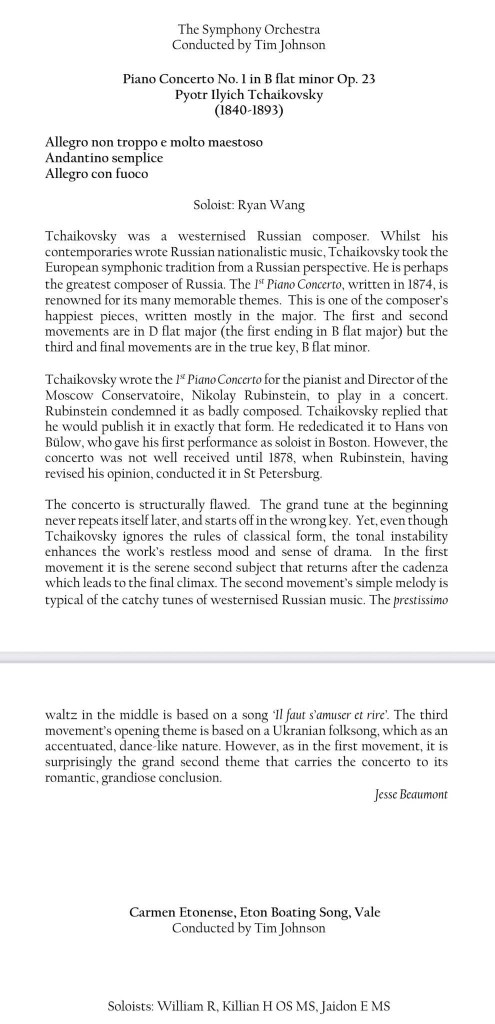
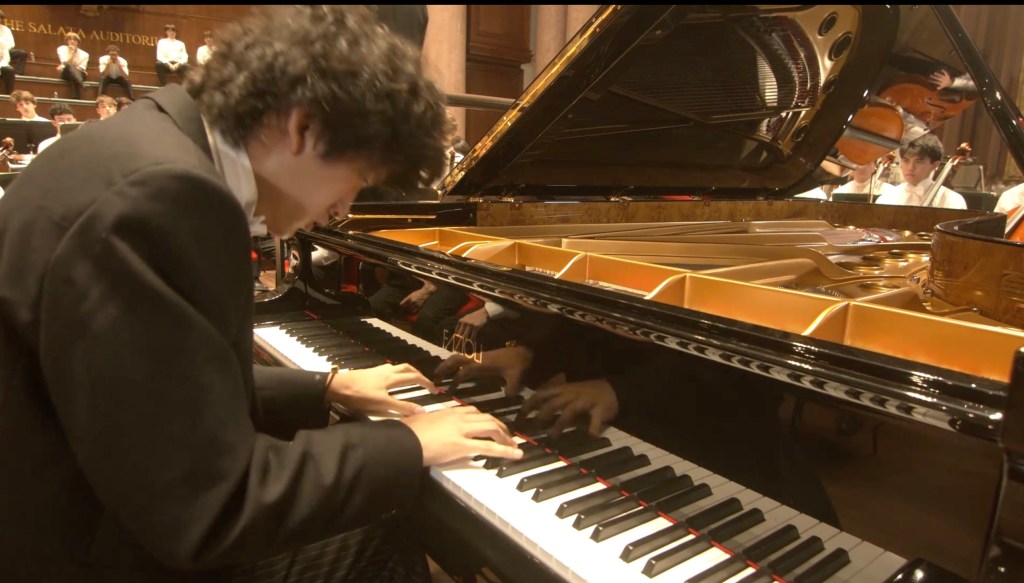
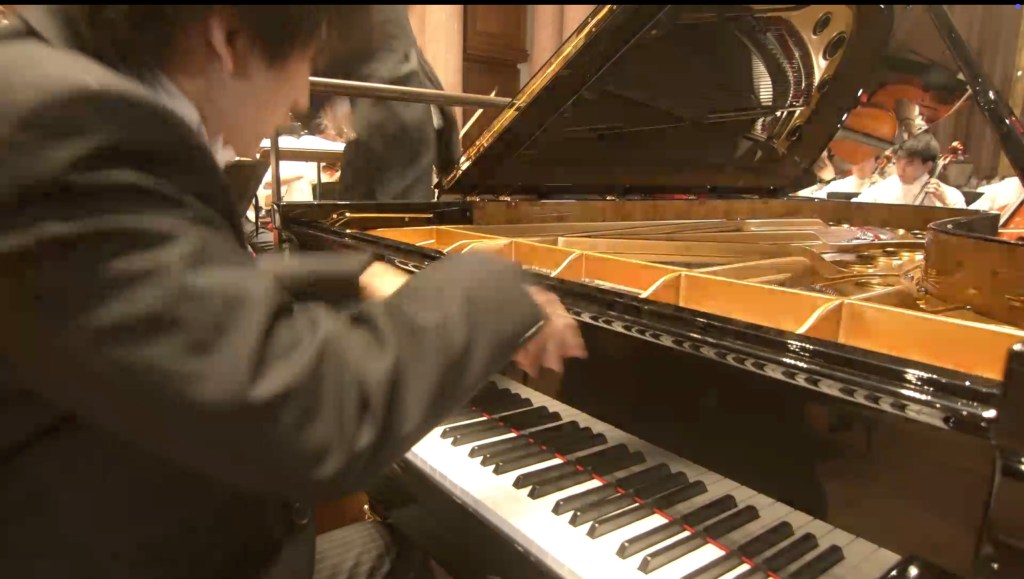
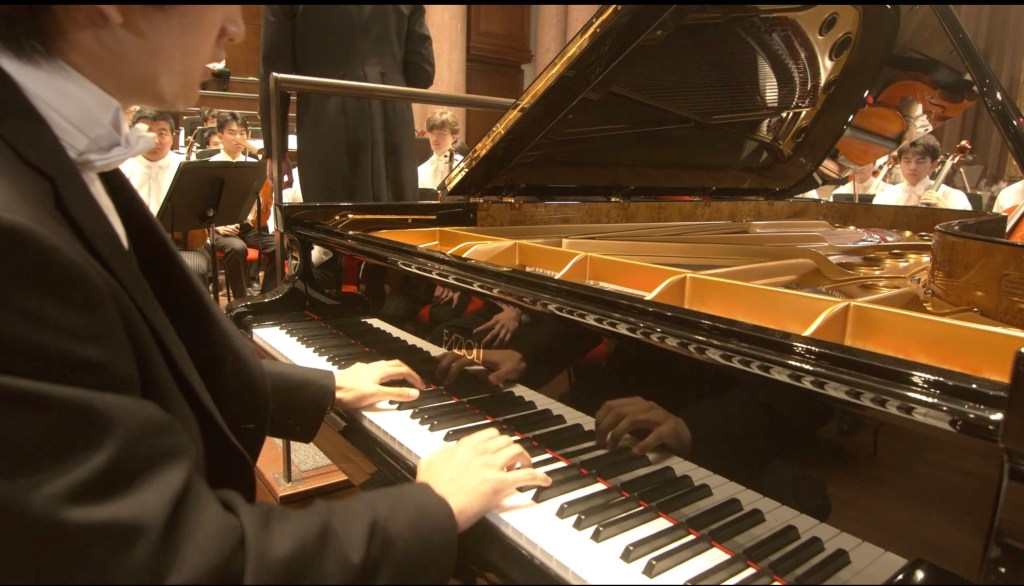
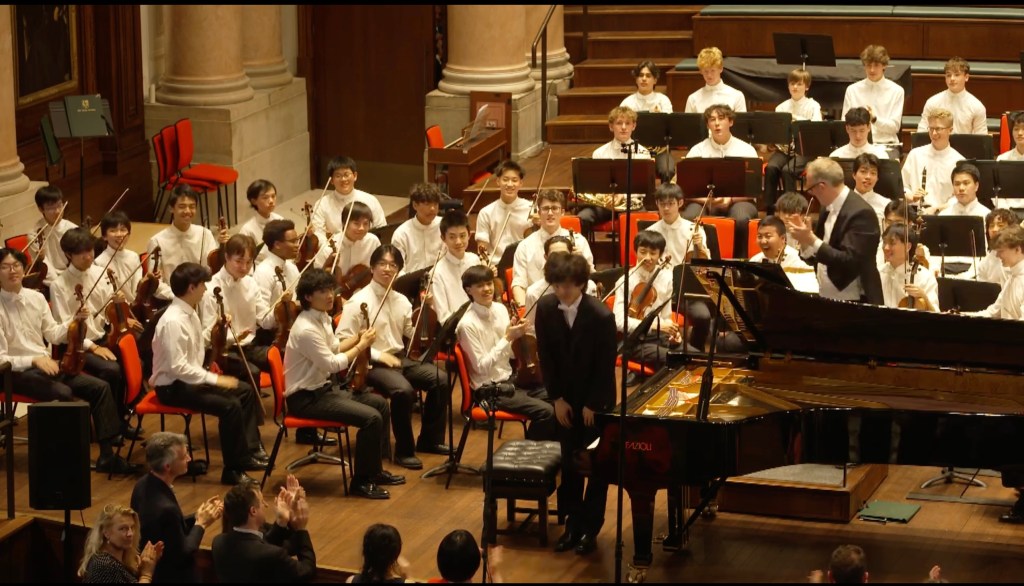
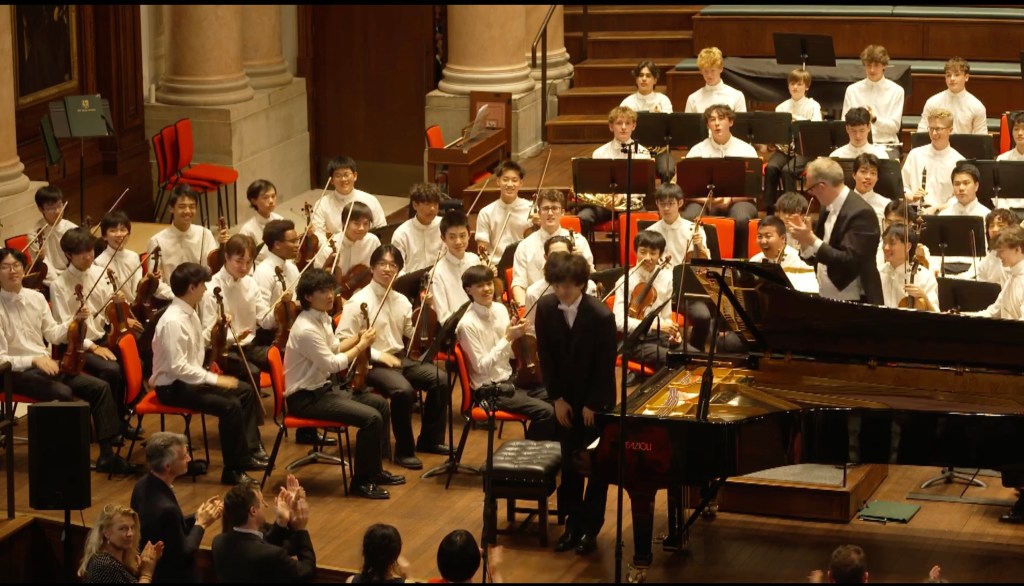
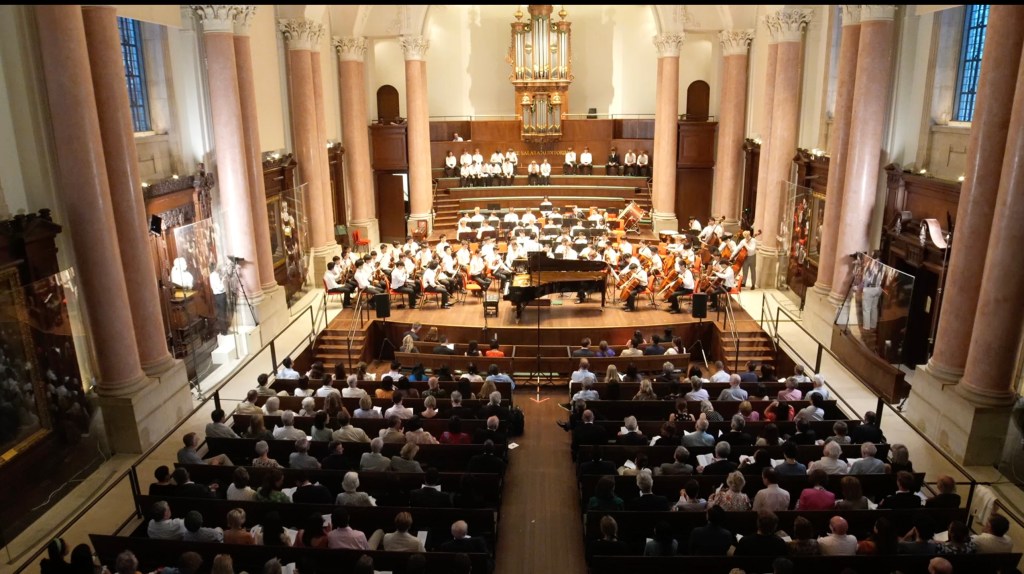
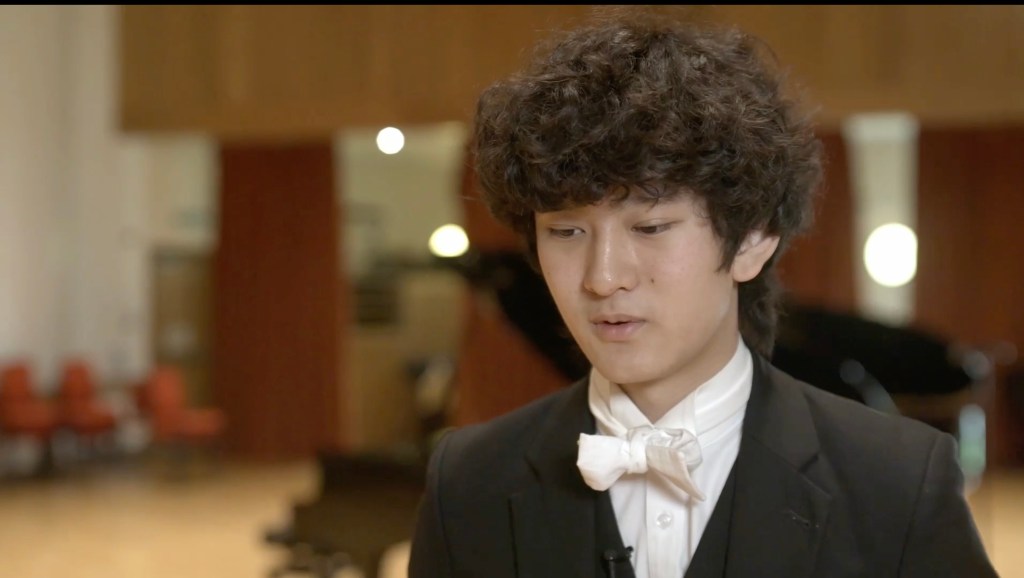
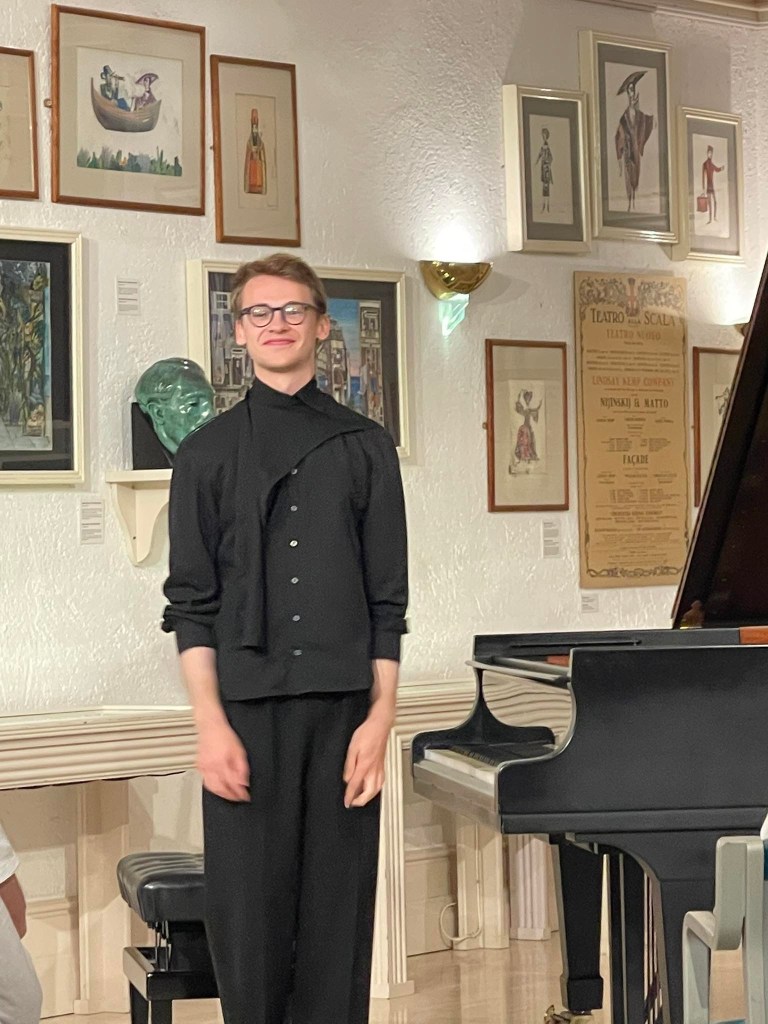
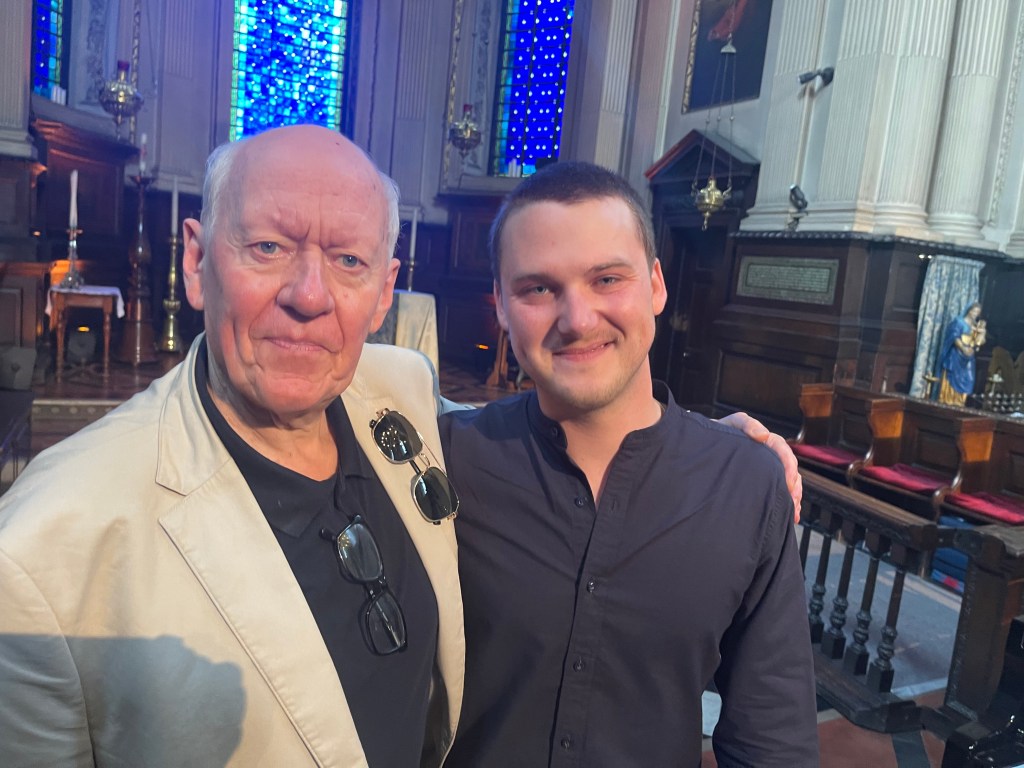
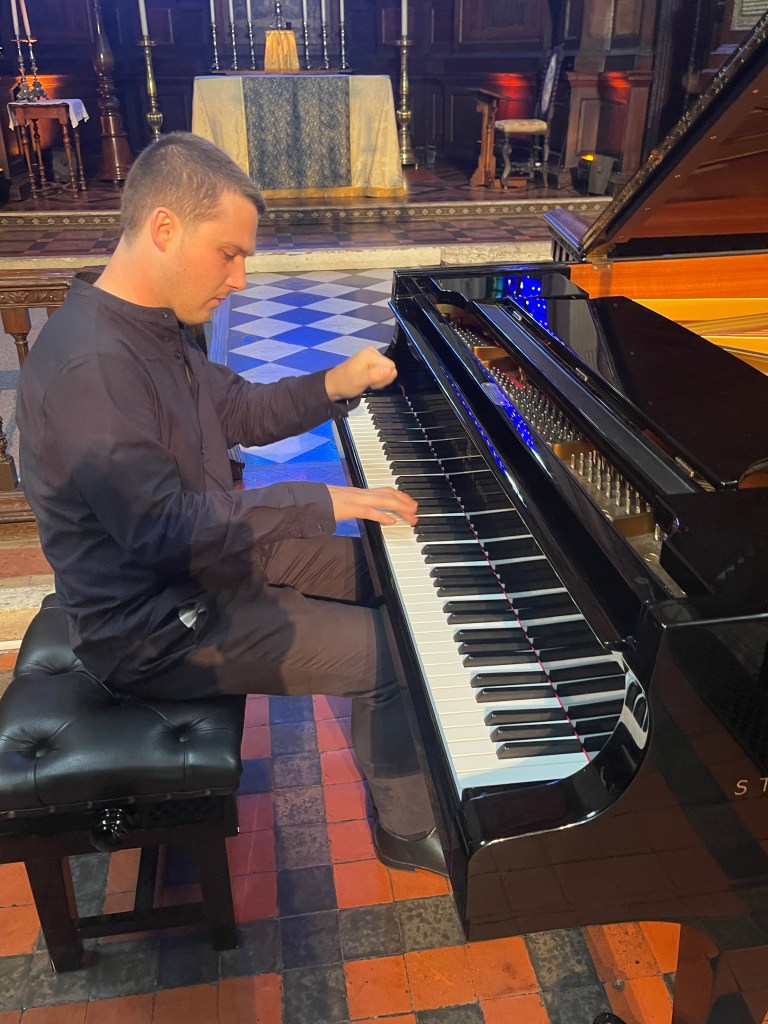
A triumphant Tchaikowsky and heart rending Liszt closes five years of close bonds and friendships as the world awaits the arrival at only 17 of a star shining brightly. A brilliant performance of great conviction from the very opening chords played like a great eagle hovering over the keys ready to devour them. Octaves played with the weight and dynamic drive that had Beecham declare to Horowitz that he should be ashamed at putting his orchestra into the shade! But it was the encore of Liszt Liebestraum that revealed the unique personality and poetic sensibility of this young man about to venture into the world,having been sustained for his past most formative five years, by his friends and superb trainers at Eton.
Talent cannot be taught as Rubinstein has bequeathed to us :
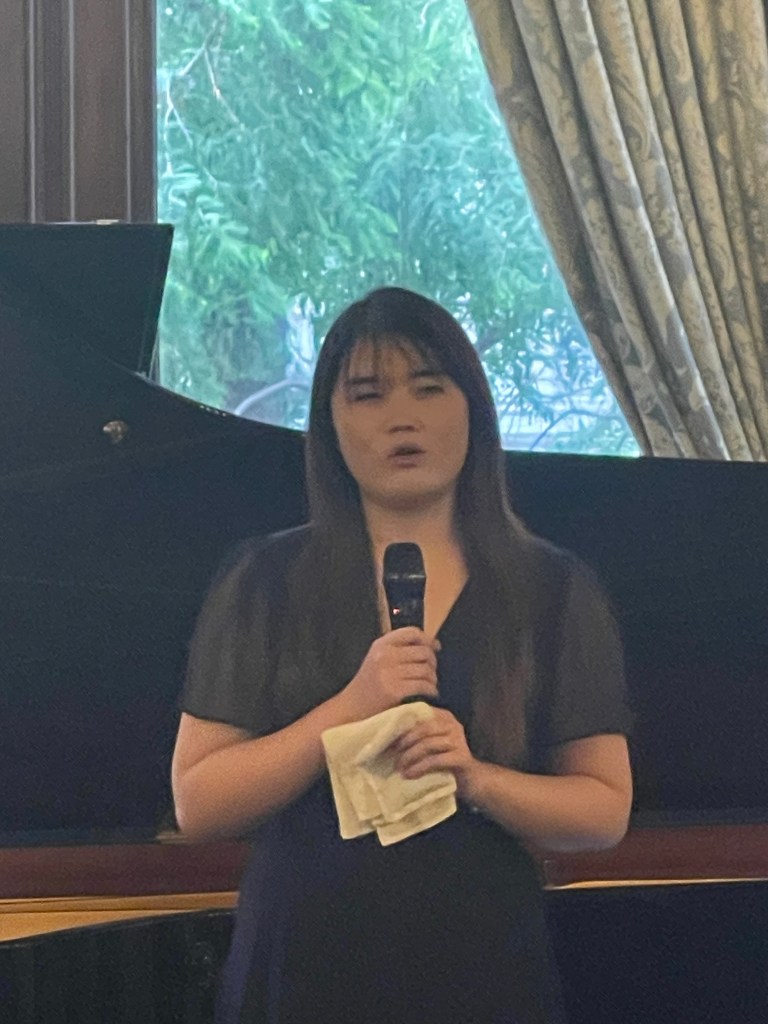
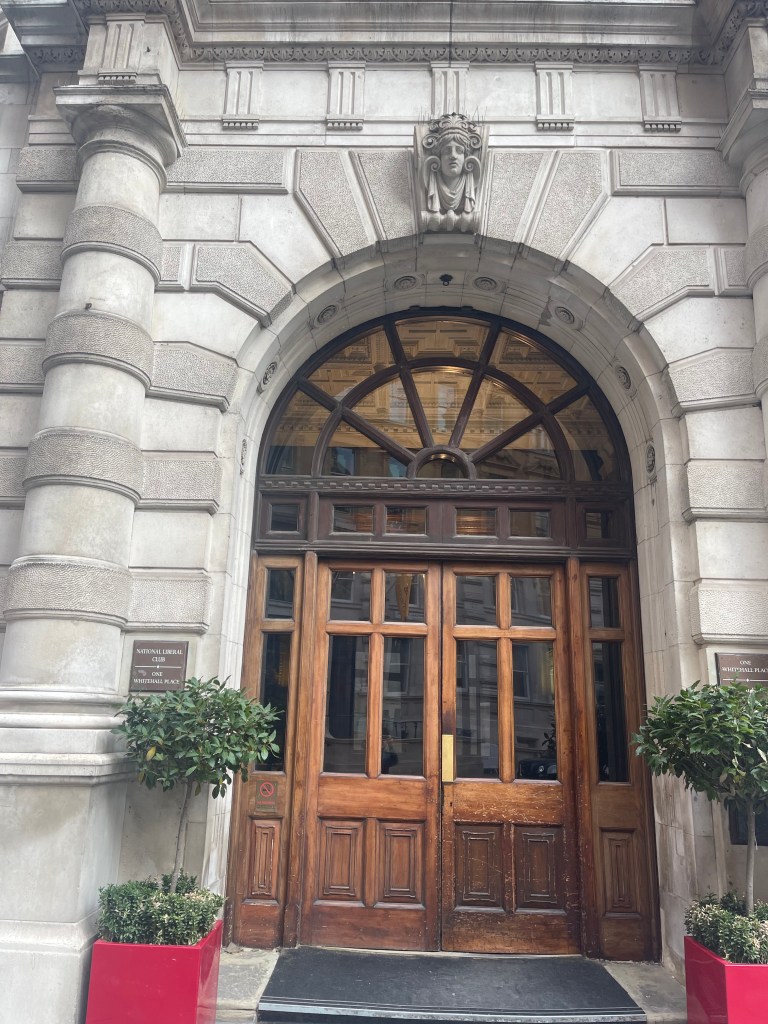
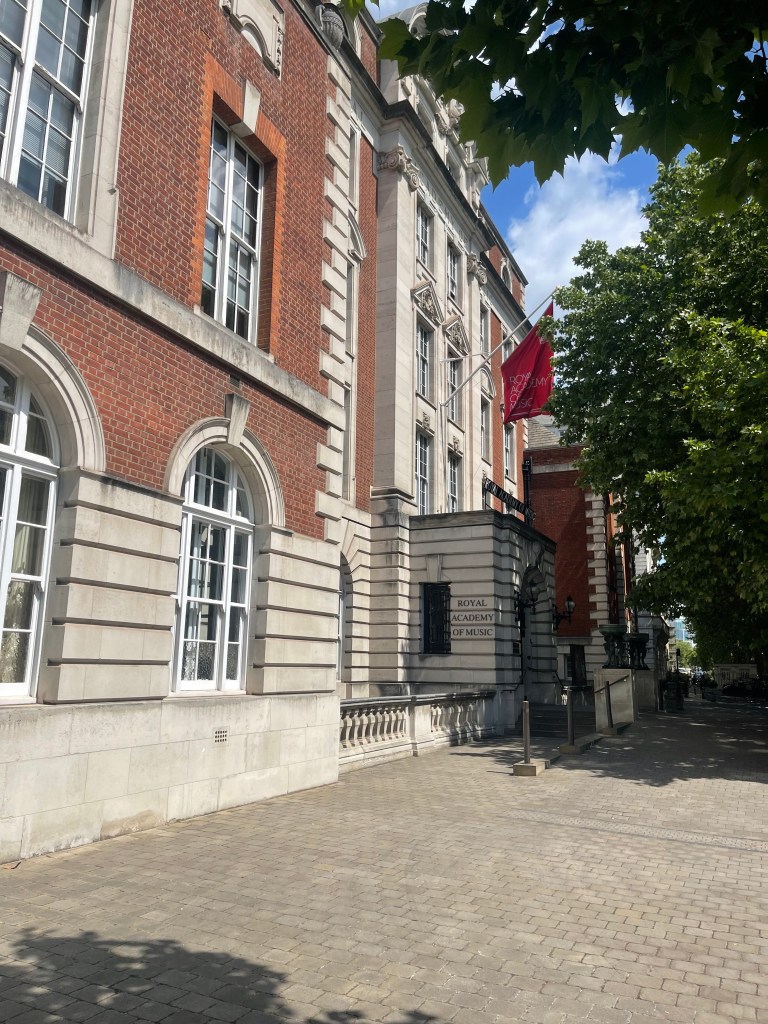
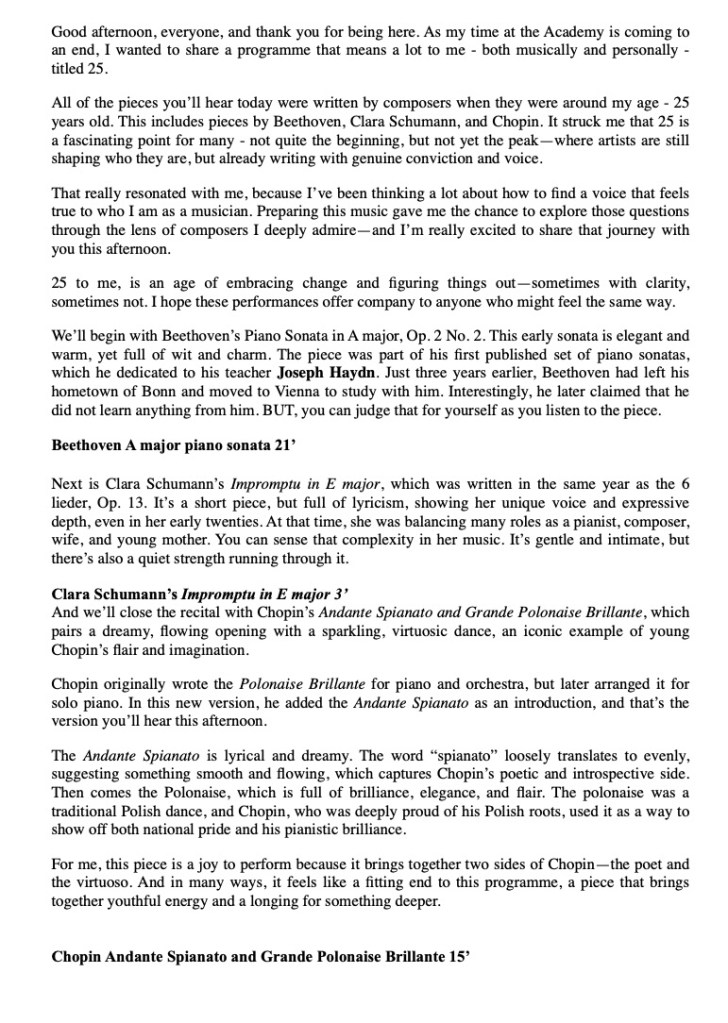
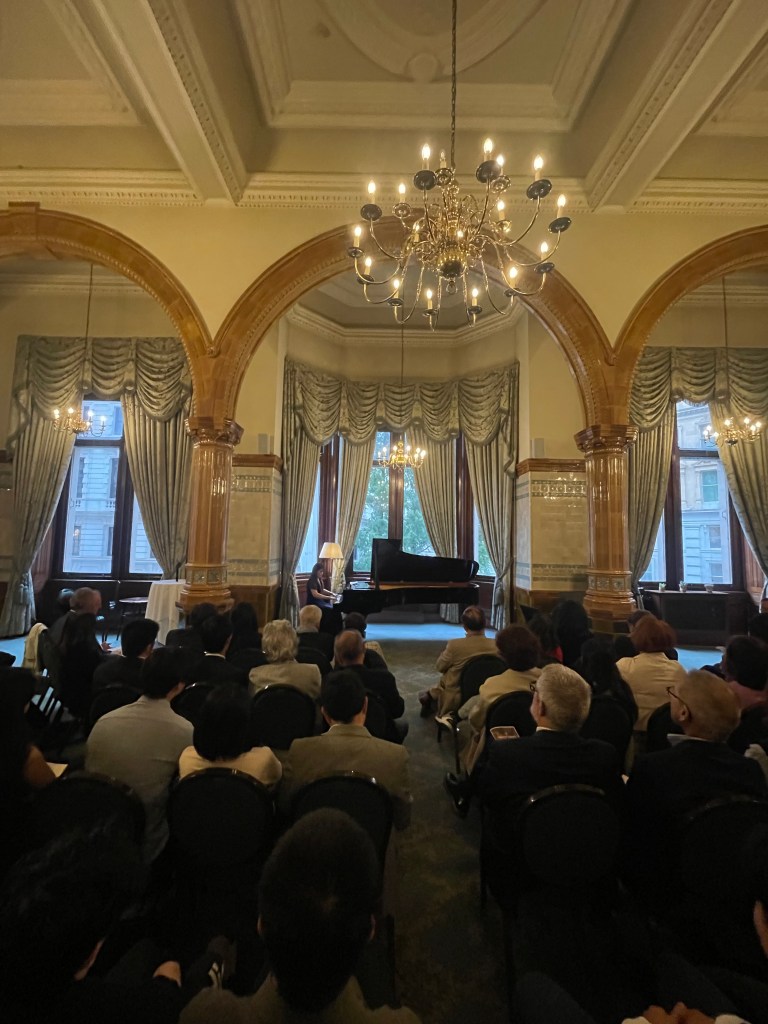
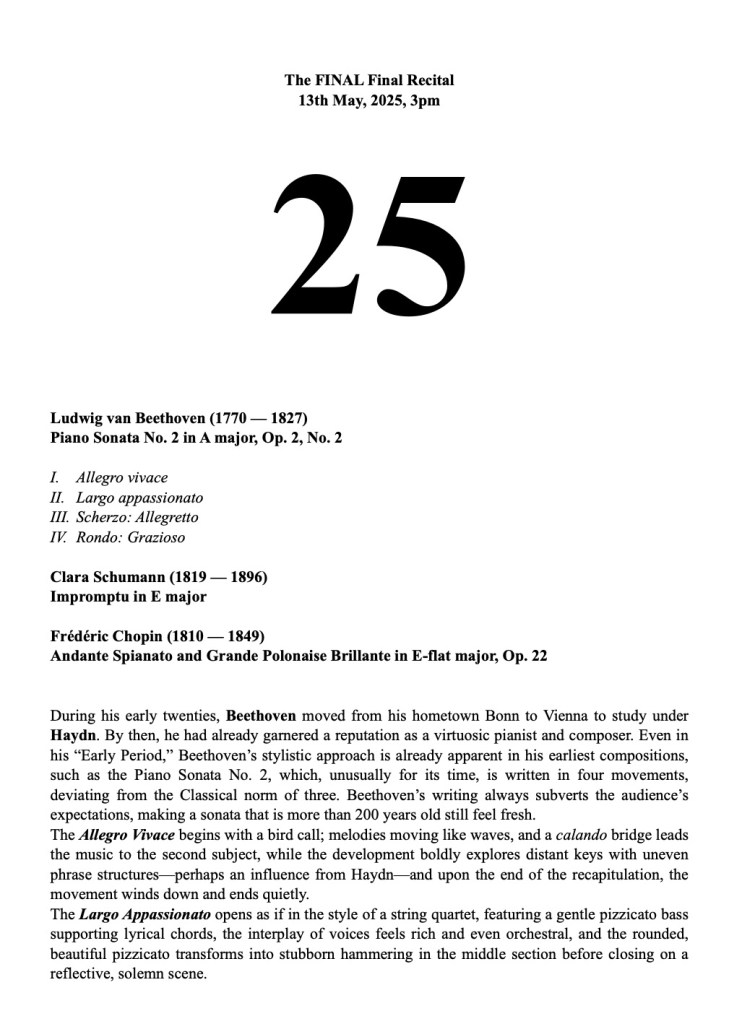
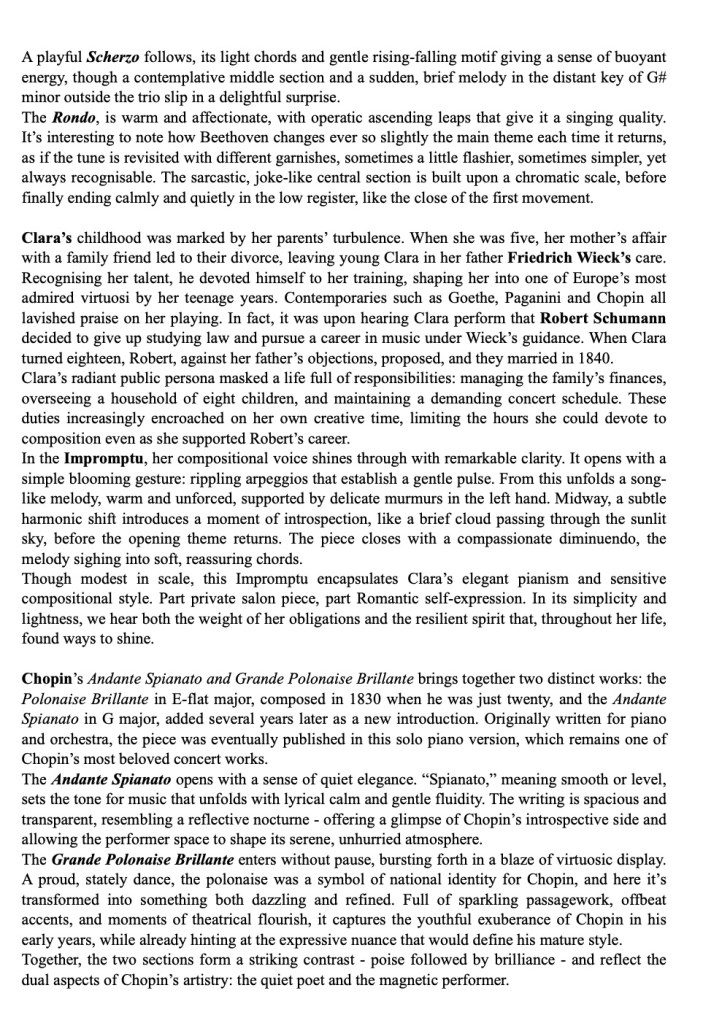
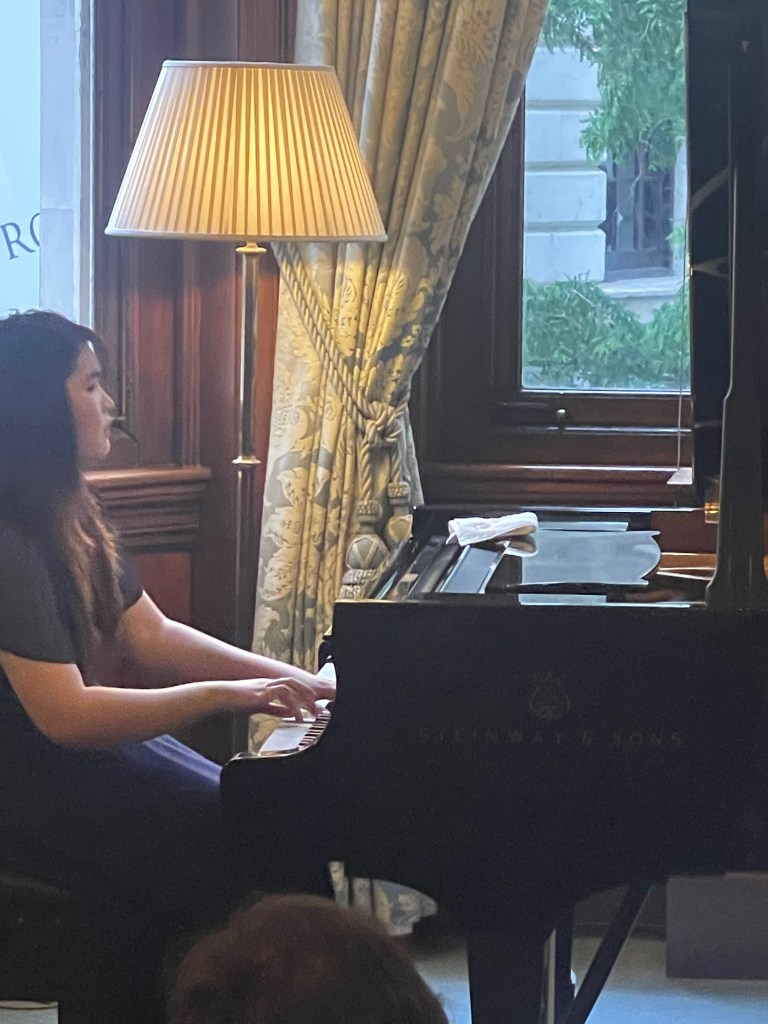
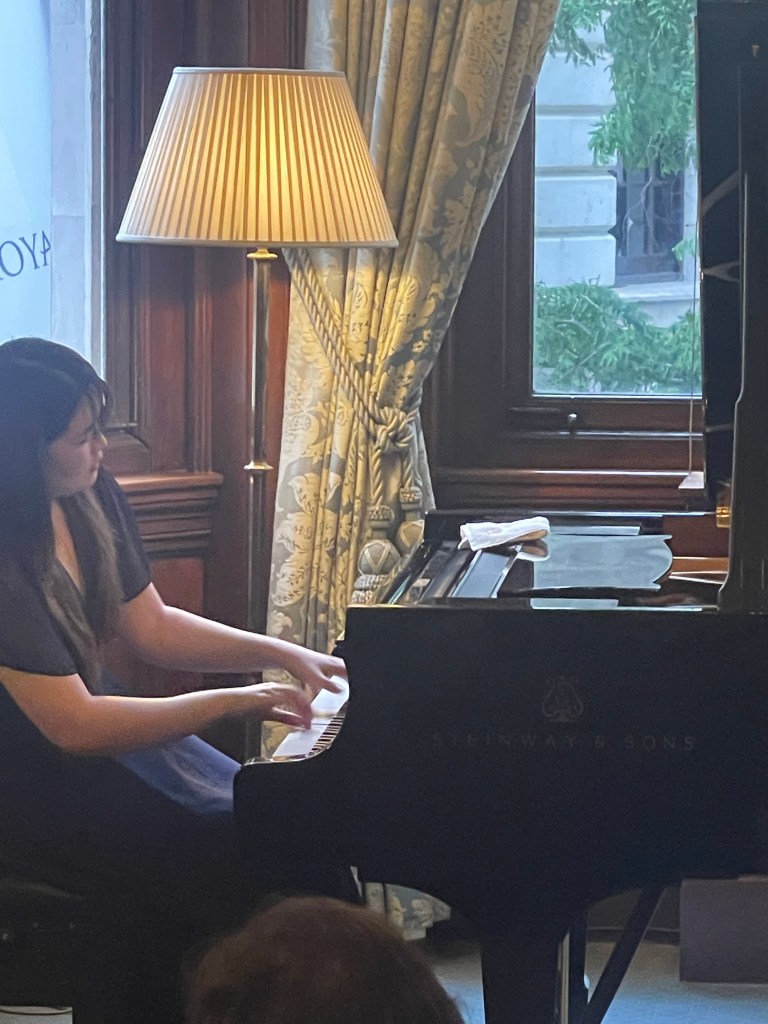
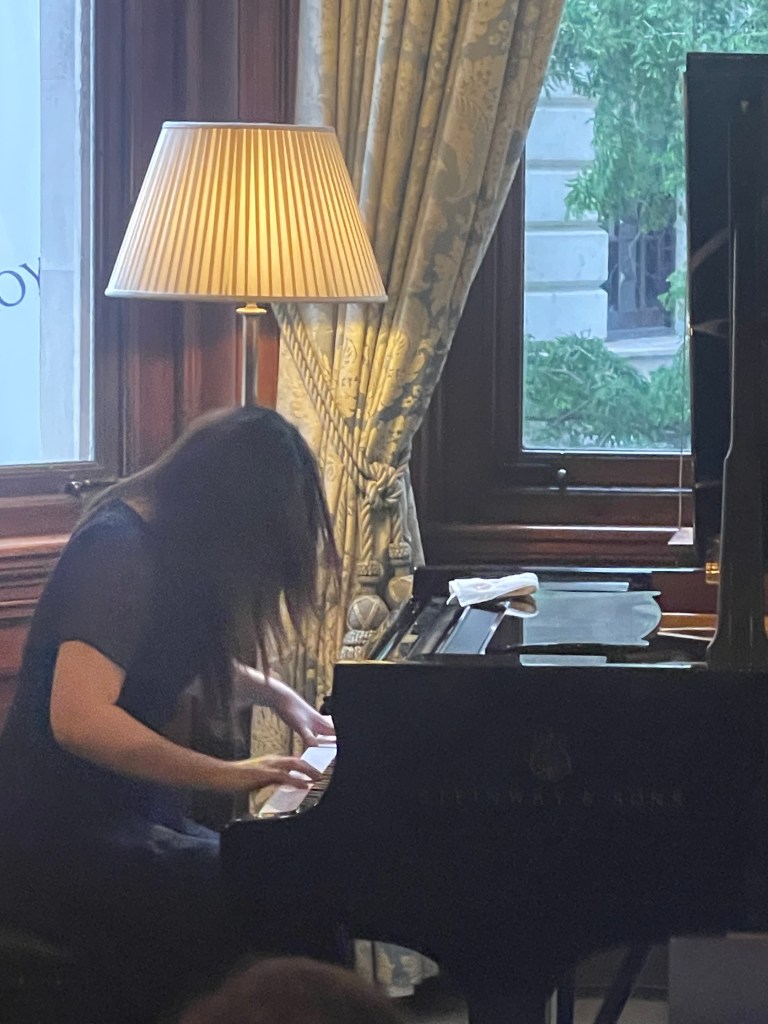
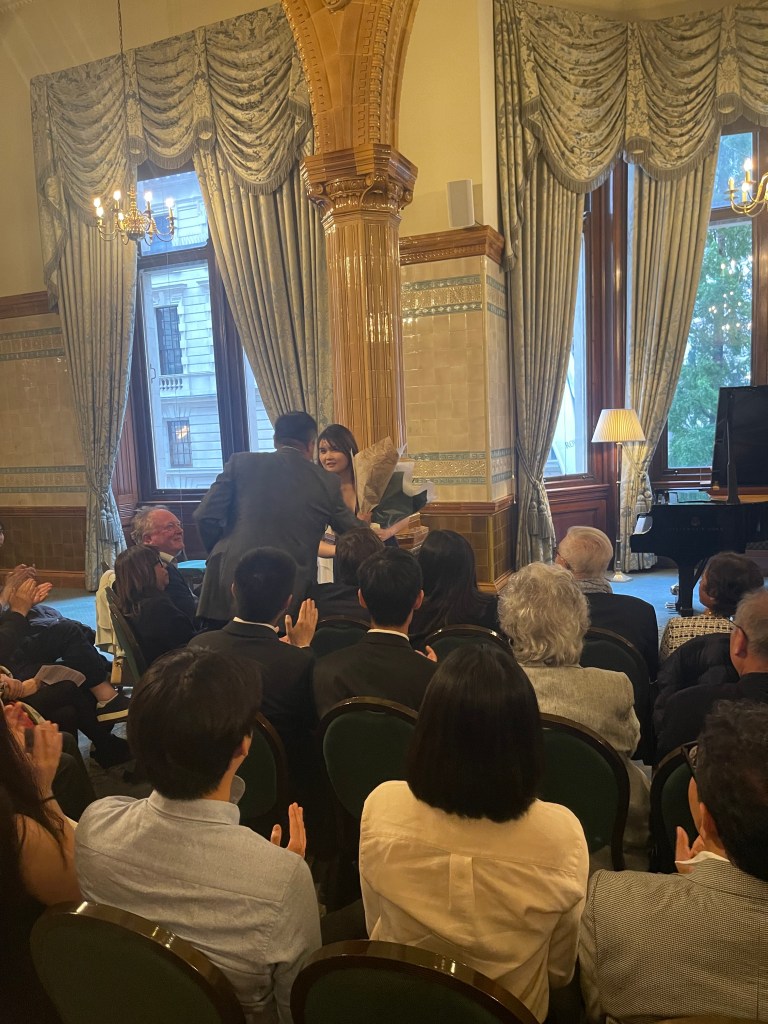
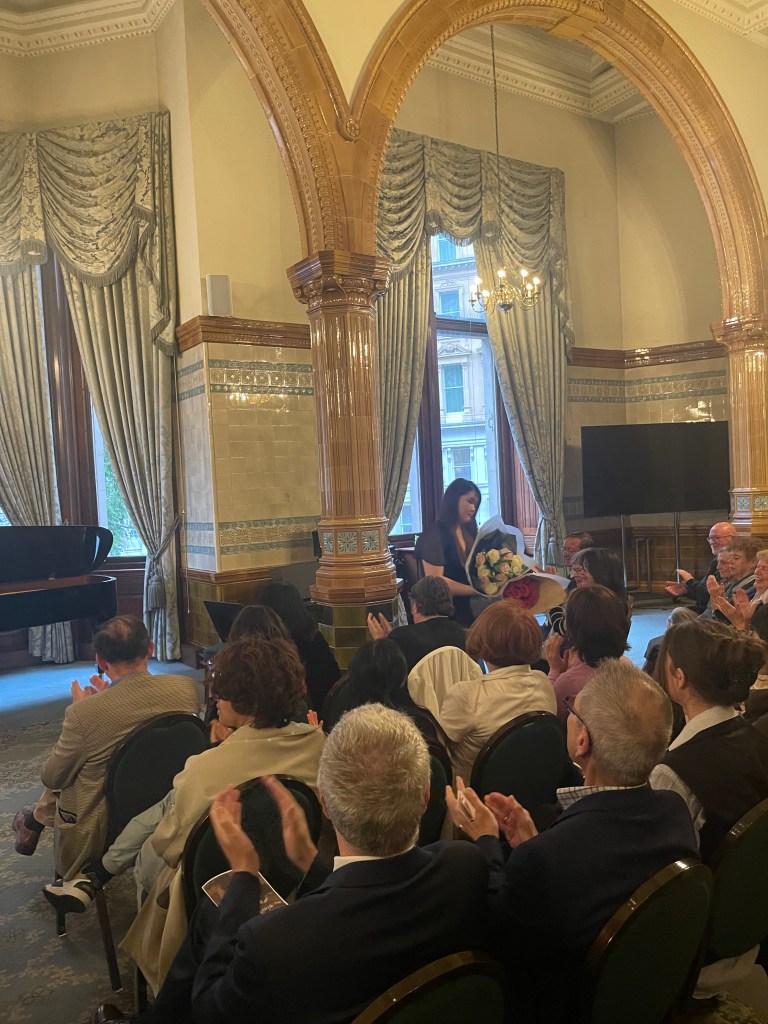
It was refreshing to read these very deeply contemplative thoughts of a young musician about to graduate with honours from the Royal Academy of Music in London where she has spent the last seven years of her life. Dedicating her youth to a search for artistic freedom and mastery I was delighted to have a preview of her actual Graduation performance at the National Liberal Club.
‘ Some beautifully crafted playing of great intelligence.Her Mozart was simple and beautiful with sparkling playing of great weight.Playing of great poise in the slow movement of aristocratic beauty.The last movement sprang from her agile fingers with a ‘joie de vivre’ that was of great rhythmic energy and finesse. The Chopin Variations op 2 are the ones that Schumann on hearing Chopin play them in Paris was to remark ‘Hats off a genius’.A very well prepared performance of great musicality and intelligence where the technical difficulties were incorporated into a musical shape of beguiling style.A jeux perlé that flowed with teasing ease from her agile fingers.A fine performance that just missed the charm and grace of a show piece written especially as a visiting card for the young Chopin as he played in the Salons of the aristocratic Parisian families of his day.’ Christopher Axworthy Florence October 2023
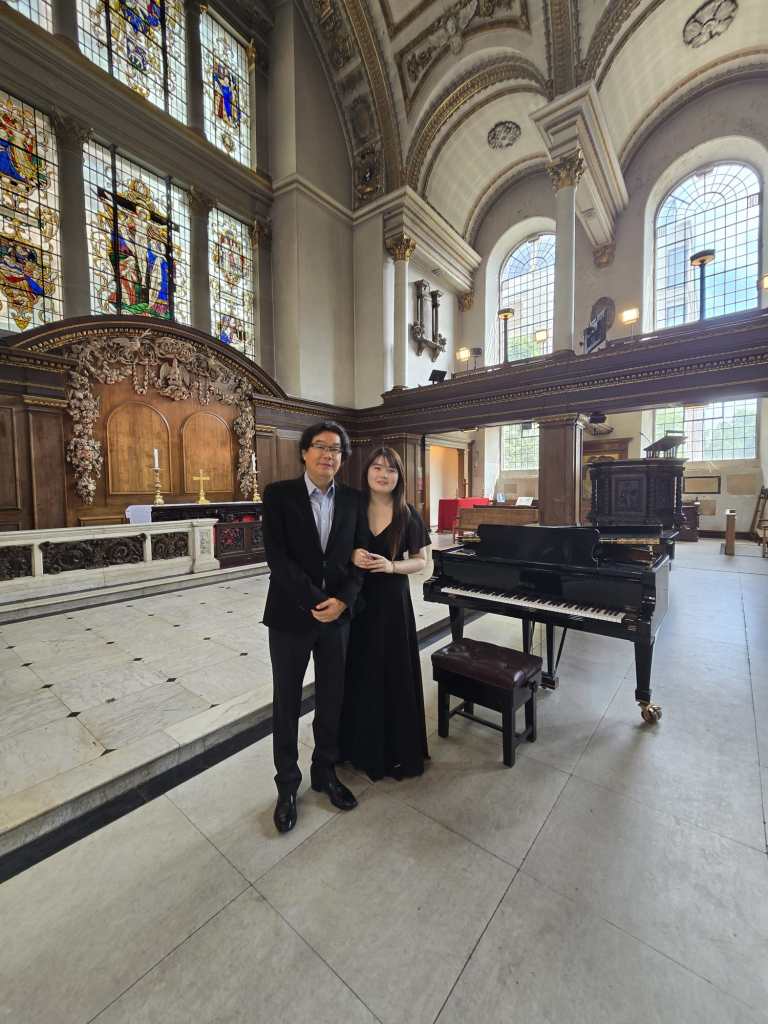
Helen with her father Meng Yi at her recital at St James’s Piccadilly – this beautiful church where Sigismund Thalberg ( the only serious rival to Liszt ) was married in July 1843 to Francesca Lablanche
The Asia Circle is directed by Yisha Xue who dedicates her time to helping exceptionally talented young musicians.
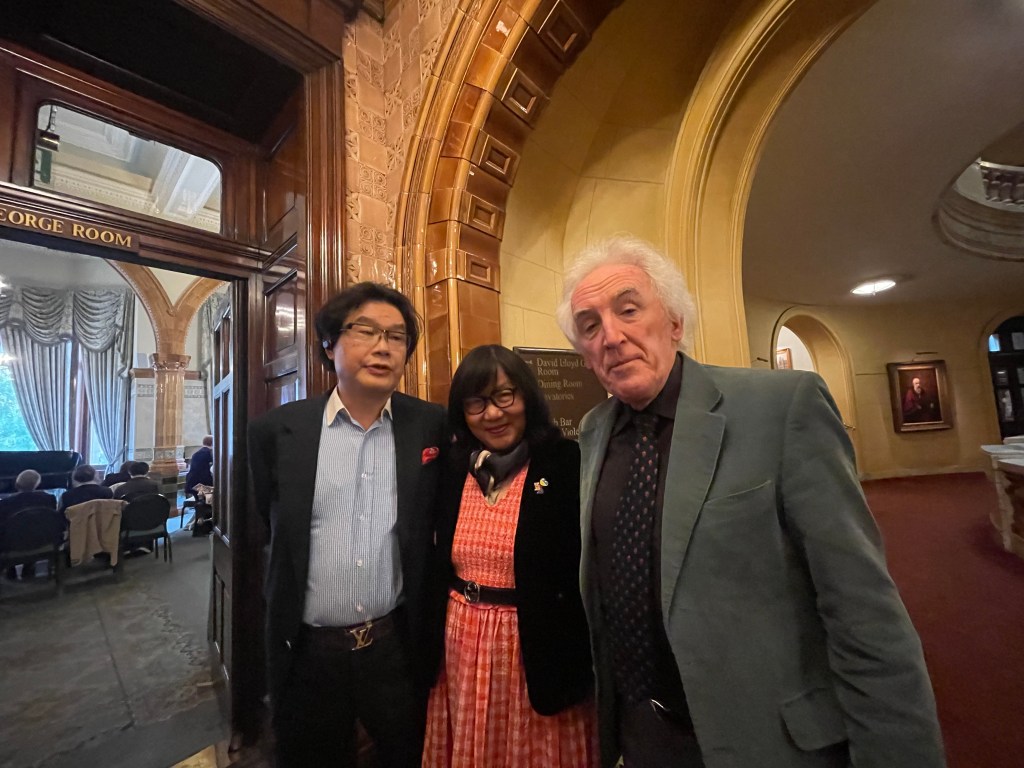
The indomitable Yisha Xue with me and Meng Yi
Choosing an eclectic programme from composers who at her same age had written the works that she was now playing with the mastery and insight of a young musician about to embark on the greatest adventure of her life – that of sharing her music with others on the world stage.
‘ Helen Meng gave a ravishing performance full of subtle beauty and a kaleidoscope of bewitching sounds. A scintillating sense of style and a masterly command of the keyboard from a young artist recently graduated from the Royal Academy from the class of Joanna McGregor. Helen had also studied at the International Piano Academy Lake Como whose president is another lady pianist Martha Argerich’. Christopher Axworthy June 2025
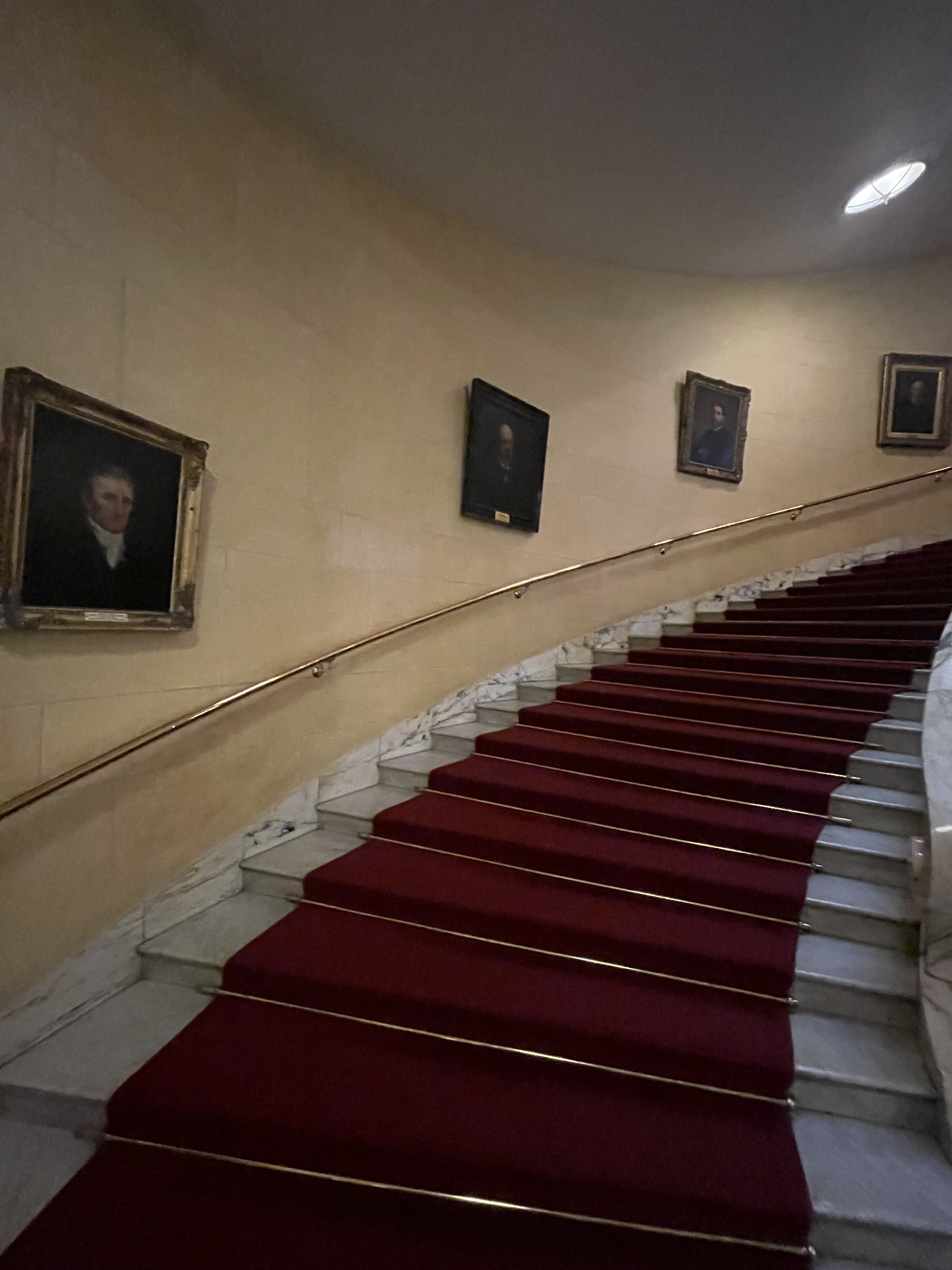
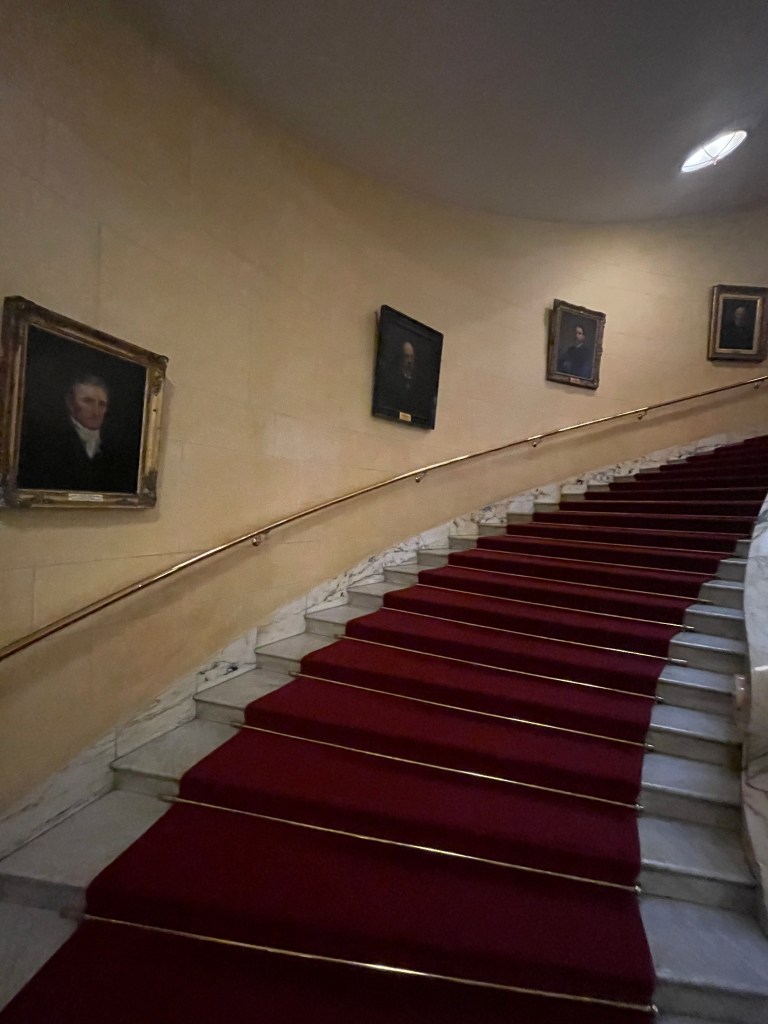
The imposing staircase to the music room in the National Liberal Club The Royal Academy of Music London
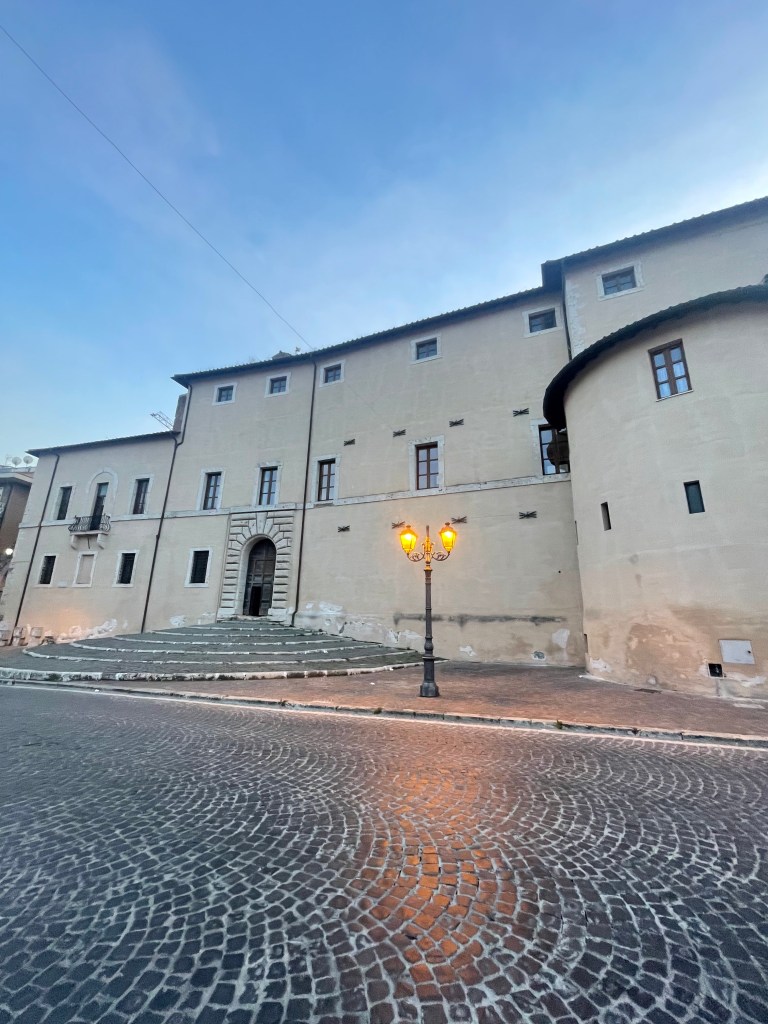
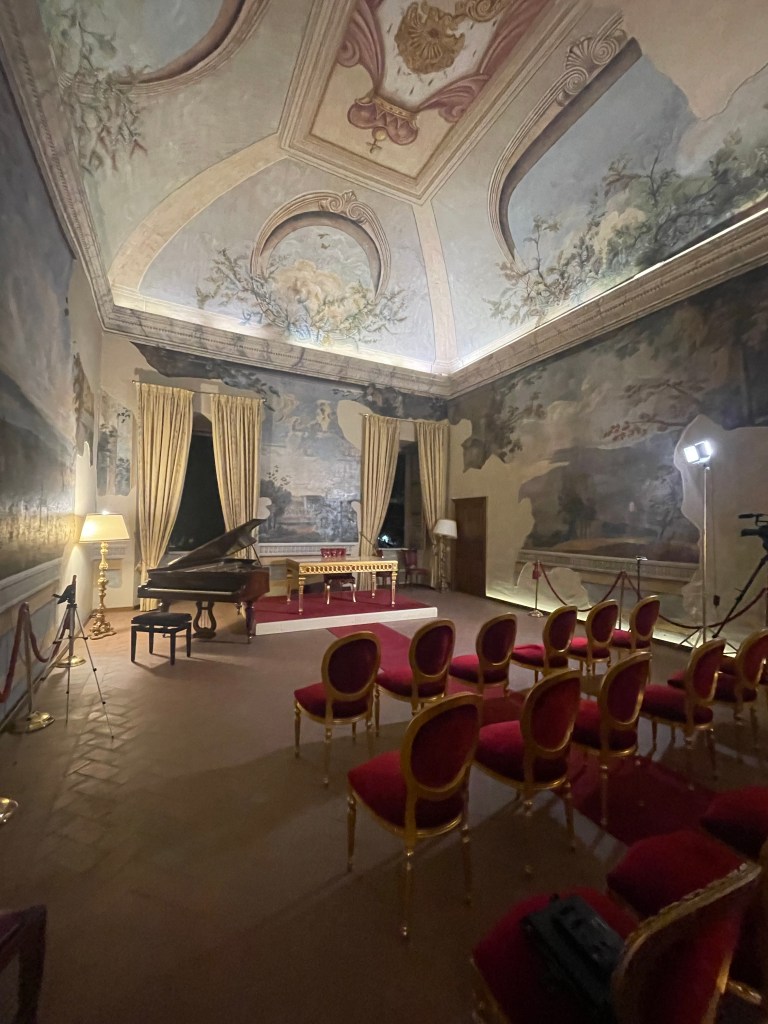
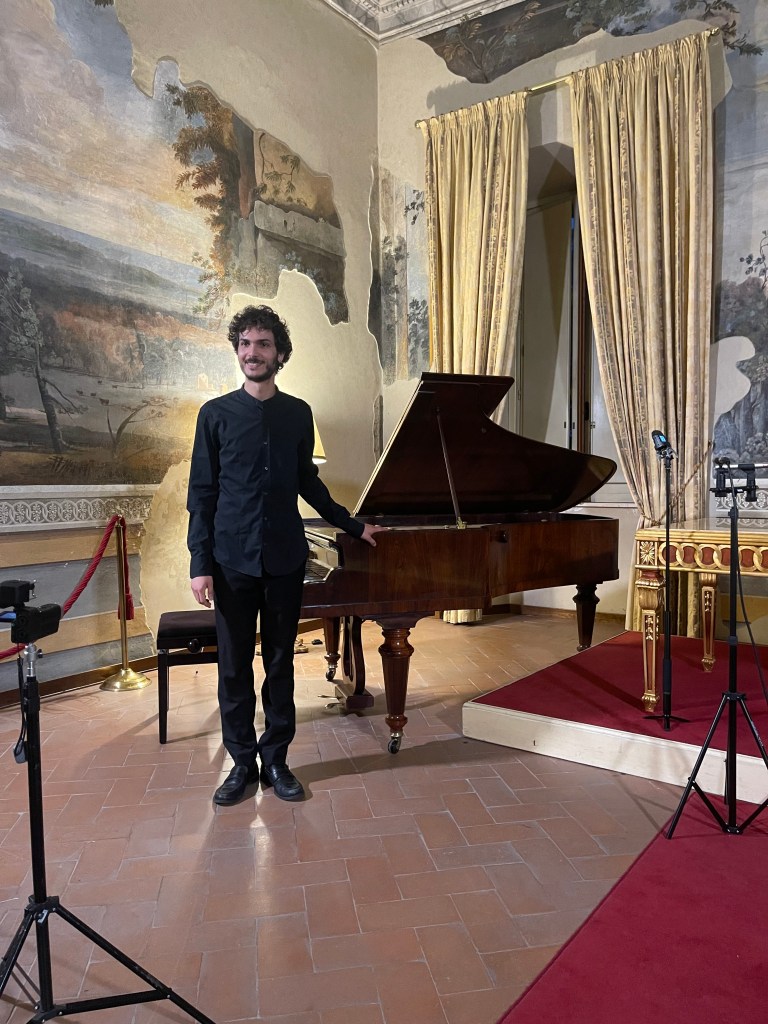
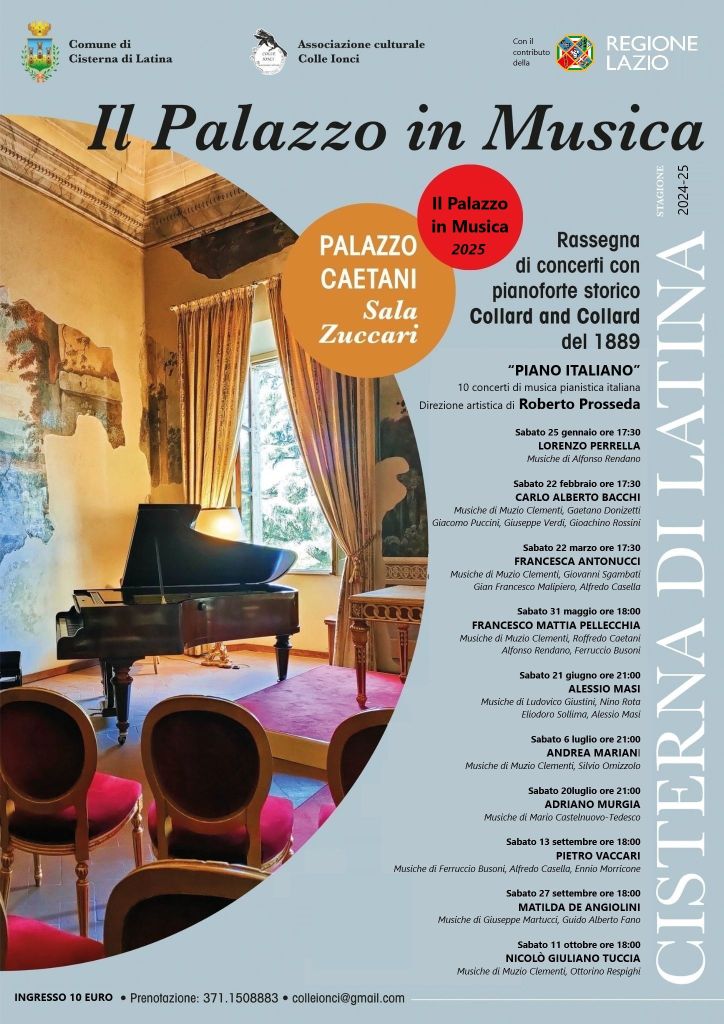
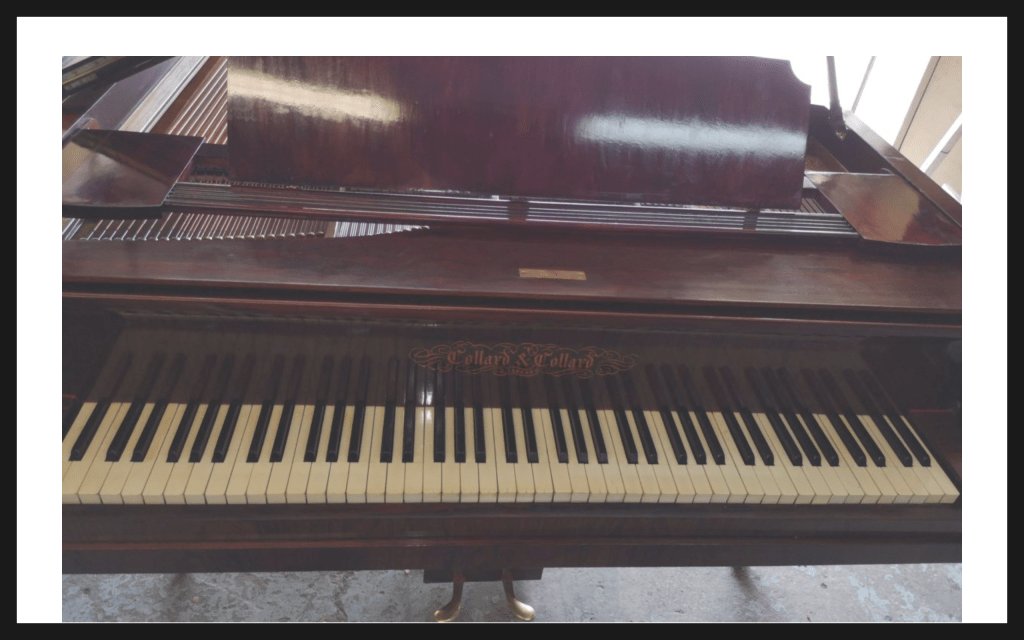
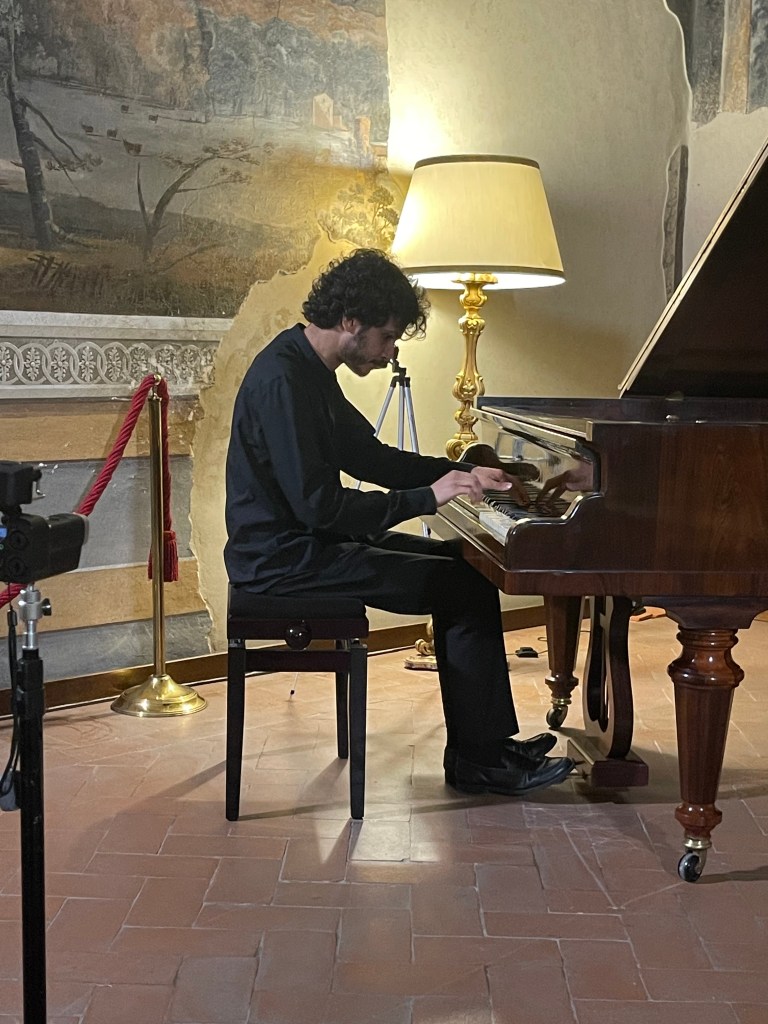
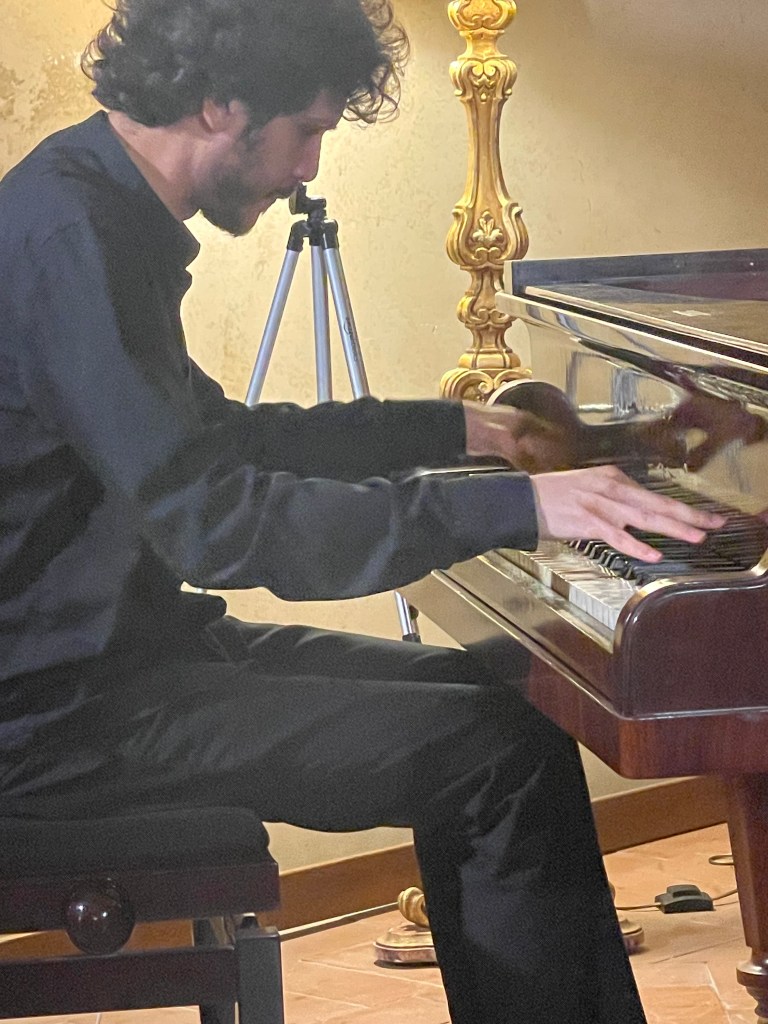
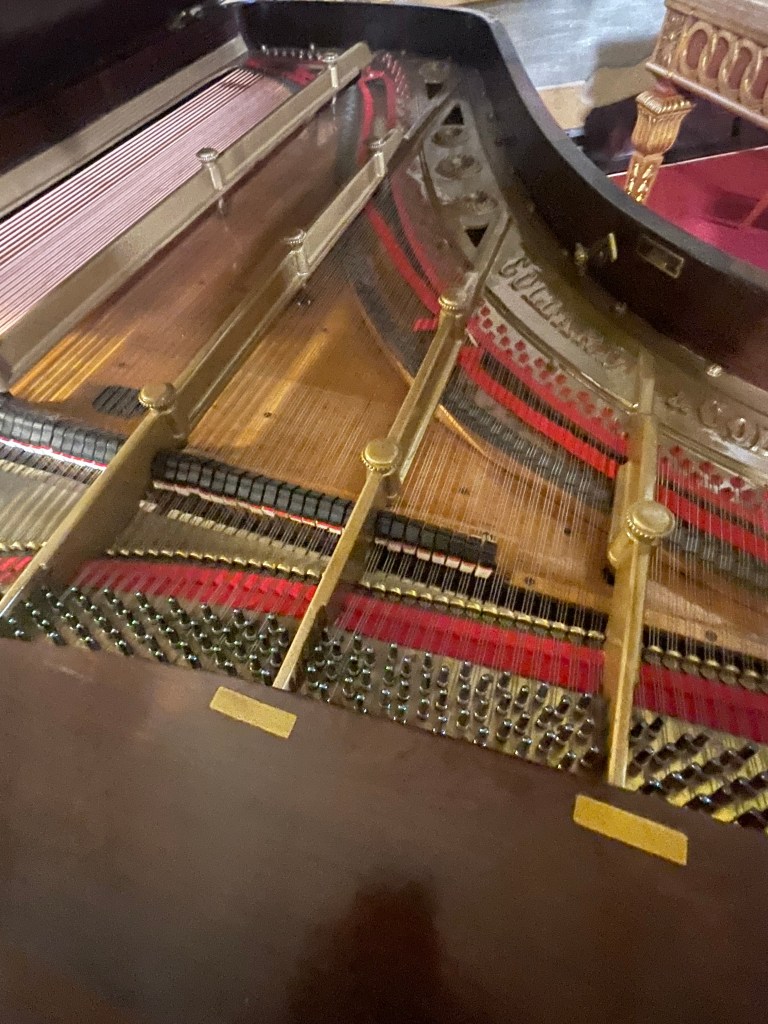
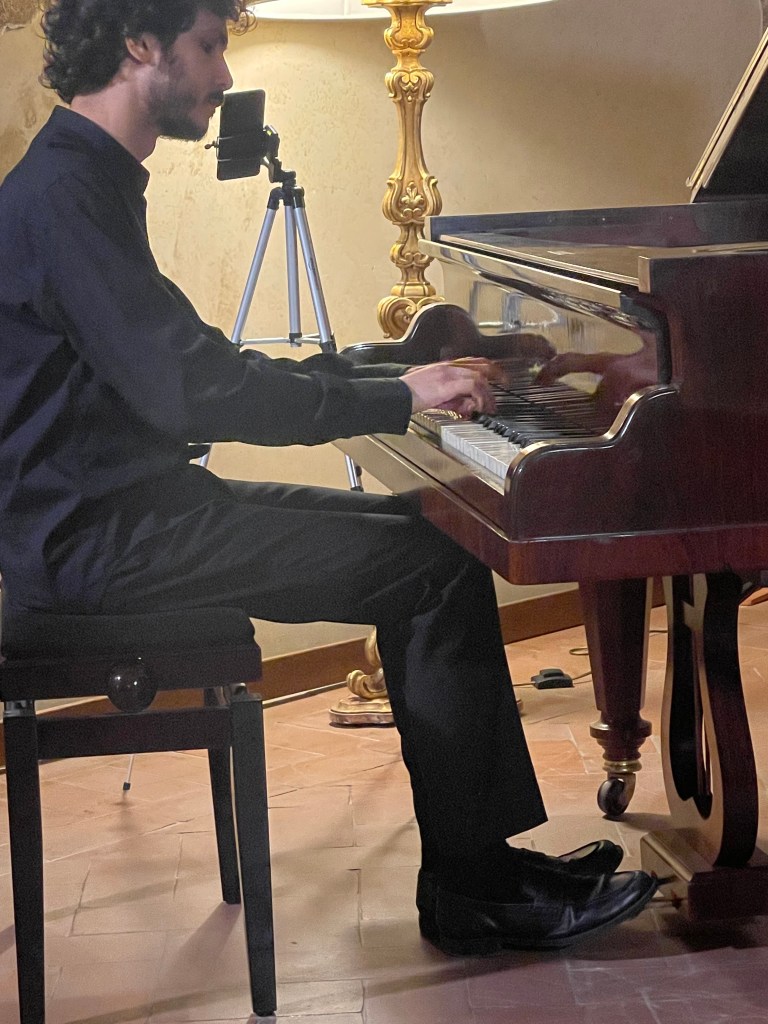
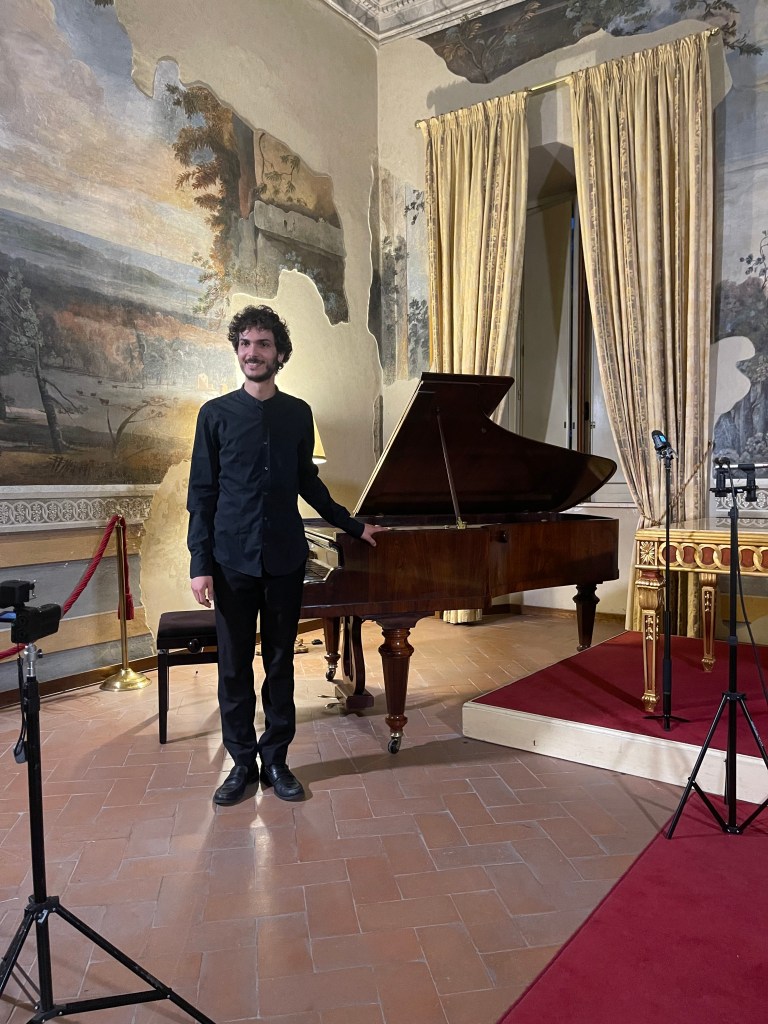
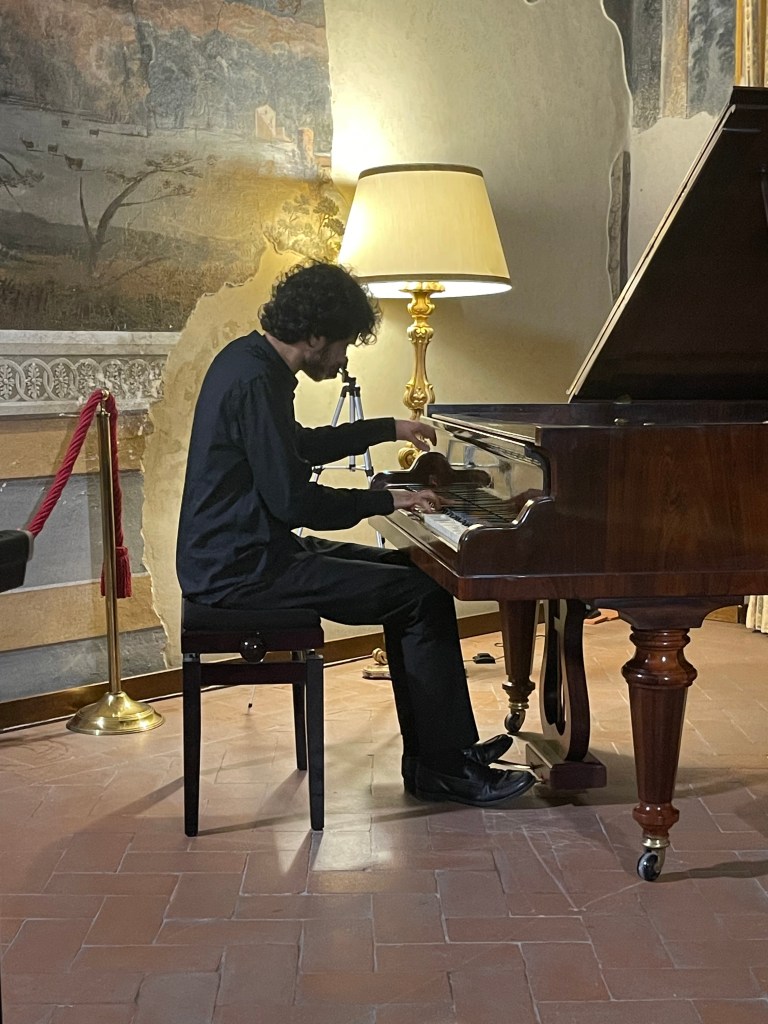
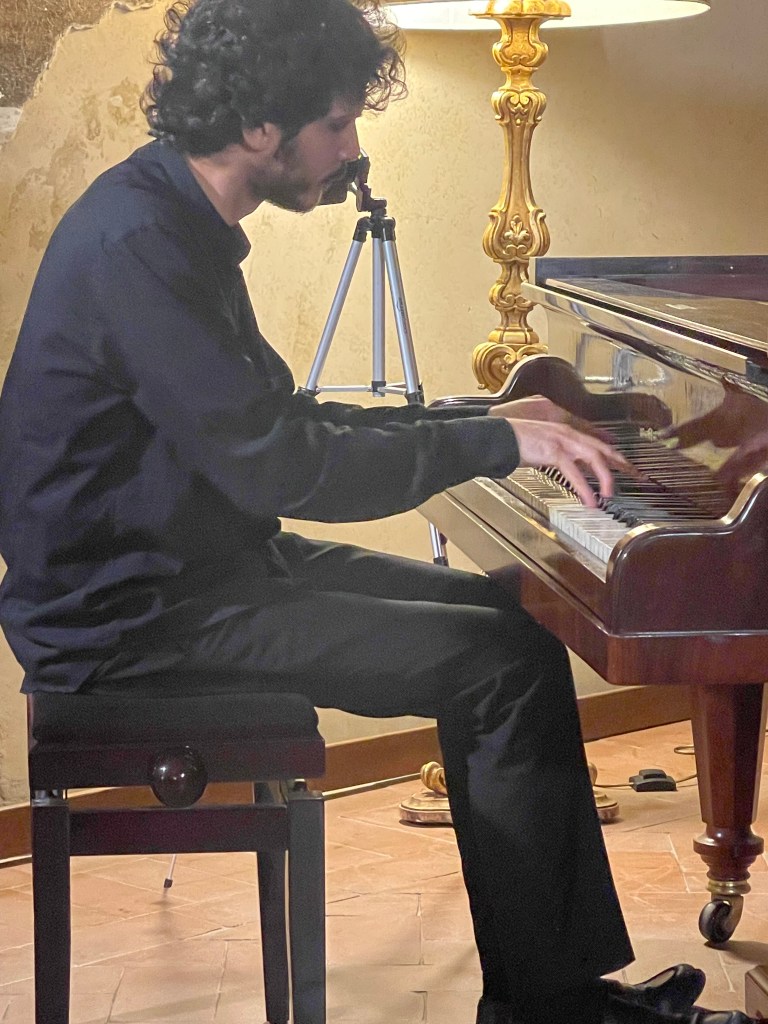
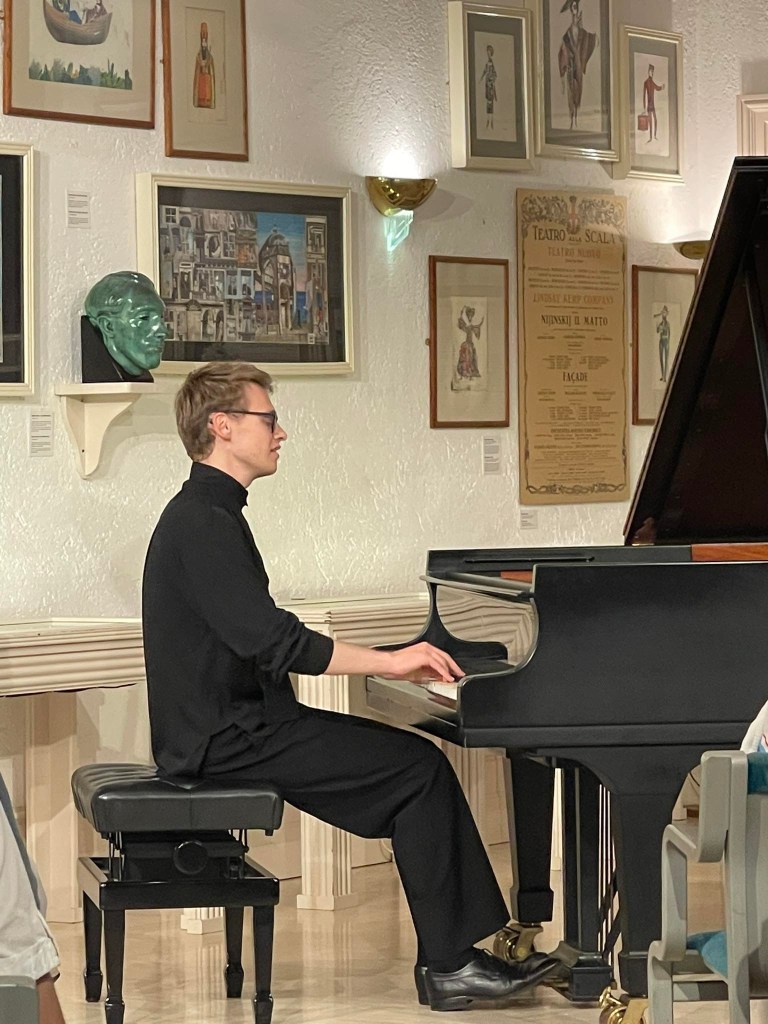
A Collard and Collard piano of 1889 that once stood in the Savoy Hotel in London but above all a masterly Sicilian pianist playing not only his own compositions but even more importantly the works of Nino Rota. Justly famed for his film scores but his classical compositions are practically unknown .
Alessio had already played Rota’s preludes recently in London
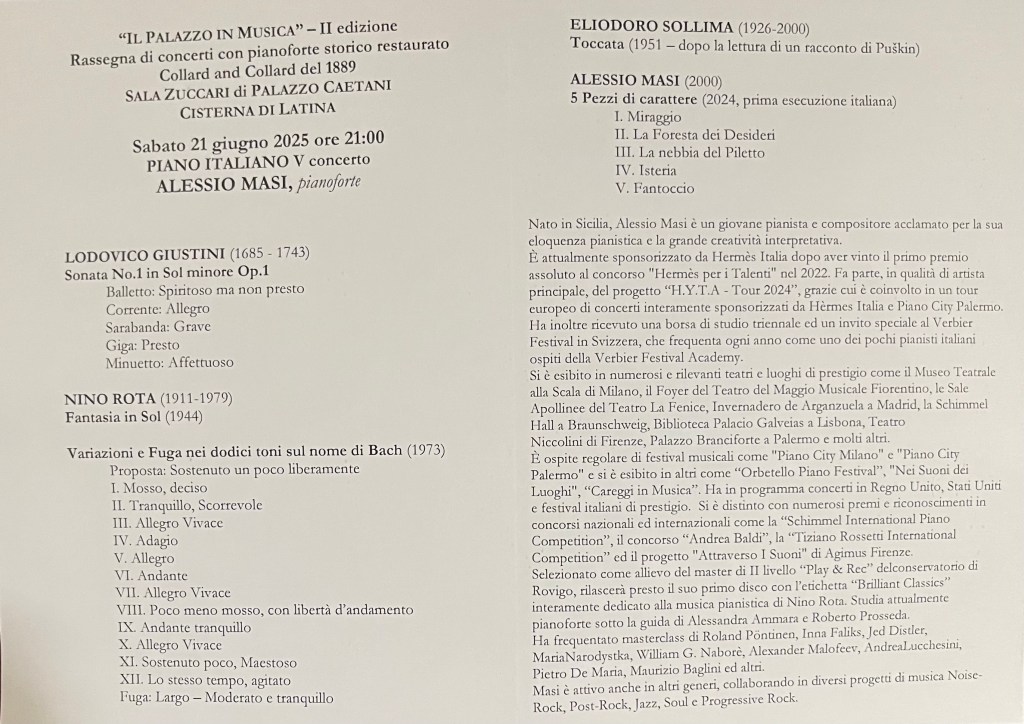
Now he played his masterly Fantasia of 1945 and the extraordinary Variations and fugue in twelve keys on the name of BACH of 1950 (?)
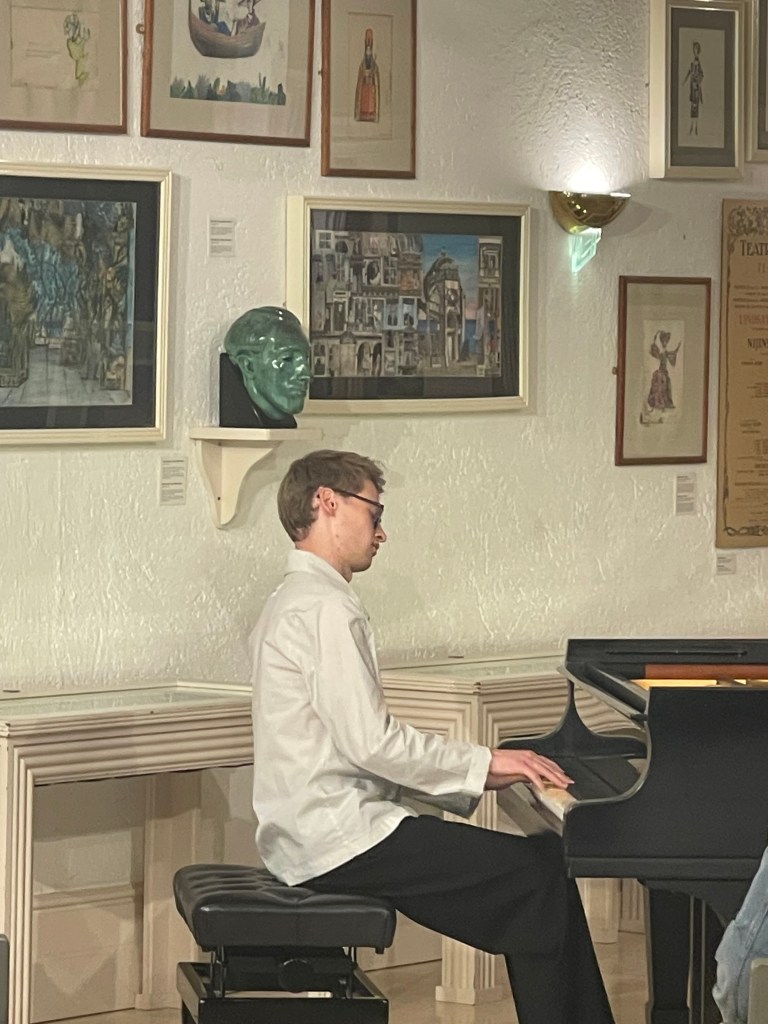
Opening his programme with an early Sonata by another unknown Italian composer of two centuries ago Lodovico Giustini. Played on this very mellow sounding single strung Collard and Collard it had a refined elegance of its age and was played with a rhythmic elan and great sense of character. A scintillating ‘joie de vivre’ to the ‘Corrente’ was followed by the expressive gently moving ‘Sarabande’ of subtle beauty.The dynamic drive of the ‘Gigue’ was diffused by the elegance and refined beauty of the ‘Minuet’. Played with great authority and conviction by a young man who listens carefully to all he does and with long agile fingers and an intelligent sense of style can bring this early work vividly to life and make one wonder why this composer is so unjustly neglected.
Two centuries later Rota was to pen his Fantasia in G during the war years.It is a tone poem of dramatic Lisztian power combining also the typical nonchalant simplicity of a composer who was also to be revealed as a supreme melodist. Alessio played it with fearless bravura and power combined with a poetic sensibility of a young artist who truly understands this very particular Italian landscape.
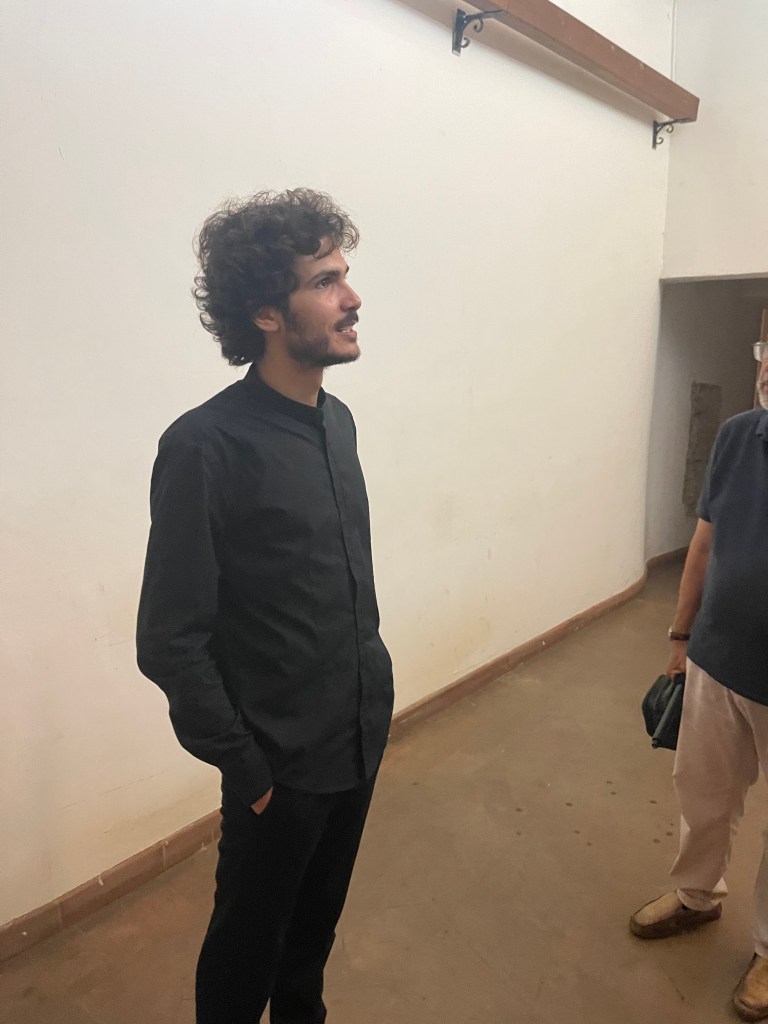
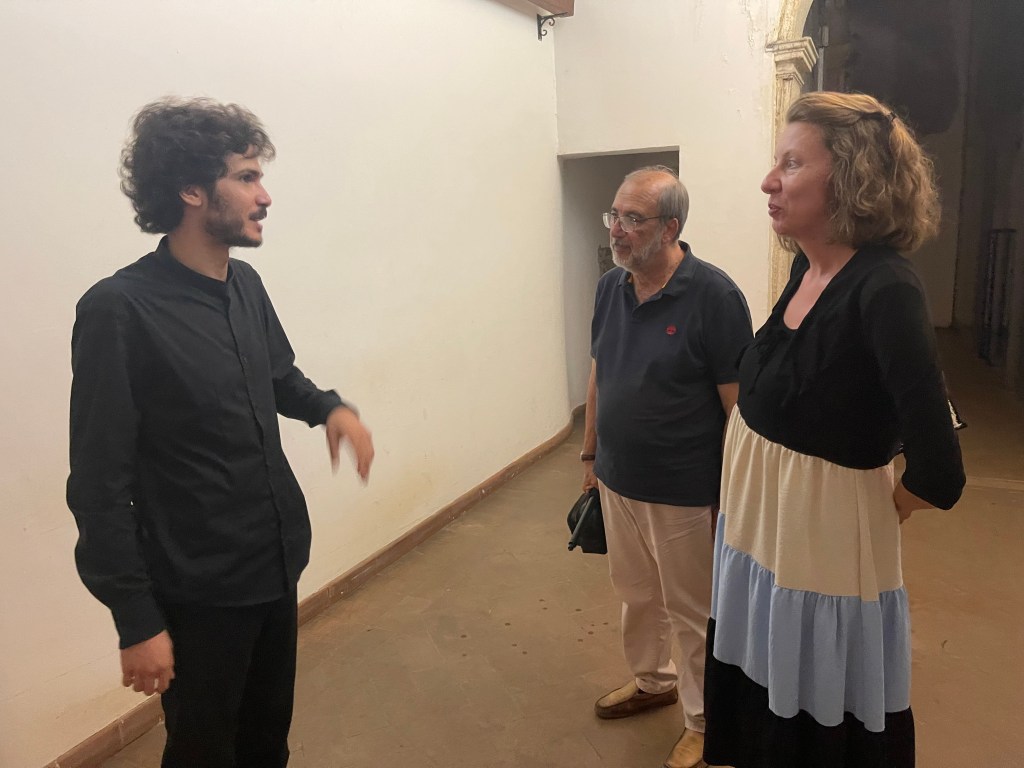
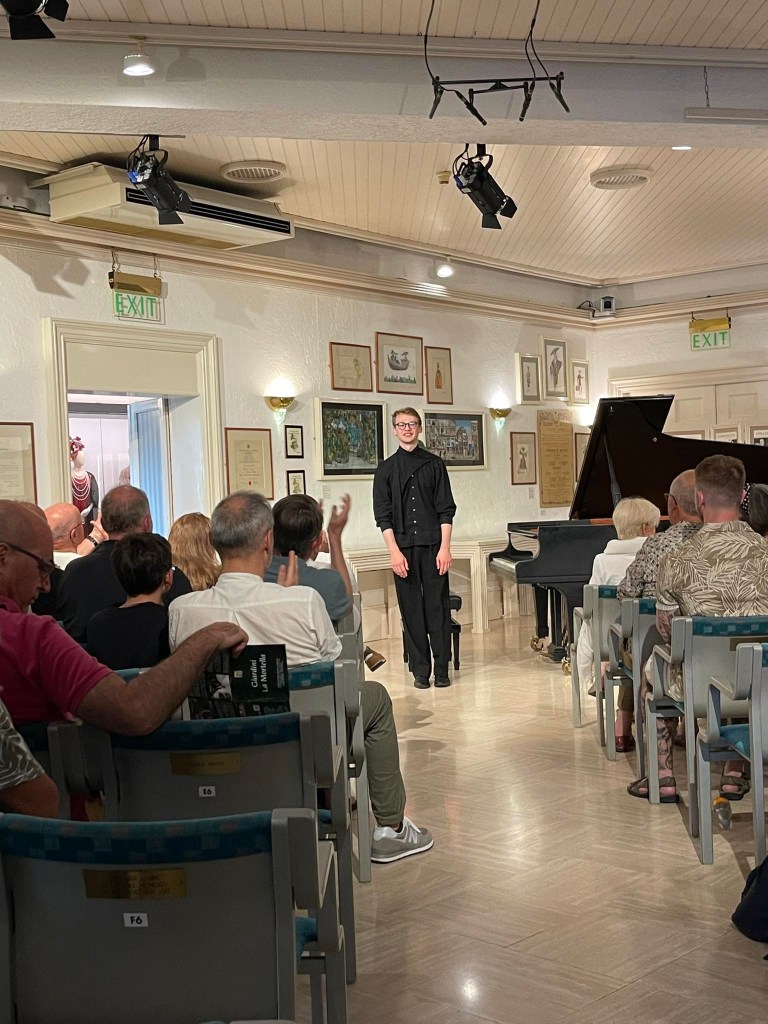
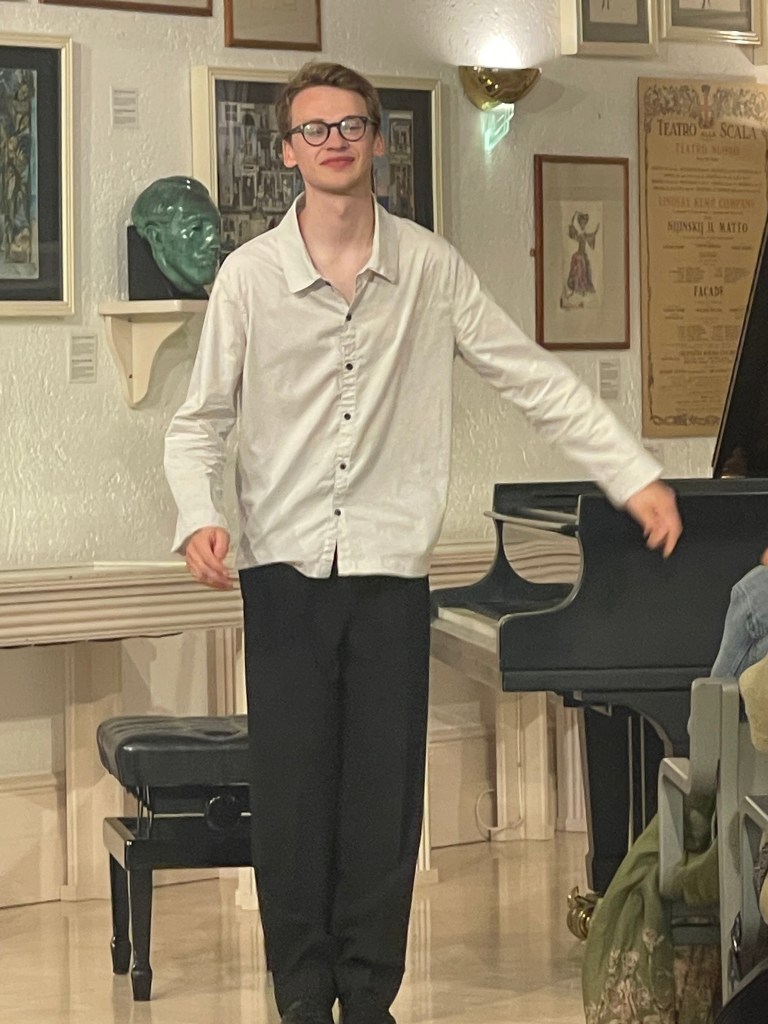
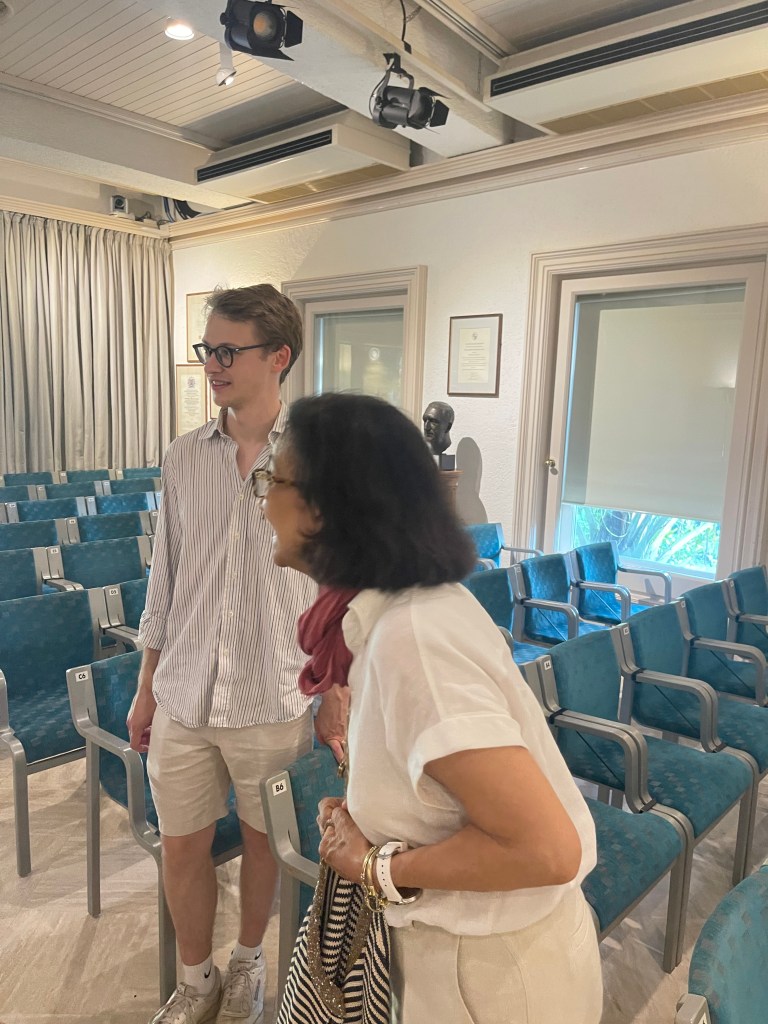
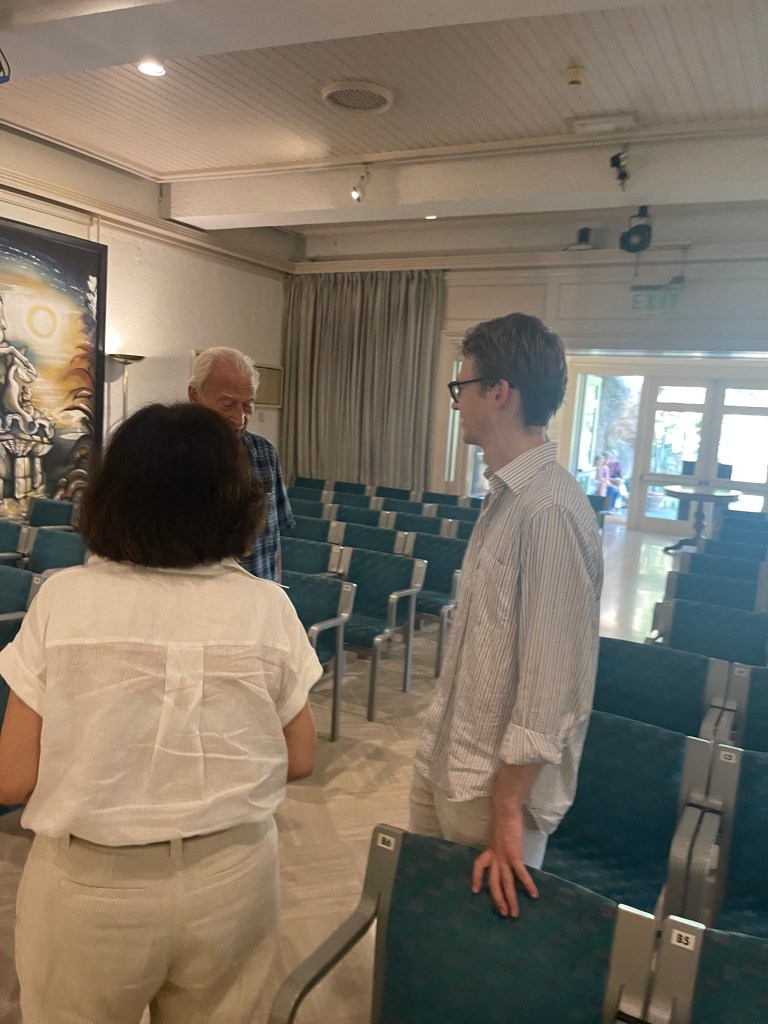
Alessio glad to share his thoughts with the public after the concert
I was particularly overwhelmed though by the Variations and Fugue on the name of Bach (written just four years before Rota’s death in 1979? Surely a printing mistake because they result in his complete works as from 1950, long before his Cinematographic fame). Like the Preludes that Alessio had played in London that so impressed Leslie Howard, I too was overwhelmed by such mastery and total commitment .These Variations came across as a real neglected masterpiece alternating virtuosity with poetic intensity and a writing that was so essential that the sense of line and shape was of a true master.
The Toccata by Sollima was a brilliant ‘tour de force’ played with mastery and impeccable technical perfection.
The Italian Premier of 5 pieces played by the composer were remarkable for their fluidity and sense of atmosphere. A haunting ‘La Foresta’ of floating sounds of lilting persuasion. ‘La Nebbia’ with its dissonant Debussian range of sounds were matched by the final insinuating jazz idiom as suggested by Debussy’s ‘Minstrels’. A single encore by Couperin : ‘Les Barricades Mystérieuses’ was played with beguiling insistence.
What an extraordinarily complete artist this young Sicilian is. Not only very complex works played without the help of the score but with an enviable mastery and dedication and he is also a remarkable composer in his own right. A quarter of a century spent well and it is time to spread the word.
Hats off Alessio you are a worthy heir to your teacher!
At only 25 this young man is busy recording the complete master works of Rota, many on CD for the first time. This evening presenting an eclectic programme that included his own work and that of another Sicilian Eliodoro Sollima. His daughter,Donatella Sollima is now an important part of the musical life of Sicily, being Artistic Director of the Amici della Musica di Palermo and an important jury member of the Trapani International Piano Competition Domenico Scarlatti
‘ Eliodoro Sollima was director and teacher at the Conservatorio of Palermo, where I completed my undergraduate studies in piano. He passed away in the year 2000, the same year I was born, and I found it meaningful to include in this programme works by two Sicilian composers who, in a way, have passed the torch from one generation to the next.’
‘The pieces I present are part of a project titled “Lascari”, inspired by memories from my childhood and teenage years spent at my family’s seaside villa. That place, surrounded by lush Mediterranean vegetation and the ever-present sound of the sea, continues to shape my imagination.’
‘ The musical language of Lascari draws on impressionist colours while embracing contemporary influences. Claude Debussy is a natural, almost unconscious, point of reference for me. I aim to continue his harmonic world, projecting it into modern territory with a touch of jazz idiom and current harmonic explorations.’
‘The title of each piece evokes an image, like a dreamlike glimpse of moments passed in Lascari: fragments of memory and imagination intertwined with the distinctly Sicilian landscape that marked my early years.’
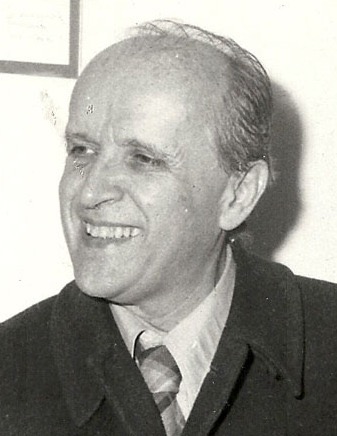
Giovanni Rota Rinaldi. 3 December 1911 Milan 10 April 1979 (aged 67) Rome
During his long career, Rota was an extraordinarily prolific composer, especially of music for the cinema. He wrote more than 150 scores for Italian and international productions from the 1930s until his death in 1979 – an average of three scores each year over a 46-year period, and in his most productive period from the late 1940s to the mid-1950s he wrote as many as ten scores every year, and sometimes more, with a remarkable thirteen film scores to his credit in 1954. Alongside this great body of film work, he composed ten operas, five ballets and dozens of other orchestral, choral and chamber works, the best known being his string concerto. He also composed the music for many theatre productions by Visconti, Zeffirelli and Eduardo De Filippo as well as maintaining a long teaching career at the Liceo Musicale in Bari, Italy, where he was the director for almost 30 years. His piano music is listed below :
Il Mago doppio-Suite per quattro mani (1919)
Tre pezzi (1920)
Preludio e Fuga per Pianoforte a 4 Mani (Storia del Mago Doppio) (1922)
Illumina Tu, O Fuoco (1924)
Io Cesserò il Mio Canto (1924)
Ascolta o Cuore June (1924)
Il Presàgio (1925)
La Figliola Del Re (Un Augello Gorgheggiava) (1925)
Ippolito gioca (1930)
Ballo della villanotta in erba (1931)
Campane a Festa (1931)
Campane a Sera (1933)
Il Pastorello e altre Due Liriche Infantili (1935)
La Passione (poesia popolare) (1938)
Bagatella (1941)
Fantasia in sol (1945)
Fantasia in do (1946)
Azione teatrale scritta nel 1752 da Pietro Metastasio (1954)
Variazioni e Fuga in dodici toni sul nome de Bach (1950)
15 Preludi (1964)
Sette Pezzi Difficili per Bambini (1971)
Cantico in Memoria di Alfredo Casella (1972)
Due Valzer sul nome di Bach (1975)
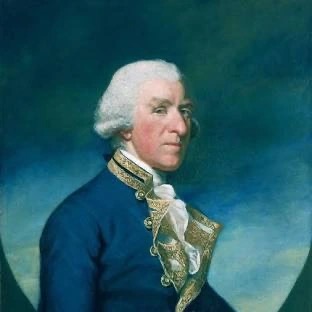
Lodovico Giustini (12 December 1685 – 7 February 1743) was an Italian composer and keyboard player of the late Baroque and early Classical eras. He was the first known composer ever to write music for the piano.
Giustini was born in Pistoia, of a family of musicians which can be traced back to the early 17th century; coincidentally he was born in the same year as Bach,Scarlatti and Handel . Giustini’s father was organist tat the Congregazione dello Spirito Santo, a Jesuit -affiliated group, and an uncle, Domenico Giustini, was also a composer of sacred music.
In 1725, on his father’s death, Giustini became organist at the Congregazione dello Spirito Santo, and acquired a reputation there as a composer of sacred music: mostly cantatas and oratorios. In 1728 he collaborated with Giovanni Carlo Maria Clarion a set of Lamentations which were performed that year. In 1734 he was hired as organist at S Maria dell’Umiltà, the Cathedral of Pistoia, a position he held for the rest of his life. In addition to playing the organ at both religious institutions, he performed on the harpsichord at numerous locations, often in his own oratorios.
Giustini’s main fame rests on his work 12 Sonate da cimbalo di piano e forte detto volgarmente di martelletti, Op.1, published in Florence in 1732, which is the earliest music in any genre written specifically for the piano. They are dedicated to Dom António de Bragança, the younger brother of King Joäo V of Portugal (the Portuguese court was one of the few places where the early piano was frequently played).
Sonate frontispiece, 1732.
These pieces, which are sonate da chiesa, with alternating fast and slow sections (four or five movements per sonata), predate all other music specifically written for the piano by about 30 years. Giustini used all the expressive capabilities of the instrument, such as wide dynamic contrast: expressive possibilities which were not available on other keyboard instruments of the time. Harmonically the pieces are transitional between late Baroque and early Classical period practice, and include innovations such as augmented sixth chords and modulations to remote keys.
James Parakilas points out that it is quite surprising that these works should have been published at all. At the time of composition, there existed only a very small number of pianos, owned mainly by royalty. He conjectures that publication of the work was meant as an honor to Giustini; it “represents a gesture of magnificent presentation to a royal musician, rather than an act of commercial promotion.”
While many performances of his large-scale sacred works are documented, all of that music is lost, with the exception of fragments such as scattered aria. Giustini’s fame rests on his publication of his set of piano pieces, although they seem to have attracted little interest at the time.
A short extract of an exchange that Benedetto and I shared during the month of May, when there was an explosion of competitions in Brussels, Fort Worth, Vienna, not to mention the enormous amount of less clamorous events in Trapani, Grossetto, Val Tidona, Thalberg/Naples etc:
‘However, my reason for not going to competitions is even deeper….. ………… I think that we should always praise the incredible efforts that these young artists are doing, whether we like them at this stage of their lives or not… going to competitions like those ones is surely something different from playing a nice recital, and we should always keep this in mind, especially when commenting their performances. This is why I keep so private about this, it is very easy to be misunderstood.’ B.L.
‘What a wonderful person you are exactly my sentiments but of course you are a great pianist and are making a great sacrifice for the sake of young musicians who should be praised and honoured for the sacrifice they are making no matter how they play. C.A.
‘I do remember pretty well, my efforts and my feelings while being in those competitions… those kinds of feelings may make you either more compassionate or vice versa, from what I have seen until now in several competitions. On the other hand, it is true that sometimes judging is not so easy’ B.L.
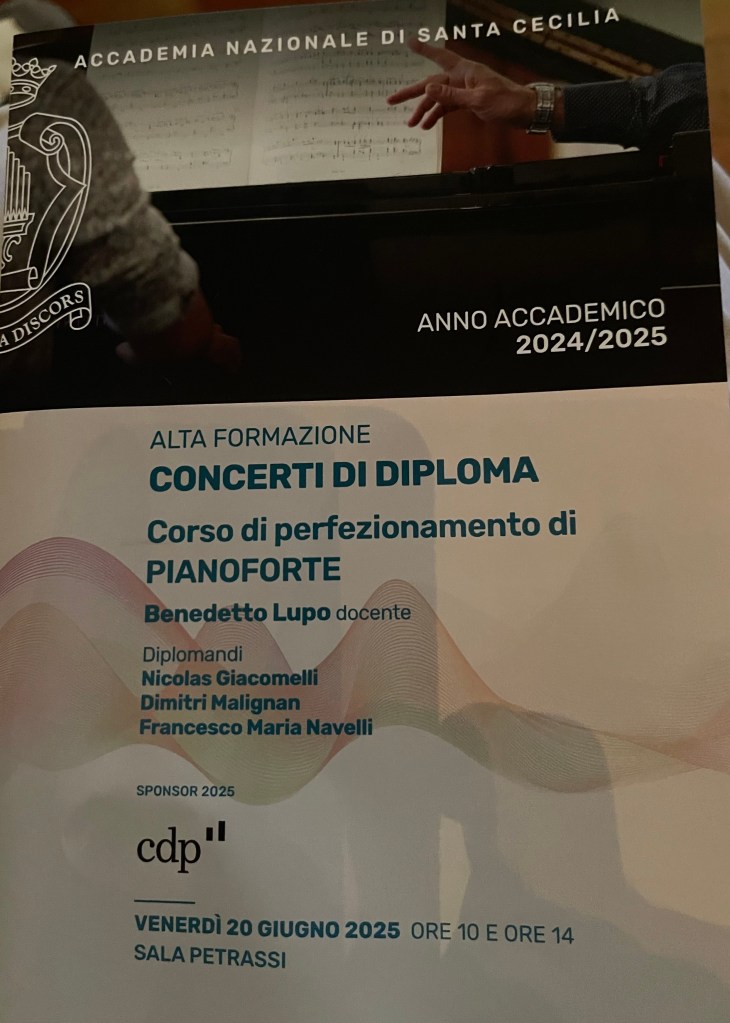
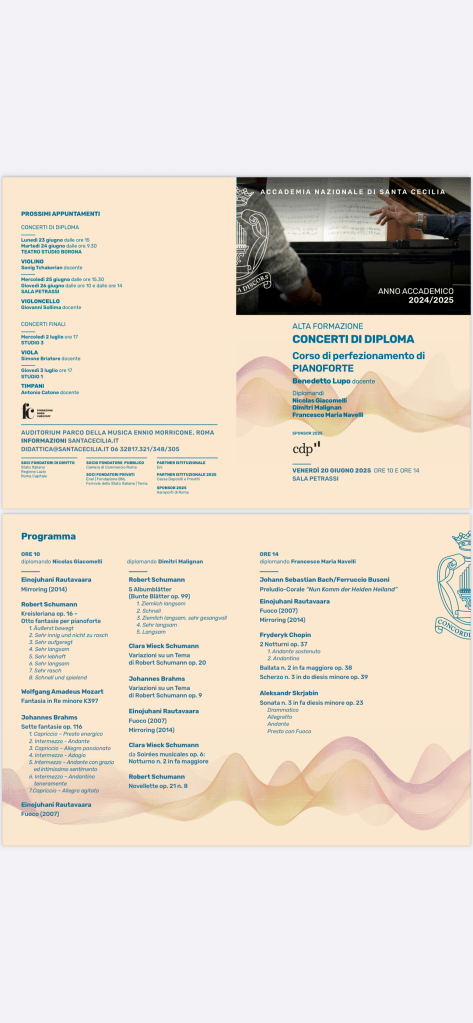
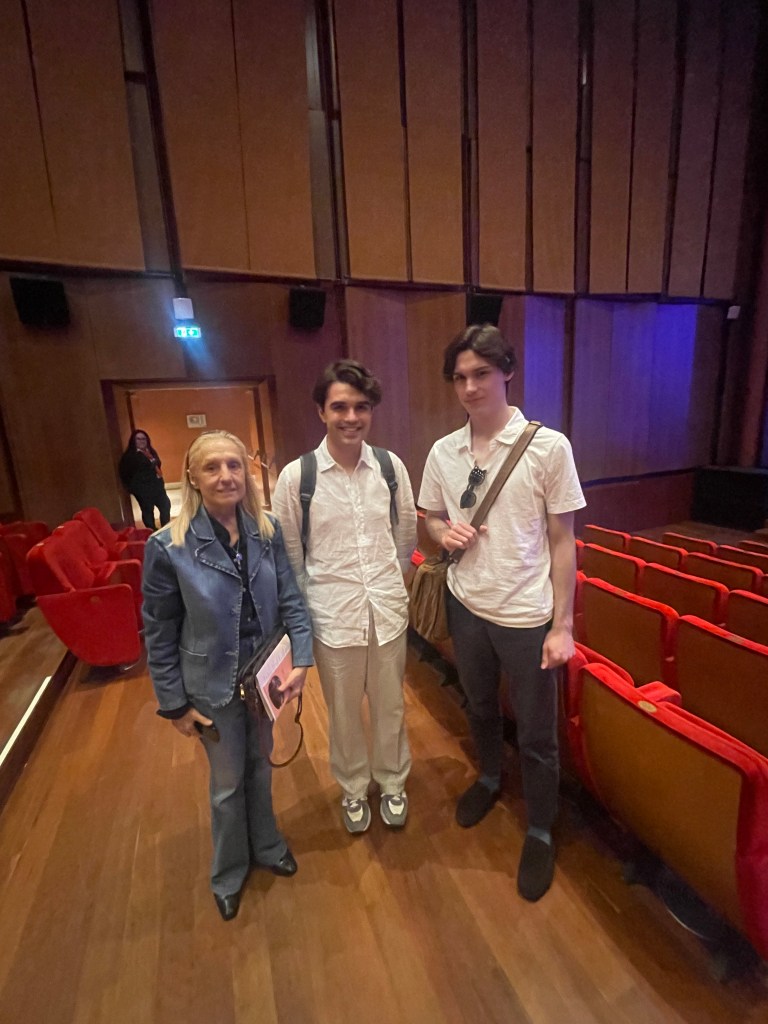
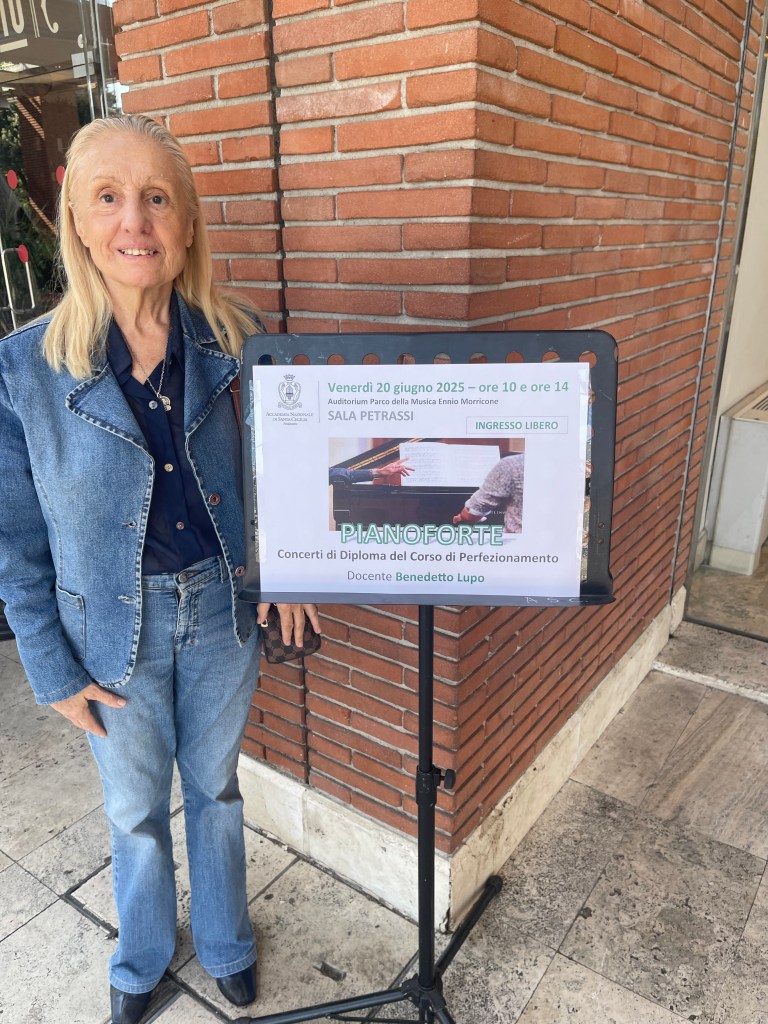
The extraordinary class of Benedetto Lupo at the Accademia Nazionale di Santa Cecilia has access to the complex of concert halls that make up the unique Parco della Musica. Benedetto is a remarkable performing musician with eclectic programmes and a discerning choice of concertos.He is indeed part of that elite group of musicians descendants of Liszt ,Czerny,Beethoven ,Haydn and Busoni where humility, honesty and integrity are hallmarks of interpreters not just entertainers.
Here in Rome are a remarkable group of pianists, united in every sense under the influence of Benedetto Lupo …………….many winners of important International Piano Competitions …..but realise that winning is an enviable achievement that may lead to momentary fame and even fortune, but is not necessarily the door to delving deep into the scores and finding treasures that are there only for the chosen totally dedicated few. The road of a true artist is hard to follow, but one that Benedetto, like the pied piper of ‘Hamelin’, is determined to tread and happy to allow anyone with the same dedication to follow.
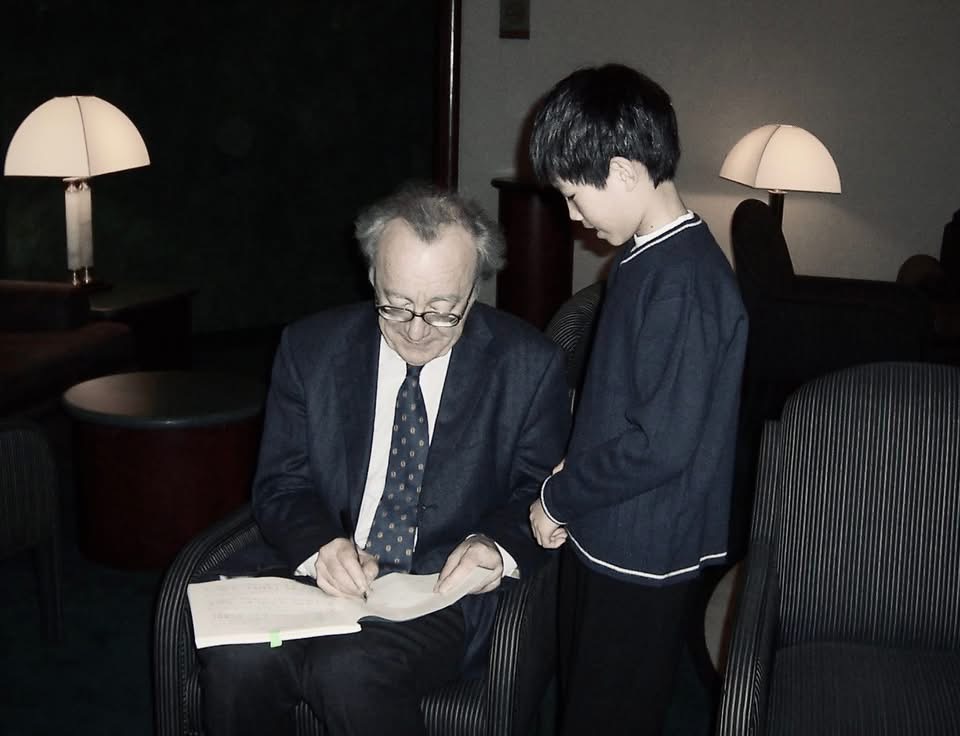
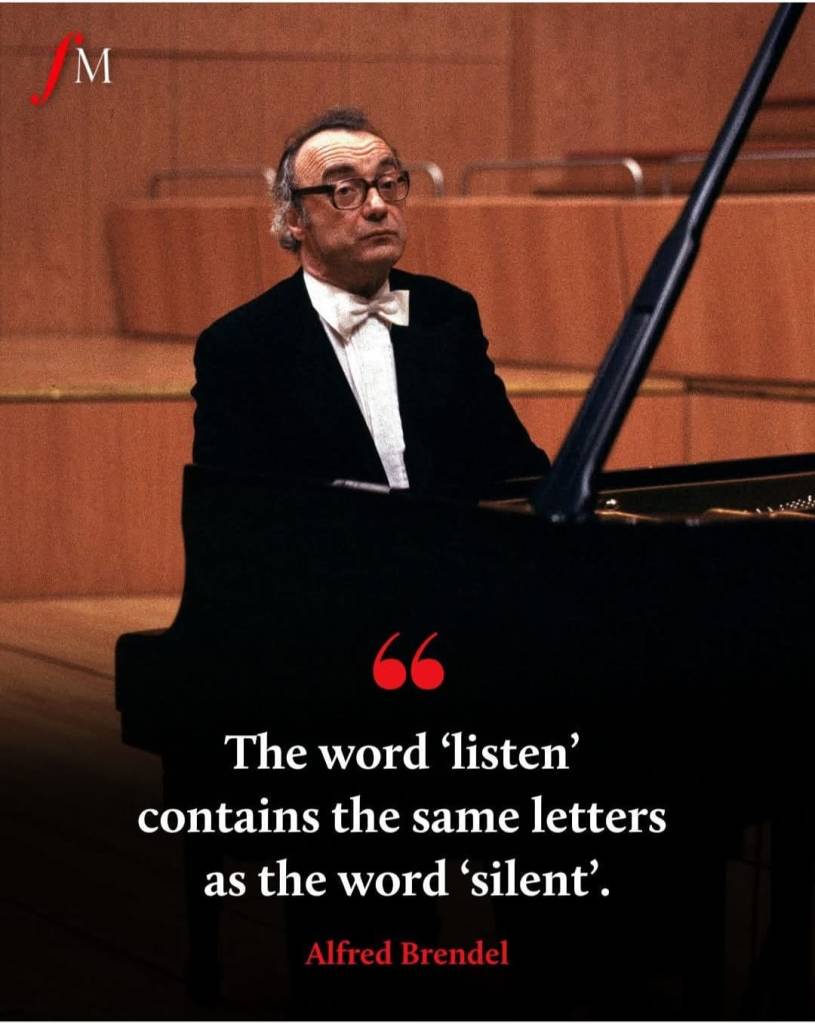
‘Alfred Brendel friend and admirer of Noretta Conci and John Leech,founders of the Keyboard Trust of which he was an esteemed trustee from the very first day of its creation.He was a pinnacle to which all those that believed in Music with a capital M would refer to for guidance and inspiration . From his very early recordings of Beethoven but also Balakirev Stravinsky and above all Liszt here was a musician of great musical integrity that one could trust. Together with Serkin and Pollini they were were an elite group of masters who could show generations what it means to be an interpreter of humility honesty and integrity . It is no coincidence that Pollini, Brendel and Michelangeli shared the same birthday Brendel will remain a beacon whose flame will illuminate and inspire musicians for generations to come.
Benedetto is also part of this elite group of great musicians as was Guido Agosti and Menehem Pressler. Benedetto writes: ‘ I will be forever grateful for his insights in a lot of repertoire, many of his recordings, especially the ones he did when he was younger, were truly exceptional… I remember that he was a good friend of Noretta’.
By coincidence Kasparas had played in a masterclass in Pinerolo with Benedetto Lupo a short while before.
‘ Kasparas has come this year to Pinerolo for my light course… a talented young pianist with a lot of potential and obviously a lot of work to do. Give him my best regards! He’s a very smart and nice person, sometimes I have been a bit harsh and demanding with him in Pinerolo, but it was just to have him reach an higher level of artistry.’
An eclectic musician, this young Parisian pianist chose a programme with a secret link between the works of Robert and Clara Schumann and Johannes Brahms. A trio that were indeed to suffer ‘the slings and arrows of outrageous fortune’. With the theme of the fourth of Robert’s Bunte Blätter being taken by Clara, first, and Brahms ,second, for a series of variations. The theme from the little Nocturne by Clara was incorporated into the last movement of Robert’s Fantasy op 17. Dimitri ended this carefully thought out programme with Robert’s masterly tone poem of the Novelette op 21 n. 8. There was remarkable beauty where the variations by both Clara and Brahms were played with beguiling mystery and poetic understanding. A beautiful jeux perlé where notes were turned into streams of magical sounds. There were passionate outbursts too especially in the Brahms but always with an architectural shape and masterly control. A stronger rhythmic propulsion from within especially in the more etherial variations would have made for a more varied palette of sounds. Brendel and Serkin showed us that the contrast of an almost brutal attack on the keyboard made the resolution even more unexpected and seductive. There was never a doubt of Dimitri’s technical mastery as was made abundantly clear from his astonishing performance of the two set pieces : ‘Fuoco’ and ‘Mirroring’ by the Finnish composer Einojuhani Rautavaara.
Nicolas Giacomelli placing the two set pieces at the beginning and end of his programme that included Schumann Kreisleriana and Brahms Seven Fantasie’s op 116. Playing the two set works without the score with total commitment and remarkable poetic fantasy showing a real understanding for a world tainted by Ginasterian gymnastics but also beguilingly insinuating sounds. The Mozart Fantasy in D minor was a little too slow and deliberate for the improvisation that it obviously is.Played with great poise and beauty of sound adding some delicate embellishments tastefully but in my opinion unnecessarily .The cheeky one in the left hand almost had me smiling out loud – I loved it almost as much as he obviously did.
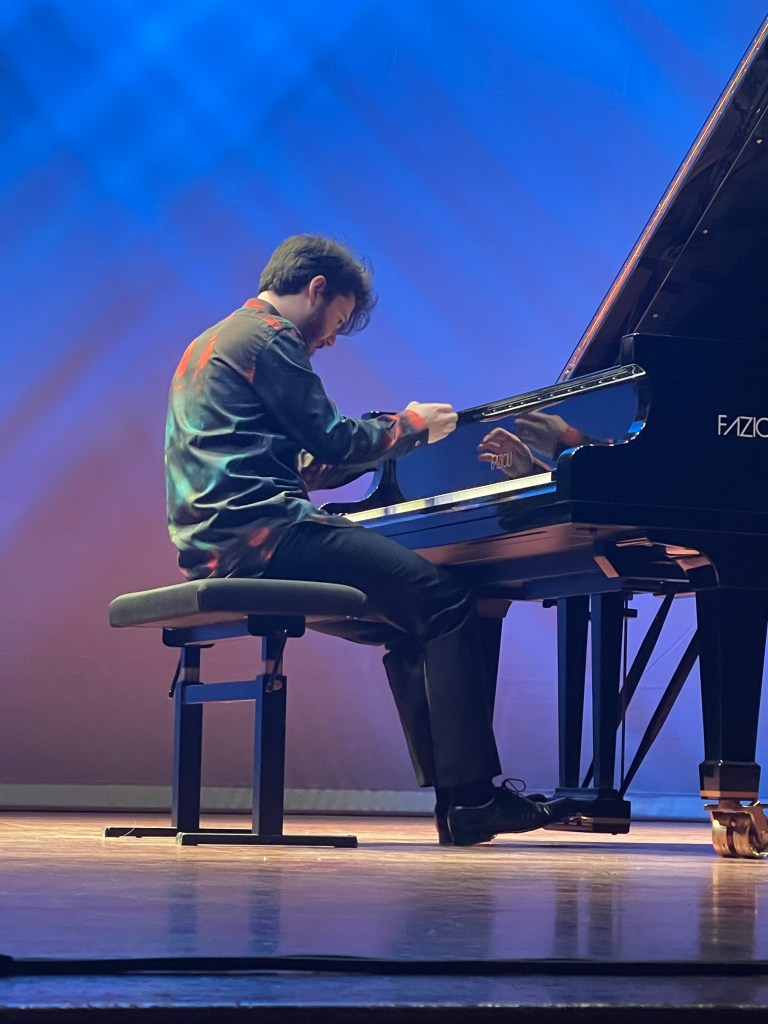
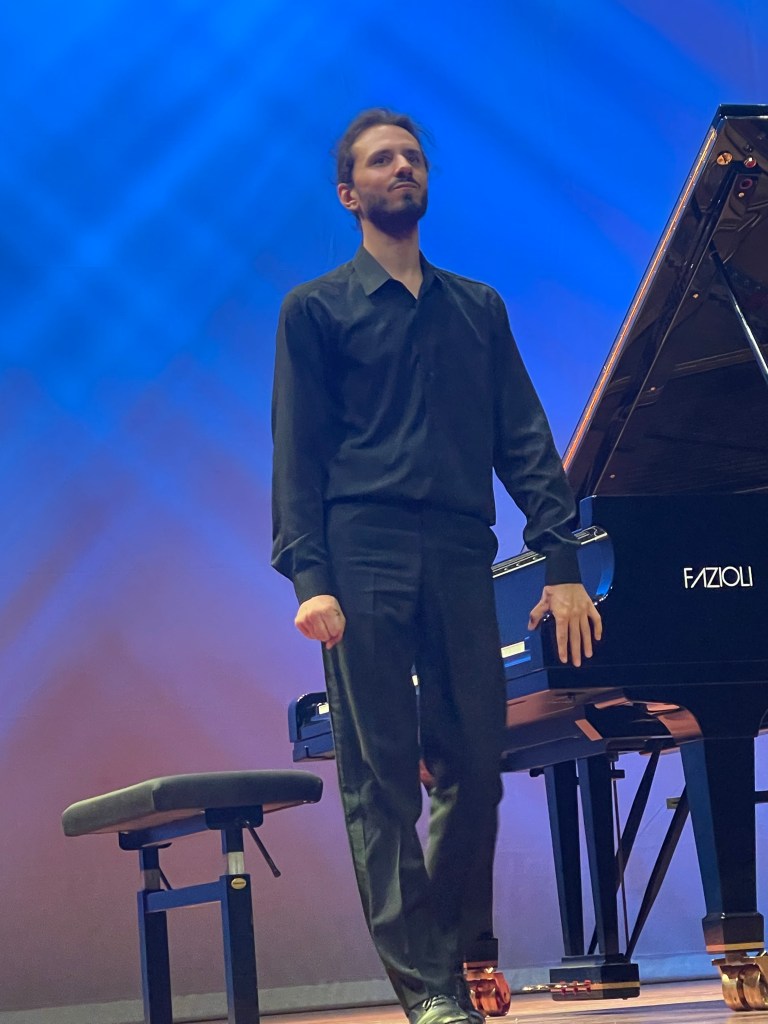
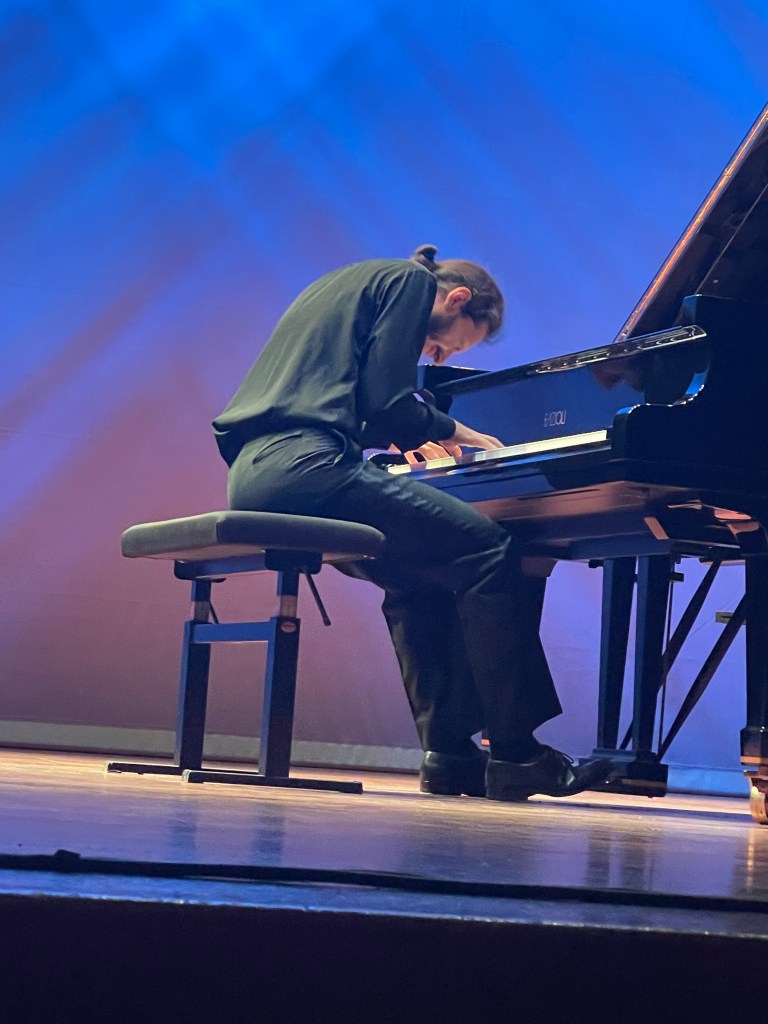
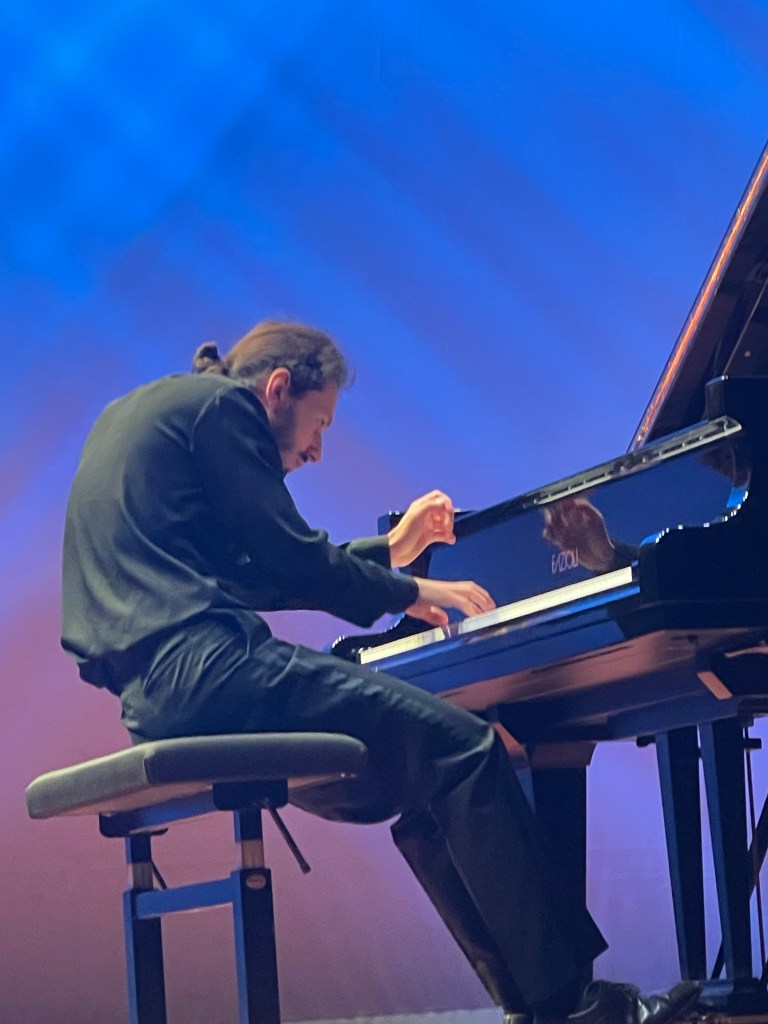
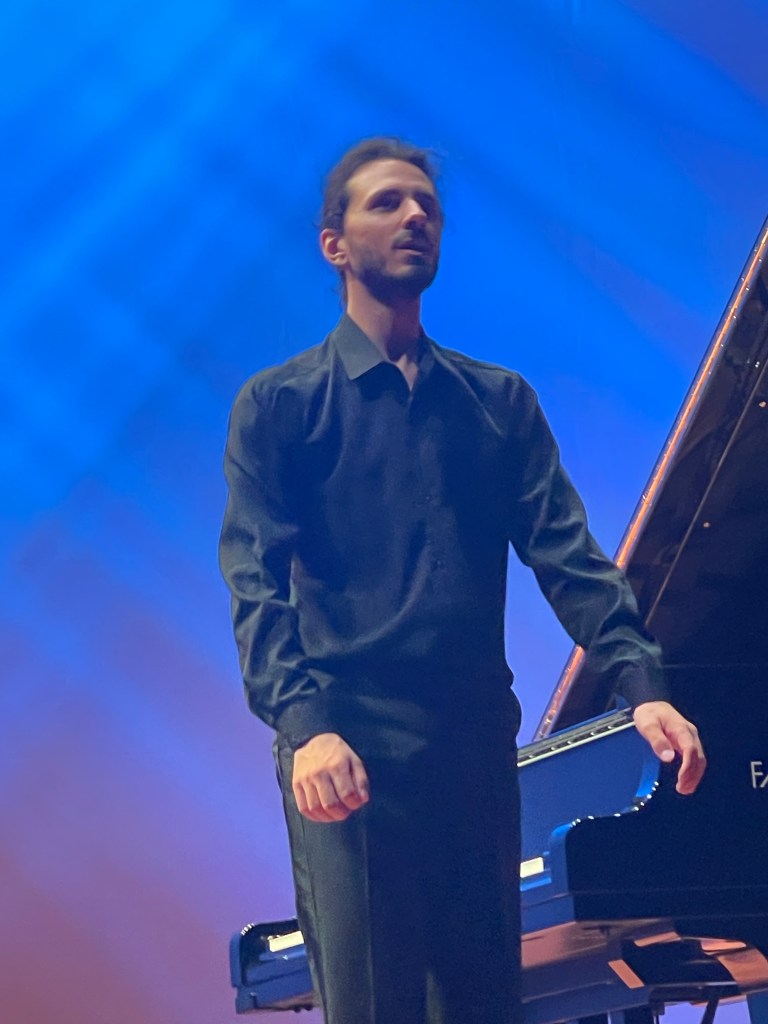
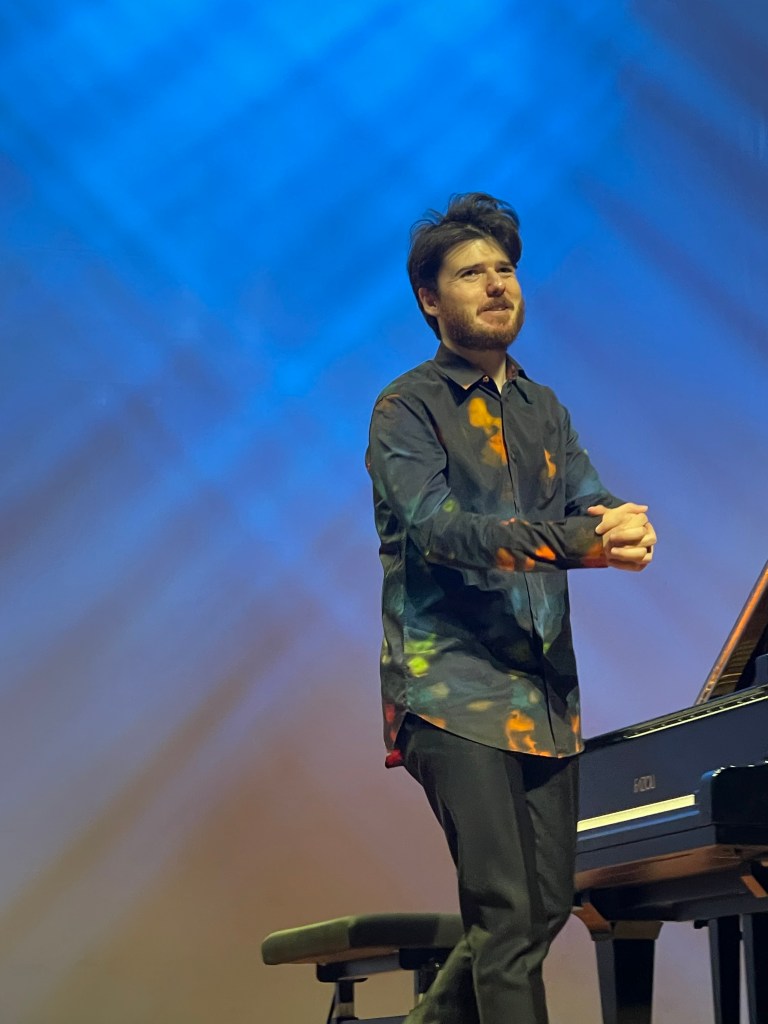
Many beautiful things in the Schumann but I found he had not judged the acoustic and a lot of the faster passages were played often too fast to allow any breathing and were rather hazy and indistinct. It was however exactly this orchestral use of the pedal that illuminated his Brahms which I have rarely heard played with such sumptuous rich sound and real Brahmsian drive. As I said to him afterwards ,as the lads were off to have a sandwich together , you made that Fazioli sound like a sumptuous Bosendorfer, which is no mean feat !
Two fine artists ready now to take their first steps on the long and arduous ladder that will bring them great artistic satisfaction, They have been shown the road for their search for a poetic Nirvana that they may never reach but will certainly glimpse ever nearer, as their communication with the public becomes ever more profound (In Buddhism, Nirvana (or Nibbana) is the ultimate goal, representing the end of suffering and the cycle of rebirth (samsara) . It signifies the extinguishing of greed, hatred, and ignorance, leading to liberation and a state of profound peace and freedom. Nirvana is not a place, but a state of being, often described as bliss, security, and unconditioned.
Martha Noguera with Alfredo Conte and Jaeden Dzurko
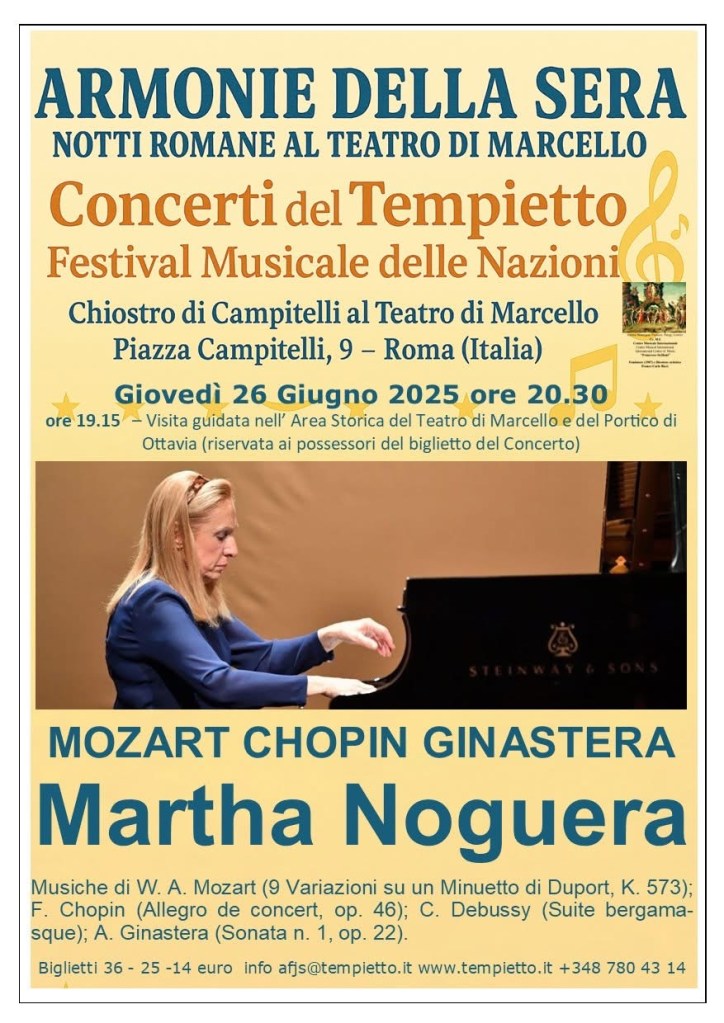
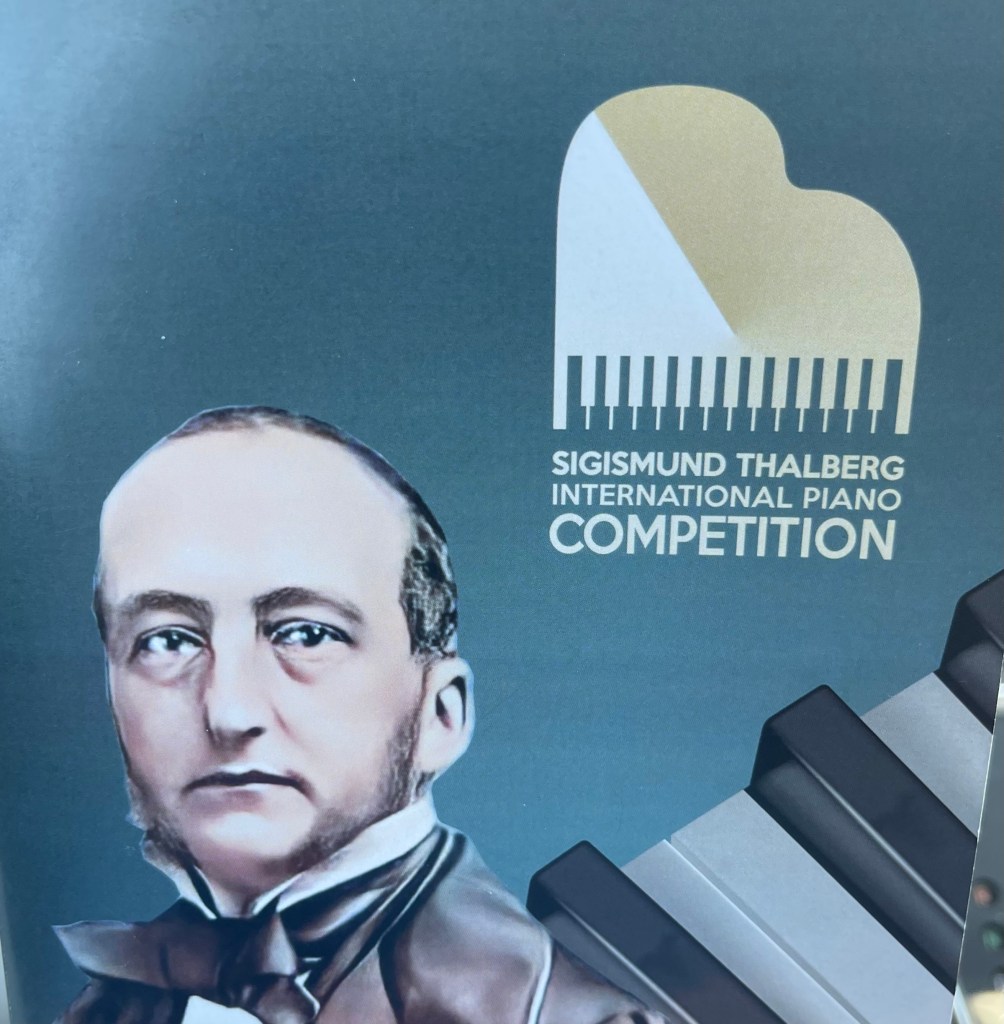
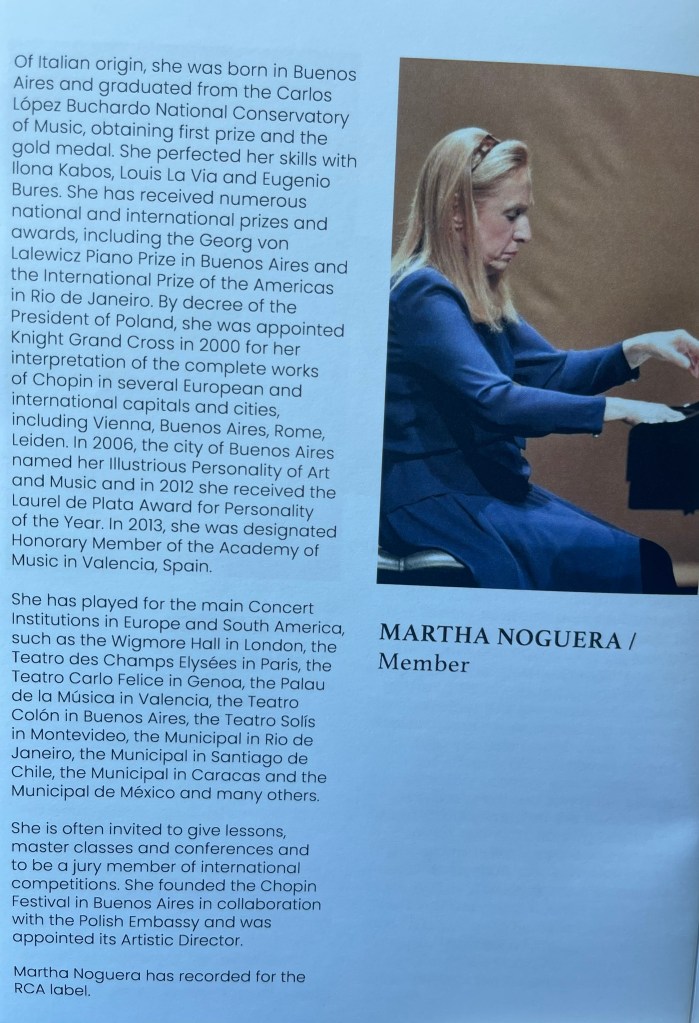
Martha Noguera the veteran 84 year old Argentinian pianist has just been on the jury on 21/24 May in Naples at Francesco Nicolosi’s Sigismund Thalberg International Piano Competition.This was followed by a recital in Warsaw and a performance of the two Chopin Piano concertos in the Opera House in Lodsz. Her festival Chopiniana in Buenos Aires is now in its tenth year.
Einojuhani Rautavaara 9 October 1928 Helsinki Finland – 27 July 2016 ( aged 87) Notable works include Piano Concerto n. 1 Cantus Arcticus and Symphony n. 7 (Angel of Light) In the performance notes of his 1999 piece Autumn Gardens , Rautavaara writes, “I have often compared composing to gardening. In both processes, one observes and controls organic growth rather than constructing or assembling existing components and elements. I would also like to think that my compositions are rather like ‘English gardens’, freely growing and organic, as opposed to those that are pruned to geometric precision and severity.” He has also described that he would first pick the instrumentation of a piece, where the music could then “grow organically” as a concept.
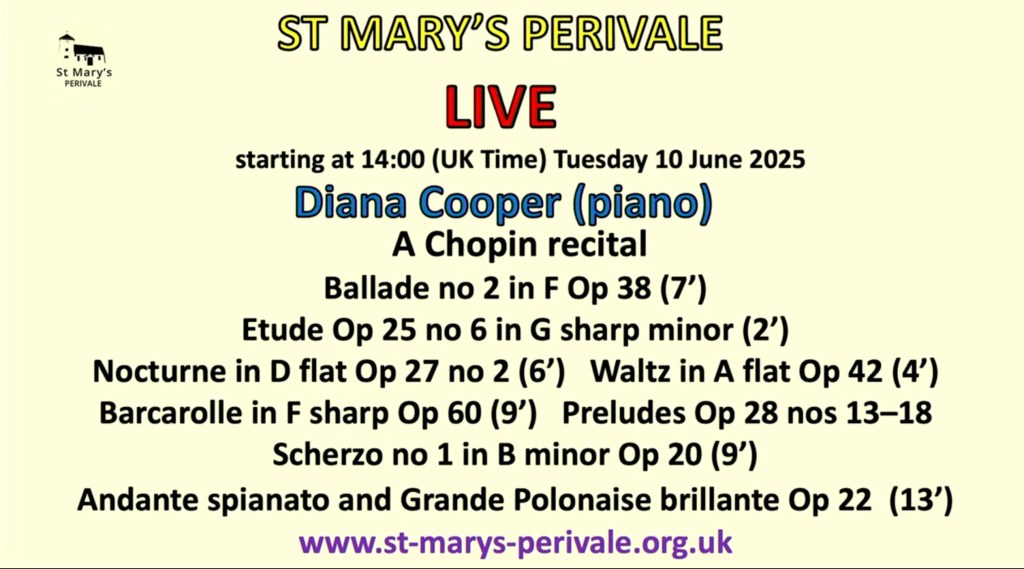
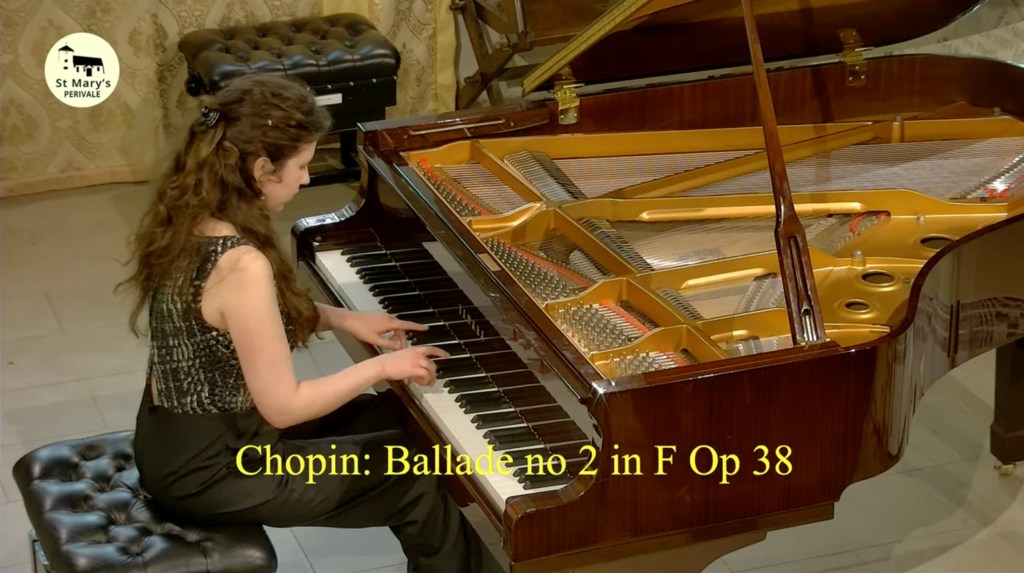
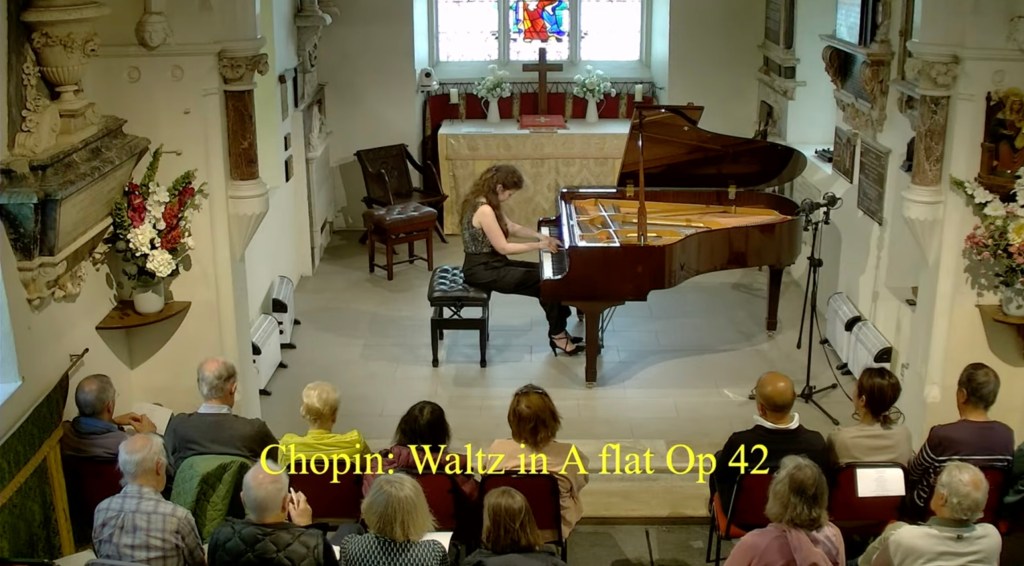
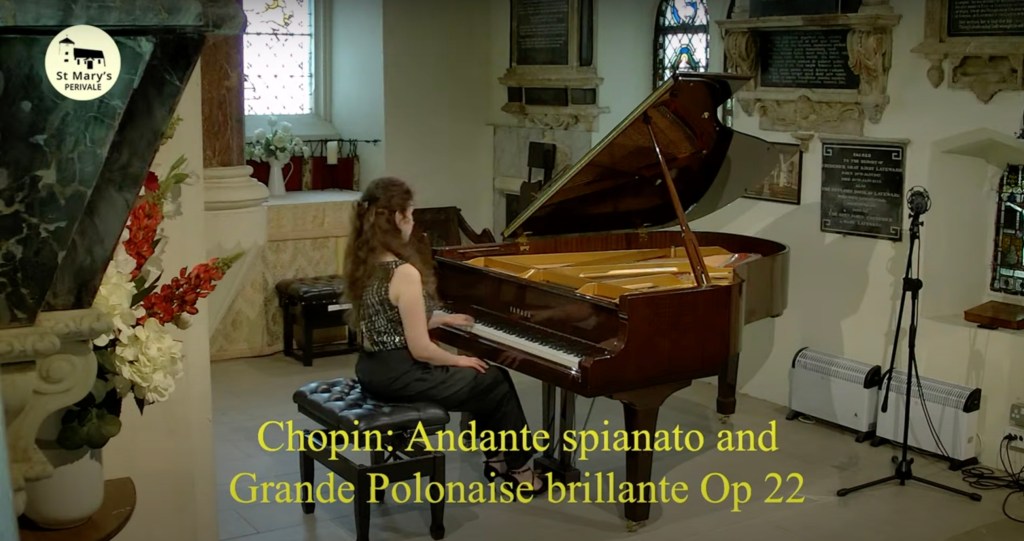
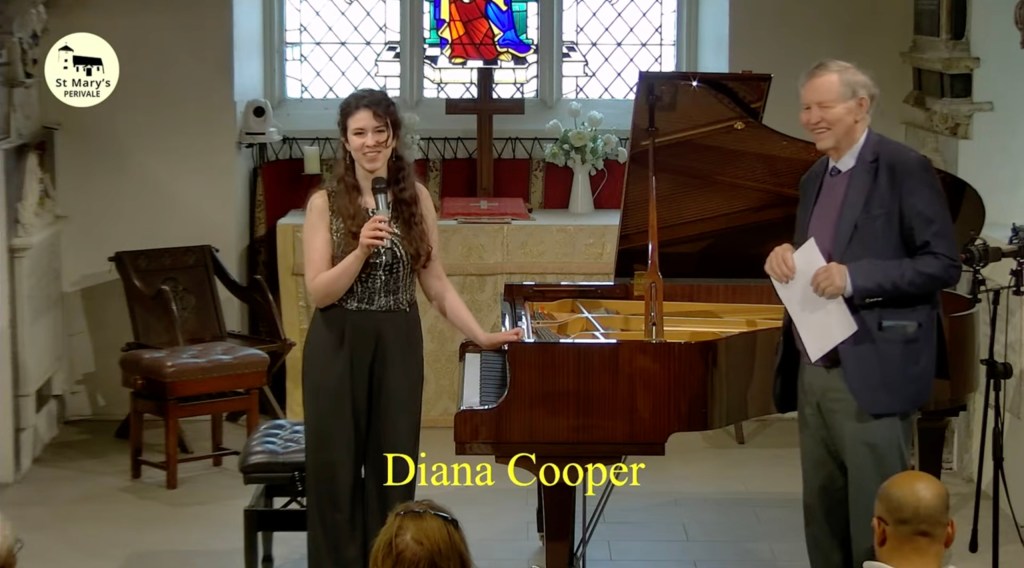
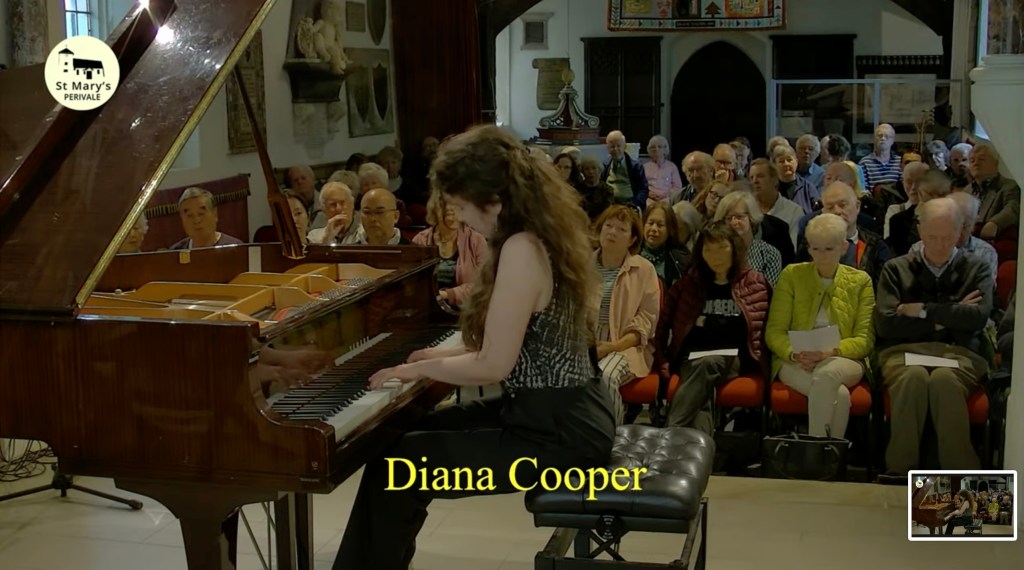
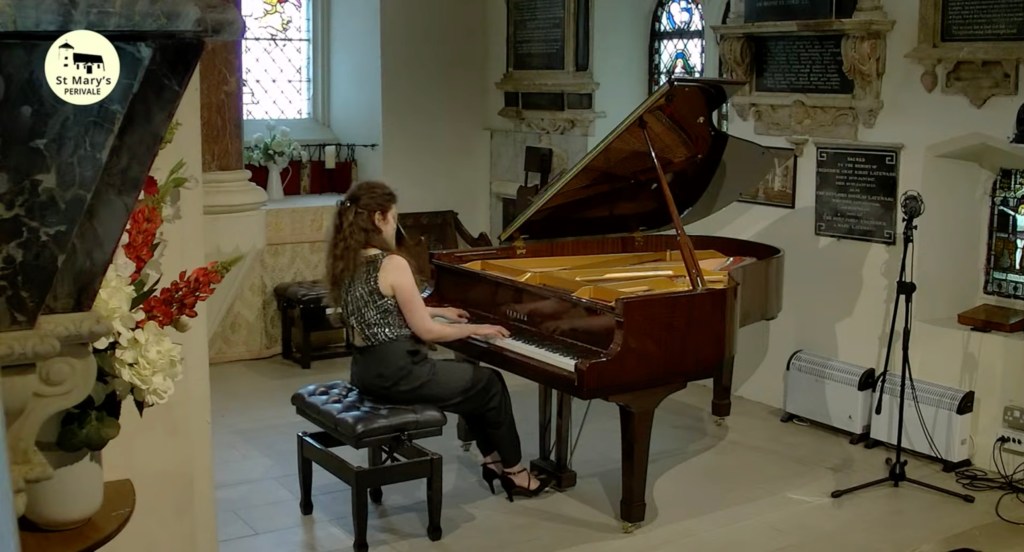
More Chopin playing from Diana Cooper of refined good taste and aristocratic nobility. She has a rare ability to play with a simple purity, untainted by tradition, but dictated by intelligence and scrupulous attention to what the composer indicates in the score. A gently flowing second Ballade that was beautifully shaped and with a continual forward movement like riding on a wave of sound. The dramatic outbursts were played with passion and precision, but everything she played seemed to sing with such vibrant poetic beauty. Played with some very delicate phrasing but always under a roof of great architectural shape of a work that in lesser hands can sound so sectionalised.
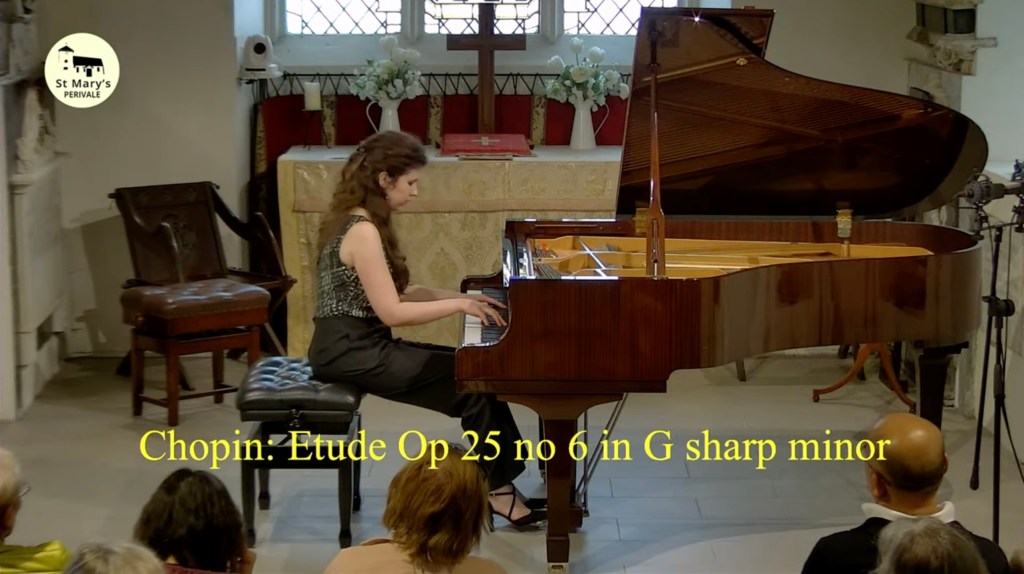
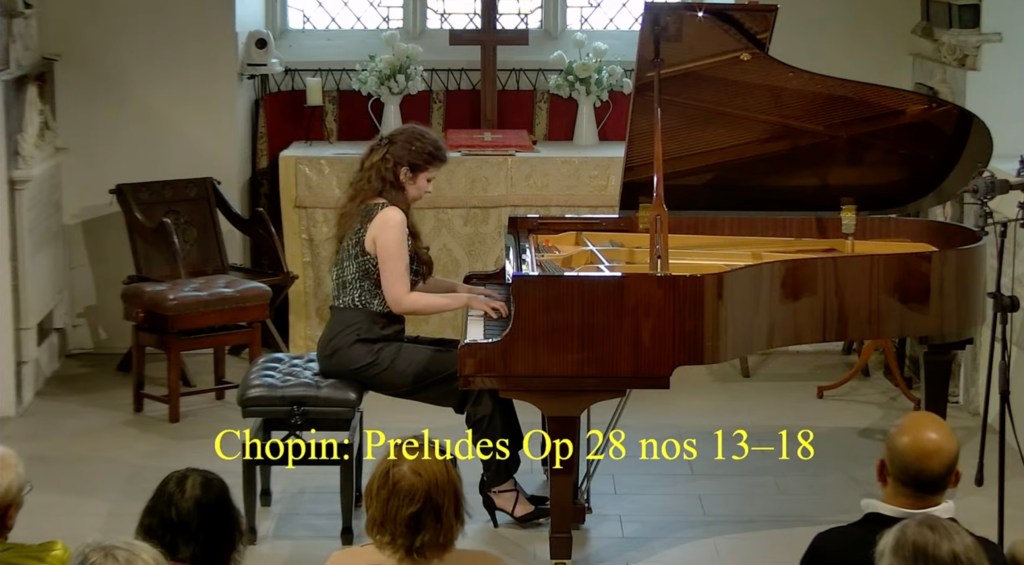
Musicianly playing also of one of Chopin’s most technically difficult studies that in Diana’s hands was a miniature tone poem of fleeting radiance. A remarkable technical command in this and in the treacherous B flat minor Prelude op 28 n.16 that was played with glowing brilliance but where more attention to the bass would give a richer sound and allow more freedom and subtle phrasing. However it was a remarkable ‘tour de force’ of a true musician.
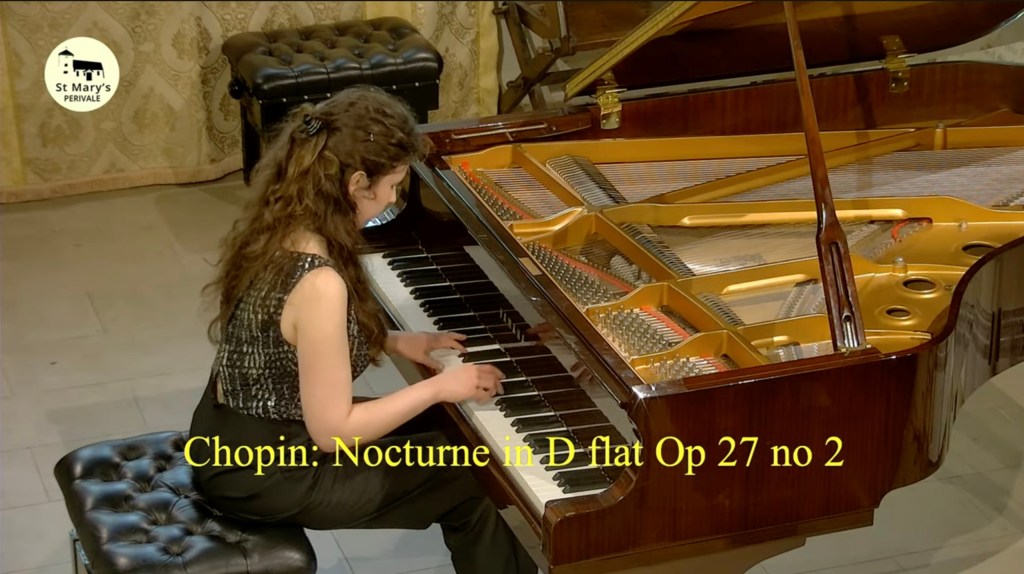
I found the D flat nocturne a little too slow to allow the beautiful bel canto to really take wing in one breath ,but it was played with a beautiful sense of balance and radiant glowing beauty. Refined poise and elegance was a hallmark of Chopin playing of ravishing beauty and allowed her to play the final bars with a kaleidoscope of beautiful sounds that glowed like jewels from within especially at this luxuriant tempo.
There was a harmonic richness to Chopin’s knotty rhythmic Waltz op 42 which she imbued with charm and brilliance, and a final few bars of exhilaration and excitement, with its abrupt slamming of the door.
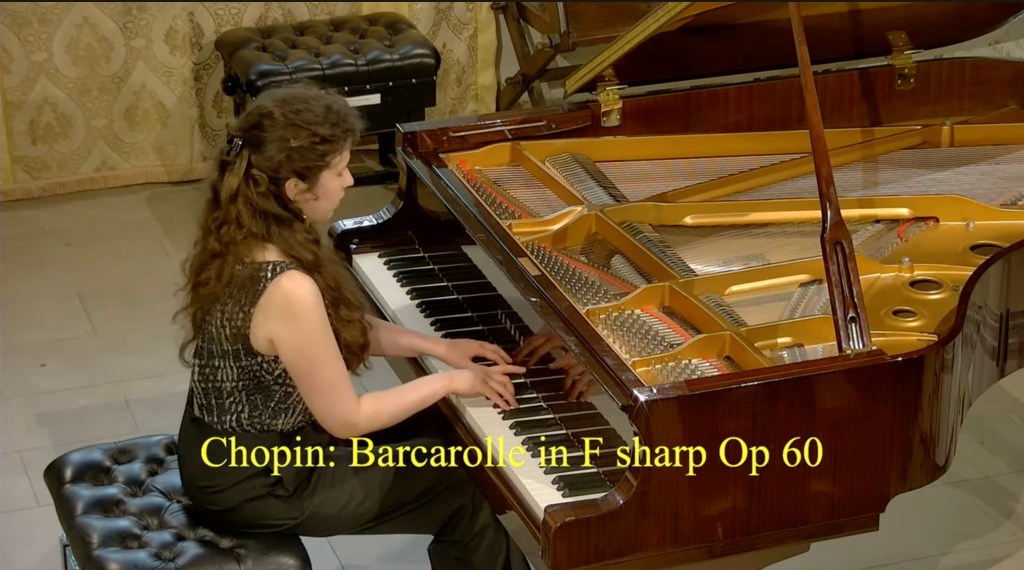
The Barcarolle op 60 is surely one of Chopin’s most beautiful creations, a continuous song from beginning to end. From the opening deep C sharp in the bass that just opens up the resonance of the piano without any hardness there is a continual crescendo of radiance and beauty which leads to the final passion and aristocratic nobility that Diana played with rare control and understanding .Even the magical final bars ,so admired by Ravel, were part of this great song that finished as it began with octaves of radiance and purity from a sensitive artist, who had understood the extraordinary architectural shape and poetic content from this Genial master of the keyboard.
The thirteenth prelude is one of the most beautiful creations of Chopin, similar in may ways to his D flat Nocturne. It is more subdued and less turbulent, where the middle episode is an explosion of exquisite breathtaking beauty. Diana played it with quite extraordinary poise and mastery having opened this group of six preludes with this whispered magic. Ending with the dynamic cadenza of the 18th Prelude, played with dynamic drive and passionate insistence, just as she had the notorious 16th .The fourteenth was a mere breath of wind blowing over the graves that Diana played with remarkable control of the pedal before allowing the fifteenth, the ‘Raindrop’ prelude , to enter with glowing simplicity. Bringing a subtle menace to the central episode, with a masterly build up of sonority without ever allowing the sound to become hard or brittle. It was the same fullness without hardness that she brought to the beautiful A flat prelude, that with fluidity and simplicity, she was able to transform from a simple prelude into a tone poem of vibrant beauty.
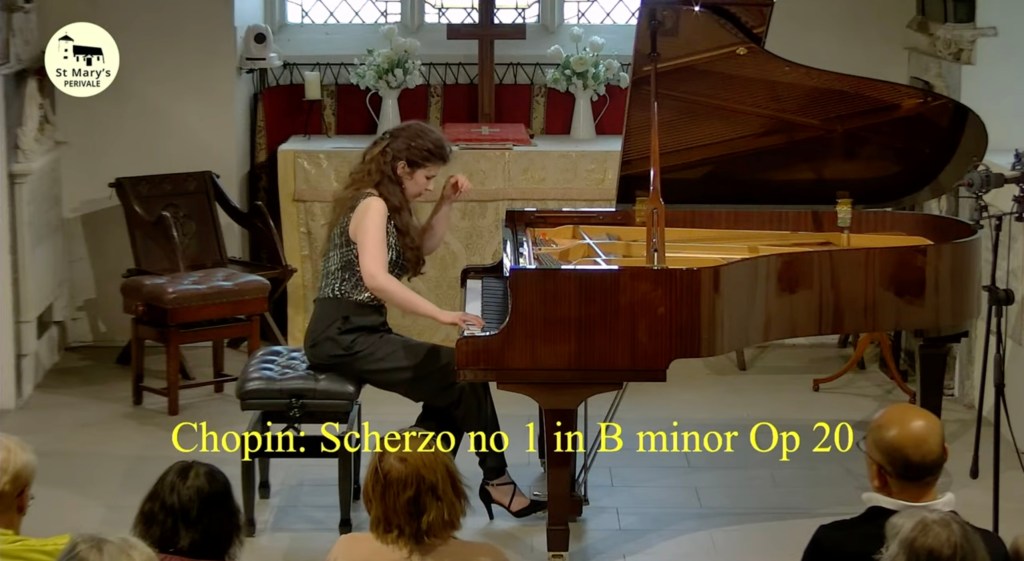
Dynamic drive of passion and fleeting brilliance brought this first scherzo vividly to life. A ‘jeux perlé’ that had such rhythmic tension and that lead so naturally to passionate outbursts or romantic effusions. There was a simplicity and beauty to the Polish Christmas Carol that Chopin incorporates into the first of his four scherzi. A coda of remarkable precision but also of passionate exhilaration and dramatic tension.
The Andante Spianato was played with a superb sense of balance and poise with a beguiling flexibility of aristocratic good taste. It was the same radiance and beauty that she was to bring to the encore of the Berceuse that followed the ovation that she received after a breathtaking account of the Grande Polonaise brillante. Suddenly Diana seemed to unleash her control and poise and let her whole body command the stream of notes that Chopin fills this early show piece with. A work that was to astonish the Parisian Salons of the day and had Schumann declare ‘Hats off, Gentlemen, a Genius’. Chopin had arrived and as Diana showed us today is here to stay illuminating and enriching our lives for ever more.
Winner of numerous awards including 1st Prize at the Brest Chopin Competition, 1st Prize at the Halina Czerny-Stefanská International Competition in Poznan (Poland) and 1st Prize at the Concurso Internacional de Piano de Vigo (Spain), Diana Cooper has been invited to perform in various venues and festivals in France and abroad, including the Nohant Chopin Festival, the Festival Chopin à Paris, the Salle Cortot, the Hrvatski dom Split in Croatia, Chopin’s manor in Zelazowa Wola in Poland, the Teatro Filarmónica de Oviedo… In 2023 and 2024, she was selected to take part in the project Un été en France avec Gautier Capuçon, for which she performed solo and chamber music in several open-air concerts across France, including in Corsica. She was invited in 2018 to take part in the radio program Générations Jeunes Interprètes on France Musique and, in 2023, performed as a trio in the television programme Fauteuils d’orchestre, broadcast on France 5. In 2024 she was chosen to take part in a masterclass with Yuja Wang, filmed and produced by the BBC for the art series Arts in Motion. She appeared with several orchestras including the Orkiestra Symfoniczna Filharmonii Kaliskiej, in Poland, performing Chopin’s 1st concerto under the baton of Maciej Kotarba. Born in Tarbes (France), Diana is a graduate of the Conservatoire de Paris (CNSMDP), the Ecole Normale de Musique Alfred Cortot and the Royal College of Music in London. Her main professors include Norma Fisher, Philippe Giusiano, Rena Shereshevskaya, and Marie-Josèphe Jude. Diana has recently recorded her first CD, featuring works by Haydn, Chopin and Ravel, after winning 1st Prize in the Concours d’aide aux Jeunes Artistes organised by the Festival du Vexin.
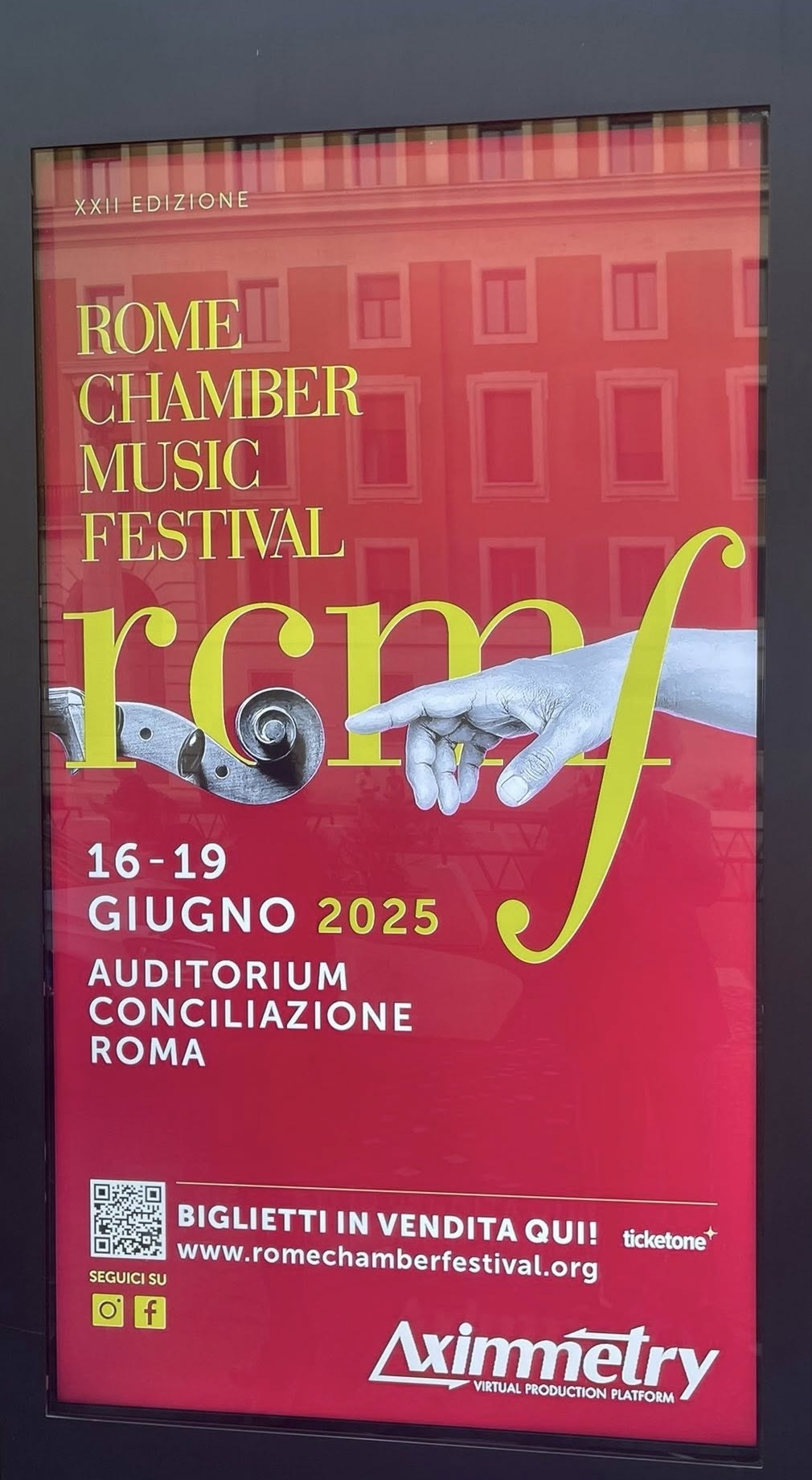
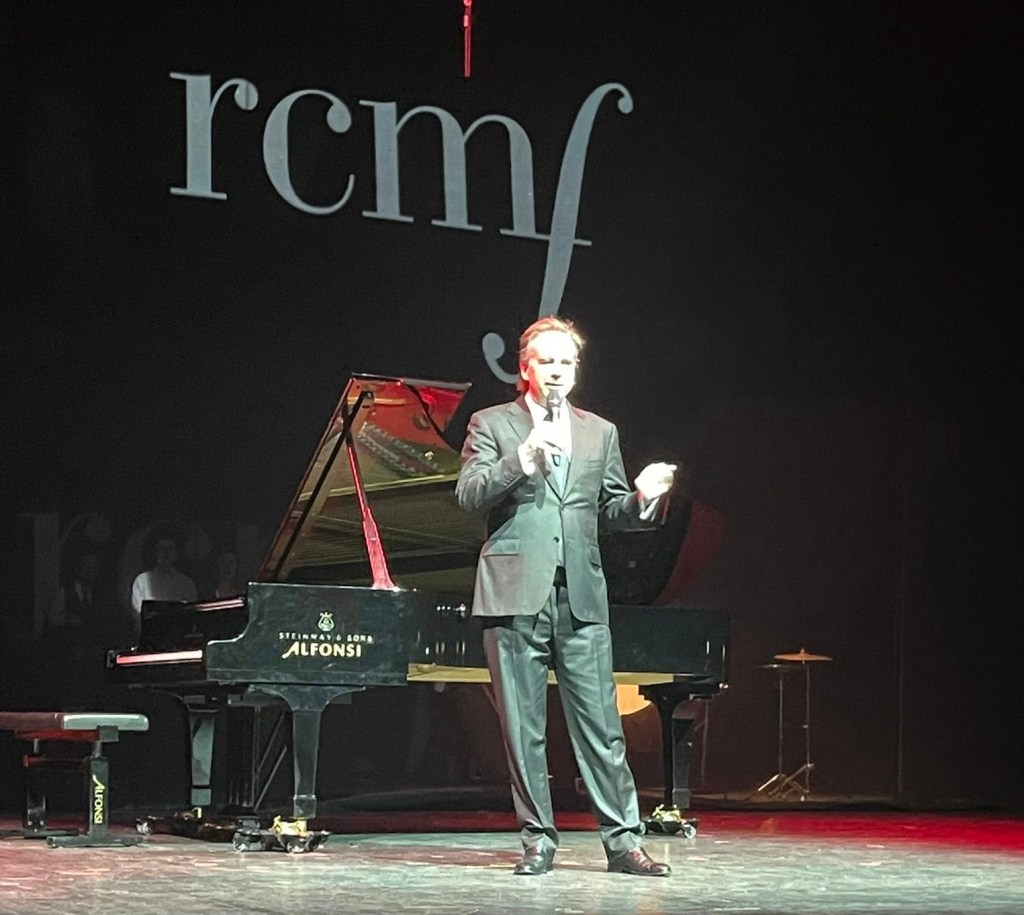
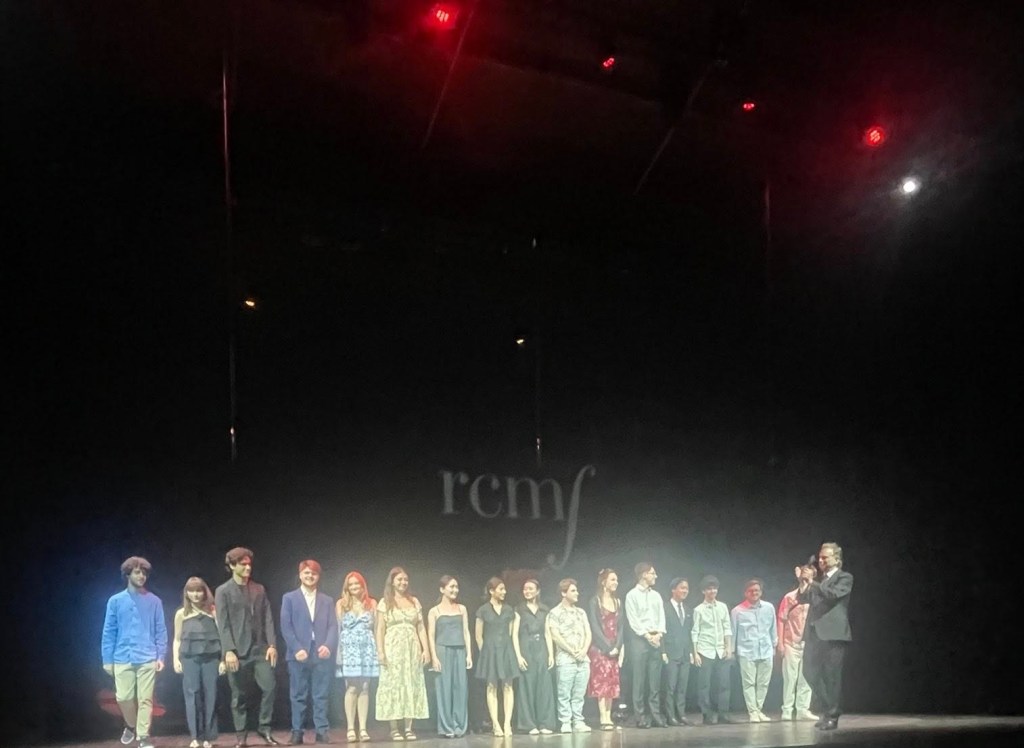
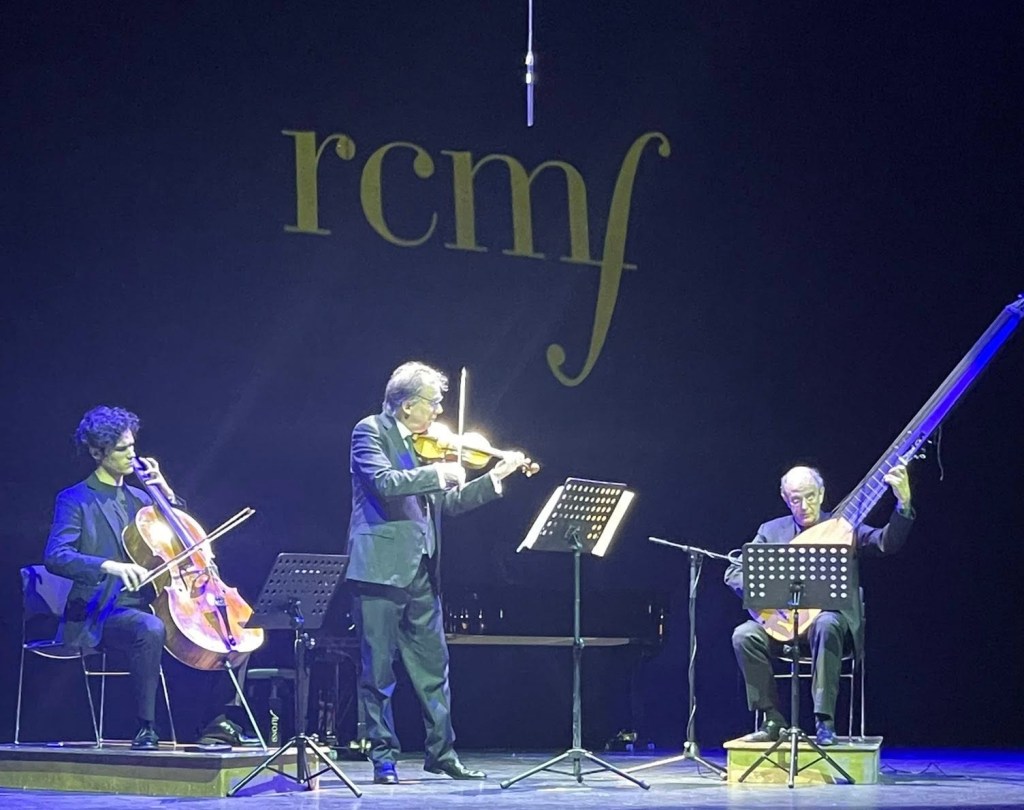
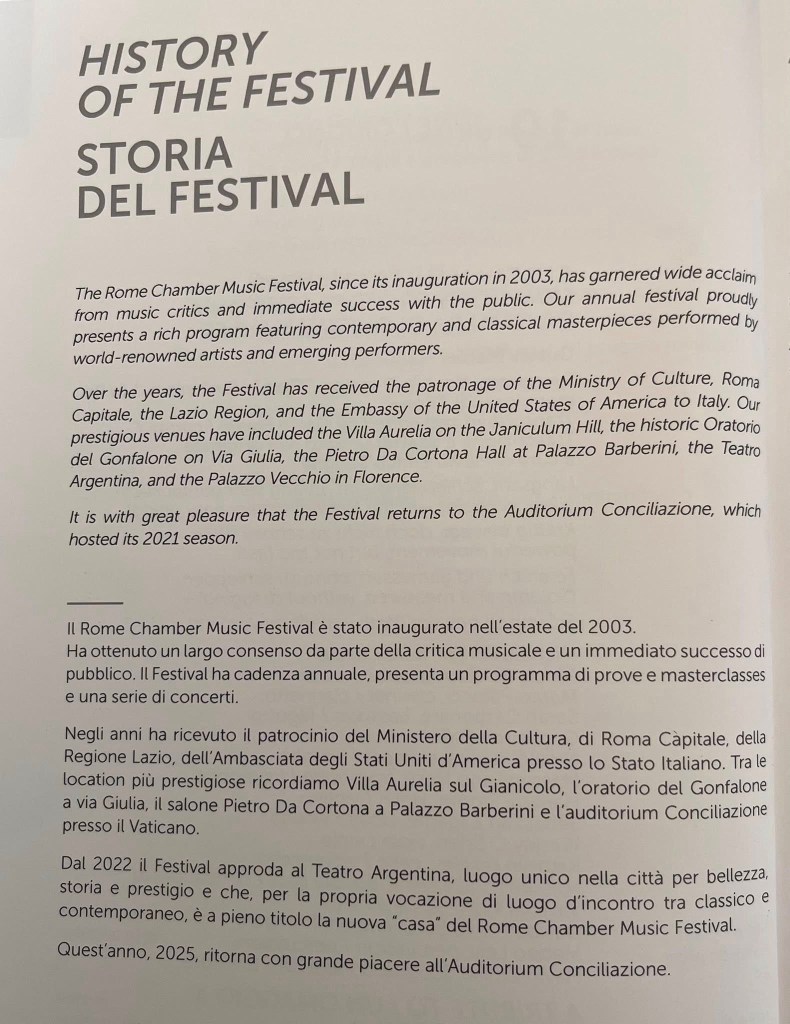
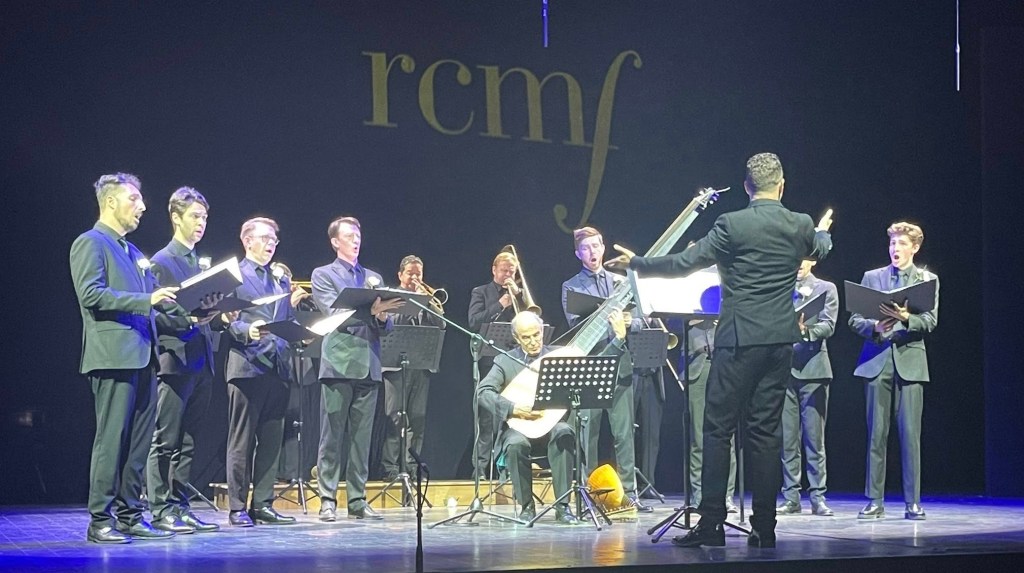
Robert McDuffie and his Rome Chamber Music Festival returns for its 22nd season in the Eternal City.
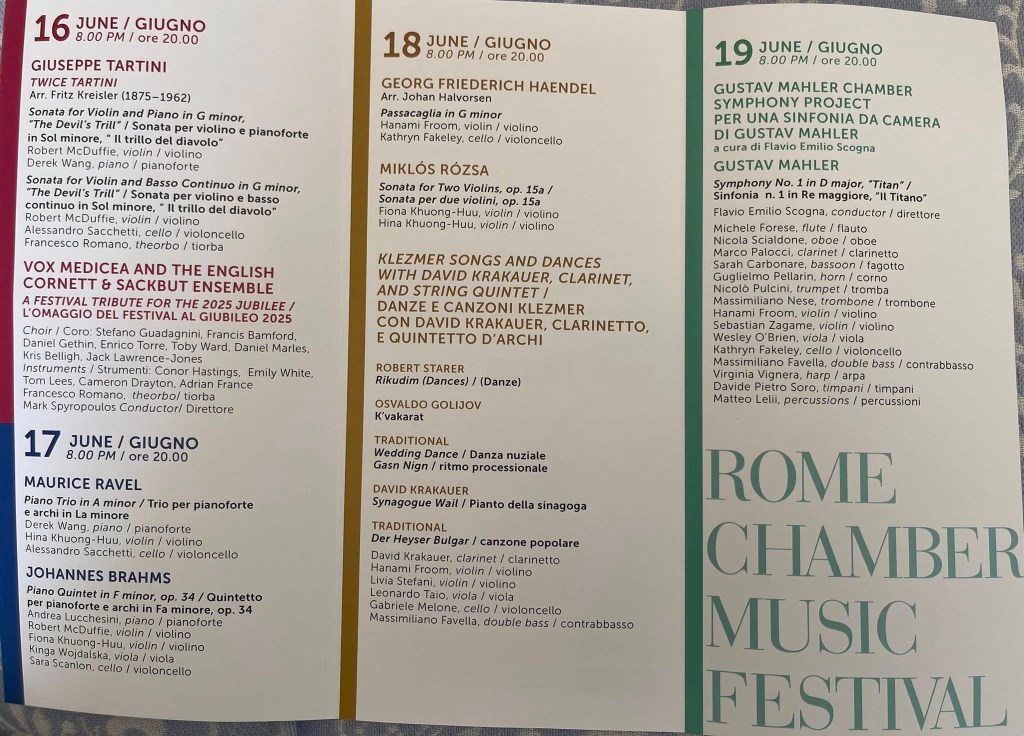
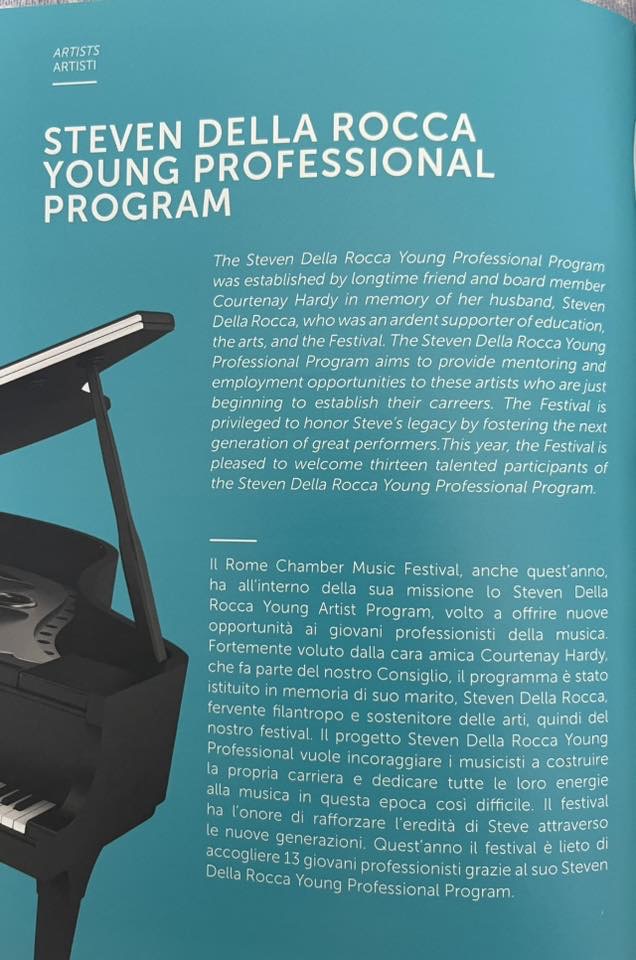
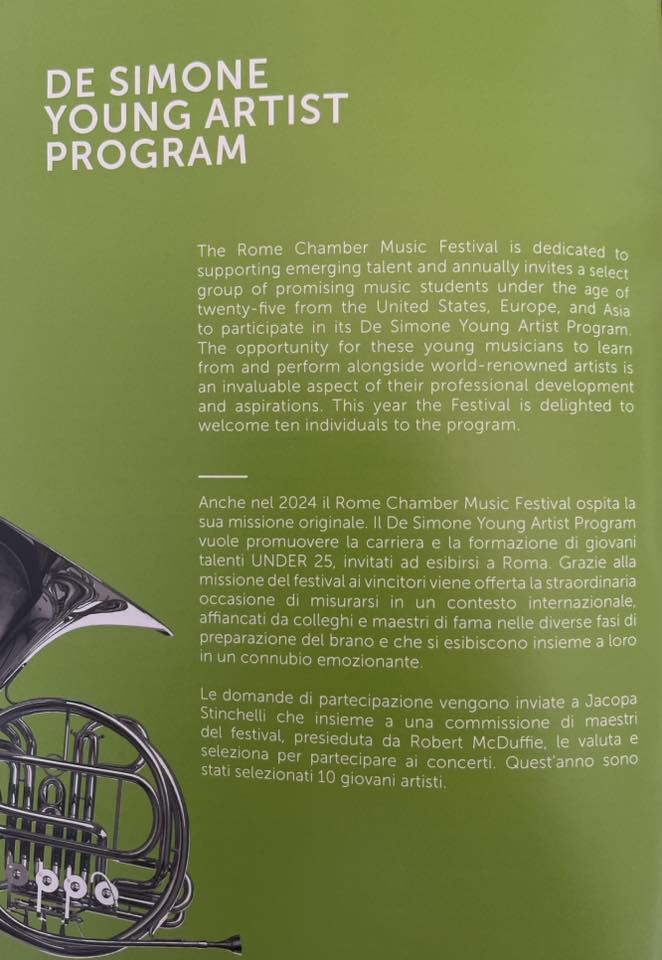
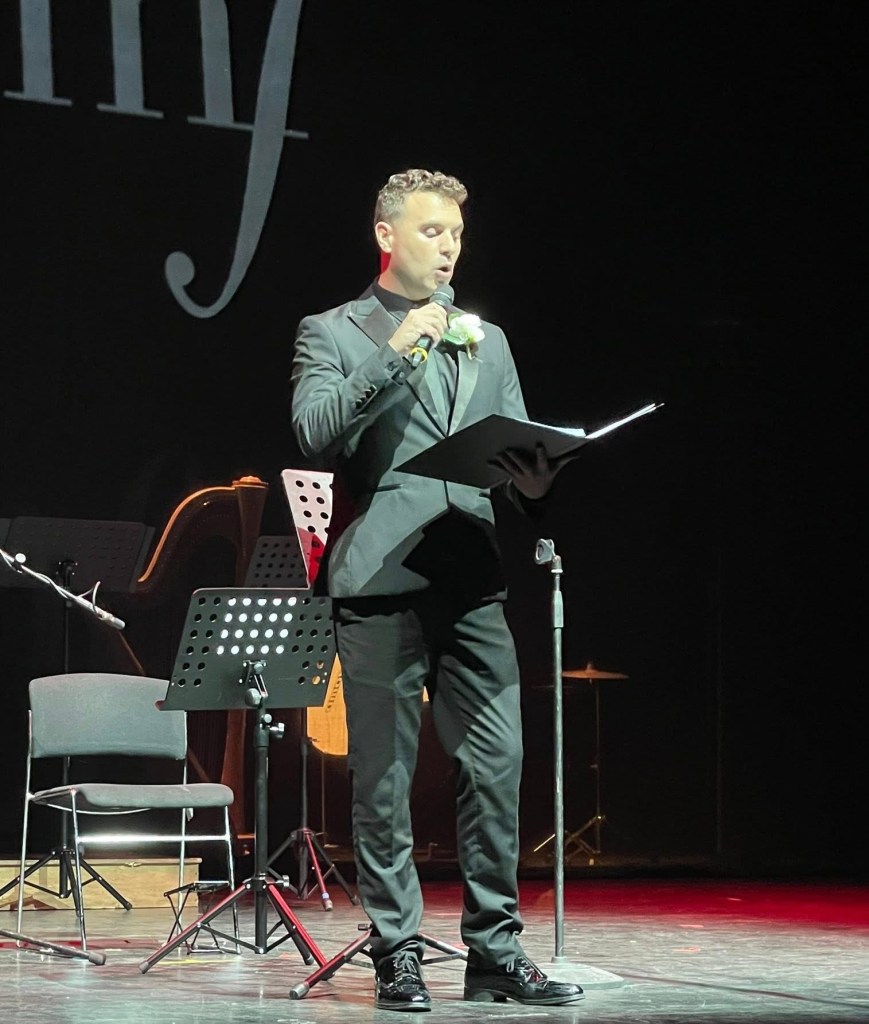
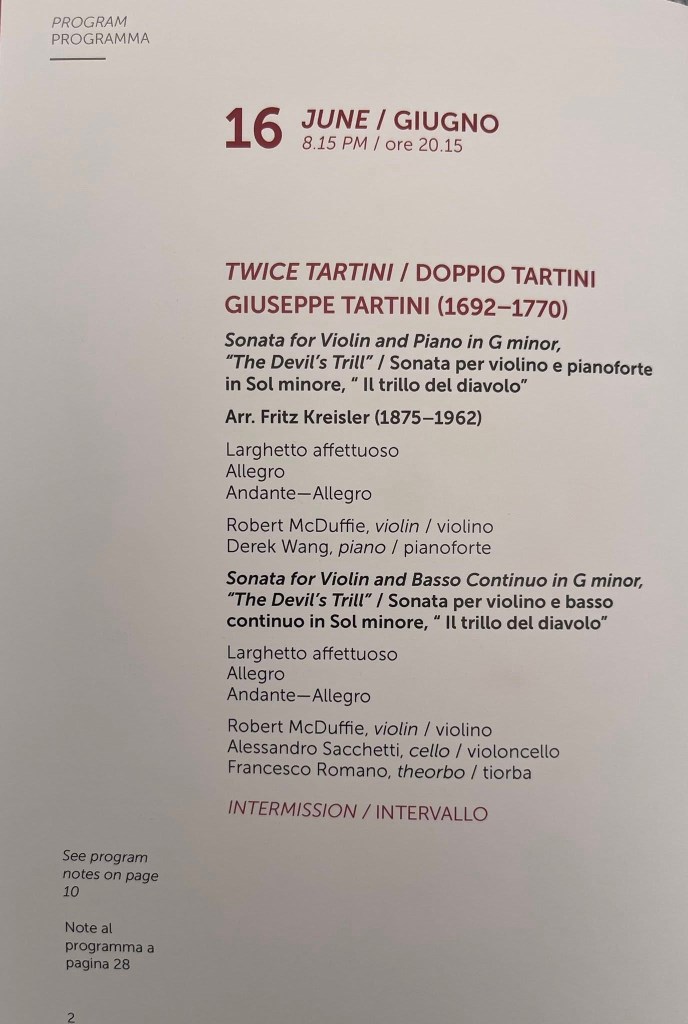
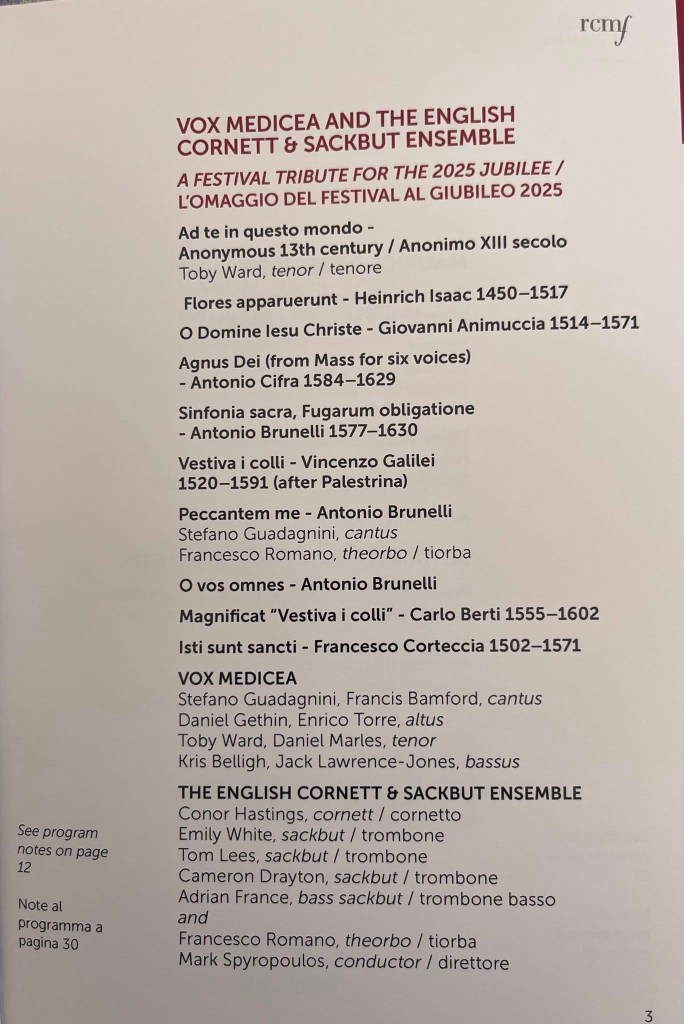
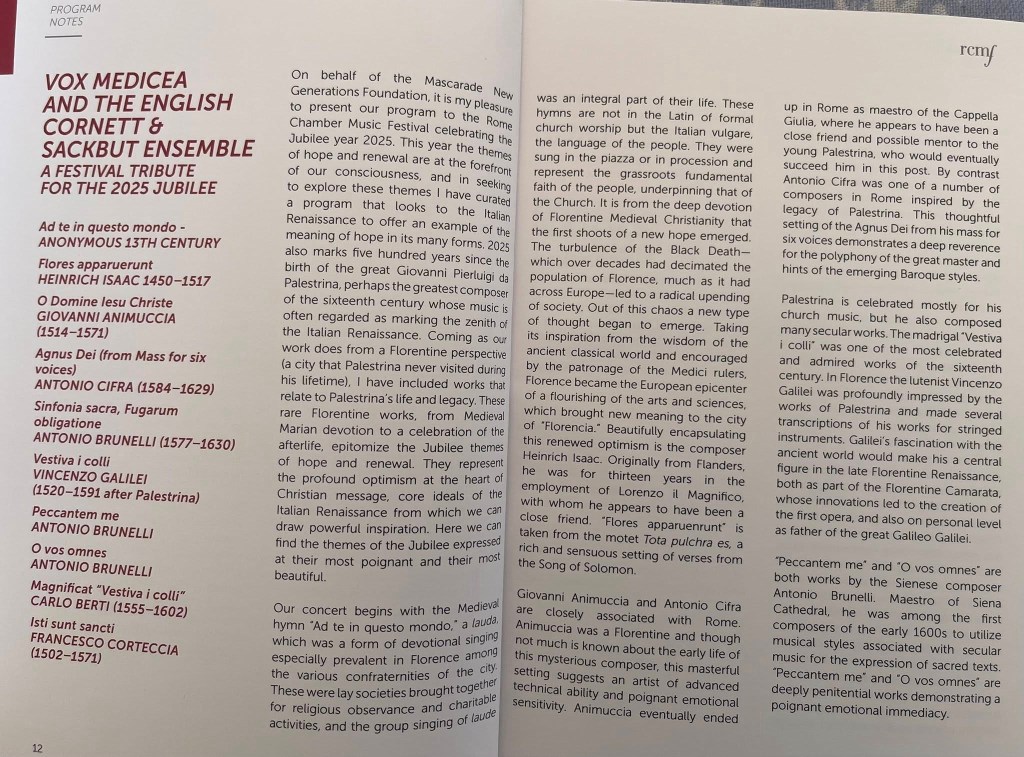
An eclectic programme for real connoisseurs with the opening night dedicated to the founders of modern day music of the 15th and 16th century. A Devil’s Trill played by the devilish master who had founded this festival in 2003 with the intent of bringing not only masterpieces to the attention of the Eternal City. Above all bringing remarkable young musicians to share their enthusiasm and exhilaration together via The Steven Della Rocca and De Simone Young Professional Programmes.
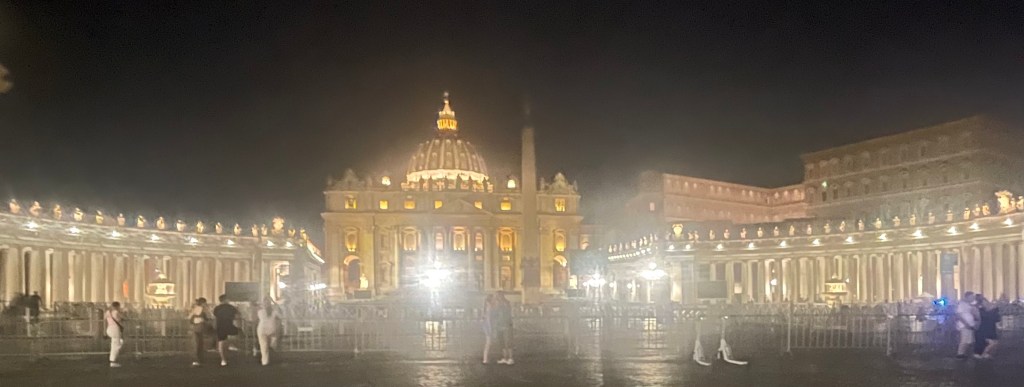
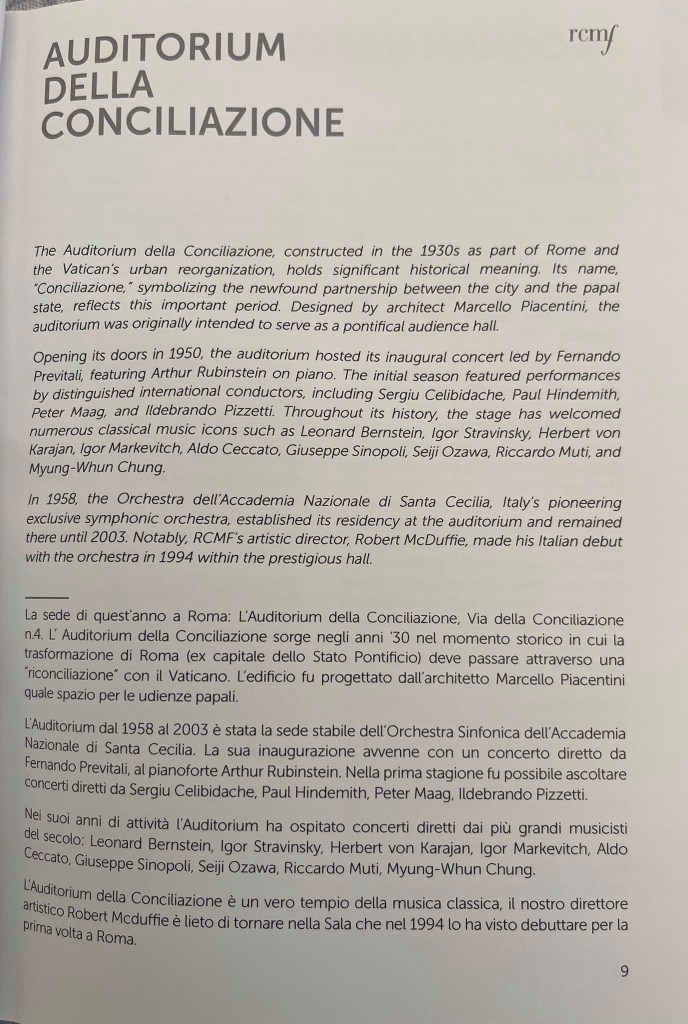
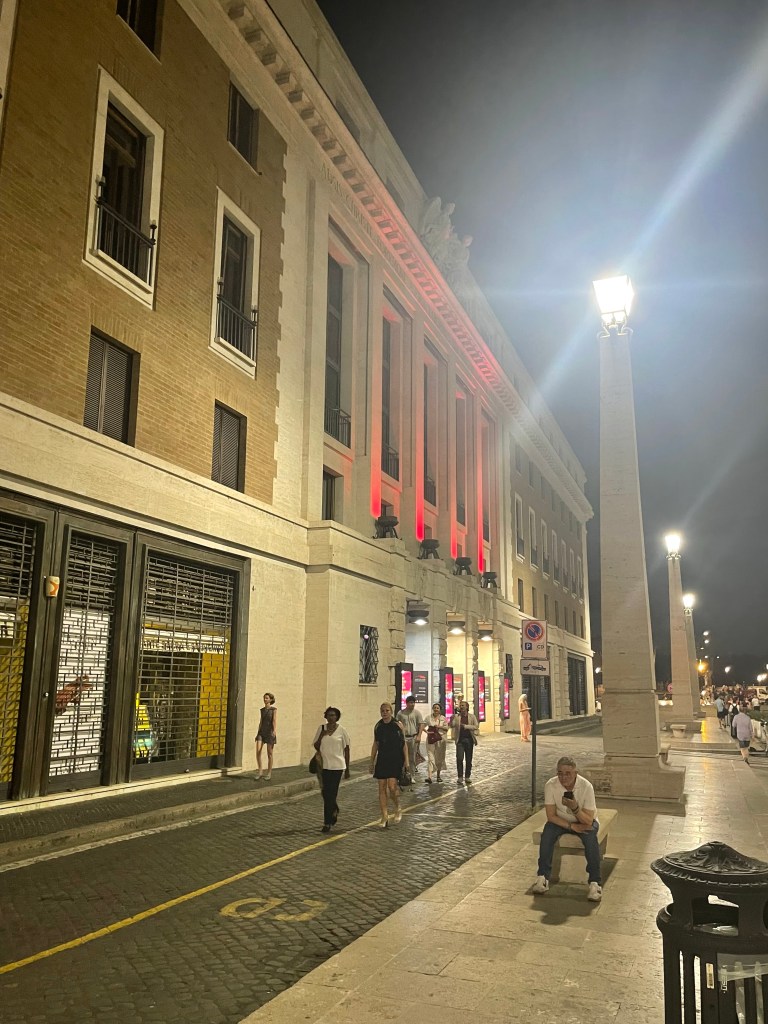
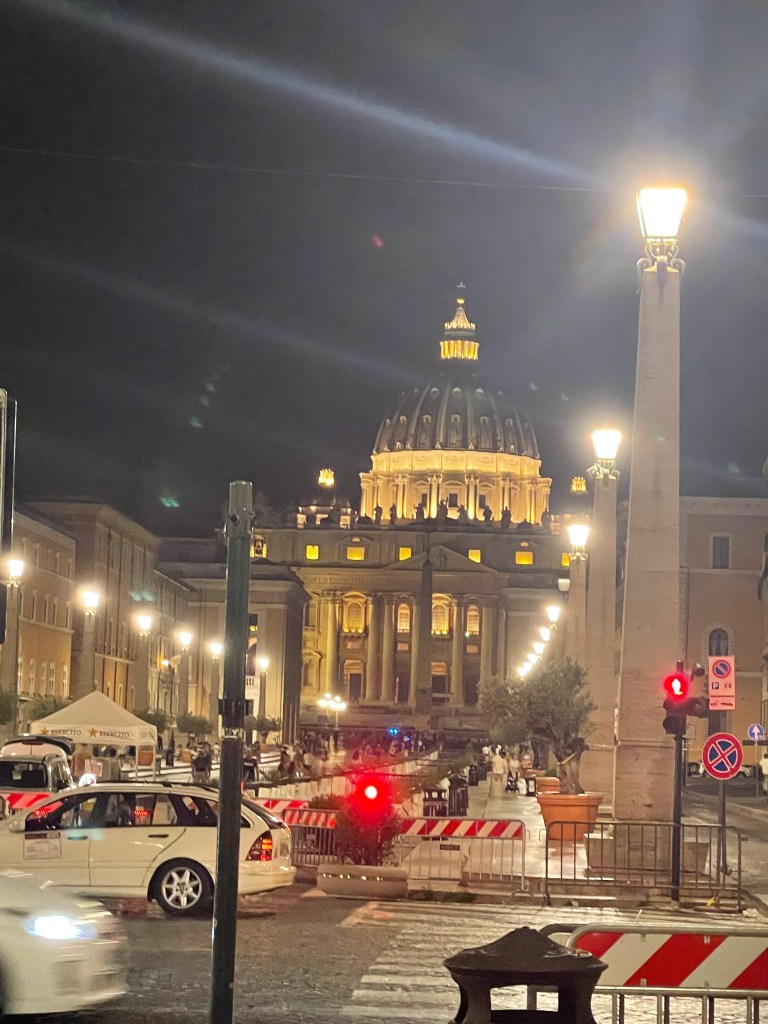
Returning this year to the Auditorium of Via delle Conciliazione where the genial Robert McDuffie had made his Rome concerto debut in 1994. A hall in the shadow of St Peter’s with the opening programme being a special tribute for the 2025 Jubilee.
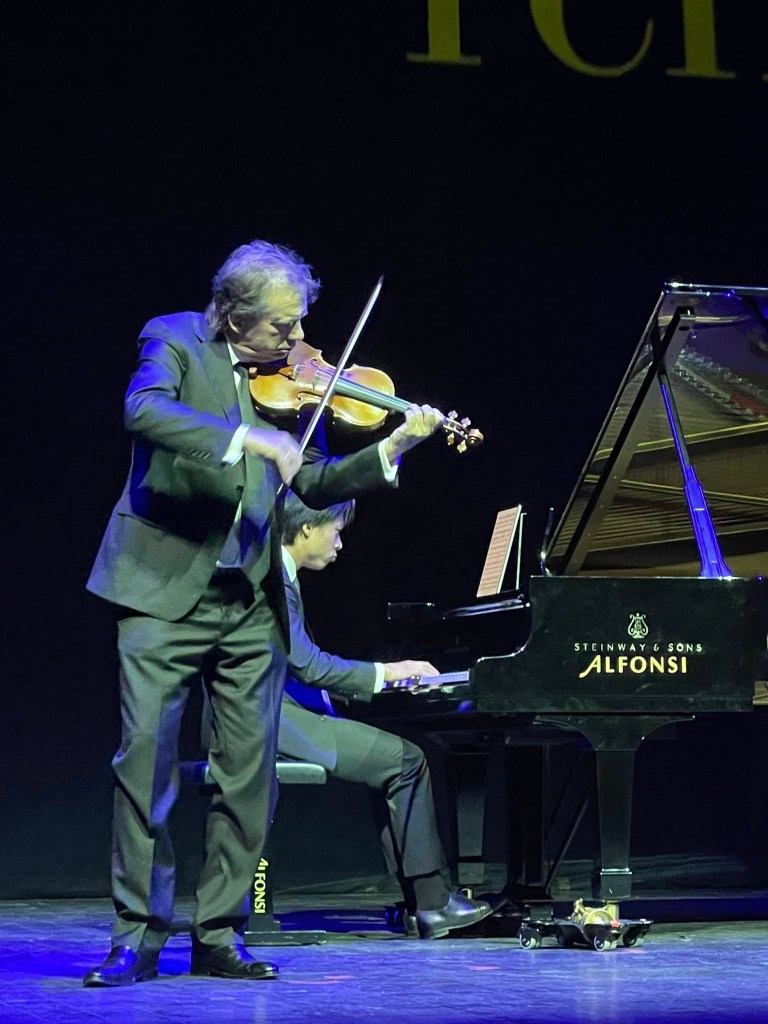
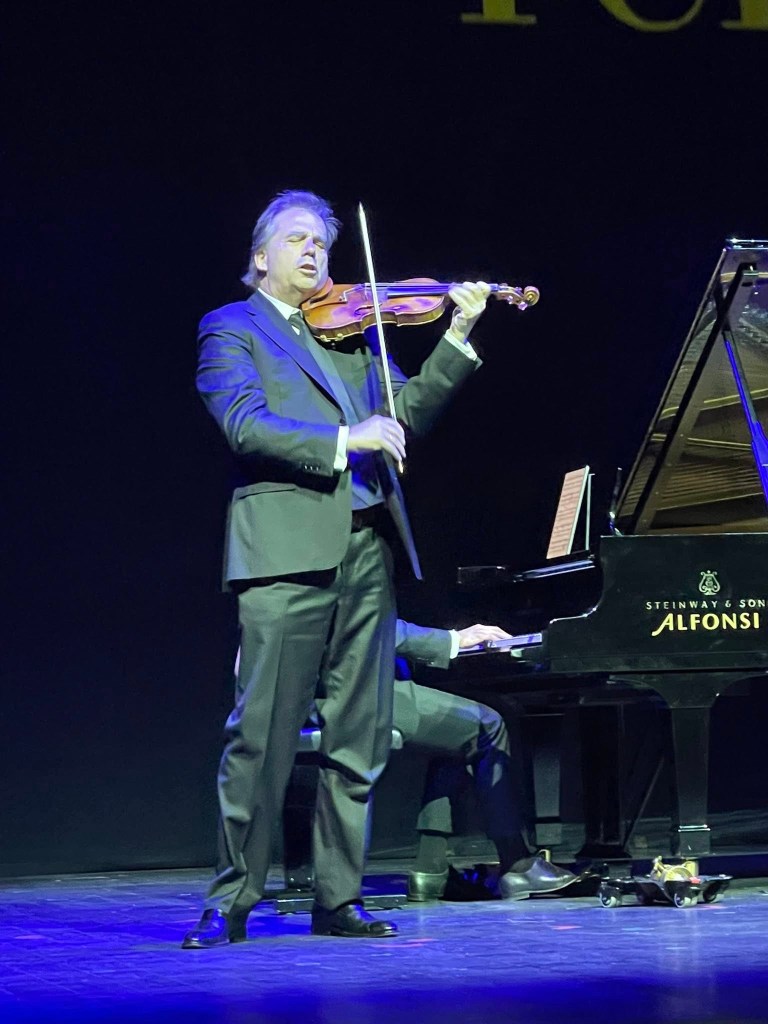
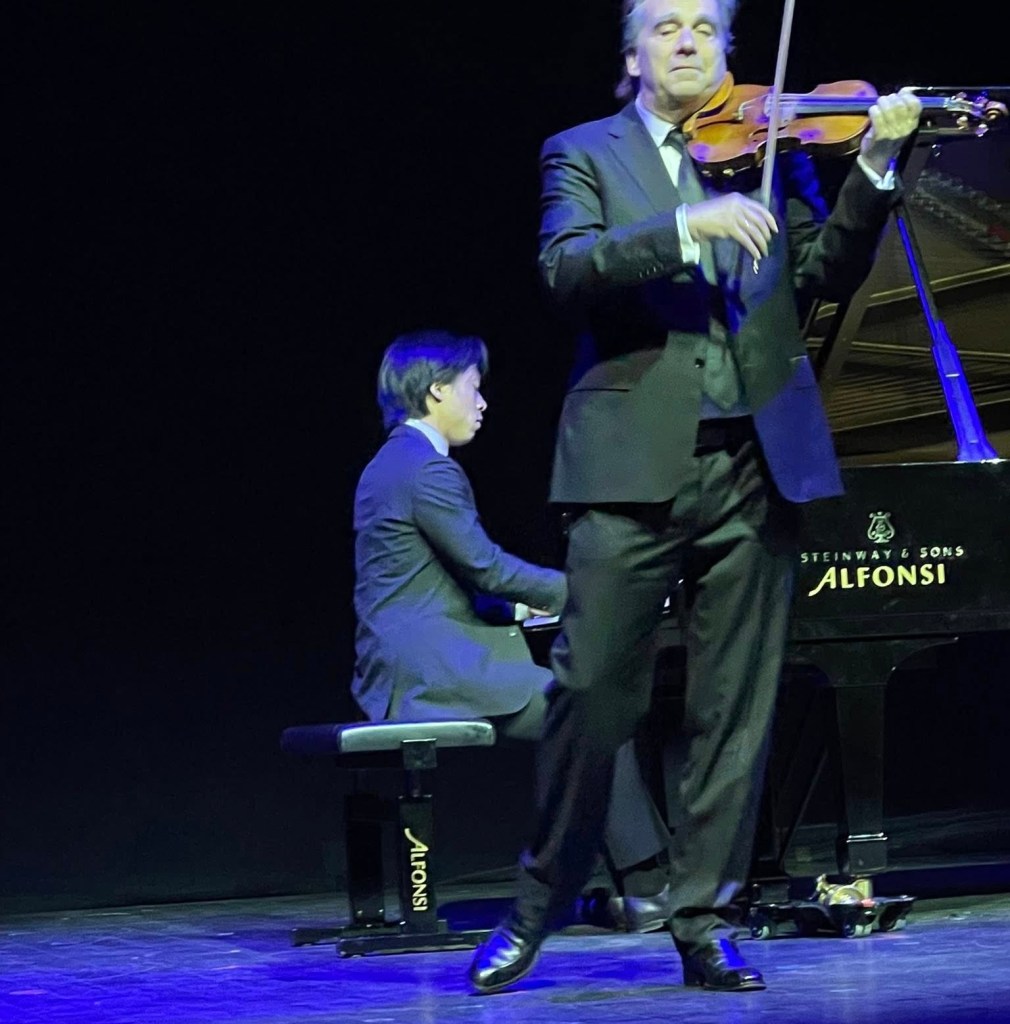
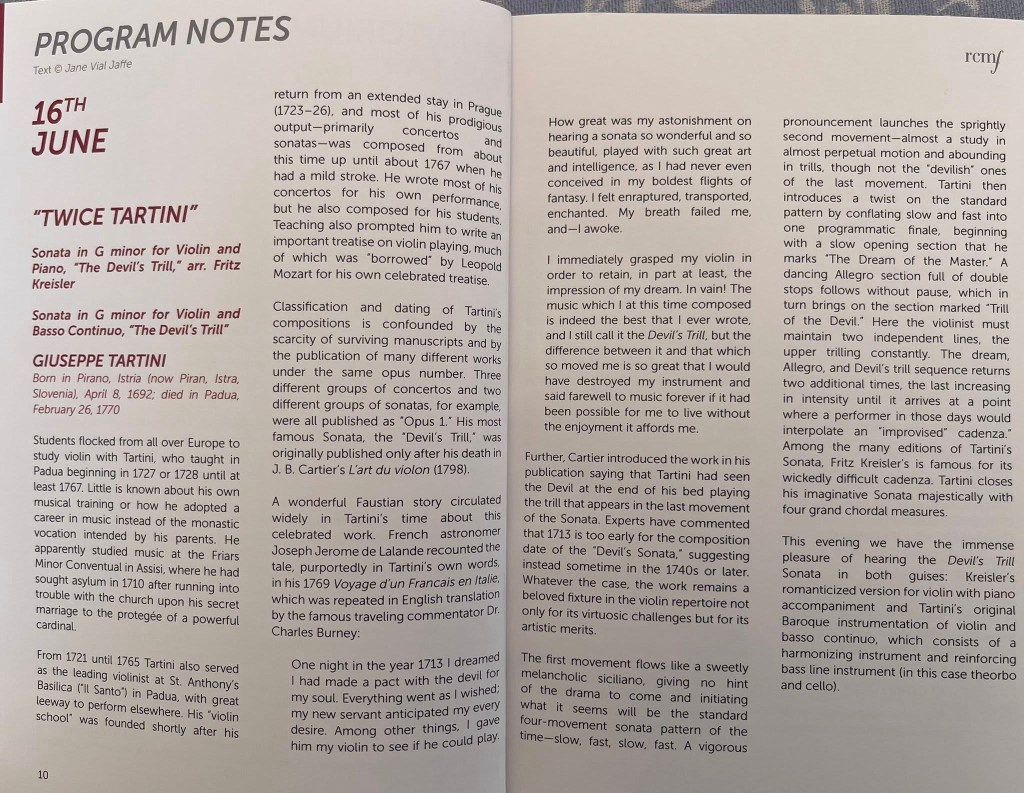
Two performances of the Devil’s Trill one in the romanticised version with piano by Kreisler. A monstrous cadenza characterises a performance where the interplay between the sumptuous violin ,which I imagine from the wondrous velvety sound that it must be of a similar vintage, and the superbly discerning pianistic high jinks from Derek Wang’s noble hands. An interplay that was discreet, but not too much so, as his Ravel Trio will no doubt show us in the second chamber music evening.
Robert playing as I remember Sandor Vegh dancing almost like an Irish jig such was his identification with the very song and dance essence of the music
The more staid original that followed was played with much more control and the stylistic restrictions of their time. The Devil was waiting in hiding for Kreisler to come along and no matter how expertly Alessandro Sacchetti and Francesco Romano played they were restricted to the pre Paganini starvation of its age.
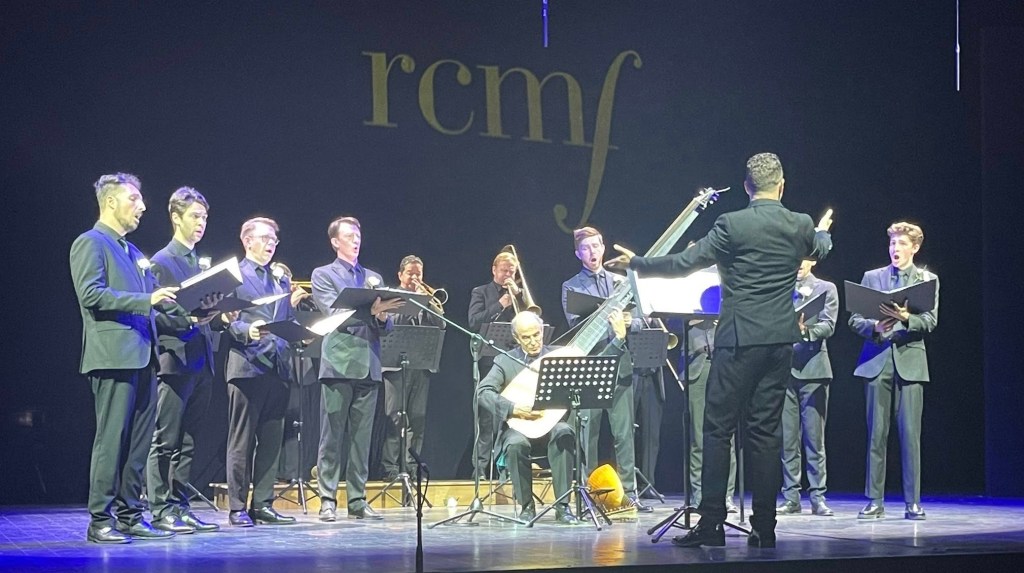
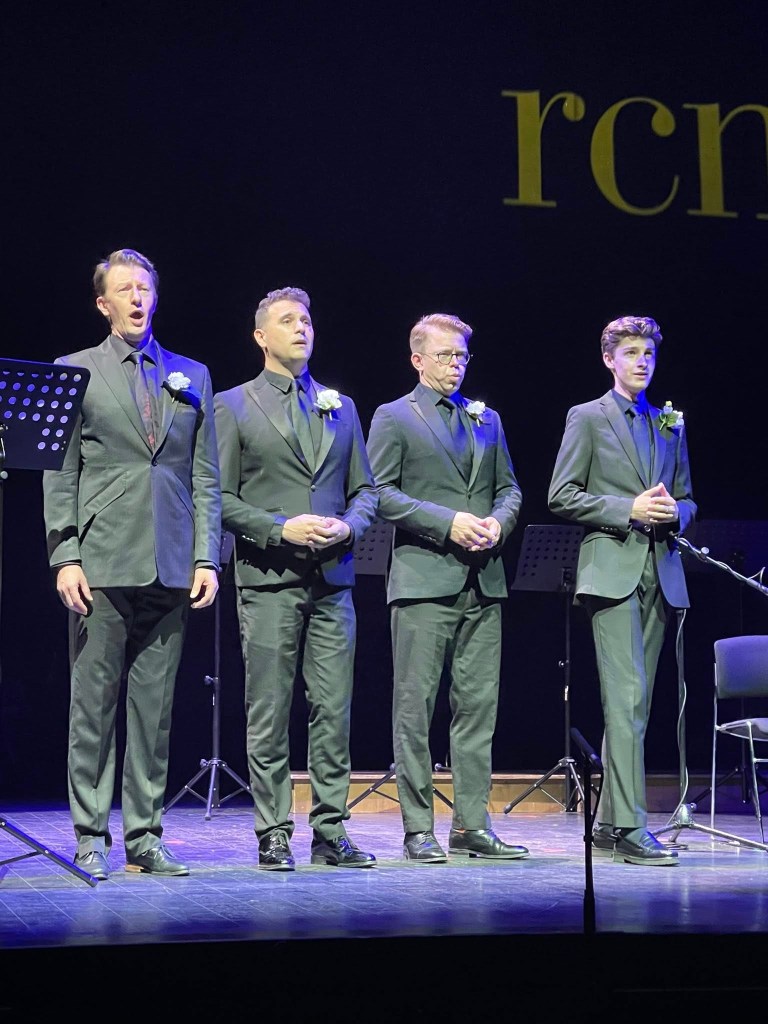
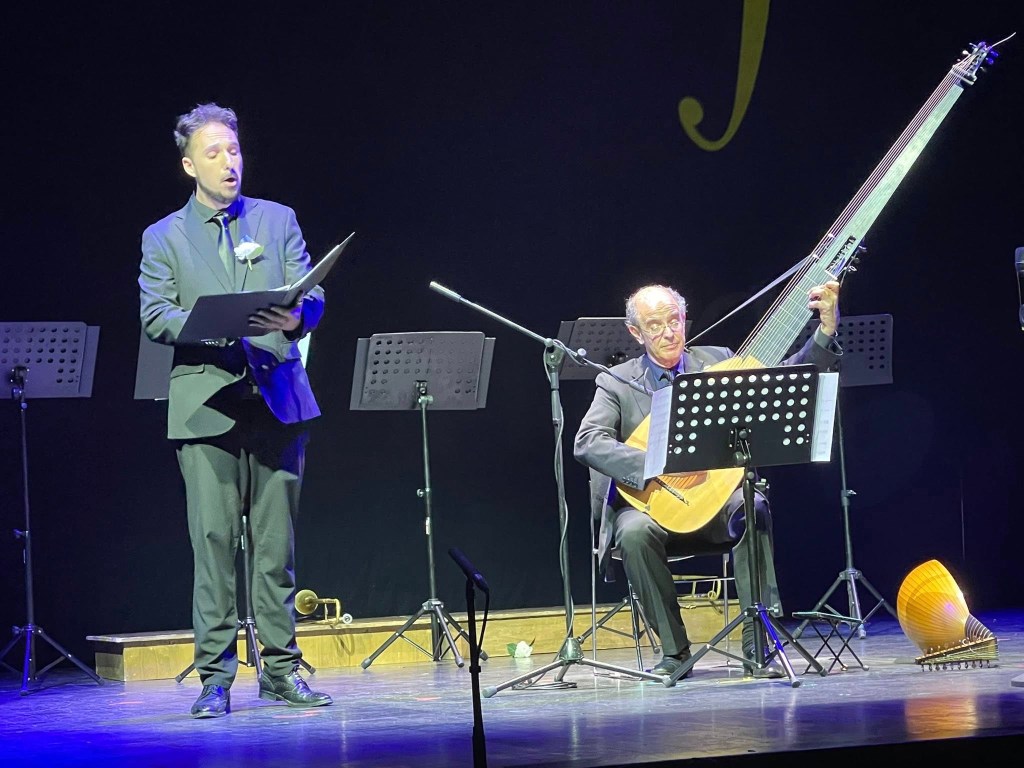
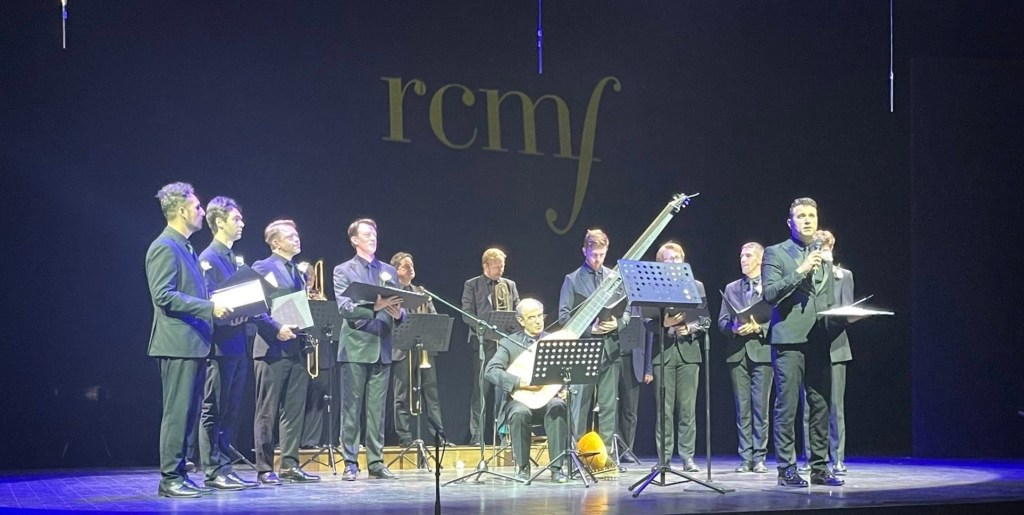
The second half was dedicated to the baroque with singing of the crystalline purity of castrati and the extraordinary noises of sackbuts and theorbos.
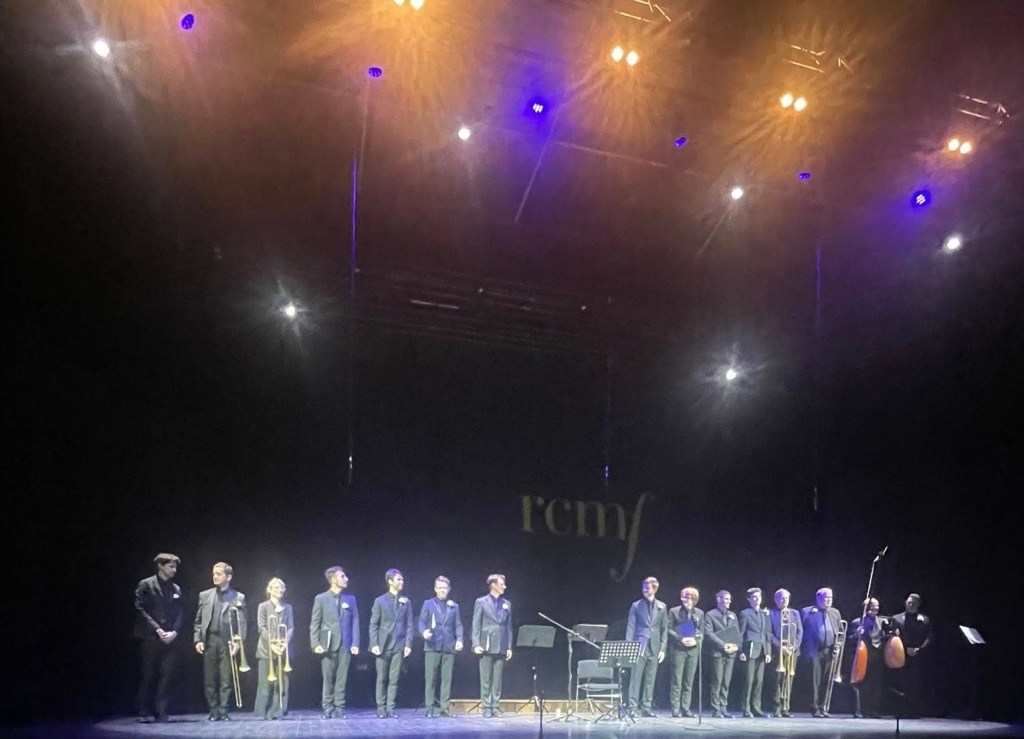
A wonderful refreshing evening, probably a first for a hall that has for half a century been witness to some of the greatest music making of our age. Heroic programming from a yearly festival that aims to bring freshness and light to the Eternal City.
Of course the ideal place for the music of the renaissance is in the buildings for which the music was commissioned and performed, and of which Italy, the Museum of the world , abounds. It was good for just half an hour,though, to be able to appreciate the artistry and mastery of the players that Robert McDuffie had so bravely invited to share the platform with him.
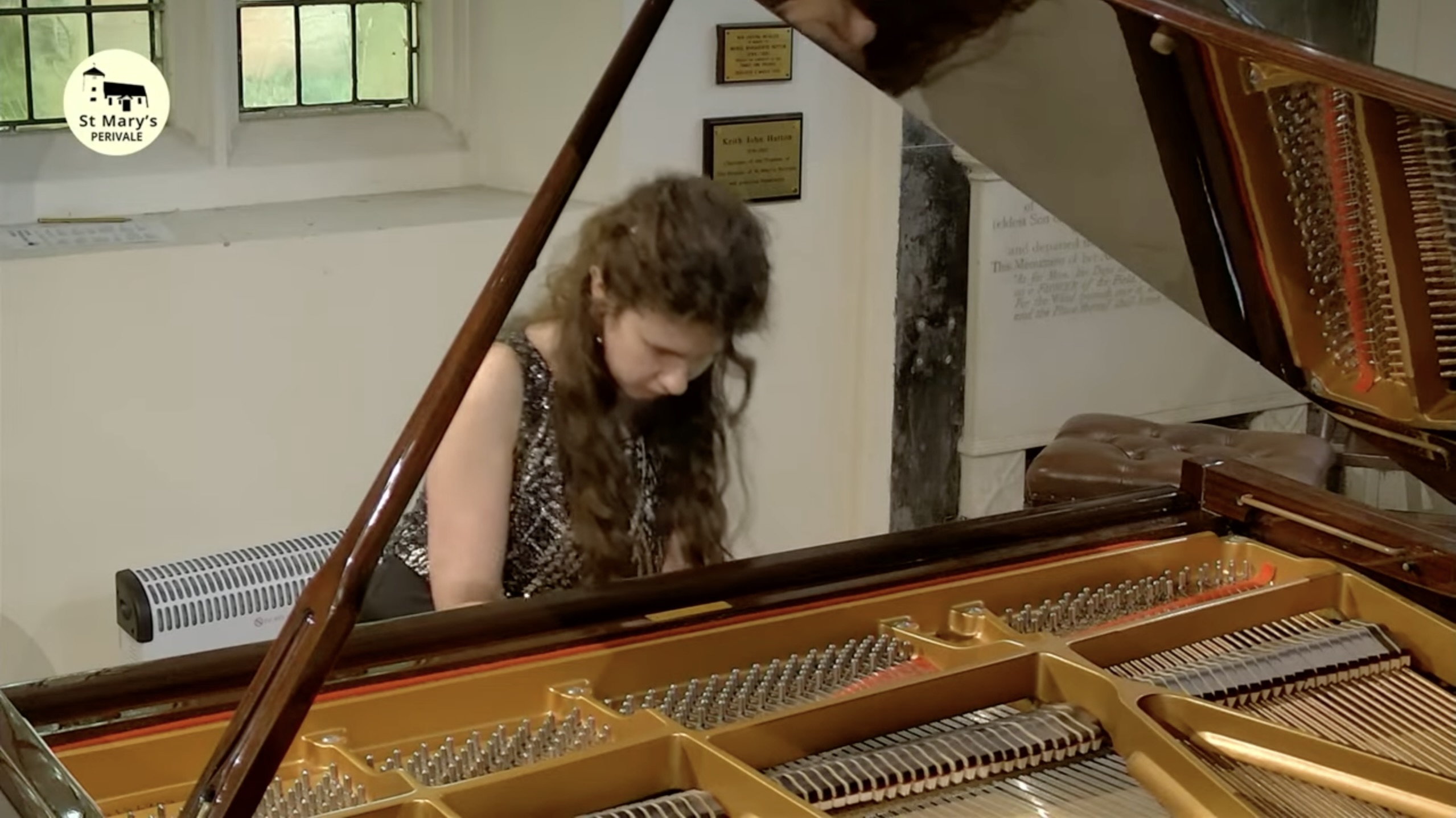
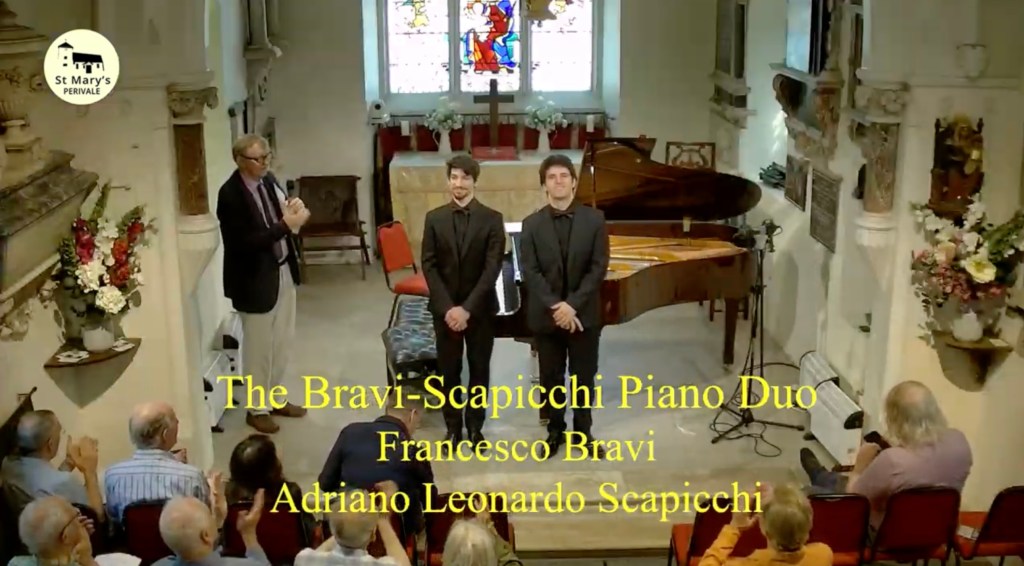
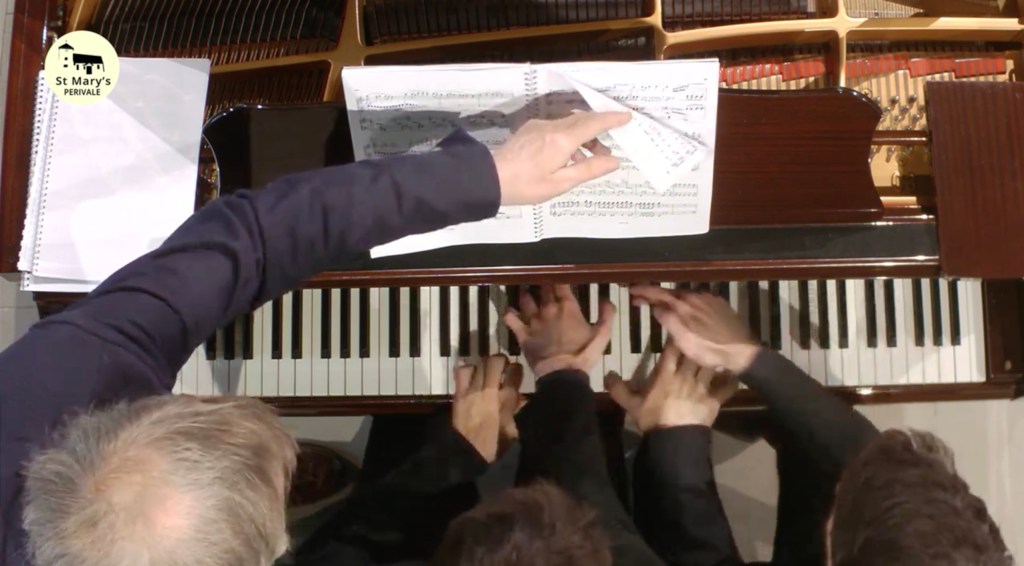
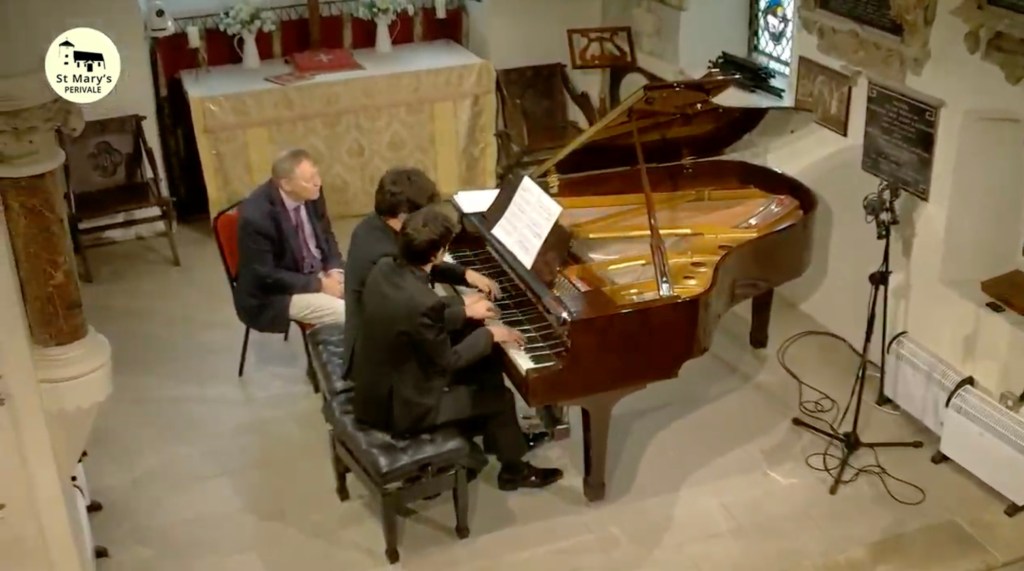
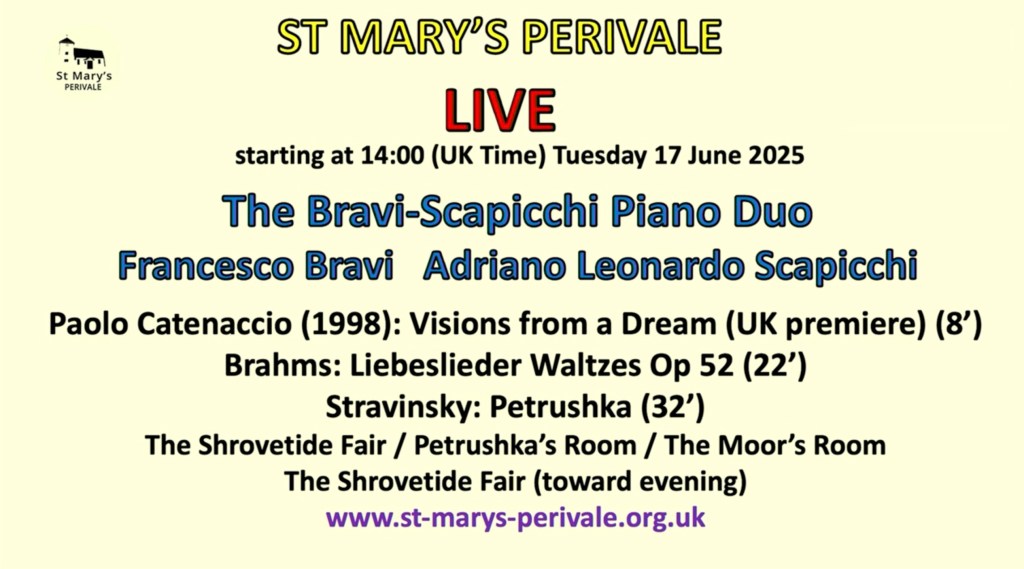
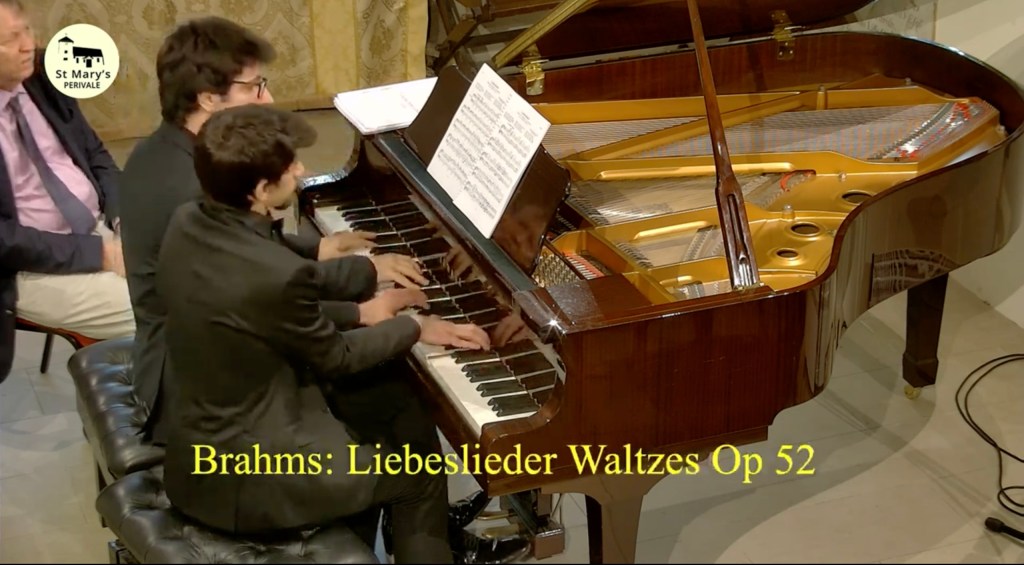
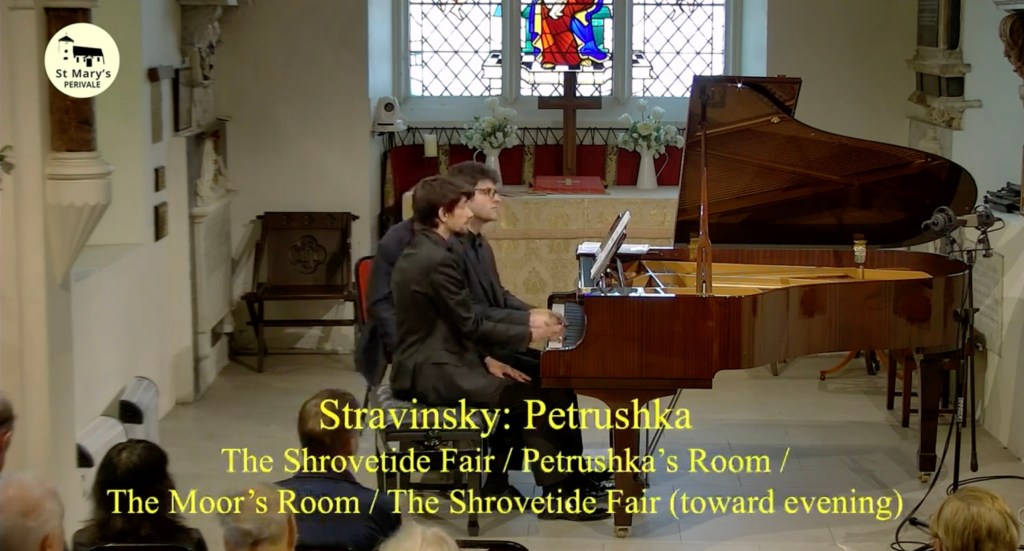
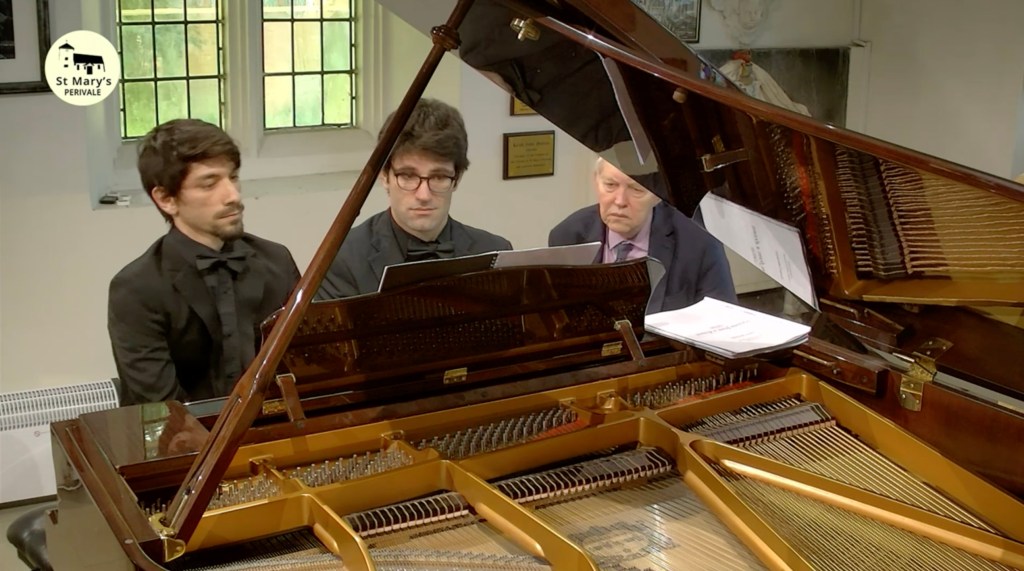
Exhilaration and excitement at St Mary’s today with a breath of red hot air blown in from the Eternal City where a burning cauldron of naked passion was about to be unleashed on a usually rather staid Dr Mather and his faithful followers. After a long and complex programme finishing with Stravinsky’s Petrushka , Dr Mather half jokingly asked them what they did for an encore! Little did he realise that he had shown a red rag to the bulls as they streamed up and down the keyboard with a breathtaking account of the infernal dance of the Firebird.
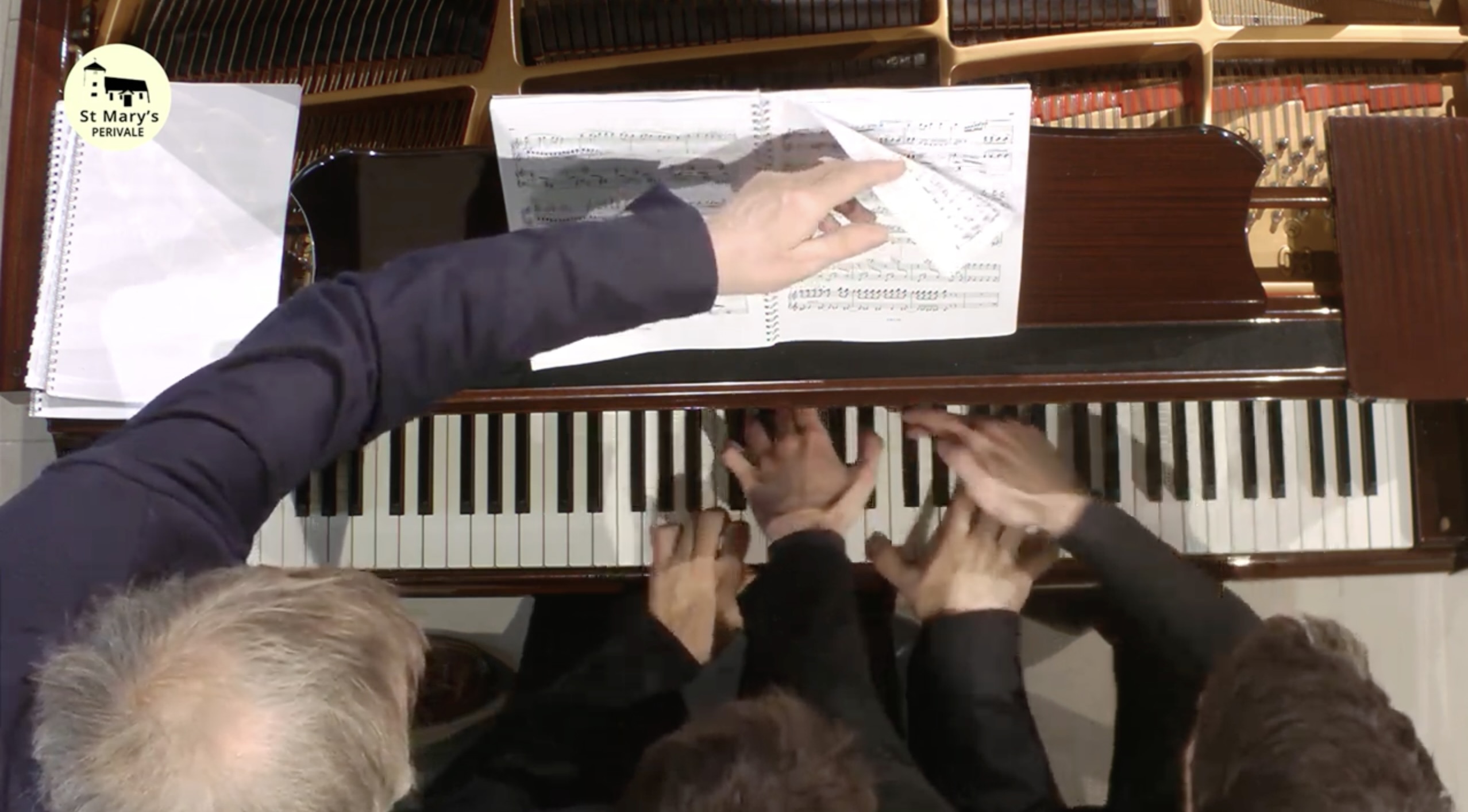
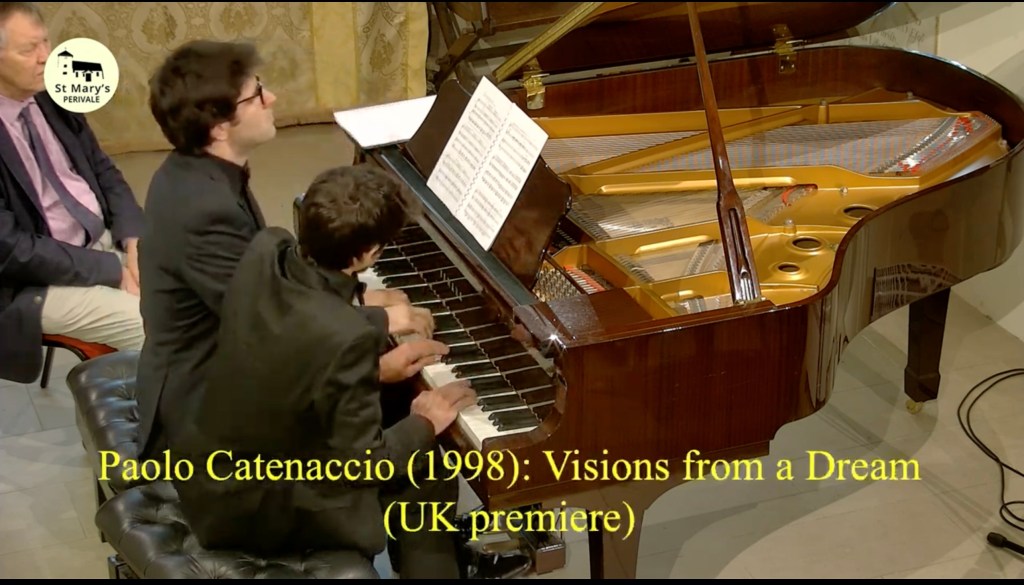
Radiant clarity and a superb sense of balance allowed these two experienced pianists to play as one. Not democratically swopping positions but each knowing his rightful place where it was the architectural line and stylistic beauty that had decided for them. Adriano never overpowering his partner but building up the sonorities from the bass allowing his right hand to occasionally trespass into his partners territory but basically filling the harmonic sandwich with the ravishing flavours of a cordon bleu cook. Francesco on the other hand played with a chiselled purity and infallible precision also allowing his partner to share in the musical line that they had defined so clearly as one.
The eight fragments of Paolo Catenaccio’s Dream were eight sides of the same dice each one just the time to throw and savour the lucky draw.
Brahms were waltzes of ravishing beauty and a kaleidoscope of sentiments with Brahms’s Viennese ‘heart on sleeve’ proving achingly sincere .
The colours and chameleonic changes of character were reminiscent of this duos ‘Rite of Spring’ from last season. A Stravinsky of remarkable clarity and Boulezian precision but also of an extraordinary self identification with this exotic world of Diaghilev and his Russian Dancers that were to take Europe by storm in the early twentieth century. My old teacher Guido Agosti had made a piano reduction of three pieces from the Firebird Suite, in 1928, which is a brilliant tour de force only for fearless virtuosi .This version for piano duet , which I imagine is original for ballet rehearsals, was even more overwhelming as we watched incredulously Adriano trespassing, with Francesco passively knowing there was nothing to do but join in the battle! It is 35 degrees in Rome from where I was able to watch this superb live stream but I got the impression it was much hotter in Perivale this afternoon !
Francesco Bravi and Adriano Leonardo Scapicchi formed their duo in 2019. In 2020 they performed Stravinsky’s Rite of Spring at Teatro Palladium in Rome. The success following their concert, described by Christopher Axworthy as “a formidable knotty twine of great precision and rhythmic pulse”, brought them to be invited to several international music festivals and venues. In 2023 they were awarded the Outstanding Musicians Prize and a special mention for their interpretation of Debussy at the International Music Competition Ibla Grand Prize. As winners of the competition, in 2024 they took part in a tour in the USA, performing in Virginia, Arkansas, Texas, and New York, including the Weill Recital Hall of the Carnegie Hall. In 2024 they have played at the Pauline Chapel of the Quirinal Palace, live streamed by RAI Radio 3, at St. Mary’s Perivale in London, MusiQuart festival in Valencia (Spain), IUC-La Sapienza, Accademia Filarmonica Romana, and I Tramonti di Tinia, where they played Bartók’s Sonata for two pianos and percussions. In 2025 they have been invited to perform concerts in Austria, Hungary, South Korea, United Kingdom, and Italy, including the 102° edition of Micat in Vertice in Siena, where they have played Brahms’s Liebeslieder-Walzer with choir. Keen on promoting new repertoire, they often programme works by contemporary authors, such as Salvatore Sciarrino, Fazil Say, Fabio Massimo Capogrosso, and Paolo Catenaccio, who wrote Visions from a Dream for the duo. For the Chigiana International Festival 2025 they will also take part to the world premiere of Matteo D’Amico’s Hérodiade. They attend the Chamber Music Course at the International School of Music Avos Project in Rome, the Advanced Course at the Academy of the Società dei Concerti di Parma, and the Piano Course at the Accademia Musicale
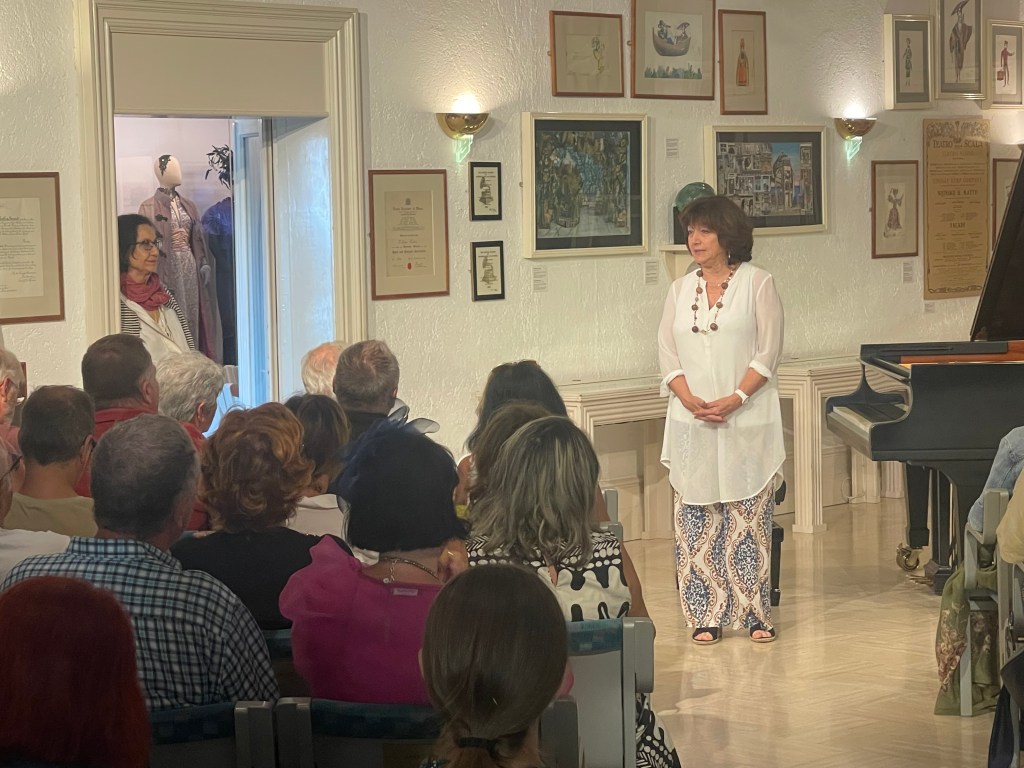
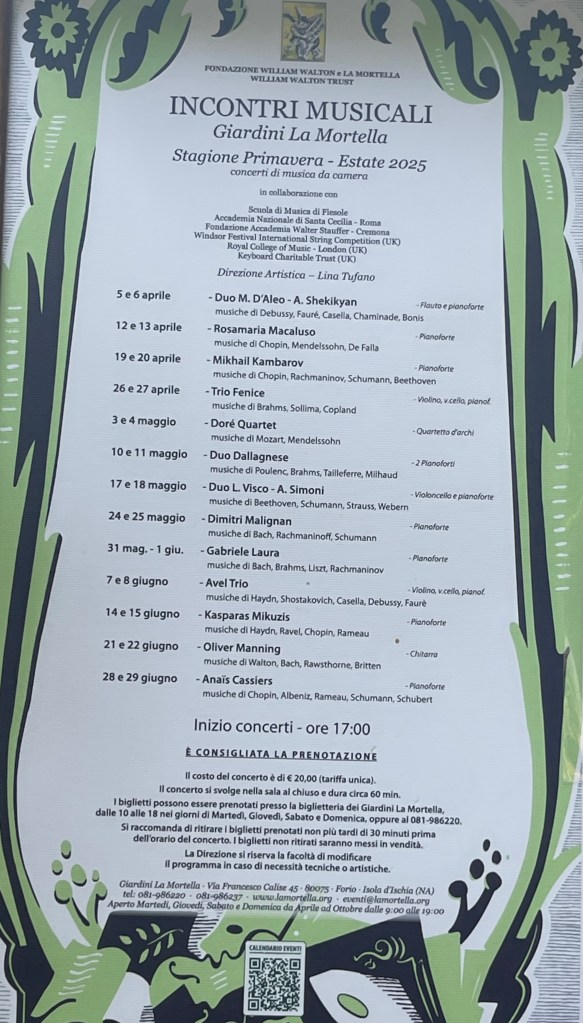
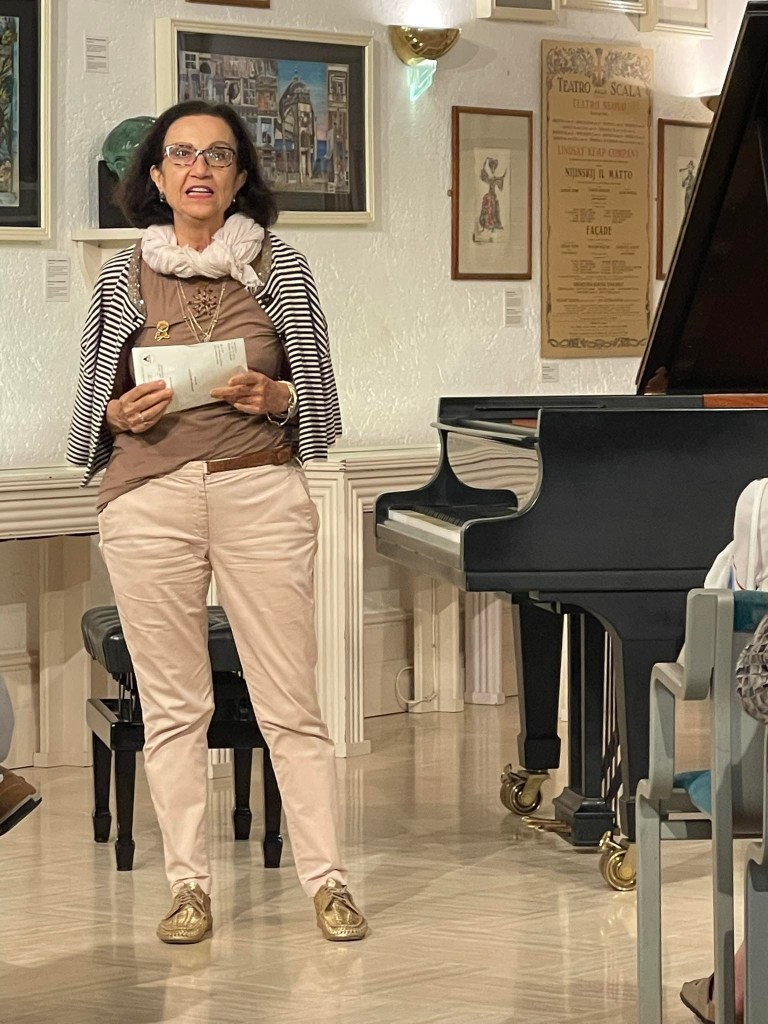
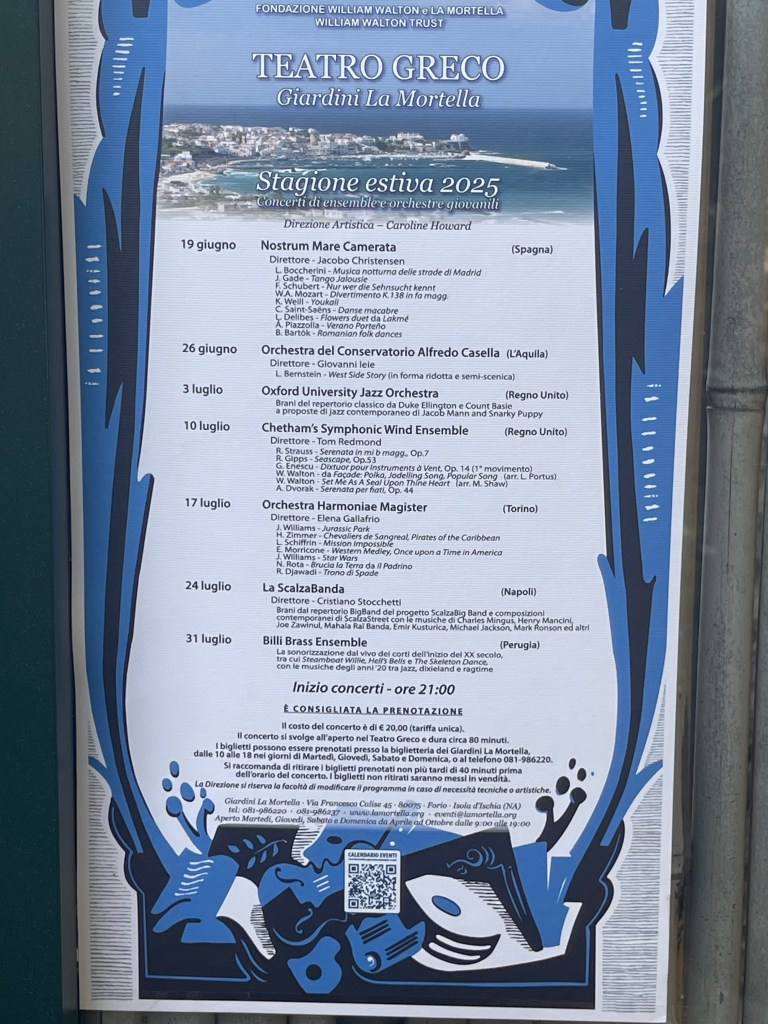
Alessandra Vinciguerra, close friend of Susana Walton and general manager of the William Walton Foundation, with Prof Lina Tufano,artistic director of the Incontri Musicali looking on.
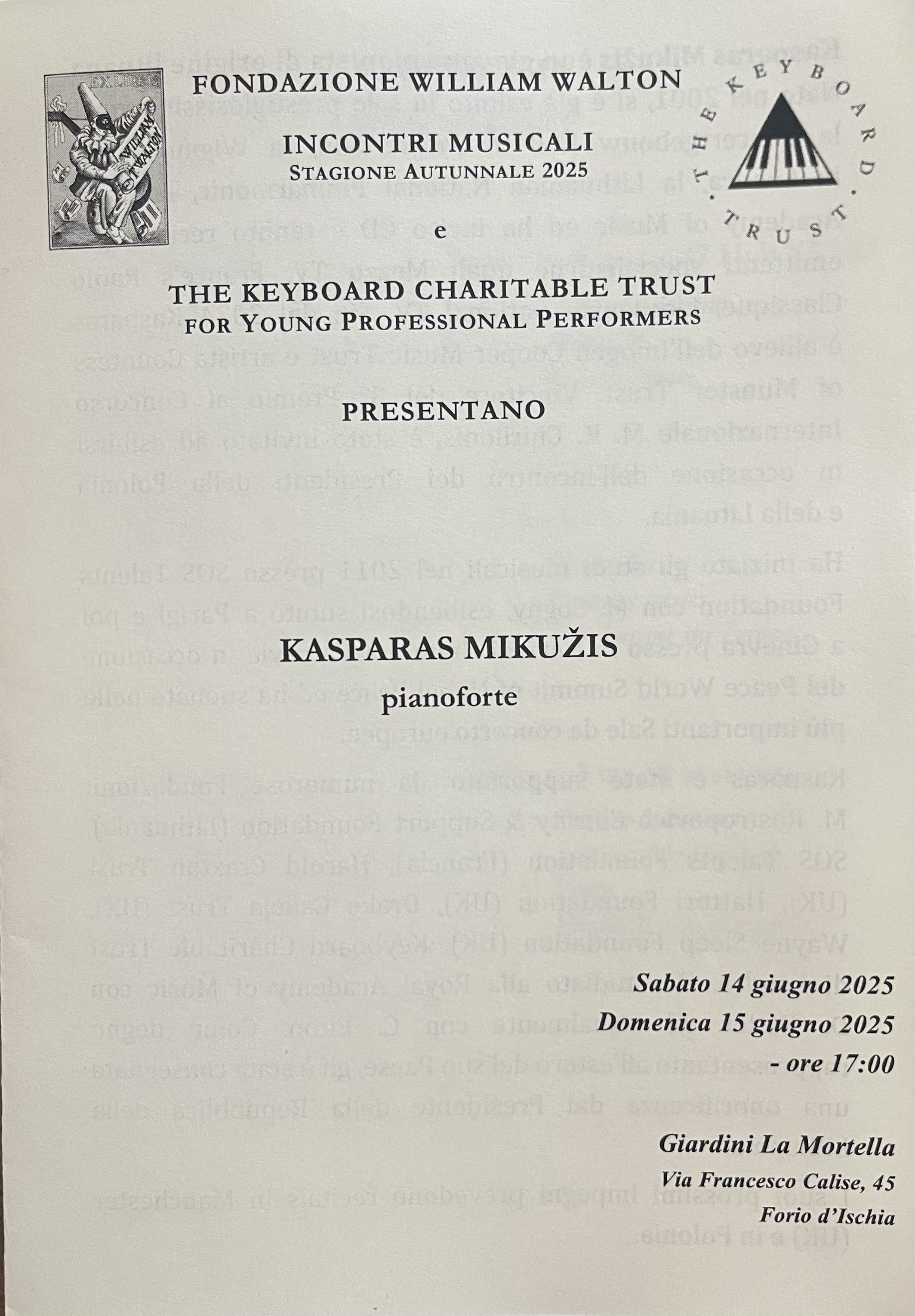
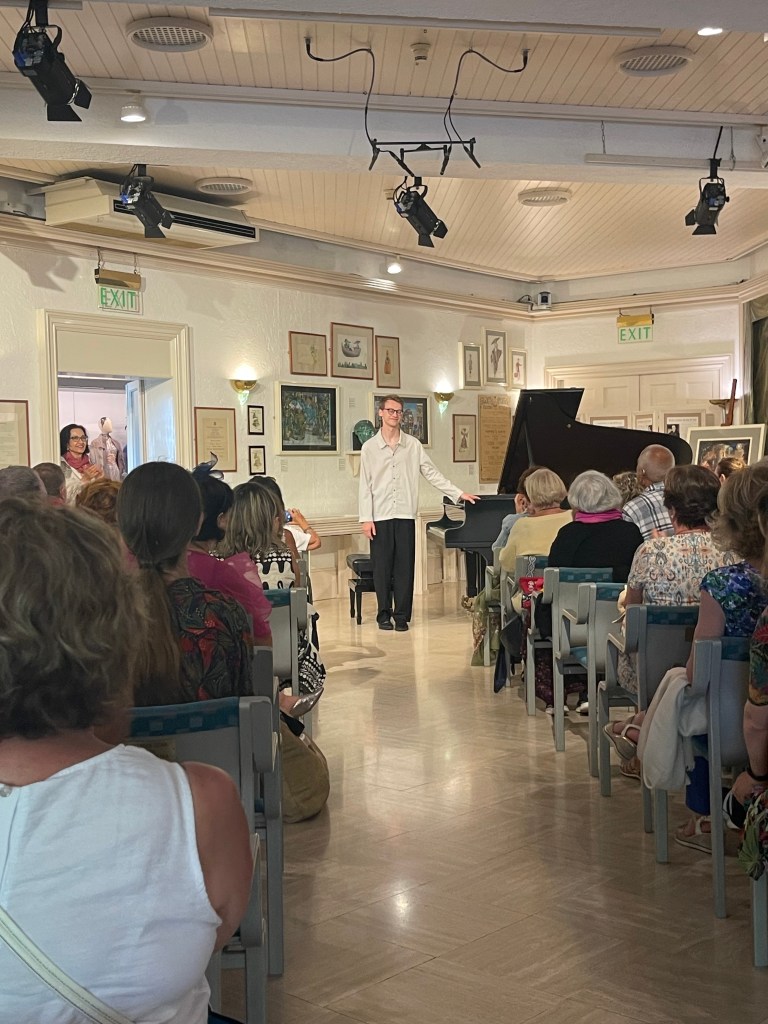
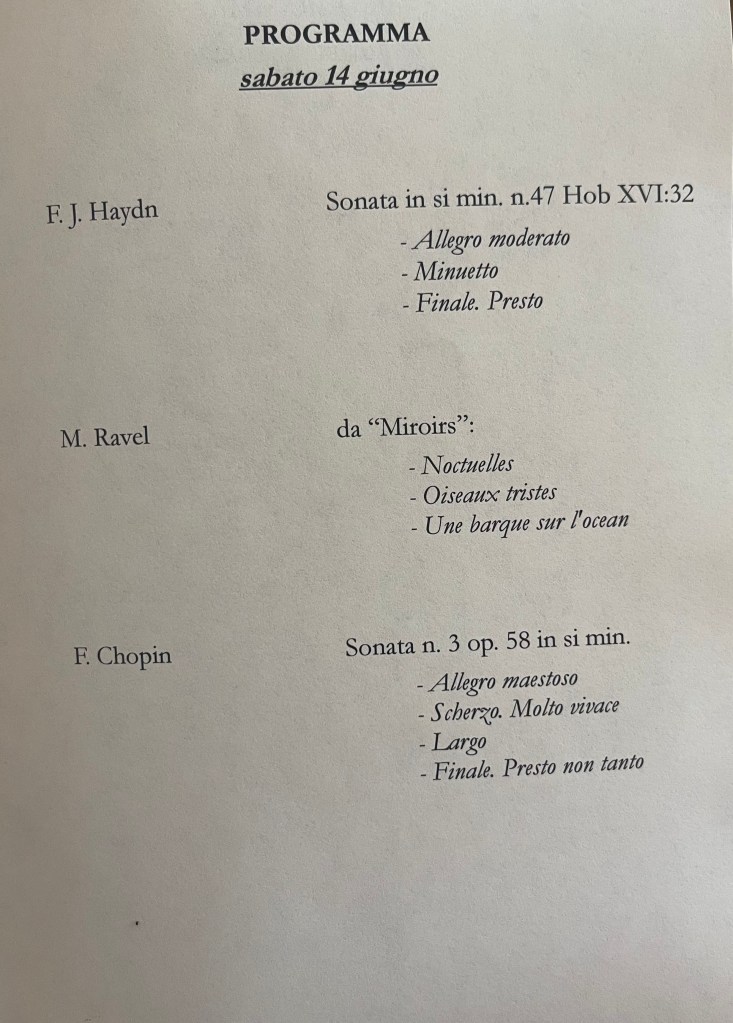
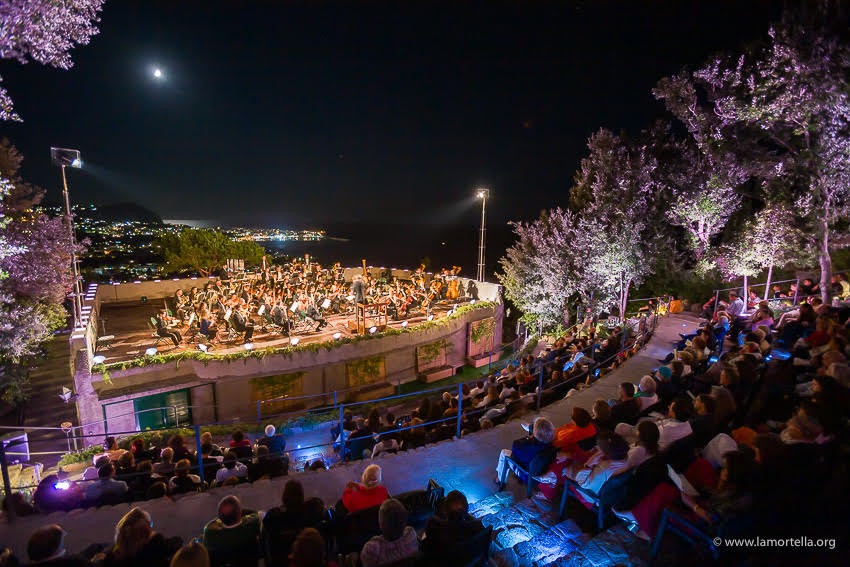
Kasparas opened his first programme at La Mortella on Ischia with the Sonata in B minor n.47 Hob XVI:32. Having chosen the older of the two Steinways that sit in the music room created by Susana Walton next to her husband’s studio. It is a concert hall created to give a platform to gifted young musicians, who after years of perfecting their art, need an audience with which to share their artistry, allowing it to mature, flourish and flower as everything seems to do on this sceptered isle. Pianos ,like good wine ,mature with age and it was this maturity that Kasparas brought to all he played. Having spent the past six years at the Royal Academy in London under the eagle eye of Christopher Elton, his sense of style and innate musicianship has been nurtured by this renowned mentor of pianists, passing on his heritage from Tobias Matthay and Gordon Green not forgetting the enormous influence of Guido Agosti and Maria Curcio.
The Haydn Sonata was of crystalline purity and elegance and revealed a real picture painted in the style of its time. Played with remarkable control and beauty of shape he allowed the music to unfold with unusual eloquence and elegance.The Minuet of birdsong beauty was imbued with beguiling subtle phrasing and the interruption of the trio was gently persuasive.The finale just sprang from his well oiled fingers with restrained brilliance but with moments of scintillating exhilaration. I have often noticed that Lithuanian pianists play with a natural fluidity that reminds me of the Hungarian school of Geza Anda. It was this fluidity and glowing palette of sounds that brought three of Ravel’s five ‘Miroirs’ vividly to life. These are truly pictures painted in sound and Kasparas with his subtle kaleidoscope of colours created the atmosphere that brought the magic of our surroundings into the concert hall.
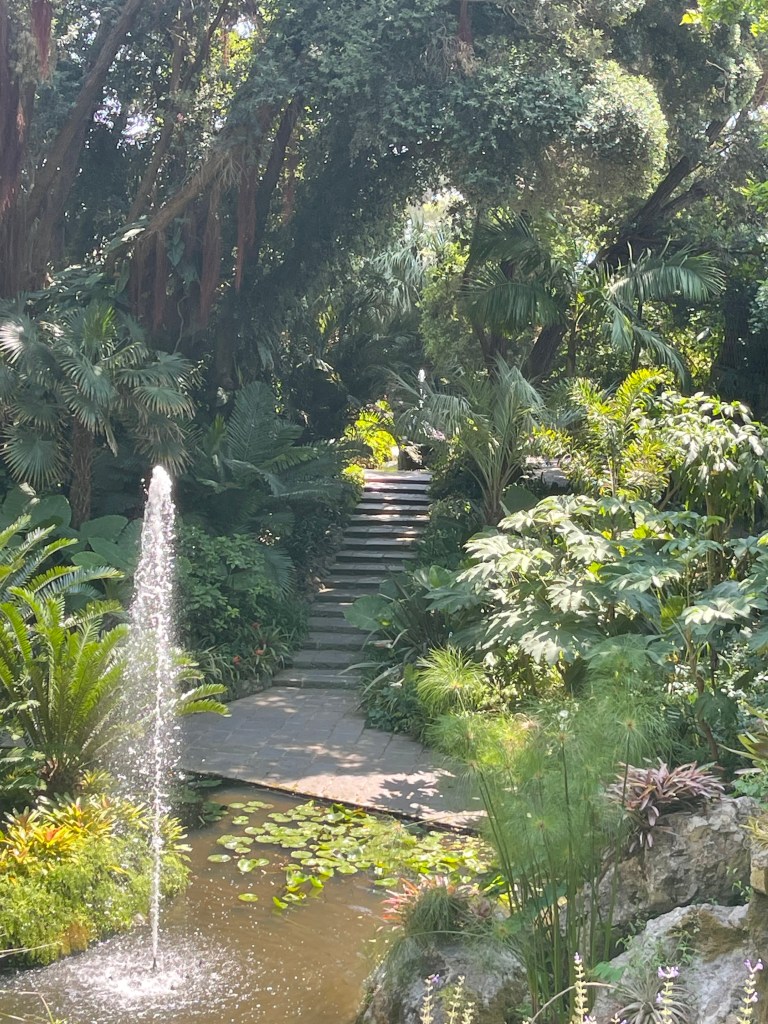
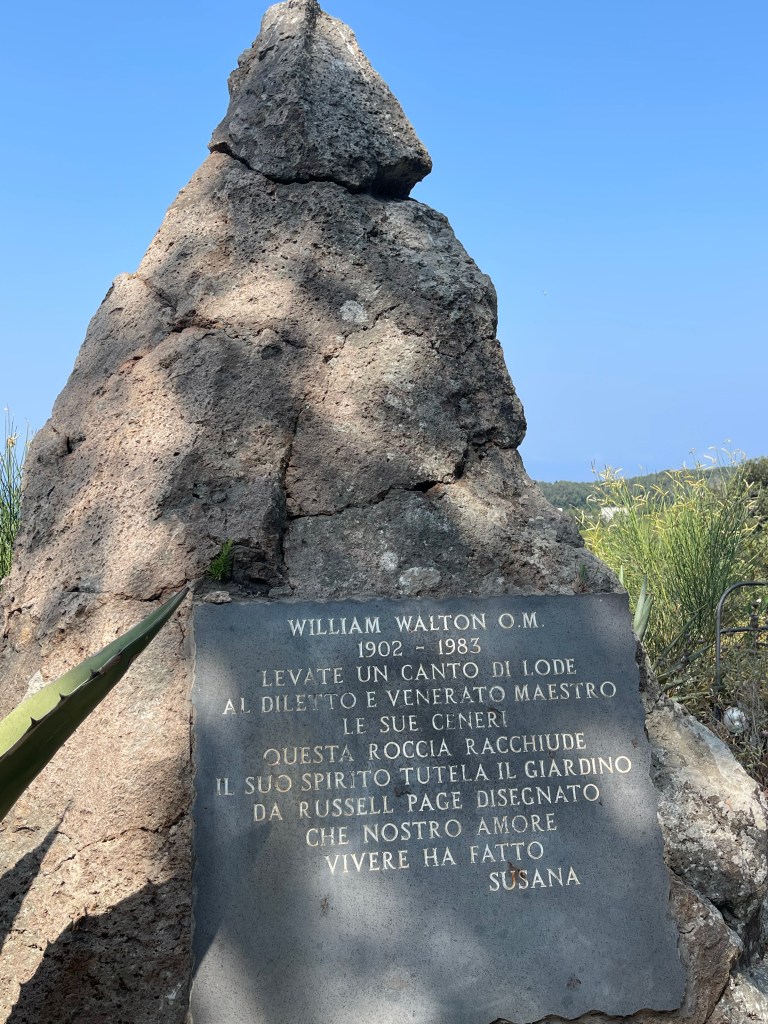
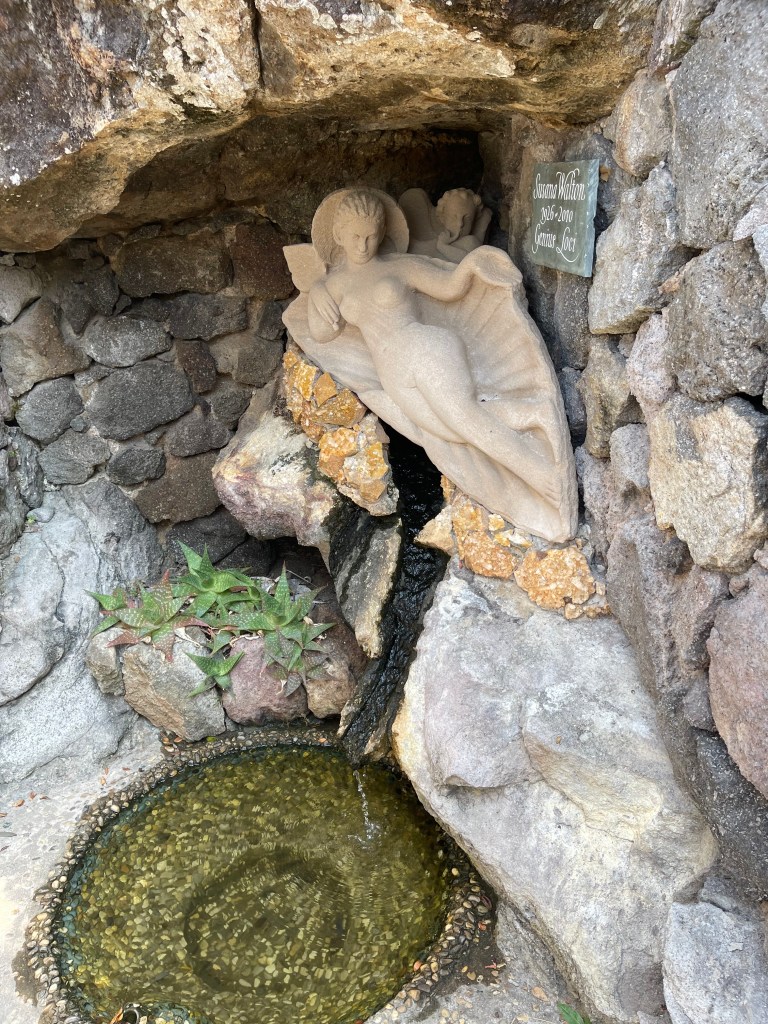
Words cannot describe the paradise that the Walton’s have created on this Island, sitting so regally in the Gulf of Naples. It is a true oasis of peace and beauty far removed from the hustle and bustle of one of the most tightly wound up cities in the world.(Only equalled by Buenos Aires, which by coincidence is where Susana Walton was born).
This was the ideal frame for Ravel’s magical imagination and genial mastery. One could almost feel the presence of the ‘moths’ that Ravel depicts with such extraordinary reality. Kasparas playing with a subtle beauty and radiance and a kaleidoscope of subtle inflections of fleeting brilliance. There was sheer magic as the beautiful rich sound of a chorale could be heard in the distance with a sense of nostalgia and languid timeless beauty, as the moths began to invade this illuminated scene, drawn in by a light that glowed so brightly. There was pure magic as Kasparas’s featherlight jeux perlé disappeared into the far reaches of the keyboard.
The birds that surround us, like the frogs too, are much happier than the one’s that Ravel depicts. Ravel’s ‘Oiseaux tristes’ have never sounded so yearningly expressive as the sounds that Kasparas produced on this vintage instrument glowing with a fluidity and gleaming delicacy. Tenor counterpoints that appeared within this lugubrious scene just added to the poignancy and languid beauty of such a sad scene. Luxuriant gentle waves of ‘Une barque sur l’océan’ can soon turn into violence as the Islanders here well know. On many occasions with rough seas the port of Forio ( where La Mortella is based ) is not accessible by sea. Within the depths of these lapping waves a melody is heard singing out with glowing reassuring warmth. A transcendental command of balance and brilliance from Kasparas brought not only a crystal clear melodic line but also wrapped it in luxuriant harmonic colours that never interrupted the their glowing beauty. Turbulence brought brilliant cascades of notes as the waves became more and more agitated until a magical calm was restored with a mirage of beauty, played with a disarming simplicity of religious fervour. Radiance and beauty restored from Kasparas’s delicate fingers, barely caressing the keys with the whispered wafts of the final sprays of water spread over the upper most register of the piano.
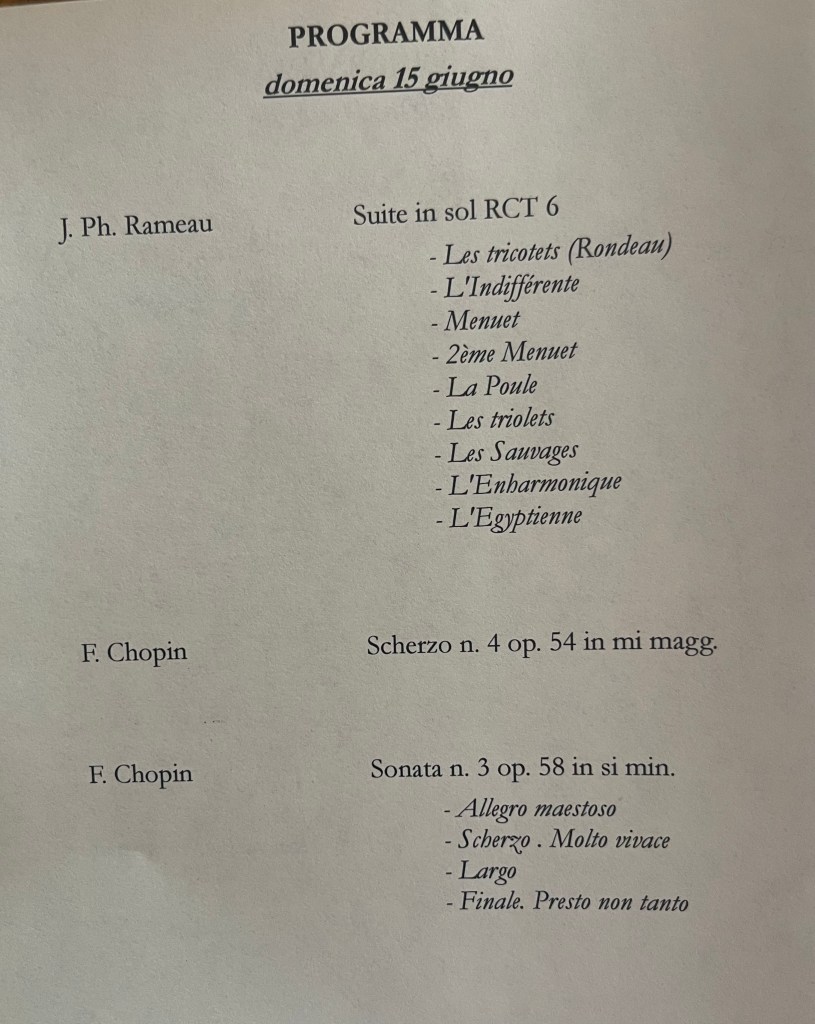
Chopin’s B minor sonata was the work that took up the second half of the programme of both concerts and is one of the monuments of the romantic piano repertoire. Often criticised for its lack of architectural form it is in the right hands one of the most tightly constructed works by a genial master, not only of small forms. A composer who had the vision and originality to take the standard sonata form and transform it with the bel canto romanticism of a pianistic innovator. A beautifully phrased opening, with extreme care of the rests, immediately showed us the credentials of a musician who could shape Chopin’s masterly construction with intelligence and poetic invention. The glistening beauty of the second subject ,’sostenuto’, but not a change of tempo as tradition would have us believe,but allowed to breathe with the natural bel canto that was the composers inspiration. No repeat ,that may have been Chopin just adhering to the formal structure that he had inherited. But a development of dynamic strength and driving energy. It was this driving urgency and complicated contrapuntal mastery that led to the glorification of the second subject played with the exhilarating liberation of a flower in full bloom.
The Scherzo I have never heard played so beautifully phrased, not just the usual ‘fingerfertigkeit’ of demonstrative rather than poetic artists. The Trio too had a sense of line and disarming delicacy that gave an architectural shape and meaning to the whole structure. The final slamming of the door, like in Beethoven, was in fact the opening of another, that of the ‘Largo’ introduction to the beautiful bel canto of the slow movement. Seamingless streams of notes filled the piano with a radiant glow out of which Chopin would barely hint at a distant melody. What can sound in lesser hands as endless meanderings was given a poetic nobility and architectural shape that led so naturally to the poignant return of the opening bel canto. The Finale – Presto non tanto – was played with aristocratic nobility with the increasing exhilaration that Chopin actually writes with more and more added notes, and was evidenced by a crescendo of tension that was only to explode with the exhilarating outburst of the coda. Brilliantly played with a technical command of the keyboard, not only of the notes, but of the meaning that Chopin imbues in every thing he writes.
‘ Les triolets’ was a preview of the complete suite by Rameau that Kasparas offered as a thank you after the first concert on Saturday.
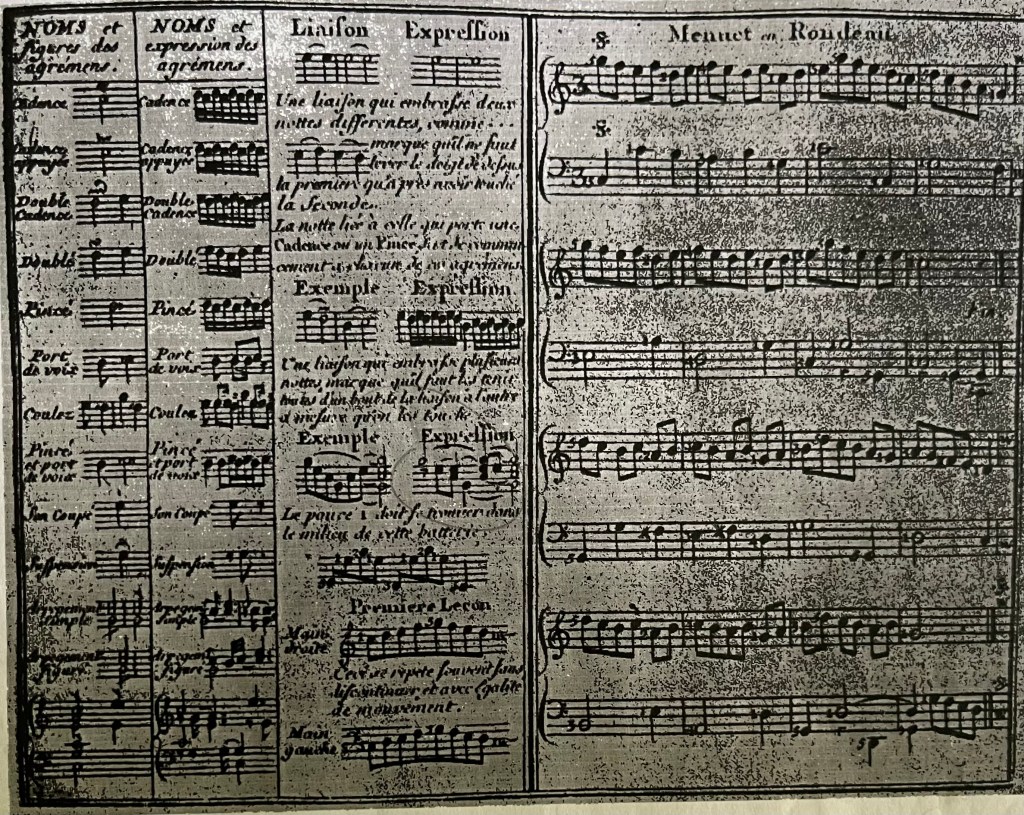
In the second programme in place of the Haydn Sonata Kasparas played the nine pieces that make up Rameau’s G major suite RCT 6. Of course ‘La Poule’ and ‘Les Sauvages’ are favourite encore pieces, in particular of Sokolov, but the other pieces are equally descriptive and refined with crystal clear ornaments that Rameau himself has written into the rather bare looking score. There were glistening ornaments in ‘Les tricotets’ and a beautiful purity to the knotty intricacies of ‘L’Indifférente’ that was played with disarming simplicity.The two ‘Menuets’ were played with refined emotion with a touching lilt to the rhythm of the second. A sparkling brilliance to ‘La Poule’ where Rameau writes into the score some very precise indications giving such whimsical character to his clucking hen. ‘Les Triolets’, Kasparas had played as an encore in the previous programme and it was good to hear the refined glistening beauty of the ornaments in the context of the entire suite. There was a beguiling insistence to ‘Les Sauvages’ with a melodic line of hypnotic beauty. Kasparas brought a gentle refined beauty of a past age to ‘L’Enharmonique’ and a clarity to the unwinding web of notes in the final ‘L’Egyptienne’.
The fourth Scherzo by Chopin was an addition to the previous programme and it was played with fantasy and a featherlight brilliance. Full of poetic beauty with streams of notes glistening like jewels and was thrown off with nonchalant ease.There was a sumptuous beauty to the ‘più lento’ played with the freedom of a bel canto singer of audacious pedigree. Underlying there was always the complexity of Chopin’s seemingly innocent counterpoints and the nobility of the final momentous flourishes.
Lithuanian-born pianist Kasparas Mikužis ,born in 2001,has already performed on the stages of prestigious venues such as the Concertgebouw Hall in Amsterdam and the Lithuanian National Philharmonic. He has released his debut CD, with performances televised on Mezzo TV and airplay on Lithuanian national TV, radio, and France’s Radio Classique. Last February, Kasparas appeared with John Wilson and the Royal Academy of Music Symphony Orchestra, and most recently, in December, he gave his debut recital at Wigmore Hall in London. Since 2024, Kasparas has been a scholar of the Imogen Cooper Music Trust as well as a recital scheme artist of the Countess of Munster Trust.
Prof Tufano in an after concert discussion with a member of the public
Recent engagements include recitals at the Bridgewater Hall in Manchester, UK, and the Krzysztof Penderecki Centre in Lusławice, Poland. In 2023, Kasparas made his debut with the Lithuanian National Symphony Orchestra at the Lithuanian Philharmonic in Vilnius. Later that year, he was invited to perform for the Lithuanian and Polish presidents on Lithuanian Statehood Day at the Presidential Palace. This was followed by Kasparas winning 3rd Prize at the International M. K. Ciurlionis Competition. Since 2023, Kasparas has been closely working with pianist Gabriela Montero through ‘O’Academy and was recently invited to extend his studies as part of the 2025 cohort.
Kasparas’ musical talent was first recognized by Michael Sogny when he became a scholar of the SOS Talents Foundation at the age of 10. The foundation helped the young pianist gain exposure and concert experience by inviting him to perform at various venues, including their annual Christmas concerts held on the Champs- Élysées in Paris. Since then, Kasparas has performed at the United Nations Headquarters in Geneva on multiple occasions and at the EMMA for Peace World Summit of Nobel Peace Laureates concert in Warsaw. In 2018, he was invited to the opening concert of the V. Krainev Competition in Kharkiv, where he performed Prokofiev’s Piano Concerto No. 3. Other notable appearances include performances at the Fazioli Factory Concert Hall in Sacile, Italy, the Purcell Room at Southbank Centre in London, the season-opening concert of the Kharkiv Philharmonic Hall with the Kharkiv Philharmonic Symphony Orchestra under conductor Yuri Yanko, as well as performance at the Eudon Choi show during London Fashion Week 2023. Over the years Kasparas has received help from various foundations, including the M. Rostropovich Charity & Support Foundation (Lithuania), the SOS Talents Foundation (France), the Harold Craxton Trust (UK), the Hattori Foundation (UK), the Drake Calleja Trust (UK), Keyboard charitable Trust ,the Wayne Sleep Foundation (UK). Currently, Kasparas is a student at the Royal Academy of Music, where he completed his undergraduate studies with pianist Diana Ketler and is now pursuing his postgraduate studies with professor Christopher Elton. In recognition of his representation of Lithuania on the international stage, Kasparas was honoured with a letter of gratitude from the President of the Republic of Lithuania.
Breakfast takes on a different meaning in Paradise Lucia, faithful helper sustaining and maintaining Susana’s heritage
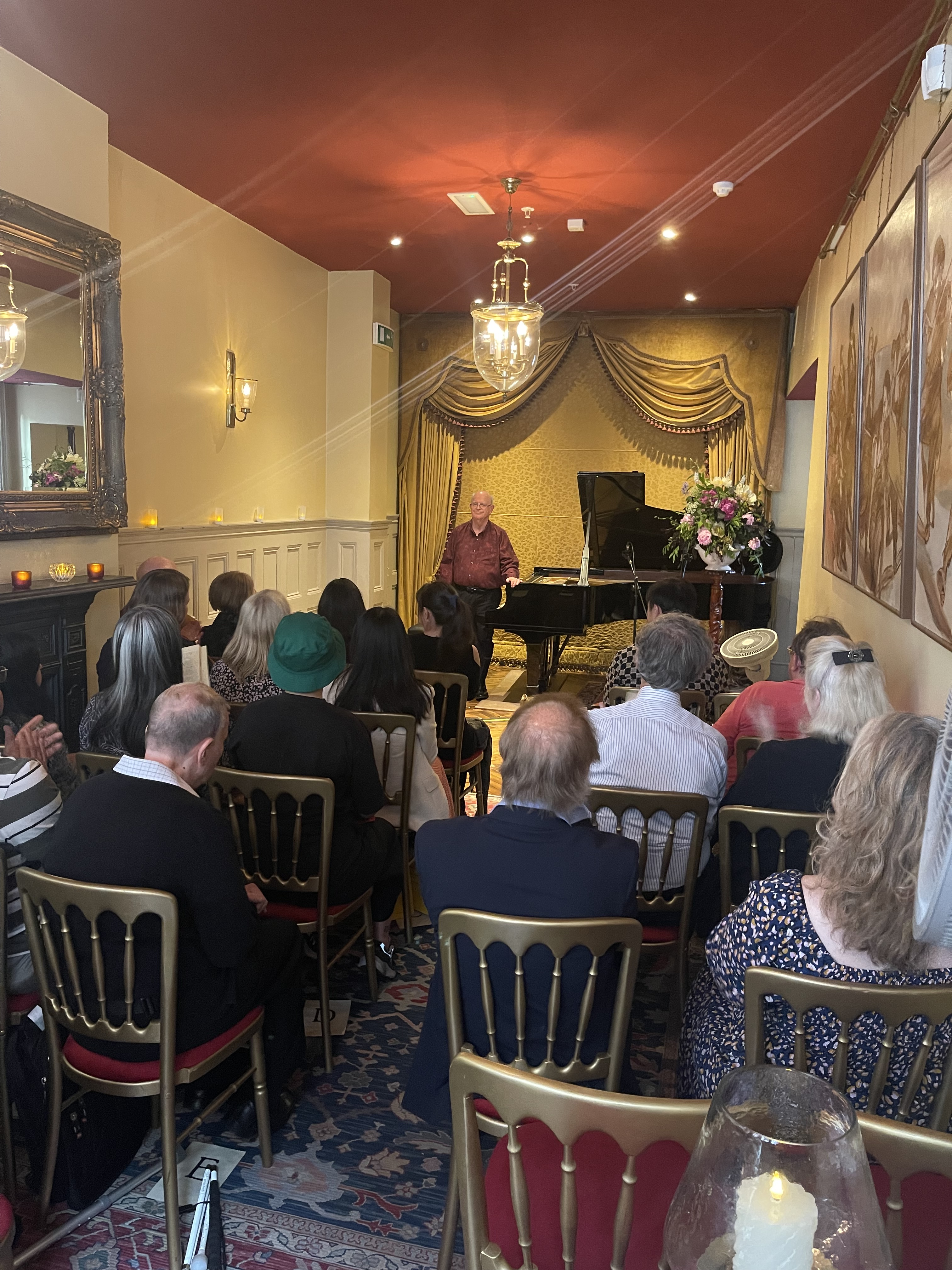
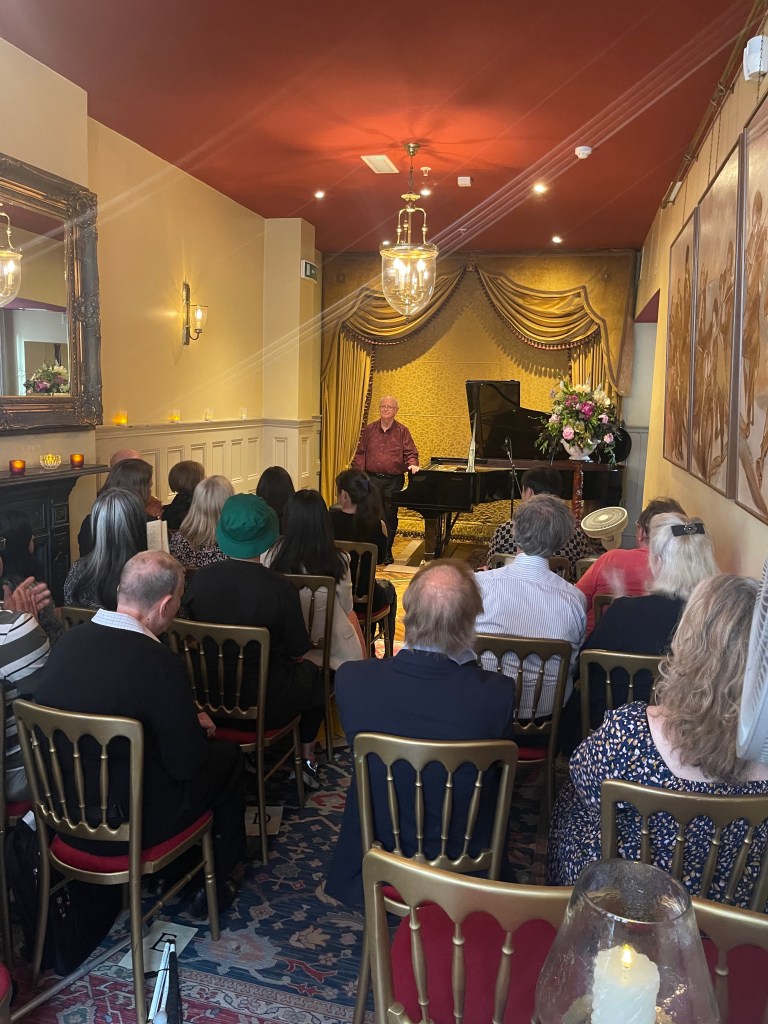
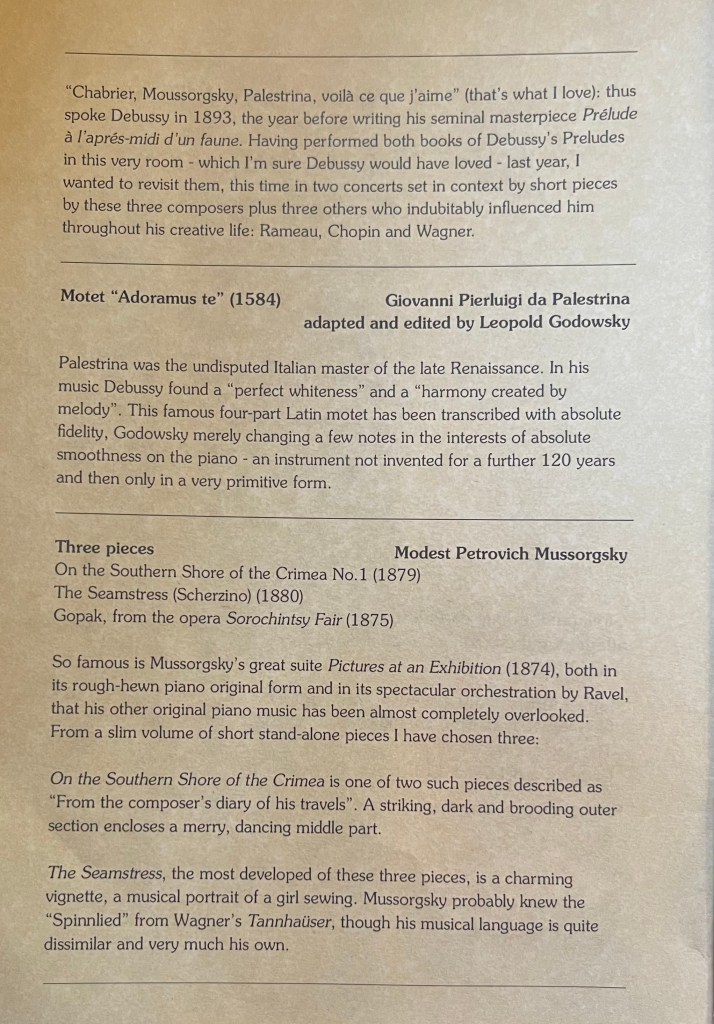
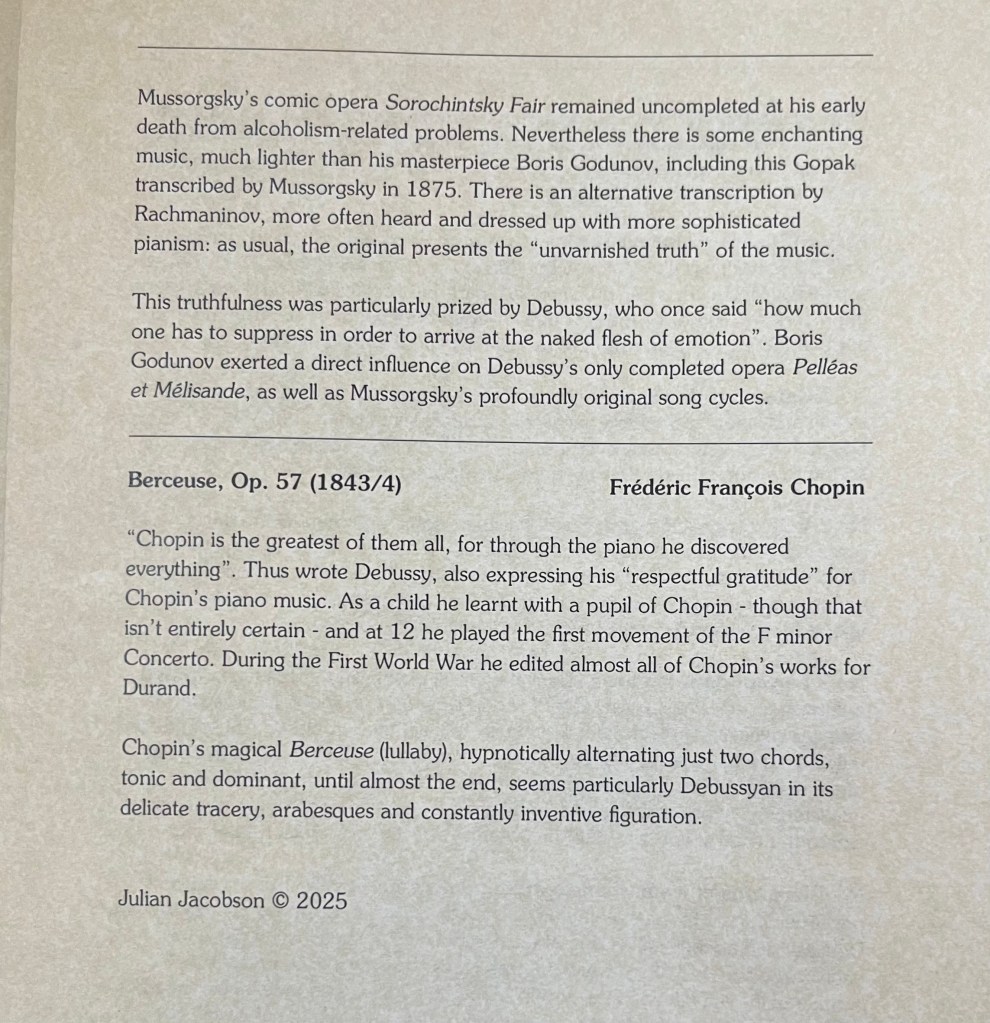
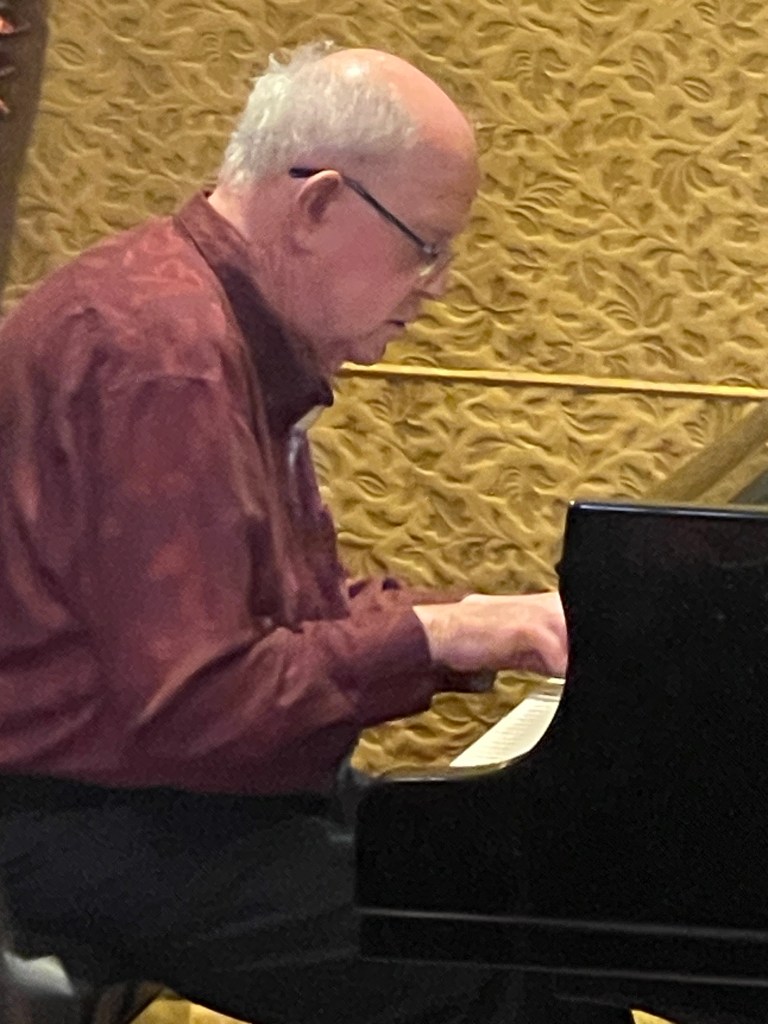
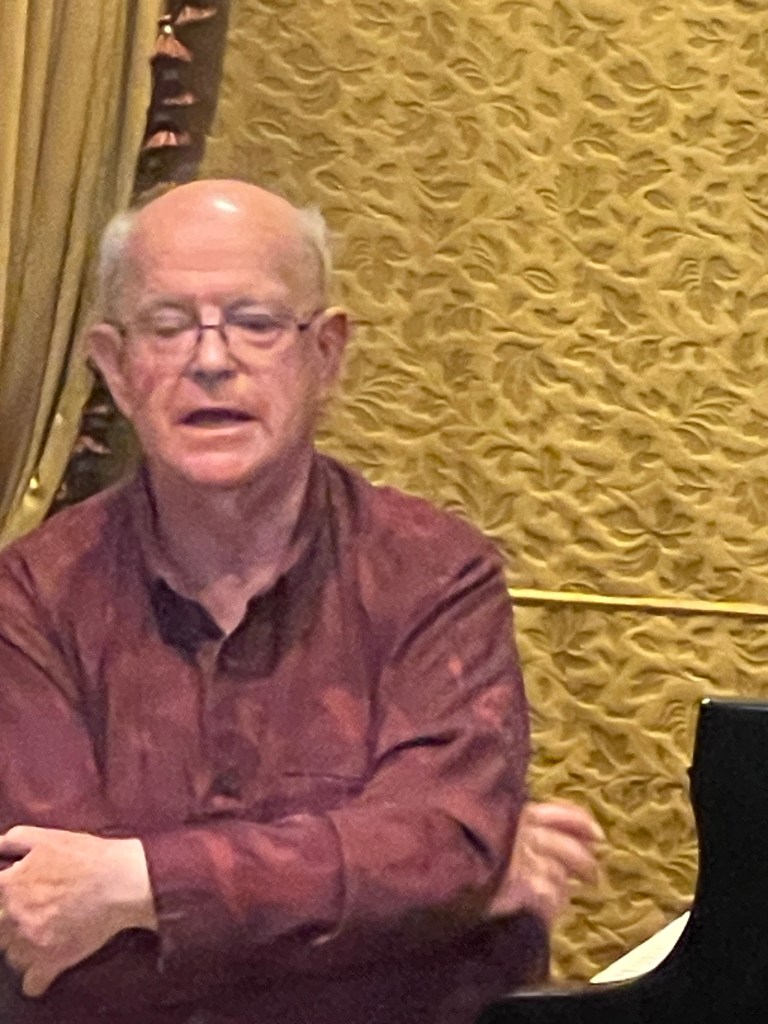
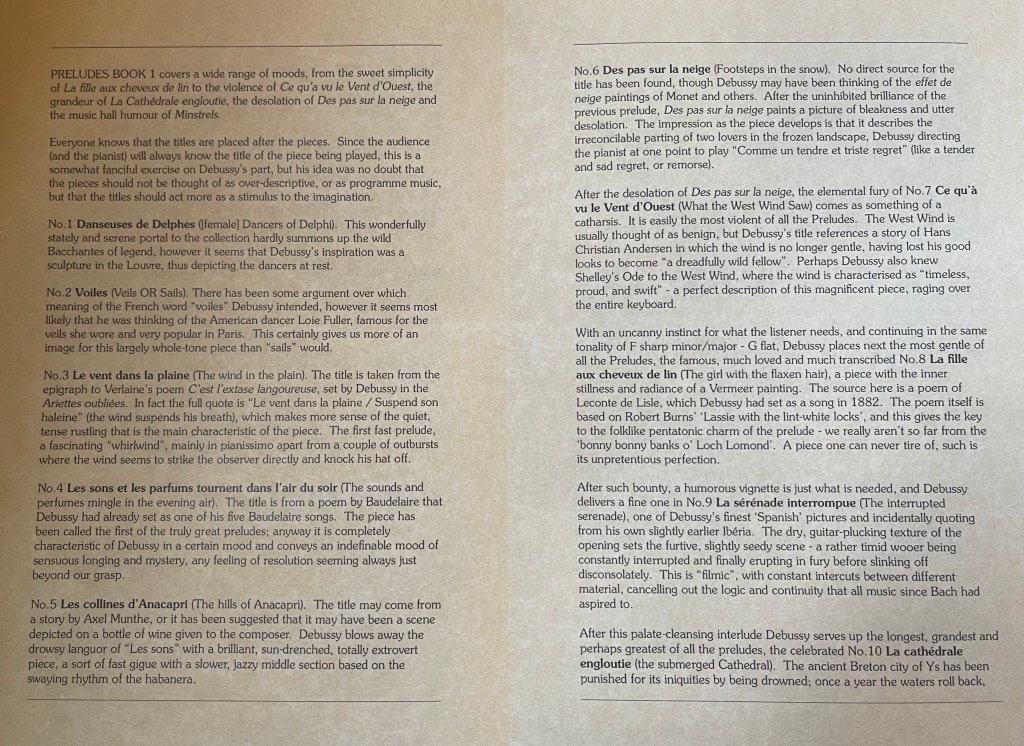
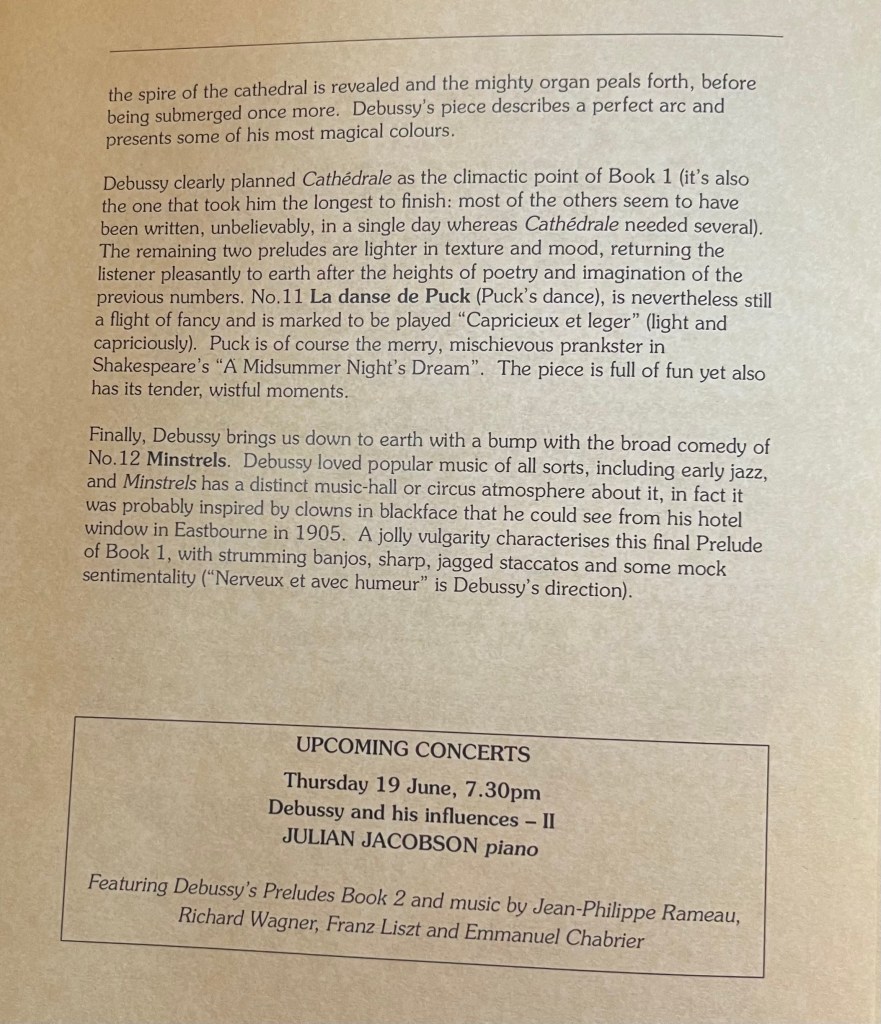
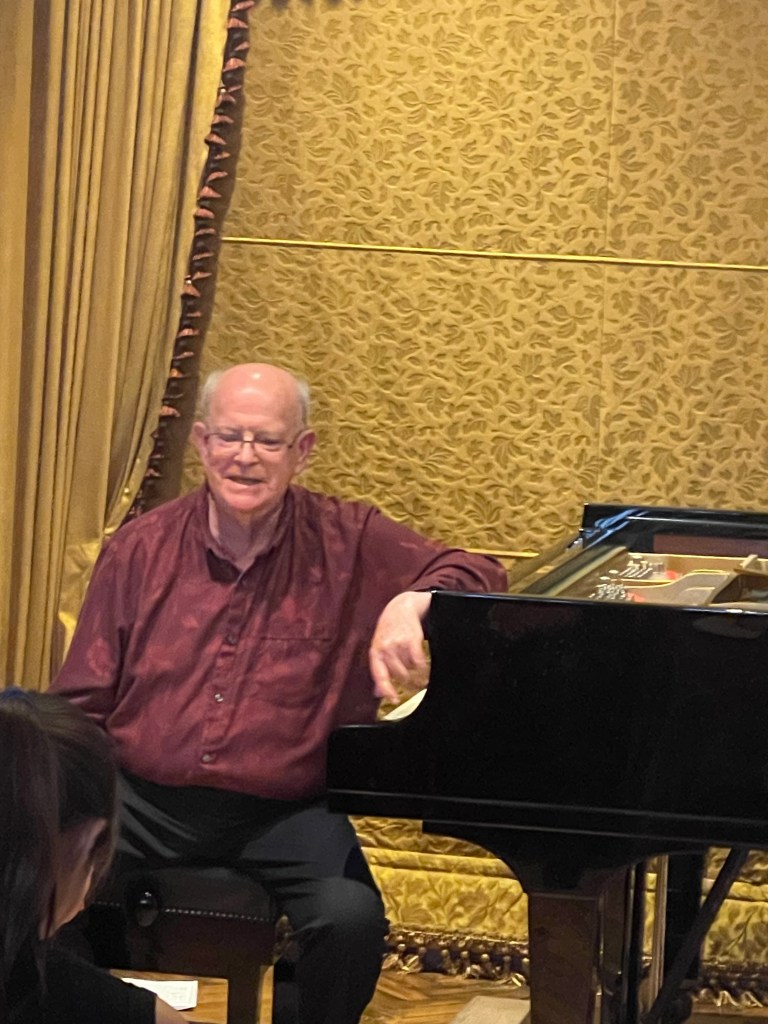
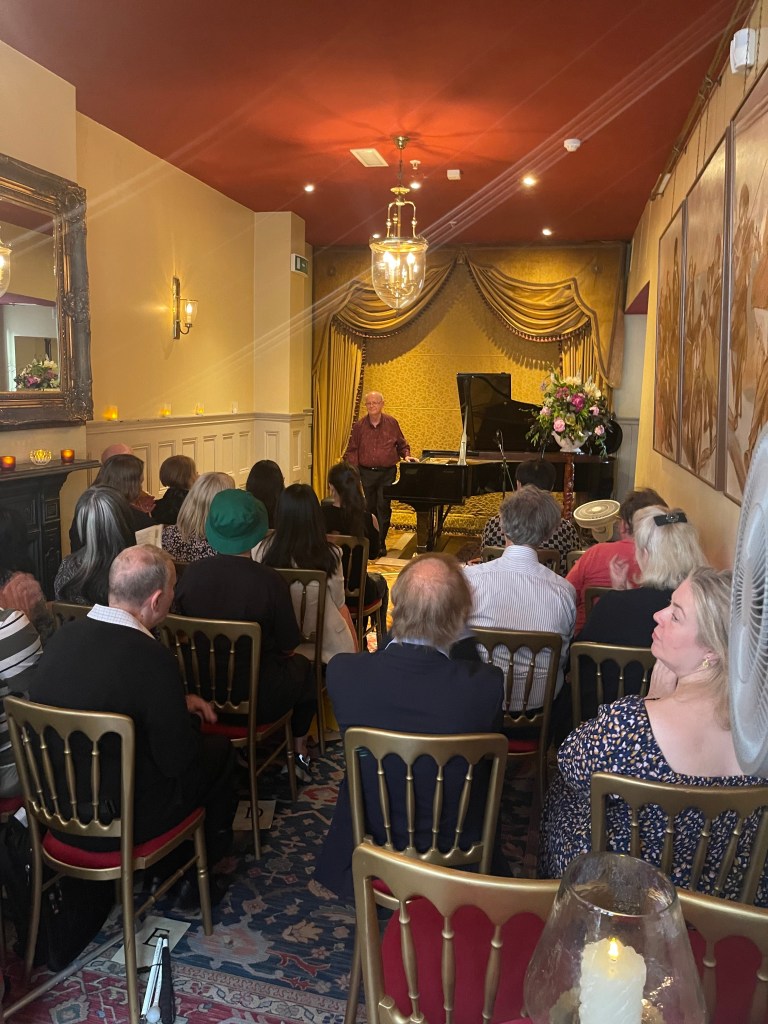
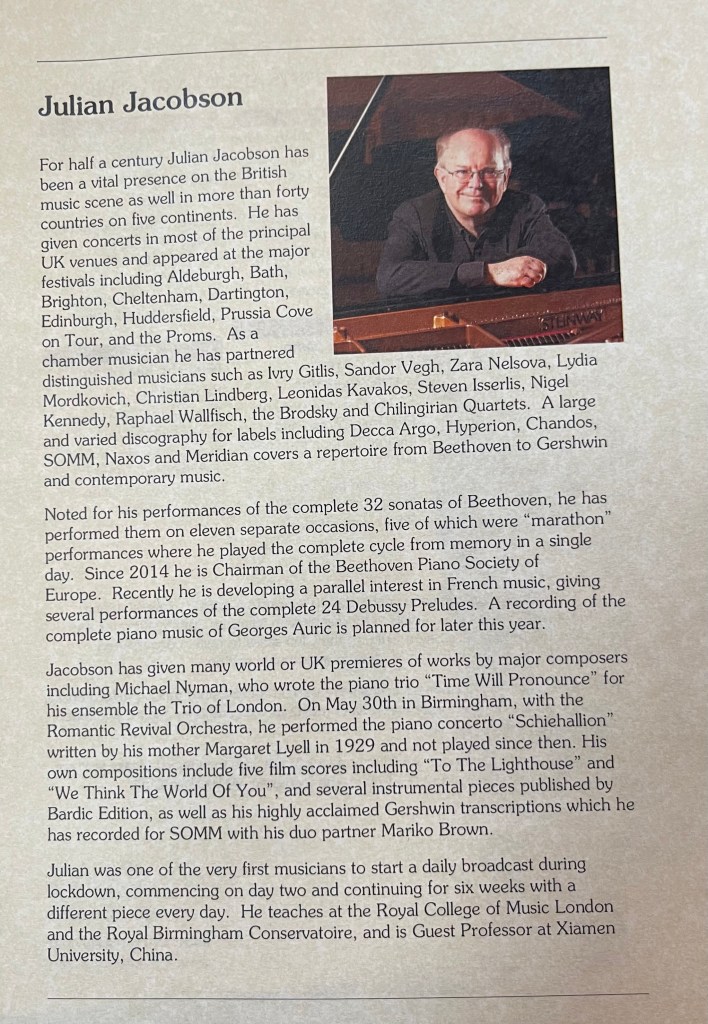
The remarkable Julian Jacobson ready to show us the path that led to the creation of twenty four of the most extraordinary visions of Claude Debussy. Starting the journey with the Motet ‘Adoramus te’ by Palestrina adapted for piano by Godowsky with the just respect that the founder of modern day music deserves . Followed by three short piece by Mussorgsky and ending with the ‘Berceuse’ by Chopin. Adding to the published programme two Arabesques by Debussy to make up a programme with an interval . Following with the 12 Preludes Book 1 played by a true kapellmeister who carries in his head the entire piano repertoire .
A single Mazurka by Chopin as an encore, I stayed in my seat convinced we would get the other 51!
Beauty and architectural authority characterised a concert that was a lesson in simple humility before such masterpieces that just poured from his fingers in another fascinating evening with Julian Jacobson. A musician who has the entire piano repertoire at his fingertips had decided to revisit the Debussy Preludes in two evenings .Each book prefaced by the composers that had influenced Debussy .
The preludes I had written about just a year ago but it was fascinating to hear the works that had influenced the writing of them. Prof Jacobson’s programme notes speak for themselves and realising at the last minute that there was an interval he happily added some more works to his programme .
the beautiful salon above the concert room the 1901 Arts Club previously the headmasters residence of the school next door
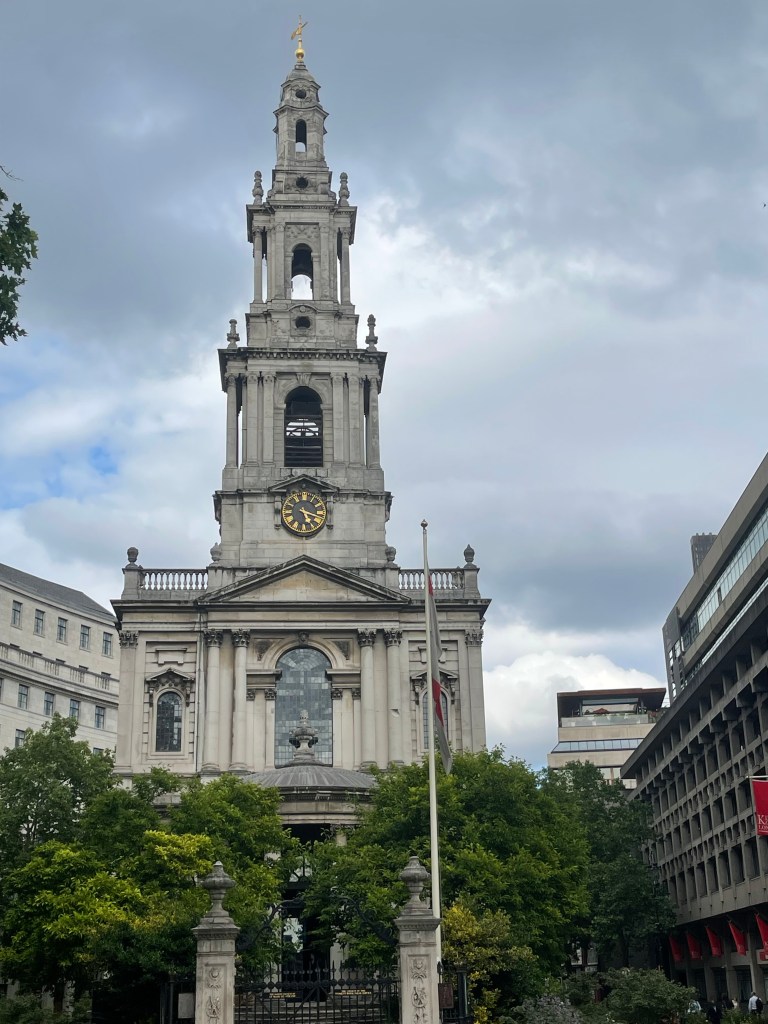
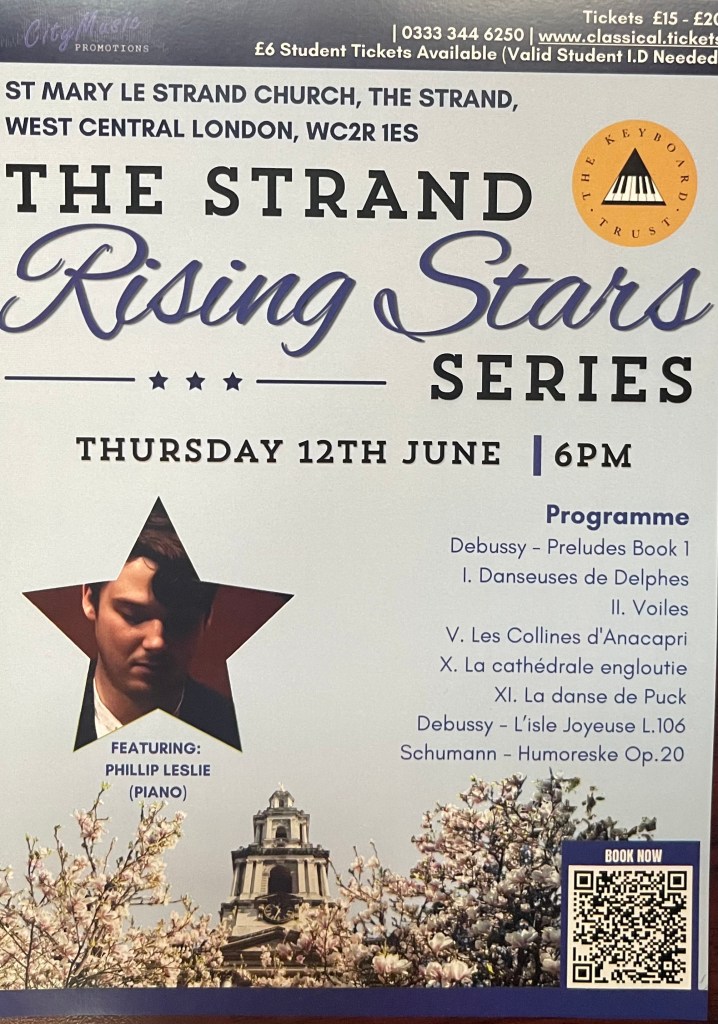
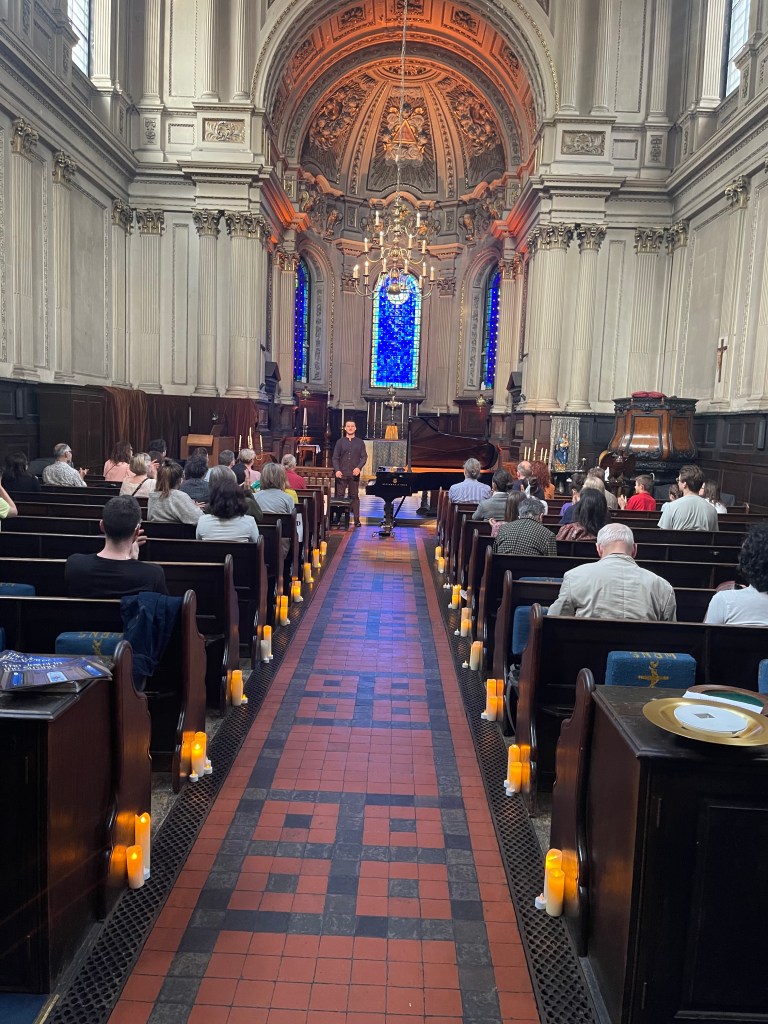
Phillip Leslie proved himself to be indeed a rising star with Debussy Preludes of ravishing sounds and refined musicianship. Followed by Debussy’s vision of Jersey from Eastbourne with a tone poem of unimaginable passionate persuasion . But it was the sublime Humoreske of Schumann that filled these majestic walls with sounds worthy of this beautiful edifice. Florestan and Eusebius were at last united in the celebration of sublime beauty in the hands of a refined poet of the keyboard. A single encore of Paderewski’s Minuet in G was a homage to his teacher the renowned pianist Philip Fowke who was there to pass on the baton to a worthy successor.
Two Philip’s- Master and pupil . Philip Fowke with whom Phillip Leslie studied at Trinity Laban
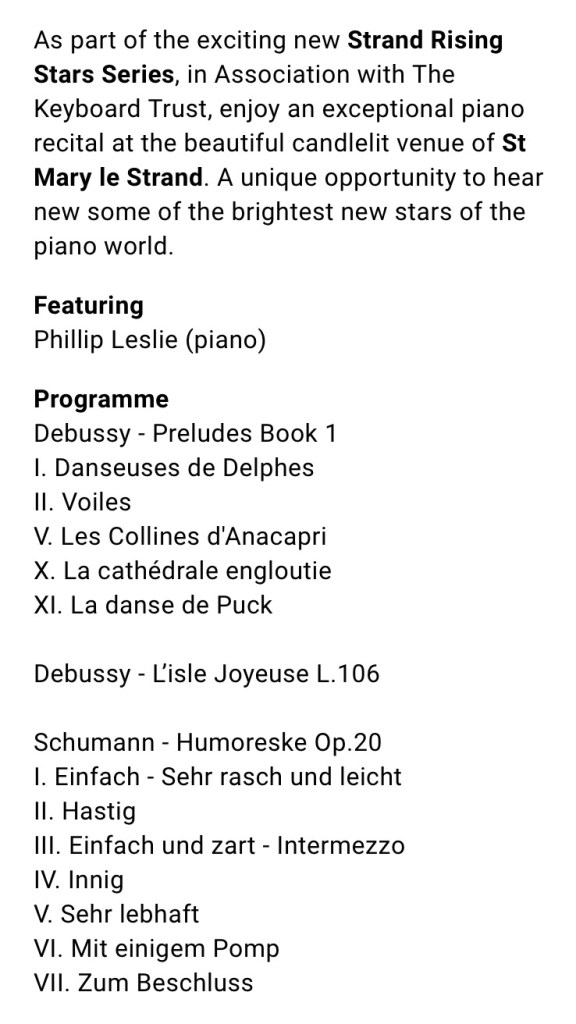
The restrained elegance of Debussy’s depiction of the sculpture in the Louvre of the ‘Dancers of Delphi’ with Phillip’s kaleidoscope of magic sounds creating the unworldly atmosphere that it evoked. The radiance and ethereal wafts of colour that Phillip floated over the keyboard was of a beauty on which these ‘sails or veils’ were being blown by a warm luxuriant breeze. He brought the pulsation of Naples to the ‘Hills of Anacapri’ with its brilliance and splashes of colour. Even the sleazy ‘modéré et expressif’ was full of insinuating beauty and the final triumphant outpouring of joy was played with fearless brilliance to the final chiselled shout of joy .There was a masterly build up of sound in the ‘Submerged Cathedral’ with it’s sense of grandeur and religious ferment .The beautiful plain chant ‘un peu moins lent (dans une expression allant grandissant) rang around this magnificent edifice with haunting beauty and solemnity. What fun Phillip had with ‘Puck’s dance’ where the impish masquerading just flew form his fingers with titivating brilliance. The last word was to Puck with a stream of sounds played pianissimo ‘rapide et fuyant’ with a final poke deep in the bass.
‘L’Isle Joyeuse’ is in fact Debussy’s depiction of Jersey as seen from Eastbourne and just shows the fantasy that illuminated all that Debussy saw. A tone poem of subtle colours and dynamic drive. But it is the passionate outpouring at the end that like Chopin’s Ballades brings this masterpiece to a brilliant conclusion. It was played with fearless conviction and masterly control but also a palette of colours of a pointiless painter.
Schumann’s Humoreske op 20 is one of the most beautiful of Schumann’s works for piano but it is also one of the most difficult to hold together as a single work.Written as one long movement but with many differing episodes where Schumann’s duel character of Florestan and Eusebius can live together only with musicians that can appreciate the architectural shape under which they live.
Phillip played it as a whole with beauty and a sense of style with a languid freedom and refined rubato. From the very first notes ‘einfach’ where the radiance of the melodic line was allowed to fill every corner of this beautiful church with a glowing luminosity. Rapid changes of tempo and character were played with brilliance and a superb sense of balance that allowed the melodic line to shine above all the intricate counterpoints that Schumann commands. Schumann even writes on three staves to show just where the melodic line lies but Phillip throughout the work was able to steer his way so clearly with poetic fantasy and above all ravishing sound.The Intermezzo of ‘Einfach und zart’ was played at quite a pace but even the single notes that become octaves were incorporated into the musical conversation that was driving us inexorably forward.. The melodic line that shone out in ‘Mit einigem Pomp’ was one of those magic moments where Phillip created a wash of sound and could allow the melodic line to emerge in its midst. The final episode ‘Zum Beschluss’ was played with beguiling nostalgia but also with a remarkable legato that allowed this great song to resound with all its most intricate counterpoints. The Allegro final flourish was played with aristocratic grandeur and sumptuous rich sound.
A single encore of Paderewski’s once famous Minuet in G was played with an elegance and sense of style that was obviously the same that had made Paderewski the most famous pianist alive before turning to politics and luxurious retirement in Switzerland




 ChristopherAxworthy-MusicCommentary