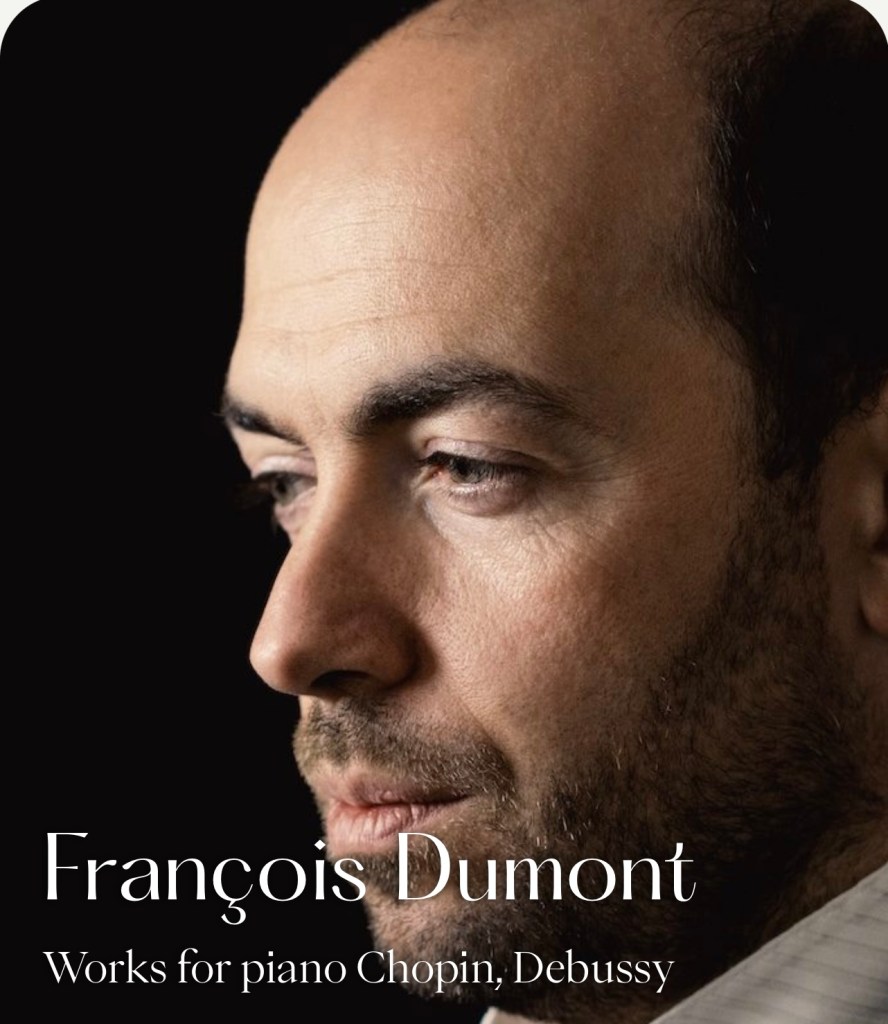
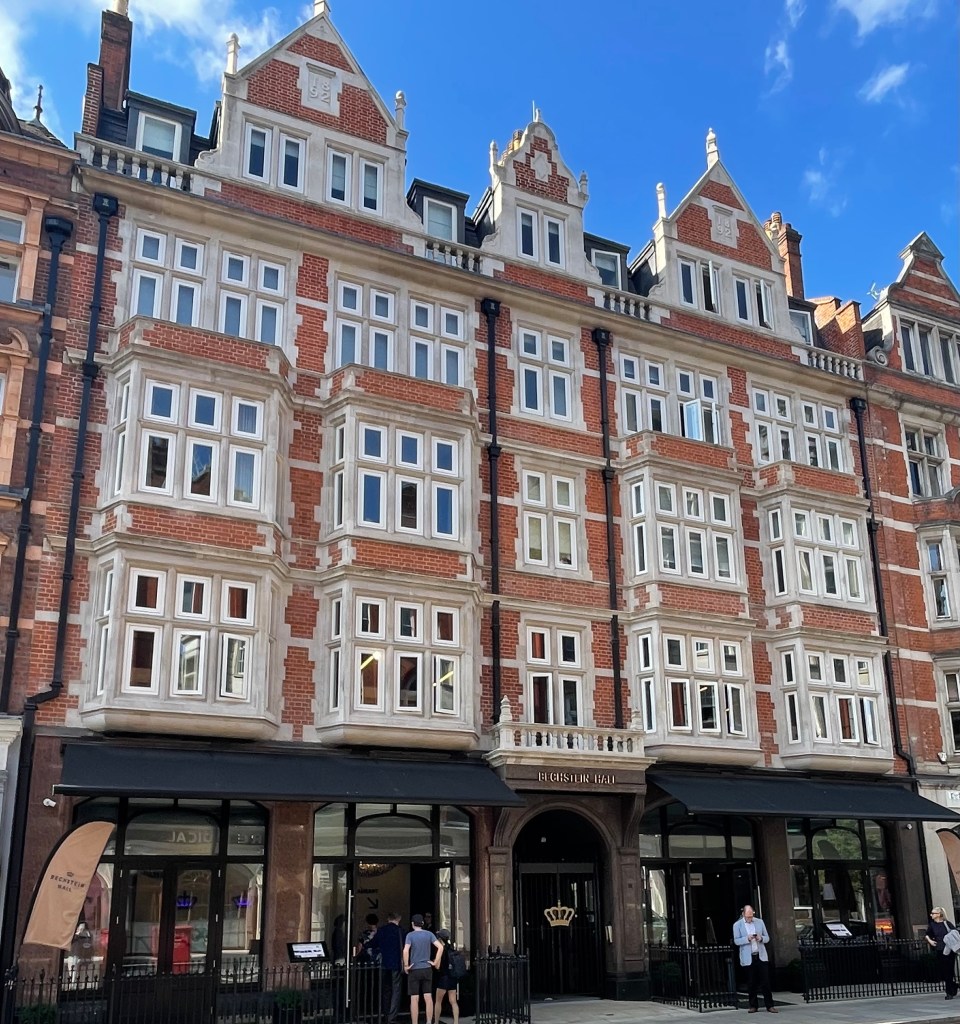
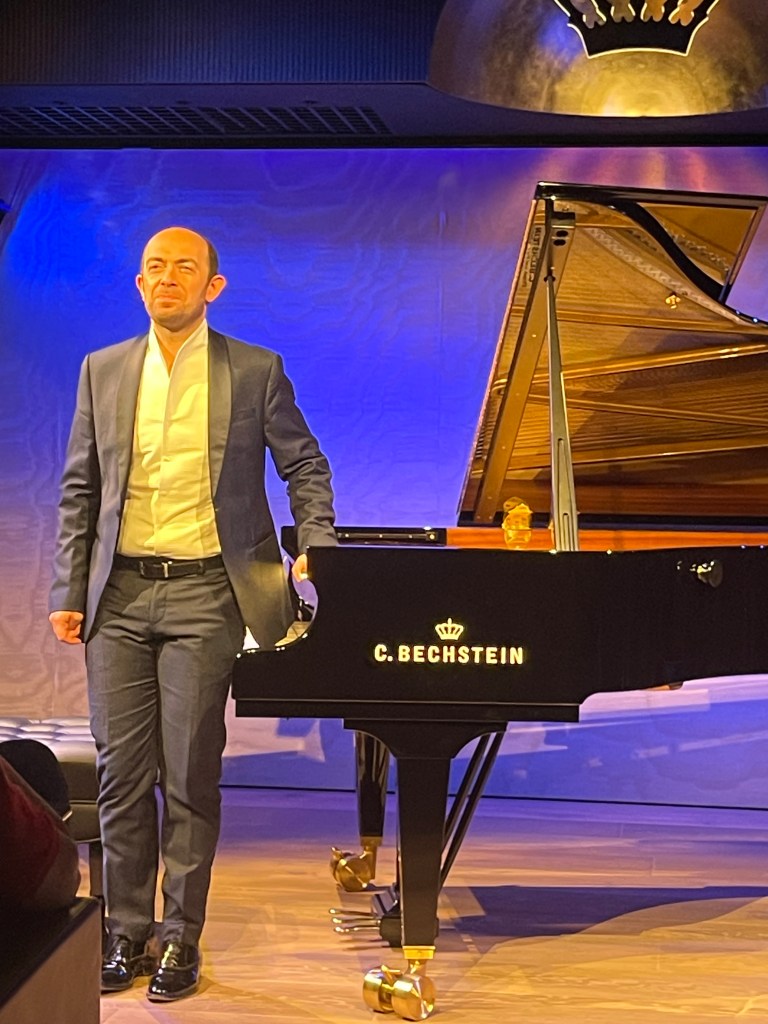
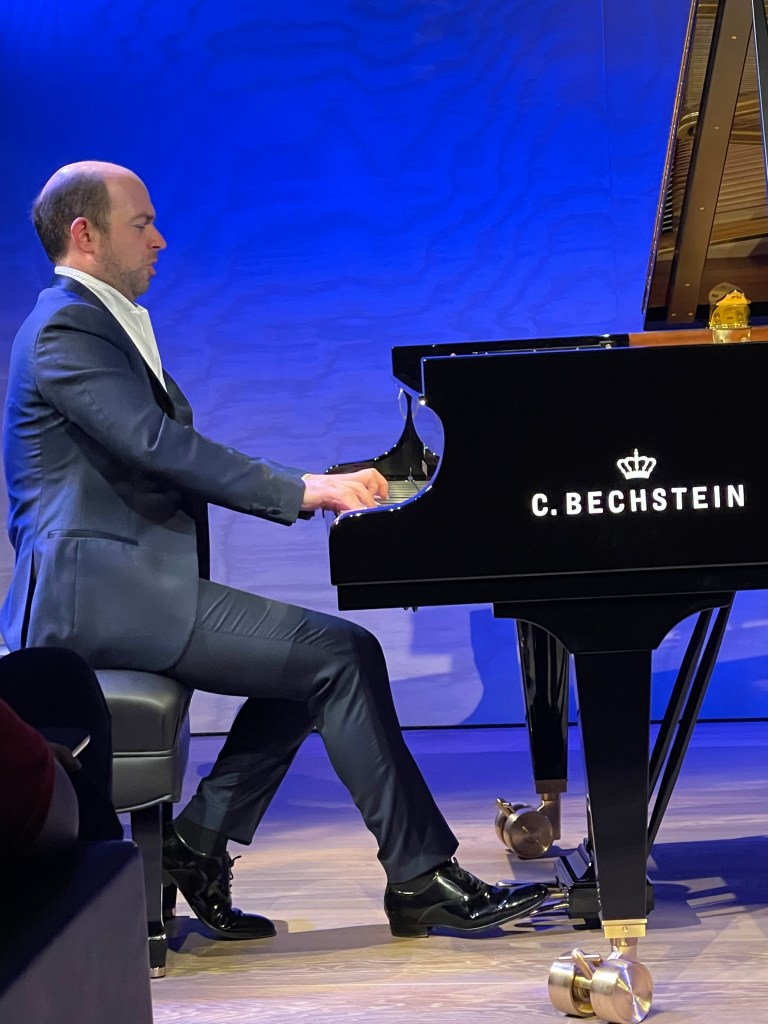
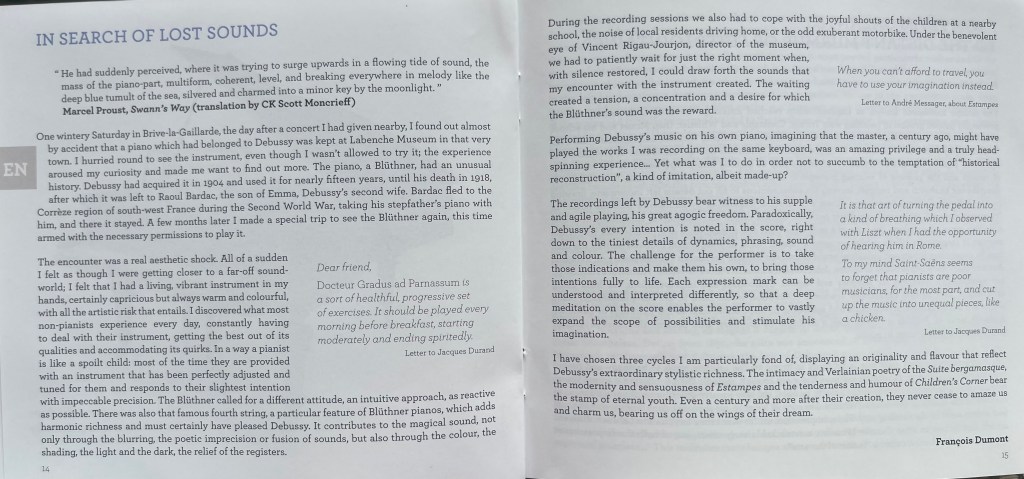
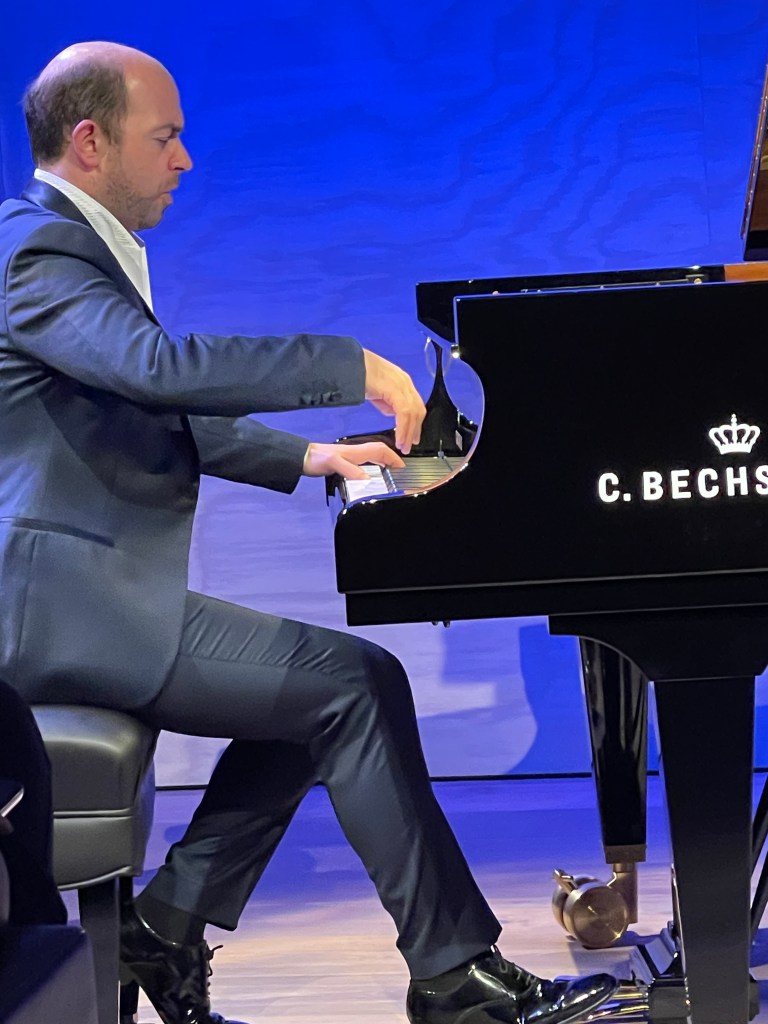
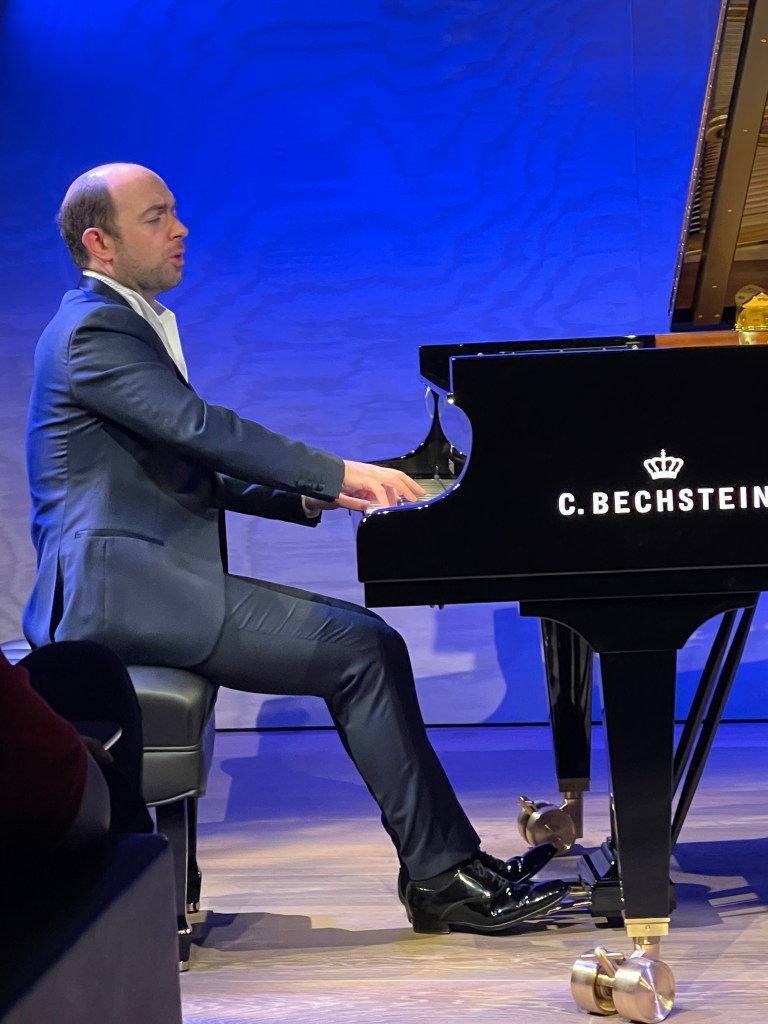
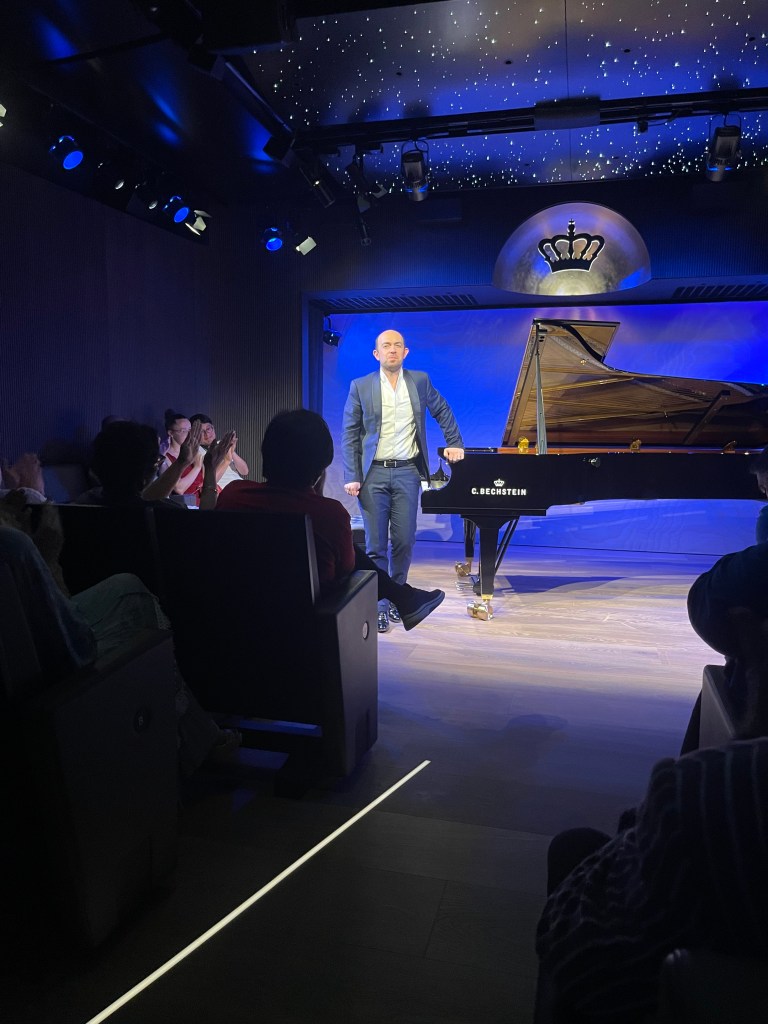
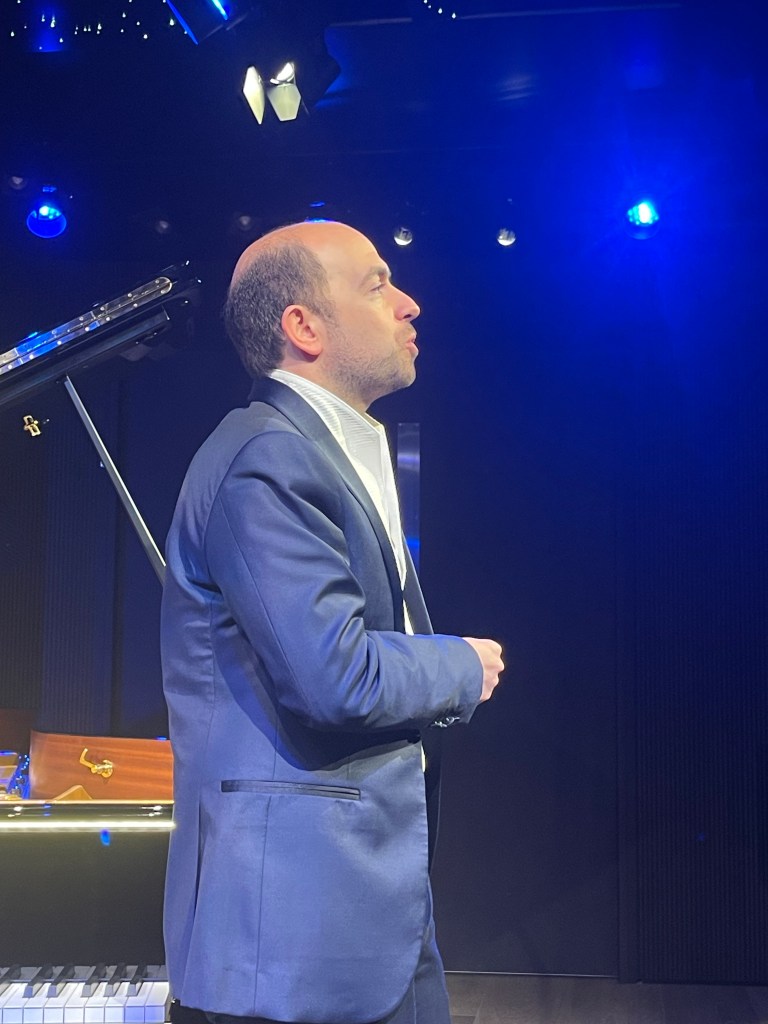
It was good to be back at the Bechstein Hall and be greeted by a full house for a master pianist.
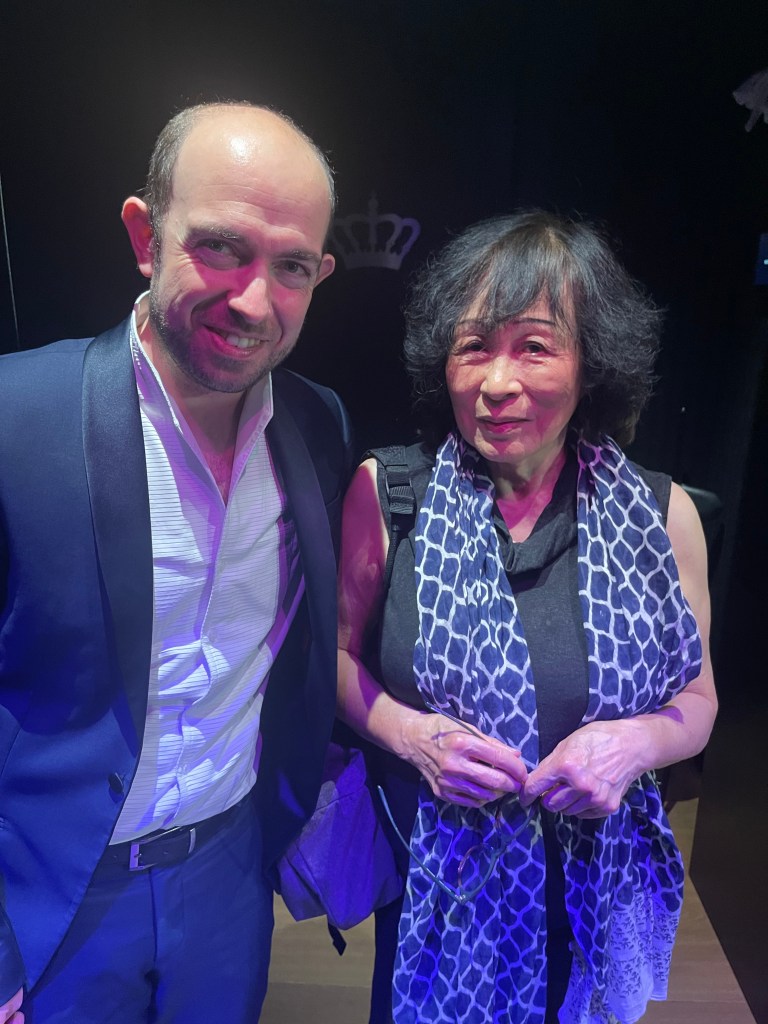
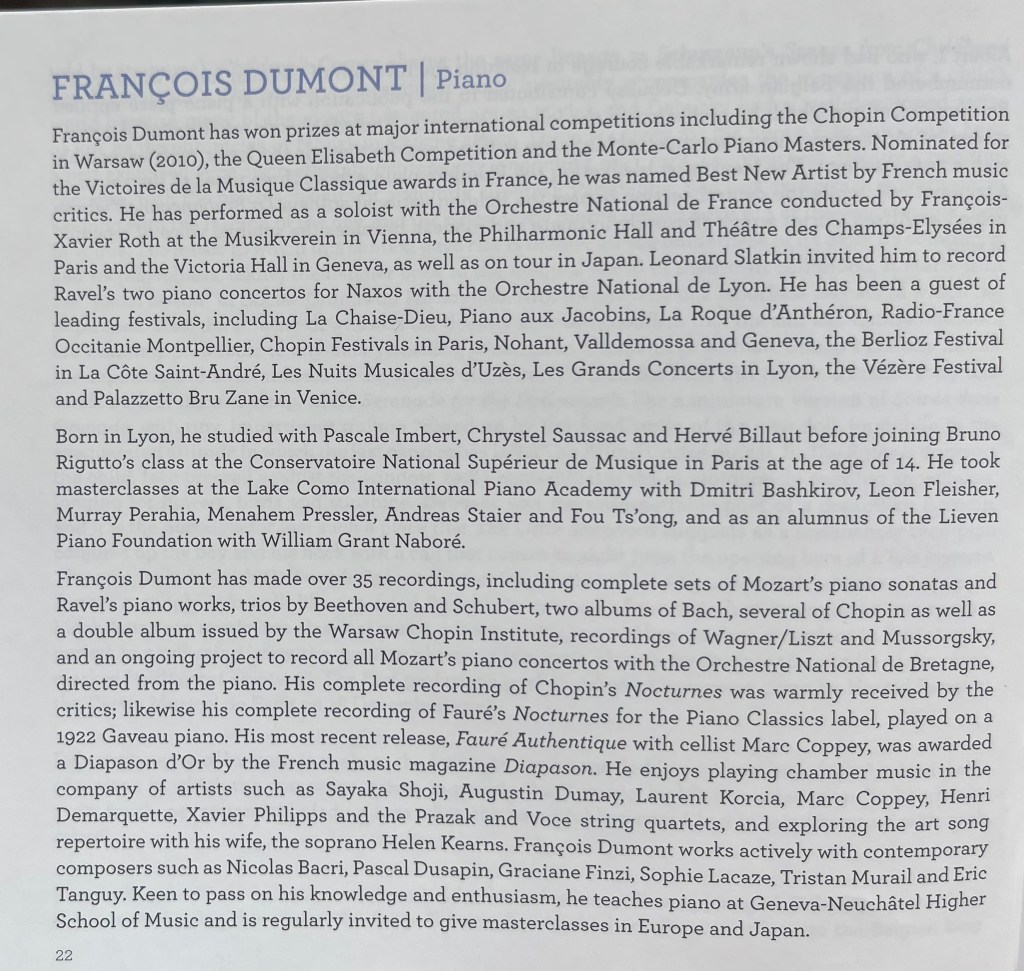
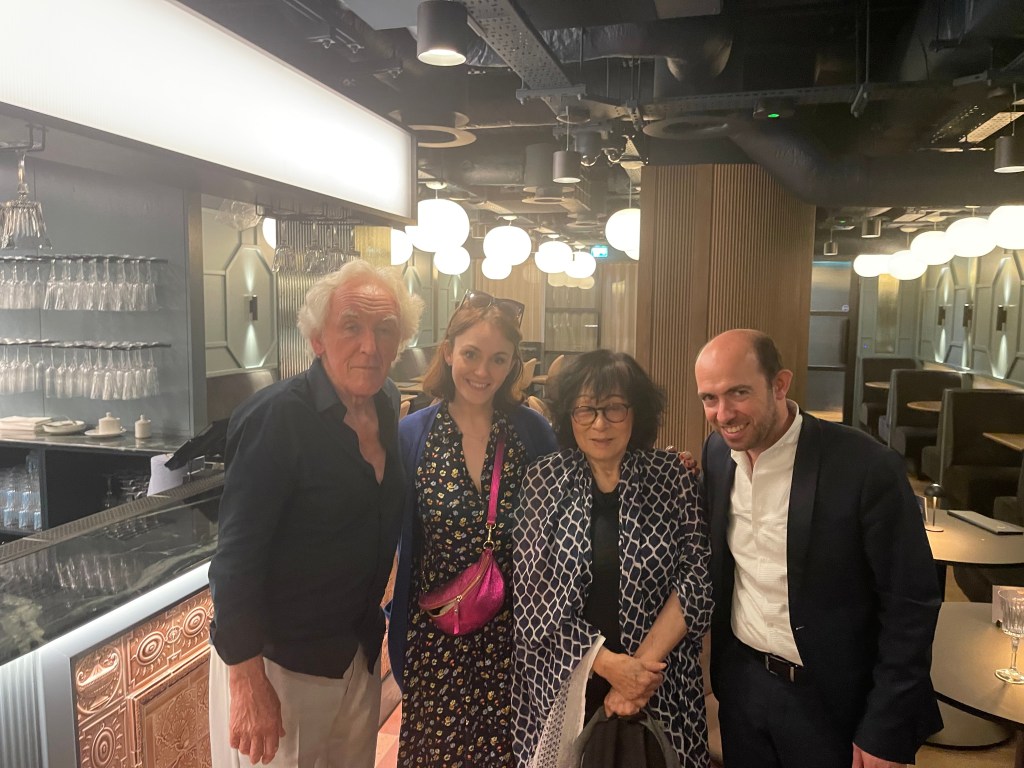
Many distinguished musicians present including Patsy Fou the widow of Fou Ts’ong who had been the inspiration for generations of musicians including François Dumont .
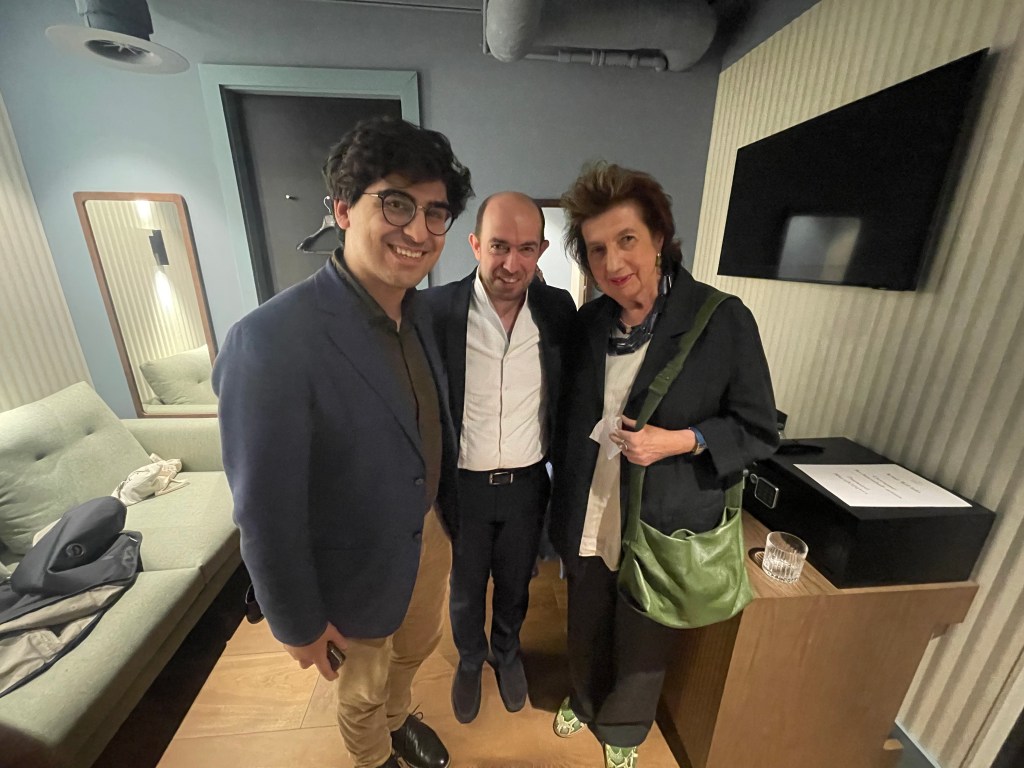
Dame Imogen Cooper with some delightful American guests including the bronze medal winner of this years Cliburn. He was in London to delve even deeper into his musical understanding as Dame Imogen had done for a lifetime with the late Alfred Brendel. Charming American guests who said were fans of mine!!!!
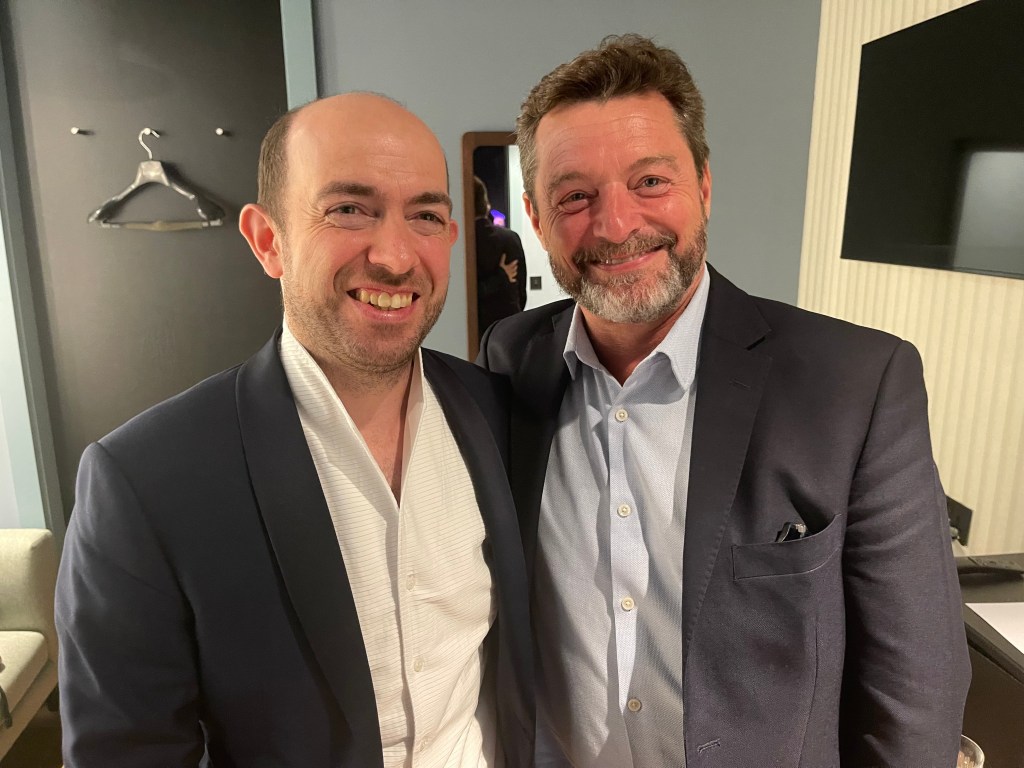
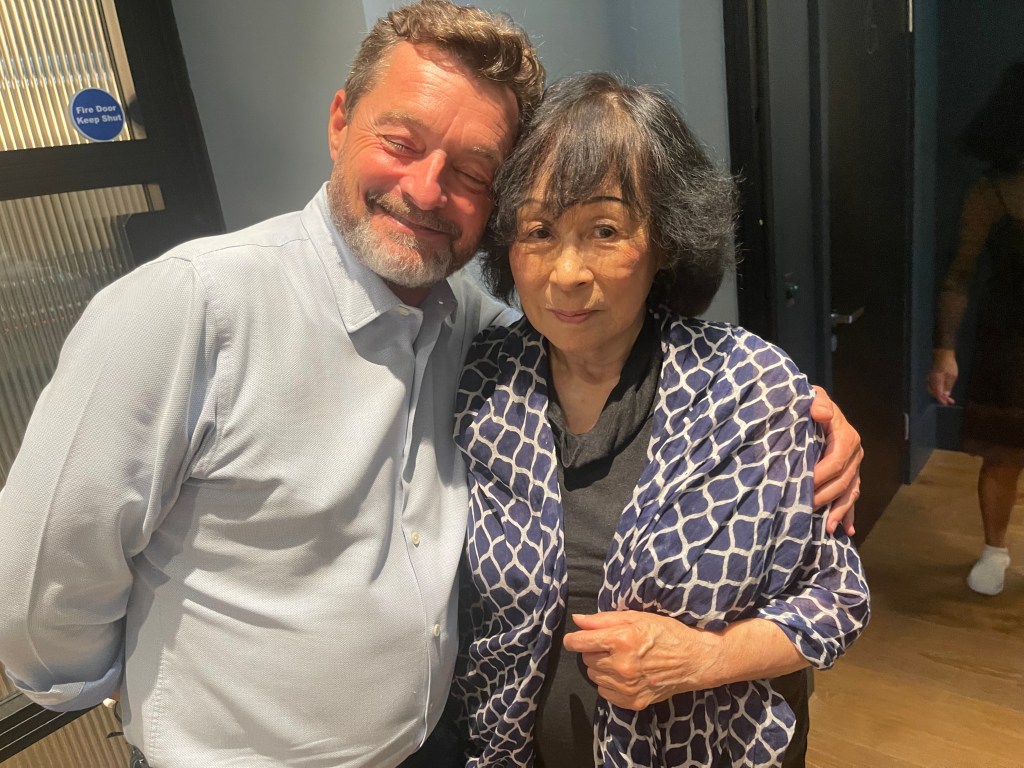
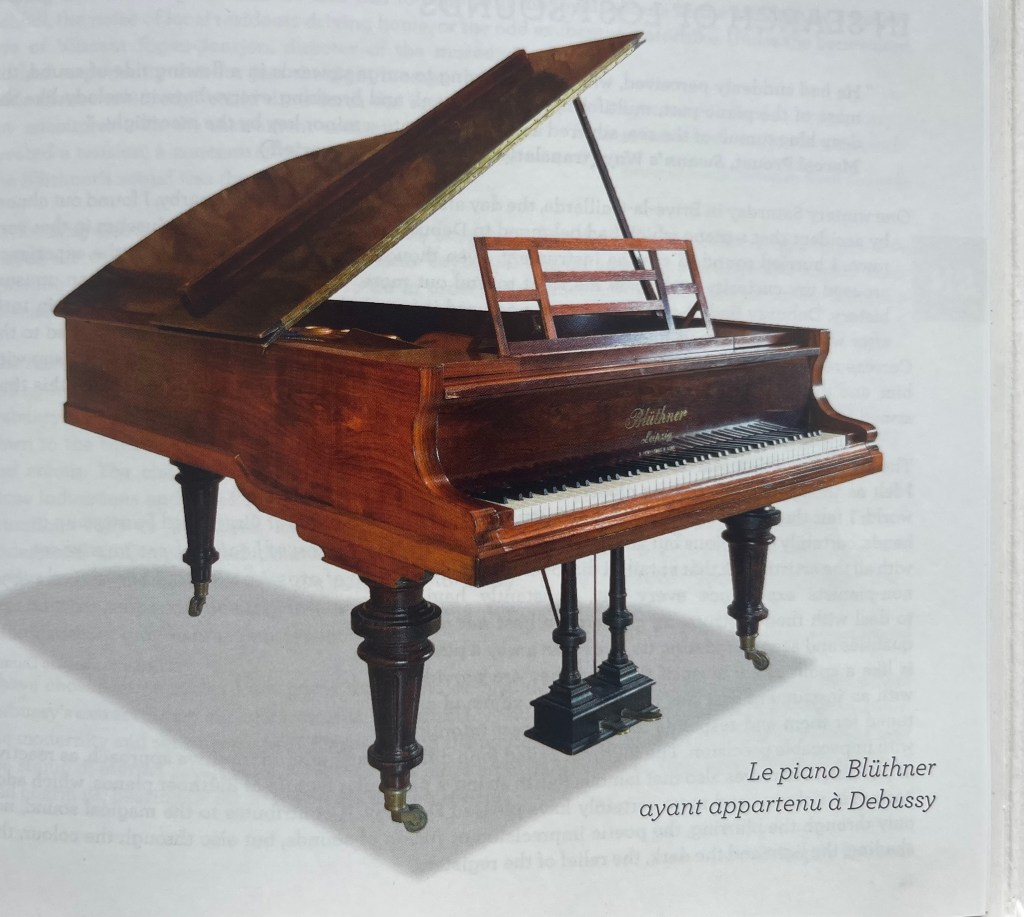
It was a real treat to be greeted with smiles by Terry Lewis, that indefatigable friend to all pianists great and small . A hall that he had idealised and has not had an easy gestation. Today there was an air of expectation and excitement for a pianist who is a real musician with a capital M. He had chosen Bechstein Hall for his CD launch because Debussy had declared that great music should only be composed for the Bechstein !
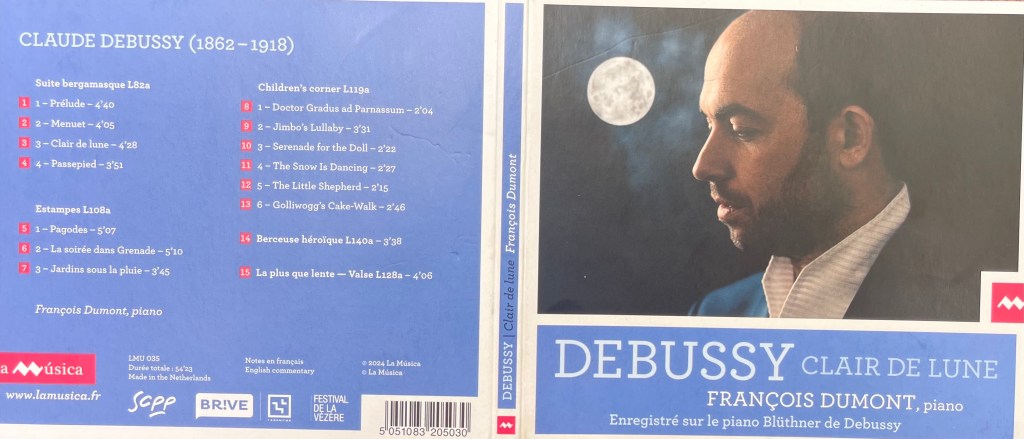
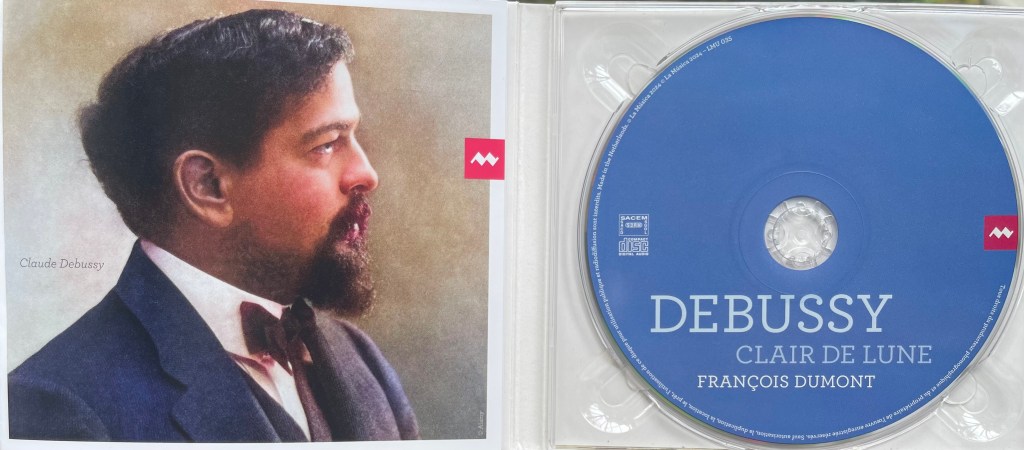
Francois turned these early works into gems and combined them with popular works by Chopin the only composer that Debussy could never criticise and had infact edited his complete works.
The Chopin nocturne op posth, I remember Fou Ts’ong searching for the original manuscript to understand the cross rhythm of the central section. François remembers that too, from the masterclasses he had regularly at the International Piano Academy Lake Como, where Ts’ong for over ten years would love to go and share his thoughts with master pianists of the younger generation. There was a ravishing beauty and masterly control of the pedal with a sense of balance that allowed the beautiful bel canto to sing so naturally, with embellishments that just unfolded in the same natural way as a singer. It was the same with the D flat Nocturne op 27, which is surely one of the most beautiful bel canto melodies ever to evolve from Chopin’s hands. Beauty but also passion as this was not the timid effeminate Chopin of his aristocratic lady pupils, but a great drama that was opening up with the assertive questions and delicate replies.The triumphant return of the melody ( so similar to the B minor Sonata) dissolved into an outpouring of gossamer streams of gold that were played with extraordinary authority. Fingers like limpets that,were attracted to the very heart of each note. It reminded me of Rosalyn Tureck’s reply when she simply stated that she did not play wrong notes, because every note has a meaning, and is part of a musical conversation and architectural shape where individual note picking is just not part of her conception of music. With François too ,one felt that everything he did was part of a larger design of authority and poetic reasoning. There was a wondrous sense of colour to Debussy with layers of sound created by a masterly use of the pedals that allowed for extraordinary clarity. Claire de lune was played at a flowing tempo that allowed for a sense of line and emotional impact that led so naturally into the beautiful flowing central episode. François is a master of sound who can create such character with a kaleidoscopic palette of sounds and an impish sense of humour as in the ‘Passepied’.A sense of characterisation that brought the set of six pieces written for his beloved Chouchou vividly to life . The grandiose opening of the Prélude just dissolving into a mellifluous outpouring and a Menuet with its wondrous sounds that appear like the sun coming out as passion ignites the romantic atmosphere. The Chopin G flat Impromptu and Third Ballade were played with aristocratic good taste and rich harmonic sounds.The two nocturnes op 48 were played with noble authority and passionate conviction just as the two Impromptus were played with beguiling jeux perlé and enticing rubato. The Fourth Ballade was given a monumental performance where the music unfolded in a continuous outpouring ever more intense until the final explosion of glorious beauty. A coda often played as a technical exercise was in François hands an outpouring of romantic fervour of exhilaration and excitement.
‘La plus que lente’ – the last piece on his CD was his choice of encore and was played with whispered insinuating sounds of sumptuous beauty.
Not expecting such an ovation he returned to play Chopin’s Berceuse where the minutes of silence after the final chord was evidence of the spell that François had created with his music making and great artistry
Programme
CHOPIN: Nocturne in C-sharp minor, Op. posth.
CHOPIN: Nocturne in D-flat major, Op. 27 No. 2
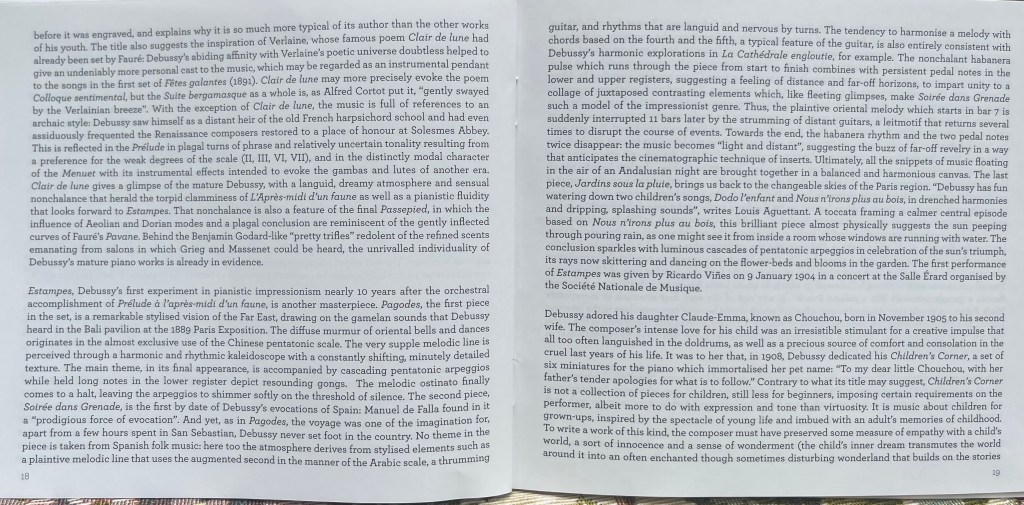
DEBUSSY: Suite Bergamasque
Prélude
Menuet
Clair de Lune
Passepied
CHOPIN: Impromptu No. 3 in G-flat major, Op. 51
CHOPIN: Ballade No. 3 in A-flat major, Op. 47
Intermission 30 min
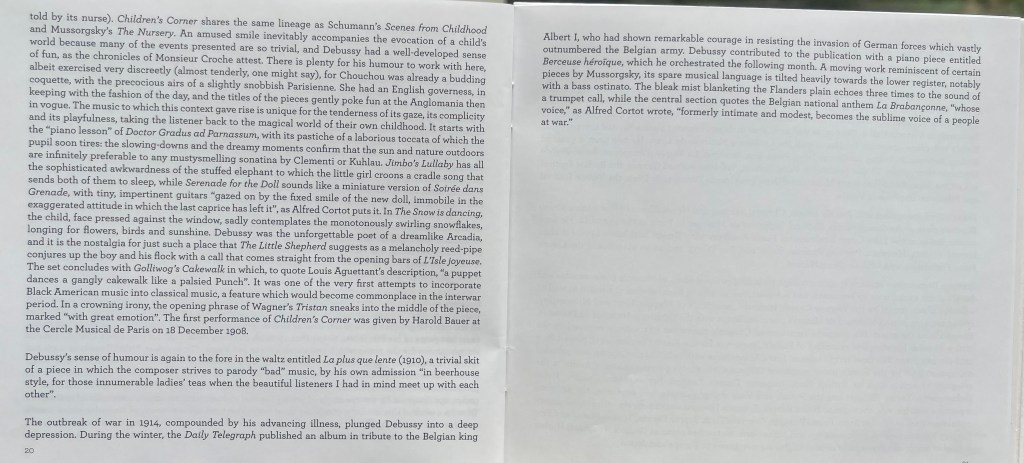
DEBUSSY: Children’s Corner
Doctor Gradus ad Parnassum
Jimbo’s Lullaby
Serenade for the Doll
The Snow Is Dancing
The Little Shepherd
Golliwog’s Cake-Walk
CHOPIN: Impromptu No. 1 in A-flat major, Op. 29
CHOPIN: Two Nocturnes, Op. 48
CHOPIN: Ballade No. 4 in F minor, Op. 52
 ChristopherAxworthy-MusicCommentary