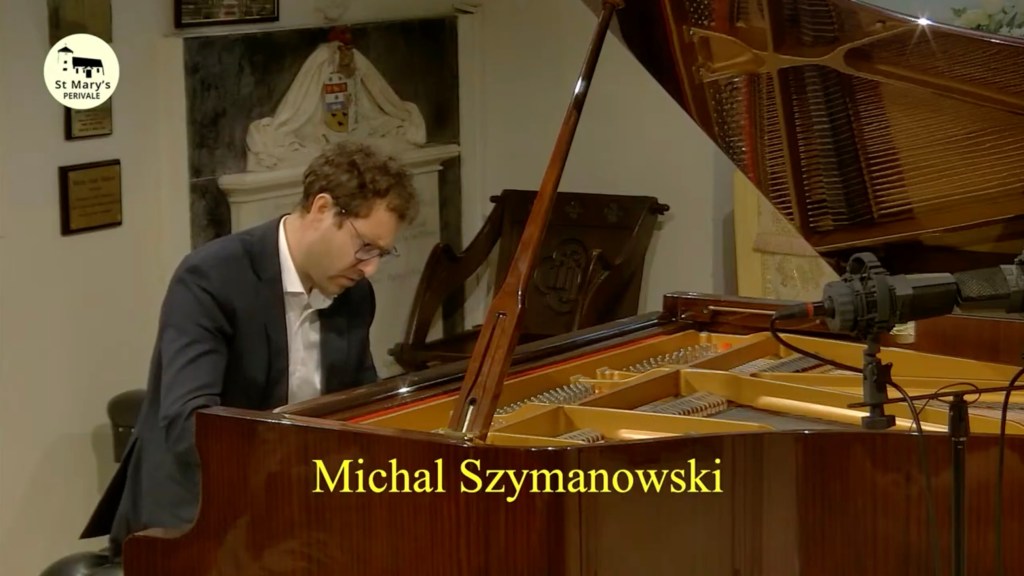
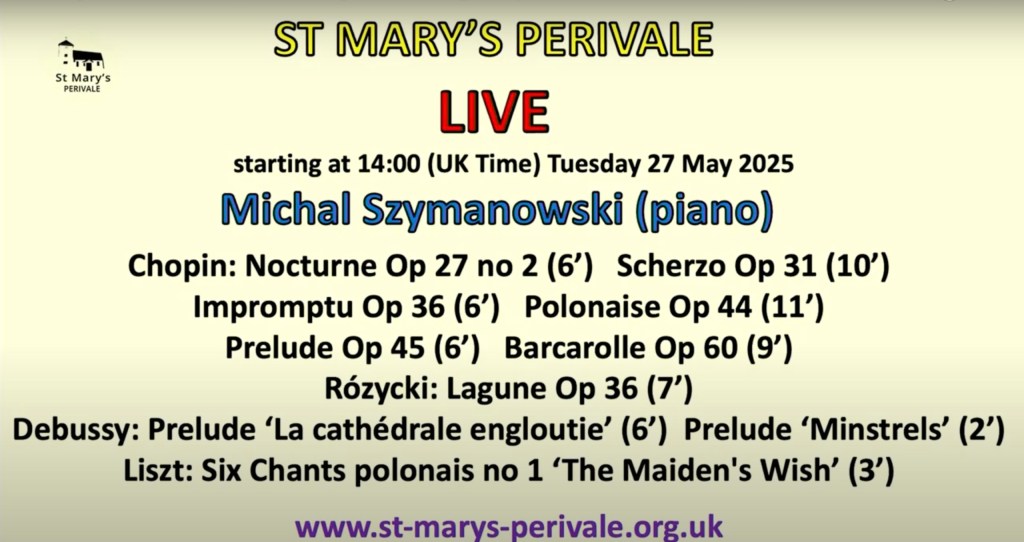
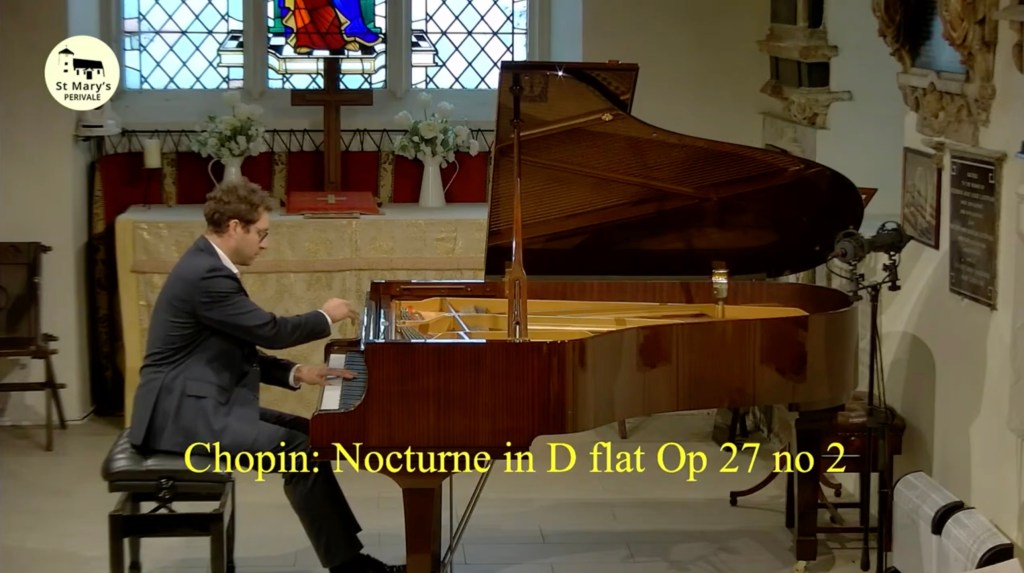
Masterly playing of great authority and aristocratic good taste. A curious opening, though, with the deep bass D flat of the nocturne op 27 n. 2 played by the right hand ! Luckily it was the only eccentricity in a recital where it would have been hard to change a single note. The nocturne is one of Chopin’s most beautiful Bel Canto melodies and Michal played it with restrained elegance ,where everything was given time to sing with timeless beauty. Some very discreet ornamentation where it might have been better to leave Chopin’s notes,like Mozart, with the purity of an instrument that can sustain without the need of added notes to fill up the lack of resonance! Ravishing playing that could have flowed more naturally but where every note was a jewel to be savoured.
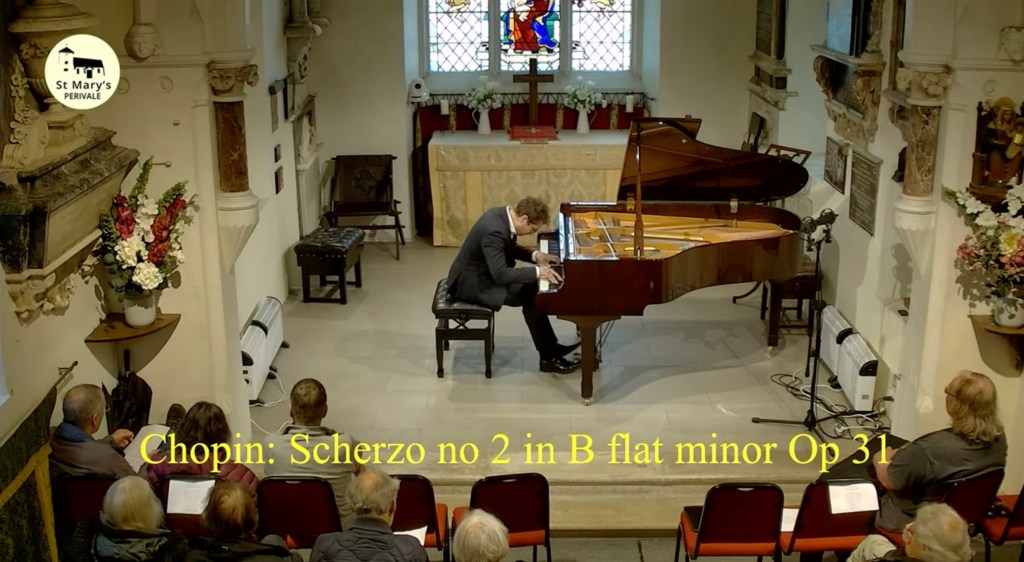
The Scherzo in B flat minor was played with great authority where even the central chorale was played with weight .It unfolded with streams of wondrous sounds that were played with great control and ravishing beauty.There were slight hesitations and expressive punctuations that added such meaning and poignancy to this often distorted work. Exhilaration and excitement at the end of a work restored to the pedestal that it possessed from the hands of Artur Rubinstein. It was ,in fact, the final work in his last recital in 1976 when he had to abandon it, as almost blind he could no longer negotiate the treacherous skips, as he had in a career that had spanned over sixty years.His generosity at the age of ninety saved the Wigmore Hall from the greedy hands of the developers.
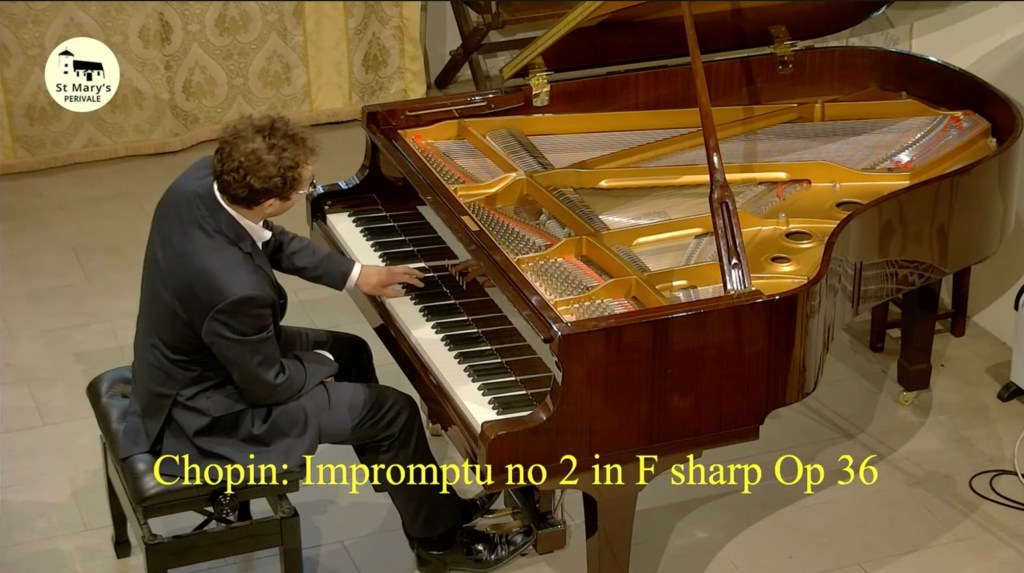
There was a leisurely opening to the F sharp Impromptu and a languid beauty to the melodic line that grew imperceptibly in nobility and sonority before bursting into a brilliant jeux perlé. Masterly playing as the streams of notes accompanied the melodic line with limpet like insistence as it disappeared into the distance with the opening chant returning like a dream of distant bells before the gloriously sonorous final chords.
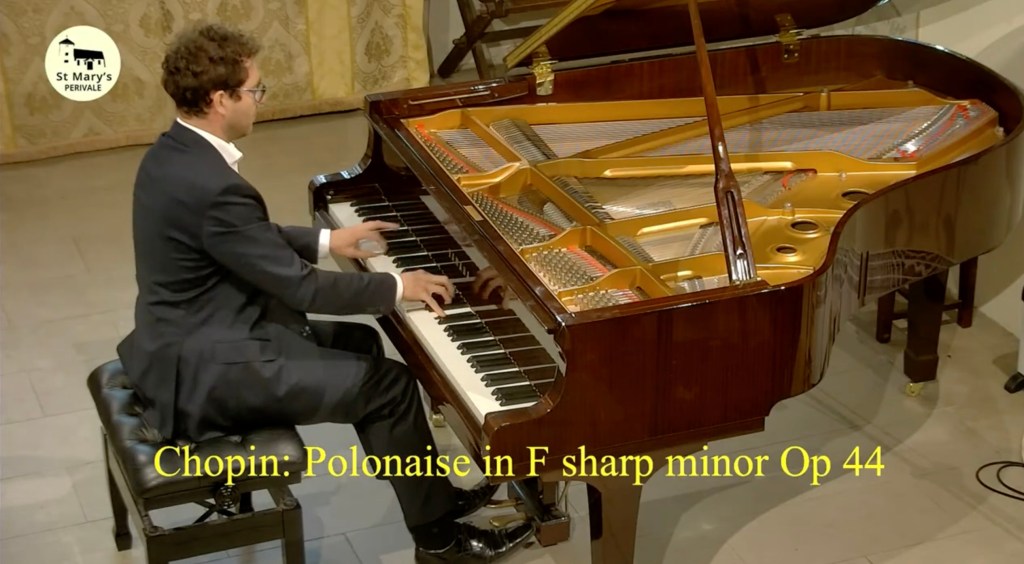
The F sharp minor Polonaise just grew out of this window that had been opened. Wonderful solid playing that I remember too from Rubinstein and Askenase,with fingers like limpets digging deep into the keys and extracting golden sounds of passionate authority. Sounds that were from within the notes themselves played with aristocratic nobility. Extraordinary rhythmic precision as the central mazurka flowered into a melodic episode of nostalgic beauty.
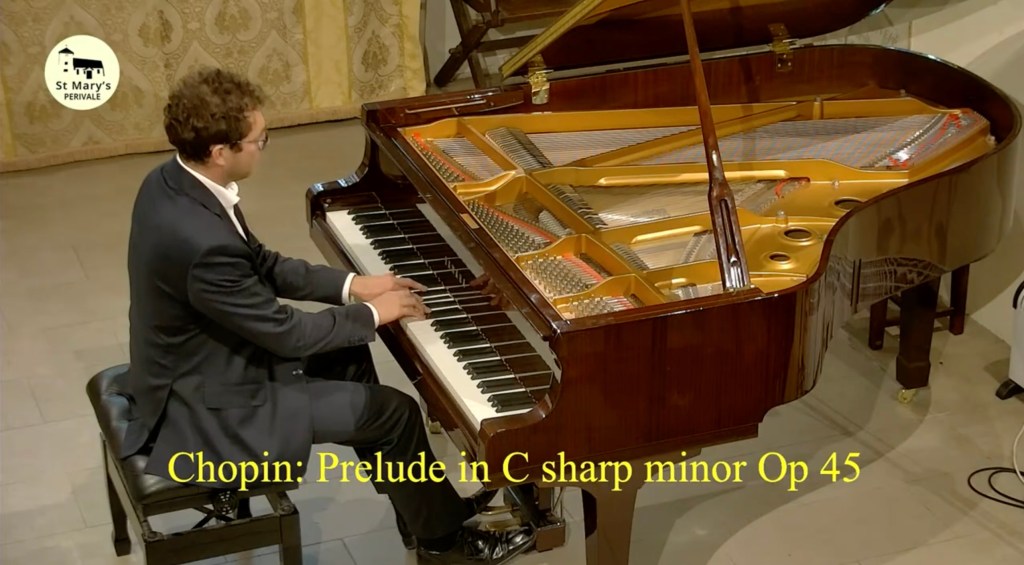
The C sharp minor prelude op 45 is always a wonder to behold with its meandering changes of harmony magically spread across the entire keyboard. Michal played them with a wondrous sense of discovery with the final cadenza of moving harmonies arriving so naturally to the opening deep C sharp octave of the Barcarolle.
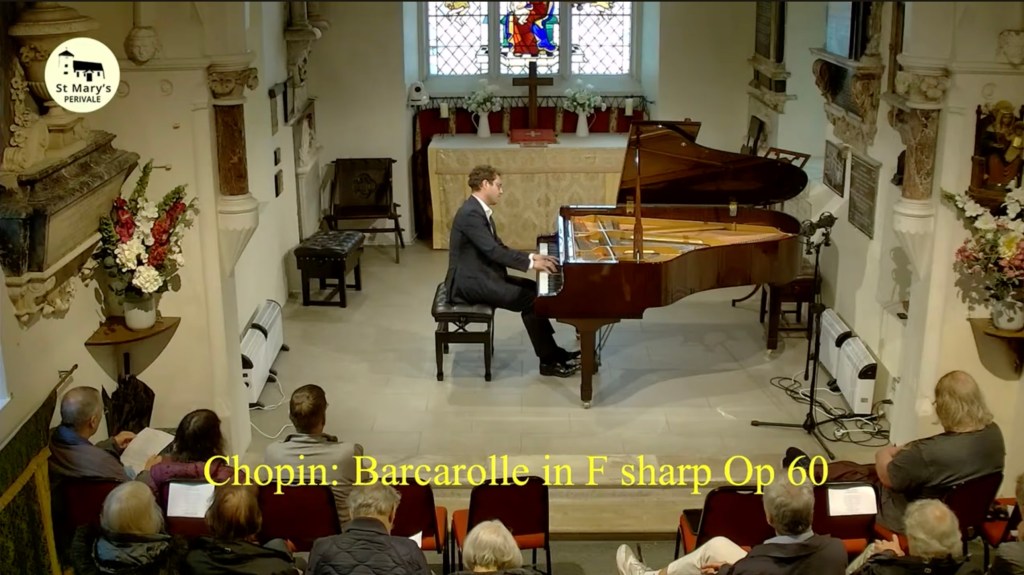
One of Chopin’s last and most perfect creations ,the Barcarolle is a great song from beginning to end , of timeless beauty, as the gentle lapping forward movement is a wave on which Chopin could carve out some of his most heavenly melodic creations. There was a deep yearning to the final pages as the music expanded in an explosion of beauty. The final cascade of notes with the gentle rocking theme barely suggested in the left hand was the example that Ravel was to follow and to add to his own magic sound world a century later.
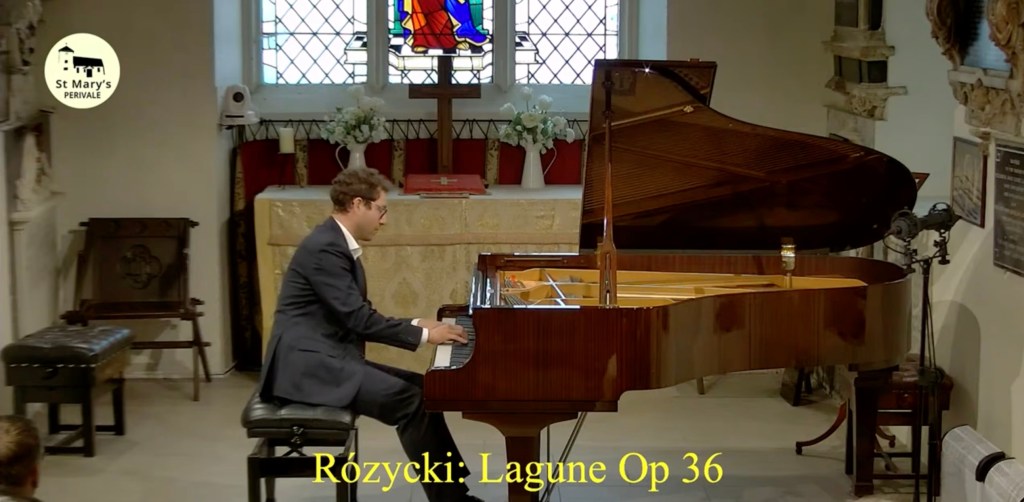
After the Venetian Lagoon what better than a work by a Polish composer Rózycki with the name ‘Lagune’. A romantic tone poem of flowing beauty and sumptuous sounds of passionate persuasion.It was played with great conviction and was a very interesting addition to a programme of well known classics and a good bridge between the Genius of Chopin and the Genius of Debussy. A refreshing intermezzo played brilliantly with a kaleidoscope of colour of romantic exuberance.
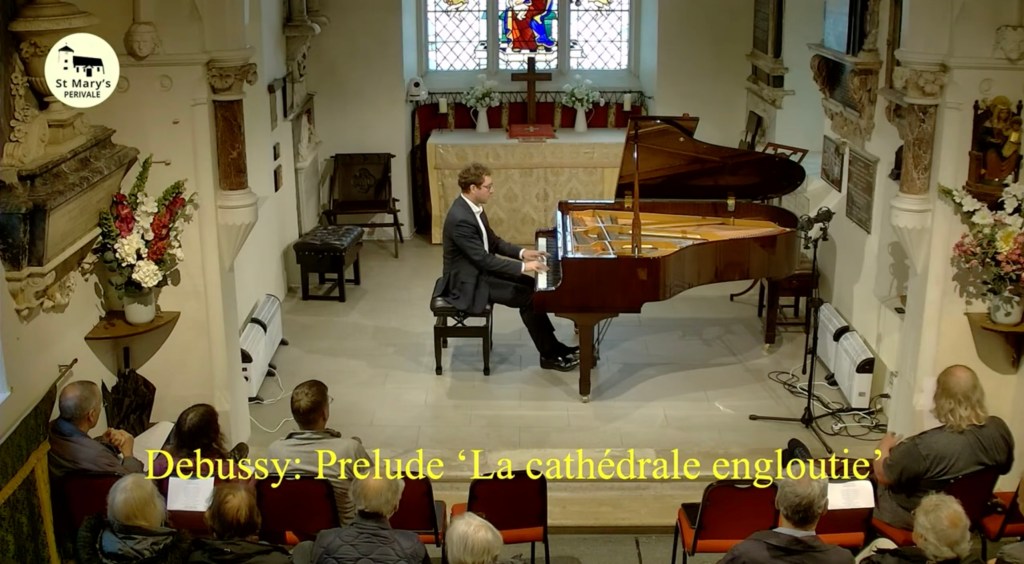
Wonderfully atmospheric Debussy’s’ Sunken Cathedral’ ,and very interesting to note that Michal was using the middle pedal that gave great clarity to the chordal sounds out of which the Cathedral emerges. Wonderful deep gong sounds in the bass played with great authority as the bells ring out and the Cathedral disappears into the mist with the plaintive chant of evocative beauty reduced to a wondrous glowing whisper.
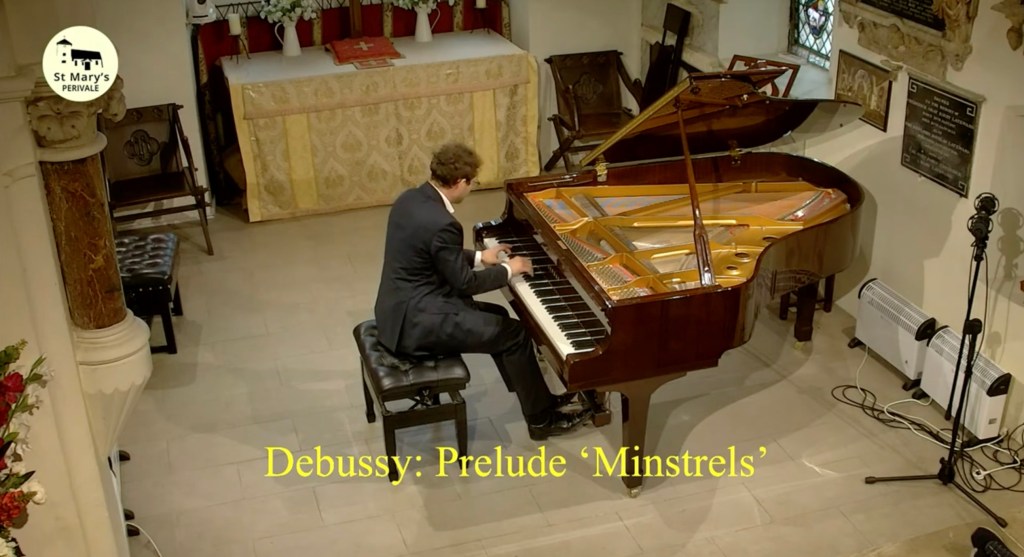
What a change of character with Minstrels with it’s chameleonic changes and capricious uncontrolled exuberance. It was immediately transformed into the refreshing simplicity of Chopin’s ‘Maidens Wish’ in Liszt’s authoritative transcription.
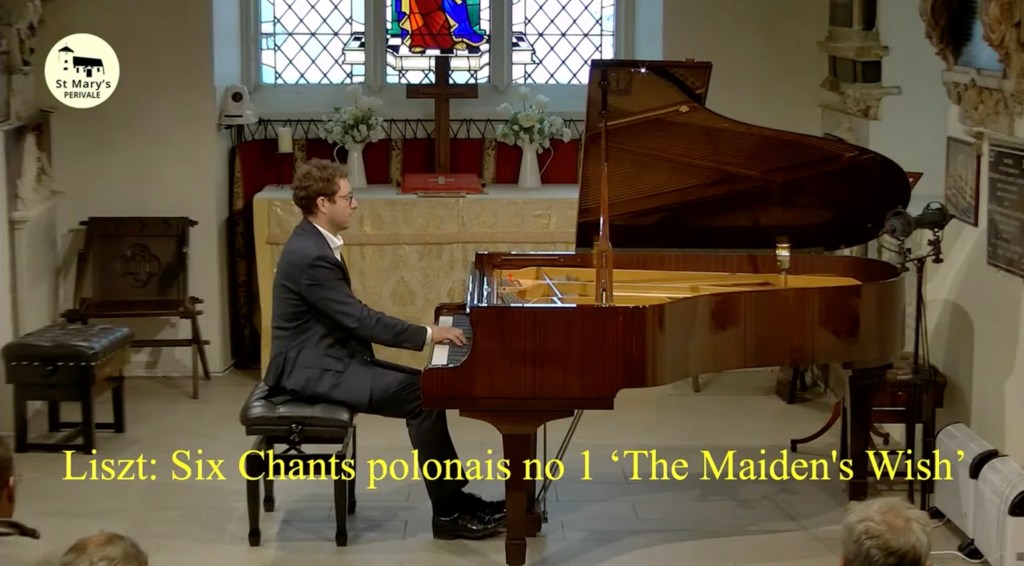
A work that used to be a regular encore for pianists of the Golden Age of piano playing, in particular Moritz Rosenthal but also Claudio Arrau. A much neglected jewel that was played with wondrous beguiling mastery by Michal.
What a treat to hear Paderewski’s once much loved Minuet in G played with the same mastery as the great master, who was considered to be the greatest pianist of his day and would have played this piece as an encore on his famous tournées in America
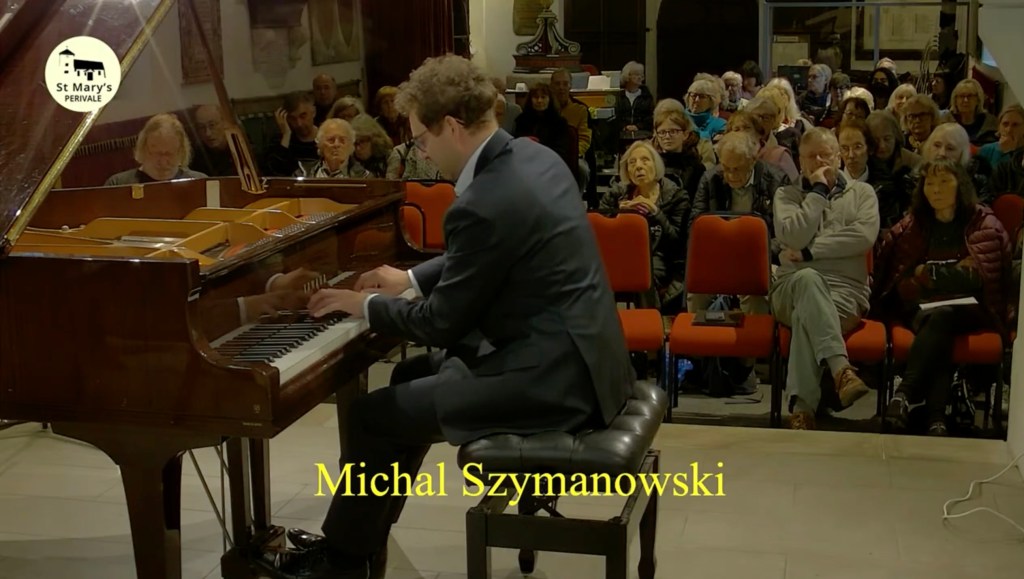
A Polish pianist and conductor, Michal Szymanowski was born in 1988 into a musical family. He graduated with honours from the Feliks Nowowiejski Academy of Music in Bydgoszcz, where he studied piano with Katarzyna Popowa-Zydron and symphonic and opera conducting under Zygmunt Rychert. He honed his skills with Eldar Nebolsin at the Hochschule für Musik Hanns Eisler Berlin. At present he works as an assistant lecturer at his alma mater. He has won top awards in a number of national and international music competitions, including Darmstadt International Chopin Piano Competition (2017), MozARTe International Piano Competition Aachen (2016), Asia-Pacific International Chopin Competition in Daegu (2015), International Juliusz Zarebski Music Competition in Warsaw (2012), Yamaha Music Foundation of Europe in Katowice (2011), International Paderewski Piano Competition in Bydgoszcz (2010), International Competition for Young Pianists in Memory of Vladimir Horowitz (2007). In 2015 he was the highest placed quarter-finalist in the International Fryderyk Chopin Piano Competition in Warsaw.
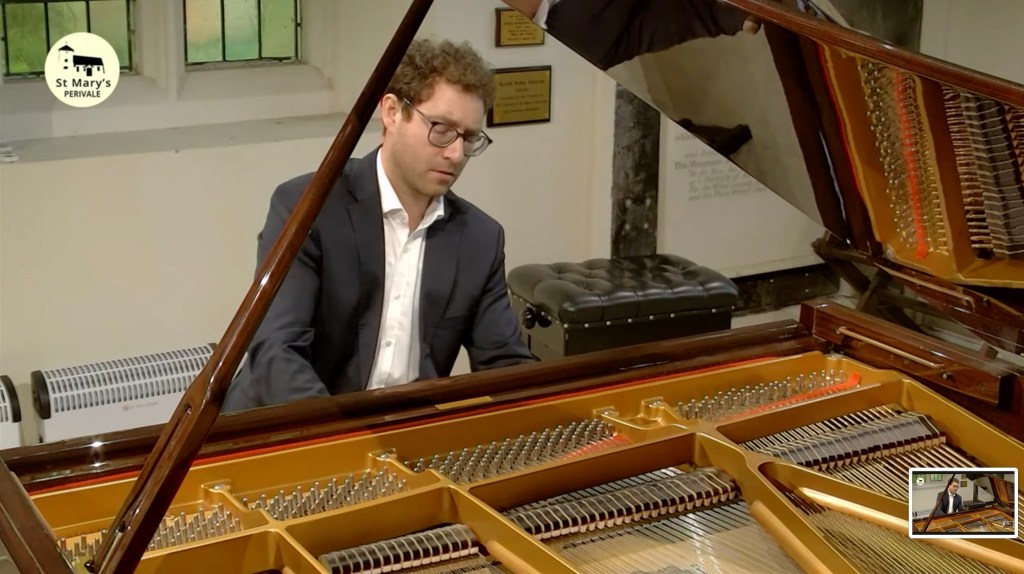
Michal Szymanowski has performed in many concerts across Europe and throughout the world, including the Palace of Nations, the Paul VI Audience Hall, Belvedere Palace, numerous philharmonic halls as well as major festivals in Poland and abroad, among them Oficina de Música de Curitiba, Chopiniana in Buenos Aires, Festival Europeo de Jóvenes Solistas in Caracas, Festival Pianistico di Roma, LongLake Festival Lugano, and the Chopin and his Europe Festival in Warsaw, where he brilliantly performed piano concertos by Paderewski, Wieniawski and Stojowski. Apart from solo repertoire, he also frequently performs chamber music. He has released two solo albums featuring compositions by Chopin, Paderewski, Szymanowski and Wieniawski. The recordings were critically acclaimed.
 ChristopherAxworthy-MusicCommentary