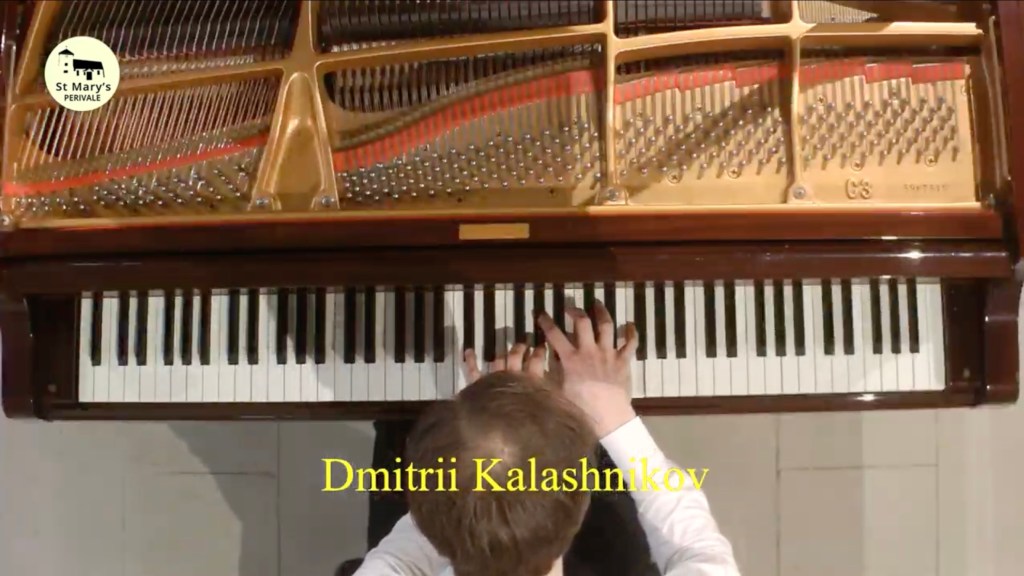
A quite monumental performance of the Liszt Sonata from Dmitri with his guns blowing fast and furious. But also with intelligence and aristocratic poetic playing of nobility and extraordinary clarity. The torrid heat may have lead to a moment’s lack of concentration but Dmitri’s masterly understanding brushed all aside as he filled this little redundant church with orchestral sounds that it has rarely heard before.
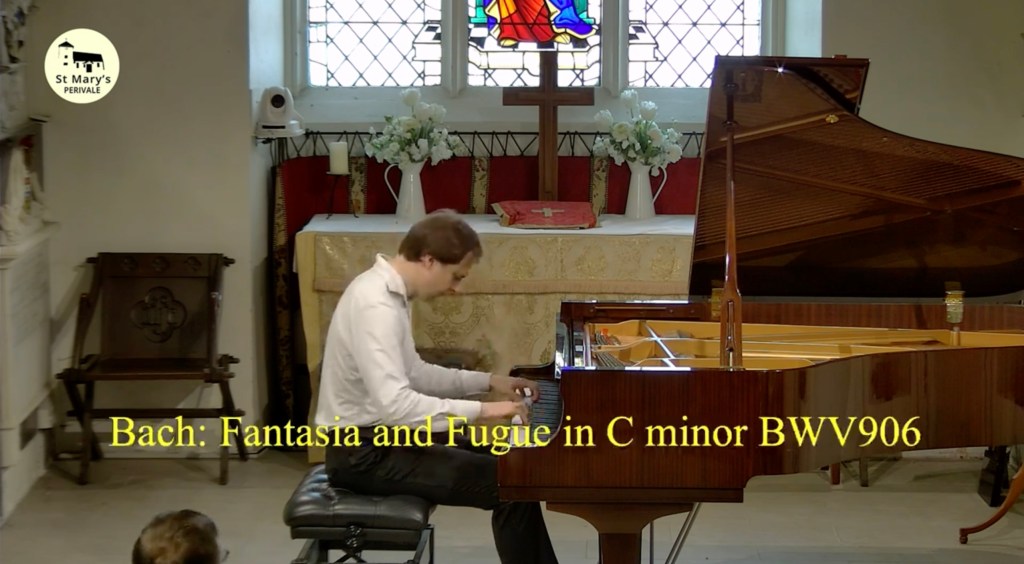
Opening with Bach Fantasia and fugue in C minor of utmost clarity and exemplary intelligence. A fluidity and great rhythmic impulse with a grandiose opening flourish leading to a knotty twine of exemplary precision. A fugue of whispered meanderings but where every strand was a voice of its own uniting to create another monumental fugue from the pen of the genius of Köthen.
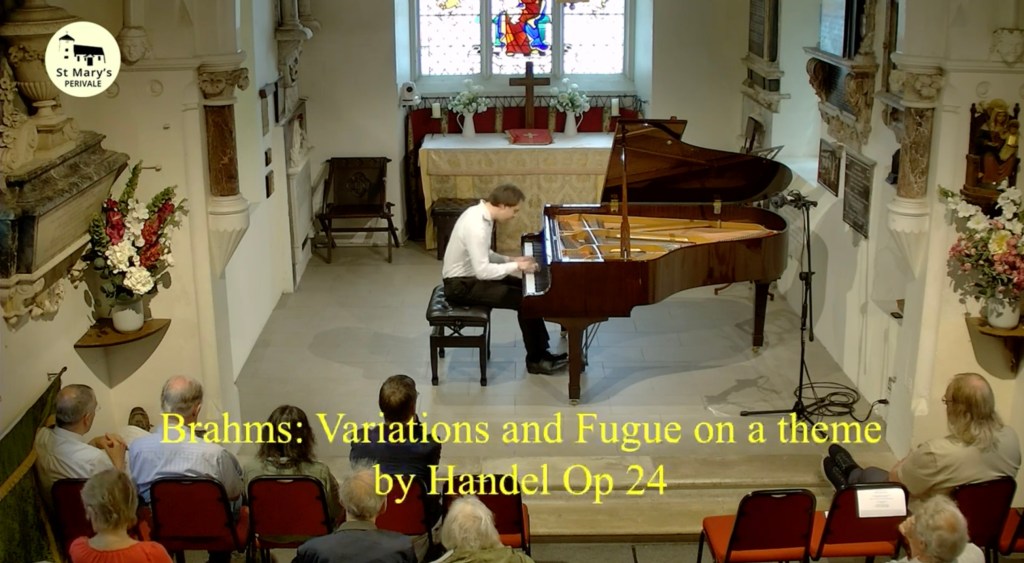
Brahms mighty Handel variations were given a ‘short back and sides’ performance of total mastery, but I missed the sumptuous orchestral sounds and total commitment that he was to reserve for his quite extraordinary performance of Liszt. Lacking the orchestral weight this was a performance of quite extraordinary mastery from a musician who had seen the work more in pianistic than orchestral terms. It is indeed a ‘tour de force’ of varying technical problems and is often given to advanced students together with the Schubert Wanderer Fantasy to show how technical and musical problems can be shared and mastered together.
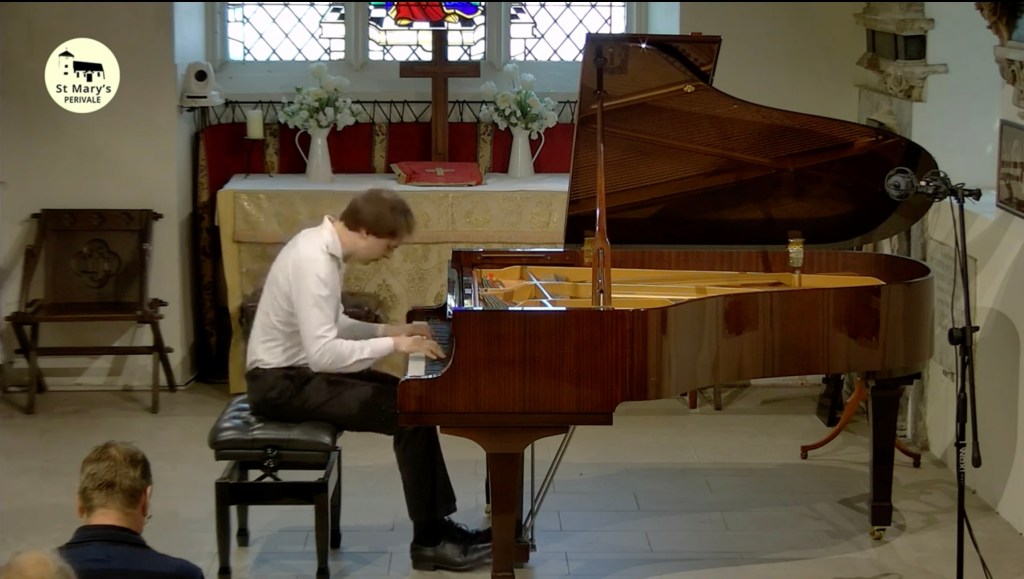
The opening theme from Handel’s Suite n. 1 in B flat HWV 434 was allowed to unfold with refined elegance and perfectly balanced ornaments.The first variation beautifully phrased with gently underlined bass notes just highlighting the whirlwind cadence. Contrasting with the gentle meandering of the second where Dmitri highlighted inner voices to great effect. A deliberate lilt to the third was played with great character before bursting into flames with the brilliant octaves of the fourth.Played with a lightness that allowed Dmitri to shape the phrases with musical imagination. A beguiling flow to the beautiful melodic outpouring of the fifth and the legato octaves shadowing each other of the sixth. A call to arms with the strident seventh which ignited the impetuous rhythmic elan of the eighth.A great rhetorical cry to the ninth as each gasp reached ever higher .What fun Dmitri had chasing up and down the keyboard in a cat and mouse game of demonic energy. A beautiful contrast of radiance from the eleventh and twelfth was played with a glowing beauty.
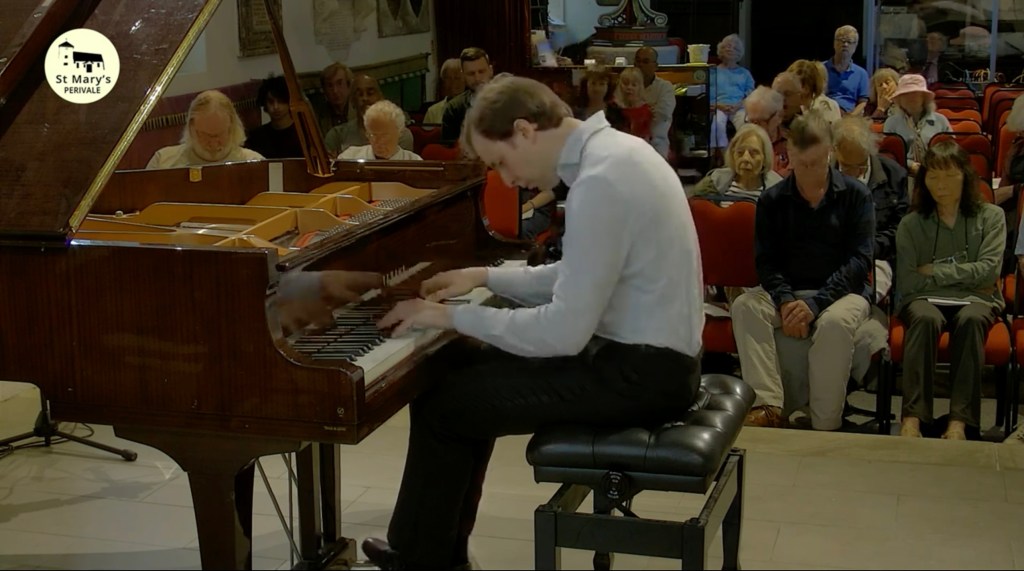
The great majestic thirteenth was beautifully shaped but I feel it just lacked that sumptuous richness that he was to save for Liszt .The fourteenth and fifteenth just flew from his fingers with mastery and dynamic drive before the lightweight meanderings of the sixteenth, seventeenth and eighteenth. There was a delightfully refreshing interlude with Brahms’s Siciliana that had been inspired by Couperin ( Brahms had edited Couperin’s music). Followed by a radiance to the music box variation of the twenty second before the dynamic build up of dramatic tension leading to the final exultant twenty-fifth. A final variation where I missed the sumptuous orchestral nobility which Dmitri preferred to play with exemplary taught rhythms of great clarity missing the glorious point of arrival of the twenty four previous variations. A contrast too, to the simple opening of the fugue where Dmitri did now open up to a finale of astonishing nobility and grandeur born on the wings of Handel’s innocuous B flat theme.
I bow to the choice of a master musician but also one that can dispatch Brahms’s ingenious variations with such musicianship of clarity and precision.
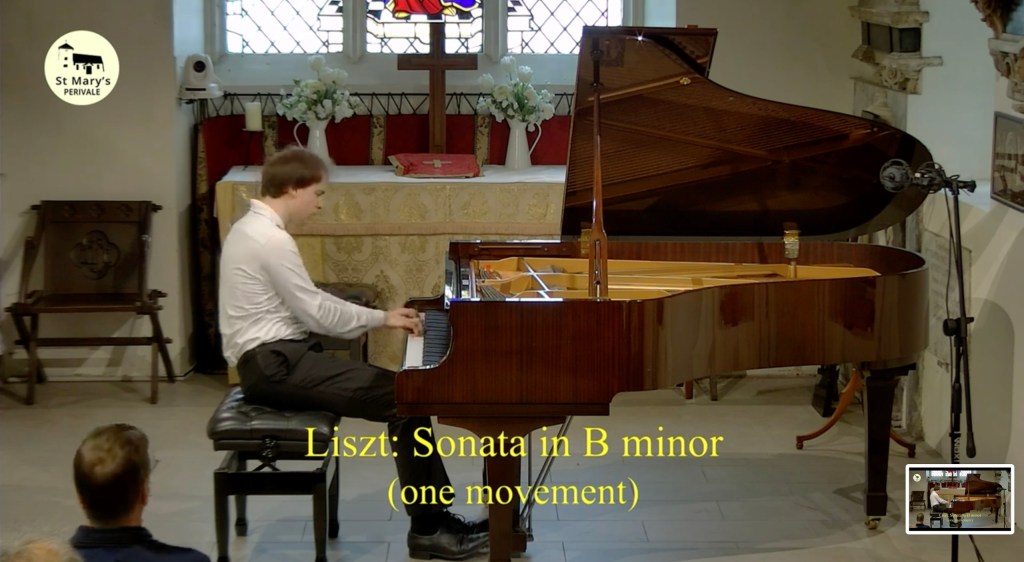
The Liszt Sonata seemed to unleash in Dmitri a demonic mastery and poetic freedom that had been kept under control in the Bach and Brahms. A dramatic opening where the three main characters are presented as a great story about to unfold. Sumptuous full sounds and passionate commitment were contrasted with a kaleidoscopic rich palette of colours .A sense of balance where Liszt’s seemingly overpowering chordal accompaniments were a heart beating fast, but allowing the melodic line to sing out in its midst with quite extraordinary intensity. Dmitri had a whole orchestra in his hands but not sacrificing his enviable technical mastery and clarity. The final octaves I have never heard played with such mastery or intensity. A slow movement that was of heartrending aristocratic poise as sounds were barely whispered with extraordinary innermost meaning. A monumental performance marred only by a moment of distraction towards the end where the temperature must have been reaching boiling point in every sense of the word.
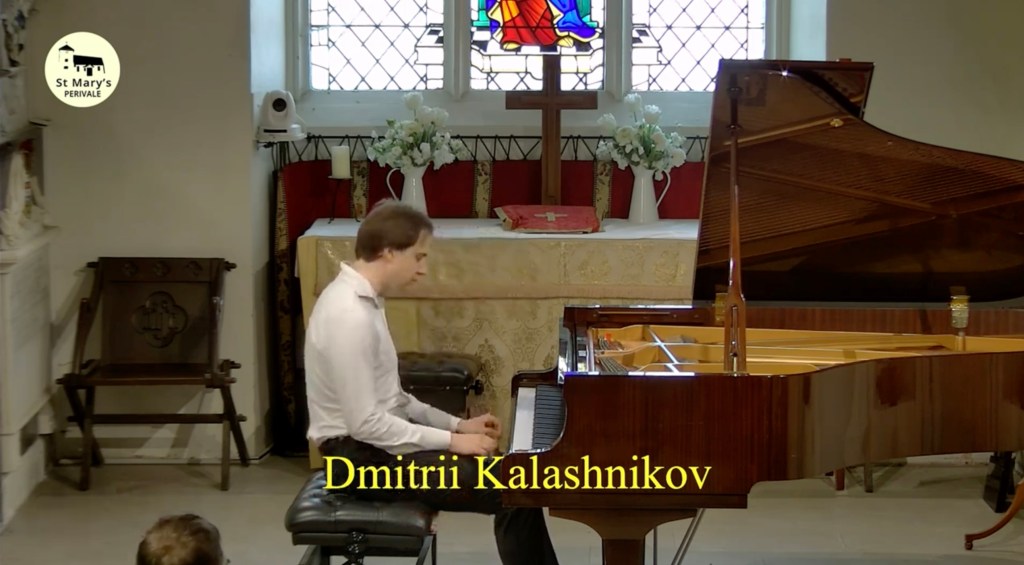
Dmitrii Kalashnikov began postgraduate studies at the Royal College of Music, London, in 2018, in the class of Professor Vanessa Latarche as a Ruth West Scholar, supported by the Neville Wathen Scholarship, and more recently as a Blüthner Pianos scholar. His earlier studies began at the age of five at the Moscow secondary special music school named after Gnessin, in the classes of Ada Traub and Tatyana Vorobieva. In 2017, he graduated with honours from the Moscow State Conservatory P I Tchaikovsky, where he was taught by Professor Elena Kuznetsova. His prizes have included the Queen Elizabeth the Queen Mother Rosebowl at the RCM, awarded to a student of distinction, the winner of the 2019 final of the Jacques Samuel Intercollegiate Piano Competition (London), and, in the same year, the first prize at Les Etoiles Du Piano International Piano Competition (France). In 2021, he won first prize in the Junior Intercollegiate Piano Competition (Beethoven Piano Society of Europe).
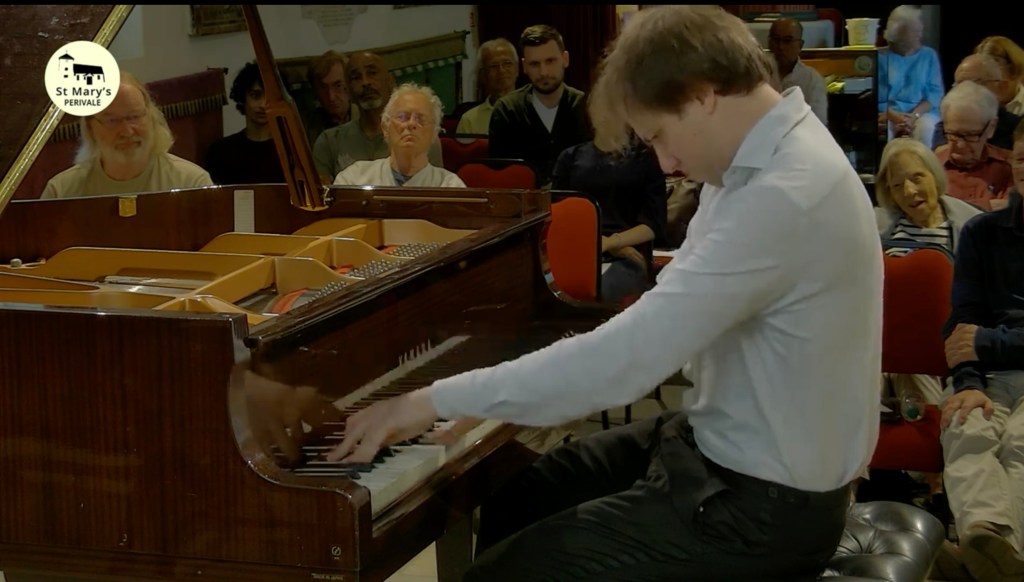
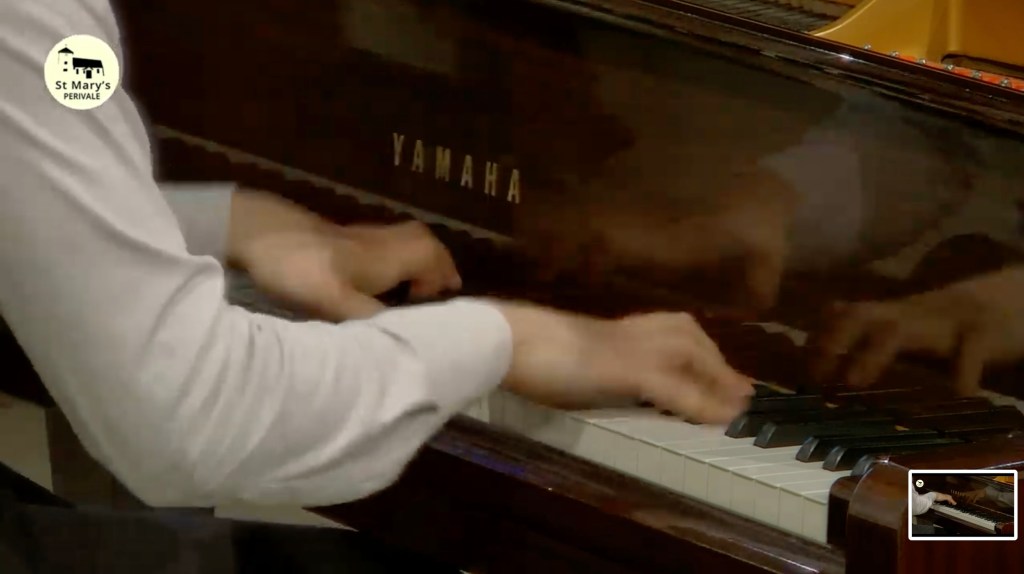
Dmitrii performs regularly with the Russian National Orchestra under the direction of Mikhail Pletnev. In December 2014, Mikhail Pletnev and Dmitrii Kalashnikov gave a two-piano recital in the Great Hall of the Moscow State Conservatory. He graduated from the Royal College of Music in 2021 with distinction, and the University of Music and Performing Arts (Vienna) in 2022, under the guidance of Professor Anna Malikova. In July, he participated in the Lille’s piano festival in Louvre 2 (France), and a concert in the Wigmore Hall, London. Additionally, he had performances in the USA in 2022. More recently, in May 2022, he played the accompanying concert in the presence of HRH Prince Charles, now HM King Charles III, following the annual awards ceremony at the Royal College of Music in London.
 ChristopherAxworthy-MusicCommentary