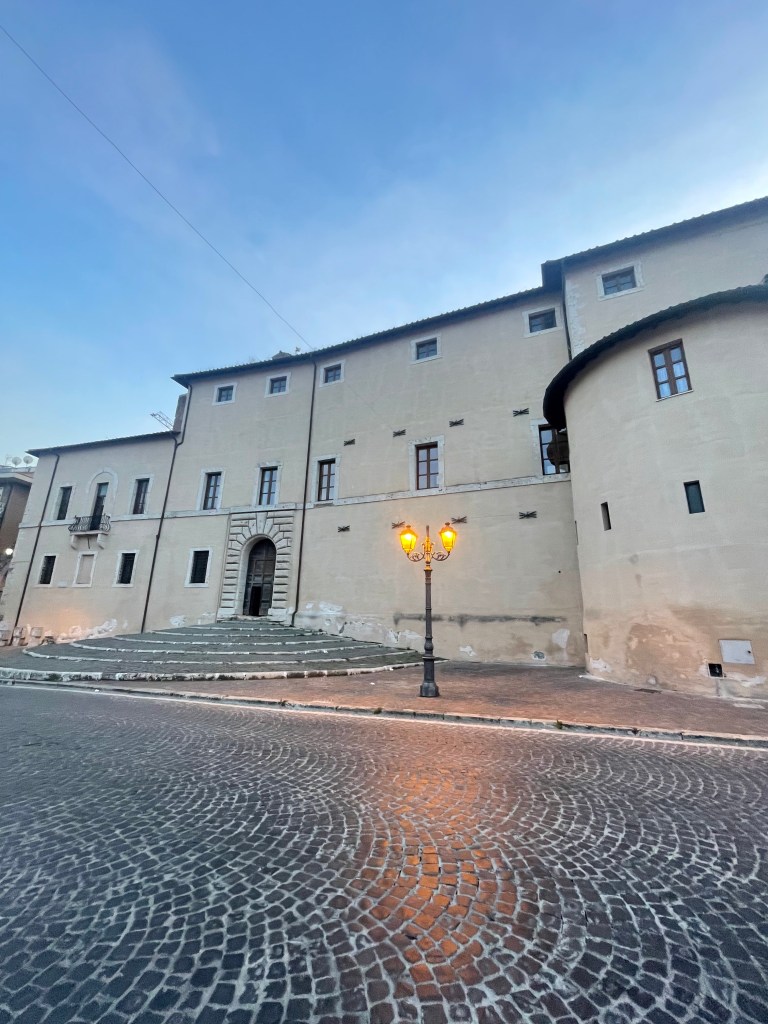
The plot thickens with the discovery of another historic Caetani Palace on the outskirts of Rome.
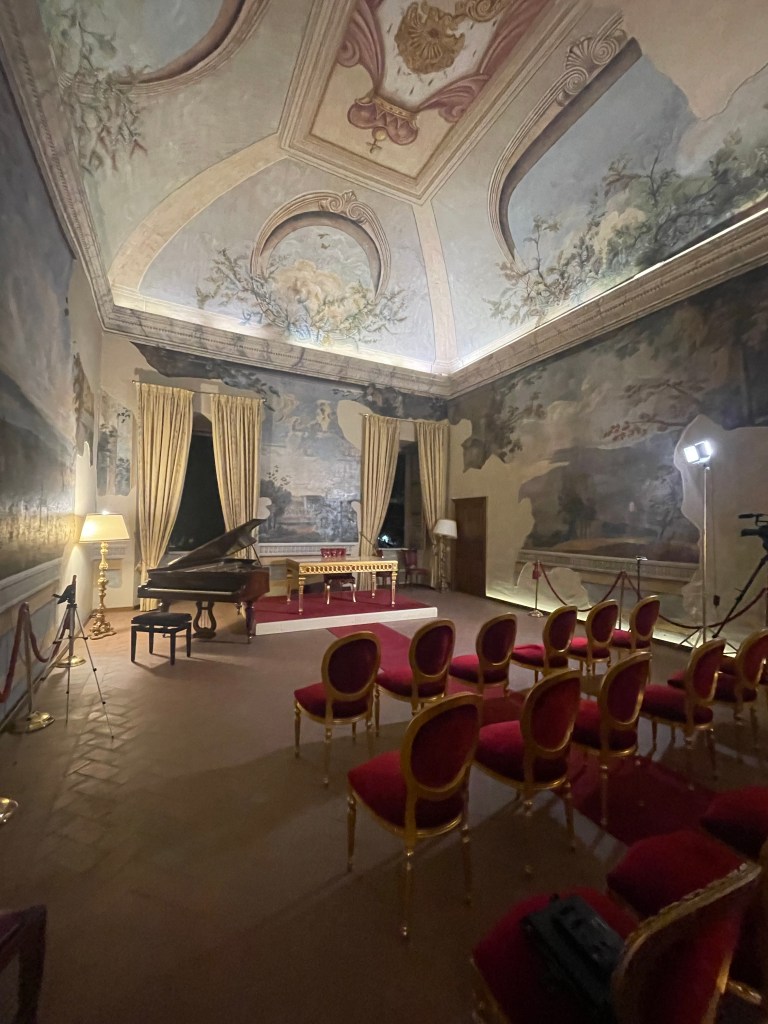
http://mozartitaliacastelliromani.it/2023/07/12/il-pianoforte-collard-collard-a-cisterna-di-latina/ http://mozartitaliacastelliromani.it/2023/07/12/restauro-del-pianoforte-collard-collard-matr-149042-del-1889/
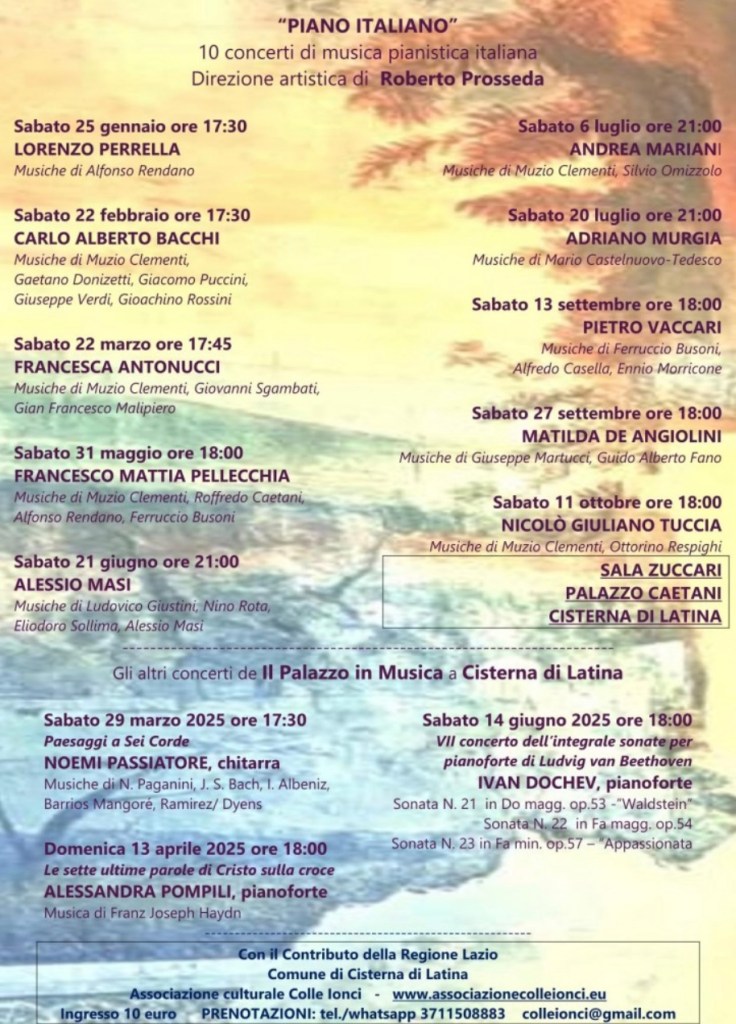
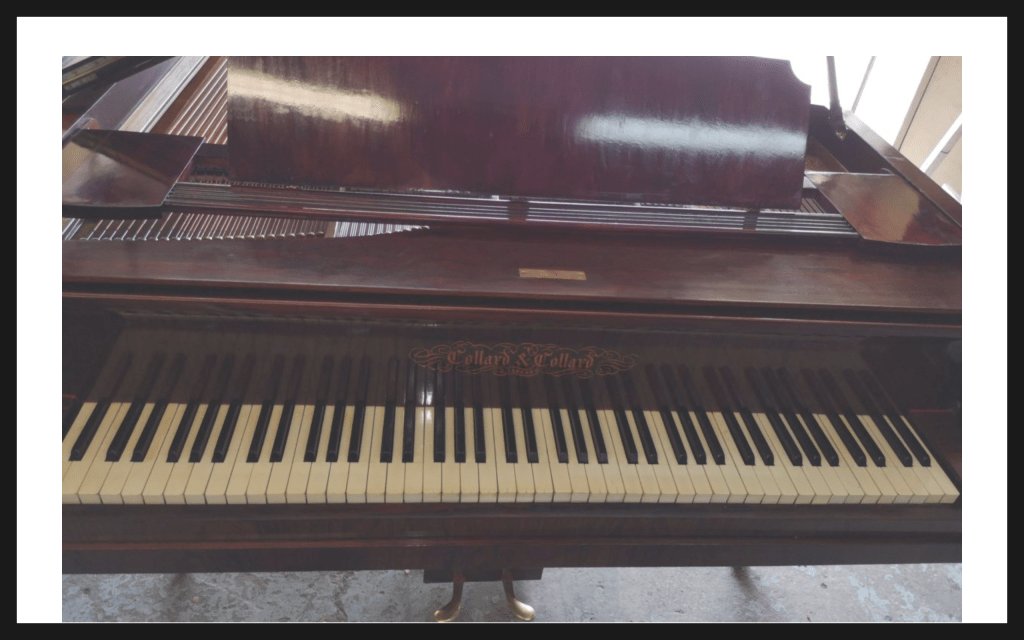
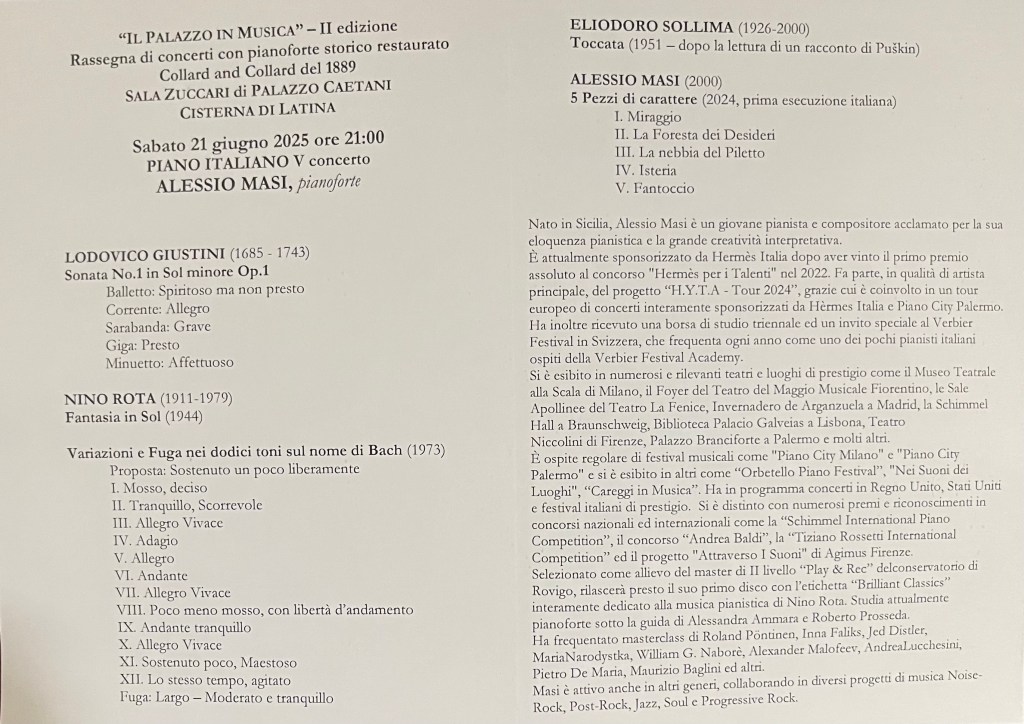
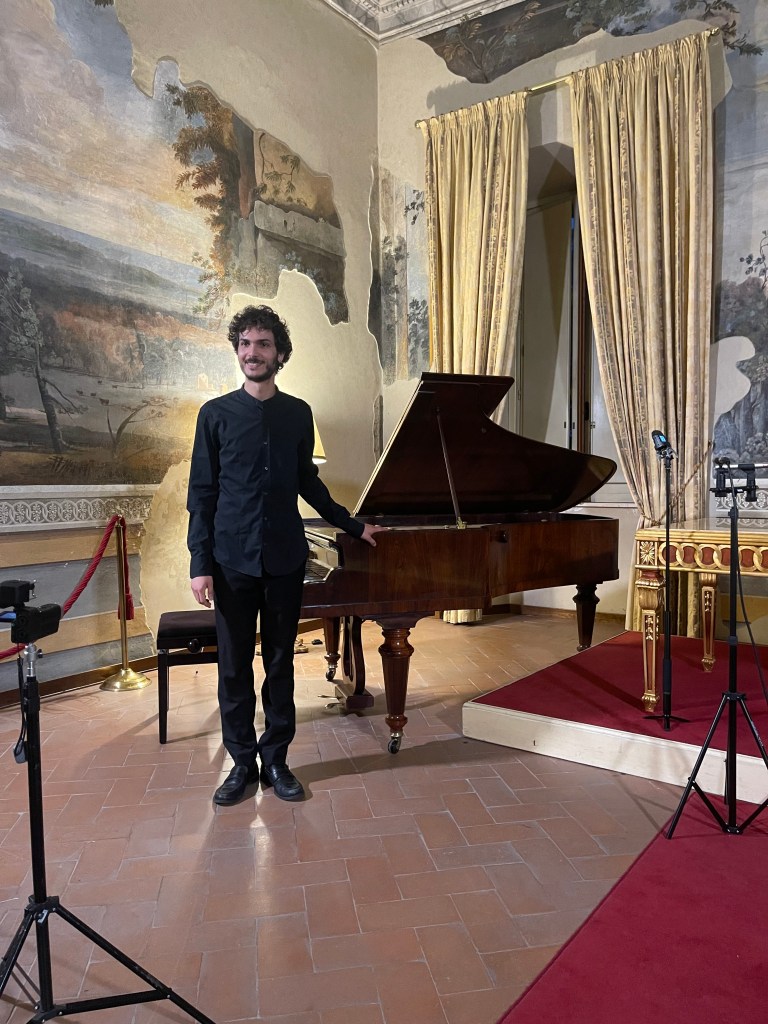
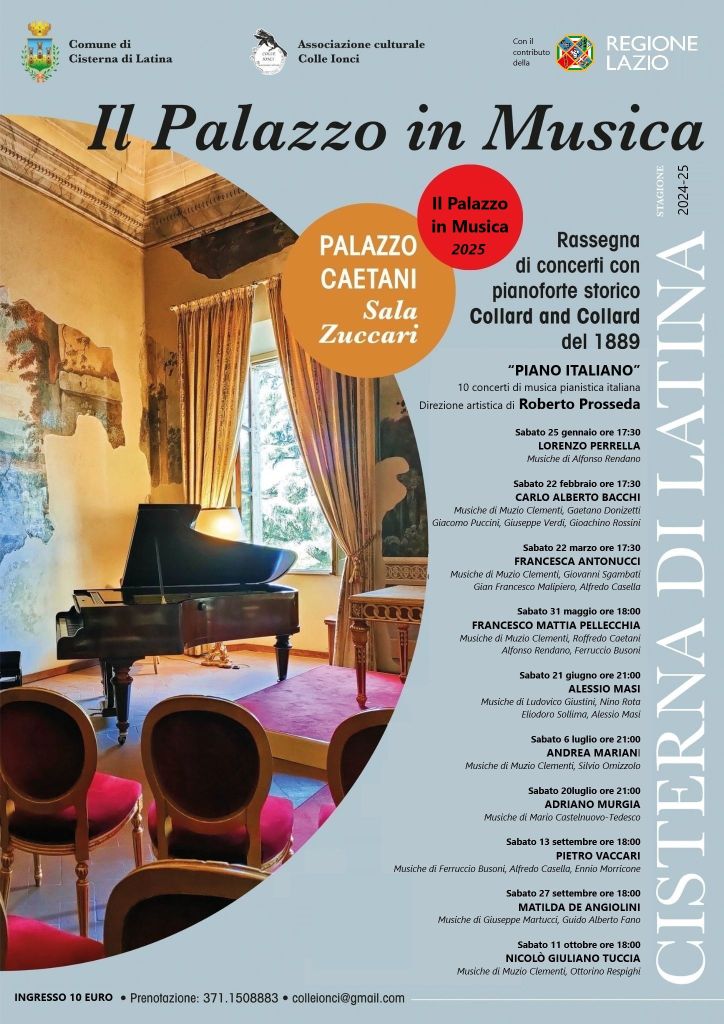
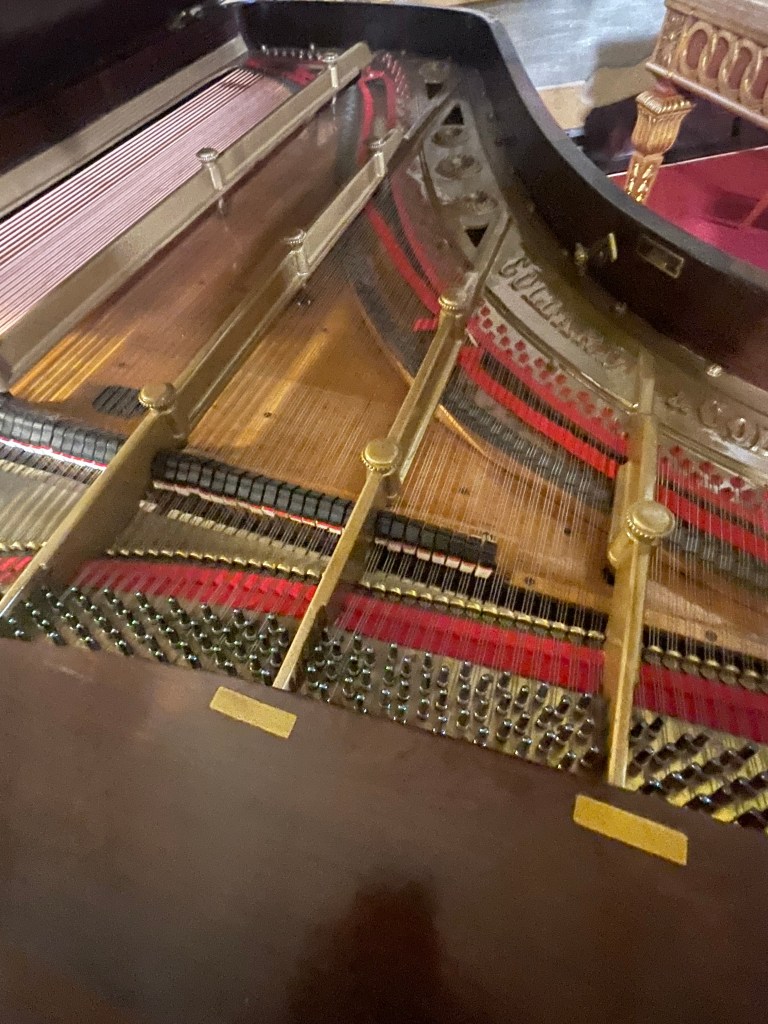
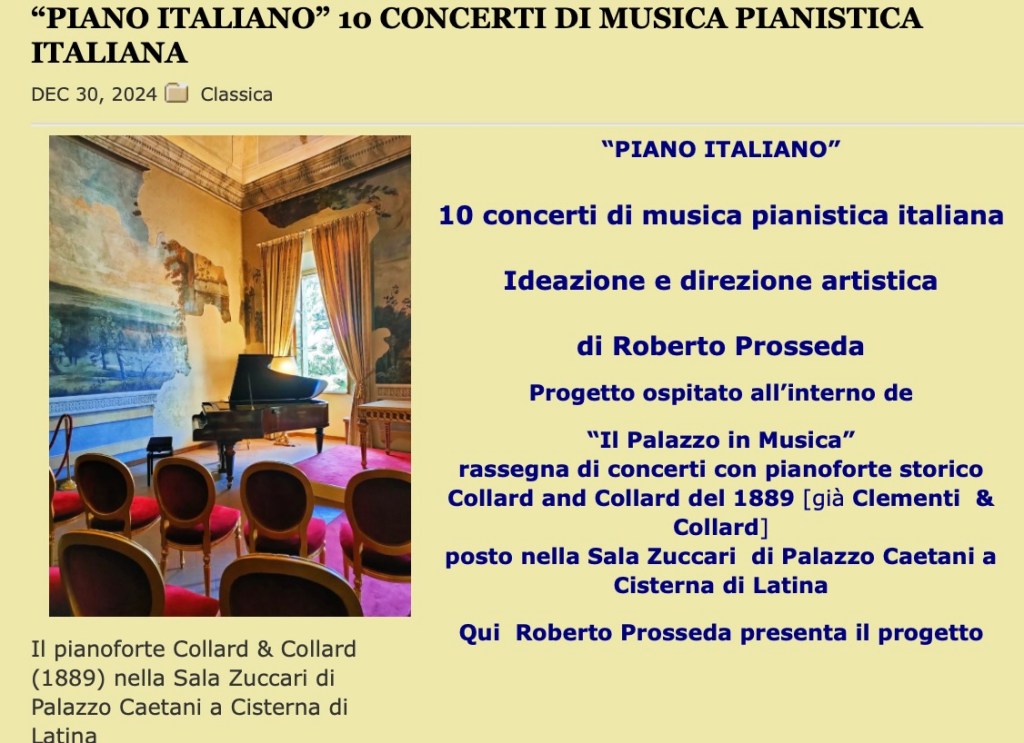
A Collard and Collard piano of 1889 that once stood in the Savoy Hotel in London but above all a masterly Sicilian pianist playing not only his own compositions but even more importantly the works of Nino Rota. Justly famed for his film scores but his classical compositions are practically unknown .
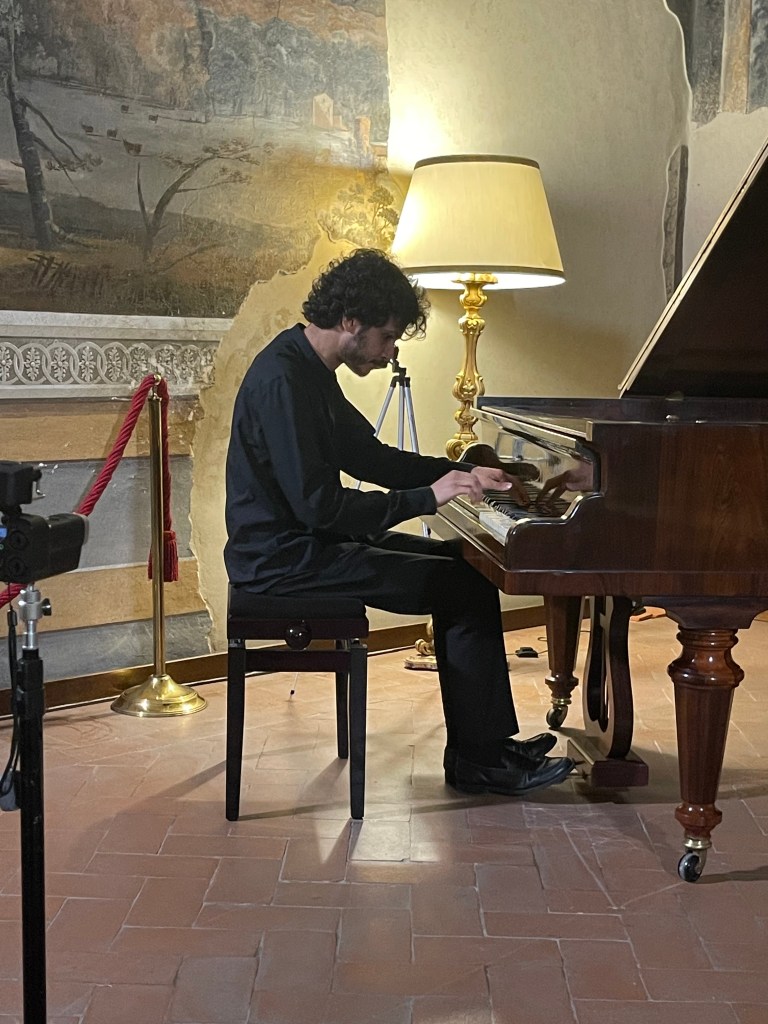
Alessio had already played Rota’s preludes recently in London
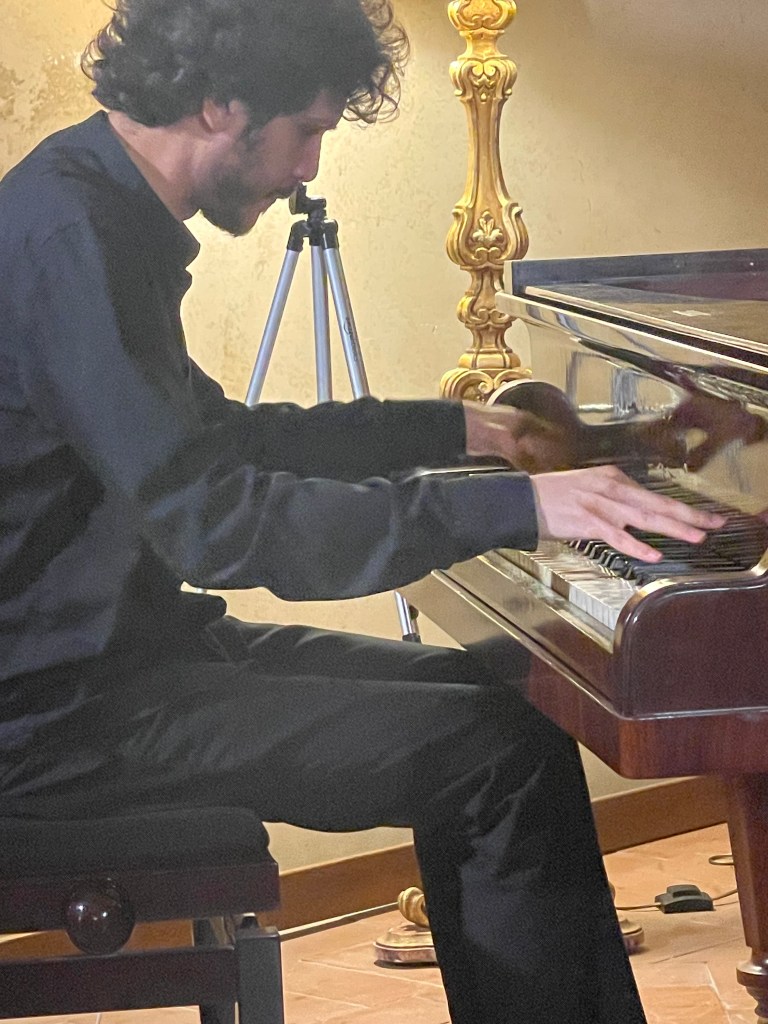
Now he played his masterly Fantasia of 1945 and the extraordinary Variations and fugue in twelve keys on the name of BACH of 1950 (?)
Opening his programme with an early Sonata by another unknown Italian composer of two centuries ago Lodovico Giustini. Played on this very mellow sounding single strung Collard and Collard it had a refined elegance of its age and was played with a rhythmic elan and great sense of character. A scintillating ‘joie de vivre’ to the ‘Corrente’ was followed by the expressive gently moving ‘Sarabande’ of subtle beauty.The dynamic drive of the ‘Gigue’ was diffused by the elegance and refined beauty of the ‘Minuet’. Played with great authority and conviction by a young man who listens carefully to all he does and with long agile fingers and an intelligent sense of style can bring this early work vividly to life and make one wonder why this composer is so unjustly neglected.
Two centuries later Rota was to pen his Fantasia in G during the war years.It is a tone poem of dramatic Lisztian power combining also the typical nonchalant simplicity of a composer who was also to be revealed as a supreme melodist. Alessio played it with fearless bravura and power combined with a poetic sensibility of a young artist who truly understands this very particular Italian landscape.
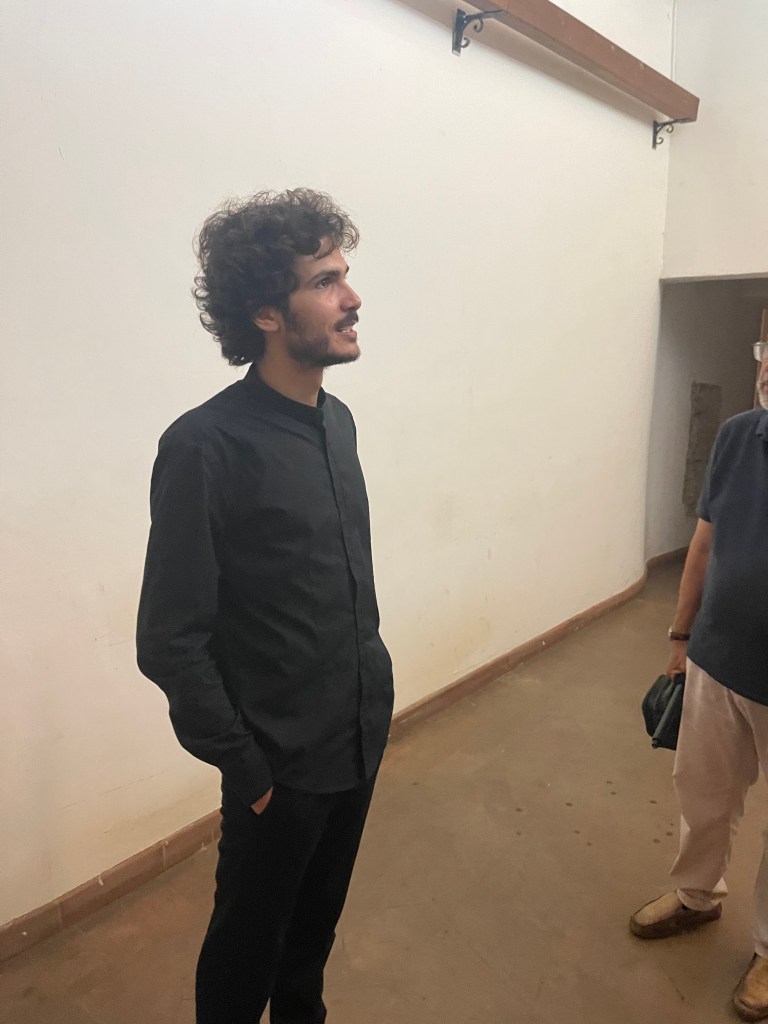
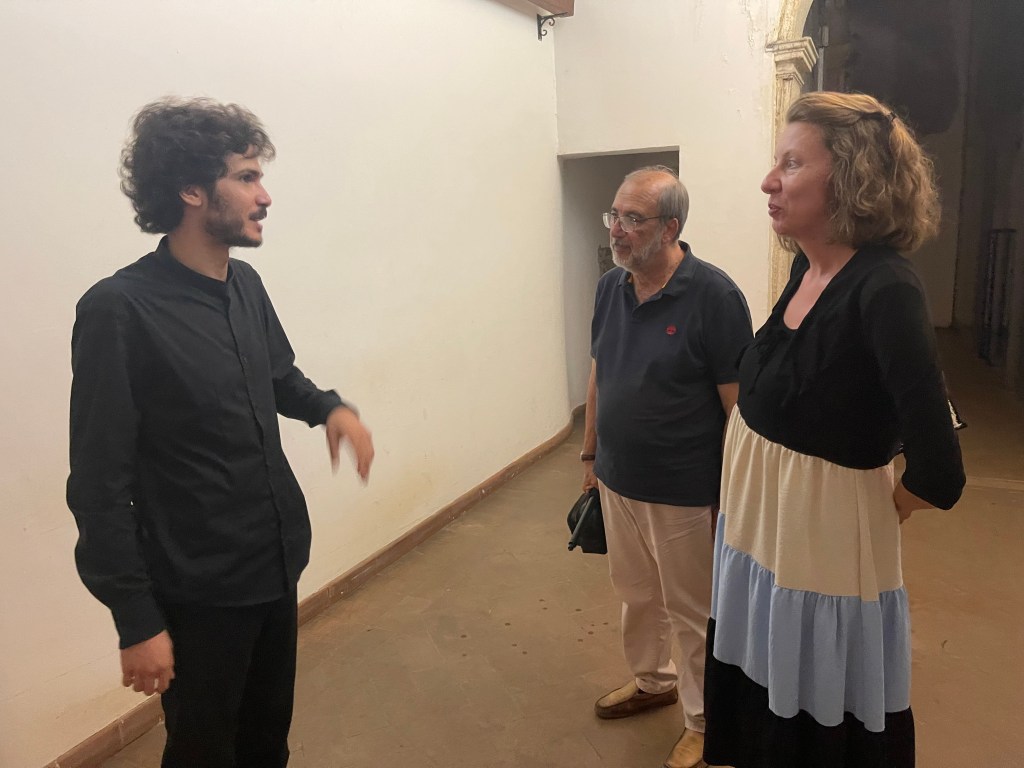
I was particularly overwhelmed though by the Variations and Fugue on the name of Bach (written just four years before Rota’s death in 1979? Surely a printing mistake because they result in his complete works as from 1950, long before his Cinematographic fame). Like the Preludes that Alessio had played in London that so impressed Leslie Howard, I too was overwhelmed by such mastery and total commitment .These Variations came across as a real neglected masterpiece alternating virtuosity with poetic intensity and a writing that was so essential that the sense of line and shape was of a true master.
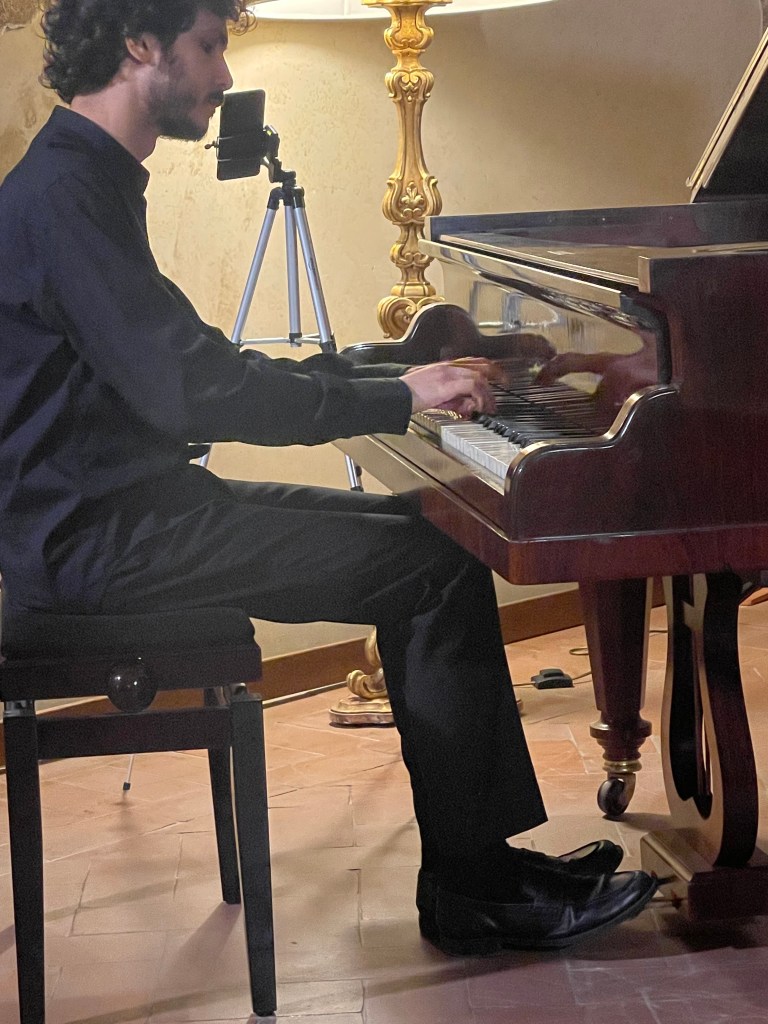
The Toccata by Sollima was a brilliant ‘tour de force’ played with mastery and impeccable technical perfection.
The Italian Premier of 5 pieces played by the composer were remarkable for their fluidity and sense of atmosphere. A haunting ‘La Foresta’ of floating sounds of lilting persuasion. ‘La Nebbia’ with its dissonant Debussian range of sounds were matched by the final insinuating jazz idiom as suggested by Debussy’s ‘Minstrels’. A single encore by Couperin : ‘Les Barricades Mystérieuses’ was played with beguiling insistence.
What an extraordinarily complete artist this young Sicilian is. Not only very complex works played without the help of the score but with an enviable mastery and dedication and he is also a remarkable composer in his own right. A quarter of a century spent well and it is time to spread the word.
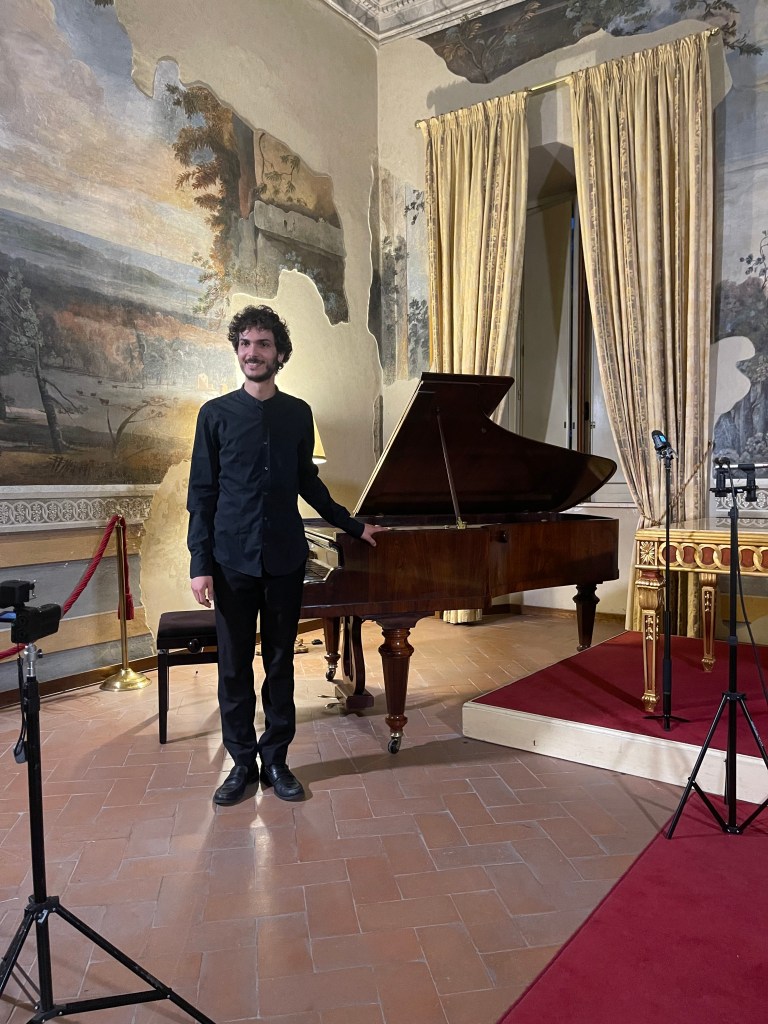
Hats off Alessio you are a worthy heir to your teacher!
At only 25 this young man is busy recording the complete master works of Rota, many on CD for the first time. This evening presenting an eclectic programme that included his own work and that of another Sicilian Eliodoro Sollima. His daughter,Donatella Sollima is now an important part of the musical life of Sicily, being Artistic Director of the Amici della Musica di Palermo and an important jury member of the Trapani International Piano Competition Domenico Scarlatti
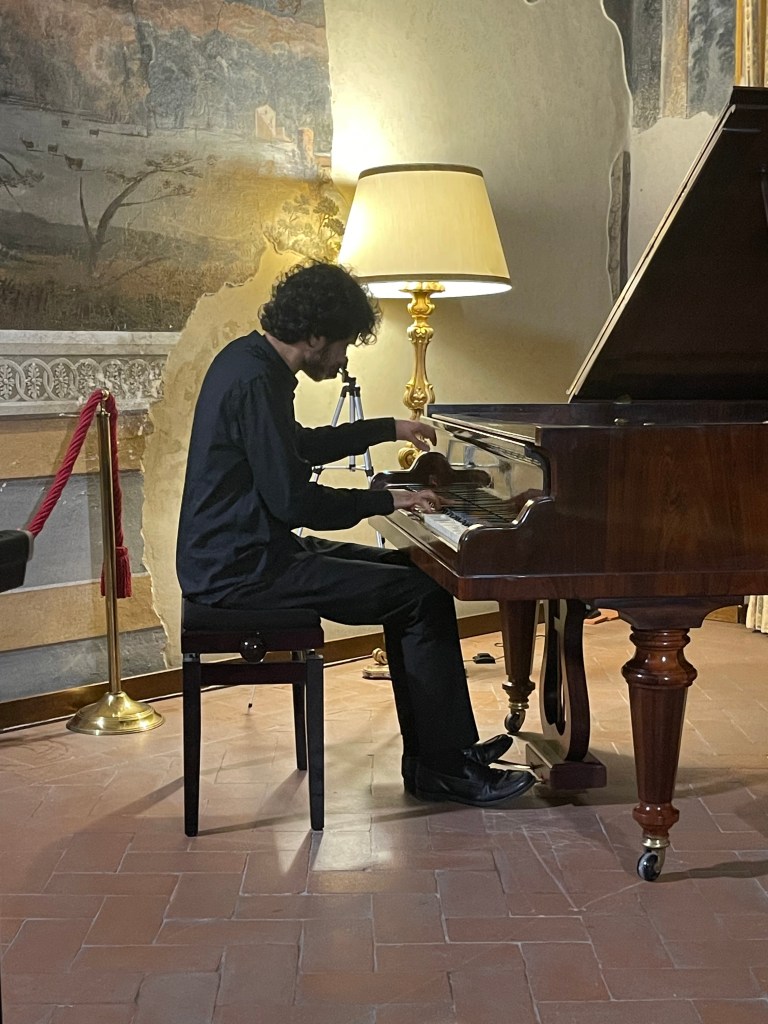
Alessio writes :
‘ Eliodoro Sollima was director and teacher at the Conservatorio of Palermo, where I completed my undergraduate studies in piano. He passed away in the year 2000, the same year I was born, and I found it meaningful to include in this programme works by two Sicilian composers who, in a way, have passed the torch from one generation to the next.’
‘The pieces I present are part of a project titled “Lascari”, inspired by memories from my childhood and teenage years spent at my family’s seaside villa. That place, surrounded by lush Mediterranean vegetation and the ever-present sound of the sea, continues to shape my imagination.’
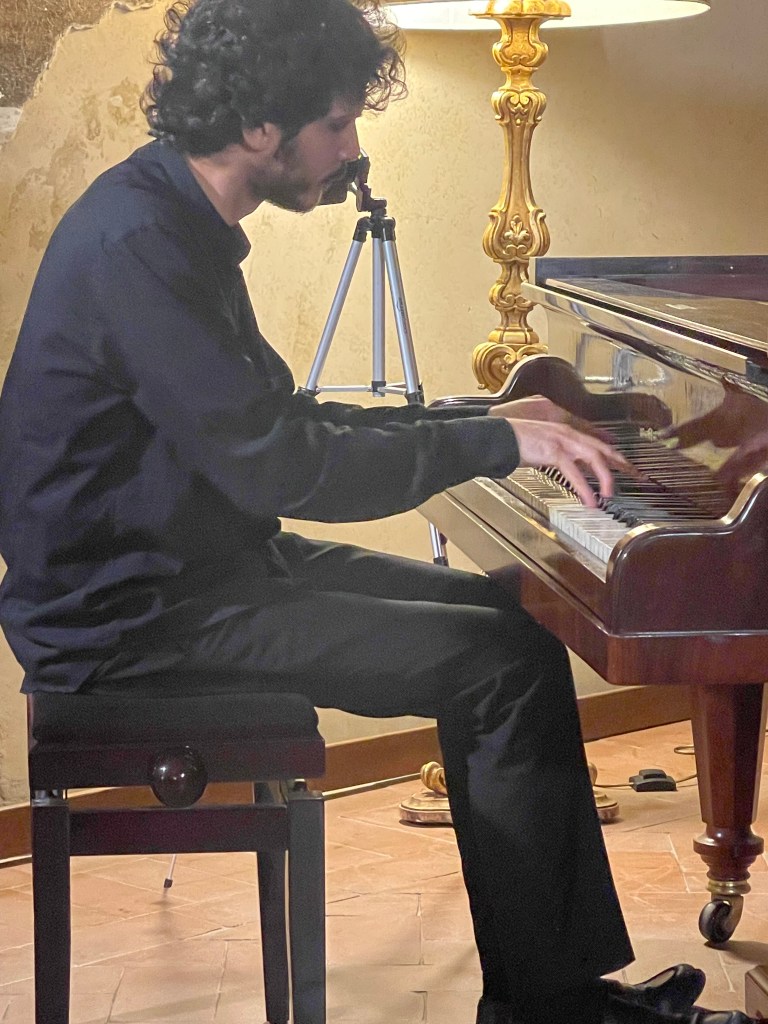
‘ The musical language of Lascari draws on impressionist colours while embracing contemporary influences. Claude Debussy is a natural, almost unconscious, point of reference for me. I aim to continue his harmonic world, projecting it into modern territory with a touch of jazz idiom and current harmonic explorations.’
‘The title of each piece evokes an image, like a dreamlike glimpse of moments passed in Lascari: fragments of memory and imagination intertwined with the distinctly Sicilian landscape that marked my early years.’
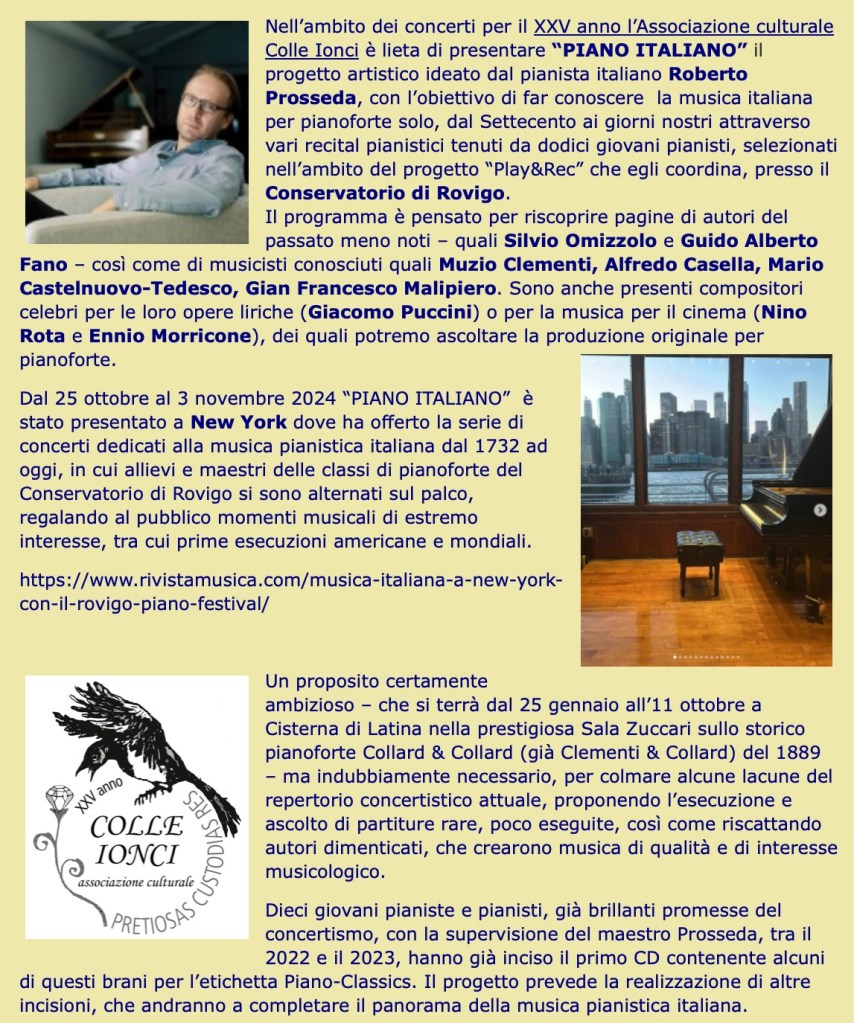
The remarkable Roberto Prosseda a distinguish Professor of the Rovigo Conservatory who together with his wife Alessandra Maria Ammara and their Musica Felix https://www.musicafelix.it/ help numerous talented young musicians and promote neglected repertoire. His Cremona Fair has become and annual institution https://christopheraxworthymusiccommentary.com/2024/09/30/a-letter-from-cremona-the-eternal-city-of-music-where-dreams-become-reality/
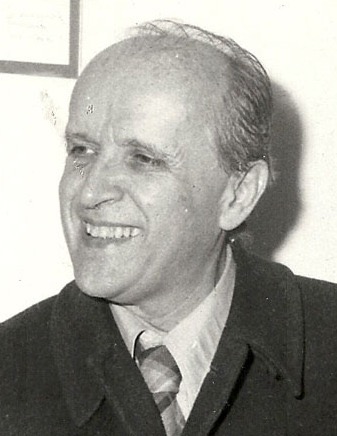
Giovanni Rota Rinaldi. 3 December 1911 Milan 10 April 1979 (aged 67) Rome
During his long career, Rota was an extraordinarily prolific composer, especially of music for the cinema. He wrote more than 150 scores for Italian and international productions from the 1930s until his death in 1979 – an average of three scores each year over a 46-year period, and in his most productive period from the late 1940s to the mid-1950s he wrote as many as ten scores every year, and sometimes more, with a remarkable thirteen film scores to his credit in 1954. Alongside this great body of film work, he composed ten operas, five ballets and dozens of other orchestral, choral and chamber works, the best known being his string concerto. He also composed the music for many theatre productions by Visconti, Zeffirelli and Eduardo De Filippo as well as maintaining a long teaching career at the Liceo Musicale in Bari, Italy, where he was the director for almost 30 years. His piano music is listed below :
- Il Mago doppio-Suite per quattro mani (1919)
- Tre pezzi (1920)
- Preludio e Fuga per Pianoforte a 4 Mani (Storia del Mago Doppio) (1922)
- Illumina Tu, O Fuoco (1924)
- Io Cesserò il Mio Canto (1924)
- Ascolta o Cuore June (1924)
- Il Presàgio (1925)
- La Figliola Del Re (Un Augello Gorgheggiava) (1925)
- Ippolito gioca (1930)
- Ballo della villanotta in erba (1931)
- Campane a Festa (1931)
- Campane a Sera (1933)
- Il Pastorello e altre Due Liriche Infantili (1935)
- La Passione (poesia popolare) (1938)
- Bagatella (1941)
- Fantasia in sol (1945)
- Fantasia in do (1946)
- Azione teatrale scritta nel 1752 da Pietro Metastasio (1954)
- Variazioni e Fuga in dodici toni sul nome de Bach (1950)
- 15 Preludi (1964)
- Sette Pezzi Difficili per Bambini (1971)
- Cantico in Memoria di Alfredo Casella (1972)
- Due Valzer sul nome di Bach (1975)
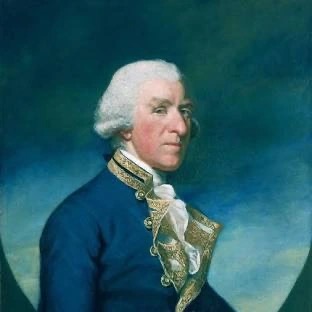
Lodovico Giustini (12 December 1685 – 7 February 1743) was an Italian composer and keyboard player of the late Baroque and early Classical eras. He was the first known composer ever to write music for the piano.
Giustini was born in Pistoia, of a family of musicians which can be traced back to the early 17th century; coincidentally he was born in the same year as Bach,Scarlatti and Handel . Giustini’s father was organist tat the Congregazione dello Spirito Santo, a Jesuit -affiliated group, and an uncle, Domenico Giustini, was also a composer of sacred music.
In 1725, on his father’s death, Giustini became organist at the Congregazione dello Spirito Santo, and acquired a reputation there as a composer of sacred music: mostly cantatas and oratorios. In 1728 he collaborated with Giovanni Carlo Maria Clarion a set of Lamentations which were performed that year. In 1734 he was hired as organist at S Maria dell’Umiltà, the Cathedral of Pistoia, a position he held for the rest of his life. In addition to playing the organ at both religious institutions, he performed on the harpsichord at numerous locations, often in his own oratorios.
Giustini’s main fame rests on his work 12 Sonate da cimbalo di piano e forte detto volgarmente di martelletti, Op.1, published in Florence in 1732, which is the earliest music in any genre written specifically for the piano. They are dedicated to Dom António de Bragança, the younger brother of King Joäo V of Portugal (the Portuguese court was one of the few places where the early piano was frequently played).

These pieces, which are sonate da chiesa, with alternating fast and slow sections (four or five movements per sonata), predate all other music specifically written for the piano by about 30 years. Giustini used all the expressive capabilities of the instrument, such as wide dynamic contrast: expressive possibilities which were not available on other keyboard instruments of the time. Harmonically the pieces are transitional between late Baroque and early Classical period practice, and include innovations such as augmented sixth chords and modulations to remote keys.
James Parakilas points out that it is quite surprising that these works should have been published at all. At the time of composition, there existed only a very small number of pianos, owned mainly by royalty. He conjectures that publication of the work was meant as an honor to Giustini; it “represents a gesture of magnificent presentation to a royal musician, rather than an act of commercial promotion.”
While many performances of his large-scale sacred works are documented, all of that music is lost, with the exception of fragments such as scattered aria. Giustini’s fame rests on his publication of his set of piano pieces, although they seem to have attracted little interest at the time.
 ChristopherAxworthy-MusicCommentary