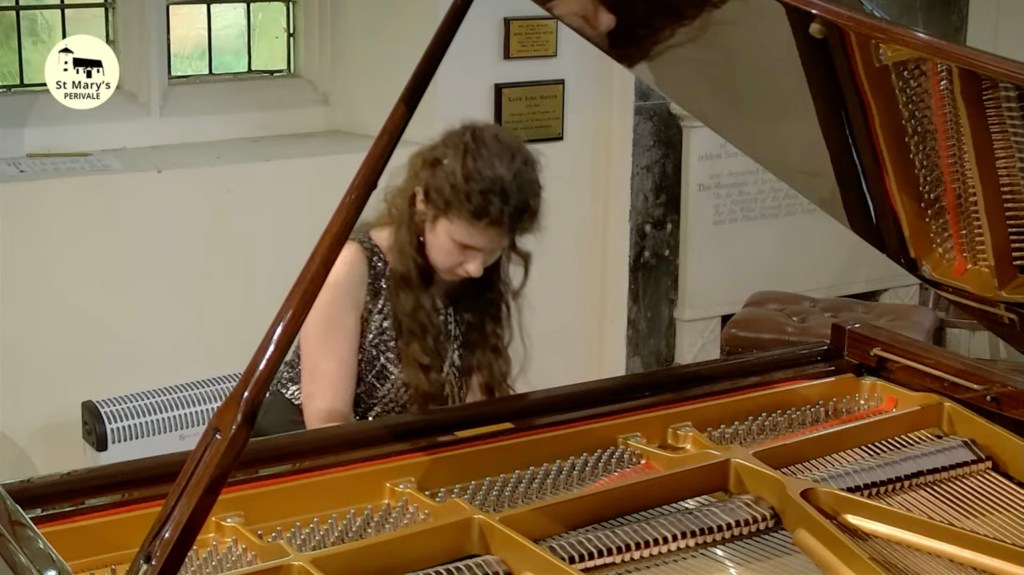
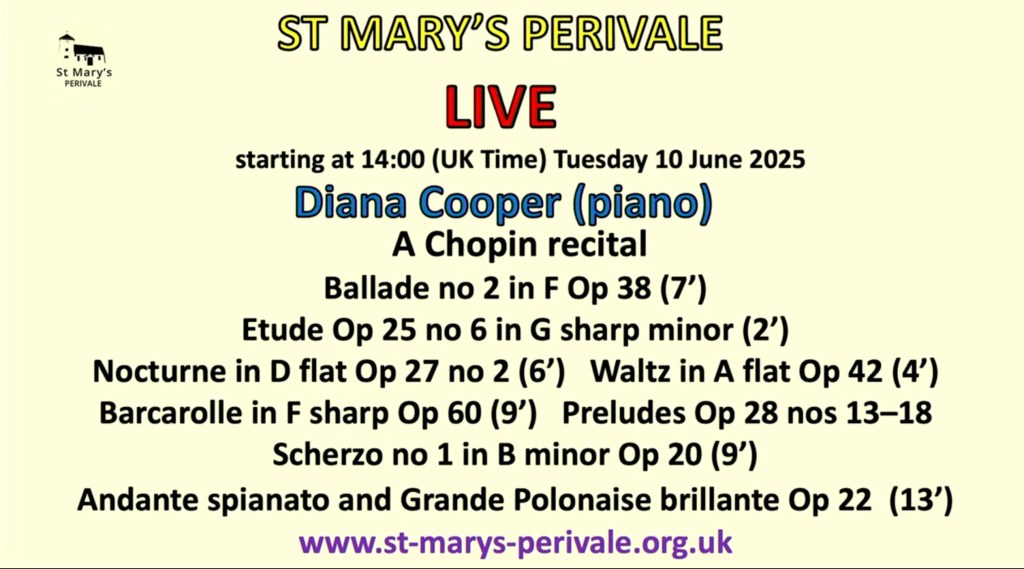
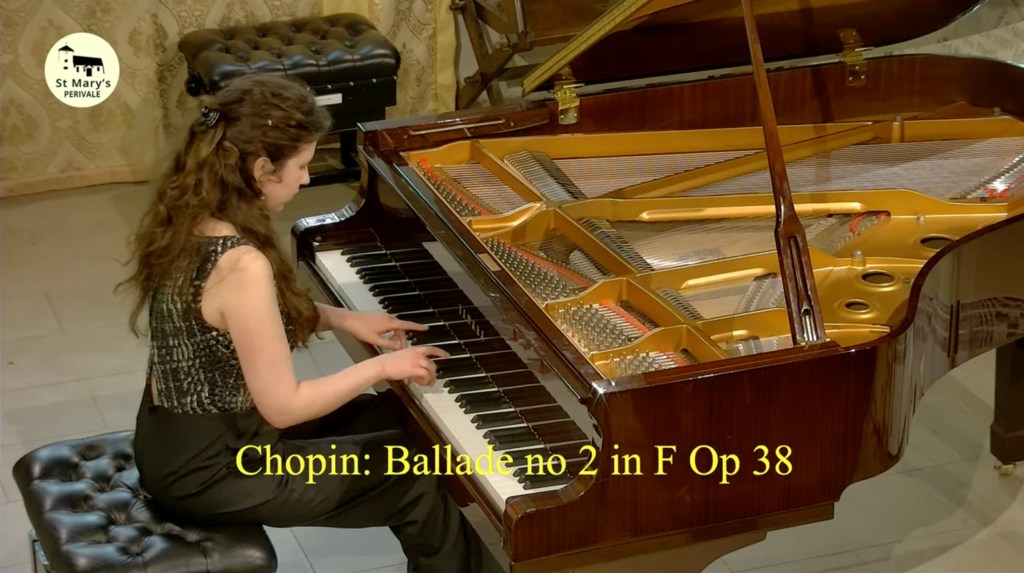
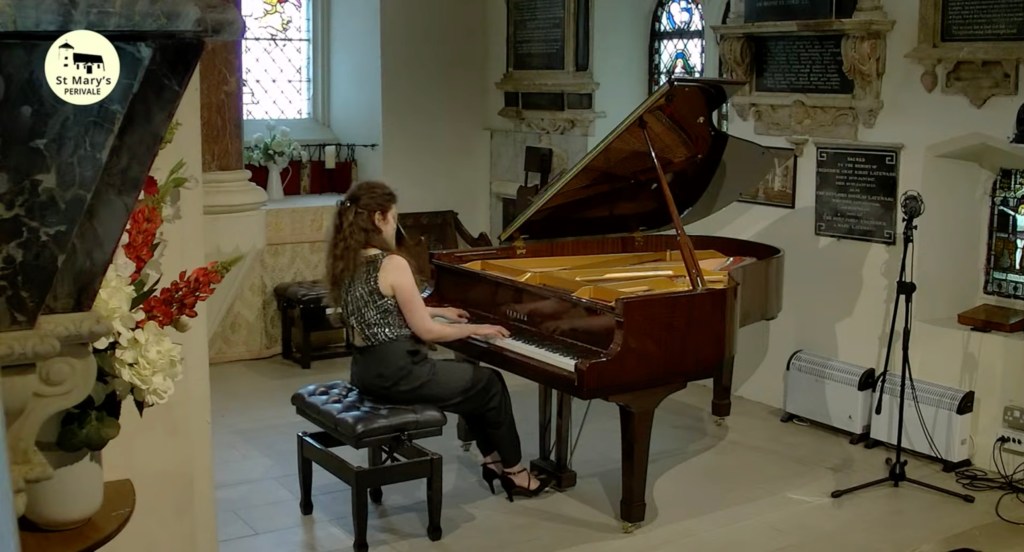
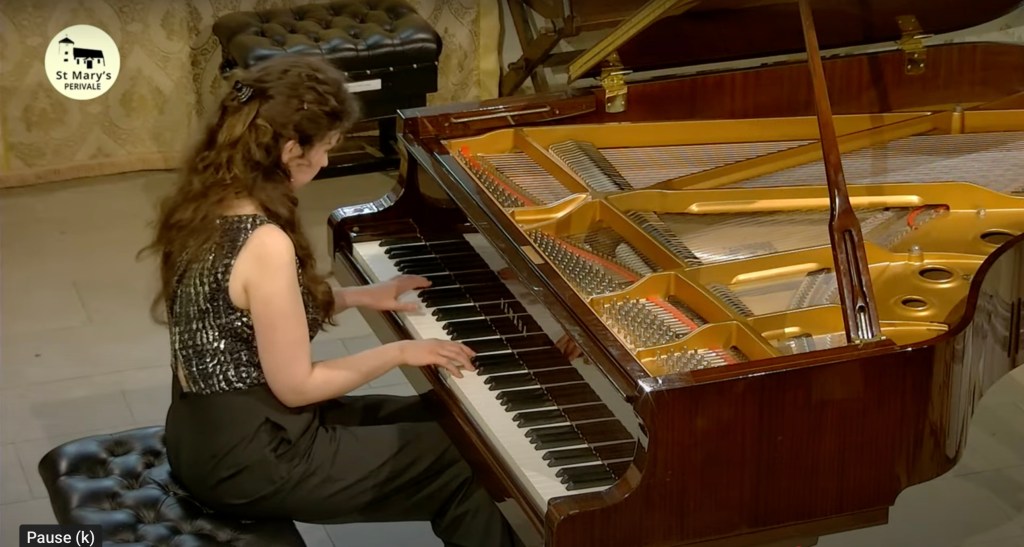
More Chopin playing from Diana Cooper of refined good taste and aristocratic nobility. She has a rare ability to play with a simple purity, untainted by tradition, but dictated by intelligence and scrupulous attention to what the composer indicates in the score. A gently flowing second Ballade that was beautifully shaped and with a continual forward movement like riding on a wave of sound. The dramatic outbursts were played with passion and precision, but everything she played seemed to sing with such vibrant poetic beauty. Played with some very delicate phrasing but always under a roof of great architectural shape of a work that in lesser hands can sound so sectionalised.
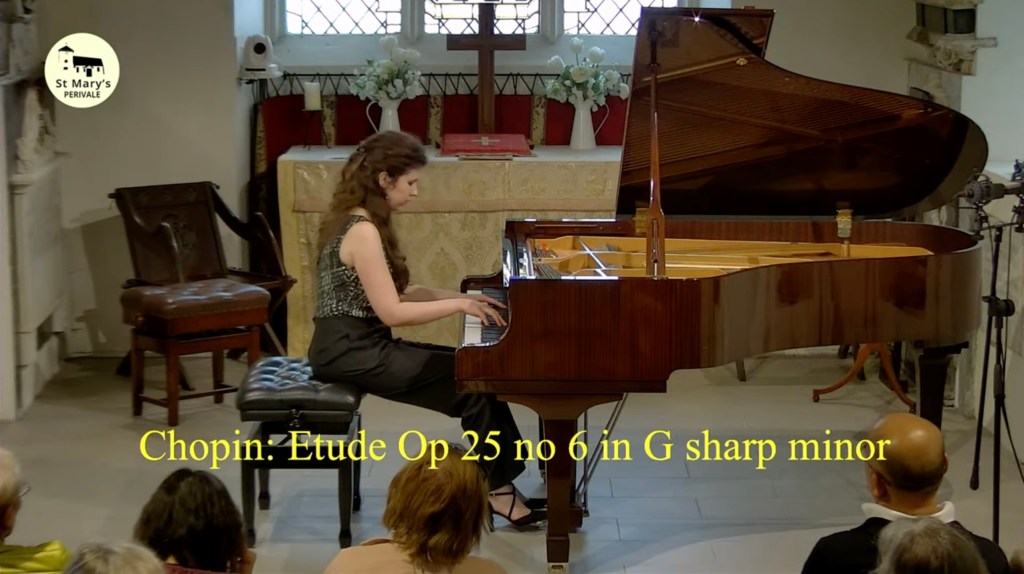
Musicianly playing also of one of Chopin’s most technically difficult studies that in Diana’s hands was a miniature tone poem of fleeting radiance. A remarkable technical command in this and in the treacherous B flat minor Prelude op 28 n.16 that was played with glowing brilliance but where more attention to the bass would give a richer sound and allow more freedom and subtle phrasing. However it was a remarkable ‘tour de force’ of a true musician.
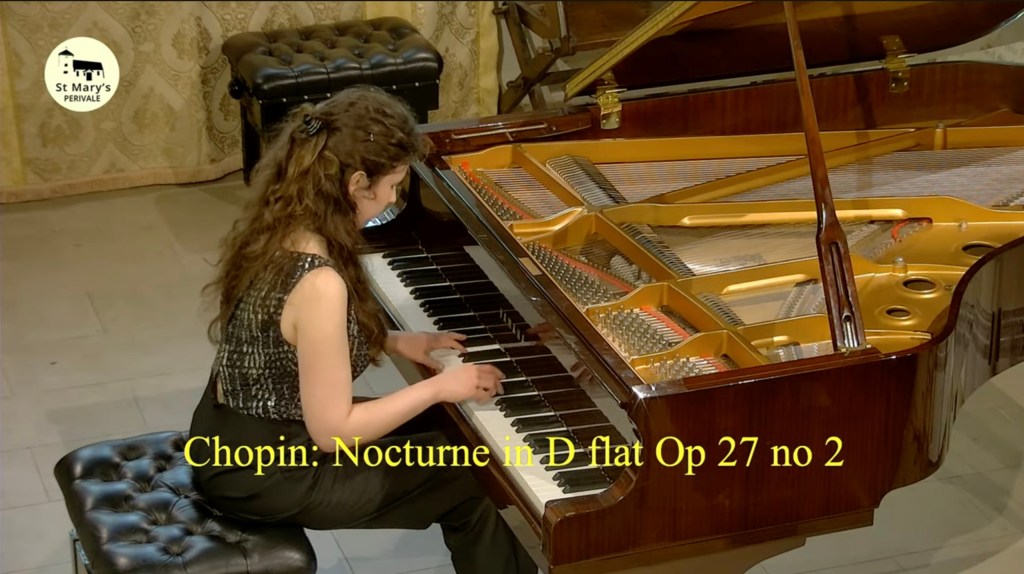
I found the D flat nocturne a little too slow to allow the beautiful bel canto to really take wing in one breath ,but it was played with a beautiful sense of balance and radiant glowing beauty. Refined poise and elegance was a hallmark of Chopin playing of ravishing beauty and allowed her to play the final bars with a kaleidoscope of beautiful sounds that glowed like jewels from within especially at this luxuriant tempo.
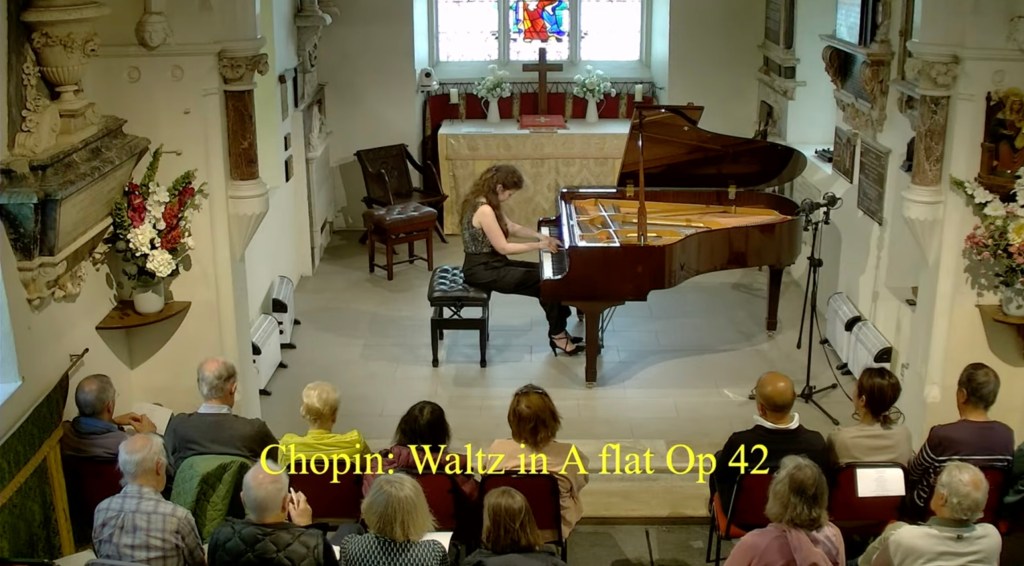
There was a harmonic richness to Chopin’s knotty rhythmic Waltz op 42 which she imbued with charm and brilliance, and a final few bars of exhilaration and excitement, with its abrupt slamming of the door.
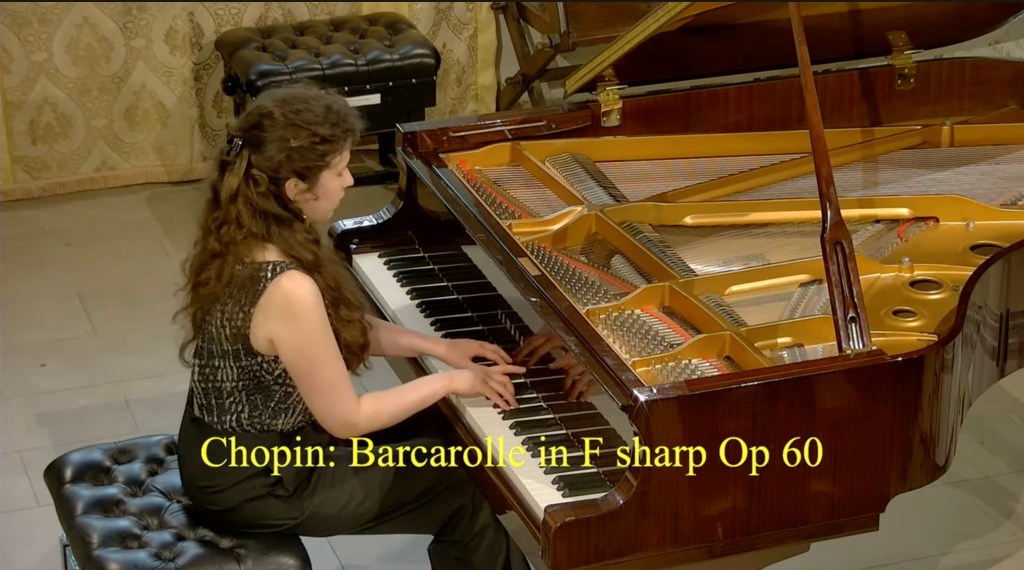
The Barcarolle op 60 is surely one of Chopin’s most beautiful creations, a continuous song from beginning to end. From the opening deep C sharp in the bass that just opens up the resonance of the piano without any hardness there is a continual crescendo of radiance and beauty which leads to the final passion and aristocratic nobility that Diana played with rare control and understanding .Even the magical final bars ,so admired by Ravel, were part of this great song that finished as it began with octaves of radiance and purity from a sensitive artist, who had understood the extraordinary architectural shape and poetic content from this Genial master of the keyboard.
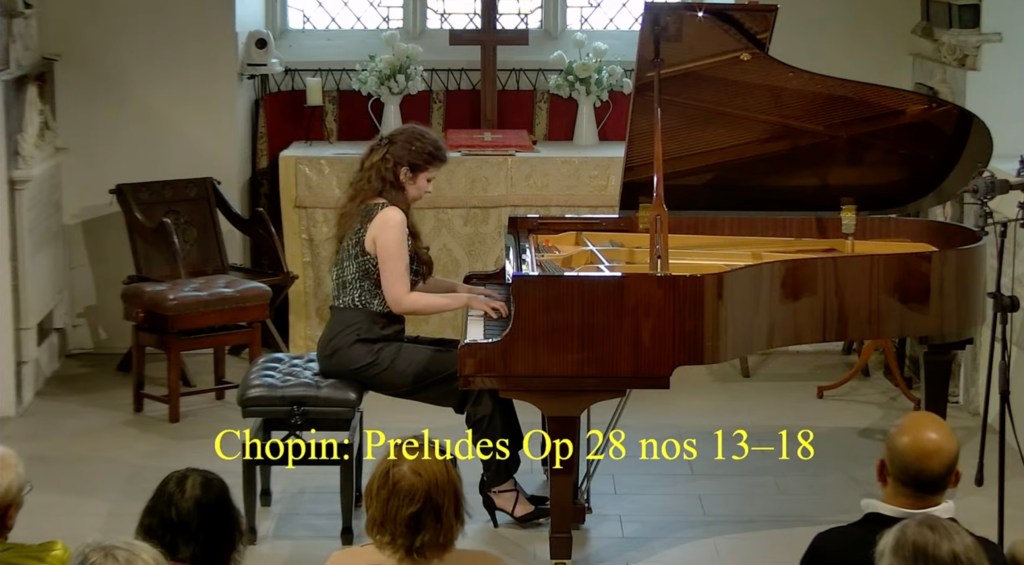
The thirteenth prelude is one of the most beautiful creations of Chopin, similar in may ways to his D flat Nocturne. It is more subdued and less turbulent, where the middle episode is an explosion of exquisite breathtaking beauty. Diana played it with quite extraordinary poise and mastery having opened this group of six preludes with this whispered magic. Ending with the dynamic cadenza of the 18th Prelude, played with dynamic drive and passionate insistence, just as she had the notorious 16th .The fourteenth was a mere breath of wind blowing over the graves that Diana played with remarkable control of the pedal before allowing the fifteenth, the ‘Raindrop’ prelude , to enter with glowing simplicity. Bringing a subtle menace to the central episode, with a masterly build up of sonority without ever allowing the sound to become hard or brittle. It was the same fullness without hardness that she brought to the beautiful A flat prelude, that with fluidity and simplicity, she was able to transform from a simple prelude into a tone poem of vibrant beauty.
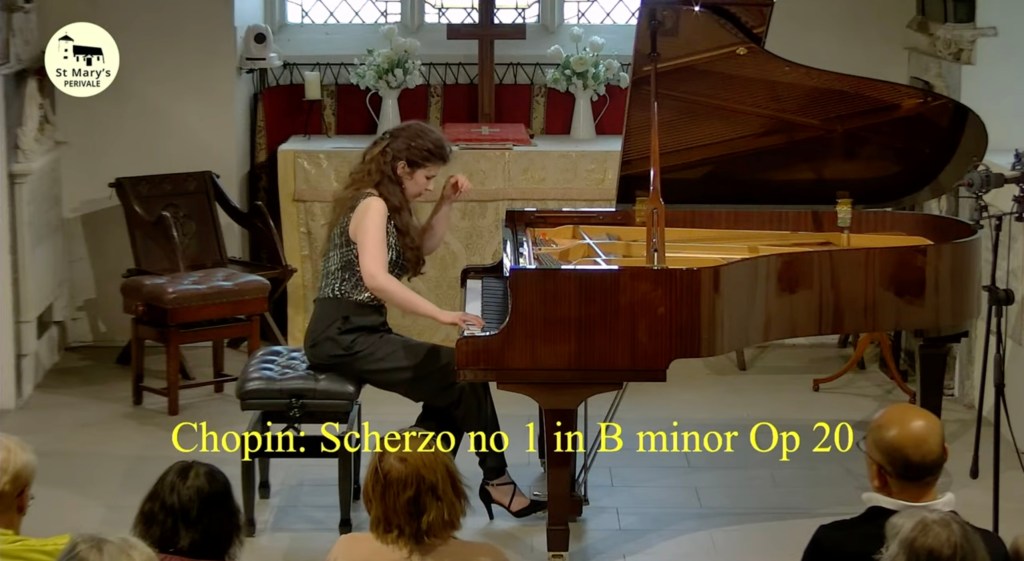
Dynamic drive of passion and fleeting brilliance brought this first scherzo vividly to life. A ‘jeux perlé’ that had such rhythmic tension and that lead so naturally to passionate outbursts or romantic effusions. There was a simplicity and beauty to the Polish Christmas Carol that Chopin incorporates into the first of his four scherzi. A coda of remarkable precision but also of passionate exhilaration and dramatic tension.
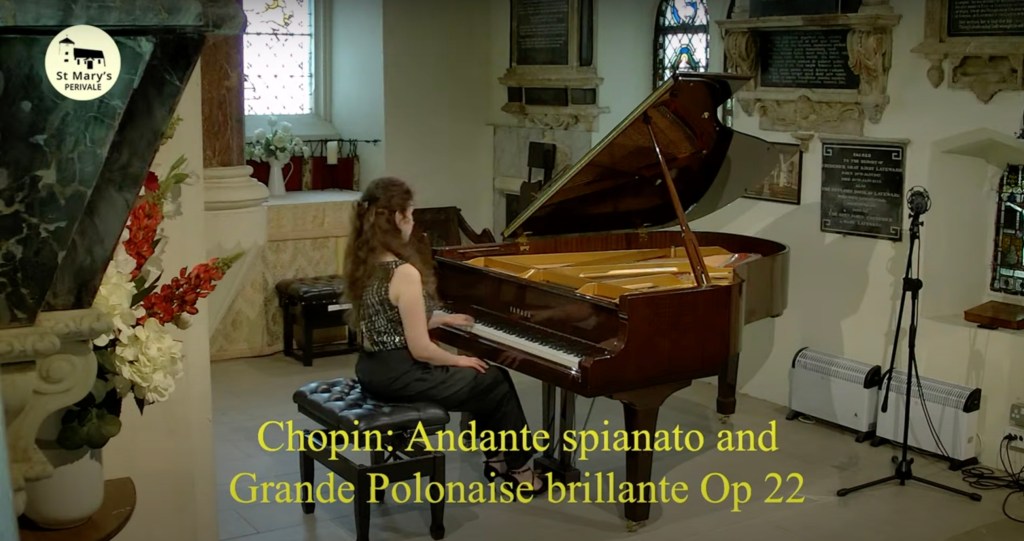
The Andante Spianato was played with a superb sense of balance and poise with a beguiling flexibility of aristocratic good taste. It was the same radiance and beauty that she was to bring to the encore of the Berceuse that followed the ovation that she received after a breathtaking account of the Grande Polonaise brillante. Suddenly Diana seemed to unleash her control and poise and let her whole body command the stream of notes that Chopin fills this early show piece with. A work that was to astonish the Parisian Salons of the day and had Schumann declare ‘Hats off, Gentlemen, a Genius’. Chopin had arrived and as Diana showed us today is here to stay illuminating and enriching our lives for ever more.
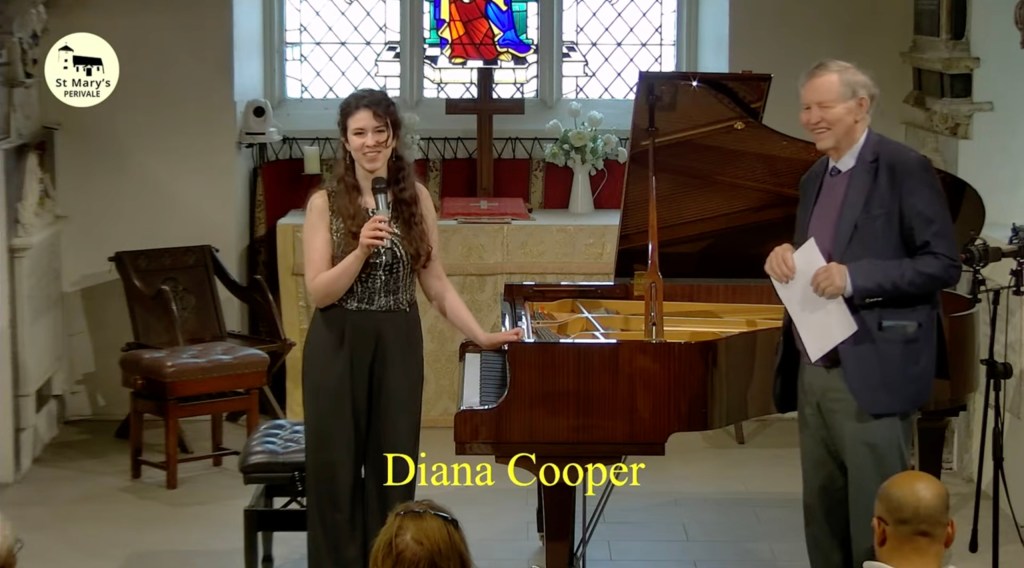
Winner of numerous awards including 1st Prize at the Brest Chopin Competition, 1st Prize at the Halina Czerny-Stefanská International Competition in Poznan (Poland) and 1st Prize at the Concurso Internacional de Piano de Vigo (Spain), Diana Cooper has been invited to perform in various venues and festivals in France and abroad, including the Nohant Chopin Festival, the Festival Chopin à Paris, the Salle Cortot, the Hrvatski dom Split in Croatia, Chopin’s manor in Zelazowa Wola in Poland, the Teatro Filarmónica de Oviedo… In 2023 and 2024, she was selected to take part in the project Un été en France avec Gautier Capuçon, for which she performed solo and chamber music in several open-air concerts across France, including in Corsica. She was invited in 2018 to take part in the radio program Générations Jeunes Interprètes on France Musique and, in 2023, performed as a trio in the television programme Fauteuils d’orchestre, broadcast on France 5. In 2024 she was chosen to take part in a masterclass with Yuja Wang, filmed and produced by the BBC for the art series Arts in Motion. She appeared with several orchestras including the Orkiestra Symfoniczna Filharmonii Kaliskiej, in Poland, performing Chopin’s 1st concerto under the baton of Maciej Kotarba. Born in Tarbes (France), Diana is a graduate of the Conservatoire de Paris (CNSMDP), the Ecole Normale de Musique Alfred Cortot and the Royal College of Music in London. Her main professors include Norma Fisher, Philippe Giusiano, Rena Shereshevskaya, and Marie-Josèphe Jude. Diana has recently recorded her first CD, featuring works by Haydn, Chopin and Ravel, after winning 1st Prize in the Concours d’aide aux Jeunes Artistes organised by the Festival du Vexin.
 ChristopherAxworthy-MusicCommentary