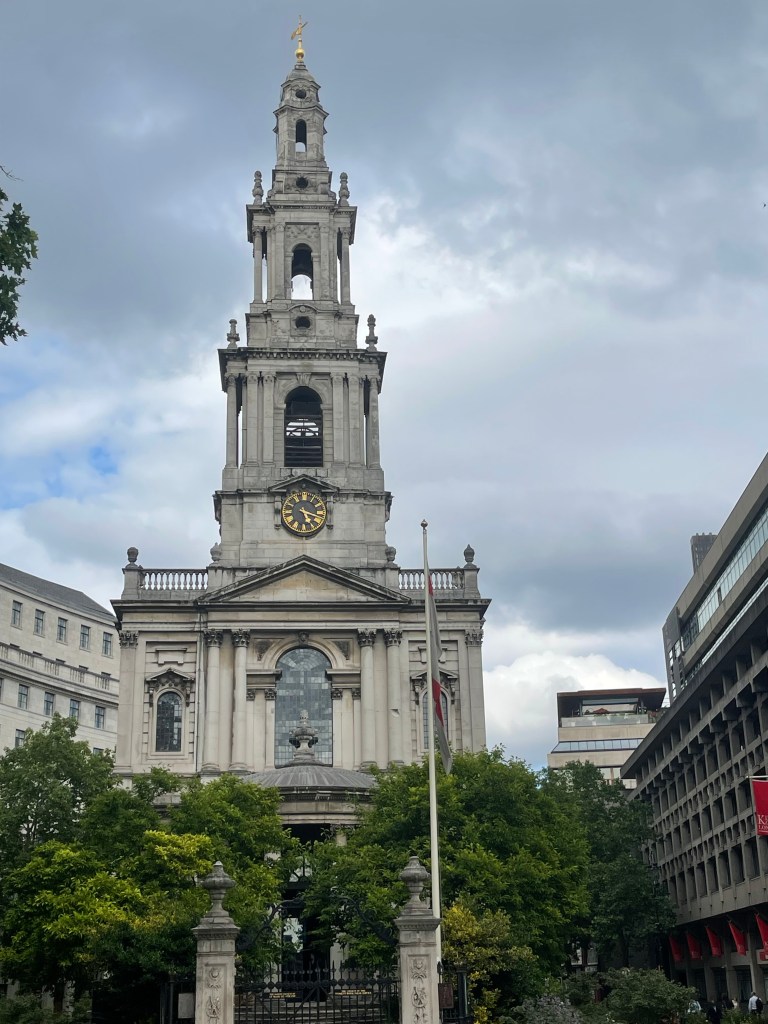

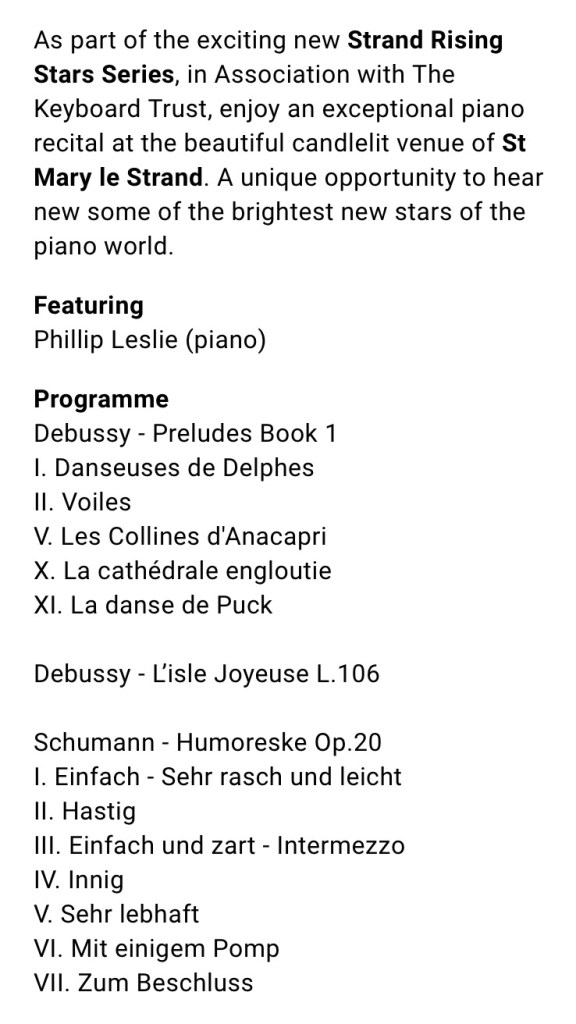
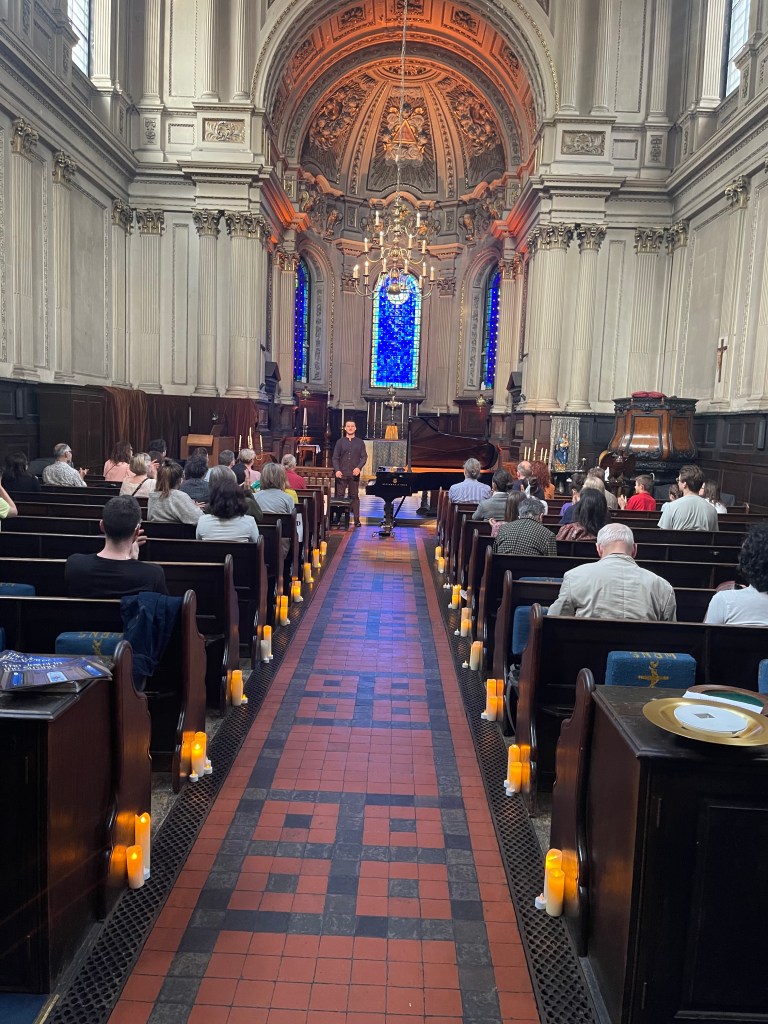
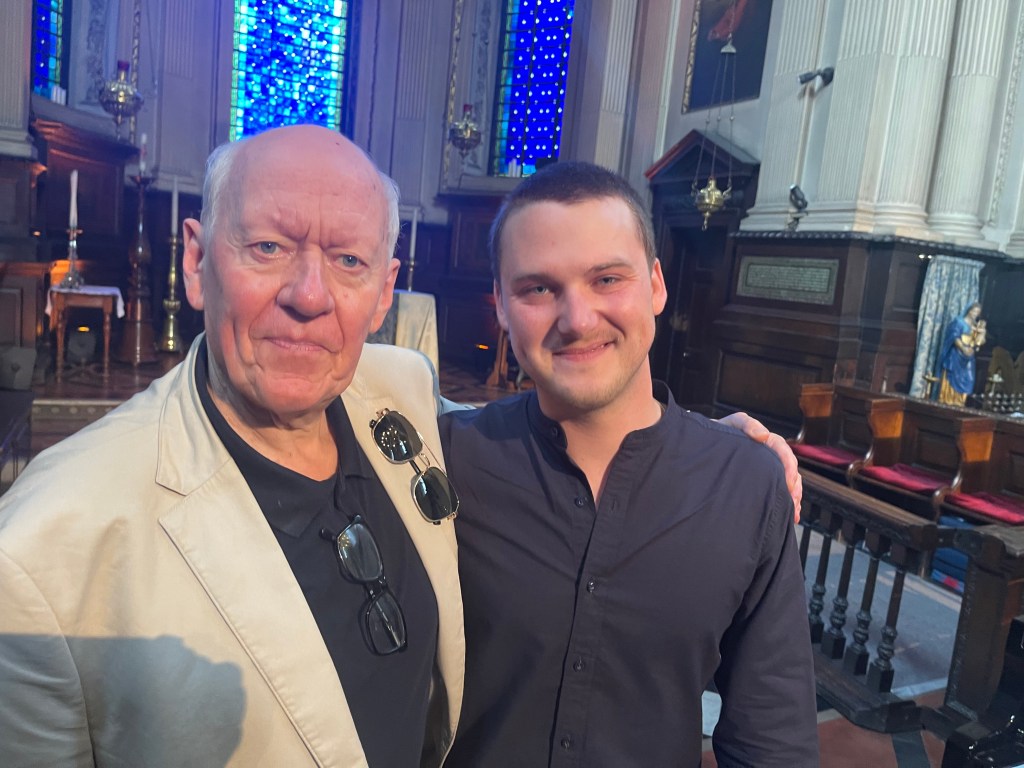
Phillip Leslie proved himself to be indeed a rising star with Debussy Preludes of ravishing sounds and refined musicianship. Followed by Debussy’s vision of Jersey from Eastbourne with a tone poem of unimaginable passionate persuasion . But it was the sublime Humoreske of Schumann that filled these majestic walls with sounds worthy of this beautiful edifice. Florestan and Eusebius were at last united in the celebration of sublime beauty in the hands of a refined poet of the keyboard. A single encore of Paderewski’s Minuet in G was a homage to his teacher the renowned pianist Philip Fowke who was there to pass on the baton to a worthy successor.
The restrained elegance of Debussy’s depiction of the sculpture in the Louvre of the ‘Dancers of Delphi’ with Phillip’s kaleidoscope of magic sounds creating the unworldly atmosphere that it evoked. The radiance and ethereal wafts of colour that Phillip floated over the keyboard was of a beauty on which these ‘sails or veils’ were being blown by a warm luxuriant breeze. He brought the pulsation of Naples to the ‘Hills of Anacapri’ with its brilliance and splashes of colour. Even the sleazy ‘modéré et expressif’ was full of insinuating beauty and the final triumphant outpouring of joy was played with fearless brilliance to the final chiselled shout of joy .There was a masterly build up of sound in the ‘Submerged Cathedral’ with it’s sense of grandeur and religious ferment .The beautiful plain chant ‘un peu moins lent (dans une expression allant grandissant) rang around this magnificent edifice with haunting beauty and solemnity. What fun Phillip had with ‘Puck’s dance’ where the impish masquerading just flew form his fingers with titivating brilliance. The last word was to Puck with a stream of sounds played pianissimo ‘rapide et fuyant’ with a final poke deep in the bass.
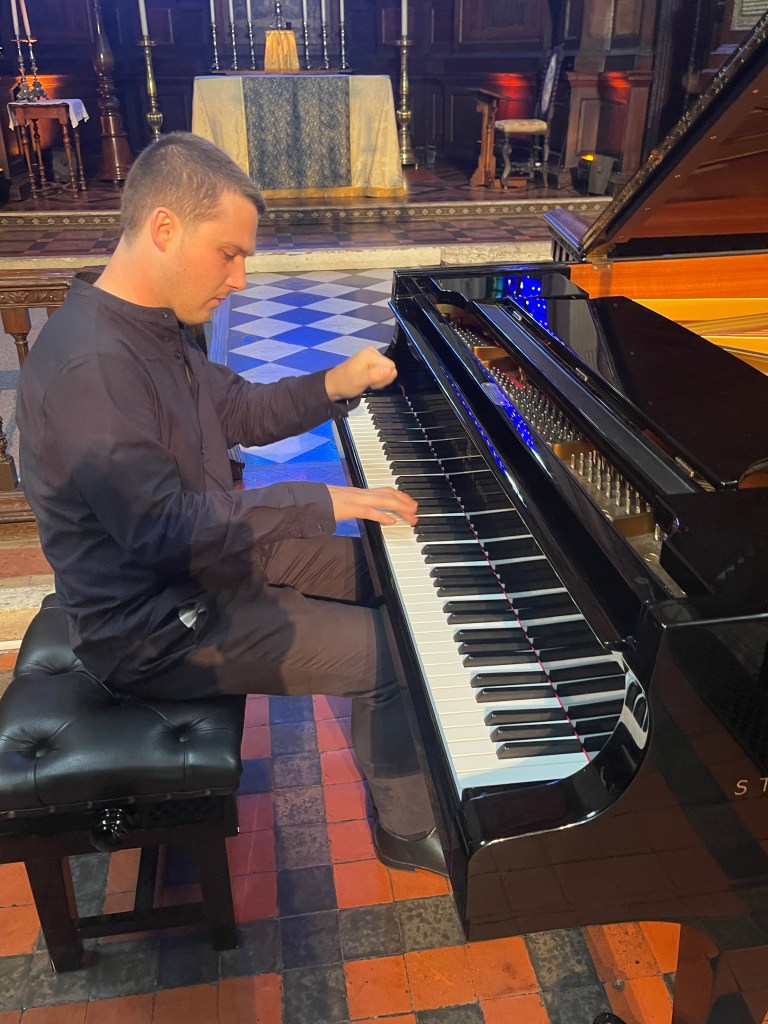
‘L’Isle Joyeuse’ is in fact Debussy’s depiction of Jersey as seen from Eastbourne and just shows the fantasy that illuminated all that Debussy saw. A tone poem of subtle colours and dynamic drive. But it is the passionate outpouring at the end that like Chopin’s Ballades brings this masterpiece to a brilliant conclusion. It was played with fearless conviction and masterly control but also a palette of colours of a pointiless painter.
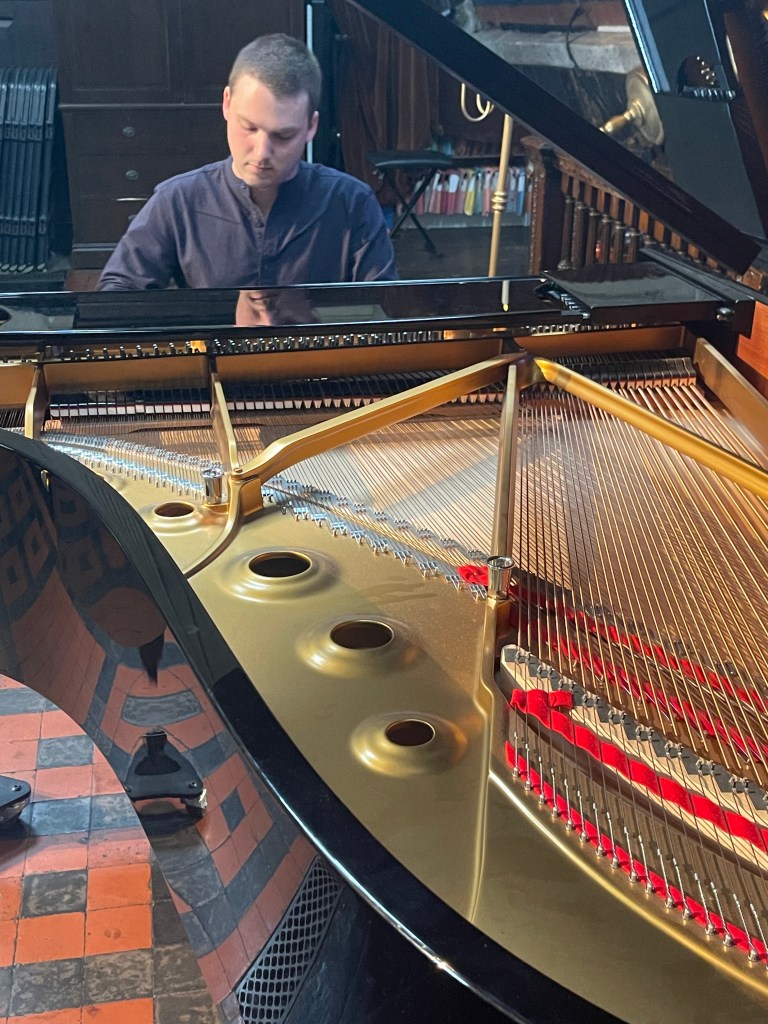
Schumann’s Humoreske op 20 is one of the most beautiful of Schumann’s works for piano but it is also one of the most difficult to hold together as a single work.Written as one long movement but with many differing episodes where Schumann’s duel character of Florestan and Eusebius can live together only with musicians that can appreciate the architectural shape under which they live.
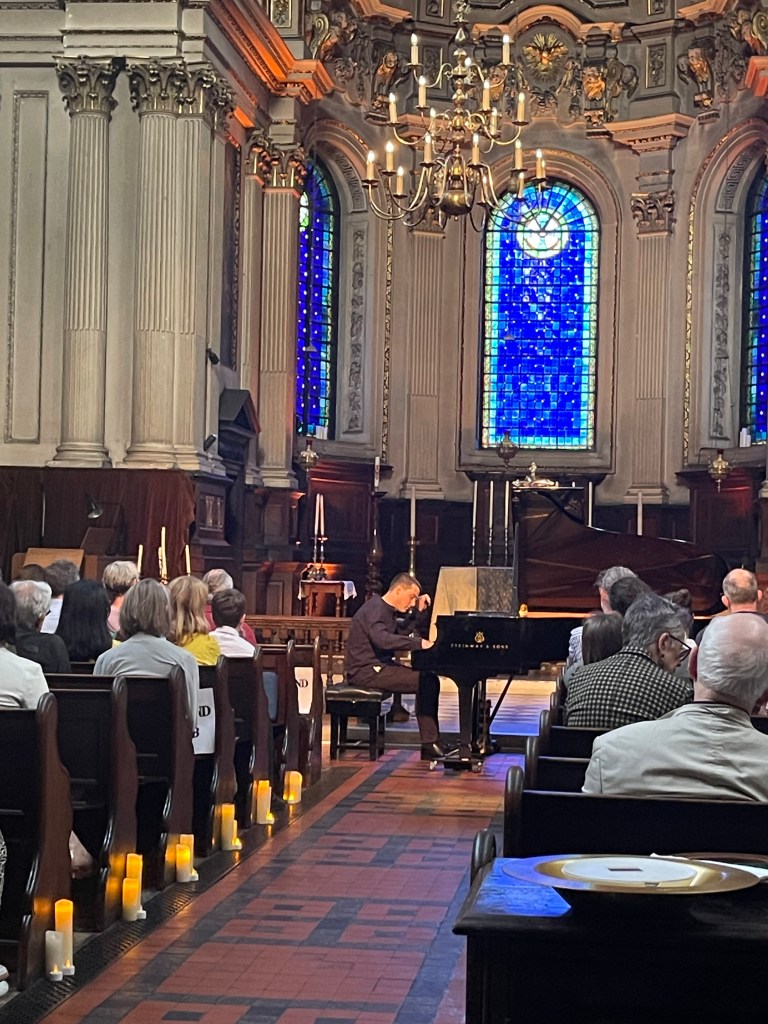
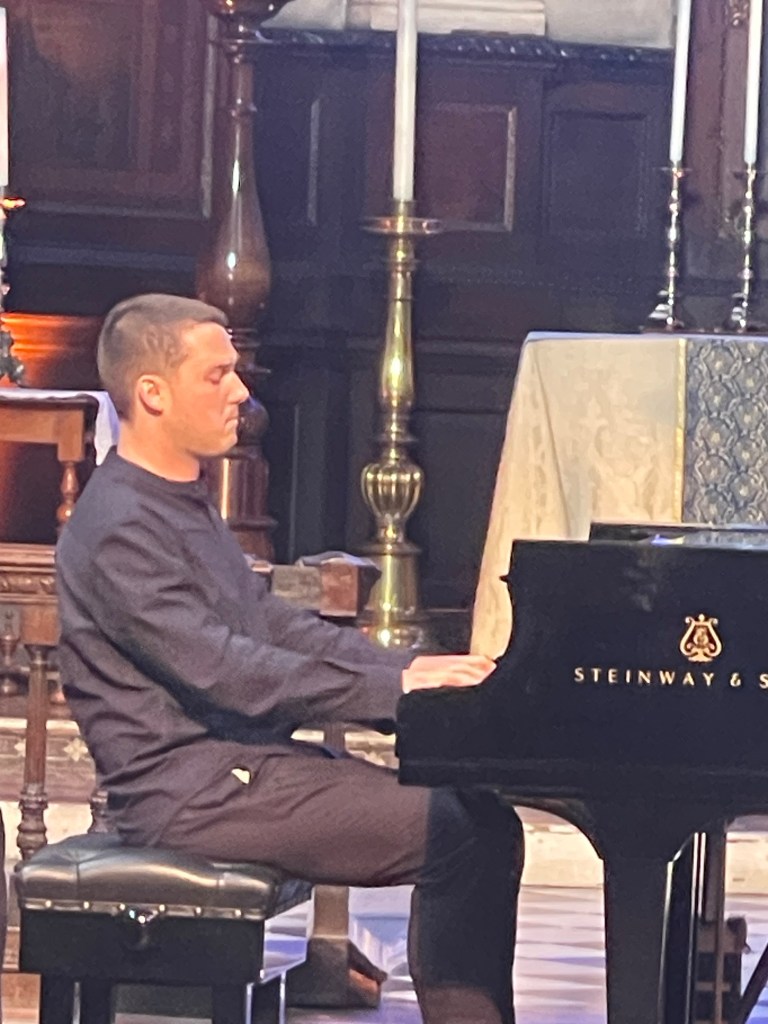
Phillip played it as a whole with beauty and a sense of style with a languid freedom and refined rubato. From the very first notes ‘einfach’ where the radiance of the melodic line was allowed to fill every corner of this beautiful church with a glowing luminosity. Rapid changes of tempo and character were played with brilliance and a superb sense of balance that allowed the melodic line to shine above all the intricate counterpoints that Schumann commands. Schumann even writes on three staves to show just where the melodic line lies but Phillip throughout the work was able to steer his way so clearly with poetic fantasy and above all ravishing sound.The Intermezzo of ‘Einfach und zart’ was played at quite a pace but even the single notes that become octaves were incorporated into the musical conversation that was driving us inexorably forward.. The melodic line that shone out in ‘Mit einigem Pomp’ was one of those magic moments where Phillip created a wash of sound and could allow the melodic line to emerge in its midst. The final episode ‘Zum Beschluss’ was played with beguiling nostalgia but also with a remarkable legato that allowed this great song to resound with all its most intricate counterpoints. The Allegro final flourish was played with aristocratic grandeur and sumptuous rich sound.
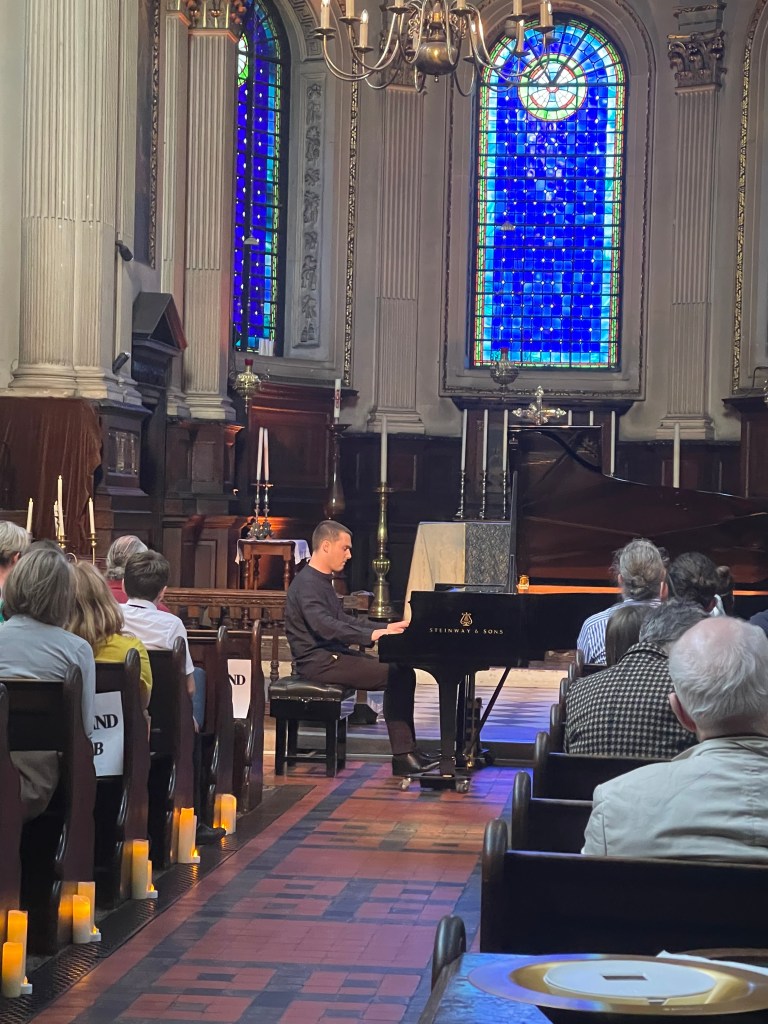
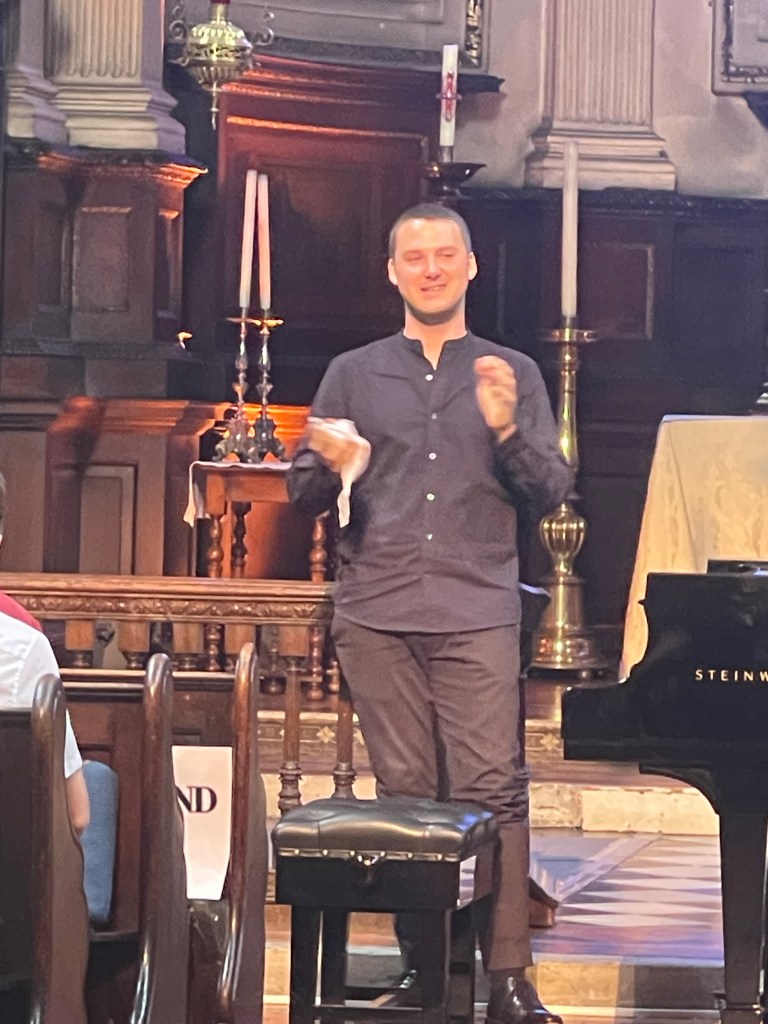
A single encore of Paderewski’s once famous Minuet in G was played with an elegance and sense of style that was obviously the same that had made Paderewski the most famous pianist alive before turning to politics and luxurious retirement in Switzerland

 ChristopherAxworthy-MusicCommentary