
Giordano Buondonno coming to the end of his studies at the Guildhall with a final graduation recital in their beautiful Milton Court Concert Hall. Having graduated at Trinity Laban under Deniz Arman Gelenbe he has now perfected and consolidated that experience with Charles Owen and Noriko Ogawa at the Guildhall. The superb musicianship of all three artists have bequeathed a musical integrity to this young man’s music making that will remain with him during the illustrious career that awaits.
Giordano Buondonno is from La Spezia in Italy.
Infact it was family and friends who had flown in on the 2nd of June, which is Independence Day in Italy, to support and cheer a young man who has dedicated his youth to art.
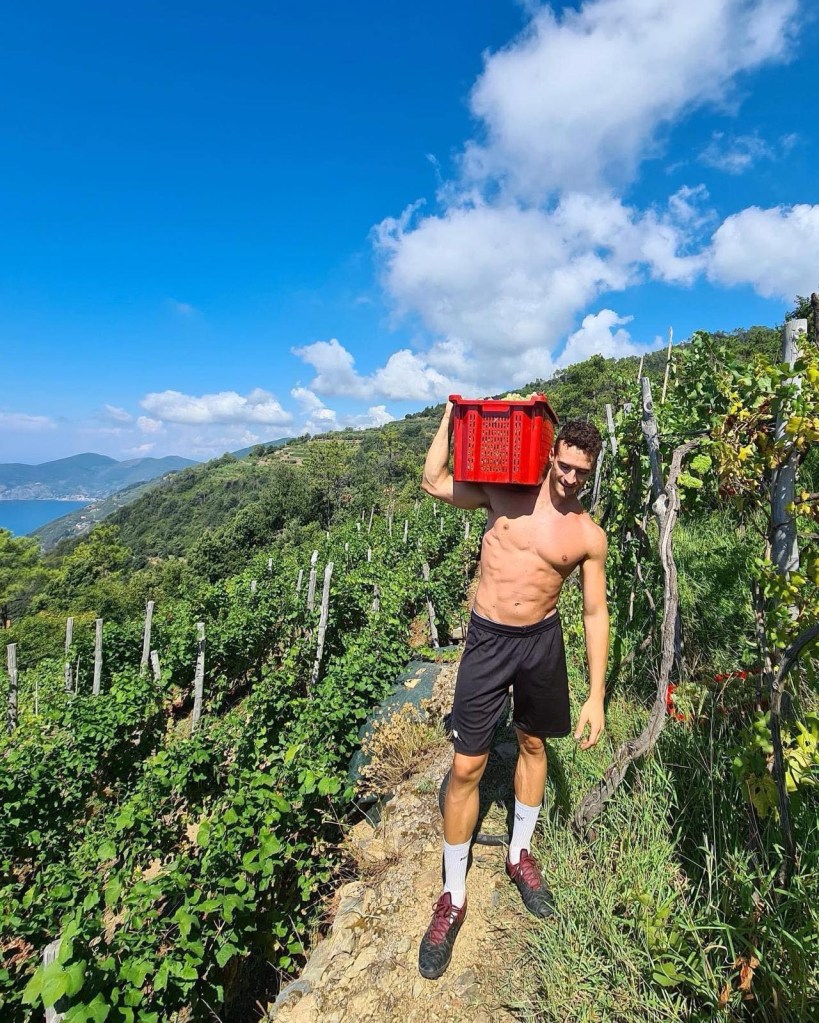
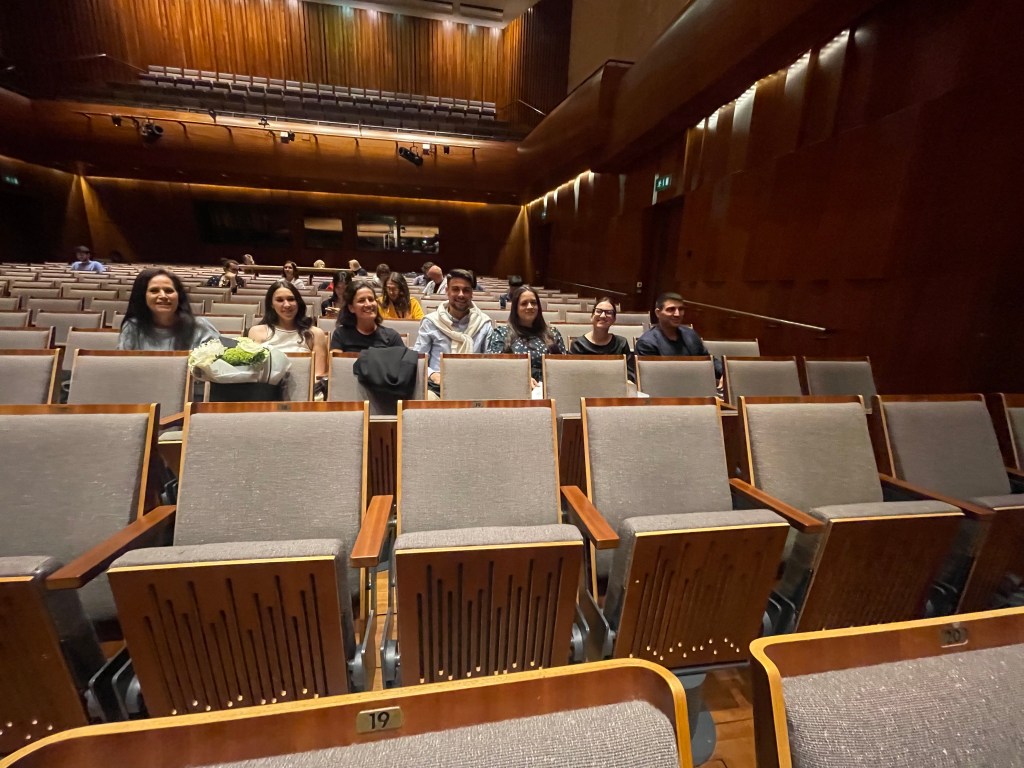
Exchanging the beauty of the Mediterranean with its vineyards and olive groves, in that part of Italy that is truly blessed by the Gods, to perfect his musical understanding in London and prepare him for a lifetime in music.
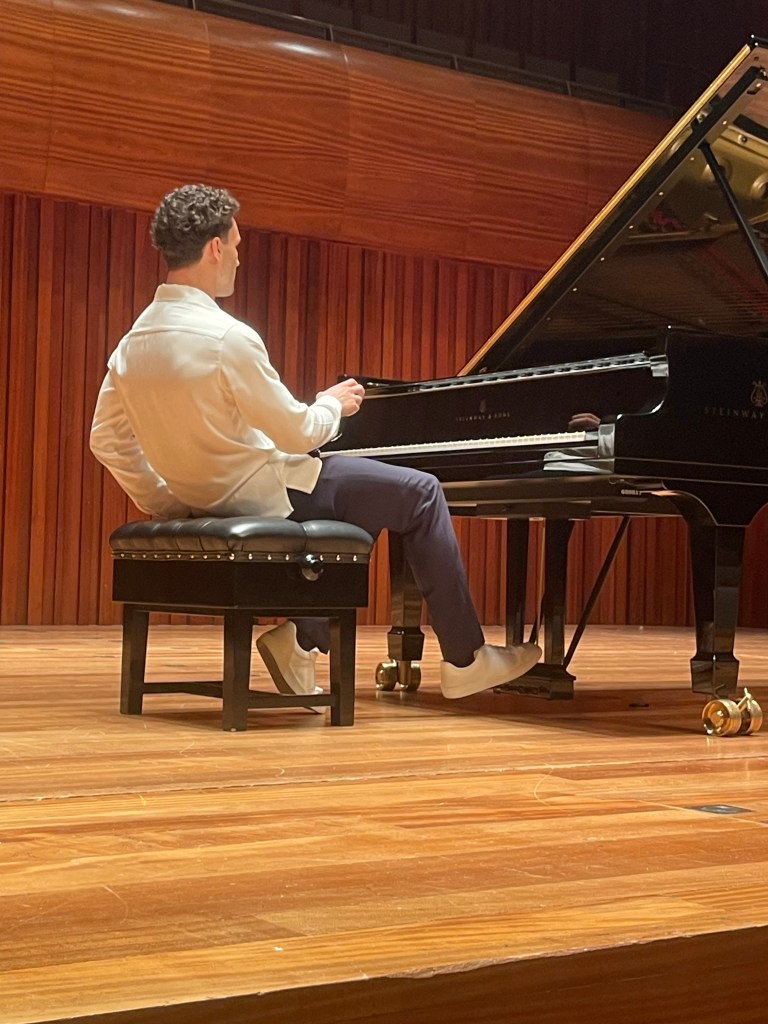
With his long spindly fingers and technique alla Benedetti Michelangeli he unraveled a long and complex programme with a very particular sound world of notes that were like drops of crystal such was their clarity and purity.
A hand that does not caress the keys but stays close and draws the sounds out of the piano like magic wands casting their magic spell into the keys.
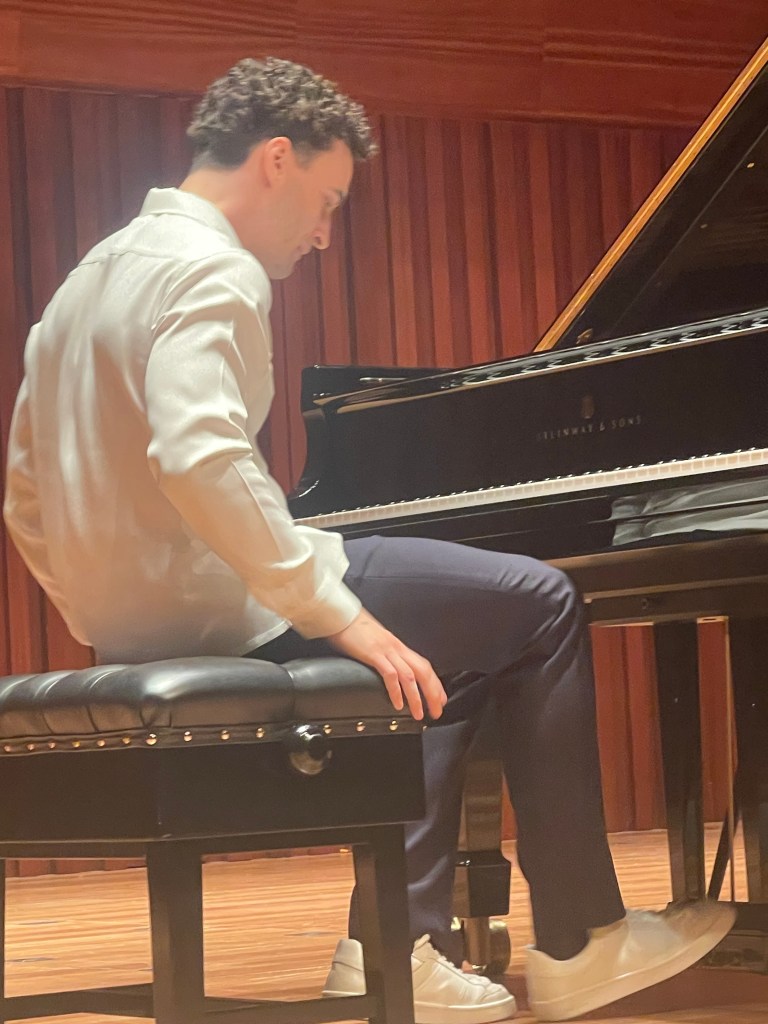

It was a pleasant surprise to hear the Bach Organ Toccata and Fugue in the Busoni transcription which is all too rarely played in the concert hall. Gilels and many other great pianists preferring the Prelude Toccata and Fugue in D major.
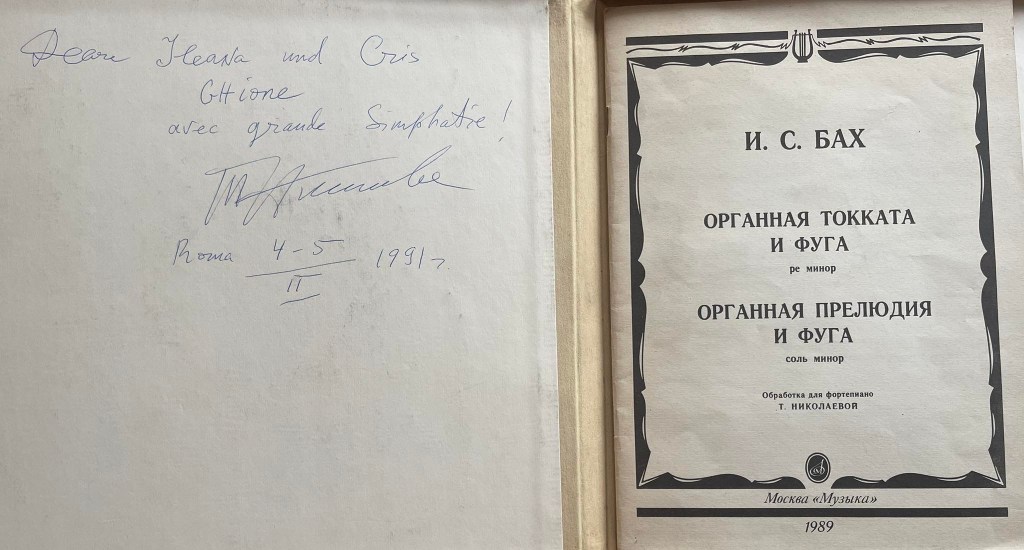

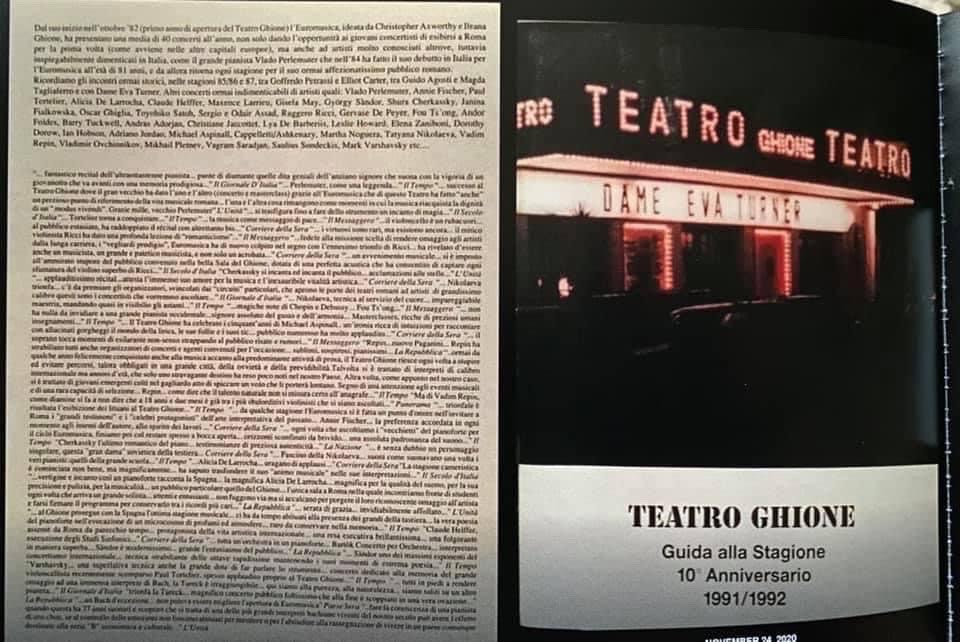
Nikolaeva gave me her own transcription when she played the first time for us in Rome. I never actually heard her play it preferring her Goldberg and Art of Fugue which she played in a masterly way for us. She did play one year,though, the Tchaikowsky G major Sonata and the Mussorgsky Pictures, which was exactly the work which Giordano closed his recital with today.
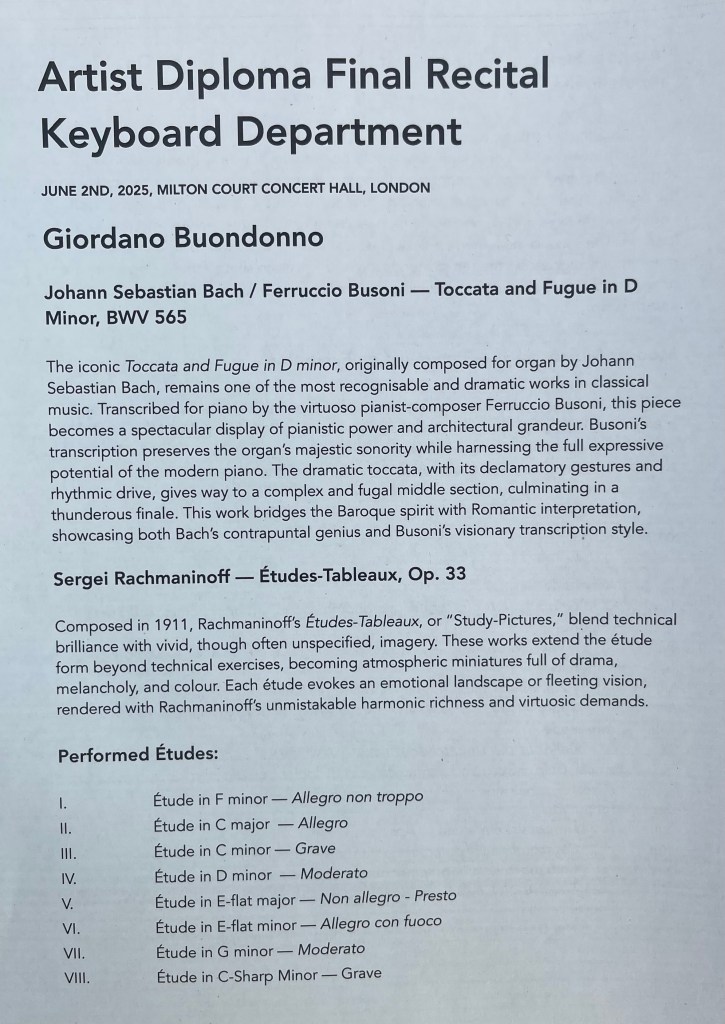
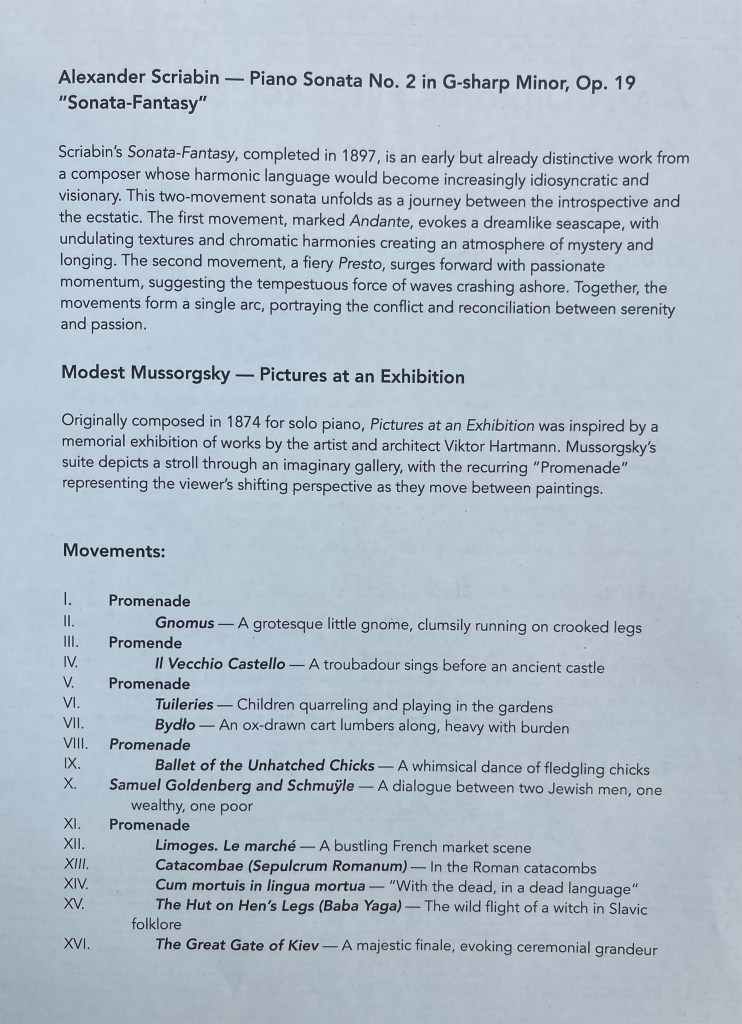
In between Giordano chose to play other works from the Russian school with Scriabin’s early Fantasy Sonata and Rachmaninov’s first set of Études -Tableaux op 33.
The Bach in the Busoni transcription rang out with piercing clarity of nobility and grandeur. There were extraordinary dynamic contrasts where one could envisage the change of manuals on the organ. Massive sounds of enormous organ like sonority would interrupt until out of a long aching silence the plaintive voice of the fugue was barely whispered as it began to converse with the other voices building to the massive climax of this ,the grandest of all organ works.
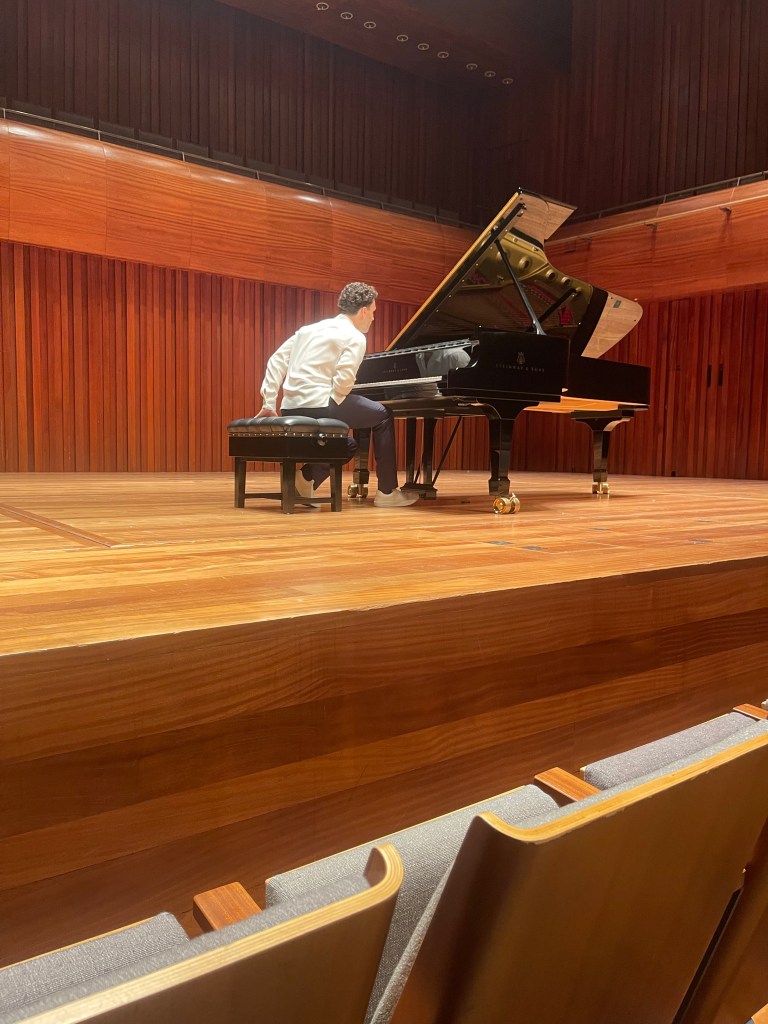
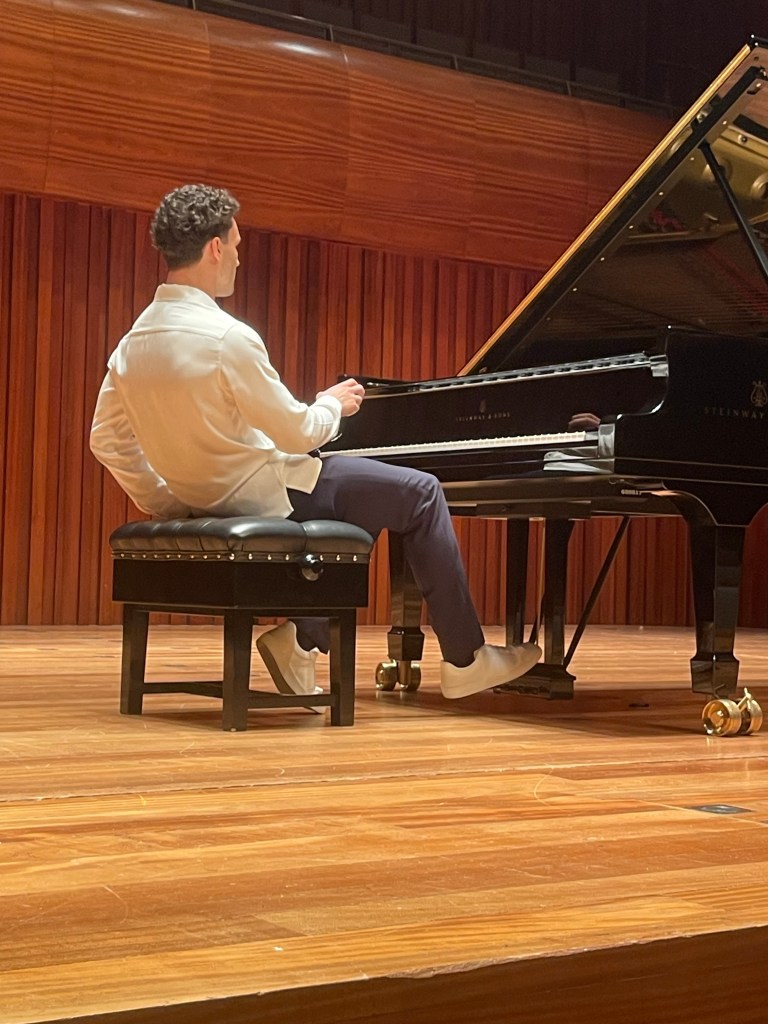
The eight Études -Tableaux by Rachmaninov were played with a characterisation of startling virtuosity and nostalgic poetic beauty. The remarkable clarity of the F minor with its extraordinarily fantasmagoric final bars followed by the burning insistence of the glowing melodic line in the C major étude.A brooding intensity to the ‘Grave’ C minor, followed by the insinuating insistence of the D minor n.4. Streams of notes just flowed over the entire keyboard with the E flat étude before the call to attention of the E flat minor played with sumptuous imperious authority. Radiance and lingering beauty of the G minor was answered by the turbulence of the last in C sharp minor.
It was in the early sonata by Scriabin that the crystalline beauty of Giordano’s playing created a glowing fluidity to Scriabin’s stream of notes out of which emerged with purity and beauty the sumptuous melodic line. A real tone poem of whispered beauty that reaches a romantic climax only to return to a murmur after such a sumptuous vision . The Presto last movement was played with dynamic drive, where the passionate explosions of romantic fervour were played with extraordinary clarity and beauty.
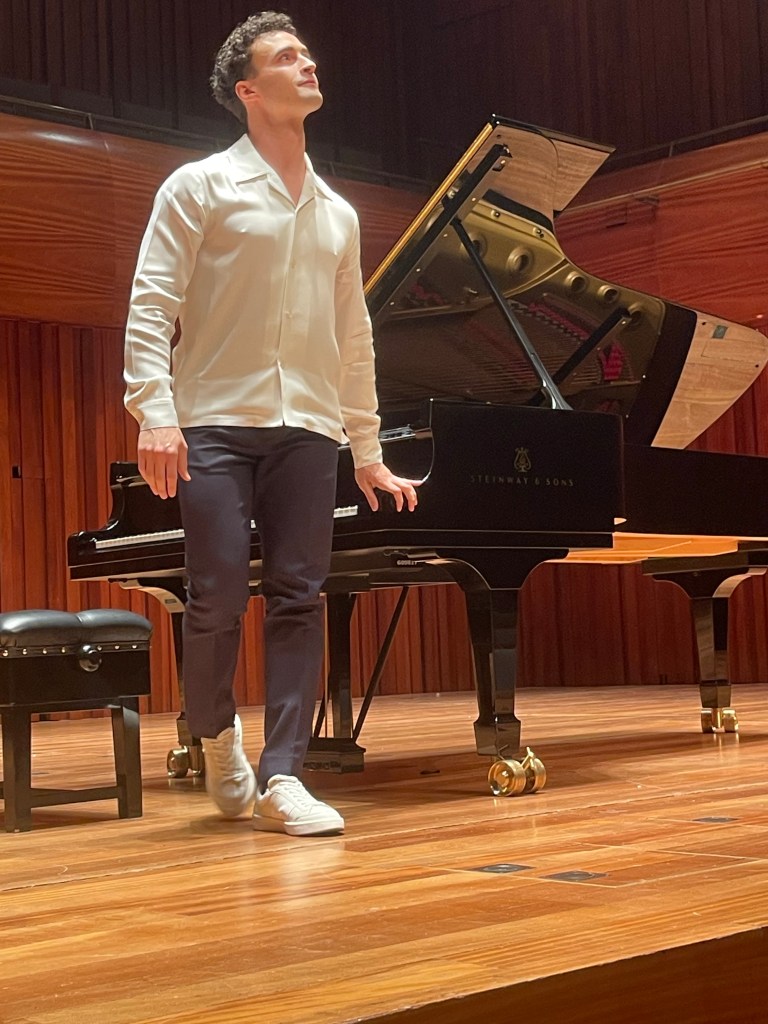
An imperious opening to Mussorgsky’s monumental Pictures at an Exhibition was played with a one finger technique that gave a glowing brilliance to this call to attention. He was to use the same technique again with astonishing accomplishment in the diabolical goings on of ‘Baba Yaga’.( A technique that is very noticeable with Romanovsky, another Italian trained pianist, and can lead to a greater clarity if used with knowing sensibility ). Startling characterisation of ‘Gnomus’ was followed by the etherial beauty of the ‘Old Castle’ disappearing into oblivion with whispered beauty. The teasing insistence of children in the ‘Tuileries’ was played with remarkable clarity with its improvised interruptions .’Bydlo’s’ unusually discreet appearance was built into an overpowering climax of lumbering insistence and the ‘unhatched chicks’ that followed were played with a remarkable coaxing of the keys with a continual opening and shutting movement that suited the delicate clucking of the chicks. Imperious nobility of ‘Goldenberg’ was played with steely brilliance replied by Schmuÿle’s whimpering with playing of glowing fluidity. ‘Limoges’ was a tour de force of dynamic fingerfertigkeit, from Giordano’s crystalline streamlined technique ,halted only but the imperiously frightening vision of the ‘Catacombs’. Massive sounds resounded of great resonance but never brittle or hard edged as they dissolved into the whispered glow of a vision of what lay within. The final two pictures were played with remarkable dynamic drive and masterly control of sound with the vision of the Great Gate revealed with astonishing nobility. A kaleidoscope of sounds and colours illuminated this Great symbolic vision, ever more actual in these days of misguided conflic! Played with fervent conviction and remarkable mastery it brought this recital to an extraordinarily brilliant conclusion.
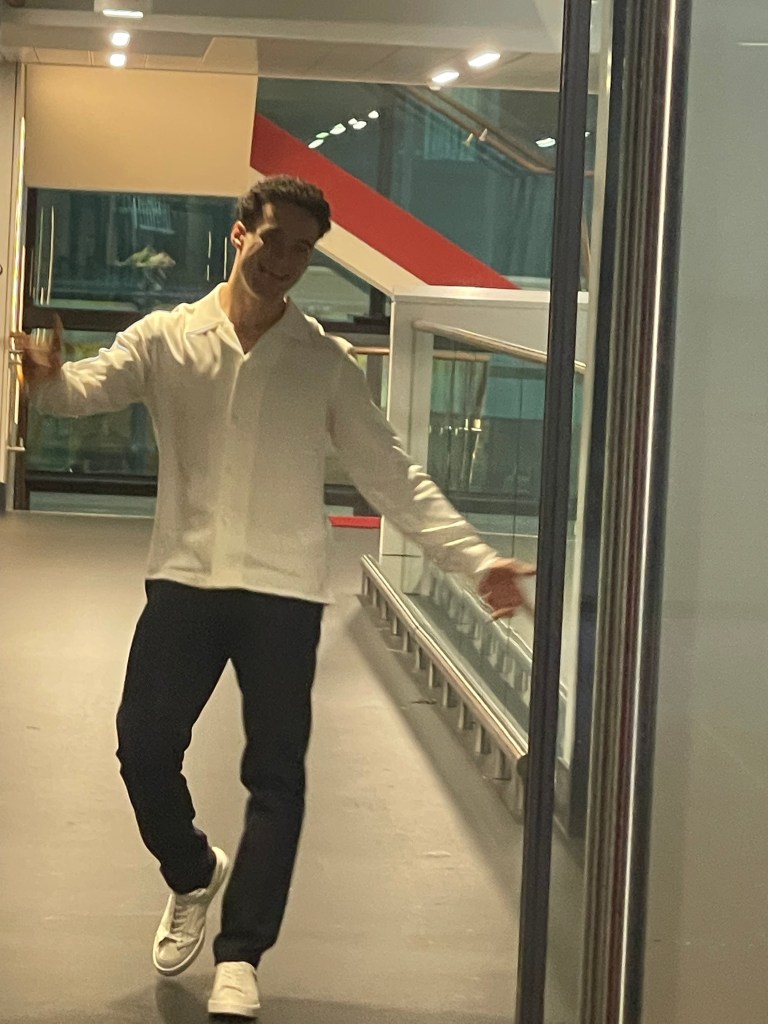
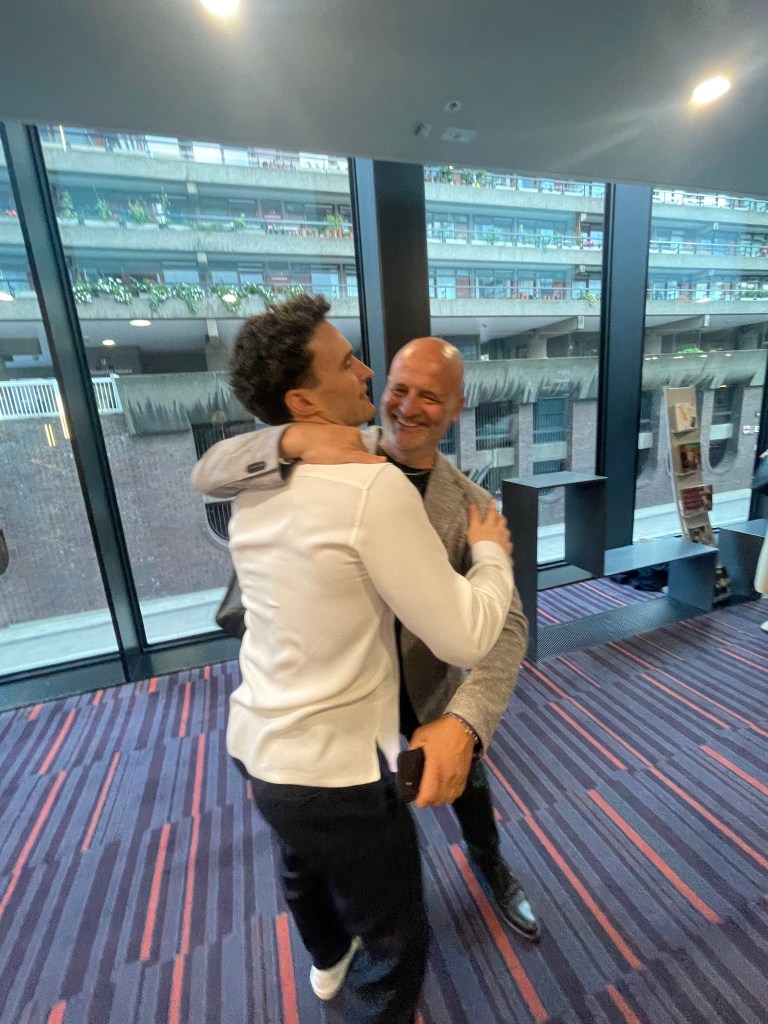

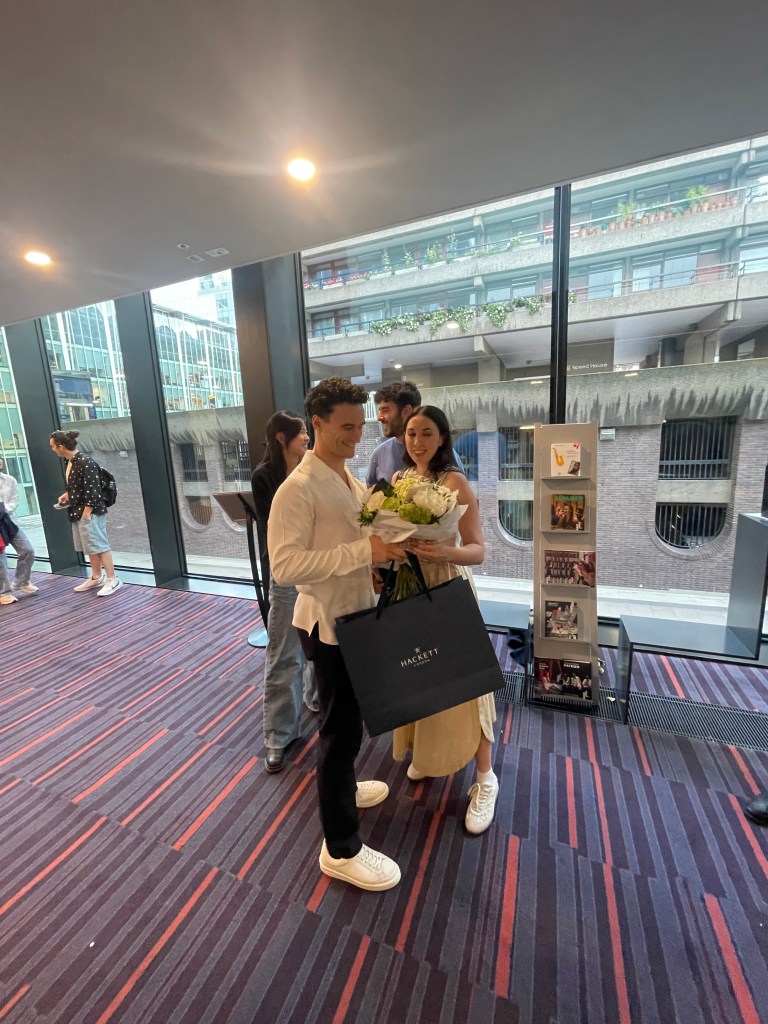
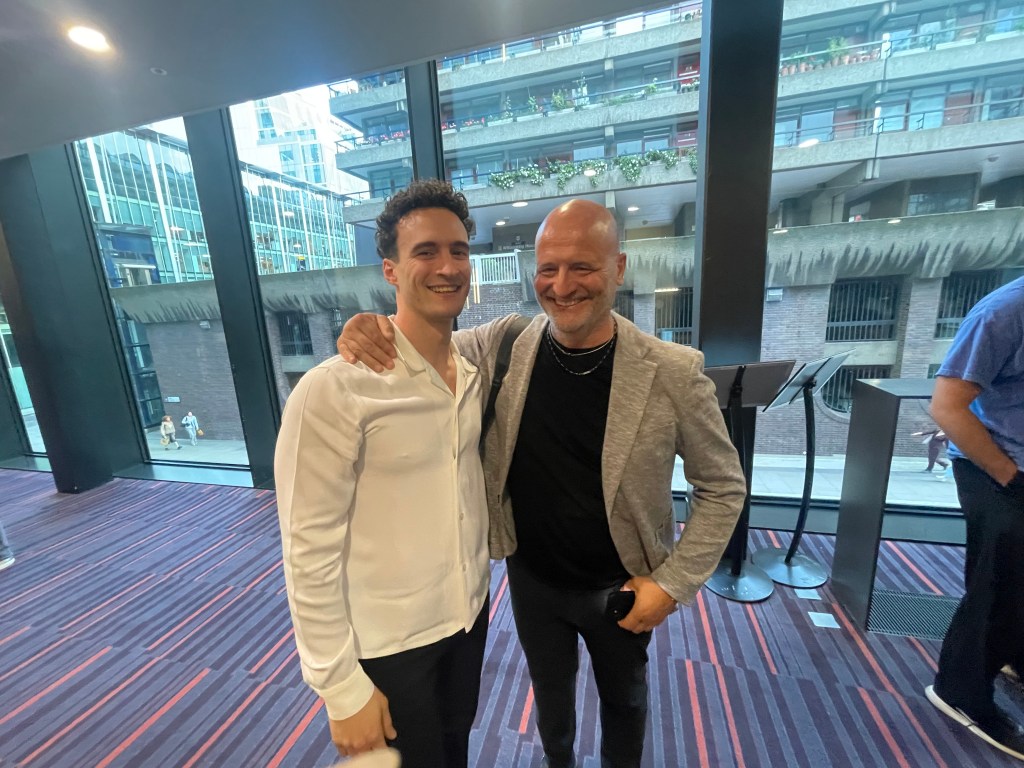
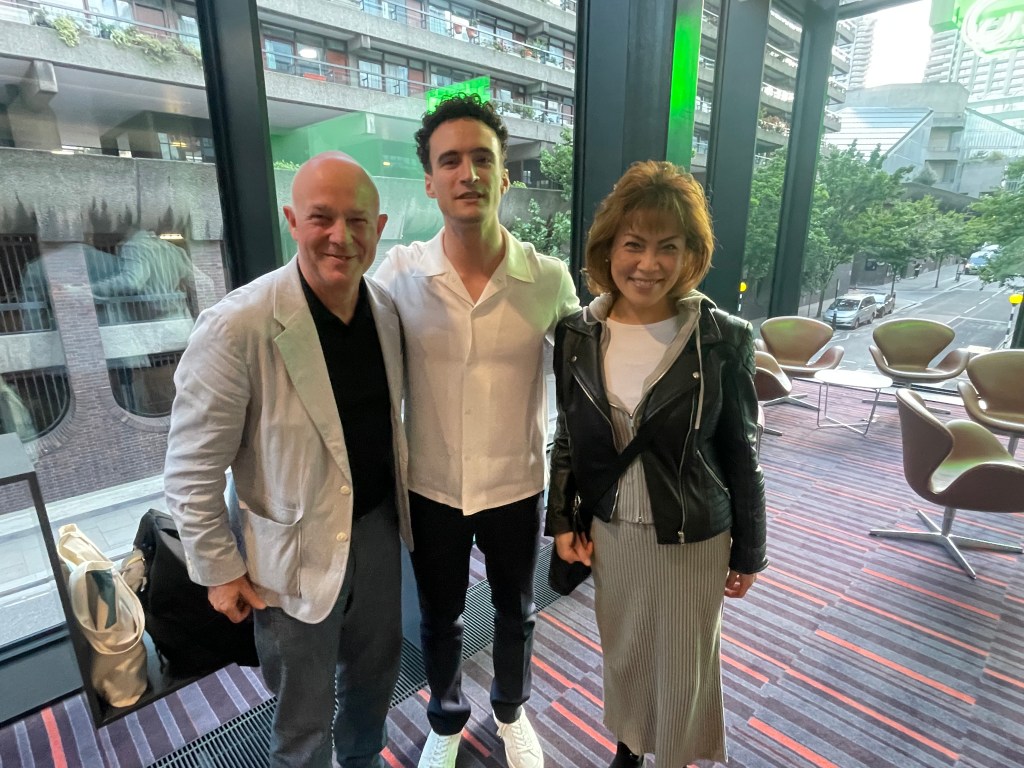
A proud mother and father embracing their talented son as he was greeted not only by friends from Italy but also by Charles Owen sporting for the occasion a remarkably elegant Italian jacket and happy to embrace, together with Noriko Ogawa, their quite ‘unique’ student in his moment of glory.


 ChristopherAxworthy-MusicCommentary