The Keyboard Trust presents a New Artist Recital by Alessio Masi
Steinway Hall, London – Wednesday 14 May 2025.
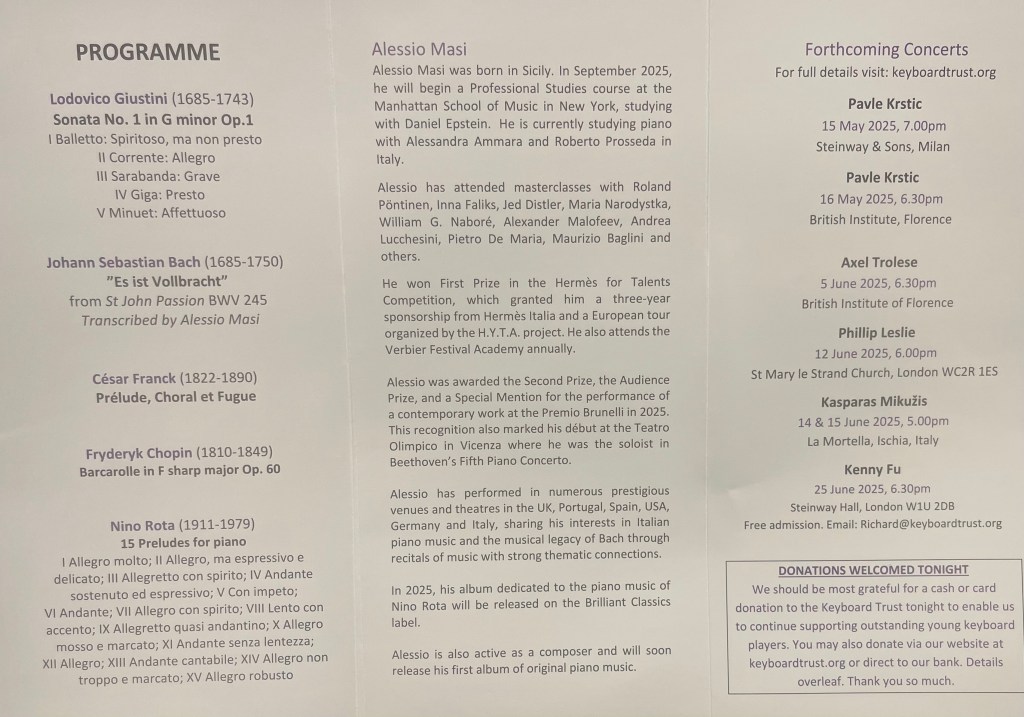
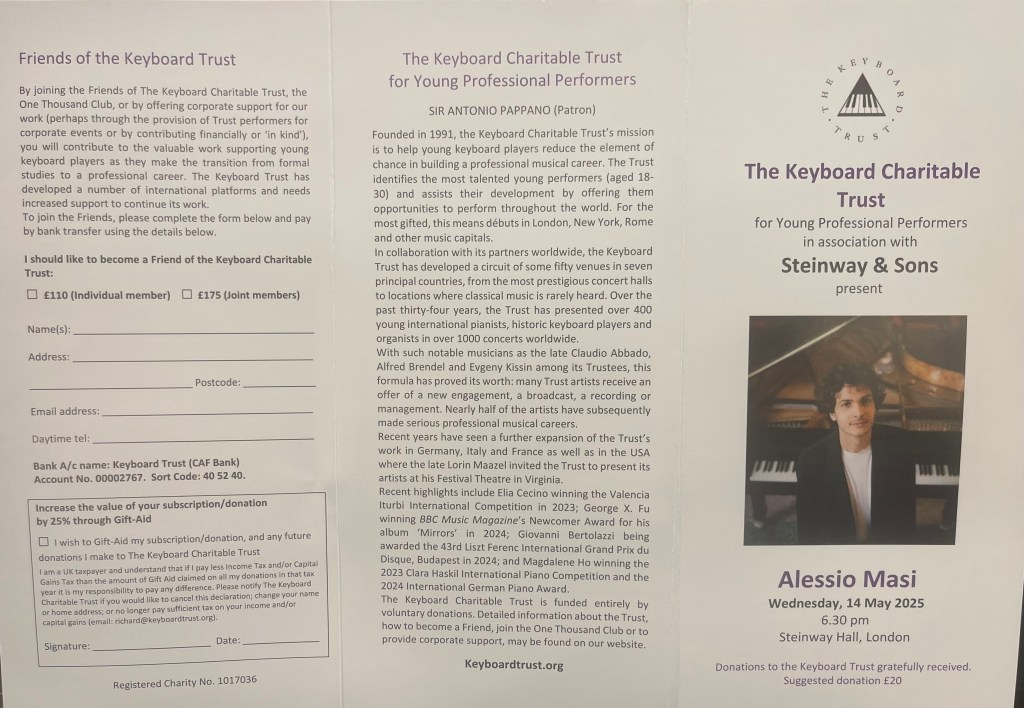
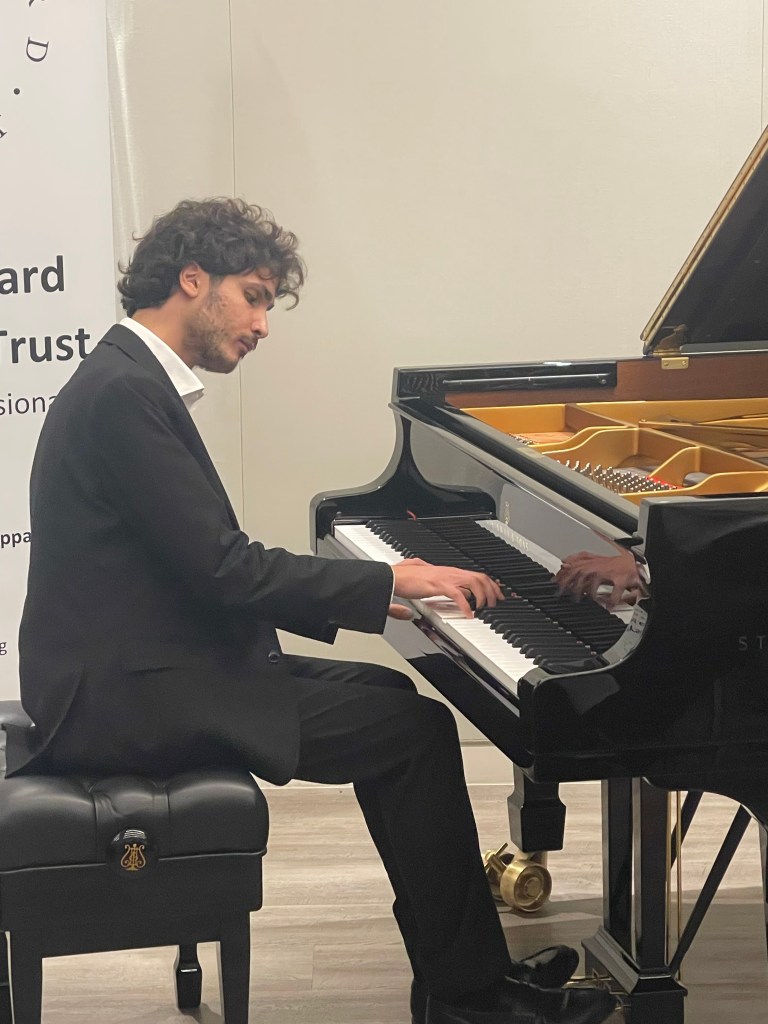
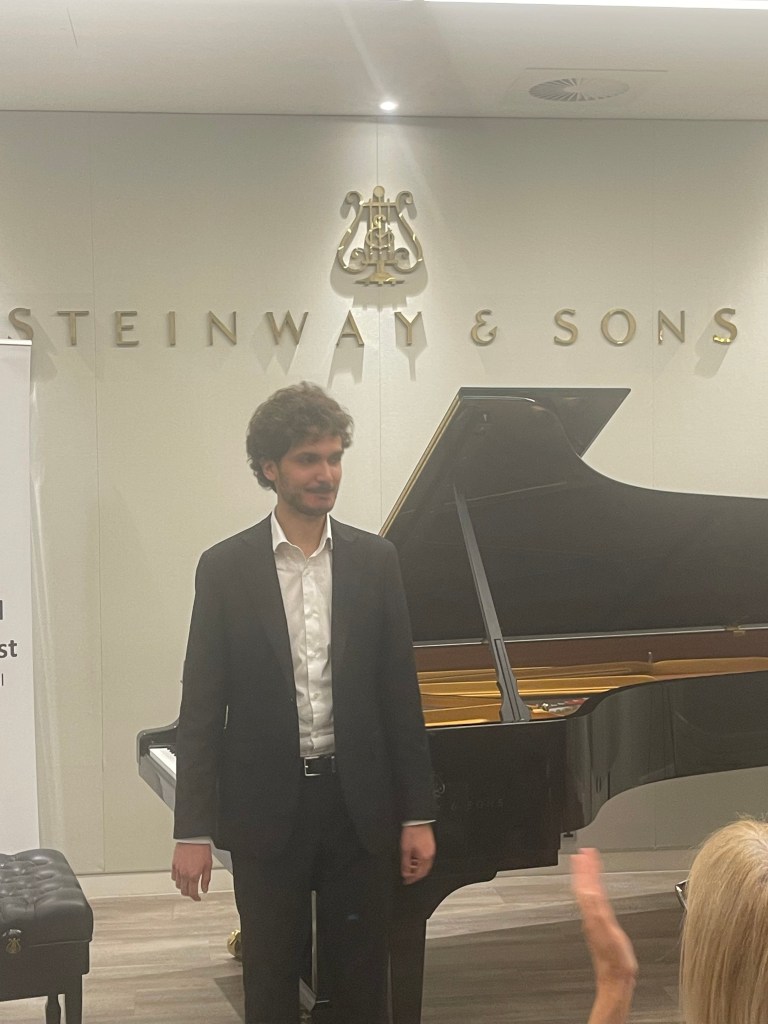
Alessio Masi at Steinway Hall for the Keyboard Trust ,substituting at short notice an artist who had not received her visa.
Alessio had flown in from Florence where he is studying with Roberto Prosseda and Alessandra Ammara, and is shortly to continue his studies in the Manhattan School of Music in New York
A programme that was particularly interesting for two rarely performed Italian composers, one from the seventeenth century and the other from the twentieth.
A programme that also included his own transcription of Bach’s ‘Es ist Vollbracht’ from the St John Passion, that acted as an introduction to César Franck’s ‘Prelude,Chorale and Fugue’ and Chopin’s greatest work:the ‘Barcarolle ‘ op 60 .
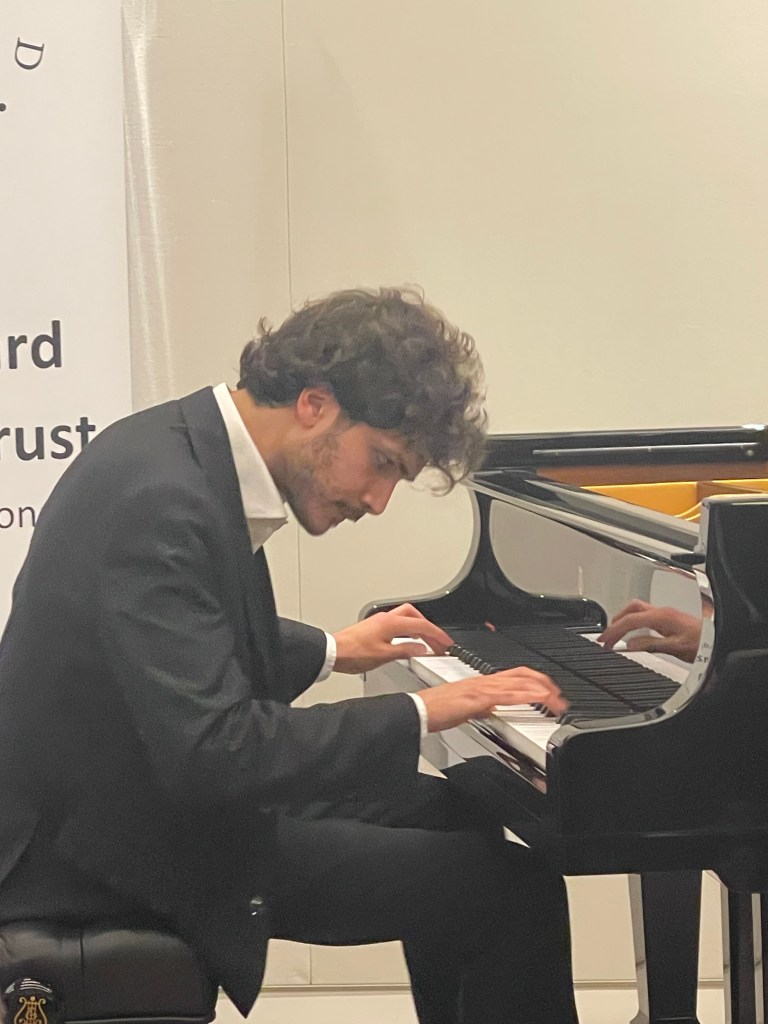
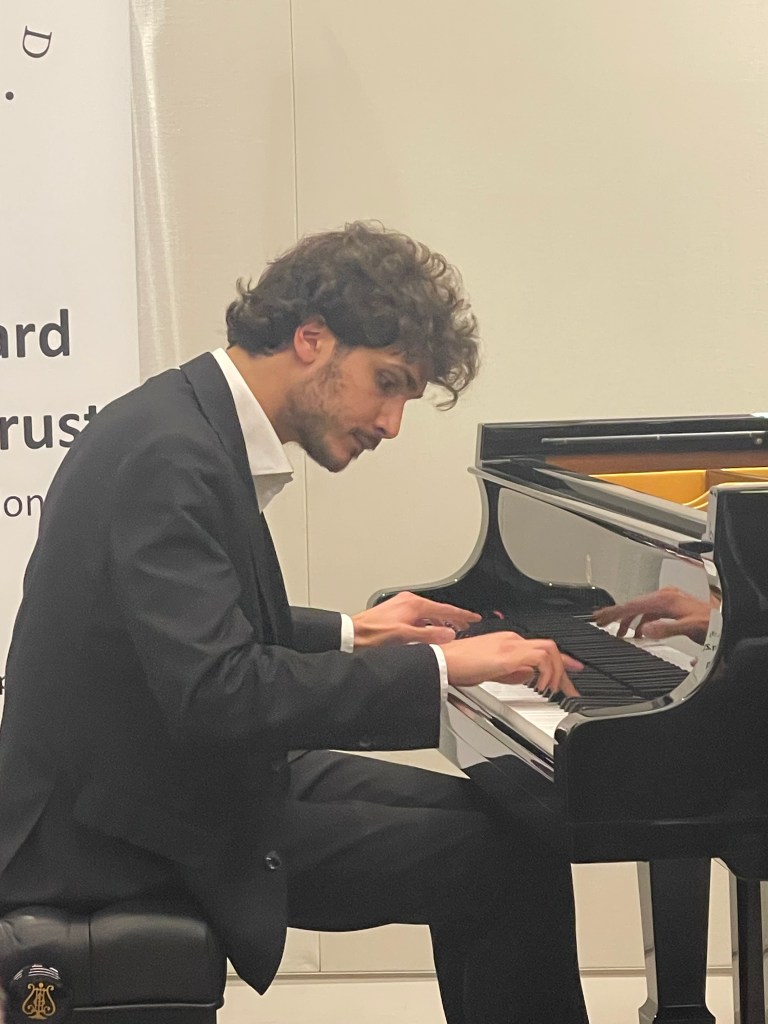
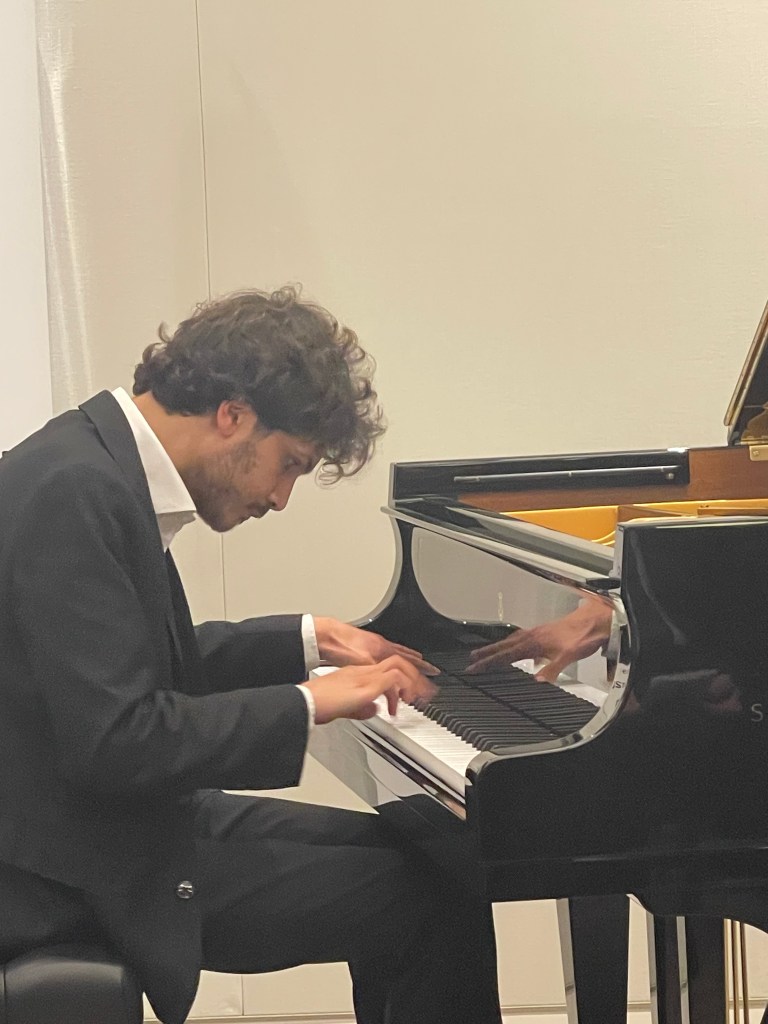
From the opening notes of the Sonata by Giustini, one of the many Italian baroque composers who have lain in neglect for too long, Alessio imbued it with such character. The opening ‘spiritoso ’ of capricious invention followed by a ‘Corrente’ that just burst into life with its infectiously busy chattering. A ‘Sarabande’ of a delicacy of crystalline purity and fluidity with an ending of ravishing whispered beauty. The dynamic rhythmic drive of the ‘Gigue’ was strangely followed by a Minuet with Giustini tip toeing to the final chord of a sonata showing us a composer who deserves to be heard more in the concert hall.
Alessio’s playing with an extraordinary clarity and a kaleidoscope of colour of a chameleonic sense of character.
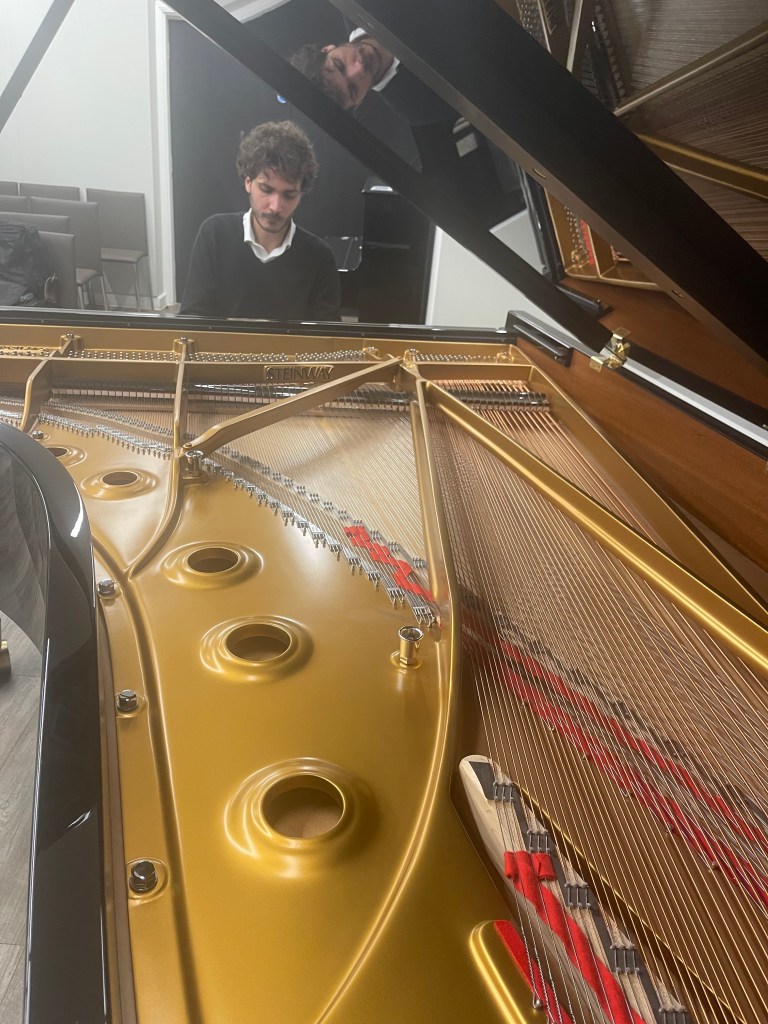
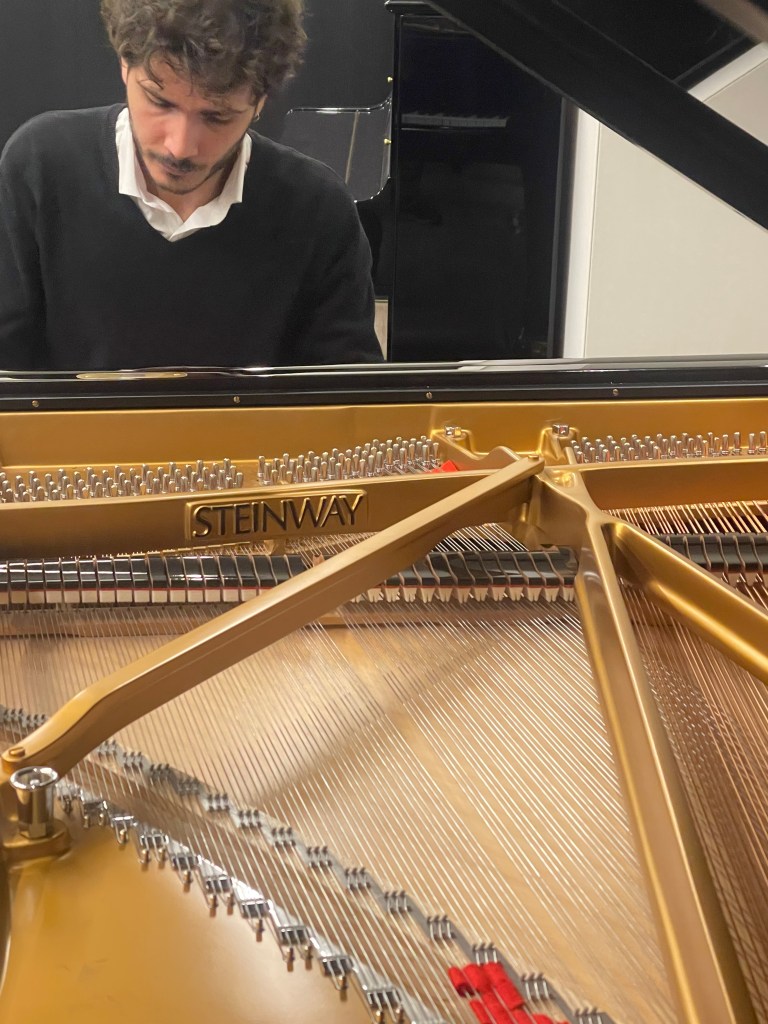
It was this mastery that he brought to the 15 Preludes by Nino Rota. A composer of ‘Godfather’ fame who was also a remarkably original composer.
Fifteen miniatures each one imbued with character that reminded me of Prokofiev’s ‘Visions Fugitives’ in the way that so few notes could immediately be imbued with an ever changing character. Mellifluous , capricious , ponderous , exhilarating , monumental, pompous and brilliant ,Alessio managed to bring a different colour and sound to each little bauble that he , with his always beautiful chiselled sound, could turn into gleaming gems .
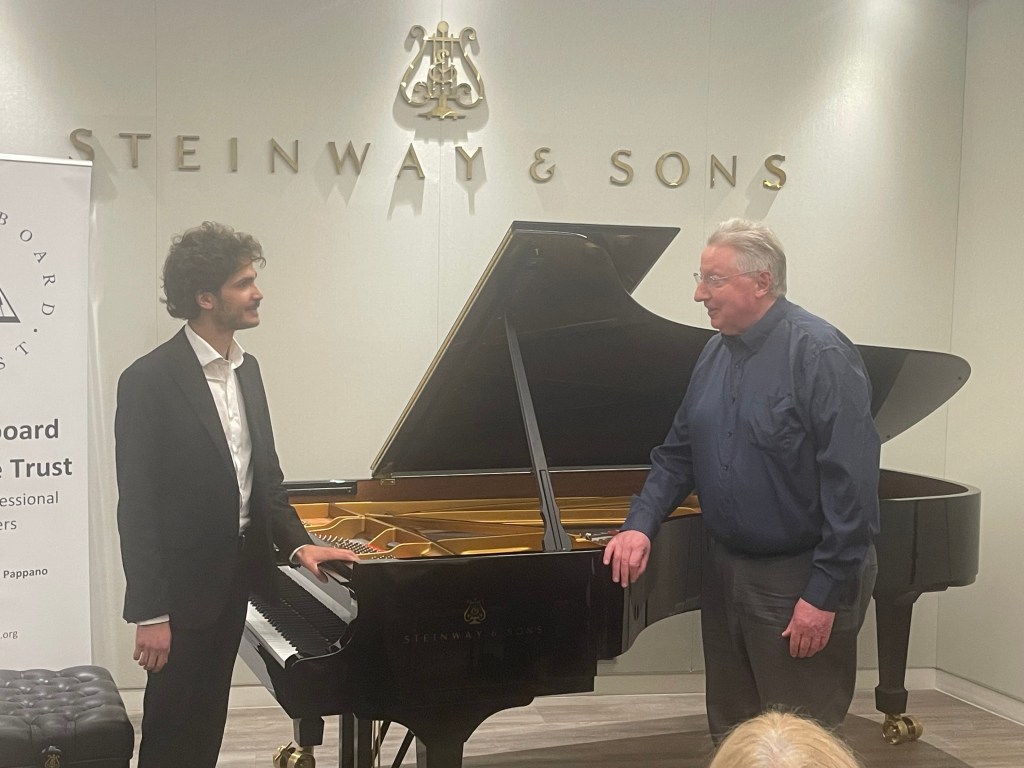
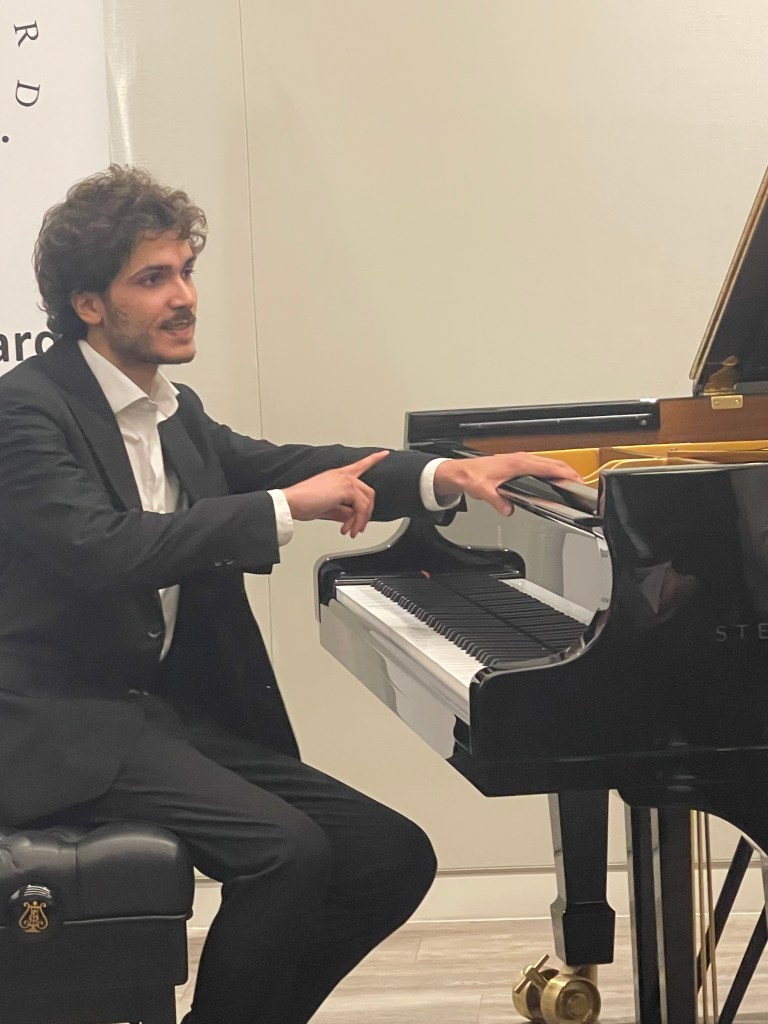
As Leslie Howard pointed out in his short post concert ‘meet the artist’ conversation the works of Rota have yet to be discovered and it is thanks to Alessio and the Robert Turnbull Foundation that what we heard tonight will soon be a precious and overdue addition to the CD catalogue .
Alessio is also a composer and it was his transcription of the Bach aria that showed his mastery, able to convey the poignant poise of one of Bach’s most potent moments of the St John Passion with playing of the extraordinary conviction of a true believer . Bursting into life with vibrant, robust sounds of joyous elation before dying away to a place of peace and refined beauty. All this played by a composer who could convey so poignantly Bach’s intentions on a single modern day instrument.
Out of the meditative silence of Bach the sublime beauty of César Franck was heard. Franck, the organist of Sainte Clotilde in Paris , could translate the sounds of the organ to the piano with ravishing effect. A performance remarkable for the whispered sounds and poignant silences that made the passionate outpourings so much more imposing. A chorale that glowed with golden beauty as it built to an overpowering outpouring of fervent aristocratic conviction . A fugue where Franck’s knotty twine was played with a whispered clarity as the opening theme returned on a wave of golden sounds .
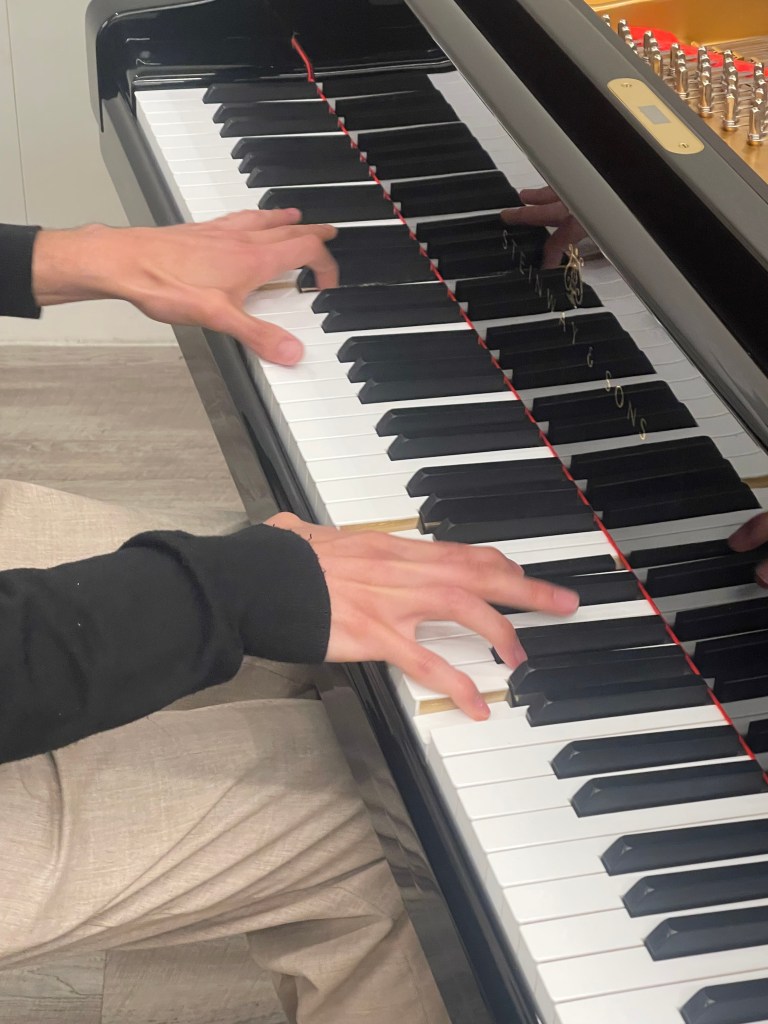
A technical mastery that allowed him to combine the three themes with transcendental control and majesty never allowing the sounds to harden, but to become ever more richer with his slender spindly fingers that could dig deep into the keys without ever becoming percussive. Adding the occasional deep octave notes to give more sound at moments of powerful emotional impact and gave great depth and breathtaking potency when added with the discreet good taste of a true musician. Nelson Freire and Rubinstein often would take that liberty in public performances depending on the atmosphere in the hall and the vibrations from the audience.
Admonished,though , by Leslie Howard who suggested that the composer was quite capable of adding an octave or two if he wanted to! Leslie was taken under the wing of Guido Agosti and is very much influenced by the musical integrity and humility of a disciple of Busoni where the composers wishes are like the bible and we are merely servants trying to communicate their genius without any extraneous interventions.
https://christopheraxworthymusiccommentary.com/2024/01/03/forli-pays-homage-to-guido-agosti/
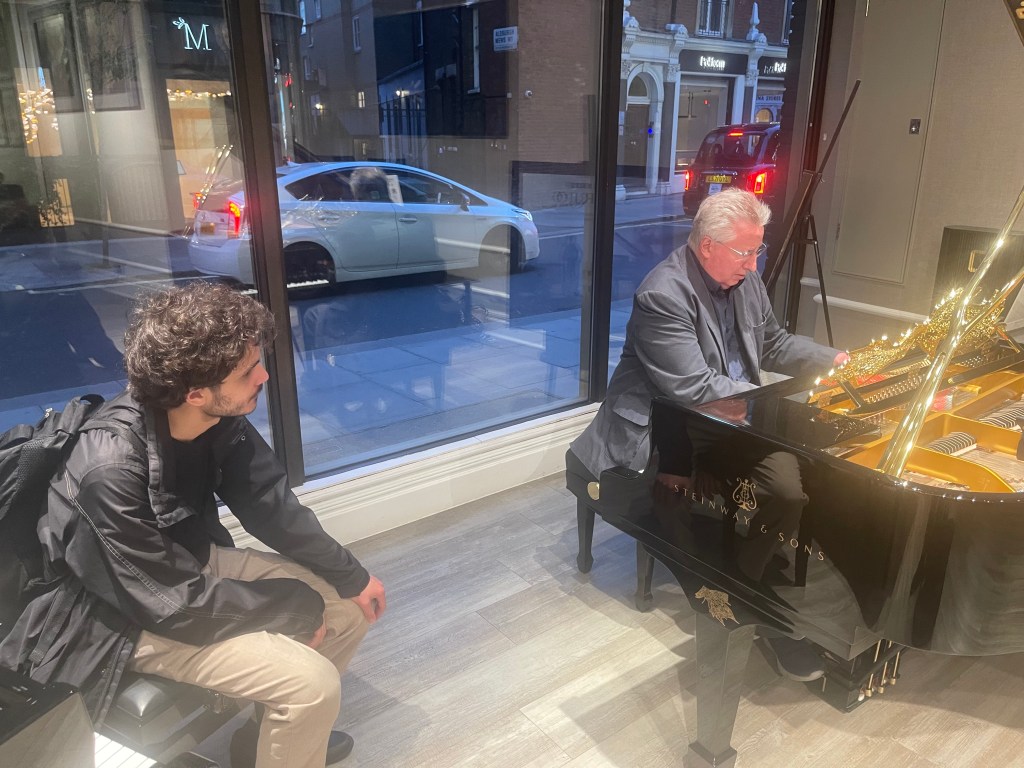
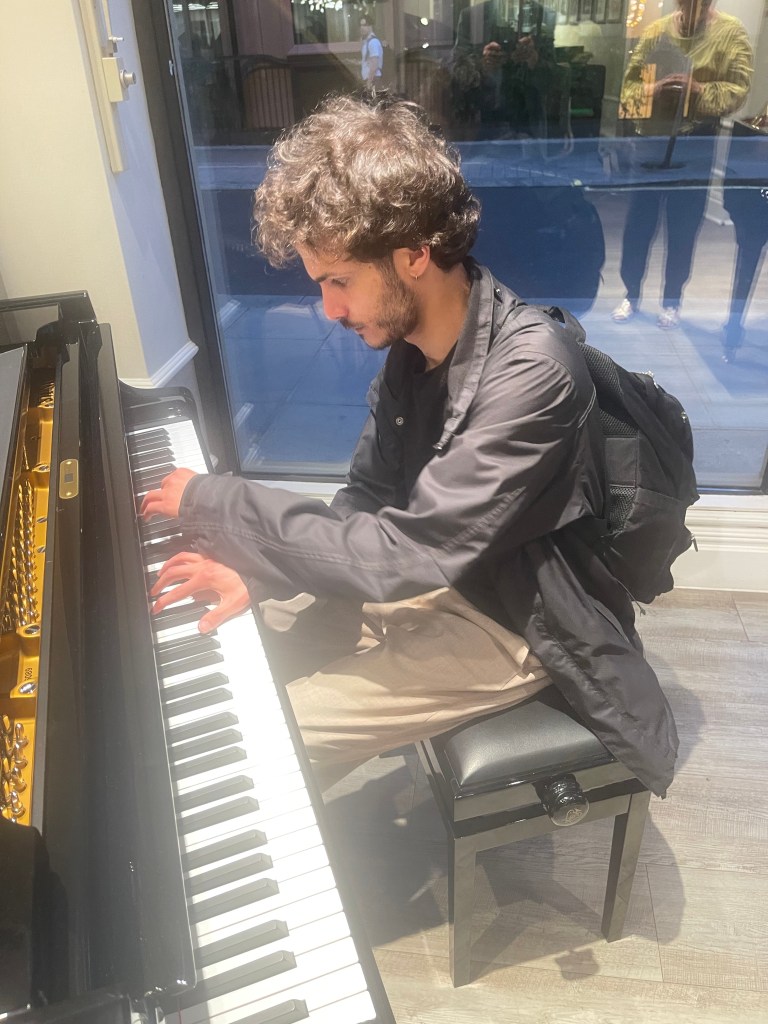
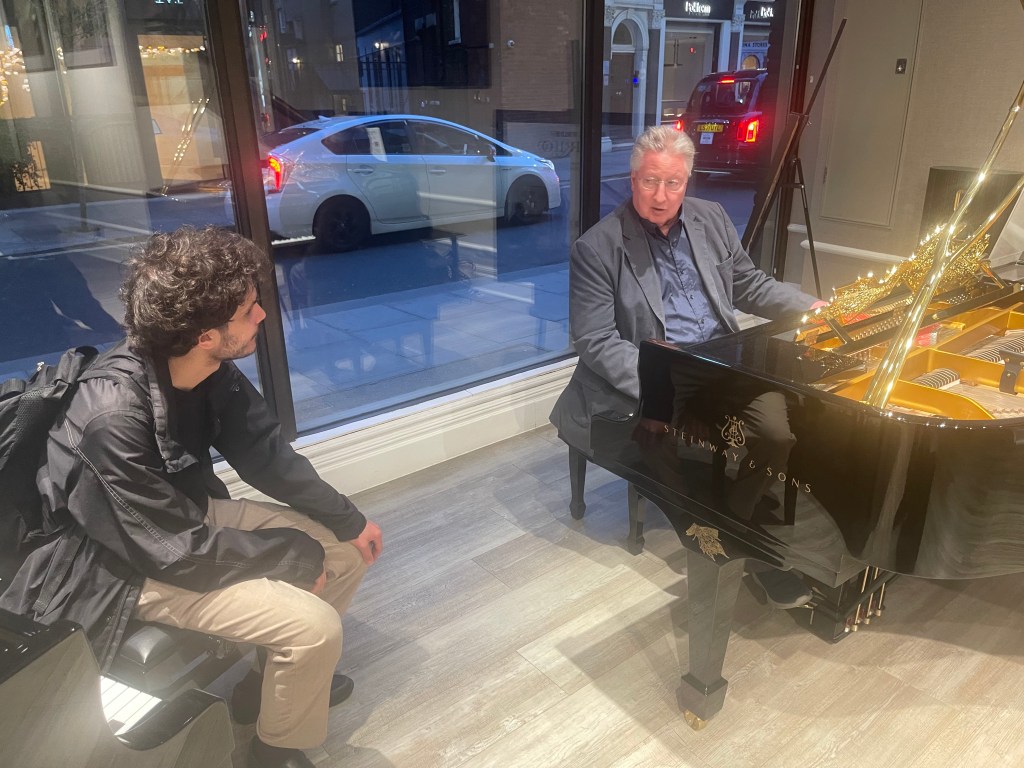
In a private pre dinner master class Leslie gave some invaluable advice to this young very talented Sicilian.Alessio with youthful passion in his heart and quite considerable mastery in his fingers
But it was some of this youthful passion that betrayed him in Chopin’s great wave of song.However if he allowed youthful passion to overpower such a masterpiece it was only because he loved it too much and did not allow his head to offer advice to the passion in his Sicilian heart.
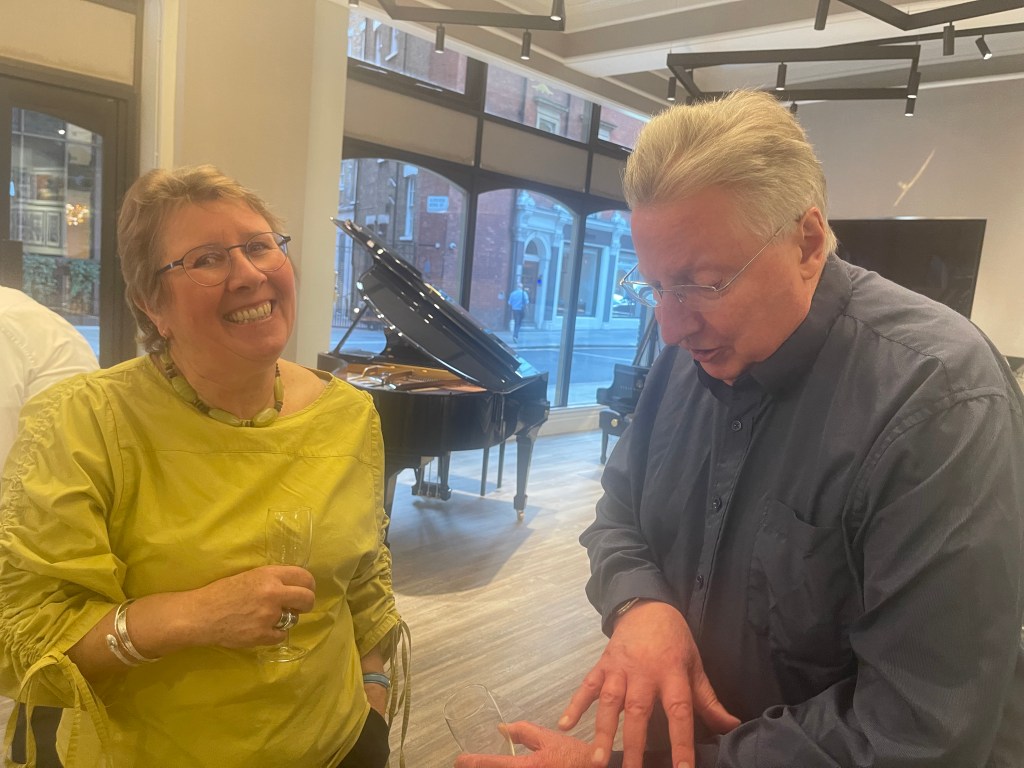
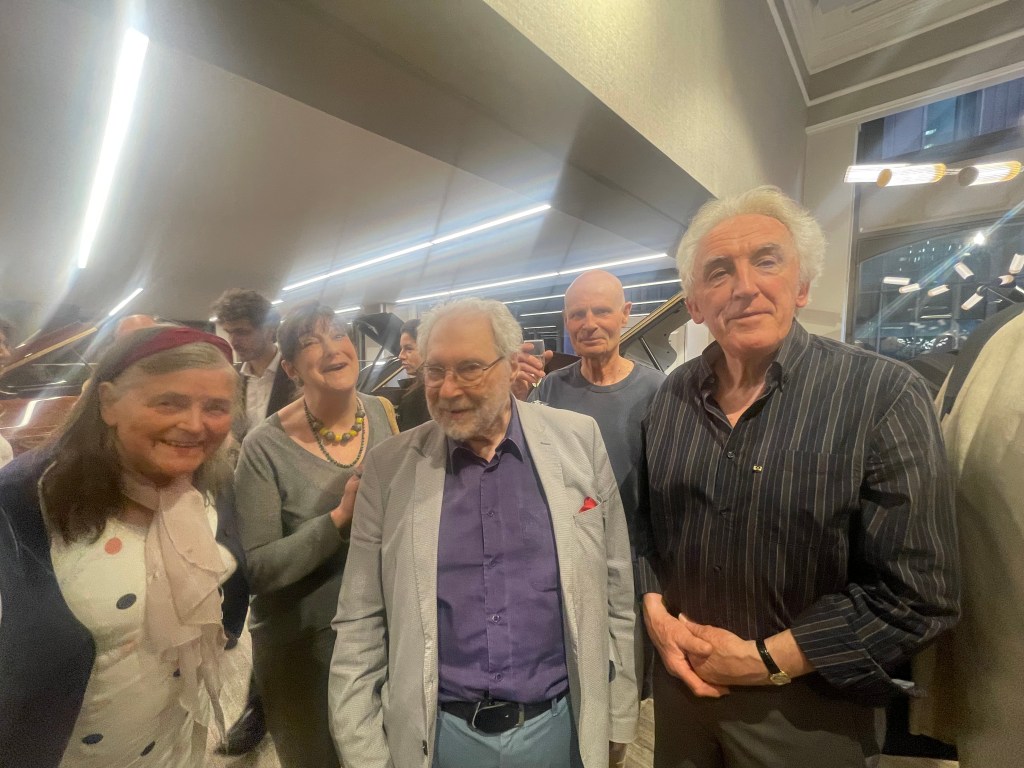
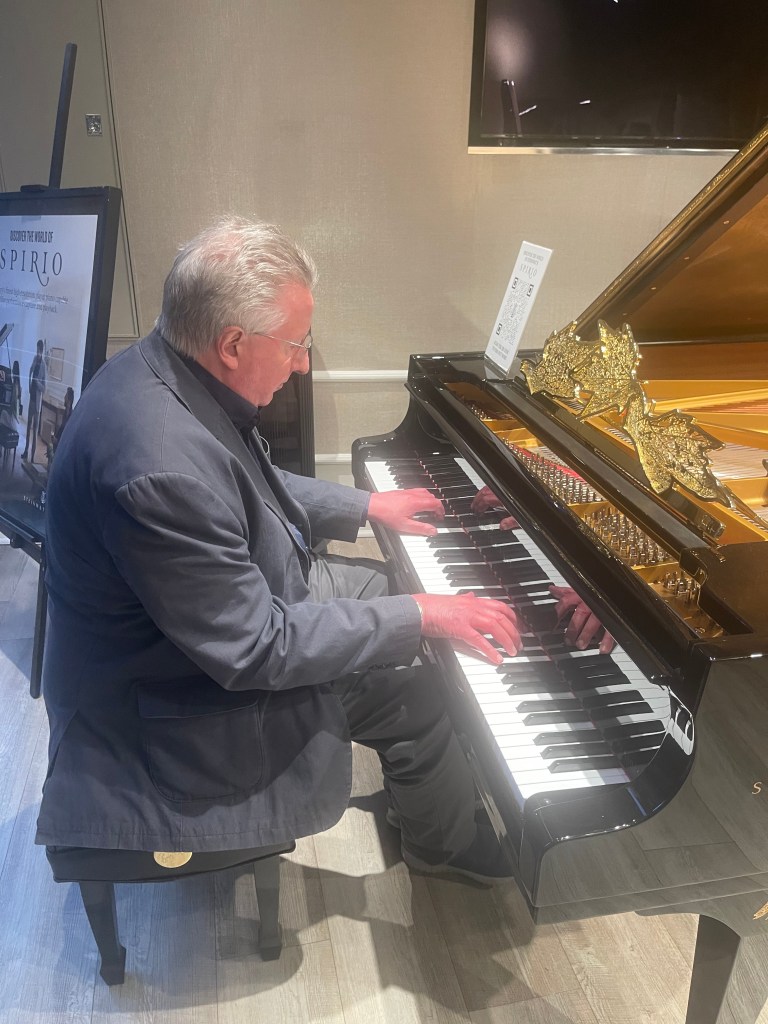
Another gem of Nino Rota was added as an encore with a work constructed on the letters of Bach’s name. A tongue in cheek passacaglia, one might surmise, of brilliance and effervescence to complete this surprising young man’s unexpected debut recital for the keyboard trust.
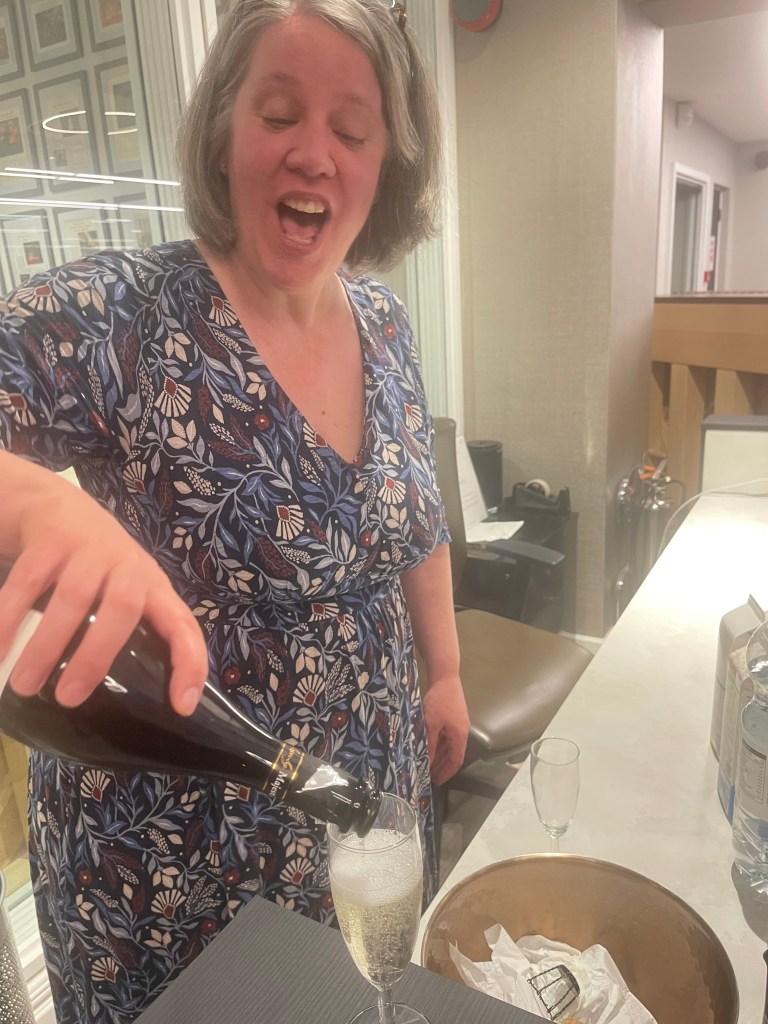
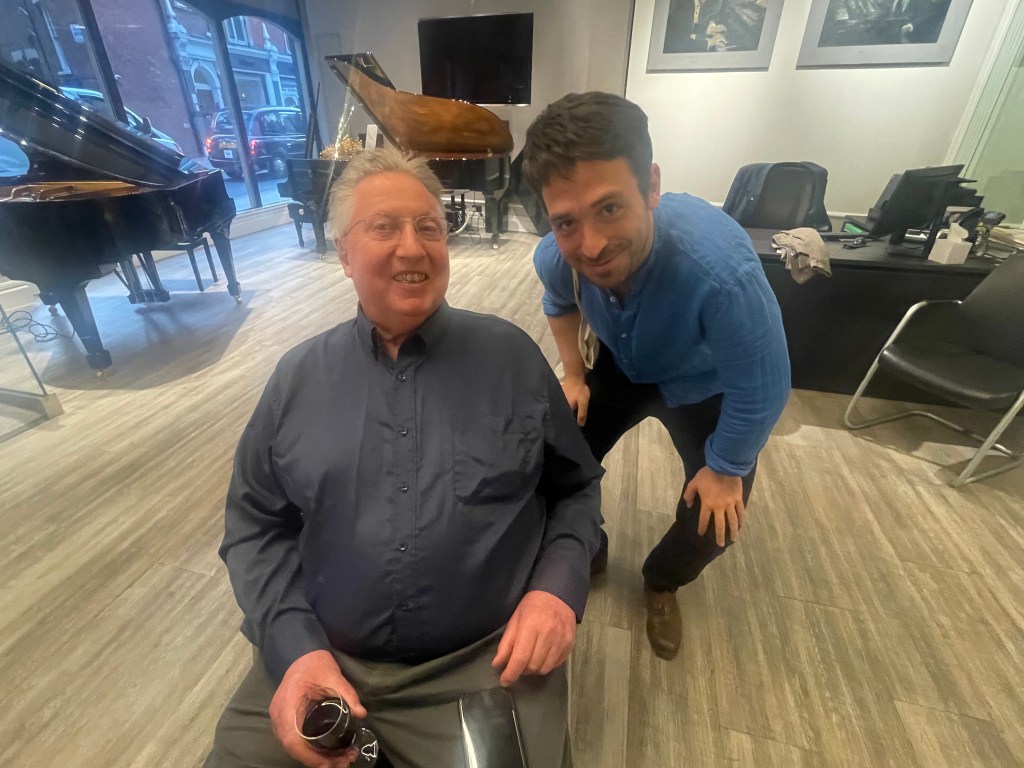
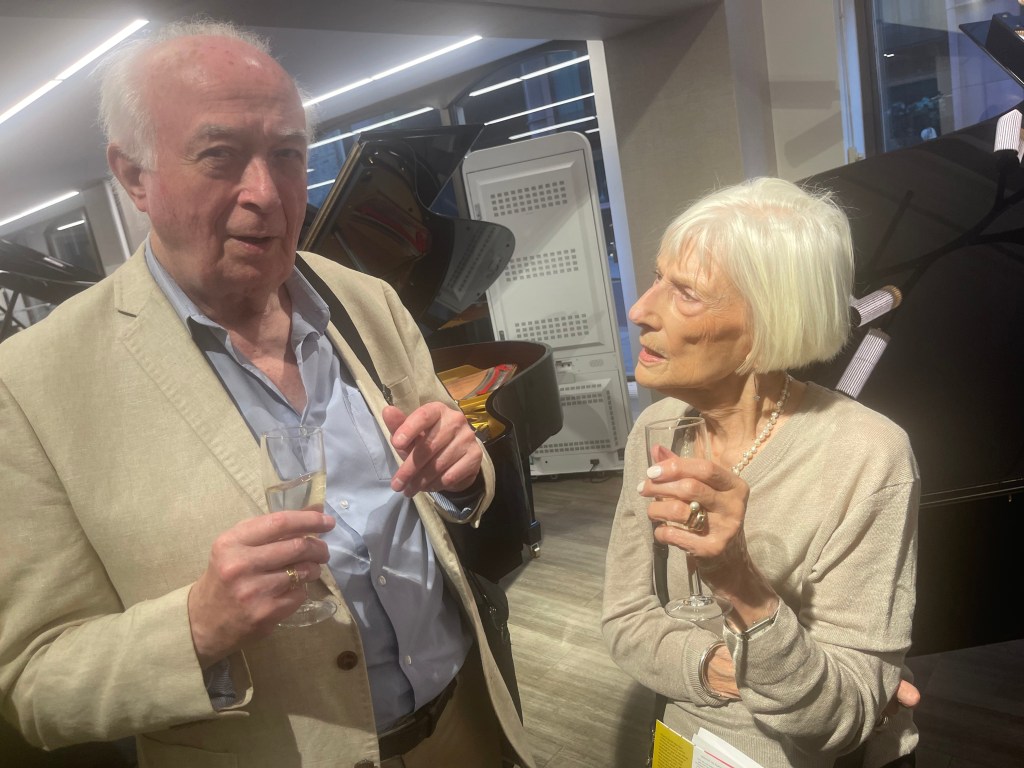
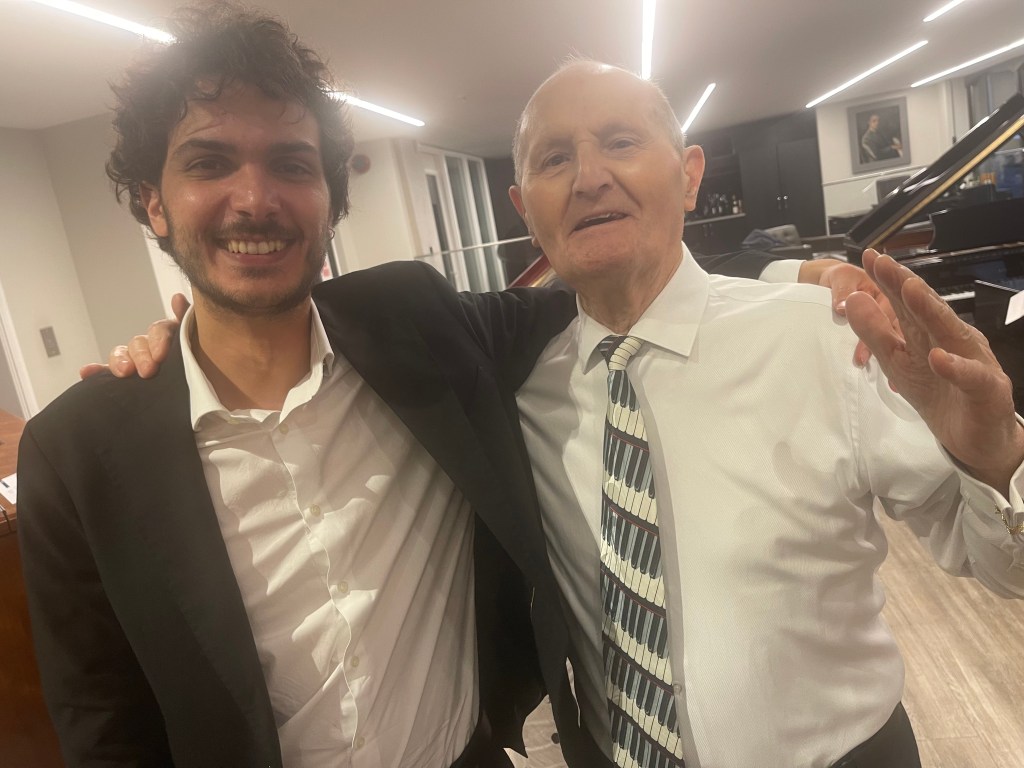
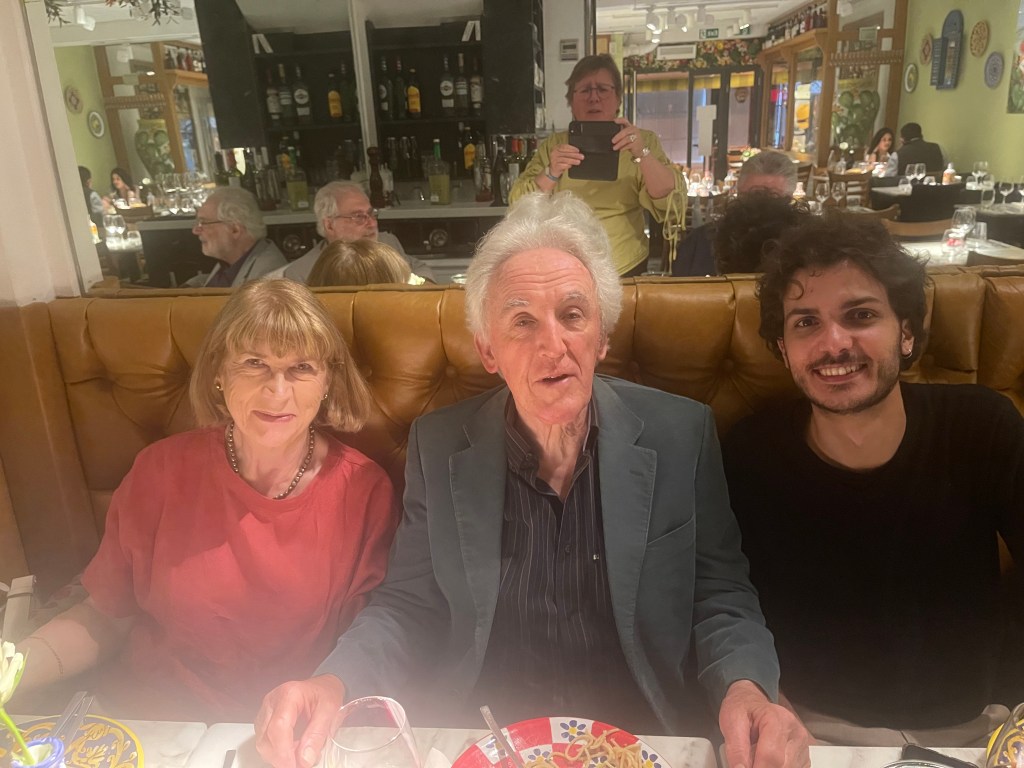

Alessio Masi was born in Sicily. In September 2025, he will begin a Professional Studies course at the Manhattan School of Music in New York, studying with Daniel Epstein. He is currently studying piano with Alessandra Ammara and Roberto Prosseda in Italy.
Alessio has attended masterclasses with Roland Pöntinen, Inna Faliks, Jed Distler, Maria Narodystka, William G. Naboré, Alexander Malofeev, Andrea Lucchesini, Pietro De Maria, Maurizio Baglini and others.
He won First Prize in the Hermès for Talents Competition, which granted him a three-year sponsorship from Hermès Italia and a European tour organized by the H.Y.T.A. project. He also attends the Verbier Festival Academy annually.
Alessio was awarded the Second Prize, the Audience Prize, and a Special Mention for the performance of a contemporary work at the Premio Brunelli in 2025. This recognition also marked his début at the Teatro Olimpico in Vicenza where he was the soloist in Beethoven’s Fifth Piano Concerto.
Alessio has performed in numerous prestigious venues and theatres in the UK, Portugal, Spain, USA, Germany and Italy, sharing his interests in Italian piano music and the musical legacy of Bach through recitals of music with strong thematic connections.
In 2025, his album dedicated to the piano music of Nino Rota will be released on the Brilliant Classics label.
Alessio is also active as a composer and will soon release his first album of original piano music.

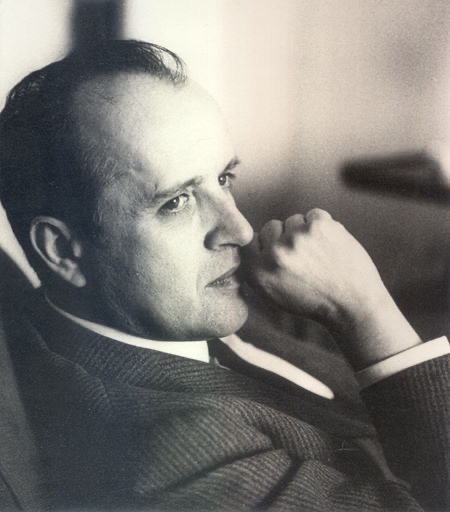
Composer Nino Rota (1911 – 1979) was born into a family of musicians in Milan. He was initially a student of Giacomo Orefice and Ildebrando Pizzetti until he moved to Rome while still a child and completed his studies under Alfredo Casella at the Conservatory of Santa Cecilia in 1929. In the meantime, he became an enfant prodige, famous as both a composer and a conductor. His first oratorio, L’infanzia di San Giovanni Battista, was performed in Milan and Paris as early as 1923, and his lyrical comedy, Il Principe Porcaro, was composed in 1926.From 1930 to 1932, Rota lived in the U.S.A. He won a scholarship to the Curtis Institute of Philadelphia and studied composition under Rosario Scalero and orchestra under Fritz Reiner.
Rota returned to Italy and earned a degree in literature from the University of Milan. In 1937, he began a teaching career that led to the directorship of the Bari Conservatory, a title he held from 1950 until his death in 1979.After his ‘childhood’ compositions, Rota wrote the following operas: Ariodante (Parma 1942), Torquemada (1943), Il cappello di paglia di Firenze (Palermo 1955), I due timidi (RAI 1950, London 1953), La notte di un neurastenico (Premio Italia 1959, La Scala 1960), Lo scoiattolo in gamba (Venezia 1959), Aladino e la lampada magica (Naples 1968), La visita meravigliosa (Palermo 1970), and Napoli milionaria (Spoleto Festival 1977).
He also wrote the following ballets: La rappresentazione di Adamo ed Eva (Perugia 1957), La Strada (La Scala 1965), Aci e Galatea (Rome 1971), Le Molière Imaginaire (Paris and Brussels 1976) and Amor di poeta (Brussels 1978) for Maurice Bejart.
In addition, countless of Rota works are performed worldwide.
Rota’s work in film dates back to the early forties and his filmography includes virtually all of the noted directors of his time. The first of these is Federico Fellini. Rota wrote the scores for all of Fellini’s films from The White Sheik in 1952 to The Orchestra Rehearsal in 1979.
Rota also collaborated with other directors, including Renato Castellani, Luchino Visconti, Franco Zeffirelli, Mario Monicelli, Francis Ford Coppola (he received the Oscar for Best Original Score for The Godfather II), King Vidor, René Clément, Edward Dmytrik and Eduardo de Filippo. Additionally, he composed the music for many theatre productions by Visconti, Zefirelli and de Filippo .He is best known for his film scores, notably for the films of Federico Fellini and Luchino Visconti. He also composed the music for two of Franco Zeffirelli’s Shakespeare screen adaptations , and for the first two installments of Francis Ford Coppolas’s The Godfather Trilogy , earning the Academy Award for the Best Original Score for The Godfather Part II in 1974
A prolific composer :
Musica for pianoforte
- 1919: Il Mago doppio – Suite per quattro mani
- 1920: Tre pezzi
- 1922: Preludio e Fuga per pianoforte a quattro mani (Storia del Mago Doppio)
- 1924: Illumina Tu, O Fuoco
- 1924: Io Cesserò il Mio Canto
- 1924: Ascolta o Cuore June
- 1925: Il Presàgio
- 1925: La Figliola Del Re (Un Augello Gorgheggiava)
- 1930: Ippolito gioca
- 1931: Campane a Festa
- 1933: Campane a Sera
- 1935: Il Pastorello e altre Due Liriche Infantili
- 1938: La Passione (poesia popolare)
- 1941: Bagatella
- 1945: Fantasia in sol
- 1946: Fantasia in do
- 1954: Azione teatrale scritta nel 1752 da Pietro Metastasio
- 1964: 15 Preludi
- 1971: Sette Pezzi Difficili per Bambini
- 1972: Cantico in Memoria di Alfredo Casella
- 1975: Due Valzer sul nome di Bach
- 1975: Suite dal Casanova di Fellini
Chamber music
Duets
- Pezzo per Corno in Fa e Contrabbasso (1931)
- Sonate per flauto e arpa (1939)
- Sonata in re per clarinetto e pianoforte (1945)
- Sonata per ottoni e organo (1972)
- Tre Pezzi per 2 flauti (1972-73)
- Allegro danzante per clarinetto e pianoforte (1977)
For strings and pianoforte
- Improvviso in re minore per violino e pianoforte (1947)
- Improvviso per Violino e Pianoforte (Un diavolo sentimentale) (1969)
- Intermezzo per viola e pianoforte (1945)
- Sonata in sol per Viola e Pianoforte (1934-35, revised 1970)
- Sonata per Viola e Pianoforte della Sonata in Re per Clarinetto e pianoforte (1945)
- Sonata per violino e pianoforte(1936-37)
For wind and pianoforte
- Castel del Monte – Ballata per Corno e Pianoforte (1974)
- Cinque Pezzi facili per flauto e pianoforte (1972)
- Elegia per Oboe e Pianoforte (1955)
- Pezzo in Re per clarinetto e pianoforte (agosto) (1977)
- Sonata in Re per Clarinetto e Pianoforte (1945)
- Toccata per Fagotto e Pianoforte (1974)
For flute and harp
- Cadenze per il Concerto K299 di Mozart per flauto e arpa (1962)
- Sonata per flauto e arpa (1937)
Trios
- Trio per clarinetto, violoncello e pianoforte (1973)
- Trio per Flauto, Violino e Pianoforte (settembre, 1958)
Quartets
- Invenzioni per quartetto d’archi (1932)
- Quartetto per archi (1948-54)
Miscellaneous
- Il Presepio: Quartetto d’archi con voce (1929)
- Il Richiamo: Quintetto d’archi con voce (1923)
- Minuetto (1931)
- Nonetto, per flauto, oboe, clarinetto, fagotto, corno, violino, viola, violoncello e contrabbasso (1959, 1974, 1977)
- Piccola Offerta Musicale per flauto, oboe, clarinetto, corno e fagotto (1943)
- Quintetto per flauto, oboe, viola, violoncello e arpa (1935)
- Romanza (Aria) e Marcia (1968)
- Sarabanda e Toccata per Arpa (1945)
- Sonata per Organo (1965)
Vocal music
- Perché Si Spense la Lampada (Quando Tu Sollevi la Lampada al Cielo) August 1923)
- Vocalizzi per Soprano leggero e Pianoforte (1957)
- Tre liriche infantili per canto (soprano, tenor) e pianoforte/Three childrens’ lyrical poems for voice and piano (1935)
- Le Prime Battute di 6 Canzoni e un Coro per “L’Isola Disabitata” April 1932)
- Mater fons amoris per Soprano (o tenore) solo, coro di donne e organo (1961)
- Canto e Pianoforte/Voice and Piano (1972)
- Ballata e Sonetto di Petrarca (1933)
- Mysterium (1962) per coro e orchestra su testi scelti da Vincenzo Verginelli, tratti dal Vangelo di Giovanni e dai primi scrittori cristiani, commissionato dalla Pro Civitate Christiana di Assisi
- la Vita di Maria (1970), rappresentazione sacra in 16 parti più l’interludio, per soli, coro e orchestra, con scelta di testi sacri dal Vecchio Testamento, i Vangeli ortodossi e quelli apocrifi di Vincenzo Verginelli
- Roma capomunni (1970-71), vocale corale cantata per solo, coro e orchestra, su testi scelti da Vincenzo Verginelli tratti da Belli, Virgilio, Orazio, Byron, Goethe, Dante, Servio, Macrobio, Vigolo
Orchestral music
- Infanzia di S. Giovanni Battista oratorio per soli, coro e orchestra (1922)
- Balli per piccola orchestra (1932 al Teatro La Fenice di Venezia)
- Sonata (Canzona) per orchestra da camera (1935)
- Variazioni e fuga nei 12 toni sul nome di Bach per orchestra (1950)
- Concerto in Fa, Concerto Festivo per orchestra (1958-61)
- Concerto per archi (1964-65, nuova revisione 1977)
- Due Momenti (Divertimenti) (1970)
- Fantasia sopra dodici note del “Don Giovanni di Mozart” per pianoforte e orchestra (1960)
- Fuga per Quartetto d’Archi, Organo e Orchestra d’Archi (1923)
- Guardando il Fujiyama (Pensiero per Hiroshima) (1976)
- La Fiera di Bari (28.4.1963)
- La Strada (Teatro alla Scala di Milano 1966 con Carla Fracci)
- Le Moliere imaginaire – Ballet Suite (1976-78)
- Meditazione per coro e orchestra (1954)
- Rabelaisiana – Tre canti per Voce e Orchestra (1977) a Martina Franca con Lella Cuberli
- Serenata per Orchestra in quattro tempi (1931-1932)
- Sinfonia n. 1 per orchestra (1935-1939)
- Sinfonia n. 2 in Fa per orchestra (1937-39)
- Sinfonia n. 3 in Do (1956-1957)
- Sinfonia Sopra una Canzone d’Amore (1972)
- Sonata per orchestra da camera (1937-1938)
- Variazioni e fuga nei 12 toni sul nome di Bach per Orchestra (1950)
- Variazioni sopra un tema gioviale per orchestra (1953)
- Waltzes
Concertos for solists and orchestra
- 1947: Concerto per Arpa
Piano and Orchestra
- Cadenze per il Concerto n. 4 in Sol Hob.XVIII:4 di Franz Joseph Haydn)
- 1960: Concerto in Do
- 1962: Concerto soirée
- 1973, 1998: Concerto in Mi Piccolo mondo antico
Strings and orchestra
- 1925: Concerto per Violoncello n. 0
- 1968-73: Divertimento Concertante per Contrabbasso e Orchestra
- 1972: Concerto per Violoncello n. 1
- 1973: Concerto per Violoncello n. 2
Wind and orchestra
- 1959: Andante sostenuto per il Concerto per Corno K412 di Mozart
- 1966: Concerto per Trombone
- 1974: Ballata per Corno e orchestra “Castel del Monte”
- 1974-77: Concerto per Fagotto
Opera
Napoli milionaria (1973-1977), libretto di Eduardo de Filippo dall’omonima opera teatrale.
Il principe porcaro (1926)
Ariodante, opera in 3 atti, libretto di Ernesto Trucchi (1942) al Teatro Regio di Parma diretta da Gianandrea Gavazzeni con Mario Del Monaco
Torquemada (1943) e seconda versione nel 1976 al Teatro di San Carlo di Napoli con Maurizio Arena, Saturno Meletti, Antonio Boyer, Carlo Cava e Agostino Ferrin
I due timidi (1950)
Il cappello di paglia di Firenze (prima esecuzione nel 1955)
Scuola di guida (1959)
La notte di un nevrastenico (1959)
Lo scoiattolo in gamba, libretto di Eduardo De Filippo (1959 al Teatro La Fenice di Venezia diretta da Ettore Gracis)
Aladino e la lampada magica, fiaba lirica in tre atti e 11 quadri su libretto di Vincenzo Verginelli (da Le mille e una notte); (1963-1965), prima rappresentazione assoluta al Teatro di San Carlo nel 1968, diretta da Carlo Franci con Franco Bonisolli
La visita meravigliosa (1965-1969)
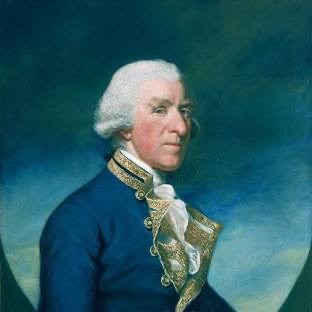
Lodovico Giustini (12 December 1685 – 7 February 1743) was an Italian composer and keyboard player of the late Baroque and early Classical eras. He was the first known composer ever to write music for the piano.
Giustini was born in Pistoia, of a family of musicians which can be traced back to the early 17th century; coincidentally he was born in the same year as Bach,Scarlatti and Handel . Giustini’s father was organist tat the Congregazione dello Spirito Santo, a Jesuit -affiliated group, and an uncle, Domenico Giustini, was also a composer of sacred music.
In 1725, on his father’s death, Giustini became organist at the Congregazione dello Spirito Santo, and acquired a reputation there as a composer of sacred music: mostly cantatas and oratorios. In 1728 he collaborated with Giovanni Carlo Maria Clarion a set of Lamentations which were performed that year. In 1734 he was hired as organist at S Maria dell’Umiltà, the Cathedral of Pistoia, a position he held for the rest of his life. In addition to playing the organ at both religious institutions, he performed on the harpsichord at numerous locations, often in his own oratorios.
Giustini’s main fame rests on his work 12 Sonate da cimbalo di piano e forte detto volgarmente di martelletti, Op.1, published in Florence in 1732, which is the earliest music in any genre written specifically for the piano. They are dedicated to Dom António de Bragança, the younger brother of King Joäo V of Portugal (the Portuguese court was one of the few places where the early piano was frequently played).

These pieces, which are sonate da chiesa, with alternating fast and slow sections (four or five movements per sonata), predate all other music specifically written for the piano by about 30 years. Giustini used all the expressive capabilities of the instrument, such as wide dynamic contrast: expressive possibilities which were not available on other keyboard instruments of the time. Harmonically the pieces are transitional between late Baroque and early Classical period practice, and include innovations such as augmented sixth chords and modulations to remote keys.
James Parakilas points out that it is quite surprising that these works should have been published at all. At the time of composition, there existed only a very small number of pianos, owned mainly by royalty. He conjectures that publication of the work was meant as an honor to Giustini; it “represents a gesture of magnificent presentation to a royal musician, rather than an act of commercial promotion.”
While many performances of his large-scale sacred works are documented, all of that music is lost, with the exception of fragments such as scattered aria. Giustini’s fame rests on his publication of his set of piano pieces, although they seem to have attracted little interest at the time.
 ChristopherAxworthy-MusicCommentary