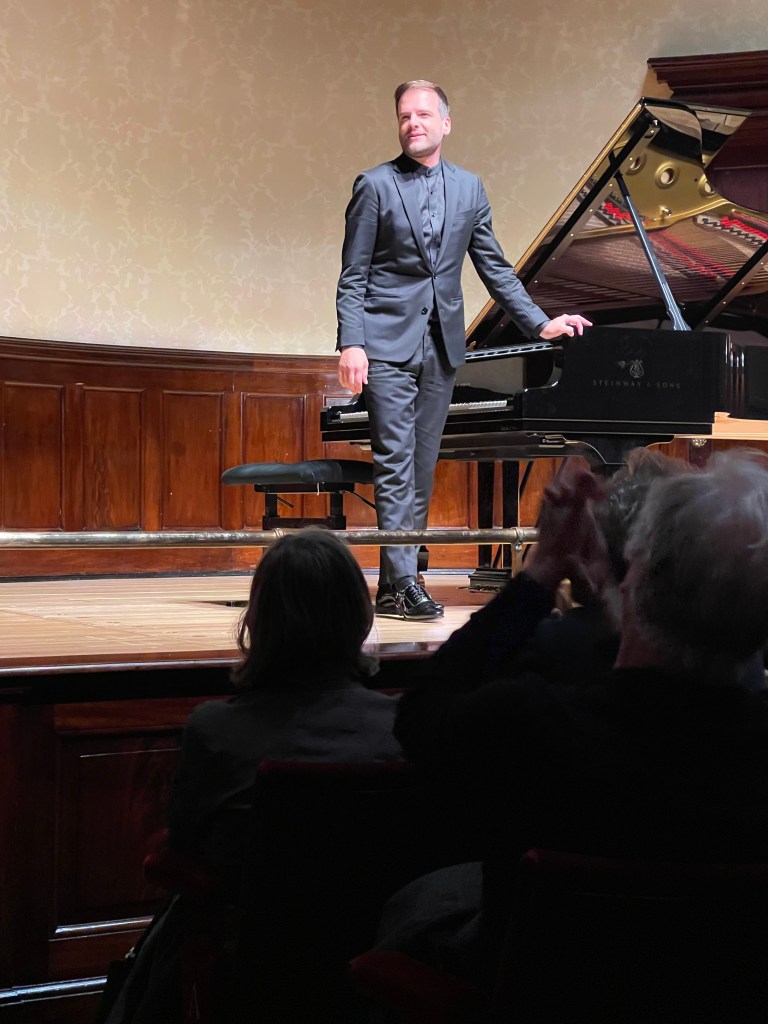

Having started the week shocked and embarrassed we finished the week in astonished amazement.
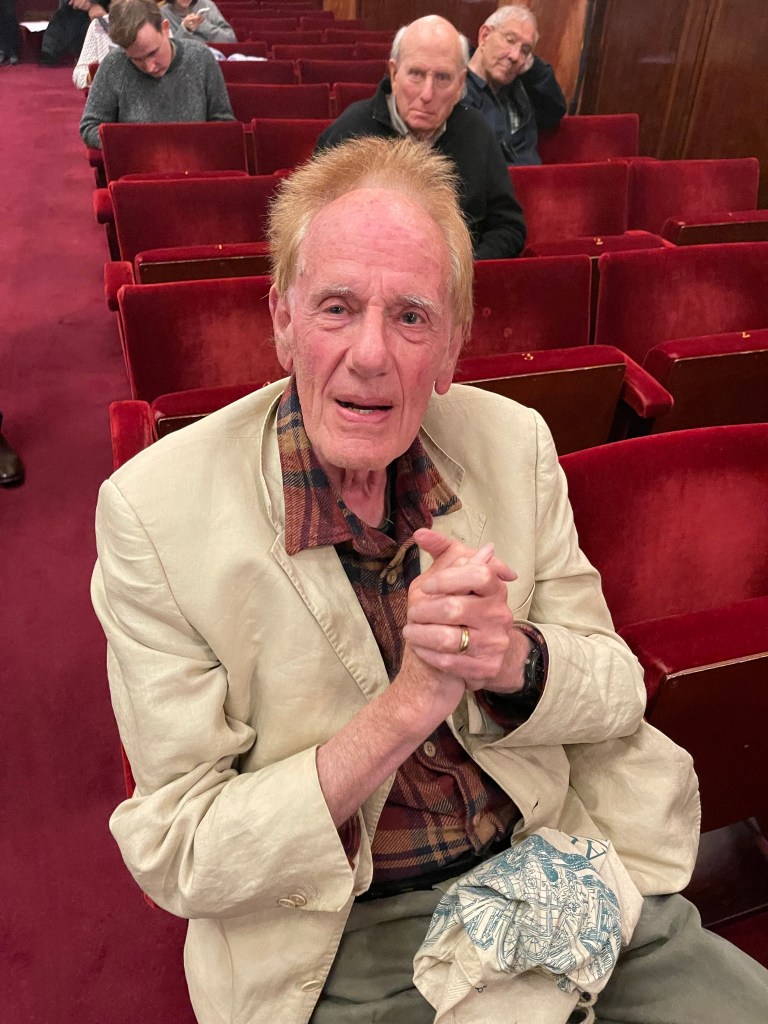
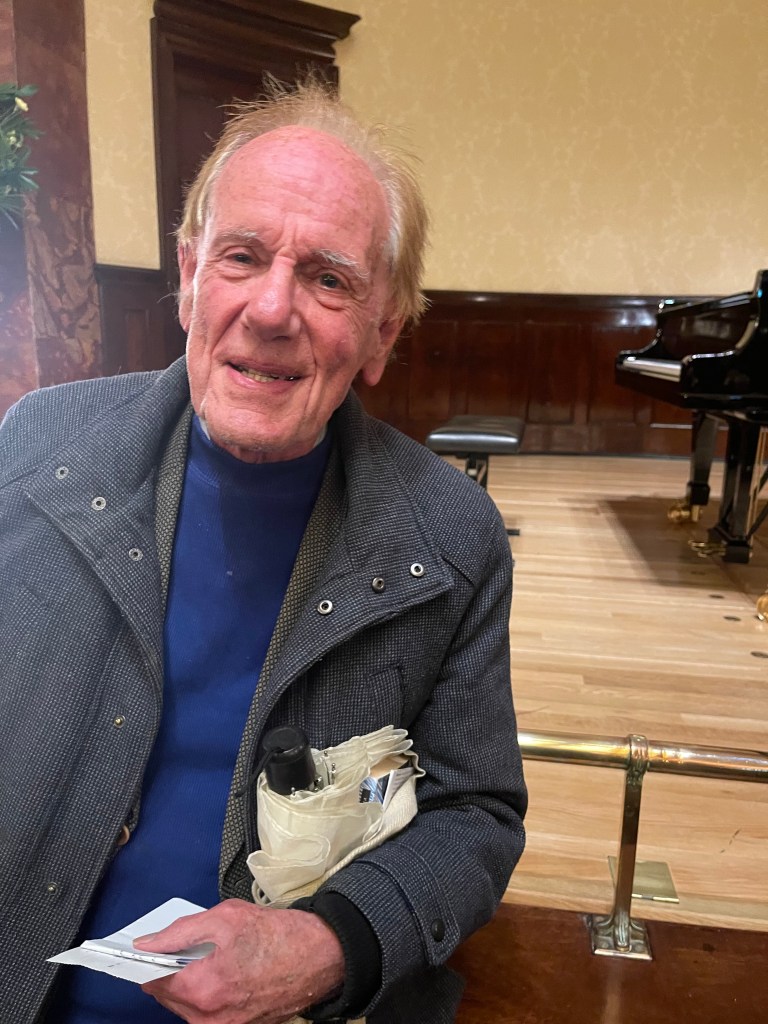
Bryce Morrison and I were transported into seventh heaven tonight where all is forgiven and forgotten.
From the hands of Francesco Piemontesi we were transported into a magic world of intelligence ,beauty and seduction .With the humility of a complete musician he recreated each of the three master works on his programme .
Already looking at the programme we could appreciate ,as with Arrau, the serious intent that would unfold.
A Liszt Sonata restored to the pinnacle that it deserves and since Brendel has never received.
Schubert as I imagine Edwin Fischer must have recreated it.
Perahia is sadly in retirement but Francesco Piemontesi is the just heir to his throne.
Simplicity,Humility ,Intelligence and Mastery combine in Francesco Piemontesi to recreate the master works for generations to come.
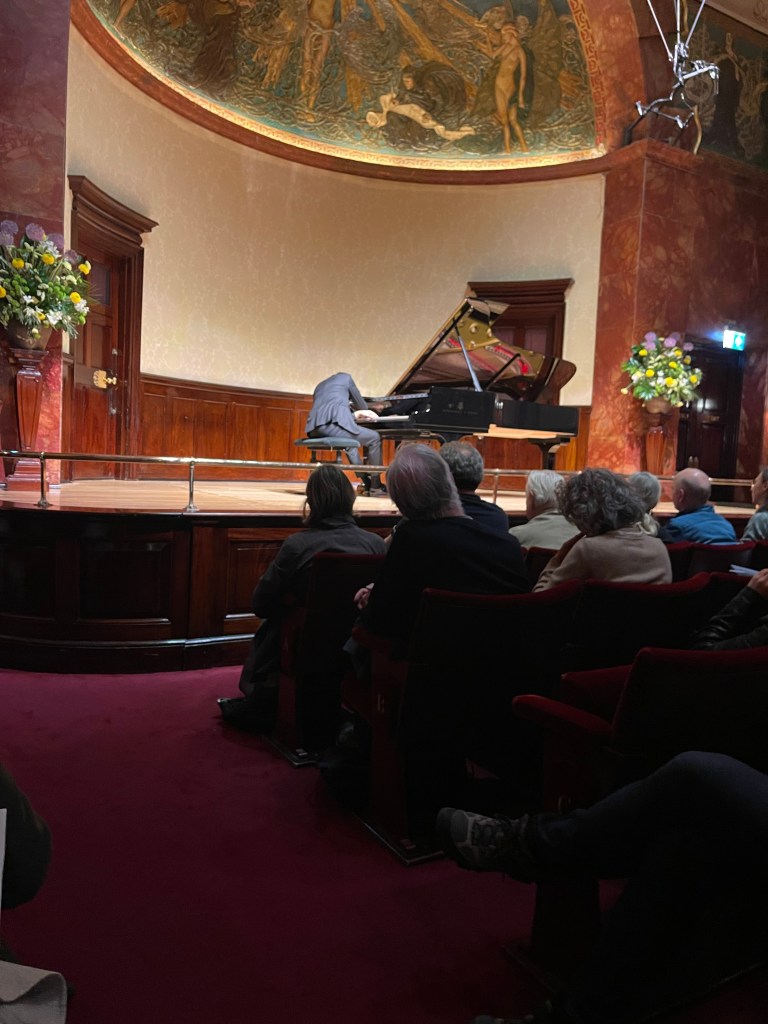
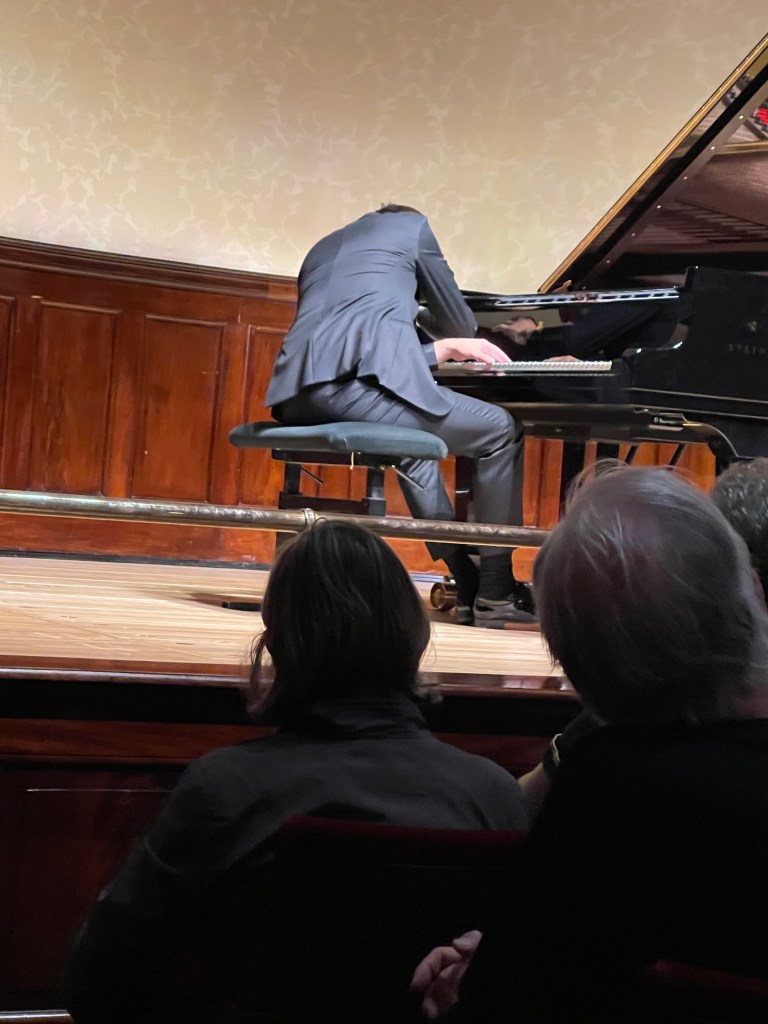
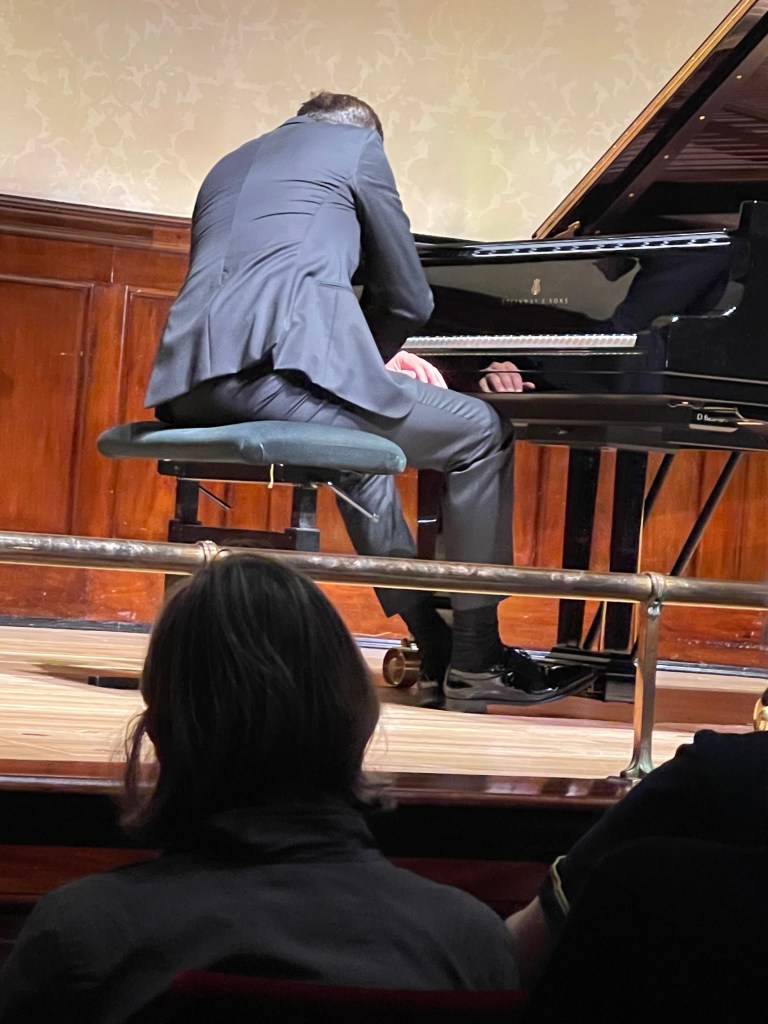
Unlike Arrau, after the Liszt Sonata that stood so proudly on its own in his programme, he was persuaded to play again.
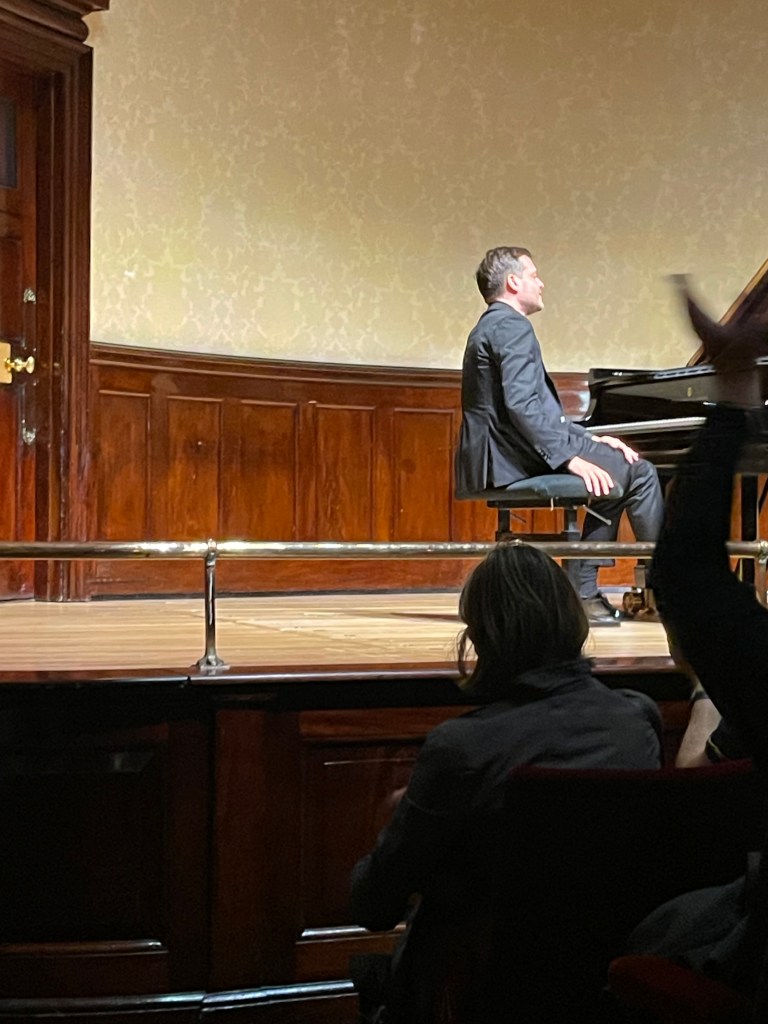
‘Wachet auf, ruft uns die Stimme’ rang out with the imperious authority of a fervent believer.The final glorious ending filling this hall with the Glory To God on High! https://youtu.be/GzSLGfkhCIQ?feature=shared
But to Liszt was given the last sounds with the gentle murmuring of lapping water on the shores of Lake Wallenstadt.
I am sure Liszt would have approved and that after such a wondrous journey we should be reminded of the beauty that surrounds us for those with eyes that can stop and stare with a soul that can take count of such simple marvels.
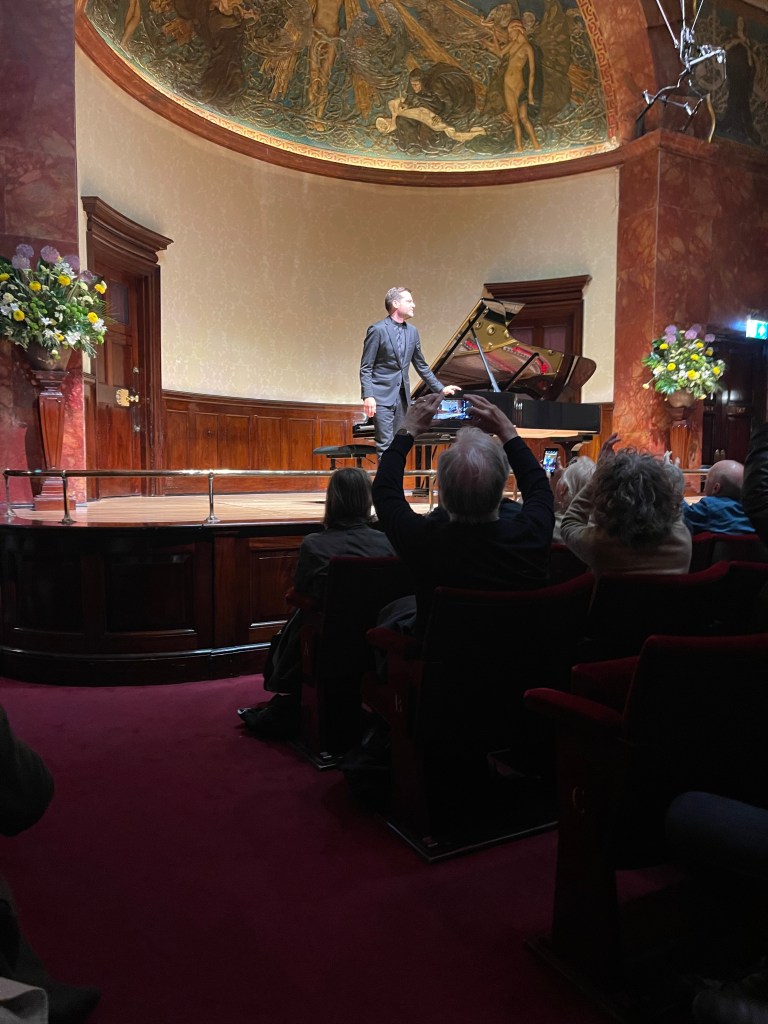
From the very first notes of the ‘Grazer Fantasie’ we were taken to a land of pure magic. The way that Francesco caressed the keys before actually allowing them to squeeze sounds of etherial beauty out of this great black box of hammers and strings. It reminded me of Rosalyn Tureck finding the piano lid opened she would look dismissively at the public as she proceeded to dust the keys, making sure every speck had been eliminated that could interfere with with her ultra sensitive sense of touch. Of course Matthay wrote reams about that, and the fact that in every key there are an infinite amount of sounds that can be found, for those that have the ears of a true recreative artist and the mastery and dedication to be able to seek them out! The opening left hand arpeggios like the F minor four hand Fantasie was a hardly audible whisper, that already in this artists hands had a golden radiance to it, ready to receive the magic that was to descend from on high. There were so many ‘echt’ Schubert things in this work and even a hint of Weber ,that makes you wonder whether it might have been created by artificial intelligence. However it is an extremely beautiful piece especially when played with the golden gloves of a real artist as it was today.There was Swiss grace ,charm and irresistible subtlety. Ravishing beauty with a kaleidoscopic sense of colour from a man who can make the piano sing, cry and really speak with a voice of poignant beauty and meaning. A revelation that was to be continued with the undisputed masterpieces of Schubert’s final year on this earth.
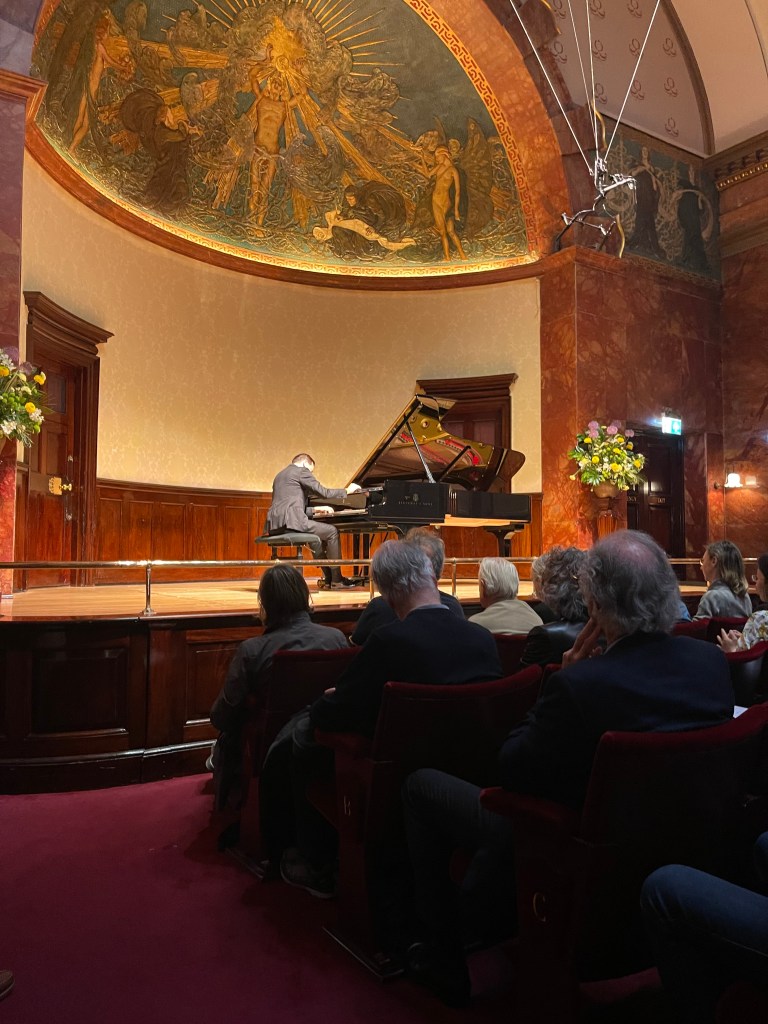
The final Impromptus D 935, where the first and third are really tone poems in their own right but when added to two and four take on the form of a Sonata , as some have suggested, to add to his final trilogy.The first entered a perfectly balanced world where forte was just a more emphatic sound in a place of horizontal beauty. Etherial beauty of the pulsating sounds on which a touching musical conversation was so poignantly played out between the bass and the treble. All through this recital whether Schubert or Liszt there was a perfect sense of legato, that which Kempff and Lupo found the secret key to, in their Indian Summer. Francesco is an early starter and his sense of legato and infinite gradations of tone are what held us captivated in a conversation of extraordinary subtle communication. Suddenly a deep bass note would be allowed to shine for a second to illuminate all that stood above it. It was the final question and answer of the coda that was of beseeching beauty where one could feel four hundred people united as we waited with bated breath for his final gasp.
There was a glowing fluidity to the second played with a searing passion rising to the fore. The theme and variations of the third were played with a grace and charm as the variations were thrown off with teasing nonchalance.The deeply sonorous minor variation with it’s clouded bass of overpowering emotional impact was answered by the rocking lullaby with the tenor voice answered by the soprano and after a scintillating jeux perlé we were lead to the gentle final prayer of thanksgiving.
The final Impromptu took off at a quite gentle pace of luminosity and dynamic drive. But there were passionate outbursts with fearless glissandi played with the help of the left hand to give even more bite and impact to such a passionate outcry.The final cascade from the top to the bottom of the keyboard arrived with an almighty crash with an added octave that was quite breathtaking as it was unexpected.
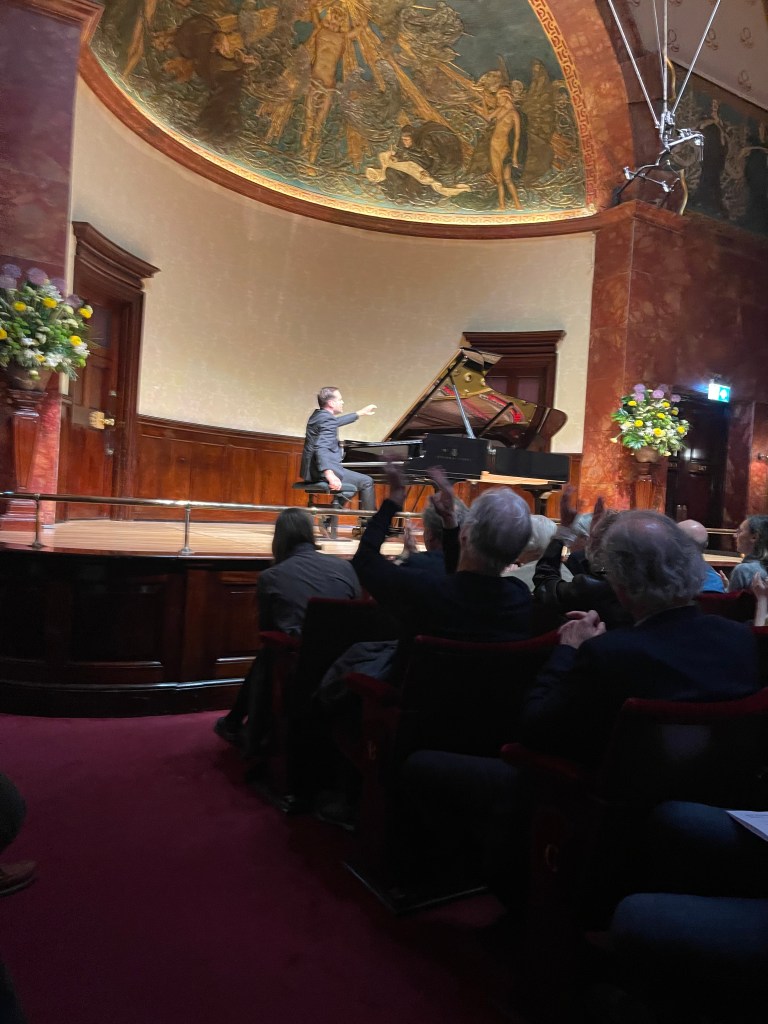
The Liszt Sonata was give the space it deserves and was consigned to its rightful place at the Pinnacle of the pianistic repertoire. Clara Schumann may have thought it a dreadful noise and all too often I have thought so too, as I listen to performances used to show off pianistic muscles and heart on sleeve emotions. Liszt destroyed his original ending in a blaze of glory and bombastic showmanship because Liszt in Weimar was no longer the touring virtuoso but a prophetic genius who with Schubert could forge a path into the future. The final pages of the Liszt Sonata are the most remarkable in all piano literature and Francesco played them with searing intensity and prophetic character allowing the three components of this remarkable work to come to rest, united with three barely whispered chords. It was terrifying to see Francesco hardly touch the keys, as these were not just three chords, but three different vibrating sounds. Leaning over to the bottom of the keyboard, Francesco barely touched the final B with his right hand and stayed stationary and curled over the keys for quite some minutes as we contemplated the miracle that we had all been witness to. Francesco usually so controlled and with his Swiss precision and cleanliness has tonight allowed himself to let go and join the ranks of the finest virtuosi of our time. He had played Liszt 2 Piano Concerto in Rome recently and I remember hearing him at the Proms many years ago, when very few knew who he was, playing not only a Mozart concert rondò but also Strauss’s mighty Burlesque. The two characters have now been united and in both the Schubert and Liszt were breathtaking moments added with architectural understanding at crucial moments to the overall shape of his interpretations. The opening of the Sonata I found rather fast and impetuous after the opening exposition of the three germs that are the nuts and bolts of the whole sonata ,and consequently the left hand demonic rhythm was not as precise as I remember hearing from Curzon. I remember Agosti too, playing the Liszt sonata in his studio in Siena where the whole world flocked to hear a second generation student of Liszt intone this sonata ,and much else,in radiantly whispered tones that like Francesco today would suddenly erupt with breathtaking potency.Octaves where he leant on the inner note to give more depth to the sound.The beauty of the ‘Margherita’ melodic outpouring was of sublime beauty as Francesco’s superb sense of balance allowed the melody to ring out accompanied, but never interrupted by washes of sound.The build up to the slow movement was an unforgettable experience in Francesco’s hands as he came to rest before allowing the central episode to expand into a movement of devastating emotional intensity of seamless legato and passionate outpouring. In the faster passages Francesco would often build up the tension and then let it go so it could start all over again. Other times he just let himself go and the emotional impact was overwhelming. A remarkable performance that I hope might one day be recorded in live performance where the stop and start of studio recording could kill this quite extraordinary artistic voyage of discovery
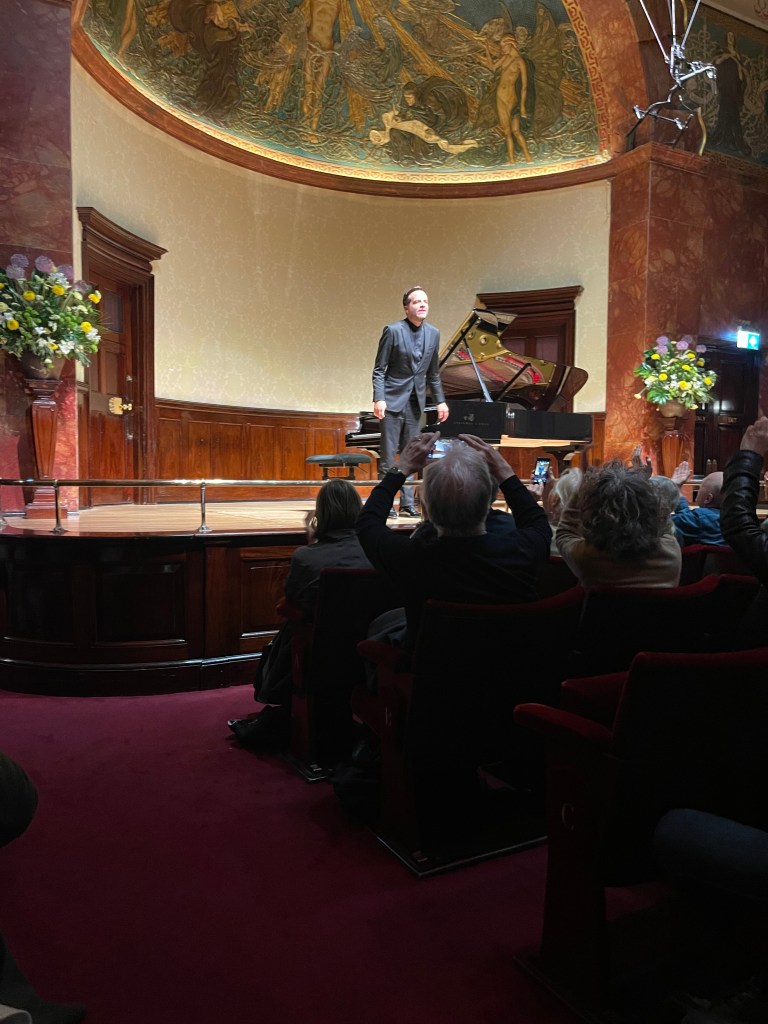
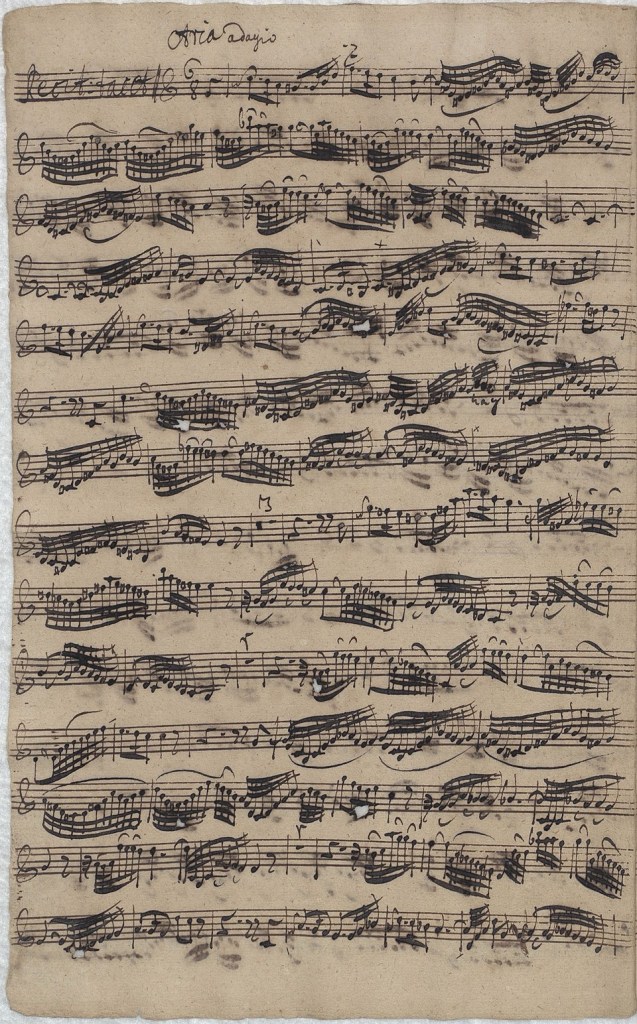
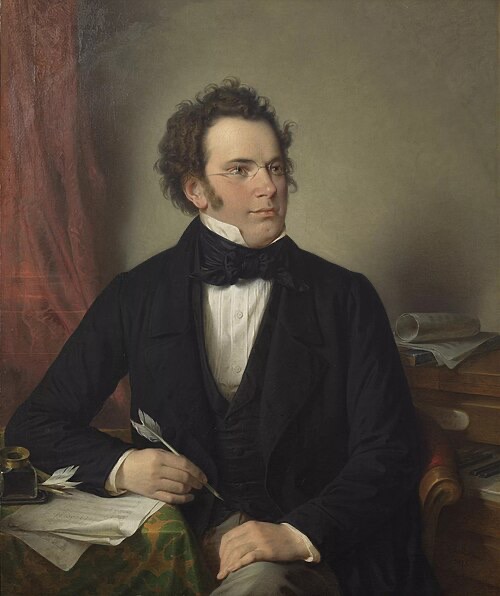
Franz Schubert 31 January 1797 Vienna. 19 November 1828 (aged 31) Vienna
Schubert’s rarely-performed ‘Grazer’ fantasy in C, laid the foundations for the Wanderer and the later Fantasie in F minor for piano four-hands, D940. The provenance of this work is disputed (a copy whose title page was written by Schubert’s friend Joseph Huttenbrenner was discovered in the 1960s in the Graz estate of Rudolph von Weis-Ostborn). In May 1968, a manuscript of a Fantasie signed by Josef Hüttenbrenner was found in the attic of 14 Parkstrasse in Knittelfeld, Austria. The two-story stucco house belonged to the great-nephew of Hüttenbrenner who was a friend, supporter and copyist of Schubert’s. Walter Durr, from the Schubert Center of the University of Tubingen, suggests that Schubert himself composed the work after he studied the manuscript in Graz (which is how this fantasy came to be known as the “Grazer”). While no irrefutable authentication can be made of this work (which is not autograph), there are certainly Schubertian characteristics throughout.
Moderato con espressione; Alla polacca; più moto; Moderato con espressione; Tempo I.
It is thought to have been composed around 1818 and as no autograph exists, its authenticity is still in doubt. It was given its premiere by Lili Kraus shortly after it was discovered, and subsequently recorded by her (Odyssey, 1970) https://youtu.be/65uRn8fLWlQ
 ChristopherAxworthy-MusicCommentary